Table of Contents
If you’ve ever wrestled with a warping piece of plywood on a traditional table saw or chased a wobbly line with a standard circular saw, you already understand the frustration. Long, straight cuts shouldn’t require a master craftsman’s steady hand and a prayer—they should be repeatable, precise, and almost effortless. That’s exactly why track saws have revolutionized modern woodworking, transforming what was once a two-person job into a solo operation that delivers cabinet-grade results every single time.
As we look toward 2026, track saw technology has evolved far beyond simple guide rails. Today’s models incorporate intelligent electronics, advanced safety systems, and battery innovations that blur the line between corded and cordless performance. Whether you’re building a kitchen’s worth of cabinetry on-site or trimming solid-core doors in a cramped hallway, understanding what separates a mediocre track saw from a truly exceptional one will save you countless hours of rework and frustration. This comprehensive guide cuts through the marketing hype to reveal the features, specifications, and design elements that genuinely matter for achieving flawless long, straight cuts.
Top 10 Track Saws For Straight Cuts


Detailed Product Reviews
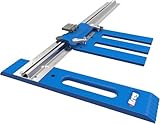
1. Kreg KMA2700 Accu-Cut – Circular Saw Track – Make Straight, Cross, Rip & Angled Cuts Easily
 Easily](https://m.media-amazon.com/images/I/31zsjiBDSFL._SL160_.jpg)
Overview: The Kreg KMA2700 Accu-Cut transforms your ordinary circular saw into a precision track-guided cutting system without the premium price of a dedicated track saw. This versatile guide rail helps woodworkers achieve splinter-free, perfectly straight cuts whether you’re ripping plywood, cross-cutting boards, or tackling angled cuts. Designed with portability in mind, it breaks down quickly for transport to job sites or storage in compact workshops.
What Makes It Stand Out: The universal sled adapter is the star feature, accommodating nearly any corded or cordless circular saw regardless of brand or blade orientation. This eliminates the need to buy saw-specific accessories. The integrated starting block and anti-slip guide strips provide confident, safe operation while preventing the saw from wandering at the beginning of cuts. Kreg’s signature blue rails are lightweight yet sturdy enough for consistent results.
Value for Money: Priced in the mid-range for track guides, the Accu-Cut delivers exceptional value by essentially giving you track saw capabilities using tools you already own. It’s significantly cheaper than purchasing a dedicated track saw system while delivering comparable accuracy for most applications. For DIY enthusiasts and professional carpenters alike, it pays for itself after just a few projects by reducing material waste from miscuts.
Strengths and Weaknesses: Strengths include universal saw compatibility, easy setup, excellent portability, and reliable splinter-free performance. The starting block adds safety and precision. Weaknesses are the standard length which may require separate extensions for full sheet goods, some plastic components that could wear over heavy use, and slightly less rigidity compared to pro-grade aluminum systems.
Bottom Line: The Kreg KMA2700 Accu-Cut is an outstanding choice for woodworkers seeking portable precision without investing in a dedicated track saw. Its universal design and thoughtful features make it a workshop essential.
2. BORA 100" NGX Clamp Edge, Straight Cut Guide for Circular Saws, Aluminum, Includes 50-Inch Clamp Edge & 50-Inch Extension for 100-Inch Cutting Length, 544100

Overview: The BORA 100" NGX Clamp Edge is a professional-grade cutting guide designed for tackling full 4x8 sheet goods with confidence and precision. This heavy-duty system combines a 50-inch base unit with a 50-inch extension, creating an impressive 100-inch cutting capacity that eliminates the need for multiple setups when ripping plywood or MDF. Built for contractors and serious woodworkers, it integrates seamlessly with your existing circular saw for track saw-like accuracy.
What Makes It Stand Out: The integrated T-track system sets this guide apart, allowing you to add stops, routers, or other accessories for enhanced functionality. The quick-lock lever mechanism provides one-handed clamping power that securely grips materials without marring surfaces. Constructed from thick, rigid aluminum extrusion, it resists flex and bowing even at maximum extension, ensuring your cuts remain true across the entire length.
Value for Money: While priced at the higher end of the market, the 100" NGX offers genuine professional value. You’re essentially getting two guides in one modular system that handles projects impossible with standard 50-inch guides. For contractors regularly cutting sheet goods, it replaces several tools and saves significant setup time, justifying its premium cost through durability and capability.
Strengths and Weaknesses: Strengths include exceptional length, rock-solid aluminum construction, versatile T-track integration, and rapid clamping. The modular design offers flexibility. Weaknesses are its substantial storage footprint, considerable weight for transport, and price point that may exceed hobbyist budgets. The large size can be cumbersome for small workshop spaces.
Bottom Line: If you routinely work with full sheet materials and demand professional precision, the BORA 100" NGX is worth every penny. Its robust build and innovative features make it a job site workhorse.
3. Kreg KMA3700 Accu-Cut XL - Universal Track Saw Guide System - Make Straight, Cross, Rip & Angled Cuts Easily

Overview: The Kreg KMA3700 Accu-Cut XL builds upon the success of the standard Accu-Cut by offering extended cutting capacity for woodworkers tackling larger projects. This universal track guide system converts your circular saw into a precision cutting tool capable of handling full sheet goods while maintaining the portability and ease-of-use that Kreg is known for. The XL designation means fewer limitations when ripping plywood or making long crosscuts.
What Makes It Stand Out: Like its smaller sibling, the universal sled accommodates any circular saw, but the XL’s extended rails allow continuous cuts up to 100 inches without connecting extensions mid-cut. The anti-slip strips and starting block remain key safety features, while the lightweight design still allows for easy transport between job sites. The integrated scale and cursor help with quick, accurate setup.
Value for Money: The XL version commands a 30-40% premium over the standard Accu-Cut, but for many users, the ability to cut full sheets in one pass justifies the expense. It eliminates the need to purchase separate extensions and reduces setup time. For serious hobbyists or professionals, the added capacity translates directly to improved workflow and reduced material waste.
Strengths and Weaknesses: Strengths include the extended 100-inch capacity, universal saw compatibility, excellent portability for its size, and reliable splinter-free cuts. The continuous rail design improves accuracy. Weaknesses include the higher price point, still some plastic components in high-wear areas, and storage challenges in small shops. The longer rails require more careful handling to avoid damage.
Bottom Line: The Kreg Accu-Cut XL is the perfect upgrade for users who love the standard version but need more reach. It delivers professional capacity with DIY-friendly usability.
4. Milescraft 1409 Track Saw Guide - Universal for 7-1/4" Circular Saws, 50" Cutting Range, 2" Depth, Aluminum

Overview: The Milescraft 1409 Track Saw Guide offers a budget-friendly entry into precision cutting without sacrificing the robust build quality typically found in more expensive systems. Designed to fit most 7-1/4-inch circular saws, this all-metal guide rail provides a 50-inch cutting range that can be extended with optional accessories. Its low-profile design allows for cutting depths over 1-3/4 inches, making it suitable for everything from plywood to interior doors.
What Makes It Stand Out: The all-metal construction is the headline feature at this price point, eliminating the flex and wear concerns common with plastic components. The distinctive red cutting strip not only serves as a visual guide but also helps reduce splintering and chipping on delicate materials. The universal adapter plate accommodates various saw bases, while the optional extension system provides scalability as your projects grow.
Value for Money: This is among the most affordable quality track guides available, offering exceptional value for DIYers and occasional users. The sturdy aluminum build ensures longevity that cheaper plastic alternatives can’t match. While extensions cost extra, the base unit alone handles most common projects, making it a smart starting point for those new to track-guided cutting.
Strengths and Weaknesses: Strengths include the affordable price, durable all-metal construction, good cutting depth capacity, and clean, splinter-free results. The extension capability adds future-proofing. Weaknesses are the limited 50-inch base length for full sheet goods, separate purchase required for extensions, and less refined clamping mechanism compared to premium brands. The brand has less recognition than Kreg or BORA.
Bottom Line: For budget-conscious woodworkers wanting metal durability without the premium price tag, the Milescraft 1409 is an excellent choice. It’s a capable system that grows with your skills.
5. BORA 50” NGX Circular Saw Guide Rail, Clamp Edge for Circular Saws, Great for Straight Cross-Cutting Plywood Sheets and Routing Dados, 544050

Overview: The BORA 50" NGX Circular Saw Guide Rail brings professional-grade features to a compact, manageable size for woodworkers dealing with standard-sized materials. This heavy-duty aluminum guide transforms your circular saw into a precision cutting tool for cross-cutting plywood, ripping boards, and even routing dados. The one-sided adjustability simplifies operation, allowing you to set, clamp, and cut from a single position without walking around your workpiece.
What Makes It Stand Out: The integrated T-track system is a standout feature rarely found in 50-inch guides, providing mounting options for stops, featherboards, and other accessories. The quick-lock lever delivers secure clamping with minimal effort, while the thick aluminum extrusion ensures stability without excessive weight. The one-sided operation design significantly improves workflow efficiency, especially when working alone.
Value for Money: Positioned in the upper-mid price range, the 50" NGX offers excellent value for those wanting pro features without committing to the 100-inch model’s cost and storage requirements. It provides a gateway into BORA’s ecosystem of accessories and extensions. For serious DIYers and professionals who primarily work with smaller sheet goods and boards, it delivers precision without overkill.
Strengths and Weaknesses: Strengths include rigid aluminum construction, innovative T-track integration, one-sided operation convenience, and quick, reliable clamping. The build quality inspires confidence. Weaknesses include the 50-inch length limiting full-sheet capacity, higher price than basic guides, and potential need for extensions. The clamp faces may require occasional adjustment for optimal grip.
Bottom Line: The BORA 50" NGX is perfect for woodworkers wanting professional features in a compact package. Its thoughtful design and robust build make it a smart long-term investment.
Why Track Saws Dominate Long, Straight Cuts
The fundamental advantage of a track saw lies in its ability to eliminate the three biggest enemies of straight cuts: human error, material movement, and tool deflection. Unlike freehand circular saws that rely on your eye and steady pressure, a track saw locks into a precision-machined rail system that doesn’t flex, wander, or compromise. This mechanical marriage between tool and track creates a cutting axis that stays true from the first inch to the fiftieth, regardless of material size or workspace constraints.
The Evolution from Circular Saws to Track Saws
Traditional circular saws have served woodworkers for decades, but their design inherently fights against precision. The blade guard, base plate inconsistencies, and reliance on user control create micro-deviations that compound over long cuts. Track saws reimagine this formula by integrating the saw directly with its guide system. The tool slides along a dedicated rail with zero side-to-side play, while the plunge mechanism allows you to engage the blade exactly where you need it without tipping the saw or marking your material prematurely.
Key Advantages for Precision Woodworking
For cuts exceeding four feet, the benefits multiply exponentially. A track saw’s anti-splinter strips on the rail preview your cut line with hair-splitting accuracy. The scoring function available on premium models creates a micro-cut that eliminates tear-out on veneered surfaces before the full-depth pass. Most importantly, the saw’s motor housing and base plate are engineered as a single unit, maintaining perfect blade-to-track alignment that never requires user adjustment or calibration.
Understanding Track Saw Anatomy
Before diving into specific features, you need to understand how each component contributes to cut quality. A track saw isn’t just a circular saw with a fancy base—it’s a purpose-built instrument where every element serves the singular goal of perfect linear motion.
Motor Power and Performance Metrics
Motor ratings have become increasingly sophisticated. While amperage and wattage provide baseline power indicators, smart electronics now manage torque delivery to maintain blade speed under load. For long cuts through dense material, look for constant speed control that prevents bogging. In 2026, brushless motors have become the standard, offering not just longer life but also finer speed regulation and better thermal management during continuous cutting sessions.
Blade Technology and Specifications
The blade is where the magic happens. For track saws, blade diameter typically ranges from 6-1/2" to 8-1/4", but the real story lies in the tooth geometry and plate thickness. Thin-kerf blades reduce cutting resistance and material waste, while alternating top bevel (ATB) configurations slice cleanly through both softwoods and hardwoods. The arbor size matters too—larger diameters provide more stable blade mounting, reducing vibration that can introduce microscopic deviations over long cuts.
Track System Fundamentals
The track itself is half the equation. Extruded aluminum construction provides the rigidity-to-weight ratio that makes transport manageable while resisting flex. The critical specification is the track’s straightness tolerance—premium rails are machined to within thousandths of an inch over their entire length. The joining mechanism between track sections must maintain this precision without creating bumps or gaps that transfer to your workpiece.
Critical Features for 2026 Track Saw Buyers
Manufacturers continue to innovate, but not all new features translate to better cuts. Focus on these proven technologies that directly impact performance and safety.
Anti-Kickback Technology and Safety Systems
Modern track saws incorporate clutch mechanisms that disengage the drive if the blade binds, preventing the violent rearward thrust that can damage workpieces and injure operators. Look for riving knives that move with the blade during plunge cuts and electronic brakes that stop rotation within seconds. Some advanced systems now include load sensors that detect impending kickback before it happens, adjusting motor output proactively.
Dust Collection Efficiency
For long cuts, dust management isn’t a convenience—it’s a visibility and health necessity. The best systems feature dual-port extraction that captures debris both above and below the blade. In 2026, look for shroud designs that maintain 90%+ collection efficiency even when making bevel cuts. A dust port that swivels 360 degrees prevents hose tug from affecting cut accuracy, while integrated airflow channels keep the cut line visible from start to finish.
Bevel Capacity and Accuracy
While most track saws offer 45-degree bevels, the quality of adjustment mechanisms separates the pros from the pretenders. Micro-adjust dials with positive stops at common angles ensure repeatability. The bevel scale should be clearly visible without contorting your neck, and the locking mechanism must maintain setting under cutting vibration. For compound projects, consider models that bevel in both directions without flipping the track.
Plunge Mechanism Quality
A smooth plunge action prevents blade entry marks and ensures clean starts. Look for spring-balanced systems that require minimal effort to lower but provide solid resistance to maintain control. The depth stop should engage positively with no slop, and the depth scale needs to account for track thickness automatically. Some premium mechanisms include a soft-start feature that gradually brings the blade to speed after plunging, reducing stress on the motor and workpiece.
Track Systems: The Unsung Hero
Your track saw is only as good as its rail. Investing in a superior track system pays dividends on every cut you make.
Track Length and Connectability
Standard lengths range from 55" to 118", but the ability to connect multiple rails without losing alignment is crucial for sheet goods. Look for self-aligning connectors that draw track sections together with cam-action clamps. The connection should be tool-free and create a seam that’s imperceptible to both sight and touch. For mobile work, consider how compactly the tracks break down for transport.
Anti-Slip and Clamping Mechanisms
The track’s grip on your material prevents catastrophic shifts mid-cut. High-friction strips along the track bottom should maintain hold even on dusty surfaces without marring finished faces. Supplemental clamping options—both top-mounted and edge-clamping—provide insurance for critical cuts. In 2026, vacuum-assist tracks have emerged, using suction to create an incredibly rigid temporary bond without any clamping hardware.
Track Compatibility Across Brands
While proprietary systems offer tight integration, cross-brand compatibility expands your options. Some manufacturers have adopted universal T-track profiles that accept accessories from multiple ecosystems. Before committing, investigate whether third-party tracks, guides, and accessories will interface with your chosen saw. This flexibility becomes invaluable when you need specialty items like parallel guides or angle stops that your primary brand doesn’t offer.
Power Options: Corded vs. Cordless in 2026
The cordless revolution has reached track saws, but the decision isn’t as simple as cutting the cord. Each power source brings distinct advantages for long cuts.
Battery Technology Advancements
By 2026, high-capacity lithium packs deliver runtime that rivals corded performance for all but the most demanding continuous applications. Look for batteries with active cooling systems that prevent thermal throttling during deep cuts. The key metric is watt-hours, not just voltage—a 36V system with 12Ah cells provides more sustained power than a 54V pack with lower capacity. Fast-charging technology now replenishes a depleted battery in under 30 minutes, making a two-battery setup virtually unlimited.
Voltage and Runtime Considerations
For cutting 8-foot sheets of 3/4" hardwood, you’ll need a system that maintains full speed throughout the cut. Higher voltage platforms (36V and above) deliver this consistency without voltage sag. Runtime calculations should account for blade engagement time—plunge cuts and repositioning don’t drain power. A quality cordless track saw should manage 150-200 linear feet of continuous cutting per charge in 3/4" material.
Blade Selection for Different Materials
The right blade transforms your track saw from a one-trick pony into a versatile cutting station. Understanding blade characteristics prevents burning, chipping, and premature dulling.
Tooth Count and Cut Quality
For clean crosscuts in plywood, a 48-tooth blade produces glass-smooth edges. Rip cuts through solid stock benefit from fewer teeth (24-30) that eject chips efficiently. The sweet spot for general-purpose work is 42-48 teeth with a hi-ATB grind. In 2026, variable tooth pitch designs have gained traction, alternating groupings to reduce harmonic vibration that can cause washboard textures on long cuts.
Specialty Blades for Laminates and Hardwoods
Melamine and laminate-covered boards demand blades with triple-chip grind (TCG) teeth that score and then shear the brittle surface without chipping. For exotic hardwoods, consider blades with carbide teeth featuring negative hook angles that cut more slowly but with greater control. Non-ferrous metal cutting requires dedicated blades with hardened teeth and special gullets—never attempt these cuts with wood blades, as dangerous carbide fracture can occur.
Accuracy Features That Matter
Beyond the basic track system, several features contribute to cut precision that holds up over distance.
Scoring Cut Functionality
This game-changing feature makes a shallow first pass (typically 1-2mm deep) that severs wood fibers on the surface veneer. On the second full-depth pass, tear-out is virtually eliminated. Look for scoring mechanisms that engage with a simple lever flip and automatically return to full depth after the first inch of cut. The scoring depth should be micro-adjustable to accommodate different veneer thicknesses.
Depth Stop Precision
The difference between a perfect dado and a ruined panel is often 1/32". Premium depth stops use rack-and-pinion mechanisms with fine-thread adjustment screws. The scale should be engraved, not printed, to resist wear, and must reference the track surface, not just the saw base. For repeat operations, quick-set presets for common thicknesses (1/2", 3/4", 1") speed workflow dramatically.
Laser Guides and LED Lighting
While lasers can be helpful for initial alignment, they often drift and require recalibration. LED lighting, however, has become indispensable for long cuts in dim shops or on job sites. Look for shadow-line LEDs that cast a crisp line exactly where the blade will cut, providing real-time feedback without batteries or alignment issues. The light should be positioned to illuminate the entire cut path, not just the immediate blade area.
Ergonomics and User Experience
A track saw that fatigues you after two cuts won’t see much use. Design details make the difference between a tool you tolerate and one you reach for instinctively.
Handle Design and Vibration Control
The primary handle should allow multiple grip positions for cutting at different heights and angles. Soft-touch overmolding reduces vibration transfer, while the trigger location should permit operation with gloved hands. Secondary handles or knobs help control the saw during deep cuts or bevel operations. Internally, look for counterbalance systems that neutralize rotational forces from the spinning blade.
Weight Distribution for Extended Use
A well-balanced track saw feels lighter than its actual weight because the mass centers over the track. Heavy motors positioned too far from the rail create leverage that fights you throughout the cut. The ideal design places the motor inline with the track, creating a narrow profile that maneuvers easily around obstacles. For overhead work or vertical cutting, every pound matters—premium models achieve under 10 pounds without sacrificing power.
Maintenance and Longevity
Your track saw is a precision instrument, not a brute-force demolition tool. Proper maintenance preserves accuracy and extends service life dramatically.
Cleaning and Calibration
Sawdust infiltrates every crevice, affecting plunge smoothness and bevel accuracy. After each major project, blow out the motor housing and lubricate the plunge rods with dry PTFE spray—not oil, which attracts dust. Check blade alignment to the track monthly using a machinist’s square; most saws feature adjustment screws for fine-tuning. The blade guard should move freely and snap back positively—clean its pivot points regularly.
Track Care and Storage
Aluminum tracks dent easily, destroying their precision. Store rails vertically in padded racks, never stacked horizontally where weight creates sag. Clean the anti-slip strips with mild soap and water—solvents degrade the high-friction coating. Inspect the track’s edge regularly for nicks; minor damage can be filed smooth, but significant impacts require professional straightening or replacement. Protective end caps prevent crushing damage during transport.
Cost vs. Value: Making Smart Investment
Track saws span a wide price spectrum, but the initial purchase price rarely tells the full story of ownership costs.
Entry-Level vs. Professional Grade
Budget-friendly models often compromise on track quality and motor control, which directly impacts cut precision. However, they can serve hobbyists well for occasional use. Professional-grade saws justify their premium through features like automatic speed control, scoring functions, and rebuildable components. The break-even point comes down to usage: if you’re making more than 50 long cuts monthly, professional features pay for themselves in time savings and material waste reduction.
Warranty and Service Support
A five-year warranty means little if service centers are scarce. Investigate the manufacturer’s support network before buying. Look for brands that sell replacement parts directly to consumers—being able to order a new plunge spring or depth stop lever saves weeks of downtime. Some companies now offer loaner programs during repairs, keeping your projects on schedule.
Common Mistakes to Avoid
Even the best track saw can’t compensate for poor technique or setup. Sidestep these frequent errors that compromise cut quality.
First, never rush the track placement. A track that’s not perfectly straight from the start will only get worse. Use a reference straightedge to align long rails, especially when connecting sections. Second, avoid overtightening track clamps—the rail should sit flat, not bow upward from excessive pressure. Third, don’t ignore the scoring function on veneered materials; skipping this step guarantees tear-out. Fourth, pushing too fast through the cut causes the blade to deflect and the motor to bog, creating a wavy edge and burning the wood. Finally, using a dull blade is false economy—it strains the motor, produces poor results, and increases kickback risk. Replace blades when you feel increased resistance or see burning.
Frequently Asked Questions
What’s the maximum length cut I can make with a track saw?
With proper track support and connected rails, there’s virtually no practical limit. Most professionals work with 10-12 foot tracks for sheet goods, but you can connect multiple rails to cut 20+ foot panels if needed. The key is supporting the track and workpiece to prevent sagging.
Can I use a track saw for rip cuts as well as crosscuts?
Absolutely. Track saws excel at both operations. For rip cuts, ensure your track is parallel to the edge using a precision square or parallel guide accessory. The saw’s power and track stability make it ideal for ripping full sheets of plywood or solid stock.
How do I prevent splintering on the bottom side of my cuts?
Use a sharp blade with high tooth count and engage the scoring function if available. Placing sacrificial foam insulation board underneath provides backer support that eliminates tear-out. Also ensure your blade depth is set no more than 1/4" below the material thickness.
Is a cordless track saw powerful enough for hardwoods?
Modern high-voltage cordless systems (36V+) handle hardwoods effortlessly. The key is using a sharp, appropriate blade and not forcing the cut. Battery technology in 2026 provides sustained power delivery that rivals corded models for all but continuous industrial use.
What’s the difference between a track saw and a plunge saw?
The terms are often used interchangeably, but “plunge saw” refers to the cutting action while “track saw” refers to the guide system. Most modern track saws are plunge saws, but not all plunge saws come with track systems. For long straight cuts, you need the track component.
How often should I replace the anti-splinter strip on my track?
The sacrificial strip typically lasts through 50-100 cuts depending on material and blade sharpness. Replace it when you notice increased tear-out or when the strip becomes too narrow to effectively support the cut edge. It’s a cheap part that dramatically affects cut quality.
Can I use router attachments with my track saw rail?
Many track systems now offer adapters for routers, letting you use the same rail for dados, grooves, and flush trimming. Check compatibility before purchasing—some brands have proprietary profiles while others follow universal standards that accept multiple tool types.
What safety gear is essential when using a track saw?
Eye protection and hearing protection are non-negotiable. Even with dust collection, wear a respirator when cutting engineered woods that contain adhesives. Cut-resistant gloves help when handling sharp-edged sheet goods, and knee pads make floor-level work far more comfortable.
How do I cut angles other than 90 degrees with a track saw?
Use a track square or angle guide that clamps to your rail. These accessories typically offer precise adjustment from 0-60 degrees with positive detents at common angles. For odd angles, digital angle finders help set the track accurately before clamping.
Will a track saw replace my table saw?
For many woodworkers, yes—especially those working in small shops or on job sites. Track saws handle sheet goods more safely and accurately than small table saws. However, table saws still excel at repetitive rip cuts and dado operations. Most professionals now use both, letting each tool handle what it does best.
See Also
- The 10 Ultimate Best Track Saws for Long Sheet Cutting in 2026
- 10 Best Budget Track Saws Under $200 for Home Projects in 2026
- 10 Best Budget Track Saws Under $300 for Home Use
- 10 Best Compact Circular Saws for Tight Workspace Cuts in 2026
- 10 Best Miter Saws for Precision Angle Cuts This Year