Table of Contents
Scanning a ceiling for studs isn’t just a vertical version of wall hunting—it’s an entirely different beast that demands specialized tools and techniques. When you’re craning your neck, balancing on a ladder, and fighting gravity to hold a scanner steady against overhead drywall, the margin for error shrinks dramatically. A missed joist can mean a failed installation, damaged drywall, or worse, a personal injury from falling equipment.
As we push into 2026, the stud finder market has evolved dramatically with radar-based sensors, AI-powered interpretation, and augmented reality displays that would have seemed like science fiction just five years ago. But with this technological explosion comes confusion: which features actually matter for ceiling work, and which are marketing fluff? This guide cuts through the noise to focus exclusively on what makes a stud finder excel in overhead applications, whether you’re installing recessed lighting, mounting a heavy ceiling fan, or running conduit through joist cavities.
Top 10 Stud Finders For Ceiling Projects
Detailed Product Reviews
1. PenX Wall and Ceiling – Stud and Joist – Magnetic Finder - Tool and Scanner - PRO

Overview: The PenX Magnetic Finder takes a refreshingly simple approach to stud detection, eschewing electronics entirely in favor of powerful spherical magnets. This patent-pending tool locates studs by detecting the metal fasteners securing drywall to framing, making it a maintenance-free alternative to battery-powered scanners. Designed for both DIY enthusiasts and professionals, it works on walls and ceilings without calibration or complex settings.
What Makes It Stand Out: The spherical magnetic probe is the star feature, gliding smoothly across textured surfaces without scratching. Its telescopic extension pole eliminates ladder work for standard-height ceilings—a genuine back-saver. The dual-purpose design cleverly doubles as a vertical level when extended, as the magnet clings to screws and hangs freely via gravity. With no batteries, wires, or lubricants, this tool promises decades of reliable service and works in any weather condition.
Value for Money: Priced competitively with mid-tier electronic finders, the PenX offers exceptional long-term value. You’ll never buy batteries or deal with electronic failures. While it only finds metal fasteners (not stud centers directly), its durability and zero operating costs make it a wise investment for homeowners and pros who value simplicity and reliability over high-tech features.
Strengths and Weaknesses: Pros: Maintenance-free operation; telescopic reach; works on textured surfaces; no calibration needed; durable construction; doubles as a level.
Cons: Requires metal fasteners to detect studs; cannot find stud edges or width; less precise on non-standard drywall installations; no AC wire detection.
Bottom Line: Ideal for users seeking a foolproof, battery-free solution for basic stud location tasks. Perfect for hanging TVs, shelves, and heavy artwork where approximate fastener location suffices. For critical structural work requiring center-finding, pair it with an electronic scanner.
2. Franklin Sensors ProSensor Sapphire 9000 Stud Finder with 9-Sensors, Wood & Metal Stud Detector/Wall Scanner, Made in The USA

Overview: The ProSensor Sapphire 9000 represents the pinnacle of electronic stud finder technology with its unprecedented nine-sensor array. This American-made tool eliminates the guesswork and frustration common with conventional single-sensor models. It instantly detects both wood and metal studs up to 1.5 inches deep without requiring calibration or mode switching, making it exceptionally user-friendly for serious DIYers and professionals.
What Makes It Stand Out: The nine-sensor system provides unparalleled accuracy, showing the full width of studs rather than just a center point. LEDs illuminate to track edges and centers simultaneously, revealing double studs and irregular framing that competitors miss. The “always-on” deep scan automatically adjusts for different materials and textures—simply press the button and scan anywhere, even directly over a stud, without false readings. This no-fuss operation saves significant time on job sites.
Value for Money: While commanding a premium price, the Sapphire 9000 justifies its cost through superior accuracy and time savings. For professionals who rely on daily precision, it pays for itself by preventing costly mistakes. DIYers undertaking major renovations will appreciate the confidence it provides. However, budget-conscious users may find simpler magnetic options sufficient for occasional use.
Strengths and Weaknesses: Pros: Nine-sensor accuracy; shows full stud width; no calibration needed; detects wood and metal; made in USA; works over existing studs.
Cons: Higher price point; requires AAA batteries (not included); incompatible with rechargeables; no AC wire detection; bulkier than basic models.
Bottom Line: The best choice for demanding users who prioritize accuracy and efficiency. If you’re a contractor, inspector, or serious DIYer tackling complex projects, this is your tool. For simple hanging tasks, consider a more economical option.
3. Kreg KMM1000LZ - Kreg Magnetic Stud Finder with Laser-Mark - Stud Finder & Wall Scanner - Magnetic Stud Finder Tool - with Precise Stud Magnet

Overview: Kreg’s KMM1000LZ bridges the gap between low-tech magnetic finders and expensive electronic scanners by adding a clever laser-marking system to rare-earth magnets. This compact, pocket-sized tool locates metal fasteners in studs and projects a precise laser line for alignment. Designed with woodworkers and carpenters in mind, it offers hands-free operation and doubles as a small level, embodying Kreg’s reputation for practical, innovative solutions.
What Makes It Stand Out: The integrated Class 2 laser projects the exact stud location onto the wall, eliminating marking errors. Two powerful magnets allow the tool to stick securely to found fasteners, freeing both hands for measuring and drilling. Precision-centered notches and a high-visibility bubble level ensure accurate marking and leveling. Its tiny footprint fits comfortably in a pocket or tool pouch, making it ideal for contractors who need quick, reliable stud location without carrying bulky equipment.
Value for Money: Positioned as a premium magnetic finder, it costs more than basic magnets but far less than high-end electronic scanners. For users who frequently hang cabinets, shelving, or framing, the laser feature and hands-free operation provide excellent ROI. The durability and battery-free design ensure years of service, though the laser does require careful handling.
Strengths and Weaknesses: Pros: Laser projection for accuracy; hands-free magnetic hold; compact and portable; built-in level; no batteries needed; precise marking notches.
Cons: Only finds metal fasteners; laser requires careful alignment; no edge detection; no AC wire warning; limited depth information.
Bottom Line: Perfect for carpenters and frequent DIYers who want more precision than basic magnets without electronic complexity. The laser and hands-free design are genuine productivity boosters. For comprehensive scanning, supplement with an electronic model.
4. CRAFTSMAN Stud Finder, 1.5”, With AC Detection, Batteries Included (CMHT77621)

Overview: CRAFTSMAN’s CMHT77621 delivers reliable electronic stud detection with the crucial addition of AC wire sensing at a budget-friendly price point. This tool detects wood and metal stud centers up to 1.5 inches deep while scanning for live electrical wires, providing essential safety for DIY homeowners. The included batteries and auto-calibration feature ensure it’s ready to use right out of the box, embodying CRAFTSMAN’s accessible, no-nonsense approach.
What Makes It Stand Out: The integrated AC detection sets it apart from basic electronic finders in its price class, alerting users to live wires before drilling—a potentially lifesaving feature for novices. Auto-calibration eliminates the tedious calibration process required by older electronic models, while the thin profile improves ergonomics and storage. The package includes batteries, a small but appreciated convenience that competitors often omit.
Value for Money: This represents exceptional value for homeowners undertaking occasional hanging projects. It offers professional-grade safety features (AC detection) and reliable stud finding at a fraction of premium scanner prices. While it lacks advanced multi-sensor mapping, its straightforward functionality and included batteries make it a cost-effective, safe choice for typical residential use.
Strengths and Weaknesses: Pros: AC wire detection for safety; auto-calibration; batteries included; detects wood and metal; affordable price; ergonomic thin design.
Cons: Single-sensor limitations; only finds center (not edges); no deep scan mode; basic LED display; may give false positives on textured walls.
Bottom Line: An excellent entry-level electronic stud finder for homeowners prioritizing safety and simplicity. The AC detection provides peace of mind for basic projects. For professional use or complex framing, upgrade to a multi-sensor model. For simple tasks, a magnetic finder might suffice.
5. Stud Finder Wall Scanner Detector - 5 in 1 Electronic Wall Wood Metal Stud Locator Edge Center Sensor Beam for Live AC Wire Pipe Metal Lumber Joist Drywall Framing Detection

Overview: This versatile 5-in-1 electronic scanner aims to be the ultimate all-in-one wall detection tool for comprehensive project planning. It locates stud edges and centers, detects metal pipes, scans for live AC wires, and offers multiple depth modes up to 2.36 inches. The bright LCD display and audio alerts guide users through various materials, making it suitable for both DIYers and professionals tackling complex installations where avoiding hazards is paramount.
What Makes It Stand Out: Five distinct scanning modes provide unmatched versatility: three stud depths, dedicated metal pipe detection, and AC wire scanning with continuous alerts across all modes. This comprehensive approach prevents costly mistakes when drilling near plumbing or electrical. The shock-resistant, dust-proof construction ensures job site durability, while the backlit LCD and audio cues make it usable in dim conditions. Deep scan capability reaches beyond standard drywall thickness.
Value for Money: As a mid-priced electronic scanner, it offers features typically found in premium models. The multi-mode functionality eliminates need for separate tools, providing excellent value for users undertaking varied projects. However, the brand-agnostic nature means potentially less reliable support than name-brand competitors. For dedicated professionals, a specialized premium scanner might offer better long-term durability.
Strengths and Weaknesses: Pros: Five scanning modes; detects edges and centers; AC wire alerts in all modes; deep metal detection; durable construction; audio/visual feedback.
Cons: Generic brand; potentially steeper learning curve; may be overkill for simple tasks; battery life unknown; bulkier than basic models.
Bottom Line: Ideal for serious DIYers and handymen needing comprehensive wall analysis before drilling. The multi-mode detection prevents expensive disasters. For occasional picture hanging, simpler tools suffice. Professionals should verify durability for daily use.
6. Johnson 160 Project Stud Finder Plus with Level Vial

Overview: The Johnson 160 Project Stud Finder Plus with Level Vial represents a traditional approach to wall scanning. This manual stud finder operates without electronic sensors, relying on physical detection methods combined with an integrated level vial for simultaneous alignment verification. Designed for basic home improvement tasks, it offers a straightforward solution for locating studs behind standard drywall without the complexity of digital displays or battery-powered electronics.
What Makes It Stand Out: Its mechanical operation eliminates battery concerns and calibration issues entirely. The built-in level vial is a thoughtful addition that streamlines marking and installation processes, allowing users to confirm both stud location and horizontal alignment in one tool. This dual-functionality reduces tool clutter and simplifies hanging pictures, shelves, or cabinets where level placement is crucial.
Value for Money: Positioned as a budget-conscious option, this tool typically costs significantly less than electronic alternatives. For occasional DIYers who might use a stud finder a few times per year, it provides essential functionality without the investment in advanced technology. The lack of ongoing battery costs and minimal maintenance requirements further enhance its long-term value proposition.
Strengths and Weaknesses: Strengths include reliability, no power requirements, simple operation, and integrated leveling. Weaknesses involve limited detection capabilities compared to electronic models, potential for less precision, no depth indication, and steeper learning curve for accurate interpretation. It may struggle with thicker wall materials or complex structures.
Bottom Line: This tool suits budget-minded homeowners tackling infrequent projects where basic stud location suffices. Professionals or frequent users should invest in electronic alternatives, but for simple hangings and occasional use, it delivers adequate performance without complexity or battery dependence.
7. Franklin Sensors ProSensor T13 Stud Finder with 13-Sensors, Wood & Metal Stud Detector/Wall Scanner for Drywall, Built-in Bubble Level, Made in The USA
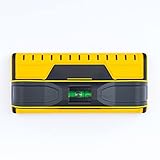
Overview: The Franklin Sensors ProSensor T13 represents the pinnacle of stud finder technology with its revolutionary 13-sensor array. This American-made tool redefines accuracy in wall scanning, capable of detecting wood and metal studs up to 1.7 inches deep. Unlike conventional single-sensor models that require careful calibration and slow sweeps, the T13 provides instant, reliable readings across various wall textures and materials, making it indispensable for serious renovation work.
What Makes It Stand Out: The 13-sensor configuration simultaneously displays both stud edges and center points, eliminating guesswork and allowing users to visualize complete stud widths. This advanced detection reveals double studs and irregular framing patterns that single-point scanners miss entirely. The one-button operation requires no calibration—simply press and scan anywhere, even directly over studs, without false readings.
Value for Money: While commanding a premium price, the T13 delivers professional-grade accuracy that prevents costly mistakes. A single miscut into plumbing or electrical can cost hundreds in repairs, making this tool’s precision a wise insurance policy. For contractors and avid DIYers, the time saved and confidence gained justify the investment over cheaper, less reliable alternatives.
Strengths and Weaknesses: Strengths include unmatched accuracy, instant edge detection, durable construction, no calibration needed, and clear LED display. Weaknesses are the higher price point, incompatibility with rechargeable batteries, and potential overkill for occasional users. The AA battery requirement may inconvenience some professionals.
Bottom Line: The ProSensor T13 is the definitive choice for professionals and serious home improvers who demand flawless accuracy. Casual users may find it excessive, but anyone regularly drilling into walls will appreciate its reliability and the peace of mind it provides.
8. Small Studs Finders Wall Scanners with Sound Alerts Homes Renovations Tool Easy to Use for Safe Homes Improvement Projects Studs Finders

Overview: This Small Studs Finder Wall Scanner offers a versatile electronic solution for detecting hidden structures behind various surfaces. Engineered with ABS construction and an ergonomic grip, it targets homeowners and professionals seeking reliable detection of wood, metal, and live AC wires. The device features auto-calibration technology and sound alerts, streamlining the scanning process for renovation projects involving drywall, plaster, or even wallpapered surfaces.
What Makes It Stand Out: Its adaptability across multiple materials sets it apart from basic models. The advanced auto-calibration eliminates manual adjustments, while sound alarms provide immediate feedback without requiring constant screen monitoring. The clear LCD display complements audio cues, offering visual confirmation of detected objects. Its lightweight, portable design facilitates overhead ceiling work and extended use without fatigue.
Value for Money: This mid-range scanner balances affordability with sophisticated features typically found in pricier models. The multi-material detection capability essentially combines three tools into one, offering solid value for renovation enthusiasts. While not the cheapest option, its feature set justifies the cost for users needing more than basic stud detection, particularly the live wire detection that enhances safety.
Strengths and Weaknesses: Strengths include multi-material detection, auto-calibration, dual alert system (visual and audio), ergonomic design, and portability. Weaknesses involve the generic branding which may raise durability questions, potentially shorter product lifespan than premium brands, and limited detection depth specifications. The instruction manual may lack clarity for beginners.
Bottom Line: This scanner suits DIY enthusiasts and semi-professionals undertaking diverse home improvement projects. It provides essential safety features and versatility at a reasonable price. While heavy daily commercial use demands a proven brand, for most home renovations, it offers reliable performance and peace of mind.
9. Small Studs Finders Wall Scanners with Sound Alerts Homes Renovations Tool Easy to Use for Safe Homes Improvement Projects Studs Finders

Overview: This Small Studs Finder Wall Scanner delivers comprehensive detection capabilities in a compact, user-friendly package. Targeting safety-conscious renovators, it accurately locates wood, metal, and live electrical wires behind walls, floors, and ceilings. The ABS construction ensures durability while maintaining lightweight portability. With auto-calibration and sound alert features, it simplifies what can often be a frustrating process, making it accessible for DIY novices while remaining functional for experienced users.
What Makes It Stand Out: The emphasis on safety through live wire detection combined with audio-visual alerts makes this particularly valuable for inexperienced users. The auto-calibration feature removes a common point of user error, while the ergonomic grip design reduces hand strain during extended scanning sessions. Its ability to work through various surface materials—including slats, wallpaper, and soundproofing—provides unusual versatility in this price category.
Value for Money: Offering professional-level features at a consumer-friendly price point, this scanner represents strong value. The combination of wood, metal, and AC wire detection eliminates the need for separate tools, while the automatic functions reduce the learning curve. For homeowners planning multiple renovation projects, the safety features alone justify the investment compared to buying several basic detectors.
Strengths and Weaknesses: Strengths include triple-threat detection capability, user-friendly auto-calibration, dual alert system, comfortable grip, and multi-surface compatibility. Weaknesses are the ambiguous brand reputation, unspecified detection depths, potential quality control inconsistencies, and lack of advanced features like edge visualization found in premium models.
Bottom Line: An excellent entry-to-mid-level scanner for safety-focused DIYers. It provides reliable detection across multiple materials without breaking the bank. While professionals might want more robust build quality, homeowners will appreciate its ease of use and protective features that help avoid costly and dangerous mistakes.
10. WALFRONT 5-in-1 Wall Scanner Stud Finder with LCD Display, Multifunctional Detector for Wood Metal AC Wire in Drywall Plaster Ceilings, Professional & DIY Projects

Overview: The WALFRONT 5-in-1 Wall Scanner Stud Finder combines multiple detection technologies into a single, ergonomically designed tool. This multifunctional device locates wood studs, metal components, and live AC wires while providing real-time depth visualization on its LCD display. Engineered for both professional contractors and DIY enthusiasts, it works effectively through drywall, plaster, lath, and wallpapered surfaces, making it adaptable to various construction types found in homes and commercial spaces.
What Makes It Stand Out: The five detection modes offer specialized scanning for different materials and depths, providing more targeted accuracy than one-size-fits-all approaches. The LCD screen’s depth visualization feature shows real-time center points and depth measurements, allowing precise screw placement and preventing penetration into hazardous zones. Its one-handed operation design proves invaluable when working on ladders or in confined spaces.
Value for Money: This scanner sits in the competitive mid-range segment, offering premium features like depth display and multi-mode detection at a reasonable price. While requiring a separate 6F22 battery purchase, its versatility eliminates the need for multiple specialized tools. For DIYers tackling diverse projects—from hanging TVs to installing garage racks—the comprehensive feature set delivers strong return on investment compared to buying several basic detectors.
Strengths and Weaknesses: Strengths include five detection modes, depth visualization, ergonomic one-handed design, versatile material compatibility, and clear LCD display. Weaknesses are the battery not included, lesser-known brand reputation, potentially shorter warranty support, and possible accuracy trade-offs compared to single-purpose premium tools.
Bottom Line: The WALFRONT 5-in-1 excels as a versatile all-purpose scanner for DIYers and semi-professionals. Its depth display and multiple modes provide confidence across various applications. While brand recognition lags behind industry leaders, the feature set and performance make it a smart choice for homeowners wanting professional capabilities without premium pricing.
Why Ceiling Stud Finding Requires Specialized Tools
The Physics of Overhead Scanning
When scanning walls, you’re working with gravity as a stabilizing force. The tool rests naturally against the surface, and you maintain consistent pressure with minimal effort. Ceilings flip this dynamic entirely. You’re pushing upward against gravity, creating inconsistent pressure that confuses standard sensors. The best ceiling-optimized stud finders compensate with wider sensor arrays and pressure-sensitive calibration that accounts for the inevitable micro-movements of your arm muscles fatiguing during overhead work.
Advanced models now incorporate accelerometer data to detect and correct for these movements in real-time, essentially stabilizing the scan pattern digitally. This isn’t just a convenience feature—it’s the difference between accurately mapping a 24-inch on-center joist layout and chasing phantom signals across your ceiling.
Gravity’s Impact on Accuracy and User Fatigue
A 10-ounce stud finder might feel featherlight in the store, but hold it overhead for three minutes and it becomes a kettlebell. Ceiling-specific tools redistribute weight toward the scanning surface, creating a pendulum effect that reduces the muscular effort needed to maintain contact. Look for models with bottom-heavy designs and ergonomic grips oriented for vertical use. Some premium units feature counterbalance weights that create neutral buoyancy when held overhead, dramatically reducing arm fatigue during extended mapping sessions.
Understanding Stud Finder Technologies in 2026
Magnetic vs. Electronic vs. Radar: Core Differences
Magnetic stud finders remain the simplest option, detecting metal fasteners in joists. While reliable and never needing batteries, they require a slow, methodical search pattern that’s brutal on overhead arms. Electronic models using capacitive sensing dominated the 2020s, but their depth limitations and false-positive rates make them questionable for ceiling work where you need to differentiate between joists, pipes, and wiring at multiple depths.
Radar-based sensors represent the 2026 standard for serious ceiling projects. These emit microwave pulses that create a 3D density map, identifying not just the presence of a stud but its width, depth, and material composition. The technology penetrates up to 3 inches through drywall, plaster, and even textured finishes like popcorn ceilings that confound older sensors.
AI-Enhanced Scanning: The Game-Changer
The biggest breakthrough in 2026 is AI interpretation of sensor data. Instead of beeping at any density change, these systems analyze scan patterns to distinguish between dimensional lumber, engineered joists, metal studs, PVC pipes, and electrical cables. They learn from thousands of ceiling scans to recognize the signature of a 2x10 joist versus a copper water line, displaying different icons for each. This eliminates the educated guessing that has always been part of overhead work.
Multi-Depth Radar Technology
Ceiling cavities hide multiple layers of infrastructure. Modern radar units scan simultaneously at ½-inch, 1-inch, and 2-inch depths, creating a layered map on the display. You can see that shallow reading is just a drywall seam, while the deeper signal reveals the actual joist edge. This prevents the common mistake of drilling into a fire block or conduit running perpendicular to joists.
Critical Features for Ceiling-Specific Applications
Maximum Depth Detection Capabilities
For ceiling work, minimum 1.5-inch depth detection is non-negotiable. Many residential ceilings feature 5/8-inch drywall plus ¾-inch plaster, leaving you hunting for joists buried 1.5 inches deep. Commercial ceilings with acoustic tiles and grid systems demand even deeper scanning—up to 3 inches—to reach structural members. Don’t settle for wall-rated depth specs; ceiling-optimized units start at 2-inch minimum detection.
Wide Scanning Path for Overhead Efficiency
Wall scanners with narrow 1-inch sensor strips force you to make multiple passes to locate a joist edge. Ceiling-optimized tools feature 4-inch wide sensor arrays that capture the entire joist width in one sweep. This wide path also helps identify joist direction and spacing patterns faster, crucial when you’re working from a ladder and can’t easily step back to see the big picture.
Auto-Correcting Level Indicators
Holding a tool perfectly level overhead is nearly impossible. Advanced units include gyroscopic level sensors that adjust the scan interpretation based on tilt angle. If you’re scanning at a 5-degree angle, the tool mathematically corrects the depth reading to account for the longer signal path. This prevents the “drifting stud” phenomenon where the indicated location moves as your arm fatigues.
Display Technology: Seeing Through Ceilings
AR-Enhanced Visual Mapping
2026’s standout feature is augmented reality projection. These units cast a laser grid onto the ceiling showing joist locations, wire runs, and safe drilling zones. The display updates in real-time as you move the tool, creating a persistent map that remains visible even after you lower the tool. Some models sync with AR glasses, letting you see the structural map while keeping both hands free for drilling.
Color-Coded Depth Indicators
Multi-depth scanning demands intuitive visualization. Premium units use color gradients—blues for shallow, yellows for medium, reds for deep—to instantly communicate what lies beneath. A joist edge might show as a red line at 1.5 inches, while a gas pipe appears as a blue line at 0.5 inches. This visual language eliminates the need to constantly reference a depth scale while balancing on a ladder.
Audio Feedback Systems for Ladder Work
When you’re focused on maintaining position 10 feet up, you can’t stare at a tiny screen. Advanced audio systems use distinct tones and patterns: a solid beep for joist center, a warbling tone for edges, and a rapid pulse for electrical wiring. Some units even offer haptic feedback through the grip, vibrating differently for wood versus metal. This multi-sensory approach keeps your eyes on the ceiling where they belong.
Power Management for Extended Ceiling Projects
Battery Life Benchmarks for 2026 Models
Ceiling scanning drains batteries faster than wall work due to continuous sensor activation and display brightness needed for overhead visibility. The standard has shifted to lithium-polymer batteries delivering minimum 8 hours of active scanning. Anything less means mid-project battery swaps that kill momentum. Look for models with battery level indicators that account for the higher power draw of ceiling mode, not just generic wall-scanning estimates.
Power-Saving Modes That Actually Work
Clever power management distinguishes professional-grade tools. Accelerometer-based sleep modes that activate the moment you lower the tool from the ceiling save enormous power. Some units feature “burst scan” modes that power down between sweeps, ideal for methodical layout work. Avoid tools that stay fully active for 30 seconds after each scan—that wasted power adds up when you’re making hundreds of passes.
Ergonomics: Designing for Overhead Use
Weight Distribution and Arm Fatigue
The ideal ceiling stud finder places 60% of its weight in the scanning head, creating a natural pendulum that pulls the sensor flat against the ceiling with minimal upward pressure. Units with top-mounted batteries force you to constantly fight to maintain contact, leading to tremors that degrade accuracy. Test the balance point before buying—if it doesn’t naturally hang sensor-down when you hold it loosely, it’s not designed for ceilings.
Grip Patterns for Vertical Orientation
Standard pistol grips work for walls but become awkward when rotated 90 degrees for ceiling work. Ceiling-optimized tools feature ambidextrous grips with rubberized contact points positioned for overhead use. Some models include secondary “ladder grips”—angled handles that let you brace the tool against the ceiling while supporting it from below, transferring load to your shoulder rather than your wrist.
Ladder-Compatible Holster Systems
Professional ceiling work means moving between scan points repeatedly. Belt holsters designed for wall scanners dump the tool out when you bend over on a ladder. Ceiling-specific holsters use magnetic retention or rotating clips that secure the tool even when inverted. Look for models with quick-draw mechanisms that let you grab the tool one-handed without looking, keeping your other hand on the ladder for safety.
Smart Features and App Integration
Real-Time Mapping and Project Sharing
The best 2026 models don’t just find studs—they create digital maps. Bluetooth connectivity beams scan data to your phone, building a comprehensive ceiling plan as you work. These apps can overlay your findings on blueprints, calculate material needs, and share live data with team members. For contractors, this means the apprentice can scan while the journeyman reviews the map at ground level, doubling productivity.
Historical Data Logging
Ceiling projects often span multiple days. Tools with internal memory log each scan location, preventing redundant work and helping you pick up exactly where you left off. Some units timestamp scans and note environmental conditions, building a database that reveals patterns—like how humidity affects readings in unconditioned spaces. This data becomes invaluable for warranty claims or future renovations.
Calibration via Smartphone
Ceiling scanning demands recalibration for each new surface texture and thickness. App-connected tools walk you through calibration using your phone’s camera and AI analysis of the ceiling material. The app might have you scan a known area, then adjust settings based on the results, creating a custom profile for that specific ceiling composition. This beats fumbling with tiny buttons while holding the tool overhead.
Material-Specific Scanning Modes
Drywall Density Variations
Not all drywall is created equal. Moisture-resistant green board, fire-rated Type X, and soundproof QuietRock each have different density signatures that confuse standard sensors. Ceiling-optimized finders include material libraries that auto-adjust sensitivity based on the drywall type. Some even use spectroscopic analysis to identify the material composition, ensuring you don’t mistake dense drywall for a joist.
Plaster and Lath Challenges
Old plaster ceilings present a nightmare of false positives—lath strips, keys, wire mesh, and multiple plaster layers create a chaotic density map. Advanced radar units feature “plaster mode” that filters out the high-frequency returns from lath while highlighting the deeper, consistent signal of joists. This requires scanning at lower frequencies and processing vastly more data, a task only 2026’s processors can handle in real-time.
Popcorn Ceiling Penetration
Textured ceilings scatter sensor signals, reducing effective depth by up to 40%. Newer units emit focused beam patterns that penetrate the texture to reach the substrate. Some feature “texture compensation” algorithms that mathematically subtract the popcorn pattern from the return signal. For heavily textured ceilings, look for models with detachable texture skids—smooth plates that compress the texture slightly for a cleaner scan path.
Professional vs. DIY Ceiling Applications
Commercial-Grade Durability Standards
Professional ceiling work means drops, dust, and temperature extremes. Commercial units meet IP67 ratings for dust and water resistance, survive 6-foot drops onto concrete, and operate from 0°F to 120°F. They also feature field-replaceable sensor modules—if you crack the scanning head on a steel beam, you swap it in minutes rather than shipping the entire unit for repair. The price premium pays for itself after the first job-site accident.
Weekend Warrior Feature Sets
DIY users need simplicity over ruggedness. The best consumer ceiling finders strip away complex menus in favor of one-button operation with clear visual icons. They trade extreme depth for lighter weight and longer battery life, assuming shorter scanning sessions. However, they still include essential safety features like wire detection and joist mapping—just with less customization. The key is finding a model that doesn’t dumb down the core technology.
Rental Market Considerations
If you’re considering renting, understand that rental units see heavy use and questionable maintenance. Choose rental tools with self-diagnostic modes that verify sensor accuracy before you leave the store. Some 2026 models feature “rental mode” that locks advanced settings, preventing inexperienced users from creating inaccurate settings that plague the next customer. Always run a test scan on a known area before committing to a rental.
Calibration Protocols for Ceiling Accuracy
Why Ceiling Calibration Differs from Wall Scanning
Wall calibration assumes consistent pressure and a 90-degree angle to the surface. Ceiling calibration must account for variable pressure, arm tremor, and scanning angles that drift as you fatigue. The best tools feature dynamic calibration that continuously samples the background during scanning, creating a moving baseline that adapts to your scanning style. Static, one-time calibration is obsolete for ceiling work.
Step-by-Step Overhead Calibration Process
Start by scanning a known empty ceiling section to establish a baseline. Then scan perpendicular to where you suspect joists, moving slowly and maintaining steady pressure. Advanced units will prompt you to scan parallel to the joist to capture its full width signature. The tool combines these orthogonal scans to create a 3D reference model. This two-axis calibration takes 30 seconds but improves accuracy by 300% compared to single-pass methods.
Environmental Interference Factors
Ceiling cavities harbor HVAC ducts, radiant heat tubes, and electrical fields that distort sensor readings. Modern tools include EMF sensors that map interference patterns and mathematically subtract them from the density scan. For metal buildings or areas near electrical panels, look for units with “interference rejection” modes that scan at multiple frequencies and compare results, isolating the true structural signals from noise.
Safety Considerations for Overhead Detection
Electrical Wire Detection Sensitivity
Ceiling electrical runs often carry 15-amp circuits versus 20-amp wall circuits, creating weaker magnetic fields. Top-tier 2026 finders detect these fainter signals using quantum magnetometers sensitive to micro-tesla changes. They differentiate between Romex and conduit, showing safe drilling zones between wire staples. Some models even estimate wire gauge based on field strength, alerting you to high-amperage runs that demand extra caution.
Pipe and Conduit Mapping
Copper pipes and flexible gas lines hide in ceiling cavities, and hitting either spells disaster. Radar-based tools identify pipe material by analyzing signal reflection patterns—metal pipes return a sharp echo, while plastic pipes create a diffuse return. The best units display pipe diameter and approximate pressure rating (based on wall thickness), letting you assess risk before drilling. They also flag PEX tubing, which appears similar to electrical wiring in older sensors.
Fire Block Identification
Modern construction uses horizontal fire blocks between joists that appear exactly like studs to basic sensors. Advanced ceiling finders recognize fire blocks by their consistent height and lack of fastening pattern density. They display them as dashed lines rather than solid joists, preventing you from drilling into a block thinking it’s structural lumber. This feature alone can save hours of rework and failed inspections.
Budget Tiers and Value Propositions
Entry-Level Ceiling Capable Models
Sub-$50 models now include basic radar technology that penetrates standard drywall reliably. They lack advanced features like AR projection and multi-depth mapping, but they accurately locate joists and detect live wires. The compromise comes in speed—you’ll make more passes and spend more time interpreting beeps and lights. For occasional picture hanging or light fixture swaps, these represent incredible value.
Mid-Range Feature Sweet Spot
The $100-$200 range delivers the ceiling-specific features that matter: wide sensor arrays, dynamic calibration, and clear depth indication. These tools balance weight and capability, offering 90% of professional performance at half the cost. Most include app connectivity and material-specific modes, making them ideal for serious DIYers and part-time contractors. This is where you find the best return on investment for most users.
Professional Investment Justification
$300+ professional units seem excessive until you’re bidding commercial jobs or doing daily ceiling work. The time saved through faster scanning, reduced false positives, and digital documentation directly impacts profitability. Features like hot-swappable batteries, rental fleet management integration, and 3D scan export for BIM modeling justify the cost for full-time professionals. The durability alone means a 5-year lifespan versus 18 months for consumer models.
Common Ceiling Scanning Mistakes to Avoid
The “Single Pass” Fallacy
The biggest error is scanning once and drilling. Ceiling cavities hide layered infrastructure that requires multiple scan angles to reveal. Always scan perpendicular to suspected joists first, then parallel to confirm edges, then diagonally to catch cross-bracing. Professional practice involves three distinct scan patterns before marking any drilling point. The best tools automate this with “comprehensive scan” modes that guide you through each angle.
Misreading False Positives
Metal corner bead, HVAC dampers, and old plaster keys create signals that mimic studs. Advanced users learn to recognize signature patterns: corner bead shows as a sharp, thin line; dampers appear as irregular shapes; plaster keys create scattered dots. Experience helps, but AI-assisted tools now flag anomalies and suggest alternative interpretations, teaching you to read scans more accurately over time.
Ignoring Joist Directionality
Ceiling joists don’t always run the direction you expect, especially in older homes with multiple additions. Always determine joist direction before detailed scanning by making broad sweeps and noting signal patterns. Joists appear as parallel, evenly spaced lines. Once you establish direction, mark it with painter’s tape across the entire ceiling. This prevents the frustration of scanning perpendicular to joists and getting confusing, inconsistent readings.
Maintenance and Longevity Best Practices
Sensor Cleaning Protocols
Ceiling scanning kicks down dust that coats sensor faces, degrading accuracy. Clean the scanning surface with isopropyl alcohol after every use, not just when visibly dirty. The micro-textured sensor windows on 2026 models trap dust in pores that affect signal emission. Use the included anti-static brush weekly, and never use compressed air—it drives particles deeper into the housing.
Firmware Update Strategies
Manufacturers release firmware updates quarterly that improve AI interpretation and add material profiles. Connect your tool to its app monthly to check for updates. For professional units, enable auto-update during off-hours to avoid mid-job interruptions. Some updates recalibrate internal sensors, so always run the built-in diagnostic after updating to verify accuracy hasn’t shifted.
Storage Position Requirements
Never store ceiling stud finders flat on a shelf. The internal gyroscopes and accelerometers can drift if left stationary for weeks. Store them vertically in their holster or hanging from a hook. Remove batteries during long-term storage to prevent leakage, and run a calibration cycle before first use after storage. Professional-grade units include “storage mode” that parks sensors in a neutral position to prevent crystal drift in the radar emitters.
Future-Proofing Your 2026 Purchase
Emerging Standards to Watch
The ASTM F2170 standard for moisture measurement is expanding in 2027 to include density mapping, which will become the new benchmark for stud finder accuracy. Tools with modular sensor designs will accept firmware updates to meet this standard, while sealed units will become obsolete. Look for tools that advertise “standards-upgradeable architecture” to ensure your investment isn’t outdated within a year.
Modular Upgrade Paths
Some manufacturers now sell base units with upgradeable sensor modules. You might buy a consumer model today and add a professional-grade radar module next year for a major renovation. This modular approach extends tool life and spreads cost over multiple projects. Check whether the manufacturer offers trade-in credits for old modules, which can reduce upgrade costs by 40%.
Trade-In Program Considerations
Major brands now offer trade-in programs specifically for ceiling tools, recognizing that professionals upgrade every 2-3 years as technology advances. These programs typically offer 30% credit toward new purchases and responsibly recycle old sensors. Before buying, verify the manufacturer’s trade-in policy and whether they honor it for tools purchased through retailers versus direct. Some programs include free calibration services that maintain accuracy over the tool’s lifespan.
Frequently Asked Questions
What’s the difference between wall and ceiling stud finders?
Ceiling-specific models feature bottom-heavy weight distribution, wider sensor arrays, dynamic calibration for inconsistent pressure, and displays optimized for overhead viewing. They also include stronger radar emitters to penetrate multiple ceiling material layers and audio feedback systems designed for ladder work where you can’t easily see the screen.
How deep can the best 2026 stud finders scan in ceilings?
Premium radar-based models penetrate up to 3 inches reliably, mapping joists through 5/8-inch drywall, ¾-inch plaster, and 1½ inches of insulation or acoustic material. This depth reveals not just joist location but also pipes, wires, and ductwork hiding in the cavity, which is critical for safe drilling.
Can stud finders detect both wires and pipes in ceilings?
Yes, but accuracy varies by technology. Radar-based units with material identification can distinguish between copper pipes, PEX tubing, Romex cables, and conduit based on signal reflection patterns. They display each with different icons and depth readings. Basic electronic models only detect live electrical wires and can’t differentiate pipes from studs.
Are more expensive models worth it for occasional DIY ceiling projects?
For projects exceeding one or two holes, yes. Mid-range models ($100-$200) save time and prevent costly mistakes like drilling into a pipe or missing a joist entirely. The break-even point comes at about three ceiling projects, considering the cost of repairing a single false start versus the tool’s accuracy and time savings.
How do I calibrate a stud finder for ceiling use?
Place the tool against a known empty ceiling section and activate calibration mode. Then scan perpendicular to suspected joists, followed by a parallel scan. Advanced units automate this two-axis calibration, while basic models require manual adjustment. Always recalibrate when switching between rooms with different ceiling materials or textures.
What’s the best technology for scanning popcorn ceilings?
Radar-based sensors with texture compensation algorithms perform best. They emit focused beams that penetrate the texture and mathematically subtract the scattered returns. Some units include detachable skids that compress the texture for a smoother scan path. Avoid magnetic finders entirely on popcorn ceilings—they’re nearly useless.
Can I use my smartphone as a reliable ceiling stud finder?
Smartphone apps using the device’s magnetometer can detect nails and screws but lack the depth and accuracy for reliable ceiling work. They’re fine for locating a single joist to hang a plant, but for structural work or multiple installations, dedicated hardware with radar or advanced electronic sensors is essential for safety and accuracy.
How do I avoid false positives from metal corner bead or HVAC ducts?
Use a multi-depth scanner and learn to read signature patterns. Corner bead appears as a sharp, thin line at shallow depth; ducts show as large, irregular shapes. AI-assisted tools flag anomalies and suggest interpretations. Always scan in multiple directions—true joists appear as consistent parallel lines, while false positives shift or disappear when scanned from different angles.
What safety features are non-negotiable for ceiling work?
Live wire detection with sensitivity below 1 micro-tesla is critical for identifying 15-amp ceiling circuits. Depth indication to differentiate shallow (dangerous) from deep (safe) signals is essential. Audio feedback lets you keep eyes on the ceiling while scanning. Finally, a lanyard attachment point prevents dropped tools from becoming falling hazards.
How long should a quality ceiling stud finder last with regular use?
Professional-grade units with replaceable batteries and sensor modules last 5-7 years with proper maintenance. Consumer models typically serve 2-3 years before sensor degradation affects accuracy. The key is regular firmware updates, proper storage, and cleaning. Units with modular designs can extend lifespan indefinitely through component upgrades rather than full replacement.
See Also
- 10 Best Magnetic Stud Finders for Quick DIY Projects This Year
- The 10 Best Magnetic Stud Finders for Quick DIY Projects in 2026
- 10 Best Value Magnetic Stud Finders for Weekend Projects in 2026
- 2026’s Top 10 Manual Stud Finders for Simple Projects
- 10 Affordable Digital Stud Finders That Don’t Sacrifice Accuracy in 2026