Table of Contents
When you’re framing a deck in scorching sun or laying out foundation lines in sideways rain, your tape measure isn’t just a tool—it’s your most trusted job site companion. Outdoor construction projects in 2026 demand more than the flimsy hardware store special that buckles at the first gust of wind. The difference between a precision-fit timber frame and a costly miscalculation often comes down to blade standout, corrosion resistance, and a hook that won’t bend when you need it most.
As job sites become more demanding and building codes increasingly precise, tape measure technology has evolved dramatically. Today’s outdoor-ready models feature advanced polymer coatings, sealed internal mechanisms, and ergonomic designs that reduce hand fatigue during 10-hour days. Whether you’re a seasoned contractor or a dedicated DIYer tackling a backyard pavilion, understanding what separates a weather-resistant workhorse from a disappointing dust-collector will save you time, money, and frustration.
Top 10 Tape Measures For Construction
Detailed Product Reviews
1. DEWALT Atomic Compact Series 30 ft. Tape Measure (DWHT38130S)

Overview: The DEWALT Atomic Compact Series tape measure delivers professional-grade performance in a more ergonomic package. This 30-foot tape is engineered for tradespeople who prioritize control and durability without sacrificing reach. The compact grip design reduces hand fatigue during repetitive measurements while maintaining the rugged reliability expected from DEWALT’s lineup.
What Makes It Stand Out: The 20% more compact grip fundamentally changes how the tool feels in hand, offering superior maneuverability in tight spaces. The integrated finger brake gives you precise blade control that prevents sudden snap-backs and allows for accurate one-handed operation. Fractional blade graphics eliminate mental math, displaying 1/8, 1/16, and 1/32 increments clearly, while the durable blade coating resists abrasion and moisture for extended lifespan.
Value for Money: Priced in the premium tier ($20-25), this tape justifies its cost through professional features that boost productivity. The finger brake alone prevents costly measurement errors and potential injuries. Compared to budget options, the enhanced ergonomics and blade durability deliver ROI within months for daily users. It’s an investment in precision rather than a disposable tool.
Strengths and Weaknesses:
- Strengths: Exceptional ergonomic design; precise finger brake control; clear fractional markings; robust blade coating; compact form factor
- Weaknesses: Higher price point may deter casual users; 30-foot length may be insufficient for some framing applications; limited color options
Bottom Line: Ideal for professionals seeking superior control and comfort. The DEWALT Atomic Compact Series earns its place in any tool belt through thoughtful engineering that translates to real-world efficiency gains.
2. CRAFTSMAN 25-Ft Tape Measure with Fraction Markings, Retractable, Self-Locking Blade (CMHT37225)

Overview: CRAFTSMAN’s 25-foot tape measure targets DIY enthusiasts and homeowners with a straightforward, reliable design. This retractable tape prioritizes ease of use through printed fraction markings and a self-locking mechanism that simplifies solo measurements. The rubber overmold provides confident handling without adding unnecessary bulk.
What Makes It Stand Out: The standout feature is the comprehensive fraction printing directly on the blade, making it accessible for users uncomfortable with traditional tick marks. The self-locking blade automatically holds position when extended, freeing your hands to mark or cut. The rubber overmold grip offers secure handling even in dusty or slightly wet conditions, reducing slippage.
Value for Money: At roughly $10-15, this tape represents excellent value for occasional to moderate use. It provides essential professional features like fraction markings and self-locking at a fraction of premium brand prices. While it lacks advanced coatings and extreme standout length, the price-to-performance ratio suits non-professional users perfectly.
Strengths and Weaknesses:
- Strengths: Affordable pricing; clear fraction markings; secure rubber grip; reliable self-locking mechanism; trusted brand warranty
- Weaknesses: Basic blade coating wears faster than premium models; 25-foot length limits reach; no standout measurement specified; limited durability for heavy jobsite use
Bottom Line: A smart purchase for homeowners and DIYers who need reliable measurements without professional-grade investment. It handles household projects and light construction tasks competently while keeping costs reasonable.
3. STANLEY FATMAX Tape Measure, 25-Foot (33-725)

Overview: The STANLEY FATMAX has achieved legendary status on construction sites for its exceptional reach and durability. This 25-foot tape features a robust high-impact case designed to survive drops and harsh conditions. Engineered for professionals working alone, it extends measurement capabilities significantly beyond standard tapes.
What Makes It Stand Out: The remarkable 14-foot standout allows single-person measurements across rooms and along walls without blade collapse. BladeArmor coating reinforces the first six inches—where most tapes fail—dramatically extending tool life. The extra-wide blade with large font numbers enhances readability in low-light conditions, while the non-slip rubber case provides grip and impact protection.
Value for Money: Positioned at $15-20, the FATMAX delivers professional durability at a mid-range price. The standout length alone saves time and frustration, justifying the cost over budget alternatives. For contractors who measure daily, the extended blade life translates to fewer replacements, making it economically sound despite not being the cheapest option.
Strengths and Weaknesses:
- Strengths: Outstanding 14-foot standout; BladeArmor coating prevents hook failure; highly visible markings; rugged case; excellent jobsite durability
- Weaknesses: Bulkier than compact models; blade retraction can be aggressive; overkill for light household tasks; hook rivets may loosen with extreme abuse
Bottom Line: The jobsite standard for good reason. If you work alone and need reliable, long-reaching measurements, the STANLEY FATMAX remains the benchmark that competitors chase. Its durability justifies every penny for professional users.
4. WORKPRO 25FT Pink Tape Measure, 1/8 Fractions Easy Read Measuring Tape, Retractable Nylon Coating Measurement Tape Accuracy 1/32, Magnetic Hook, Belt Clip, Rubber Protective Casing - Pink Ribbon

Overview: WORKPRO’s 25-foot pink tape measure combines practical functionality with social consciousness, supporting breast cancer awareness initiatives. This feature-packed tool targets users who want premium capabilities without premium pricing. The bright yellow blade with high-contrast markings ensures visibility, while the nylon coating protects against rust and wear.
What Makes It Stand Out: The 7.2-foot standout provides excellent rigidity for vertical measurements, while the magnetic hook secures to metal studs and pipes hands-free. Uncommon in this price class, the wrist strap and belt clip offer versatile portability. The 1/32-inch accuracy and clear 1/8-inch fractional marks cater to precision work, and the rubber protective casing provides substantial drop protection.
Value for Money: Typically priced under $15, this tape punches above its weight class. It includes magnetic hooks, wrist straps, and superior coatings usually found on $25+ tapes. The charitable component adds value for socially conscious buyers. For budget-minded users wanting premium features, it’s nearly unbeatable.
Strengths and Weaknesses:
- Strengths: Magnetic hook for hands-free use; wrist strap and belt clip; excellent 1/32 accuracy; durable nylon coating; impact-resistant rubber case; supports charity
- Weaknesses: Pink color may not appeal to all users; lesser-known brand; blade retraction speed can be fast; magnetic strength may weaken over time
Bottom Line: An exceptional value proposition that doesn’t compromise on features. Whether you’re a DIYer or a pro on a budget, this tape delivers premium functionality with the added benefit of supporting a worthy cause.
5. QWORK Tape Measure, 1/2" x 330’ Open Reel Dual Sided Fiberglass Tape Measure for Engineer, Yard and Field, Measuring Tape
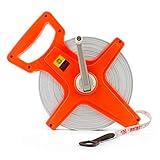
Overview: The QWORK open reel tape measure serves a completely different purpose than standard pocket tapes, designed for surveying, landscaping, and large-scale layout work. This 330-foot fiberglass tape resists water and stretching, providing reliable measurements across vast distances where steel tapes would be impractical.
What Makes It Stand Out: The extraordinary 330-foot length enables measurements across entire building sites in one stretch. Fiberglass construction eliminates rust concerns and provides flexibility without the kinking risk of steel. Dual-sided printing (imperial and metric) serves diverse project requirements. The ergonomic handle and fast-rewind pivot reel prevent hand fatigue during extensive retraction.
Value for Money: Priced around $25-35, this specialized tool offers excellent value for its niche application. Standard 25-foot tapes cannot substitute for its capabilities. For surveyors, fence installers, or excavation contractors, the time saved and accuracy maintained over long distances justifies the cost immediately. It’s a purpose-built tool that delivers precisely what its target users need.
Strengths and Weaknesses:
- Strengths: Massive 330-foot capacity; water-resistant fiberglass; dual unit measurements; ergonomic rewind handle; lightweight for its length
- Weaknesses: Not suitable for fine carpentry; 1/2-inch width lacks standout rigidity; bulky for storage; less precise for short measurements; requires two-person operation for full length
Bottom Line: A specialized instrument that excels in its intended role. Purchase this for long-distance outdoor measurements, not for general construction. For surveyors and landscapers, it’s an essential, fairly-priced tool that outperform steel alternatives in harsh conditions.
6. DEWALT Atomic Compact Series 25 ft. Tape Measure (DWHT38125S)

Overview: The DEWALT Atomic Compact Series tape measure delivers professional-grade performance in a streamlined package. This 25-foot tape features a 13-foot maximum reach and incorporates several user-focused design elements that prioritize efficiency and durability for daily jobsite use. The blade showcases fractional graphics for quick reading, while a protective coating extends its lifespan against abrasion and moisture.
What Makes It Stand Out: The 20% more compact grip significantly improves handling compared to standard models, reducing hand fatigue during extended use. The integrated finger brake is a standout feature, offering superior blade control that prevents dangerous snapbacks and allows for precise incremental measurements. The fractional blade graphics are prominently displayed, making it easy to read measurements at a glance without squinting or second-guessing.
Value for Money: Positioned in the premium category, this tape measure justifies its price through ergonomic innovations and DEWALT’s reputation for durability. While costing more than basic alternatives, the enhanced control features and compact design translate to measurable productivity gains for professionals. DIY enthusiasts may find the investment worthwhile for the comfort alone.
Strengths and Weaknesses: Pros: Exceptional ergonomics with reduced grip size; innovative finger brake system; clear fractional markings; durable blade coating; strong 13-foot reach capability. Cons: Premium pricing may deter casual users; 13-foot reach is slightly less than some competitors; limited color options for visibility.
Bottom Line: This is an excellent choice for tradespeople who prioritize comfort and control. The Atomic Compact Series tape measure earns its place in any professional’s toolkit through thoughtful design that genuinely improves the measuring experience.
7. CRAFTSMAN 25-Ft Tape Measure with Fraction Marketing, Retractable, Manual-Locking Blade (CMHT37443S)

Overview: CRAFTSMAN’s 25-foot tape measure combines traditional reliability with enhanced readability features. Designed for both DIYers and professionals, this model emphasizes user comfort with extensive rubber overmolding while delivering a 13-foot maximum reach for solo measurements. The manual-locking blade provides secure hold when extended.
What Makes It Stand Out: The fraction marketing system truly shines, with fractions printed in alternating colors and heights on the blade. This visual differentiation makes reading measurements dramatically faster and reduces errors, especially in low-light conditions. The extensive rubber overmold isn’t just for comfort—it provides excellent impact resistance when dropped from ladders or scaffolding.
Value for Money: This tape measure sits in the sweet spot between budget and premium pricing. CRAFTSMAN has delivered pro-level features like the enhanced grip and fraction markings without the top-tier price tag. For homeowners and semi-professional users, it offers exceptional return on investment compared to disposable hardware store brands.
Strengths and Weaknesses: Pros: Superior fraction readability with color coding; comfortable, secure rubber grip; good impact resistance; reliable manual lock; 13-foot reach. Cons: Manual lock requires two-handed operation; brand perception lags behind premium competitors; blade coating could be more durable for heavy professional use.
Bottom Line: A solid, dependable tape measure that excels in readability. Perfect for users who frequently work with fractional measurements and want professional features without paying premium prices.
8. 2-in-1 Laser Tape Measure - ristophe 197Ft Digital Tape Measure & 16Ft Measuring Tape with LCD Display - Pythagorean, Area, Volume Laser Measuring Tool for Construction & Woodworker (M/in/Ft Unit)

Overview: This innovative hybrid tool merges a 197-foot laser distance measure with a traditional 16-foot autolock tape, creating unmatched versatility for modern construction and woodworking. The digital component offers six measurement modes including area, volume, and Pythagorean calculations, while the physical tape handles short, precise measurements where lasers falter.
What Makes It Stand Out: The six laser measurement modes transform one-person operations, allowing accurate diagonal and indirect measurements previously requiring two people. The Type-C charging port delivers over 5,000 measurements per charge, eliminating battery costs and environmental waste. The high-contrast LCD display remains visible in challenging lighting, while the integrated belt clip ensures portability.
Value for Money: Though priced higher than conventional tapes, this tool effectively replaces separate laser and manual measures. For professionals regularly measuring large spaces, the efficiency gains and single-operator capability quickly offset the premium. The rechargeable battery adds long-term value compared to battery-powered alternatives.
Strengths and Weaknesses: Pros: Versatile 2-in-1 design; six laser modes including Pythagorean; rechargeable with excellent battery life; one-person operation for complex measurements; auto-lock tape. Cons: 16-foot tape length is limiting; laser requires reflective surfaces and clear line-of-sight; higher learning curve; bulkier than standard tapes.
Bottom Line: Ideal for tech-forward professionals and serious DIYers who frequently measure large or inaccessible areas. The combination of digital precision and traditional tape functionality makes this a versatile, time-saving investment.
9. Milwaukee 48-22-0325 Compact Wide Blade Magnetic Tape Measures

Overview: Milwaukee’s 25-foot magnetic tape measure is engineered for maximum durability and functionality in demanding jobsite conditions. The wide 1-inch blade extends up to 15 feet of reach—the longest in its class—while the magnetic tip securely attaches to EMT conduit and steel studs. A five-point reinforced frame and nylon blade protection ensure longevity.
What Makes It Stand Out: The magnetic hook is exceptionally strong, enabling true one-handed measurements on steel surfaces that would otherwise require assistance. The impressive 15-foot standout allows users to measure wide spans without support. Milwaukee’s anti-tear coating on the first six inches addresses the most common failure point, while the wide blade provides rigidity for straighter, more accurate extended measurements.
Value for Money: This premium-priced tape delivers professional-grade durability and unique magnetic functionality. For electricians, steel framers, and metalworkers, the magnetic feature alone justifies the cost. The extended reach and reinforced construction mean fewer replacements, offering excellent long-term value despite the higher upfront investment.
Strengths and Weaknesses: Pros: Outstanding 15-foot reach; powerful magnetic tip; wide blade stability; five-point reinforced frame; anti-tear coating on blade end. Cons: Premium pricing; magnetic tip adds weight; overkill for non-metal applications; slightly bulkier than compact models.
Bottom Line: The ultimate tape measure for professionals working with steel materials. Milwaukee’s combination of reach, magnetic convenience, and jobsite durability makes this an indispensable tool for metal-intensive trades.
10. Komelon SL2825 Self Lock 25-Foot Power Tape

Overview: The Komelon SL2825 offers professional features at a budget-friendly price point, centering on its automatic blade lock mechanism. This 25-foot tape measure includes a nylon-coated blade for durability and stud markings every 16 inches for framing convenience. The high-carbon steel construction ensures reliable retraction and blade strength for daily use.
What Makes It Stand Out: The self-locking mechanism is the star feature, automatically securing the blade at any length and retracting smoothly with a button press—eliminating the need for manual locks. Stud markings printed directly on the blade streamline framing and layout work. The impact-resistant ABS case with rubber overmold provides surprising durability for the price tier.
Value for Money: This tape measure represents exceptional value, offering auto-lock convenience typically found in premium brands at a fraction of the cost. For homeowners, DIYers, and even budget-conscious professionals, it delivers reliable performance without sacrificing key features. The nylon coating extends blade life beyond uncoated alternatives in this price range.
Strengths and Weaknesses: Pros: Convenient auto-lock system; clear stud markings; durable nylon-coated blade; impact-resistant case; excellent affordability. Cons: Brand lacks premium cachet; blade hook may loosen over time; retraction spring less robust than professional-grade models; limited warranty support.
Bottom Line: An outstanding budget option that doesn’t compromise on core functionality. Perfect for homeowners and occasional users who want auto-lock convenience and decent durability without paying premium prices.
Why Outdoor Construction Demands Specialized Tape Measures
Outdoor job sites present a unique set of challenges that interior-grade tools simply aren’t engineered to handle. Temperature swings from dawn frost to afternoon heat cause metal components to expand and contract, while UV exposure degrades plastic housings and marking clarity. Dust and grit work their way into retraction mechanisms, and moisture can corrode standard steel blades within weeks. A proper outdoor construction tape measure features sealed bearings, corrosion-resistant hardware, and blade coatings that laugh at abrasion from rough-sawn lumber and concrete forms.
The physics alone justify the upgrade. When you’re measuring solo across a 24-foot span for rafter placement, you need a blade that can extend 8-10 feet without support—something budget tapes can’t manage. Wind resistance becomes a real factor too; wider blades with reinforced edges cut through breeze instead of fluttering uselessly. For foundation work, you’ll appreciate a case that survives a 20-foot drop onto compacted gravel and a hook that maintains true zero after hundreds of snap-back retractions.
Blade Material and Coating Technology
The heart of any tape measure is its blade, and outdoor applications require serious armor. Standard steel blades, while precise, rust rapidly when exposed to morning dew or coastal air. For 2026, look for blades featuring nylon-bonded coatings or proprietary polymer treatments that create a near-impenetrable barrier against moisture while maintaining flexibility. These advanced coatings also reduce glare—crucial when you’re squinting at measurements in harsh midday sun.
Fiberglass blades deserve serious consideration for certain outdoor tasks. They won’t rust, resist kinking better than steel in cold weather, and maintain accuracy across temperature extremes. The trade-off? Typically less standout length and slightly wider marks that can reduce precision on fine trim work. For general framing and site layout, however, a premium fiberglass model with reinforced edges often outperforms steel in longevity. Some manufacturers now offer hybrid blades with steel cores and composite coatings, delivering the best of both worlds for professionals who refuse to compromise.
Standout Length and Blade Width Considerations
Standout—the maximum unsupported extension before the blade buckles—separates professional-grade tools from homeowner specials. For outdoor construction, aim for a minimum 8-foot standout on a 25-foot tape, with premium models achieving 10-12 feet. This capability means you can measure across wide gaps without a helper, essential for solo contractors or when your apprentice is fetching lumber. Longer standout requires both blade width and thickness; 1-1/4 inch blades provide superior rigidity compared to standard 1-inch widths, though they add weight to your belt.
Blade width also affects wind performance. That extra quarter-inch creates enough stiffness to punch through gusts that would fold narrower blades. For concrete formwork and foundation layout, consider a 30-foot or 35-foot model with a 1-1/4 inch blade—the weight penalty is worth it when you’re measuring diagonals for square. Compact 16-foot tapes have their place for trim and detail work, but for outdoor structural projects, the 25-footer remains the sweet spot, with 30-foot models gaining popularity for commercial work.
Durability and Weather Resistance Features
IP ratings—Ingress Protection codes—aren’t just for electronics anymore. Top-tier outdoor tape measures now feature IP54 or higher ratings, meaning they’re protected against dust ingress and water spray from any direction. Look for rubber overmolding that seals the seam between the case halves, and a blade exit port with integrated wipers that clean the blade during retraction while preventing water entry. The best designs include drainage channels that direct water away from internal mechanisms if the tool gets submerged.
Temperature operating range matters more than you might think. Standard tapes become brittle below freezing and can bind up in extreme heat. Professional outdoor models specify functional ranges from -20°F to 120°F, with special cold-weather versions available for northern climates. The case material itself is critical—ABS plastic cracks in cold, while polycarbonate or TPE-overmolded cases remain pliable. In 2026, we’re seeing more manufacturers add UV inhibitors to prevent case fading and brittleness after months in a truck bed.
Hook Design and Accuracy Standards
The hook end takes the most abuse on any job site, and outdoor work multiplies that punishment. A proper construction hook features three or four rivets (not two) securing it to the blade, with reinforcement plates that prevent bending when you yank it around corners. True zero designs automatically compensate for hook thickness—critical when you’re switching between inside and outside measurements for window openings. The hook should move exactly its own thickness (typically 1/16 inch) to maintain accuracy regardless of measurement type.
Magnetic hooks deserve special consideration for outdoor steel framing and metal building work. Rare-earth magnets strong enough to hold the blade horizontally on steel beams are invaluable, but they must be recessed to prevent scratching finished surfaces. For wood framing, non-magnetic hooks with aggressive teeth that bite into lumber without slipping are preferable. Some 2026 models feature interchangeable hooks—magnetic for steel work, toothed for wood—a modular approach that extends tool versatility.
Ergonomics and Grip Design for All-Day Use
Ten hours of pulling tape, locking, and retracting creates surprising hand fatigue with poorly designed tools. Modern ergonomic cases feature contoured grips with variable durometer rubber—firmer where you need control, softer where pressure points develop. The lock button should be positioned for thumb operation without shifting your grip, and the blade return should be smooth enough to prevent the “tape snap” that tears up your palm over time.
Weight distribution affects comfort as much as total weight. A 30-foot tape can weigh over a pound, but if that weight balances around your belt clip rather than hanging forward, it won’t drag your tool belt down. Look for cases with integrated finger grooves that allow you to operate the lock while wearing gloves—essential in cold weather. Some premium designs now include a secondary grip position for two-handed pulls on long measurements, reducing strain on your dominant hand.
Locking Mechanism Types and Reliability
The humble lock button has evolved dramatically. Slide locks, common on budget tapes, wear quickly and can engage accidentally. Button locks offer more positive engagement but require thumb pressure that can shift your grip. The 2026 innovation is the self-locking mechanism—blade extends freely but locks automatically when you stop pulling, releasing with a light squeeze. This one-handed operation is transformative when you’re holding material with your other hand.
Reliability in gritty conditions separates good locks from great ones. Internal mechanisms should be sealed against dust, with metal components where the blade anchor meets the lock. Test the lock by extending the blade fully and giving it a sharp tug—it shouldn’t slip even a 1/16 inch. For outdoor work, avoid locks that require you to hold them continuously; you’ll appreciate a positive lock that stays engaged while you mark lumber or shout measurements to a partner.
Impact Resistance and Drop Protection
Gravity is undefeated on construction sites. Your tape measure will fall—from scaffolding, ladders, roof edges. Premium cases feature reinforced corners with thickened walls (look for 3mm+ at impact points) and internal bumper systems that cushion the blade reel. Some manufacturers publish drop-test ratings from specific heights onto concrete; 10 feet is the minimum standard for professional outdoor tools.
The blade end needs protection too. A bent hook ruins accuracy, so look for models with a hook guard or bumper that absorbs impact when the blade snaps back. The blade exit port should have a reinforced collar that prevents case cracking if the tool lands blade-first. Remember, a tape that survives drops but develops a wobbly reel post-impact is compromised—internal shock absorption matters as much as external armor.
Visibility Features for Low-Light Conditions
Early morning concrete pours and late-evening deck framing sessions demand visibility. High-contrast blade markings with bold, black lines on a white or yellow background remain standard, but 2026 brings advanced options. Some blades feature photoluminescent coatings that absorb sunlight and glow for hours—no batteries required. Others integrate subtle LED strips along the blade edge, powered by a coin cell that lasts months.
Marking clarity extends beyond just seeing the numbers. Look for fractional markings that are actually readable without squinting—1/16 inch increments should be clearly distinct, not just hash marks. The first 12 inches often feature stud markings (16, 19.2, 24 inches) highlighted in red or orange. For metric users, blades with both systems should align them precisely so you can switch mental gears without conversion errors. Anti-glare coatings prevent the sun from washing out markings when measuring toward the light.
Corrosion Resistance in Coastal and Wet Environments
Salt air and constant moisture create a perfect storm for corrosion. If you work within 50 miles of a coast, prioritize tapes with stainless steel blades or blades treated with salt-resistant nano-coatings. The case hardware—screws, springs, the belt clip—should all be stainless or coated with zinc chromate. Even the internal return spring, normally hidden, needs protection; some premium models use sealed spring cartridges filled with light oil.
Drainage features are underrated heroes. Cases with small weep holes allow water that enters around the blade to escape rather than pool inside. The blade wiper at the exit port should be made of silicone rather than felt, which stays soggy and promotes rust. After a day in rain or mud, extend the blade fully and wipe it down with a dry rag—this simple habit, combined with proper drainage, can double a tape’s lifespan in wet conditions.
Metric vs Imperial: Which System Suits Your Projects?
The imperial/metric debate isn’t just about preference—it’s about error prevention. If your building plans are in feet and inches, a metric-only tape invites costly mistakes. However, many modern outdoor projects, especially those involving engineered lumber or imported materials, specify metric dimensions. The solution? A dual-scale blade with clear, non-cluttered markings in both systems.
For concrete work, metric measurements often prove more precise—calculating volumes and rebar spacing in millimeters reduces rounding errors. Framing traditionally uses imperial, but timber frame joinery benefits from metric precision. Some 2026 tapes feature a clever “primary scale” design, where one system is bold and prominent with the other as a secondary, lighter scale. This reduces visual clutter while maintaining versatility. Consider your typical project mix: if you’re 80% framing, prioritize imperial with metric as backup.
Battery-Powered vs Manual: Digital Tape Measure Considerations
Digital tape measures have matured beyond gimmicks. Models featuring integrated laser measurement can capture distances up to 100 feet with a button press, invaluable for site layout and as-built verification. The tape blade itself becomes a backup, with digital readouts providing accuracy to 1/32 inch. Bluetooth connectivity allows measurements to flow directly to your smartphone or tablet, reducing transcription errors on complex projects.
But batteries fail, especially in cold weather. Lithium coin cells perform better than alkaline but still drain faster below freezing. For outdoor construction, choose a digital model with a manual override—the blade markings remain readable even with a dead battery. Solar-assisted charging is emerging in 2026 models, using small panels on the case to trickle-charge the battery. Evaluate your workflow: if you’re constantly recording measurements for cut lists or BIM integration, digital saves time. For pure rough framing, stick with manual and skip the battery anxiety.
Specialty Features Worth the Investment
Some features sound gimmicky but prove invaluable outdoors. Built-in pencil sharpeners ensure you always have a sharp point for precise marks on wet lumber. Integrated bubble levels, though no substitute for a torpedo level, help with quick checks for plumb on post anchors. Marking wheels—small, blade-mounted wheels that scribe lines as you roll—excel at layout work on sheathing and subfloor.
Multi-blade designs are emerging in 2026, featuring a standard blade plus a narrower, more flexible blade for inside measurements in tight spaces. Some cases include detachable magnetic bases that stick to steel studs, freeing both hands. Consider your niche: deck builders love tapes with built-in joist spacing guides (12, 16, 19.2, 24 inches marked with icons), while concrete contractors value integrated rebar diameter gauges. These features add minimal cost but significant efficiency when matched to your work.
Maintenance Tips for Longevity in Harsh Conditions
A $40 tape measure can last five years or five months depending on care. After muddy conditions, extend the blade fully and wipe it with a dry rag, then a lightly oiled cloth (WD-40 on a rag works) to displace moisture. Never submerge your tape—if it gets soaked, remove the case screws (if accessible) and let it air dry blade-extended for 24 hours. Compressed air can blow dust from the mechanism, but hold the can upright to avoid blasting in moisture.
Storage matters. Don’t leave tapes in direct sunlight in your truck bed—the UV degrades the case and heats the internal spring, reducing its tension. Instead, store them in a tool bag or under the seat. Retract the blade slowly for the last few feet; letting it snap back repeatedly stresses the spring and hook. Periodically check the hook’s rivets for looseness—a wobbly hook means inaccurate measurements. A drop of thread-locking compound on rivet threads (if accessible) prevents this common failure point.
Budget vs Premium: Understanding the Value Proposition
The $12 hardware store special seems tempting until you’re 200 miles from town with a snapped blade. Professional-grade tapes ($30-$60) use thicker steel (typically 0.15mm vs 0.10mm), better springs, and sealed mechanisms that justify the cost within months. Premium models ($60-$100) add features like replaceable hooks, lifetime warranties, and exotic coatings—but the real value is reliability when you’re on a deadline.
Consider total cost of ownership. A budget tape that lasts six months costs $24 annually; a $50 professional model lasting five years costs $10 annually. Add in the cost of one callback due to measurement error from a bent hook, and the premium tape pays for itself. For apprentices or occasional DIYers, mid-range models ($25-$35) offer 80% of professional durability without the price tag. For lead carpenters and contractors, the premium is cheap insurance against downtime.
Safety Certifications and Industry Standards
Professional tools should meet specific benchmarks. ANSI/ASME B89.1.7 standards govern tape measure accuracy, requiring Grade I (±0.04 inches per 10 feet) or Grade II (±0.08 inches per 10 feet) precision. For outdoor construction, Grade I is non-negotiable—tolerance errors compound across long layouts. Look for the ANSI rating molded into the case, not just a sticker.
OSHA doesn’t certify tape measures directly, but tools used in certain environments must be non-sparking or intrinsically safe. For work near gas lines or in confined spaces, choose non-magnetic, non-sparking models. CE marking indicates European conformity but also suggests the manufacturer adheres to higher quality standards. Some premium tapes now include NIST-traceable calibration certificates—overkill for framing but essential for commercial work where measurements become legal documents.
Frequently Asked Questions
How long should my outdoor construction tape measure last?
With proper care, a professional-grade tape measure should deliver 3-5 years of daily outdoor use. Budget models typically survive 6-12 months in harsh conditions. The difference lies in blade coating quality, internal sealing, and hook durability. Regular cleaning and proper storage easily double lifespan.
Can I use a standard indoor tape measure for outdoor projects?
You can, but you’ll replace it frequently. Indoor tapes lack weather sealing, rust-resistant blades, and robust hooks designed for abrasive materials. The standout length is typically shorter, making solo work frustrating. For occasional outdoor use, a mid-range contractor-grade tape is a wiser investment.
What’s the ideal standout length for framing work?
For general framing, aim for at least 8 feet of standout on a 25-foot tape. This allows you to measure across 8-foot sheathing sheets or stud bays without assistance. Premium models achieve 10-12 feet, which proves invaluable for solo rafter and joist layout.
How do I prevent my tape measure from rusting?
Wipe the blade with a lightly oiled cloth after use in wet conditions. Store the tape in a dry location, not your truck bed. Choose models with corrosion-resistant coatings and stainless steel components. In coastal areas, rinse the tape with fresh water after saltwater exposure, then dry and oil it.
Are magnetic hooks worth it for outdoor use?
For steel framing and metal building work, absolutely. Rare-earth magnets hold the blade securely to I-beams and studs, freeing both hands. For pure wood framing, skip the magnet and choose an aggressive toothed hook that bites into lumber without slipping.
What’s the best way to clean a tape measure after muddy conditions?
Extend the blade fully and wipe with a dry rag to remove bulk debris. Follow with a rag dampened with mild soapy water, then dry immediately. Apply a light oil coating to displace moisture. Never use a pressure washer or submerge the entire case.
Do digital tape measures work in rain?
Most have IP54 water resistance, handling light rain and splashes but not submersion. The digital display may fog in temperature swings. For heavy rain, rely on the manual blade markings. Always dry the tool thoroughly after wet use to protect electronics.
How accurate are tape measures in extreme temperatures?
Steel blades expand and contract with temperature changes. A 25-foot steel tape can vary by ±1/16 inch between 0°F and 100°F. For critical layout in temperature extremes, measure during moderate conditions or use a fiberglass blade, which is more stable. Always allow the tape to acclimate before measuring.
Should I choose a 25-foot or 30-foot tape for general contracting?
The 25-foot tape handles 90% of tasks and is lighter on your belt. Choose 30 feet if you regularly measure foundation diagonals, long steel spans, or commercial layouts. The weight penalty is minimal, but the extra length can be invaluable for site work.
What warranty should I expect on a professional-grade tape measure?
Leading manufacturers offer limited lifetime warranties covering defects and hook replacement. Some premium brands provide 2-3 year “no questions asked” replacement for professional use. Read the fine print—damage from abuse or normal wear isn’t covered, but a solid warranty indicates manufacturer confidence in durability.
See Also
- 2026’s Top 10 Tape Measures for Construction Layouts
- 10 Affordable Tape Measures That Don’t Sacrifice Accuracy in 2026
- 10 Best Tape Measures After 6 Months of Testing in 2026
- The 10 Best Tape Measures for Accurate DIY Layouts in 2026
- 10 Best Tape Measures for Carpenters in 2026