Table of Contents
Walk onto any job site in 2026 and you’ll spot a curious paradox: amidst the laser scanners, robotic total stations, and augmented reality helmets, the humble tape measure remains the most reached-for tool in every tradesperson’s belt. It’s the silent workhorse that turns digital models into physical reality, the bridge between blueprint and foundation. But not all tape measures are created equal, especially when it comes to the demanding world of construction layouts where a 1/16-inch error can cascade into a thousand-dollar mistake.
The landscape of tape measure technology has evolved dramatically, with manufacturers responding to contractor feedback with features that would seem like science fiction a decade ago. Today’s construction-grade tapes aren’t just longer or tougher—they’re precision instruments designed for specific layout challenges, from steel framing coordination to complex foundation geometry. Understanding what separates a $10 hardware store special from a professional layout tool worth its weight in gold is critical for any crew serious about accuracy, efficiency, and avoiding costly callbacks.
Top 10 Tape Measures For Construction Layouts
Detailed Product Reviews
1. DEWALT Atomic Compact Series 30 ft. Tape Measure (DWHT38130S)

Overview: The DEWALT Atomic Compact Series 30 ft. Tape Measure delivers professional-grade performance in a streamlined package. This tool targets tradespeople and serious DIYers who prioritize maneuverability without sacrificing durability. The 20% more compact grip fundamentally changes how the tool feels during repetitive use, reducing hand fatigue during long workdays.
What Makes It Stand Out: The integrated finger brake provides superior blade control compared to traditional push-button locks, allowing for precise one-handed operation. The fractional blade graphics are a standout feature, enabling quick readings without mental math—crucial when you’re on a ladder or in a tight space. DEWALT’s durable blade coating resists abrasion and moisture, extending the tape’s lifespan significantly.
Value for Money: Priced in the premium consumer range, this tape measure justifies its cost through thoughtful ergonomics and robust construction. While budget options exist, the Atomic Compact’s enhanced control features and DEWALT’s reputation for jobsite durability make it a smart long-term investment for daily users.
Strengths and Weaknesses: Strengths include exceptional ergonomics, reliable blade control, clear fractional markings, and sturdy build quality. The compact size benefits users with smaller hands or those working in confined areas. Weaknesses: the 30-foot length may fall short for framing or large-scale layout work, and the compact grip might feel undersized for users with large hands.
Bottom Line: Ideal for finish carpentry, electrical work, and general contracting where control and comfort trump maximum reach. If you measure repeatedly throughout the day, this tool’s ergonomic advantages outweigh its length limitations.
2. ProTape, Auto-Rewind Tape Measure (3/8" wide x 100’ long),Nylon Coated Blade 47322 (900B), Increments by 1/8th of an inch.

Overview: The Spencer ProTape Auto-Rewind 100-foot tape measure serves professionals who regularly tackle large-scale layout tasks. This open-reel design represents the original auto-rewind system, offering a mechanical alternative to hand-crank models. The 3/8-inch wide nylon-coated blade balances durability with flexibility for long-distance measuring.
What Makes It Stand Out: The gear-driven auto-rewind mechanism sets this apart from manual reels, saving considerable time and effort when retrieving 100 feet of tape. The double-sided printing provides versatility, while the open-reel design allows for easy cleaning and maintenance. Spencer’s legacy as the pioneer in this category speaks to the design’s proven reliability.
Value for Money: For surveyors, landscapers, and foundation contractors who measure extensive distances regularly, this tool offers excellent value. It eliminates the tedious hand-cranking of traditional long tapes while providing commercial-grade durability. The initial investment pays dividends in time saved and reduced physical strain.
Strengths and Weaknesses: Strengths include effortless auto-rewind, durable nylon coating, open-reel accessibility, and established brand heritage. The gear drive provides smooth operation. Weaknesses: the 3/8-inch width can be difficult to read at a distance, and the auto-rewind mechanism adds weight compared to manual reels. The “pack may vary” note suggests potential inconsistency in accessories.
Bottom Line: A specialized tool that excels for its intended purpose. Choose this for frequent long-distance measuring where auto-rewind convenience justifies the premium over manual open-reel tapes.
3. DEWALT Tape Measure, 100-Foot, Self-Lock, Solid Chrome Finish, Rubber Grip (DWHT34036L)

Overview: The DEWALT 100-Foot Self-Lock Tape Measure combines the speed of a retractable tape with the reach of an open-reel design. Engineered for professionals who need extended length without sacrificing convenience, this tool features a 5:1 gear ratio that rewinds five times faster than conventional long tapes.
What Makes It Stand Out: The self-locking mechanism automatically holds the blade at your desired length, eliminating the need for a manual brake during measurement. The integrated blade release button allows smooth extension, while the spring-loaded carabiner provides secure attachment to tool belts or bags. A unique dirt removal window helps maintain internal mechanism cleanliness.
Value for Money: Positioned as a professional-grade tool, this tape measure justifies its price through time-saving features and robust construction. The rapid rewind capability alone can save hours over a year for contractors who measure distances daily. Compared to manual 100-foot tapes, the efficiency gains are substantial.
Strengths and Weaknesses: Strengths include lightning-fast rewind, reliable self-lock feature, rust-resistant coating, convenient carabiner, and the innovative dirt removal system. The chrome finish resists corrosion. Weaknesses: the mechanism complexity may require more maintenance than simple manual reels, and the 100-foot length can be cumbersome for smaller jobs. It’s heavier than standard 25-foot tapes.
Bottom Line: Perfect for concrete contractors, site supervisors, and anyone regularly measuring over 50 feet. The rapid rewind and self-lock features make it worth the investment for heavy-duty use.
4. QWORK Tape Measure, 1/2" x 330’ Open Reel Dual Sided Fiberglass Tape Measure for Engineer, Yard and Field, Measuring Tape
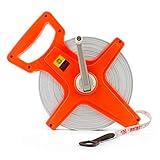
Overview: The QWORK 330-Foot Fiberglass Tape Measure is built for extreme distance measuring in demanding environments. This open-reel design targets engineers, surveyors, and outdoor professionals who require maximum reach and durability. The fiberglass construction offers water resistance and flexibility that steel tapes can’t match.
What Makes It Stand Out: At 330 feet, this tape handles the longest measuring tasks while remaining lightweight. The dual-sided printing with both imperial and metric scales provides universal versatility. The ergonomic handle design prioritizes user comfort during extended use, and the pivot hand reel enables fast, controlled rewinding without hand strain.
Value for Money: For professionals who need 300+ foot capacity, this represents excellent value. Fiberglass tapes in this length range are inherently expensive, but QWORK’s pricing is competitive. The dual-scale feature eliminates the need for separate tapes, and the durability ensures a long service life in harsh conditions.
Strengths and Weaknesses: Strengths include exceptional length, lightweight fiberglass construction, dual-sided scales, ergonomic grip, and water resistance. The fast rewinding system works smoothly. Weaknesses: fiberglass can stretch slightly under tension, affecting precision; the 1/2-inch width may be harder to read than wider blades; and the open-reel design offers no auto-rewind assistance.
Bottom Line: An essential tool for surveyors, utility workers, and large-site contractors. Choose this when maximum distance and weather resistance are priorities, but consider a steel tape if absolute precision is critical.
5. 2-in-1 Laser Tape Measure - ristophe 197Ft Digital Tape Measure & 16Ft Measuring Tape with LCD Display - Pythagorean, Area, Volume Laser Measuring Tool for Construction & Woodworker (M/in/Ft Unit)

Overview: The ristophe 2-in-1 Laser Tape Measure represents a modern hybrid solution, combining a 197-foot digital laser distance measurer with a 16-foot autolock steel tape. This innovative tool addresses the gap between short-range precision and long-range convenience, powered by a rechargeable battery with Type-C charging.
What Makes It Stand Out: Six laser measurement modes—including area, volume, and two Pythagorean functions—transform complex calculations into one-person operations. The autolock tape measure provides traditional reliability for short measurements, while the laser handles long distances safely. The high-contrast LCD display remains visible in low light, and a single charge delivers over 5,000 measurements.
Value for Money: While priced higher than standalone tapes, this device replaces multiple tools. For professionals who frequently measure both short details and long spans, the efficiency gains and reduced ladder work justify the cost. The rechargeable battery eliminates disposable battery expenses.
Strengths and Weaknesses: Strengths include versatile measurement modes, excellent accuracy (±1/8 inch), Type-C charging, long battery life, and true one-person operation. The belt clip adds portability. Weaknesses: the 16-foot tape is short for many construction tasks, the laser requires a clear line of sight, and the complexity may overwhelm users wanting simple measurements. The screen only displays laser readings.
Bottom Line: Ideal for interior designers, estimators, and contractors who measure varied spaces daily. The hybrid design shines when you need both detail work and room dimensions without switching tools.
6. CRAFTSMAN 25-Ft Tape Measure with Fraction Markings, Retractable, Self-Locking Blade (CMHT37225)

Overview: The CRAFTSMAN CMHT37225 brings professional-grade functionality to DIYers and tradespeople who demand precision. This 25-foot tape measure eliminates mental math by printing fractions directly on the blade, making it ideal for woodworking and detailed layout work. The self-locking mechanism keeps the blade extended until you release it, while the rubber overmold provides secure handling in dusty or wet conditions.
What Makes It Stand Out: The fraction markings are the star feature—every 1/8-inch increment clearly labeled, reducing measurement errors and speeding up workflow. The self-locking blade stays put without constant tension, freeing both hands for marking. CRAFTSMAN’s trademark durability shines through with a sturdy housing and robust retraction spring. The 25-foot length reaches across rooms and lumber stacks without the bulk of longer commercial tapes.
Value for Money: Priced competitively in the $15-20 range, this tape delivers premium features at a mid-tier price point. Comparable fraction-marked tapes from specialty brands often cost 30-50% more. The rubber overmold and reliable locking mechanism typically appear only on pro-grade models costing $25+. For woodworkers and serious DIYers, the time saved and accuracy gained justify every penny.
Strengths and Weaknesses: Strengths:
- Fraction markings eliminate conversion errors
- Secure self-locking mechanism
- Comfortable rubber grip
- Trusted CRAFTSMAN warranty support
- Clear, easy-to-read markings
Weaknesses:
- Slightly bulkier than basic 25-foot tapes
- Fraction printing may clutter blade for users who prefer traditional scales
- Hook rivets could be more robust for heavy-duty daily use
Bottom Line: This is the tape measure woodworkers and meticulous DIYers should own. The fraction markings transform it from a simple tool into a workflow accelerator. While not the lightest option available, the precision features and reliable performance make it an excellent value for anyone who measures more than occasionally.
7. Amazon Basics Self-Locking Tape Measure, MID Accuracy, 16-Feet (5-Meters), Black, Yellow

Overview: Amazon Basics delivers a no-frills, dependable tape measure for casual users and homeowners. This compact 16-foot tape features both imperial and metric scales, a self-locking mechanism, and a comfortable rubberized exterior. The MID accuracy rating suits general household tasks, while the included belt clip and wrist strap ensure it’s always within reach for quick measurements.
What Makes It Stand Out: The heat-treated spring promises longevity uncommon in budget tapes, while the anti-skid ABS housing with soft rubber overmold provides surprising durability. The self-locking blade extends smoothly and holds firmly until the push-button release is activated. Its compact dimensions (3.43 x 2.83 inches) make it pocket-friendly, and the dual-scale printing eliminates need for separate metric tools.
Value for Money: At under $10, this tape represents exceptional value for homeowners and occasional DIYers. Similar feature sets from name brands typically start at $15-18. While not built for daily professional use, the quality exceeds expectations for the price point. The MID accuracy is perfectly adequate for hanging pictures, furniture assembly, and basic home projects where extreme precision isn’t critical.
Strengths and Weaknesses: Strengths:
- Extremely affordable
- Compact and lightweight design
- Self-locking mechanism works smoothly
- Dual-scale versatility
- Comfortable grip and secure belt clip
Weaknesses:
- MID accuracy insufficient for fine woodworking
- 16-foot length limits reach for larger projects
- Blade coating scratches more easily than premium tapes
- Hook has slight play affecting precision measurements
Bottom Line: Perfect for kitchen drawers and casual DIY kits. This Amazon Basics tape won’t replace a contractor’s daily driver, but it absolutely nails the basics for occasional use. Buy it for your non-tool-using family members or as a backup—it’s reliable enough to trust and cheap enough to lose without heartbreak.
8. Towaytek Laser Measure, 196ft/60m Digital Tape Measure for Room Layout, DIY, Construction and Indoor Projects

Overview: The Towaytek Laser Measure bridges the gap between expensive professional laser tools and unreliable budget gadgets. Capable of measuring distances up to 196 feet with ±2mm accuracy, this digital tool streamlines room layouts, flooring estimates, and large-scale DIY projects. The durable ABS housing, bubble levels, and 20-measurement memory make it a serious contender for contractors and ambitious homeowners.
What Makes It Stand Out: The 20-set memory function is a game-changer for complex projects—no more scribbling measurements on drywall. Integrated horizontal and vertical bubble levels ensure you’re measuring true distances, not angled errors. The unit quickly toggles between meters, inches, and feet, adapting to any plan or material. At this price point, the ±2mm accuracy rivals lasers costing three times as much.
Value for Money: Priced around $30-40, this laser measure undercuts major brands like Bosch and Leica by $50-100 while delivering comparable accuracy and features. The memory function alone justifies the cost for anyone measuring multiple rooms or calculating material needs. For contractors, it pays for itself in time saved during estimates. DIYers gain professional capability without the premium price tag.
Strengths and Weaknesses: Strengths:
- Impressive 196-foot range
- High ±2mm accuracy
- 20-measurement memory storage
- Dual bubble levels for precision
- Lightweight, portable design
- Instant unit conversion
Weaknesses:
- Requires battery power (no manual backup)
- Laser dot difficult to see in bright sunlight
- Not suitable for short measurements under 6 inches
- Build quality less rugged than industrial-grade lasers
Bottom Line: This laser measure belongs in every contractor’s toolbox and serious DIYer’s arsenal. It won’t completely replace your trusty tape for close work, but for room dimensions, flooring, and layout planning, it’s indispensable. The memory feature and accuracy make it a remarkable value that performs well beyond its price class.
9. FastCap Peel & Stick Standard/Metric Measuring Tape - Perfect for Professionals and Home Improvement - Ideal for Layout & Cutting Stations - 16’ Length, 7/8" Width - 01063

Overview: FastCap’s Peel & Stick tape revolutionizes workshop efficiency by placing permanent measurement references exactly where you need them. This 16-foot adhesive-backed rule adheres to table saws, miter stations, workbenches, or any flat surface, eliminating the constant reach for a traditional tape. The dual-sided printing allows reading from either direction, while the included SpeedTape ensures secure, bubble-free installation.
What Makes It Stand Out: This isn’t a portable tape—it’s a workflow upgrade. Once installed, it provides instant, hands-free measuring at critical workstations. The dual-sided design means left-handed users enjoy the same convenience as right-handed woodworkers. FastCap’s 25-year woodworking industry expertise shows in details like the 7/8-inch width (perfect for fence alignment) and the durable, shop-resistant coating that won’t fade from dust or cleaning.
Value for Money: At approximately $12-15, this specialized tool pays dividends in time saved. Every time you skip reaching for a tape measure, you reclaim seconds that compound into hours over a year. Compared to building custom jigs or fence systems, it’s an inexpensive upgrade. The durability ensures years of service, making it cheaper than replacing worn adhesive tapes annually.
Strengths and Weaknesses: Strengths:
- Permanent, always-available measurement reference
- Dual-sided printing for universal readability
- SpeedTape included for easy installation
- Durable, shop-grade construction
- Perfect for table saw and miter station fences
Weaknesses:
- Semi-permanent installation (not easily repositioned)
- Limited to flat, clean surfaces
- 16-foot length may not suit all stations
- No replacement for flexible tape in many situations
Bottom Line: A must-have for serious woodworkers and anyone with dedicated cutting stations. If you measure against a fence or table more than ten times a day, this tape will transform your workflow. It’s a specialized tool that excels at its singular purpose, making it worth every penny for shop-based craftspeople.
10. Perfect Pi Diameter Circumference Tape Measure - Imperial and Metric Tape Measure 1/2-inch by 12ft / 3.5m Use for Measuring Cylindrical Objects (Pipe Tape, Tree Tape) Model DCT120
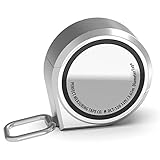
Overview: The Perfect Pi DCT120 solves a niche but frustrating problem: measuring cylindrical objects without calculations. This specialized 12-foot tape displays standard measurements on one side and direct diameter readings on the other—simply wrap it around a pipe, tree, or cylinder and read the diameter instantly. The compact, pocket-sized design includes a magnetic case and reflective brake wheel for easy handling in various environments.
What Makes It Stand Out: The diameter scale eliminates the circumference/π calculation that trips up even experienced tradespeople. The reflective aluminum brake wheel provides excellent visibility in low-light conditions (think crawl spaces or outdoor work). A strong magnet on the case secures it to metal pipes or equipment, freeing your hands. The 1/2-inch wide blade flexes tightly around curved surfaces better than standard 1-inch tapes.
Value for Money: Priced around $15-18, this specialty tape costs slightly more than basic 12-foot tapes but delivers unique functionality. For plumbers, arborists, and HVAC technicians, it saves minutes on every job and eliminates costly measurement errors. The time saved on a single commercial plumbing job could pay for the tape. It’s a purpose-built tool that justifies its price through specialized capability.
Strengths and Weaknesses: Strengths:
- Direct diameter readings eliminate calculations
- Flexible blade wraps tightly around cylinders
- Magnetic case for hands-free use
- Reflective brake for visibility
- Dual imperial/metric scales
Weaknesses:
- 12-foot length limits large-diameter applications
- Niche functionality not useful for general measuring
- Blade width can be difficult to read at a glance
- Not suitable for flat surface measurements
Bottom Line: An essential tool for anyone regularly measuring pipes, trees, or cylindrical objects. If you’ve ever struggled with circumference conversions, this tape will feel like magic. For general contractors, it’s a specialty item, but for plumbers, pipefitters, and arborists, it’s an indispensable time-saver that belongs in your pocket daily.
Why Your Tape Measure Is Your Layout Lifeline
Your tape measure does more than just quantify distance—it establishes the entire spatial framework of your project. When you’re snapping chalk lines for wall plates, verifying setback dimensions, or laying out anchor bolt patterns, that blade becomes the physical manifestation of the architect’s intent. A superior tape measure doesn’t just give you numbers; it gives you confidence. It stands rigid when you’re working alone, maintains its accuracy after a thousand retractions, and provides readable markings in brutal lighting conditions.
The difference between a mediocre tape and a professional-grade layout tool becomes painfully apparent during critical path activities. Picture this: you’re laying out a complex multi-story steel frame, the crane is on the clock at $250 per hour, and your tape’s hook just bent because it snagged on a column base. That “bargain” tape just cost you more than a year’s supply of top-tier equipment. Professional contractors understand that the tape measure is an investment in accuracy, not an expense to be minimized.
The Evolution from Simple Measurement to Layout Precision
Tape measures have come a long way from the simple ribbon steel tools of the 1970s. The modern construction layout tape is a study in applied engineering, addressing pain points that generations of tradespeople have grumbled about around break tables. Hook design has evolved from simple L-shaped tabs to precision-machined grabbers that account for both inside and outside measurements. Blade coatings have progressed from basic paint to polymer matrices that resist abrasion and glare while maintaining flexibility in sub-zero temperatures.
The real revolution, however, lies in the subtle details that cater specifically to layout work. Extra-wide blades that stand out 13 feet without support, dual-sided printing for reading measurements from any angle, and reinforcement ribs that prevent kinking when you’re pulling diagonals across a foundation. These aren’t gimmicks—they’re solutions to real problems encountered daily on job sites. As we move through 2026, the integration of digital technology with traditional mechanical excellence is creating hybrid tools that offer the best of both worlds.
Key Features That Define 2026’s Construction-Grade Tape Measures
When evaluating tape measures for construction layouts, several non-negotiable features separate professional tools from consumer-grade disappointments. The first is standout capability—a measure of how far the blade can extend unsupported before collapsing under its own weight. For layout work, where you’re constantly measuring across open spaces without a helper, a 10-foot minimum standout is essential. Premium models now achieve 14-foot standout through strategic blade curvature and thickness variation.
The second critical feature is blade durability. Construction sites are brutal environments: abrasive concrete, metal shavings, chemical exposure, and constant retraction against dirty, gritty surfaces. A blade that loses its markings after a month of daily use is worthless. Look for blades with multi-layer coatings that protect the printing while maintaining flexibility. The best tapes use a base layer of nylon or polyester bonded to the steel, topped with a clear protective coat that sacrificially wears away while preserving the markings beneath.
Blade Length and Width: Finding Your Sweet Spot
The eternal question: 25 feet or 30 feet? For most residential and light commercial layout work, a 25-foot tape offers the ideal balance of reach and portability. It fits comfortably on your belt, retracts smoothly, and handles 90% of layout scenarios. However, if you’re regularly working on large commercial footprints, long-span roofs, or site work, stepping up to a 30-foot or even 40-foot tape eliminates the need for intermediate marks that introduce error.
Blade width is equally crucial. Standard tapes run 1 inch wide, but layout professionals increasingly prefer 1-1/4 inch or even 1-1/2 inch blades. The additional width provides greater rigidity for standout and creates a more readable scale with larger numbers and clearer fraction markings. The trade-off is slightly increased weight and a bulkier case, but most layout specialists find the improved readability and stand-alone capability well worth the extra ounces. For finish work and tight spaces, keep a narrow 3/4-inch tape as a secondary tool, but your primary layout tape should be wide and authoritative.
Standout and Hook Design: The First Line of Defense
A tape measure’s standout is its superpower for solo layout work. The physics behind standout involves a delicate balance of blade thickness, width, curvature, and material temper. Too stiff, and the tape becomes difficult to retract and prone to kinking. Too flexible, and it won’t hold its shape across gaps. The best 2026 tapes use variable-thickness profiling—thicker at the hook end for rigidity, tapering slightly toward the case for smooth retraction.
Hook design has become remarkably sophisticated. The traditional riveted hook with two contact points is giving way to precision-machined hooks with four or more contact surfaces. These multi-point hooks grab more securely on various materials and maintain accuracy even when the hook itself wears. The most advanced designs feature replaceable hooks—a simple but revolutionary concept that extends tape life by years. For layout work, look for hooks with a slight downward angle at the tip, which prevents the hook from riding up over edges and introducing systematic errors in your measurements.
Durability Standards: IP Ratings and Beyond
Ingress Protection (IP) ratings aren’t just for smartphones anymore. In 2026, premium tape measures carry IP ratings indicating their resistance to dust and water. An IP54 rating means the mechanism is protected against construction dust and splashing water—a realistic minimum for job site durability. The best tapes achieve IP65, making them washable and impervious to the concrete slurry and mud that inevitably finds its way into every tool.
Beyond IP ratings, examine the case construction. Impact-resistant nylon composites with rubber overmolding absorb drops onto concrete without cracking. The best cases feature sealed designs where the blade exit point uses a flexible gasket that wipes debris from the blade during retraction, keeping internal mechanisms clean. Pay attention to the belt clip—a stamped steel clip will bend and fail, while a forged or milled clip with positive retention keeps your tape secure when you’re climbing ladders or bending over foundation forms.
Ergonomics and Grip: All-Day Comfort Matters
A tape measure that causes hand fatigue affects your accuracy. Modern ergonomic design considers the natural grip position and the forces required for repeated use. Look for cases with contoured shapes that fit the palm naturally, eliminating pressure points. The retraction lock should be positioned for thumb operation without shifting your grip, and the release should be smooth, not jerky.
Textured rubber overmolding is standard on quality tapes, but the pattern and placement matter. Aggressive diamond knurling provides secure grip even with gloved hands, while strategically placed pads absorb shock when the case inevitably bangs against door frames and structural steel. Some 2026 models feature adjustable retraction speed controls—allowing you to slow the blade return when working near delicate finishes or speed it up when you’re moving fast on rough framing. This simple feature reduces thumb strain from manually controlling retraction and extends blade life by preventing violent snap-backs.
Understanding Tape Measure Accuracy Classes
Accuracy isn’t just about the markings—it’s about the entire measurement system. Professional tape measures are classified according to international standards that specify maximum permissible errors at various lengths. Understanding these classes is crucial for contractors who need to guarantee their work meets building tolerances. A tape that’s off by 1/32 inch over 10 feet might seem acceptable until you’re laying out a 100-foot grid and find yourself 3 inches out of tolerance.
The classification system considers factors like blade stretch under tension, thermal expansion, and marking precision. A Class I tape (the highest standard) maintains accuracy within ±0.04 inches at 33 feet, while a Class II tape allows ±0.08 inches at the same distance. For most construction layout work, Class I is the professional standard, especially when you’re transferring dimensions from digital models where tolerances are tight.
Class I vs. Class II: What Construction Pros Need to Know
Class I tapes represent the pinnacle of measurement accuracy, suitable for high-precision layout work where errors compound across large distances. These tapes undergo rigorous testing and certification, with each blade individually verified against laser interferometer standards. The hooks are designed to account for their own thickness precisely, and the printing process uses photolithographic techniques that ensure mark placement accuracy within thousandths of an inch.
Class II tapes, while less precise, still offer professional-grade reliability for many applications. They’re typically more affordable and often more durable because the manufacturing tolerances are slightly looser, allowing for thicker protective coatings. For rough framing, site grading, and temporary layout markings, a Class II tape is perfectly adequate. The key is matching the tape’s accuracy class to your work’s required tolerances. Many contractors carry both—a Class I tape for finish layout and critical dimensions, and a Class II for everyday rough work where speed and durability trump ultimate precision.
EC Accuracy Standards and Why They Matter in 2026
The European Committee (EC) accuracy standards have become the de facto global benchmark for tape measure precision, even in North American markets. EC Class I and Class II designations are more stringent than older imperial standards, providing clearer guidance for professional users. In 2026, look for the EC mark and accuracy class printed directly on the blade—this indicates third-party verification, not just manufacturer claims.
EC standards also specify testing conditions, including temperature (20°C), tension (5-10 Newtons depending on length), and support method. This matters because a tape measure’s accuracy changes with temperature and how it’s supported during measurement. Professional-grade tapes include thermal expansion coefficients in their specifications, allowing you to mathematically correct for temperature variations on large layouts. Some digital models even include temperature sensors and automatically apply corrections—a feature that’s becoming standard on high-end layout tapes for 2026.
Blade Materials and Coatings: More Than Just Steel
The blade itself is a marvel of materials engineering. Standard carbon steel, while adequate for household use, quickly succumbs to job site conditions. Professional tapes use high-carbon spring steel alloys that maintain their temper and flexibility through thousands of cycles. The steel is heat-treated to specific hardness levels—soft enough to bend without breaking, hard enough to resist permanent deformation when stepped on or kinked.
The real innovation lies in the coatings. A bare steel blade will rust within days on a humid job site, and painted markings wear off after a few weeks of abrasion. Modern blades feature multi-layer systems: a corrosion-resistant plating (often zinc or chrome), a flexible polymer base coat, the printed scale, and a transparent protective topcoat. This sandwich construction ensures that even as the topcoat wears, the markings remain protected and legible.
Nylon-Coated Blades: The New Industry Standard
Nylon coating has revolutionized blade durability. Unlike traditional paint, nylon bonds molecularly to the steel, creating a flexible, abrasion-resistant surface that maintains its integrity even when the blade is bent around corners. The coating thickness is carefully controlled—too thick, and the blade becomes stiff; too thin, and protection is inadequate. The sweet spot is around 0.002 inches, providing durability without sacrificing flexibility.
The best nylon coatings incorporate UV inhibitors that prevent sun damage during outdoor layout work. They also feature low-friction properties that help the blade slide smoothly through the case mechanism and reduce wear at the blade exit point. Some manufacturers have developed dual-hardness coatings, with a harder formulation on the scale side for wear resistance and a more flexible formulation on the back for improved bend radius. This attention to detail extends blade life by 3-5 times compared to traditional painted blades.
Anti-Glare Finishes for Outdoor Layout Work
Glare is the enemy of accurate reading, especially when you’re working on a sunny concrete slab or steel deck. Traditional glossy blade finishes create specular reflections that obscure the scale, forcing you to reposition constantly or shield the blade with your hand. Modern anti-glare finishes use micro-textured surfaces that diffuse light rather than reflecting it directly.
These matte finishes are achieved through either chemical etching of the topcoat or the inclusion of microscopic silica particles that break up reflections. The result is a blade that remains readable at any angle, even under direct sunlight. Some premium tapes take this further with high-contrast color schemes—white or yellow backgrounds with black markings for maximum visibility. For low-light conditions in enclosed buildings, photoluminescent markings that glow faintly after exposure to light are becoming available on specialized layout tapes.
Hook Design Variations for Specialized Layout Tasks
The hook is where measurement begins, and its design dramatically influences both accuracy and efficiency. Standard hooks are simple L-shaped tabs, but layout professionals face diverse challenges that demand specialized solutions. The hook must grab securely on everything from rough lumber to polished steel, and it must do so without introducing measurement bias.
Modern hook designs address this through replaceable, task-specific configurations. A framing crew might use aggressive, deep-grab hooks with teeth that bite into lumber, while a metal building contractor needs smooth, precision-machined hooks that won’t scratch coated steel. The best tape measures allow you to swap hooks in minutes using a simple screw or pin mechanism, effectively giving you multiple specialized tools in one.
Magnetic Hooks: Game-Changer for Steel Framing
Magnetic hooks have transformed steel construction layout. A powerful neodymium magnet embedded in the hook allows one-person measurements across wide flange beams and steel decking without the hook slipping or requiring a second set of hands. The magnetism is calibrated to be strong enough for secure holding but not so powerful that it interferes with retraction or collects metal shavings.
The real innovation in 2026 is the pivoting magnetic hook, which maintains contact with curved or angled surfaces while keeping the blade aligned for accurate measurement. Some designs feature dual magnets—one at the tip for edge grabbing and one further back for surface contact—providing redundancy and stability. The magnets are recessed slightly to protect them from impact and are epoxy-encapsulated to prevent corrosion. For layout work on structural steel, a magnetic hook isn’t just convenient; it’s a competitive advantage that speeds work and improves accuracy.
Double-Sided Printing: Efficiency for Complex Layouts
Double-sided blade printing, once a novelty, has become essential for efficient layout work. The primary scale (typically feet, inches, and fractions) is printed on the top side for conventional reading, while the bottom side features a descending scale, metric conversions, or specialized marking guides. This eliminates the mental gymnastics of subtracting from a total length when you’re measuring from a corner outward.
Advanced double-sided tapes include stud spacing guides (marked at 16-inch and 24-inch intervals), pipe diameter markings for plumbing layouts, and even trigonometric reference tables for angle layout. Some models feature a “center-finding” scale on the back that automatically calculates half-distance, invaluable for locating fixture centers or dividing spans equally. The printing quality is critical—look for etched or deeply embedded markings that won’t wear off, rather than surface printing that disappears with use.
Digital Integration: Smart Tape Measures in 2026
The convergence of digital and analog has produced tape measures that capture measurements electronically while maintaining the reliability of a physical blade. These hybrid tools feature digital displays that show the measurement with decimal precision, store multiple dimensions in memory, and even calculate area and volume from sequential measurements. The key is that they don’t rely solely on digital sensors—the physical blade remains the primary measurement standard, with the digital system serving as a convenient interface.
Bluetooth connectivity allows these smart tapes to communicate directly with layout apps on tablets and smartphones. Imagine measuring a room and having those dimensions automatically populate your CAD sketch, or laying out a grid and watching points appear in real-time on your digital as-built drawing. This integration eliminates transcription errors and speeds documentation, a critical factor in 2026’s fast-track construction environment.
Bluetooth Connectivity and Layout App Compatibility
Modern smart tapes pair seamlessly with industry-standard layout applications like Procore, PlanGrid, and AutoCAD mobile. The connection is stable up to 30 feet, allowing you to keep your device safely on a stable surface while you move around the layout area. Measurements are timestamped and geotagged (using your device’s GPS), creating an audit trail for quality control.
The best implementations include two-way communication—not only does the tape send measurements to the app, but the app can send target dimensions back to the tape’s display, guiding you to precise layout points. This “measure-to-target” function is invaluable for locating anchor bolts, hanger positions, or fixture locations from established control points. Battery life has improved dramatically, with 2026 models offering 40+ hours of continuous use from a single coin cell battery, and smart sleep modes that preserve power when the blade is retracted.
Laser-Assisted Marking Features
Some cutting-edge tapes now integrate micro-lasers that project a precise line perpendicular to the blade, showing exactly where your measurement falls on the work surface. This eliminates the parallax errors that occur when you’re trying to align a pencil mark with a tiny blade marking from an awkward angle. The laser is self-leveling within a few degrees and projects a fine line visible in normal lighting conditions.
More advanced systems combine the tape measurement with a laser distance meter, allowing you to capture both linear dimensions and remote points without moving. For layout work, this means you can measure to a point and simultaneously mark its location on the floor or wall with the projected laser line. The integration is seamless—the tape’s digital display shows both the blade extension and the laser distance, automatically calculating total dimensions. While this technology adds cost, the time savings on complex layouts quickly justify the investment for professional crews.
Specialty Tape Measures for Niche Construction Layouts
While a quality 25-foot tape handles most tasks, certain layout scenarios demand specialized tools. Diameter tapes, long steel tapes, and flexible curve tapes each serve unique purposes that general-purpose tapes can’t fulfill effectively. Smart contractors build a tape measure toolkit rather than relying on a single do-everything tool.
The key is recognizing when a specialized tape will save time and improve accuracy enough to justify its cost. A diameter tape that costs $40 might seem expensive until it saves you three hours of head-scratching while laying out a complex curved handrail. Similarly, a 200-foot long tape with a robust reel mechanism transforms foundation layout from a two-person headache into a one-person streamlined process.
Diameter Tapes for Pipe and Column Layouts
Diameter tapes (or pi tapes) are ingeniously simple: the scale is graduated so that when you wrap the tape around a cylinder, the reading directly indicates the diameter rather than the circumference. For plumbers laying out pipe runs or crews positioning structural columns, this eliminates the division-by-pi calculation that introduces both time and error. Modern diameter tapes feature flexible steel blades that conform to curved surfaces without kinking and high-contrast markings readable even on dark pipe.
The best models include additional scales for circumference and even pipe schedule information, allowing you to quickly determine fitting requirements. Some feature magnetic hooks that cling to steel pipe, holding the tape securely while you read the measurement. For layout work involving cylindrical elements, a diameter tape isn’t just convenient—it’s the difference between professional results and embarrassing miscalculations that become apparent only after the concrete is poured.
Long-Steel Tapes for Foundation and Site Work
When you’re laying out foundation corners or verifying site grades, a 25-foot tape is laughably inadequate. Long steel tapes, typically 50 to 300 feet in length, are built for these tasks. They feature robust cases with integrated handles and crank mechanisms that wind the blade onto a large-diameter drum, preventing the kinks and memory problems that plague standard tapes when extended to their maximum length.
The blades are flat steel ribbons, often 1/2 inch wide, with large, clear markings every foot and intermediate markings at 1/2-foot intervals. The hooks are substantial, designed to be anchored at one end while you walk out the measurement. Many include a built-in level vial in the case, allowing you to ensure the tape is flat for horizontal measurements or vertical for height transfers. For foundation layout, the best practice is to use a long tape for overall dimensions and a standard tape for detailed layout within each zone, combining the strengths of both tools.
Common Layout Mistakes and How to Avoid Them
Even the best tape measure can’t compensate for poor technique. The most common layout errors stem from misunderstanding how tape measures work and failing to account for environmental factors. Temperature, tension, and support all affect measurement accuracy, and ignoring these factors leads to systematic errors that compound across large layouts.
Hook slippage is the silent killer of layout accuracy. When you hook onto a corner and pull, the hook should seat firmly against the material. If it rocks or slips, you’re introducing random error into every measurement. The solution is twofold: first, use a tape with a properly designed hook that matches your work material, and second, develop a consistent technique that applies steady tension without jerking. Practice measuring the same distance multiple times until your readings are consistent within 1/32 inch—if you can’t repeat your measurements, you can’t trust them.
Temperature Compensation Errors
Steel tape measures expand and contract with temperature changes—approximately 0.0000065 inches per inch per degree Fahrenheit. This seems negligible until you’re laying out a 100-foot building dimension on a cold morning that will bake in the afternoon sun. That 30°F temperature swing can change your measurement by nearly 1/4 inch, enough to cause serious problems with structural element fit.
Professional layout practice involves temperature correction for measurements over 50 feet. Some 2026 tapes include thermal compensation charts printed on the case, while digital models measure ambient temperature and apply corrections automatically. For critical layouts, measure during moderate temperatures (60-70°F) and shade the tape from direct sun. If you must work in temperature extremes, use a fiberglass or composite blade tape, which has a much lower coefficient of thermal expansion than steel—about one-tenth the expansion rate.
Hook Slippage and Proper Tensioning
The hook on your tape measure is designed to move slightly—this compensates for its thickness when taking inside versus outside measurements. However, this movement can become excessive as the hook wears or if the rivets loosen. Test your tape by butting the hook against a fixed surface and pulling gently; you should feel minimal play. If the hook moves more than 1/32 inch, it’s time for replacement or repair.
Consistent tension is equally important. Pulling too hard stretches the blade (yes, even steel stretches microscopically), while too little tension leaves slack. The EC standard specifies 5 Newtons of tension for blades up to 16 feet, and 10 Newtons for longer blades. While you can’t measure this precisely in the field, develop a feel for proper tension by practicing against a known standard. Some contractors use a small spring scale to calibrate their pulling force initially, then internalize that feeling for daily use.
Maintenance and Calibration: Protecting Your Investment
A professional-grade tape measure represents a significant investment, and like any precision instrument, it requires proper care to maintain accuracy. The most common failure points are blade contamination, mechanism wear, and hook damage—all preventable with basic maintenance. Establish a weekly cleaning routine: extend the blade fully and wipe it down with a clean, dry cloth to remove abrasive particles. For sticky residues like tape adhesive or caulk, use a mild solvent like isopropyl alcohol, never harsh chemicals that attack the protective coatings.
The retraction mechanism benefits from occasional lubrication. A single drop of light machine oil on the spring arbor every few months keeps the retraction smooth and prevents rust. Avoid over-oiling, which attracts dust and creates a grinding paste inside the case. Periodically check the hook rivets for looseness—if you detect play, tighten them immediately before they oval out the holes. Many professional tapes include spare rivets and simple tools for field repairs, a feature worth its weight in gold when you’re miles from the tool trailer.
Cleaning and Storage Best Practices
Never retract a dirty blade. That grit you just pulled across the concrete slab will be dragged through the case mechanism, acting like sandpaper on the delicate spring and guide rollers. Make it a habit to clean the blade before retraction, even if it means taking an extra 30 seconds. For wet conditions, wipe the blade dry to prevent rust formation under the coating, which causes bubbling and eventual scale flaking.
Storage matters more than most realize. Leaving your tape in a hot truck cab or direct sunlight degrades the protective coatings and can warp the case. Store tapes in a climate-controlled environment when possible, or at least in the shade. Hang them vertically rather than tossing them in a tool bag where they can be crushed under heavier tools. The belt clip is designed for temporary carrying, not long-term storage—constant pressure on the clip weakens its spring and can deform the case.
When and How to Recalibrate
Tape measures can and do go out of calibration. Drops onto concrete, hook impacts, and blade stretching all affect accuracy. Professional contractors should verify tape accuracy quarterly using a known standard like a calibration-grade ruler or a verified measurement bench. For field verification, use a steel calibration plate with precisely spaced reference marks.
If your tape shows consistent error across its length, you can sometimes adjust the hook position to compensate. Most quality tapes have slotted hook mounting holes that allow minor adjustments. However, if the error varies along the blade’s length or exceeds tolerance, the tape is no longer reliable for layout work. Mark it as “rough measurement only” and replace it. Never attempt to recalibrate by bending the blade or modifying the scale markings—this creates more problems than it solves.
Safety Considerations Often Overlooked
Tape measures are responsible for more job site injuries than most people realize. The most common accidents involve blade snap-back, where the hook strikes a hand or face when retracting at high speed. Always control the blade return, especially on long extensions. Use the lock mechanism to prevent uncontrolled retraction, and never let go of the blade to watch it “zip” back—this impresses no one and can cause serious lacerations.
At heights, a falling tape measure becomes a lethal projectile. Always secure your tape with a lanyard when working above ground level, and never lay it on beams or ledges where it can be knocked off. The best 2026 tapes include tether points specifically for this purpose. Additionally, be aware of electrical hazards when extending long steel blades near power lines or energized equipment. Fiberglass blades are mandatory for electrical layout work, as steel can conduct dangerous currents if contact occurs.
Frequently Asked Questions
What’s the difference between a standard tape measure and one designed for construction layouts?
Construction layout tapes prioritize standout capability, durability, and readability over compactness. They feature wider blades (1-1/4 to 1-1/2 inches) that remain rigid across gaps, aggressive hook designs for secure grabbing, and protective coatings that withstand abrasive job site conditions. Layout tapes also carry higher accuracy classifications (Class I) and often include specialized markings for common construction tasks like stud spacing or diameter measurement.
How accurate do I really need my tape measure to be for framing work?
For rough framing, Class II accuracy (±1/16 inch over 33 feet) is generally acceptable, as wood construction accommodates some dimensional variation. However, for finish work, steel framing, or any layout that serves as a reference for subsequent trades, Class I accuracy (±1/32 inch over 33 feet) is the professional standard. The cost difference is minimal compared to the expense of rework caused by cumulative errors.
What’s the ideal length for a general construction layout tape?
A 25-foot tape offers the best compromise for most contractors, handling residential and light commercial work while remaining portable. If you regularly work on large commercial projects or site work, supplement it with a 30-foot or 40-foot tape for long dimensions. For foundation and site layout, a dedicated 100-foot or 200-foot long tape is essential. The key is using the right tool for the scale of work rather than stretching a small tape beyond its practical limit.
Are magnetic hooks worth the extra cost for everyday use?
If you work with steel framing, structural steel, or metal studs, a magnetic hook is invaluable and worth every penny. It allows solo measurements across wide spans and holds securely while you mark. For wood framing, the magnet offers little benefit and can actually be a nuisance if it collects metal shavings. Many professionals own both types, using magnetic hooks for steel work and standard hooks for wood construction.
How often should I replace my tape measure?
With proper care, a quality tape measure should last 2-3 years of daily professional use. Replace it immediately if the hook becomes loose, the blade kinks or develops memory curves, markings become illegible, or accuracy verification shows consistent errors beyond tolerance. Don’t wait for total failure—degraded accuracy is often subtle but costly. Many contractors replace their primary layout tape annually as a matter of course, relegating the old tape to rough measurement duty.
Can I recalibrate my tape measure myself?
Minor hook adjustments are possible if your tape shows consistent offset error, using the slotted mounting holes on quality models. However, you cannot recalibrate the blade scale itself—that requires manufacturer equipment and certification. If the error varies along the blade’s length, the tape is no longer reliable and must be replaced. Field calibration should be limited to verification against known standards and simple hook adjustments only.
What’s the best way to clean a dirty tape measure blade?
Extend the blade fully and wipe with a clean, dry cotton cloth to remove loose debris. For stubborn dirt or adhesive residue, use isopropyl alcohol on a soft cloth, wiping from the case toward the hook to avoid forcing contaminants into the mechanism. Never use abrasive cleaners, wire brushes, or harsh solvents. After cleaning, apply a light coat of silicone spray to the blade’s back side to prevent rust, then retract slowly. Clean your tape weekly during heavy use.
Are digital tape measures reliable enough for professional layout work?
Digital tape measures have matured significantly and are now reliable enough for professional use, provided you choose models from established manufacturers with proven track records. The key is that they still use a physical blade as the primary standard—the digital component is a convenient display and recording device, not the measurement sensor itself. Always verify digital readings against the physical scale periodically, and keep spare batteries on hand. For critical measurements, trust the analog scale and use digital features for documentation and calculations.
How do temperature changes affect my measurements?
Steel tape measures expand approximately 0.0000065 inches per inch per degree Fahrenheit. On a 100-foot measurement, a 30°F temperature swing creates a 0.23-inch error—significant for structural layout. For measurements over 50 feet, measure during moderate temperatures (60-70°F) or apply correction factors. Fiberglass tapes have much lower thermal expansion (about 0.0000007 inches per inch per degree) and are preferable for extreme temperature conditions. Some digital tapes include temperature sensors and automatic corrections.
What safety precautions should I take when using a tape measure at heights?
Always tether your tape measure using the dedicated attachment point to prevent dropped tool hazards. Control blade retraction manually—never allow free snap-back at height where the hook could strike your face or hands. Be aware of overhead power lines when extending long steel blades, and use fiberglass blades for work near electrical hazards. Store tapes securely when not in use; a loose tape sliding off a beam can injure workers below. Finally, inspect the blade for nicks or kinks that could cause it to break during extension, creating a whip hazard.
See Also
- The 10 Best Tape Measures for Accurate DIY Layouts in 2026
- 2026’s Top 10 Tape Measures for Outdoor Construction Projects
- 10 Affordable Tape Measures That Don’t Sacrifice Accuracy in 2026
- 10 Best Tape Measures After 6 Months of Testing in 2026
- 10 Best Tape Measures for Carpenters in 2026