Table of Contents
When it comes to achieving flawlessly smooth and uniformly thick wood surfaces, few tools are as indispensable in a woodworker’s arsenal as the planer. Whether you’re prepping rough-sawn lumber for fine furniture or refining joinery components for tight-fitting assemblies, a high-quality planer can elevate your craftsmanship from good to professional-grade. As we move further into 2026, the market for woodworking tools has evolved rapidly, with innovations in motor efficiency, dust management, and precision engineering redefining what we expect from these essential machines.
Woodworkers today demand more than just functionality—they seek reliability, consistency, and ergonomic design that supports long hours in the shop. The best planers of 2026 reflect this shift, blending cutting-edge technology with time-tested mechanical principles. But with so many options available, how do you choose the right one for your workspace and skill level? This guide dives deep into the features, performance metrics, and real-world considerations that matter most when selecting a top-tier planer.
Top 10 Planers For Woodworkers
Detailed Product Reviews
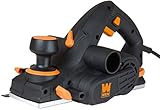
1. WEN 6530 6-Amp Electric Hand Planer, 3-1/4-Inch
Overview:
The WEN 6530 is a compact electric hand planer designed for DIYers and hobbyists tackling light to moderate woodworking tasks. With a 6-amp motor and a 3-1/4-inch cutting width, it efficiently smooths and trims boards, door edges, and other wooden surfaces. Its lightweight 6-pound design enhances maneuverability, making it ideal for on-the-go use.
What Makes It Stand Out:
This planer delivers up to 34,000 cuts per minute, ensuring a smooth finish with minimal tear-out. The 16-position depth adjustment offers precise control up to 1/8 inch per pass, while the included rabbeting guide allows for clean, consistent rabbets up to 1 inch. The dust bag and kickstand add practical convenience.
Value for Money:
Priced affordably, the WEN 6530 outperforms many budget models with reliable power and included accessories. The 2-year warranty underscores confidence in durability, offering excellent value for casual users who don’t need professional-grade tools.
Strengths and Weaknesses:
Strengths: Lightweight, high cutting speed, effective dust collection, solid depth control.
Weaknesses: Dust bag fills quickly, not ideal for continuous heavy use, depth stops can feel imprecise.
Bottom Line:
The WEN 6530 is a capable, budget-friendly electric planer perfect for homeowners and DIYers needing reliable performance for small to mid-sized projects.
2. JORGENSEN 3.5" Mini Wood Planer - Mini Hand Planer for Woodworking, Block Plane, Small Hand Plane for Trimming, Wood Planing, Craft, Professional Ductile Iron Body, Adjustable Cutting Depth

Overview:
The JORGENSEN 3.5" Mini Wood Planer is a precision hand tool built for fine woodworking and detailed trimming tasks. Crafted with durability and control in mind, it’s ideal for smoothing joints, chamfering edges, and fitting cabinetry where power tools are too aggressive.
What Makes It Stand Out:
Its O1 tool steel blade is sharpened for maximum cutting efficiency and longevity, while the ductile iron body ensures stability and vibration damping. The adjustable depth knob allows micro-adjustments, and the zinc alloy lever cap ensures secure blade retention.
Value for Money:
Despite its compact size, the build quality rivals premium hand planes. Its replaceable, re-sharpenable blade and rugged construction justify the price, especially for woodworkers seeking a long-term tool.
Strengths and Weaknesses:
Strengths: Exceptional build quality, precise depth control, sharp blade out of the box, ergonomic handling.
Weaknesses: Smaller size limits use on wide surfaces, requires hand sharpening over time.
Bottom Line:
A superbly crafted mini block plane offering professional performance for detail work—highly recommended for both beginners and experienced woodworkers.
3. WOODSTARTER Corded Electric Hand Planer, 7.7 AMP 15000 RPM Power Wood Planer with Edge Guide and Dust Bag, 3-1/4 Inch Planing Width, for Wood Chamfer DIY, Smooth Finish Carpentry

Overview:
The WOODSTARTER Corded Electric Hand Planer packs a 7.7-amp motor into a user-friendly design tailored for DIYers and hobbyist carpenters. With a 3-1/4-inch planing width and 15,000 RPM, it handles trimming, chamfering, and surface leveling with confidence.
What Makes It Stand Out:
Its standout feature is the 20 precise depth settings, allowing cuts up to 5/32", ideal for fine-tuning. The three chamfering grooves and 1-inch rabbeting capability enhance versatility. The ergonomic handle and shock-absorbing system reduce user fatigue during extended use.
Value for Money:
Competitively priced, this planer offers more precision than many in its class. The included dust bag and edge guide add practicality, making it a great upgrade from basic models.
Strengths and Weaknesses:
Strengths: High precision, strong motor, excellent ergonomics, efficient dust collection.
Weaknesses: Corded design limits mobility, dust bag may require frequent emptying.
Bottom Line:
A powerful, precise electric planer that excels in detail work and general carpentry—ideal for DIYers wanting professional-like results.
4. Drywall Cutting Tool, Plasterboard Angle Fast Cutter, Precise 45 60 Gypsum Board Chamferer With 10 Blades, Woodworking Hand Smoothing Planes, Perfect Angle Planers for Woodworkers(Orange)

Overview:
This drywall angle cutter is a specialized hand tool designed for quickly and cleanly chamfering edges on gypsum boards. Equipped with 45° and 60° blades, it streamlines taping and finishing tasks in drywall installation.
What Makes It Stand Out:
The dual-angle blades and replaceable module allow swift transitions between cuts. Its ergonomic grip reduces hand strain, while the ABS plastic body ensures lightweight durability. The 10 included blades enhance long-term usability.
Value for Money:
An affordable solution for contractors and DIYers alike. The included blades and durable build offer good longevity, especially for those frequently working on drywall seams and corners.
Strengths and Weaknesses:
Strengths: Fast, clean chamfering, comfortable grip, blade versatility, lightweight.
Weaknesses: Limited to drywall and soft materials, not suitable for hardwoods or heavy-duty use.
Bottom Line:
A niche but highly effective tool for drywall finishing—excellent value for anyone needing precise, repeatable bevels on plasterboard edges.
5. JORGENSEN NO.60-1/2 6-1/4" Wood Planer, Hand Planer for Woodworking, Low Angle Block Plane, Small Hand Plane for Trimming, Wood Planing, Craft - Professional Ductile Iron Body, Adjustable Mouth

Overview:
The JORGENSEN NO.60-1/2 is a full-featured 6-1/4-inch low-angle block plane designed for precision and versatility in fine woodworking. Its robust construction and refined mechanics make it suitable for both trim work and joinery.
What Makes It Stand Out:
Featuring an O1 tool steel blade and an adjustable mouth, this plane allows fine control over shaving thickness and tear-out prevention. The ductile iron body provides mass and stability, while the adjustable depth knob enables precise cuts.
Value for Money:
Offering professional-grade materials and adjustability at a mid-range price, it delivers long-term value. The ability to fine-tune both depth and mouth width sets it apart from basic block planes.
Strengths and Weaknesses:
Strengths: Adjustable mouth, durable build, sharp blade, excellent control, versatile for end grain and flat surfaces.
Weaknesses: Slightly heavier than mini planes, may require setup tuning for perfection.
Bottom Line:
A top-tier hand plane that balances precision, durability, and adjustability—ideal for serious woodworkers seeking reliable performance in a compact form.
6. DEWALT 20V MAX Planer, 30,000 Cuts Per Minute, 2 mm Cut Depth, Brushless Motor, Bare Tool Only (DCP580B)

Overview:
The DEWALT 20V MAX Planer is a cordless powerhouse built for precision and performance in mobile woodworking scenarios. With a brushless motor and a high-speed cut rate, it’s designed for contractors and serious DIYers who need reliable, on-site material removal without being tethered to an outlet.
What Makes It Stand Out:
Delivering 30,000 cuts per minute, this planer ensures rapid stock removal and smooth finishes. The calibrated depth adjustment knob allows precision down to 0.01 mm, making it ideal for fine woodworking. Its brushless motor enhances efficiency and runtime, while the aluminum shoes maintain cut parallelism for professional results.
Value for Money:
As a bare tool, it’s priced competitively within the premium cordless category. While batteries and chargers are sold separately, the long-term savings in maintenance and energy efficiency justify the cost, especially for users already in the DEWALT 20V ecosystem.
Strengths and Weaknesses:
Strengths: Exceptional precision, durable build, portable cordless design, and outstanding motor efficiency. Weaknesses: Higher initial cost, and lack of included battery adds to the total investment.
Bottom Line:
A top-tier cordless planer for professionals seeking precision, portability, and durability—highly recommended for serious woodworkers.
7. WOODERS 13-inch Benchtop Wood Planer, 15Amp, 1800W, 10000RPM, All Copper Motor, Includes 2 Extra Planer Blades, Dual-Blade, Overload Protection, Height Indicator, for Hard & Soft Wood working

Overview:
The WOODERS 13-inch Benchtop Wood Planer is a heavy-duty machine tailored for woodworkers handling large or thick stock. With a powerful 1800W all-copper motor, it’s built to tackle both soft and hardwoods with consistent performance and precision.
What Makes It Stand Out:
Its 13-inch width accommodates wide boards, reducing the need for multiple passes. The dual-blade cutterhead spinning at 10,000 RPM delivers ultra-smooth finishes, while the iron blade shaft ensures durability. The dust port and overload protection enhance safety and usability.
Value for Money:
Offering professional-grade features at a mid-range price, it outperforms many competitors in its class. The inclusion of two extra blades adds long-term value and reduces maintenance costs.
Strengths and Weaknesses:
Strengths: Wide cutting capacity, strong motor, precise depth control, dust management, and excellent finish quality. Weaknesses: Bulky design limits portability, and noise levels can be high during operation.
Bottom Line:
An excellent investment for woodworkers needing a reliable, high-capacity planer—ideal for workshop use with strong performance and durability.
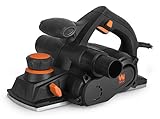
8. WEN 6534 8-Amp Electric Hand Planer, 4-3/8-Inch
Overview:
The WEN 6534 is a versatile and user-friendly electric hand planer designed for both light and medium-duty woodworking tasks. With a powerful motor and generous 4-3/8-inch cutting width, it’s well-suited for trimming, leveling, and shaping wood.
What Makes It Stand Out:
At 32,000 cuts per minute, it delivers smooth, efficient cuts. The 16 positive depth stops allow precise adjustments up to 1/8 inch, while the two-way dust port adds convenience. It also includes a rich accessory kit, such as blades, guides, and a fence.
Value for Money:
Priced affordably, the WEN 6534 offers exceptional value. It includes features typically found in pricier models, backed by a two-year warranty, making it ideal for DIYers and hobbyists.
Strengths and Weaknesses:
Strengths: High cut speed, broad cutting width, excellent included accessories, and solid build. Weaknesses: Dust collection could be more efficient, and the tool can be slightly heavy for prolonged overhead use.
Bottom Line:
A highly capable, feature-rich hand planer that delivers professional performance at a budget-friendly price—strongly recommended for home woodworkers.
9. Woodworkers Project Planner and Log Book: Woodworking Projects Journal, Diary, Notebook, Chart, Logbook, Tracker, Record Book For DIY Plan & Gifts for Carpenters and Wood Workers To Organize & Thrive

Overview:
This Woodworkers Project Planner is a beautifully designed journal tailored for woodworkers seeking to organize their craft. It serves as a comprehensive logbook for tracking projects, materials, timelines, and design sketches.
What Makes It Stand Out:
With dedicated sections for project planning, material lists, measurements, and progress tracking, it brings structure to creative workflows. Its aesthetic appeal and practical layout make it both functional and gift-worthy.
Value for Money:
Affordable and highly functional, it offers lasting value for hobbyists and professionals alike. As a tangible tool in a digital age, it encourages mindfulness and organization in the workshop.
Strengths and Weaknesses:
Strengths: Thoughtful layout, high-quality paper, excellent for planning and reflection, ideal as a gift. Weaknesses: No digital integration; usefulness depends on user’s commitment to journaling.
Bottom Line:
A must-have organizational companion for woodworkers who value craftsmanship and clarity—perfect for tracking progress and inspiring creativity.
10. Hoteche 3-1/4-Inch 4.7-Amp Electric Hand Planer for woodworking – High-Speed Corded Wood Planer with TCT Blade, Copper Motor, and Complete Accessory Kit

Overview:
The Hoteche 3-1/4-Inch Electric Hand Planer is a compact, high-speed tool designed for precision tasks like door trimming and edge smoothing. Powered by a 4.7-Amp copper motor, it balances performance and portability.
What Makes It Stand Out:
Its TCT (Tungsten Carbide Tip) blade ensures long-lasting sharpness and durability, even on hardwoods. The 16,700 RPM speed delivers clean cuts, while the included accessory kit—brushes, wrench, sharpening block—enhances maintenance and usability.
Value for Money:
Priced accessibly, it offers premium features like TCT blades and ergonomic design typically seen in costlier models. The completeness of the kit adds significant value for beginners and pros alike.
Strengths and Weaknesses:
Strengths: Durable TCT blade, lightweight and ergonomic, excellent accessory bundle, reliable motor. Weaknesses: Narrow 3.25-inch width limits large projects; corded design reduces mobility.
Bottom Line:
A dependable, precision-focused hand planer that excels in detail work—ideal for DIYers and craftsmen wanting quality without breaking the bank.
Understanding the Role of a Planer in Modern Woodworking
A planer, also known as a thickness planer, is specifically designed to produce boards of consistent thickness. Unlike a jointer—which flattens one face and squares one edge—a planer works across the width of a board to control its final thickness with precision. This makes it an essential companion tool after jointing, especially when working with raw lumber.
For both hobbyists and professionals, the ability to customize lumber thickness opens up creative possibilities. Whether you’re building cabinetry, crafting musical instruments, or restoring historical pieces, having control over material dimensions ensures accuracy and quality in every project.
Key Features That Define High-Quality Planers
Not all planers are built the same. The top-rated models in 2026 stand out due to a combination of engineering excellence and user-centric design. Understanding these core features will help you evaluate options based on performance rather than marketing hype.
Precision Depth Adjustment Mechanisms
One of the most critical aspects of any planer is its depth adjustment system. The best models offer micrometer-style dials or digital readouts that allow for incremental adjustments—often down to 1/64 inch or less. This level of precision ensures repeatable results and helps prevent over-planing, which can waste valuable material.
Look for systems that lock securely in place to prevent drift during operation. Some newer models even include memory presets, letting you quickly return to frequently used thickness settings.
Cutterhead Design and Knife Configuration
The heart of a planer lies in its cutterhead. Most modern high-end planers use helical or spiral cutterheads, which feature multiple small carbide inserts arranged in a staggered pattern. Compared to traditional straight-knife designs, helical heads reduce tear-out, operate more quietly, and extend knife life significantly.
Some advanced models incorporate indexable inserts that can be rotated or replaced individually, minimizing downtime and maintenance costs. These designs also excel when working with figured or interlocked grain, where chatter and snipe are common problems.
Motor Power and Feed Rate Consistency
A planer’s motor must deliver consistent torque, especially when handling dense hardwoods like maple, walnut, or exotic species. Horsepower ratings matter, but equally important is how that power is delivered through the feed system.
Top-tier models use variable-speed motors or electronic feedback systems that automatically adjust feed rate based on load. This prevents bogging down and ensures a smooth cut, even on challenging woods. Belt-driven systems tend to offer smoother performance than direct-drive alternatives, though both have their place depending on budget and usage.
Dust Collection Efficiency: A Non-Negotiable Feature
Effective dust collection isn’t just about shop cleanliness—it’s a health and safety imperative. Wood dust, particularly from hardwoods, contains fine particulates linked to respiratory issues and long-term occupational hazards.
Integrated Dust Extraction Systems
In 2026, leading planers come equipped with advanced dust chutes and sealed housings that direct up to 95% of generated dust into compatible extraction systems. Look for models with oversized ports (2.5 inches or larger) that match standard shop vacuum or dust collector hoses without adapters.
Some premium units feature dual extraction points—one at the intake and another near the cutterhead—to capture dust before it escapes into the air. This level of containment is especially valuable for indoor workshops or shared workspaces.
Sealed Enclosures and Airflow Management
Beyond port size, airflow dynamics within the planer housing play a crucial role. Well-designed enclosures minimize turbulence and create a consistent vacuum effect across the entire cutting zone. This reduces dust buildup on internal components and improves overall efficiency.
Sealed feed rollers and adjustable baffles further enhance containment, ensuring that even fine sawdust is captured before it becomes airborne.
Build Quality and Material Durability
The longevity of a planer depends heavily on its construction materials and assembly quality. A machine that vibrates excessively or flexes under load will never deliver accurate results, no matter how powerful the motor.
Cast Iron vs. Aluminum Bed Construction
Many professional-grade planers utilize cast iron beds for their superior mass and vibration damping properties. This added stability contributes to smoother cuts and reduced chatter, particularly when working with long or wide boards.
However, cast iron adds significant weight, making portability a challenge. For mobile woodworkers or those with limited floor space, high-grade aluminum beds with reinforced ribs offer a lighter yet still rigid alternative.
Frame Rigidity and Vibration Damping
Beyond the bed, the overall frame design impacts performance. Look for models with boxed-steel frames or internal bracing that resist twisting and deflection. Rubber mounts or anti-vibration feet help isolate the machine from the workbench, reducing noise and improving cut quality.
User Experience and Ergonomic Design
Even the most technically advanced planer can fall short if it’s uncomfortable or awkward to use regularly. In 2026, top-rated models prioritize user comfort and intuitive operation.
Accessibility of Maintenance Points
Routine maintenance—such as knife changes, belt replacements, or internal cleaning—shouldn’t require a toolbox and an engineering degree. The best designs provide quick-access panels, tool-free guards, and clearly labeled components.
Some newer models include LED-lit interiors or transparent inspection windows, making it easier to monitor wear and debris accumulation without full disassembly.
Control Layout and Digital Interfaces
Control placement should feel natural, with easily reachable switches and adjustment knobs. Digital displays are becoming increasingly common, offering real-time feedback on feed speed, cut depth, and motor load.
Haptic feedback buttons and backlit interfaces improve usability in low-light environments, while intuitive menu navigation reduces the learning curve for first-time users.
Portability vs. Stationary Performance
Woodworkers face a fundamental trade-off between portability and performance. Compact, lightweight planers are ideal for job sites or small shops, while heavy-duty stationary models deliver unmatched precision and throughput.
Lightweight and Benchtop Models
Benchtop planers have made significant strides in recent years, with some models approaching the performance of their larger counterparts. They’re perfect for occasional users or those working with smaller stock sizes.
However, they often sacrifice maximum cutting depth, dust collection efficiency, and vibration control in favor of size and affordability.
Floor-Standing and Cabinet-Style Units
For serious woodworkers processing large volumes of material, floor-standing planers offer greater stability, larger motors, and enhanced feed systems. Many include infeed and outfeed tables that support longer boards, reducing the risk of snipe and improving safety.
These units typically integrate seamlessly into a dedicated workflow between jointers and table saws, forming the backbone of a production-oriented shop.
Compatibility with Other Shop Tools
A planer doesn’t work in isolation. Its effectiveness is amplified when integrated into a cohesive workflow with other machinery.
Matching with Jointers and Table Saws
The ideal sequence involves jointing one face flat, planing the opposite face parallel, then ripping and crosscutting to final dimensions. A planer that aligns well with your jointer’s output width and your table saw’s capacity ensures seamless transitions between stages.
Some manufacturers now offer matching product lines with standardized dimensions and dust collection interfaces, simplifying setup and maximizing space utilization.
Integration with Dust Collection Systems
As mentioned earlier, dust management is critical. The best planers are designed to work efficiently with central dust collection systems or high-CFM portable collectors. Look for compatibility with smart dust collectors that auto-start when the planer powers on.
Noise Levels and Workshop Environment
Noise pollution is an often-overlooked aspect of tool selection. Prolonged exposure to loud machinery can lead to hearing damage and increased stress.
Sound-Dampening Technologies
Leading 2026 models incorporate acoustic insulation, rubberized housing panels, and optimized blade geometries to reduce operational noise. Some boast sound levels below 80 decibels—a significant improvement over older models that regularly exceeded 90 dB.
While hearing protection is always recommended, quieter machines make for a more pleasant and sustainable working environment.
Vibration and Operator Fatigue
Excessive vibration not only affects cut quality but also contributes to user fatigue over time. High-mass bases, balanced cutterheads, and precision bearings all help minimize vibration transmission.
Anti-slip feet and isolation mounts further enhance stability, especially on concrete or uneven floors.
Safety Features in Modern Planers
Safety should never be compromised, and today’s top planers include multiple safeguards to protect users.
Emergency Stop Mechanisms
Quick-access emergency stop buttons are standard on premium models, allowing immediate shutdown in case of kickback or material jamming.
Some advanced units include automatic shutoff sensors that detect abnormal load conditions or blade stalling.
Blade Guarding and Infeed Safety
Robust guarding around the cutterhead prevents accidental contact, while anti-kickback fingers at the infeed and outfeed help control the workpiece during operation.
Transparent guards allow visibility without sacrificing protection, and many models now feature magnetic or quick-release designs for easy cleaning.
Smart Features and Connectivity
As smart tools become more prevalent, planers are beginning to integrate digital intelligence.
Wi-Fi and App Integration
Some high-end models now support Wi-Fi connectivity, allowing users to monitor performance, receive maintenance alerts, and access tutorials via a companion app.
While not essential for all users, this technology is particularly useful for training, diagnostics, and fleet management in commercial shops.
Usage Analytics and Predictive Maintenance
Embedded sensors can track operating hours, cut counts, and motor strain, helping predict when knife replacements or servicing are needed. This proactive approach reduces unexpected downtime and extends the machine’s lifespan.
Environmental and Sustainability Considerations
Eco-conscious woodworkers are increasingly factoring sustainability into their tool choices.
Energy Efficiency and Motor Design
Modern brushless motors and variable-speed drives reduce power consumption without sacrificing performance. Look for ENERGY STAR-rated or similarly certified models when available.
Recyclable Components and Packaging
Leading manufacturers are adopting recyclable materials in both product construction and packaging. Some offer take-back programs for worn knives or obsolete units, promoting responsible end-of-life management.
Future Trends in Planer Technology
The woodworking tool industry continues to innovate, and several emerging trends are shaping the next generation of planers.
AI-Assisted Cutting Optimization
Early prototypes now use AI algorithms to analyze wood grain patterns and adjust feed rates or depth-of-cut in real time. While still in development, this technology promises to minimize waste and optimize surface finish.
Modular and Upgradeable Designs
Modular planers—where components like motors, cutterheads, or beds can be upgraded independently—are gaining traction. This extends the tool’s usable life and reduces electronic waste.
Frequently Asked Questions
What’s the difference between a planer and a jointer?
A jointer flattens one face and edges one side of a board, ensuring it’s straight and square. A planer, on the other hand, controls the thickness of the board, making the second face parallel to the first. Both tools are typically used together for dimensioning rough lumber.
Can I use a planer on warped or twisted wood?
It’s not advisable to run severely warped or twisted boards through a planer. The machine requires a flat reference face to produce consistent results. Always joint one face flat first before planing.
How often should I replace planer knives?
The frequency depends on usage and wood type. With regular use on hardwoods, planer knives may need replacing every 6–12 months. Helical cutterheads with indexable inserts last much longer, often several years with proper maintenance.
Why does my planer leave snipe?
Snipe occurs when the leading or trailing edge of a board is cut slightly deeper than the rest. It’s usually caused by inadequate support at the infeed or outfeed. Using roller stands and ensuring the bed is level can minimize this issue.
Can I plane end grain?
No. Planers are not designed for end grain cutting. Attempting to do so can damage the machine and create dangerous kickback situations. Use a hand plane or specialized tool instead.
What is the maximum depth of cut I should take?
Most manufacturers recommend removing no more than 1/32 to 1/16 inch per pass. Taking deeper cuts strains the motor, increases tear-out, and risks damaging the cutterhead.
Do I need to wear safety gear when using a planer?
Yes. Always wear safety glasses, hearing protection, and avoid loose clothing or jewelry. Never use gloves, as they can get caught in moving parts.
Can I plane plywood or MDF?
While possible, planing engineered materials like MDF or plywood is not recommended. These materials contain adhesives and fillers that quickly dull blades and produce hazardous dust.
How do I prevent tear-out on figured wood?
Use sharp knives, reduce the feed rate, and consider taking lighter passes. Helical cutterheads are particularly effective at minimizing tear-out on highly figured or interlocked grain.
Is a spiral cutterhead worth the extra cost?
For most serious woodworkers, yes. Spiral cutterheads offer superior cut quality, longer knife life, and quieter operation. The initial investment pays off in reduced maintenance and better results, especially with difficult woods.
See Also
- The 10 Best Planers Every Woodworker Needs This Year
- 10 Best Planers for DIY Cabinet Making in 2026
- 10 Best Planers for Flattening Rough Boards in 2026
- 10 Best Planers for Hardwood Floors in 2026
- 10 Best Planers for Quick Material Removal in 2026