Table of Contents
Gone are the days when every wall hid simple wooden studs waiting to be discovered by a few knocks and a good guess. Modern construction has embraced metal framing with open arms, bringing superior fire resistance, termite-proof durability, and straighter walls to both commercial towers and residential builds. But this evolution has turned the once-simple task of finding a secure anchoring point into a genuine technical challenge. Your grandfather’s basic magnetic finder might have danced toward a nail head in a 2x4, but detecting lightweight steel studs through layers of drywall, insulation, and sometimes even resilient channel requires a more sophisticated approach.
As we move through 2026, magnetic stud finder technology has undergone a quiet revolution. These aren’t the weak refrigerator magnets of yesteryear—they’re precision instruments engineered with rare-earth compounds, ergonomic intelligence, and detection capabilities that would seem like science fiction to contractors from just a decade ago. Whether you’re a seasoned professional hanging commercial-grade displays or a homeowner mounting a floating vanity, understanding what separates exceptional magnetic detection from disappointing guesswork will save you time, money, and the embarrassment of a fixture crashing down at midnight.
Top 10 Magnetic Stud Finders For Metal
Detailed Product Reviews
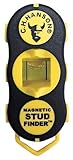
1. CH Hanson 3040 - Magnetic Stud Finder
 Finder](https://m.media-amazon.com/images/I/41fJhlwSavL._SL160_.jpg)
Overview: The CH Hanson 3040 represents the quintessential no-frills magnetic stud finder that has remained virtually unchanged for decades. This compact tool relies on a simple permanent magnet to locate screws and nails securing drywall to studs. Measuring just a few inches in length, it fits comfortably in any toolbox or pocket, ready for quick deployment without batteries or calibration. The design prioritizes reliability over complexity, making it an ideal entry-level option for homeowners tackling occasional hanging projects.
What Makes It Stand Out: Its unwavering simplicity is its greatest asset. Unlike electronic stud finders that require batteries and can produce false positives, the CH Hanson 3040 operates on pure physics—when the magnet finds a metal fastener, it sticks. There’s no power button, no sensitivity adjustments, and no learning curve. The tool’s durability is legendary; these units often last decades without failure, making it a true “buy it once” solution for basic stud detection needs.
Value for Money: Priced in the sub-$10 range, this stud finder delivers exceptional value for budget-conscious consumers. While it lacks the bells and whistles of modern electronic alternatives costing $30-50, it accomplishes its core mission with admirable consistency. For renters, first-time homeowners, or anyone needing a tool for infrequent use, the cost-per-use ratio is nearly unbeatable.
Strengths and Weaknesses: Strengths include zero maintenance requirements, infinite battery life, compact size, and proven reliability. Weaknesses involve limited precision compared to electronic models, no built-in leveling capability, and inability to detect stud edges—only fasteners. It also struggles with thicker plaster walls where fasteners are deeper.
Bottom Line: The CH Hanson 3040 is the perfect choice for DIY novices and occasional users who prioritize simplicity and reliability over advanced features. It’s a trustworthy, time-tested tool that gets the job done without complication.
2. Klein Tools MSF100 Magnetic Stud Finder and Level, Compact, Wood and Metal Detector with Bubble Vial for Accurate Markings, Felt Pad Backing

Overview: The Klein Tools MSF100 elevates the basic magnetic stud finder into a professional-grade instrument. This compact device combines a powerful rare-earth magnet with a bubble vial level and precision marking features, creating a multi-functional tool for serious tradespeople and discerning DIYers. The felt pad backing protects finished walls while the magnet locates metal fasteners within wooden or metal studs. Its thoughtful design includes both a top center notch and bottom opening for accurate pencil markings.
What Makes It Stand Out: The integration of a bubble vial level sets this apart from basic magnetic finders, allowing users to verify horizontal alignment without a separate tool. The rare-earth magnet provides stronger, more confident attraction to fasteners than standard magnets, reducing search time. The protective felt backing demonstrates Klein’s attention to detail, preventing drywall damage during use. The dual marking notches enable precise center-point identification from multiple angles.
Value for Money: At roughly $15-20, the MSF100 occupies a sweet spot between bargain magnetic finders and expensive electronic units. Klein’s legendary build quality justifies the modest premium over basic models. For professionals who use the tool daily, the time saved and marking precision easily offset the cost. It replaces two tools (stud finder and small level), adding practical value to any tool belt.
Strengths and Weaknesses: Strengths include powerful magnet detection, integrated leveling, wall protection, and precise marking capabilities. The compact size fits comfortably in pockets. Weaknesses include a slightly higher price point than basic magnetic finders and the inability to detect non-metallic studs. The strong magnet can occasionally pick up unintended metal objects.
Bottom Line: The Klein Tools MSF100 is an excellent investment for professionals and serious DIY enthusiasts who demand precision and durability. It successfully bridges the gap between simple magnets and complex electronics.
3. CH Hanson 03040 Magnetic Stud Finder Pack of 2
Overview: This offering packages two CH Hanson 03040 magnetic stud finders together, providing identical functionality to the single unit but with the added convenience of a backup tool or the ability to work with multiple reference points simultaneously. Each unit employs the same reliable permanent magnet technology that has made CH Hanson a household name in basic stud detection. The twin-pack approach caters to users who appreciate redundancy or need to map out stud locations across larger wall sections efficiently.
What Makes It Stand Out: The two-unit configuration allows innovative usage patterns—place one finder on a located stud while searching for the next, creating a visual reference line across your work area. This is particularly useful for hanging multiple items in alignment or mapping full stud layouts before beginning a project. The pack essentially provides a “system” approach to stud finding rather than a single-point solution, doubling your efficiency without doubling complexity.
Value for Money: Typically priced only 30-40% more than a single unit, this two-pack represents outstanding bulk value. For contractors or active DIYers, the cost savings over purchasing separately is significant. Even for occasional users, having a spare in a different toolbox or as a backup justifies the minimal extra expense. The value proposition strengthens when considering the long lifespan of these durable tools.
Strengths and Weaknesses: Strengths include exceptional value, the strategic advantage of dual reference points, and the same reliable simplicity as the single unit. Weaknesses mirror the single version: no leveling feature, limited to fastener detection only, and reduced effectiveness on plaster walls. Some users may not need a second unit, making the extra cost unnecessary.
Bottom Line: The CH Hanson two-pack is a smart purchase for anyone who regularly works on wall-mounting projects or wants the security of a backup tool. The minimal price premium over a single unit makes it a practical choice for most buyers.
4. 2 PCS Stud Finder, Magnetic Stud Finder Easy to Use, No Batteries Required, Rapid to Locate Screws, Nails, Metal Studs Through Drywall and Wood - Powerful Magnet Stud Finder

Overview: This generic two-pack of magnetic stud finders positions itself as a straightforward, no-nonsense solution for basic drywall stud detection. Marketed primarily through online retailers, these units utilize neodymium magnets to locate screws and nails behind drywall surfaces. The product emphasizes universal compatibility with standard drywall construction while explicitly warning against use on lath and plaster walls. Designed for installers prioritizing speed and simplicity, these tools require zero setup or power source.
What Makes It Stand Out: The neodymium magnets offer notably strong attraction relative to the unit’s size and price point, often outperforming traditional ferrite magnets in holding power. The two-unit packaging allows simultaneous use as reference markers, similar to more expensive options. The manufacturer clearly sets expectations by specifying limitations (not for lath and plaster), which builds trust. The “world’s simplest” marketing angle resonates with users frustrated by complicated electronic devices.
Value for Money: Frequently available for under $15 for the pair, this offering competes aggressively on price. For budget-conscious buyers or those needing multiple tools for different locations, the cost efficiency is compelling. While lacking brand recognition of CH Hanson or Klein, the functional performance for basic drywall projects remains adequate. The value peaks for renters or new homeowners needing an immediate, affordable solution.
Strengths and Weaknesses: Strengths include powerful magnets, true battery-free operation, lightweight design, and clear usage guidelines. The two-pack provides good coverage. Weaknesses involve unknown long-term durability, lack of protective padding, absence of leveling features, and inconsistent quality control. The generic branding may complicate warranty support.
Bottom Line: This two-pack serves as a decent budget alternative for basic drywall stud detection. While professionals should invest in name-brand reliability, casual users will find these functional for occasional hanging tasks.
5. Klein Tools MSF1002 Magnetic Stud Finder and Level, Compact, Wood and Metal Detector with Bubble Vial for Accurate Markings, Felt Pad Backing, 2-Pack

Overview: The Klein Tools MSF1002 bundles two professional-grade MSF100 units, delivering the same rare-earth magnet power, bubble vial leveling, and precision marking features in a convenient two-pack configuration. Each unit maintains the compact design, protective felt backing, and dual marking notches that define the single-unit version. This package targets serious tradespeople and ambitious DIYers who recognize the efficiency of using multiple reference points or require backup tools across different job sites. Klein’s reputation for durability ensures both units will withstand professional use.
What Makes It Stand Out: Beyond the inherent advantages of the MSF100 design, the two-pack enables professional workflow optimization—place one finder on each end of a mounting project to ensure perfect alignment without repeated measurements. The consistency between both units guarantees uniform performance, critical for professional results. Klein’s commitment to quality control means both tools meet identical specifications, eliminating the variability sometimes seen in bulk generic packs.
Value for Money: While commanding a premium over single-unit purchases, the two-pack typically offers 15-20% savings compared to buying separately. For professionals, this discount is meaningful when equipping crews or maintaining tool inventory. The investment pays dividends through reduced labor time and eliminated callbacks due to misaligned installations. For dedicated DIYers, the second unit serves as a reliable backup or allows simultaneous work with a helper.
Strengths and Weaknesses: Strengths include professional-grade construction, integrated leveling, wall protection, powerful magnets, and strategic two-unit efficiency. Klein’s warranty support adds peace of mind. Weaknesses center on the higher upfront cost, which may exceed casual users’ budgets. The powerful magnets require careful handling to avoid pinching fingers or attracting unwanted metal debris.
Bottom Line: The Klein Tools MSF1002 two-pack represents the best value for professionals and serious enthusiasts who demand precision and durability. The modest savings over individual units make it a wise investment for regular users.
6. StudPoP® Original Smart Magnetic Stud Finder – No Batteries, No Calibration, 3X More Reliable, Perfect for Lath & Plaster, Metal Studs – Visual & Audible Indicator, Simple & Fun to Use – 1" Magnet

Overview: The StudPoP Original revolutionizes magnetic stud finding with its innovative visual and audible detection system. This 1-inch magnetic tool eliminates batteries and calibration entirely, promising three times the reliability of competitors. Designed specifically for challenging wall types, it excels where traditional magnetic finders fail, particularly on thick lath and plaster surfaces that stymie conventional tools.
What Makes It Stand Out: The standout feature is the patented pop-up indicator that visibly alerts you when detecting metal fasteners, a game-changer for thick plaster walls where magnetic pull is barely perceptible. Unlike basic magnets or electronic stud finders that struggle with lath and plaster, the StudPoP works reliably across sheetrock, plaster, tile, and metal studs. The audible click provides dual confirmation, making stud location intuitive and nearly foolproof.
Value for Money: While priced higher than simple magnets, it costs significantly less than electronic stud finders that require batteries and often fail on plaster walls. For homeowners with older construction, this single tool replaces multiple failed attempts with competing products, offering exceptional value through reliability and time saved. The durability of its mechanical design ensures years of use without maintenance costs.
Strengths and Weaknesses: Strengths include the visual indicator, versatile material compatibility, dead-simple operation, and proven performance on thick plaster. Weaknesses: the magnet may feel less powerful than raw neodymium alternatives, and it only locates fasteners rather than stud centers. Users must still verify stud location by finding multiple screws.
Bottom Line: For anyone battling thick plaster or tiled walls, the StudPoP is an indispensable tool that delivers on its promises. Skip electronic alternatives and basic magnets—this is the reliable solution for challenging surfaces. However, for standard drywall only, simpler options may suffice.
7. Dreyoo 2 Pcs Stud Finder Wall Scanner, Studball Magnetic Stud Finder with 27 Pounds of Pull Magnetic Power, Studball for Detected and Located Stud Through 5/8" Drywall Plywood Paneling Ceramic (Black)

Overview: The Dreyoo Studball offers a dual-pack solution featuring powerful 27-pound pull magnets capable of detecting metal fasteners through substantial building materials. This no-battery, no-calibration tool promises reliable stud detection through 5/8-inch drywall, plywood paneling, and ceramic tile, making it a versatile addition to any toolbox.
What Makes It Stand Out: The two-unit package provides immediate backup or allows simultaneous use by multiple workers. Its exceptional magnetic force penetrates materials where weaker magnets fail, while the compact ball design doubles as a retrieval tool for dropped screws, nails, or keys in tight spaces. This multi-functionality extends its value beyond simple stud detection.
Value for Money: Getting two high-powered stud finders for the price of one premium electronic unit represents excellent value. The 27-pound pull force matches industrial-grade competitors, and the dual-pack configuration means you always have a spare. For DIY enthusiasts or couples working together, this effectively halves the cost per user compared to individual purchases.
Strengths and Weaknesses: Strengths include formidable magnetic power, material versatility, portable size, and bonus retrieval functionality. The 0.63-inch diameter provides concentrated force in a pocket-friendly form. Weaknesses: the small size can be fiddly to handle, lacks visual confirmation beyond magnetic tug, and provides no marking guidance. Users must develop a feel for the magnetic pull strength.
Bottom Line: The Dreyoo 2-pack delivers professional-grade magnetic power at a consumer price point. Ideal for frequent DIYers or as a practical gift, though the compact size may challenge users with limited dexterity. For basic drywall needs, it might be overkill, but for thicker materials, it’s a reliable workhorse.
8. 52300 Studball, 27 Pounds of Pull Power Magnetic Stud Finder, No Batteries Stud Finder Wall Scanner Detect Metal Through 5/8" Drywall, Wood or 3/4" Plywood Paneling, Ceramic Tiling etc.

Overview: The 52300 Studball is a single-purpose powerhouse, delivering 27 pounds of magnetic pull in the world’s simplest stud-finding package. This no-frills tool detects screws and nails through 5/8-inch drywall and even 3/4-inch plywood or ceramic tile, promising to locate over 40 studs in under a minute without batteries or calibration.
What Makes It Stand Out: Raw speed and power define this tool. The rare-earth magnet’s exceptional strength allows it to stick directly to walls when detecting fasteners, providing hands-free positioning that eliminates marking errors. Its ability to work through substantial tile and plywood surpasses most magnetic competitors, making it uniquely suited for renovation projects involving multiple wall coverings.
Value for Money: As a single-unit tool, it offers focused performance without premium packaging costs. The industrial-grade magnet provides professional capabilities at a DIY price point. While lacking the backup of multi-pack options, its concentrated power and speed justify the investment for users who prioritize efficiency over redundancy.
Strengths and Weaknesses: Strengths include unmatched detection speed, powerful 27-pound pull, direct wall adhesion, and versatility across thick materials. The rubber ring allows tethering for retrieval applications. Weaknesses: no visual indicator, sole reliance on magnetic tug, and potential overkill for standard 1/2-inch drywall where weaker magnets suffice. The minimalist design offers no ergonomic enhancements.
Bottom Line: The 52300 Studball is the speed demon’s choice for stud finding, excelling in professional settings or ambitious DIY renovations. Its brute-force approach cuts through thick materials effortlessly, though users working exclusively with standard drywall may not need this level of power. A specialized tool for demanding applications.
9. moonoom 2 Pcs Stud Finder Magnet, Powerful Magnetic Stud Detector, Compact Wall Metal Finder Tool for Drywall Construction Marking and Mounting

Overview: The moonoom magnetic stud finder provides a budget-friendly twin-pack solution specifically engineered for drywall applications. These compact detectors measure 0.9 x 5.5 inches, offering an ergonomic grip for comfortable scanning. The tool identifies screw and nail heads without batteries or moving parts, streamlining hanging and mounting tasks.
What Makes It Stand Out: Its wall-safe smooth surface prevents scratches and damage during scanning, addressing a common complaint with rougher magnetic tools. The ergonomic design ensures secure handling, while the two-pack configuration allows users to keep one in their toolbox and another in a kitchen drawer for quick access. The transparent limitation to drywall focuses its design for optimal performance on modern construction.
Value for Money: This represents exceptional affordability, providing two functional stud finders for less than the cost of a single premium magnetic unit. For homeowners with contemporary drywall construction, it delivers necessary functionality without paying for plaster-wall capabilities they’ll never use. The twin-pack doubles the value proposition.
Strengths and Weaknesses: Strengths include the scratch-free design, comfortable ergonomic grip, lightweight portability, and honest marketing about limitations. The compact size suits tight spaces. Weaknesses: explicitly unsuitable for lath and plaster, weaker magnetic force compared to 27-pound studballs, and no visual or audible confirmation beyond tactile feedback. The narrow detection field requires more passes.
Bottom Line: The moonoom twin-pack is perfect for apartment dwellers and homeowners with standard drywall who need simple, affordable stud location. Its honesty about plaster limitations is refreshing, ensuring buyers get exactly what they need. Skip this if you have older plaster walls, but for modern construction, it’s an unbeatable value for basic hanging tasks.
10. Powerful Magnetic Stud Finder PRO (Upgraded Version) Reinforced with 3 Neodymium Magnets - No-Battery Stud Detector - Deep Detection of Wood & Metal Studs in Drywall (Not for Plaster Walls) | 1 Pack

Overview: This upgraded PRO model distinguishes itself with three neodymium magnets, delivering enhanced detection depth and accuracy for drywall applications. The transparent design features built-in marking arrows, allowing precise hands-free drilling without wall damage. Measuring 4.72"x1.18"x1", it covers more surface area per pass than conventional magnetic finders.
What Makes It Stand Out: The triple-magnet configuration provides superior pull force and broader detection range, significantly reducing missed fasteners. The see-through body with alignment arrows enables direct drilling through the tool itself, eliminating marking mistakes. Its larger scanning surface speeds up wall coverage while maintaining pinpoint accuracy, a unique combination in the magnetic stud finder category.
Value for Money: Positioned as a premium magnetic tool, it costs more than basic magnets but less than high-end electronic units. The professional-grade features—triple magnets, transparent design, and marking system—justify the price for serious DIYers and contractors. For drywall-only applications, it offers electronic-finder convenience without battery dependency or calibration hassles.
Strengths and Weaknesses: Strengths include powerful triple-magnet detection, hands-free marking capability, fast scanning coverage, and wall-safe operation. The transparent design is genuinely innovative. Weaknesses: larger size reduces pocket portability, may not perform on thick lath and plaster, and the single-pack offering provides no backup. The premium price exceeds simple magnetic alternatives.
Bottom Line: For drywall projects demanding professional accuracy without electronic complexity, this PRO model excels. The marking arrows and triple magnets solve common pain points, making it ideal for frequent users. However, those needing plaster-wall performance or maximum portability should look elsewhere. A specialized premium tool for dedicated drywall work.
Why Metal Studs Require Specialized Detection Tools
Metal studs present a fundamentally different detection challenge compared to their wooden counterparts. Unlike wood, which offers consistent density and can be located through dielectric changes, metal studs are thin-walled (typically 25-gauge to 20-gauge steel) and designed to be lightweight. This means they generate a much weaker magnetic signature, especially when buried under 5/8-inch fire-rated drywall or double layers of wallboard. Standard electronic stud finders that rely on density differentials often struggle with metal framing, either missing studs entirely or providing false positives from plumbing, HVAC components, or electrical conduits.
The metallic nature of these studs also means that traditional magnetic finders must be significantly more sensitive. A typical wood-framed wall might have a drywall screw every 12-16 inches creating a clear magnetic path. Metal stud walls, however, use fewer fasteners and the studs themselves are the target. This requires magnets with higher pull force and directional sensitivity to detect the subtle magnetic field distortion through wall materials. In 2026’s market, the gap between basic magnetic toys and professional-grade detection tools has never been wider.
Understanding Magnetic Stud Finder Technology
How Magnetic Stud Finders Work
At their core, magnetic stud finders operate on a beautifully simple principle: they detect the ferrous metal in studs, screws, or nails by responding to changes in magnetic field strength. When you slide a magnetic finder across a wall, its internal magnet array is constantly sampling the ambient magnetic environment. As it approaches a steel stud or fastener, the ferrous material distorts Earth’s natural magnetic field, creating a localized concentration that tugs at the finder. High-quality models use multiple magnets arranged in specific geometric patterns—often in a rosette or linear array—to not only detect this pull but also determine directionality and approximate depth.
The 2026 generation of these tools has refined this basic concept with engineered magnet compositions. Neodymium-iron-boron (NdFeB) magnets have become the standard, offering exceptional strength-to-size ratios. Some advanced models incorporate samarium-cobalt (SmCo) magnets for temperature stability in hot climates or heavy-use scenarios where tool heat buildup could degrade standard neodymium performance. The magnet housing itself plays a crucial role, with precision-molded channels guiding the magnetic field for maximum sensitivity in the detection direction while minimizing interference from the user’s hand or nearby metal objects.
The Physics Behind the Magnetism
The effectiveness of a magnetic stud finder hinges on two key physical properties: magnetic permeability and flux density. Steel studs, being ferromagnetic, have high permeability—they essentially become temporary magnets themselves when within Earth’s magnetic field, concentrating field lines through their structure. This concentration creates a detectable anomaly that increases exponentially as you move closer to the source. The rate of this increase follows an inverse cube law, meaning the magnetic force drops off rapidly with distance, which explains why magnet strength becomes critical for detecting studs through thicker wall assemblies.
Flux density, measured in Gauss or Tesla, determines how strong that detectable “tug” feels to the user or sensor. Modern rare-earth magnets in 2026’s top-tier finders achieve surface field strengths exceeding 4,000 Gauss, compared to the 200-300 Gauss of traditional ceramic magnets. This dramatic increase in field strength allows detection through up to 1.5 inches of combined wall materials—a common scenario in high-end commercial construction with double 5/8-inch drywall layers and sound-dampening boards. Understanding these physics helps explain why a $10 magnet toy and a $80 professional tool produce vastly different results, even though both operate on the same fundamental principle.
Key Advantages of Magnetic Detection Methods
Magnetic stud finders offer several compelling benefits that keep them relevant despite advances in electronic scanning technology. First, they require zero batteries, calibration, or power sources—a dead battery never interrupts your workflow. This reliability makes them indispensable for emergency repairs or remote job sites where charging infrastructure is unavailable. In 2026’s sustainability-conscious market, this also means no lithium battery waste and a virtually unlimited operational lifespan with proper care.
Second, magnetic finders are uniquely adept at distinguishing between metal studs and non-ferrous interference. Unlike electronic scanners that might alert on plastic pipes, live wires, or voids in the wall, a quality magnetic finder responds exclusively to ferromagnetic materials. This specificity eliminates false positives and provides confidence that what you’ve found is actually a steel stud, not a water line or electrical conduit. For critical installations where hitting the wrong wall component could be catastrophic, this ferrous-only detection is a non-negotiable safety feature.
Finally, magnetic tools provide immediate tactile feedback. You feel the pull, see the indicator snap into place, and often hear a subtle click as the mechanism engages. This multi-sensory confirmation builds user confidence and reduces the learning curve compared to interpreting LED bar graphs or digital displays on electronic models. In fast-paced commercial environments where seconds matter, this instant verification keeps projects moving efficiently.
Critical Features to Evaluate in 2026 Models
Magnet Strength and Material Composition
When evaluating magnetic stud finders for metal stud detection, magnet strength should be your primary consideration. Look for tools advertising N52-grade neodymium magnets—the highest commercially available grade as of 2026. These provide approximately 15% more pull force than the previous N48 standard, translating to deeper detection capability and more decisive “sticks” when you locate a stud. The magnet’s dimensions matter too; larger surface area magnets create a broader detection field, helpful for locating studs that might be slightly off-center or warped during installation.
Pay attention to how manufacturers specify strength. Reputable brands list pull force in pounds or Newtons, typically ranging from 15-40 pounds for professional-grade models. Be wary of vague “super strong” claims without quantification. Some 2026 innovations include hybrid magnet arrays combining neodymium for initial detection with smaller samarium-cobalt magnets for precise edge location, giving you both depth and accuracy in one tool.
Ergonomic Design Considerations
A tool you’ll slide across hundreds of feet of wall daily must feel like an extension of your hand. Modern ergonomic design goes beyond simple comfort—it directly impacts accuracy. Look for finders with a low-profile, wedge-shaped nose that allows you to scan directly into ceiling corners and tight spaces where studs often terminate. The grip should position your hand behind the detection plane, preventing your own fingers from interfering with the magnetic field.
Weight distribution is another critical factor. The 2026 market has seen a shift toward composite materials that reduce overall weight without sacrificing durability. A tool weighing under 6 ounces reduces hand fatigue during all-day use while maintaining the heft needed for smooth, controlled movement. Some advanced models feature adjustable wrist tethers and magnetic storage caps that protect the detection face while keeping the tool accessible on your tool belt—small details that make a significant difference in daily workflow.
Marking Mechanisms and Accuracy Indicators
The moment of detection means nothing if you can’t accurately mark the spot. Premium magnetic finders now integrate precision marking systems that go beyond simple center punches. Look for models with retractable, replaceable marking pins that create a tiny dimple without penetrating the drywall surface—ideal for painted walls where you want minimal damage. Some tools incorporate V-groove alignment channels that guide your pencil for straight, accurate lines along stud edges.
Visual indicators have also evolved. While traditional models relied solely on the magnet’s movement, 2026’s sophisticated tools include mechanical flags that pop up when the magnet engages, providing clear visual confirmation even in low-light conditions. Color-coded depth indicators can suggest whether you’ve found a stud face or just a screw, helping you map stud width without multiple passes. The best models combine these visual cues with audible clicks, creating redundant confirmation systems that virtually eliminate marking errors.
Durability in Professional Environments
Job sites are brutal on precision tools. Your magnetic stud finder will be dropped, stepped on, soaked in drywall dust, and rattled around in a tool bag. Professional-grade models in 2026 feature polycarbonate housings with rubber overmolding at impact points, surviving 10-foot drops onto concrete. Internal magnet cavities should be fully potted—meaning the magnets are encased in epoxy—to prevent them from shattering or dislodging upon impact.
Consider the tool’s resistance to environmental factors. IP54-rated dust and water resistance has become the baseline for professional tools, protecting against drywall dust infiltration and unexpected rain on exterior framing jobs. The marking mechanism should be fully sealed or easily serviceable, as this is typically the first component to fail. Some manufacturers now offer lifetime magnet warranties, a testament to confidence in their encapsulation technology—a feature worth prioritizing for anyone depending on the tool for their livelihood.
The Evolution of Magnetic Stud Finders Through 2026
The magnetic stud finder has transformed from a simple novelty into a precision instrument through incremental improvements in materials science and user interface design. Early 2020s models were essentially powerful magnets in plastic cases, requiring users to interpret subtle tugs and slides. By 2024, we saw the introduction of directional magnet arrays that could indicate stud edge versus center, and the integration of rare-earth magnets became mainstream rather than premium.
The 2025-2026 period has been defined by hybridization. Manufacturers now blend magnetic detection with minimal electronic augmentation—think passive LED indicators powered by the magnet’s movement itself, or mechanical counters that track distance traveled to help map stud spacing automatically. These “smart mechanical” tools bridge the gap between pure magnetic simplicity and electronic complexity, offering enhanced functionality without sacrificing the reliability of battery-free operation. The focus has shifted from simply finding metal to providing comprehensive wall mapping capabilities that help users understand stud spacing, gauge thickness, and even identify double studs or fire blocking.
Common Limitations and How to Overcome Them
Even the best magnetic stud finder has inherent constraints. Deep wall assemblies exceeding 1.5 inches can push the limits of magnetic detection, especially if using lower-grade magnets or if studs are aluminum (non-ferrous) rather than steel. In these scenarios, work systematically by scanning vertically as well as horizontally—metal studs run floor-to-ceiling, so finding a screw at a consistent height can confirm stud location even if the stud face itself is undetectable.
Another limitation is interference from adjacent metal. HVAC ducts, electrical conduit, and plumbing running through walls can create magnetic “noise” that confuses detection. The solution is slow, methodical scanning combined with knowledge of typical stud spacing (16 or 24 inches on center). If you’re getting constant signals, mark the strongest points and measure between them; random spacing usually indicates pipes or conduit, while consistent spacing suggests studs. Some 2026 models include shielding plates that can be engaged to block lateral magnetic interference, focusing detection in a narrower cone directly ahead of the tool.
Professional vs. DIY Applications
Your usage profile dramatically impacts which features justify the investment. For DIY homeowners mounting occasional shelves or TVs, a mid-range magnetic finder with clear visual indicators and a simple center-marking system provides excellent value. The priority should be ease of use and confidence-building feedback rather than extreme depth detection, since most residential walls use single-layer drywall.
Professional contractors, however, need tools that integrate into a faster, more demanding workflow. Features like integrated measuring scales, magnetic belt clips, and the ability to detect through multiple wall layers become non-negotiable. A commercial drywall installer might scan thousands of square feet daily, making ergonomic design and durability far more critical than for occasional use. For these users, the time saved through faster, more accurate detection directly translates to profitability, justifying premium pricing for advanced features like edge-detection arrays and replaceable wear components.
Price Ranges and Value Propositions
Magnetic stud finders in 2026 cluster into three distinct price tiers, each offering specific value propositions. The $15-$30 range includes basic but functional tools suitable for light DIY use. These typically feature single neodymium magnets, simple plastic housings, and basic marking capabilities. While they lack the refinement of premium models, they reliably detect studs through standard 1/2-inch drywall and represent a massive improvement over knocking on walls.
The $35-$65 mid-tier is where most homeowners and semi-pros find their sweet spot. These tools offer N48 or N52 magnets, ergonomic grips, integrated marking systems, and durable construction. Many include hybrid features like mechanical flags or depth indicators. This range delivers 90% of professional capability at a fraction of the cost, making it the logical choice for anyone who values their time and wants consistent results.
Premium models from $70-$120 justify their price through exceptional durability, advanced magnet arrays, replaceable components, and specialized features for commercial applications. These are investments for tradespeople who use the tool daily. The cost difference pays for itself through reduced downtime, fewer errors, and longer service life—professional-grade models often last decades with proper maintenance, while budget options might need replacement every few years under heavy use.
Calibration and Maintenance Best Practices
One of magnetic stud finders’ greatest strengths is their lack of electronic calibration, but they still require periodic maintenance for optimal performance. The primary concern is demagnetization, which can occur through physical shock, extreme heat (above 176°F for neodymium), or exposure to strong opposing magnetic fields. Store your finder away from electric motors, large speakers, and other tools with powerful magnets. If the tool suffers a severe drop, test it against a known metal object—significant strength loss indicates internal magnet fracture.
Cleaning is equally important. Drywall dust is abrasive and can work its way into moving parts like marking mechanisms or mechanical indicators. Use compressed air to blow out crevices weekly during heavy use, and wipe the detection face with a clean cloth to prevent dust buildup from creating a microscopic gap between magnet and wall. For tools with o-rings or seals, apply a tiny amount of silicone grease annually to maintain flexibility and dust resistance. Unlike electronic tools, magnetic finders improve with age if properly cared for—the magnets actually stabilize over the first year, often gaining a slight increase in consistent pull strength.
Safety Considerations When Working with Metal Studs
Locating metal studs is only half the battle; working with them safely requires additional knowledge. Unlike wood, metal studs are hollow and have sharp edges where cut. When drilling, always use a punch to create a starter dimple—drill bits can walk across the smooth steel surface, potentially damaging the wall or causing injury. Wear cut-resistant gloves when handling cut studs, as the edges can be razor-sharp.
Electrical safety takes on new importance with metal framing. Wires running through metal studs must be protected by grommets at every penetration point, but older construction or DIY modifications may skip this step. Always use a non-contact voltage detector before drilling, even if your magnetic finder indicates a clear stud location. Metal studs can conduct electricity, turning a simple anchor installation into a shock hazard if you drill into an unprotected live wire. In 2026’s code-compliant construction, this risk is lower, but renovation work on older metal-framed buildings demands extra caution.
Complementary Tools for Comprehensive Wall Assessment
No single tool provides complete wall intelligence. Pair your magnetic stud finder with a non-contact voltage detector to identify live wires that may be stapled to stud faces—a common practice in metal framing that creates shock hazards. A small rare-earth magnet on a string (a “plumb magnet”) can verify vertical alignment once you’ve found a stud at one height, helping map the full stud length for mounting heavy objects requiring multiple anchor points.
For walls with unknown construction, combine magnetic detection with a basic electronic stud finder set to metal-scanning mode. The electronic tool can identify non-ferrous components like copper pipes or aluminum studs, while the magnetic tool confirms steel stud locations. This dual-approach methodology eliminates nearly all guesswork. Some professionals now use thermal imaging cameras as a third verification method—metal studs transfer temperature differently than insulation cavities, sometimes revealing themselves through subtle temperature gradients on the wall surface, particularly in climate-controlled buildings.
Troubleshooting Common User Errors
The most frequent mistake is scanning too quickly. Magnetic detection relies on the user feeling subtle changes in resistance; moving faster than 2-3 inches per second can cause you to miss the initial pull or overshoot the stud center. Practice on a known wall first, developing a feel for the tool’s feedback at different speeds. The second common error is applying too much downward pressure, which can mask the magnetic attraction. Let the tool’s weight provide the contact force; your hand should guide, not press.
Orientation matters more than most users realize. Metal studs have a C-shaped profile, and scanning parallel to the stud’s long axis can produce weaker signals than scanning perpendicular. If you’re getting inconsistent results, rotate your scanning direction 90 degrees. Also, be aware of your own body position—standing directly under fluorescent lights or near electrical panels can introduce background magnetic noise. Step back from the wall and scan from a consistent distance to establish a baseline before hunting for studs.
Environmental Factors Affecting Performance
Temperature extremes impact magnetic performance. In sub-freezing conditions, the plastic housing can contract, creating a tiny gap between magnet and wall surface that reduces effective depth. Conversely, extreme heat can temporarily reduce magnet strength. Store your finder at room temperature when possible, and in harsh conditions, give it a few minutes to acclimate to the ambient temperature before use.
Wall composition creates the most significant environmental variables. Walls with metal lathe (common in older plaster construction) will produce constant magnetic attraction, overwhelming the stud signal. In these cases, use the “grid method”—measure 16 inches from a corner and drill a tiny pilot hole to confirm stud location, then use your magnetic finder to trace vertically from that confirmed point. Walls with foil-backed insulation or radiant barrier sheathing can also interfere, effectively shielding the magnetic field. For these challenging applications, scan from multiple angles and trust the strongest, most consistent signal rather than the first indication you encounter.
Making the Final Decision: Your Use Case Profile
Before investing in a magnetic stud finder, honestly assess your needs. Consider the wall types you encounter most frequently—are you working in new residential construction with single-layer drywall, or commercial renovations with unpredictable wall assemblies? Estimate your usage frequency; occasional users should prioritize simplicity and value, while daily users need durability and speed. Evaluate your tolerance for ambiguity—if you’re comfortable interpreting subtle feedback, a pure magnetic tool suffices, but if you want clear yes/no indicators, look for hybrid mechanical-electronic models.
Budget should be viewed through the lens of cost-per-use. A $90 professional tool used daily for a year costs less than 25 cents per use, while a $20 budget tool that frustrates you into abandoning the project has infinite cost-per-use due to its failure to deliver value. For most users in 2026, the mid-tier range offers the optimal intersection of capability, durability, and price. The technology has matured to the point where even moderately priced options incorporate rare-earth magnets and thoughtful ergonomics that would have qualified as professional-grade just five years ago.
Frequently Asked Questions
Can magnetic stud finders detect metal studs through textured walls or thick plaster?
Yes, but performance varies significantly based on texture depth and plaster thickness. Standard knockdown texture (1/8-inch) has minimal impact, but heavy stucco or plaster exceeding 3/4-inch thickness may require a professional-grade finder with N52 magnets. Some textured surfaces contain sand aggregates that can create microscopic gaps, so scan slowly and apply minimal pressure to keep the tool flush against the underlying drywall.
Why does my magnetic finder sometimes stick to spots where no stud exists?
This typically indicates metal corner bead, nail plates protecting pipes, or fasteners from previous wall repairs. These are legitimate metal targets, just not studs. Use the spacing test—measure between strong signals. Random distances suggest protective plates or conduit, while consistent 16-inch or 24-inch spacing indicates studs. Also scan vertically; if the signal continues up the wall at consistent width, you’ve likely found a stud rather than an isolated plate.
Are rare-earth magnets safe to use around electronic devices?
Modern electronics like smartphones and laptops are generally resistant to static magnetic fields from small rare-earth magnets. However, keep your finder away from older CRT monitors, magnetic storage media (floppy disks, magnetic stripe cards), and pacemakers. The real concern is mechanical attraction—an unsecured magnetic finder can slam into a refrigerator or metal door with enough force to crack its housing. Always engage any magnetic shield or storage cap when not in use.
How do I differentiate between a steel stud and a copper pipe?
Pure magnetic finders only respond to ferrous metals, so they won’t detect copper pipes at all. If you’re using a hybrid tool with electronic scanning, copper will register on metal mode but won’t attract the magnet. This is a key advantage of magnetic detection—if it sticks, it’s steel; if it beeps but doesn’t stick, it’s non-ferrous and likely a pipe or wire requiring different handling. Always verify with a non-contact voltage detector before drilling any non-magnetic target.
What’s the maximum wall thickness a magnetic finder can penetrate?
Top-tier 2026 models using N52 neodymium arrays can reliably detect 25-gauge steel studs through up to 1.5 inches of combined wall materials. This covers double 5/8-inch drywall with 1/4-inch insulation board. Beyond this depth, detection becomes inconsistent. For thicker walls, consider scanning from both sides if accessible, or use the “fastener method”—find screws that attach the drywall to the stud, which sit closer to the surface and create stronger magnetic signatures.
Can I use a magnetic stud finder on exterior walls with insulation?
Yes, but with caveats. Standard fiberglass or rockwool insulation doesn’t impede magnetic fields, but foil-faced insulation creates a conductive barrier that can redirect magnetic flux. If scanning an exterior wall yields weak or inconsistent results, try scanning near electrical outlets (studs are typically adjacent) and work outward. Avoid scanning over foil-backed insulation seams where the barrier effect is strongest. In some cases, removing a section of insulation from the attic or crawl space to access the stud bay directly may be necessary for critical installations.
Do metal studs run vertically, or can they be installed horizontally?
In standard construction, metal studs run vertically from floor to ceiling track. However, horizontal fire blocking is required every 10 feet vertically and at ceiling lines in multistory construction. These horizontal members can confuse scanning if you’re only expecting vertical targets. If your finder indicates a horizontal run, you’ve likely found fire blocking or a wall top/bottom track. This is valuable information for mounting—horizontal members provide excellent shear strength for heavy objects.
Why are some magnetic finders shaped like triangles or teardrops while others are rectangular?
Shape affects scanning geometry. Triangular or teardrop designs with the point forward concentrate the magnetic field into a smaller detection area, improving edge detection and allowing precise marking of stud boundaries. Rectangular designs typically house larger magnet arrays, providing stronger pull for deeper detection but less precise edge location. Teardrop shapes also roll more smoothly across walls, while rectangles can catch on texture. Choose based on your priority: precision marking (teardrop) or maximum depth detection (rectangle).
How often should I replace my magnetic stud finder?
Unlike electronic tools, a quality magnetic finder has no theoretical lifespan limit. The magnets don’t “wear out” with normal use, though they can lose strength if overheated or physically damaged. Replace the tool when the housing becomes cracked (allowing dust infiltration), the marking mechanism fails, or you notice a significant decrease in detection capability. For professionals, this might be every 3-5 years of heavy use; for homeowners, a quality tool can last decades. The key is inspecting it regularly for physical damage that could affect performance.
Can I make my own magnetic stud finder using rare-earth magnets?
While technically possible, DIY magnetic finders lack the precision engineering of commercial tools. A bare magnet provides no ergonomic grip, no marking system, and no shielding from hand interference. The detection face angle, magnet spacing, and housing material all critically affect performance—factors that require extensive testing to optimize. Commercial tools also embed magnets in specific orientations to create directional sensitivity. A DIY approach might save $20 but will cost you time and accuracy. For the minimal price difference, a manufactured tool’s reliability and features provide far greater value than the satisfaction of DIY.
See Also
- Top 10 Best Stud Finders with Metal Detection for Metal Studs in 2026
- 10 Best Stud Finders with Metal Detection After 6 Months of Testing in 2026
- 10 Game-Changing Magnetic Stud Finders for Metal Studs in 2026
- 10 Premium Stud Finders with Metal Detection for Industrial Use (Worth the
- 10 Premium Stud Finders with Metal Detection (Worth the Investment)