Table of Contents
The modern job site looks nothing like it did even five years ago. As building materials evolve and behind-wall systems grow more complex, contractors face an unprecedented challenge: knowing exactly what’s lurking beneath every surface before a saw or drill makes contact. In 2026, the margin for error has shrunk to nearly zero, with safety regulations tightening and client expectations soaring. This is why the humble stud finder has transformed into a sophisticated multi-detection ecosystem—devices that don’t just locate wood framing but map entire wall matrices, differentiate between materials, and sync with your entire digital workflow.
Choosing the right stud finder and detector combo isn’t about grabbing the shiniest gadget on the shelf anymore. It’s about understanding which technology stack aligns with your specific trade, typical job site conditions, and long-term productivity goals. Whether you’re a general contractor juggling diverse projects or a specialist focused on high-end residential remodels, the device in your tool belt can either be your most trusted ally or your biggest liability. Let’s break down everything you need to know to make an informed decision.
Top 10 Stud Finder Detector Combos For
Detailed Product Reviews
1. Franklin Sensors Prosensor M210 Stud Finder With 13-Sensors, Wood & Metal Stud Detector/Wall Scanner, Live Wire Detection, Made in the USA
, Made in the USA](https://m.media-amazon.com/images/I/31mVcMwVM3L._SL160_.jpg)
Overview: The Franklin Sensors ProSensor M210 brings professional-grade accuracy to stud detection with its patented 13-sensor array. This American-made tool targets contractors and serious DIYers who refuse to compromise on reliability. It simultaneously identifies stud edges and centers while scanning for live electrical wires, providing comprehensive wall analysis in one pass.
What Makes It Stand Out: Thirteen sensors create a detection density that single-sensor models cannot match, dramatically reducing false positives. Its wide LED strip display shows the complete stud width rather than ambiguous point readings. Automatic depth adjustment scans through materials up to 1.7 inches thick without requiring manual mode switching, streamlining workflow.
Value for Money: Premium pricing reflects professional build quality and accuracy that prevents expensive drilling errors. Made-in-USA manufacturing ensures stringent quality control missing from budget imports. For professionals, the time saved through reliable first-attempt detection rapidly recoups the initial investment versus cheaper alternatives that require multiple verification passes.
Strengths and Weaknesses: Strengths include exceptional multi-sensor precision, intuitive full-stud visualization, robust construction, and dependable live wire detection. Weaknesses involve the higher cost and absence of a numeric LCD depth display. The LED-only interface, while clear, provides less granular data than screen-equipped competitors. Battery life could be better for all-day use.
Bottom Line: If accuracy and durability trump budget concerns, the M210 delivers professional results that justify its price. Ideal for contractors and serious enthusiasts who demand the most reliable detection technology available.
2. Stud Finder Wall Scanner - 5 in 1 Stud Finder Tool w/Smart Chip and HD LCD Display, Stud Detector Beam Finders for the Center and Edge of Wood AC Wire Metal Studs Joist Pipe (BloodOrange)

Overview: This 5-in-1 stud finder combines intelligent micro-sensor technology with practical features in an eye-catching orange package. Aimed at homeowners and DIY enthusiasts, it detects wood studs, metal, pipes, and live AC wires behind walls. The vibrant color adds personality to an otherwise utilitarian tool category.
What Makes It Stand Out: The high-definition LCD display works in tandem with audio alerts to create a dual-location feedback system. Multiple scan modes adapt to different depths and materials, while the smart chip promises rapid detection. Its marketing emphasizes gifting, highlighting safety benefits for home improvement projects and making it an approachable choice for novices.
Value for Money: Positioned in the mid-range, this scanner delivers five detection functions at a competitive price. The versatility eliminates need for separate tools, offering solid value for occasional users. While sensor density doesn’t match premium brands, it provides sufficient accuracy for most residential hanging tasks without requiring professional-grade investment.
Strengths and Weaknesses: Strengths include clear visual/audio guidance, versatile scanning modes, excellent low-light visibility, and ergonomic handling. Weaknesses encompass potential accuracy inconsistencies on textured or plaster walls and shallower depth penetration than professional models. The generic chip may produce more false positives than multi-sensor alternatives in challenging conditions.
Bottom Line: An excellent balance of functionality and affordability for budget-conscious DIYers. It performs adequately for typical household projects, though professionals should consider more robust options for critical applications.
3. Stud Finder Wall Scanner 5-in-1 - Detector for Wood, Metal, Joists, Pipes, and AC Wires, Upgraded New version Intelligent Chip, High-Definition LCD Display Screen & Audible Alarm

Overview: This upgraded 5-in-1 stud finder features a state-of-the-art micro-sensor chip engineered for precise detection of studs, joists, pipes, and live wires. With defined scan depths and automatic calibration, it serves users wanting improved consistency over basic models without professional-grade pricing. The ergonomic design prioritizes user comfort.
What Makes It Stand Out: Automatic calibration ensures reliable performance across varying wall textures—a feature often absent in budget scanners. Clearly defined depth modes (0.5", 1", 1.5") eliminate guesswork, while the AC scan mode specifically targets electrical hazards. The non-slip grip and durable frame enhance handling during extended use.
Value for Money: This model hits the sweet spot between unreliable cheap units and expensive professional tools. Auto-calibration prevents common user errors that plague manual models, potentially saving costly repair bills. For regular DIYers, the upgrade over entry-level scanners justifies the modest price premium through improved accuracy and reduced frustration.
Strengths and Weaknesses: Strengths include automatic calibration, specific depth indicators, comfortable ergonomics, and reliable wire detection. Weaknesses involve the 1.5-inch maximum depth limitation and potential accuracy degradation on plaster or lath walls. The LCD display, while functional, may lack the durability of professional-grade components for heavy use.
Bottom Line: Perfect for enthusiastic DIYers valuing consistency and ease of use. The auto-calibration feature makes it significantly more reliable than basic models, offering meaningful improvement worth the upgrade cost for frequent home projects.
4. Stud Finder Wall Scanner - 5 in 1 Stud Finder Tool w/Smart Chip and HD LCD Display, Stud Detector Beam Finders for the Center and Edge of Wood AC Wire Metal Studs Joist Pipe (Buttercup)
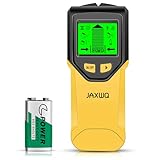
Overview: This 5-in-1 stud finder delivers intelligent detection capabilities in a distinctive buttercup yellow finish. Like its color variants, it employs a micro-sensor chip to locate wood studs, metal, pipes, and live wires. The tool targets homeowners seeking an affordable, multi-function wall scanner with modern consumer-friendly features and visual appeal.
What Makes It Stand Out: The Buttercup colorway provides aesthetic variety rarely seen in functional tools. It shares the same smart chip technology and HD LCD display as other variants, offering visual and audio guidance for precise location. The comprehensive scanning modes cover residential detection needs while maintaining straightforward operation accessible to beginners and seasoned DIYers alike.
Value for Money: As a mid-tier consumer option, this scanner provides five detection functions at an accessible price point. The focus on color variants indicates a consumer-first approach prioritizing user experience over industrial ruggedness. For intermittent household use, it delivers adequate performance without requiring contractor-grade investment, making it practical for occasional projects.
Strengths and Weaknesses: Strengths include intuitive interface, dual feedback system, versatile scanning modes, and attractive design. Weaknesses mirror its generic counterparts: potential accuracy inconsistencies on challenging surfaces and depth limitations for commercial work. The aesthetic emphasis may trade some durability compared to utilitarian professional models built for daily job site use.
Bottom Line: A solid entry-level to mid-range choice for DIY enthusiasts who appreciate design options. It performs well for typical household tasks, though those needing bulletproof reliability should consider professional-grade alternatives.
5. Franklin Sensors ProSensor M150/X990 Stud Finder with Live Wire Detection and 9-Sensors, Wood & Metal Stud Detector/Wall Scanner, Made in The USA
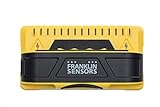
Overview: The Franklin Sensors M150/X990 streamlines stud finding with its 9-sensor array and simplified one-mode operation. This American-made tool automatically adjusts for depth and material, appealing to users who want professional accuracy without complex multi-mode interfaces. It eliminates calibration steps for immediate scanning anywhere.
What Makes It Stand Out: The “one mode finds all” design removes guesswork and calibration delays, allowing instant scanning even over existing studs. Nine sensors provide superior accuracy to conventional finders while maintaining remarkable simplicity. The LED display clearly shows full stud width, double studs, and irregular framing patterns at a glance without complicated readouts.
Value for Money: Positioned below the M210, the M150 offers professional sensor technology at a more accessible price point. Made-in-USA quality ensures durability, while simplified operation reduces user error. The battery limitation (no rechargeables) ensures consistent voltage for accuracy but adds minor operating cost over time.
Strengths and Weaknesses: Strengths include effortless operation, reliable multi-sensor accuracy, clear LED visualization, and robust construction. Weaknesses are the 1.5-inch depth limitation versus the M210’s 1.7 inches, lack of LCD depth readout, and incompatibility with rechargeable batteries. The simpler display provides less information than screen-equipped competitors in its price range.
Bottom Line: Perfect for homeowners wanting professional accuracy without complexity. The M150’s intuitive operation and reliable performance make it an excellent mid-range choice, though professionals may prefer the M210’s deeper scan capability for commercial work.
6. Stud Finder Wall Scanner - 5 in 1 Stud Finder Tool w/Microprocessor Chip and HD LCD Display, Stud Detector Beam Finders for the Center and Edge of Wood AC Wire Metal Studs Joist Pipe (Yellow Pear)

Overview: This 5-in-1 stud finder combines a sensitive microprocessor chip with a high-definition LCD display to locate studs, pipes, wires, and joists behind walls. Designed for homeowners and professionals, it promises rapid detection with visual and audio feedback, making it a practical addition to any tool collection.
What Makes It Stand Out: The intelligent micro-sensor chip delivers exceptional sensitivity, while the bright backlit LCD clearly shows stud centers, edges, and battery status. Audio beeps guide you precisely to targets, even in dim conditions. Multiple scan modes—including stud, deep, and metal—allow detection at various depths, offering versatility beyond basic single-mode finders.
Value for Money: Priced competitively against mid-range scanners, this model justifies its cost through multi-functionality that eliminates need for separate tools. The combination of accuracy, multiple modes, and clear display provides professional-grade features at a DIY-friendly price point, outperforming cheaper magnetic or single-sensor alternatives.
Strengths and Weaknesses: Strengths include rapid, accurate detection; intuitive LCD with audio alerts; versatile scan modes for different materials; and excellent low-light visibility. Weaknesses: the heavy emphasis on gifting may overshadow its professional capabilities, and beginners might find multiple modes initially confusing without practice.
Bottom Line: An excellent choice for serious DIY enthusiasts and professionals seeking reliable multi-depth scanning. The advanced features and clear feedback make it worth the investment for anyone regularly tackling wall-mounting projects.
7. Franklin Sensors ProSensor M210 Stud Finder with 13-Sensors, Wood & Metal Stud Detector/Wall Scanner, Live Wire Detection (Green), Made in The USA

Overview: The ProSensor M210 represents the pinnacle of stud finder technology with its array of 13 precision sensors packed into a durable, American-made tool. Designed for maximum accuracy, it detects studs, metal, and live wires up to 1.5 inches deep without the calibration hassles of conventional scanners.
What Makes It Stand Out: Unlike competitors using 1-2 sensors, the 13-sensor array provides unparalleled accuracy and instant visualization of entire stud widths—including single, double, and irregular configurations. The one-mode operation automatically adjusts for depth and material, allowing you to scan anywhere without false readings. Simultaneous center and edge display eliminates guesswork entirely.
Value for Money: While commanding a premium price, the M210 justifies every dollar through professional-grade accuracy that prevents costly mistakes. For contractors and serious DIYers, the time saved and confidence gained outweigh the initial investment, making cheaper alternatives seem risky by comparison.
Strengths and Weaknesses: Strengths include exceptional 13-sensor accuracy, zero calibration requirement, intuitive LED display showing full stud profiles, reliable live wire detection, and robust construction. Weaknesses: the higher cost may deter casual users, and the lack of a traditional LCD screen might disappoint those preferring digital readouts.
Bottom Line: The ultimate choice for professionals and perfectionist DIYers who demand flawless accuracy. If you value precision and reliability above all else, this American-made tool is worth the premium.
8. Stud Finder Wall Scanner 5 in 1 Multifunctional Upgraded Smart Wall Scanner, Stud Sensor Beam Detector with Battery for Wood Metal and AC Wire Detection, Comes with HD LCD Display and Audio Alarm

Overview: This upgraded 5-in-1 wall scanner employs advanced sensor chips to detect wood, metal, and live AC wires hidden within walls, floors, and ceilings. With detection depths up to 60mm and multiple scanning modes, it targets safety-conscious DIYers and professionals tackling complex wall structures.
What Makes It Stand Out: The professional-grade sensor array delivers five distinct modes, including three stud depths, metal detection to 2.36 inches, and AC wire detection to 2 inches. The standout WireWarning feature continuously scans for live wires across all modes, providing constant electrical hazard protection—a critical safety advantage often missing in competitors.
Value for Money: Positioned in the mid-range segment, this scanner offers exceptional depth capabilities that rival premium brands at a fraction of the cost. The included battery and comprehensive detection modes provide immediate value, eliminating the need for additional safety tools or separate deep-scanning devices.
Strengths and Weaknesses: Strengths include impressive 60mm maximum depth, always-on AC wire detection for safety, clear LCD with audio alerts, and versatile material detection. Weaknesses: lesser-known brand may raise durability questions, and the automatic calibration process requires careful technique to avoid errors. The “upgraded” claims lack third-party verification.
Bottom Line: A solid, safety-first choice for users needing deep-wall detection capabilities. The constant wire monitoring makes it particularly valuable for renovation projects where electrical hazards are a primary concern.
9. Franklin Sensors ProSensor M70 Stud Finder with 7-Sensors, Wood & Metal Stud Detector/Wall Scanner, Made in The USA

Overview: The ProSensor M70 brings Franklin Sensors’ renowned multi-sensor technology to a more accessible price point. With seven precision sensors and American manufacturing, this tool delivers professional-grade stud detection without the complexity of calibration or multiple modes.
What Makes It Stand Out: The seven-sensor array provides significantly better accuracy than conventional single-sensor finders, instantly displaying both stud centers and edges across a wide scan area. The one-mode-fits-all approach automatically compensates for different wall materials and textures, allowing you to scan anywhere—including directly over studs—without false positives.
Value for Money: Offering the core Franklin advantage at a reduced price, the M70 hits the sweet spot for serious DIYers who want professional reliability without premium cost. It delivers 90% of the M210’s functionality for most residential applications, making it a smarter choice than budget scanners that compromise on accuracy.
Strengths and Weaknesses: Strengths include Franklin’s proven sensor technology, zero calibration requirement, intuitive LED visualization, robust construction, and straightforward operation. Weaknesses: the M70 lacks dedicated live wire detection (a feature in the M210) and uses AAA batteries that aren’t rechargeable-compatible. The seven-sensor array, while excellent, doesn’t match the M210’s 13-sensor precision.
Bottom Line: The ideal stepping stone into professional-quality tools. For homeowners and DIYers seeking reliable, calibration-free operation, this American-made scanner offers exceptional value and accuracy.
10. Stud Finder Wall Scanner - 6 in 1 Electronic Stud Finder with HD LCD Display and Smart Chip, Stud Detector Beam Finders for the Center and Edge of Wood AC Wire Metal Joists Pipes (Orange)

Overview: This feature-packed 6-in-1 electronic stud finder integrates a smart micro-sensor chip with an HD LCD display and innovative magnetic detection capabilities. Designed for versatile home improvement tasks, it automatically calibrates and provides real-time warnings for live AC wires during scanning.
What Makes It Stand Out: The unique magnetic detection mode locates hidden drywall nails and screws, complementing traditional stud sensing with an additional layer of precision. Automatic calibration eliminates user error, while the six scanning modes—including stud, metal, AC wire, and magnetic—adapt to virtually any wall composition. Real-time wire detection with visual and audible alerts enhances safety during drilling.
Value for Money: With six detection modes typically found in separate tools, this scanner delivers exceptional functionality per dollar. The automatic calibration and magnetic features add convenience that justifies its price over basic models, positioning it as a cost-effective alternative to buying multiple specialized devices.
Strengths and Weaknesses: Strengths include comprehensive six-mode functionality, automatic calibration saving time, magnetic detection for nail/screw location, bright LCD with audio alerts, and continuous wire safety monitoring. Weaknesses: the numerous modes may overwhelm beginners, and the brand lacks the established reputation of Franklin Sensors. Build quality uncertainty remains a concern for heavy-duty use.
Bottom Line: A versatile, technology-forward choice for DIY enthusiasts who appreciate advanced features and automated operation. The magnetic mode makes it particularly valuable for precision mounting tasks.
The Evolution of Stud Finders and Multi-Detectors
The earliest electronic stud finders relied on simple capacitance changes to detect density differences behind drywall. While revolutionary for their time, they were prone to false positives from plumbing, conduit, and even inconsistent insulation. Fast forward to 2026, and we’re now working with devices that integrate multiple sensing modalities—radar, electromagnetic field mapping, and thermal pattern recognition—into unified detection engines. This convergence has created the “combo” category: tools that simultaneously scan for structural framing, live electrical wiring, metal piping, and even plastic PVC tubes. For contractors, this means one pass can reveal a comprehensive subsurface map, eliminating the guesswork that leads to costly mistakes.
Why Contractors Need Combo Devices in 2026
The economic argument for multi-detector combos has never been stronger. Consider the average cost of hitting a live wire: immediate work stoppage, electrician call-out fees, potential hospital bills, and project delays that cascade through your schedule. A single incident can erase the profit margin on an entire job. Combo devices mitigate this risk by providing layered detection. They don’t just beep when they sense something—they tell you whether it’s a stud, a copper pipe, or a 120V line. This intelligence allows you to make real-time decisions without switching tools or second-guessing readings. In an era where time is money and precision is non-negotiable, carrying separate tools for each detection task is a competitive disadvantage.
Key Technologies Behind Modern Detection
Understanding what’s under the hood helps you separate marketing hype from genuine capability. Today’s premium combos deploy a sensor fusion approach, but the core technologies still matter.
Magnetic Sensing Foundations
Even in 2026, high-sensitivity magnetometers remain the gold standard for locating ferrous metals like steel studs, fasteners, and iron pipes. The key advancement is dynamic range—modern sensors can detect a framing nail through 4 inches of dense material while ignoring ambient magnetic noise from nearby HVAC equipment. Look for devices that advertise “gradient-based magnetic mapping” rather than simple field detection.
Radar-Based Scanning Explained
Ultra-wideband (UWB) radar has trickled down from military and automotive applications into professional-grade tools. These systems emit nanosecond pulses and analyze return signals to create a 3D density profile of the wall cavity. The critical spec here is center frequency—higher frequencies (above 6 GHz) offer better resolution for shallow scans, while lower frequencies penetrate deeper but with less detail. Advanced models let you toggle between modes based on the task.
Multi-Sensor Fusion Architecture
The real magic happens in the device’s processing unit, where data streams from multiple sensors are correlated and cross-validated. A pipe might register on both radar and electromagnetic sensors, but the software can determine it’s non-ferrous and non-electrified, classifying it as PVC rather than copper or conduit. This fusion reduces false positives by up to 90% compared to single-sensor tools.
Critical Features to Evaluate
When comparing devices, focus on specifications that directly impact your daily workflow rather than flashy add-ons.
Scanning Depth and Material Penetration
Manufacturers often quote maximum depths in ideal conditions—drywall, no insulation, perfect calibration. Real-world performance differs dramatically. For 2026 standards, aim for a device that guarantees at least 3-inch depth in “normal operating conditions” (which includes typical insulation and minor wall texture). More importantly, check if the depth rating varies by material mode. Electrical detection should penetrate 2-3 inches reliably, while stud scanning might reach 4-5 inches.
Display Technology and Real-Time Visualization
A crisp, high-contrast display isn’t just for convenience—it’s a safety feature. In bright sunlight, a dim or reflective screen becomes unreadable, forcing you to guess at readings. Modern OLED displays with adaptive brightness maintain visibility in any condition. More critical is the UI design: does it show a simple arrow, or does it render a full-width scan map that lets you trace the entire stud or pipe path? The latter prevents you from missing edge cases where utilities run diagonally.
Power Management and Battery Technology
Nothing kills productivity faster than a dead detector mid-scan. Lithium polymer batteries dominate the 2026 market, but not all are created equal. Look for devices with “hot-swap” capability—internal memory retains calibration even when you change batteries. Runtime should exceed 8 hours of continuous scanning to cover a full workday. Some premium models now feature wireless charging pads and solar-assisted trickle charging for job sites without reliable power. Pay attention to standby power draw; a tool that drains 5% overnight versus 20% can be the difference between starting work immediately or hunting for a charger.
Durability Standards for Job Site Conditions
Your detector will fall. It will get rained on. It will be caked in drywall dust. IP ratings matter, but the specific numbers are crucial. IP54 handles dust and light splashes—adequate for indoor work. IP67 survives full immersion and heavy particulate, essential for exterior or renovation work where you can’t control the environment. Drop ratings are equally important: MIL-STD-810G certification ensures survival from 6-foot drops onto concrete. Don’t overlook the durability of the scanning surface itself—sapphire glass or hardened polycarbonate prevents scratches that can interfere with sensor accuracy.
Calibration and Auto-Calibration Systems
Manual calibration is a relic. In 2026, auto-calibration should be standard, but implementation varies wildly. The best systems recalibrate continuously in the background, adjusting for ambient conditions, wall composition changes, and even battery voltage fluctuations. Some devices require a “calibration swipe” on a known-empty wall section—a 30-second step that’s easy to skip but critical for accuracy. Ask about calibration drift specifications: a quality tool should maintain accuracy within 2% over a month of daily use without recalibration. If a device needs constant recalibration, its sensors are either low-grade or the firmware is poorly implemented.
Connectivity and Smart Features
Bluetooth 5.3 and Wi-Fi 6E connectivity have transformed detectors from isolated tools into data nodes. This isn’t just gimmickry—it enables powerful workflows.
App Integration and Data Management
Leading manufacturers offer cloud platforms where scan data auto-uploads, creating a permanent record of what’s behind every wall you’ve worked on. Imagine returning to a job site six months later and pulling up exact scan maps from the previous phase. Some apps now integrate with BIM (Building Information Modeling) systems, allowing you to overlay actual-as-built conditions onto original plans. Look for APIs that connect to your existing project management software—Procore, Buildertrend, or custom solutions.
Firmware Updates and Feature Expansion
A detector that receives regular firmware updates is one that improves over time. Manufacturers have been known to add entirely new detection modes—like enhanced PVC sensing or rebar mapping—via updates. Check the brand’s track record for supporting devices older than two years. A tool that’s obsolete after 18 months is a poor investment.
Safety Considerations and Regulatory Compliance
OSHA’s updated electrical safety standards now recognize advanced non-contact voltage (NCV) detection as a valid verification step before penetration. However, not all NCV sensors meet the new requirements. Your device should detect voltage from 12V up to 1000V AC/DC with a response time under 100 milliseconds. More importantly, it should have a “safe mode” that locks out other functions when live voltage is detected, preventing you from accidentally marking a hot line as a safe drilling target. For commercial work, ensure the tool is UL 61010-1 certified—this validates its safety for electrical measurement in professional environments.
Cost-Benefit Analysis for Professional Use
A $400 combo detector might seem steep compared to a $80 basic stud finder, but the ROI calculation changes when you factor in risk. If you prevent one emergency electrician call ($300), one sheet of ruined drywall ($50), and two hours of downtime ($200 in labor), the tool has nearly paid for itself. Scale that across a year, and the math becomes compelling. Entry-level combos ($150-$250) typically sacrifice scanning depth and sensor fusion, making them suitable for light residential work but risky for commercial or older buildings with unpredictable infrastructure. Premium models ($500+) offer features like dual-plane scanning (horizontal and vertical simultaneously) that save significant time on large-scale layouts.
Training and Learning Curve Factors
The most capable detector is useless if your crew can’t operate it confidently. Complex menus and cryptic icons lead to misuse. Demo the user interface before purchasing: can a new apprentice reliably differentiate between a stud and a pipe after a 10-minute tutorial? Some manufacturers offer AR-guided scanning, where your phone overlays visual cues on the wall, drastically reducing training time. Consider the tactile feedback—vibration patterns that indicate different materials let you keep your eyes on the wall, not the screen. For multi-person crews, look for devices with user profiles that store individual calibration preferences.
Warranty and Support Ecosystem
A two-year warranty is the industry minimum in 2026, but the terms matter. Does it cover calibration drift? Sensor degradation? Accidental damage? Some brands offer “contractor tier” warranties with overnight replacement and loaner programs, ensuring zero downtime. Investigate the repair network—can the device be serviced locally, or must it be shipped cross-country? Check community forums and Reddit threads for real-world support experiences. A manufacturer that’s responsive to firmware bug reports and feature requests demonstrates commitment to long-term product value.
Emerging Trends Shaping 2026 Models
Artificial intelligence is moving from cloud processing to on-device inference. Edge AI can now recognize material signatures specific to your region—like the difference between Chicago’s metal conduit prevalence and Florida’s PVC-heavy codes. Augmented reality integration is maturing, with some devices projecting scan results directly onto the wall via micro-laser mapping. Battery technology is seeing solid-state cells that charge in minutes and last for weeks. Perhaps most importantly, open-source detection algorithms are emerging, allowing third-party developers to create custom scanning modes for niche applications like historic restoration or seismic retrofitting.
Common Mistakes to Avoid When Choosing
First, don’t overbuy based on specifications you’ll never use. If 90% of your work is residential drywall, you don’t need 6-inch concrete scanning capability. Second, avoid devices with proprietary batteries that can’t be swapped with standard power tool batteries you already own—this creates unnecessary inventory complexity. Third, never trust marketing depth claims without verifying the testing conditions. Fourth, don’t ignore ergonomics: a tool that’s uncomfortable to hold during extended scanning sessions will cause fatigue and sloppy work. Finally, beware of subscription models—some “smart” features require ongoing payments. Factor this into your total cost of ownership.
Maintenance and Care Best Practices
Accuracy degrades gradually, often imperceptibly until a disaster occurs. Establish a monthly verification routine: scan a known wall assembly with embedded markers and compare results to baseline data. Clean the sensor pads weekly with isopropyl alcohol to remove buildup that can attenuate signals. Store devices in their cases with desiccant packs—moisture is the enemy of sensitive electronics. For radar-based tools, the scanning face must remain pristine; even micro-scratches can create signal artifacts. If your device uses firmware-based calibration, back up your settings monthly. And never, ever use a detector as a hammer or pry bar, no matter how rugged it claims to be—sensor alignment is precise and easily jarred out of spec.
Frequently Asked Questions
What’s the realistic maximum scanning depth I should expect in a 1970s home with plaster and lath? In dense, multi-layer walls like plaster and lath, expect 2-3 inches of effective depth for stud detection and 1.5-2 inches for electrical wires. Radar-based tools perform better here than capacitive sensors, but no consumer-grade device will reliably scan through 1-inch thick plaster keys and wood lath to find deeper utilities.
Can these combos detect PEX tubing or only metal and PVC? Standard radar and electromagnetic sensors struggle with PEX because it’s non-conductive and has a density similar to water. Some 2026 models use thermal differential scanning—detecting the temperature difference between PEX and surrounding insulation—but this requires a temperature gradient. For reliable PEX location, look for devices advertising “hydronic line detection” that combine multiple sensing strategies.
How often should I recalibrate my detector on a typical job site? With modern auto-calibration, you shouldn’t need manual recalibration during a normal day. However, always perform a calibration swipe when moving between buildings with significantly different wall constructions (e.g., from new drywall to old plaster) or after extreme temperature changes (leaving a hot truck cab into freezing conditions).
Are smartphone-connected detectors more accurate than standalone units? Connectivity doesn’t inherently improve sensor accuracy, but it dramatically enhances interpretation. The phone’s processing power enables more complex signal analysis and better visualization. However, the core sensor hardware is what matters most—a standalone device with superior sensors will outperform a connected device with mediocre hardware.
What’s the difference between “center finding” and “edge finding” modes, and which should I use? Center finding calculates the midpoint of a stud or joist, ideal for fastening heavy loads where you need maximum holding power. Edge finding identifies the boundaries, crucial for avoiding pipes and wires that often run along stud edges. Use edge mode first for safety mapping, then switch to center mode for fastener placement.
Do I still need a separate pipe and wire detector if I have a premium combo? For most residential and light commercial work, a quality combo eliminates the need for separate tools. However, specialized tasks like locating fiber optic cables in conduit or mapping under-slab hydronic heating may require dedicated equipment with higher sensitivity or different frequency ranges.
How does rebar in concrete affect scanning accuracy in adjacent walls? Rebar creates a strong magnetic signature that can bleed into readings on perpendicular walls, especially in steel-framed commercial buildings. Advanced combos have “rebar rejection” algorithms that filter out consistent linear magnetic patterns. If you work in concrete structures frequently, verify this feature is present and adjustable.
Can I use these detectors on textured or wallpapered walls? Heavy texture and metallic wallpaper can attenuate signals. Most devices work through light to medium texture, but deeply embossed patterns or foil-backed wallpaper require switching to a higher-power radar mode if available. Always test on a known area first and consider using a thin, flat scanning plate accessory that smooths out surface irregularities.
What’s the expected lifespan of a professional-grade combo detector? With proper care, expect 4-6 years of reliable service. The sensors themselves don’t wear out, but battery degradation, firmware obsolescence, and physical damage from drops eventually take their toll. Devices with user-replaceable batteries and ongoing firmware support can extend functional life to 8+ years.
Should I buy now or wait for next year’s models? The detection technology pipeline is mature; revolutionary breakthroughs are rare. If your current tool is causing uncertainty or you’ve had a near-miss incident, upgrade immediately. The productivity and safety gains outweigh waiting for incremental improvements. However, if your existing device works reliably, consider waiting for annual release cycles in Q2, when manufacturers often drop prices on current models.
See Also
- 10 Essential Stud Finder and Detector Combos Every DIYer Needs in 2026
- 10 Expert-Recommended Stud Finder and Detector Combos for Remodeling in 2026
- The 10 Most Revolutionary Stud Finder and Detector Combos of 2026
- 10 Premium Stud Finder and Detector Combos for Professional Use (Worth the
- 10 Game-Changing Stud Finder and Detector Combos for Remodeling Kitchens in