Table of Contents
Every year, thousands of workplace injuries involving utility knives send employees to the emergency room, costing businesses millions in lost productivity, medical expenses, and workers’ compensation claims. These aren’t just statistics—they’re preventable incidents that happen when the wrong tool meets the wrong task. The good news? Modern safety engineering has revolutionized what a utility knife can be, transforming it from a common hazard into one of the safest tools in your arsenal.
Whether you’re managing a warehouse team, overseeing construction crews, or simply want to protect your own hands during weekend projects, understanding what separates a genuinely safe utility knife from a dangerous imposter could be the difference between a normal workday and a life-altering injury. Let’s dive deep into the features, standards, and strategies that define true cutting safety in 2024.
Top 10 Safety Utility Knives
Detailed Product Reviews
1. COSCO 091508 Easycut Cutter Knife w/Self-Retracting Safety-Tipped Blade, Black/Blue

Overview: The COSCO 091508 Easycut positions itself as a safety-first utility cutter designed for warehouse, office, and retail environments. Its core premise centers on automatic blade retraction and a unique adjustable dial system that lets users customize cutting depth without changing blades manually. The integrated edge guides and onboard storage add practical convenience for repetitive cutting tasks.
What Makes It Stand Out: The adjustable dial for blade length is genuinely distinctive—most competitors require manual blade positioning. Combined with retractable dual-edge guides, it excels at making consistent, straight cuts on box tops. The safety-tipped blade design minimizes puncture risks, while the self-retracting mechanism activates instantly upon handle release, reducing workplace injury potential significantly.
Value for Money: Priced in the mid-range for safety cutters, it includes three replacement blades and built-in storage, eliminating immediate additional purchases. While cheaper basic cutters exist, they lack the dial adjustability and integrated guides. For businesses prioritizing safety compliance and ergonomic efficiency, the investment pays dividends in reduced accident risk and improved productivity.
Strengths and Weaknesses: Strengths include excellent safety features, innovative depth adjustment, edge guides for precision, and convenient blade storage. The automatic retraction is reliable and responsive. Weaknesses: the plastic housing feels less durable than metal alternatives, and blade changes require more steps than tool-free systems. The cutting depth, while adjustable, may not satisfy heavy-duty industrial needs.
Bottom Line: Ideal for light-to-medium duty tasks in safety-conscious workplaces. Office managers and warehouse supervisors should consider this for employee protection, though heavy-duty users might want a more robust metal body.
2. Klever Kutter Klever Innovations Cutter Stainless Steel Package Opener, Safety Utility Cutter Assorted Colors 5 pcs, KLEVER - 5/PACK MIX
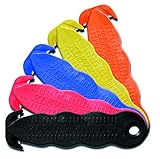
Overview: This five-pack of mini safety cutters delivers simplicity and protection for light-duty opening tasks. Designed with a concealed curved blade, the Klever Kutter prioritizes finger safety above all else. Each unit is compact enough for one-handed operation, making it suitable for home, office, or garage use where occasional box opening and package breakdown is needed.
What Makes It Stand Out: The hidden blade design is the star feature—your fingers never contact sharp edges, making it virtually impossible to cut yourself during normal use. Selling as a five-pack in assorted colors provides exceptional value and makes them perfect for sharing with family, colleagues, or as practical stocking stuffers. The stainless steel construction ensures durability despite the small form factor.
Value for Money: With five cutters per package, the per-unit cost is extremely competitive, rivaling single basic cutters from discount brands. You’re getting stainless steel durability and superior safety engineering at a price point that encourages placement in multiple locations. For households or small offices needing several safe cutters, this bulk approach eliminates the need to share or relocate a single tool.
Strengths and Weaknesses: Strengths include unparalleled safety for beginners, excellent bulk value, one-handed convenience, and corrosion-resistant stainless steel. The colorful assortment aids organization. Weaknesses: the fixed blade depth limits versatility, making it unsuitable for thick cardboard or heavy-duty cutting. The small size can be uncomfortable for extended use, and there’s no blade replacement mechanism.
Bottom Line: Perfect for families with children, seniors, or anyone prioritizing safety over heavy-duty performance. Keep one in every room for light package opening, but professionals should look elsewhere for demanding tasks.
3. ValueMax 2-Pack Box Cutter Knife, Cardboard Cutter with Self-Retracting 3-Position Locking Blade, Safety Sheath, Lanyard, Extra 18 Blades Included, Blade Storage Design
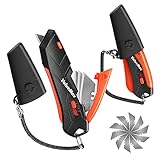
Overview: The ValueMax 2-Pack targets users seeking professional-grade features at a consumer-friendly price. Each cutter boasts a self-retracting blade with three locking positions, accommodating everything from film to thick cardboard. The package includes a generous 18 SK5 steel blades, a safety sheath, and a lanyard—essentially a complete cutting system rather than just a tool.
What Makes It Stand Out: The sheer value proposition is unmatched: 18 high-hardness (62 HRC) blades ensure months of sharp cutting without additional purchases. The ambidextrous design with dual-sided blade guides serves both left- and right-handed users equally well. One-touch automatic retraction combined with a 1.5-meter drop-tested aluminum alloy body blends safety with surprising durability in a lightweight 3.2-ounce package.
Value for Money: This is arguably the best bang-for-buck in the safety cutter market. Comparable cutters sell for similar prices with only 2-3 blades included. The 18-blade supply alone justifies the cost, while the lanyard, sheath, and spare storage add layers of convenience. For teachers, warehouse staff, or frequent movers, this eliminates repeated blade purchases for at least a year.
Strengths and Weaknesses: Strengths include exceptional blade supply, true ambidextrous functionality, robust yet lightweight construction, rapid tool-free blade changes, and comprehensive safety features. The three depth settings handle diverse materials effectively. Weaknesses: the blade retraction spring may weaken over time with heavy use, and the plastic internal components don’t match the external metal quality. The lanyard clip could be more robust.
Bottom Line: An outstanding choice for high-volume users who need reliability and safety without constant resupply. Teachers, logistics workers, and frequent shippers will appreciate the thoughtful design and blade abundance.
4. Veltec EZ-1000 Safety Box Cutter Utility Knife, 3 Blade Depth Setting, Squeeze Trigger and Dual Side Edge Guide, 2 Blades, Holster and Lanyard (Yellow)
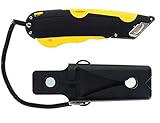
Overview: The Veltec EZ-1000 serves professionals needing rapid deployment and secure carry. Its squeeze-trigger mechanism and high-visibility yellow housing make it ideal for fast-paced warehouse or retail settings. The included clip-on holster and lanyard system ensure the cutter stays accessible without pocket clutter, while three depth settings and dual edge guides provide versatility.
What Makes It Stand Out: The squeeze-trigger activation is ergonomically superior to traditional sliders, reducing thumb fatigue during high-volume cutting. The reversible holster accommodates left or right-handed users—a detail often overlooked. Retractable dual-side edge guides help maintain straight cuts on box tops, and the blunt-tip blade design minimizes accidental punctures, crucial in busy environments.
Value for Money: Positioned in the professional tier, the price reflects the holster and lanyard inclusion, which are typically separate purchases. While only two blades are included, the durable construction and safety features justify the cost for workplace settings. Compared to basic cutters, you’re paying for ergonomic design and carry convenience rather than blade quantity.
Strengths and Weaknesses: Strengths include excellent ergonomics, secure holster system, ambidextrous holster clip, reliable automatic retraction, and effective edge guides. The bright yellow color aids visibility. Weaknesses: limited blade supply, plastic construction feels less premium than metal alternatives, and the squeeze trigger may be accidentally activated if stored improperly. Blade changes require a screwdriver.
Bottom Line: Perfect for warehouse associates, delivery drivers, and retail stockers who prioritize speed and safe carry. The holster system alone makes it worth considering for professional environments, though hobbyists might find it over-equipped.
5. Veltec Self-Retracting Blade Safety Cutter, Left and Right Edge Guide, 3 Depth Setting, Preloaded with 3 Blades - Black/Blue (VC900)

Overview: The Veltec VC900 is a streamlined safety cutter that focuses on core protection features without unnecessary complexity. Its primary distinction is the ability to lock the blade in the fully retracted position, adding an extra security layer for shared workspaces or toolbags. Preloaded with three blades and offering three depth settings, it covers basic cutting needs while emphasizing accident prevention.
What Makes It Stand Out: The locking retracted position is a standout safety feature rarely found in this price class, preventing accidental deployment during storage or transport. The radius-blunt tip blade design significantly reduces puncture hazards when cutting near contents. Dual edge guides support both left and right-handed use, and the automatic retraction mechanism is crisp and reliable.
Value for Money: This cutter delivers solid fundamentals at an entry-level price point. Including three blades is standard, but the lock feature adds value typically seen in higher-priced models. For budget-conscious buyers who refuse to compromise on safety essentials, it strikes an admirable balance. However, it lacks the accessories and blade bounty of value-oriented competitors.
Strengths and Weaknesses: Strengths include the safety lock, effective automatic retraction, ambidextrous edge guides, and lightweight design. The blunt-tip blade enhances safety for package opening. Weaknesses: all-plastic construction feels less durable than metal alternatives, there’s no lanyard or holster included, and blade storage is limited to the two spares. The handle ergonomics are basic and may cause fatigue during prolonged use.
Bottom Line: A smart choice for occasional users, students, or office environments where safety is paramount but budgets are tight. The lock feature makes it particularly suitable for shared tool drawers or backpacks where accidental activation is a concern.
6. T TOVIA Safety Box Cutter Knife of Recessed Concealed Stainless Steel Blade, Package Opener Plastic Cutter for Box, Carton, Shrink Wrap, Plastic Straps, 10pcs

Overview: This 10-pack of safety box cutters from T TOVIA delivers a bulk solution for high-turnover environments like warehouses, offices, and retail spaces. Each ultra-lightweight unit (16.6g) features a concealed stainless steel blade designed to eliminate finger injuries while protecting package contents. The minimalist design prioritizes safety without sacrificing basic functionality for light-to-medium duty cutting tasks.
What Makes It Stand Out: The double-sided blade configuration effectively doubles each cutter’s lifespan, reducing replacement frequency. An integrated tape splitter pierces and cuts sealing tape in one motion, while the recessed blade maintains an optimal cutting angle that prevents goods damage. The tail hanging hole and grip-enhancing grooves demonstrate thoughtful design for active workplaces where convenience matters.
Value for Money: At roughly $1-2 per unit, this 10-pack offers exceptional economy compared to individual safety cutters priced at $5-10 each. The bulk packaging is ideal for businesses where tools frequently disappear or break. While construction is basic plastic, the cost-per-tool ratio makes it practical for companies prioritizing injury prevention on a budget.
Strengths and Weaknesses: Pros include outstanding finger protection, lightweight portability, double-sided blade longevity, and unbeatable bulk pricing. The tape splitter adds versatility. Cons involve all-plastic construction that won’t survive heavy abuse, lack of onboard spare blade storage, and a disposable nature that generates plastic waste. The blade depth isn’t adjustable.
Bottom Line: Perfect for organizations needing multiple safe cutters without significant investment. The T TOVIA 10-pack provides essential safety for light-to-medium duty tasks in high-turnover environments. It’s a smart choice for businesses where tool loss is common and safety compliance is mandatory.
7. XW Auto-Retractable Safety Utility Knife, Box Cutter of Quick Blade Change, 4 Spare Blades Storage in Handle

Overview: The XW Auto-Retractable Safety Utility Knife merges durable construction with intelligent injury-prevention features. Built around a heavy-duty zinc-alloy body and SK2 high-carbon steel blades, this tool automatically retracts its blade when the slider is released, making it ideal for safety-conscious workshops, warehouses, and home garages.
What Makes It Stand Out: The self-retracting mechanism instantly withdraws the blade upon release, drastically reducing laceration risks. A tool-free quick-change system lets users swap dull blades in seconds by sliding the black sleeve. Four spare blades store securely in the handle, eliminating separate blade containers. The anti-slip TPR grip ensures excellent control even in gloved hands.
Value for Money: Priced in the $10-15 range, this cutter offers professional-grade materials and safety features typically found in $20+ models. The included spare blades (a $5-8 value) and durable zinc construction provide strong long-term value, outperforming basic plastic cutters while remaining affordable compared to premium industrial brands.
Strengths and Weaknesses: Pros include reliable auto-retract safety, sturdy metal construction, convenient onboard blade storage, and comfortable grip. SK2 steel blades maintain sharpness well. Cons: the spring mechanism can frustrate users during extended cutting sessions requiring constant slider pressure. The zinc-alloy body adds noticeable weight compared to plastic alternatives.
Bottom Line: An excellent balance of safety, durability, and user convenience. The XW cutter suits anyone prioritizing injury prevention without sacrificing cutting performance. Recommended for mixed-use environments where safety protocols are strict but budgets are moderate.
8. Pacific Handy Cutter S4R Safety Cutter, Retractable Utility Knife with an Ergonomical Design, Bladeless Tape Splitter, Steel Guard for Safety and Damage Protection, for Warehouse and In-Store Cutting , Green

Overview: The Pacific Handy Cutter S4R is a professional-grade safety cutter engineered for high-frequency commercial use. This robust tool features an ergonomic design with multiple safety innovations, including a rigid steel protective guard and bladeless tape splitter, making it the choice for serious warehouse and retail operations.
What Makes It Stand Out: The unyielding steel guard precisely guides the blade while protecting both worker and merchandise—critical for expensive inventory. Three adjustable blade depths handle everything from top cuts to shallow tray trimming. The integrated metal tape splitter safely slices reinforced fiber tape without any blade exposure. Onboard storage holds five spare blades, ensuring continuous operation.
Value for Money: At $20-25, the S4R commands a premium but delivers ROI through injury prevention and durability. For businesses with workers’ compensation concerns or high-volume cutting needs, one prevented laceration pays for dozens of units. It outperforms $10-15 cutters in longevity and safety engineering.
Strengths and Weaknesses: Pros include the superior steel guard, versatile depth adjustment, generous blade storage, fatigue-reducing ergonomic handle, and heavy-duty tape splitter. Cons: the higher price deters casual buyers, and professional features may be unnecessary for light home use. The tool is bulkier than consumer models.
Bottom Line: A top-tier choice for commercial applications where compromise isn’t an option. The S4R’s uncompromising safety design and robust construction justify every penny for warehouses, logistics hubs, and retail backrooms. For professional environments, this is the benchmark.
9. Veltec EZ-1000 Safety Box Cutter Utility Knife, 3 Blade Depth Setting, Squeeze Trigger and Dual Side Edge Guide, 2 Blades, Holster and Lanyard (Red)
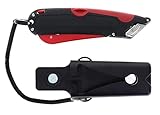
Overview: The Veltec EZ-1000 revolutionizes safety cutter operation with its intuitive squeeze-trigger mechanism, targeting mobile workers who perform frequent, intermittent cutting. This feature-rich package includes a holster and lanyard, making it ideal for warehouse pickers, delivery personnel, and retail staff who need instant tool access.
What Makes It Stand Out: The squeeze-trigger design provides natural, automatic blade retraction upon release—no slider to remember. Dual-sided edge guides guarantee perfectly straight cuts on boxes, reducing waste. The ambidextrous clip-on holster and lanyard prevent drops and loss. Three depth settings and a blunt-tipped blade minimize puncture accidents and product damage.
Value for Money: Priced at $15-20, the EZ-1000 sits in the mid-to-high range but includes accessories worth $10+ separately. The holster system adds significant practical value for mobile workers, making the total package competitively priced against bare cutters with similar safety features.
Strengths and Weaknesses: Pros include the ergonomic trigger action, helpful edge guides, convenient holster/lanyard system, and thoughtful blunt-tip design. The ambidextrous holster is genuinely useful. Cons: the trigger mechanism has a learning curve and can cause hand fatigue during prolonged use. Blade storage is limited to just two spares, and the body feels bulkier than slider-based models.
Bottom Line: An excellent solution for active users needing constant tool access. The Veltec EZ-1000’s holster system and intuitive safety make it perfect for workers who cut intermittently throughout shifts. If you wear your cutter, this is your best option.
10. Westcott Box Cutter Safety Ceramic Utility Knife (16475)

Overview: Westcott’s ceramic safety cutter employs advanced blade technology to deliver a safer, longer-lasting alternative to traditional steel blades. This full-size utility knife features automatic blade retraction and a specialized design for safe blade changes, targeting office and home users who prioritize safety and convenience.
What Makes It Stand Out: The ceramic blade maintains sharpness up to 10 times longer than steel and is inherently less likely to cause severe lacerations. It won’t rust or conduct electricity, suiting specific environments. The automatic retraction enhances safety, while the unique blade change system eliminates handling risks. The full-size design provides better control than compact models.
Value for Money: At $12-18, this cutter is priced competitively with premium steel models while offering superior longevity. Fewer blade changes reduce both long-term costs and injury exposure during blade swaps. For typical package opening, the blade may never need replacing, delivering exceptional value.
Strengths and Weaknesses: Pros include exceptional blade durability, inherent safety advantages of ceramic, reliable automatic retraction, and foolproof blade changes. The full-size handle offers good ergonomics. Cons: ceramic blades can chip or shatter if dropped or used on hard materials like staples, nails, or plastic straps. It’s unsuitable for heavy-duty cutting, prying, or flexing tasks.
Bottom Line: Ideal for offices, homes, and light retail use where safety trumps heavy-duty performance. The Westcott ceramic cutter excels at opening packages and general light-duty tasks. Avoid for industrial applications, but for typical consumers seeking maximum safety and minimal maintenance, it’s a brilliant choice.
The Hidden Cost of Cutting Injuries in the Workplace
Lacerations from utility knives rank among the top three hand injuries across manufacturing, warehousing, and construction sectors. A single severe laceration can cost employers between $30,000 and $50,000 when you factor in direct medical costs, lost time, and administrative expenses. But the real price extends beyond balance sheets—nerve damage, reduced grip strength, and chronic pain can permanently impact an employee’s quality of life. The psychological toll matters too; workers who’ve experienced or witnessed a serious cutting incident often develop hesitation and reduced confidence that affects their performance long after physical healing.
What Defines a Safety Utility Knife?
A true safety utility knife isn’t just a standard blade with a rubber grip slapped on. It’s a purposefully engineered tool designed with multiple redundant safety systems that protect users even when they’re tired, distracted, or working in awkward positions. The fundamental principle is simple: minimize blade exposure time and maximize user control. This philosophy drives every design decision, from the internal spring mechanisms to the contour of the handle.
The Anatomy of a Safe Cutting Tool
The most effective safety knives share common DNA: a blade that retracts automatically when pressure releases, a handle that prevents forward slippage, and a design that forces the user to maintain a proper grip. Look for tools where the blade channel is precisely machined to eliminate wobble—blade instability causes unpredictable cutting paths and increases accident risk. The nose of the knife should feature a blunt tip or guard that prevents accidental punctures while still allowing precise cuts.
Auto-Retractable vs. Manual Retraction: What You Need to Know
Auto-retraction represents the gold standard in utility knife safety. These mechanisms use an internal spring to pull the blade back into the housing the instant you release the slider or cutting pressure. Manual retraction knives require deliberate action to retract the blade, leaving room for human error. Some advanced models feature “smart retraction” that senses when the blade has completed a cut and withdraws it automatically, even if the user hasn’t released the slider.
Essential Safety Features to Look For
Blade Retraction Mechanisms
The speed and reliability of blade retraction directly correlate with injury prevention. Premium safety knives retract in under 0.3 seconds—faster than a reflexive hand movement. Test the mechanism yourself; it should feel crisp and consistent, never sluggish or sticky. Some industrial-grade models offer dual-stage retraction where the blade first pulls back partially, then fully retracts when completely released, giving you a moment to reposition without full blade exposure.
Ergonomic Design Principles
An uncomfortable tool becomes a dangerous tool. Ergonomic safety knives feature handle contours that match the natural grip pattern of human hands, distributing pressure across the palm rather than concentrating it in the fingers. Textured surfaces should provide secure grip without causing abrasion during extended use. The tool’s weight balance point should sit directly under your index finger when held correctly, reducing wrist strain that leads to loss of control.
Blade Exposure Limits
Excessive blade exposure is a recipe for disaster. Safety knives should expose no more than 1/4 inch of blade for general-purpose cutting. For heavy-duty materials like triple-wall cardboard, some models allow up to 1/2 inch, but only through deliberate, multi-step extension that prevents accidental deployment. The best designs include physical stops that prevent over-extension even if the mechanism fails.
Material Durability and Construction
A cracked or broken handle can expose the blade or cause unpredictable failure during use. High-impact polymers reinforced with fiberglass offer the best combination of light weight and durability. Metal handles, while heavier, provide superior stability for industrial applications. Inspect the seam lines—quality safety knives use sonic welding or precision molding that eliminates gaps where debris could jam the retraction mechanism.
Blade Technology: More Than Just Sharpness
Ceramic vs. Steel: Safety Implications
Ceramic blades offer unique safety advantages: they stay sharper up to 10 times longer than steel, reducing the dangerous temptation to use a dull blade. They’re also non-conductive, non-sparking, and chemically inert—critical for electrical work or hazardous environments. However, they can chip if dropped and aren’t suitable for prying. High-carbon steel blades remain the workhorse choice for versatility, but require more frequent changes to maintain peak safety.
Blade Thickness and Geometry
Thicker blades (0.025" and above) resist bending and provide more stable cutting paths, reducing the chance of the blade skating off the material. The grind angle matters too—blades with a 30-degree inclusive angle offer aggressive cutting with less force, while 40-degree grinds provide more durability for abrasive materials. Some safety blades feature a rounded “safety tip” that prevents initiation of a cut unless deliberate pressure is applied.
Snap-Off vs. Fixed Blade Designs
Snap-off blades seem convenient but introduce unique risks: the snapping process can launch blade fragments, and the segmented design creates weak points that may break unexpectedly during use. If you must use snap-off blades, choose models with dedicated blade breakers that contain the fragments. Fixed-blade safety knives, where the entire blade gets replaced when dull, provide more consistent performance and eliminate the temptation to keep using partially snapped segments.
Workplace-Specific Considerations
Warehouse and Distribution Centers
In high-volume shipping environments, knives face constant use on diverse materials. Look for tools with blade storage compartments that hold 3-5 spare blades, reducing downtime and the hazardous practice of carrying loose blades. Ambidextrous designs ensure left-handed workers have equal protection. Some distribution centers benefit from tether-ready models with integrated lanyard holes to prevent drops from heights.
Retail and Stockroom Environments
Retail settings demand discretion and versatility. Compact safety knives that clip to a pocket or lanyard prevent loss while remaining instantly accessible. Models with integrated tape splitters allow opening boxes without exposing the blade at all—a huge safety win in fast-paced stockrooms. Consider knives with visual indicators showing blade extension status, crucial in environments where multiple people might share tools.
Construction and Trade Applications
Construction sites expose tools to dust, moisture, and extreme temperatures. Choose safety knives with sealed mechanisms that resist contamination. Heavy-duty models with reinforced blade supports handle roofing materials, insulation, and drywall without flexing. For electrical work, non-conductive handles and ceramic blades add an extra layer of protection against shock hazards.
Manufacturing and Production Lines
In lean manufacturing environments, every second counts. Safety knives with tool-free blade changes minimize downtime while maintaining safety. Some production lines benefit from fixed-blade dispensers mounted at workstations, eliminating the need for workers to carry knives at all. For cleanroom environments, stainless steel handles and blades with minimal particle shedding are essential.
Compliance and Certification Standards
Understanding OSHA Requirements
OSHA doesn’t certify specific knife models, but General Duty Clause 5(a)(1) requires employers to provide tools free from recognized hazards. Using non-safety knives in high-risk environments can trigger citations. Document your safety knife selection process, including hazard assessments and employee training records. This due diligence demonstrates good faith effort if incidents occur.
ANSI Standards for Hand Protection
ANSI/ISEA 105 standards classify cut resistance for gloves, but the principles apply to tool design too. A safety knife should never require cut-level 5 gloves for basic tasks—that indicates excessive blade exposure. The ideal combination is a safety knife with Level 3 glove protection, balancing dexterity and safety. Some knife manufacturers test their tools against ANSI standards for blade retention and handle strength.
EN ISO Compliance for International Operations
For global companies, EN ISO 8442 covers cutlery and blade safety requirements, while ISO 12100 addresses machinery safety principles applicable to hand tools. CE marking indicates compliance with European health and safety directives. If your operations span continents, specify knives tested to both ANSI and EN standards to ensure consistent protection across all locations.
The Economics of Safety: ROI Analysis
Direct Cost Savings from Injury Prevention
Implementing safety knives typically costs $15-30 per employee annually. Preventing just one laceration injury pays for safety knives for 1,000+ workers. Calculate your potential ROI by multiplying your injury rate by average cost per incident. Most facilities see payback within 3-6 months. One food distribution center reduced knife injuries by 87% in the first year after switching to auto-retractable models, saving over $200,000 in direct costs alone.
Indirect Benefits: Productivity and Morale
Safe workers are confident workers. Teams using proper safety knives report less fatigue, faster cutting speeds, and improved material handling efficiency. Insurance carriers often offer premium reductions of 2-5% for documented safety knife programs. Employee retention improves too—workers notice when employers invest in their wellbeing. The intangible value of sending everyone home with all their fingers intact? Priceless.
Proper Training and Safety Protocols
Building a Culture of Knife Safety
The best safety knife fails if workers disable features or use it improperly. Leadership must visibly champion safety by using the same tools and following the same rules. Create a “near-miss” reporting system that rewards identification of unsafe practices without punishment. Post photos of correct vs. incorrect usage at workstations—not generic stock images, but photos of your actual employees demonstrating proper technique.
Effective Training Programs That Stick
Single-session training fades quickly. Implement a “toolbox talk” approach with 5-minute refreshers monthly. Use hands-on practice with damaged goods, not just classroom instruction. Have experienced workers mentor new hires, creating peer accountability. Quiz employees periodically: “Show me how you check if the retraction spring is working properly.” Training sticks when it’s interactive and reinforced.
Maintenance and Blade Management
When to Change Your Blade
A dull blade requires more force, increasing slip risk. Change blades when you notice tearing instead of clean cuts, or when you must apply noticeably more pressure. For high-use environments, implement a scheduled blade change policy—every Monday morning, for example—rather than waiting for dullness. Some safety knives feature blade wear indicators that change color when it’s time to replace.
Safe Disposal Practices
Used blades remain dangerously sharp. Never toss them in regular trash. Use puncture-resistant sharps containers mounted at workstations. For facilities generating high volumes, consider blade recycling programs that mail you prepaid containers. Some advanced safety knives feature blade capture systems that contain the old blade within the housing until you insert it into a disposal container, eliminating hand contact entirely.
Emerging Innovations in Safety Knife Design
Smart Technology Integration
The next generation of safety knives includes RFID tags for tool tracking and usage monitoring. Some prototypes feature sensors that detect hand position and prevent blade extension if grip is incorrect. Bluetooth-enabled models can log how many cuts an employee makes, helping identify fatigue patterns before accidents occur. While still emerging, these technologies promise to revolutionize how we monitor and improve cutting safety.
Sustainable Materials and Design
Environmental responsibility and safety increasingly intersect. Some manufacturers now use recycled ocean plastics for handles, maintaining durability while reducing waste. Biodegradable blade cartridges break down in industrial composting facilities. Reusable handle systems with replaceable blade heads minimize plastic waste compared to disposable knives. Choosing sustainable options demonstrates corporate values that resonate with employees and customers alike.
How to Choose the Right Safety Knife for Your Team
Assessing Your Specific Needs
Start with a task analysis. What materials are being cut? How many cuts per shift? What are the environmental conditions? Involve the actual users in selection—they’ll spot practical issues managers miss. Test 2-3 models with a pilot group for two weeks. Collect feedback on comfort, cutting efficiency, and any safety concerns. The “best” knife is the one your team will actually use correctly.
Trial Programs and Employee Feedback
Never buy 500 knives based on a catalog description. Reputable suppliers offer trial programs with 10-20 units. After a month, survey users with specific questions: “Does the retraction spring feel consistent after 100 cuts?” “Can you operate it with gloves on?” “Does it fit your tool belt comfortably?” Use this data to make informed decisions. Employees who help choose the tool are more likely to use it properly.
Frequently Asked Questions
How much more do safety utility knives cost compared to standard knives?
Premium safety knives typically cost 3-5 times more than basic utility knives upfront ($15-30 vs. $5-8). However, when you factor in injury prevention, reduced workers’ compensation claims, and improved productivity, most businesses see return on investment within the first year. The cost of one emergency room visit could buy safety knives for your entire workforce.
Can left-handed workers use the same safety knives as right-handed employees?
Many modern safety knives feature ambidextrous designs with symmetrical handles and dual-side blade sliders. However, some specialized models remain hand-specific. Always verify ambidexterity before purchasing for a mixed workforce. Left-handed-specific models often provide better ergonomics for southpaws, but standard ambidextrous designs offer the most flexibility for shared tool stations.
Do safety knives cut as efficiently as traditional utility knives?
When properly maintained, safety knives cut just as efficiently while requiring less force. The key is regular blade changes—safety features don’t compensate for dull edges. Many users report improved cutting speed after an adjustment period because the ergonomic design reduces hand fatigue. The auto-retraction feature may add 0.5 seconds per cut, but this is negligible compared to the time lost to even minor injuries.
How often should I replace the blade in a safety utility knife?
In high-use industrial settings, replace blades daily or every 100-200 cuts. For occasional use, change blades when you notice performance decline. Never wait for visible damage. Some safety knives include wear indicators, but a good rule is: if you’re pressing harder than when the blade was new, it’s time to change. Scheduled replacement programs prevent the dangerous temptation to “get one more cut” from a dull blade.
Are ceramic blades really safer than steel blades?
Ceramic blades maintain sharpness longer, reducing the primary cause of knife accidents: dull blades requiring excessive force. They’re also non-conductive and chemically inert. However, they can chip if dropped on hard surfaces, potentially creating sharp fragments. For most applications, properly maintained steel blades in a safety housing are equally safe. Choose based on your specific environmental hazards rather than assuming ceramic is universally safer.
What should I do if the auto-retraction mechanism stops working?
Immediately remove the knife from service and tag it as defective. Never attempt to repair or bypass the mechanism. Most quality safety knives have warranties covering mechanism failures. Keep a backup knife available so workers aren’t tempted to use a compromised tool. Document the failure for your safety records and contact the manufacturer—recurring issues with one model may indicate a design flaw requiring a fleet-wide replacement.
Can safety knives be used for all cutting tasks?
No tool is universal. Safety knives excel at cutting cardboard, plastic strapping, shrink wrap, and similar materials. They’re not designed for heavy-duty tasks like cutting carpet, roofing materials, or thick foam board where fixed-blade utility knives or specialized tools are more appropriate. Using the wrong tool for the job creates new hazards. Always match the tool to the task and material thickness.
How do I convince reluctant employees to switch to safety knives?
Involve them in the selection process and let them test options. Share injury statistics from your own facility, not generic data. Lead by example—managers must use the same safety knives. Consider a transition period where both old and new tools are available, but require extra training and sign-out for traditional knives. Most resistance fades once employees experience the comfort and see that productivity doesn’t suffer.
What training is required for OSHA compliance with safety knives?
While OSHA doesn’t mandate specific knife training, General Duty Clause 5(a)(2) requires instruction on recognized hazards. Effective programs cover: proper grip, cutting technique, blade changing, inspection procedures, and what to do if the tool malfunctions. Document all training with sign-off sheets. Annual refresher training is recommended, with additional sessions after any incident or near-miss.
Do safety knives require special disposal procedures?
The knives themselves can be disposed of as regular industrial waste once blades are removed. Used blades require sharps containers just like traditional blades. Some safety knife systems include blade capture technology that contains old blades in a cartridge, which then gets inserted directly into disposal containers without hand contact. Always check local regulations, as some municipalities classify utility knife blades as medical sharps requiring specific handling.
See Also
- Stop Tripping Hazards with the 10 Best Anti-Slip Drop Cloths in 2026
- 10 Best Utility Knives for Cutting Drywall in 2026
- 10 Best Budget Utility Knives Under $20 for Contractors
- 10 Best Utility Knives After 12 Months of Testing in 2026
- 10 Best Utility Knives for Crafting and Trim Work in 2026