Table of Contents
Table saws are the undisputed workhorses of any serious woodworking shop. Whether you’re a weekend DIY enthusiast or a seasoned cabinetmaker, the precision and power of a well-tuned table saw can make or break your projects. One of the most frustrating and potentially dangerous issues woodworkers face? Blade wobble. That subtle, side-to-side movement may seem minor, but it leads to inaccurate cuts, rough edges, increased tear-out, and even safety hazards. Over time, wobble can compromise the integrity of your work and shorten the lifespan of your tools.
Fortunately, modern table saws are engineered with advanced features designed specifically to eliminate blade wobble and deliver rock-solid performance. From precision-ground arbors and rigid trunnion systems to vibration-dampening materials and intelligent design, today’s best models offer stability you can trust. But with so many options on the market, how do you choose the right saw for your needs? This guide dives deep into the engineering, materials, and features that matter most when selecting a table saw that stays true, cut after cut.
Top 10 Table Saws For Stable Cuts
Detailed Product Reviews
1. SKIL 15 Amp 10 Inch Portable Jobsite Table Saw with Folding Stand- TS6307-00
 Portable Jobsite Table Saw with Folding Stand- TS6307-00](https://m.media-amazon.com/images/I/41IBsx2WCzL._SL160_.jpg)
Overview:
The SKIL TS6307-00 is a robust, contractor-grade table saw designed for portability and precision on job sites. Equipped with a powerful 15-amp motor and a 10-inch blade, it handles demanding cuts with ease, making it ideal for carpenters and DIYers who need reliability in the field.
What Makes It Stand Out:
Its rack and pinion fence rails ensure consistent alignment for accurate rip cuts, while the integrated folding stand enhances portability and storage. The parallel blade alignment feature allows micro-adjustments for precision, and the 4x4 cutting capacity at 90° makes it capable of handling dimensional lumber. The 45° bevel with quick-release lever adds versatility for angled cuts.
Value for Money:
Priced competitively, this saw delivers professional features at a mid-range cost. It outperforms many budget models in durability and accuracy, offering excellent value for contractors and serious hobbyists.
Strengths and Weaknesses:
Strengths: Durable build, accurate fence system, portable design, strong cutting capacity.
Weaknesses: No onboard storage for accessories, stand lacks wheels.
Bottom Line:
The SKIL TS6307-00 is a dependable, portable jobsite saw that balances power, precision, and affordability—ideal for professionals and advanced users seeking reliable performance.
2. 21PCS Table Saw Sled Kit, Catcan Crosscut Sled Kit for Table Saw with 2 Aluminum T-Track, 2 UHMW Miter Bars, Knob and Screws

Overview:
The Catcan 21PCS Table Saw Sled Kit is a comprehensive accessory set designed to enhance crosscut accuracy and safety. It includes essential components to build a custom crosscut sled, catering to woodworkers looking to improve their table saw’s functionality.
What Makes It Stand Out:
The kit features solid extruded aluminum T-tracks and ultra-smooth UHMW miter bars that ensure low-friction, wobble-free movement. The pre-drilled components and included hardware simplify assembly, while the burr-free finish guarantees a clean fit in standard miter slots.
Value for Money:
Offering premium materials at a reasonable price, this kit is a cost-effective upgrade over pre-built sleds. It provides long-term durability and precision, especially when compared to DIY alternatives using lesser materials.
Strengths and Weaknesses:
Strengths: High-quality materials, smooth operation, versatile for various jigs, includes useful hardware.
Weaknesses: Sled base not included—requires user to source or build separately.
Bottom Line:
An excellent investment for woodworkers seeking professional-grade sled performance; highly recommended for those comfortable with DIY assembly.
3. KETIPED 2 Pack Crosscut Sled for Table Saw, Miter Slot Runners, 3/4" x 3/8" x 17" Premium UHMW Miter Bar with Predrilled Holes & Screws Ideal for U Tracks, Router Table, Bandsaw, Coping Sled,MGJ-105W

Overview:
The KETIPED 2-pack UHMW miter bars are precision-engineered runners designed to enhance the accuracy and smoothness of crosscut sleds and other workshop jigs. Made from ultra-high molecular weight polyethylene, they’re built for durability and consistent performance.
What Makes It Stand Out:
These miter bars resist moisture, won’t swell or warp, and offer a low coefficient of friction for seamless glide. The pre-drilled and countersunk holes simplify mounting, while the 17-inch length ensures stability across most table saws.
Value for Money:
Priced affordably for a two-pack, these runners deliver exceptional value. They outperform wooden or lower-grade plastic alternatives in longevity and precision, especially in humid environments.
Strengths and Weaknesses:
Strengths: Moisture-resistant, self-lubricating, precise fit, pre-drilled for ease.
Weaknesses: Requires separate base construction; not a complete sled.
Bottom Line:
A reliable, high-performance component for building accurate jigs—ideal for woodworkers seeking precision and durability without the premium cost.
4. Fulton MDF Crosscut Sled for Table Saw | Precise Cuts Woodworking Jig | Aluminum Miter Slot Runners | Adjustable Stop & Transparent Guard | Cut Accurate Miters

Overview:
The Fulton MDF Crosscut Sled is a ready-to-use jig engineered for precision crosscuts and repeatable miter cuts. Featuring a sturdy MDF base and aluminum runners, it’s designed for woodworkers who demand accuracy and safety in their table saw operations.
What Makes It Stand Out:
Its adjustable aluminum rails fit most standard miter slots (excluding Ryobi), and the composite stop block prevents blade damage. The transparent guard improves visibility, while the 13.5-inch crosscut capacity handles mid-sized panels with ease.
Value for Money:
This sled offers professional-grade functionality at a mid-tier price. It saves time compared to DIY builds and includes helpful features like onboard stop block storage.
Strengths and Weaknesses:
Strengths: Ready to use, accurate cuts, durable runners, clear guard, adjustable stop.
Weaknesses: MDF base may degrade with prolonged moisture exposure; incompatible with Ryobi saws.
Bottom Line:
A well-designed, user-friendly sled that delivers consistent, safe crosscuts—highly recommended for intermediate to advanced woodworkers.
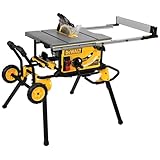
5. DEWALT Table Saw 10 Inch with Foldable Rolling Table Saw Stand, 15 Amp, 4800 RPM, 32-1/2-Inch Rip Capacity (DWE7491RS)
Overview:
The DEWALT DWE7491RS is a high-performance portable table saw engineered for contractors and serious DIYers. Powered by a 15-amp motor and paired with a rolling stand, it combines power, mobility, and precision for demanding job site applications.
What Makes It Stand Out:
Its rack and pinion telescoping fence system ensures smooth, accurate fence adjustments, while the 32.5-inch rip capacity handles large sheet goods. The onboard storage organizes essential tools, and the rolling stand allows quick setup and transport. The flip-over rip fence supports narrow cuts with enhanced stability.
Value for Money:
Though priced higher than entry-level models, the DWE7491RS justifies its cost with superior build quality, advanced features, and long-term durability—outperforming many competitors in its class.
Strengths and Weaknesses:
Strengths: Excellent rip capacity, durable rolling stand, precise fence, smart storage, powerful motor.
Weaknesses: Heavy at 75 lbs; stand assembly can be time-consuming.
Bottom Line:
A top-tier portable table saw that excels in accuracy, durability, and convenience—highly recommended for professionals needing reliable, on-the-go performance.
6. Sbestily Mini Multi-Functional Table Saw, Portable Desktop Electric Saw Small Cutter for Crafts Wood Acrylic, Adjustable-height Cutting, Speeds & Angle, More Accessories for Sanding Engraving

Overview:
The Sbestily Mini Multi-Functional Table Saw is a compact, desktop-sized power tool designed for hobbyists and DIY crafters. With a 90W motor and speeds up to 6,000 RPM, it handles lightweight cutting, sanding, and engraving tasks in wood, plastic, acrylic, and soft metals. Its small footprint makes it ideal for tight workspaces.
What Makes It Stand Out:
This saw stands out for its versatility—convertible into a grinder, sander, or engraver with included diamond bits and multiple blades. The precision blade adjustment (0.1mm–16mm) and 0°–90° angle cutting allow detailed craftsmanship. Cast iron body reduces vibration, while the transparent shield enhances safety.
Value for Money:
Priced affordably, it delivers exceptional value for micro-scale projects. The all-in-one functionality replaces several tools, saving both money and space—perfect for beginners or makers focused on small crafts.
Strengths and Weaknesses:
Strengths: Multi-functional, compact, precise, and beginner-friendly. Weaknesses: Simultaneous activation of cutting and grinding functions limits control; not suitable for heavy-duty tasks.
Bottom Line:
An excellent entry-level mini table saw for crafters needing versatility in a small package—ideal for precision hobby work but not for professional woodworking.
7. Table Saw Crosscut Sled, Precise Crosscuts & Miter with Protractor Scale Zero-Clearance Edge & Adjustable Fence, Security Stable Cross-cutting Accessories for Table Saw

Overview:
The Table Saw Crosscut Sled is a precision jig designed to enhance accuracy and safety when making crosscuts and miters. Built with an MDF base and aluminum fence, it’s engineered for stability and repeatable cuts on full-size table saws.
What Makes It Stand Out:
It features a protractor with 1/2° scale resolution and a fine-line indicator for precise angle settings. The 90° stop block ensures perfectly square cuts, while the zero-clearance edge minimizes tear-out. The design keeps hands far from the blade.
Value for Money:
Offers professional-grade performance at a mid-range price. The included hardware and clear instructions simplify setup, making it a cost-effective upgrade over DIY sleds.
Strengths and Weaknesses:
Strengths: High accuracy, robust construction, excellent safety features. Weaknesses: Only compatible with full-size table saws (not portable or benchtop models); requires initial calibration.
Bottom Line:
A top-tier crosscut sled for serious woodworkers with stationary saws—delivering precision, safety, and durability with excellent customer support.
8. Crosscut Sled Kit for Table Saw, Catcan Table Saw Sled Kit Includes 2 Aluminum 12” T-Track, 2 UHMW 17” Miter Bars, Screws, Knob and Bolt for Tablesaw Woodworking

Overview:
The Catcan Crosscut Sled Kit provides essential high-quality components to build or upgrade a custom crosscut sled. It includes precision miter bars, T-tracks, and hardware—but not the sled base itself.
What Makes It Stand Out:
The UHMW (ultra-high molecular weight polyethylene) miter bars offer low friction, stability, and resistance to environmental warping. Aluminum T-tracks are burr-free and durable, ensuring smooth, long-lasting sled operation.
Value for Money:
Excellent value for woodworkers who prefer building their own sleds. The premium materials justify the price, offering better performance than generic kits.
Strengths and Weaknesses:
Strengths: High-quality materials, precise fit, long lifespan. Weaknesses: Base not included—requires additional effort and materials to assemble; not a complete ready-to-use sled.
Bottom Line:
A superior component kit for DIYers seeking a custom, high-performance crosscut sled—ideal for those who value precision and durability in their shop builds.
9. GOINGMAKE Compact Table Saw Miter Gauge with 360mm Fence and Multifunction Flip Stop and Positive Angle Stops, Miter Gauge for Table Saw Accessories, for Woodworking Cuts, Fits 3/4"x3/8" Slot

Overview:
The GOINGMAKE Compact Miter Gauge is a precision tool for accurate crosscuts and angled cuts on table saws. Designed for portability, it features a 360mm aluminum fence and miter bar, fitting most standard saw slots.
What Makes It Stand Out:
It boasts 11 positive angle stops (including common angles from -60° to 60°) and laser-etched scales for fine adjustments. The flip stop with magnifier allows repeatable, precise setups, while the locking handle ensures stability.
Value for Money:
Offers pro-level features at an affordable price. A significant upgrade over stock miter gauges, it enhances accuracy and efficiency without breaking the bank.
Strengths and Weaknesses:
Strengths: Highly accurate, durable aluminum construction, easy calibration, compact and portable. Weaknesses: Flip stop mechanism may loosen over time with heavy use.
Bottom Line:
A must-have upgrade for any table saw user—delivering precision, repeatability, and convenience for both hobbyists and professionals.
10. DEWALT 15 Amp 8-1/4 in. Compact Portable Jobsite Table Saw (DWE7485)

Overview:
The DEWALT DWE7485 is a powerful, portable jobsite table saw featuring a 15-amp motor and 8-1/4-inch blade. With a 24.5-inch rip capacity, it’s designed for contractors needing reliable performance on the go.
What Makes It Stand Out:
Its rack-and-pinion telescoping fence system ensures fast, accurate fence adjustments. Onboard storage for accessories and a metal roll cage enhance durability and convenience in rugged environments.
Value for Money:
Priced competitively for a professional-grade saw. Combines portability with robust performance, making it ideal for site work where space and transport matter.
Strengths and Weaknesses:
Strengths: Excellent rip capacity, durable build, smooth fence action, portable. Weaknesses: Blade size slightly smaller than full-size 10-inch saws; dust collection could be better.
Bottom Line:
A top-performing portable table saw for contractors—offering power, precision, and durability in a compact, jobsite-ready design. Highly recommended.
Understanding Blade Wobble: Causes and Consequences
What Is Blade Wobble?
Blade wobble, technically referred to as runout, occurs when the saw blade rotates off its true center axis. Instead of spinning perfectly flat and parallel to the table surface, the blade tilts or oscillates slightly—sometimes imperceptibly, but enough to affect cut quality. This movement can happen at the center (arbor runout) or the outer edge (lateral blade movement), both of which degrade performance.
Common Causes of Blade Wobble
Several mechanical issues contribute to blade wobble. A bent or poorly manufactured arbor is a primary culprit, as it directly affects how the blade is held in place. Worn or loose arbor bearings reduce stability, allowing unwanted movement. Misaligned flanges or dirt buildup between the blade and flange can also cause imbalance. Additionally, trunnion misalignment—the mechanism that holds and adjusts the blade assembly—can introduce angular deviation during operation.
Why Blade Wobble Matters
Beyond poor cut quality, blade wobble increases friction and heat, accelerating blade dulling and motor strain. It also raises safety concerns: a wobbling blade is more likely to bind or kick back, especially when cutting dense hardwoods. Over time, the stress from imbalance can damage internal components. For professional woodworkers, even 0.003 inches of runout can lead to inconsistent joinery and costly rework.
The Role of Precision Engineering in Stability
Importance of a Rigid Frame and Cabinet
The foundation of a wobble-free table saw is its frame. High-end models use cast iron or reinforced steel cabinets that minimize flex and absorb vibration. A heavy base lowers the center of gravity, reducing resonance during operation. Lightweight contractor-style saws, while portable, often lack the mass needed for long-term stability.
Trunnion Design and Alignment
Trunnions are the internal mechanisms that support the arbor and allow blade height and angle adjustments. Precision-machined trunnions made from ductile iron or steel ensure consistent alignment and reduce movement under load. Systems that allow for easy micro-adjustments without disassembly are a significant advantage for maintaining long-term accuracy.
Arbor Quality and Runout Tolerance
The arbor—the shaft that holds the blade—is arguably the most critical component for minimizing wobble. High-grade table saws use hardened, ground steel arbors with tight manufacturing tolerances (often under 0.001 inches of runout). Quality flanges and lock nuts further secure the blade, distributing pressure evenly to prevent warping.
Features That Prevent Blade Wobble
Precision-Ground Table Surfaces
A perfectly flat table surface ensures the workpiece remains stable and aligned throughout the cut. Higher-end saws feature tables milled to within thousandths of an inch, often with a slight crown in the center to account for deflection. An uneven table can indirectly contribute to wobble by forcing the blade to compensate for misalignment.
Anti-Vibration Technology
Some saws integrate rubber bushings, internal dampers, or isolated motor mounts to reduce vibration transfer. These features not only enhance user comfort but also prevent harmonic oscillations that can exacerbate blade movement. Belt-driven systems, compared to direct-drive designs, often provide smoother operation and less vibration.
Blade Guard and Riving Knife Systems
While not directly related to mechanical wobble, proper blade guarding and riving knives help maintain cutting stability. A riving knife, positioned behind the blade, prevents the kerf from closing and pinching the blade—a common cause of kickback and sudden blade deflection. Consistent kerf support enhances control and reduces stress on the blade.
Comparing Table Saw Types
Cabinet Saws: The Gold Standard
Cabinet saws are built for performance and durability. Fully enclosed steel or cast iron cabinets provide maximum rigidity. Their powerful induction motors and precision trunnions make them ideal for high-volume, precision work. These saws are typically stationary but offer the lowest runout and best long-term stability.
Contractor Saws: Portability vs. Precision
Lighter and more portable, contractor saws feature open-stand designs and often use aluminum trunnions. While more affordable, they’re prone to flex and vibration, especially after repeated use. Blade wobble is more common unless meticulously maintained.
Hybrid Saws: The Middle Ground
Hybrid saws blend features of cabinet and contractor models. They often have enclosed bases and improved trunnions but may use lighter materials. While not as rigid as full cabinet saws, modern hybrids deliver impressive accuracy and are a smart choice for home shops with space constraints.
Jobsite and Benchtop Saws: Convenience with Compromises
Designed for portability, these saws are convenient but inherently less stable. Their lightweight construction and smaller arbors increase the risk of wobble. They’re best suited for rough cuts and framing—not fine woodworking requiring tight tolerances.
Motor Power and Drive Systems
Horsepower and Torque Considerations
A powerful motor maintains consistent RPM under load, reducing the chance of blade deflection. While more horsepower doesn’t eliminate wobble, it helps the saw recover quickly from resistance, minimizing strain on the arbor and blade. For hardwoods and thick stock, 2–3 HP is recommended.
Belt-Drive vs. Direct-Drive Motors
Belt-drive systems use pulleys and belts to transfer power from the motor to the arbor. This design dampens vibration and allows for speed variation. Direct-drive motors are more compact but transfer motor vibration directly to the blade assembly, increasing the risk of wobble.
Soft-Start and Electronic Controls
Advanced motors with soft-start technology reduce initial torque spikes, preventing sudden stress on the blade and arbor. Some saws include digital readouts and electronic braking, further enhancing control and safety.
Alignment and Calibration Tools
Built-In Alignment Systems
Many premium saws include integrated alignment features—such as laser guides, dial indicators, or tool-less adjustment systems—that make it easier to detect and correct runout. These tools allow users to maintain optimal performance without specialized equipment.
Fence System Accuracy
A high-precision fence isn’t just about straight cuts—it plays a role in blade stability. A rigid, micro-adjustable fence that stays parallel to the blade reduces lateral forces during cutting. Aluminum extrusions with anti-rattle mechanisms are common in top-tier models.
Miter Gauge and Table Slot Fit
Loose miter slots or poorly fitting gauges allow workpieces to shift, introducing uneven pressure on the blade. High-end saws feature precisely machined miter slots (typically 3/4" wide) with tight tolerances, ensuring smooth, controlled feed rates.
Material Quality and Build Longevity
Cast Iron vs. Aluminum Components
Cast iron tables and wings resist warping and dampen vibration better than aluminum. While heavier, they contribute significantly to overall stability. Aluminum components are used in trunnions and fences for weight reduction but should be reinforced for rigidity.
Coatings and Corrosion Resistance
Table surfaces with rust-resistant coatings—such as powder coating or nickel plating—maintain flatness and reduce friction. Unprotected steel or cast iron can corrode over time, creating high spots that affect blade performance indirectly.
Assembly and Manufacturing Tolerances
Even the best materials fall short without precise assembly. Look for saws manufactured in facilities with tight quality control. CNC-machined components and laser alignment during production ensure that each unit meets exacting standards.
Safety Features That Support Stability
Blade Braking Systems
Active safety systems like SawStop use brake cartridges to stop the blade within milliseconds of contact. But even beyond safety, the design of these systems requires a rigid arbor and stable mounting to function correctly—indirectly promoting lower wobble.
Kickback Prevention Mechanisms
Riving knives, anti-kickback pawls, and splitter systems help maintain kerf alignment, reducing the chance of the blade being forced off-axis. These features contribute to smoother, more controlled cuts.
Dust Collection and Clean Operation
A clean saw runs more efficiently. Built-in dust collection ports that effectively remove debris from around the blade and arbor area prevent buildup that could affect alignment. Consistent cleaning also makes it easier to inspect for wear.
Maintenance Practices to Prevent Wobble
Regular Blade and Arbor Inspection
Inspect the arbor and blade flanges for nicks, dirt, or warping before each use. Clean the arbor shaft with a lint-free cloth and ensure flanges are seated properly. Even a small piece of debris can cause noticeable runout.
Bearing and Trunnion Lubrication
Worn or dry bearings increase play in the arbor system. Follow the manufacturer’s schedule for lubrication and replacement. Trunnion pivot points should also be checked and greased periodically to maintain smooth, wobble-free adjustments.
Calibration Checks and Shimming
Use a dial indicator to measure blade runout regularly. If runout exceeds 0.003", investigate the source. Minor misalignments can often be corrected with shims or reseating the arbor assembly. Professional recalibration may be needed for persistent issues.
Accessories That Enhance Stability
Zero-Clearance Inserts
These custom inserts eliminate gaps around the blade, providing support right up to the kerf. This reduces tear-out and prevents small offcuts from jamming and forcing the blade off track.
Upgrade Blades and Chucks
Even the best saw can suffer with a dull or low-quality blade. Invest in premium blades with balanced plate design and laser-cut expansion slots. Some high-end saws support threaded arbors or quick-change chucks for faster, more secure blade changes.
Mobile Bases and Floor Anchors
For stationary saws, a mobile base with locking casters allows repositioning without compromising stability during use. Floor anchors can further secure the saw, especially in shared or high-traffic workshops.
How to Test for Blade Wobble
Using a Dial Indicator
The most accurate way to measure runout is with a magnetic base dial indicator. Mount it to the table, touch the probe to the blade’s edge, and rotate the blade by hand. Record the highest and lowest readings—the difference is your runout. Anything over 0.005" warrants investigation.
Visual and Auditory Cues
While less precise, a wobbling blade may appear blurry at high speed or produce a rhythmic “whirring” sound. Uneven cut surfaces or burning on one side of the kerf can also indicate imbalance.
Test Cuts and Kerf Analysis
Make a series of identical cuts in scrap wood. Examine the kerf for consistency. A wider cut on one side or excessive chipping may point to blade misalignment or wobble.
When to Seek Professional Service
Persistent Runout After Adjustment
If you’ve cleaned, realigned, and reinstalled the blade and arbor but still detect significant runout, the issue may lie within the motor housing or trunnion mounts. Internal damage or manufacturing defects often require factory service.
Unusual Noises or Vibrations
Grinding, clicking, or excessive vibration during operation can indicate failing bearings or a bent arbor. Continuing to use the saw under these conditions can worsen wobble and lead to catastrophic failure.
Post-Move Recalibration
Moving a table saw—even a short distance—can affect its alignment. Always recalibrate the blade, fence, and miter slots after relocation to ensure continued precision.
Frequently Asked Questions
What is an acceptable amount of blade runout?
Most experts consider under 0.003 inches of runout to be excellent, while up to 0.005 inches is generally acceptable for woodworking. Anything beyond that can affect cut quality and safety.
Can a dull blade cause wobble?
A dull blade won’t directly cause mechanical wobble, but it increases resistance and can create uneven forces that make existing wobble more apparent. It may also lead to user-induced blade deflection.
How often should I check for blade wobble?
It’s wise to check for runout every few months or after any impact, blade change, or move. Heavy users should inspect monthly for optimal performance.
Does blade size affect wobble?
Larger blades (e.g., 10-inch vs. 8-inch) have more mass and leverage, which can amplify the effects of wobble if the arbor or trunnions aren’t rigid enough. However, they also cut more efficiently when properly supported.
Can I fix blade wobble myself?
Minor wobble due to dirt, misaligned flanges, or loose parts can often be corrected with cleaning and adjustment. However, internal bearing or arbor issues typically require professional service.
Is blade wobble covered under warranty?
Most reputable manufacturers cover defects in materials and workmanship, including excessive runout from a bent arbor or faulty bearings. Normal wear and user damage are typically not covered.
Do more expensive saws have less wobble?
Generally, yes. Higher-priced saws use better materials, tighter tolerances, and superior engineering to minimize runout. However, proper maintenance is still essential regardless of price.
Can vibration from the floor cause blade wobble?
While floor vibration won’t directly cause arbor runout, it can affect cutting precision and amplify existing wobble. Mounting the saw on a stable, level surface or vibration-dampening mat helps.
Should I use a laser alignment tool?
Laser tools are helpful for quick checks of blade-to-fence alignment, but they don’t measure actual blade runout. For true wobble assessment, a dial indicator is more accurate.
How does blade wobble affect joinery?
Even slight wobble can cause inconsistent dado widths, misaligned miters, and poor-fitting joints. For fine cabinetry or furniture, minimizing runout is crucial for professional results.
See Also
- 10 [Product Type] That Solve Blade Wobble in Circular Saws in 2026
- How to Solve Blade Wobble with the 10 Best Circular Saws in 2026
- How to Solve Blade Wobble with the 10 Best Industrial Circular Saws in 2026
- How to Solve Wobble with the 10 Best Table Saws in 2026
- Stop Blade Wobble with the 10 Best Industrial Circular Saws This Year