Table of Contents
One of the most frustrating and dangerous issues woodworkers face when using circular saws is blade binding. It occurs when the blade gets pinched in the material during a cut, causing sudden resistance, kickback, or even potential injury. Whether you’re a seasoned contractor or a passionate DIYer, blade binding not only compromises precision but also increases the risk of accidents on the job site. The good news? Modern circular saws are engineered with intelligent features designed to minimize or even eliminate this issue—when you know what to look for.
Choosing the right circular saw isn’t just about power or brand loyalty. It’s about understanding the mechanics behind blade stability, alignment, and material interaction. The best circular saws this year incorporate advanced design elements that enhance cut accuracy, reduce friction, and prevent the blade from getting trapped in the kerf. In this comprehensive guide, we’ll break down the key features and technologies that help stop blade binding before it starts, so you can make an informed decision when selecting your next tool.
Top 10 Circular Saws For Smooth Cutting
Detailed Product Reviews
1. SKIL 15 Amp 7-1/4 Inch Circular Saw with Single Beam Laser Guide - 5280-01
 with Single Beam Laser Guide - 5280-01](https://m.media-amazon.com/images/I/5107WNhmhpS._SL160_.jpg)
Overview:
The SKIL 15 Amp 7-1/4 Inch Circular Saw is a heavy-duty tool designed for professionals and serious DIYers who demand power and precision. Equipped with a robust 15-amp motor, it delivers 5,300 RPM for fast, clean cuts through various materials. The integrated single-beam laser guide enhances cutting accuracy, making it ideal for framing, decking, and remodeling tasks.
What Makes It Stand Out:
The laser-guided cutting line is a standout feature, significantly improving accuracy, especially in low-light conditions. The dust blower keeps the cut line clear, while the 51° bevel capacity with a 45° positive stop allows for versatile angled cuts. The spindle lock simplifies blade changes, and safety features like the guarded trigger and power-on indicator reduce accident risks.
Value for Money:
Priced competitively, this saw offers premium features typically found in more expensive models. The included carbide-tipped blade and durable construction justify the cost, providing long-term reliability.
Strengths and Weaknesses:
Strengths: Powerful motor, laser guide, dust blower, bevel capacity, safety features.
Weaknesses: Slightly heavier than lighter-duty models, laser may require periodic calibration.
Bottom Line:
The SKIL 5280-01 is a reliable, accurate, and powerful circular saw that delivers professional-grade performance at a reasonable price—highly recommended for frequent users.
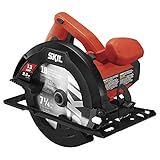
2. Skil 5080-01 13-Amp 7-1/4" Circular Saw, Red
Overview:
The Skil 5080-01 is a mid-range circular saw designed for everyday cutting tasks. With a 13-amp motor and 7-1/4-inch blade, it balances performance and portability. It’s ideal for carpenters, DIYers, and contractors needing a dependable tool for framing, trimming, and general construction.
What Makes It Stand Out:
Despite having less power than the 15-amp model, it offers a 15% weight reduction, reducing user fatigue during extended use. The 51° bevel capacity with positive stops ensures precision, while the improved dust blower enhances visibility. Spindle lock makes blade changes quick and tool-free.
Value for Money:
This saw delivers solid performance at a lower price point than high-end models. It’s more powerful than basic saws and lighter than heavier-duty versions, offering excellent balance for the price.
Strengths and Weaknesses:
Strengths: Lightweight, efficient dust blower, easy blade changes, good bevel range.
Weaknesses: Less power for dense materials, no laser guide, plastic housing feels less durable.
Bottom Line:
The Skil 5080-01 is a cost-effective, user-friendly circular saw perfect for moderate use—ideal for homeowners and light contractors.
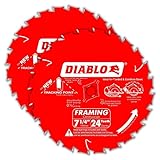
3. Diablo Tracking Point 7-1/4 in. 24-Tooth Circular Saw Blades – 2-Pack - Tico Carbide, Smooth Cutting, Low Vibration, Non-Stick Coating – D0724VPX
Overview:
Diablo’s Tracking Point 24-tooth circular saw blades are engineered for fast, efficient cutting in demanding construction environments. This 2-pack offers exceptional durability and performance for framers, roofers, and remodelers tackling tough materials like pressure-treated wood and plywood.
What Makes It Stand Out:
The Tracking Point technology enhances stability and cutting precision, reducing user effort. TiCo Hi-Density carbide ensures long blade life, while laser-cut stabilizer vents minimize vibration and noise. The Perma-SHIELD non-stick coating resists heat, gumming, and corrosion—critical in humid or resin-heavy applications.
Value for Money:
Though pricier than standard blades, the extended lifespan and superior performance justify the cost. The 2-pack offers added value for frequent users.
Strengths and Weaknesses:
Strengths: Durable, low vibration, fast cuts, corrosion-resistant, versatile material compatibility.
Weaknesses: 24-tooth design sacrifices some finish quality for speed.
Bottom Line:
These blades are a top-tier choice for professionals needing speed, durability, and reliability—well worth the investment for heavy-duty jobs.
4. Diablo High-Performance Finish Trim Saw Blade for Wood - 6-1/2" x 40-Teeth, Tico Carbide - D0641X

Overview:
The Diablo D0641X is a precision 6-1/2-inch, 40-tooth circular saw blade designed for fine woodworking and finish trim applications. It delivers smooth, splinter-free cuts in hardwood, softwood, and plywood, making it ideal for cabinetry, molding, and detailed carpentry work.
What Makes It Stand Out:
The super-thin kerf reduces material waste and motor strain while enabling faster cuts. TiCo Hi-Density carbide teeth ensure long life and consistent sharpness. Laser-cut stabilizer vents minimize vibration and noise, enhancing control. The Perma-ShIELD coating prevents resin buildup and corrosion, maintaining blade performance.
Value for Money:
Priced above standard blades, its precision and durability offer excellent long-term value, especially for finish work where cut quality is critical.
Strengths and Weaknesses:
Strengths: Exceptional finish quality, low vibration, corrosion-resistant, thin kerf for efficiency.
Weaknesses: Not suited for heavy framing; smaller diameter limits cutting depth.
Bottom Line:
The D0641X is a must-have for finish carpenters seeking clean, precise cuts—delivering professional results with lasting performance.
5. IRWIN Tools Classic Series Steel Corded Circular Saw Blade, 7 1/4-inch, 140T, .087-inch Kerf (11840)

Overview:
The IRWIN Classic Series 7-1/4-inch, 140-tooth circular saw blade is built for precision and longevity in fine cutting tasks. Designed for clean crosscuts and rip cuts in wood, it’s ideal for trim work, cabinetry, and detailed carpentry where smooth edges are essential.
What Makes It Stand Out:
Its high tooth count and top/face grind deliver ultra-smooth cuts with minimal splintering. The fully hardened steel plate ensures truer rotation and reduced warping, while heavy-gauge high-carbon steel enhances durability. The 0.087-inch kerf balances cut quality and blade strength.
Value for Money:
Affordably priced, this blade offers professional-level performance without the premium cost. Its long lifespan and consistent results make it a smart buy for frequent users.
Strengths and Weaknesses:
Strengths: Smooth cuts, durable construction, high tooth count, true running.
Weaknesses: Slower feed rate due to high tooth count; not for aggressive demolition or thick materials.
Bottom Line:
The IRWIN 11840 is a reliable, high-precision blade perfect for finish work—delivering clean results at an excellent price.
6. CRAFTSMAN 7-1/4 Inch 140 Tooth Fine Finish Carbon Circular Saw Blade for Plywood, OSB, and Plastic (CMAS2725140)

Overview:
The CRAFTSMAN CMAS2725140 is a 7-1/4-inch, 140-tooth circular saw blade engineered for fine finish cuts in plywood, OSB, and plastic. Designed for precision and durability, this blade emphasizes clean results without excessive tear-out, making it ideal for finish carpentry and cabinet work.
What Makes It Stand Out:
With a fully hardened and flattened high-carbon steel plate, this blade maintains trueness during high-speed cuts, reducing vibration and deflection. The precision-ground teeth ensure ultra-smooth finishes, while the heavy-gauge construction enhances longevity. Its high tooth count is optimized for cross-cutting sheet goods cleanly.
Value for Money:
Priced competitively, it delivers professional-level performance at a budget-friendly cost. While not carbide-tipped, its carbon steel build offers solid durability for occasional to moderate use, especially for DIYers or contractors focused on clean cuts in soft composite materials.
Strengths and Weaknesses:
Strengths: High tooth count for smooth cuts; hardened plate reduces warping; affordable for multi-pack use; excellent for plywood and plastic. Weaknesses: Not suitable for hardwoods or metal; carbon steel dulls faster than carbide; not ideal for heavy-duty or continuous use.
Bottom Line:
A reliable, cost-effective blade for clean cuts in sheet materials—best for finish work where smooth edges matter most.
7. Evolution S185CCSL | 7.25” Metal Cutting Circular Saw | Cuts Steel & More | 7-1/4” TCT Blade Included | 45° Bevel Cuts | Dry-Cut | 15A Corded Power | Accurate, Powerful, Reliable

Overview:
The Evolution S185CCSL is a dedicated 7.25-inch metal-cutting circular saw powered by a robust 15-amp motor. Designed for dry cutting of mild steel, aluminum, and stainless steel, it delivers fast, clean cuts without requiring a coolant system.
What Makes It Stand Out:
Its 40-tooth TCT (tungsten carbide tipped) blade produces burr-free, spark-reduced cuts—ideal for immediate welding. The lightweight 11.4 lb design enhances maneuverability, while paddle levers allow quick 0–45° bevel and depth adjustments. The blade viewing window and airflow management improve cut-line visibility and debris control.
Value for Money:
Though pricier than standard wood-cutting saws, it excels as a specialized tool. The included blade and no-coolant requirement reduce operating costs, offering strong ROI for metal fabricators and contractors.
Strengths and Weaknesses:
Strengths: Powerful motor; lightweight; clean, cool cuts; excellent bevel range; clear cutline visibility. Weaknesses: Not for wood or masonry; replacement blades can be costly; loud operation.
Bottom Line:
A top-tier, reliable metal-cutting saw that boosts productivity on the jobsite—ideal for professionals needing precision steel cuts.
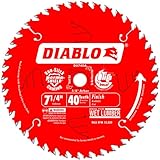
8. Diablo 7-1/4-Inch x 40 Tooth Finish Saw Blade for Wood - Ideal for Smooth Crosscuts in Hardwood, Softwood & Plywood - Tico Hi-Density Carbide, Perma-Shield Coating - D0740A
Overview:
The Diablo D0740A is a 7-1/4-inch, 40-tooth finish saw blade designed for smooth crosscuts in hardwood, softwood, and plywood. Built with professional woodworkers in mind, it balances cutting speed and finish quality.
What Makes It Stand Out:
Equipped with TiCo hi-density carbide teeth, it resists wear and stays sharp longer. The Perma-SHIELD non-stick coating prevents resin buildup and heat damage. Its super thin kerf reduces material waste and motor strain, while tri-metal brazing enhances impact resistance.
Value for Money:
Priced at a premium, it justifies cost with extended blade life and superior cut quality. It outperforms standard blades, especially in hardwoods and veneered plywood, reducing sanding time and rework.
Strengths and Weaknesses:
Strengths: Exceptional finish; durable carbide teeth; thin kerf for efficiency; excellent heat and corrosion resistance. Weaknesses: Slightly higher price; thin kerf may flex in aggressive rip cuts.
Bottom Line:
A high-performance finish blade worth the investment for woodworkers demanding clean, precise cuts with minimal touch-up.
9. Diablo Fine Finish Saw Blade for Wood - Ultra-Smooth Cuts, 60 Hi-ATB Teeth, 10" Diameter, .098" Kerf, 5/8" Arbor - D1060X

Overview:
The Diablo D1060X is a 10-inch, 60-tooth fine finish blade built for ultra-smooth cuts in wood. Featuring a high alternate-top-bevel (Hi-ATB) design, it’s ideal for cabinetry, trim work, and fine furniture making.
What Makes It Stand Out:
The high tooth count and Hi-ATB geometry minimize chipping and blowout, delivering glass-smooth edges. The thin .098" kerf ensures fast, clean cuts with less waste. TiCo carbide teeth and Perma-SHIELD coating enhance durability and resist heat and resin.
Value for Money:
Priced higher than standard blades, it pays off in reduced sanding and rework. Its longevity and precision make it a smart buy for serious woodworkers and cabinetmakers.
Strengths and Weaknesses:
Strengths: Exceptional finish quality; reduced tear-out; durable carbide; effective heat resistance. Weaknesses: Not ideal for ripping thick lumber; premium cost may deter casual users.
Bottom Line:
A top-tier finish blade that excels in precision woodworking—highly recommended for flawless crosscuts in fine materials.
10. 3Pack 5-1/2 Inch 130T Circular Saw Blade 5/8 Inch (16mm) Arbor, Plywood, OSB, Paneling and Vinyl Siding Fast and Smooth Cutting Saw Blade, with 5/8"-1/2" and 5/8"-3/8" Bushing

Overview:
This 3-pack of 5-1/2-inch, 130-tooth circular saw blades is designed for smooth, splinter-free cuts in plywood, OSB, paneling, and vinyl siding. With included bushings, they fit a wide range of compact and cordless saws.
What Makes It Stand Out:
The high tooth count and thin kerf deliver precision and clean edges, especially on delicate materials like veneers and siding. The alloy steel construction maintains sharpness longer, and the included adapters enhance compatibility across tools.
Value for Money:
Offering three blades at a low cost, this set is excellent value for DIYers and contractors needing clean cuts on sheet goods. Frequent更换 is less costly, making it practical for high-volume finish work.
Strengths and Weaknesses:
Strengths: Very smooth cuts; versatile bushings; affordable multi-pack; great for trim and siding. Weaknesses: Smaller diameter limits depth; not for hardwood or heavy ripping; shorter lifespan than premium carbide blades.
Bottom Line:
An economical, effective solution for clean cuts in sheet materials—perfect for trim, siding, and cabinetry projects.
Understanding Blade Binding: Causes and Consequences
Blade binding happens when the sides of the cut (the kerf) close in on the blade while it’s spinning, creating friction and resistance. This can be caused by several factors, including improper blade alignment, warped or uneven material, incorrect blade depth, or using the wrong type of blade for the material. When the saw blade binds, it can stop abruptly or kick back toward the user, posing serious safety hazards.
Beyond safety, blade binding affects cut quality. It can lead to chipped edges, burning, or uneven cuts, especially when working with laminated or pressure-treated wood that tends to warp. Recognizing the root causes is the first step toward choosing a saw that minimizes these risks.
How Blade Design Influences Binding
The geometry of a circular saw blade plays a crucial role in preventing binding. Features like the number of teeth, blade material, and tooth configuration all affect how smoothly the blade cuts through wood. For example, blades with fewer teeth are typically used for ripping, while those with more teeth offer cleaner crosscuts. However, both can bind if not properly matched to the saw and cutting task.
Additionally, the blade’s kerf—the width of the cut it makes—should match the saw’s capacity. A thin-kerf blade requires less power to operate but can flex more under pressure, increasing binding risk if the saw lacks sufficient blade support. High-quality saws often pair with blades designed for stability, reducing wobble and side-to-side movement during cutting.
Motor Power and Torque: Why They Matter
A circular saw’s motor determines how well it handles resistance during a cut. High torque ensures consistent blade speed even when cutting through dense materials like hardwood or plywood with glue lines. When torque drops, the blade slows, increasing heat buildup and the likelihood of binding.
Modern saws often use brushless motors, which deliver more power and efficiency than traditional brushed motors. These motors adjust output based on load, maintaining optimal RPMs and reducing strain on the blade. This self-regulating feature is particularly effective in preventing binding during long or complex cuts.
Bevel and Depth Adjustment Mechanisms
Precise depth and bevel adjustments are essential for avoiding binding. If the blade extends too far below the workpiece, it increases the exposed surface area and friction, raising the risk of the material pinching the blade. Ideally, the blade should extend only about a quarter to half an inch below the material.
Similarly, a smooth, stable bevel adjustment system ensures the blade remains aligned during angled cuts. Misaligned bevels can cause one side of the blade to cut deeper than the other, leading to uneven pressure and potential binding. Look for saws with positive stops and secure locking mechanisms for repeatable, accurate settings.
Anti-Vibration Technology and Stability
Vibration is a silent contributor to blade binding. Excessive vibration causes the blade to wobble, widening the kerf inconsistently and increasing contact with the material. Over time, this can lead to blade deflection and binding, especially in longer rip cuts.
Top-tier circular saws now incorporate anti-vibration systems, including balanced motors, dampening materials, and reinforced housings. These features stabilize the entire tool, ensuring the blade runs true and minimizing side forces that could lead to pinching.
Guard and Rafter Hook Design
The lower blade guard should retract smoothly and snap back quickly after a cut. A sluggish or sticky guard can interfere with the cut or leave the blade exposed longer than necessary, increasing the risk of binding and injury. Look for models with dual-bearing guard systems that reduce friction and ensure reliable operation.
Additionally, a well-designed rafter hook isn’t just a convenience—it improves control. When you hang the saw during breaks, it stays secure and ready, reducing the chance of accidental drops or misalignment when you resume work.
Dust Management and Visibility
Sawdust buildup can obscure your cut line and interfere with blade performance. More importantly, accumulated debris around the blade can contribute to overheating and binding, especially in enclosed cuts or when making plunge cuts.
The best circular saws feature advanced dust extraction ports that connect to shop vacuums or dust collectors. Improved visibility through a clear blade guard or LED lighting helps maintain alignment, reducing the chance of drifting into the cut and causing binding.
Shoe Plate Material and Alignment
The shoe plate (or base plate) is the flat metal or magnesium component that rides along the workpiece. Its flatness and durability directly impact cut accuracy. A warped or poorly machined shoe can tilt the blade, leading to uneven cuts and increased binding risk.
Magnesium shoes are popular in high-end models because they’re lightweight yet rigid. Some saws also include adjustable shoe systems for fine-tuning parallelism with the blade. Ensuring the shoe remains parallel to the blade path helps maintain a clean, straight kerf that resists closing in on the blade.
Electronic Braking Systems
While not a direct solution to binding, electronic braking enhances safety when a binding incident occurs. Instead of letting the blade spin down naturally, an electronic brake stops the blade in less than two seconds. This reduces the chance of injury if the saw kicks back or the user loses control during a bind.
This feature is especially valuable in high-torque models, where stored rotational energy can be dangerous. It also increases productivity by allowing quicker repositioning between cuts.
Ergonomics and User Control
A saw that’s comfortable to hold and easy to control reduces user fatigue and improves cut precision. Vibration, weight distribution, grip texture, and handle angle all influence how steadily you can guide the saw. When a tool is difficult to manage, it’s more likely that the cut will drift or bind due to operator error.
Look for models with overmolded grips, balanced weight, and intuitive controls. Side-mounted motors, for example, shift the center of gravity, offering better visibility and control—critical when making long, straight cuts where binding is more likely.
Rail-Guided Cutting Systems Compatibility
For maximum precision and binding prevention, many professionals pair circular saws with rail-guided systems. These tracks ensure the saw moves in a perfectly straight line, eliminating drift and reducing blade stress. Not all saws are compatible with guide rails, so check for mounting options or adapter plates if you plan to use this setup.
Using a guide rail drastically reduces the chance of the blade binding due to misalignment. It also allows for smoother, cleaner cuts in sheet goods like plywood and MDF, where binding is common due to internal stresses.
Material-Specific Cutting Considerations
Different materials behave differently under the blade. Plywood, for instance, often has internal stresses that cause the kerf to shift after cutting. Laminates and melamine can chip or bind if the blade isn’t sharp or properly configured. Even moisture content in wood affects how it reacts during and after a cut.
The right circular saw should give you the control to adjust depth, speed, and blade type according to the material. Variable speed models allow you to slow down for dense or delicate materials, reducing friction and binding risk.
Safety Features That Prevent Binding-Related Accidents
While no feature can completely eliminate blade binding, advanced safety systems mitigate the consequences. Besides electronic brakes, look for saws with kickback protection, such as anti-kickback claws or pawls that prevent the blade from pulling upward during a bind.
Some models also include overload protection that shuts down the motor if excessive resistance is detected. These systems act as safeguards, giving you time to reposition and avoid dangerous situations.
Maintenance Tips to Reduce Binding
Even the best circular saw can suffer from binding if not properly maintained. Regular cleaning of the blade, guard, and shoe plate prevents buildup that can interfere with performance. A dull or dirty blade requires more force to cut, increasing friction and heat—both of which contribute to binding.
Lubricating moving parts like the depth and bevel mechanisms ensures smooth adjustments. And always inspect the blade for warping or damage before use. A simple maintenance routine can significantly extend the life and performance of your saw.
Choosing the Right Blade for Your Saw
No matter how advanced your saw is, the wrong blade can undo all its advantages. Match the blade’s tooth count, hook angle, and kerf width to your cutting application. For ripping, a blade with a high hook angle and fewer teeth reduces resistance. For crosscuts, a higher tooth count ensures a smooth finish with less chipping.
Carbide-tipped blades stay sharper longer and resist deflection better than standard steel blades. Investing in high-quality blades compatible with your saw’s specifications is one of the most effective ways to prevent binding.
Frequently Asked Questions
What causes blade binding in circular saws?
Blade binding occurs when the material closes in on the spinning blade, usually due to improper depth settings, warped wood, misaligned blades, or using the wrong blade type. Internal stress in the material can also cause the kerf to pinch the blade during or after the cut.
How can I prevent my circular saw from binding?
Set the blade depth correctly—just slightly below the material thickness. Use sharp, appropriate blades, ensure the shoe plate is flat and aligned, and support the workpiece properly to prevent sagging during the cut.
Does blade RPM affect binding?
Yes. If the blade spins too slowly due to low power or motor strain, it creates more friction and heat, increasing the chance of binding. High-torque, variable-speed saws maintain optimal RPM under load, reducing this risk.
Are brushless motors better at preventing binding?
Brushless motors adjust power based on resistance, maintaining consistent blade speed. This reduces strain and heat buildup, making them more effective at preventing binding than traditional brushed motors.
Can a dull blade cause binding?
Absolutely. A dull blade requires more force to cut, generating excessive heat and friction. This can cause the material to swell or close in on the blade, leading to binding and poor cut quality.
Should I use a guide rail to avoid binding?
Yes. Guide rails ensure straight, controlled cuts and eliminate user error that can lead to drifting and binding. They’re especially useful for sheet goods and long rip cuts.
How does wood type affect blade binding?
Wood with high moisture content or internal stress (like warped lumber) is more likely to shift during cutting. Plywood and engineered wood can also react unpredictably, increasing the risk of the kerf closing on the blade.
What role does the lower blade guard play in binding?
A sticky or damaged guard can interfere with the cut or fail to retract properly, increasing resistance and the chance of binding. A smooth-operating guard is essential for safe, consistent performance.
Is blade kerf important in preventing binding?
Yes. Thin-kerf blades require less power but may flex under pressure, increasing binding risk if the saw lacks blade support. Standard-kerf blades offer more stability but need more power to drive.
How often should I maintain my circular saw to prevent binding?
Clean and inspect your saw after every few uses. Check the blade, guard, shoe plate, and adjustment mechanisms regularly. Sharpen or replace blades as needed, and lubricate moving parts to ensure smooth operation.
See Also
- 10 Best Circular Saws That Solve Blade Binding in 2026
- 10 [Product Type] That Solve Blade Wobble in Circular Saws in 2026
- How to Solve Blade Wobble with the 10 Best Circular Saws in 2026
- How to Solve Blade Wobble with the 10 Best Industrial Circular Saws in 2026
- Stop Blade Wobble with the 10 Best Industrial Circular Saws This Year