Table of Contents
Every professional mechanic knows the moment of truth: you’re elbow-deep in a complex engine rebuild, the clock is ticking, and you can’t find that one specific socket. Your cheap tool chest drawer just jammed again, and you’re watching money evaporate with every wasted minute. This isn’t just frustration—it’s a direct attack on your livelihood. Premium tool cabinets aren’t luxury items; they’re precision instruments that protect your most valuable assets: your tools, your time, and your professional reputation. While the upfront cost might make you wince, the right cabinet becomes an invisible partner in your workflow, silently returning your investment through durability, efficiency, and pure, unadulterated reliability.
The difference between a $300 consumer-grade box and a $3,000 professional cabinet isn’t just marketing hype—it’s measurable in steel gauge, bearing quality, weight distribution, and engineering precision. This guide cuts through the noise to show you exactly what makes premium tool storage worth every penny, how to evaluate features that genuinely impact your daily work, and why skimping on this critical piece of shop equipment is one of the costliest mistakes a professional can make.
Top 10 Tool Cabinets For Professional Mechanics
Detailed Product Reviews
1. Wen 52-Inch Premium Rolling Tool Cabinet, Black, Heavy Duty 21-Gauge Powder-Coated Steel Construction, for Garage and Workshop (GG532B)
 Tool Cabinet, Black, Heavy Duty 21-Gauge Powder-Coated Steel Construction, for Garage and Workshop (GG532B)](https://m.media-amazon.com/images/I/41feNlm4NEL._SL160_.jpg)
Overview: The Wen GG532B is a serious storage solution for dedicated DIYers and professional mechanics. This 52-inch wide rolling cabinet delivers substantial capacity with nine drawers and robust 21-gauge steel construction. Measuring 52"W x 18"D x 37"H, it provides ample storage while maintaining a relatively compact footprint for workshops with limited space.
What Makes It Stand Out: Nine soft-close drawers, each rated for 100 pounds, set this cabinet apart from competitors. The 1500-pound capacity casters (5" x 2") handle heavy loads effortlessly, while the reversible side push handle adapts to any garage layout. The premium powder-coated finish resists corrosion, and included PVC drawer liners protect your tools. Designed to pair with the WEN GG531T chest, it forms a complete storage system.
Value for Money: Priced competitively against premium brands like Snap-on or Craftsman, the Wen offers professional-grade features at a fraction of the cost. The two-year warranty and included accessories (keys, liners) add significant value. While the chest is sold separately, the combined system rivals setups costing three times more.
Strengths and Weaknesses: Pros: Exceptional drawer capacity, smooth soft-close mechanism, heavy-duty mobility, reversible handle, durable construction. Cons: 21-gauge steel is sturdy but not the thickest available, large footprint may overwhelm small spaces, requires separate chest purchase for full system.
Bottom Line: For serious tool collectors and professional users needing reliable, high-capacity storage, the Wen GG532B delivers outstanding performance and value. Its robust construction and thoughtful features make it a worthwhile investment that will serve your workshop for years.
2. RYH 4/5/6/7 Drawers Rolling Tool Chest -Heavy Duty Mobile Metal Tool Box with Locking Wheels, with Stainless Steel Worktop, Garage Tool Storage Cabinet (Black-Blue, 7-Drawers 30.7" H×25.9" W)
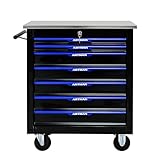
Overview: The RYH rolling tool chest offers remarkable versatility with configurable drawer options ranging from four to seven drawers. This 30.7"H x 25.9"W unit targets both professional tradespeople and serious DIYers who need flexible, mobile storage. The black-blue color scheme and stainless steel worktop give it a modern, professional appearance suitable for any garage or workshop environment.
What Makes It Stand Out: Unlike fixed-configuration competitors, RYH provides multiple drawer layouts to match your specific needs. The stainless steel roof offers a durable, scratch-resistant work surface that withstands heavy use. Its modular design allows connection of multiple units via top and bottom hooks, creating expandable storage systems. The reversible handle installation adds workspace adaptability.
Value for Money: This mid-range priced chest delivers premium features typically found in higher-end models. The stainless steel worktop alone justifies the cost difference versus basic cabinets. With thickened powder-coated steel construction and smooth ball-bearing slides, it balances affordability with durability, though the exact gauge isn’t specified.
Strengths and Weaknesses: Pros: Flexible drawer configurations, stainless steel work surface, modular expansion capability, smooth mobility with locking casters, adaptable handle placement. Cons: Vague “thickened” steel specification, smaller dimensions limit capacity, lesser-known brand reputation, weight capacity not explicitly stated.
Bottom Line: The RYH tool chest excels for users prioritizing flexibility and growth potential. Its modular design and configuration options make it ideal for evolving workshops, offering excellent value for those who want premium features without professional-grade pricing.
3. LARBANKE 3 Different Types Tool Chest Combination,Rolling Tool Chest with Stainless Countertop,Tool Cabinet with Connection Buckle,Wheels and Foot Pads,Portable Tool Box Inside

Overview: LARBANKE’s innovative tool chest combination redefines mobility and versatility in workshop storage. This 2-in-1 system integrates a portable toolbox with a rolling cabinet, featuring eight total drawers and unique convertible wheel-to-foot pad system. The design addresses common workshop pain points through thoughtful engineering and adaptive functionality.
What Makes It Stand Out: The convertible mobility system is genuinely innovative—switch between silent rubber wheels and stabilizing foot pads without tools. The 360° multidirectional braking system provides exceptional control, while the protective film on the stainless steel countertop preserves appearance. Pearl cotton drawer padding offers superior tool protection versus standard liners.
Value for Money: While priced in the upper-mid range, the 2-in-1 design eliminates need for separate portable and stationary storage. The premium mobility features and modular connection buckles for horizontal expansion deliver long-term value. You’re essentially getting two specialized units in one purchase.
Strengths and Weaknesses: Pros: Revolutionary wheel-to-foot conversion, silent floor-friendly operation, detachable portable toolbox, 360° braking system, protective countertop film, modular expansion. Cons: “3 Different Types” marketing is confusing, potentially unnecessary complexity for simple needs, brand recognition limited, overall weight capacity not specified.
Bottom Line: For mobile professionals and multi-location DIYers, LARBANKE’s convertible design offers unmatched flexibility. The innovative mobility features justify the investment if you frequently reposition your workspace or need both portable and rolling storage in one cohesive system.
4. Omelaza 8-Drawer Rolling Tool Chest with Lock, Detachable Tool Cabinet Cart with Wheels, High-Capacity Mechanic Tool Organizer for Garage Workshop Warehouse Storage

Overview: Omelaza’s 8-drawer tool chest introduces a clever detachable design that splits into two independent storage units. This high-capacity organizer features two large, three medium, and three small drawers, plus a bottom cabinet and top storage area. The separated units each maintain independent locking systems, offering unprecedented flexibility for mechanics who work both in-shop and on-site.
What Makes It Stand Out: The innovative nesting design allows the top box to fit completely inside the bottom cabinet for compact storage or transport. EVA padding in every drawer provides superior cushioning and heat insulation compared to standard liners. Six side hooks and eight tool holes in the handle create versatile hanging storage options, while the adjustable bottom shelf accommodates oversized tools.
Value for Money: This unit delivers exceptional value by essentially providing two tool storage solutions in one purchase. The detachable functionality rivals buying separate portable and rolling cabinets, typically costing significantly more. Premium features like EVA padding and independent dual locks justify the competitive pricing.
Strengths and Weaknesses: Pros: Detachable dual-unit design, space-saving nested storage, independent locking systems, EVA drawer padding, customizable storage options, robust side hook organization. Cons: Potential stability concerns when separated, more moving parts increase failure points, unspecified steel gauge, weight distribution requires care when mobile.
Bottom Line: The Omelaza chest is perfect for mechanics needing both stationary shop storage and portable field capability. Its detachable design solves real workflow problems, making it a smart investment for professionals who value versatility and space efficiency.
5. Rolling Tool Chest, 5 Drawers Tool Storage Cabinet with Wheels, Portable Tool Cabinet Organizer with Locking System & Drawer Liners,Universal Lockable Wheels, Tool Storage Cart for Garage, Workshop

Overview: This five-drawer rolling cabinet represents a straightforward, entry-level storage solution for casual DIYers and homeowners. The streamlined design prioritizes essential functionality over premium features, offering reliable tool organization without complexity. It’s a practical choice for those beginning their workshop organization journey or needing supplementary storage.
What Makes It Stand Out: Simplicity is this cabinet’s primary distinction. The universal lockable wheels provide basic mobility, while included drawer liners prevent tool slippage and reduce noise. The locking system offers fundamental security for residential environments. Its no-frills approach appeals to users overwhelmed by complex feature sets.
Value for Money: As the most budget-friendly option in this comparison, it delivers adequate performance for light to medium use. While lacking heavy-duty specifications, the price point makes professional-style organization accessible to hobbyists. However, the unspecified steel gauge and vague “resilient components” description suggest modest construction.
Strengths and Weaknesses: Pros: Affordable entry price, simple operation, adequate for basic needs, locking wheels enhance stability, protective drawer liners included. Cons: Undisclosed steel thickness likely lighter duty, limited five-drawer capacity, no premium features like soft-close or dedicated worktop, brand anonymity raises quality questions, weight ratings not provided.
Bottom Line: This cabinet suits casual users with modest tool collections who prioritize affordability over heavy-duty performance. It’s a functional starting point for garage organization, but professionals or serious enthusiasts should invest in more robust alternatives with clearly specified capacities and construction standards.
6. Magnetic Tool Box Labels - 15-Pack, Reusable Magnetic Toolbox Labels Suitable for Garage Organization, Tool Cabinets, and Mechanic Carts

Overview: These magnetic toolbox labels offer a simple yet effective solution for organizing your workspace. This 15-pack set provides pre-printed labels for common tools, designed to stick securely to any metal surface without adhesive. The labels target DIY enthusiasts, professional mechanics, and anyone implementing “5S” management principles in their workshop.
What Makes It Stand Out: The built-in magnets allow for effortless repositioning without leaving sticky residue, making them infinitely reusable as your tool collection evolves. Unlike adhesive labels that peel and fade, these are crafted from premium materials resistant to abrasion, oil, and dust—critical features in messy garage environments. The pre-printed designs cover essential tools like screwdrivers, hammers, and wrenches, offering immediate deployment without handwriting or printing.
Value for Money: Priced significantly lower than permanent labeling systems or custom engraving, these labels deliver exceptional ROI for DIYers and professionals alike. Comparable adhesive label packs cost about the same but lack reusability. For shops implementing “5S” management principles, these provide a flexible, low-cost entry point without committing to permanent layouts that become obsolete.
Strengths and Weaknesses: Pros: Instant organization; residue-free repositioning; durable construction; works on any metal surface; excellent for shared workshops where configurations change frequently. Cons: Limited to 15 pre-printed labels; may not cover specialized tools; requires metal surfaces; magnets could be stronger for vertical applications.
Bottom Line: For anyone seeking quick, flexible garage organization without permanent commitment, these magnetic labels are a smart investment. They particularly shine in dynamic workshops where tool configurations frequently change, making them a practical gift for any tool enthusiast.
7. Rolling Tool Box with Wheels, 6 Drawer Tool Storage Cabinet, Portable Toolbox Organizer with Lock, Heavy Duty Tool Chest Cart for Garage, Mechanic, Workshop, Shop, Mobile Tool Organizer, Black

Overview: This 6-drawer rolling tool chest delivers professional-grade storage for serious mechanics and tradespeople. Constructed from heavy-duty steel with a scratch-resistant powder coating, it’s built to withstand demanding workshop conditions while keeping tools secure and accessible. The reinforced frame and dent-proof drawers ensure longevity in busy environments.
What Makes It Stand Out: The ball-bearing glide system provides buttery-smooth drawer operation even under maximum load, a feature typically found in premium cabinets costing twice as much. The integrated central locking system simultaneously secures all drawers with a pick-resistant mechanism—essential for shared jobsites. Four industrial-grade casters (two locking) navigate uneven floors effortlessly, while the ergonomic handle enables single-person mobility.
Value for Money: While priced in the mid-to-high range for consumer tool storage, this unit rivals professional brands like Snap-on at a fraction of the cost. The reinforced dent-proof drawers and full-extension slides deliver durability that budget competitors can’t match. For daily professional use, the ROI becomes evident within months through time saved and tool protection.
Strengths and Weaknesses: Pros: Exceptional build quality; smooth ball-bearing slides; secure central locking; excellent mobility; professional appearance. Cons: Significant weight when fully loaded; assembly can be time-consuming; top price tier for non-professional users; drawer liners not included.
Bottom Line: This rolling cabinet is ideal for professional mechanics and serious DIYers who prioritize durability and security. The investment pays dividends in efficiency and tool protection, making it a workshop centerpiece worth every penny for those who use their tools daily.
8. Maxority 7-Drawer Heavy-Duty Rolling Tool Chest Cabinet with Lock Mobile Cart for Garage & Workshop, Black

Overview: The Maxority 7-drawer rolling tool chest offers robust storage capacity for garage and workshop environments. Built from heavy-duty steel, this mobile cart prioritizes both functionality and ease of maintenance for everyday users. Its seven-drawer configuration provides ample space for organizing hand tools, power tools, and small parts.
What Makes It Stand Out: Seven spacious drawers with ball-bearing slides provide smooth operation even when heavily loaded, eliminating the frustration of sticky drawers common in budget models. The lockable swivel wheels offer secure positioning when stationary, while allowing easy repositioning around the workspace. Clear assembly instructions remove the guesswork, making setup accessible for non-technical users without professional assistance.
Value for Money: Positioned as a mid-range option, this cart competes directly with similar 7-drawer units while emphasizing user-friendly features. It lacks some premium finishes of higher-priced competitors but delivers core functionality at a more accessible price point. For home garage owners, it strikes an excellent balance between capacity and affordability without sacrificing essential performance.
Strengths and Weaknesses: Pros: Seven drawers offer ample storage; smooth ball-bearing operation; lockable wheels for stability; straightforward assembly; durable steel construction. Cons: Fewer security features than premium models; no central locking system; basic wheel quality may not suit rough industrial floors; finish prone to scratches over time.
Bottom Line: This tool cart serves homeowners and hobbyists exceptionally well, providing professional-level drawer count and mobility without the professional price tag. It’s a practical choice for those needing reliable organization without overspending on industrial features they’ll never use in a home garage setting.
9. Heavy Duty Rolling Tool Chest with 9-Drawer Wood Top Tool Cart Mechanic Tool Box with Wheels Tool Storage Cabinet Mobile Workbench Tool Bench for Garage, Warehouse, Workshop, Repair Shop (Black)

Overview: This 9-drawer rolling tool chest with solid oak top combines massive storage capacity with a functional work surface. Engineered to support up to 1,102 pounds, it serves as both mobile storage and a sturdy workstation for demanding projects. The 6+2+1 drawer configuration accommodates everything from bulky power tools to tiny fasteners.
What Makes It Stand Out: The wood top isn’t an afterthought—it’s solid oak with eco-friendly varnish, providing a durable, easy-to-clean workbench surface that metal tops can’t match. With near-complete assembly out of the box, setup requires only handle and wheel attachment, saving hours of frustration. The heavy-duty steel construction with powder coating ensures rust resistance and structural stability under maximum load.
Value for Money: Though priced at the premium end, this unit justifies cost through superior materials and included work surface. Comparable separate tool chest and workbench purchases would exceed this price while sacrificing integrated mobility. The 1,102-pound capacity indicates robust construction that outlasts cheaper alternatives, making it a long-term investment rather than a disposable item.
Strengths and Weaknesses: Pros: Massive storage capacity; genuine wood workbench top; exceptional weight capacity; minimal assembly required; heavy-duty wheels with brakes. Cons: Bulky footprint may overwhelm small garages; premium price point; significant weight challenges stair navigation; wood top requires occasional maintenance.
Bottom Line: For serious DIYers and professionals needing both storage and workspace, this hybrid solution eliminates the need for separate purchases. The quality materials and thoughtful design make it a long-term investment that transforms any garage into a fully functional workshop, justifying its premium price through genuine versatility.
10. INTERGREAT Rolling Tool Chest with Wheels and 5 Drawers, Detachable Tool Cabinet with Lock for Garage, Locking Mechanic Tool Cart with Black Liner for Warehouse, Workshop, High Capacity
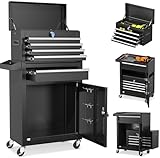
Overview: The INTERGREAT 5-drawer rolling tool chest introduces innovative modularity with its 2-in-1 detachable design. This space-saving solution separates into a portable toolbox and rolling cabinet, adapting to varied task requirements. The overall dimensions of 20.3" x 11.8" x 40.4" make it suitable for compact workshops.
What Makes It Stand Out: The detachable configuration allows users to take the top 4-drawer unit directly to a job site while leaving the base cabinet stationary—versatility rare in this price range. When nested together, it occupies minimal floor space. Two locking bars secure all drawers plus the bottom cabinet, providing security beyond typical single-lock systems. Protective liners come standard, preventing tool damage during transport.
Value for Money: This unit punches above its weight class by essentially providing two tools in one. While drawer count is lower than competitors, the flexible configuration offers practical value that fixed designs can’t match. For users with limited space or varied work locations, the adaptability outweighs raw capacity considerations, delivering better ROI than purchasing separate portable and stationary storage.
Strengths and Weaknesses: Pros: Innovative detachable design; space-saving nested storage; comprehensive locking system; included protective liners; excellent mobility with universal wheels. Cons: Only five drawers limits total capacity; less sturdy when separated; cold-rolled steel thinner than premium models; smaller drawer dimensions restrict bulky tool storage.
Bottom Line: Ideal for mobile technicians and small workshop owners prioritizing flexibility over maximum storage, this clever 2-in-1 design solves space constraints while delivering respectable functionality. It’s a smart compromise between portability and permanent storage that adapts to evolving workflow needs.
Why Premium Tool Cabinets Are a Non-Negotiable Investment for Professional Mechanics
Your tools represent thousands—often tens of thousands—of dollars in investment. Housing them in flimsy sheet metal with sticky drawer slides is like parking a Ferrari in a cardboard garage. Premium cabinets do more than store tools; they create an organized ecosystem where every item has a designated home, accessibility is instantaneous, and your workflow maintains momentum. The math is simple: if a better cabinet saves you just 10 minutes daily, that’s over 40 hours annually—the equivalent of a full work week. At professional shop rates, that time savings alone justifies the premium price tag within the first year.
Decoding “Premium”: What Separates High-End Cabinets from Consumer-Grade Options
The term “premium” gets thrown around liberally in tool storage marketing, but true professional-grade cabinets share specific, non-negotiable characteristics. Understanding these distinctions helps you avoid paying premium prices for mid-tier quality.
Steel Gauge and Construction Integrity
Premium cabinets typically use 16-gauge or thicker steel for the main carcass, with reinforced corners and fully welded seams. Consumer models often use 20-gauge or thinner steel that flexes under load and dents from incidental contact. The difference isn’t just durability—it’s structural integrity that prevents drawer misalignment over time.
Drawer Slide Engineering
While budget boxes use roller slides rated for 50-75 pounds, premium cabinets feature ball-bearing slides rated for 100-200+ pounds per drawer. More importantly, these slides maintain smooth operation when fully loaded, don’t develop “sag” in the extended position, and include retention systems that prevent accidental drawer separation.
Materials Matter: Understanding Steel Gauges, Welding Quality, and Finish Durability
The Gauge Game: Why Thicker Isn’t Always Better
Steel gauge numbers work inversely—lower numbers mean thicker metal. Professional mechanics should target 16-gauge (0.060" thick) as the sweet spot for weight capacity without unnecessary bulk. Some ultra-premium lines use 14-gauge for extreme environments, but this adds significant weight and cost. The key is consistent gauge throughout, not just in visible areas.
Welding vs. Riveting: The Structural Showdown
Examine cabinet corners and joints. Premium units feature continuous MIG welds that create a monolithic structure. Riveted or spot-welded joints develop play over years of vibration and load cycling. A truly premium cabinet feels solid when you lean on it—no creaking, no flexing, no sense that the components are merely acquainted with each other.
Powder Coating: More Than Just Pretty Colors
The finish protects your investment from chemical spills, rust, and daily abuse. Premium powder coatings are electrostatically applied in multiple layers, baked at high temperatures, and achieve a thickness of 3-4 mils. Look for textured finishes that hide scratches and resist solvent degradation. A simple test: drag a key across an inconspicuous area—quality coating won’t flake or chip easily.
Ball-Bearing Slides: The Unsung Heroes of Premium Tool Storage
Drawer slides undergo more cycles than any other component, making them the true wear point of any cabinet. Premium ball-bearing slides operate on a simple principle: hardened steel balls roll in precision-machined races, distributing load evenly and eliminating friction points.
Load Ratings and Real-World Performance
A 200-pound rating means the slide can support that weight statically, but dynamic loads during opening/closing create forces up to 3x higher. Premium slides account for this with reinforced mounting brackets and progressive load distribution. They also feature full-extension capability, giving you access to the entire drawer depth without reaching into a dark cavity.
Soft-Close Mechanisms: Luxury or Necessity?
While seemingly indulgent, soft-close systems prevent tool chaos during hurried shifts. The hydraulic dampers engage in the final 2-3 inches of travel, preventing drawers from slamming shut. This protects delicate instruments, reduces noise in shared shops, and extends slide life by eliminating impact stress on the bearings.
Weight Capacity Ratings: Why Published Numbers Don’t Tell the Whole Story
Manufacturer weight ratings exist in a marketing gray area. A cabinet might claim “2,000-pound total capacity” but distribute that poorly across drawers with varying slide strengths. The professional approach is calculating load per square foot of drawer space and ensuring slide ratings match your heaviest tool concentrations.
Dynamic vs. Static Loading
Static ratings assume evenly distributed, non-moving weight. Your reality involves shifting tool sets, drawer slamming, and mobile transport over uneven floors. Premium cabinets engineer for dynamic loads, often specifying both static and dynamic capacity ratings. The dynamic rating should be at least 60% of the static number for true professional use.
Drawer Configuration Strategies for Maximum Efficiency
The best cabinet in the world becomes a liability if the drawer layout doesn’t match your workflow. Premium manufacturers understand this, offering customizable configurations and modular inserts.
Depth Variations for Tool Hierarchy
Top drawers should be shallow (2-3 inches) for frequently-used hand tools and sockets. Middle drawers (4-6 inches) house power tools and larger equipment. Deep drawers (8-12 inches) at the bottom store bulky items like impact wrenches, battery packs, and specialty equipment. This weight distribution also lowers the center of gravity, improving stability.
Partitioning and Foam Inserts
Generic dividers waste space. Premium systems use laser-cut foam inserts that cradle each tool, providing visual inventory management and preventing migration during transport. Some systems feature magnetic base plates that lock dividers in place, allowing reconfiguration without tools as your collection evolves.
Mobility vs. Stability: Finding the Right Balance
Casters: The Foundation of Mobile Efficiency
Premium casters aren’t an afterthought—they’re engineered components. Look for 6-inch diameter wheels minimum, with polyurethane treads that resist shop chemicals and don’t mark floors. Each caster should be rated for at least 300 pounds dynamic load, with sealed precision bearings that won’t collect metal shavings.
Locking Mechanisms That Actually Work
Flip-down lever locks are standard, but premium cabinets add secondary engagement points that lock both wheel rotation and swivel simultaneously. Some include vibration-dampening pads that contact the floor when locked, creating a stable work platform that won’t shift when you’re torquing bolts on the cabinet top.
Security Features That Actually Protect Your Investment
A $10,000 tool collection deserves better security than a $5 cam lock. Premium cabinets implement multi-point locking systems that secure each drawer independently, preventing pry-bar attacks that exploit single-point weaknesses.
Lock Quality and Key Control
tubular locks offer decent security, but premium options use disc detainer or pin tumbler locks with restricted keyways that prevent unauthorized duplication. Some manufacturers offer master key systems for fleet purchases, allowing shop managers access while mechanics maintain individual security.
Integrated Alarm and Tracking Options
High-end lines now offer optional Bluetooth-enabled locks that log access and send alerts to your phone. GPS tracking in mobile units helps recover stolen equipment, while internal motion sensors can trigger alarms if the cabinet is moved while locked.
Work Surface Integration: From Simple Tops to Full Mobile Workstations
The cabinet top is prime real estate in any shop. Premium options transform this space from passive storage to active workstation.
Butcher Block vs. Stainless Steel
Hard maple butcher block tops provide an ideal surface for delicate work and absorb impact noise. Stainless steel offers chemical resistance and easy cleaning but transmits vibration. The premium choice depends on your specialty—diagnostic techs prefer wood, while heavy equipment mechanics lean toward steel.
Integrated Power and Lighting
Pop-up power strips with USB ports eliminate extension cord spaghetti. LED light strips mounted under overhead cabinets illuminate drawer contents without casting shadows. Some premium systems include retractable air hose reels and data ports for tablet-based diagnostics, creating a true command center.
Modular Systems: Building Your Dream Setup Over Time
No single cabinet fits every career stage. Premium manufacturers design ecosystems where components connect and expand.
Connecting Hardware Standards
Look for integrated side rails with bolt-hole patterns that align across product lines. This allows side-by-side joining, overhead cabinets, and side lockers to create a unified wall of storage. The hardware should be recessed to maintain a flush profile and prevent snagging.
Hybrid Mobile/Stationary Configurations
The most versatile setups pair a large stationary main cabinet with mobile satellite units. Premium systems use common drawer dimensions and accessories across both types, allowing you to grab a loaded drawer from the main unit and slide it into a mobile cart for field service work.
Warranty and After-Sales Support: The True Mark of a Premium Brand
A lifetime warranty means nothing if the company won’t honor it. Premium brands back their claims with accessible support and clear terms.
Understanding Warranty Fine Print
“Limited lifetime warranty” often excludes wear items like casters and slides. True premium warranties cover these components for 5-10 years and include provisions for professional use (many consumer warranties void coverage for commercial applications). Look for brands with dedicated pro support lines and local service centers.
Parts Availability Legacy
A cabinet is a 20-year investment. Can you still get replacement slides in 2035? Premium manufacturers maintain parts inventories for discontinued models and publish exploded diagrams for field repair. This commitment separates tool brands from marketing companies that outsource production and disappear when trends change.
The Hidden Costs of “Budget” Cabinets (Total Cost of Ownership)
That $400 cabinet seems like a steal until you calculate the real expense. Premature failure, replacement costs, and lost productivity quickly erase any initial savings.
The Replacement Cycle Reality
Consumer-grade cabinets in professional environments typically last 2-4 years before slides fail, drawers bend, or casters collapse. A $2,500 premium cabinet amortized over 15 years costs $167 annually—far less than replacing a $400 box every three years ($133/year) plus the associated downtime and frustration.
Productivity Drain Calculations
Every stuck drawer, collapsed caster, or hour spent reorganizing tools after a drawer tip-out event is billable time lost. Conservative estimates suggest budget cabinets cost mechanics 30-60 minutes weekly in inefficiency. At $100/hour shop rates, that’s $2,600-5,200 annually in lost revenue—more than the price difference between budget and premium in a single year.
ROI Calculation: How a Premium Cabinet Pays for Itself
The return on investment transcends simple durability. It’s about revenue protection, tool longevity, and professional image.
Time Savings Multiplication
A well-organized premium cabinet reduces tool retrieval time by an estimated 15-20 seconds per access. For a mechanic making 100 tool accesses daily, that’s 25 minutes saved. Over 250 workdays, you gain 104 hours—more than two weeks of productive time annually.
Tool Protection Value
Quality foam inserts and stable storage prevent tool damage. A single damaged digital torque wrench can cost $800+ to replace. Premium cabinets protect these investments through secure storage and elimination of drawer rattling that calibrates tools out of spec.
Common Buying Mistakes Professional Mechanics Make
Even seasoned pros fall prey to marketing traps and emotional decisions when purchasing storage. Avoid these pitfalls.
Overbuying Capacity
A cabinet that’s 70% full is efficient; one that’s 95% full is a daily frustration. Mechanics often buy for their current tool set without accounting for 5-10 years of collection growth. Premium lines offer expansion options, but starting with 30% more capacity than you think you need prevents premature obsolescence.
Ignoring Shop Environment Factors
Coastal shops need stainless hardware to resist salt air. Diesel-heavy environments require chemical-resistant seals. High-humidity shops benefit from built-in dehumidifier ports. Premium manufacturers offer environment-specific upgrades, but only if you identify these needs before purchasing.
Maintenance Tips to Maximize Your Cabinet’s Lifespan
Premium equipment demands premium care. A simple maintenance routine extends service life dramatically.
Slide Maintenance Protocol
Monthly cleaning with a lint-free cloth and light machine oil keeps slides silky. Annually, remove drawers completely and clean the slide races with brake cleaner, then re-lubricate with white lithium grease. This 30-minute ritual can double slide lifespan.
Caster and Floor Care
Inspect casters weekly for metal shavings and debris wrapped around axles. Clean with a wire brush and apply silicone spray to bearings. Keep shop floors clean—sand and grit act as grinding paste on wheel surfaces, accelerating wear on even the best casters.
Frequently Asked Questions
How much should I expect to spend on a premium tool cabinet? For a professional-grade rolling cabinet suitable for a working mechanic, budget $1,500 to $3,500 for the main unit. Add $500-1,000 for a matching top chest, and $300-600 for accessories like side lockers or power strips. True industrial-grade cabinets with ultra-heavy-duty slides and 14-gauge construction can reach $5,000+. Remember, this is a 15-20 year investment, so focus on total cost of ownership rather than sticker price.
What’s the difference between 16-gauge and 18-gauge steel? Sixteen-gauge steel is approximately 20% thicker than 18-gauge (0.060" vs. 0.048"). This translates to significantly higher load capacity and dent resistance. An 18-gauge cabinet might flex when loaded with heavy power tools, causing drawer binding over time. For professional use, 16-gauge is the minimum acceptable thickness for the main carcass, with 18-gauge being acceptable only for non-load-bearing components like side panels.
Are soft-close drawers worth the extra cost? For most professional mechanics, yes. The hydraulic dampers prevent tools from shifting during closure, reduce noise in busy shops, and eliminate the impact stress that cracks drawer welds over time. They also provide a psychological benefit—there’s something deeply satisfying about drawers that glide shut silently, reducing daily frustration. Expect to pay a 10-15% premium for this feature, which typically pays for itself in extended slide lifespan.
Can I mix and match cabinets from different brands? Technically yes, but it’s not recommended for professional setups. Different brands use varying drawer dimensions, slide hardware, and connecting systems. Mixing creates an inefficient layout and prevents the seamless integration of accessories like overhead cabinets or side lockers. If you must mix, prioritize matching height and depth dimensions, and accept that you’ll lose modularity benefits. Premium manufacturers design their lines as ecosystems for good reason.
How do I determine the right size cabinet for my needs? Start by inventorying your tools and calculating total volume. Then multiply by 1.5 to account for growth. A typical professional mechanic needs 30-40 cubic feet of storage minimum. Consider your shop space—allow 36-48 inches of clearance on the front and one side for comfortable drawer access. Don’t forget ceiling height for overhead cabinets. When in doubt, visit a dealer and physically load your most-used tools into display models to test real-world ergonomics.
What’s the typical lifespan of a premium tool cabinet? With proper maintenance, a quality premium cabinet lasts 15-25 years in professional daily use. Ball-bearing slides typically need replacement after 10-12 years of heavy cycling, but this is a serviceable component. The cabinet carcass itself often outlasts the mechanic’s career. Compare this to consumer-grade cabinets that frequently fail within 2-4 years under the same conditions, and the long-term value becomes clear.
Do premium cabinets hold their resale value? Exceptionally well. A five-year-old premium cabinet from a respected brand typically retains 60-70% of its original value if well-maintained. Consumer cabinets, by contrast, have virtually no resale market. The robust secondary market for professional-grade storage means your investment is partially recoverable if you upgrade or change careers, effectively reducing your net cost of ownership.
Should I choose a cabinet with built-in power outlets? For modern diagnostics and charging needs, absolutely. Built-in power eliminates trip hazards from extension cords and provides dedicated circuits for sensitive electronics. Look for units with GFCI protection and USB-C ports rated for fast charging. The best systems include retractable cord reels with 25+ feet of reach, allowing you to position the cabinet anywhere in your bay while maintaining power access.
How important is powder coating quality? Critical. Poor coating leads to rust, which compromises structural integrity long before the steel itself fails. Premium powder coatings are chemically resistant to brake fluid, oil, and common solvents. They should also be UV-stable to prevent fading if your cabinet gets natural light. Ask about salt-spray testing ratings—quality finishes withstand 500+ hours of exposure without failure, indicating they’ll survive harsh shop environments.
Can I upgrade my existing cabinet with premium features? Partially. Aftermarket ball-bearing slide kits can replace cheap roller slides, but they rarely match factory integration quality. You can add custom foam inserts to any drawer, and some companies make retrofit power strips. However, fundamental limitations like steel gauge and welded construction can’t be upgraded. If your current cabinet is 20-gauge or thinner, replacement is more cost-effective than piecemeal upgrades.
See Also
- 10 Best Rolling Tool Cabinets for Mechanics with Mobility Needs in 2026
- We Tested 50 Rolling Tool Cabinets - Here are the 10 Best for Mechanics
- 10 Best Budget Tool Cabinets Under $200 for Beginners in 2026
- 10 Best Rolling Tool Cabinets for Limited Space in 2026
- 10 Best Tool Cabinets After 6 Months of Testing in 2026