Table of Contents
Investing in a premium table saw isn’t just about spending more money—it’s about transforming your entire woodworking experience. Whether you’re running a professional shop or you’re a serious hobbyist ready to elevate your craft, the right table saw becomes the heartbeat of your workspace. These machines deliver precision you can stake your reputation on, safety features that protect your most valuable asset (your hands), and durability that turns a purchase into a legacy tool.
But here’s the truth: not every expensive saw deserves a place in your shop. The woodworking market is flooded with machines wearing premium price tags while delivering merely average performance. Understanding what truly separates exceptional tools from overpriced pretenders will save you thousands of dollars and years of frustration. Let’s cut through the marketing noise and explore what makes a table saw genuinely worth the investment for your woodworking shop.
Top 10 Table Saws For Woodworking Shops
Detailed Product Reviews
1. Shop Fox W1837 10" 2 hp Open-Stand Hybrid Table Saw

Overview: The Shop Fox W1837 bridges the gap between contractor and cabinet saws, offering serious hobbyists and semi-professionals a compelling middle ground. This hybrid machine combines the enclosed cabinet base of a premium saw with the accessibility and price point of a contractor model, delivering 2 horsepower through a versatile dual-voltage motor.
What Makes It Stand Out: The dual-voltage 2 HP motor (prewired for 120V but convertible to 240V) provides flexibility for different shop setups. Its enclosed cabinet with 4" dust port offers superior dust collection compared to open-stand contractor saws. The 40-1/4" precision-ground cast iron table with steel wings ensures stability and accuracy for demanding cuts.
Value for Money: Positioned in the mid-range hybrid category, the W1837 delivers cabinet saw features—enclosed base, cast iron table, decent dust collection—at a price significantly below full cabinet saws. For woodworkers outgrowing contractor saws, this represents excellent long-term value.
Strengths and Weaknesses: Strengths include robust power, excellent table surface, good dust control, and 30" rip capacity. The hybrid design offers serious upgrade potential. Weaknesses include considerable weight (limiting mobility), assembly requirements, and fence quality that lags behind premium hybrids. The open-stand design, while sturdier than contractor saws, doesn’t match full cabinet mass.
Bottom Line: An ideal upgrade for committed woodworkers seeking cabinet saw benefits without the premium investment. The W1837 offers substantial capability for its price, making it a smart intermediate choice.
2. DEWALT Table Saw 10 Inch with Foldable Rolling Table Saw Stand, 15 Amp, 4800 RPM, 32-1/2-Inch Rip Capacity (DWE7491RS)
 with Foldable Rolling Table Saw Stand, 15 Amp, 4800 RPM, 32-1/2-Inch Rip Capacity (DWE7491RS)](https://m.media-amazon.com/images/I/41aHc-jYnVL._SL160_.jpg)
Overview: The DEWALT DWE7491RS sets the benchmark for professional portable table saws, delivering exceptional power and precision in a mobile package. This 15-amp jobsite workhorse produces 4800 RPM while offering an impressive 32-1/2" rip capacity that rivals many stationary saws, making it ideal for contractors and serious DIYers.
What Makes It Stand Out: The rack-and-pinion telescoping fence system provides unparalleled accuracy and smooth adjustments in the portable category. The rolling stand sets up instantly yet offers rock-solid stability. Patented material support enables safe narrow rip cuts, while onboard storage keeps all accessories organized and accessible.
Value for Money: While priced at the premium end of portable saws, the DWE7491RS justifies its cost through professional-grade durability, precision, and features. For tradespeople requiring jobsite portability without sacrificing cut quality, it represents solid long-term investment.
Strengths and Weaknesses: Strengths include outstanding fence accuracy, massive rip capacity, powerful motor, excellent mobility, and comprehensive onboard storage. The sturdy stand and reliable safety features inspire confidence. Weaknesses include significant weight (90+ pounds), premium pricing, and dust collection that requires improvement for shop use. The motor can strain on extremely dense materials.
Bottom Line: The gold standard for portable table saws. If you need professional performance that travels, the DWE7491RS delivers unmatched capability and reliability worth every penny.
3. SKIL 15 Amp 10 Inch Portable Jobsite Table Saw with Folding Stand- TS6307-00
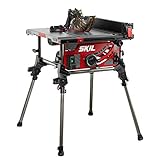
Overview: SKIL’s TS6307-00 brings rack-and-pinion precision to the budget-conscious jobsite saw market. This 15-amp portable offers surprising capabilities for its price point, targeting DIY enthusiasts and occasional contractors who need decent performance without premium costs.
What Makes It Stand Out: The rack-and-pinion fence system at this price is genuinely impressive, delivering accuracy typically reserved for higher-end models. The integrated folding stand provides excellent portability, while 4x4 cutting capacity at 90 degrees handles most common dimensional lumber. Micro-adjustment blade alignment ensures parallel cuts.
Value for Money: Exceptional value proposition—this is among the most affordable rack-and-pinion equipped saws available. For homeowners and hobbyists, it delivers professional-style features without the financial burden, making it an accessible entry point to quality table saw work.
Strengths and Weaknesses: Strengths include affordable pricing, accurate fence system, good portability, and versatile bevel capacity (2-47°). The stand integrates nicely and setup is straightforward. Weaknesses include lighter build quality, less powerful motor than premium brands, smaller table surface, and potentially shorter lifespan under heavy use. The miter gauge is basic.
Bottom Line: An outstanding entry-level choice for DIYers and occasional users. The TS6307-00 punches above its weight class, offering surprising accuracy and features that make it a smart budget buy.
4. The Hedgehog Featherboard for Table Saws for Quicker, Easier, and Safer Workflow | Improve your accuracy and precision

Overview: The Hedgehog Featherboard revolutionizes a traditional safety accessory with its innovative spiral design and single-knob adjustment. This deceptively simple tool dramatically improves both safety and efficiency for table saw users by maintaining consistent pressure against the fence throughout cuts, ensuring workpieces stay precisely positioned.
What Makes It Stand Out: The one-handed, single-knob adjustment system is brilliantly engineered—no more fumbling with multiple knobs and bars. Its unique spiral design applies even pressure while the pivot point allows instant positioning. This speed increase is genuinely transformative for repetitive cuts, reducing setup time by minutes over a work session.
Value for Money: Priced moderately for a premium accessory, the Hedgehog pays for itself through time savings and improved cut quality. For woodworkers who value workflow efficiency, it’s a worthwhile investment that outperforms traditional featherboards costing half as much but requiring constant readjustment.
Strengths and Weaknesses: Strengths include lightning-fast adjustments, excellent holding power, enhanced safety through reduced kickback, and robust construction. It significantly improves cut consistency and user confidence. The main weakness is limited compatibility—it only fits standard 3/4" miter slots, requiring separate purchase for 5/8" slots. The premium price may deter casual users.
Bottom Line: A game-changing accessory for serious woodworkers. If your saw has 3/4" slots, the Hedgehog’s speed and safety benefits make it an essential upgrade that transforms your table saw experience.
5. Peachtree Woodworking Supply Safety, Push Block and Push Stick Package, In Safety Orange Color, Router Tables, Jointers and Band Saws and other Work Shop Machinery (5 Piece Set)

Overview: Peachtree’s 5-piece safety kit provides comprehensive hand protection across multiple woodworking machines. This versatile set includes push blocks and sticks designed for table saws, router tables, jointers, and band saws, all rendered in high-visibility safety orange to ensure you never lose track of them in a busy shop environment.
What Makes It Stand Out: The kit’s completeness stands out—five different shapes and sizes cover virtually every feeding scenario. The high-visibility color scheme is more than aesthetic; it’s a critical safety feature that keeps hand positions obvious. The washable rubber foam pads on the push blocks provide exceptional grip and control.
Value for Money: Outstanding value—purchasing these pieces individually would cost significantly more. For the price of two premium push blocks, you get a complete safety system. This makes professional-grade safety accessible to budget-conscious woodworkers.
Strengths and Weaknesses: Strengths include comprehensive coverage, excellent visibility, superior grip from rubber pads, and versatility across machines. The variety handles narrow rips, wide panels, and jointer work effectively. Weaknesses include foam pads that may compress or wear over time requiring replacement, and the plastic construction, while adequate, isn’t as robust as some premium individual tools. Some users may find the sizes don’t perfectly match their hands.
Bottom Line: An essential starter safety kit that no woodworking shop should be without. The Peachtree set delivers remarkable versatility and value, making it a smart investment for woodworkers at any skill level.
6. Pony Portable Folding Work Table, 2-in-1 as Sawhorse & Workbench, 31” W×25” D×25”-35”H, Large Load Capacity with 4pcs Clamps, 4pcs Bench Dogs

Overview:
The Pony Portable Folding Work Table delivers impressive versatility for DIYers and professionals. This 2-in-1 design transforms from a 500-pound capacity workbench to a 1000-pound sawhorse in seconds. With a 31" x 25" work surface and six height adjustments from 30-35 inches, it adapts to countless job site scenarios.
What Makes It Stand Out:
The transformation mechanism sets this apart from single-purpose solutions. The included accessory bundle—four bar clamps (two 12" medium-duty, two 6" light-duty), four bench dogs, and safety straps—provides immediate functionality. The aluminum leg frame offers superior strength while maintaining portability, collapsing flat for transport.
Value for Money:
Considering comparable standalone workbenches and sawhorses cost $80-150 each, this 2-in-1 unit with extensive accessories represents solid value around $120-150. The integrated clamping system eliminates separate purchases, saving another $30-50. For mobile professionals, the transport savings alone justify the investment.
Strengths and Weaknesses:
Strengths include remarkable versatility, robust aluminum construction, generous accessory package, and compact storage. The six-height adjustment accommodates various users and tasks. Weaknesses: 500-pound table capacity may limit heavy-duty applications, plastic components could wear over time, and the work surface isn’t replaceable. Stability lags behind stationary benches.
Bottom Line:
An excellent choice for contractors, hobbyists, and homeowners needing portable, versatile work support. While not replacing a permanent workbench for heavy fabrication, its 2-in-1 design and comprehensive accessory package make it indispensable for mobile projects and space-constrained shops.
7. Jigs & Fixtures for the Table Saw & Router: Get the Most from Your Tools with Shop Projects from Woodworking’s Top Experts (Fox Chapel Publishing) 26 Innovative Designs (Best of Woodworker’s Journal)

Overview:
This compilation from Woodworker’s Journal offers 26 expertly-designed jigs and fixtures for table saws and routers. Published by Fox Chapel Publishing, the book draws from top woodworking professionals, providing detailed plans to maximize tool capabilities. It serves as both project guide and long-term workshop reference.
What Makes It Stand Out:
The curated collection represents decades of professional expertise, eliminating trial-and-error design. Each project addresses specific woodworking challenges, from safety improvements to precision enhancements. The variety covers basic sleds to complex indexing fixtures, building skills progressively. The Fox Chapel reputation ensures quality instructions and illustrations.
Value for Money:
At $20-25, this book costs less than a single commercial jig while providing 26 proven designs. Individual digital plans typically cost $5-15 each, making this compilation exceptional value. The knowledge gained pays dividends across all future projects, justifying the modest investment for serious woodworkers.
Strengths and Weaknesses:
Strengths include expert curation, detailed instructions, diverse difficulty levels, and permanent reference value. It builds fundamental jig-making skills. Weaknesses: No digital download included, requiring manual measurement from pages. Some designs assume specific tool models. Beginners may find advanced projects daunting without prior experience.
Bottom Line:
Highly recommended for intermediate to advanced woodworkers seeking to expand their capabilities. While beginners can tackle entry-level jigs, the book’s true value emerges as skills develop. An essential workshop resource that pays for itself with the first completed project.
8. DEWALT 15 Amp 8-1/4 in. Compact Portable Jobsite Table Saw (DWE7485)

Overview:
The DEWALT DWE7485 compact jobsite table saw brings professional power to confined spaces. Its 15-amp motor drives an 8-1/4-inch blade with 24.5 inches of rip capacity—enough to crosscut 4x8 sheet goods. The metal roll cage and compact design prioritize durability and portability for contractors.
What Makes It Stand Out:
The rack-and-pinion fence system delivers contractor-grade accuracy typically found on larger saws. Onboard storage keeps guard, fence, wrenches, and miter gauge organized. At just 54 pounds, it transports easily while maintaining jobsite toughness. The 24.5-inch rip capacity exceeds expectations for this compact class.
Value for Money:
Positioned around $350-400, it commands a premium over budget brands but undercuts full-size contractor saws by hundreds. For professionals needing portability without sacrificing precision, the investment quickly pays for itself in time saved. DIYers with limited space get pro features at an accessible price point.
Strengths and Weaknesses:
Strengths include precise fence adjustments, robust metal construction, excellent portability, generous rip capacity, and smart onboard storage. The 15-amp motor handles most cuts confidently. Weaknesses: The 8-1/4-inch blade limits depth of cut to 2-9/16 inches, insufficient for thick timbers. The small table surface requires support for large panels.
Bottom Line:
An outstanding portable saw for contractors and serious DIYers who prioritize accuracy and mobility. While depth capacity constraints exist, its precision and durability make it a jobsite workhorse. Choose this over larger saws only if portability is paramount.
9. Crosscut Sled Kit for Table Saw, Catcan Table Saw Sled Kit Includes 2 Aluminum 12” T-Track, 2 UHMW 17” Miter Bars, Screws, Knob and Bolt for Tablesaw Woodworking

Overview:
The Catcan Crosscut Sled Kit provides the essential hardware for building a custom table saw sled. Included are two 12-inch aluminum T-tracks, two 17-inch UHMW miter bars, a star knob with bolt and washer, and 15 screws. Woodworkers supply their own sled base and fence material.
What Makes It Stand Out:
The UHMW miter bars offer superior performance—low friction, dimensional stability, and no expansion/contraction with humidity. This ensures consistent, accurate cuts year-round. The aluminum T-tracks provide durable mounting points for stop blocks and hold-downs. The kit’s compatibility with standard miter slots makes it universally adaptable.
Value for Money:
At approximately $30-40, this kit costs significantly less than pre-made sleds ($100-200) while allowing complete customization. Purchasing UHMW and aluminum tracks separately would cost 30-50% more. For woodworkers comfortable with basic construction, the savings are substantial without compromising quality.
Strengths and Weaknesses:
Strengths include high-quality UHMW bars that slide smoothly, stable dimensions, sturdy aluminum tracks, and comprehensive hardware. The customization potential suits any table saw. Weaknesses: Requires woodworking skill to build and square accurately. No instructions included. Wood costs extra. Some users may need to sand bars for perfect fit.
Bottom Line:
Excellent value for woodworkers ready to build their own precision sled. The quality components ensure professional results if construction is careful. Skip this if you lack confidence in squaring jigs; buy if you value customization and cost savings.
10. Crosscut Sled Kit for Table Saw Runners, Catcan Table Saw Sled Kit with 2 Aluminum T-Track, 2 UHMW Miter Bars, Knob and Bolt, Screws for Tablesaw Woodworking

Overview:
Catcan’s Crosscut Sled Kit supplies the critical components for creating a custom table saw sled. The package features two 17-inch UHMW miter bars, two 12-inch aluminum T-tracks, a star knob with bolt, washer, and 15 screws. Users provide their own wooden sled base and fence for a tailored fit.
What Makes It Stand Out:
The UHMW polyethylene miter bars deliver exceptional performance with minimal friction and zero moisture-related dimensional changes. This stability ensures repeatable accuracy across seasons. The included aluminum T-tracks create versatile mounting points for accessories. Universal compatibility with standard miter slots makes this kit adaptable to most table saws.
Value for Money:
Priced around $30-40, this hardware kit offers major savings compared to commercial sleds ($100-200). Sourcing components individually would increase costs by 30-50%. For craftsmen comfortable with basic woodworking, the kit provides professional-grade materials without the premium price of pre-assembled units.
Strengths and Weaknesses:
Strengths include smooth-operating UHMW bars, weather-resistant stability, durable aluminum tracks, and complete hardware. Customization benefits are significant. Weaknesses: Demands careful construction and precise squaring. Lacks instructional guidance. Wood material adds expense. Minor fitting adjustments may be necessary for perfect slot compatibility.
Bottom Line:
A smart purchase for skilled woodworkers seeking a personalized sled solution. Quality components guarantee superior performance when properly installed. Avoid if you prefer ready-to-use tools; highly recommended if you enjoy building precision jigs and appreciate cost-effectiveness.
Understanding the Premium Table Saw Investment
When you’re ready to move beyond entry-level equipment, you’re not just buying a tool—you’re investing in precision engineering, superior materials, and decades of manufacturing expertise. Premium table saws represent a category where every component has been scrutinized, tested, and optimized for professional use. The upfront cost stings, but amortized over twenty years of daily use, a $3,000 saw costs less than 50 cents per day.
The real value emerges in the details: tighter tolerances that eliminate frustrating rework, robust motors that don’t bog down in thick hardwoods, and safety systems that could literally save your fingers. For professional shops, time is money, and a premium saw’s accuracy and reliability directly impact your bottom line. For passionate hobbyists, it means spending weekends creating rather than troubleshooting.
Cabinet vs. Hybrid vs. Contractor: Premium Categories Explained
True Cabinet Saws: The Professional Standard
Cabinet saws represent the pinnacle of stationary table saw design. These machines feature fully enclosed steel cabinets that provide massive weight (often 400-600 pounds), incredible stability, and superior dust collection. The motor is typically 3-5 horsepower, belt-driven, and mounts inside the cabinet, creating a lower center of gravity and reducing vibration. The trunnion system—critical for blade adjustment—attaches to the cabinet itself rather than the table, ensuring alignment stays true even after years of heavy use.
Hybrid Saws: Bridging the Gap
Hybrid saws aim to deliver cabinet saw DNA in a more compact, affordable package. They typically weigh 250-350 pounds and feature partially enclosed bases. While they use similar trunnion designs to cabinet saws, they often employ slightly less powerful motors (1.75-2 horsepower) and may incorporate some contractor saw elements. For small to medium shops with 220V power, hybrids offer compelling value—perhaps 80% of cabinet saw performance at 60% of the cost.
High-End Contractor Saws: Portable Power
Don’t confuse these with job site saws. Premium contractor saws are serious machines designed for woodworkers who need occasional mobility without sacrificing accuracy. They typically feature cast iron tables, belt-driven motors, and robust fence systems. While lighter than cabinet saws, they maintain precision through superior engineering. The trade-off? More vibration and less mass means slightly reduced cut quality in challenging materials.
Motor Power and Electrical Requirements
Decoding Horsepower Ratings
Premium table saws typically range from 1.75 to 5 horsepower, but the number alone doesn’t tell the whole story. A true 3HP motor will plow through 8/4 maple without slowing, while an overrated “3HP peak” motor will bog down and create burn marks. Look for continuous duty ratings and consider the motor’s service factor—an indicator of how hard you can push it before thermal overload.
Voltage Considerations for Your Shop
Most serious table saws require 220V power to deliver their full potential. A 1.75HP motor can run on 110V, but stepping up to 3HP or more demands 220V. Before falling in love with a particular saw, verify your shop’s electrical capacity. Adding a 220V line typically costs $300-800, a factor many buyers overlook. Some premium saws offer dual-voltage motors, providing flexibility if you upgrade your electrical service later.
The Fence System: Your Precision Foundation
Biesemeyer-Style vs. European Sliding
The fence is where premium saws truly separate themselves from the pack. Biesemeyer-style fences lock at both front and rear rails, providing rock-solid stability. Look for micro-adjustment capabilities and easy removal for crosscut operations. European sliding table attachments offer a different approach, allowing the workpiece to move while the blade remains stationary—brilliant for sheet goods and large panels but requiring more shop space.
Micro-Adjustment and Repeatability
Premium fences feature hairline adjustment mechanisms that let you dial in perfect fits. A knob that moves the fence .001" at a time transforms frustrating test cuts into confident, single-pass operations. The best systems include digital readouts or mechanical counters that ensure you can return to exact settings days or weeks later—a game-changer for production work.
Safety Features Worth Paying For
Flesh Detection Technology
Modern premium saws offer active safety systems that can stop a spinning blade in milliseconds upon contact with skin. These systems use capacitive sensing technology and destroy the blade and cartridge in the process—but that’s a $200 sacrifice versus life-altering injury. While controversial among some traditionalists, the technology has matured and saved thousands of fingers.
Riving Knife and Blade Guard Integration
Forget the clumsy blade guards of old. Premium saws include riving knives that move with the blade, preventing kickback while allowing full visibility. The best systems integrate quick-release blade guards that mount to the riving knife, protecting against debris without obstructing your view. Look for tool-free removal and installation—you’ll actually use these features instead of leaving them in a drawer.
Magnetic Switches and Overload Protection
Premium saws include magnetic switches that prevent accidental restart after power interruptions—crucial if your shop experiences flickers. Thermal overload protection with manual reset protects the motor from damage, while magnetic starters reduce voltage spike damage to internal components.
Dust Collection: Keeping Your Shop Clean
Cabinet Design and CFM Requirements
A truly premium table saw contains dust rather than creating a shop-wide blizzard. Cabinet saws with fully enclosed designs can capture 90%+ of dust when paired with adequate collection. You’ll need 350-600 CFM of airflow at the cabinet port for effective collection. The best designs include dust shrouds around the blade, sealed cabinet interiors, and multiple collection points.
Overarm Collection for Above-Table Dust
The finest dust collection addresses the 30% of debris that flies off the top of the blade. Overarm systems connect to your dust collector and position a pickup just above the blade, capturing dust before it becomes airborne. While aftermarket solutions exist, integrated factory systems offer superior ergonomics and aesthetics.
Build Quality and Material Specifications
Cast Iron vs. Steel vs. Aluminum
The table and extension wings define a saw’s stability. Premium tables use precision-ground cast iron, typically 1-3/8" to 2" thick. This mass dampens vibration and provides a reliably flat reference surface. Some modern saws use granite or composite tables—lighter and rust-proof but potentially less repairable if damaged. Avoid stamped steel tables on any saw claiming to be premium.
Trunnion Materials and Design
The trunnion system is the saw’s backbone. Premium machines use massive cast iron trunnions, often weighing 50+ pounds themselves. These should be mounted to the cabinet (not the table) and feature large, easy-to-access adjustment mechanisms. Bronze or oil-impregnated bushings in adjustment points indicate attention to long-term durability.
Table Size, Extensions, and Outfeed Support
Standard Dimensions and Capacity
Most premium saws feature 27" deep tables (front to back) with 40-52" rip capacity to the right of the blade. Consider your typical workpiece sizes. If you regularly break down full sheets of plywood, maximize rip capacity. For furniture makers working with solid wood, a 36-40" capacity often suffices.
Extension Wing Quality
Beware of stamped steel extension wings even on expensive saws. Premium machines include cast iron extensions that match the main table’s flatness and height. Some offer router table inserts in the extension wing—a brilliant space-saving feature for small shops.
Outfeed Table Integration
A premium saw deserves a proper outfeed setup. Look for factory-designed outfeed tables that attach securely and align perfectly. The best systems fold down when not needed but provide 4-6 feet of support for ripping long boards. Some include adjustable rollers for handling heavy materials solo.
Blade and Arbor Specifications
Arbor Size and Runout
Premium saws feature 5/8" diameter arbors (standard) but with superior runout specifications—typically less than .001". This translates to cleaner cuts and longer blade life. The arbor should be supported by heavy-duty bearings and include a robust flange system that ensures blades mount perfectly perpendicular.
Blade Elevation and Tilt Mechanisms
Look for smooth, wobble-free blade height adjustment. Premium saws use threaded rods or gear systems with minimal backlash. The tilt mechanism should lock securely at 0 and 45 degrees with positive stops that can be fine-tuned. Handwheels should feel substantial and operate with fluid motion.
Mobility and Shop Integration
Mobile Base Solutions
Even 500-pound cabinet saws can be mobile with the right base. Premium mobile bases use heavy-duty casters that lift the saw completely off the floor, not just one end. Look for foot-operated lift mechanisms that don’t require bending and locking systems that prevent accidental movement during cuts.
Space Considerations and Workflow
Before buying, map your shop’s workflow. A cabinet saw with 52" rip capacity needs 10-12 feet of wall space. Sliding table saws require even more room but can eliminate the need for a separate panel saw. Consider your material flow from rough lumber to finished piece—your saw should facilitate, not obstruct, efficient movement.
Precision and Calibration Features
Alignment Tools and Ease of Adjustment
Premium saws include built-in measurement tools and easy access to adjustment points. Look for saws with front-accessible trunnion adjustments—avoid those requiring you to crawl underneath. Some include dial indicators or alignment jigs that simplify achieving perfect parallelism between blade and miter slots.
Long-Term Stability and Maintenance
The best premium saws hold their alignment for years, not months. Features like locking trunnion bolts, heavy-gauge steel cabinet construction, and vibration-dampening motor mounts contribute to stability. Ask about recommended maintenance schedules—a truly premium machine requires minimal fuss to stay accurate.
Warranty and Manufacturer Support
Understanding Warranty Terms
Premium saws should include 3-5 year warranties on major components, with lifetime warranties on the cabinet and table. Read the fine print—some warranties are pro-rated, while others offer full replacement. The best manufacturers stand behind their products without requiring you to jump through hoops.
Parts Availability and Technical Support
A premium tool is a long-term investment. Verify that replacement parts will be available in 10-15 years. Established manufacturers maintain parts inventories for decades. Phone support from knowledgeable technicians who understand woodworking—not just script readers—proves invaluable when troubleshooting issues.
Price vs. Value: Making Smart Investment Decisions
The Real Cost of Ownership
A $2,000 saw that needs replacement in five years costs more than a $3,500 saw that lasts thirty. Factor in blade costs (premium saws often include high-quality blades), necessary accessories, and potential electrical work. Some “premium” saws require immediate fence upgrades—hidden costs that erode their value proposition.
When to Stretch Your Budget
If you’re between models, prioritize fence quality and motor power over bells and whistles. A simpler saw with an exceptional fence outperforms a feature-laden model with a mediocre fence. Consider buying the best saw you can afford, then adding accessories over time rather than compromising on core quality.
Making the Final Decision for Your Shop
Assessing Your Current and Future Needs
Be honest about your work volume and growth trajectory. A passionate hobbyist might never need a 5HP cabinet saw, while a professional furniture maker will quickly outgrow a hybrid. Consider the types of projects you aspire to create, not just what you’re building today. Premium saws have decades-long lifespans—they should accommodate your evolution as a woodworker.
Test Driving Before Buying
Never buy a premium saw without seeing it in person. Bring a straightedge and feel for table flatness. Raise and lower the blade—does it feel smooth or gritty? Lock the fence and push against it—any movement? Listen to it run; you should hear the blade cutting wood, not the motor straining. Reputable dealers will let you make test cuts. This hands-on evaluation reveals more than any specification sheet.
Frequently Asked Questions
What makes a table saw “premium” versus just expensive?
Premium table saws justify their cost through superior engineering, materials, and longevity. Key differentiators include cast iron trunnions mounted to the cabinet, precision-ground tables with tight tolerances, robust fence systems with micro-adjustment, comprehensive safety features, and manufacturer support that extends decades into the future. An expensive saw might have a high price tag but lack these fundamental quality markers.
How much should I budget for a premium table saw?
Expect to invest $2,000 to $5,000+ for a true premium cabinet saw, with hybrids falling in the $1,500 to $2,500 range. Remember to allocate an additional 15-20% for essential accessories like a high-quality blade, mobile base, outfeed support, and potentially upgrading your dust collection system to handle the saw’s CFM requirements.
Is a 1.75HP motor powerful enough for a premium saw?
For most furniture-making and general woodworking, 1.75HP is adequate if paired with a sharp blade and proper feed rate. However, you’ll notice limitations when ripping thick hardwoods (8/4 or greater) or using dado stacks. Many woodworkers start with 1.75HP and upgrade to 3HP later, but buying the right power initially saves money and hassle.
Do I really need 220V power for a premium table saw?
For true cabinet saws with 3HP or more, absolutely. These motors require 220V to operate efficiently and safely. While 1.75HP motors can run on 110V, they draw up to 20 amps, potentially tripping breakers and limiting performance. Upgrading to 220V is one of the best investments you can make for your shop’s overall capability.
How important is a riving knife compared to a traditional splitter?
A riving knife is non-negotiable on a premium saw. Unlike fixed splitters, riving knives move with the blade, maintaining consistent clearance and preventing kickback even on non-through cuts. They’re easier to use, provide better protection, and don’t need removal for most operations, meaning you’ll actually keep safety equipment installed.
Can I add flesh detection technology to an existing premium saw?
Currently, flesh detection technology is factory-integrated and cannot be retrofitted to existing saws. The system requires specific motor controllers, braking mechanisms, and blade assemblies designed from the ground up. If this feature is important to you, it must be part of your initial purchase decision.
How often will I need to realign a premium table saw?
A properly set up premium saw should maintain alignment for years, not months. Expect to check alignment every 6-12 months and make minor adjustments annually. Saws with cabinet-mounted trunnions stay true longer than table-mounted designs. Heavy use or moving the saw may necessitate more frequent checks.
What’s the realistic lifespan of a premium table saw?
With proper maintenance, a quality cabinet saw will last 30-50 years or more. Many woodworkers use saws built in the 1950s that still perform excellently. The motor may need bearing replacement after 15-20 years of heavy use, but the cast iron components essentially last forever. This longevity is what makes the initial investment worthwhile.
Should I prioritize a sliding table or a traditional fence system?
This depends entirely on your work. If you regularly process large sheet goods, a sliding table is transformative, eliminating the need to manhandle heavy plywood. For solid wood furniture making, a premium Biesemeyer-style fence offers better versatility and takes less space. Some hybrid systems offer both, but at significant cost and complexity.
Is it worth buying a used premium table saw?
Absolutely, if you know what to inspect. A 20-year-old cabinet saw from a reputable manufacturer often outperforms new mid-range saws. Check for table flatness with a straightedge, arbor runout with a dial indicator, and ensure the motor runs smoothly without excessive noise. Factor in potential costs for new bearings, belts, and a modern fence system. Avoid saws with cracked castings or signs of severe neglect.
See Also
- 10 Affordable Table Saws That Don’t Sacrifice Accuracy in 2026
- 10 Best Circular Saws for Woodworking Enthusiasts in 2026
- 10 Best Table Saws After 6 Months of Testing in 2026
- Top 10 Best Table Saws for Accurate Circular Cuts in 2026
- 10 Best Table Saws for Cabinet Making in 2026