Table of Contents
Every professional builder knows the gut-dropping feeling of drilling into what should be a solid stud, only to hit hollow drywall—or worse, a live wire. That moment of uncertainty doesn’t just cost you time; it costs you money, reputation, and sometimes a hefty repair bill. While weekend warriors might grab the cheapest stud finder off the shelf and hope for the best, you can’t afford that gamble. Your livelihood depends on precision, reliability, and tools that perform flawlessly when the pressure’s on.
Premium stud finders aren’t just fancier versions of their consumer-grade cousins. They’re engineered for the realities of daily job site abuse, delivering accuracy that translates directly to your bottom line. But here’s the thing: not every high-priced scanner deserves a spot in your tool belt. Understanding what truly separates professional-grade equipment from overhyped gadgets is critical to making an investment that pays for itself in avoided callbacks and increased productivity.
Top 10 Stud Finders For Professional Builders
Detailed Product Reviews
1. Franklin Sensors Prosensor M210 Stud Finder With 13-Sensors, Wood & Metal Stud Detector/Wall Scanner, Live Wire Detection, Made in the USA
, Made in the USA](https://m.media-amazon.com/images/I/31mVcMwVM3L._SL160_.jpg)
Overview: The Franklin Sensors ProSensor M210 represents the pinnacle of stud finder technology, engineered for professionals who demand uncompromising accuracy. This American-made tool utilizes an impressive array of 13 patented sensors to deliver reliable detection through various wall materials up to 1.7 inches deep without requiring manual calibration adjustments.
What Makes It Stand Out: The multi-sensor array sets the M210 apart from conventional finders, simultaneously scanning a wide area to show both stud edges and center points on its LED display. Unlike single-sensor models that require precise sliding, this device provides instant, full-width visualization. The always-on deep scan automatically adjusts for different wall textures and densities, while the integrated live wire meter adds crucial safety for electrical work.
Value for Money: Positioned at the premium end of the market, the M210 justifies its higher price through professional-grade durability and accuracy that eliminates costly mistakes. For contractors and serious DIYers, the time saved and precision gained offset the initial investment. Casual users may find it over-specified, but those who value reliability will appreciate the build quality.
Strengths and Weaknesses: Pros include unparalleled accuracy from 13 sensors, simultaneous edge and center detection, robust deep scanning capability, live wire detection, and exceptional durability. The primary drawback is the premium price point, which may deter occasional users. Additionally, its wider scanning head can be cumbersome in tight spaces.
Bottom Line: The ProSensor M210 is the gold standard for stud finders, delivering professional results that justify its cost. Ideal for contractors, electricians, and dedicated DIY enthusiasts who prioritize accuracy and safety above all else.
2. Stud Finder Wall Scanner - 5 in 1 Stud Finder Tool w/Smart Chip and HD LCD Display, Stud Detector Beam Finders for the Center and Edge of Wood AC Wire Metal Studs Joist Pipe (BloodOrange)

Overview: This 5-in-1 electronic stud finder combines modern sensor technology with user-friendly features for versatile wall scanning. Powered by an intelligent micro-sensor chip, it detects wood, metal, joists, pipes, and live AC wires behind walls, floors, and ceilings with rapid response times.
What Makes It Stand Out: The combination of HD LCD display and audio alerts provides dual feedback, making it accessible even in dim conditions. Multiple scan modes (stud, deep, and metal) offer flexibility for different project needs. The device positions itself as a thoughtful gift, emphasizing safety and practicality for homeowners tackling various mounting tasks.
Value for Money: Mid-range pricing delivers solid value with features typically found in more expensive models. The 5-in-1 functionality eliminates need for separate tools, making it cost-effective for DIYers. While not the cheapest option, the feature set justifies the investment for regular home improvement tasks.
Strengths and Weaknesses: Pros include rapid detection speed, clear visual and audible guidance, multiple scanning depths, live wire detection, and ease of use. The bright backlit display enhances visibility. Cons include reliance on batteries, potential need for recalibration, and marketing language that may oversell capabilities. Accuracy can vary with wall texture and thickness.
Bottom Line: A reliable, feature-rich stud finder perfect for homeowners and DIY enthusiasts. Its user-friendly interface and multiple modes make it versatile for most residential projects, though professionals may want more robust options.
3. Stud Finder Wall Scanner - 5 in 1 Stud Finder Tool w/Smart Chip and HD LCD Display, Stud Detector Beam Finders for the Center and Edge of Wood AC Wire Metal Studs Joist Pipe (Buttercup)
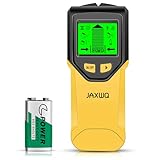
Overview: This Buttercup-colored 5-in-1 stud finder offers identical functionality to its BloodOrange counterpart, delivering electronic scanning capabilities through an intelligent micro-sensor chip. It detects wood, metal, pipes, and live wires behind walls, floors, and ceilings with the same rapid detection system.
What Makes It Stand Out: Like its sibling product, this model excels with its HD LCD display and audio alert system, providing comprehensive feedback for precise locating. The multiple scan modes adapt to various materials and depths, while the gift-oriented marketing emphasizes its utility for safety-conscious homeowners. The color variant provides aesthetic choice without functional compromise.
Value for Money: Sharing the same mid-range price point and feature set as the BloodOrange version, this model offers identical value. The 5-in-1 design remains cost-effective by consolidating detection capabilities into one device. For users who appreciate color options, the Buttercup variant delivers the same performance without price premium.
Strengths and Weaknesses: Pros mirror the BloodOrange model: fast detection, dual visual/audio feedback, versatile scanning modes, and live wire detection. The backlit display aids low-light work. Cons include battery dependency, occasional calibration requirements, and sensitivity variations across different wall constructions. The “gift” marketing may feel excessive to some buyers.
Bottom Line: Functionally identical to the BloodOrange version, this stud finder serves homeowners and DIYers well with its balanced feature set and ease of use. Choose based on color preference—the internal performance remains the same reliable option for routine wall scanning tasks.
4. The Original StudBuddy Pro® Magnetic Stud Finder with Level - Made in the USA - Easy to Use Stud Finder for Drywall and Wood

Overview: The StudBuddy Pro takes a refreshingly simple approach to stud finding, using powerful neodymium magnets rather than electronic sensors. This American-made tool locates studs by detecting the metal fasteners securing drywall to framing, eliminating batteries and complex calibration entirely.
What Makes It Stand Out: Its pure mechanical operation means it’s always ready—no power buttons, no batteries, no waiting. The super-strong magnets “stick” to wall screws with undeniable certainty, while the integrated level aids alignment. This simplicity makes it virtually indestructible and maintenance-free, with no moving parts to fail.
Value for Money: Among the most affordable stud finders available, it offers exceptional value for drywall-specific projects. The one-time purchase cost is unbeatable, with zero ongoing battery expenses. However, its limitations mean it’s not a universal solution, making it a niche value proposition best suited for specific applications.
Strengths and Weaknesses: Pros include ultimate simplicity, no battery costs, instant readiness, durability, and reliability on standard drywall. It’s lightweight and intuitive. Major cons include inability to detect stud centers directly, ineffectiveness on lath/plaster walls, no depth measurement, and no live wire detection. Users must infer stud location from screw positions.
Bottom Line: Perfect for basic drywall hanging tasks where simplicity and reliability trump advanced features. Ideal for occasional users and renters, but inadequate for plaster walls, deep scanning, or electrical safety concerns. A great supplementary tool but not a complete replacement for electronic finders.
5. Stud Finder Wall Scanner 5-in-1 - Detector for Wood, Metal, Joists, Pipes, and AC Wires, Upgraded New version Intelligent Chip, High-Definition LCD Display Screen & Audible Alarm

Overview: This upgraded 5-in-1 electronic stud finder represents the latest generation of wall scanning technology, featuring an intelligent micro-sensor chip and ergonomic design. It promises rapid, precise detection of studs, metal, joists, pipes, and live AC wires through multiple calibrated modes with specific depth settings.
What Makes It Stand Out: Automatic calibration simplifies operation—just place, power on, and scan. The ergonomic non-slip grip reduces hand fatigue during extended use. Specific depth modes (0.5", 1", 1.5") provide tailored scanning, while the live wire indicator enhances safety. The HD LCD display combined with audible alarms ensures clear feedback in any environment.
Value for Money: Competitively priced for its feature set, this upgraded model offers modern conveniences like auto-calibration and ergonomic design typically found in premium units. The multiple depth settings add value by improving accuracy across various wall types, making it a smart buy for frequent users who appreciate efficiency.
Strengths and Weaknesses: Pros include auto-calibration, specific depth modes, comfortable grip, clear visual/audio alerts, and live wire detection. The upgraded chip promises improved sensitivity. Cons include battery dependency, potential overcomplication for simple tasks, and a learning curve to master different modes. Effectiveness may vary with unusual wall composition.
Bottom Line: An excellent choice for regular DIYers and semi-professionals seeking modern features and comfort. The auto-calibration and ergonomic design streamline workflow, while multiple depth modes enhance precision. While perhaps more than casual users need, it strikes a strong balance between advanced functionality and user-friendliness.
6. DEWALT Stud Finder, 3/4”, Locate Framing Studs Efficiently with LED Arrows, Ideal for Wood and Metal, AAA Batteries Included (DW0100)

Overview: The DEWALT DW0100 is a straightforward electronic stud finder designed for standard drywall applications. With a 3/4-inch detection depth for wood and metal, it targets homeowners and professionals needing reliable stud location without complexity. The tool features center-find technology, AC wire detection, and constant auto-calibration to streamline workflow.
What Makes It Stand Out: DEWALT’s center-find technology uses LED arrows to guide you directly to the stud’s center, eliminating guesswork. The constant auto-calibration saves time compared to manual calibration models, while AC and live wire detection adds crucial safety when drilling. The slim profile fits easily in tool belts, and the integrated center marking channel allows precise pencil marks. AAA batteries are included for immediate use.
Value for Money: Priced in the mid-range for electronic finders, the DW0100 offers excellent value through DEWALT’s durability reputation and time-saving features. While detection depth is limited to 3/4-inch, it’s sufficient for most residential drywall. Comparable brands offer similar features, but DEWALT’s build quality and included batteries justify the investment for regular users.
Strengths and Weaknesses: Pros: Trusted brand reliability, auto-calibration eliminates setup hassles, LED arrows provide clear visual guidance, safety-focused AC detection, slim ergonomic design. Cons: Shallow 3/4-inch depth limits use on thicker walls, lacks LCD screen for detailed feedback, not suitable for lath and plaster, single detection mode restricts versatility.
Bottom Line: The DEWALT DW0100 is an excellent choice for standard drywall projects where reliability and speed matter. It’s ideal for DIYers and professionals who prioritize brand trustworthiness and safety features over deep-scanning capabilities. For typical residential tasks, this tool delivers consistent performance without unnecessary complexity.
7. Stud Finder Wall Scanner, 5 in 1 Multifunction Stud Locator with Upgraded Smart Sensor, HD LCD Display and Audio Alarm for The Center & Edge of Metal, Studs, AC Wire, and Pipe Detection (Lemon)

Overview: This 5-in-1 wall scanner offers versatile detection capabilities for various materials and depths. Designed for homeowners, DIY enthusiasts, and professionals, it combines multiple scanning modes with a clear HD LCD display and audio alerts to locate studs, metal, pipes, and live AC wires behind walls, floors, and ceilings.
What Makes It Stand Out: The five detection modes—including 1/2-inch, 1-inch, and 1.5-inch stud scans, plus metal (60mm) and AC scan (51mm)—provide exceptional versatility. The upgraded smart sensor delivers reliable edge and center detection, while the backlit LCD screen displays precise location data with a pecking shape indicator. Ergonomic non-slip grip ensures comfort during extended use, and auto-calibration maximizes accuracy.
Value for Money: This scanner offers outstanding value by consolidating five tools into one device at a competitive price point. The inclusion of a 9V battery and multi-depth capability eliminates the need for separate scanners. For users tackling diverse projects—from hanging pictures to major renovations—this versatility saves both money and storage space compared to buying multiple specialized tools.
Strengths and Weaknesses: Pros: Five scanning modes cover most residential needs, clear HD LCD with backlighting, ergonomic design, audio and visual alerts, auto-calibration ensures accuracy. Cons: Brand recognition is limited compared to major manufacturers, multi-mode interface may overwhelm beginners, calibration process requires careful technique, plastic construction may not match premium brands’ durability.
Bottom Line: This 5-in-1 scanner is a feature-packed workhorse for users needing flexible detection depths. While the brand name may be unfamiliar, the functionality rivals more expensive competitors. It’s an excellent choice for serious DIYers and professionals who require multiple scanning capabilities in a single, affordable package. The learning curve is worth the versatility gained.
8. PREXISO 2-in-1 Stud Finder with Laser Level, Rechargeable Multi Surface Cross Line Laser & Wall Stud Scanners Tool for Hanging Frames & Picture, Wood Ac Wire Metal Studs Joist Pipe Detection

Overview: The PREXISO 2-in-1 uniquely combines a stud finder with a manual laser level, creating a dual-purpose tool for hanging and installation tasks. Rechargeable via USB-C, it targets users who frequently mount objects on walls and need both detection and alignment capabilities in one compact device.
What Makes It Stand Out: When a stud edge is detected, the unit automatically projects an upper vertical laser line while triggering red LED lights and an audio alert—providing triple confirmation for precise marking. The rechargeable battery eliminates ongoing battery costs, and three mounting methods (pins, adhesive strips, pin hole) offer hands-free flexibility. Lighted bubble vials assist manual leveling in dark spaces.
Value for Money: Combining two tools for the price of one mid-range electronic finder represents strong value. The rechargeable feature saves long-term battery expenses, and the included accessories (wall mount, strips, bag) add convenience. However, manual leveling requires more user skill than self-leveling models, which may offset some value for novices.
Strengths and Weaknesses: Pros: Dual-function design saves space and money, auto-laser marking is genuinely innovative, rechargeable battery, multiple mounting options, LED bubble vials aid visibility. Cons: Manual leveling demands practice and patience, NOT for lath/plaster walls, adhesive strips have surface limitations, laser only works in laser mode (not during scanning), 10m laser range is modest.
Bottom Line: This tool excels for users primarily hanging frames, shelves, and TVs on drywall or wood walls. The auto-marking feature is a game-changer for repetitive tasks. However, it’s unsuitable for older homes with plaster walls, and manual leveling requires a steady hand. For the right applications, it’s an efficient, cost-effective solution that reduces tool clutter.
9. StudPoP® Original Smart Magnetic Stud Finder – No Batteries, No Calibration, 3X More Reliable, Perfect for Lath & Plaster, Metal Studs – Visual & Audible Indicator, Simple & Fun to Use – 1" Magnet

Overview: The StudPoP takes a radically simple approach to stud finding using a powerful 1-inch magnet that detects fasteners without electronics, batteries, or calibration. Its unique design makes it especially effective on challenging surfaces like lath and plaster, tile, and metal studs where electronic finders often fail.
What Makes It Stand Out: Unlike magnetic competitors, the StudPoP provides both audible clicks and visual pop-up movement when locating screws or nails, eliminating reliance on feeling magnetic pull through thick materials. This visual confirmation is revolutionary for plaster walls where magnetic attraction is subtle. The tool works on any construction type—sheetrock, lath and plaster, tile, and metal studs—making it universally applicable.
Value for Money: Extremely affordable with zero operating costs, the StudPoP offers exceptional value as a primary tool for old homes or reliable backup for any toolbox. No batteries ever needed means it works instantly, forever. While slower than electronic scanners, its reliability on difficult surfaces justifies the minimal investment, especially compared to expensive electronic alternatives that struggle with plaster.
Strengths and Weaknesses: Pros: No batteries or calibration ever needed, works reliably on lath/plaster and tile, visual and audible indicators provide clear confirmation, extremely durable, simple operation, highly affordable. Cons: Only locates fasteners (not stud center), slower scanning process requires patience, limited to finding nails/screws, no AC wire detection, requires user to sweep methodically.
Bottom Line: The StudPoP is essential for anyone working on older homes with plaster walls and a must-have backup for professionals. While it won’t replace electronic finders for speed or wire detection, its reliability on difficult surfaces is unmatched. For less than the cost of a battery pack for electronic models, you get a lifetime tool that works when others fail. Simple, fun, and genuinely effective.
10. Stud Finder Wall Scanner - 5 in 1 Stud Finder Tool w/Smart Chip and HD LCD Display, Stud Detector Beam Finders for the Center and Edge of Wood AC Wire Metal Studs Joist Pipe (Charcoal)
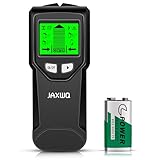
Overview: This 5-in-1 electronic stud finder leverages a smart micro-sensor chip to deliver rapid, accurate detection of studs, metal, pipes, and live AC wires. Featuring multiple scan modes and a bright backlit LCD display, it targets DIY enthusiasts and professionals seeking a versatile, gift-worthy tool for home improvement projects.
What Makes It Stand Out: The intelligent micro-sensor chip provides high sensitivity for fast edge and center detection, while multiple modes (stud scan, deep scan, metal scan) adapt to various materials and depths. The bright backlit LCD clearly shows stud location, center/edge position, and battery status, complemented by audio beeps for guidance. Its charcoal finish and gift-oriented marketing make it presentation-ready.
Value for Money: Offering electronic multi-mode scanning at a competitive price point, this tool delivers solid value. The smart chip technology and comprehensive display rival premium brands, while the inclusion of multiple scan modes eliminates need for separate tools. As a gift, its practicality and safety benefits provide meaningful value beyond the price tag.
Strengths and Weaknesses: Pros: Smart chip enables fast, accurate detection, multiple scan modes for versatility, clear backlit LCD display, audio alerts assist location, suitable for various wall types, marketed as gift-ready. Cons: Brand recognition is unclear/generic, calibration required for accuracy, plastic construction durability uncertain, may share components with other budget models, AC detection depth not specified.
Bottom Line: This scanner is a capable all-around electronic finder for most residential tasks. While the brand lacks the pedigree of major manufacturers, the feature set and performance match more expensive options. It’s an excellent choice for homeowners starting their tool collection or as a thoughtful, practical gift. For professional daily use, consider established brands, but for occasional to moderate use, it offers impressive functionality at an attractive price.
Why Professional Builders Demand More Than Basic Stud Detection
When you’re hanging 200-pound commercial-grade cabinets or securing seismic bracing, “close enough” isn’t close enough. Professional builders work in diverse environments—lath and plaster renovations, insulated commercial walls, multi-layered fire-rated assemblies—that laugh at basic stud finders. You need equipment that doesn’t just beep when it senses a nail; you need tools that map out the entire structural landscape behind that wall surface with surgical precision.
The stakes escalate quickly on commercial sites. Miss a stud by half an inch when mounting heavy electrical panels, and you’re not just redrilling—you’re potentially compromising structural integrity or violating building codes. Premium stud finders give you the confidence to drill once and drill right, even when you’re working blind through two inches of unknown wall composition.
The Hidden Cost of Inaccuracy on the Job Site
Let’s talk real numbers. A single miscounted stud location can cascade into a $500 mistake by the time you factor in:
- Patch materials and labor
- Repainting
- Potential electrical or plumbing repairs
- Delayed project timelines
- Damage to your professional reputation
Multiply that across multiple projects monthly, and you’re looking at thousands in preventable losses. A premium stud finder that costs $200-$400 isn’t an expense—it’s insurance. The best models pay for themselves within the first few months by eliminating just a handful of errors. But the value goes beyond mistake prevention; it’s about speed. When you can scan a 12-foot wall and mark every stud, pipe, and wire in under 60 seconds with complete confidence, you’re not just working safer—you’re working smarter.
Understanding Stud Finder Technologies: From Magnets to Multi-Scanners
Not all stud detection works the same way, and each technology brings distinct advantages to different job site scenarios. Professional-grade tools often combine multiple detection methods to overcome the limitations of any single approach.
Magnetic Stud Finders: The Simple Yet Reliable Foundation
The oldest technology in the book still has its place in a pro’s arsenal. Powerful rare-earth magnet stud finders don’t require batteries and won’t ever give you a false positive on a stud—they only respond to ferrous metal fasteners. For plaster walls where electronic sensors struggle, a strong magnetic finder can locate the original lath nails with surprising accuracy. The limitation? They can’t find stud centers, only fasteners, and they’re useless on non-metal stud systems.
Electronic Sensors: Precision Through Density Detection
Modern electronic stud finders use capacitive or radar-based sensors to detect changes in wall density. Professional models emit multiple scanning frequencies to differentiate between wood studs, metal studs, and other hidden objects. The key differentiator is sensor density—premium units pack dozens of sensors across a wide scanning plate, creating a detailed density map rather than a single-point reading. This eliminates the “hunt and peck” method that plagues cheap sensors.
Multi-Scanner Systems: The Professional’s Swiss Army Knife
The current gold standard for pros combines electronic stud detection with additional scanning modes for live AC wiring, metal pipes, rebar, and even plastic PVC pipes in some advanced models. These systems use sophisticated algorithms to overlay different detection types onto a single display, showing you a comprehensive view of what’s behind the wall. When you’re cutting into a bathroom wall where electrical, plumbing, and structural elements all converge, this intelligence isn’t just convenient—it’s critical for safety.
Key Features That Separate Premium from Consumer-Grade
Walk into any tool supplier and you’ll see stud finders ranging from $15 to $400. That price gap reflects fundamental differences in capability, not just brand markup. Professional-grade models distinguish themselves through features that directly impact daily performance.
Scanning Depth: Seeing Through Walls Like Never Before
Consumer stud finders typically max out at ¾-inch depth—fine for modern drywall, but useless in renovation work. Premium models scan 1½ to 3 inches deep, penetrating plaster, tile, fire-resistant drywall, and even some concrete finishes. This depth capability is non-negotiable when you’re working on historic buildings or commercial properties where wall assemblies can be surprisingly thick. Look for tools that maintain accuracy at maximum depth without excessive false positives.
Center-Finding Technology: Pinpoint Accuracy Matters
Basic edge-finding stud finders require you to locate both edges of a stud and calculate the center manually—hardly efficient. Professional center-finding technology uses multiple sensors to identify the exact center of a stud in one pass. The best systems provide real-time feedback as you slide the tool, with visual or audio cues that intensify as you approach the center. This isn’t just about speed; it’s about eliminating the human calculation error that leads to off-center fasteners and compromised holding power.
Multi-Mode Capabilities: Versatility Across Materials
Your stud finder should adapt to the wall in front of you, not the other way around. Premium units offer distinct scanning modes:
- Stud mode for wood and metal framing
- Deep scan mode for thicker walls
- Metal mode to differentiate pipes from studs
- AC detection with variable sensitivity to locate live wires at different depths
The ability to toggle between these modes quickly, often with a single button, transforms your workflow. You’re not guessing if that metal signal is a copper pipe or a steel stud—you’re selecting the right tool for the specific threat assessment.
The Display Revolution: Visual Feedback That Actually Helps
Gone are the days of simple LED arrows. Modern premium stud finders feature LCD screens that display real-time scanning data, showing stud width, center location, and even estimated material type. The best displays use color coding—red for warnings (AC wiring), blue for metal, green for wood studs—making threat assessment instantaneous.
Backlighting is non-negotiable for dim job sites, and the screen should be visible from multiple angles. Some advanced models even offer directional arrows that guide you to the stud center with game-like precision. But beware: fancy displays mean nothing if the underlying sensors are inaccurate. The screen should enhance good data, not distract from bad data.
Durability That Survives the Job Site
Your stud finder will get dropped, rained on, and caked with drywall dust. Premium models feature reinforced housings, rubberized overmolding on impact zones, and IP-rated dust and moisture resistance. Look for tools rated to survive a 6-foot drop onto concrete—because it will happen.
The scanning surface should be flat and rigid, not flexible plastic that warps over time. Buttons need to be sealed against dust intrusion but still provide tactile feedback with gloves on. This is where cheap tools reveal themselves: they work fine in the store but fall apart after a month in your truck box. Professional-grade durability means consistent performance across hundreds of walls, not just dozens.
Power Management: Battery Life That Keeps Up With You
Nothing kills productivity like a dead stud finder halfway through framing layout. Premium models use efficient power management systems that provide 20+ hours of continuous scanning on standard batteries. Some offer rechargeable lithium-ion packs with USB-C charging—handy when you’re already carrying power tool batteries with USB ports.
Auto-shutoff features should be intelligent, not aggressive. The tool needs to stay alive during natural pauses in work without requiring constant power cycling. Battery indicators should be accurate, not leaving you guessing with a vague “low battery” warning when you’re on a ladder. Consider models that use common battery sizes (AA or AAA) for field replacement, or invest in rechargeables with multiple backup cells.
Calibration: The Invisible Feature That Makes or Breaks Accuracy
Here’s a dirty secret: many pros don’t understand calibration, and manufacturers don’t always explain it well. Electronic stud finders must calibrate to each unique wall density. Premium models handle this automatically and transparently—power on, place flat against wall, wait for the ready signal. The process takes 1-2 seconds.
Cheap tools require manual calibration or, worse, don’t calibrate at all, leading to drift and false readings as wall conditions change. The best professional stud finders continuously micro-calibrate as you scan, adjusting for subtle density variations across the wall. This is particularly crucial when scanning walls with inconsistent insulation or multiple material layers. If your stud finder doesn’t explicitly mention automatic calibration, it’s not professional grade.
Ergonomics and One-Handed Operation
You’re often on a ladder holding a level, pencil, and stud finder simultaneously. Premium tools are designed for true one-handed operation, with strategically placed buttons that your thumb naturally falls on. The grip should be contoured and non-slip, even with dusty gloves.
Weight matters more than you’d think. A 12-ounce tool doesn’t sound heavy until you’ve scanned 50 walls in a day. The sweet spot is 8-10 ounces with balanced weight distribution. The scanning head should be wide enough to span stud bays but narrow enough to fit in tight corners. Some pros prefer pistol-grip designs for natural pointing, while others like flat-bar styles for sliding along walls—choose based on your typical application.
The True Cost of Premium: ROI for Professional Builders
Let’s crunch the numbers honestly. A $300 premium stud finder seems steep until you break it down:
- Time savings: 2-3 minutes per wall × 10 walls/day = 30 minutes daily = 2.5 hours/week = 130 hours/year. At $75/hour billing rate, that’s $9,750 in recovered time.
- Mistake prevention: Avoiding one $500 callback per quarter = $2,000/year saved.
- Client confidence: Landing one additional project because you demonstrate professional-grade precision = potentially thousands in revenue.
The math is clear: even at $400, a premium stud finder that lasts three years costs you about $0.36 per day. If that tool prevents one mistake or saves 10 minutes daily, it’s already paid for itself. The real question isn’t whether you can afford a premium stud finder—it’s whether you can afford not to have one.
Warranty and Support: What Pros Should Expect
When your livelihood depends on a tool, warranty isn’t just paperwork—it’s peace of mind. Premium stud finders should carry at least a 2-year warranty, with some manufacturers offering 3-5 year coverage for professional users. This warranty should cover drops, water intrusion, and normal job site abuse, not just manufacturing defects.
Look for brands with dedicated pro support lines where you speak to a technician who understands job site applications, not a generic customer service rep. Some manufacturers offer loaner programs: if your tool fails, they overnight a replacement so you’re not dead in the water. Registration should be simple, and repairs should have fast turnaround times. A company that stands behind its professional tools understands that downtime costs you money.
Common Mistakes Even Pros Make With Stud Finders
Even the best tool fails in untrained hands. The most frequent error is scanning too quickly—professional models need a steady 2-3 inch per second pace for accurate readings. Rushing creates incomplete density maps and missed studs.
Another mistake: not accounting for wall coverings. That ½-inch of wood paneling or tile backer board reduces effective scanning depth. Always start in deep scan mode when wall composition is unknown, then switch to standard mode once you understand what you’re dealing with.
Failing to mark stud centers immediately is a workflow killer. The best practice is to scan once, mark the center with a faint pencil line, then rescan to verify. Don’t rely on memory across a 12-foot wall. Also, neglecting to scan for AC wiring before drilling is how pros become statistics—always run AC detection first, even on “clean” walls.
Maintenance Tips to Maximize Your Investment
A premium stud finder deserves premium care. Clean the scanning pad weekly with a damp cloth to remove drywall dust that can interfere with sensor accuracy. Check the battery contacts monthly for corrosion, especially if you’re working in humid environments.
Store it in its protective case, not loose in your tool bag where it can get crushed. Extreme temperatures degrade electronic components, so don’t leave it in your truck overnight in freezing weather or direct summer sun. If your model has firmware updates (yes, some do), install them—they often improve detection algorithms based on field data.
Calibrate against a known wall periodically to verify accuracy. If you suspect drift, contact the manufacturer rather than trying to “fix” it yourself. These are precision instruments, not hammers.
Future Trends in Professional Stud Detection
The next generation of premium stud finders is integrating with job site technology. Bluetooth connectivity to send scan data directly to your phone or tablet, creating digital wall maps you can reference later or share with clients. Some prototypes use augmented reality to project stud locations directly onto the wall surface via laser projection.
Artificial intelligence is beginning to differentiate material types more accurately, reducing false positives from plumbing and HVAC components. Battery technology is moving toward tool ecosystem integration—imagine a stud finder powered by your cordless drill’s battery pack. While these features are emerging, the core requirement remains unchanged: unwavering accuracy under job site conditions.
Frequently Asked Questions
What’s the realistic scanning depth I should expect from a premium stud finder?
Professional-grade models reliably detect wood studs through 1½ inches of typical wall material, with deep scan modes reaching up to 3 inches for commercial applications. However, dense materials like tile, stone, or multiple layers of fire-rated drywall reduce effective depth. Always test on a known area first when working with unusual wall assemblies.
Can one stud finder handle both residential and commercial work?
Yes, but only premium multi-scanner models with adjustable depth settings and multiple detection modes. Residential work favors center-finding accuracy in standard drywall, while commercial jobs demand deep scan capabilities and robust AC detection for metal stud systems. Invest in a tool with at least three scanning modes to cover both scenarios effectively.
How do I know if my stud finder is losing accuracy?
Test it on a wall where you can visually verify stud locations, like an unfinished garage or basement. Mark detected centers, then measure the spacing—it should consistently show 16 or 24 inches on-center. If you notice erratic readings, drifting center marks, or failure to detect known studs, send it for professional calibration or repair.
Is AC detection reliable enough to trust my safety to it?
Premium AC detection is highly reliable for locating energized wires, but it should be one part of your safety protocol, not the entire plan. Always scan in AC mode before drilling, but also understand your local electrical codes and use common sense. AC detection works best on 120V and 240V circuits; low-voltage wiring may not trigger alerts.
What’s the typical battery life difference between consumer and professional models?
Consumer stud finders often last 4-8 hours of intermittent use, while premium models deliver 20-30 hours of continuous scanning. Professional tools use more efficient sensor arrays and intelligent power management. If you’re burning through batteries weekly, you’re using the wrong tool for professional work.
Do I really need a color screen, or is that just marketing fluff?
Color displays provide actionable information at a glance—red for AC wiring, blue for metal, green for wood—which speeds up threat assessment significantly. On complex walls with multiple hidden elements, this visual coding can save minutes per scan. For basic stud finding, it’s a luxury; for comprehensive scanning, it’s a legitimate productivity tool.
How often should I replace my premium stud finder?
With proper care, a professional-grade stud finder should last 5-7 years of daily use. Replace it when repair costs exceed 50% of a new unit’s price, or when newer models offer substantially improved accuracy or features that directly impact your workflow. Technology advances slowly in this category, so there’s no need to upgrade annually.
Can stud finders detect pipes and prevent plumbing disasters?
Premium models with dedicated metal scan modes can detect copper, steel, and PEX-aluminum-PEX pipes. However, pure plastic PVC without metal components is largely invisible to electronic detection. Always use metal mode when cutting into walls near plumbing, but combine it with knowledge of typical plumbing layouts and building codes for complete protection.
Why does my stud finder work great on some walls but poorly on others?
Wall composition dramatically affects performance. Textured walls, metallic wallpaper, foil-backed insulation, and moisture can all interfere with electronic sensors. Premium models handle these variables better through automatic calibration and multiple scanning frequencies, but no tool is immune to extreme conditions. When in doubt, scan at different heights and use deep scan mode.
What’s the most important feature for a remodeler working on old houses?
Deep scan capability and plaster wall performance. Pre-1950s homes often have lath and plaster walls exceeding 1-inch thickness, with inconsistent stud spacing and embedded metal lath that confuses basic sensors. A premium model with at least 1½-inch scanning depth and the ability to filter out lath nails is essential for historic renovation work.
See Also
- 10 Affordable Digital Stud Finders That Don’t Sacrifice Accuracy in 2026
- 10 Affordable Digital Stud Finders That Don’t Sacrifice Features in 2026
- 10 Affordable Manual Stud Finders That Don’t Sacrifice Accuracy in 2026
- 10 Affordable Stud Finders with AC Wire Detection That Don’t Sacrifice Safety
- 10 Affordable Stud Finders That Don’t Sacrifice Accuracy in 2026