Table of Contents
Let’s be honest—when you’re bidding jobs and managing crews, every dollar counts. But seasoned contractors know the real question isn’t “how much does it cost?” but “what’s it worth?” A premium miter saw isn’t just another line item on your equipment list; it’s the cornerstone of your finish work, framing efficiency, and reputation for precision. While budget models might tempt you with their price tags, they often cost more in lost productivity, callbacks, and replacement cycles.
The difference between a $300 saw and a $900+ professional model isn’t just marketing fluff—it’s measurable in thousandths of an inch, in dust-free sightlines, and in a motor that doesn’t bog down when you’re cutting 6-inch baseboard at a 45-degree bevel. This guide breaks down what actually matters when you’re investing in a miter saw that needs to pay for itself through reliability, accuracy, and raw capability.
Top 10 Miter Saws For Contractors
Detailed Product Reviews
1. DEWALT Miter Saw, 12-inch Double Bevel Sliding Compound Miter Saw with XPS LED Shadow Light System, Includes Blade Wrench, Material Clamp and Dust Bag (DWS780)
 Miter Saw with XPS LED Shadow Light System, Includes Blade Wrench, Material Clamp and Dust Bag (DWS780)](https://m.media-amazon.com/images/I/41wIErEsL6L._SL160_.jpg)
Overview: The DEWALT DWS780 represents professional-grade craftsmanship in a 12-inch double bevel sliding compound miter saw. Built for serious woodworkers and contractors, this powerhouse combines robust construction with innovative cutting guidance technology to handle the most demanding trim and framing applications with unwavering precision.
What Makes It Stand Out: The integrated XPS LED shadow light system is the star feature, casting a razor-sharp shadow exactly where the blade will cut without requiring any calibration. This adjustment-free system surpasses traditional laser guides for accuracy. The double bevel design with sliding rails provides exceptional capacity for cutting wide boards up to 16 inches, while the super-efficient dust collection captures over 75% of debris.
Value for Money: Positioned at the premium end of the market, the DWS780 justifies its price through superior build quality, innovative technology, and time-saving features. For professionals who rely on their tools daily, the durability and precision translate to tangible productivity gains. DIY enthusiasts with ambitious projects will also find the investment worthwhile compared to cheaper alternatives that lack the same accuracy and capacity.
Strengths and Weaknesses: Strengths include the unmatched XPS shadow line system, powerful 15-amp motor, excellent dust collection, and robust construction designed for heavy-duty use. The double bevel and sliding mechanism offer maximum versatility. Weaknesses include its substantial weight and footprint, making it less portable, and the premium price point that may deter casual users. Some users may find the 3800 RPM speed lower than competing models.
Bottom Line: This is a top-tier miter saw for professionals and serious hobbyists who demand uncompromising accuracy and versatility. While expensive and heavy, the DWS780’s innovative features and rock-solid performance make it a worthwhile long-term investment that will elevate the quality of your work.
2. Metabo HPT 10-Inch Single Bevel Compound Miter Saw, 15-Amp Power Saw with Xact Cut Shadow Line, Precision Miter Angles, Single Bevel 0-45°, 40T TCT Miter Saw Blade, Lightweight Design, C10FCG2

Overview: The Metabo HPT C10FCG2 strikes an impressive balance between performance and portability in a 10-inch single bevel compound miter saw. Weighing just 24 pounds, this tool delivers professional-level cutting power with surprising maneuverability, making it ideal for contractors who frequently transport their equipment between job sites.
What Makes It Stand Out: The remarkably lightweight design combined with a high-speed 5,000 RPM motor sets this saw apart in its class. The Xact Cut Shadow Line system provides accurate cutting guidance without the complexity of laser systems. Its improved miter scale with large controls ensures precise adjustments, while the generous 0-52° miter range in both directions offers exceptional flexibility for a single bevel saw.
Value for Money: This saw delivers outstanding value for intermediate users and professionals seeking portability. The 5-year warranty demonstrates manufacturer confidence and protects your investment. While less expensive than premium sliding models, it doesn’t sacrifice cutting performance, making it a smart choice for trim work and general carpentry where extreme capacity isn’t required.
Strengths and Weaknesses: Strengths include exceptional portability, high RPM speed for cleaner cuts, user-friendly controls, and an industry-leading warranty. The large table and vice clamping system provide good workpiece support. Weaknesses include the single bevel limitation, lack of sliding capacity for wider boards, and smaller cutting capacity compared to 12-inch models. The brand transition from Hitachi may cause confusion for some buyers.
Bottom Line: Perfect for contractors and dedicated DIYers prioritizing portability without sacrificing power. The C10FCG2 excels as a reliable, easy-to-transport workhorse for everyday trim and framing tasks. While it lacks the capacity of larger saws, its lightweight design and solid performance make it an excellent value.
3. DEWALT 12-Inch Miter Saw, 15-Amp, Single Bevel, Compound (DWS715)

Overview: The DEWALT DWS715 offers robust 12-inch cutting capacity in a straightforward single bevel compound design. This saw targets users who need the larger blade size for cutting thicker materials but don’t require the complexity or expense of sliding or dual-bevel functionality. It delivers reliable DEWALT performance in a more accessible package.
What Makes It Stand Out: The stainless-steel miter detent plate with 14 positive stops provides exceptional accuracy and durability, ensuring the saw maintains precision through years of use. The tall sliding fence uniquely supports 5-1/2-inch base molding vertically, a standout feature for trim carpenters. The machined base fence support contributes to the overall cutting accuracy that DEWALT is known for.
Value for Money: This saw occupies a sweet spot for users needing 12-inch capacity without premium pricing. It offers professional build quality and accuracy at a mid-range price point. For trim carpenters and serious DIYers who primarily make simple miter and single-bevel cuts, it provides excellent return on investment compared to more expensive sliding models.
Strengths and Weaknesses: Strengths include the durable stainless steel detent plate, impressive vertical cutting capacity, solid construction, and precise miter system. The 12-inch blade handles larger materials effectively. Weaknesses include the single bevel limitation, absence of sliding rails for wide boards, and lack of an integrated LED cut line guide. The right bevel is limited to just 3 degrees, restricting some compound cut options.
Bottom Line: An excellent choice for trim carpenters and serious woodworkers who need 12-inch capacity for vertical molding cuts. The DWS715 prioritizes accuracy and durability over fancy features, making it a reliable workhorse. If you can live without sliding capacity and double bevels, this saw delivers professional results at a reasonable price.
4. Marvtool 10-inch Sliding Compound Miter Saw, 5000RPM, 15 Amp, Single Bevel 0-45° with Extension Table, 36T Blade, Power Saw for Metal, Plastic, Wood, Laminates

Overview: Marvtool’s 10-inch sliding compound miter saw brings affordable versatility to DIYers and budget-conscious buyers. This saw combines sliding rails for extended cutting capacity with a 5,000 RPM motor, offering features typically found in more expensive models. The inclusion of extension tables and multi-material capability makes it an attractive entry-level package.
What Makes It Stand Out: The sliding mechanism at this price point is the primary differentiator, allowing users to cut wider boards up to 12 inches. The comprehensive accessory package including extension tables and a 36-tooth carbide-tipped blade provides immediate out-of-the-box functionality. The transparent blade guard offers good visibility while maintaining safety, and the dual bevel base adjustment adds flexibility uncommon in budget saws.
Value for Money: Exceptional value for beginners and occasional users. This saw delivers sliding compound functionality at a fraction of premium brand prices. The 2-year warranty and 24/7 customer support provide peace of mind. While it won’t match the refinement of professional tools, it offers capabilities that make it suitable for a wide range of home improvement projects without breaking the bank.
Strengths and Weaknesses: Strengths include affordable sliding capacity, lightweight portability at 25.6 pounds, multi-material cutting ability, and generous included accessories. The high RPM motor delivers clean cuts. Weaknesses include potentially less durable construction than premium brands, basic miter adjustment feel, and unknown long-term reliability. The dust collection system is likely less effective than higher-end models, and accuracy may require more frequent calibration.
Bottom Line: Ideal for DIY enthusiasts and homeowners seeking maximum capability on a limited budget. While professional contractors should invest in more robust brands, this Marvtool saw provides impressive features and decent performance for occasional use. It’s a smart starter saw that lets you tackle ambitious projects without a major financial commitment.
5. Marvtool 10-inch Compound Miter Saw, 5000RPM, 15 Amp, Single Bevel 0-45° with Extension Table, 36T Blade, Power Saw for Metal, Plastic, Wood, Laminates

Overview: The Marvtool 10-inch compound miter saw prioritizes extreme portability and affordability in a no-frills package. Weighing just 20.5 pounds, this is one of the lightest compound miter saws available, making it perfect for users with limited storage space or those who need to transport their saw frequently for small projects.
What Makes It Stand Out: The ultra-lightweight design combined with a 5,000 RPM motor creates an impressive power-to-weight ratio. The head-locking mechanism allows the saw to fold into an exceptionally compact package for storage. Extension tables are a surprising inclusion at this price and weight class, providing better material support than many competitors. The multi-material capability adds versatility for hobbyists working with various media.
Value for Money: Outstanding value for occasional users and beginners. This saw makes miter saw ownership accessible to virtually any budget while including useful accessories. The 2-year warranty provides basic protection. For those who only need a miter saw a few times yearly, it delivers essential functionality without the cost of professional features that would go unused.
Strengths and Weaknesses: Strengths include exceptional portability, easy storage, high RPM speed, and unbeatable price point. The included accessories and multi-material capability are welcome additions. Weaknesses include limited cutting capacity without sliding function, potentially less rigid construction, basic accuracy features, and unknown brand longevity. The light weight may introduce stability issues with heavy materials.
Bottom Line: Perfect for apartment dwellers, occasional DIYers, and hobbyists who need basic miter saw functionality without commitment. While not suitable for professional use or large projects, its extreme portability and low price make it an excellent entry-level tool for small-scale woodworking, craft projects, and light home repairs.
6. SKIL 10" Dual Bevel Sliding Compound Miter Saw-MS6305-00

Overview: The SKIL MS6305-00 positions itself as a serious contender in the mid-range miter saw market, targeting discerning DIYers and budget-conscious professionals. With its 15-amp motor spinning at 4,800 RPM, this 10-inch dual bevel sliding compound saw promises both power and precision for demanding woodworking projects.
What Makes It Stand Out: The LED shadow line system distinguishes this saw from laser-guided competitors, casting a crisp shadow that shows exactly where the blade will cut without calibration issues. The dual bevel design with four positive stops at critical angles eliminates the need to flip workpieces, while the impressive 2x12 crosscut capacity at 90 degrees handles substantial lumber with ease.
Value for Money: Priced significantly below premium brands like DeWalt and Makita, the SKIL delivers comparable cutting capacity and innovative features. For weekend warriors or contractors watching overhead, this saw offers approximately 80% of professional performance at roughly 60% of the cost, making it a smart financial choice.
Strengths and Weaknesses: Strengths include the high-RPM motor, accurate shadow line guide, robust cutting capacity, and convenient bevel stops. However, the SKIL brand doesn’t carry the same professional pedigree as yellow or teal competitors, and long-term durability under daily job site abuse remains unproven. The dust collection efficacy isn’t specified, which may concern indoor users.
Bottom Line: This saw hits the sweet spot for serious hobbyists and semi-pros who need dual bevel convenience without premium pricing. While it may not replace a $600 saw in a professional shop, it delivers exceptional value and performance for its class.
7. VEVOR Precision Miter Gauge, Standard Slot 3/4’’ x 3/8’’, Aluminum Alloy Table Saw Miter Gauge with 18 in Grating 15 Angle Stops Adjustable Spring Loaded Plunger and Removable Disc, for Woodworking

Overview: The VEVOR Precision Miter Gauge transforms any standard table saw into a precision angle-cutting machine. Designed to fit ubiquitous 3/4" x 3/8" slots with both T and U-shaped profiles, this upgrade component addresses the sloppy miter gauges that plague most stock table saws.
What Makes It Stand Out: Fifteen positive stops covering essential angles from 15° to 67.5° provide repeatability that rivals premium brands. The micro-adjustment capability via convex-concave grating and fine-tuning screws allows woodworkers to dial in perfection beyond the standard detents. The partially assembled delivery means you’re operational in minutes, not hours.
Value for Money: At a fraction of Incra or Kreg miter gauge prices, VEVOR delivers 90% of the functionality for roughly 30% of the cost. For woodworkers seeking precision without the premium tax, this represents one of the best value propositions in shop upgrades.
Strengths and Weaknesses: Strengths include exceptional angle coverage, versatile slot compatibility, micro-adjustment features, and solid aluminum construction. The adjustable plunger eliminates sloppy fits. Weaknesses involve VEVOR’s inconsistent quality control—some units may require initial calibration—and the brand’s limited reputation among fine woodworkers. The laser-etched scale, while precise, may wear over years of heavy use.
Bottom Line: An outstanding budget-friendly upgrade that brings precision angle cutting to hobbyist and intermediate woodworkers. Accept the minor risk of initial tuning and you’ll own a capable tool that dramatically improves table saw accuracy.
8. SKIL 3601-02 Flooring Saw with 36T Contractor Blade, Red and black

Overview: The SKIL 3601-02 addresses a specific niche: portable flooring installation. This specialized tool combines crosscut, miter, and rip capabilities in a lightweight package designed for solid, engineered, and laminate flooring. At roughly half the weight of a standard miter saw, it’s built for mobility.
What Makes It Stand Out: Purpose-built design eliminates the need to haul multiple saws to job sites. The integrated system handles all flooring cuts without changing tools, while die-cast aluminum fences maintain accuracy despite the lightweight construction. Miter detents at 0°, 22.5°, and 45° cover essential flooring angles.
Value for Money: For flooring installers, this single tool replaces a miter saw and table saw combination costing twice as much. When you factor in transportation time and setup efficiency, the ROI becomes compelling even for occasional users. DIYers tackling whole-house flooring projects will recoup the investment in rental savings.
Strengths and Weaknesses: Strengths include exceptional portability, all-in-one versatility, simple operation, and job site convenience. The lightweight design proves invaluable for upstairs installations. Weaknesses are significant: limited angle options beyond flooring needs, reduced power compared to dedicated saws, and smaller cut capacity restricts its use to flooring materials only. It’s a one-trick pony in a multi-tool world.
Bottom Line: A must-have for professional flooring installers and serious DIYers. Don’t buy this as your only saw, but if you lay flooring regularly, it’s an indispensable time-saver that pays for itself in convenience alone.
9. Snwoygr 7 Inch Aluminum Miter Saw Protractor, Professional Angle Measuring Tool, Comes with Two Extra Straightedge Protractors for Woodworkers, Builders, Plumbers, Home DIY

Overview: The Snwoygr Miter Saw Protractor tackles angle measurement with a robust physical design rather than digital fragility. This aerospace-grade aluminum tool measures inside and outside angles with half-degree accuracy, serving woodworkers, builders, and plumbers who demand reliability without batteries.
What Makes It Stand Out: The O-shaped frame provides superior stability compared to traditional protractors, eliminating wobble for precise measurements. Dual-sided stainless steel rulers integrate directly into the tool, allowing immediate transfer of angles to workpieces without separate squares. The military-grade electroplating withstands harsh job site conditions.
Value for Money: Priced competitively against plastic protractors yet offering durability that outlasts them tenfold, this tool represents excellent long-term value. It eliminates the need for separate angle finders and framing squares, consolidating multiple tools into one permanent purchase.
Strengths and Weaknesses: Strengths include exceptional durability, versatile dual-ruler design, ergonomic stability, and waterproof construction. The 0.5° accuracy suffices for most carpentry tasks. Weaknesses involve the unfamiliar brand name and the learning curve for maximizing the O-shape design. It lacks digital precision for machinists and may not completely replace a digital angle finder for ultra-fine work.
Bottom Line: An outstanding analog solution for tradespeople who prioritize durability and simplicity. For crown molding, deck building, and general carpentry, this protractor delivers professional accuracy without digital complexity. A worthy addition to any tool belt.
10. DEWALT Miter Saw, 12 Inch Double Bevel Sliding Compound Miter Saw, Includes Blade Wrench and Clamp, Increased Crosscut Capacity, Powerful 3800 RPM Motor 15 Amp (DWS779)
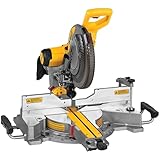
Overview: The DEWALT DWS779 represents the gold standard in 12-inch sliding compound miter saws, trusted by professionals across construction sites and workshops. This yellow workhorse combines brute strength with refined precision, featuring a 15-amp motor and class-leading crosscut capacity that handles dimensional lumber up to 2x14 at 90 degrees.
What Makes It Stand Out: The integrated dust collection system captures over 75% of debris—dramatically better than most competitors—keeping workspaces clean and lungs healthier. Tall sliding fences accommodate substantial crown and base molding without aftermarket accessories. The stainless-steel miter detent plate with 10 positive stops ensures lasting accuracy that won’t wear like lesser materials.
Value for Money: While commanding a premium price, the DWS779 delivers professional-grade durability that amortizes over years of daily use. Cheaper saws may save $200 initially but cost more in lost productivity, repairs, and premature replacement. For professionals, it’s an investment, not an expense.
Strengths and Weaknesses: Strengths include legendary DEWALT durability, superior dust collection, massive cutting capacity, precise adjustments, and excellent resale value. The 3,800 RPM motor trades some speed for torque, handling hardwoods effortlessly. Weaknesses include significant weight (limiting portability), premium pricing that may deter hobbyists, and the absence of an LED cutline guide found on newer models.
Bottom Line: The definitive choice for professionals and serious woodworkers who demand reliability and performance. If your livelihood depends on accurate cuts day after day, this saw justifies every penny. Hobbyists should consider if they need this level of capability.
The Contractor’s Dilemma: Why Premium Miter Saws Justify Their Price Tag
You’re not buying a tool for your garage—you’re buying a revenue generator that’ll see job site abuse, weather extremes, and thousands of cuts before its first service. Premium miter saws earn their keep through superior components, tighter tolerances, and features that shave minutes off every cut. Those minutes compound into hours saved per week, fewer material mistakes, and crews that aren’t fighting their equipment.
Understanding the True Cost of Ownership
That budget saw might save you $400 upfront, but factor in a replacement in year two, the crown molding you ruined because the detent wasn’t true, and the half-day lost to a burned-out motor mid-job. Suddenly, the “expensive” saw looks like a bargain. Professional-grade tools amortize their cost over 5-7 years of daily use, not 12 months of weekend projects.
Key Features That Separate Premium from Budget Models
The gap between contractor-grade and consumer-grade starts with fundamentals. Premium saws use machined castings instead of stamped metal, sealed bearings instead of open races, and electronic controls that maintain blade speed under load. You’re paying for consistency—the confidence that your 500th cut of the day is as accurate as your first.
Motor Power and Consistent Performance Under Load
Look for 15-amp motors with soft-start technology and electronic speed control. These maintain RPMs when you’re buried in a dense LVL beam, preventing the blade from grabbing or burning. Soft-start reduces wear on gears and prevents that jarring startup torque that can shift your material. For professional use, anything under 15 amps is underpowered for heavy framing or thick hardwoods.
Blade Quality and Size Considerations
Premium saws ship with blades that are actually usable, not the throwaways that come with entry-level models. A 60-tooth carbide-tipped blade on a 10-inch saw or an 80-tooth on a 12-inch model should handle most finish work straight out of the box. The arbor should be precisely machined—runout over .002" will cause vibration and premature bearing wear.
Precision Engineering: The Heart of Professional Results
Accuracy isn’t a feature; it’s the entire point. Premium saws achieve this through tighter manufacturing tolerances, heavier components that resist deflection, and adjustment mechanisms that stay put once locked.
Miter and Bevel Detent Systems
The detent plate should be machined steel, not cast aluminum. Positive stops at common angles (0°, 15°, 22.5°, 31.6°, 45°) must engage with solid clicks, not vague notches. The override function should be smooth, allowing you to dial in odd angles without fighting spring tension. Test this in-store: lock the detent, then gently rock the saw arm—any play indicates future alignment headaches.
Fence Systems and Material Support
A premium fence is flat within .001" across its length and locks down without flexing. Look for adjustable faces that let you true them to the blade, not fixed castings that are either perfect or garbage. Extension wings should slide smoothly and lock securely—wobbly supports are worse than no support at all.
Advanced Cutting Capacity and Range
Professional work demands more than 2x4 capacity. Premium 12-inch sliding saws should cross-cut 16-inch material flat, and handle 6-1/2" baseboard standing vertically. Check the nested crown capacity—anything under 5-1/2" limits your trim options. The sliding mechanism should glide on linear bearings or steel rods with minimal deflection at full extension.
The Slide Mechanism: Single vs. Dual Bevel Designs
Single-bevel saws tilt one direction; dual-bevel tilts both left and right. For crown molding and complex trim, dual-bevel saves time flipping stock. Premium dual-bevel saws maintain perfect alignment through the tilt range, while cheaper models drift as the mechanism wears. The slide rails should be protected from dust—exposed rails grit up and destroy accuracy within months of job site use.
Dust Collection: A Health and Efficiency Priority
A 2-1/2" dust port is the minimum; 2-3/4" or 36mm is better. Premium saws collect 75-90% of dust when paired with a decent vacuum, not the 40% of budget models. Look for a dust hood that encloses the blade guard completely, with a sealed path to the port. Your lungs (and your clients’ floors) will thank you.
LED and Laser Guiding Systems: Hype vs. Reality
Shadow-line LED systems that cast the blade’s shadow onto the workpiece are more accurate than lasers, which can drift and need calibration. Lasers show where the blade should cut; shadows show where it will cut. If you opt for laser, ensure it’s adjustable and has its own power source—not battery-dependent.
Portability Factors for Job Site Mobility
A 60-pound saw is portable; an 80-pound saw requires a mobile base. Premium saws balance weight with durability—lightweight saws sacrifice stability. Look for integrated handles that balance the load, and consider how it mounts to your miter saw stand. Quick-release brackets save setup time.
Safety Features Non-Negotiable for Professionals
Electric blade brakes stop rotation in under 3 seconds—non-negotiable when you’re making rapid cuts. The blade guard should retract smoothly without binding, and the trigger lockout should be ambidextrous. Some premium models include safety switches that prevent accidental startup after power loss.
Build Quality: Materials That Last
Machined cast iron tables stay flat; aluminum tables don’t. Steel bevel gears outlast plastic composites. Sealed, greased-for-life bearings survive years of dust exposure. Run your hand along the casting—premium tools feel solid, with crisp edges and consistent finishes. Anything that feels “plasticky” will crack under job site conditions.
Warranty and Service Network Considerations
A 3-year warranty is standard for premium; 5 years is exceptional. More important is the service network—can you get parts next-day from a local dealer, or are you shipping the saw cross-country? Brands with authorized service centers understand that downtime costs you money.
Evaluating Cutting Accuracy Out of the Box
Before you commit, test the saw. Make a cut, flip one piece over, and butt the ends together—any gap indicates misalignment. Check the bevel at 45° with a digital angle finder; it should read exactly 45.0°, not 44.7°. The miter scale should align perfectly with the detent at 0°. Reputable dealers will let you run these tests.
Maintenance Routines That Protect Your Investment
Daily blow-out of the motor housing, weekly slide rail cleaning with a dry lube, monthly fence alignment checks. The manual will specify intervals for brush replacement and bearing inspection. Neglecting maintenance turns a $800 saw into a $200 saw in about 18 months. Keep a log—your accountant can depreciate it, and you’ll spot patterns before they become failures.
Common Contractor Mistakes When Choosing Miter Saws
Don’t buy based on brand loyalty alone—manufacturers change. Don’t overbuy capacity you’ll never use; a 12" slider is overkill if you only cut 4" trim. Don’t ignore the dust port size; retrofitting is a pain. And never assume the factory settings are perfect—always verify with your own squares and gauges.
Making the Final Decision: Value Over Price
The right saw pays for itself through reliability and precision. Calculate your hourly rate multiplied by the time saved per week—that’s your ROI. A saw that saves 30 minutes daily is worth $2,500+ annually to a $75/hour contractor. Buy the best your cash flow allows, not the cheapest your credit card can handle.
Frequently Asked Questions
What makes a miter saw “premium” enough for professional use?
Professional-grade saws feature 15-amp motors with electronic speed control, machined cast iron or steel components, sealed bearings, and tolerances within .002". They’re built for daily use and maintain accuracy despite job site abuse.
Is a 10-inch or 12-inch miter saw better for contractors?
12-inch saws offer greater cutting capacity (up to 16-inch crosscuts) and handle larger trim profiles, but they’re heavier and more expensive. Choose based on your typical material sizes—if you regularly cut 6" baseboard or 12" LVLs, go 12-inch.
How important is dust collection on a job site?
Critical for health compliance and client relations. Premium saws with 2-3/4" ports capture 75%+ of dust when paired with a vacuum, protecting your lungs and keeping finished spaces clean. Poor dust collection adds cleanup time and risks silica exposure.
Do I really need dual-bevel capability?
If you install crown molding or complex trim, yes. Dual-bevel saves time and reduces errors by eliminating stock flipping. For basic framing or siding, single-bevel suffices and costs less while offering slightly more rigidity.
What’s the lifespan of a premium miter saw with daily use?
Expect 5-7 years of heavy use before major component replacement. With proper maintenance—daily cleaning, periodic calibration, brush replacement at 1,000 hours—many contractors get 10+ years. Budget saws typically fail within 2-3 years under the same conditions.
How do I verify a saw’s accuracy before purchasing?
Bring a machinist’s square and digital angle finder. Check the blade-to-fence alignment at 90° and 45° miters, verify bevel stops with the angle finder, and make test cuts in hardwood to check for burning or binding. Any reputable supplier will accommodate this.
Are LED shadow systems really better than lasers?
Yes. Shadow-line systems show the blade’s actual kerf path, while lasers can drift and require calibration. Shadows work with any blade thickness and don’t need batteries. Lasers are adequate but consider them a backup, not primary guidance.
What maintenance is required for sliding mechanisms?
Clean slide rails daily with compressed air, apply dry Teflon lubricant weekly (never oily sprays that attract dust), and check for play monthly. Premium saws use linear bearings that need minimal maintenance; exposed rods require diligent care.
Can I use a premium miter saw for metal cutting?
Only with proper abrasive wheels and dust management. Never use wood blades on metal. Many premium saws have slower speed settings for metal, but you’ll need a dedicated metal-cutting blade and must thoroughly clean the saw afterward to prevent rust and contamination.
How much should I budget for a stand and accessories?
Plan on $150-300 for a professional-grade mobile stand with material supports, plus $50-100 for a high-quality blade upgrade. Dust collection vacuums add $200-400. The total investment runs $1,000-1,500, but this integrated system pays dividends in efficiency and safety.
See Also
- 10 Premium Circular Saws for Professional Contractors (Worth the Investment)
- 10 Affordable Miter Saws That Don’t Sacrifice Accuracy in 2026
- Best Circular Saws for Contractors: 10 Expert Picks for 2026
- The 10 Best Corded Circular Saws Every Contractor Needs This Year
- 10 Best Miter Saws for Cabinet Installation in 2026