Table of Contents
For professionals who scale heights daily—whether framing roofs, installing wiring, or painting multi-story facades—the right extension ladder isn’t just equipment; it’s a lifeline. Cutting corners on this critical tool risks far more than a wasted workday; it jeopardizes safety, efficiency, and your very livelihood. Yet, in a market flooded with options, distinguishing a genuinely premium ladder worthy of investment from mere “pro-looking” hardware store fare demands insider knowledge. This isn’t about paying more for a brand name; it’s about understanding the engineering, materials, and safety features that translate directly to confidence, longevity, and time saved on every job. Let’s move beyond price tags and dive into what truly makes a premium extension ladder indispensable for serious work.
The stark reality? A cheap ladder might seem like a savings until it fails. Professional-grade extension ladders undergo rigorous testing far exceeding consumer models, built to withstand the relentless abuse of job sites: constant extension/retraction, exposure to weather, heavy tool loads, and accidental impacts. Investing in quality means investing in consistent performance, reduced fatigue from hauling reliable gear, and the profound peace of mind that comes from knowing your stability is engineered, not assumed. It’s a strategic decision impacting your daily safety, productivity, and ultimately, your reputation. Let’s dissect exactly what separates the professionals’ tools from the rest.
Top 10 Extension Ladders For Professionals
Detailed Product Reviews
1. Louisville Ladder 16-foot Fiberglass Extension Ladder, 300-Pound Load Capacity, Type IA, FE3216
, 300-Pound Load Capacity, Type IA, FE3216](https://m.media-amazon.com/images/I/31nt-ycz6lL._SL160_.jpg)
Overview: This professional-grade 16-foot fiberglass extension ladder meets ANSI Type IA standards (300-lb capacity), targeting DIYers and contractors needing reliable height access for home or light commercial projects like gutter cleaning or painting.
What Makes It Stand Out: Its non-conductive fiberglass rails ensure safety near electricity, while the patented MAXLOCK Rung Lock and QuickLatch System provide effortless, secure extension and retraction. Steel Swivel Safety Shoes with metal shields enhance stability on uneven terrain.
Value for Money: Priced competitively for Type IA ladders, it justifies cost through exceptional durability and safety features rarely matched at this height in its class, outperforming cheaper aluminum alternatives for electrical safety.
Strengths and Weaknesses: Strengths: Non-conductive material; intuitive locking mechanisms; stable on varied surfaces; robust 300-lb rating. Weaknesses: Fiberglass makes it heavier than aluminum ladders; base spread may feel narrow for very tall users.
Bottom Line: An excellent, safety-focused choice for residential and professional use where electrical hazards exist; ideal for those prioritizing reliability over minimal weight.
2. LITE 28-foot Fiberglass Extension Ladder, 300-Pound Load Capacity, Type IA, LP-3021-28
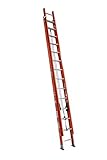
Overview: Designed for demanding commercial applications, this 28-foot Type IA fiberglass extension ladder supports 300 lbs, catering to roofers, utility workers, or contractors requiring significant reach for multi-story structures.
What Makes It Stand Out: Combines non-conductive fiberglass safety with the MAXLOCK Rung Lock and QuickLatch System for smooth operation at height. Steel Swivel Safety Shoes ensure stability on soft or uneven ground, critical for tall ladders.
Value for Money: Represents strong value for professional-grade 28-foot ladders, offering superior safety and durability that offset its higher price versus consumer models, especially given its electrical hazard protection.
Strengths and Weaknesses: Strengths: Essential non-conductive properties; secure locking systems; stable footing; high weight capacity. Weaknesses: Very heavy and cumbersome to maneuver alone; requires substantial storage space; steep learning curve for safe extension at full height.
Bottom Line: A top-tier investment for professionals needing maximum reach with electrical safety; avoid for casual use due to size and weight.
3. Louisville Ladder 20-Foot Fiberglass Extension Ladder, 300-Pound Load Capacity, Type IA, L-3022-20PT

Overview: This versatile 20-foot Type IA fiberglass ladder (300-lb capacity) bridges residential and professional needs, featuring Louisville’s ProTop design for enhanced functionality in painting, maintenance, or electrical work.
What Makes It Stand Out: The innovative ProTop includes a corner grip, pole grip, integrated bumper, and work tray—boosting productivity. Paired with MAXLOCK Rung Lock, QuickLatch, and Steel Swivel Shoes, it offers unmatched utility and stability for its class.
Value for Money: Premium pricing is justified by the ProTop’s added functionality, making it cost-effective for frequent users who value time savings and reduced need for extra tools versus basic 20-foot models.
Strengths and Weaknesses: Strengths: ProTop tray/grips increase efficiency; non-conductive safety; superior locking/stability; mar-resistant end caps. Weaknesses: ProTop adds slight weight; higher cost than standard ladders; work tray may feel small for large tools.
Bottom Line: Highly recommended for serious DIYers and pros seeking a multi-functional 20-foot ladder; the ProTop elevates it beyond competitors.
4. Louisville Ladder 40-foot Fiberglass Extension Ladder, 300-Pound Load Capacity, Type IA, FE3240

Overview: Engineered for industrial-scale projects, this 40-foot Type IA fiberglass extension ladder (300-lb capacity) serves utility crews, firefighters, or construction teams needing extreme height access with electrical safety.
What Makes It Stand Out: Retains critical safety features—non-conductive fiberglass, MAXLOCK Rung Lock, QuickLatch System, and Steel Swivel Safety Shoes—at an exceptional 40-foot reach, prioritizing stability for high-risk environments.
Value for Money: Commands a high price but delivers unmatched value for specialized commercial use, where its durability and safety features prevent costly accidents or equipment replacement versus inadequate alternatives.
Strengths and Weaknesses: Strengths: Unrivaled height with electrical safety; robust locking mechanisms; stable footing; professional-grade build. Weaknesses: Extremely heavy and challenging to handle without a team; requires large vehicle for transport; significant setup time.
Bottom Line: An indispensable tool for certified professionals in utilities or construction; impractical for non-experts due to size and handling demands.
5. Telescoping Ladder, SocTone 12.5 FT Aluminum Lightweight Extension Ladder with 2 Triangle Stabilizers, Heavy Duty 330lbs Max Capacity, Multi-Purpose Collapsible Ladder for RV or Outdoor Work

Overview: This compact 12.5-foot aluminum telescoping ladder (330-lb capacity) targets RV owners, homeowners, and travelers needing portable, multi-position access for indoor/outdoor tasks like light bulb changes or RV roof access.
What Makes It Stand Out: Two integrated triangle stabilizers reduce wobble by 36%, while smart locking pins ensure safe retraction. Its ultra-portable design (collapses to 33 inches) and multi-scene versatility (A-frame, extension, etc.) set it apart.
Value for Money: Excellent value for space-constrained users, justifying cost through unmatched portability and stability enhancements over basic telescoping ladders, though less durable than fiberglass for heavy trade use.
Strengths and Weaknesses: Strengths: Exceptional portability/storage; reduced wobble via stabilizers; multi-position use; rust-resistant aluminum; high 330-lb rating. Weaknesses: Aluminum conducts electricity (unsafe near wires); less stable than rigid ladders at full height; potential mechanism wear over time.
Bottom Line: The go-to choice for RVers and casual users prioritizing portability and versatility; avoid for electrical work or frequent professional use.
6. Toriexon Ladder Extender Pro, Ladder Stabilizer High Strength, Ladder Leveler 13.4”-19” Adjustable Height Range for Single and Extension Ladders

Overview: The Toriexon Ladder Extender Pro is a specialized stabilizer and leveler designed to enhance safety and stability for existing ladders on uneven surfaces. It attaches to the base of single, extension, or telescopic ladders to prevent wobbling and slipping, particularly crucial for outdoor work or sloped terrain. What Makes It Stand Out: Its standout feature is the precise 1/8-inch height adjustability within a 13.4”-19” range, accommodating significant ground variations. The non-slip rubber feet and platform protect surfaces while ensuring grip, and the durable powder-coated steel construction promises longevity without adding excessive weight. Value for Money: Priced competitively for a dedicated stabilizer, it offers excellent value by significantly extending the safe usability of ladders you already own. Cheaper levelers often lack fine adjustment or robust materials, making this a cost-effective safety upgrade over replacing entire ladders. Strengths and Weaknesses: Strengths: Exceptional adjustability, non-marking feet, sturdy steel build, easy detachable design, versatile for multiple ladder types. Weaknesses: Adds noticeable bulk/weight to ladder base, maximum platform size may not suit very wide ladder feet, requires separate purchase (not included with ladders). Bottom Line: A highly recommended safety accessory for professionals or DIYers frequently working on uneven ground; its precise leveling and durability justify the investment to prevent accidents and maximize ladder utility.
7. Xtend & Climb Contractor Series 155+/300 Telescoping Ladder, 15.5 Ft Extension, 300 lbs Load Capacity, ANSI Type 1A Certified Aluminum Ladder - Includes Fiber Cloth

Overview: The Xtend & Climb 155+ is a premium, versatile telescoping ladder engineered for contractors, transforming easily between extension, step, and compact storage modes. Its aerospace-grade aluminum construction balances strength with remarkable portability, targeting demanding job sites. What Makes It Stand Out: True telescoping technology allows smooth, secure height adjustment up to 15.5 ft (19.5 ft reach) without sections, while the Type 1A 300 lbs rating and robust safety features (double overmolded feet, retractable stabilizers) set it apart. Retracting to just 36 inches is exceptional for its capacity. Value for Money: Positioned at a higher price point, it delivers strong value through unparalleled versatility, certified safety for heavy-duty use, and space-saving convenience. It replaces multiple ladders, justifying its cost for frequent users compared to buying separate step and extension ladders. Strengths and Weaknesses: Strengths: Unmatched 3-in-1 flexibility, compact storage, lightweight (40 lbs) yet strong, excellent stability features, smooth operation. Weaknesses: Premium cost, telescoping mechanism requires careful handling to avoid jamming, narrower top steps than some traditional ladders. Bottom Line: An outstanding investment for contractors needing maximum adaptability and portability without sacrificing safety; its robust build and innovative design make it a top-tier choice despite the higher initial outlay.
8. Telescoping Ladder,12.5 FT Extension Ladder, Heavy Duty 330lbs Max Capacity, Multi-Purpose Collapsible Ladder for RV or Outdoor Work Black

Overview: This 12.5 ft telescoping ladder offers a lightweight, portable solution for homeowners and RV enthusiasts needing occasional access to roofs, gutters, or elevated areas. Its all-aluminum build prioritizes ease of transport and storage for casual use. What Makes It Stand Out: Extreme portability is its core strength – weighing only 15 lbs and collapsing small enough for car trunks or RV storage. The 330 lbs capacity rating and reinforced overlapping leg design provide surprising sturdiness for its weight class, especially for its price point. Value for Money: Excellent value for infrequent users or RV owners seeking a dedicated, ultra-compact ladder. It undercuts heavier-duty telescoping models significantly while still offering adequate height and capacity for light-duty home/RV tasks, though durability may not match premium brands long-term. Strengths and Weaknesses: Strengths: Exceptionally lightweight and portable, high weight capacity for size, rust-resistant aluminum, affordable price, easy setup. Weaknesses: Stability can be marginal at full extension on soft ground, build quality feels less refined than contractor ladders, lacks advanced safety features like stabilizers. Bottom Line: A highly practical and cost-effective choice for light residential or RV maintenance where portability is paramount; ideal for occasional users, but professionals should consider sturdier (heavier) alternatives for frequent, demanding tasks.
9. Little Giant Ladders, King Kombo 2.0, Professional, 6 Ft. A Frame, 10 Ft. Extension, Single Hinge 2.0, Aluminum, Type 1A, 300 lbs weight rating, (14906-001)

Overview: The Little Giant King Kombo 2.0 is a professional-grade, multi-position aluminum ladder that seamlessly converts between A-frame, extension, and leaning configurations. It’s built for versatility and stability across diverse job sites, targeting serious DIYers and tradespeople. What Makes It Stand Out: The revolutionary 1-handed Grip-N-Go hinge enables effortless, tool-free configuration changes. The rotating wall pad conforms to corners and poles, while wide-flared legs and a functional rear section significantly enhance stability in tight or awkward spaces, all within a lightweight aluminum frame. Value for Money: While premium-priced, its exceptional versatility (replacing multiple ladders) and professional durability offer strong long-term value. The Type 1A 300 lbs rating and aerospace aluminum construction ensure it withstands heavy use, outperforming cheaper multi-position ladders in safety and longevity. Strengths and Weaknesses: Strengths: Unmatched configuration flexibility, superior stability features (rotating pad, flared legs), lightweight yet strong, easy one-person operation, excellent tight-space access. Weaknesses: Higher cost than single-type ladders, aluminum conducts electricity (unsafe near power lines), setup requires practice for optimal safety. Bottom Line: A top recommendation for professionals and serious users needing maximum adaptability and safety across various tasks; its innovative design and robust build justify the investment for frequent, demanding use where configuration changes are routine.
10. Little Giant Ladders, King Kombo, Professional, 6 Ft. A Frame, 10 Ft. Extension, Single Hinge, Fiberglass, Type 1AA, 375 lbs Weight Rating, (13906-001)

Overview: The Little Giant King Kombo Fiberglass model is the non-conductive counterpart to the aluminum Kombo, offering identical multi-position versatility (A-frame, extension, leaning) but engineered specifically for electrical safety with a higher 375 lbs Type 1AA rating. What Makes It Stand Out: Its critical differentiator is the non-conductive, high-visibility green fiberglass construction, making it essential for electricians or work near live circuits. It retains all the core Kombo advantages: 1-handed hinge, rotating wall pad, wide-flared legs, and tight-space access, now with enhanced safety and weight capacity. Value for Money: Commands a significant premium over aluminum ladders, but for electricians or those regularly working near electricity, it’s indispensable and justifies the cost. The higher 375 lbs rating adds value for heavier tools/materials, offering safety and versatility unmatched in its niche. Strengths and Weaknesses: Strengths: Essential non-conductive safety for electrical work, highest weight rating (375 lbs Type 1AA), bright visibility, full Kombo versatility and stability features, durable fiberglass. Weaknesses: Heaviest Kombo variant (reducing portability), highest price point, fiberglass can be less impact-resistant than aluminum in extreme cold. Bottom Line: An absolute must-buy for electrical professionals; the critical safety provided by its non-conductive fiberglass outweighs the cost and weight, making it the superior choice over aluminum models wherever electrical hazards exist.
Why “Premium” Matters for Professional Use
Beyond the Duty Rating: Real-World Load Capacity
Duty ratings (like Type IA or Type IAA) are a baseline, but professionals carry more than their body weight. Tool belts, buckets, materials—these add significant, dynamic load. Premium ladders factor in this actual working load, not just static weight. Look for robust side rail construction (often thicker gauge aluminum or reinforced fiberglass) and proven stability under uneven or shifting loads, not just the number on the label. Weak points often manifest at the rung-to-rail connections under real-world stress.
The Fatigue Factor: Weight vs. Durability Trade-Offs
Hauling a ladder multiple times a day, up stairs, or across rough terrain is exhausting. While lighter aluminum ladders reduce fatigue, premium models achieve this without sacrificing strength through advanced alloys and optimized rail profiles. Conversely, fiberglass offers crucial non-conductivity but is heavier; top-tier versions use composite reinforcements to minimize weight gain while maximizing electrical safety. The “premium” sweet spot delivers the lightest possible weight for the required strength and safety class.
Job Site Resilience: Built for Abuse
Consumer ladders buckle under job site realities. Professionals need ladders that resist dents from dropped tools, corrosion from chemicals or salt air, and UV degradation from constant sun exposure. Premium models feature superior anodization (for aluminum), advanced resin systems (for fiberglass), and reinforced critical stress points like the base shoes, pulley systems, and rung ends. It’s the difference between a ladder that lasts a season versus a decade.
Decoding Critical Construction Materials
Aluminum Ladders: The Lightweight Workhorse
High-grade 6000-series aluminum alloys dominate professional lightweight ladders. Premium versions use T6 tempering for optimal strength-to-weight ratio. Key differentiators include wall thickness (not just beam width), internal ribbing within the rails for stiffness, and precision extrusion ensuring straight, consistent rails that extend smoothly even after years of use. Beware of ladders using thinner gauges to hit low price points—this is where flex and failure occur.
Fiberglass: Non-Conductive Security
When working near any potential electrical source (overhead lines, live panels, wet conditions), fiberglass is non-negotiable. Premium fiberglass ladders use vinylester or polyester resins with high glass-to-resin ratios and continuous strand reinforcement, not chopped fibers. This creates a stiffer, stronger, more impact-resistant structure less prone to “crazing” (fine cracks) that compromises integrity and electrical resistance. Quality resin systems also resist UV degradation far better.
The Myth of “All-Weather” Performance
Both materials have weather limits. Aluminum conducts cold (numbing hands in winter) and heat (burning skin in summer), while fiberglass can become brittle in extreme cold. Premium ladders address this: aluminum models often feature dual-textured, non-slip rungs that work in wet/muddy conditions, and some high-end fiberglass uses thermal barrier technologies. True premium status means engineered solutions for environmental challenges, not just claiming “weather resistant.”
Safety Engineering: Features That Save Lives
Beyond the Basic Locks: Advanced Pawl and Runlock Systems
Standard spring-loaded pawls can slip or bind, especially when dirty or worn. Premium ladders feature oversized, hardened steel pawls with dual locking positions, self-cleaning mechanisms, and positive engagement indicators (audible clicks, visual markers). Some utilize “runlock” systems where the locking mechanism engages with the rung, providing multiple redundant holding points per section, drastically reducing slip risk under load.
Base Stability: More Than Just Shoe Size
Wobbly bases cause catastrophic slips. Premium ladders have large, deeply cleated rubber shoes with aggressive, multi-directional tread patterns that bite into soil, gravel, or uneven surfaces. Crucially, the shoe-to-rail connection is massively reinforced—often with forged steel brackets or integrated molding—to prevent shearing under side-load. Some feature adjustable leveling feet for extreme terrain, a true pro necessity.
Tip Design: Preventing Wall Damage and Slips
Aluminum tips can gouge siding; fiberglass tips can crack. Premium ladders often include replaceable, non-marring vinyl or rubber wall pads that swivel to maintain full contact on uneven surfaces. The mounting hardware is robust, preventing pad loss. More importantly, the tip angle and contact surface are engineered to distribute load optimally, reducing the chance of the ladder slipping down the wall under user movement.
Professional-Grade Functionality and Ergonomics
Smooth & Positive Extension Mechanisms
Hauling a stiff, binding ladder extension is inefficient and dangerous. Premium pulleys use sealed ball bearings for effortless operation, even when dirty. Cords are abrasion-resistant, non-stretch synthetic (like spectra), and often feature ergonomic, glove-friendly handles. The extension sequence is precisely calibrated—smooth, controlled, and predictable—every single time, reducing setup time and frustration on the clock.
Tool Management: Integrated, Not Afterthought
Dropping tools from height is a hazard and time-waster. Premium ladders integrate features engineered into the structure: deep, secure top trays with tool slots, reinforced side hooks for pails that won’t twist the rail, and strategically placed rung slots for holding materials securely. These aren’t flimsy add-ons; they’re load-tested components designed not to compromise ladder stability.
Transport and Storage Solutions
Professionals need ladders that fit trucks, store vertically without damage, and survive constant loading/unloading. Premium models often feature streamlined profiles, integrated carrying handles at optimal balance points, and reinforced tie-down points. Some include clever folding mechanisms for compact storage, but crucially, these mechanisms maintain structural integrity—no weak hinges or pins.
Understanding Height Requirements and Stability
The 4:1 Rule: Non-Negotiable for Safety
For every 4 feet of working height, the base must be 1 foot out from the wall. Ignoring this drastically increases tip-over risk. Premium ladders are designed with this physics in mind—their rail geometry, weight distribution, and base width are optimized for the rated height. Using a ladder beyond its effective working height (accounting for the 4:1 rule) negates even the best engineering.
Effective Working Height vs. Total Length
Total extended length isn’t your usable height. Subtract roughly 3-4 feet (accounting for the ladder angle and the need to stand below the top cap). Premium ladders often have clear markings for safe maximum working height based on the 4:1 rule, preventing dangerous over-reach. Knowing this prevents buying a ladder that’s technically long enough but unusable for your actual task height.
Managing Long Ladder Dynamics
Longer ladders (30ft+) are inherently less stable. Premium versions combat this with wider base rails, strategic internal bracing, and weight distribution that minimizes “whip” during extension and use. Features like stay-in-place spreaders or wind braces become critical at height and are robustly implemented on professional models, not as optional extras.
OSHA and ANSI Compliance: The Bare Minimum
More Than Just a Sticker
Compliance with ANSI A14.2 (ladder safety) and OSHA 1926.1053 is mandatory, but many compliant ladders are still subpar for daily pro use. Premium ladders exceed these minimums. They undergo more frequent third-party testing, use higher-grade materials than required, and incorporate safety features beyond the standard (like enhanced slip resistance or redundant locks). Compliance is the entry ticket; premium status means going significantly further.
Duty Ratings Decoded for Pros
Type IA (300 lbs) is standard for trades, but Type IAA (375 lbs) is increasingly essential for professionals carrying heavy gear. Premium ladders clearly state tested capacity under dynamic conditions, not just static lab tests. Understand that duty rating applies to the weakest point—premium builds strength uniformly throughout, especially at transition points between sections.
Documentation and Traceability
Top-tier professional ladders come with comprehensive, accessible documentation: detailed setup instructions, weight capacity charts, maintenance guides, and clear manufacturing traceability (lot numbers). This isn’t just paperwork; it’s critical for liability, warranty claims, and verifying the ladder meets specific job site safety protocols.
Investment Analysis: Cost vs. Lifetime Value
The Hidden Costs of a “Cheap” Ladder
Factor in replacement costs, downtime from failures, potential medical bills from accidents, and lost productivity from inefficient, heavy, or unreliable equipment. A $200 ladder failing after two seasons costs far more than a $600 ladder lasting ten years safely. Premium ladders minimize these hidden operational costs through sheer durability and reliability.
Warranty as a Quality Indicator
Reputable premium brands offer substantial warranties (5-10+ years) covering structural defects and often pawl mechanisms. This isn’t just a promise; it’s a reflection of confidence in materials and manufacturing. Short or limited warranties often signal expected shorter lifespans. Read the fine print—good warranties cover professional use, not just light-duty.
Resale Value and Longevity
Well-maintained premium ladders retain significant value. Their reputation for durability means they’re sought after in the used market. More importantly, they simply last longer, spreading the initial cost over many more job days than budget alternatives. This longevity directly impacts your bottom line year after year.
Frequently Asked Questions
Frequently Asked Questions
Is a fiberglass ladder always necessary for electrical work, or can I use aluminum with extreme caution?
Fiberglass is the only safe choice near live electrical sources. Aluminum conducts electricity instantly, creating a lethal path through your body to ground. No amount of caution negates this fundamental physics risk. Always use rated fiberglass when voltage is possible.How do I accurately determine the maximum safe working height I need for my jobs?
Calculate your required reach: measure the highest point you need to work from (e.g., gutter line), then add 3-4 feet for safe standing height (never stand on the top cap). Factor in the 4:1 rule – the ladder’s base must be 1 ft out per 4 ft of wall contact height. Choose a ladder where the effective working height (total length minus ~4 ft) meets your required reach at the correct angle.Why do premium ladders feel significantly stiffer and less “bouncy” than cheaper ones?
This comes from thicker gauge materials, advanced alloys/composites, internal rail reinforcement (ribs, box sections), and precise manufacturing ensuring straight, true rails. Reduced flex translates directly to greater stability under load and user movement, a critical safety factor often overlooked.Can I exceed the stated duty rating if I’m very careful and don’t move much?
Absolutely not. Duty ratings are based on dynamic testing simulating real-world movement and forces. Exceeding the limit risks catastrophic failure – buckling rails, broken rungs, or lock mechanism collapse – even with “careful” use. The rating includes a safety margin; exceeding it eliminates that buffer.How important is regular maintenance for a premium ladder, and what does it entail?
Critical. Inspect before every use: check for cracks (especially in fiberglass near stress points), loose hardware, worn pawls, frayed ropes, damaged shoes, and rail dents. Clean mud/debris from rungs and locks. Lubricate pulleys per manufacturer specs (often dry lubricant only). Proper maintenance is non-negotiable for safety and longevity.Are the integrated tool trays and hooks on premium ladders actually load-rated?
Yes, on true professional ladders, they are. Reputable brands specify the maximum load for trays and hooks (e.g., 25 lbs). Never assume; check the manual. These features are engineered parts, not afterthoughts, and overloading them can compromise ladder stability or damage the attachment point.What’s the biggest stability mistake professionals make with extension ladders?
Over-reaching! Leaning too far sideways or too high forces your center of gravity outside the ladder’s footprint, causing tip-overs. Always keep your belt buckle between the rails. Set up on firm, level ground, use the 4:1 rule, and ensure locks are fully engaged before climbing.How do I safely store a long extension ladder to prevent warping or damage?
Store horizontally on wide, padded supports (at least 3 points) or vertically in a dedicated rack that supports the entire length without putting pressure on rungs. Avoid leaning it in a corner where rails can twist. Keep it off the ground, in a dry, temperature-stable place away from direct sunlight to preserve materials.Do premium ladders really make a noticeable difference in setup time on a busy job site?
Significantly. Smooth, reliable pulleys, positive-locking mechanisms, clear height indicators, and ergonomic handles shave seconds off every setup. Over dozens of setups per week, this adds up to major time savings, reduced physical strain, and less frustration – directly boosting daily productivity.Is the higher upfront cost of a premium ladder justified for a part-time contractor?
If you use a ladder regularly (even part-time), absolutely. Safety is paramount regardless of frequency. A cheaper ladder failing during your occasional roof repair could have devastating consequences. Premium ladders also last far longer, making the cost-per-use very low over time, even with less frequent use. Don’t gamble with your safety.
See Also
- 10 Best Budget Extension Ladders Under $200 for Homeowners in 2026
- 10 Best Budget Extension Ladders Under $200 for Home Use
- 10 Best Extension Ladders for Gutters This Year
- Top 10 Best Extension Ladders for Reaching High Ceilings in 2026
- 10 Best Extension Ladders for Roof Access This Year