Table of Contents
Whenyou’re framing a house at dawn or ripping through engineered lumber on a tight deadline, your circular saw isn’t just another tool—it’s an extension of your craftsmanship. Professional contractors understand that equipment failure doesn’t just slow down a project; it erodes profit margins, damages reputations, and turns manageable timelines into logistical nightmares. The difference between a $99 consumer-grade saw and a premium professional model isn’t just about price—it’s about precision engineering that performs flawlessly after thousands of cuts, safety features that protect your most valuable asset (your hands), and ergonomic designs that reduce fatigue during 12-hour workdays.
Investing in a premium circular saw means buying back your time, ensuring consistent results, and ultimately making more money on every job. But with manufacturers throwing around buzzwords like “pro-grade,” “heavy-duty,” and “commercial quality,” how do you separate genuine performance features from marketing fluff? This comprehensive guide cuts through the noise to examine what truly matters when selecting a circular saw that will serve as a reliable workhorse on your job sites for years to come.
Top 10 Circular Saws For Contractors
Detailed Product Reviews
1. Makita 5007F 7-1/4" Circular Saw

Overview:
The Makita 5007F is a professional-grade corded circular saw built for relentless job site performance. Its 15-amp motor delivers a blistering 5,800 RPM with proven durability under continuous load. The saw offers substantial cutting capacity—2-3/8 inches at 90 degrees and 1-3/4 inches at 45 degrees—making it versatile for both framing and finish applications. Two integrated LED lights illuminate the cut line, a surprisingly useful feature that enhances accuracy in poorly lit conditions.
What Makes It Stand Out:
The redesigned lower guard glides smoothly during bevel and narrow cuts, eliminating the binding issues that plague lesser saws. Its exceptional balance reduces wrist fatigue during all-day use, while the machined aluminum base ensures true, accurate cuts over years of service. This is a tool engineered for professionals who demand reliability without gimmicks—the motor maintains speed under load better than most competitors in its class.
Value for Money:
Positioned in the mid-range for professional saws, the 5007F justifies its price through exceptional longevity and consistent performance. It outperforms budget brands that sacrifice component quality and matches premium models costing significantly more. For contractors who prioritize dependable corded power over cordless convenience, this represents a smart long-term investment that will withstand years of daily abuse.
Strengths and Weaknesses:
Strengths include powerful, consistent performance; superior cut line visibility with dual LEDs; smooth guard action; and excellent ergonomics. Weaknesses include the lack of an electric brake, which slows productivity between cuts, and the inherent limitation of corded operation. It also lacks a laser guide, though the LEDs prove more durable and accurate.
Bottom Line:
The Makita 5007F remains a job site workhorse for good reason. It delivers professional-grade power, durability, and accuracy without unnecessary frills. Ideal for contractors who need a dependable corded saw that will provide years of reliable service.
2. SKIL 15 Amp 7-1/4 Inch Circular Saw with Single Beam Laser Guide - 5280-01

Overview:
The SKIL 5280-01 is an affordable corded circular saw that punches above its weight class. Its 15-amp motor generates 5,300 RPM, providing ample power for most DIY and light construction tasks. The included carbide-tipped blade and convenient spindle lock make blade changes quick and tool-free. With a 51-degree bevel capacity and positive stop at 45 degrees, it handles various cutting angles with confidence.
What Makes It Stand Out:
This saw packs premium features into a budget-friendly package. The single-beam laser guide projects a clear cutting path, dramatically improving accuracy for novice users. An integrated dust blower maintains cut line visibility, while the lock-off trigger and power-on indicator provide essential safety features rarely found at this price point. It’s an entry-level tool with pro-inspired thinking.
Value for Money:
The SKIL 5280-01 excels in value, delivering performance that rivals saws costing twice as much. While it won’t withstand daily professional abuse, the feature set exceeds all expectations for the price. Homeowners and hobbyists get pro-level conveniences—laser guidance, dust management, and safety locks—without the premium cost, making it the best value in its category.
Strengths and Weaknesses:
Strengths include outstanding value, effective laser guide, robust safety features, and adequate power for most tasks. Weaknesses include less durable construction than pro models, occasional need for laser recalibration, and motor bogging on dense materials. The saw feels slightly heavier than premium competitors despite similar specifications.
Bottom Line:
For DIY enthusiasts and occasional users, the SKIL 5280-01 is an outstanding choice. It offers an impressive array of features at an unbeatable price, making it the best value circular saw for those who don’t need heavy-duty professional construction but want pro-level accuracy aids.
3. Makita XSR01Z 36V (18V X2) LXT® Brushless Rear Handle 7-1/4" Circular Saw, Tool Only

Overview:
The Makita XSR01Z revolutionizes cordless circular saws with its 36V (18V X2) LXT platform, delivering genuine corded performance without the tether. Powered by two Makita 18V batteries (sold separately), the brushless motor generates 5,100 RPM with Automatic Speed Change technology that optimizes torque during cuts. This rear-handle saw is engineered for framers who refuse to compromise on mobility or power.
What Makes It Stand Out:
The rear-handle design and left-side blade provide worm drive-like ergonomics with exceptional line of sight. X2 LXT technology delivers up to 558 crosscuts in 2x4 lumber per charge using 5.0Ah batteries. The brushless motor runs cooler and more efficiently than brushed counterparts, while electronic controls prevent overload. This is one of the few cordless saws that truly competes with corded models on professional job sites.
Value for Money:
As a tool-only purchase, it requires significant battery investment. However, for professionals already in the Makita ecosystem, it eliminates cord management and generator dependency. The runtime and power justify the premium price, especially when considering productivity gains on large framing projects. The cost-per-cut becomes economical for full-time users.
Strengths and Weaknesses:
Strengths include true corded-like power, exceptional runtime, superior ergonomics, and brushless durability. Weaknesses include high initial cost (especially with batteries), substantial weight comparable to worm drive saws, and limited value for casual users. The need for two batteries and a dual charger adds to the investment.
Bottom Line:
The Makita XSR01Z is the cordless circular saw for professionals who demand unrestricted mobility without sacrificing performance. If you’re invested in Makita’s 18V platform and need a saw for serious framing work, this tool pays for itself in productivity. Simply the best cordless option for full-time construction.
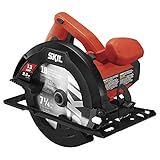
4. Skil 5080-01 13-Amp 7-1/4" Circular Saw, Red
Overview:
The Skil 5080-01 is a lightweight, entry-level corded circular saw designed for homeowners and occasional DIYers. Its 13-amp motor provides adequate power for basic cutting tasks, while a 15% weight reduction compared to its predecessor significantly reduces user fatigue. The saw handles 51-degree bevel cuts with positive stops and features an improved dust blower to maintain cut line visibility. It’s a straightforward tool focused on essential functionality.
What Makes It Stand Out:
This saw prioritizes manageability over raw power. The weight reduction makes it one of the most user-friendly saws in its class, ideal for those who find professional saws cumbersome. The spindle lock enables easy blade changes, while the improved dust management system works surprisingly well for a budget tool. It’s intentionally simple—fewer features mean fewer potential failure points for occasional users.
Value for Money:
Positioned as one of the most affordable circular saws from a reputable brand, the 5080-01 delivers exactly what it promises: basic capability at a rock-bottom price. It significantly undercuts competitors while providing reliable performance for intermittent use. For homeowners needing a saw for a few projects annually, this represents maximum value with minimal financial commitment.
Strengths and Weaknesses:
Strengths include ultra-lightweight design, extremely affordable price, simple operation, and adequate power for softwoods and plywood. Weaknesses include limited power for hardwoods or pressure-treated lumber, basic construction quality, and lack of advanced features like lasers or LED lighting. The lower guard action can be stiff during initial use.
Bottom Line:
The Skil 5080-01 is the perfect “first circular saw” for homeowners on a budget. It handles basic tasks competently without overwhelming users with features or cost. Don’t expect professional performance, but for occasional DIY projects, it’s an unbeatable value that gets the job done reliably.
5. DEWALT FLEXVOLT 60V MAX* Circular Saw for Framing, 7-1/4-Inch, Tool Only (DCS577B)

Overview:
The DEWALT FLEXVOLT DCS577B is a powerhouse cordless circular saw engineered for professional framing. Operating on DEWALT’s 60V MAX FLEXVOLT battery system, this rear-handle saw features left-blade orientation for optimal visibility and a high-grade magnesium shoe for job site durability. The brushless motor delivers exceptional runtime, while an electronic brake stops the blade quickly for enhanced safety. It achieves an impressive 2-7/16-inch depth of cut at 90 degrees.
What Makes It Stand Out:
The rear-handle design and blade-left configuration provide worm drive-like ergonomics with cordless freedom. The electronic brake is a critical safety feature rarely found on cordless saws. Its 53-degree bevel capacity with stops at 45 and 22.5 degrees offers maximum versatility. The magnesium construction keeps weight manageable while ensuring the saw survives daily job site abuse. This is DEWALT’s cordless answer to traditional worm drive saws.
Value for Money:
As a tool-only purchase, it’s expensive and requires investment in FLEXVOLT batteries. However, for framing crews already using DEWALT’s 20V/60V platform, it eliminates cords and generators while delivering true professional power. The durability and performance justify the premium for full-time professionals who value mobility, safety, and runtime above all else.
Strengths and Weaknesses:
Strengths include exceptional power rivaling corded saws, excellent ergonomics, fast electronic brake, durable magnesium construction, and deep cutting capacity. Weaknesses include high cost, substantial weight, and limited value for non-professionals. Battery life varies significantly with load, and it’s overkill for light-duty tasks.
Bottom Line:
The DEWALT DCS577B is the ultimate cordless circular saw for professional framers. If you need worm drive performance without the cord and already own FLEXVOLT batteries, this is your saw. For everyone else, the investment is hard to justify unless you’re earning money with it daily.
6. DEWALT 20V MAX* 6-1/2 in. Brushless Cordless Circular Saw, Tool Only (DCS565B)

Overview: The DEWALT DCS565B is a compact, brushless cordless circular saw designed for precision cutting in tight spaces. As a tool-only addition to the 20V MAX ecosystem, it targets users who prioritize maneuverability without sacrificing modern features. The 6-1/2-inch blade format reduces weight while maintaining adequate cutting capacity for most framing and finish applications.
What Makes It Stand Out: This saw’s integrated LED light dramatically improves cut line visibility in dim conditions, a feature often missing in compact models. The tool-free bevel lever enables rapid adjustments from 0-50°, saving valuable time on complex projects. The electric brake enhances safety by stopping the blade within seconds, while its compatibility with DEWALT’s AirLock dust extraction system addresses job site cleanliness. Weighing significantly less than full-size saws, it excels at overhead or one-handed operation.
Value for Money: Priced in the mid-range for brushless cordless saws, the DCS565B offers excellent value for existing DEWALT battery owners. The brushless motor ensures longer tool life and runtime compared to brushed alternatives. While bare-tool pricing requires additional battery investment for newcomers, it avoids redundant purchases for established users. Comparable compact saws from competitors often lack the dust collection integration and electric brake at this price point.
Strengths and Weaknesses: Pros: Brushless motor efficiency; bright LED work light; rapid tool-free bevel adjustments; electric brake for safety; lightweight, compact design; optional dust extraction compatibility. Cons: Tool-only (battery separate); 6-1/2-inch blade limits maximum cut depth; premium over brushed models.
Bottom Line: Ideal for DEWALT platform users seeking a nimble, feature-rich saw for remodeling and finish work. The DCS565B balances portability with professional-grade features, making it a smart secondary saw or primary tool for lighter-duty applications. Its safety and visibility features justify the investment for serious DIYers and tradespeople alike.
7. DEWALT 20V MAX Circular Saw, Cordless Sidewinder Style Portable, 6-1/2-Inch Blade, 5150 RPM, 0-50 Degree Bevel Capability, Battery Not Included (DCS391B)
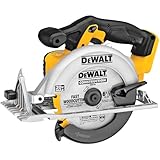
Overview: The DEWALT DCS391B is a robust sidewinder-style circular saw delivering corded-like performance in a cordless package. This 20V MAX tool features a high-speed 5,150 RPM motor paired with a durable magnesium shoe, making it suitable for demanding job site applications. The 6-1/2-inch carbide-tipped blade handles standard framing and cross-cut tasks with authority.
What Makes It Stand Out: Its impressive 5,150 RPM motor outpaces many competitors in the cordless category, ensuring smooth cuts through dense materials like LVL and hardwood. The magnesium shoe provides exceptional durability while reducing weight, maintaining cut accuracy over years of use. An optimized rubber over-molded grip offers superior control and vibration dampening. The included 18-tooth carbide blade is job-site ready, cutting 2x material at both 90° and 45° efficiently.
Value for Money: As one of DEWALT’s more affordable cordless saws, the DCS391B delivers professional power without brushless pricing. The brushed motor keeps costs down while still providing ample performance for most users. Battery investment aside, it undercuts premium models significantly. However, long-term operational costs are higher due to increased battery drain and eventual brush replacement needs versus brushless alternatives.
Strengths and Weaknesses: Pros: High 5,150 RPM speed; durable magnesium shoe; comfortable vibration-dampening grip; includes quality carbide blade; excellent cut depth for blade size. Cons: Brushed motor reduces efficiency and lifespan; no electric brake; lacks LED light; tool-only purchase requires battery/charger.
Bottom Line: A workhorse for budget-minded professionals and serious DIYers already invested in DEWALT’s 20V platform. While missing premium features, its raw power and durability make it ideal for everyday framing and remodeling tasks where speed and reliability matter more than advanced electronics.
8. Extbtfor Power Circular Saw,4.8A Mini Circular Saw with Laser Guide,4000RPM Corded Saw Equipped with 3 Pcs 4-1/2" Blades,Maximum Cutting 1-11/16" at 90° and 1-1/8"at 45° for Wood, Soft Metal, Plastic

Overview: The Extbtfor mini circular saw is a budget-conscious corded tool targeting DIY enthusiasts and hobbyists. This 4.8-amp saw delivers 4,000 RPM through a 4-1/2-inch blade, handling light-duty cuts in wood, soft metal, and plastic. Its compact 4.7-pound design prioritizes one-handed operation and maneuverability for small-scale projects and home improvement tasks.
What Makes It Stand Out: A built-in laser guide with replaceable batteries provides visual cutting assistance rarely found at this price point. The comprehensive accessory package includes three specialized blades (HSS, TCT, and diamond) plus a guide ruler, enabling immediate multi-material work without additional purchases. The dust pipe attachment helps maintain cleaner workspaces. Its corded design ensures consistent power delivery without battery management concerns.
Value for Money: Exceptional value for entry-level users. The kit includes $50+ worth of blades and accessories that competitors charge separately. Corded operation eliminates ongoing battery costs, while the sub-$100 price point makes it highly accessible. While build quality can’t match premium brands, the feature set surpasses expectations for the cost, making it ideal for occasional use.
Strengths and Weaknesses: Pros: Extremely affordable; laser guide improves accuracy; three material-specific blades included; lightweight one-handed operation; corded reliability; comprehensive accessory bundle. Cons: Limited 580W power struggles with hardwood; unknown brand longevity; 4-1/2-inch blade restricts cut depth; cord limits job site mobility; no electric brake.
Bottom Line: An outstanding starter kit for casual DIYers and craft enthusiasts. The Extbtfor saw excels at light-duty tasks like shelving, trim work, and soft material cutting. While unsuitable for professional framing or heavy remodeling, its all-inclusive package and laser guidance make it a smart, low-risk investment for homeowners tackling occasional projects.
9. M18 Cordless Lithium-Ion 6-1/2" Circular Saw - 2630-20 - ( MILWAUKEE ) - BARE TOOL

Overview: Milwaukee’s 2630-20 circular saw brings professional-grade construction to the M18 platform. This 6-1/2-inch saw delivers 3,500 RPM through a robust drivetrain protected by magnesium upper and lower guards. Designed for tradespeople who demand durability, it features an aircraft aluminum shoe and ergonomic soft-grip handle for sustained job site use.
What Makes It Stand Out: Milwaukee’s legendary build quality shines through the magnesium guard system, providing superior blade protection and impact resistance compared to plastic alternatives. The aircraft aluminum shoe maintains flatness under heavy use, ensuring accurate rip cuts over the tool’s lifetime. The soft-grip handle reduces fatigue during all-day use. Its seamless integration with Milwaukee’s expansive M18 battery system offers flexibility across hundreds of tools.
Value for Money: Positioned as a mid-tier professional option, the 2630-20 justifies its premium through exceptional durability and Milwaukee’s 5-year warranty. For contractors already invested in M18 batteries, it represents solid value. However, its 3,500 RPM motor lags behind DEWALT’s 5,150 RPM offering at a similar price point. The lack of LED lighting or electric brake feels dated compared to newer competitors.
Strengths and Weaknesses: Pros: Rugged magnesium guards; durable aircraft aluminum shoe; comfortable soft-grip handle; excellent warranty; vast M18 ecosystem compatibility. Cons: Moderate 3,500 RPM speed; no integrated work light; lacks electric brake; tool-only purchase; premium pricing.
Bottom Line: A dependable workhorse for Milwaukee loyalists prioritizing durability over cutting speed. The 2630-20 excels in plumbing, electrical, and finishing applications where reliability trumps raw power. While missing modern conveniences, its tank-like construction makes it a smart long-term investment for professionals who value tools that outlast job site abuse.
10. DEWALT 20V MAX XR Brushless Cordless 7-1/4 in. Circular Saw, Tool Only (DCS590B)

Overview: DEWALT’s DCS590B represents the pinnacle of their 20V MAX circular saw lineup, boasting the most powerful motor in the series. This full-size 7-1/4-inch saw delivers up to 1,700 MWO and 5,500 RPM, rivaling corded performance. The brushless motor and XR designation signal professional-grade efficiency and runtime for the most demanding applications.
What Makes It Stand Out: With up to 368 cuts per charge using a 6Ah battery, this saw redefines cordless productivity. The 7-1/4-inch blade enables a maximum 2-9/16-inch depth at 90°, handling stacked materials and thick timbers that smaller saws cannot. An electric brake stops the blade instantly for precision and safety. The increased capacity makes it ideal for heavy framing, deck building, and ripping full-depth lumber without compromise.
Value for Money: While commanding premium pricing, the DCS590B eliminates the need for generators or extension cords on remote sites. For contractors, the time savings and convenience offset the initial cost. The brushless motor ensures years of maintenance-free operation, and the full-size blade capacity means one saw can replace both compact and corded units. Competitive models with similar specs cost 20-30% more.
Strengths and Weaknesses: Pros: Class-leading power (1,700 MWO); high 5,500 RPM speed; full 7-1/4-inch blade capacity; exceptional depth of cut; electric brake; outstanding runtime efficiency. Cons: Tool-only purchase adds battery cost; heavier than compact models; premium price point; requires high-capacity batteries for maximum performance.
Bottom Line: The ultimate cordless solution for professionals who refuse to compromise on power or capacity. The DCS590B excels in heavy-duty framing, renovation, and construction where corded tools once ruled. Its performance justifies every penny for users who demand the best from their 20V MAX platform and regularly cut thick materials.
Understanding What Makes a Circular Saw “Premium”
Premium circular saws occupy a distinct category above consumer models, engineered specifically for contractors who demand unwavering reliability. These tools feature magnesium or aluminum alloy components instead of plastic, sealed bearings that resist dust infiltration, and motors wound with heavier gauge copper wire to handle continuous loads without overheating. The distinction goes beyond durability—premium saws deliver repeatable accuracy with minimal adjustment, maintain blade speed under load, and provide tactile feedback that experienced craftsmen can feel instantly.
The investment justification lies in total cost of ownership. While initial purchase price might be three to four times higher than homeowner models, professional saws typically last ten times longer when properly maintained. More importantly, they preserve cutting efficiency throughout their lifespan, meaning the last cut at year five is as clean and square as the first cut out of the box.
Power Systems: Corded vs. Cordless for Professional Use
The corded versus cordless debate has evolved dramatically with recent battery technology advances. Your choice fundamentally impacts workflow, mobility, and long-term operational costs. Neither system is universally superior—the optimal selection depends on your specific trade, typical job site conditions, and power availability scenarios.
The Corded Advantage: Uninterrupted Performance
Corded circular saws deliver consistent, unlimited power that never degrades as the day progresses. For high-production framing crews or trim carpenters making hundreds of linear feet of cuts, a 15-amp motor running on 120V provides relentless torque that cordless models still struggle to match. Premium corded saws feature reinforced strain relief connections where the cord enters the housing—this critical detail prevents the most common point of failure in job site conditions.
Voltage drop becomes a real concern on large commercial sites where you might be 200 feet from the power source. Top-tier professional saws compensate with higher-efficiency motors and premium wiring that maintains blade speed even when connected through multiple extension cords. Look for models with cord protection systems and secure plug retention features that prevent accidental disconnections when you’re deep into a critical cut.
Cordless Revolution: Freedom Without Compromise
Modern lithium-ion battery technology has transformed cordless circular saws from compromise tools into legitimate professional equipment. Premium cordless models now feature brushless motors paired with high-capacity battery packs (typically 6.0Ah or higher) that deliver runtime exceeding most morning cutting sessions. The real advantage emerges in remodel work, roofing applications, and remote sites where extension cords create tripping hazards or power simply isn’t available.
Battery platform commitment represents a crucial strategic decision. Professional-grade cordless saws perform optimally when matched with batteries from the same ecosystem as your drills, reciprocating saws, and other tools. Consider charging speed, battery lifecycle ratings (premium batteries typically guarantee 1,000+ charge cycles), and whether the platform offers higher voltage options for truly demanding applications.
Motor Technology: Brushless vs. Brushed
Motor design directly impacts efficiency, maintenance requirements, and power delivery characteristics. Brushed motors, while simpler and less expensive, use carbon brushes that physically contact the commutator, creating friction, heat, and eventual wear. For contractors, this translates to performance degradation over time and eventual service requirements that take tools offline.
Brushless motors eliminate physical contact points through electronic commutation, resulting in several critical advantages. They run cooler during continuous use, maintain consistent RPM under load more effectively, and deliver up to 50% longer runtime on battery power. The electronic control systems in premium brushless saws can sense load conditions and automatically adjust power delivery, preventing bog-down when cutting dense materials like LVL beams or multiple stacked sheets of OSB.
From an investment perspective, brushless motors typically outlast brushed equivalents by a factor of three to five, with many manufacturers rating them for 10,000+ hours of operation. The absence of brush replacement alone saves hundreds of dollars in maintenance costs over the tool’s lifetime.
Blade Quality: The Heart of Cutting Performance
A premium circular saw deserves an equally premium blade—yet many contractors mistakenly mount economy blades on expensive saws, negating their precision advantages. Professional-grade blades feature hardened steel bodies tensioned to remain flat under heat and stress, expansion slots designed to eliminate warping, and carbide teeth engineered for specific materials.
Carbide-Tipped Excellence
The carbide formulation and grain structure determine cutting life and edge retention. Micro-grain carbide with cobalt binders maintains sharpness through thousands of cuts in abrasive materials like particle board and fiber cement. Premium blades use larger carbide tips that can be resharpened multiple times, effectively tripling the blade’s service life. The brazing process that attaches teeth to the blade body matters enormously—high-frequency induction brazing creates bonds that withstand impact from hidden nails and knots without tooth loss.
Tooth Count and Grind Geometry
Tooth configuration must match your primary applications. For framing and rough carpentry, 24-tooth blades with aggressive hook angles (15-20°) rip quickly through dimensional lumber. Finish carpentry demands 40-60 tooth blades with alternate top bevel (ATB) grinds that slice cleanly across grain without tear-out. The hollow grind on premium blades reduces friction and heat buildup, preventing binding in long rip cuts and extending motor life by reducing load.
Consider maintaining a blade arsenal rather than seeking one universal solution. Premium contractors typically carry dedicated blades for framing, finish work, fiber cement, and metal cutting, recognizing that specialized tooling dramatically improves both speed and quality.
Ergonomics: Designing for Daily Professional Use
The finest specifications mean nothing if the tool induces fatigue or causes repetitive strain injuries. Premium saws prioritize human factors engineering that becomes apparent during the eighth hour of continuous use. Weight distribution, vibration damping, and control placement separate professional tools from pretenders.
Handle Configurations and Grip Comfort
Multi-position handles allow operators to maintain comfortable wrist angles during various cutting positions—horizontal sheet goods versus vertical rip cuts place different demands on hand positioning. Premium saws feature over-molded rubber grips with variable durometer (hardness) zones—softer where your palm contacts the tool, firmer where fingers wrap around for control. This prevents the death-grip fatigue common with hard plastic handles.
Trigger design reveals attention to detail. Professional saws offer wide triggers accommodating gloved hands, with lock-off mechanisms positioned to prevent accidental activation while remaining intuitive to operate. The best models include adjustable depth stops that can be set with one hand, allowing quick transitions between cutting depths without fumbling.
Weight Distribution and Balance
A perfectly balanced saw feels lighter than its actual weight because the center of gravity aligns with your grip point. Premium models position motors and batteries to achieve neutral balance, reducing the wrist torque that causes fatigue and compromises cut accuracy. Magnesium components contribute significantly here—providing strength comparable to steel at two-thirds the weight, while offering superior vibration dampening compared to aluminum.
Precision Features That Matter on the Job Site
Accuracy separates craftsmen from laborers, and premium saws incorporate features that ensure repeatable precision without constant adjustment. Laser guides, while helpful in controlled shop environments, often prove useless in bright outdoor conditions. Instead, focus on mechanical accuracy features that work regardless of ambient light.
Integrated LED work lights positioned to eliminate blade shadow prove infinitely more valuable than lasers on job sites. Premium saws position these lights to illuminate the cut line from both sides, ensuring visibility even when working in tight corners or against walls. The best implementations use focused beam patterns that don’t wash out in direct sunlight.
Scale visibility and durability matter tremendously. Premium saws feature engraved depth and bevel scales filled with high-contrast paint that won’t wear off after six months in a tool bag. Positive stops at common angles (0°, 15°, 22.5°, 45°) should lock solidly without play, and micro-adjustment mechanisms allow fine-tuning for perfect miter joints.
Advanced Safety Systems
Professional contractors respect tools that protect them without hindering productivity. Premium safety features operate seamlessly, adding protection without adding steps to your workflow. This represents a significant departure from consumer models where safety mechanisms often feel like afterthoughts.
Electric Brakes: Stopping Power That Saves
An electric brake reverses motor polarity when you release the trigger, stopping the blade within 2-3 seconds instead of 10-12. This feature proves invaluable when a cut completes and you need to set the saw down immediately, or when a cord gets snagged pulling the saw off balance. Premium implementations stop blades consistently throughout the tool’s life, while budget versions lose effectiveness as brushes wear.
Blade Guards and Riving Knives
Professional-grade blade guards operate with minimal resistance, retracting smoothly even when making shallow plunge cuts or cutting warped material that tends to bind. Anti-snag mechanisms prevent the guard from catching on the workpiece edge—a common frustration that causes miscuts. Some premium models include integrated riving knives that follow the blade, preventing kickback by keeping the kerf open behind the cut, particularly crucial when ripping solid lumber.
Dust Management: Keeping Your Workspace Clean
OSHA regulations and client expectations have made dust control a business necessity, not just a convenience. Premium saws integrate dust collection into their fundamental design rather than bolting it on as an afterthought. The housing around the blade should create a sealed chamber that directs particles efficiently to the extraction port.
Look for saws with swiveling dust ports that lock at multiple angles, preventing hoses from interfering with sight lines or pushing the saw off line. The most effective designs capture 90%+ of dust when connected to a vacuum, while still providing effective directional discharge when working without extraction. Some premium models include integrated blowers that clear the cut line without creating a dust cloud, a feature particularly valuable for finish carpenters making precision cuts indoors.
Bevel Capacity and Cutting Depth Specifications
Contractors frequently discover too late that their saw can’t handle the full range of cuts required on complex jobs. Premium saws offer bevel capacities exceeding 50°, essential for hip roof framing and custom trim work. The bevel adjustment mechanism should operate smoothly with positive detents at common angles, while allowing override for micro-adjustments.
Maximum cutting depth at 90° and 45° matters, but just as important is the effective cutting depth—the actual capacity when accounting for blade guard clearance and base plate thickness. Premium saws maximize this dimension through thoughtful engineering, often achieving 2-7/16" depth at 90° to handle doubled 2x material cleanly. The depth adjustment mechanism should lock securely without drift, maintaining setting accuracy even after repeated impacts in the tool trailer.
Build Quality and Durability Standards
The tactile feel of a premium saw reveals its quality before you even pull the trigger. Magnesium base plates remain flat and resist bending when the saw inevitably falls from staging or gets stepped on. Premium models feature reinforcing ribs in high-stress areas and machined edges that serve as reliable straightedges in a pinch.
Internal components tell the real story. Sealed ball bearings throughout the drivetrain prevent dust ingress that causes premature wear. Premium saws use metal gears instead of plastic, helical-cut for smoother operation and greater load capacity. The arbor shaft should be precision-machined from hardened steel with minimal runout (less than 0.001"), ensuring the blade runs true and reducing vibration that leads to fatigue and inaccuracy.
Warranty and Professional Support
A manufacturer’s warranty reflects confidence in their product’s durability. Premium circular saws typically carry 3-5 year warranties for professional use, compared to 1-year consumer warranties. More importantly, evaluate the service network—does the manufacturer offer local authorized repair centers that understand contractor time constraints? Some premium brands provide loaner tools during warranty repairs, recognizing that downtime costs far more than the repair itself.
Consider parts availability five years from purchase. Premium manufacturers maintain extensive parts inventories for legacy models, ensuring your investment remains serviceable. Quick-access brush caps and user-replaceable cords demonstrate field-serviceable design philosophy that keeps you working rather than waiting for repairs.
Return on Investment: Calculating True Value
The mathematics of tool investment favor quality when viewed through the lens of cost-per-cut. A $300 premium saw that makes 50,000 cuts costs $0.006 per cut. A $100 consumer saw that fails at 5,000 cuts costs $0.02 per cut—more than triple the operational expense. Factor in the labor cost of reworking poor-quality cuts, downtime from failures, and replacement purchases, and premium tools generate positive ROI within the first year for busy contractors.
Consider also the residual value. Premium saws from respected manufacturers retain 40-60% of their purchase price after several years of professional use, while budget saws have zero resale value. The premium effectively becomes a depreciating asset rather than a disposable expense, further improving the financial equation.
Frequently Asked Questions
How long should a premium circular saw last in professional daily use?
With proper maintenance, a contractor-grade circular saw should deliver 5-10 years of reliable service in daily commercial use. The motor typically outlasts other components; bearings, cords, and switches become the limiting factors. Regular cleaning, proper blade selection, and avoiding overloading extend lifespan significantly.
Is a cordless circular saw powerful enough for framing?
Modern 18V and 20V cordless saws with brushless motors and high-capacity batteries now match corded performance for most framing applications. They excel in production cutting of dimensional lumber and sheet goods. However, for continuous ripping of engineered lumber or all-day heavy production, corded saws still hold a slight edge in sustained power delivery.
What maintenance do professional circular saws require?
Daily blow-out of dust from motor vents and blade guards prevents overheating. Weekly checks of blade parallelism to base plate and bevel accuracy ensure precision. Monthly lubrication of depth and bevel adjustment mechanisms keeps controls smooth. Cord inspection for nicks and proper strain relief prevents electrical hazards. Annual professional service should include bearing inspection, brush replacement (if applicable), and arbor runout verification.
How important is saw weight for professional use?
Optimal weight balances stability with maneuverability. Saws under 9 pounds often lack the mass to stay planted during aggressive cuts, while those over 12 pounds cause fatigue during overhead work. Premium saws achieve strength without excessive weight through magnesium construction, typically landing in the 10-11 pound sweet spot for corded models.
Can I use a premium framing blade for finish work?
Framing blades prioritize speed over surface quality, leaving visible tear-out and rough edges unsuitable for visible trim. The aggressive hook angle and low tooth count that rip quickly through 2x lumber will splinter hardwood plywood and cross-cut molding. Maintain separate blades optimized for specific applications—this preserves both cut quality and blade life.
What safety features are non-negotiable for professional saws?
Electric brakes, riving knives for kickback prevention, and blade guards that retract smoothly under all conditions represent the safety baseline. Additionally, look for lock-off triggers requiring two-stage activation, over-molded handles that maintain grip when wet, and stable base plates that resist tipping when setting the saw down before the blade stops.
How do I know when my saw needs professional service?
Excessive vibration, difficulty maintaining blade speed under load, sparking visible through motor vents, or unusual grinding noises indicate immediate service needs. Gradual loss of cut accuracy, increased noise during operation, or inconsistent brake performance also warrant professional inspection before catastrophic failure occurs.
Are laser guides worth the extra cost?
In bright outdoor job site conditions, lasers often become invisible and provide minimal value. Integrated LED work lights prove far more practical across all lighting conditions. If you primarily work indoors on finish carpentry, a laser can improve cut line visibility, but it should supplement—not replace—mechanical alignment accuracy.
What’s the real difference between 15-amp and 13-amp motors?
Those two amps represent roughly 240 watts of additional power—significant when ripping thick material or cutting through knots. However, motor efficiency matters more than raw amperage. A well-engineered 13-amp brushless motor can outperform a poorly designed 15-amp brushed motor in real cutting scenarios. Focus on maintained RPM under load rather than amperage ratings alone.
Should I buy a saw with a magnesium or steel base plate?
Magnesium base plates offer superior strength-to-weight ratio, resist corrosion, and provide better vibration dampening than steel. They remain flat after impacts that would bend steel plates. While steel plates cost less, the weight penalty and vibration transmission make magnesium the professional standard for premium saws. Aluminum plates, common on mid-range tools, lack the rigidity and durability required for professional accuracy.
See Also
- Best Circular Saws for Contractors: 10 Expert Picks for 2026
- The 10 Best Corded Circular Saws Every Contractor Needs This Year
- 10 Best Value Worm Drive Circular Saws for Framing Contractors in 2026
- The Complete Guide to the 10 Best Industrial Circular Saws for Contractors
- 10 Essential Bevel Gear Circular Saws Every Contractor Needs in 2026