Table of Contents
Remodeling in 2026 demands tools that keep pace with tighter deadlines, stricter safety codes, and the relentless push for job site efficiency. Cordless circular saws have evolved from convenient alternatives to legitimate primary tools that can outperform their corded ancestors in nearly every metric that matters. But with battery platforms multiplying, smart features becoming standard, and marketing hype reaching new heights, separating genuine innovation from flashy gimmicks has never been more challenging. Whether you’re gutting a century-old brownstone or flipping modern condos, the right cordless circular saw becomes an extension of your hand—and choosing wisely means understanding which specifications actually translate to faster, cleaner, safer cuts on real job sites.
This guide cuts through the noise to focus on what professional remodelers need to know before investing in a cordless circular saw platform for 2026 and beyond. We’ll explore the technological leaps reshaping these tools, decode the specifications that impact your daily workflow, and examine the features that justify premium price tags. No brand favoritism, no paid placements—just the technical insights and practical wisdom earned from thousands of hours on remodeling projects.
Top 10 Cordless Circular Saws For Remodeling
Detailed Product Reviews
1. DEWALT 20V MAX* 6-1/2 in. Brushless Cordless Circular Saw, Tool Only (DCS565B)

Overview: The DEWALT DCS565B represents professional-grade engineering in a compact 6-1/2" brushless cordless circular saw designed exclusively for the 20V MAX battery platform. Sold as a bare tool without batteries or charger, it specifically targets contractors and serious DIYers already committed to DEWALT’s extensive ecosystem. Its lightweight, streamlined design prioritizes overhead maneuverability and extended use without compromising the cut quality expected from a premium brand.
What Makes It Stand Out: The innovative tool-free bevel lever enables rapid adjustments from 0-50°, surpassing the standard 45° range for superior versatility in complex angled cuts. A bright LED worklight dramatically improves cut line visibility in poorly lit spaces, while the electric brake halts the blade within seconds of trigger release, providing critical safety protection. The optional dust chute offers seamless integration with DEWALT’s AirLock system or any standard 35mm dust extractor, making it jobsite-compliant for dust management regulations.
Value for Money: Positioned at the premium tier, this bare tool delivers exceptional value for existing DEWALT battery owners seeking to expand their arsenal without redundant batteries. Compared to complete kits, it saves money for platform-loyal users. However, newcomers must invest separately in batteries and charger, potentially making the total cost higher than all-inclusive alternatives from competing brands.
Strengths and Weaknesses: Strengths include DEWALT’s renowned durability and service network, class-leading safety features (electric brake), superior visibility (LED), expanded bevel capacity, and professional-grade dust collection compatibility. The compact 6-1/2" blade reduces weight while handling most common cuts. Weaknesses: no battery included, limited cutting depth versus 7-1/4" saws, and the premium price point may exceed casual DIY budgets.
Bottom Line: Perfect for professionals and dedicated DEWALT users demanding a reliable, feature-rich circular saw with best-in-class safety and dust control. Occasional users should explore kit options for better overall value.
2. Dong Cheng 20V MAX 7-1/4’’ Brushless Cordless Circular Saw Kit, 0-45 Degree Bevel Capability, with Dust Collection Adaptor, 24T and 40T TCT Blade Included, 4.0Ah Battery and Charger Kit

Overview: The Dong Cheng 20V MAX 7-1/4" Brushless Circular Saw Kit arrives as a comprehensive jobsite solution, bundling an 850W high-torque saw with a 4.0Ah battery, charger, and both 24T and 40T carbide-tipped blades. Engineered for demanding applications, this Chinese-brand contender targets professional contractors and serious woodworkers seeking full-size cutting capacity without premium brand pricing. The kit promises complete cordless freedom for framing, decking, and renovation projects.
What Makes It Stand Out: The powerful 850W brushless motor delivers 5000 RPM, matching or exceeding many premium competitors. The 7-1/4" blade provides substantial 65mm cutting depth at 90° and 45mm at 45°, handling full 2x4 lumber with ease. An integrated dust port connects to standard wet/dry vacs or collection bags, maintaining visibility and respiratory safety. The trigger lock switch prevents accidental activation during transport or ladder work, while the anti-slip grip and balanced 3.8kg design reduce fatigue during prolonged use. Battery interchangeability across the brand’s 20V line adds ecosystem value.
Value for Money: This all-inclusive kit offers remarkable value, bundling two blades, a high-capacity battery, and fast charger at a price point typically seen for bare tools from premium brands. For users prioritizing performance-per-dollar over brand prestige, it delivers professional specifications without the premium tax. The cross-compatibility with other Dong Cheng 20V tools enhances long-term value.
Strengths and Weaknesses: Strengths include impressive power output, full-size cutting capacity, comprehensive accessory package, thoughtful safety features, and effective dust extraction. The 4.0Ah battery supports extended runtime. Weaknesses: Dong Cheng lacks DEWALT/Milwaukee brand recognition and service network; the 3.8kg weight is heavier than compact saws; bevel limited to 45°; long-term durability unproven in Western markets.
Bottom Line: An exceptional value proposition for cost-conscious professionals and ambitious DIYers wanting full-size performance and complete accessories. Brand skeptics should weigh warranty support against significant savings.
3. WORKPRO 20V Cordless Mini Circular Saw, 4-1/2" Compact Wireless Circular Saw 4.0Ah Battery, Fast Charger, 3 Blades, 4500RPM, Laser Guide, Max Cutting Depth 1-11/16"(90°), 1-1/8"(45°)

Overview: The WORKPRO 20V Cordless Mini Circular Saw positions itself as the ultimate versatile cutting tool for DIY enthusiasts and hobbyists. This 4-1/2" compact saw includes a generous accessory bundle: 4.0Ah battery, fast charger, three material-specific blades, laser guide, parallel guide, dust extraction tube, and storage bag. Weighing just 4.36 pounds, it prioritizes one-handed operation and reduced user fatigue for home workshop and outdoor projects.
What Makes It Stand Out: The three-blade assortment (24T wood, 60T fine-cut, diamond tile blade) enables immediate cutting across wood, plastic, PVC, and ceramic tiles without additional purchases. The integrated laser guide and parallel guide ensure precision cuts, while the 4500 RPM motor delivers surprising power for its size. The 4.0Ah battery with 2.4A fast charging minimizes downtime, reaching full charge in just two hours. A lock-off switch prevents accidental starts, and the ergonomic rubberized grip enhances control.
Value for Money: Outstanding value dominates this offering. The comprehensive kit rivals premium brands’ accessory lineups at a fraction of the cost. The large-capacity battery, fast charger, and multi-material capability make it a one-stop solution for diverse home projects. For DIYers, it eliminates the need for multiple specialized saws.
Strengths and Weaknesses: Strengths include exceptional versatility, complete accessory package, laser precision aid, large battery capacity, rapid charging, lightweight design, and integrated dust management. The 1-11/16" depth handles most DIY tasks. Weaknesses: 4-1/2" blade limits cutting depth versus full-size saws; not designed for heavy-duty professional use; brand durability may not match industrial-grade tools; laser requires periodic battery replacement.
Bottom Line: Perfect for homeowners and DIYers seeking an affordable, versatile, all-in-one cutting solution. Its accessory richness and user-friendly design outweigh limitations for non-professional applications.
4. Extbtfor Circular Saw,4-1/2" Mini Circular Saw Cordless with 2.0A Battery, Power Saw with Laser Guide, 3400RPM, Maximum Cutting 1-11/16" at 90° and 1-1/8"at 45° for Wood, Soft Metal, Plastic

Overview: The Extbtfor 4-1/2" Mini Circular Saw enters the market as an ultra-budget cordless option for light-duty cutting tasks. Weighing a mere 3.9 pounds, this stripped-down tool includes a 2.0Ah battery, charger, three blades, laser guide, and basic accessories. Targeting occasional users and entry-level DIYers, it promises cordless convenience at the lowest possible price point while handling wood, soft metal, and plastic materials.
What Makes It Stand Out: The laser guide with two included button cell batteries ensures cut line visibility, a rare feature in this price class. The three-blade set (wood, metal, plastic) provides material versatility despite the low cost. Its featherlight design enables true one-handed operation for quick cuts and overhead work. The depth and bevel adjustments match more expensive mini saws, offering 1-11/16" capacity at 90° and 1-1/8" at 45°.
Value for Money: Unbeatable price defines this offering. It’s among the cheapest cordless circular saws available, making it accessible to users unwilling to invest in premium brands. For sporadic light-duty tasks, it delivers basic functionality without financial commitment. However, the 2.0Ah battery and 3400 RPM motor reflect cost-cutting compromises.
Strengths and Weaknesses: Strengths include rock-bottom pricing, laser guide inclusion, multiple blades, extreme portability, and simple operation. It’s ideal for quick, light cuts. Weaknesses: underpowered 3400 RPM motor struggles with hardwood; small 2.0Ah battery limits runtime; unknown brand reliability; no dust collection system mentioned; build quality concerns for demanding use; shorter tool lifespan expected.
Bottom Line: Suitable only for budget-strapped users with minimal cutting needs. Serious DIYers should invest more for better performance, battery life, and durability. Treat as a disposable tool for occasional use.
5. DEKOPRO 20V Cordless Circular Saw, 6-1/2-Inch Blade, 4500 RPM Circular Saw Cordless with 2 Battery and Charger( 4.0Ah )

Overview: The DEKOPRO 20V Cordless Circular Saw delivers a balanced mid-tier proposition with its 6-1/2" blade and dual-battery configuration. This kit includes two 4.0Ah batteries and a charger, ensuring continuous workflow without interruption. The 4500 RPM motor provides adequate power for typical worksite and DIY applications, while the laser guide aids cut accuracy. Built with durability claims and ergonomic considerations, it targets users prioritizing runtime over brand prestige.
What Makes It Stand Out: The dual 4.0Ah battery package eliminates downtime, a significant advantage over single-battery kits. The integrated laser guide projects a clear cut line for improved accuracy, especially for freehand cuts. The 0-45° bevel capacity handles common angled cuts, while the carbide-tipped 6.5" blade delivers clean edges in various materials. The ergonomic handle design reduces fatigue during extended use.
Value for Money: Strong value proposition for users needing extended runtime. Two high-capacity batteries typically cost $100+ separately, making this kit competitively priced. While lacking the premium build of DEWALT or Milwaukee, it offers professional-grade features at a mid-market price. The complete kit readiness adds convenience.
Strengths and Weaknesses: Strengths include dual batteries for continuous operation, laser guidance, decent 4500 RPM speed, ergonomic comfort, and carbide-tipped blade versatility. The 6-1/2" size balances capability and weight. Weaknesses: brand recognition and service network inferior to premium manufacturers; unspecified dust collection capability; single included blade limits immediate versatility; long-term durability unproven; bevel range limited to 45°.
Bottom Line: An excellent choice for DIYers and semi-professionals needing uninterrupted runtime. The dual-battery advantage outweighs brand concerns for budget-conscious buyers requiring reliable performance.
6. Ryobi 18V 5-1/2" Circular Saw

Overview: The Ryobi 18V 5-1/2" Circular Saw represents the entry point into cordless cutting for DIY enthusiasts and homeowners already invested in Ryobi’s extensive ONE+ battery ecosystem. This compact circular saw prioritizes maneuverability over raw power, delivering a maximum cut depth of 1-11/16 inches. As part of the ONE+ family, it shares compatibility with over 175 other tools using the same battery platform.
What Makes It Stand Out: Its primary distinction lies in the seamless integration with Ryobi’s 18V ONE+ system—if you own other Ryobi tools, you already have batteries and chargers. The 5-1/2-inch blade size reduces weight and bulk, making it exceptionally easy to control for quick crosscuts and rip cuts in dimensional lumber and plywood. For light-duty tasks and occasional use, it delivers adequate performance without the heft of full-size saws.
Value for Money: Positioned as a budget-friendly cordless option, this saw makes sense for existing Ryobi users who want to avoid buying into a new battery platform. However, its limited power and smaller blade diameter restrict its versatility compared to 6-1/2" or 7-1/4" models. You’ll sacrifice cutting depth and speed for the lower price point and compact form factor.
Strengths and Weaknesses:
- Strengths: Lightweight and compact; ONE+ battery compatibility; Affordable entry price; Easy to maneuver
- Weaknesses: Smaller 5-1/2" blade limits depth; Less power for demanding cuts; Not suitable for heavy-duty applications
Bottom Line: This is a solid choice for Ryobi loyalists tackling light-duty projects, but serious DIYers should consider upgrading to a larger blade size for greater versatility.
7. DEWALT 20V MAX XR Brushless Cordless 7-1/4 in. Circular Saw, Tool Only (DCS590B)

Overview: The DEWALT 20V MAX XR Brushless 7-1/4" Circular Saw (DCS590B) stands as the flagship of DEWALT’s cordless circular saw lineup, engineered for professional contractors who demand corded performance without the cord. This tool-only powerhouse delivers an impressive 1,700 max watts out and up to 368 cuts per charge in 2x4 lumber, making it a jobsite workhorse.
What Makes It Stand Out: The brushless motor spinning at 5,500 RPM combined with a full-size 7-1/4-inch blade provides cutting depth of 2-9/16 inches at 90 degrees—matching corded saws. The electric brake stops the blade instantly when you release the trigger, enhancing safety and precision. This isn’t just a cordless convenience tool; it’s a legitimate replacement for corded circular saws in most applications.
Value for Money: As a premium tool-only purchase, it requires a significant investment in batteries if you’re not already in the DEWALT 20V ecosystem. However, for professionals, the time saved and productivity gained justify the cost. Compared to cheaper alternatives, you’re paying for proven durability, service network, and genuine cutting power that won’t bog down in pressure-treated lumber or thick OSB.
Strengths and Weaknesses:
- Strengths: Exceptional power and runtime; Full-size blade depth; Electric brake; Professional build quality; Excellent cut capacity
- Weaknesses: High price point; Batteries and charger sold separately; Overkill for occasional DIY use
Bottom Line: For professionals and serious woodworkers, this is the cordless circular saw to beat—worth every penny if you need maximum performance.
8. JEXUGK 6-1/2" Circular Saw, Cordless Sierra Circular Inalambrica with 2 x 6.0AH Battery,Brushless Electric Power Circle Saw with 3 Blade Cutting Precise Wood for Max Cut Depth 2-1/4"(90°)1-7/16" (45°)

Overview: The JEXUGK 6-1/2" Circular Saw arrives as a comprehensive ready-to-work kit that challenges established brands by including everything needed to start cutting immediately. This cordless saw features a brushless motor reaching 6,000 RPM, paired with two 6.0Ah batteries, three blades, and a carrying case—all from a brand focused on value-packed offerings for budget-conscious buyers.
What Makes It Stand Out: Unlike tool-only purchases from major brands, JEXUGK provides a complete ecosystem in one box: dual high-capacity batteries, multiple blades, and even dust extraction capability. The 2-1/4-inch cutting depth at 90 degrees rivals larger saws, while the included fast charger and LED battery indicators demonstrate thoughtful design. The 24/7 customer service promise suggests confidence in their product support.
Value for Money: This kit represents exceptional value on paper—you’re getting batteries, blades, and accessories that would cost hundreds more if purchased separately with a name-brand saw. For DIYers wanting maximum bang for their buck, it’s compelling. The trade-off is brand reputation and uncertain long-term parts availability. If the saw lasts three years of moderate use, you’ve likely gotten your money’s worth.
Strengths and Weaknesses:
- Strengths: Complete kit with batteries and blades; High 6000 RPM speed; Good cutting depth; Fast charger included; Responsive customer service
- Weaknesses: Unknown brand reliability; Limited resale value; Uncertain warranty service network; Build quality unproven
Bottom Line: A smart gamble for budget-focused DIYers who want a full kit now, but professionals should stick with proven brands for daily reliability.
9. DEWALT 20V MAX Circular Saw, Cordless Sidewinder Style Portable, 6-1/2-Inch Blade, 5150 RPM, 0-50 Degree Bevel Capability, Battery Not Included (DCS391B)
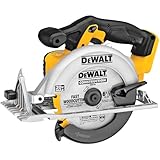
Overview: The DEWALT 20V MAX 6-1/2" Circular Saw (DCS391B) strikes an ideal balance between portability and performance in DEWALT’s cordless lineup. This sidewinder-style saw features a 5150 RPM motor and magnesium shoe, delivering professional-grade durability in a lighter package than its 7-1/4" XR sibling. Sold as a tool-only option, it’s designed for existing DEWALT battery users.
What Makes It Stand Out: The magnesium shoe provides exceptional durability without adding weight, ensuring long-term cutting accuracy. Its 0-50 degree bevel capacity exceeds most competitors, offering greater versatility for complex cuts. The optimized rubber grip and balanced design reduce fatigue during extended use. This saw proves that 6-1/2" blades can handle most residential construction tasks while saving weight.
Value for Money: As a mid-tier DEWALT offering, it delivers the brand’s reputation for reliability without the premium price of XR models. However, the tool-only nature means additional battery investment for newcomers. Compared to cheaper brands, you’re paying for proven ergonomics, serviceability, and a robust warranty network that professionals depend on.
Strengths and Weaknesses:
- Strengths: Lightweight magnesium construction; Excellent 50° bevel range; Proven DEWALT reliability; Good power-to-weight ratio; Comfortable grip
- Weaknesses: Batteries not included; Less power than XR 7-1/4" model; Smaller blade limits some applications
Bottom Line: An excellent choice for DIYers and professionals seeking a portable, reliable circular saw that covers most cutting needs without the bulk of larger models.
10. Seesii Mini Circular Saw with Laser Guide,4.8A 4000 RPM Compact Corded Circular Saw with Rip Guide,3 Blades (4-1/2") for Wood,Soft Metal,Tile,Plastic Cutting,Max Cut Depth 1-11/16"(90°),1-1/8" (45°)

Overview: The Seesii Mini Circular Saw targets precision-focused DIYers with its compact 4.8A corded design and integrated laser guide. This 4-1/2" saw includes three material-specific blades—TCT for wood, HSS for metal, and diamond for tile—making it a versatile multi-material cutter for home projects. Its lightweight build and dual safety switches prioritize user control and protection.
What Makes It Stand Out: The laser guide system sets this apart in the budget category, dramatically improving cut accuracy for inexperienced users. Unlike battery-powered alternatives, it delivers consistent power without runtime concerns. The inclusion of three specialized blades eliminates additional purchases for cutting wood, soft metal, and tile. At roughly half the weight of standard circular saws, it enables true one-handed operation.
Value for Money: This corded saw offers exceptional value for hobbyists and occasional users who don’t want to invest in battery platforms. The laser guide and multi-blade package alone justify the modest price tag. While it lacks the brute power of larger saws, its precision features and material versatility make it ideal for detailed work, flooring, and small renovations.
Strengths and Weaknesses:
- Strengths: Laser guide for precision; Three included blades; Lightweight one-handed use; Consistent corded power; Double safety switch
- Weaknesses: Limited cutting depth; Cord restricts mobility; Less power for thick materials; Not for heavy-duty framing
Bottom Line: Perfect for precision DIY tasks and multi-material projects where accuracy trumps raw power, especially for users without existing battery platforms.
Understanding Cordless Circular Saw Evolution in 2026
The cordless circular saw you bought in 2022 might as well be a relic. Today’s models leverage battery chemistry breakthroughs and motor controller innovations that were experimental just a few years ago. We’re witnessing the convergence of three transformative trends: batteries that deliver corded-equivalent runtime, motors that intelligently adapt to material density, and chassis designs that prioritize user biometric data. For remodelers, this means the freedom of cordless no longer requires compromises in power or precision.
Battery Technology Breakthroughs
The shift to silicon-anode lithium-ion cells has fundamentally changed capacity-to-weight ratios. In 2026, a 5.0Ah battery pack weighs what a 3.0Ah pack weighed in 2023, while delivering 40% more runtime. More crucially, these new cells maintain voltage under load far better, eliminating the “power sag” that plagued earlier cordless tools when cutting dense materials like LVL beams or pressure-treated lumber. Look for batteries with “High-Output” or “Max-Performance” designations—these aren’t marketing terms but indicators of cells rated for 45A continuous discharge, essential for sustaining blade speed through deep cuts.
Brushless Motor Innovations
Modern brushless motors now feature integrated Hall-effect sensors that communicate with the tool’s microcontroller 10,000 times per second. This allows for real-time torque adjustment based on blade resistance. When your saw encounters a hidden nail in reclaimed flooring, the motor instantly ramps up torque rather than bogging down—a game-changer for remodeling where material surprises are the rule, not the exception. The latest motors also employ rare-earth magnet configurations that reduce heat buildup by 30%, extending both runtime and tool lifespan during all-day demo work.
Key Power Metrics That Actually Matter
Manufacturers love to boast about raw voltage, but seasoned remodelers know that cutting performance lives in the interplay between RPM stability, torque delivery, and blade geometry. A 36V saw that drops 2,000 RPM under load will cut slower and rougher than an 18V model that maintains consistent speed. Understanding these metrics prevents costly missteps when matching tools to your typical work mix.
Decoding Voltage and Amp-Hour Ratings
Voltage determines potential power; amp-hours (Ah) measure energy capacity. For remodeling, the sweet spot has settled around 18V/20V max platforms for their versatility, but 36V/40V max saws deserve consideration for heavy timber work. Crucially, examine the watt-hour (Wh) rating—multiply voltage by amp-hours. A 20V max (18V nominal) 8.0Ah battery delivers 144Wh, giving you a true apples-to-apples comparison across brands. Pro tip: 2026’s fast-charging technology can replenish a 6.0Ah battery in 25 minutes, making two-battery workflows more practical than ever.
The Truth About No-Load Speed vs Cutting Speed
No-load speed (the RPM rating with no blade resistance) is virtually meaningless for remodelers. What matters is cutting speed—how fast the blade spins while actually removing material. Top-tier 2026 saws include dynamic speed compensation that adds up to 15% more RPM mid-cut when sensors detect blade slowdown. This technology, often called “Cut-Boost” or “Power-Reserve,” ensures consistent chip ejection and prevents scorching in hardwoods. Always check manufacturer specs for “under-load RPM” or “cutting speed maintenance” ratings rather than headline no-load numbers.
Blade Size and Cutting Capacity Essentials
Remodeling rarely involves cutting pristine 2x4s on sawhorses. You’re slicing through multiple layers of flooring, notching 4x6 posts for deck repairs, or trimming 3/4" oak stair treads. Blade size directly impacts your ability to handle these tasks without flipping materials or making dangerous climb cuts.
Maximum Cut Depth at 90° and 45°
The industry standard remains 7-1/4" blades for their 2-9/16" depth at 90°, easily handling doubled 2x material. However, 6-1/2" blades have gained traction for their lighter weight and lower cost, offering 2-1/8" depth—sufficient for 90% of remodeling tasks while saving nearly a pound of tool weight. For specialized work like timber framing or cutting through engineered beams, 8-1/4" blades provide 3" capacity but require significantly more power. Your decision should hinge on the thickest material you cut weekly, not occasionally.
Bevel Capacity and Stops
Modern saws offer bevel ranges from 0-56°, but the magic lies in the positive stops. Look for detents at 22.5°, 45°, and 50°—these cover the vast majority of remodeling angles without fussy adjustments. More importantly, examine the bevel adjustment mechanism. In 2026, premium saws feature rack-and-pinion bevel controls with micro-adjust dials, allowing single-degree changes without loosening the main lever. This precision proves invaluable when scribing siding or fitting trim where 1° matters.
Ergonomics and User Comfort for All-Day Use
A saw that feels balanced during a showroom demo can become a wrist-wrecking liability after four hours of overhead cuts in a crawlspace. Remodeling subjects tools to awkward angles, extended overhead work, and repetitive motions that amplify design flaws. Smart ergonomics directly correlate with cut quality and job site safety.
Vibration Reduction Technology
Advanced counterbalance systems now use eccentric weights that spin opposite the blade arbor, canceling up to 40% of vibration. This isn’t just about comfort—reduced vibration allows for better blade control during freehand cuts and decreases fatigue-related errors. Check for saws with rubber-isolated handles and floating motor mounts. Some 2026 models even feature adaptive vibration damping that adjusts based on grip pressure, detected through capacitive sensors in the handle.
Dust Management Solutions
OSHA’s 2026 silica dust regulations have made effective dust collection non-negotiable. The best cordless saws now include dual-port systems: a traditional upper guard port for shop vac connection and a lower blade guard port that captures dust at the source. Look for models delivering 90%+ dust collection efficiency with a HEPA vacuum attached. Even without a vac, internal blowers with directional nozzles keep cut lines visible. For indoor remodeling, this feature protects your lungs and eliminates hours of cleanup.
Safety Features You Shouldn’t Compromise On
Remodeling environments are inherently unpredictable—nails hidden in studs, unstable work surfaces, poor lighting. Your saw’s safety systems must work flawlessly every time, because “oops” isn’t an option when you’re 12 feet up on staging. 2026’s safety tech goes beyond basic blade guards.
Advanced Electronic Controls
Electronic blade brakes now stop rotation in under 2 seconds, but the real advancement is in anti-kickback algorithms. Using accelerometer data, the saw detects sudden upward thrust and instantly cuts motor power while engaging the brake. This prevents the violent recoil that causes most remodeling-related circular saw injuries. Additionally, soft-start technology prevents the jarring torque spike on startup that can twist the saw in your hands, especially critical when making plunge cuts or working on ladders.
LED Lighting and Cut-Line Visibility
Integrated LED work lights have evolved from simple bulbs to precision-projected lines that show exactly where the blade will cut. The best systems cast a shadow line from the blade itself, eliminating parallax error. For 2026, look for lights with adjustable brightness and color temperature—cool white for bright outdoor work, warm white for reducing glare indoors. Some models even feature laser guide lines that adjust thickness based on blade kerf, ensuring perfect alignment with your mark.
Build Quality and Durability for Professional Remodeling
Your saw will be dropped, rained on, and coated in every abrasive material known to construction. Professional-grade durability means more than metal shoes and beefy guards—it’s about engineered resilience that keeps the tool accurate after years of abuse. The difference between DIY and pro models lives in the details you can’t see in product photos.
Magnesium vs Plastic Components
Magnesium alloy housings offer the best strength-to-weight ratio, but not all magnesium is equal. Forged magnesium components provide 30% better impact resistance than die-cast parts. However, advanced fiber-reinforced nylons have closed the gap, offering superior chemical resistance and lower cost. The sweet spot for 2026? Magnesium base plates and gear housings with composite motor housings that absorb impacts without cracking. Avoid all-plastic base plates—they flex during heavy cuts, ruining accuracy.
IP Ratings and Weather Resistance
Remodeling doesn’t stop for weather. Look for IP56 ratings minimum, ensuring protection against dust ingress and high-pressure water jets. This matters when cutting pressure-treated lumber in the rain or demoing a flooded basement. Internal conformal coatings on circuit boards have become standard in premium 2026 models, preventing corrosion from humidity. Some brands now offer sealed battery compartments with pressure-equalization membranes—critical for coastal remodelers dealing with salt air.
Smart Features and Connectivity in 2026
The “smart tool” revolution has matured from gimmicky apps to genuinely useful job site integration. For remodelers managing multiple projects and crews, connectivity features can track tool location, monitor maintenance needs, and even customize performance profiles for specific tasks. The key is distinguishing helpful tech from battery-draining bloat.
Tool Tracking and Anti-Theft Technology
Bluetooth Low Energy beacons now provide 300-foot range tracking through mesh networks—when any contractor on the same platform passes your stolen saw, you get a location ping. More advanced models include GPS modules that activate when the saw leaves a geofenced job site, transmitting location every 30 minutes. Digital lockout features render the tool unusable without your phone nearby, deterring theft. For remodelers with $5,000+ in cordless tools, these features can pay for themselves with a single prevented theft.
Performance Customization Through Apps
Modern brushless controllers allow fine-tuning of speed, torque curves, and brake sensitivity via smartphone apps. Cutting delicate laminate? Cap the speed at 3,000 RPM to prevent chipping. Demoing nail-filled framing? Enable “Max Torque” mode that sacrifices some runtime for power. These profiles save to the tool’s memory, activating automatically when you insert specific batteries. The best systems even log cut counts and motor temperature, predicting maintenance needs before failures occur.
Price vs Value: Investing Wisely in Your Toolkit
A $400 cordless circular saw might seem extravagant until you factor in the cost of a helper spending an extra hour per day dealing with underpowered equipment. Value in remodeling tools lives at the intersection of durability, time savings, and total cost of ownership. Understanding the price tiers helps you invest where it matters most.
Warranty and Service Networks
Five-year warranties have become the pro standard, but read the fine print. Some cover only the tool, not the battery, while others exclude “commercial use”—a loophole that denies most remodeling claims. Look for brands with 3-year battery warranties and 90-day satisfaction guarantees. Equally important is the service network: does the manufacturer have repair centers within 50 miles, or will you be shipping tools for weeks? In 2026, some brands offer loaner programs that ship a replacement tool overnight while yours is serviced.
Battery Platform Ecosystem
Your circular saw is just the entry point. By 2026, a full remodeling kit might include 15+ cordless tools, all sharing batteries. Before committing to a saw, map out the ecosystem: does the brand offer a vacuum, recip saw, and rotary hammer that match your needs? Battery cross-compatibility across voltage lines (using adapters) can save thousands. Some platforms now feature “hybrid” batteries that work in both 18V and 36V tools, future-proofing your investment as you upgrade equipment.
Specialized Features for Remodeling-Specific Tasks
Generic woodworking saws falter when faced with remodeling’s unique challenges: plunge-cutting hardwood floors, trimming doors in place, or slicing through fiber-cement siding. The right specialized features transform frustrating tasks into routine work, saving hours and preventing callbacks.
Plunge Cutting Capabilities
True plunge action requires a riving knife that retracts flush with the blade guard and a depth stop that locks precisely. For 2026, look for saws with spring-loaded plunge releases that allow controlled entry without a pilot hole—essential for cutting countertop openings or retrofitting electrical chases. The best models include depth scales calibrated for plunge cuts, accounting for the arc of the blade’s entry. Rubber overmolds on the blade guard prevent marring finished surfaces when plunge-cutting flooring.
Rip Fence and Guide Rail Compatibility
A rock-solid rip fence turns your circular saw into a track saw alternative for breaking down sheet goods on site. The fence should lock without tools and maintain parallelism within 1/64" over its full extension. For precision work, guide rail compatibility is non-negotiable. Look for saws with integrated rail adapters that ride smoothly on aluminum tracks, delivering splinter-free cuts in hardwood plywood. Some 2026 models feature micro-adjustable cams that eliminate the slight play common in older rail systems, ensuring cabinet-quality cuts without hauling a table saw.
Making Your Final Decision: A 2026 Buyer’s Checklist
After dissecting specs and features, synthesis matters most. Your ideal cordless circular saw balances power, weight, and features against your specific remodeling niche. A kitchen specialist has different priorities than a whole-house renovator. This final framework distills the decision into actionable priorities.
First, audit your typical cuts: measure the thickest material you regularly encounter and the percentage of overhead work. This determines blade size and weight priorities. Next, evaluate your battery platform—staying within an ecosystem saves thousands over five years. Then, prioritize safety features based on your crew’s experience level; electronic anti-kickback is worth its weight in insurance premiums for newer carpenters. Finally, consider the “annoyance factor” features that make daily work smoother: tool-free adjustments, superior lighting, and dust collection that actually works. The best saw isn’t the most powerful or expensive—it’s the one that disappears in your hand, letting you focus on craftsmanship rather than fighting your tool.
Frequently Asked Questions
What’s the minimum voltage I need for serious remodeling work?
For professional remodeling, 18V (20V max) is the practical minimum, but the key is battery output current. Look for batteries rated for 45A continuous discharge, typically labeled “High Output” or “Max Performance.” These deliver corded-like power without the weight penalty of 36V platforms. Only step up to 36V if you regularly cut 2-1/2" or thicker engineered lumber.
Are 36V saws worth the extra weight and cost over 18V models?
Only for specific applications. A modern 18V high-output saw with an 8.0Ah battery will handle 95% of remodeling tasks while weighing 2-3 pounds less. The 36V advantage emerges when cutting hardwoods over 2-1/2" thick or running the saw continuously for 8+ hours. For most remodelers, the weight savings and battery interoperability of 18V platforms provide better overall value.
How long should batteries last in a professional remodeling setting?
Expect 200-300 charge cycles before capacity drops below 80%, which translates to 2-3 years of daily use. However, 2026’s battery management systems have improved significantly. With proper care—never fully depleting cells, storing at 50% charge in moderate temperatures—quality batteries can exceed 500 cycles. Runtime per charge varies wildly: 2-3 hours of intermittent cutting or 30-45 minutes of continuous heavy demo work on a 6.0Ah battery.
Can one cordless circular saw handle all remodeling tasks?
One high-quality 18V saw with a 7-1/4" blade covers most remodeling needs, but consider a two-saw approach. Pair a lightweight 6-1/2" saw for trim work and overhead cuts with a more powerful 7-1/4" model for framing and demolition. This combination weighs less than a single 36V saw and costs about the same while offering superior ergonomics for each task type.
What’s the most important safety feature for beginners?
The electronic anti-kickback sensor is non-negotiable for less experienced users. It detects sudden upward motion and stops the blade before dangerous recoil occurs. Combined with an electric brake that stops rotation in under 2 seconds, this technology prevents the most common circular saw injuries. A riving knife that moves with the blade guard is equally critical for preventing binding during rip cuts.
How do I know if a saw has enough power for cutting hardwoods?
Ignore voltage and focus on under-load RPM maintenance and torque output. In 2026, look for specs showing “cutting speed retention” above 85% at maximum depth. For hardwoods, you need a saw that maintains at least 4,000 RPM while cutting 1-1/2" maple or oak. Brushless motors with adaptive torque control will show minimal slowdown when encountering density changes, preventing burn marks and binding.
Should I prioritize blade size or motor power?
For remodeling, motor power trumps blade size. A powerful 6-1/2" saw that maintains speed is more valuable than a weak 7-1/4" model that bogs down. The smaller blade also cuts more efficiently with less effort, and the weight savings reduce fatigue. Only choose 7-1/4" if you regularly cut material thicker than 2-1/8"—the maximum depth of most 6-1/2" saws.
Are smart features and app connectivity just gimmicks?
In 2026, the gimmick phase is over. Tool tracking via Bluetooth/GPS has proven ROI by preventing theft and locating misplaced equipment. Performance customization prevents damage to expensive materials and extends tool life. However, avoid saws that require app use for basic functions like depth adjustment—the best smart features enhance, never replace, physical controls. The maintenance logging feature alone can save hundreds in premature failures.
What’s the typical lifespan of a professional-grade cordless circular saw?
With proper maintenance, expect 5-7 years of daily professional use. The motor and gears rarely fail; most tools are retired when battery platforms become obsolete or safety features advance significantly. Brushless motors have no wearable brushes, but bearings and switches wear out. Regular cleaning of the blade guard mechanism and occasional gear grease replacement can extend life beyond 10 years. The limiting factor is often battery availability as platforms evolve.
How important is dust collection for indoor remodeling projects?
Critical. OSHA’s 2026 silica regulations mandate HEPA-level dust collection for most indoor cutting operations. Beyond compliance, effective dust control saves hours of cleanup, protects finished surfaces, and preserves your respiratory health. Look for saws with dual dust ports and internal blowers that achieve 90%+ collection efficiency. The time saved masking and cleaning often pays for the premium price difference within a few projects.
See Also
- 10 Affordable Cordless Circular Saws That Don’t Sacrifice Power in 2026
- Best Cordless Circular Saws for Carpenters: 10 Expert Picks for 2026
- Top 10 Best Cordless Circular Saws for DIY Enthusiasts in 2026
- Top 10 Best Cordless Circular Saws for DIY Home Projects in 2026
- Top 10 Best Cordless Circular Saws for DIY Projects in 2026