Table of Contents
Remodeling your home in 2026 feels like conducting a surgical operation behind drywall. One wrong move—one misplaced drill bit—and you could puncture a water pipe, sever electrical wiring, or compromise structural integrity. The difference between a seamless renovation and a costly disaster often comes down to a single tool: the modern stud finder and detector combo. These aren’t the finicky, beeping gadgets of decades past. Today’s wall scanning technology has evolved into sophisticated multi-sensors that peer through plaster, lath, and tile with radar-like precision, distinguishing between wooden studs, metal pipes, and live electrical cables before you ever pick up a tool.
As we navigate the complexities of older homes with unpredictable construction and modern builds with dense insulation and radiant heating systems, the demand for all-in-one detection solutions has never been greater. Whether you’re a weekend warrior updating your kitchen or a professional contractor managing multiple job sites, understanding what separates a reliable combo device from a disappointing toy is critical. Let’s explore the cutting-edge features, technologies, and considerations that define the best stud finder and detector combos for remodeling in 2026.
Top 10 Stud Finder Detector Combos
Detailed Product Reviews
1. Franklin Sensors Prosensor M210 Stud Finder With 13-Sensors, Wood & Metal Stud Detector/Wall Scanner, Live Wire Detection, Made in the USA
, Made in the USA](https://m.media-amazon.com/images/I/31mVcMwVM3L._SL160_.jpg)
Overview: The Franklin Sensors Prosensor M210 represents the premium tier of stud detection technology, engineered for professionals who demand unwavering accuracy. Featuring a patented 13-sensor array, this American-made tool eliminates the tedious “scan and guess” approach of conventional finders. Its wide LED display simultaneously reveals stud centers and edges, while automatic deep scanning adjusts for wall composition up to 1.7 inches without manual mode switching.
What Makes It Stand Out: The M210’s multi-sensor architecture sets it apart from single-sensor competitors, providing instant, reliable readings across drywall textures and thicknesses. Unlike basic models requiring slow sweeps, this device shows full stud width in real-time, dramatically reducing marking errors. The integrated live wire meter adds critical safety assurance, and the tool’s reputation for durability is backed by professional-grade construction that withstands daily job site abuse.
Value for Money: Priced at a premium ($50-70 range), the M210 justifies its cost through time savings and error prevention. For contractors and serious DIYers, one avoided drilling mistake pays for the tool. While budget options under $30 exist, they can’t match the M210’s consistency or depth performance. This is a buy-once, cry-once investment for those who value precision over penny-pinching.
Strengths and Weaknesses: Strengths: Unmatched 13-sensor accuracy; continuous deep scanning; shows full stud width; robust build quality; reliable live wire detection; no calibration required; made in USA with strong warranty support.
Weaknesses: Significantly higher price point; may be overkill for occasional picture-hanging; bulkier design than compact models; battery life could be better under heavy use.
Bottom Line: The Prosensor M210 is the undisputed choice for professionals and perfectionist homeowners. If your projects demand flawless accuracy and you drill into walls weekly, this tool’s premium performance outweighs its cost. For casual users, however, the investment may not be justified.
2. Stud Finder Wall Scanner - 5 in 1 Stud Finder Tool w/Smart Chip and HD LCD Display, Stud Detector Beam Finders for the Center and Edge of Wood AC Wire Metal Studs Joist Pipe (BloodOrange)

Overview: This 5-in-1 BloodOrange stud finder positions itself as a versatile mid-range solution for homeowners and DIY enthusiasts. Equipped with an intelligent micro-sensor chip and bright backlit LCD, it promises rapid detection of studs, pipes, wires, and joists behind various surfaces. The tool combines visual and audio feedback to guide users toward precise drilling locations, emphasizing safety and ease of use for everyday projects.
What Makes It Stand Out: The HD LCD display with dual audio/visual alerts distinguishes it from entry-level models that rely solely on blinking lights. Multiple scan modes (stud, deep, metal) provide flexibility for different wall compositions, while the BloodOrange colorway adds visual appeal in a crowded tool bag. The heavy emphasis on gift-giving in its marketing suggests confidence in its user-friendly design for non-professionals.
Value for Money: Typically retailing between $25-35, this scanner competes directly with other generic multi-function finders. It offers comparable features to name-brand models costing twice as much, making it attractive for budget-conscious buyers. However, the unknown manufacturer and lack of long-term durability data mean you’re trading brand reputation for upfront savings. For occasional use, the price-to-feature ratio is compelling.
Strengths and Weaknesses: Strengths: Affordable 5-in-1 functionality; clear HD display; helpful audio alerts; multiple scanning depths; lightweight ergonomic design; excellent gift packaging.
Weaknesses: Generic brand with uncertain warranty support; potentially inconsistent quality control; marketing language overstates “highest sensitivity”; battery compartment can be finicky; not built for professional daily use.
Bottom Line: This BloodOrange scanner delivers solid value for homeowners tackling weekend projects. While it won’t replace professional-grade tools, its feature set and price make it a smart choice for hanging TVs, shelves, and mirrors safely. Consider it a capable entry-level option, not a job-site workhorse.
3. Stud Finder Wall Scanner - 5 in 1 Stud Finder Tool w/Microprocessor Chip and HD LCD Display, Stud Detector Beam Finders for the Center and Edge of Wood AC Wire Metal Studs Joist Pipe (Yellow Pear)

Overview: The Yellow Pear variant of this popular 5-in-1 stud finder offers identical functionality to its colorful counterparts, targeting the same homeowner and DIY demographic. With its microprocessor-driven detection system and backlit LCD interface, it scans for wood, metal, and live AC wires while providing both visual and audible location cues. The tool emphasizes safety and accident prevention for common household mounting tasks.
What Makes It Stand Out: Beyond the distinctive yellow housing, this model’s standout feature is its comprehensive approach to user guidance—simultaneously displaying stud center, edges, and battery status while emitting progressive audio tones. The microprocessor chip claims enhanced sensitivity over basic models, and the deep scan mode attempts to locate larger hidden objects like pipes that cheaper units might miss.
Value for Money: Positioned in the $25-35 bracket, it matches the BloodOrange model’s aggressive pricing strategy. You’re getting multi-mode scanning capabilities that rival $60+ name-brand tools, but without the proven track record. For renters or new homeowners who need occasional wall-safety assurance, the cost is easily justified. Professionals should view it as a backup rather than primary tool.
Strengths and Weaknesses: Strengths: Competitive pricing for feature set; intuitive dual-mode feedback; versatile scanning options; compact form factor; attractive color for tool identification; strong gift appeal.
Weaknesses: Virtually indistinguishable from similar generic models; durability concerns under frequent use; accuracy may degrade on textured walls; instruction manual lacks depth; no manufacturer website for support.
Bottom Line: The Yellow Pear scanner is functionally identical to other generic 5-in-1 tools, making color preference a primary differentiator. It performs adequately for light-duty tasks and offers peace of mind at a reasonable price. Purchase with realistic expectations—it’s a handy household gadget, not precision instrumentation.
4. Stud Finder Wall Scanner 5-in-1 - Detector for Wood, Metal, Joists, Pipes, and AC Wires, Upgraded New version Intelligent Chip, High-Definition LCD Display Screen & Audible Alarm

Overview: This upgraded 5-in-1 scanner distinguishes itself from generic alternatives by specifying precise detection depths and incorporating auto-calibration technology. The tool targets detail-oriented DIYers who appreciate technical transparency, offering defined scan modes at 0.5", 1", and 1.5" for studs, plus dedicated AC (2") and metal (2.36") modes. Its ergonomic non-slip grip suggests extended use comfort for project-intensive weekends.
What Makes It Stand Out: Explicit depth specifications provide confidence that cheaper generics lack, letting users select the appropriate mode for their wall construction. The auto-calibration feature—initiated by holding the scan button until a beep—removes user error from the setup process, a common failure point in manual-calibration models. The combination of HD display, audio alarms, and live wire indicator light creates a triple-redundant safety system.
Value for Money: At $30-40, it commands a slight premium over basic 5-in-1 units but undercuts professional brands by 40%. The added technical specifications and auto-calibration justify the modest upcharge for serious DIY enthusiasts who want documented performance metrics. You’re paying for engineering details rather than just marketing claims, which translates to better real-world reliability.
Strengths and Weaknesses: Strengths: Precise depth mode specifications; reliable auto-calibration; ergonomic grip design; triple-feedback system (visual/audio/light); clear battery indicator; upgraded chip claims better stability.
Weaknesses: Still lacks brand-name recognition; depth performance may vary on plaster/lath; calibration beep can be jarring in quiet spaces; plastic housing feels less robust than pro models; limited warranty information.
Bottom Line: This upgraded scanner hits the sweet spot for committed DIYers who outgrow basic tools but can’t justify contractor-grade prices. The specified depths and auto-calibration address common pain points of generic finders. It’s the most technically honest option in the mid-range category, making it a worthwhile step-up purchase.
5. Stud Finder Wall Scanner - 5 in 1 Stud Finder Tool w/Smart Chip and HD LCD Display, Stud Detector Beam Finders for the Center and Edge of Wood AC Wire Metal Studs Joist Pipe (Buttercup)
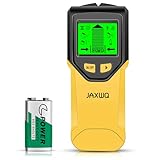
Overview: The Buttercup edition completes this family of colorful 5-in-1 stud finders, offering the same core functionality as its siblings in a muted yellow finish. Marketed heavily as a practical gift item, it combines intelligent chip technology with a bright LCD display to locate hidden studs, pipes, and live wires. The tool emphasizes accident prevention for common tasks like mounting TVs, cabinets, and bathroom fixtures, targeting safety-conscious homeowners.
What Makes It Stand Out: While mechanically identical to the BloodOrange and Yellow Pear versions, the Buttercup’s softer color scheme may appeal to users preferring understated tools. Its consistent emphasis on gift-giving—packaged with clear instructions and ready-to-wrap boxing—makes it ideal for housewarming presents. The smart chip processing promises faster detection sweeps than traditional single-sensor models, reducing the back-and-forth that frustrates novice users.
Value for Money: Retailing at $25-35, it matches the pricing of its generic counterparts, positioning itself as an accessible safety tool rather than professional equipment. The value proposition hinges on multi-functionality at a fraction of brand-name costs. For recipients who’ll use it twice a year, the price is perfect. For buyers seeking daily reliability, the savings don’t offset potential longevity concerns.
Strengths and Weaknesses: Strengths: Gift-ready presentation; affordable multi-mode detection; user-friendly interface; lightweight for overhead work; distinct color for easy identification; comprehensive detection capabilities for the price.
Weaknesses: Identical to rebadged alternatives; questionable long-term component quality; accuracy drops on uneven surfaces; heavy marketing fluff in product description; no clear support channel; battery life is mediocre.
Bottom Line: The Buttercup scanner is a competent, giftable tool that performs adequately for light household duty. Choose it based on color preference or gift presentation needs, not performance differentiation. It’s perfect for new homeowners or DIY beginners who need occasional wall-scanning confidence without professional demands. Manage expectations and it will serve you well.
6. Franklin Sensors ProSensor M150/X990 Stud Finder with Live Wire Detection and 9-Sensors, Wood & Metal Stud Detector/Wall Scanner, Made in The USA
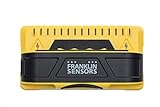
Overview: The Franklin Sensors ProSensor M150 elevates stud finding with nine sensors packed into a user-friendly tool for DIYers and homeowners. This American-made scanner eliminates calibration headaches and provides clear visual feedback on stud locations. With 1.5-inch maximum depth through drywall and live wire detection, it tackles most residential projects safely and accurately.
What Makes It Stand Out: Nine sensors deliver dramatically improved accuracy over conventional single or dual-sensor models. The one-button operation requires no calibration—simply press and scan anywhere, even atop a stud. Its LED display reveals the complete stud width, including double studs and irregular framing patterns. Integrated live wire detection provides crucial safety information before drilling.
Value for Money: The M150 commands a premium over basic stud finders but justifies the cost through reliability and mistake prevention. Avoiding one ruined drill bit or electrical mishap covers the price difference. For homeowners with multiple projects, the time saved and accuracy gained offer excellent return on investment compared to cheaper, less dependable alternatives.
Strengths and Weaknesses: Strengths include superior accuracy from nine sensors, intuitive operation, full-stud LED visualization, and dependable live wire detection. American manufacturing ensures solid build quality. Weaknesses involve battery constraints—two AAA batteries required (not included) with no rechargeable compatibility, creating ongoing cost and inconvenience. The 1.5-inch depth limit may prove insufficient for thicker wall materials.
Bottom Line: The ProSensor M150 is ideal for serious DIYers seeking professional-level accuracy without professional pricing. Its multi-sensor technology and safety features provide confidence for hanging TVs, cabinets, or undertaking renovations. Despite minor battery limitations, its performance and reliability make it a smart addition to any home toolkit.
7. Franklin Sensors ProSensor M210 Stud Finder with 13-Sensors, Wood & Metal Stud Detector/Wall Scanner, Live Wire Detection (Green), Made in The USA

Overview: The ProSensor M210 represents Franklin Sensors’ premium consumer offering, featuring an impressive 13-sensor array for maximum accuracy. Built for discerning homeowners and professionals alike, this American-made tool provides simultaneous center and edge detection through most wall types. With live wire metering and 1.5-inch depth capacity, it delivers professional-grade performance for critical installations.
What Makes It Stand Out: Thirteen sensors create the most accurate scanning tool in its class, eliminating guesswork and false readings entirely. The innovative LED display shows stud centers and edges simultaneously, revealing complex framing patterns invisible to simpler devices. One-mode operation adapts automatically to varying depths and materials without calibration. The tool scans reliably from any starting position, even directly over studs.
Value for Money: While priced at the higher end for consumer stud finders, the M210 justifies every dollar through unparalleled accuracy and durability. Professionals appreciate its consistency, while serious DIYers benefit from reduced project time and eliminated mistakes. Compared to repairing a single drywall error or electrical accident, the investment proves minimal. It outperforms cheaper alternatives that require multiple passes and still deliver uncertain results.
Strengths and Weaknesses: Strengths include exceptional 13-sensor precision, simultaneous edge/center display, intuitive calibration-free operation, and robust construction rated #1 by users. Live wire detection enhances safety. Weaknesses include the higher price point, which may deter casual users, and AA battery requirement (not included). Some users might prefer a digital LCD over LED bars for precise measurements.
Bottom Line: The ProSensor M210 is the top choice for users demanding the absolute best in stud detection accuracy. Its 13-sensor technology and professional build quality make it equally suitable for contractors and dedicated DIY enthusiasts. While more expensive than basic models, its reliability and precision make it worth every penny for critical mounting projects.
8. Franklin Sensors ProSensor MAX Stud Finder with 13-Sensors, Wood & Metal Stud Detector/Wall Scanner, Scans Through Plaster, OSB & More, Made in the USA

Overview: The ProSensor MAX is Franklin Sensors’ heavy-duty solution designed for challenging wall structures. With 13 sensors and an exceptional 2.5-inch detection depth, it penetrates materials that defeat standard stud finders. This professional-grade tool handles plaster, OSB, plywood, multiple drywall layers, and tile—making it indispensable for older homes and commercial applications.
What Makes It Stand Out: Two distinct detection modes set the MAX apart. Mode 1 handles standard walls, while Mode 2 powers through thick, multi-layered surfaces including lath and plaster, double drywall, and plywood/MDF. The 2.5-inch depth capacity is unmatched in the consumer market. Thirteen sensors provide simultaneous center and edge visualization across the entire stud width, revealing irregular and double stud configurations with clarity.
Value for Money: The MAX commands a premium price but delivers unique capabilities unavailable in cheaper alternatives. For professionals working in diverse construction environments, it eliminates the need for multiple specialized tools. Homeowners renovating pre-1960 houses or condos with thick firewalls will recoup the cost by avoiding exploratory holes and contractor fees. Its durability ensures years of reliable service, making it a sound long-term investment.
Strengths and Weaknesses: Strengths include industry-leading 2.5-inch depth, dual-mode versatility for exotic wall types, 13-sensor accuracy, and robust American construction. It excels where other finders fail completely. Weaknesses include higher cost, larger physical size, and potential overkill for users with standard drywall-only needs. The lack of detailed battery specifications in marketing materials creates minor uncertainty.
Bottom Line: The ProSensor MAX is essential for professionals and homeowners tackling non-standard walls. Its ability to scan through plaster, OSB, and multiple layers justifies the premium price for those who need it. For typical drywall applications, the M210 offers better value, but when facing challenging surfaces, the MAX is unmatched and worth every cent.
9. Stud Finder Wall Scanner 5 in 1 Multifunctional Upgraded Smart Wall Scanner, Stud Sensor Beam Detector with Battery for Wood Metal and AC Wire Detection, Comes with HD LCD Display and Audio Alarm

Overview: This multifunctional 5-in-1 stud scanner targets budget-conscious DIYers seeking versatility. Equipped with upgraded sensor chips and five scan modes, it detects wood studs, metal pipes, rebar, and live AC wires up to 2.36 inches deep. The HD LCD display and audio alarms provide clear feedback for hanging projects, making it accessible for occasional use.
What Makes It Stand Out: Five distinct scan modes offer specialized detection: three stud depth settings, dedicated metal scanning, and AC wire detection. WireWarning remains active across modes, continuously alerting users to electrical hazards. The LCD display provides numerical depth readings and precise center/edge indicators, while audio alarms offer hands-free operation. This versatility exceeds single-mode competitors at a similar price point.
Value for Money: This scanner delivers exceptional feature density for its budget-friendly price. Competing stud finders with similar multi-mode capabilities cost significantly more. While build quality may not match premium American-made tools, the functionality-per-dollar ratio is outstanding. For homeowners undertaking occasional projects, it provides professional-style features without the professional investment, though long-term durability remains questionable.
Strengths and Weaknesses: Strengths include five versatile scan modes, impressive 2.36-inch metal detection depth, continuous AC wire warning system, clear LCD display, and affordable pricing. Weaknesses involve potentially lower build quality and sensor consistency compared to premium brands, generic manufacturer support, and reliance on less-proven technology. Accuracy may degrade faster over time than professional-grade alternatives.
Bottom Line: This 5-in-1 scanner is perfect for casual DIYers wanting maximum features on a minimal budget. Its versatility and depth capabilities punch well above its price class. While not built for daily professional use, it provides reliable performance for home projects. Consider this if you need occasional scanning with multiple detection modes without spending premium dollars.
10. Franklin Sensors ProSensor M70 Stud Finder with 7-Sensors, Wood & Metal Stud Detector/Wall Scanner, Made in The USA

Overview: The ProSensor M70 serves as Franklin Sensors’ entry-level multi-sensor model, delivering core accuracy benefits to budget-minded users. With seven sensors and 1.5-inch depth capacity, this American-made tool provides reliable stud detection for basic home projects. It maintains the brand’s signature calibration-free operation and full-stud visualization in a more affordable package.
What Makes It Stand Out: Seven sensors offer significantly better accuracy than conventional single-sensor models while remaining accessible to casual users. The LED display simultaneously shows stud centers and edges, preventing the common error of drilling at the edge rather than the center. One-button operation eliminates learning curve and calibration steps. Users can scan from any wall position, including directly over studs, without false readings.
Value for Money: The M70 strikes an excellent balance between Franklin’s premium technology and affordability. It outperforms similarly priced competitors from other brands while costing less than its 9-sensor and 13-sensor siblings. For homeowners who hang pictures, install shelves, or mount TVs occasionally, it provides professional-grade accuracy without unnecessary professional features. The durable construction ensures longevity, making it a smarter long-term purchase than cheaper disposable alternatives.
Strengths and Weaknesses: Strengths include reliable seven-sensor accuracy, intuitive one-button operation, simultaneous edge/center display, and robust American manufacturing. It requires no calibration and works consistently. Weaknesses include AAA battery requirement (not included) with no rechargeable compatibility, limited depth compared to the MAX model, and fewer sensors than premium Franklin models. The LED display lacks numeric depth readouts some users prefer.
Bottom Line: The ProSensor M70 is the sweet spot for homeowners wanting reliable stud detection without overspending. It delivers Franklin’s proven multi-sensor technology in a practical, durable package. For standard drywall projects, it performs admirably and represents the best value in the Franklin lineup for casual to moderate users. Consider upgrading only if you regularly encounter thick or unusual wall materials.
The Evolution of Wall Scanning Technology in Modern Remodeling
The leap from basic magnetic stud finders to today’s multi-sensor combos represents one of the most significant advances in job site technology. Early electronic models struggled with calibration, delivering false positives that eroded user trust. By 2026, machine learning algorithms and improved sensor fusion have transformed these tools into reliable partners that adapt to wall composition in real time. Modern devices combine capacitive sensing, radar waves, and electromagnetic field detection to create layered, cross-referenced scans that dramatically reduce errors. This evolution matters because remodeling projects increasingly involve complex wall systems—think sound-dampening drywall, cement board in bathrooms, or insulated exterior walls where traditional tools simply fail.
Why Combo Devices Are Revolutionizing DIY and Professional Work
The integration of multiple detection modes into a single unit isn’t just about convenience—it’s about workflow efficiency and safety. Contractors no longer need to carry separate tools for stud detection, live wire location, and pipe mapping. A quality combo device consolidates these functions while maintaining the accuracy once reserved for specialized single-purpose scanners. For DIYers, this means professional-level confidence without the steep learning curve. The real revolution lies in the software: 2026 models feature predictive scanning that learns from your home’s construction patterns, offering suggestions like “potential fire block located 48 inches from floor” or “irregular stud spacing detected—likely a plumbing chase.”
Understanding the Core Technologies Behind 2026’s Advanced Detectors
Peeling back the plastic housing reveals a symphony of sensors working in concert. The most sophisticated combos employ a tri-sensor architecture: a primary radar transceiver for deep detection, a capacitive array for material discrimination, and an electromagnetic coil for live wire sensing. This multi-pronged approach allows the device to cross-reference signals, eliminating the interference that plagued earlier generations. When you slide the tool across a wall, it’s not just looking for density changes—it’s analyzing dielectric properties, conductivity, and signal reflection patterns.
Magnetic Sensing vs. Electronic Sensors: What’s Changed?
While rare earth magnet-based finders still have niche applications for locating nail heads, they’ve become obsolete for comprehensive remodeling. Electronic sensors now dominate because they detect the stud itself rather than fasteners. The key advancement in 2026 is dynamic frequency adjustment—sensors automatically shift their scanning frequency based on initial readings. Scanning a plaster wall? The device uses lower frequencies for deeper penetration. Switch to thin drywall? It immediately ramps up frequency for higher resolution. This adaptability eliminates the manual mode-switching that slowed down previous models.
Radar-Based Detection: The Game-Changer for Deep Scanning
Ground-penetrating radar technology, miniaturized for consumer tools, now enables detection up to 6 inches deep in standard mode and 8 inches in enhanced settings. This isn’t just about finding studs in thick walls—it’s about mapping entire wall systems. Radar can identify PVC pipes, PEX tubing, and even conduit runs by analyzing the unique signature of each material. The latest implementation uses stepped-frequency continuous wave radar, which provides better resolution than the impulse radar found in earlier models. For remodelers opening up walls, this means creating a mental map of hidden obstacles before making the first cut.
Key Features That Define Professional-Grade Combos
Discerning between hobbyist tools and professional equipment requires looking beyond marketing claims. True professional-grade combos share several non-negotiable features: redundant sensing systems, user-replaceable parts, and firmware update capabilities. The device should feel substantial but not heavy, with buttons that provide tactile feedback even when wearing gloves. Most importantly, professional tools offer granular control over sensitivity settings, allowing experienced users to fine-tune scans for unusual situations like tile-over-cement-board installations.
Depth Detection Capabilities: Going Beyond the Surface
Standard depth ratings can be misleading. A tool advertised as “4-inch depth” might achieve that only in optimal conditions—single-layer drywall, no insulation, perfect calibration. Real-world performance varies dramatically. In 2026, leading manufacturers provide depth curves rather than single numbers, showing detection reliability at various depths and wall compositions. Look for devices that maintain 90% accuracy at their maximum rated depth. For remodeling, prioritize tools that excel at 3-5 inch detection, as this range covers most residential wall assemblies including plaster, lathe, and moderate insulation.
Multi-Material Discrimination: Wood, Metal, and Live Wires
The critical feature separating basic from advanced combos is the ability to differentiate materials with confidence. Modern devices don’t just detect “something”—they classify it. This requires sophisticated signal processing that analyzes phase shift, amplitude decay, and conductive properties. The best 2026 models display confidence percentages: “Wooden stud detected (95% confidence)” or “Non-ferrous metal (likely copper pipe, 87% confidence).” This level of detail prevents costly mistakes, like drilling into a cast iron drain pipe thinking it’s a stud. Live wire detection has also improved, with multi-voltage sensitivity that can distinguish between 120V lighting circuits and 240V appliance lines.
Display Technology and User Interface Innovations
The interface is your window into what lies behind the wall. Cluttered displays with confusing icons create hesitation and mistakes. Modern combos have embraced minimalist design principles while packing in more information. High-resolution color screens now dominate the professional segment, using color coding that follows universal job site standards: blue for water, red for electrical, brown for wood, gray for metal. The display should remain visible in direct sunlight and automatically dim in dark spaces to preserve night vision.
Color LCD Screens vs. LED Indicators: Making Sense of Visual Feedback
While premium models feature full LCD screens, some professional-grade tools intentionally use high-density LED arrays for durability and battery life. These aren’t the simple blinking lights of old—they’re programmable matrix displays that create detailed patterns. The choice between LCD and LED often comes down to work environment. LCD excels in controlled indoor conditions where detailed information matters. LED indicators prove more robust on rough job sites where screens can crack and extreme temperatures affect performance. Some hybrid models offer both, using LEDs for quick scans and activating the LCD for detailed mapping.
Audio Alerts and Haptic Feedback: Why Dual Sensory Input Matters
Visual feedback alone is insufficient when you’re focused on marking stud locations. Advanced combos provide customizable audio tones where pitch, volume, and pattern convey information. A steady low tone might indicate wood, while a rapid high-pitched beep signals live electricity. Haptic feedback—subtle vibrations through the tool’s body—allows detection in noisy environments where audio alerts are useless. The vibration patterns correspond to material types, letting you “feel” what’s behind the wall without taking your eyes off your work. This multisensory approach reduces scanning time and improves accuracy, especially for users with visual impairments.
Power Management and Battery Technology for All-Day Use
Nothing halts a project faster than a dead battery. Modern combos have adopted power management strategies from smartphones, using low-power sensor modes and intelligent wake functions. A quality device should deliver 8-10 hours of active scanning on a single charge, with standby times measured in weeks. The power system must maintain consistent sensor performance as the battery drains—voltage sag shouldn’t translate to reduced scanning depth.
Rechargeable Lithium-Ion vs. Standard Batteries: Pros and Cons
The industry has largely moved to integrated rechargeable batteries, but this shift creates a critical consideration: replaceability. Professional-grade tools allow field battery swaps using standardized packs, while consumer models often require sending the unit in for service. Standard AA or AAA batteries offer universal availability but can’t provide the sustained current that advanced sensors demand. The 2026 compromise is tools with both—an internal rechargeable cell for daily use and a backup AA compartment for emergencies. When evaluating options, check charging speed: a device that reaches 80% charge in 30 minutes minimizes downtime.
Ergonomics and Durability: Built for Real-World Job Sites
A tool that feels awkward after five minutes of use will collect dust in your toolbox. Ergonomic design for wall scanners means more than comfortable grips—it involves weight distribution that keeps the sensor pad flat against the wall without user fatigue. The scanning surface should glide smoothly over textured surfaces without catching. Button placement must prevent accidental activation while allowing thumb-operated mode changes during scans.
IP Ratings and Drop Resistance: What the Numbers Mean
Job site conditions are brutal. Dust from drywall sanding, water from plumbing work, and inevitable drops onto concrete demand robust construction. IP65 rating has become the minimum standard, indicating complete dust protection and resistance to water jets. However, the drop test rating is equally important. Look for MIL-STD-810G certification or manufacturer claims of surviving drops from at least 6 feet onto concrete. The sensor pad needs reinforced edges, as this is the most vulnerable point during falls. Some 2026 models feature replaceable sensor caps—an inexpensive part that absorbs impact damage.
Calibration and Accuracy: The Science Behind Reliable Readings
Calibration is the invisible factor separating precision from guesswork. Every wall has a baseline density and electromagnetic signature. Quality combos perform a two-point calibration: first on a known empty section of wall, then against a verified stud location. This creates a reference map that accounts for local conditions. The process should take seconds, not minutes, and require minimal user input.
Auto-Calibration Features: Set It and Forget It
Manual calibration is where most users introduce errors. Auto-calibration continuously monitors background conditions and adjusts sensitivity in real time. As you move from an interior drywall partition to an exterior insulated wall, the device automatically rebalances its sensors. The best implementations provide subtle on-screen indicators showing calibration status—perhaps a small icon that pulses when the tool is learning a new wall type. This transparency builds user confidence and prevents the “black box” feeling where you’re unsure if the tool is working correctly.
Multi-Functionality: When Your Stud Finder Does More
The “combo” in stud finder and detector combo implies capabilities beyond basic scanning. Leading 2026 models integrate functions that previously required separate tools, reducing kit weight and simplifying workflows. This convergence reflects a broader trend in job site tools toward modular, multi-purpose devices that communicate with each other.
Integrated Laser Levels and Measuring Tools
Some premium combos now include self-leveling laser lines that project horizontally and vertically from the scanning edge. This allows immediate marking of stud centers without transferring measurements. Integrated laser distance measurers can calculate room dimensions and even estimate material quantities, storing data for later reference. While these additions increase cost, they eliminate the dance between multiple tools when laying out a project. The key is integration quality—the laser should align perfectly with the sensor’s center point, and the distance measurer must maintain accuracy within 1/16 inch.
Bluetooth Connectivity and App Integration
The smartest tools in 2026 don’t work in isolation. Bluetooth Low Energy connectivity pairs your scanner with smartphone apps that create detailed wall maps. As you scan, the app builds a floor plan showing stud locations, pipe runs, and electrical circuits. Some apps integrate with augmented reality, overlaying scan data onto your phone’s camera view. This is invaluable for complex remodels where you need to reference findings days or weeks later. Look for tools with open APIs that export data to common construction software like BIM 360 or Procore, enabling seamless collaboration with architects and engineers.
Price vs. Performance: Investing Wisely in 2026
The stud finder market spans from $20 basic magnetic tools to $400+ professional combos. Understanding where your needs fall on this spectrum prevents both overspending and dangerous under-buying. Price correlates strongly with sensor count, display quality, and software sophistication. A $150 tool might detect studs adequately but lack the depth and material discrimination for safe plumbing or electrical work.
Budget Considerations for Homeowners vs. Contractors
DIY enthusiasts undertaking occasional projects should focus on mid-range models ($80-$150) that offer reliable wood and metal detection with basic live wire sensing. These tools prioritize ease of use over advanced features. Professional contractors need the durability, accuracy, and data capabilities of $200+ models where the cost is amortized across hundreds of jobs. The hidden cost is false economy: a cheap tool that misses a pipe can cause thousands in water damage. Consider warranty and support—professional tools often include two-year warranties and loaner programs, while budget options may offer only 90 days of coverage.
Safety Features That Protect You and Your Home
Beyond detecting hazards, modern combos include features that actively prevent accidents. Automatic shutoff when overloaded sensors detect dangerously high voltage, reverse polarity warnings for metal detection, and even thermal sensors that identify potential hot spots behind walls. Some tools now include non-contact voltage (NCV) detection that works from several inches away, allowing quick safety sweeps before scanning begins.
Live Wire Detection Sensitivity and False Positive Reduction
The bane of older detectors was flagging every metal object as live. Improved algorithms in 2026 models analyze the 60Hz (or 50Hz) frequency signature unique to AC power, filtering out static from metal pipes or ductwork. Sensitivity adjustment is crucial—scanning near electrical panels requires reduced sensitivity to avoid overwhelming alerts, while finishing work might need maximum sensitivity to trace low-voltage lighting circuits. The best tools allow you to set a voltage range, ignoring harmless low-voltage thermostat wires while flagging dangerous line voltage.
Common Mistakes Even Pros Make with Wall Scanners
Even experienced contractors fall prey to predictable errors. The most frequent mistake is scanning too quickly—sensors need 1-2 seconds per inch to gather reliable data. Another is ignoring calibration warnings, assuming the tool is “close enough.” Moisture is a silent killer of accuracy; scanning walls with high water content (recent plumbing work, humid climates) requires drying time or moisture-compensated modes. Perhaps most dangerous is the “confirmation bias” scan, where users move the tool until they get the reading they expect, rather than letting the data guide them.
Maintenance and Care: Extending Your Tool’s Lifespan
A quality combo device is an investment that should last years. Sensor pads accumulate drywall dust and oils that degrade performance—clean them weekly with isopropyl alcohol and a lint-free cloth. Store tools in their protective cases away from extreme temperatures, which can desensitize electronic components. Firmware updates often include accuracy improvements and new detection algorithms; check for updates monthly. Battery care matters too—if storing for extended periods, maintain a 50% charge to prevent cell degradation. For tools with user-replaceable batteries, mark the installation date and replace them every 18-24 months before capacity drops significantly.
Future-Proofing Your Purchase: What to Expect Beyond 2026
The trajectory of wall scanning technology points toward even greater integration and intelligence. Emerging prototypes use artificial intelligence to identify construction era based on wall composition, automatically adjusting detection parameters for 1920s plaster versus 2020s fire-rated drywall. We’re seeing early development of ultrasonic augmentation that could detect water-filled pipes by sound signature. When buying in 2026, choose tools with upgradeable firmware and modular sensor designs. Companies committed to backward compatibility will offer sensor upgrades rather than forcing complete tool replacement. Consider brands that participate in industry standards bodies, ensuring your tool won’t become obsolete as new construction materials enter the market.
Frequently Asked Questions
1. How deep can the best 2026 stud finder combos actually detect through typical residential walls?
Professional-grade combos reliably detect wooden studs through 4-5 inches of typical wall assembly, including drywall, insulation, and vapor barriers. For dense materials like plaster and lathe, expect 3-4 inches of effective range. Radar-equipped models can identify metal objects like pipes up to 6-7 inches deep, though classification accuracy decreases beyond 5 inches. Always verify maximum depth ratings are specified for “standard wood stud detection” rather than ideal laboratory conditions.
2. Will these tools detect studs through tile, stone, or concrete board?
Yes, but with important limitations. Modern combos can scan through ceramic tile and cement board up to 1 inch thick, though detection depth is reduced by about 30%. Natural stone veneers and poured concrete exceed the capabilities of consumer-grade tools—you’ll need dedicated ground-penetrating radar equipment for those materials. For tile installations, enable “hard surface mode” which increases sensor power and adjusts for signal reflection off dense materials.
3. What’s the difference between AC voltage detection and non-contact voltage (NCV) sensing?
AC voltage detection within a stud finder identifies energized wires behind the wall during a scan, typically requiring direct contact or very close proximity. NCV sensing is a separate safety feature that detects voltage from several inches away, useful for quick sweeps before scanning or identifying live circuits near the scanning area. Premium 2026 combos include both: NCV for initial safety checks and integrated AC detection for precise wire mapping during scans.
4. How do I reduce false positives when scanning near electrical panels or metal HVAC ducts?
Enable “interference rejection mode” if available, which filters out strong electromagnetic fields. Reduce scanning speed to 1 inch per second and perform a baseline calibration on the problematic section. Some advanced models allow you to set a “noise floor” that ignores signals below a certain threshold. Physically moving away from the interference source—scanning from the opposite side of the wall if possible—often yields cleaner results.
5. Are smartphone-connected stud finders more accurate than standalone units?
Connectivity doesn’t inherently improve sensor accuracy, but it dramatically enhances usability and documentation. The sensors themselves determine precision; the app adds value through data logging, AR visualization, and integration with project plans. However, some 2026 models use the phone’s processing power for complex signal analysis, enabling features like predictive mapping that would be computationally expensive for onboard chips. For most users, the accuracy difference is negligible, but the workflow benefits are substantial.
6. How often should I recalibrate my detector during a remodeling project?
Recalibrate whenever you change wall types—moving from drywall to plaster, interior to exterior walls, or insulated to non-insulated sections. On large, uniform walls, recalibrate every 30 minutes of continuous use to compensate for temperature drift and battery voltage changes. Always recalibrate if the tool has been dropped, exposed to extreme temperatures, or if you notice inconsistent readings. Auto-calibrating models handle this continuously but still benefit from a manual reset when changing environments.
7. Can these tools detect PEX and PVC pipes, or only metal?
Advanced 2026 combos with radar technology can detect non-metallic pipes by identifying the void and material density difference, though with lower confidence than metal detection. PEX and PVC appear as “non-conductive anomalies” rather than specifically identified materials. Classification improves when the pipe contains water, as liquid creates a distinct dielectric signature. For critical plumbing work, always supplement electronic detection with a careful review of plumbing plans and physical inspection where possible.
8. What warranty and support should I expect for a professional-grade combo?
Professional tools typically include a 2-3 year warranty covering defects and sensor degradation. Look for brands offering advanced replacement programs—if your tool fails, they overnight a loaner while yours is repaired. Support should include access to firmware updates, calibration services, and technical phone support from representatives who understand construction applications. Some manufacturers now offer cloud-based diagnostic tools that analyze your scan data to identify potential tool malfunctions before they cause job site failures.
9. Is it worth paying extra for laser level integration in a stud finder?
For layout-heavy work like installing kitchen cabinets, retail shelving, or tile backsplashes, integrated laser levels save significant time by combining two steps into one. The value depends on your typical projects. If you primarily hang artwork or mount TVs, a separate laser level is more economical. For contractors, the time savings on each job quickly offset the $50-100 premium. Ensure the laser is self-leveling and projects a line at least 15 feet with visibility in typical job site lighting.
10. How will emerging construction materials in 2026 affect stud finder performance?
New fire-resistant drywall, sound-dampening panels, and insulated concrete forms (ICFs) challenge traditional sensors, but manufacturers are adapting. Tools with firmware update capabilities receive profiles for new materials within months of market introduction. Radar-based systems handle these materials better than capacitive sensors alone. When working with cutting-edge building products, check the manufacturer’s website for material-specific scanning guides. Some brands have started partnerships with drywall and insulation manufacturers to co-develop detection protocols, ensuring your tool remains effective as construction technology evolves.
See Also
- 10 Essential Stud Finder and Detector Combos Every DIYer Needs in 2026
- The 10 Most Revolutionary Stud Finder and Detector Combos of 2026
- 10 Premium Stud Finder and Detector Combos for Professional Use (Worth the
- 10 Stud Finder and Detector Combos Recommendations for Contractors in 2026
- 10 Game-Changing Stud Finder and Detector Combos for Remodeling Kitchens in