Table of Contents
The hum of a well-tuned motor, the precise oscillation that slices through grout like butter, and the freedom of working without a tangled cord snagging on ladder rungs—this is the reality of modern home renovation in 2026. Cordless multi-tools have evolved from niche gadgets into indispensable workhorses, transforming how both weekend warriors and seasoned contractors approach everything from delicate trim work to aggressive material removal. As battery technology reaches new heights and oscillation mechanics become increasingly sophisticated, choosing the right tool demands more than a glance at voltage ratings.
This comprehensive guide cuts through the marketing noise to examine what truly separates exceptional cordless multi-tools from the mediocre. We’ll explore the engineering principles, ergonomic considerations, and ecosystem factors that should drive your decision-making process. Whether you’re gutting a century-old Victorian or refreshing a contemporary condo, understanding these elements ensures you invest in a tool that doesn’t just perform—it endures.
Top 10 Cordless Multi-Tools For Home Renovations
Detailed Product Reviews
1. DEWALT 20V MAX XR Oscillating Tool Kit with Blades, 3 Speed Cordless Brushless Multitool, Up to 20,000 OPM, LED Light, Battery and Charger Included (DCS356C1)

Overview: The DEWALT 20V MAX XR Oscillating Tool Kit represents the gold standard for cordless multi-tools, delivering professional-grade performance in a comprehensive package. This kit includes the DCS356 tool, a 20V MAX battery, charger, and blades—everything needed to tackle cutting, sanding, and scraping tasks right out of the box. As part of DEWALT’s XR lineup, it features a brushless motor that provides exceptional efficiency and durability for demanding applications.
What Makes It Stand Out: The three-speed selector (0-13,000/17,000/20,000 OPM) offers precise control for different materials, while the innovative Dual-Grip variable-speed trigger provides nuanced speed adjustment. The Quick-Change accessory system enables blade swaps without tools, saving valuable time on job sites. A bright LED work light illuminates dark corners, and the universal adapter ensures compatibility with most aftermarket accessories. The brushless motor delivers up to 57% more runtime compared to brushed models.
Value for Money: At approximately $150-180, this kit commands a premium but justifies it through proven reliability and performance. Purchasing the bare tool plus battery separately would cost significantly more. The three-year limited warranty and DEWALT’s service network add long-term value that budget brands cannot match.
Strengths and Weaknesses: Strengths include exceptional build quality, outstanding runtime, intuitive controls, and broad accessory compatibility. The LED light is genuinely useful in tight spaces. Weaknesses are its relatively high price point, slightly heavier weight than some competitors, and the modest included blade selection. The tool’s power may be overkill for occasional DIYers.
Bottom Line: This is the top choice for serious DIY enthusiasts and professionals who prioritize reliability and performance. While not the cheapest option, its durability and features make it a worthwhile investment for those who use an oscillating tool regularly.
2. KingTool 276-Piece Tool Set Kit - Tool kit with 12V Cordless Power Drill Driver Toolbox Storage Case with Drawer, Drill Set Perfect for Homeowner, Diyer, Handyman
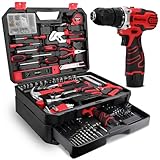
Overview: The KingTool 276-Piece Tool Set Kit is an all-in-one solution designed for homeowners, DIYers, and handymen seeking comprehensive tool coverage without breaking the bank. This expansive collection includes everything from screwdrivers and wrenches to pliers and a 12V cordless drill, all housed in an upgraded toolbox with a convenient sliding drawer for organized storage.
What Makes It Stand Out: The sheer variety of 276 pieces covers nearly every common household repair scenario. The integrated toolbox’s dual-level design with a separate drawer sets it apart from basic toolboxes, enabling logical organization. The included 12V drill driver features two-speed control up to 1500 RPM and weighs just 1.76 pounds, making it exceptionally maneuverable for overhead work. All hand tools feature heat-treated chrome finishes and comfortable TPR handles.
Value for Money: Priced around $100-130, this kit offers remarkable value compared to purchasing tools individually. For beginners setting up their first workshop or renters needing a complete solution, it’s a cost-effective entry point. The toolbox alone would retail for $30-40 separately.
Strengths and Weaknesses: Strengths include comprehensive tool selection, smart storage design, lightweight drill, and excellent gift potential. The quality is adequate for light to medium-duty tasks. Weaknesses are the 12V drill’s limited power for heavy drilling, potential quality inconsistencies across such a large set, and tools that won’t satisfy professional-grade demands. The accessory quality varies.
Bottom Line: Perfect for apartment dwellers, new homeowners, or occasional DIYers who want one purchase to cover all bases. While not suitable for professional tradespeople, it delivers exceptional convenience and value for routine household maintenance and small projects.
3. DEWALT 20V MAX XR Oscillating Multi-Tool Cordless, Variable Speed Brushless Motor Multitool with LED Light, Extended Runtime, Includes Two Wood Cutting Blades, Tool Only (DCS356B)

Overview: The DEWALT DCS356B is the bare-tool version of the brand’s flagship 20V MAX XR oscillating multi-tool, identical in performance to the kit version but without battery or charger. This option targets existing DEWALT 20V MAX platform users who want to expand their arsenal without paying for redundant batteries. It includes two wood-cutting blades to get started immediately.
What Makes It Stand Out: You get the same premium features as the full kit: a three-speed selector (0-13,000/17,000/20,000 OPM), brushless motor with 57% more runtime, Dual-Grip variable-speed trigger, and Quick-Change accessory system. The universal adapter works with most brands’ accessories, and the bright LED light ensures visibility in confined spaces. The tool-only approach provides flexibility for those already invested in the ecosystem.
Value for Money: At roughly $100-120, this represents significant savings over the kit if you own DEWALT batteries. Buying a new battery and charger separately would add $80-100, making the kit more economical for newcomers. For platform loyalists, it’s an efficient expansion.
Strengths and Weaknesses: Strengths include professional-grade build quality, excellent runtime efficiency, superior speed control, and ecosystem compatibility. You avoid paying for duplicate batteries. Weaknesses are the lack of included battery (obviously), minimal blade assortment, and the same premium pricing that might deter casual users. It’s less versatile without the full accessory range.
Bottom Line: An intelligent purchase for current DEWALT 20V MAX users seeking a top-tier oscillating tool. If you’re new to the platform, opt for the kit instead. This delivers identical performance and reliability while maximizing value for those with existing batteries.
4. AVID POWER Cordless Oscillating Tool 20V Battery Powered Oscillating Multitool with 2.8° Oscillation Angle, Variable Speed Oscillating Saw w/ 31Pcs Accessories for Scraping/Cutting & Sanding

Overview: The AVID POWER Cordless Oscillating Tool positions itself as a budget-conscious alternative to premium brands, offering a 20V multi-tool with an impressive 31-piece accessory kit. This package targets DIYers and homeowners who need versatility for renovation and repair projects without professional-level investment. The tool handles cutting, sanding, grinding, and scraping across wood, plastic, metal, and tile.
What Makes It Stand Out: Six variable speeds (8,000-18,000 OPM) provide more granular control than typical three-speed models. The 2.8° oscillation angle enables aggressive yet precise cuts in tight spaces. The comprehensive accessory bundle includes multiple blades, sanding pads, and papers (80/100/120 grits), plus a scraper and diamond-tipped blade. Front LED lighting and a 2.0 Ah battery with four-to-five-hour charge time round out the package.
Value for Money: Priced around $70-90, this kit dramatically undercuts DEWALT and Milwaukee while including more accessories. The value proposition is clear: maximum versatility for minimal investment, ideal for occasional users.
Strengths and Weaknesses: Strengths include exceptional accessory variety, competitive price, useful LED light, and six-speed versatility. The package is complete and ready to use. Weaknesses involve uncertain long-term durability, potentially shorter battery life under load, and less robust build quality than professional brands. The brand lacks DEWALT’s service network and proven track record.
Bottom Line: An excellent entry-level option for budget-minded DIYers tackling occasional projects. While it won’t replace professional-grade tools for daily use, the accessory bundle and price make it a smart choice for homeowners who need functionality without premium cost. Manage expectations on longevity.
5. LAZYLAND 21V Cordless Oscillating Tool Kits, Brushless Oscillating Multitool with 6-variable speed, 2X3.0 Ah Battery and accessories for Cutting, Grinding, Scraping, Sanding

Overview: The LAZYLAND 21V Cordless Oscillating Tool Kit challenges established brands with a feature-rich package centered around a brushless motor and dual 3.0 Ah batteries. This multi-tool targets serious DIYers who demand extended runtime and professional-grade features without paying premium prices. The kit includes accessories for cutting, grinding, scraping, and sanding applications.
What Makes It Stand Out: Six variable speeds ranging from 6,000-20,000 RPM offer exceptional versatility across materials. The inclusion of two 3.0 Ah batteries ensures continuous workflow—charge one while using the other. The brushless motor promises efficiency and durability typically found in higher-priced tools. A lightweight design with rubberized grip and LED light enhances user comfort during prolonged use.
Value for Money: At roughly $90-110, this kit presents strong value with its dual-battery configuration and brushless motor. Comparable DEWALT or Milwaukee setups with two batteries would cost $200+. The generous accessory selection further sweetens the deal for heavy users.
Strengths and Weaknesses: Strengths include outstanding battery life, brushless motor efficiency, six-speed control, and ergonomic design. Having two batteries eliminates downtime. Weaknesses center on LAZYLAND’s unproven brand reputation, potential quality control issues, and a speed dial rather than variable trigger which limits real-time control. Long-term reliability remains uncertain without extensive user reviews.
Bottom Line: A compelling choice for DIY enthusiasts who prioritize runtime and value over brand name. The dual batteries and brushless motor make it suitable for extended projects. However, those requiring guaranteed durability for professional use should stick with proven brands. For ambitious homeowners, it’s a risk worth considering.
6. TEENO 20V Cordless Oscillating Tool with Battery, Oscillating Multi Tool with 6 Variable Speeds, Quick-Lock Change System, 4° Oscillation Angle, 26PCS Multitool Blades & Carrying Bag for DIY Projects

Overview: The TEENO 20V Cordless Oscillating Tool arrives as a comprehensive, ready-to-use kit designed for DIY enthusiasts and homeowners tackling renovation projects. This all-in-one package eliminates the guesswork of compatibility by including the battery, charger, and a generous 26-piece accessory collection, making it immediately functional for cutting, sanding, scraping, and trimming tasks.
What Makes It Stand Out: This tool distinguishes itself with its complete-kit approach at a competitive price point. The six-variable speed control (8,500–21,000 OPM) provides precise material-specific adjustments, while the integrated LED work light and battery indicator enhance usability in confined spaces. The tool-free blade change system promises 15-second swaps, and the 4° oscillation angle balances efficiency with user comfort.
Value for Money: Excellent value for beginners and intermediate users. Purchasing a battery, charger, and 26 accessories separately could easily exceed $150–$200. TEENO bundles everything at a compelling price point, offering comparable performance to entry-level models from major brands without forcing separate component purchases.
Strengths and Weaknesses: Strengths: Complete kit with battery included; extensive 26-piece accessory set; LED light and battery indicator; quick-change system; variable speed control. Weaknesses: 4° oscillation angle is slightly less aggressive than premium 4.5° models; TEENO lacks the long-term brand reputation of established manufacturers; battery capacity (Ah rating) isn’t specified, raising questions about runtime.
Bottom Line: The TEENO kit is an outstanding choice for DIYers seeking immediate, out-of-the-box functionality. While brand recognition and battery specifications are minor concerns, the comprehensive accessory bundle and included power source deliver exceptional convenience and value for home improvement projects.
7. Cordless Oscillating Multi-Tool Compatible with DeWalt 20V Battery(Tool Only),21000 OPM Brushless Motor Power Oscillating Tools,4.5° Swing Angle,Side Battery Layout for Sanding/Cutting/Scraping

Overview: This tool-only oscillating multi-tool targets existing DeWalt 20V battery owners seeking professional-grade performance without redundant power sources. The brushless motor and 4.5° oscillation angle position it as a heavy-duty contender for demanding cutting, sanding, and scraping applications across job sites and workshops.
What Makes It Stand Out: The standout feature is its sophisticated vibration-dampening system, reducing vibration by up to 70% through an independently suspended tool head and 3-point damping. The intelligent Auto Mode automatically adjusts speed based on material resistance, while the ring LED provides superior shadow-free illumination. The 4.5° oscillation angle delivers aggressive cutting efficiency.
Value for Money: Strong value for DeWalt ecosystem users. Avoiding another battery purchase saves $50–$100. The brushless motor, advanced vibration control, and Auto Mode justify a premium over basic tool-only options, offering features typically found in $150+ tools at a mid-range price point.
Strengths and Weaknesses: Strengths: Excellent vibration reduction; brushless motor for durability; Auto Mode simplifies operation; wide 4.5° oscillation angle; DeWalt battery compatibility; ring LED lighting. Weaknesses: Batteries not included (significant hidden cost for non-DeWalt users); minimal included accessories; “DIYtoolifz” brand lacks established track record; manual speed settings limited to five versus six on competitors.
Bottom Line: Perfect for DeWalt battery owners prioritizing comfort and advanced features. The exceptional vibration control and Auto Mode make it worth the investment for frequent users, but those without DeWalt batteries should consider full-kit alternatives for better overall value.
8. Buho Ridgid 18V Cordless Oscillating Multi-Tool Bundle with 2.0 Ah Battery, Charger, 14-Piece Blade Accessory Kit, Tool Bag & Flashlight
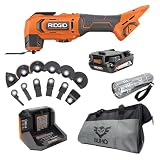
Overview: The Buho Ridgid 18V bundle offers a straightforward, no-frills approach to oscillating tools, targeting users invested in the Ridgid battery ecosystem. This kit provides the essential components—tool, battery, charger, and accessories—plus the novelty of an included flashlight, making it a functional starter package for basic home renovation and repair tasks.
What Makes It Stand Out: The inclusion of a bonus flashlight and Buho-branded tool bag adds tangible extras not typically found in competitor bundles. Its lightweight, ergonomic design emphasizes user comfort during extended use. As an officially compatible Ridgid system tool, it guarantees seamless battery integration for existing Ridgid tool owners.
Value for Money: Moderate value. While the 2.0Ah battery and charger justify the price for Ridgid users, the unspecified motor performance and lack of advanced features (variable speed details, LED work light, vibration control) make it less competitive than DeWalt-compatible alternatives offering more sophistication at similar price points.
Strengths and Weaknesses: Strengths: Includes battery and charger; bonus flashlight and tool bag; 14-piece accessory kit; guaranteed Ridgid battery compatibility; ergonomic and lightweight design. Weaknesses: 18V system less versatile than 20V DeWalt compatibility; no specified variable speed range or oscillation angle; lacks integrated LED work light; no mention of tool-free blade change system; limited performance details suggest basic capabilities.
Bottom Line: A decent entry-level choice for dedicated Ridgid users wanting basic functionality. However, DIYers seeking versatility, advanced features, or cross-brand battery compatibility will find better options elsewhere. Consider only if you’re already committed to the Ridgid 18V platform.
9. Oscillating Multi-Tool Cordless Compatible with DeWalt 20V Battery, 6 Variable Speeds 21000 OPM Brushless Motor Multitool,4.5°Swing,Fast Smooth Cutting with LED Light for Scraping, Sanding(Tool Only)

Overview: This DeWalt-compatible oscillating tool caters to serious DIYers and professionals seeking cutting-edge design innovations. The tool-only configuration assumes ownership of DeWalt 20V batteries, while delivering premium features like a side-mounted battery and 360° LED ring light that address common workflow frustrations found in conventional designs.
What Makes It Stand Out: The revolutionary side-mounted battery enables true flush cutting against walls and floors—eliminating the gap imposed by rear-mounted batteries. The 360° halo LED provides shadow-free illumination unmatched by standard LEDs. Triple shock-absorbing structures reduce vibration by 70%, and the 4.5° oscillation angle boosts cutting efficiency by over 40% compared to standard 3° angles.
Value for Money: Outstanding value for feature-focused users. The advanced ergonomics, superior lighting, and vibration control typically command $180+ price tags from premium brands. Even factoring in a DeWalt battery purchase, the innovative design elements justify the cost for users prioritizing precision and comfort.
Strengths and Weaknesses: Strengths: Side battery design for zero-gap cutting; exceptional 360° ring LED lighting; triple vibration damping; brushless motor; Auto Mode; 4.5° oscillation angle; rapid 5-second blade changes. Weaknesses: Only one blade included; Ecarke brand lacks established service network; side battery may feel unbalanced to some users; over-specified for occasional light-duty tasks.
Bottom Line: Highly recommended for DeWalt battery owners demanding innovation and ergonomics. The side-mounted battery and halo LED solve real job-site problems, making it one of the most thoughtfully designed tool-only options available. Casual users may not leverage its full potential.
10. Cordless Oscillating Multitool Compatible with DeWalt 20V Max Battery, Tool Only, 6 Speeds 8,500-21,000 RPM, Bulit-in LED Light, 22 Accessories, Oscillating Power Tools for Scraping Cutting Sanding

Overview: This DeWalt-compatible oscillating multi-tool positions itself as a budget-conscious, tool-only solution that doesn’t skimp on accessories. With 22 included attachments, it targets DeWalt battery owners wanting immediate versatility without separate accessory purchases, covering basic cutting, sanding, and scraping needs for general home maintenance.
What Makes It Stand Out: The generous 22-piece accessory kit is exceptional for a tool-only offering, providing blades and sanding pads that would cost $30–$50 separately. The six-speed control (8,500–21,000 RPM) matches premium models’ range, and the integrated LED light improves visibility in enclosed spaces, offering surprising completeness at its price tier.
Value for Money: Excellent budget value. The accessory bundle alone offsets the tool’s cost, making it essentially a free or low-cost addition for DeWalt users. While it lacks advanced features like brushless motors or vibration damping, the core functionality and included attachments deliver more immediate utility than bare-tool competitors.
Strengths and Weaknesses: Strengths: 22 included accessories; broad six-speed range; DeWalt battery compatibility; built-in LED; tool-free blade changes; affordable entry point. Weaknesses: No battery included; brushed motor likely (not specified); lacks vibration reduction technology; no Auto Mode or intelligent features; unknown brand reliability; no specified oscillation angle.
Bottom Line: A smart pick for DeWalt users seeking maximum accessories on a minimal budget. It covers essential tasks competently but won’t impress professionals. Upgrade to brushless models with vibration control if you use oscillating tools frequently; otherwise, this delivers practical value for occasional DIY projects.
Why Cordless Multi-Tools Dominate Modern Renovations
The Evolution from Corded to Cordless
The transition from corded to cordless multi-tools represents more than just the convenience of cutting the cord. Early cordless models frustrated users with anemic power output and batteries that died mid-cut, but 2026’s tools leverage lithium-silicon battery chemistry and brushless motors that rival their tethered counterparts. The fundamental shift lies in power delivery: modern tools maintain consistent oscillation speeds under load rather than bogging down when resistance increases. This means you can plunge-cut through oak hardwood flooring or grind away stubborn adhesive without the RPM drop that plagued first-generation cordless models.
Key Advantages for DIYers and Pros
Beyond mobility, cordless multi-tools offer nuanced advantages that become apparent during marathon renovation sessions. The absence of a cord eliminates tripping hazards on cluttered job sites and removes the constant battle of finding outlets and managing extension cords through multiple rooms. For professionals, the ability to quickly move between tasks without unplugging translates to measurable time savings. DIYers appreciate the reduced noise profiles—many premium cordless models operate 30% quieter than corded equivalents thanks to refined motor control and sound-dampening housings. The psychological benefit is equally significant: you’re more likely to tackle that intimidating project when setup involves simply grabbing the tool and pulling the trigger.
Understanding Multi-Tool Oscillation Technology
How Oscillation Angles Impact Performance
The oscillation angle—the degree of side-to-side movement—directly correlates with cutting aggression versus control. Most 2026 models offer 3.2° or 4° oscillation, but some premium tools feature adjustable angles. A narrower 2.8° setting excels at fine-detail sanding and precision cuts in fragile materials, while a wider 4.2° angle powers through thick, dense substrates. The misconception that “bigger is always better” leads many buyers astray. For home renovations where you’ll frequently switch between removing grout and cutting door jambs, a tool with a moderate fixed angle around 3.6° often provides the best versatility. Pay attention to how the manufacturer specs the angle: peak-to-peak measurement versus per-side movement can make two seemingly similar tools perform dramatically differently.
Variable Speed Control: Precision vs. Power
Variable speed dials have become standard, but the granularity of control separates useful features from marketing fluff. Look for tools offering at least 10 distinct speed settings rather than a vague 1-6 dial. The real magic happens with electronic feedback systems that maintain set speeds under load—this prevents the tool from slowing when you apply pressure, ensuring consistent cut quality. For renovation work, you’ll want a range spanning 10,000 to 20,000 OPM (oscillations per minute). Lower speeds prevent burning delicate materials like veneer or PVC trim, while higher speeds make quick work of metal cutting and aggressive material removal. Some advanced models include application-specific presets that automatically adjust speed and oscillation angle for common tasks.
Battery Platform Considerations
Voltage and Amp-Hour Ratings Explained
The 2026 market spans 12V, 18V/20V, and even 24V platforms, but voltage alone tells half the story. A 12V tool with a 6.0Ah battery can outlast an 18V tool with a 2.0Ah pack in light-duty applications. For renovation work, prioritize amp-hour ratings over voltage—look for minimum 4.0Ah batteries, with 8.0Ah packs becoming the sweet spot for all-day use. The newest silicon-anode batteries deliver 40% more runtime than 2023’s lithium-ion equivalents while running cooler. This thermal management matters: batteries that stay below 140°F during heavy use maintain capacity longer and charge faster. Don’t fall for the “maximum voltage” marketing; instead, calculate watt-hours (voltage × amp-hours) to compare true energy capacity across platforms.
Interoperability with Your Existing Tools
Smart buyers in 2026 think ecosystem-first. A cordless multi-tool becomes exponentially more valuable when its batteries power your drill, circular saw, and work light. Before committing, audit your current tool collection. If you’re starting fresh, research which platforms offer the broadest range of renovation-focused tools—some manufacturers excel at woodworking while others dominate plumbing and electrical applications. The hidden cost of battery platforms becomes apparent when you need a specialty tool: buying into a limited ecosystem might save $50 initially but cost you hundreds later when you’re forced to purchase separate batteries for a one-off tool. Some forward-thinking brands now offer cross-compatibility adapters, but these often sacrifice performance and void warranties.
Fast-Charging Technology in 2026
Gone are the days of 90-minute charge times. Modern rapid chargers replenish a 4.0Ah battery in under 25 minutes, but the real innovation lies in smart charging algorithms. These systems analyze battery temperature, cell balance, and usage patterns to optimize charging speed without degrading cell life. Look for chargers with active cooling fans and multiple charging bays—being able to charge two batteries simultaneously while working with a third eliminates downtime. Some premium chargers now include USB-C ports for charging your phone or tablet, turning the charger into a job site power hub. For renovation projects, consider the “always ready” feature: batteries self-discharge to optimal storage voltage when idle for weeks, then quickly top off when you grab them for a project.
Essential Features That Separate Good from Great
Quick-Change Accessory Systems
The difference between a tool that gathers dust and one you reach for daily often comes down to accessory changes. StarlockMax and similar high-end systems enable one-handed, tool-free blade swaps in under three seconds. This matters when you’re perched on a ladder cutting vent holes and need to switch from a plunge-cut blade to a sanding pad. Avoid tools requiring hex keys or separate wrenches—these add friction that discourages you from using the right accessory for the task. The best systems automatically center and tension accessories, eliminating the wobble that causes premature wear and imprecise cuts. Some 2026 models even include RFID chips in accessories that let the tool automatically adjust speed settings for optimal performance.
LED Work Lights and Visibility
Poor lighting turns precise cuts into guesswork. Modern multi-tools integrate LED arrays that cast shadow-free light directly on the cutting path. The key differentiator isn’t just brightness (measured in lumens) but beam pattern—look for tools with diffused lighting that eliminates harsh shadows. Some premium models feature motion-activated lights that turn on when you grip the tool, saving battery while ensuring illumination appears instantly. For renovation work in crawl spaces or behind fixtures, tools with 180-degree rotating light heads let you direct brightness where needed. Don’t underestimate this feature; it’s often the difference between a clean cut and a costly mistake.
Vibration Dampening and Ergonomics
Extended use of high-oscillation tools leads to hand-arm vibration syndrome (HAVS), a serious occupational hazard. Leading 2026 models employ counterbalance weights and isolation mounts that reduce vibration by up to 70% compared to budget options. The tool should feel balanced—not front-heavy—when you hold it naturally. Grip texture matters: overmolded rubber with micro-texturing provides secure hold even with dusty gloves. For overhead work, a slim barrel grip reduces fatigue. Pay attention to trigger design; variable-speed triggers with progressive resistance give finer control than simple on/off switches. Some tools now include haptic feedback that vibrates gently to warn of overload, a subtle but valuable safety addition.
Dust Extraction and Job Site Cleanliness
Renovation creates massive amounts of dust, and modern multi-tools tackle this at the source. Integrated dust ports that connect to standard shop vacuums capture up to 95% of particulates during sanding and grinding. The best systems include adjustable suction relief valves that prevent the accessory from sticking to surfaces. For cutting applications, look for tools with sealed switches and bearings—this prevents abrasive dust from destroying internal components. Some premium models feature built-in dust blowers that clear the cut line without needing compressed air. In 2026, HEPA-filtered dust collection has become standard on professional-grade tools, crucial when working in occupied homes where air quality matters.
Accessory Compatibility and Ecosystems
Universal Fit vs. Proprietary Blades
The accessory mounting debate continues to evolve. Universal (OIS) fittings offer endless third-party options and aggressive pricing, but proprietary systems like Starlock promise superior retention and faster changes. For renovation work, consider this compromise: choose a tool with a proprietary mount for your most-used accessories (plunge blades, sanding pads) but ensure it accepts universal adapters for specialty items. The real cost isn’t the tool but the accessories—you’ll spend 3-5 times the tool’s price on blades and pads over its lifetime. Some manufacturers have moved to subscription models where you receive a monthly assortment of accessories tailored to your purchase history, ensuring you always have fresh blades.
Must-Have Accessories for Renovation Tasks
Your multi-tool is only as capable as its accessories. For comprehensive renovation work, stock these essentials: Japanese-tooth wood blades for tear-free cuts in finish carpentry, carbide-grit blades for abrasive materials like cement board, and diamond-coated blades for grout removal. Segmented blades allow flush cuts against walls, while offset blades reach into tight corners. For sanding, hook-and-loop pads with various grits (60 to 220) handle everything from paint removal to finish smoothing. Scrapers with replaceable carbide edges efficiently remove adhesive and caulk. In 2026, flexible carbide blades that bend slightly have revolutionized undercutting door jambs without damaging the flooring. Don’t skimp on quality—premium blades last 10x longer and cut cleaner, saving money and frustration.
Performance Metrics That Matter
Cutting Speed and Efficiency
Manufacturers love quoting OPM figures, but real-world cutting speed depends on oscillation angle, motor torque, and accessory quality. A tool maintaining 18,000 OPM under load outperforms one that spikes to 22,000 OPM then drops to 15,000 when cutting begins. Test methodology matters: plunge-cutting through 2-inch oak measures sustained power better than slicing soft pine. For renovation efficiency, look for tools that complete standard test cuts (like removing a 12-inch section of grout) in under 60 seconds without overheating. The best indicators are thermal management and duty cycle—premium tools feature active cooling that allows continuous operation without mandatory cool-down periods.
Motor Durability Under Load
Brushless motors have become the standard, but not all are created equal. Motor durability hinges on winding quality, bearing seals, and electronic control modules. For renovation work that involves continuous cutting, grinding, or sanding, look for tools with thermal protection that automatically reduces power before damage occurs rather than simply shutting off. The motor housing material matters—magnesium alloys dissipate heat better than plastic, extending component life. Some manufacturers now publish “mean time between failure” (MTBF) ratings, with professional-grade tools rated for 2,000+ hours of heavy use. For home renovators, this translates to decades of reliable service.
Noise Levels and Neighbor-Friendly Operation
Urban renovations demand noise consciousness. Modern cordless multi-tools operate between 75-85 decibels, but subtle design choices make significant differences. Tools with internal mufflers and sound-dampening foam inserts can reduce perceived noise by 10 decibels without sacrificing power. Lower oscillation angles generally produce less noise, making them ideal for early morning or late-evening work in residential areas. Some 2026 models include “quiet mode” settings that optimize speed and angle for minimal noise during light-duty tasks. When comparing specs, look for dB(A) ratings measured at operator ear level rather than at a distance—this gives a realistic expectation of your exposure during extended use.
Safety Features for Home Renovators
Blade Guard Systems
While multi-tools inherently expose the cutting edge, modern safety guards have become more intelligent. Adjustable depth stops prevent over-cutting into hidden electrical wires or plumbing—a critical feature when cutting into existing walls. Some guards now include clear polycarbonate shields that deflect debris while maintaining visibility. For plunge cutting, look for spring-loaded guards that retract automatically but provide a safety buffer when the tool is set down. The best systems allow tool-free guard adjustment, encouraging you to actually use them rather than removing them out of frustration.
Electronic Safety Brakes
A blade that continues spinning after release is an accident waiting to happen. Electronic brakes stop accessories within one second of trigger release, preventing unintended contact with finished surfaces or flesh. This feature is non-negotiable for renovation work where you’re frequently setting the tool down in tight spaces. The brake system should disengage during accessory changes to prevent accidental activation—some tools require a double-trigger press to restart after a blade swap, adding a layer of safety. In 2026, leading models include motion sensors that apply the brake if the tool is dropped, preventing runaway tools on job sites.
Overload Protection
Pushing a tool beyond its limits destroys motors and batteries. Advanced overload protection monitors current draw, temperature, and vibration patterns to detect impending failure. Rather than simply shutting down, sophisticated systems pulse the power, giving you a tactile warning to ease off while completing the cut. This is invaluable when you encounter hidden nails or screws mid-cut. Look for tools with visual overload indicators—LED bars that fill as you approach the limit help you learn the tool’s capabilities without damaging it. For renovation work where material consistency varies wildly, this feature pays for itself by preventing premature tool failure.
Budget vs. Premium: Making the Smart Investment
When to Splurge on Professional-Grade Features
The $150 price gap between consumer and professional multi-tools isn’t just about brand prestige. Professional tools justify their cost through metal gear housings (versus plastic), sealed electronics that survive dust and moisture, and batteries with 3-year warranties instead of 1-year coverage. If your renovation timeline spans months or you plan future projects, the durability dividend matters. Features like active cooling, haptic feedback, and application-specific presets save time and reduce errors, effectively paying back the premium. Consider the cost of failure: a burned-out motor mid-project can delay timelines and require expensive rush shipping for replacements. For whole-home renovations, professional-grade tools aren’t a luxury—they’re cheap insurance.
Value Picks for Occasional Use
Not everyone needs a contractor-grade workhorse. For focused projects like installing a single bathroom or refinishing kitchen cabinets, mid-tier tools offer compelling value. These models typically share battery platforms with premium lines but use simpler motor controllers and standard charging systems. The key is identifying which premium features you’ll actually use: if you never sand for more than 10 minutes, you don’t need active cooling. If you work only in well-lit spaces, skip the advanced LED arrays. However, never compromise on safety features like electronic brakes or overload protection—these appear even on budget models from reputable manufacturers. The smartest value play often involves buying a bare tool and investing in premium accessories, where performance differences are most noticeable.
Real-World Applications in Home Renovations
Trim and Molding Removal
Salvaging antique trim requires surgical precision. Set your multi-tool to a narrow oscillation angle and low speed (12,000 OPM) to slice through paint and caulk without damaging the wood. Use a flexible carbide blade to slip behind the trim, cutting nails while preserving the profile. The key is letting the oscillation do the work—applying excessive pressure causes blades to wander and gouge surrounding drywall. For painted trim, score the paint line first with a utility knife to prevent peeling. Work in 12-inch sections, gradually deepening the cut until the trim releases. This technique saves hours compared to prying and reduces the risk of cracking fragile century-old wood.
Flooring Installation and Repair
Installing engineered hardwood or luxury vinyl plank demands precise undercutting of door jambs. Set a flush-cut blade to medium speed and make a series of shallow passes, gradually increasing depth. This prevents the blade from binding and ensures a clean, straight cut. For tile repair, diamond blades at high speed cut through ceramic and porcelain without cracking adjacent tiles. When removing damaged planks, use a plunge-cut blade to slice the board into removable sections, then scrape adhesive with a carbide-edged scraper. The multi-tool’s ability to work flush against walls makes it irreplaceable for flooring transitions and perimeter cuts where a circular saw can’t reach.
Tile Work and Grout Removal
Grout removal tests a multi-tool’s endurance. Use a diamond-coated blade at moderate speed to prevent overheating, and keep the tool moving to avoid digging into the substrate. For large-format tiles, a 2-inch blade covers ground efficiently, while 1-inch blades navigate tight corners. The secret is maintaining a consistent 45-degree angle and applying light pressure—let the diamond grit do the abrasion. Modern dust extraction attachments capture nearly all silica dust, crucial for health and cleanup. When cutting tile holes for plumbing fixtures, start with a plunge cut at low speed to establish the perimeter, then increase speed for the bulk removal. Always keep the blade cool with intermittent water mist to extend diamond life.
Drywall and Plaster Projects
Cutting drywall for electrical boxes requires precision that reciprocating saws can’t match. Use a bi-metal blade at medium-high speed, plunging through the paper face then guiding along your layout lines. The oscillating action cuts both paper faces simultaneously, preventing tear-out. For plaster and lath, carbide-grit blades withstand the abrasive effect of historic materials. Work in short bursts to prevent the tool from overheating, and use a dust extractor to capture the fine particulates that plague plaster work. When cutting ceiling access panels, the tool’s compact head fits between joists where larger tools can’t maneuver. The ability to make plunge cuts without pilot holes makes it ideal for retrofitting outlets and fixtures in finished walls.
Maintenance and Longevity Tips
Cleaning and Storage Best Practices
Post-project cleaning determines your tool’s lifespan. Remove dust from the motor vents using compressed air, blowing from the inside out to prevent pushing debris deeper. Wipe the accessory mount with a dry cloth to prevent rust—never use liquid cleaners that can seep into bearings. Store tools in their original cases or wall-mounted holders; tossing them in a tool bag allows dust to infiltrate switches and electronics. For long-term storage between projects, remove batteries and store them at 50% charge in a cool, dry place. Some 2026 models include self-diagnostic modes that run at startup, alerting you to maintenance needs before failures occur.
Battery Care for Maximum Lifespan
Battery maintenance has evolved beyond simple charge cycles. Modern lithium-silicon batteries prefer partial discharges; avoid running them completely dead. Charge batteries after they drop to 20-30% capacity. Store batteries between 40-60°F when possible—garage heat in summer dramatically reduces lifespan. Use the manufacturer’s charger exclusively; third-party chargers may lack the sophisticated cell-balancing algorithms that prevent premature failure. For tools used sporadically, consider batteries with “hibernation mode” that self-discharge to optimal storage voltage after two weeks of inactivity. Rotate multiple batteries to avoid stressing a single pack, and never tape the trigger to run the tool unattended—this causes dangerous thermal runaway.
Warranty and Customer Support Considerations
A tool’s warranty reveals the manufacturer’s confidence. Standard coverage spans 3 years for tools and 2 years for batteries, but premium brands now offer 5-year tool warranties and 3-year battery protection. Read the fine print: some warranties exclude “commercial use,” which can be broadly interpreted. The best programs include free shipping for repairs and loaner tools during service. Customer support quality matters—does the company offer live chat with technicians who understand renovation challenges? Some manufacturers provide video diagnostics, where you show the issue via smartphone and receive immediate troubleshooting. For 2026, look for brands offering firmware updates that add features or improve performance over time, extending the tool’s useful life beyond its physical components.
Frequently Asked Questions
What makes a cordless multi-tool “professional-grade” versus DIY?
Professional-grade tools feature metal gear housings, sealed electronics, active thermal management, and longer warranties. They maintain performance under continuous load and include advanced safety features like electronic brakes and overload protection with haptic feedback. DIY models often use plastic components, lack sophisticated cooling, and may shut down entirely when overloaded rather than pulsing to warn you.
How do I choose between 12V, 18V, and 24V platforms?
For most home renovations, 18V/20V platforms offer the best balance of power and weight. 12V systems excel for light-duty tasks and overhead work but struggle with continuous grinding or thick material removal. 24V tools provide maximum power for heavy demolition but add weight that causes fatigue. Choose based on your existing battery ecosystem and project scope—renovating an entire home justifies 18V, while occasional furniture projects work fine with 12V.
Can I use corded multi-tool accessories on cordless models?
Yes, most accessories are interchangeable between corded and cordless tools using the same mounting system (OIS, Starlock, etc.). However, cordless tools may require different speed settings—start 20% slower than you would with a corded tool to prevent overloading the motor. Some premium cordless-specific accessories have thinner profiles to reduce battery drain, but standard blades work perfectly fine.
What’s the realistic runtime for a 4.0Ah battery?
Runtime varies dramatically by task. Light sanding might yield 45-60 minutes of continuous use, while aggressive grout removal drains a battery in 15-20 minutes. Cutting hardwood falls somewhere in between at 25-35 minutes. In practice, most renovators work in bursts, so a 4.0Ah battery typically lasts 2-3 hours of actual project time. Investing in 8.0Ah batteries doubles these figures and reduces the need for mid-task battery swaps.
How important is the oscillation angle for home renovation?
The oscillation angle determines cutting aggression. For renovation work involving diverse materials, a fixed 3.2° to 3.6° angle offers the best versatility. Adjustable angles are valuable if you frequently switch between delicate detail work (narrow angle) and heavy material removal (wide angle). Most users find they settle on one angle for 90% of tasks, making fixed-angle tools a practical choice.
Should I buy a kit with multiple accessories or purchase separately?
Kits offer convenience but often include low-quality accessories you’ll rarely use. A smarter approach: buy the bare tool and invest in premium blades specific to your immediate project. Purchase a wood-cutting blade, carbide-grit blade, diamond grout blade, and sanding pad from a reputable manufacturer. This costs slightly more initially but ensures you’re using quality consumables that perform better and last longer.
How do I minimize dust when using a multi-tool indoors?
Connect the tool to a shop vacuum using the manufacturer’s dust extraction attachment. For cutting and grinding, this captures 90-95% of dust. For sanding, use a HEPA-filtered vacuum and wear a respirator rated for fine particulates. Some 2026 models include built-in dust blowers that keep the cut line clear without creating clouds. Sealing the work area with plastic sheeting and running an air scrubber provides an additional layer of protection.
What’s the best way to prevent hand fatigue during extended use?
Choose a tool with active vibration dampening and a balanced design. Take micro-breaks every 10-15 minutes to stretch your hands. Use a light grip—the tool’s weight and oscillation do the work. For overhead tasks, consider a barrel-grip model that distributes weight differently. Anti-vibration gloves help but shouldn’t replace tool selection. Maintaining sharp accessories reduces the force needed, which in turn reduces vibration transmission to your hands.
Can cordless multi-tools handle metal cutting and grinding?
Absolutely. Modern brushless motors and high-capacity batteries cut through non-ferrous metals like copper and aluminum with ease. For ferrous metals, use bi-metal blades at moderate speeds with cutting oil to prevent overheating. Grinding requires carbide or diamond accessories and works best in short bursts to manage heat. While not as fast as angle grinders, multi-tools excel at precision metal work in tight spaces where larger tools can’t fit.
How often should I replace multi-tool blades and accessories?
Replace blades immediately when you notice decreased cutting speed, burning smells, or visible wear like missing teeth or rounded edges. A quality wood blade lasts through 50-100 linear feet of cutting in hardwood, while diamond blades handle 100-150 square feet of grout removal before losing effectiveness. Sanding pads need replacement when the hook-and-loop backing fails or abrasive material wears smooth. Using worn accessories forces the tool to work harder, draining batteries faster and increasing motor wear. For renovation projects, budget 15-20% of your tool cost for replacement accessories annually.
See Also
- 10 Expert-Recommended Cordless Multi-Tools for Home Repairs in 2026
- 10 Cordless Multi-Tool Recommendations for Home Renovation in 2026
- 10 Game-Changing Cordless Multi-Tools for Precision Home Tasks in 2026
- 10 Game-Changing Cordless Multi-Tools for Home Renovations in 2026
- The 10 Most Revolutionary Cordless Multi-Tools for Home Renovations of 2026