Table of Contents
The weekend warrior’s garage has evolved. No longer a dusty afterthought, it’s become a precision workshop where ambitious DIY dreams take shape—and nothing embodies this transformation quite like the modern cordless circular saw. As we barrel toward 2026, these tools have shed their corded shackles without sacrificing the raw power and accuracy once reserved for professional job sites. Whether you’re ripping plywood for custom built-ins or trimming deck boards at dusk, the right cordless circular saw becomes an extension of your ambition.
But here’s the challenge: the market has exploded with options, each promising to be your perfect match. Voltage wars rage between manufacturers, battery chemistries compete for your loyalty, and feature sets blur the line between necessity and gimmick. This guide cuts through the marketing noise to arm you with exactly what you need to know. No brand favoritism, no paid placements—just hard-won insights about what makes a cordless circular saw worth your hard-earned cash in 2026.
Top 10 Cordless Circular Saws For Weekend
Detailed Product Reviews
1. DEWALT 20V MAX* 6-1/2 in. Brushless Cordless Circular Saw, Tool Only (DCS565B)
, Tool Only (DCS565B)](https://m.media-amazon.com/images/I/41x4DZKRUGL._SL160_.jpg)
Overview: The DEWALT DCS565B is a professional-grade brushless circular saw designed for serious woodworkers and contractors. Operating on DEWALT’s 20V MAX battery platform, this tool-only model delivers exceptional runtime and power efficiency. Its compact 6-1/2-inch blade size balances cutting capacity with maneuverability, making it ideal for both framing and finish work where precision matters.
What Makes It Stand Out: This saw distinguishes itself with a bright LED light that illuminates the cut line in dim conditions, dramatically improving accuracy. The tool-free bevel lever adjusts from 0-50°, offering greater versatility than standard 45° saws. The electric brake stops the blade within seconds of trigger release, a crucial safety feature professionals demand. Additionally, the optional dust chute integrates with DEWALT’s AirLock system or standard 35mm extractors, keeping workspaces clean and visibility high.
Value for Money: As a bare tool, the DCS565B represents a solid investment for those already invested in the DEWALT ecosystem. While premium-priced, its brushless motor ensures longer tool life and better battery efficiency compared to brushed competitors. The included features—LED, electric brake, and superior dust collection—typically cost extra on lesser saws, justifying the price for daily professional use.
Strengths and Weaknesses:
- Strengths: Superior visibility with LED, enhanced safety via electric brake, excellent dust collection compatibility, lightweight design reduces fatigue, 50° bevel capacity
- Weaknesses: Battery and charger sold separately (significant added cost), premium price point may deter casual DIYers, smaller blade limits depth compared to 7-1/4" models
Bottom Line: The DCS565B is an excellent choice for professionals and serious hobbyists already owning DEWALT 20V batteries. Its safety features and precision make it worth the premium for daily job site use.
2. Extbtfor Circular Saw,4-1/2" Mini Circular Saw Cordless with 2.0A Battery, Power Saw with Laser Guide, 3400RPM, Maximum Cutting 1-11/16" at 90° and 1-1/8"at 45° for Wood, Soft Metal, Plastic

Overview: This compact mini circular saw from Extbtfor targets DIY enthusiasts and homeowners seeking a lightweight, affordable cutting solution. The 4-1/2-inch blade diameter and 3.9-pound weight make it exceptionally portable for one-handed operation. With a 20V 2.0Ah battery, charger, and multiple blades included, it arrives ready for immediate use on various materials.
What Makes It Stand Out: The integrated laser guide with replaceable button batteries provides visual cutting assistance rarely found at this price point. Three specialized blades (HSS, TCT) handle wood, soft metal, and plastic applications. The complete kit includes a guide ruler and dust pipe, eliminating common accessory purchases. Its 1-11/16" cutting depth at 90° handles most sheet goods and 2x lumber adequately.
Value for Money: This package delivers outstanding value—battery, charger, multiple blades, and laser guide included for less than most bare tools from major brands. While not professional-grade, the comprehensive accessories and ready-to-work configuration make it ideal for occasional users who want everything in one box without hidden costs.
Strengths and Weaknesses:
- Strengths: Extremely lightweight and portable, complete kit with battery and charger, laser guide improves accuracy, versatile blade selection, budget-friendly price
- Weaknesses: Lower 3400 RPM power limits heavy-duty performance, unknown brand reliability and long-term durability, smaller blade restricts cutting depth, 2.0Ah battery provides limited runtime
Bottom Line: Perfect for hobbyists, renters, and light DIY tasks. The Extbtfor mini saw offers impressive features and accessories at an entry-level price, though professionals should look elsewhere for sustained power and durability.
3. DEKOPRO 20V Cordless Circular Saw, 6-1/2-Inch Blade, 4500 RPM Circular Saw Cordless with 2 Battery and Charger( 4.0Ah )

Overview: DEKOPRO’s 6-1/2-inch cordless circular saw positions itself as a mid-range workhorse for serious DIYers and semi-professional users. The kit includes two 4.0Ah batteries and a charger, addressing runtime concerns common with cordless tools. With a 4500 RPM motor and carbide-tipped blade, it tackles hardwood and softwood applications with respectable efficiency.
What Makes It Stand Out: The inclusion of two high-capacity 4.0Ah batteries sets this apart from competitors offering single smaller batteries. The integrated laser guide projects a clear cut line, improving accuracy for users without professional experience. The ergonomic handle design reduces vibration and fatigue during extended cutting sessions. The 0-45° bevel adjustment covers most common angled cutting needs.
Value for Money: This kit offers compelling value by bundling two large-capacity batteries typically worth $80-100 each separately. For users without an existing battery platform, this eliminates significant additional investment. While DEKOPRO lacks DEWALT’s brand cachet, the feature set and battery package make it cost-effective for regular home workshop use.
Strengths and Weaknesses:
- Strengths: Two 4.0Ah batteries provide excellent runtime, laser guide enhances cutting precision, ergonomic grip reduces user fatigue, included charger completes the package, decent 4500 RPM power
- Weaknesses: Limited 45° bevel capacity versus 50° on premium models, brand reputation less established than major players, no electric brake or LED light, dust collection not emphasized
Bottom Line: An excellent value proposition for DIYers needing extended runtime without breaking the bank. The DEKOPRO delivers solid performance and battery capacity, making it ideal for home renovation projects and frequent workshop use.
4. BLACK+DECKER 20V 5-1/2" Cordless Circular Saw, Bare Tool Only (BDCCS20B)

Overview: BLACK+DECKER’s BDCCS20B offers entry-level cordless convenience in an ultra-compact 5-1/2-inch format. As a bare tool, it integrates with the popular BLACK+DECKER 20V MAX battery system found in many households. Designed for light-duty DIY tasks, this saw prioritizes simplicity and ease of use over raw power and cutting capacity.
What Makes It Stand Out: The tool-free depth adjustment and blade change system enable quick setup without fumbling for wrenches—a genuine convenience for occasional users. The pivoting shoe provides added stability and control during cuts, a feature uncommon in this price tier. Pre-set detents at 45° and 90° simplify common angle cuts. Its compact size stores easily in crowded garages or apartments.
Value for Money: As one of the most affordable cordless circular saws from a major brand, it appeals to budget-conscious buyers. However, the bare tool configuration means added cost for batteries and charger if not already owned. For existing BLACK+DECKER users, it represents a low-cost expansion. For new buyers, total investment approaches mid-range kits.
Strengths and Weaknesses:
- Strengths: Extremely affordable bare tool price, tool-free adjustments add convenience, pivoting shoe enhances control, lightweight and compact storage, trusted brand name
- Weaknesses: 5-1/2" blade limits cutting depth significantly, no battery included (hidden cost), lower power suitable only for light tasks, lacks laser guide or LED, no electric brake
Bottom Line: Best suited for existing BLACK+DECKER 20V owners needing an occasional-use saw for light cutting. First-time buyers should consider kit options, as the total cost diminishes its budget appeal. Reliable for simple DIY but underpowered for demanding projects.
5. DEWALT 20V MAX Circular Saw, Cordless Sidewinder Style Portable, 6-1/2-Inch Blade, 5150 RPM, 0-50 Degree Bevel Capability, Battery Not Included (DCS391B)
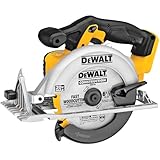
Overview: The DEWALT DCS391B is a high-performance sidewinder-style circular saw built for demanding professional applications. Its powerful motor spins at an impressive 5150 RPM, delivering corded-like cutting speed through dense materials. The magnesium shoe ensures long-term durability and cut accuracy while minimizing weight. This bare tool model targets serious users who demand maximum power from the 20V MAX platform.
What Makes It Stand Out: The blistering 5150 RPM speed outpaces most cordless competitors, enabling faster, cleaner cuts in hardwood and engineered lumber. The high-strength magnesium shoe maintains flatness and resists bending better than aluminum or steel alternatives. With 2-1/8" depth capacity at 90°, it handles full-depth 2x material cuts that many 6-1/2" saws struggle with. The aggressive 0-50° bevel capacity tackles complex rafter and trim work.
Value for Money: While premium-priced as a bare tool, the DCS391B delivers professional-grade performance that justifies the investment for contractors. The magnesium construction and high-RPM motor typically command higher prices. For users already committed to DEWALT’s ecosystem, it offers top-tier capability without redundant batteries. Casual users may find the power—and price—excessive.
Strengths and Weaknesses:
- Strengths: Exceptional 5150 RPM cutting power, durable magnesium shoe, best-in-class 2-1/8" cut depth, wide 50° bevel range, optimized grip for control, reliable DEWALT build quality
- Weaknesses: Battery and charger not included, lacks LED cut line illumination, no laser guide, premium price, no electric brake feature
Bottom Line: The DCS391B is a top-tier choice for professionals seeking cordless convenience without sacrificing power. Its performance rivals corded saws, making it ideal for framing, remodeling, and heavy-duty job site applications where speed and reliability are paramount.
6. DEWALT 20V MAX XR Brushless Cordless 7-1/4 in. Circular Saw, Tool Only (DCS590B)

Overview: The DEWALT DCS590B represents the pinnacle of cordless circular saw performance within the brand’s 20V MAX ecosystem. This professional-grade tool-only unit delivers corded-like power with its brushless motor generating 1,700 maximum watts out, making it capable of handling demanding framing and remodeling applications without the constraints of a power cord.
What Makes It Stand Out: This saw’s electric brake sets it apart from many competitors, stopping the blade within seconds to prevent accidental overcuts and enhance user safety. The impressive 2-9/16-inch cutting depth at 90 degrees surpasses most cordless saws, while the 368 cuts per charge rating (with a 6Ah battery) ensures all-day productivity. The 5,500 RPM no-load speed provides clean, efficient cuts through dimensional lumber and sheet goods.
Value for Money: As a tool-only purchase, the DCS590B offers excellent value for professionals already invested in DEWALT’s 20V MAX platform. While the upfront cost exceeds entry-level saws, its durability and performance justify the premium for tradespeople who rely on their tools daily. New users must factor in battery and charger costs, which diminishes initial savings.
Strengths and Weaknesses: Pros include exceptional power output, robust construction, deep cutting capacity, and the safety-enhancing electric brake. The tool-free depth and bevel adjustments streamline workflow. Cons comprise its heavier weight compared to smaller saws, the tool-only configuration requiring additional investment, and premium pricing that may deter casual DIYers.
Bottom Line: The DCS590B is an outstanding choice for professional contractors and serious woodworkers already equipped with DEWALT batteries. Its power and features rival corded saws, making it worth every penny for those who prioritize performance and reliability.
7. JEXUGK 6-1/2" Circular Saw, Cordless Sierra Circular Inalambrica with 2 x 6.0AH Battery,Brushless Electric Power Circle Saw with 3 Blade Cutting Precise Wood for Max Cut Depth 2-1/4"(90°)1-7/16" (45°)

Overview: The JEXUGK 6-1/2-inch circular saw positions itself as a comprehensive cutting solution for DIY enthusiasts and budget-conscious professionals. This all-inclusive kit eliminates the guesswork of accessory purchases by bundling everything needed for immediate project commencement, including dual high-capacity batteries and multiple blades.
What Makes It Stand Out: The inclusion of two 6.0Ah batteries is remarkable at this price point, providing runtime that rivals premium brands. The 6,000 RPM brushless motor delivers impressive speed, while the three included blades offer versatility for various materials. The adjustable 0-45° bevel with 2-1/4-inch depth capacity handles most common woodworking tasks, and the integrated dust port maintains cleaner work environments.
Value for Money: This kit represents exceptional value, essentially providing a complete workshop setup for the price of a bare tool from major brands. The dual batteries alone would cost significantly more when purchased separately from premium manufacturers. For users not brand-loyal, the cost-to-feature ratio is difficult to beat.
Strengths and Weaknesses: Strengths include the comprehensive kit contents, high-capacity batteries, fast charger, and competitive performance specifications. The carrying case adds professional convenience. Weaknesses involve the lesser-known brand’s unproven long-term reliability, potentially inferior build quality compared to established names, and limited service network availability.
Bottom Line: The JEXUGK saw is ideal for DIYers, homeowners, and occasional contractors seeking maximum value. While it may not match premium brands’ durability, its complete package and performance make it a smart purchase for those prioritizing features over brand prestige.
8. WORKPRO 20V Cordless Mini Circular Saw, 4-1/2" Compact Wireless Circular Saw 4.0Ah Battery, Fast Charger, 3 Blades, 4500RPM, Laser Guide, Max Cutting Depth 1-11/16"(90°), 1-1/8"(45°)

Overview: The WORKPRO 20V Mini Circular Saw targets DIYers and hobbyists who prioritize maneuverability and precision over raw power. This compact 4-1/2-inch saw weighs just 4.36 pounds, making it exceptionally easy to control for extended periods, particularly in overhead or confined-space applications where larger saws become cumbersome.
What Makes It Stand Out: The integrated laser guide is a standout feature rarely found at this price point, dramatically improving cut accuracy for inexperienced users. The saw includes three specialized blades for wood, plastic, and tile, plus a dust extraction system that connects to standard shop vacuums. Its 4.0Ah battery provides adequate runtime for light-duty tasks.
Value for Money: This kit offers solid value for casual users, bundling essential accessories that would cost extra with bare tools. While not suitable for heavy construction, its performance-to-price ratio excels for home improvement projects, craft work, and light carpentry. The fast charger minimizes downtime between sessions.
Strengths and Weaknesses: Pros include lightweight ergonomic design, laser guide accuracy, comprehensive blade selection, and excellent maneuverability. The rubberized grip reduces vibration effectively. Cons are limited cutting depth restricting material thickness capacity, lower power output making it unsuitable for hardwoods or pressure-treated lumber, and the smaller blade size reducing overall versatility.
Bottom Line: The WORKPRO mini saw is perfect for beginners, apartment dwellers, and DIYers tackling light projects. Its laser guide and compact form factor make it user-friendly, though professionals and serious woodworkers will find its capabilities too limited for demanding applications.
9. Ryobi 18V 5-1/2" Circular Saw

Overview: The Ryobi 18V 5-1/2-inch Circular Saw serves as an entry-level option within Ryobi’s popular ONE+ battery ecosystem. Designed for light-duty cutting tasks, this compact saw offers homeowners and occasional DIYers a straightforward solution for basic projects without the complexity or weight of full-size circular saws.
What Makes It Stand Out: Its primary advantage lies in Ryobi’s extensive ONE+ platform compatibility, allowing users to power over 175 tools with the same battery system. The 1-11/16-inch cutting depth handles most sheet goods and dimensional lumber up to 2x material. Ryobi’s reputation for accessible, user-friendly tools makes this saw approachable for beginners.
Value for Money: Typically offered at a budget-friendly price point, this saw delivers adequate performance for its intended audience. The tool-only configuration appeals to existing Ryobi users, while starter kits provide batteries and chargers at reasonable bundled pricing. It sacrifices advanced features for affordability and simplicity.
Strengths and Weaknesses: Strengths include seamless battery integration with the ONE+ system, lightweight compact design, and Ryobi’s widespread retail availability. The saw performs adequately for plywood, OSB, and softwood cutting. Weaknesses encompass minimal feature set (no laser, limited depth, no electric brake), lower power output compared to brushless competitors, and plastic components that may wear faster under heavy use.
Bottom Line: This Ryobi saw is best suited for existing ONE+ battery owners needing an occasional-use circular saw for light projects. It’s a practical, no-frills choice for homeowners, though serious DIYers and professionals will quickly outgrow its limited capabilities and should invest in more robust alternatives.
10. Yowmoft 20V Cordless Circular Saw with 6-1/2-Inch Blade, 5600Rpm Brushless Battery Circular Saw with LED Light & Red Beam Guide & Battery and Charger (4.0Ah)

Overview: The Yowmoft 20V Circular Saw combines premium features with mid-range pricing, targeting feature-conscious DIYers and professionals who value visibility and precision. This 6-1/2-inch saw integrates modern conveniences like LED lighting and laser guidance typically reserved for higher-priced competitors, while delivering robust 5,600 RPM performance through its brushless motor.
What Makes It Stand Out: The dual visibility system—LED work light plus red beam laser guide—addresses common cutting errors in dimly lit spaces, significantly improving accuracy. The integrated dust extraction port maintains a cleaner workspace and healthier air quality. Its 2-1/4-inch depth capacity at 90 degrees matches professional-grade saws, while the 4.0Ah battery provides solid runtime.
Value for Money: This kit strikes an impressive balance, offering premium features at a price point below established brands’ comparable models. The inclusion of battery, charger, and high-performance blade eliminates hidden costs. For users prioritizing guidance systems and dust collection over brand prestige, the value proposition is compelling.
Strengths and Weaknesses: Pros include high RPM output, excellent visibility features, effective dust collection, competitive cutting depth, and comprehensive kit contents. The brushless motor ensures efficiency and longevity. Cons involve the lesser-known brand’s uncertain durability, limited service network, and battery ecosystem lock-in that prevents cross-brand compatibility.
Bottom Line: The Yowmoft saw is an excellent choice for detail-oriented users who benefit from laser guidance and LED lighting. It delivers professional-level features without the premium brand tax, making it ideal for serious DIYers and budget-minded contractors who prioritize functionality over legacy brand names.
Why Cordless Circular Saws Dominate the Modern Workshop
The shift from corded to cordless isn’t just about convenience—it’s about redefining where and how you work. Remember the frustration of extension cords that were always six feet too short, or the dance of finding a working outlet on your home’s exterior? Those limitations are history. Today’s cordless circular saws deliver cutting power that matches or exceeds their corded ancestors, while giving you the freedom to work anywhere from your attic to your backyard.
The real game-changer lies in battery energy density improvements we’ve seen over the past three years. Modern lithium-ion packs store more juice in smaller packages, meaning you can run a 7¼-inch blade through pressure-treated lumber all afternoon without hunting for a charger. For weekend warriors, this translates to uninterrupted workflow during those precious Saturday hours when the project must progress. The psychological benefit is just as powerful: no cords means no trip hazards, no accidental unplugging mid-cut, and no cord damage from stepping on it or running over it with the saw itself.
Understanding the “Weekend Warrior” Profile
Before diving into specs and features, let’s define who we’re talking about. You’re not a full-time contractor billing hourly, but you’re not assembling IKEA furniture either. You tackle substantive projects: building a shed, remodeling a bathroom, crafting custom furniture, or renovating your kitchen. Your tool budget is meaningful but not unlimited, and you need equipment that performs reliably without requiring a mechanic’s certification to maintain.
You work in bursts—intense Saturday sessions followed by weeks of downtime. Your tools must survive this intermittent use without battery degradation or mechanical seizure. You also value versatility; a saw that only does one thing well doesn’t justify the garage space. Understanding this profile helps filter out professional-grade features you don’t need (like pneumatic dust collection ports) while highlighting essentials that matter for home workshop scenarios.
Battery Technology: The Heart of Your Cordless Saw
The battery isn’t just a power source—it’s the entire reason cordless saws are viable in 2026. Recent advancements in cell chemistry have pushed standard packs to 8.0Ah and beyond, while smart battery management systems prevent the voltage sag that plagued earlier generations. For weekend warriors, this means consistent cutting speed from the first to the last cut, rather than the gradual power fade you might remember from older tools.
Pay attention to charge cycle ratings. Premium batteries now guarantee 1,000+ full cycles before capacity drops below 80%. Since you’ll likely use your saw 50-100 times per year, a quality battery could last a decade. Also consider cold weather performance if you work in unheated garages or outdoors in winter. Modern packs include thermal management that maintains performance down to 14°F (-10°C), a feature worth prioritizing if you’re not a fair-weather woodworker.
Voltage Platforms: 18V vs. 20V vs. FlexVolt Explained
The voltage debate confuses more buyers than any other spec. Here’s the truth: 18V and 20V are often the same thing. Manufacturers measure differently—some quote maximum voltage (20V) while others quote nominal voltage (18V) from the same battery. The real difference lies in the platform ecosystem and high-demand tools.
FlexVolt and similar multi-voltage systems offer intriguing flexibility. These batteries automatically switch between voltages depending on the tool, powering both your circular saw and your drill from the same pack. For weekend warriors building a tool collection, this cross-compatibility is financially smart. However, dedicated 18V platforms often provide better ergonomics in handheld tools because the batteries are physically smaller and lighter. Consider your long-term tool roadmap: if you plan to add a cordless table saw or miter saw, the higher voltage platforms make sense. If you’re sticking to handheld tools, a robust 18V line offers better balance and less fatigue.
Blade Size Matters: 6½" vs. 7¼" vs. Compact Options
Blade diameter directly impacts cutting depth and application versatility. The 7¼-inch standard remains the workhorse for good reason: it cuts through 2x material at 90 degrees and handles 45-degree bevels in dimensional lumber. For framing, decking, and general construction, this size is non-negotiable.
However, 6½-inch saws deserve serious consideration from weekend warriors focused on finish work and sheet goods. They’re lighter, more maneuverable, and the slightly shallower cut depth is rarely limiting for furniture or cabinet projects. Some manufacturers now offer 5½-inch compact saws that excel at one-handed operation for quick cuts and trim work. The sweet spot for most DIYers? A primary 7¼-inch saw for heavy tasks paired with a compact 6½-inch model for detailed work. If budget forces one choice, base it on your primary project type: construction favors 7¼-inch; fine woodworking leans 6½-inch.
Brushless Motors: Worth the Investment?
The short answer in 2026: absolutely. Brushless motors have transitioned from premium feature to baseline expectation, and for good reason. These electronically commutated motors adjust power output based on load, delivering more torque when you’re pushing through knotty lumber and conserving battery during light cuts. For intermittent weekend use, the absence of wearable brushes means your saw remains maintenance-free for its entire lifespan.
The efficiency gains are substantial—expect 30-50% longer runtime compared to brushed motors from the same battery. More importantly, brushless designs run cooler, reducing thermal shutdowns during demanding cuts. Some advanced models now include “boost” modes that temporarily overdrive the motor for tough cuts, then automatically dial back to preserve battery and motor life. For a tool you’ll own for years, the brushless premium pays for itself in battery savings alone.
Key Features That Separate Good from Great
Beyond raw power, certain features transform cutting from a chore into a pleasure. These details separate saws you’ll tolerate from saws you’ll love.
Electronic Brake Systems
An electronic brake reverses motor polarity the moment you release the trigger, stopping the blade in under two seconds instead of the usual 5-7. This isn’t just a safety feature—it’s a productivity booster. When you’re making repetitive cuts, those saved seconds add up, and the psychological comfort of a quickly stopping blade lets you work with more confidence. In 2026, this should be considered standard, not optional.
LED Lights and Laser Guides
Integrated LED cutline illuminators have rendered traditional shadows obsolete. The best systems cast light directly in front of the blade, creating a crisp shadow line that shows exactly where the blade will cut. Laser guides, once gimmicky, have matured into reliable references—but they’re no substitute for the LED shadow line. Look for lights positioned at the 10 o’clock position (for right-handed users) that don’t cast the blade guard’s shadow on your cutline.
Dust Management Solutions
Effective dust collection transforms your workshop environment. Premium saws now feature dual-port systems: a traditional vacuum port for stationary work and a directional blower that clears the cutline during freehand cuts. The blower should be adjustable or disable-able—some designs blow dust directly into your face when cutting at certain angles. For weekend warriors without central dust collection, a saw with excellent blower performance keeps your line visible and lungs happier.
Ergonomics and User Comfort
You’ll hold your circular saw for hours, making ergonomics critical. Handle geometry has evolved significantly, with manufacturers studying hand anthropometrics to reduce vibration and improve grip security. The best handles angle slightly downward, aligning your wrist naturally and reducing strain during long cuts.
Weight distribution matters as much as total weight. A well-balanced saw feels lighter than its actual mass because the center of gravity sits directly above the blade. Test this by holding the saw with one hand on the main handle and one on the auxiliary knob—it should feel stable, not front-heavy. Rubber overmolding quality varies widely; premium tools use softer compounds with varied textures for grip zones. Don’t underestimate the importance of a comfortable trigger—wide paddles with smooth travel prevent finger fatigue during repetitive cuts.
Safety Features You Shouldn’t Compromise On
Safety isn’t sexy until it saves your fingers. Modern cordless saws include several non-negotiable features that protect weekend warriors who might be rusty after weeks between projects.
Riveting knives have become standard, moving with the blade to prevent kickback by keeping the kerf open. Anti-kickback pawls add another layer, digging into wood if the saw starts to walk back toward you. The best systems include electronic sensors that detect sudden blade deceleration and instantly cut power—stopping a kickback before it becomes violent.
Blade guards should retract smoothly without sticking, especially after the first few cuts when sap and dust accumulate. Look for guards with large levers you can operate while wearing gloves. The lower guard’s spring tension should be strong enough to snap back quickly but not so strong that it fights you during plunge cuts. Some 2026 models include transparent lower guards, letting you see the blade’s position during angled cuts.
Cutting Depth and Bevel Capacity Considerations
Maximum cut depth at 90 degrees is straightforward: 7¼-inch saws typically manage 2½ inches, while 6½-inch models cut around 2⅛ inches. But the real story lies in bevel capacity and detents. Most saws bevel to 56 degrees, but the quality of stops at common angles (22.5°, 45°, 50°) determines how quickly you can work.
Check the bevel adjustment mechanism. Tool-free levers save time, but they must lock securely without creeping during cuts. Some saws include micro-adjustment knobs for dialing in precise angles—valuable for furniture makers but overkill for framing. The scale should be etched, not printed, to survive years of dust and abrasion. For weekend warriors, a saw that accurately hits 45 and 22.5 degrees without fuss is more valuable than one that bevels to 60 degrees but requires constant recalibration.
Weight vs. Power: Finding Your Sweet Spot
The power-to-weight ratio has become the ultimate measure of cordless saw sophistication. In 2026, you shouldn’t have to choose between a saw that doesn’t tire you out and one that cuts aggressively. Premium models deliver corded performance at under 8 pounds (without battery), while budget options might weigh 10+ pounds with less power.
Consider your typical cutting position. If you work mostly at waist height on sawhorses, a heavier saw isn’t problematic. But if you’re cutting sheet goods on the ground or working overhead trimming rafters, every pound matters. Some manufacturers now use magnesium for baseplates and gear housings, shaving significant weight without sacrificing durability. Carbon fiber reinforced components are emerging in ultra-premium saws, but the cost-benefit for weekend use remains questionable.
Price Tiers and What to Expect at Each Level
Cordless circular saws cluster into three distinct price bands in 2026, each with clear feature differentials. Understanding these tiers prevents overspending or buying inadequate tools.
Budget tier ($80-150) typically includes brushed motors, basic brakes, and simple depth adjustments. These saws cut wood just fine but lack runtime efficiency and refined ergonomics. They’re perfect for occasional users who prioritize cost over cutting experience. Expect plastic baseplates and minimal dust management.
Mid-range ($150-250) is the weekend warrior sweet spot. Brushless motors become standard, along with LED lights, electronic brakes, and magnesium components. Runtime improves dramatically, and ergonomics feel considered rather than an afterthought. This tier offers 90% of premium performance at 60% of the cost.
Premium tier ($250+) delivers professional features: advanced electronics, carbon fiber components, dual dust ports, and sophisticated safety systems. While impressive, many features cater to daily job site abuse rather than weekend projects. The law of diminishing returns hits hard here—spend the extra cash only if you appreciate cutting-edge tech or plan to upgrade your entire tool ecosystem.
Brand Ecosystem Lock-In: Blessing or Curse?
Battery platform commitment is the most underrated consideration when buying cordless tools. Once you invest in batteries and chargers for one brand, switching becomes expensive. This lock-in effect can be advantageous if the manufacturer offers a broad, high-quality tool range that matches your future needs.
Evaluate the entire ecosystem before buying a saw. Does the brand offer a cordless router that fits your woodworking plans? What about a sander, jigsaw, or reciprocating saw? Some platforms now include lawn equipment, letting you share batteries between workshop and yard tools—a compelling value proposition for homeowners. However, don’t let ecosystem loyalty trap you with mediocre tools. The best strategy is choosing two complementary platforms: one for heavy-duty tools (circular saws, miter saws) and another for precision instruments (drills, impact drivers).
Maintenance Tips for Longevity
Weekend warriors face unique maintenance challenges: tools sit unused for weeks, then face intense use. This stop-start pattern accelerates certain wear mechanisms while making others irrelevant.
Battery care tops the list. Store batteries at 40-60% charge in cool, dry conditions—never in the garage during summer heat. Top them off the night before a project, not immediately after finishing. This practice extends cycle life significantly. For the saw itself, blow out dust after each use with compressed air, focusing on the motor vents and depth adjustment mechanisms.
Blade changes require more attention than you might think. Always use the manufacturer-provided wrench rather than a universal one—incorrect torque damages the arbor. Check the blade flange for resin buildup monthly; a brass brush cleans it without scratching. The baseplate needs occasional waxing with paste wax to ensure smooth gliding across wood. This five-minute maintenance ritual, performed quarterly, keeps your saw feeling premium for years.
Accessories That Transform Your Saw’s Capabilities
The right accessories elevate a good saw to an indispensable system. Start with a quality rip fence—not the flimsy stamped metal versions, but an extruded aluminum fence with micro-adjustment. This transforms freehand cuts into straight, repeatable results.
Blade selection matters more than saw price. Keep three blades: a 24-tooth rip blade for construction lumber, a 40-tooth combination blade for general use, and a 60-tooth finish blade for plywood and crosscuts. The tooth count difference dramatically impacts cut quality and battery consumption. For dust management, a universal dust shroud that attaches to your shop vacuum makes indoor work tolerable. Finally, consider a zero-clearance throat plate for your saw—many manufacturers offer them, and they dramatically reduce tear-out on delicate cuts.
Future-Proofing Your 2026 Purchase
Technology moves fast, but quality tools should last a decade. To avoid buyer’s remorse, consider emerging standards and connectivity features. Bluetooth-enabled saws that connect to your smartphone might seem gimmicky, but they offer practical benefits: custom cut profiles, usage tracking, and anti-theft lockout features. More importantly, they receive firmware updates that can improve performance or add features post-purchase.
Look for saws with replaceable electronic modules rather than sealed units. As battery voltages evolve, some manufacturers offer upgrade kits that let you adapt older tools to new battery platforms. The arbor size should be standard 5/8-inch to ensure blade compatibility for years. Finally, consider warranty terms that transfer with ownership—a sign the manufacturer stands behind their product’s longevity, not just its initial performance.
Frequently Asked Questions
What’s the real difference between a circular saw and a track saw for home projects?
Track saws excel at breaking down sheet goods with near-table-saw precision, but they cost 2-3x more and require proprietary tracks. For weekend warriors, a circular saw with a quality straightedge guide achieves 90% of track saw accuracy at a fraction of the cost. Reserve track saw investment for serious furniture makers who regularly cut expensive hardwood plywood.
How many batteries do I actually need?
Two batteries are the practical minimum—one in the saw, one charging. For a 7¼-inch saw doing heavy cutting, consider 8.0Ah or larger packs; for a 6½-inch model, 5.0Ah suffices. If your projects rarely exceed two hours of active cutting, one high-capacity battery might work, but the peace of mind of a backup is worth the extra cost.
Can I use my cordless circular saw to cut metal or masonry?
Yes, with proper blades and realistic expectations. Use abrasive wheels for metal (never wood-cutting carbide teeth) and diamond blades for masonry. However, these materials destroy batteries quickly and void some warranties. For occasional metal cutting, it’s fine. For regular masonry work, buy a dedicated corded saw—the dust and load will prematurely age your cordless tool.
What’s the most important safety feature for beginners?
The riving knife wins for preventing kickback, the most common cause of circular saw accidents. But the electronic brake is equally crucial—it stops the blade fast enough to prevent many contact injuries. Never disable or remove these features, and always verify the riving knife aligns perfectly with the blade after any adjustments.
Why does my saw bog down in thick lumber even with a fully charged battery?
This usually indicates a dull blade or incorrect blade choice, not insufficient power. A sharp 24-tooth rip blade cuts 2x lumber easier than a dull 40-tooth blade. Also check that you’re not forcing the cut—let the blade do the work. If problems persist, your battery might be overheating; give it a five-minute rest to recover voltage.
Are refurbished saws a smart way to save money?
Refurbished tools from manufacturer-certified programs can offer 30-40% savings with like-new performance and full warranties. However, avoid third-party refurbished tools where battery age and usage history are unknown. For weekend warriors, a certified refurb with fresh batteries is often smarter than buying new budget-tier tools.
How do I prevent tear-out on plywood cuts?
Use a sharp 60-tooth or higher blade, score the cut line with a utility knife first, and apply painter’s tape along the cut line. Cutting with the good face down helps, as does a zero-clearance plate. Most importantly, reduce feed speed—tearing happens when you push too fast.
Should I buy a saw with a built-in dust blower or vacuum port?
Both. The blower keeps your cutline visible for freehand work, while the vacuum port is essential for indoor projects. The best saws let you run both simultaneously. If you must choose, prioritize the vacuum port and add an aftermarket blower nozzle if needed.
What’s the realistic lifespan of a weekend warrior’s circular saw?
With proper maintenance, a quality brushless saw lasts 15-20 years in weekend use. The batteries will need replacement first—expect 8-10 years before capacity drops noticeably. Brushed motor saws last 10-15 years but may need brush replacements around year 8. The key is storage: keep it clean, dry, and avoid temperature extremes.
Do I need a saw with a built-in rafter hook?
If you work on ladders, scaffolding, or overhead, absolutely. A sturdy rafter hook keeps your saw within reach and prevents drops. For ground-level work on sawhorses, it’s unnecessary. Consider your project pipeline: building a shed or finishing an attic makes it valuable; furniture building makes it irrelevant.
See Also
- 10 Best Value Cordless Circular Saws for Weekend Projects in 2026
- 10 Affordable Cordless Circular Saws That Don’t Sacrifice Power in 2026
- Best Cordless Circular Saws for Carpenters: 10 Expert Picks for 2026
- Top 10 Best Cordless Circular Saws for DIY Enthusiasts in 2026
- Top 10 Best Cordless Circular Saws for DIY Home Projects in 2026