Table of Contents
When you’re bending steel, grinding welds, or assembling heavy frames, your workbench isn’t just furniture—it’s the foundation of your entire operation. Metal fabrication subjects equipment to forces that would destroy ordinary benches: thousand-pound loads, molten slag, corrosive chemicals, and constant pounding. The difference between a generic workbench and a true heavy-duty fabrication bench is the difference between a precision operation and a safety hazard waiting to happen.
Choosing the right heavy-duty workbench for metal fabrication requires more than just picking the beefiest option in a catalog. It demands an understanding of load dynamics, material science, ergonomics, and how your specific workflow translates into bench requirements. Whether you’re outfitting a professional shop or upgrading a serious home garage, this guide cuts through the marketing fluff to deliver the technical insights you need to invest wisely.
Top 10 Heavy Duty Workbenches For Metal
Detailed Product Reviews
1. CAMMOO 48" Heavy Duty Work Bench Adjustable Height Max Load 2000 LBS with Storage Shelf for Garage Workbench, Rubberwood Tabletop with Pegboard, LED Light, Built-in Power Strip for Woodworking Shop
 Shelf for Garage Workbench, Rubberwood Tabletop with Pegboard, LED Light, Built-in Power Strip for Woodworking Shop](https://m.media-amazon.com/images/I/51u163fU+HL._SL160_.jpg)
Overview: The CAMMOO 48" Heavy Duty Work Bench delivers a robust 2000-pound capacity workstation designed for serious makers. Featuring a premium rubberwood tabletop measuring 48" x 24", this workbench integrates modern conveniences like a built-in power strip, LED lighting, and a movable pegboard system. The H-frame construction with 1.5mm-thick steel legs ensures rock-solid stability for demanding projects in garages, workshops, or home studios.
What Makes It Stand Out: This workbench eliminates installation headaches with its pre-drilled, tool-free assembly system that saves hours of setup time. The innovative no-drill pegboard mounts directly to the frame, preserving wall integrity while offering portable organization that moves with the bench. Ten-level height adjustment via 360° knobs provides ergonomic flexibility from sitting to standing positions. The ETL-certified power strip with four AC outlets and two USB ports, combined with integrated LED lighting, creates a self-contained workstation ready for immediate use.
Value for Money: While positioned at a premium price point, the CAMMOO workbench consolidates multiple purchases into one package. Comparable standalone components—quality wood top, heavy-duty frame, power strip, lighting, and pegboard—would easily exceed the unit cost. The time-saving pre-assembly and versatile configuration options deliver exceptional ROI for serious hobbyists and professionals who value efficiency and organization.
Strengths and Weaknesses: Strengths include impressive 2000lb capacity, versatile height adjustment, integrated electrical safety features, and damage-free pegboard mounting. The movable storage shelf offers 13.4 inches of customizable space. Weaknesses: rubberwood surfaces require maintenance to prevent staining, the LED light needs proximity to a power source, and the unit’s weight may challenge solo assembly despite pre-drilled components.
Bottom Line: Ideal for woodworkers and DIY enthusiasts seeking a feature-rich, ready-to-work station. The CAMMOO workbench justifies its premium through thoughtful integration and time-saving design, making it a worthwhile investment for those prioritizing convenience and professional-grade functionality.
2. WORKESS Metal Welding Table Folding 1000 lbs Load Capacity Heavy Duty Steel Construction Workbench for Welding Adjustable 7 Level Height

Overview: The WORKESS Metal Welding Table targets mobile fabricators with its innovative folding design and 1000-pound load capacity. The 42" x 21" galvanized steel top features a grid of 0.8" holes and multiple slots, providing versatile clamping points for welding projects. Powder-coated steel construction ensures durability while the compact footprint suits small workshops or job sites.
What Makes It Stand Out: This table’s standout feature is its 1-2-3 folding mechanism that collapses to just 3.7 inches high, enabling vertical storage against walls or transport in standard vehicles. Integrated handles facilitate easy carrying. The strategically positioned holes and slots eliminate the need for separate fixture tables, while four locking hooks provide extra security under heavy loads. Seven-level height adjustment from 27.7" to 36.6" accommodates various welding positions and user heights.
Value for Money: For welders prioritizing portability and space efficiency, this table delivers exceptional value. Traditional stationary welding tables with similar features cost significantly more and lack mobility. The corrosion-resistant galvanized top reduces maintenance costs over time. While capacity is moderate at 1000lbs, the folding capability and built-in fixturing system justify the investment for hobbyists and professionals with limited space.
Strengths and Weaknesses: Strengths include unparalleled portability, integrated clamping system, quick height adjustment, and robust anti-corrosion finish. The compact folded size revolutionizes storage in cramped garages. Weaknesses: lower weight capacity than heavy-duty benches, smaller work surface limits large projects, absence of power outlets requires extension cords, and the 14-gauge top may dent under extreme abuse.
Bottom Line: Perfect for welders needing a portable, space-saving solution without sacrificing functionality. The WORKESS table excels in mobility and smart design, making it essential for small shops, mobile operations, or multi-purpose garages where floor space is premium.
3. Widened Heavy Duty Workbench with Pegboard, 3000LBS Capacity Work Table with Reinforce Stable Side Beams, Metal Workstation for Garage Warehouse Workshop Office, 47.2" H x 47.2" W x 18.9" D, Black

Overview: This Widened Heavy Duty Workbench dominates with an extraordinary 3000-pound capacity, making it ideal for industrial applications and heavy equipment repair. Measuring 47.2" wide x 18.9" deep, the steel construction features reinforced side beams that prevent deflection under extreme loads. The black powder-coated finish provides durability while the 47.2" height offers comfortable standing workstation ergonomics.
What Makes It Stand Out: The snap-together assembly system requires no additional tools, enabling setup in minutes rather than hours—a game-changer for busy workshops. The detachable metal hook board provides customizable tool storage that can be reconfigured or removed for cleaning. Reinforced side beams not only boost capacity but also create a wider, more stable work surface for large projects. The 3000lb rating exceeds most competitors, accommodating engine blocks, heavy machinery, and substantial materials without compromise.
Value for Money: This workbench delivers unmatched load capacity at a competitive price point. While lacking some premium features, its industrial-strength construction and tool-free assembly provide immediate value. For users prioritizing sheer strength over bells and whistles, it’s significantly more affordable than professional-grade industrial benches. The time saved during assembly translates to direct cost savings for commercial operations.
Strengths and Weaknesses: Strengths include industry-leading 3000lb capacity, ultra-stable reinforced frame, extra-wide work surface, and remarkably simple assembly. The detachable pegboard offers flexibility. Weaknesses: fixed height limits ergonomic customization, no integrated power outlets require separate solutions, absence of lighting, and the 18.9" depth may feel narrow for some applications. The steel top may be noisy and prone to scratching.
Bottom Line: Best suited for heavy-duty industrial use, automotive repair, and applications demanding maximum load capacity. This workbench prioritizes brute strength and simplicity over convenience features, making it ideal for professionals who need a reliable, no-fuss workstation that can handle extreme weights.
4. OLBRUS 19.6-Inch Depth Workbench Frame, Height Adjustable 28.5" to 33.8",Set of 4 Metal Table Legs with Floor Protectors, Heavy Duty DIY Furniture Legs for Study Desk(Power Outlets/Rubber Pad)

Overview: The OLBRUS Workbench Frame provides a foundation for custom workstation builds, offering height-adjustable metal legs with integrated power solutions. This set of four legs supports up to 1000 pounds per pair, accommodating various tabletop materials. The 19.6-inch depth suits compact spaces while height adjusts from 28.5" to 33.8", targeting desk-height applications rather than standing workbenches.
What Makes It Stand Out: Unlike complete workbenches, this frame-only solution empowers DIYers to mount their preferred tabletop—wood, composite, or metal—creating a personalized workstation. The integrated ETL-certified power strip with four AC outlets and two USB ports eliminates cord clutter and provides convenient tool charging. Adjustable foot pads protect floors while compensating for uneven surfaces. Side connectors enhance lateral stability, and the industrial aesthetic complements modern garage and office designs.
Value for Money: For craftsmen wanting a specific tabletop material or size, this frame offers targeted value. The inclusion of ETL-certified power outlets adds $30-50 value compared to aftermarket solutions. However, purchasing a separate top increases total cost, potentially matching complete workbench prices. The limited height range reduces versatility for standing applications, narrowing its appeal to seated workstations or lower-height tasks.
Strengths and Weaknesses: Strengths include customizable configuration, integrated electrical safety certification, floor protection, and straightforward assembly. The square tube construction ensures durability. Weaknesses: no tabletop included (hidden cost), 1000lb rating per pair creates confusion about total capacity, limited height adjustment range, absence of storage solutions, and no mobility options without modification.
Bottom Line: Ideal for users seeking a custom-built solution with integrated power. The OLBRUS frame suits study desks, craft tables, or low-height workbenches where specific tabletop materials are desired. Consider complete workbenches if you need maximum capacity, storage, or standing-height versatility.
5. 19.6-Inch Depth Workbench Frame, Height Adjustable 28.5" to 33.8",Set of 4 Metal Wheels with Brakes, Heavy Duty Industrial DIY Furniture Legs for Study(Power Outlets/Wheel)
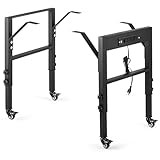
Overview: This wheeled workbench frame transforms any tabletop into a mobile workstation, combining height adjustability with lockable casters. The set of four legs features integrated ETL-certified power strip delivering four AC outlets and two USB ports. With 1000-pound capacity per leg pair and height adjustment from 28.5" to 33.8", it targets users needing portable power solutions for garages, workshops, or craft rooms.
What Makes It Stand Out: Heavy-duty wheels with brakes provide mobility without sacrificing stability when locked, enabling easy repositioning for project needs or storage. The frame maintains integrated power access during movement, eliminating unplugging and reconfiguration. This mobility distinguishes it from stationary frames and many complete workbenches. The industrial design supports various tabletop materials, while side connectors ensure rigidity even when rolling.
Value for Money: The wheeled configuration commands a premium over static frames but delivers genuine utility for dynamic workspaces. Mobile workbenches with integrated power typically cost significantly more, making this frame an economical foundation. However, the 1000lb capacity rating per pair raises questions about total safe working load when mobile. Users must factor in separate top costs, potentially approaching complete unit prices.
Strengths and Weaknesses: Strengths include excellent mobility with brake security, integrated power outlets, customizable tabletop options, and compact 19.6" depth for tight spaces. The wheeled design facilitates cleaning and reorganization. Weaknesses: potential stability concerns at maximum loads, no included work surface, limited height range unsuitable for standing tasks, ambiguous total weight capacity, and wheels may struggle on rough workshop floors.
Bottom Line: Perfect for makers requiring a mobile, powered workstation. This frame excels in flexible garages and multi-purpose spaces where repositioning is frequent. Ensure your projects align with the capacity limits and height range. For heavy stationary tasks, consider fixed-leg alternatives or complete workbenches.
6. JEGS Heavy-Duty Steel Workbench [59.5 in. x 27.5 in. Bench Top]

Overview: The JEGS Heavy-Duty Steel Workbench delivers professional-grade durability for demanding workshop environments. With a massive 1,600-pound capacity and a 10-gauge steel top measuring 59.5" x 27.5", this bench is engineered for serious automotive work, metal fabrication, and heavy-duty projects. The 34-inch working height suits most standing tasks, while the 2-inch raised edges on three sides prevent tools and parts from rolling off.
What Makes It Stand Out: This workbench’s 10-gauge steel construction sets it apart from lighter-duty alternatives. The integrated rise on sides and back creates a practical containment barrier without sacrificing workspace. Fully-adjustable feet are crucial for maintaining level stability on garage floors that are rarely perfectly flat. The powder-coated finish resists corrosion and chemical spills common in automotive settings.
Value for Money: Positioned in the mid-to-high range for steel workbenches, the JEGS justifies its price through uncompromising materials and weight capacity. Competitors offering similar load ratings typically cost 20-30% more. You’re investing in a lifetime bench that won’t sag, warp, or fail under heavy loads—eliminating replacement costs.
Strengths and Weaknesses: Strengths include exceptional load capacity, durable steel surface, leveling feet, and raised edges. The steel top provides a perfect anvil-like surface for metalwork. Weaknesses involve noise amplification when hammering, potential for rust if the finish is compromised, lack of built-in storage, and the unforgiving hardness that can damage delicate parts.
Bottom Line: Ideal for automotive enthusiasts and metalworkers who prioritize pure durability over frills. If you need a bomb-proof surface that can take abuse for decades, this JEGS bench delivers exceptional value. Skip it if you require integrated storage or a quieter, more forgiving wood surface.
7. JZD Heavy Duty Metal Workbench Table with Wood Tabletop, 2 Lockable Drawers & 2 Storage Cabinets, for Garage Auto Repair Shop Office Workshop Home
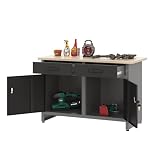
Overview: The JZD Heavy Duty Workbench combines industrial steel construction with a premium wood top and comprehensive storage, creating a professional workstation for demanding environments. Featuring cold-rolled steel framing with a powder-coated finish, this bench supports 500+ pounds on its 1.2-inch thick engineered wood surface while offering two lockable drawers and two cabinets for secure tool organization.
What Makes It Stand Out: This workbench excels at integrating storage without compromising workspace integrity. The ball-bearing drawer slides handle heavy loads smoothly, while height-adjustable legs with anti-slip pads ensure stability on uneven floors. The environmentally certified finish resists corrosion, making it suitable for both garage and office settings. Its contemporary design bridges industrial functionality with professional aesthetics.
Value for Money: At the higher end of the workbench spectrum, the JZD justifies premium pricing through its all-in-one design. Purchasing a comparable steel frame, wood top, and separate storage units would cost significantly more. The decades-long durability claim, if accurate, makes this a one-time investment for serious users.
Strengths and Weaknesses: Strengths include robust storage solutions, smooth drawer operation, adjustable height, corrosion resistance, and versatile styling. The wood top offers better noise dampening and part protection than steel. Weaknesses include complex assembly requiring multiple people, substantial weight limiting mobility, premium pricing that may exceed hobbyist budgets, and drawer weight capacity not clearly specified.
Bottom Line: Perfect for professional mechanics, serious DIYers, or anyone needing integrated storage with heavy-duty capability. The JZD transforms cluttered garages into organized workshops. Consider alternatives if you’re on a tight budget or need a mobile solution.
8. CAMMOO 47.64" Adjustable Heavy Duty Workbench, 2000 LBS Load Capacity Rubber Wood Work Table with Pegboard, Power Outlets, Work Bench for Garage, Workshop, Office, Home, Commercial

Overview: The CAMMOO workbench merges versatility with heavy-duty performance, featuring a 2,000-pound capacity rubber wood top and a comprehensive feature set for modern workspaces. At 47.64 inches wide, this bench includes dual pegboards, an ETL-certified power strip with USB ports, and six height settings from 28.5" to 39". The adjustable glides accommodate various flooring while maintaining stability.
What Makes It Stand Out: Six-stage height adjustment with tool-free knobs is a standout feature, enabling seamless transitions between sitting and standing work. The integrated power strip with four AC outlets and two USB ports eliminates cord clutter and extension cord hazards. Dual pegboards maximize vertical storage, keeping tools within reach. The rubber wood top offers durability surpassing standard particle board while remaining environmentally friendly.
Value for Money: This workbench delivers exceptional feature density at a competitive mid-range price point. Comparable benches with power integration and height adjustment typically cost 30-40% more. The 2,000-pound capacity exceeds most competitors in this class, offering professional-grade strength without professional pricing.
Strengths and Weaknesses: Strengths include remarkable height adjustability, integrated power, high load capacity, dual pegboards, and easy assembly. The wood surface is gentler on projects than steel. Weaknesses include a narrower width limiting spread-out projects, wood’s susceptibility to scratches and stains, and potential wobble at maximum height under full load. The 47.64" size may feel cramped for automotive work.
Bottom Line: An outstanding choice for makers, hobbyists, and professionals seeking adaptability. The CAMMOO excels in multi-purpose environments where height variation and power access are priorities. It’s less ideal for heavy fabrication requiring maximum surface area, but perfect for electronics, woodworking, and general repair work.
9. Heavy Duty Workbench Bracket Kit - 8 Pcs Steel 3-Way Right Angle Corner Brackets for DIY Custom Workbench, Shelving, Work Table, Fits 2x4 (Actual 1.5"x3.5") Wood

Overview: This Heavy Duty Workbench Bracket Kit provides the structural backbone for custom workbench creation, offering eight steel 3-way corner brackets designed for standard 2x4 lumber. Each bracket features pre-drilled holes and measures 4.7" x 4.1" x 4.1", enabling rapid assembly of tailored workbenches, shelving, or tables without complex joinery skills. The kit includes 64 screws for immediate construction.
What Makes It Stand Out: These brackets democratize heavy-duty workbench construction, allowing anyone to build a custom-sized bench using readily available lumber. The 3-way design creates incredibly rigid right-angle joints that rival traditional mortise-and-tenon strength. The black textured finish provides rust resistance while giving projects a professional industrial aesthetic. Their versatility extends beyond workbenches to shelving, plant stands, and aquarium racks.
Value for Money: This kit represents unbeatable economy for the DIY builder. At a fraction of pre-built workbench costs, you can construct multiple benches or structures. The steel brackets will outlast wood components, making them reusable for future projects. For the price of one economy workbench, you gain the hardware for a fully customized, heavy-duty solution.
Strengths and Weaknesses: Strengths include exceptional cost-effectiveness, infinite size customization, reusability, straightforward installation, and robust steel construction. They eliminate the need for advanced woodworking skills. Weaknesses require purchasing lumber separately, lack of included work surface (you must add a top), potential for slight wobble if lumber isn’t precisely cut, and no integrated features like storage or power.
Bottom Line: Essential for builders wanting maximum customization at minimum cost. These brackets empower you to create workbenches perfectly sized for your space and needs. They’re not for those seeking instant, feature-rich solutions, but unbeatable for DIY enthusiasts comfortable with basic construction. Perfect for garage shelving, basement workshops, or specialized work tables.
10. HABUTWAY Height Adjustable Workbench with Wheels 60" 2000 Lbs Capacity Solid Wood Work Station Heavy-Duty Rolling Work Tables for Garage Party Shop Office

Overview: The HABUTWAY workbench combines mobility with heavy-duty capability, featuring a 60" solid rubber wood top supported by a precision-cut steel frame rated for 2,000 pounds. Four locking metal wheels enable effortless repositioning between garage, workshop, or outdoor spaces, while optional non-slip feet provide stationary stability. Height adjusts from 31.8" to 40.6" across three positions without tools.
What Makes It Stand Out: The convertible mobility system distinguishes this bench—switch between wheeled and stationary configurations based on task needs. This adaptability suits dynamic environments like party rental businesses or multi-purpose garages. The 60-inch length accommodates substantial projects while maintaining maneuverability. Multiple color options and a smooth wood surface allow integration into office or home settings beyond industrial spaces.
Value for Money: Positioned competitively in the mid-range mobile workbench category, the HABUTWAY offers superior capacity and size compared to similarly priced alternatives. The dual-mode mobility system essentially provides two benches in one, delivering excellent versatility per dollar. The solid wood top adds value over particle board competitors.
Strengths and Weaknesses: Strengths include exceptional mobility, high load capacity, generous workspace, height adjustability, and aesthetic versatility. The locking wheels provide secure stationary work. Weaknesses include potential stability reduction at maximum height, wheel durability concerns under sustained full loads, assembly complexity requiring careful sequencing, and wood surface vulnerability to moisture and impacts compared to steel.
Bottom Line: Ideal for users needing workspace mobility without sacrificing capacity. The HABUTWAY excels in garages serving multiple functions, event setups, or shops requiring frequent reconfiguration. Choose a fixed bench if you prioritize absolute rigidity, but for adaptable heavy-duty workholding, this rolling solution delivers impressive performance and value.
Understanding the Demands of Metal Fabrication Workbenches
Metal fabrication environments are uniquely brutal on equipment. Unlike woodworking or assembly benches that face occasional stress, fabrication benches endure continuous abuse from heavy plate steel, welding operations, cutting torches, and repetitive hammering. The bench must remain absolutely rigid under loads that can exceed a ton while providing a workable surface that won’t warp, crack, or become a fire hazard.
Why Standard Workbenches Fall Short in Metal Shops
Standard workbenches, even those marketed as “heavy duty,” typically feature particle board or thin laminate tops that crumble under grinding sparks. Their frames, often rated for 500-1,000 pounds static load, flex dangerously when you’re hammering a stuck bushing or clamping down a warped plate. The casters, if present, are usually plastic or light-duty steel that lock poorly and deform under point loads. In metal fabrication, these shortcomings translate directly into imprecise work, premature equipment failure, and significant safety risks.
The Anatomy of a True Heavy-Duty Workbench
A fabrication-worthy bench starts with a frame constructed from minimum 12-gauge steel, though 10-gauge or thicker is preferable for professional shops. The top must be either thick steel plate (minimum 3/16-inch for light work, 1/4-inch or thicker for serious fabrication) or properly treated hardwood laminated to resist moisture and impact. Critical design elements include full-depth cross-bracing, welded joints at stress points, and a base design that distributes load across the floor rather than concentrating it on four small feet.
Key Weight Capacity Ratings and What They Really Mean
Manufacturers often advertise impressive-sounding weight capacities, but these numbers can be misleading without context. A bench rated for “5,000 pounds” might only support that weight when perfectly distributed across the entire surface—and even then, only as a static load without any dynamic forces.
Static Load vs Dynamic Load: Critical Distinctions
Static load capacity refers to weight that sits motionless on the bench. Dynamic load capacity, the more important metric for fabrication, accounts for impact forces from hammering, the shifting weight of workpieces being maneuvered, and the clamping forces from vises and fixtures. A bench might handle 3,000 pounds static but fail catastrophically under a 200-pound dynamic load from a sledgehammer strike. Look for manufacturers who specify dynamic load ratings, or apply a safety factor of at least 3:1 to static ratings for fabrication work.
Safety Factors and Real-World Performance
Engineers design structures with safety factors—the ratio between failure load and rated load. For metal fabrication benches, you want a minimum safety factor of 4:1. This means if a bench is rated for 1,000 pounds, it shouldn’t structurally fail until 4,000 pounds. However, deflection (bending) occurs long before failure. A bench that sags even 1/8-inch under load compromises precision work. The best benches specify both maximum load and maximum deflection at rated capacity, typically aiming for less than 0.5% deflection.
Workbench Top Materials: From Steel to Hardwood
The work surface is your primary interface with the workpiece, and material choice dramatically affects performance, maintenance, and suitability for different tasks. Each material brings distinct advantages and trade-offs that must align with your specific fabrication processes.
Steel Plate Tops: Gauge Matters
Steel is the gold standard for heavy fabrication, but not all steel tops are equal. Thinner 14-gauge steel (0.075 inches) will dent and deform under normal hammering. 3/16-inch (0.188 inches) provides a good balance for mixed-use benches, while 1/4-inch (0.250 inches) or thicker is essential for dedicated welding and heavy forming stations. Consider whether you need a ground-flat surface for precision layout work or can tolerate a mill-scale finish for general fabrication. Some premium benches offer replaceable steel top sections, allowing you to swap out damaged areas rather than replacing the entire top.
Hardwood vs Laminated Options for Specific Applications
While steel dominates metal fabrication, maple or beech butcher block has its place. Hardwoods absorb vibration better than steel, making them ideal for delicate tapping operations or assembling mechanisms with bearing surfaces. They also won’t scratch finished parts like stainless steel or aluminum. However, the wood must be properly kiln-dried to 6-8% moisture content and sealed with moisture-resistant finishes. Avoid laminated particle board entirely—it will swell and delaminate from grinding coolant, oil, and humidity.
Specialty Surfaces: Stainless Steel and Chemical-Resistant Coatings
For stainless steel fabrication or corrosive environments, consider a 304 stainless steel top. It’s softer than carbon steel and more prone to scratching, but prevents carbon contamination that causes rust on stainless workpieces. For chemical exposure or electroplating operations, look for epoxy-coated steel or specialized polymer tops rated for chemical resistance and fire retardancy.
Frame Construction: The Foundation of Durability
The frame determines how load transfers from the top to the floor. A weak frame makes even the thickest steel top useless. Understanding frame geometry and joint methods helps you identify benches that will remain square and stable for decades.
Welded vs Bolted Frames: Pros and Cons
Fully welded frames offer maximum rigidity and eliminate loosening over time. They’re ideal for permanent installations where disassembly isn’t required. Bolted frames, using grade 8 hardware and precision-machined mating surfaces, can approach welded rigidity while allowing shop reconfiguration. The critical factor is whether bolted joints include serrated flanges or locking plates that prevent shifting under vibration. Avoid benches with simple through-bolts that rely solely on friction—they’ll loosen within months.
Leg Design and Cross-Bracing Strategies
Square or rectangular tubing provides superior rigidity to angle iron or C-channel. Legs should be minimum 2x2-inch tubing with 1/8-inch wall thickness for light benches, scaling to 3x3-inch or larger for heavy-duty models. Full-depth cross-bracing—connecting all four legs at both top and bottom—creates a torsion box that resists racking forces. Some premium designs incorporate diagonal bracing or gusset plates at corners, dramatically increasing stiffness. Look for benches where the bracing also serves as a mounting point for accessories, maximizing functionality.
Size and Workspace Optimization
Bigger isn’t always better. An oversized bench can choke shop flow, while an undersized one limits project scope. The right dimensions depend on your typical workpiece sizes, available floor space, and how materials move through your shop.
Standard Dimensions vs Custom Configurations
Standard benches typically run 72-96 inches long and 30-36 inches deep. For most fabrication, 84 inches provides an optimal balance—long enough for full-length tubing but not so deep you can’t reach the back. Depth is critical: 30 inches allows comfortable reach across the bench, while 36 inches accommodates larger projects but may require stepping around the bench. Custom sizes become necessary for specialized work like full-length truck frame fabrication or when integrating into tight shop layouts.
Planning for Material Flow and Shop Layout
Position benches to create logical work zones: cutting near material storage, welding near ventilation, grinding near dust collection. Leave minimum 36-inch aisles between benches for material handling, and 48 inches if you move large sheets with a helper. Consider bench height in relation to nearby equipment—a bench that’s level with your band saw table simplifies handling long stock. Some shops benefit from island-style benches accessible from all sides, while against-the-wall placement works better for assembly stations.
Mobility vs. Stationary: Making the Right Choice
The debate between mobile and stationary benches involves trade-offs between flexibility and absolute stability. Modern solutions blur these lines, offering hybrid approaches that capture benefits of both.
Casters, Levelers, and Hybrid Solutions
True heavy-duty casters rated for 1,000+ pounds each are essential for mobile benches. Look for forged steel wheels with grease fittings and positive locking mechanisms that engage both wheel rotation and swivel. Leveling feet with broad pads (minimum 4x4 inches) distribute load and allow fine height adjustment on uneven floors. The best hybrid benches feature retractable casters—wheels that lift off the floor when not in use, giving you mobility for shop reconfiguration and rock-solid stability for work.
Essential Accessories and Customization Options
A bare bench is an incomplete workstation. The right accessories transform a simple table into a productivity center tailored to your processes. Consider accessory mounting systems that allow reconfiguration without drilling into the frame.
Vises, Clamps, and Workholding Solutions
A machinist’s vise with 6-8 inch jaws is standard, but fabrication often requires more specialized workholding. Look for benches with integrated T-slots or modular clamping systems that let you position hold-downs anywhere on the surface. Some systems use a grid of threaded holes (typically 5/8-11 threads on 2-inch centers) that accept a variety of stops, clamps, and fixtures. Ensure the bench frame includes reinforced mounting points for vises—preferably with steel backing plates—to prevent tearing out bolts under heavy torque.
Integrated Storage: Drawers, Shelves, and Cabinets
Under-bench storage keeps tools within reach but must not compromise structural integrity. Drawers should be mounted to the cross-bracing, not just the top, and rated for 100+ pounds each. Full-extension slides with ball bearings maintain smooth operation under load. For welding benches, consider sealed cabinets to protect consumables from grinding dust. Pegboard or slatwall panels on the end of benches organize hand tools while keeping the work surface clear.
Power and Utility Integration
Running extension cords across a metal shop is a tripping hazard and fire risk. Quality fabrication benches offer integrated electrical packages with 20-amp outlets, USB charging ports, and compressed air manifolds. Look for NEMA-rated enclosures and GFCI protection where required. Some advanced benches include retractable cord reels or overhead boom arms that keep cables off the floor. Ensure any electrical components are rated for your shop’s voltage and amperage requirements.
Ergonomics and User Comfort
Hours of grinding, fitting, and welding take a toll on your body. An ergonomic bench setup reduces fatigue, improves precision, and prevents long-term injuries. The one-size-fits-all approach fails when users vary significantly in height or when tasks require different working positions.
Height Adjustability and Its Importance
Standard bench height is 34-36 inches, but optimal height depends on your work and body. For fine detail work, elbows should be at 90 degrees when hands are on the workpiece. For heavy hammering, a slightly lower position lets you use body weight. Electric or crank-adjustable benches offering 28-42 inch height ranges solve this problem, though they cost significantly more. If choosing a fixed-height bench, select based on your most common operation—typically welding or assembly—and use sturdy platforms for tasks requiring different heights.
Anti-Fatigue Matting and Footrests
Concrete floors destroy joints over time. High-density anti-fatigue matting with beveled edges reduces strain and provides insulation from cold floors. For stationary benches, consider a 3x5 foot mat that extends beyond the work area. Some fabricators prefer a footrest bar mounted to the bench frame, allowing weight shifting and reducing lower back strain during long welding sessions. Ensure mats are rated for welding environments—some synthetic mats melt from sparks.
Safety Features and Compliance
Metal fabrication presents unique hazards: fire, electrical shock, heavy objects, and toxic fumes. Your workbench should mitigate these risks, not contribute to them. Understanding relevant safety standards helps you select equipment that protects both users and your facility.
Fire Resistance and Spill Containment
Steel tops are inherently fire-resistant, but oily rags and debris in drawers create fire hazards. Look for benches with self-closing, latching drawers that contain oxygen-starved fires. For operations using cutting fluids or solvents, consider benches with integrated spill containment lips around the perimeter—typically a 1/2-inch raised edge that prevents liquids from running onto the floor. Some chemical-resistant benches include removable sumps for easy cleanup.
Electrical Safety and Grounding
When welding or using 220V equipment at your bench, proper grounding is critical. The bench frame should include a dedicated grounding lug connected to the shop’s electrical ground. All metal surfaces must be bonded to prevent potential differences that could shock users. If the bench includes electrical outlets, the entire assembly must be properly grounded, and circuits protected by appropriately rated breakers. Never assume a bench is grounded—verify with a multimeter before first use.
Budget Considerations and Total Cost of Ownership
Sticker shock is common when pricing true heavy-duty benches. A $200 hardware store special might handle light tasks, but professional-grade benches start around $800 and can exceed $3,000. Understanding long-term costs reveals why cheaper options often cost more over time.
Initial Investment vs Long-Term Value
A $1,500 bench that lasts 20 years costs $75 annually. A $300 bench that fails in two years costs $150 annually plus the expense of replacement and downtime. Factor in the cost of ruined workpieces from an unstable bench, potential injuries, and lost productivity. Professional shops should budget $1,200-$2,500 per bench for versatile stations, with specialized welding or precision benches running higher. Home fabricators can sometimes find quality used industrial benches for 40-60% of retail cost.
Warranty and Manufacturer Support
Reputable manufacturers offer 10-year or lifetime warranties on frames and 5-year warranties on tops. Read the fine print—some warranties exclude welding damage or require professional installation. Consider manufacturers who provide replacement parts and retrofit kits. A company that still supports benches built 15 years ago demonstrates commitment to longevity. Ask about load testing documentation and whether they honor warranties in commercial environments, as some residential-grade benches have exclusions.
Maintenance and Care for Longevity
Even the best bench requires proper maintenance to deliver decades of service. Different materials and environments demand specific care protocols. Neglect accelerates wear and compromises safety.
Cleaning Protocols for Different Surfaces
Steel tops should be cleaned with mineral spirits or dedicated metal cleaners to remove oils and cutting fluids. Avoid water-based cleaners that accelerate rust. For stainless tops, use stainless-specific cleaners to prevent cross-contamination. Wood tops benefit from periodic light sanding and reapplication of oil-based sealants—never use water-based polyurethane in a metal shop. Establish a weekly cleaning routine that includes clearing drawer slides of metal filings, which act as abrasive paste.
Preventing Rust and Corrosion
In humid climates, even indoor benches rust. Apply a light coat of machine oil or dedicated rust preventative to steel surfaces monthly. For long-term storage, consider breathable covers that prevent condensation. In coastal areas, stainless steel or powder-coated frames resist salt air better than bare steel. Some shops install dehumidifiers to maintain relative humidity below 50%. If rust appears, address it immediately with wire brushing and rust converter—don’t let it spread.
Environmental Factors in Your Shop
Your shop’s environment directly impacts bench performance and longevity. Temperature swings, humidity, and airborne contaminants all play roles in how materials behave and degrade over time.
Humidity, Temperature, and Air Quality Impacts
High humidity causes steel to rust and wood to swell, potentially binding drawers or warping tops. Extreme temperature fluctuations create condensation, especially on cold steel brought into a warm shop. Grinding dust is particularly insidious—it’s abrasive, conductive, and hygroscopic, meaning it absorbs moisture and accelerates corrosion. Consider bench placement away from direct drafts, and ensure dust collection captures particles at the source. In unheated shops, allow steel benches to acclimate before heavy use to prevent thermal stress.
Frequently Asked Questions
What weight capacity should I look for in a metal fabrication workbench?
For general fabrication, choose a bench rated for at least 2,000 pounds static load, which typically handles 600-800 pounds dynamic load safely. Heavy welding or blacksmithing stations should be rated for 3,000+ pounds. Remember that dynamic ratings are more important than static numbers—hammering creates impact forces far exceeding the hammer’s weight.
Can I use a hardwood bench top for metal fabrication?
Yes, but with limitations. Maple or beech butcher block works well for assembly, tapping threads, and protecting finished surfaces. However, it’s unsuitable for welding, heavy grinding, or hot work. If you choose wood, ensure it’s sealed against moisture and keep a steel plate nearby for hot work. Many fabricators use wood-topped benches for specific tasks while maintaining steel-topped stations for heavy work.
How thick should a steel workbench top be?
For general fabrication, 3/16-inch (0.188") steel is the minimum. For welding and heavy hammering, 1/4-inch (0.250") provides better durability. Precision layout benches often use 1/2-inch thick ground-flat plate. Thicker isn’t always better—1/4-inch offers the best balance of durability, weight, and cost for most shops.
Are mobile workbenches stable enough for serious fabrication?
With proper casters, yes. Look for forged steel casters rated minimum 1,000 pounds each with total-lock brakes. The best mobile benches use retractable casters that lift off the floor when locked down, providing true stationary rigidity. Avoid plastic-wheel casters and any bench where casters bolt directly to thin-gauge legs without reinforcement.
What’s the ideal workbench height for metal fabrication?
Standard 34-36 inches works for most users 5'8" to 6’ tall. For precision work, measure from floor to your bent elbow and subtract 2 inches. For heavy hammering, go 2-4 inches lower to use body weight. If multiple users share a bench, adjustable-height models offering 28-42 inches are worth the investment.
How do I prevent my steel workbench from rusting?
Apply a light coat of machine oil or rust preventative monthly. Keep the shop humidity below 50% if possible. Clean up spills immediately, especially cutting fluids that contain water. For long-term storage, use breathable covers. In corrosive environments, consider a stainless steel top or powder-coated frame.
Should I choose a welded or bolted frame?
Welded frames offer maximum rigidity for permanent installations. Bolted frames provide flexibility if you might reconfigure your shop. High-quality bolted frames using grade 8 hardware and serrated flanges can approach welded strength. Avoid cheap bolted frames with thin metal and no locking features—they’ll loosen and rack over time.
Can I add a vise to any heavy-duty workbench?
Not safely. The bench must have reinforced mounting points, preferably steel backing plates welded to the frame. Mounting a 150-pound machinist vise to a thin top will tear out bolts or crack the surface. Check that the bench specifications include vise mounting load ratings and recommended bolt patterns.
What’s the difference between a fabrication table and a welding table?
Welding tables prioritize flatness and heat resistance, often featuring slatted tops for clamping and slots for fixtures. Fabrication benches are more versatile, supporting cutting, grinding, and assembly. Many shops use dedicated welding tables for tacking and a separate fabrication bench for finishing work. Some hybrid designs accommodate both but excel at neither.
How much should I budget for a professional-grade heavy-duty workbench?
Expect to spend $1,200-$2,500 for a versatile 84-inch steel-topped bench with quality construction and a 10-year warranty. Specialized benches with adjustable height, integrated power, or precision-ground surfaces can exceed $3,000. Remember that total cost of ownership matters—a quality bench lasting 20+ years costs less annually than replacing cheap benches every few years.
See Also
- 10 Affordable Heavy Duty Workbenches That Don’t Sacrifice Strength in 2026
- 10 Best Heavy Duty Workbenches After 6 Months of Testing in 2026
- 10 Best Heavy Duty Workbenches for Automotive Repair in 2026
- The 10 Best Heavy Duty Workbenches for Contractors in 2026
- 10 Best Heavy Duty Workbenches for Metalworking in 2026
