Table of Contents
If you’ve ever struggled with a wobbly circular saw or wrestled a full sheet of plywood across a table saw, you already know the frustration of inaccurate cuts. Enter the track saw—a game-changing tool that combines the portability of a circular saw with the precision of a table saw, all while being surprisingly beginner-friendly. Unlike traditional saws that rely on your steady hand or bulky fences, track saws glide along aluminum rails with laser-like accuracy, turning intimidating projects into confident, repeatable successes.
This comprehensive guide demystifies track saws for newcomers, walking you through everything from the underlying mechanics to the subtle features that separate frustrating tools from lifelong workshop companions. Whether you’re furnishing your first apartment with DIY furniture or dreaming of pristine built-in shelving, understanding these principles will save you money, time, and countless ruined workpieces.
Top 10 Track Saws For Beginners
Detailed Product Reviews
1. Milescraft 1409 Track Saw Guide - Universal for 7-1/4" Circular Saws, 50" Cutting Range, 2" Depth, Aluminum
, 50" Cutting Range, 2" Depth, Aluminum](https://m.media-amazon.com/images/I/419Pm-tgJkL._SL160_.jpg)
Overview: The Milescraft 1409 transforms your standard 7-1/4" circular saw into a precision track-guided cutting system. This universal guide rail offers a 50-inch cutting capacity out of the box, with optional extensions available for full-sheet ripping. Constructed from aluminum with an all-metal chassis, it provides a rigid cutting platform that minimizes flex for accurate results.
What Makes It Stand Out: Universal compatibility is the headline feature—this guide fits most circular saws on the market without proprietary limitations. The extendable design grows with your needs, while the 2-inch cutting depth handles everything from plywood to interior doors. The red anti-splinter strip visibly marks your cut line and reduces tear-out, a feature typically found on premium systems. The low-profile design maintains stability without sacrificing cutting capacity.
Value for Money: At its price point, the Milescraft 1409 offers an affordable entry into track-guided cutting without investing $300+ in a dedicated track saw. For DIYers and budget-conscious woodworkers, it delivers 80% of the functionality at a fraction of the cost. Compared to other guides, its all-metal construction justifies the modest premium over plastic alternatives, promising longevity that cheaper options can’t match.
Strengths and Weaknesses: Pros include true universal compatibility, robust metal construction, extendable length, and effective splinter guard. Cons involve setup time—attaching your saw requires adjustment—and it lacks the buttery-smooth glide of dedicated track saws. Some users report minor alignment challenges with certain saw bases, and the initial 50-inch length may feel limiting for large panels without purchasing extensions.
Bottom Line: This guide is ideal for hobbyists and homeowners wanting track-saw accuracy without the investment. If you already own a quality circular saw and value versatility over convenience, the Milescraft 1409 delivers professional results on a DIY budget.
2. WEN CT9110 110-Inch Track Saw Track Guide Rail and Adapters
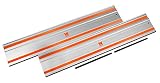
Overview: The WEN CT9110 provides two 55-inch aluminum track sections that combine to create a 110-inch guide rail system, perfect for ripping full 4x8 plywood sheets. Designed primarily for WEN track saws, this set includes adapters that expand compatibility to Evolution, Makita, and Festool models, making it a versatile extension or replacement option for various track saw owners.
What Makes It Stand Out: The segmented design offers flexibility—use one 55-inch section for smaller cuts or combine both for full-sheet capacity. The included adapter set with four set screws ensures maximum stability across different saw brands, a rare feature at this price point. This isn’t a closed ecosystem; WEN deliberately engineered cross-brand compatibility, saving you from buying expensive proprietary extensions.
Value for Money: Priced competitively, the CT9110 delivers over nine feet of track for less than a single premium-brand track section. For WEN track saw owners needing extended capacity, it’s essential. For Makita or Festool users, it offers significant savings over OEM extensions, though with potential trade-offs in fit precision. The bundled adapters eliminate separate accessory purchases, adding tangible value.
Strengths and Weaknesses: Strengths include generous length, multi-brand compatibility, and cost-effectiveness. The two-piece design aids portability and storage. Weaknesses revolve around the connection seam between sections, which can occasionally catch saws if not perfectly aligned. The adapter system, while functional, requires careful tuning and may not provide the absolute zero-play fit of native track systems. Build quality is adequate but not matching premium brands.
Bottom Line: If you need extended cutting capacity on a budget, the WEN CT9110 is a smart purchase. WEN saw owners should buy it without hesitation, while owners of other brands should consider it a value-conscious alternative to expensive OEM tracks, accepting minor compromises in exchange for significant savings.
3. WEN 7.25-Inch Track Saw (CT1274) and 110-Inch Track Saw Track Guide Rail Bundle

Overview: This bundle pairs the WEN CT1274 track saw with a 110-inch guide rail system, delivering a complete track saw solution straight out of the box. The saw features variable speed control from 2000 to 6000 RPM, handles cuts up to 2.6 inches thick, and performs 45-degree bevel cuts up to 1.85 inches. The included 48-tooth carbide blade and full-length track provide everything needed for precision sheet goods breakdown.
What Makes It Stand Out: You’re getting an entire track saw system—saw, blade, and track—for less than most premium tracks alone. The variable speed control is exceptional at this price point, allowing you to optimize cutting speed for different materials. The 110-inch track handles full plywood sheets without extensions. Cross-compatibility with Evolution, Makita, and Festool tracks means this system can integrate with existing equipment or grow with future upgrades.
Value for Money: This bundle represents one of the best values in woodworking. Individually, these components would cost significantly more; together they undercut every competitor’s entry-level track saw package. For woodworkers stepping up from circular saw guides, it offers true plunge-cut capability and track saw precision at a DIY-friendly price. The performance-to-dollar ratio is unmatched in the current market.
Strengths and Weaknesses: Pros include complete package convenience, variable speed, excellent cut capacity, and remarkable affordability. The 48-tooth blade is better than typical stock blades. Cons include WEN’s budget-brand longevity questions, slightly rougher operation compared to premium saws, and plastic components where competitors use metal. The dust collection is functional but not exceptional, and the included blade, while decent, benefits from upgrading for fine work.
Bottom Line: For beginners and value-conscious woodworkers, this bundle is a no-brainer. It delivers genuine track saw functionality without the premium price tag. While it won’t match Festool’s refinement, it absolutely will transform your sheet goods workflow at a fraction of the cost.
4. Kreg KMA2700 Accu-Cut – Circular Saw Track – Make Straight, Cross, Rip & Angled Cuts Easily
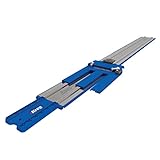
Overview: The Kreg KMA2700 Accu-Cut converts your existing circular saw into a precision track-guided cutting system without permanent modifications. Featuring a universal sled that accommodates both left- and right-handed saws, this portable guide excels at straight, cross, rip, and angled cuts. The integrated starting block and anti-slip guide strips provide stability and accuracy for on-site or workshop use.
What Makes It Stand Out: Kreg’s reputation for user-friendly design shines through the tool-free sled adjustment and intuitive setup. Unlike basic straight-edge guides, the Accu-Cut’s dual anti-slip strips prevent shifting during cuts, while the starting block ensures smooth plunge initiation. The ability to make angled cuts up to 45 degrees sets it apart from simpler guides. Its portability makes it ideal for contractors and DIYers who need accuracy without lugging a dedicated track saw.
Value for Money: Positioned as a premium guide system, the Accu-Cut costs more than basic guides but delivers superior results and durability. It’s a fraction of a track saw’s price while providing 70% of the functionality. For occasional users, it’s more economical than a dedicated system. However, serious woodworkers might outgrow its limitations quickly, making the investment in a true track saw more sensible long-term.
Strengths and Weaknesses: Pros include excellent Kreg build quality, true universal sled design, anti-slip technology, and outstanding portability. Setup is fast and repeatable. Cons include plastic components that may wear over time, limited 48-inch length (extensions available separately), and it still can’t match a dedicated track saw’s plunge mechanism or dust collection. The sled adds slight offset that requires mental adjustment during layout.
Bottom Line: The Kreg Accu-Cut is perfect for DIYers and contractors needing portable precision. If you own a quality circular saw and want track-like accuracy without another expensive tool, this guide delivers. For frequent sheet goods work, consider investing in a dedicated track saw instead.
5. WEN 7.25-Inch Track Saw, Variable Speed (CT1274), Corded Electric

Overview: The WEN CT1274 is a standalone track saw offering variable speed operation from 2000 to 6000 RPM and robust cutting capabilities. It rips material up to 2.6 inches thick and handles 45-degree bevel cuts up to 1.85 inches deep. The saw accepts standard 7-1/4-inch blades with 5/8-inch arbors and includes a 40-tooth carbide-tipped blade, 360-degree dust port adapter, and a two-year warranty—all without the track.
What Makes It Stand Out: Variable speed control in a budget-priced track saw is remarkable, allowing optimal cutting across materials from hardwoods to plastics. The saw maintains compatibility with WEN’s track system while also fitting Evolution, Makita, and Festool rails, providing unusual flexibility. The included 360-degree dust port adapter is more versatile than typical fixed ports, and the two-year warranty demonstrates confidence in a category where one-year is standard.
Value for Money: As a standalone tool, the CT1274 offers track saw functionality for roughly half the price of entry-level competitors. For woodworkers who already own compatible tracks, it’s an economical way to add plunge-cut capability. The variable speed alone justifies the price premium over fixed-speed budget options. However, without a track, new users must factor in that additional cost, making the bundle (Product 3) more attractive for first-time buyers.
Strengths and Weaknesses: Pros include excellent variable speed range, generous cut capacity, multi-brand track compatibility, and solid warranty. The 40-tooth blade is serviceable for general use. Cons include the absence of a track (obvious but important), plastic depth adjustment components that feel less robust, and a slightly noisy motor. Dust collection is decent but requires a powerful vacuum for best results. The plunge action, while functional, lacks the fluidity of premium brands.
Bottom Line: Purchase the CT1274 if you already own compatible tracks or want to upgrade from a cheaper fixed-speed model. For newcomers to track saws, the bundle offers better value. This saw delivers where it counts—cutting performance—while making sensible compromises to maintain affordability.
6. Milescraft 1410 Track Saw Square – Track Saw Rail Square Guide, 90 Degree Cuts from Edge, Auto-Align, Rip Full Sheets Straight and Square, Fast Adjust, Exclusive for Milescraft 1409 TrackSawGuide

Overview: The Milescraft 1410 Track Saw Square is a purpose-built accessory designed exclusively for the Milescraft 1409 TrackSawGuide system. This specialized tool focuses on delivering perfect 90-degree cuts by automatically aligning your guide rail perpendicular to the workpiece edge. Its self-centering mechanism eliminates the guesswork and measurement typically required when squaring up tracks for crosscuts on full sheet goods.
What Makes It Stand Out: The self-centering design is the star feature, pulling the rail square with minimal effort. The thin profile reduces weight while maintaining functionality on boards as thin as 1/2 inch. A built-in stabilizer bar catches the workpiece end to prevent tipping—a thoughtful detail for large panels. Recessed notches allow simultaneous use with Milescraft TrackClamps, creating an integrated system approach that hobbyists working within the Milescraft ecosystem will appreciate.
Value for Money: For dedicated Milescraft users, this square offers reasonable value by saving setup time and improving cut accuracy. However, its proprietary nature significantly limits its appeal. Unlike universal alternatives, it cannot adapt to other track systems, making it a poor investment if you ever plan to upgrade or use multiple brands. Generic track squares at similar price points offer broader compatibility.
Strengths and Weaknesses: Strengths include precise auto-alignment, lightweight design, stabilizer bar for safety, and seamless integration with Milescraft clamps. Weaknesses are its exclusive compatibility (only works with 1408/1409 GuideRails), lack of angle adjustments beyond 90 degrees, and limited resale value due to narrow user base.
Bottom Line: Only purchase this square if you’re fully committed to the Milescraft track system. For those users, it delivers excellent accuracy and convenience. Everyone else should invest in a more versatile, universal track square that won’t lock them into a single ecosystem.
7. WEN Industrial-Grade Track Saw Square and Center Finder (WA9500)

Overview: The WEN WA9500 is a versatile track saw accessory that combines squaring functionality with a built-in center finder, making it a multi-purpose tool for woodworkers. Constructed from CNC-machined aluminum, this industrial-grade square allows angle adjustments from 0 to 60 degrees and helps locate the center of round stock—a unique dual-function approach in the track accessory market.
What Makes It Stand Out: The integrated center finder with a detachable 9-1/4-inch magnetic ruler sets this apart from single-purpose squares. Quick-adjust detents at common angles (15°, 22.5°, 30°, 45°, 60°) enable rapid, accurate changes without constant measuring. Its corrosion-resistant aluminum construction promises durability, while broad clamp compatibility ensures it works with most track and F-clamps, including all WEN guide rails.
Value for Money: This square delivers strong value through its dual functionality. You’re essentially getting two tools—track square and center finder—for the price of one. The durable construction suggests longevity, and universal compatibility protects your investment across different track systems. Compared to buying separate center finders and angle squares, the WA9500 represents significant cost savings.
Strengths and Weaknesses: Strengths include versatile angle range, quick-detent system, robust aluminum build, dual-purpose design, and broad compatibility. Weaknesses are the center finder ruler may be too short for larger diameters, and the magnetic ruler could lose strength over time. Some users report the detents require occasional recalibration with heavy use.
Bottom Line: The WEN WA9500 is an excellent choice for WEN track saw owners and a solid option for anyone seeking a versatile, well-built track square. The center finder bonus and durable construction make it a smart purchase for both hobbyists and professionals who value efficiency and multi-functionality.
8. Kreg KMA3700 Accu-Cut XL - Universal Track Saw Guide System - Make Straight, Cross, Rip & Angled Cuts Easily

Overview: The Kreg KMA3700 Accu-Cut XL is a universal track saw guide system that transforms nearly any circular saw into a precision track saw. Unlike dedicated track squares, this complete system includes a universal sled that attaches to your existing saw, allowing you to make straight, cross, rip, and angled cuts with track-guided accuracy without investing in a dedicated plunge-cut saw.
What Makes It Stand Out: True universality is the key selling point—the sled accommodates both right- and left-handed circular saws, making it accessible to all users. The portable design allows job site flexibility, while the starting block and anti-slip guide strips prevent binding and ensure splinter-free cuts. Kreg’s reputation for user-friendly woodworking solutions shines through in the intuitive setup and operation.
Value for Money: For woodworkers who already own a quality circular saw, the Accu-Cut XL offers exceptional value compared to purchasing a dedicated track saw system costing hundreds more. It provides 80% of the functionality at a fraction of the price. However, it lacks the integrated plunge mechanism and depth control of true track saws, which may limit certain applications.
Strengths and Weaknesses: Strengths include universal saw compatibility, portability, affordable entry into track saw functionality, anti-slip strips for clean cuts, and ambidextrous design. Weaknesses are no plunge capability, potential sled flex with heavy saws, and the need to attach/detach the sled repeatedly. It also requires separate purchase of guide rails.
Bottom Line: The Kreg Accu-Cut XL is ideal for budget-conscious woodworkers wanting track saw precision without the hefty investment. While it won’t replace a professional track saw for heavy use, it excels at breaking down sheet goods and making long rip cuts. A smart purchase if you already own a suitable circular saw.
9. WEN CT1065 10-Amp 6.5-Inch Plunge Cut Sidewinder Circular Track Saw,Black
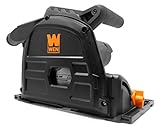
Overview: The WEN CT1065 is a dedicated plunge-cut track saw that brings professional-grade functionality to the budget-conscious woodworker. This 10-amp sidewinder saw features a 6.5-inch carbide-tipped blade and is designed to work seamlessly with WEN’s track system, enabling clean, splinter-free rip cuts and precise plunge cuts without the bulk or expense of a table saw.
What Makes It Stand Out: As a complete track saw unit rather than an accessory, it offers integrated plunge mechanism and depth control that guide systems can’t match. The 10-amp motor provides sufficient power for ripping boards up to 2-1/3 inches thick, while bevel capacity up to 45 degrees adds versatility. Its compatibility with WEN’s 100-inch track and clamps creates an affordable ecosystem for handling full sheet goods.
Value for Money: The CT1065 delivers outstanding value, typically costing half of premium brand track saws while maintaining core functionality. For hobbyists and DIYers, it eliminates the need for a table saw in small shops. The included blade is a nice touch, though professionals may want to upgrade. The real value lies in getting plunge capability and track compatibility at an entry-level price.
Strengths and Weaknesses: Strengths include affordable plunge-cut capability, adequate power for most tasks, bevel functionality, included blade, and WEN ecosystem compatibility. Weaknesses are the sidewinder design may feel less refined than worm-drive alternatives, limited to WEN tracks (without adapters), and the 6.5-inch blade restricts depth compared to 7-1/4-inch models. Dust collection could be more robust.
Bottom Line: The WEN CT1065 is a fantastic entry point into track saw ownership. It performs admirably for its price class, making it perfect for hobbyists, DIYers, and budget-minded professionals. While it lacks the refinement of premium brands, its functionality-to-price ratio is hard to beat for breaking down sheet goods and executing plunge cuts.
10. -60° to 60° Adjustable Angle Track Saw Square with Quick Angle Stops, Protractor, 90° Right Angle Guide Square Guide Rail
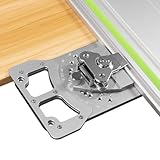
Overview: This adjustable angle track saw square offers exceptional versatility with an impressive -60° to 60° range, accommodating virtually any miter or straight cut scenario. Designed for universal compatibility across multiple track saw brands, this accessory features quick angle stops at common increments and combines protractor functionality with a right-angle guide, making it a comprehensive solution for complex angled cuts.
What Makes It Stand Out: The extensive angle range with positive stops at 15° increments (including negative angles) is unmatched by most competitors. Its solid aluminum construction with parallel edge support ensures stability during cuts, reducing vibration on large panels. The true universal design fits most guide rails without modification, and the included detailed manual makes it accessible for beginners while satisfying professional demands.
Value for Money: This square offers excellent value for woodworkers needing wide-angle versatility. Buying separate squares for different angles would cost significantly more. The durable aluminum build suggests longevity, and universal compatibility protects your investment across track systems. While slightly pricier than basic 90° squares, the expanded functionality justifies the cost for anyone regularly cutting miters or complex angles.
Strengths and Weaknesses: Strengths include exceptional angle range, quick-detent system, robust construction, universal compatibility, vibration-damping design, and beginner-friendly documentation. Weaknesses are the numerous moving parts may require periodic adjustment, the wide range could make it slightly bulkier than single-angle squares, and the brand-agnostic design lacks ecosystem-specific integration benefits.
Bottom Line: This adjustable square is a must-have for woodworkers who frequently cut angles beyond 90 degrees. Its versatility, build quality, and universal compatibility make it suitable for both professionals and serious hobbyists. If your work involves complex miters or you want one square to handle every angle, this is an excellent investment that will serve you across any track system you own.
What Is a Track Saw and Why Should Beginners Care?
A track saw (sometimes called a plunge-cut track saw) is essentially a circular saw mounted on a specialized guide rail system. The saw’s base features anti-slip strips that grip the track, eliminating side-to-side play while allowing smooth forward motion. For beginners, this means your very first cut can be perfectly straight, splinter-free, and accurate to within a fraction of a millimeter—results that might take months to achieve with freehand tools.
The real magic lies in the plunge mechanism. Unlike standard circular saws that start spinning exposed blades at full speed, track saws allow you to position the blade precisely where the cut begins, then lower it smoothly into the material. This controlled entry prevents tear-out on delicate veneers and gives you confidence when making interior cuts or adjusting depth on the fly.
Track Saw vs. Circular Saw vs. Table Saw: The Critical Differences
Understanding these distinctions helps justify the investment and clarifies when a track saw truly shines. Circular saws offer unmatched portability but demand skill and auxiliary guides for accuracy. Table saws excel at repetitive rip cuts and joinery but require massive infeed/outfeed space and pose significant safety concerns for novices.
Track saws occupy the sweet middle ground. They break down sheet goods more safely than a table saw, cut angles and bevels more accurately than a circular saw, and store in a fraction of the space. For beginners working in garages or small shops, this hybrid capability eliminates the need for multiple large tools during your critical first projects.
How Track Saws Work: The Mechanics Behind the Magic
The interaction between saw and track creates a self-aligning system. Rubber lip seals on the track’s edge press against your cutline, while friction strips on the bottom prevent sliding without clamps. As you push the saw, spring-loaded cams maintain constant pressure against the track’s inner rail, automatically correcting any slight wobble.
The plunge action uses a hinged motor housing connected to depth stops. When you release the trigger lock and press the plunge release lever, the entire motor and blade assembly pivots downward. This design not only improves safety but allows micro-adjustments to cutting depth mid-cut—a feature impossible with fixed-base circular saws.
Key Features That Define a Quality Track Saw
Power and Motor Type: Brushed vs. Brushless
Beginners often overlook motor technology, but it directly impacts performance and longevity. Brushed motors use carbon brushes that wear down over time, creating maintenance needs and gradual power loss. Brushless motors, while pricier, deliver consistent torque, run cooler, and typically last the tool’s lifetime.
For your first track saw, aim for 1,200-1,400 watts of power (or 10-12 amps). This range handles 3/4-inch hardwood plywood without bogging down while remaining manageable for a novice. Underpowered saws force you to push harder, increasing kickback risk and reducing cut quality.
Track Compatibility and Length Options
Most quality track saws work with proprietary tracks, but some brands offer cross-compatibility. Consider starting with a 55-inch track—long enough to crosscut a full sheet of plywood but short enough for easy storage. Modular systems let you connect multiple tracks for longer cuts, though beginners should verify the connector quality; cheap connectors create slight offsets that ruin precision.
Track profile matters too. Low-profile tracks sit closer to the material, reducing blade deflection on thin stock. Higher profiles provide better chip clearance for deep cuts. For versatility, look for tracks with integrated measuring scales and non-slip strips that can be replaced when worn.
Blade Quality and Tooth Count Explained
The included blade often determines your first impression. Beginner-friendly track saws should ship with a 48-tooth carbide-tipped blade—aggressive enough for fast rip cuts in construction lumber yet refined enough for clean crosscuts in plywood. Tooth geometry matters: alternating top bevel (ATB) teeth slice wood fibers cleanly, while flat-top grind (FTG) teeth rip efficiently.
Blade kerf width affects motor strain. Thin-kerf blades (1.8mm) require less power and produce less waste, perfect for beginners using lower-wattage saws. Standard kerf (2.2mm) blades offer more stability and resharpening potential but demand more robust motors. Always verify your saw’s arbor size (typically 20mm or 5/8-inch) before buying aftermarket blades.
Cutting Depth and Bevel Capacity
Maximum cutting depth at 90 degrees should exceed 2-1/4 inches to handle dimensional lumber and thick panels. However, the usable depth matters more—some saws lose capacity when beveling or when using thicker tracks. Check the depth scale accuracy; poorly calibrated scales lead to expensive mistakes on finished pieces.
Bevel capacity ranges from 45 to 47 degrees. That extra 2 degrees proves crucial when cutting slightly cupped boards or creating precise angled joints. Look for positive stops at common angles (0°, 45°) with easy micro-adjustment screws. The bevel adjustment mechanism should lock securely without requiring excessive force that could knock your track out of alignment.
Dust Collection Systems
Effective dust management separates professional results from frustrating cleanup. The best beginner track saws feature dual-port dust collection: a main port behind the blade and a secondary port near the blade guard. This captures both coarse chips and fine dust.
Test the dust port size compatibility with standard shop vacuums (35mm or 1-1/4 inch). Some saws include adapters, but proprietary sizes force you into the manufacturer’s ecosystem. Consider models with sealed dust channels that prevent debris from entering the motor housing—a common failure point in dusty workshop environments.
Safety Features for Beginner Woodworkers
Look for riving knives that move with the blade during plunge cuts, preventing kerf closure and kickback. Electronic blade brakes stop rotation within seconds, reducing injury risk when you set the saw down. Anti-kickback claws on the track grab the material if the saw tries to move backward, a feature that pays dividends during your first few dozen cuts.
Soft-start motors prevent the jarring torque that can shift your track position at startup. Overload protection circuits shut down the saw before motor damage occurs, saving you from costly repairs when you inevitably push too hard on a tough cut.
Essential Track Saw Accessories for Beginners
Your first accessory should be a pair of track clamps. While anti-slip strips work on clean surfaces, rough lumber or dusty boards require mechanical clamping. Quick-action clamps that slot into the track’s T-channel save setup time and keep your hands free.
Splinter guards—replaceable plastic strips that press against the cut edge—dramatically improve cut quality on veneered plywood. Buy spares; they wear down after 50-100 cuts. Track connectors with micro-adjustment screws let you extend cutting lengths without introducing gaps, while carrying bags protect your tracks from dents that would compromise accuracy.
Understanding Track Saw Tracks: Your Cutting Foundation
Track straightness determines cut quality. Premium tracks undergo extrusion and machining processes that maintain tolerance within 0.005 inches over their length. Check for track rigidity by supporting it at both ends; sagging in the middle transfers to your cut. Some tracks feature reinforcing ribs underneath for added stiffness without excessive weight.
The zero-clearance strip—the rubber edge that your saw blade trims on first use—requires replacement after heavy wear. Quality tracks use replaceable strips secured with adhesive backing, while budget options force you to replace the entire track. This seemingly minor detail impacts long-term cost of ownership significantly.
The Learning Curve: How Steep Is It Really?
Most beginners achieve proficiency within 3-5 practice cuts. The key is developing a feel for the plunge action and learning to read grain direction. Start with inexpensive construction plywood, making test cuts to understand how blade speed, feed rate, and material density interact.
The biggest mental shift involves trusting the track. Resist the urge to steer or correct the saw’s path—this introduces binding and reduces accuracy. Instead, focus on maintaining steady forward pressure and letting the tool do the work. Within a weekend, you’ll internalize the rhythm and produce cuts rivaling a panel saw.
Common Beginner Mistakes and How to Avoid Them
Misaligned track placement ranks as the top error. Always measure from the track’s rubber lip to your cutline, not from the track’s edge. The lip represents the blade’s actual path. Use a marking knife to score your cutline; the thin groove helps the track lip seat precisely.
Incorrect plunge depth leads to incomplete cuts or track damage. Set the depth so the blade extends 1/4-inch below the material. Too deep increases motor strain and risks cutting into your workbench; too shallow leaves uncut fibers that splinter when separating pieces.
Rushing the cut causes burning and blade wander. Let the blade reach full speed before plunging, then advance at a pace where the motor sound remains steady. If you hear bogging, slow down immediately. Burning usually indicates a dull blade or feeding too slowly—adjust accordingly.
Setting Up Your First Cut: A Step-by-Step Framework
Begin by supporting your material fully across its length—sawhorses every 24 inches prevent sagging. Place the track on your marked line, ensuring the rubber lip aligns perfectly with your knife score. Press down firmly on the track’s front and back to engage the anti-slip strips.
Set your depth, lock the bevel at zero degrees, and connect dust collection. Position the saw at the track’s starting end, release the plunge lock, and gently lower the blade until it contacts the material. Pause, verify the blade lines up with your start mark, then squeeze the trigger fully. Wait two seconds for full speed, then apply steady forward pressure until the blade clears the material’s end.
Material Mastery: What Can You Cut with a Track Saw?
While designed for wood, track saws handle various materials with proper blades. Use a fine-tooth blade (60-80 teeth) for melamine and laminate to prevent chipping. Switch to a carbide-tipped ripping blade for solid hardwoods up to 2 inches thick. Specialized diamond blades cut cement board and some plastics, though dust collection becomes critical.
Avoid metals unless using purpose-built ferrous-metal blades and reduced speed settings. Never cut pressure-treated lumber without sealing the cut ends afterward—track saws create such clean cuts that untreated inner wood becomes vulnerable to moisture intrusion.
Maintenance and Care: Protecting Your Investment
After each use, blow out dust from the motor housing and plunge mechanism with compressed air. Lubricate the track cams monthly with dry PTFE lubricant—oil attracts dust and creates abrasive paste. Check the blade for resin buildup; clean with oven cleaner and a brass brush to restore cutting efficiency.
Inspect anti-slip strips quarterly. If they lose grip, clean with rubbing alcohol or replace them. Store tracks vertically against a wall, never stacked horizontally where weight can cause bending. Keep the saw in its case; accidental drops can knock the base out of square with the blade, a problem requiring professional recalibration.
Budget Considerations: What Should You Expect to Spend?
Entry-level track saw kits (saw + one track) start around $300-400. These offer adequate power for DIY projects but may lack fine adjustment features and robust dust collection. Mid-range options ($500-700) provide brushless motors, better tracks, and superior ergonomics—this is the sweet spot for serious beginners.
Professional systems exceed $800, offering features like scoring functions for ultra-clean cuts and compatibility with extensive track ecosystems. While tempting, these often include capabilities you’ll rarely use in your first year. Allocate 20% of your tool budget to quality blades and accessories; a mediocre saw with excellent blades outperforms an expensive saw with dull, low-quality cutters.
When to Upgrade: Growing Beyond Your First Track Saw
You’ll know it’s time to upgrade when you consistently push your current saw to its limits—making beveled cuts in thick hardwood, needing longer tracks than your system offers, or requiring better dust collection for indoor projects. If you find yourself measuring track sag before every critical cut, you’ve outgrown your entry-level system.
Consider upgrading when you start valuing time over money. Professional saws cut faster, setup quicker, and require less fussing with adjustments. However, many woodworkers find their first track saw remains perfectly adequate for years, especially if maintained well. The real upgrade path often involves investing in better tracks and accessories rather than replacing a functional saw.
Frequently Asked Questions
1. Can I use a track saw as my only saw when starting out?
Absolutely. A track saw handles 90% of beginner woodworking tasks—breaking down sheet goods, cutting boards to length, and even making angled cuts. You’ll eventually want a miter saw for quick crosscuts and a jigsaw for curves, but a track saw can be your primary tool for the first year.
2. Do I need to clamp the track for every cut?
Not always. On clean, flat surfaces like MDF or finished plywood, the anti-slip strips usually hold firm. However, always clamp when cutting rough lumber, making bevel cuts, or working overhead where the track might shift. It’s better to spend 30 seconds clamping than to ruin a $80 sheet of walnut plywood.
3. How do I prevent splintering on the top surface of plywood?
Use a sharp, fine-tooth blade (48+ teeth) and ensure the splinter guard on your track is fresh. Some woodworkers score the cutline lightly with a utility knife first. Cutting with the good face down also helps, as the track saw’s blade rotation naturally splinters the bottom surface more than the top.
4. What’s the difference between a track saw and a plunge saw?
The terms are often used interchangeably, but “plunge saw” emphasizes the vertical blade movement capability. All track saws are plunge saws, but not all plunge saws come with guide tracks. When shopping, verify the kit includes the track system—some “plunge saws” sell the track separately.
5. Can I use my existing circular saw blades on a track saw?
Usually no. Track saws typically use 20mm arbors, while many circular saws use 5/8-inch (15.88mm). Even if the arbor matches, track saw blades have special tooth geometries and thin kerfs optimized for the plunge mechanism and anti-splinter features. Using incompatible blades risks dangerous kickback and poor cut quality.
6. How long do track saw blades last for a beginner?
With proper care, a quality blade lasts 200-300 cuts in plywood or 100-150 cuts in hardwood before needing sharpening. Avoid cutting dirty reclaimed wood, which dulls blades quickly. Clean resin buildup regularly and store blades in protective cases. Many beginners get 12-18 months from their first blade.
7. Is a corded or cordless track saw better for beginners?
Corded saws offer unlimited runtime and consistent power—ideal for learning proper technique without worrying about battery levels. However, modern cordless track saws with high-capacity batteries (5.0Ah or greater) perform nearly as well and eliminate cord management hassles. If you already own a compatible battery platform, cordless makes sense.
8. What’s the maximum thickness a beginner track saw can cut?
Most entry-level track saws cut up to 2-1/4 inches at 90 degrees and about 1-5/8 inches at 45 degrees. This handles standard 2x lumber and 3/4-inch plywood with ease. For thicker stock, make a shallow first cut, flip the board, and cut from the opposite side—track saws align perfectly for this technique.
9. How do I know if my track is still straight enough?
Lay the track on a known flat surface (like a cast iron table saw top) and shine a light behind it. Gaps indicate bending. Alternatively, make a test cut in MDF, flip one piece over, and butt the cut edges together. Any light passing through reveals track issues. Quality tracks stay true for years with proper storage.
10. Can track saws cut angles other than 90 and 45 degrees?
Yes, most track saws bevel from -1° to 47°, allowing precise angle adjustments for any project. The challenge isn’t the saw’s capability but setting the track at the correct angle. Use a digital angle gauge placed on the track to transfer exact angles from your workpiece. Some advanced tracks include angle indexing marks for common settings.
See Also
- 10 Best Budget Circular Saws Under $100 for Beginners in 2026
- 10 Best Budget Track Saws Under $200 for Home Projects in 2026
- 10 Best Budget Track Saws Under $300 for Home Use
- 10 Best Circular Saws for Beginners in 2026
- 10 Best Circular Saws for Beginners Tackling First Woodworking Projects in