Table of Contents
If you’ve mastered the art of the circular saw, you already understand the satisfaction of a clean cut and the importance of a steady hand. You’ve likely built bookshelves, trimmed plywood, and maybe even tackled a deck or two. But here’s the thing: while your circular saw is the ultimate portable workhorse, it’s like using a chef’s knife to dice vegetables for a banquet—capable, but far from efficient when precision and repeatability matter. A table saw isn’t just another tool; it’s a fundamental shift in how you approach woodworking, transforming freehand cutting into a controlled, repeatable system that elevates both your safety and your output quality.
This guide is engineered specifically for circular saw veterans ready to make the leap. We’re not going to insult your intelligence by explaining what a table saw does. Instead, we’ll decode the features that matter, the specifications that separate frustration from flow state, and the considerations that matter most when you’re already fluent in blade depth, kerf, and tear-out. Whether you’re eyeing a compact job site model or dreaming of a cabinet saw centerpiece, this comprehensive breakdown will arm you with the knowledge to choose your next shop MVP wisely.
Top 10 Table Saws For Circular Saw
Detailed Product Reviews
1. SKIL 15 Amp 10 Inch Portable Jobsite Table Saw with Folding Stand- TS6307-00
 Portable Jobsite Table Saw with Folding Stand- TS6307-00](https://m.media-amazon.com/images/I/41IBsx2WCzL._SL160_.jpg)
Overview: The SKIL TS6307-00 targets serious DIYers and budget-conscious contractors seeking portable table saw performance without premium brand pricing. This 15-amp, 10-inch jobsite saw handles 4x4 material at 90 degrees and offers a 2-47° bevel range, making it versatile for framing and finish work. The integrated folding stand addresses storage and transport headaches common with stationary saws.
What Makes It Stand Out: The rack-and-pinion fence system delivers precision typically found in higher-end models, ensuring the blade stays parallel for accurate rip cuts. The parallel blade alignment micro-adjustment is a standout feature rarely seen at this price point, allowing users to dial in accuracy without shims or frustration. The folding stand design is genuinely tool-free, collapsing quickly for job-to-job mobility.
Value for Money: Priced around $300-350, the TS6307-00 undercuts competitors like the DEWALT DWE7485 by $100-150 while offering similar core functionality. You sacrifice some rip capacity and brand prestige, but gain features like micro-adjustment that even premium saws sometimes lack. For hobbyists and occasional professionals, this represents exceptional ROI, delivering 90% of pro-saw capability at 70% of the cost.
Strengths and Weaknesses: Strengths include accurate fence system, true 4x4 cutting capacity, excellent portability, and user-friendly adjustments. Weaknesses involve a smaller 24-inch rip capacity versus 24.5-32 inches on premium models, plastic components that may wear faster under daily abuse, and a less robust miter gauge. The motor handles hardwoods adequately but may bog down on thick maple or oak.
Bottom Line: This saw hits the sweet spot for serious home woodworkers and weekend warriors. If you need occasional jobsite capability without professional daily-use demands, the TS6307-00 offers precision and features that make it a smart, budget-friendly investment.
2. Skil 5080-01 13-Amp 7-1/4" Circular Saw, Red
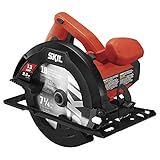
Overview: The 5080-01 is SKIL’s entry-level circular saw designed for light-duty DIY projects and homeowners tackling occasional repairs. Its 13-amp motor provides enough power for plywood, softwoods, and basic crosscuts, while the 15% weight reduction compared to its predecessor makes it less fatiguing during extended use. This is a no-frills workhorse for the budget-minded.
What Makes It Stand Out: At this price point, the 51-degree bevel capacity with positive stops is genuinely impressive, enabling more complex cuts than typical entry-level saws. The spindle lock mechanism actually works smoothly—not always a given on budget tools—making blade changes frustration-free. The improved dust blower is surprisingly effective, keeping your cut line visible without constant stopping.
Value for Money: Typically retailing under $50, this saw competes with Harbor Freight’s cheapest offerings while delivering SKIL’s slightly better build quality and warranty support. You’re getting a functional, safe circular saw for the cost of a decent drill bit set. For users who might use a saw twice a year, this eliminates rental costs while providing adequate performance that disposable-priced tools can’t match.
Strengths and Weaknesses: Strengths include feather-light weight (under 10 pounds), wallet-friendly price, easy blade changes, and sufficient power for soft materials. Weaknesses involve noticeable bogging in hardwoods over 1.5 inches, a basic stamped shoe that may not stay perfectly flat over time, and the lack of electric brake or laser guide. The cord is also frustratingly short at 6 feet.
Bottom Line: Buy this if you’re a casual DIYer with limited storage and budget. Don’t expect jobsite durability or hardwood performance. For hanging drywall, cutting 2x4s, or building a bookshelf, it’s perfectly adequate and pays for itself after two projects.
3. Dremel Blueprint Portable Saw Station with 12V Brushless Compact Circular Saw and Multi-Purpose Cutting Case (CS12V-S1C)

Overview: The CS12V-S1C reimagines the circular saw for urban DIYers and apartment dwellers with severe space constraints. This innovative system combines a compact 12V brushless saw with a foldable saw station that performs miter, bevel, and rip cuts in a footprint smaller than a microwave. It’s designed for trim, flooring, and small lumber—not framing houses.
What Makes It Stand Out: The integrated alignment laser projects a crisp cut line that eliminates guesswork, a feature usually reserved for stationary miter saws. The folding station’s clever design supports 8-foot boards despite its compact size, and the included clamps and guides actually work effectively. Being cordless means no tripping over cables in tight spaces, and the brushless motor maximizes battery efficiency.
Value for Money: At $200-250, this isn’t cheap for a 12V saw, but you’re paying for the unique form factor and convenience. Comparable separate purchases (compact saw + mini miter box) would cost $150-180 but lack the integration and laser precision. For renters or those without permanent workshop space, the space savings alone justify the premium. It’s a specialized tool commanding a specialized price.
Strengths and Weaknesses: Strengths include incredible space efficiency, surprising cut accuracy, cordless convenience, and excellent LED/laser visibility. The brushless motor extends runtime significantly. Weaknesses involve limited 1x4 cutting depth, insufficient power for hardwoods over 3/4 inch, and a learning curve for setup. The plastic construction feels less robust than traditional tools, and replacement batteries are proprietary and pricey.
Bottom Line: This is a niche product that excels within its narrow design parameters. If you live in a condo, have no garage, or need a truly portable precision cutting system, it’s brilliant. For general construction or heavy DIY, buy a standard circular saw instead.
4. SKIL 15 Amp 7-1/4 Inch Circular Saw with Single Beam Laser Guide - 5280-01

Overview: The 5280-01 bridges the gap between SKIL’s budget and professional offerings, delivering serious power with user-friendly features. Its 15-amp motor spins at 5,300 RPM, handling hardwoods and thick materials that bog down lesser saws. The integrated laser guide and dust blower address the two biggest frustrations of circular saw use: accuracy and visibility.
What Makes It Stand Out: The single-beam laser is surprisingly accurate out of the box, requiring minimal calibration—a rarity on saws under $100. The power-on indicator light provides an extra safety layer, preventing accidental starts when the saw is plugged in but not in use. The 51-degree bevel with positive stop at 45° offers versatility typically reserved for more expensive models, while maintaining consistent depth of cut.
Value for Money: Priced around $60-70, this saw delivers 90% of the performance of $150+ professional models. You’re getting a powerful motor, laser guidance, and robust safety features for the cost of a casual dinner out. Compared to the SKIL 5080-01, the extra $20 buys substantially more power and precision. It competes favorably with Ryobi’s comparable models while offering slightly better build quality.
Strengths and Weaknesses: Strengths include excellent power-to-weight ratio, accurate laser guide, effective dust blower, solid bevel capacity, and thoughtful safety features. The shoe is more robust than the 5080-01’s, staying flat under pressure. Weaknesses involve a still-short 6-foot cord, no electric brake (blade spins down slowly), and the laser’s visibility diminishes in bright sunlight. The depth adjustment lever feels slightly flimsy.
Bottom Line: This is the circular saw sweet spot for serious DIYers. It handles 90% of tasks a $200 saw would, with enough power and accuracy for furniture building, deck repairs, and remodeling. The laser alone makes it worth the upgrade from entry-level models.
5. DEWALT 15 Amp 8-1/4 in. Compact Portable Jobsite Table Saw (DWE7485)

Overview: The DWE7485 represents the gold standard for compact jobsite table saws, engineered for professional contractors who demand durability and precision in a portable package. Its 15-amp motor and 8-1/4-inch blade deliver ample power for ripping hardwoods and sheet goods, while the metal roll cage base withstands daily transport abuse. This is a jobsite workhorse, not a weekend toy.
What Makes It Stand Out: The rack-and-pinion fence system is the industry’s smoothest, gliding effortlessly while maintaining dead-square alignment without constant rechecking. The 24.5-inch rip capacity handles full 4x8 sheets when paired with a second person, eliminating the need for a full-size cabinet saw on most job sites. Onboard storage for all accessories—guard, fence, wrenches, miter gauge—prevents frustrating searches and losses.
Value for Money: At $400-500, this commands a premium but delivers professional-grade ROI. The metal construction, precise fence, and robust motor outlast and outperform cheaper alternatives like the SKIL TS6307-00 by years under heavy use. For professionals, the time saved with accurate, repeatable cuts pays for the price difference within weeks. DIYers may find it overkill, but contractors view it as a cost of doing business.
Strengths and Weaknesses: Strengths include bulletproof build quality, best-in-class fence system, generous rip capacity, excellent dust collection when paired with a vac, and reliable depth/bevel mechanisms. The 8-1/4-inch blade is a slight limitation versus 10-inch saws for thick material. Weaknesses involve the high price point, substantial weight (though portable, it’s heavy), and the need to purchase a stand separately for maximum utility.
Bottom Line: For professionals and serious woodworkers, this is the benchmark. The precision, durability, and thoughtful design justify every penny. If you’re earning money with your tools or demand flawless results daily, buy the DWE7485. Hobbyists should save money with the SKIL alternative.
6. Worx Pegasus 2-in-1 Folding Work Table & Sawhorse, Easy Setup Portable Workbench, 31" W x 25" D x 32" H Lightweight Worktable with Heavy-Duty Load Capacity, WX051 - Includes 2 Clamps & 4 Clamp Dogs
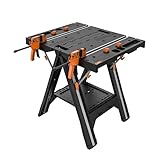
Overview: The Worx Pegasus redefines job site flexibility with its ingenious 2-in-1 design that transitions from a 300-pound capacity workbench to a 1000-pound sawhorse. Measuring 31" x 25" with a 32" working height, this folding table delivers serious functionality for woodworking, repairs, and general projects while collapsing to a truly portable package. The integrated clamping system and included accessories provide immediate utility without additional purchases.
What Makes It Stand Out: The dual-load capacity engineering is exceptional—most competitors max out at half these ratings. Its expandability across the Worx ecosystem (Pegasus, Sidekick, Clamping Sawhorse) creates a modular work surface that grows with your needs. The fold-flat design with comfortable carry handles makes it genuinely mobile, not just “portable” in marketing speak. Quick-connect clamp dogs and two bar clamps offer workholding versatility rarely included at this price.
Value for Money: You’re purchasing two tools for roughly 1.5x the cost of one decent workbench. Comparable standalone units would exceed $200 combined, making the Pegasus a budget-conscious powerhouse. Worx’s track record for durable consumer tools adds confidence, though professionals might prefer steel-legged alternatives. The included clamps alone represent a $30-40 value.
Strengths and Weaknesses: Pros: Exceptional versatility, true portability with robust capacities, smart expandability, integrated clamping system, and space-saving storage. Cons: The plastic composite tabletop scratches more easily than wood or metal; 32" height is low for users over 6’ tall; included clamps lack professional precision; stability on uneven surfaces requires careful positioning; long-term durability of folding mechanism under maximum loads remains unproven in professional environments.
Bottom Line: The Pegasus is indispensable for DIYers, hobbyists, and mobile contractors needing flexible work support. It won’t replace a stationary cabinetmaker’s bench, but its dual-purpose design and portability make it one of the smartest workshop investments under $150. Perfect for garages, apartments, or job sites where space and versatility are paramount.
7. Hoteche 12-Inch Circular Saw 4-HP Compact Portable Table Saw with Saw Blade for Desktop Use

Overview: The Hoteche 12-Inch Circular Saw delivers 4-HP muscle at 3300 RPM through a full-size 12-inch blade, positioning itself as a hybrid solution for users needing both handheld and stationary cutting. Designed for inverted tabletop mounting, it functions as a makeshift table saw with 110mm depth capacity at 90° and 98mm at 45°. The 2-meter cable and UL certification suggest legitimate workshop credentials, though the brand lacks mainstream recognition.
What Makes It Stand Out: The 4-HP rating and 12-inch blade are exceptional for a “compact” saw, rivaling professional handheld units. Its explicit design for upside-down table use is genuinely unique—most manufacturers explicitly forbid this practice. The aluminum motor housing promises durability, and the 40-tooth blade provides general-purpose versatility out of the box.
Value for Money: If you need both a circular saw and occasional table saw capability, this single purchase could save $150+ versus buying separate tools. However, the lack of included table saw accessories (fence, miter gauge, blade guard for table use) necessitates additional spending. The value proposition depends entirely on your willingness to accept safety compromises for dual functionality.
Strengths and Weaknesses: Pros: Impressive power-to-price ratio, large blade capacity, dual-mode versatility, decent cutting depths, and robust motor housing. Cons: Serious safety hazards when used inverted without proper guards or emergency stops; no integrated table saw safety features; unknown brand reliability and parts availability; unwieldy weight for handheld use; questionable stability in table configuration; voids warranty if modified for table use.
Bottom Line: This saw targets experienced users comfortable with improvising table saw setups. For most DIYers, purchasing separate, purpose-built tools is safer and more reliable. The inverted table saw function is a workaround, not a true feature. Consider only if you absolutely need maximum cutting capacity on a strict budget and fully understand the significant safety risks involved.
8. 4" 60W MINI ELECTRIC TABLE SAW BENCH TOP GREAT ELECTRIC HOBBY CRAFT TABLE SAW DIY Power Tool Work Bench Stand Circular 2 PIECES Blades

Overview: This 4-inch, 60W mini table saw serves the niche market of hobbyists and craft enthusiasts requiring precision cutting of small-scale materials. It handles non-ferrous metals, wood, plastic, glass, and stone with a maximum cutting depth of just 15mm at 90°. The package includes both alloy and diamond blades, enabling immediate multi-material capability. Two miter slots and adjustable guards attempt to deliver legitimate table saw functionality in a desktop footprint.
What Makes It Stand Out: Material versatility is its defining trait—few saws in this class cut glass and stone. The wobble-free blade design is critical for precision at small scales, and the ultra-compact size suits apartment workshops or classroom settings. The included diamond blade for ceramics and manganese-steel blade for metal represent genuine added value.
Value for Money: At entry-level pricing, it eliminates manual sawing for small crafts. However, the 60W motor and 15mm depth severely restrict capability. Compared to precision tools like Proxxon mini saws ($200+), it’s a fraction of the cost but likely a fraction of the accuracy and lifespan. The value is purely for light-duty craft applications.
Strengths and Weaknesses: Pros: Extremely affordable, cuts diverse materials, portable and quiet, includes two blades, low power consumption. Cons: Severely underpowered; 15mm depth is extremely limiting; questionable build quality and precision; no mention of fence accuracy; unsuitable for serious woodworking; safety features appear minimal; motor likely to struggle with dense materials.
Bottom Line: This mini saw serves a very specific audience: hobbyists working on models, jewelry, or small-scale fabrications. It’s inadequate for any serious DIY or professional work. For its intended purpose—light-duty craft cutting—it offers reasonable value, but serious makers should invest in higher-quality precision tools. Manage expectations: this is a craft tool, not a woodworking machine.
9. Cordless Circular Saw, Portable Table Saw Compatible with Dewalt 20V Battery, Power Mini Circular Saw with 7-1/4-Inch Blade, 5600RPM, Adjustable 0-57° Max Angle for Wood Cutting Tools (No Battery)

Overview: This cordless circular saw leverages the Dewalt 20V battery platform (battery not included) to deliver brushless power at 5600-8000 RPM through a 7-1/4-inch blade. Weighing just 3.96 pounds, it’s exceptionally lightweight for overhead work. The tool’s defining feature is its ability to mount inverted for table saw functionality, complete with a dust port for vacuum connection. Maximum cutting depth reaches 35mm, suitable for most dimensional lumber.
What Makes It Stand Out: Dewalt battery compatibility is the headline feature for existing Dewalt users, eliminating ecosystem lock-in. The 8000 RPM brushless motor ceiling is class-leading, and the integrated dust extraction is rare for cordless saws. At under 4 pounds, it’s among the lightest 7-1/4" saws available, reducing fatigue significantly.
Value for Money: As a bare tool, its value depends entirely on battery ownership. For Dewalt users, it’s likely 30-40% cheaper than Dewalt’s equivalent bare tool. For others, buying into the ecosystem negates savings. The table saw function adds versatility but shouldn’t be the primary purchase reason. Unknown brand reliability makes the price point acceptable but not exceptional.
Strengths and Weaknesses: Pros: Exceptionally lightweight, high RPM brushless motor, Dewalt battery compatibility, effective dust port, versatile handheld/table use, ergonomic grip. Cons: Battery not included; no brand warranty network; serious safety concerns with inverted mounting; no fence or miter gauge included; unknown long-term durability; blade guard design for table use appears questionable.
Bottom Line: A compelling option for Dewalt 20V owners needing a lightweight secondary saw with table saw flexibility. The dust port and RPM are genuine advantages. However, treat the table saw function as occasional convenience, not a primary feature. Those without Dewalt batteries should choose established brands with included batteries and proper safety certifications. A specialized tool for a specific user base.
10. Marvtool 10-inch Compound Miter Saw, 5000RPM, 15 Amp, Single Bevel 0-45° with Extension Table, 36T Blade, Power Saw for Metal, Plastic, Wood, Laminates

Overview: The Marvtool 10-inch Compound Miter Saw pairs a 15-amp motor with 5000 RPM speed to tackle wood, metal, plastic, and laminates. It offers left miter adjustments from 0-45° and single bevel cuts from 0-45°, with included extension tables supporting longer workpieces. Weighing only 20.5 pounds with a lock-down head for compact storage, it prioritizes portability without sacrificing cutting capacity. A 36-tooth carbide blade provides general-purpose versatility.
What Makes It Stand Out: The 15-amp/5000 RPM combination at 20.5 pounds is impressive—most competitors weigh 25-35 pounds. The inclusion of extension tables, a 36T blade, and an Allen key provides complete out-of-the-box readiness. The 2-year warranty and 24/7 customer support significantly exceed budget-brand standards, directly addressing reliability concerns that plague lesser-known manufacturers.
Value for Money: Positioned in the entry-mid range, it undercuts DeWalt and Bosch by $100+ while matching their core specs. The included accessories and warranty add $50+ in tangible value. However, single-bevel design limits efficiency versus dual-bevel models for trim work. For DIYers and occasional users, the price-performance ratio is exceptionally strong.
Strengths and Weaknesses: Pros: Powerful motor, genuinely portable, extension tables included, multi-material capable, excellent warranty, compact storage, transparent blade guard. Cons: Single bevel only; brand lacks professional recognition; 36T blade is a compromise (fine for wood, marginal for metal); dust bag is typically ineffective; long-term durability unproven against premium brands; vise clamp quality is adequate but not exceptional.
Bottom Line: An outstanding value for DIYers, homeowners, and light contractors prioritizing portability and affordability. It competently handles crosscutting, framing, and basic trim work. While professionals will miss dual-bevel convenience and premium build quality, the 2-year warranty mitigates purchase risk. For occasional to moderate use, it delivers performance well beyond its price point, making it a smart, practical workshop addition.
Understanding the Table Saw Advantage for Circular Saw Veterans
You’ve developed an intimate relationship with your circular saw—feeling its balance, listening to its motor strain, compensating for blade drift with micro-adjustments mid-cut. That muscle memory is valuable, but it’s also limiting. Table saws flip the paradigm completely: the blade stays stationary while you guide the workpiece, turning physics in your favor and fundamentally changing your relationship with the cut itself.
The transition isn’t about replacing your circular saw—any seasoned woodworker knows there’s no substitute for breaking down sheet goods on-site. It’s about adding a precision instrument to your arsenal that handles repetitive cuts, joinery, and dimensional accuracy with a level of control that handheld tools simply cannot match. Your circular saw taught you to cut; a table saw teaches you to engineer cuts.
The Four Table Saw Categories: Finding Your Tier
Before diving into features, you need to understand the landscape. Table saws generally fall into four distinct categories, each with its own philosophy of design.
Portable/Job Site Saws: Mobility Meets Capability
These are the direct descendants of your circular saw’s DNA—built for transport, job site durability, and quick setup. They typically feature direct-drive motors, aluminum tables, and stand-mounted designs. For circular saw users, this category feels familiar: prioritizing mobility without sacrificing the fundamental table saw experience. Expect 15-amp motors, rip capacities around 24-30 inches, and weights that two people can manage.
Contractor Saws: The Hybrid Workhorse
Don’t let the name fool you—modern contractor saws have evolved far beyond their original job-site intent. These feature induction motors hanging off the back, cast iron tables (or hybrid cast aluminum wings), and significantly more mass. They strike a balance between serious woodworking capability and relative affordability. The footprint is larger but still manageable in a two-car garage shop.
Cabinet Saws: The Precision Powerhouses
This is where table saws become permanent fixtures and statement pieces. Cabinet saws enclose their massive motors in steel cabinets, boast cast iron everything, and deliver vibration-free operation that translates to glass-smooth cuts. For circular saw users, this represents the ultimate upgrade—transforming cutting from a task into an experience. The investment is substantial, but so is the return in accuracy, power, and longevity.
Hybrid Saws: Splitting the Difference
Hybrids attempt to deliver cabinet saw DNA in a contractor saw footprint. They feature enclosed cabinets (often with some plastic components), trunnions mounted to the cabinet base rather than the table, and motors typically in the 1.5 to 2HP range. For many serious hobbyists, this category hits the sweet spot of performance versus practicality.
Motor Deep Dive: What Circular Saw Users Need to Know
Your circular saw’s universal motor screams at 5,800 RPM and delivers instant power. Table saw motors play a different game entirely, and understanding this shift is crucial.
Direct Drive vs. Belt Drive
Portable saws use direct-drive motors—essentially oversized circular saw motors mounted under the table. They’re loud, produce more vibration, but require zero maintenance. Belt-drive systems (found on contractor, hybrid, and cabinet saws) use induction motors spinning at 3,450 RPM, transferring power via belts and pulleys. This isolation creates smoother operation, easier repairs, and the ability to change speeds for different operations.
Horsepower Reality Check
That 15-amp job site saw? It’s delivering around 1.75 horsepower—plenty for ripping 3/4-inch plywood but working hard through 8/4 hardwood. A 2HP cabinet saw feels dramatically different, maintaining blade speed under load. For circular saw users used to feeling the motor bog down, this consistent power delivery is revelatory. Consider your material thickness ambitions: 1.75HP handles most tasks, but 3HP+ becomes essential for thick stock and dado stacks.
The Rip Fence System: Your Precision Foundation
If there’s one feature that separates satisfying table saw experiences from maddening ones, it’s the fence. Your circular saw’s straightedge guide is a crude preview of this critical component.
Fence Locking Mechanism Quality
Test a fence by locking it at 12 inches from the blade, then applying side pressure at both the front and rear. A quality fence deflects less than 1/64 inch. Look for cam-lock or lever-lock systems with micro-adjustment capabilities. The best fences glide on steel rails with nylon bushings, requiring minimal force to position but locking with absolute rigidity.
Scale Accuracy and Repeatability
Digital readouts are increasingly common, but mechanical scales with hairline indicators remain the gold standard for reliability. The key is repeatability: can you set 3-1/4 inches, make a cut, return to the same setting, and achieve identical results? Your circular saw experience taught you to measure twice; a great fence system makes that second measurement automatic.
Blade and Arbor Specifications: Beyond the Basics
Circular saw users know blade quality matters, but table saws introduce new variables that demand attention.
Standard 5/8-Inch Arbors vs. Larger Options
Most saws feature 5/8-inch arbors—the universal standard. However, some cabinet saws offer 1-inch arbors for increased stability with large-diameter dado sets. The arbor length matters too: short arbors limit your dado stack width. For circular saw users planning to tackle joinery, ensure the arbor accommodates at least a 13/16-inch dado stack.
Blade Height Adjustment and Tilt Mechanisms
Quality saws feature handwheels that move the blade smoothly without binding. The tilt mechanism (typically 0-45 degrees) should lock positively at common angles. Look for worm gear drives rather than simple rack-and-pinion for longevity. The best systems include positive stops at 90 and 45 degrees with micro-adjustment for perfect calibration.
Safety Features: The 2026 Standard
Your circular saw experience has taught you respect for spinning carbide. Table saws amplify both the danger and the potential for advanced safety systems.
Blade Guards and Riving Knives
The riving knife is non-negotiable—it moves with the blade, maintaining constant kerf width and preventing the #1 cause of kickback. Blade guards have evolved from clumsy plastic obstacles to streamlined splitters with dust ports. For circular saw users, this integrated approach feels less intrusive than the guards on older saws.
Flesh-Detection Technology
While we won’t name brands, electromagnetic brake systems that stop the blade on contact with skin have become increasingly refined. The false-positive rate has dropped dramatically, and the cartridge replacement cost has decreased. For circular saw users who’ve had close calls, this technology fundamentally changes the risk calculus.
Magnetic Switches and Paddle Placement
Look for magnetic switches with large, knee-accessible paddles. This allows instant shutdown without removing your hands from the workpiece—a safety feature circular saw users never had but quickly appreciate.
Dust Collection: From Afterthought to Essential
Your circular saw throws dust everywhere; you accept it as part of the job. Table saws offer the opportunity to contain the mess, but not all systems are created equal.
Port Design and CFM Requirements
A 4-inch port is standard for contractor and cabinet saws, requiring 350-400 CFM for effective collection. Job site saws often feature 2-1/2-inch ports, limiting collection efficiency. The port location matters—below-the-blade collection captures only 60-70% of dust; overhead guards with integrated ports capture 90%+.
Internal Cabinet Design
Cabinet saws with sealed bases and sloped floors direct dust to the port naturally. Open-base contractor saws leave dust everywhere. For circular saw users upgrading, the difference between a clean shop and a dust-choked one often comes down to these design details.
Table Surface and Extension Strategy
Your circular saw cuts on top of your workpiece; table saws support the workpiece above the blade. This inversion makes surface quality critical.
Cast Iron vs. Aluminum Tables
Cast iron provides mass, vibration damping, and a perfectly flat reference surface. It rusts but can be restored. Aluminum is lighter and corrosion-proof but transmits more vibration and can be less flat. For circular saw users used to supporting workpieces manually, the stability of cast iron is transformative.
Wing Extensions and Outfeed Support
Consider how you’ll support 8-foot sheet goods and long boards. Cast iron wings add mass and utility; stamped steel wings save cost but flex. Outfeed tables—whether shop-built or aftermarket—aren’t optional for serious work. Your circular saw experience taught you to control the cutoff; table saws require planning for it.
Portability vs. Stability: The Workshop Reality Check
You can toss your circular saw in the truck and go. Table saws demand a different calculus.
Mobile Base Solutions
Even 500-pound cabinet saws can live on mobile bases, but not all bases are equal. Look for foot-pedal lift mechanisms with multiple contact points. For contractor saws, consider whether you’ll move it frequently enough to justify a base versus permanent placement.
Job Site Saw Limitations
That 60-pound portable saw seems convenient until you realize it vibrates enough to affect cut quality in thick stock. The table size limits workpiece support. For circular saw users, the sweet spot often lies in a contractor saw on a mobile base—portable enough for occasional relocation, stable enough for precision.
Calibration and Accuracy: The Setup Ritual
Your circular saw’s accuracy depends on your skill. A table saw’s accuracy depends on its setup—and your ability to maintain it.
Alignment Procedures
The blade must be parallel to the miter slots within 0.003 inches. The fence must be parallel to the blade (or slightly toed out 0.001-0.002 inches at the rear). These alignments aren’t set-and-forget; they’re monthly checks for heavily used saws. Invest in a dial indicator and learn to use it—your circular saw never needed this level of precision, but your table saw demands it.
Vibration and Runout
Mount a dial indicator to the arbor flange and spin it by hand. Runout over 0.001 inch translates to visible imperfections in cuts. For circular saw users accustomed to blade wobble, this level of precision engineering is eye-opening.
Miter Gauge Systems: Beyond the Basics
Your circular saw uses a speed square or homemade guide for crosscuts. Table saws formalize this with miter gauges, but the stock gauge is rarely adequate.
Standard Miter Gauge Limitations
The stamped steel gauges included with most saws have sloppy fit in the miter slots (typically 3/4-inch wide by 3/8-inch deep). The bar flexes, the angle indicator is approximate, and the fence is too short for stability.
Aftermarket Solutions and T-Slots
Consider upgrading to a miter gauge with an adjustable, expansion-slot bar that eliminates play. Better yet, explore sleds—shop-built jigs that ride in both miter slots, providing unparalleled control for crosscuts. Your circular saw experience with guides translates directly to designing effective sleds.
Budget Tiers: What Your Investment Actually Buys
Circular saws range from $60 to $300—a manageable spread. Table saws operate on a different economic scale, and understanding the value proposition at each tier prevents buyer’s remorse.
Entry-Level ($400-$800)
Job site saws dominate this range. You’ll get adequate power, basic fences, and portable design. The compromises show in fence quality, table flatness, and long-term durability. For circular saw users, this is a toe-dip—a way to experience table saw workflow without major commitment.
Mid-Range ($800-$2,000)
This is where contractor and entry-level hybrid saws live. Cast iron appears, fences improve dramatically, and motors become induction-type. For most circular saw graduates, this represents the sweet spot—serious capability without requiring a second mortgage.
Premium ($2,000-$5,000+)
Cabinet saws and high-end hybrids. Here you’re paying for mass, precision, power, and longevity. The improvements are incremental but significant: better dust collection, superior fences, robust trunnions, and tolerances that hold for decades. For circular saw users who’ve outgrown job site limitations, this tier delivers the full transformation.
Workshop Integration: Space and Power Requirements
Your circular saw needs a battery or extension cord. Table saws demand infrastructure planning.
Electrical Considerations
Job site saws run on standard 15-amp, 120-volt circuits. Cabinet saws often require 220-volt, 20-amp service. The cost of running a new circuit can approach the saw’s price tag. Consider this before falling in love with a 3HP monster.
Footprint and Clearance
Plan for at least 8 feet behind the blade for ripping long boards, and 4 feet to the left and right for sheet goods. The infeed side needs similar clearance. Your circular saw traveled to the work; now the work travels to the saw, and that requires spatial rethinking.
Essential Accessories: The Hidden Investment
The saw itself is just the beginning. Circular saw users often underestimate the accessory ecosystem.
Quality Blades: The Multi-Blade Strategy
You’ll need a 40-tooth general purpose blade, an 80-tooth fine crosscut blade, and a ripping blade with flat-top grind teeth. Budget $150-300 for quality blades alone. Your circular saw blade collection doesn’t translate—table saw blades are thicker, more specialized, and require different storage.
Push Sticks, Featherboards, and Hold-Downs
Your circular saw required two hands on the tool. Table saws free your hands to control the workpiece, but that requires accessories. Invest in multiple push stick designs, magnetic featherboards for consistent pressure, and hold-downs for vertical cuts.
Dado Sets and Throat Plates
If joinery is in your future, a quality dado set ($150-300) becomes essential. You’ll also need zero-clearance throat plates for clean cuts and splinter-free dados. Your circular saw never needed this level of specialization, but the results justify the investment.
Maintenance: The Long Game
Your circular saw needs occasional blade changes and maybe a brush replacement. Table saws are mechanical systems requiring regular attention.
Belt Tension and Alignment
Check belt tension monthly—too tight stresses bearings, too loose causes slippage. Align pulleys precisely to prevent vibration. This mechanical relationship is foreign to direct-drive circular saw users but critical for belt-drive longevity.
Lubrication and Rust Prevention
Cast iron tables demand care. Apply paste wax monthly (not silicone-based products that contaminate wood). Oil elevation and tilt mechanisms with dry lubricant. For circular saw users, this maintenance ritual becomes part of the shop routine.
Workflow Transition: From Handheld to Stationary
The biggest challenge isn’t technical—it’s mental. Your circular saw workflow is reactive and adaptive. Table saw workflow is proactive and systematic.
Breaking Down Sheet Goods
Keep your circular saw for rough breakdown. Bring table saw-ready pieces to the shop for final dimensioning. Trying to manhandle full 4x8 sheets on a table saw leads to frustration and danger. Your circular saw becomes the pre-processor.
Batch Processing and Jigs
The table saw’s superpower is repeatability. Build jigs for common operations—box joints, tenons, spline cuts. Your circular saw experience with guides and straightedges translates directly to jig design, but the table saw executes with precision you could never achieve handheld.
Frequently Asked Questions
1. Can I use my circular saw blades on a table saw? No—circular saw blades are designed for different RPM ranges and mounting systems. Table saws use 10-inch blades with 5/8-inch arbors (typically), while circular saws use smaller diameters and different arbor sizes. The tooth geometry also differs; table saw blades are optimized for stationary cutting, not handheld plunge cuts.
2. How do I prevent kickback when transitioning from a circular saw? Kickback is the table saw’s signature hazard. Always use a riving knife or splitter, never stand directly behind the blade, and maintain consistent feed pressure. Unlike circular saws where you control the tool’s path, table saws require controlling the workpiece’s movement against the blade’s rotation. Featherboards and push sticks are essential, not optional.
3. Is a table saw really safer than a circular saw? They’re different, not inherently safer. Table saws expose more blade and create kickback scenarios circular saws don’t. However, they also offer better control, both hands on the workpiece, and advanced safety features like riving knives and flesh-detection brakes. The key is respecting the tool’s specific hazards, not assuming familiarity from circular saw use.
4. What’s the minimum space I realistically need for a table saw? Plan for the saw’s footprint plus 8 feet infeed/outfeed and 4 feet side clearance. In a compact shop, you can cheat with rollers and fold-down wings, but you can’t eliminate clearance needs entirely. A 12x16 foot shop is workable; 16x20 is comfortable. Your circular saw needed zero dedicated space—this is the biggest lifestyle change.
5. Do I need to upgrade my electrical service for a table saw? Job site saws run on standard 120V/15A circuits. Contractor saws typically do too. Cabinet saws often require 220V/20A service. Check the motor nameplate before buying. The cost of electrical upgrade can exceed $500—factor this into your budget. Your circular saw’s battery or extension cord simplicity disappears at this power level.
6. How often do I really need to calibrate my table saw? Initial setup should be perfect. After that, check alignment monthly if you use the saw weekly. Heavy users might check every two weeks. The blade-to-slot alignment is most critical—0.003 inch tolerance is the standard. Your circular saw required zero calibration; table saws reward those who maintain them.
7. Can I cut angles and bevels as easily as with a circular saw? Yes, but differently. Table saws tilt the blade rather than angling the tool, which is actually more stable for bevel cuts. For miter cuts, you’ll use a miter gauge or sled rather than tilting the workpiece. The learning curve is short, and the results are more accurate than circular saw angle cuts once you master the setup.
8. What’s the deal with dado blades? Are they necessary? Dado blades allow you to cut wide grooves in a single pass—essential for shelves, drawer bottoms, and box joints. While not “necessary” initially, they unlock the table saw’s joinery potential. Your circular saw can cut dadoes with multiple passes, but it’s crude by comparison. Budget $150-300 for a quality dado set when you’re ready.
9. How do I choose between a job site saw and a contractor saw? Ask yourself: “Will I move this more than twice a year?” If yes, job site saw. If no, contractor saw. The contractor saw’s cast iron table and better fence transform the experience. Your circular saw handles mobility needs; let your table saw prioritize stability and precision. Most circular saw users outgrow job site saws within 18 months.
10. What’s the single biggest mistake circular saw users make when buying their first table saw? Undervaluing the fence system. New buyers obsess over motor power and table size, then tolerate a fence that flexes, drifts, and requires constant rechecking. A mediocre fence makes every cut an exercise in frustration. Spend the extra $200-300 for a saw with a premium fence—or budget an immediate aftermarket upgrade. Your circular saw never had a fence; once you experience a good one, you’ll understand why it’s everything.
See Also
- 10 Best Circular Saws for Left-Handed Users in 2026
- Top 10 Best Table Saws for Accurate Circular Cuts in 2026
- 10 Premium Table Saws Converted to Circular Saw Stations for Workshops
- 10 Tips for Finding the Perfect Miter Saws to Pair with Your Circular Saw in
- 10 Affordable Bevel Gear Circular Saws That Don’t Sacrifice Precision in 2026