Table of Contents
Top 10 Circular Saws For Home Renovators
Detailed Product Reviews
1. SKIL 15 Amp 7-1/4 Inch Circular Saw with Single Beam Laser Guide - 5280-01
 Guide - 5280-01](https://m.media-amazon.com/images/I/5107WNhmhpS._SL160_.jpg)
Overview:
The SKIL 5280-01 is a robust 15-amp circular saw designed for demanding cuts in wood and lumber. Featuring a 7-1/4" carbide-tipped blade, it targets contractors and serious DIYers needing speed and reliability for framing, decking, and general construction tasks.
What Makes It Stand Out:
Its standout features include a powerful 5,300-RPM motor for aggressive cutting, a single-beam laser guide enhancing cut-line accuracy, and a dust blower maintaining clear visibility. The 51° bevel capacity with a positive 45° stop enables versatile angled cuts, while the spindle lock simplifies blade changes.
Value for Money:
Priced competitively against mid-range professional saws, it offers excellent value. The included laser guide and dust management system provide features often found on costlier models, making it a smart investment over basic 15A saws lacking precision aids.
Strengths and Weaknesses:
Strengths: High power output, precise laser alignment, effective dust control, smooth bevel adjustments, and solid safety features (lock/guarded trigger). Weaknesses: Laser accuracy can drift slightly over time; blade guard mechanism occasionally catches on thick materials.
Bottom Line:
An ideal choice for pros and advanced DIYers prioritizing speed and cut-line accuracy. Its laser guide and dust management justify the price, though occasional guard snags require minor adjustment. Highly recommended for framing and rough carpentry.
2. Skil 5080-01 13-Amp 7-1/4" Circular Saw, Red

Overview:
The SKIL 5080-01 is a lighter-duty 13-amp circular saw focused on user comfort and essential performance. It’s engineered for DIYers and light construction work, offering a balance of power and reduced fatigue during extended use.
What Makes It Stand Out:
A 15% weight reduction compared to SKIL’s heavier 5380 model significantly cuts user fatigue. The effective dust blower keeps the cut line visible, and the 51° bevel capacity with positive stops ensures versatility. Spindle lock enables quick blade swaps.
Value for Money:
This saw delivers strong value for casual users. It undercuts 15A professional models in price while providing sufficient power for most home projects. The weight savings and dust management make it a cost-effective upgrade from basic homeowner saws.
Strengths and Weaknesses:
Strengths: Lightweight design reduces strain, reliable dust blower, consistent bevel stops, simple spindle lock, and affordable price. Weaknesses: 13A motor lacks the torque of 15A competitors for dense lumber; no laser or advanced guides limit precision.
Bottom Line:
A practical, budget-friendly option for DIYers tackling weekend projects. Its ergonomic advantages outweigh the modest power reduction for most home uses, though pros may prefer heavier-duty models. Recommended for light-to-medium carpentry.
3. Seesii Mini Circular Saw with Laser Guide,4.8A 4000 RPM Compact Corded Circular Saw with Rip Guide,3 Blades (4-1/2") for Wood,Soft Metal,Tile,Plastic Cutting,Max Cut Depth 1-11/16"(90°),1-1/8" (45°)

Overview:
The Seesii Mini Circular Saw is a compact, corded tool designed for precision cutting in diverse materials. Targeting DIYers and crafters, its lightweight build and multi-blade system cater to intricate home projects requiring versatility beyond standard wood cutting.
What Makes It Stand Out:
Triple-blade versatility (TCT, HSS, diamond) handles wood, soft metal, tile, and plastic—a rarity in mini saws. The laser guide and rip rail ensure accuracy, while dual safety switches prevent accidental starts. At half the weight of full-size saws, it enables easy one-handed operation.
Value for Money:
Exceptional value for multi-material DIY work. The included blades and accessories (rip guide, dust adapter) eliminate extra purchases needed with single-purpose saws. Though less powerful, its niche capabilities justify the cost for hobbyists tackling varied projects.
Strengths and Weaknesses:
Strengths: Unmatched material versatility, ultra-lightweight, precise laser/rail system, strong safety features, and compact storage. Weaknesses: 4.8A motor struggles with thick hardwood; limited depth (1-11/16"); not suitable for heavy construction.
Bottom Line:
A top pick for DIYers needing a single tool for mixed-material crafts and light renovations. Its precision and safety features outweigh power limitations for detailed work. Avoid for lumber-intensive tasks, but perfect for home workshops.
4. Makita 5007F 7-1/4" Circular Saw

Overview:
The Makita 5007F is a premium 15-amp circular saw built for professional durability and precision. Engineered for contractors, it combines high power with innovative features to tackle demanding jobsites efficiently and accurately.
What Makes It Stand Out:
Dual LED lights illuminate the cut line in low-light conditions—a standout feature absent in most competitors. Its 5,800-RPM motor and large cutting capacity (2-3/8" at 90°) outperform many rivals, while the optimized lower guard excels in bevel cuts.
Value for Money:
Priced higher than SKIL models, it justifies cost through Makita’s renowned build quality, superior balance, and LED innovation. Long-term durability and reduced downtime offer better ROI for frequent professional use compared to budget alternatives.
Strengths and Weaknesses:
Strengths: Brilliant LED lighting, exceptional balance, high RPM for clean cuts, robust guard design, and industrial-grade reliability. Weaknesses: Premium price; lacks a laser guide; dust blower less effective than SKIL’s.
Bottom Line:
Worth the investment for professionals prioritizing accuracy in all lighting and all-day comfort. The LEDs and smooth handling make it a jobsite essential, though DIYers may prefer cheaper options. Highly recommended for contractors.
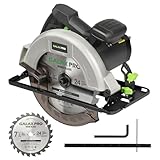
5. GALAX PRO 11 Amp Power Circular Saw, 6000RPM Corded Circular Saw with Adjustable Cutting Depth 2-1/2" (90°) to 1-7/8" (45°), 7-1/4 Inch Carpentry Saw Blade, Ideal for Wood, Plastic Cuts
Overview:
The GALAX PRO 11A circular saw is a budget-oriented corded tool targeting DIYers needing high RPM for quick cuts in wood and plastic. Its focus on safety and included accessories makes it accessible for beginners.
What Makes It Stand Out:
A standout 6,000-RPM no-load speed (higher than most 15A saws) enables fast slicing through softer materials. Dual safety switches prevent accidental starts, and the included rip guide with scale ruler enhances straight-cut precision out of the box.
Value for Money:
Excellent value for infrequent users. At a fraction of pro-saw costs, it delivers high speed and essential safety features. The inclusion of a rip guide, extra blade, and wrench adds significant utility versus similarly priced models.
Strengths and Weaknesses:
Strengths: Very high RPM for quick cuts, robust safety switches, useful rip guide, and comprehensive accessory bundle. Weaknesses: 11A motor lacks torque for hardwood or thick stock; plastic components feel less durable; dust control minimal.
Bottom Line:
A solid entry-level choice for DIYers focused on speed for light-duty tasks. Its high RPM and safety features shine for basic projects, but avoid heavy use. Best for occasional wood/plastic cutting where power isn’t critical.
6. DEWALT 20V MAX* 6-1/2 in. Brushless Cordless Circular Saw, Tool Only (DCS565B)

Overview: The DEWALT DCS565B is a professional-grade, brushless cordless circular saw designed for demanding job sites. It features a compact 6-1/2-inch blade format, prioritizing maneuverability without sacrificing core cutting capability for framing, decking, and general construction tasks where cordless freedom is essential. What Makes It Stand Out: Its standout features include the bright LED light for enhanced cut-line visibility in low-light conditions, a tool-free bevel lever enabling quick 0°-50° adjustments, and compatibility with DEWALT’s AirLock dust collection system. The brushless motor and integrated electric brake significantly improve runtime, efficiency, and safety compared to brushed counterparts. Value for Money: Positioned as a premium tool-only option, its price reflects professional build quality and brushless technology. While expensive upfront, the efficiency gains, durability, and reduced long-term maintenance justify the cost for contractors versus cheaper brushed models, though DIYers might find it over-specified. Strengths and Weaknesses: Strengths: Excellent visibility (LED), rapid bevel changes, superior dust management potential, compact/lightweight design, fast electric brake, brushless efficiency. Weaknesses: Blade size limits deep cuts (max 2-1/8" @90°), dust chute is optional, tool-only means battery cost is extra, 6-1/2" blade may be less common than 7-1/4" on sites. Bottom Line: An outstanding, highly maneuverable cordless saw for pros needing frequent bevel cuts and dust control in tight spaces; ideal for finish work but less suited for deep structural lumber cuts. A worthy investment for serious users prioritizing precision and runtime.
7. DEWALT 20V MAX XR Brushless Cordless 7-1/4 in. Circular Saw, Tool Only (DCS590B)

Overview: DEWALT’s DCS590B represents their most powerful 20V MAX circular saw, targeting professionals requiring maximum cutting depth and speed in a cordless platform. Built around a robust 7-1/4-inch blade, it tackles heavy-duty framing, roofing, and demolition where corded power isn’t feasible. What Makes It Stand Out: Marketed as DEWALT’s most powerful 20V saw, it delivers up to 1,700 MWO and an impressive 368 cuts per charge (2x4 SPF @ 90°). The high RPM (5,500 no-load), deep cutting capacity (2-9/16" @90°), and standard electric brake for safety are key differentiators for demanding applications. Value for Money: The premium price is justified by its class-leading power, depth, and runtime claims. For contractors routinely cutting thick lumber or multiple sheets, the efficiency and time savings offset the cost versus less powerful cordless saws or hauling extension cords. Battery cost (sold separately) remains a significant factor. Strengths and Weaknesses: Strengths: Exceptional power and depth for cordless, high cut count per charge, fast electric brake, robust 7-1/4" capability, brushless efficiency. Weaknesses: Heavy for extended one-handed use, tool-only (batteries extra), lacks integrated dust collection features of some competitors, premium price point. Bottom Line: The top choice for professionals needing cordless saw power rivaling corded models for deep, frequent cuts; essential for framing crews but overkill for light DIY. Justifies its cost through productivity for heavy users.
8. Extbtfor Power Circular Saw,4.8A Mini Circular Saw with Laser Guide,4000RPM Corded Saw Equipped with 3 Pcs 4-1/2" Blades,Maximum Cutting 1-11/16" at 90° and 1-1/8"at 45° for Wood, Soft Metal, Plastic

Overview: This Extbtfor corded mini circular saw is an affordable, compact solution for DIYers and light-duty woodworking. With a 580W motor, 4.8A draw, and 4-1/2" blades, it targets precise cuts in wood, plastic, and soft metals for home projects, crafting, and small renovations where portability and guidance matter. What Makes It Stand Out: Its key attractions are the included laser guide for cut-line accuracy, three versatile blades (HSS, TCT, diamond), a built-in guide ruler, and exceptional one-handed portability (4.7 lbs). The corded design ensures constant power without battery anxiety. Value for Money: Excellent value for casual users. The comprehensive package (saw, 3 blades, guide, laser, dust pipe) at a budget price undercuts professional brands significantly. It delivers sufficient power for its intended scope, making it a smart buy for infrequent tasks where pro tools are overkill. Strengths and Weaknesses: Strengths: Very affordable, laser guide enhances accuracy, versatile blade set, lightweight & portable, no battery/recharging needed, good accessory bundle. Weaknesses: Cord limits mobility, lower power (4000 RPM) struggles with thick/hard materials, plastic construction feels less durable, dust collection is basic. Bottom Line: A highly capable, feature-rich mini saw for DIY enthusiasts on a budget; perfect for precise cuts in thinner materials but not for heavy construction. Represents outstanding value for light-duty home use.
9. Extbtfor Circular Saw,4-1/2" Mini Circular Saw Cordless with 2.0A Battery, Power Saw with Laser Guide, 3400RPM, Maximum Cutting 1-11/16" at 90° and 1-1/8"at 45° for Wood, Soft Metal, Plastic

Overview: Extbtfor’s cordless mini circular saw offers battery-powered convenience for DIY cutting tasks. Equipped with a 20V 2.0Ah battery, 4-1/2" blades, and a laser guide, it targets users needing portability for woodworking, plastic, and soft metal cuts without a power cord, suitable for small home projects. What Makes It Stand Out: The cordless freedom (20V battery included), integrated laser guide, three material-specific blades (wood, metal, plastic), guide ruler, and ultra-lightweight design (3.9 lbs) for one-handed use are its main appeals, emphasizing ease of use for beginners. Value for Money: Good value as a cordless entry-level kit. Including the battery, charger, and three blades at a low price point makes it accessible. However, the small 2.0Ah battery limits runtime for sustained work, making it best for very light, intermittent tasks rather than prolonged projects. Strengths and Weaknesses: Strengths: True cordless portability (battery included), very lightweight, laser guide aids accuracy, versatile blade set, affordable all-in package. Weaknesses: Severely limited runtime (small battery), low power (3400 RPM) struggles beyond thin materials, plastic build quality, battery life degrades quickly under load. Bottom Line: A convenient, budget-friendly cordless option for very light DIY tasks where cord access is difficult; avoid for anything demanding due to weak battery and motor. Ideal for occasional small cuts but not a primary tool.
10. DEWALT 20V MAX Circular Saw, Cordless Sidewinder Style Portable, 6-1/2-Inch Blade, 5150 RPM, 0-50 Degree Bevel Capability, Battery Not Included (DCS391B)
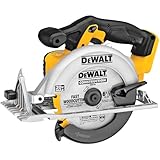
Overview: The DEWALT DCS391B is a versatile, cordless sidewinder circular saw built for contractors needing a balance of power, depth, and portability. Featuring a 6-1/2-inch blade and 5150 RPM, it handles framing, sheathing, and trim work where cordless operation is advantageous but deep cuts are still required. What Makes It Stand Out: Key features include the high-strength magnesium shoe for durability and accuracy, an optimized rubber overmold grip for control, a wide 0°-50° bevel range, and a generous cut depth (2-1/8" @90°). The included 18-tooth carbide blade enhances cutting speed and battery life. Value for Money: Priced competitively among pro cordless saws (tool-only), it offers excellent value. The magnesium shoe and robust build ensure longevity, while the efficient motor and included blade maximize cuts per charge. It hits a sweet spot between the compact DCS565B and the deeper-cutting DCS590B at a lower cost. Strengths and Weaknesses: Strengths: Durable magnesium shoe, excellent grip and balance, deep cut capacity for size, wide bevel range, included quality blade, good RPM for speed. Weaknesses: Tool-only (battery extra), lacks integrated dust collection, 6-1/2" blade less common than 7-1/4" for some tasks, no LED light. Bottom Line: A highly recommended, well-rounded cordless circular saw for professionals seeking reliable performance, durability, and solid cutting depth in a maneuverable package; ideal for general construction where battery efficiency matters.
Why Your Renovation Project Lives or Dies by This One Tool
Let’s cut straight to the chase: if you’re tackling home renovations—whether it’s ripping out old flooring, framing new walls, or trimming custom cabinetry—a circular saw isn’t just another tool in your kit. It’s the undisputed workhorse that transforms lumber into structure, drywall into rooms, and vision into reality. Forget the myth that circular saws are only for construction crews; today’s DIY-savvy renovators wield them with precision that rivals the pros. But here’s the catch: not all circular saws are built to handle the unique demands of home projects. You need agility for tight spaces, finesse for clean finishes, and reliability when you’re three cuts deep into a Saturday afternoon project. Choosing poorly means frustration, wasted materials, and maybe even a trip to the ER.
By 2026, the landscape has shifted dramatically. What was once a simple choice between corded and cordless has exploded into a universe of smart features, ergonomic breakthroughs, and materials designed specifically for the renovator’s dance between accuracy and adaptability. This isn’t about buying a saw—it’s about investing in the right partner for your project’s success. Let’s break down exactly what separates a renovation-ready circular saw from the rest, so you spend less time troubleshooting and more time building.
Understanding Your Renovation-Specific Needs
Before you even glance at voltage or RPM specs, pause and ask: What does my project actually demand? Home renovations throw curveballs commercial jobs rarely see. You’re not just cutting 2x4s on a flat deck; you’re maneuvering in cramped basements, making plunge cuts through existing subfloors, or trimming delicate moldings without splintering the finish. Your saw must adapt to your environment, not the other way around.
Defining “Home Renovator” Workloads
Forget industrial throughput. Renovators handle intermittent, varied tasks: short rip cuts on plywood, precise crosscuts on trim, maybe even cutting through old nails hidden in reclaimed wood. This means prioritizing maneuverability over brute horsepower. A saw that’s easy to lift onto a sawhorse or tuck under your arm for overhead cuts beats a heavyweight beast that tires you out by lunchtime. Consider how often you’ll move the saw between floors or rooms—battery weight and cord management become critical factors you won’t find in a contractor’s spec sheet.
The Hidden Enemy: Dust and Debris
Here’s a truth pro renovators won’t sugarcoat: drywall dust, sawdust, and insulation fibers will murder your saw’s lifespan if not managed. Unlike new construction where you cut in open air, renovations trap dust in enclosed spaces. A saw with a truly effective dust port (not just a token attachment) that connects seamlessly to a shop vac is non-negotiable in 2026. Look for models with sealed bearings and airflow channels designed to repel fine particulates—this isn’t a luxury, it’s a longevity investment.
Core Performance Features That Matter Most
Power and speed specs dominate marketing, but for renovators, sustainable performance trumps peak numbers. You need consistent torque when cutting dense reclaimed lumber or layered materials like OSB underlayment, not just a brief burst of speed.
Voltage vs. Runtime: The Cordless Conundrum
Yes, 60V (or 18V max) brushless platforms dominate 2026, but voltage alone lies. A 40V saw with a high-capacity battery might outlast a 60V model on a single charge for intermittent cutting. Prioritize tools with runtime indicators showing actual cuts remaining, not just “bars.” For whole-house renos, dual-battery systems or swappable packs are worth their weight in gold—no one wants to halt demo because the saw died mid-cut.
Blade Size and Cutting Capacity Nuances
The 7¼-inch blade remains the renovator’s sweet spot, but here’s the insider detail: effective cutting depth at 45° bevel matters more than max depth at 90°. Why? You’ll be trimming baseboards, door jambs, and crown molding where bevel cuts are routine. A saw offering 2¼ inches of depth at 45° (not just 2½" at 90°) prevents frustrating repositioning. Also, check if the arbor design allows easy blade changes with one hand—when you’re balancing on a ladder, fumbling with wrenches is a recipe for disaster.
Ergonomics: Where Comfort Meets Control
Renovation work is stop-and-start. You might make one critical cut, then wait 20 minutes for the dust to settle before the next. During those pauses, a poorly balanced saw becomes an anchor in your hands.
The Grip Revolution
Forget generic pistol grips. Top 2026 models feature contoured, overmolded handles that reduce vibration and fit your hand size—not an average male hand. Look for grips with a “sweet spot” indentation for your index finger, enhancing control during plunge cuts. Some even have textured zones that stay grippy when wet with sweat or sawdust. If the saw feels awkward holding it near the front for precision work, walk away—it’ll cost you accuracy.
Weight Distribution Secrets
Total weight is misleading. A 10-pound saw with weight concentrated in the motor (rear-heavy) feels unstable during long rip cuts. Seek models where the battery sits low and forward, creating a “neutral balance” that minimizes wrist strain. Bonus points for saws where the dust port doesn’t add top-heaviness. Pro tip: Hold a demo unit and mimic a 4-foot rip cut—does your arm tremble after 10 seconds? That’s your answer.
Safety Beyond the Basics: Smart Features for Real-World Risks
Renovators face hazards pros rarely encounter: cutting near live wires in walls, working on uneven surfaces, or dealing with unstable materials. Safety isn’t just a guard—it’s intelligent design.
Electronic Braking: More Than a Speed Bump
Yes, electric brakes stop the blade fast, but in 2026, the best systems integrate with kickback sensors. If the saw detects sudden resistance (like hitting a hidden nail), it not only brakes instantly but cuts power before the kickback fully develops. This isn’t sci-fi—it’s standard on premium renovator-focused models now.
Low-Light Cutting Intelligence
Working in dim basements or unfinished rooms? Advanced LED work lights now project crosshairs onto the material, showing exactly where the blade will track—even in total darkness. Some sync with your phone to adjust beam intensity. No more guessing cuts because you can’t see the line.
Navigating the Corded vs. Cordless Debate in 2026
The old “corded for power, cordless for portability” argument is obsolete. Today’s high-end cordless tools rival corded torque, but the real differentiator is your job site’s reality.
When Corded Still Wins (Surprisingly)
If you’re doing marathon cuts—like ripping 50 sheets of T&G subfloor—corded remains king for uninterrupted runtime. Modern corded saws also feature auto-cutoff during stalls, protecting motors from burnout when you hit a hidden obstruction. But be honest: how often do you actually cut for 3+ continuous hours? For most renovators, the freedom of cordless outweighs the 5% power deficit.
The Cordless Game-Changer: Hybrid Power Systems
The 2026 innovation? Saws that seamlessly switch between battery and cord power. Start cordless for mobility, then plug in for that final marathon cut without swapping tools. No more “is my battery charged?” anxiety. If your renovation spans weeks, this hybrid approach saves both money and mental load.
Precision Engineering for Flawless Finish Cuts
Renovators live and die by clean edges. A splintered plywood cut or ragged drywall trim means sanding, filling, or starting over—killing your timeline. Precision isn’t optional.
Zero-Clearance Baseplates: The Unsung Hero
Standard bases leave gaps where material splinters. Premium saws now offer optional zero-clearance inserts that sit flush with the blade, supporting fibers right up to the cut line. This is critical for veneered plywood or laminate flooring. Bonus: some bases have micro-adjustable fences for repeatable rip cuts within 1/64th inch.
Vibration Dampening Tech That Matters
High-frequency vibration isn’t just tiring—it causes “wandering” cuts on long rips. Look for saws with counter-rotating mass dampeners or rubber-isolated motors. When you test-cut, place your finger lightly on the base; if you feel a buzz, your cut line will waver. Top-tier models feel unnervingly smooth, even at full throttle.
Budgeting Smart: Value Beyond the Price Tag
Spending $300+ on a circular saw stings when you’re budgeting for tile and paint. But for renovators, a cheap saw costs far more long-term.
The Hidden Cost of “Good Enough”
A $120 saw might work for one project, but consider: flimsy depth adjustments that slip mid-cut, a guard that snags on old paint, or a motor that overheats cutting composite decking. Each “fix” (re-cutting, sanding, replacing blades) burns hours you don’t have. Invest in a saw where the bevel mechanism locks rock-solid and the guard retracts smoothly—even on decade-old materials.
Future-Proofing Your Investment
Does the saw use platform batteries shared with your drill or impact driver? In 2026, cross-compatibility saves hundreds. Also, check if firmware updates add features via Bluetooth (yes, really—some adjust brake sensitivity based on blade type). A tool that evolves with you beats one that’s obsolete in two years.
Maintenance Hacks for Renovation Realities
Renovation sites are saw killers: drywall compound clogs vents, insulation fibers wrap around shafts, and moisture from basements invites rust. Standard maintenance isn’t enough.
The 5-Minute Post-Project Ritual
After every use—not just when it feels gritty—do this: Blow out vents with compressed air (never a brush; it grinds dust deeper), wipe the base with mineral spirits to dissolve resin buildup, and lubricate the depth adjustment rack with dry lube. This takes less time than cleaning your paintbrushes but doubles your saw’s lifespan.
Blade Care Beyond Sharpening
Blades dull faster cutting dirty renovation materials. Instead of sharpening constantly, keep a dedicated “demo blade” for cutting through nails/paint and a pristine “finish blade” for final cuts. And never store blades loose in your toolbox—micro-chips on the teeth ruin your next cut.
Frequently Asked Questions
Can I use my circular saw for cutting materials other than wood, like PVC or metal?
While possible with specialty blades, it’s strongly discouraged. Cutting non-wood materials risks damaging your saw’s motor and safety systems. Always use tools designed for the specific material to avoid kickback or shattering.
How do I prevent splintering on the top surface of plywood?
Use a zero-clearance baseplate insert, apply painter’s tape along the cut line, and score the cut with a utility knife first. Cutting with the “good” side down also helps, but requires flipping the material carefully.
Is brushless motor technology worth the extra cost for home use?
Absolutely. Brushless motors run cooler, deliver more consistent power under load (critical when cutting dense renovation materials), and last significantly longer—saving money over time despite the higher upfront price.
What safety gear is non-negotiable beyond basic goggles?
Hearing protection (saws exceed 100dB), dust masks rated for fine particulates (N95 minimum), and cut-resistant gloves. Never operate without a shop vac connected—drywall dust is hazardous when inhaled.
How often should I replace my circular saw blade?
When you notice increased burning, rough cuts, or needing excessive force. For typical home renovation use, expect 6-12 months per blade. Keep spare blades labeled for specific tasks (demo vs. finish).
Can I use older circular saw blades with new 2026 models?
Most standard 7¼-inch blades with ⅝-inch arbors remain compatible. However, verify arbor lock compatibility—some newer saws require specific wrench designs for safe changes.
Why does my saw kick back, and how can I prevent it?
Kickback usually happens when the blade binds (e.g., cutting warped wood) or the guard snags. Always use a sharp blade, maintain firm stance, keep the base flat, and never force the cut. Modern saws with anti-kickback features help significantly.
What’s the single biggest mistake DIY renovators make with circular saws?
Relying solely on the laser guide. Lasers drift and misalign. Always use the physical guide notch on the baseplate aligned with your chalk line for accuracy.
How do I maintain cutting accuracy as the battery drains?
Opt for saws with “constant power” technology that maintains RPM until the battery is nearly depleted. Avoid cutting thick materials with a low battery—recharge first to prevent binding and inaccurate cuts.
Is it safe to use a circular saw for plunge cuts in existing walls or floors?
Yes, but only with saws specifically designed for plunge cutting (check the manual). Use extreme caution near wiring/piping—consider a stud finder with AC detection first. Always cut slowly and retract the blade fully before releasing the trigger.
See Also
- 10 Circular Saws Recommendations for Home Renovators in 2026
- 10 Best Circular Saws for Home Renovations in 2026
- Top 10 Best Cordless Circular Saws for DIY Home Projects in 2026
- 10 Best Value Circular Saws for Home Renovations in 2026
- 10 Circular Saws Recommendations for First-Time Buyers in 2026