Table of Contents
There’s something deeply satisfying about firing up a circular saw on a Saturday morning, the scent of fresh-cut lumber mixing with coffee as your weekend project takes shape. In 2026, the cordless revolution has officially won—modern battery technology has erased the performance gap that once forced DIYers to wrestle with extension cords across driveways and garages. Today’s best value cordless circular saws deliver professional-grade power without the professional-grade price tag, but only if you know what separates genuine performance from marketing fluff.
Choosing the right saw for your weekend projects isn’t about chasing the highest voltage or the flashiest features. It’s about understanding the subtle interplay between blade geometry, motor efficiency, and battery chemistry that determines whether your tool becomes a trusted workshop companion or a frustrating paperweight. This guide cuts through the noise to equip you with the knowledge to spot true value—so you can invest wisely and spend less time shopping, more time building.
Top 10 Cordless Circular Saws For Weekend
Detailed Product Reviews
1. DEWALT 20V MAX* 6-1/2 in. Brushless Cordless Circular Saw, Tool Only (DCS565B)
, Tool Only (DCS565B)](https://m.media-amazon.com/images/I/41x4DZKRUGL._SL160_.jpg)
Overview: The DEWALT DCS565B is a professional-grade 6-1/2-inch brushless circular saw designed for the demanding 20V MAX ecosystem. This tool-only offering prioritizes performance and precision for contractors and serious DIY enthusiasts who already own DEWALT batteries. Its compact, lightweight design belies serious cutting capability, making it ideal for overhead work and tight spaces where maneuverability matters most.
What Makes It Stand Out: The brushless motor delivers exceptional efficiency and runtime while requiring virtually no maintenance. The integrated LED light dramatically improves cut line visibility in dimly lit workspaces, a game-changer for indoor remodeling. The tool-free bevel lever adjusts from 0-50° without fumbling for wrenches, and the electric brake stops the blade almost instantly when you release the trigger—crucial for job site safety. Compatibility with DEWALT’s AirLock dust extraction system keeps your workspace clean and your lungs healthier.
Value for Money: As a bare tool, it’s priced for professionals already invested in the 20V MAX platform. While not cheap, you’re paying for DEWALT’s legendary durability, warranty support, and system interoperability. For new buyers needing batteries and charger, the kit version offers better overall value.
Strengths and Weaknesses: Strengths include the brushless motor, excellent safety features (electric brake), superior dust management options, and outstanding ergonomics. The LED light is genuinely useful. Weaknesses are the tool-only configuration requiring separate battery purchase, premium pricing, and the 6-1/2" blade which cuts less deep than traditional 7-1/4" saws.
Bottom Line: If you’re already in the DEWALT 20V MAX system, this is one of the best compact circular saws available. The combination of brushless efficiency, safety features, and cut accuracy justify the investment for professionals and committed DIYers.
2. Extbtfor Circular Saw,4-1/2" Mini Circular Saw Cordless with 2.0A Battery, Power Saw with Laser Guide, 3400RPM, Maximum Cutting 1-11/16" at 90° and 1-1/8"at 45° for Wood, Soft Metal, Plastic

Overview: The Extbtfor 4-1/2" Mini Circular Saw is a budget-conscious cordless solution for light-duty cutting tasks. Weighing just 3.9 pounds, this ultra-portable saw includes a 20V 2.0Ah battery, charger, and multiple blades, making it a complete starter kit for hobbyists and occasional DIYers. Its compact size allows for one-handed operation, perfect for quick cuts where larger saws feel cumbersome.
What Makes It Stand Out: The integrated laser guide is rare in this price range, providing visual cutting assistance that improves accuracy for beginners. The kit includes three specialized blades for wood, soft metal, and plastic, plus a guide ruler—uncommon generosity at this price point. The laser even comes with spare batteries, showing thoughtful design. Its featherlight weight makes it exceptionally maneuverable for vertical cuts or overhead work.
Value for Money: This is exceptional value for first-time buyers. Getting a battery, charger, multiple blades, and laser guide for well under professional tool prices is impressive. While not built for daily job site abuse, it’s perfect for light home projects, crafts, and as a secondary saw.
Strengths and Weaknesses: Strengths include incredible portability, comprehensive accessory package, laser guide, and unbeatable price. It’s ideal for small projects and one-handed use. Weaknesses are the limited 1-11/16" cutting depth, modest 3400 RPM power, small 2.0Ah battery limiting runtime, and unknown brand reliability for long-term durability.
Bottom Line: For beginners, hobbyists, or anyone needing a lightweight saw for occasional use, this is a fantastic entry point. Don’t expect contractor-grade performance, but for light-duty tasks and craft projects, the value is hard to beat.
3. BLACK+DECKER 20V 5-1/2" Cordless Circular Saw, Bare Tool Only (BDCCS20B)

Overview: The BLACK+DECKER BDCCS20B is an entry-level 5-1/2" cordless circular saw designed for casual DIYers tackling home improvement projects. This bare tool offering integrates seamlessly with the BLACK+DECKER 20V system, making it an economical addition for existing battery owners. Its simplified design prioritizes ease of use over raw power, targeting homeowners rather than professionals.
What Makes It Stand Out: Tool-free blade changes and depth adjustments eliminate frustration for beginners who don’t want to hunt for Allen wrenches mid-project. The pivoting shoe provides added stability and control during cuts, a feature often missing in budget saws. Pre-set detents at 45° and 90° simplify common angle cuts, removing guesswork for novice users.
Value for Money: As a bare tool, it’s among the most affordable ways to add circular saw capability to your BLACK+DECKER collection. However, new users must factor in battery and charger costs, which diminishes the initial savings. It’s priced for value-conscious homeowners doing occasional repairs and crafts.
Strengths and Weaknesses: Strengths include the trusted BLACK+DECKER brand name, tool-free adjustments, lightweight design, and beginner-friendly operation. The pivoting shoe enhances control. Weaknesses are the smaller 5-1/2" blade limiting cut depth, less powerful motor struggling with hardwoods, bare tool configuration, and overall construction not suited for heavy-duty or daily professional use.
Bottom Line: This is a solid choice for existing BLACK+DECKER 20V users needing a light-duty saw for household projects. It’s not built for contractors, but for hanging drywall, cutting shelving, or basic carpentry, it delivers acceptable performance at an accessible price point.
4. DEWALT 20V MAX Circular Saw, Cordless Sidewinder Style Portable, 6-1/2-Inch Blade, 5150 RPM, 0-50 Degree Bevel Capability, Battery Not Included (DCS391B)
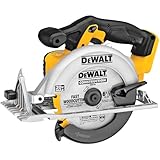
Overview: The DEWALT DCS391B is a robust 6-1/2" sidewinder-style circular saw built for professionals who demand power and reliability. This bare tool features a high-torque 5150 RPM motor capable of chewing through demanding cuts with confidence. The magnesium shoe provides a perfect balance of durability and weight savings, ensuring long-term accuracy on job sites where tools take daily abuse.
What Makes It Stand Out: The 5150 RPM motor outpaces many competitors, delivering aggressive cutting speed that reduces bogging in dense materials. The optimized rubber overmold grip provides exceptional control and comfort during extended use. With a 2-1/8" maximum cut depth at 90°, it handles 2x lumber in a single pass—a key advantage over smaller saws. The 0-50° bevel capacity offers versatility for complex framing and trim work.
Value for Money: Positioned as a mid-premium bare tool, it offers professional performance without the brushless premium. For existing DEWALT 20V users, it’s a cost-effective way to get serious cutting power. The magnesium construction and proven motor design ensure years of reliable service, justifying the investment for tradespeople.
Strengths and Weaknesses: Strengths include exceptional power, durable magnesium shoe, deep cutting capacity, ergonomic design, and DEWALT’s extensive service network. The included carbide-tipped blade is job-ready. Weaknesses are the brushed motor (less efficient than brushless models), bare tool configuration, and slightly heavier build than compact versions.
Bottom Line: A workhorse circular saw that belongs on any professional job site. If you prioritize raw power, durability, and deep cutting capacity over the latest brushless technology, the DCS391B remains a top-tier choice for serious users.
5. JEXUGK 6-1/2" Circular Saw, Cordless Sierra Circular Inalambrica with 2 x 6.0AH Battery,Brushless Electric Power Circle Saw with 3 Blade Cutting Precise Wood for Max Cut Depth 2-1/4"(90°)1-7/16" (45°)

Overview: The JEXUGK 6-1/2" Circular Saw is a feature-packed offering from a newer brand aiming to compete with established players. This kit includes two massive 6.0Ah batteries, three blades, and a carrying case—essentially everything needed for serious woodworking. The brushless motor spins at an impressive 6000 RPM, promising professional-grade performance without the premium brand price tag.
What Makes It Stand Out: The dual 6.0Ah batteries provide exceptional runtime and the ability to work continuously by alternating power sources—rare in kits at this price. The 6000 RPM brushless motor is class-leading, delivering smooth, fast cuts across diverse materials. Safety features include a dual-protection lock switch preventing accidental starts and a dust extraction port for cleaner operation. The included carrying case adds professional presentation and protection.
Value for Money: While pricier than budget brands, the inclusion of high-capacity batteries, multiple blades, and premium features like brushless motor and safety switches creates strong value. It competes with major brand kits costing significantly more, making it attractive for value-conscious buyers wanting premium specs.
Strengths and Weaknesses: Strengths include powerful brushless motor, huge battery capacity, comprehensive accessory package, safety features, and responsive 24/7 customer service. Weaknesses are the unproven long-term brand reliability, potentially lower resale value, and limited track record compared to century-old competitors.
Bottom Line: If you’re willing to trust a newer brand, this kit offers tremendous value and performance. The dual 6.0Ah batteries and brushless motor alone justify the price for serious DIYers and budget-minded professionals seeking premium features without paying for the logo.
6. DEWALT 20V MAX XR Brushless Cordless 7-1/4 in. Circular Saw, Tool Only (DCS590B)

Overview: The DEWALT DCS590B represents the pinnacle of cordless circular saw performance in the 20V MAX XR lineup. This tool-only 7-1/4-inch beast delivers an impressive 1,700 maximum watts out, making it the most powerful saw in DEWALT’s 20V ecosystem. Designed for demanding professionals who already own DEWALT batteries, it transforms tough job site challenges into routine tasks with its robust brushless motor engineering.
What Makes It Stand Out: This saw’s exceptional power output combined with a 5,500 RPM no-load speed enables up to 368 cuts per charge on a 6.0Ah battery. The electric brake is a critical safety and precision feature that stops the blade instantly when you release the trigger, preventing those frustrating coasting cuts that ruin workpieces. Its 2-9/16-inch cutting depth at 90° handles dimensional lumber with ease, while the 2-inch capacity at 45° tackles ambitious bevel cuts that smaller saws simply cannot manage.
Value for Money: At approximately $150-180 for the tool alone, this saw commands a premium price that DEWALT loyalists will find justified. While you must factor in $100+ for a high-capacity battery and charger if you’re not already invested in the platform, the performance rivals corded saws. Comparable professional saws from Milwaukee or Makita cost $200+ for the tool only, making the DCS590B competitively priced for its class.
Strengths and Weaknesses: Strengths include unmatched power-to-weight ratio, durable construction, excellent runtime, and the trusted DEWALT warranty. The electric brake enhances safety and accuracy significantly. Weaknesses are the tool-only configuration excluding beginners, higher upfront cost, and substantial weight that may fatigue users during extended overhead work. The saw also lacks advanced features like a built-in laser guide.
Bottom Line: For professional contractors and serious woodworkers already in the DEWALT ecosystem, the DCS590B is an essential upgrade that delivers corded performance without the cord. DIY enthusiasts should consider more affordable options, but for those who demand job site reliability and brute cutting force, this saw is worth every penny.
7. DEKOPRO 20V Cordless Circular Saw, 6-1/2-Inch Blade, 4500 RPM Circular Saw Cordless with 2 Battery and Charger( 4.0Ah )

Overview: The DEKOPRO 20V Cordless Circular Saw positions itself as a comprehensive solution for DIY enthusiasts seeking a ready-to-work package. This 6-1/2-inch saw arrives with two 4.0Ah batteries and a charger, eliminating the hidden costs that plague tool-only purchases. With a 4,500 RPM motor, it handles most homeowner and light contractor tasks competently, offering a balanced blend of performance and convenience for weekend warriors tackling renovation projects.
What Makes It Stand Out: Unlike premium brands that sell bare tools, DEKOPRO includes everything needed to start cutting immediately. The integrated laser guide projects a clear cutting line that dramatically improves accuracy for users still mastering freehand cutting techniques. The ergonomic handle design reduces vibration and hand fatigue during extended use, while the 0-45 degree bevel capacity with positive stops enables versatile joinery and trim work without complex setup.
Value for Money: At roughly $90-110 for the complete kit, this saw undercuts competitors by hundreds of dollars. Two batteries alone would cost $80+ from major brands, making the saw essentially free in comparison. While it won’t match DEWALT or Milwaukee for durability, the value proposition for occasional use is undeniable. Ryobi’s comparable kit costs $130+ with a single battery, giving DEKOPRO a clear price advantage.
Strengths and Weaknesses: Strengths include the complete package, laser guidance, dual batteries, and lightweight design. The carbide-tipped blade cuts cleanly through hardwood and softwood. Weaknesses involve uncertain long-term durability, lower power output than premium brands, limited service network, and plastic components that may not withstand daily job site abuse. The brand lacks the professional reputation of established players.
Bottom Line: For DIYers seeking maximum value with minimal investment, DEKOPRO delivers a surprisingly capable package. It won’t satisfy professional contractors demanding all-day reliability, but for home improvement projects and occasional use, the included accessories and dual batteries make it a smart, budget-conscious choice that gets the job done.
8. Ryobi 18V 5-1/2" Circular Saw

Overview: Ryobi’s 18V 5-1/2" Circular Saw represents the bare-bones entry point into their expansive One+ system, though the product listing provides frustratingly few details. This ultra-compact saw targets light-duty cutting tasks with its modest 1-11/16-inch depth capacity. As a tool-only offering, it assumes buyers already own Ryobi batteries, making it an add-on rather than a standalone solution for new users entering the cordless ecosystem.
What Makes It Stand Out: Integration with Ryobi’s One+ platform is the primary selling point—over 175 tools share the same battery system. The smaller 5-1/2-inch blade diameter reduces weight and improves maneuverability in tight spaces where larger saws feel cumbersome. Ryobi’s widespread retail presence ensures easy replacement blade availability and service accessibility that niche brands cannot match, while the simplified design minimizes potential failure points.
Value for Money: Priced around $50-60 for the tool only, this saw offers exceptional accessibility for homeowners already invested in Ryobi’s ecosystem. However, the value diminishes significantly if you must purchase batteries and charger separately. Comparable entry-level saws from Craftsman or Porter-Cable cost $70-80 tool-only, but Ryobi’s proven battery platform provides better long-term versatility. For cutting plywood and 2x lumber occasionally, the price is appropriate.
Strengths and Weaknesses: Strengths include unbeatable ecosystem compatibility, lightweight design, reliable performance for light tasks, and Ryobi’s three-year warranty. The compact size excels at trim work and panel cutting. Weaknesses are the underwhelming power for demanding cuts, limited depth capacity preventing full 2x4 cuts at 45°, absence of features like laser guides or electric brakes, and the tool-only configuration excluding newcomers.
Bottom Line: This saw serves One+ system owners needing occasional crosscuts and rip cuts on thin materials. Don’t expect professional performance or advanced features. For heavy renovation work, invest in Ryobi’s larger 6-1/2-inch model. But for quick plywood cuts and light-duty tasks, it’s a cost-effective addition to an existing battery platform.
9. WORKPRO 20V Cordless Mini Circular Saw, 4-1/2" Compact Wireless Circular Saw 4.0Ah Battery, Fast Charger, 3 Blades, 4500RPM, Laser Guide, Max Cutting Depth 1-11/16"(90°), 1-1/8"(45°)

Overview: The WORKPRO 20V Mini Circular Saw redefines value in the compact saw category by delivering a comprehensive cutting solution in a 4-1/2-inch package. Weighing just 4.36 pounds, this lightweight powerhouse includes a 4.0Ah battery, fast charger, three specialized blades, dust extraction hose, and storage bag—essentially everything needed for diverse DIY projects. The 4,500 RPM motor handles wood, tile, plastic, PVC, and soft metals with surprising competence.
What Makes It Stand Out: No other kit at this price point includes three purpose-specific blades (24T wood, 60T fine-cut, diamond tile) plus dust extraction capability. The integrated laser guide and parallel fence ensure precision typically reserved for larger saws, while the adjustable 0-45° bevel enables complex joinery. The 2.4A fast charger replenishes the battery in just two hours, minimizing downtime. A safety lock prevents accidental activation, addressing a critical concern with one-handed mini saws.
Value for Money: At approximately $80-100 for the complete ensemble, WORKPRO eliminates guesswork and hidden costs. Individual components would exceed $150 purchased separately—batteries alone cost $40-60 from major brands. While mini saws lack the depth capacity of full-size models, the included accessories and multi-material capability provide exceptional versatility for the price, outperforming similarly priced entry-level saws from Skil or Black+Decker.
Strengths and Weaknesses: Strengths include the all-inclusive kit, multi-material versatility, lightweight maneuverability, fast charging, and thoughtful accessories. The dust extraction port maintains clean workspaces. Weaknesses involve limited 1-11/16-inch depth restricting thick lumber cuts, uncertain long-term durability under heavy use, and blade availability concerns. The mini format demands slower feed rates to avoid bogging down.
Bottom Line: For DIYers, hobbyists, and those working in confined spaces, this WORKPRO kit delivers remarkable versatility and value. It won’t replace a full-size saw for framing, but for remodeling, flooring, and craft projects, the complete package and multi-material capability make it an intelligent secondary saw or primary tool for light-duty users.
10. Inequalit Cordless Mini Circular Saw, 4-1/2 Inch 3400 RPM Circular Saw with Laser Guide, Rip Guides, 2 Blades (24T Wood + 60T Metal), Max Cutting Depth 1-11/16" (90°), 1-1/8" (45°)"
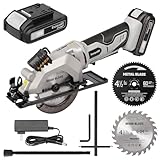
Overview: The Inequalit 4-1/2-inch Mini Circular Saw enters a crowded compact tool market with competitive features but a critical limitation. This saw delivers 3,400 RPM and includes both laser guidance and rip guides for improved accuracy, targeting DIYers seeking precision in a small package. However, the proprietary battery system that forbids cross-brand compatibility presents a significant long-term investment concern that savvy buyers must carefully evaluate.
What Makes It Stand Out: The double-protection safety switch prevents accidental starts better than single-button designs common in budget tools. Included rip guides provide straight-edge cutting capability without additional purchases, while the laser guide enhances visibility for freehand cuts. The saw handles wood, soft metals, tile, drywall, and plastic, offering material versatility. The soft-grip handle reduces vibration fatigue during extended use.
Value for Money: Priced around $70-90, the initial cost appears competitive until you consider the battery ecosystem trap. Replacement batteries must come from Inequalit exclusively, eliminating the flexibility to share batteries with other tools or purchase affordable third-party alternatives. This lock-in strategy inflates long-term ownership costs and negates upfront savings when the battery eventually fails. Milwaukee and Ryobi offer mini saws with superior battery ecosystems for similar prices.
Strengths and Weaknesses: Strengths include thoughtful safety features, included rip guides, laser accuracy, and multi-material capability. The lightweight design suits overhead work. Weaknesses are the proprietary battery prison, lower 3,400 RPM power causing slower cuts, unknown brand reliability, limited service network, and uncertain blade availability. The restrictive battery policy overshadows all positive attributes.
Bottom Line: Avoid this saw unless you accept being locked into a single-brand ecosystem with uncertain future support. The proprietary battery requirement transforms a decent tool into a poor investment. Choose Ryobi One+ or DEWALT 20V mini saws instead, where battery compatibility ensures tool longevity and value. No feature set justifies this artificial restriction.
Why Cordless Circular Saws Dominate Weekend Workshops in 2026
The modern weekend warrior demands flexibility that corded tools simply can’t deliver. Whether you’re building a backyard pergola, ripping plywood sheets in the driveway, or trimming deck boards on a second-story landing, dragging a 100-foot extension cord transforms a simple task into an obstacle course. Cordless circular saws eliminate this friction entirely, letting you follow the cut wherever it leads.
The Freedom Factor: No Outlet, No Problem
Beyond mere convenience, cordless designs fundamentally change how you approach projects. You’re no longer tethered to outlet locations, which means you can work in the center of a room without strategizing power access, or make quick cuts in crawl spaces where electricity might not even reach. This mobility translates to faster project completion and reduced setup time—critical when you’re squeezing builds between weekend errands and family time.
Power Evolution: Modern Batteries Change Everything
The narrative that cordless tools lack power is officially outdated. Advanced lithium-ion cells with improved discharge rates and thermal management now sustain cutting torque that rivals 15-amp corded models. For weekend projects involving 2x lumber, plywood, and even pressure-treated decking, a quality cordless saw maintains blade speed under load without bogging down. The secret lies in cell configuration and battery management systems, not just raw voltage numbers.
Decoding Blade Size: 6½-Inch vs 7¼-Inch for Home Use
Blade diameter dictates cutting depth, weight, and often price—a trifecta of considerations that directly impacts your user experience. Most weekend projects don’t demand the maximum capacity of a full-size saw, making compact options surprisingly capable.
The Compact Contender: 6½-Inch Advantages
Six-and-a-half-inch saws typically weigh 2-3 pounds less than their larger counterparts, a difference your forearm will notice after repeated cuts. They handle 90% of DIY tasks—including cutting 2x material at 90 degrees—and often spin at higher RPMs due to lower rotational mass. This translates to cleaner cuts in sheet goods and less motor strain. The shallower depth also means smaller, lighter batteries can maintain performance, creating a more balanced tool that’s easier to maneuver one-handed when necessary.
The Full-Size Workhorse: When 7¼-Inch Makes Sense
If your project list includes thick beams, multiple layers of decking, or frequent 45-degree bevel cuts through 2x lumber, the extra half-inch of cutting depth becomes non-negotiable. Full-size saws also offer a broader selection of specialty blades—thin-kerf options, fine-finish blades, and dedicated demolition blades—that might not be available in smaller diameters. The added mass can actually improve stability during long rip cuts, reducing vibration and wander.
Battery Voltage Demystified: 18V, 20V, or Higher?
Marketing departments love voltage numbers, but the reality is more nuanced. Most “18V” and “20V” tools use identical battery cell configurations—the difference is simply whether the manufacturer markets nominal voltage (18V) or maximum voltage (20V). For weekend projects, this distinction matters less than the amp-hour rating and cell quality.
Understanding Amp-Hours: Runtime Reality Check
A 5.0Ah battery theoretically delivers five amps for one hour, but circular saws draw bursts of 20-30 amps during heavy cuts. This means real-world runtime depends heavily on cutting style. Aggressive, continuous ripping drains batteries faster than intermittent crosscuts. For weekend warriors, two 4.0Ah batteries often outperform one 8.0Ah battery—you can charge one while using the other, eliminating downtime. Look for batteries with built-in fuel gauges to avoid mid-cut surprises.
Platform Loyalty: Sticking With One Battery Ecosystem
Value multiplies when your circular saw shares batteries with your drill, impact driver, and reciprocating saw. Before buying, inventory your existing tools. Investing in a new battery platform for a single saw rarely makes financial sense unless you’re completely overhauling your collection. Most manufacturers offer bare-tool options precisely for this reason—leveraging your existing battery investment slashes the saw’s cost by 30-50%.
Brushless vs Brushed Motors: The Efficiency Equation
Motor technology directly impacts runtime, maintenance, and long-term durability. Brushed motors use physical contacts (brushes) that wear down over time, creating friction, heat, and eventually requiring replacement. Brushless motors eliminate these contacts, using electronic controllers to drive the motor more efficiently.
Long-Term Value: Why Brushless Pays Off
For weekend projects totaling a few hours per month, a brushed motor might survive years before needing service. But brushless motors deliver 30-50% longer runtime per battery charge—a tangible benefit when you’re racing against Sunday evening. They also generate less heat, reducing the risk of thermal shutdown during demanding cuts. The price premium (typically $40-80) amortizes quickly through battery savings and extended tool life, making brushless the smarter value play for most DIYers.
Safety Features That Actually Matter for DIYers
Weekend warriors face unique safety challenges: less frequent tool use means skills can get rusty, and solo work means no one’s nearby if something goes wrong. Modern saws incorporate features that address these specific risks.
Electric Brakes: Stopping on a Dime
A blade that spins for 10-15 seconds after trigger release is an accident waiting to happen. Electric brakes reverse motor polarity the instant you let go, stopping rotation in under 3 seconds. This feature alone prevents countless injuries when setting the saw down or when a cut finishes unexpectedly. It’s non-negotiable for any saw you’ll use without a dedicated helper.
Blade Guards and Riving Knives: Non-Negotiables
The blade guard should retract smoothly without sticking—test this in-store by slowly pushing it back with a piece of wood. A binding guard forces you to manually hold it open, diverting attention from the cut. Riving knives, while more common on table saws, appear on some premium circular saws. This thin metal plate behind the blade prevents kerf closure and dangerous kickback, especially when cutting wet or tensioned lumber. For weekend projects using construction-grade lumber with unpredictable grain, it’s a lifesaver.
Ergonomics and Weight: The Comfort-Performance Balance
A saw that feels balanced in the store can become unwieldy after 20 minutes of cutting overhead deck joists. Weight distribution matters as much as total weight—battery placement relative to the handle determines how much wrist torque you’ll fight.
One-Handed Operation vs Control
Some compact saws market themselves as one-hand-capable, and they excel at quick trim cuts or sheet goods breakdown. But for accurate rip cuts or bevel work, two-handed control is mandatory. Look for saws with auxiliary handles positioned to let you apply forward pressure without compromising sightlines to the cut line. Rubber overmolding on both handles reduces vibration and improves grip when hands get sweaty.
Handle Design and Vibration Dampening
Inline handles (parallel to the blade) offer better sightlines for right-handed users but can feel unnatural for left-handed woodworkers. D-handle designs provide ambidextrous comfort but sometimes obscure the cut line. Modern saws incorporate internal counterweights and isolated motor mounts to reduce vibration transmission to your hands—a feature worth testing by making a few cuts on scrap wood before purchasing.
Cutting Capacity: What Depth Do You Really Need?
Manufacturers advertise maximum cut depth at 90 and 45 degrees, but these numbers assume a perfectly sharp blade and no safety margins. Real-world capacity runs 1/8-inch less, which matters when cutting 1½-inch thick material at a bevel.
Bevel Capacity: Beyond 90-Degree Cuts
Most saws bevel to 45 degrees, but some extend to 50 or 56 degrees for specialized roof framing or creative joinery. Positive stops at common angles (22.5°, 45°) speed up repetitive work. Check how easily the bevel lock adjusts—some require tools while others use tool-free levers. For weekend projects, a smooth, accurate bevel adjustment beats extreme angle range you’ll rarely use.
Positive Stops and Adjustability
Depth adjustment should move smoothly without slop—wobbly plates indicate poor manufacturing tolerances that affect cut accuracy. Look for scales etched into metal rather than stickers, which peel off in dusty conditions. The best saws include detents at common depths (1/4", 1/2", 3/4") for quick, repeatable settings without measuring.
Visibility Enhancements: LEDs and Laser Guides
Cutting accuracy depends on seeing your line. Shadows from the saw body or poor garage lighting can turn precise layouts into guesswork.
When Lighting Matters Most
LEDs positioned on both sides of the blade eliminate shadows cast by the guard, illuminating the cut line regardless of ambient light. This feature proves invaluable during winter months when daylight is scarce. Check that the LED activates before the blade spins—some saws light up only after trigger pull, wasting precious seconds of visibility.
Laser Guide Accuracy: Hype vs Reality
Laser guides project a red line ahead of the blade, but they require calibration and drift with blade changes. For weekend projects, a bright LED and clear sight notch on the shoe often provide better real-world accuracy than a misaligned laser. If you opt for a laser, ensure it has independent on/off control—constantly seeing the line can be distracting during freehand cuts.
Dust Management for Cleaner Weekend Projects
Circular saws generate shocking amounts of dust—up to a pound per minute when ripping MDF. Without management, your garage becomes a respiratory hazard and cleanup consumes project time.
Built-In Dust Ports and Vacuum Adapters
A sturdy dust port that accepts standard 1-1/4" or 1-1/2" vacuum hoses transforms your shop vac into a dust collection system. The best designs swivel to stay out of the way during bevel cuts. Some saws include baffles inside the guard to direct chips toward the port rather than spraying them across your workspace.
Dry Dust vs Wet Dust Considerations
If you’ll cut cement board or tile (increasingly common in weekend bathroom renovations), look for saws with sealed switches and sealed motors. Dry dust infiltrates tool internals and causes premature failure. Wet cutting requires specific blades and often a water feed, but even occasional exposure means your saw needs IP-rated seals. For pure woodwork, standard dust management suffices.
The Price-Value Matrix: Spending Smart in 2026
Value doesn’t mean cheapest—it means the right features at the right price for your specific projects. The cordless saw market stratifies into three distinct tiers in 2026.
Entry-Level Sweet Spot: $80-$150 Range
Bare tools in this range typically feature brushed motors, adequate but not exceptional batteries, and solid basics like electric brakes and LED lights. They skip luxuries like brushless motors, premium blade guards, and extensive bevel ranges. For weekend warriors tackling 2-3 projects monthly, this tier offers tremendous value—especially if you already own compatible batteries. The key is choosing models that don’t compromise on safety or shoe flatness.
Mid-Tier Goldilocks Zone: $150-$250
This range unlocks brushless motors, improved batteries (5.0Ah+), better ergonomics, and often dual-LED lighting. You’ll find magnesium shoes instead of steel, reducing weight without sacrificing durability. For DIYers who treat woodworking as a serious hobby, this zone balances performance and price perfectly. The runtime gains alone justify the premium over entry-level tools.
Professional Features on a DIY Budget
Some pro-grade saws drop into the $250-300 range during seasonal sales, offering features like blade brake locks, integrated rafter hooks, and precision depth stops. While tempting, ask whether you’ll use these features. A rafter hook shines for framers but adds little value for furniture builders. Focus on features that match your project mix rather than impressing job site veterans.
Warranty and Support: The Overlooked Value Multiplier
A cheap saw with a 90-day warranty becomes expensive if it fails after month four. Understanding warranty terms reveals manufacturer confidence in their product.
What to Look for in Tool Warranties
Three-year limited warranties have become standard for reputable brands, with some extending to five years for the tool and two years for batteries. Read the fine print: “limited” often excludes normal wear items like brushes, bearings, and switches. Brushless motors typically carry longer warranties since they have fewer wear components. Some manufacturers offer 90-day satisfaction guarantees—use this period to test the saw aggressively on your typical projects.
Authorized Service Centers vs DIY Repairs
Check whether the manufacturer maintains local service centers or requires shipping tools for repair. For weekend warriors, a two-week turnaround means missing project windows. Brands that sell replacement parts directly to consumers (brushes, switches, cords) empower you to handle simple repairs yourself, extending tool life and maximizing value. Online forums often reveal which brands support DIY repairs versus forcing professional service.
Future-Proofing Your Purchase: 2026 and Beyond
Battery technology evolves rapidly. A saw that seems like a bargain today could become obsolete if its battery platform gets discontinued. Forward-thinking design protects your investment.
USB-C Charging and Smart Battery Tech
The shift toward USB-C charging isn’t just about convenience—it enables charging from portable power stations, car chargers, and even solar panels for off-grid projects. Smart batteries with Bluetooth connectivity report charge status, temperature, and cycle count through smartphone apps, helping you optimize charging habits to extend battery life beyond the typical 3-5 year span.
App Connectivity: Gimmick or Game-Changer?
Some 2026 models offer tool tracking, usage analytics, and firmware updates via apps. While tracking might seem unnecessary for garage tools, usage data helps you understand your cutting habits—revealing whether you’re consistently pushing the saw beyond its design limits, which accelerates wear. Firmware updates can improve performance or add safety features, something brushed-motor saws can never offer.
Common Mistakes Weekend Warriors Make
Even savvy shoppers fall into traps that erode value. Recognizing these pitfalls saves money and frustration.
Overbuying Power You Won’t Use
A 60V flex-volt saw capable of cutting 4x material impresses on paper, but if your projects never exceed 2x lumber, you’ve paid for capacity you’ll never tap. Worse, high-voltage tools are heavier and bulkier, making them less enjoyable for light-duty work. Match the tool to your realistic project scope, not your aspirational project list.
Ignoring Blade Quality
The included “stock” blade is almost universally mediocre—a coarse 24-tooth framing blade that splinters plywood and leaves rough edges. Budget an extra $30-50 for a quality 40-tooth carbide blade for general purpose work. The performance difference exceeds any incremental motor upgrade, and a sharp blade reduces kickback risk dramatically.
Forgetting the Battery Investment
That $99 bare tool looks irresistible until you realize you need two $80 batteries and a $50 charger. Always calculate total cost of ownership. Sometimes a kit with two batteries and a rapid charger offers better value than piecing together components, especially during holiday sales when manufacturers bundle aggressively.
Matching Your Saw to Your Project Portfolio
Your project mix should drive feature priorities. A mismatch creates frustration and compromises results.
Furniture Building Requirements
Fine furniture demands accuracy over raw power. Prioritize saws with minimal blade wobble (measured in thousandths of an inch), smooth depth adjustment for precise dado-like cuts, and excellent dust collection to protect finishes. A 6½-inch saw often provides better control for detailed work, and a high-tooth-count blade (60-80 teeth) becomes essential.
Decking and Outdoor Projects
Cutting pressure-treated lumber and composite decking requires deeper capacity and robust dust seals—the chemicals in treated wood accelerate corrosion. A 7¼-inch saw with stainless steel hardware and sealed motor housing pays dividends. Look for models with aggressive debris blowers that keep the cut line clear of wood pulp and chemical residue.
Trim and Finish Work
Installing crown molding or baseboard means repetitive bevel cuts at precise angles. A saw with positive bevel stops at 22.5° and 45°, plus a fine-adjustment knob for tweaking angles, speeds work dramatically. Lightweight design reduces fatigue during all-day installations, and an integrated LED ensures you see pencil marks on pre-finished trim.
Essential Accessories That Maximize Value
The saw itself is only half the equation. Strategic accessories multiply its capabilities and protect your investment.
Quality Blades: The Real Performance Driver
Own at least three blades: a 24-tooth framing blade for rough construction, a 40-tooth general-purpose blade for most tasks, and a 60-tooth fine-finish blade for plywood and trim. Thin-kerf blades reduce motor strain and extend battery life, making them ideal for cordless saws. Spend 30% of your tool budget on blades—they determine cut quality more than any other factor.
Rip Guides and Edge Guides
A basic rip fence that clamps to the shoe costs under $20 but transforms freehand cuts into straight, repeatable rips. For sheet goods, an aftermarket track guide system (compatible with multiple brands) delivers table-saw precision without the floor space commitment. These guides pay for themselves by reducing material waste from miscuts.
Safety Gear: Non-Negotiable Add-ons
Budget $50-75 for quality safety equipment: impact-rated safety glasses with anti-fog coating, hearing protection with Bluetooth (so you can take calls between cuts), and cut-resistant gloves that maintain dexterity. A dust mask with replaceable P100 filters protects against wood dust and chemical treatments. These items aren’t accessories—they’re mandatory insurance against project-ending injuries.
Frequently Asked Questions
What’s the realistic runtime I can expect from a 5.0Ah battery on a cordless circular saw?
Expect 150-250 linear feet of cutting through 3/4-inch plywood on a single charge, or roughly 50-75 cuts through 2x4 lumber. Aggressive ripping or thick material halves these numbers. Runtime improves by 40% with a thin-kerf blade and by keeping batteries above 50°F. Always have a second battery charging—cordless saws excel when batteries are treated as consumable ammo, not finite fuel.
Can a 6½-inch saw really handle all my weekend project needs?
For 90% of DIY tasks including furniture, deck repair, and sheet goods breakdown, absolutely. The only limitations appear when cutting 4x4 posts at 45-degree bevels or multiple layers of 2x material. If you own a corded 7¼-inch saw for occasional heavy cuts, a 6½-inch cordless model becomes the perfect lightweight daily driver. Many weekend warriors pair a compact cordless with a full-size corded saw for maximum versatility.
Is brushless worth the extra cost if I only use the saw monthly?
Yes, but the payback timeline stretches to 2-3 years. The real value lies in maintenance-free operation—no brushes to replace—and superior battery efficiency. You’ll also benefit from quieter operation and reduced vibration, making the tool more pleasant to use. If the price difference exceeds $60, consider a brushed model from a reputable brand with solid reviews, but prioritize brushless if you plan to expand your cordless platform.
How important is a magnesium shoe versus steel or aluminum?
Magnesium saves 8-12 ounces while maintaining rigidity, reducing fatigue during extended use. Steel shoes are nearly indestructible but heavy; aluminum dents easily, affecting cut accuracy. For weekend projects, a stamped steel shoe is perfectly adequate if weight isn’t a primary concern. Magnesium becomes worthwhile if you’ll make 50+ cuts per session or work overhead regularly.
What’s the best way to test a circular saw before buying?
Bring a scrap of 3/4-inch plywood to the store. Check blade wobble by slowly rotating the blade by hand while observing the tooth path—it should track perfectly. Make a test cut: the saw should track straight without forcing, the guard should retract smoothly, and the cut line should remain visible throughout. Listen for grinding bearings or excessive vibration. If buying online, purchase from retailers with 90-day return policies and test aggressively immediately.
Do laser guides actually improve accuracy for DIYers?
Rarely. Lasers require calibration and drift with blade changes, and bright sunlight renders them invisible. A sharp blade, bright LED light, and clear sight notch on the shoe provide more reliable accuracy. If your saw includes a laser, treat it as a rough guide only—always verify alignment against the actual blade kerf before critical cuts. The $10-15 manufacturing cost of a laser is better spent on a quality blade.
How do I know if a saw’s battery platform is future-proof?
Research the manufacturer’s battery release history. Brands that maintain backward compatibility for 5+ years (allowing new batteries to power old tools) demonstrate platform commitment. Check whether they’ve announced next-generation cells with higher amp-hours or faster charging—if they’re innovating, the platform will survive. Avoid brands that frequently discontinue battery styles or require adapters for new tools.
What maintenance does a cordless circular saw require?
Monthly: Blow out dust with compressed air, especially around the trigger and motor vents. Check blade arbor for wobble and tighten if needed. Quarterly: Apply dry lubricant to the blade guard pivot and depth adjustment threads. Annually: Inspect brushes (if brushed motor) for wear, and check battery contacts for corrosion. Always store batteries at 40-60% charge in a cool, dry place to maximize lifespan.
Are flex-volt or multi-voltage systems worth considering for weekend use?
Flex-volt technology (batteries that output different voltages depending on the tool) offers maximum flexibility, letting you share batteries between heavy-duty saws and lighter drills. For weekend warriors, the value peaks if you own or plan to buy multiple tools on the same platform. If the circular saw is your only cordless tool, standard voltage systems are simpler and often cheaper. The weight penalty of flex-volt batteries (they’re heavier) matters less in stationary tools but becomes noticeable in handheld saws.
What’s the single most important feature for a beginner DIYer?
An electric brake. Beginners naturally set the saw down immediately after a cut, and a spinning blade contacting wood scraps or a workbench causes instant kickback or damage. The brake stops the blade in under three seconds, preventing countless accidents while you develop proper muscle memory. After that, prioritize a stable shoe and easy-to-read depth scale—accuracy and safety trump power every time for those learning the craft.
See Also
- Top 10 Best Cordless Circular Saws for DIY Home Projects in 2026
- Top 10 Best Cordless Circular Saws for DIY Projects in 2026
- 10 Best DIY Circular Saws for Weekend Projects in 2026
- 10 Best Value Cordless Circular Saws for Outdoor Deck Building in 2026
- 10 Essential Cordless Circular Saws Every Weekend Warrior Needs in 2026