Table of Contents
Corded circular saws aren’t going anywhere—despite what the cordless revolution promises. Walk onto any active job site in 2026 and you’ll still hear the unmistakable whine of carbide tearing through LVL and OSB, powered by steady 120-volt current. Why? Because when you’re cutting 200 rafters before lunch, battery anxiety and charging cycles aren’t just inconvenient—they’re profit killers. The best value corded circular saws deliver relentless power, day-after-day reliability, and a total cost of ownership that makes cordless look like a luxury tax.
But “value” doesn’t mean cheap. It means investing in a tool that balances purchase price with durability, precision, and the safety features that keep your crew productive and your insurance premiums in check. For 2026’s job sites—where engineered lumber is denser, schedules are tighter, and regulations are stricter—understanding what separates a bargain from a genuine asset is critical. This guide cuts through marketing fluff to focus on the specifications, construction details, and performance characteristics that professional contractors actually need.
Top 10 Corded Circular Saws For Job
Detailed Product Reviews
1. SKIL 15 Amp 7-1/4 Inch Circular Saw with Single Beam Laser Guide - 5280-01
 with Single Beam Laser Guide - 5280-01](https://m.media-amazon.com/images/I/5107WNhmhpS._SL160_.jpg)
Overview: The SKIL 5280-01 delivers professional-grade power with DIY-friendly features. Its 15-amp motor spins at 5,300 RPM, handling framing and decking with ease. The integrated laser guide projects a clear cutting line, eliminating manual markings and significantly improving accuracy for precision-dependent projects. This combination of power and guidance makes it ideal for serious DIYers.
What Makes It Stand Out: The single-beam laser guide is a rare find on sub-$100 saws, reducing material waste and boosting confidence. Paired with an effective dust blower, it ensures constant visibility. The 51-degree bevel capacity with positive stops at 45 degrees covers most angled cuts, while safety features like the lock-off trigger prevent accidental starts.
Value for Money: At $60-80, this SKIL offers remarkable value. You’re getting laser guidance typically reserved for $150+ saws, plus a full 15-amp motor. It costs 40-50% less than comparable DEWALT models, making it perfect for budget-conscious buyers who refuse to sacrifice cutting power for price.
Strengths and Weaknesses: Strengths include the laser guide, powerful motor, excellent dust management, and robust safety features. The carbide blade cuts cleanly. Weaknesses: it weighs over 10 pounds, heavier than premium saws. The SKIL brand lacks professional job-site credibility, and the stamped steel shoe flexes more than magnesium alternatives.
Bottom Line: For DIY enthusiasts and occasional professionals, the SKIL 5280-01 is a smart investment. The laser guide alone justifies the price, transforming cutting accuracy. While not ideal for daily professional use, it delivers unbeatable features-per-dollar for home workshops and weekend projects.
2. DEWALT 7-1/4-Inch Circular Saw, Lightweight, Corded (DWE575)

Overview: The DEWALT DWE575 redefines corded circular saws at just 8.8 pounds while packing a 15-amp motor. This lightweight champion targets professionals who demand power without fatigue. Its 5,300 RPM motor handles pressure-treated lumber and hardwoods with authority, making it a reliable primary saw for framing crews and remodelers who use it daily.
What Makes It Stand Out: The exceptional weight-to-power ratio sets it apart—few saws under 9 pounds deliver full 15-amp performance. The anti-snag ball-bearing lower guard prevents hang-ups during bevel or plunge cuts, engineered for harsh job sites. A 53-degree bevel capacity with stops at 45 and 22.5 degrees exceeds standard requirements, while 2-9/16-inch depth capacity handles dimensional lumber in one pass.
Value for Money: At $100-120, this DEWALT commands a premium but earns it through durability and ergonomics. It competes with Makita and Milwaukee at similar prices, often winning on weight alone. For daily users, reduced fatigue translates to real productivity gains that justify the 30% price increase over budget brands within weeks.
Strengths and Weaknesses: Strengths include class-leading lightness, robust motor, smooth guard operation, and excellent depth capacity. The integrated dust port works with vacuums. Weaknesses: no electric brake (available on DWE575SB), limited bevel detents, and the stock blade is merely adequate. The power cord could be longer for job-site flexibility.
Bottom Line: The DWE575 is a top-tier choice for professionals and serious DIYers prioritizing maneuverability. Its featherweight design doesn’t compromise cutting power, making it ideal for overhead work. While lacking an electric brake, its reliability and ergonomics make it a worthy investment for frequent use.
3. Skil 5080-01 13-Amp 7-1/4" Circular Saw, Red
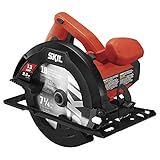
Overview: The Skil 5080-01 evolves the classic DIY circular saw, trimming weight while maintaining respectable power. Its 13-amp motor runs at 5,300 RPM, adequate for plywood, OSB, and 2x lumber. The 15% weight reduction versus older models makes it easier to control for extended sessions, appealing to homeowners who use their saw intermittently for projects.
What Makes It Stand Out: This saw excels at value engineering—Skil prioritized features DIYers need while eliminating costly professional extras. The improved dust blower is genuinely effective at this price, and the 51-degree bevel capacity matches more expensive competitors. The bright red housing improves visibility on cluttered workbenches, a practical touch.
Value for Money: At $40-50, the 5080-01 dominates the entry-level segment. It undercuts Ryobi and Black+Decker while offering similar performance. The 13-amp motor is sufficient for non-professional use. For homeowners making fewer than 50 cuts monthly, this represents maximum functionality per dollar spent, with little wasted on unnecessary features.
Strengths and Weaknesses: Strengths include ultra-affordable pricing, reduced weight, adequate power for light tasks, and easy blade changes. The spindle lock is surprisingly robust. Weaknesses: the 13-amp motor bogs down in thick hardwood, the shoe flexes more than cast models, and there’s no electric brake or laser guide. The depth adjustment lever feels flimsy under heavy use.
Bottom Line: The Skil 5080-01 is the perfect homeowner saw—cheap enough for occasional use, capable enough for real projects. It won’t impress professionals, but for building a deck or cutting sheet goods, it’s unbeatable value. Buy this if you need reliability without premium features.
4. DEWALT Circular Saw, 7-1/4 inch, Pivoting with up to 57 Degree Bevel, Corded (DWE575SB)

Overview: The DEWALT DWE575SB builds on the acclaimed DWE575 platform, adding a game-changing electric brake that stops the blade in seconds. This 8.8-pound powerhouse improves safety and productivity between cuts. The 15-amp motor maintains 5,300 RPM under load, while the industry-leading 57-degree bevel capacity handles specialized cuts most saws can’t attempt, eliminating need for a second tool.
What Makes It Stand Out: The electric brake reduces stop time by over 70% compared to standard models, transforming workflow efficiency. Combined with the highest bevel capacity in its class and lightweight magnesium construction, this saw excels at complex trim work and framing. The integrated LED cut-line indicator ensures accuracy in dim conditions, enhancing precision.
Value for Money: At $130-150, the SB variant commands a $30-40 premium over the standard DWE575. For professionals, this pays for itself in saved time and enhanced safety within weeks. The brake alone justifies the cost, but the expanded bevel range adds versatility that eliminates purchasing a separate trim saw, competing favorably with Makita hypoid saws costing $50 more.
Strengths and Weaknesses: Strengths include the rapid-stop brake, exceptional bevel range, lightweight design, and rugged construction. The blade guard action is silky smooth. Weaknesses: premium pricing may deter DIYers, the depth scale could be more precise, and the cord length is limiting. Some users report the brake can be overly aggressive, requiring occasional recalibration.
Bottom Line: The DWE575SB is the ultimate professional corded circular saw, combining safety, versatility, and ergonomics. The electric brake transforms workflow efficiency, while the 57-degree bevel tackles any challenge. For daily job-site use, this is worth every penny, though DIYers should weigh if premium features justify the cost for occasional use.
5. CRAFTSMAN Circular Saw, 7-1/4 inch, 13 Amp, Corded (CMES500)

Overview: The CRAFTSMAN CMES500 delivers reliable performance in a comfort-focused package for weekend warriors. Its 13-amp motor achieves 5,300 RPM, matching competitors while adding ergonomic refinements. The contoured over-molded handle reduces vibration and hand fatigue, making it more comfortable for extended use than bare-bones alternatives, handling standard 2x lumber and sheet goods competently.
What Makes It Stand Out: CRAFTSMAN’s focus on user comfort distinguishes this model. The handle design genuinely improves grip security and reduces strain during repetitive cuts. The included 18-tooth carbide blade is aggressive enough for fast rip cuts while delivering acceptable crosscut quality. Tool-free depth and bevel adjustments are smooth and intuitive, a notable improvement over older budget saws.
Value for Money: At $50-60, the CMES500 sits in the competitive entry-level space. It costs slightly more than the Skil 5080-01 but offers superior ergonomics and a better stock blade. Compared to Black+Decker and Ryobi alternatives, CRAFTSMAN’s brand heritage and warranty support add intangible value. For homeowners prioritizing comfort over raw power, it’s a justified step-up from absolute cheapest options.
Strengths and Weaknesses: Strengths include excellent handle comfort, decent blade quality, easy adjustments, and reliable 13-amp performance for light tasks. Safety features are well-implemented. Weaknesses: limited 45-degree bevel capacity restricts versatility, the shoe is basic stamped steel, and the motor lacks torque for demanding cuts. No electric brake or laser guide, and dust collection is mediocre.
Bottom Line: The CRAFTSMAN CMES500 is a solid middle-ground choice for homeowners valuing comfort and brand reliability. It won’t replace a professional saw but excels at its intended purpose: comfortable, capable performance for occasional projects. If you plan regular use, the ergonomic benefits make this worth the small premium over bare-bones competitors.
6. Makita 5007F 7-1/4" Circular Saw

Overview: The Makita 5007F is a professional-grade 7-1/4" circular saw built for contractors and serious woodworkers who demand reliability. With its robust 15 AMP motor spinning at 5,800 RPM, this tool delivers consistent power for demanding cuts through lumber and sheet goods. The saw’s magnesium construction and thoughtful engineering reflect Makita’s reputation for jobsite-ready durability.
What Makes It Stand Out: The integrated dual LED lights are a game-changer for cutting accuracy, illuminating the cut line in dim workshops or early morning job sites. The improved lower guard design prevents binding during bevel and narrow cuts—a common frustration with lesser saws. Its exceptional balance reduces operator fatigue during all-day use, while the large cutting capacity handles 2-3/8" material at 90° and 1-3/4" at 45°.
Value for Money: Priced in the professional tier ($150-180), the 5007F competes directly with DeWalt and Milwaukee offerings. You’re paying for longevity and precision features that DIY models lack. For tradespeople, the durability translates to lower lifetime costs. Hobbyists may find better value in consumer models unless they prioritize cut quality.
Strengths and Weaknesses: Strengths include outstanding power-to-weight ratio, superior visibility features, smooth depth adjustment, and legendary Makita reliability. Weaknesses are its premium price point and relatively basic dust collection. The corded design limits mobility compared to cordless options, though it ensures uninterrupted power.
Bottom Line: This saw deserves a spot in any professional’s arsenal. If you earn your living with a circular saw, the 5007F’s blend of power, precision, and durability justifies every penny. Homeowners with occasional projects should consider more budget-friendly alternatives.
7. SKIL 7-1/4" Worm Drive Corded Circular Saw-SPT77W-22

Overview: The SKIL SPT77W-22 worm drive circular saw represents decades of refinements to the classic design that built America’s houses. Weighing just 14.2 pounds, this corded powerhouse features a Dual-Field motor engineered specifically for sawing applications, delivering torque that sidewinders simply cannot match.
What Makes It Stand Out: The proprietary Dual-Field motor technology increases cooling efficiency, extending tool life significantly in heavy-duty applications. The Cut-Ready depth-of-cut system allows for lightning-fast, accurate adjustments without fumbling with levers. A 51° bevel capacity exceeds standard 45° limitations, enabling complex rafter cuts. SKIL includes a premium 24-tooth Diablo carbide blade—an $30 value—right out of the box.
Value for Money: At approximately $180-200, this worm drive sits competitively in its category. You’re investing in torque advantage and durability that justifies the premium over direct-drive saws. The included high-quality blade and motor longevity make it cost-effective for professionals. DIYers may not leverage its full potential.
Strengths and Weaknesses: Strengths include exceptional torque, superior cooling system, generous bevel range, and thoughtful weight reduction. The magnesium housing enhances durability without excess heft. Weaknesses include the learning curve for worm drive newcomers and price barrier for casual users. Cord management could be improved.
Bottom Line: For framers and remodelers who live by the saw’s torque, the SKIL SPT77W-22 is a top-tier choice. Its blend of classic worm drive power with modern innovations makes it worth every dollar for serious construction work.
8. 95104L Circular Saw Replacement Cord Assembly - Heavy Gauge Power Cord for SKIL Saw SPT77W, SPT77WM, SPT77WML, SPT78W, SPT70WM, SPT78MMC, SPT70V, SPT55 for Skilsaw Saw Power Cord Part
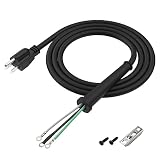
Overview: The 95104L replacement power cord assembly is a heavy-duty lifeline for resurrecting your aging SKILSAW worm drive. This OEM-quality cord restores full power delivery to models including the SPT77W series, HD77-02, and other compatible saws, eliminating the frustration of intermittent connections or damaged insulation.
What Makes It Stand Out: This isn’t a generic hardware store cord—it’s a heavy-gauge assembly designed specifically for high-amperage worm drive motors. The robust construction handles the 15-amp demands without voltage drop that can compromise cutting performance. Compatibility spans virtually all modern SKILSAW worm drives, making it a versatile spare for contractors with multiple saws.
Value for Money: At roughly $25-35, this cord costs a fraction of a new $200+ saw. For professionals, the ROI is immediate—one day’s downtime avoided pays for the part. DIYers comfortable with basic tool repair save substantially versus professional service. The heavy-gauge wire ensures you’re not sacrificing performance for price.
Strengths and Weaknesses: Strengths include exact-fit OEM design, superior wire gauge, comprehensive model compatibility, and responsive after-sales support. Installation is straightforward for mechanically inclined users. Weaknesses require disassembly of your saw (voiding any remaining warranty) and offers no upgrade over original length. Some users may prefer professional installation.
Bottom Line: If your SKILSAW’s cord is frayed or failing, this replacement is a no-brainer. It delivers factory-original performance at a repair-not-replace price point, making it essential insurance for any SKILSAW owner.
9. Seesii Mini Circular Saw with Laser Guide,4.8A 4000 RPM Compact Corded Circular Saw with Rip Guide,3 Blades (4-1/2") for Wood,Soft Metal,Tile,Plastic Cutting,Max Cut Depth 1-11/16"(90°),1-1/8" (45°)

Overview: The Seesii Mini Circular Saw packs surprising versatility into a compact, user-friendly package. Its 4.8-amp motor delivers 4,000 RPM through 4-1/2" blades, making it ideal for DIYers tackling home renovation, furniture building, and craft projects where a full-size saw would be overkill.
What Makes It Stand Out: Three included blades (TCT, HSS, and diamond) enable cutting wood, soft metal, tile, and plastic without additional purchases. The laser guide and rip guide combination delivers accuracy uncommon in this price class. Dual safety switches prevent accidental starts—a thoughtful feature for less experienced users. The dust collection adapter maintains visibility and workspace cleanliness.
Value for Money: Priced around $60-80, this saw competes with entry-level models while offering multi-material capability that typically requires separate tools. For homeowners, it eliminates the need for a miter saw, tile saw, and metal shear for small projects. Professionals should view it as a specialized secondary tool, not a primary workhorse.
Strengths and Weaknesses: Strengths include exceptional versatility, lightweight one-handed operation, comprehensive safety features, and impressive included accessories. The 1-11/16" depth at 90° handles most DIY tasks. Weaknesses include limited power for thick hardwoods, shorter cord length, and blade availability concerns. Durability under daily professional use remains unproven.
Bottom Line: Perfect for DIY enthusiasts and homeowners who value versatility over raw power. The Seesii Mini handles 90% of typical home projects safely and accurately, making it an excellent first saw or secondary tool for precision work.
10. Enventor Mini Circular Saw, 4.8A Electric Circular Saws Corded with Laser Guide, 4000RPM, 3 Saw Blades 3-3/8" Max Cutting Depth 1-1/16", Compact, Power for Wood, Soft Metal, Tile, Plastic

Overview: The Enventor Mini Circular Saw delivers corded reliability in a compact 4.8-amp package designed for precision-focused DIYers. Spinning 3-3/8" blades at 4,000 RPM, this lightweight tool targets home improvement enthusiasts who need maneuverability without sacrificing cut quality in materials up to 1-1/16" thick.
What Makes It Stand Out: The left-sided blade design provides unobstructed sightlines to the cut line—a feature typically reserved for premium worm drives. The comprehensive accessory bundle includes three specialized blades (24T TCT, 44T HSS, diamond), rip guide, vacuum adapter, and wrench. A Class II laser guide assists accuracy while the double-protection switch system prevents accidental activation.
Value for Money: Positioned near $70-90, it competes directly with the Seesii Mini but offers a slightly smaller blade diameter. The left-blade visibility advantage and included 6.56-foot cord add value. For users prioritizing sightlines over maximum depth, it justifies the price. Casual DIYers gain professional-like features without the weight or cost.
Strengths and Weaknesses: Strengths include superior visibility, robust safety system, generous cord length, and multi-material capability. The ergonomic grip reduces fatigue during extended use. Weaknesses include the 1-1/16" depth limitation restricting thicker material cuts, and the smaller blade selection compared to standard sizes. Power is adequate for DIY but insufficient for professional framing.
Bottom Line: An excellent choice for detail-oriented DIYers who value visibility and safety. The Enventor Mini excels at flooring, shelving, and trim work where precision trumps power, making it a smart addition to any home workshop.
Why Corded Circular Saws Remain the Job Site Workhorse in 2026
The cordless vs. corded debate ended on job sites the moment contractors started tracking runtime in dollars per cut. Corded circular saws deliver unlimited runtime, consistent blade speed under load, and a lower five-year cost of ownership that’s hard to ignore when you’re outfitting a crew of six. In 2026, with lumber prices stabilizing but labor costs climbing, the math is even more compelling: a $150 corded saw that lasts five years beats a $300 cordless platform requiring $200 in batteries over the same span.
The Corded vs. Cordless Economics for Professionals
Consider a framing crew running two saws continuously. A cordless setup needs four batteries per saw (two in use, two charging) at $120 each—that’s $960 just in power sources. Add the premium for brushless cordless motors, and you’re approaching $1,400 before you cut a single board. A pro-grade corded saw? $180, a $15 heavy-gauge extension cord, and you’re done. The break-even point is measured in weeks, not years, especially when you factor in the cost of downtime waiting for batteries to cycle.
Power Consistency When Deadlines Matter
Corded saws maintain peak torque from the first cut to the last. Cordless tools, even with advanced battery management, experience voltage sag as cells deplete. That means slower cuts, more binding, and increased kickback risk when you’re deep into a charge. For critical cuts on expensive engineered beams or when you’re racing weather, that power consistency isn’t a luxury—it’s a necessity.
Decoding Power Ratings: What the Numbers Really Mean
Manufacturers love to splash “15-amp motor” across packaging, but amperage is just current draw—not output power. Understanding the relationship between amps, horsepower, and blade speed is essential for matching a saw to your actual work.
Amperage Requirements for Heavy-Duty Framing
A true 15-amp motor (not “15-amp rated” marketing speak) pulls enough current to develop roughly 2.3 horsepower under load. For ripping 2-inch LVL or cutting through three stacked sheets of 3/4-inch subfloor, that’s your baseline. Anything less, and you’re forcing the tool, which generates heat, burns brushes, and shortens lifespan. For lighter trim work or occasional use, 13-amp models offer weight savings, but for job site value, 15 amps is the professional standard.
RPM vs. Torque: Finding the Sweet Spot
No-load RPM ratings (typically 5,200–5,800) are misleading. What matters is RPM under load and the torque curve that sustains it. Saws with electronic feedback control—essentially a governor that adjusts current to maintain speed—deliver cleaner cuts and longer motor life. Look for terms like “constant speed circuitry” or “electronic speed control” in specifications. These features prevent the bog-down that burns motors and splinters expensive material.
Soft-Start Motors and Electronic Feedback
Soft-start technology reduces inrush current, preventing circuit breakers from tripping when you pull the trigger on a cold morning. More importantly, it reduces the wrenching torque that can twist the saw in your hands during startup. Combined with electronic feedback that maintains speed under load, these features represent real value by improving control and extending tool longevity.
Safety Features That Protect Your Crew and Your Investment
In 2026, OSHA’s updated power tool standards require specific safety mechanisms on all job site circular saws. But compliance is just the starting point—advanced features prevent accidents before they happen, protecting both workers and your bottom line.
Instant-Brake Technology and Regulatory Compliance
Electric brakes stop the blade within 2–3 seconds of trigger release, compared to 8–12 seconds for unbraked models. This isn’t just convenient—it’s a critical hand-saver when a cord gets snagged or you need to set the saw down quickly. For 2026, look for saws with redundant brake circuits; if one fails, the other engages, ensuring compliance even after years of field use.
Riving Knives vs. Splitters: 2026 Standards
The gap between a riving knife (moves with the blade) and a splitter (fixed position) determines how safely you can make plunge cuts and how cleanly the kerf stays open on rip cuts. Modern job site saws must have riving knives that rise no more than 8mm above the blade at maximum depth. This prevents binding and kickback on wet lumber or when cutting pressure-treated material that wants to pinch.
Anti-Kickback Pawls and Lower Guard Systems
Anti-kickback pawls should engage automatically and retract smoothly without requiring two hands. The lower guard must extend fully at 45-degree bevels and retract with minimal friction. Test this in-store: a guard that sticks or requires excessive force to retract will be a constant frustration—and a safety hazard—on the job.
Ergonomic Design for Production-Level Cutting
A saw that feels good for three cuts in the showroom can become a wrist-wrecker by noon on a deck job. Ergonomic value means designing for thousands of cuts, not dozens.
Weight Balance and User Fatigue Reduction
The best corded saws position the motor in line with the handle, centering mass over the blade and reducing the tipping moment that strains your wrist. Magnesium housings save 1–2 pounds over aluminum without sacrificing durability, a difference you’ll appreciate during repetitive rips. Total weight should fall between 9.5 and 11 pounds for optimal balance; lighter feels flimsy, heavier induces fatigue.
Handle Geometry and Trigger Accessibility
Handles should accommodate gloved hands comfortably, with triggers that don’t require finger contortions to lock on. The best designs offer a separate lock-on button that’s recessed enough to prevent accidental engagement but accessible without shifting grip. Rubber overmolding should extend to the front pommel, giving you a secure two-handed grip when starting plunge cuts.
Sight Line Optimization and LED Integration
In 2026, integrated LED cut-line illuminators are standard on value saws, not premium extras. But brightness and positioning vary wildly. Look for lights that cast a sharp shadow of the blade onto the workpiece, creating a precise visual guide without glare. The blade guard should have a clear viewing window that stays clean through dust blower action, not one that fogs after five cuts.
Blade Technology and Arbor Standards
Your saw is only as good as the blade you spin. Understanding arbor configurations and blade compatibility prevents costly mismatches and ensures you can source replacements anywhere.
7-1/4" Dominance and Alternative Sizes
The 7-1/4-inch blade remains the job site standard because it cuts through 2-1/2-inch material at 45 degrees and is available everywhere from lumberyards to big-box stores. Some crews favor 6-1/2-inch saws for trim work—saving weight and reducing overcut—but for framing versatility, 7-1/4-inch is the value play. Avoid 8-1/4-inch and larger saws unless you’re exclusively cutting timbers; they’re heavier, more expensive, and blade selection is limited.
Diamond Knock-Out Arbors and Quick-Change Systems
Most pro blades come with diamond knock-outs for saws that use them, but the best value saws also accept standard round arbors without adapters. Quick-change arbors that let you swap blades without a wrench are gimmicks on cheap saws—they loosen under vibration. Professional saws use a robust flange and spindle lock that holds the blade securely with a single wrench, a system proven over decades.
Specialty Blades for Engineered Lumber
Cutting LVL, PSL, and LSL requires blades with triple-chip grind (TCG) teeth and anti-kickback shoulders. Your saw’s motor must have the torque to drive these aggressive blades without bogging. Value means buying a saw that can handle a $80 specialty blade effectively, not one that forces you to buy a second saw for engineered lumber.
Construction Quality: Built to Survive the Job Site
A saw that dies at 13 months—just after warranty expiration—is the opposite of value. Construction details determine whether your investment pays dividends for five years or becomes a doorstop.
Magnesium vs. Reinforced Polymer Components
High-strength polymer motor housings save cost and weight but can crack when dropped from scaffolding. Magnesium offers superior impact resistance and heat dissipation, keeping the motor cooler during continuous use. The value sweet spot is a magnesium base plate and motor housing with polymer guards—durable where it counts, cost-effective where it doesn’t.
Gear Train Materials and Heat Dissipation
Worm-drive saws use bronze gears that run quieter but require more maintenance. Sidewinder (direct-drive) saws with hardened steel gears are lighter and more efficient. For 2026, look for saws with helical-cut gears and sealed bearings; they run smoother and resist contamination from concrete dust and abrasive particles that destroy standard spur gears.
Cord Strain Relief and Field-Replaceable Cords
The cord entry point fails first on most saws. Professional models use a two-stage strain relief: a flexible rubber boot at the housing and a separate internal clamp. Even better, some manufacturers offer field-replaceable cords that detach via a weatherproof connector near the handle. For a $15 replacement part, you’re back in business instead of shipping the entire saw for service.
Advanced Features Worth the Investment
Not every bell and whistle adds value. Some features, however, pay for themselves in time savings and material conservation within the first month.
LED Cut Line Illuminators and Dust Blower Systems
A well-designed dust blower clears the cut line without requiring a shop vac, using a directed stream of air from the motor fan. Combined with LEDs, this gives you perfect visibility even when cutting in a foundation corner. The value test: can you disable the blower when using a vac? If not, you’ll fight suction loss and clogged hoses.
Bevel Stops and Depth Adjustment Mechanisms
Positive stops at 45 and 90 degrees should lock solidly without wobble. Micro-adjustment screws let you dial in perfect squareness, compensating for job site abuse. Depth adjustments should move smoothly with a single lever, not require two hands and a prayer. Look for scales etched into metal, not stickers that peel off after a week in the sun.
Power System Compatibility for Modern Job Sites
Generators, GFCI-protected circuits, and long extension cords are daily realities. Your saw must play nice with all three.
Generator-Friendly Motors and Low THD Requirements
Cheap saws with poor power factor correction can cause voltage spikes that damage modern inverter generators. Look for “generator-safe” or “low THD” (total harmonic distortion) in specifications. These motors draw clean current, preventing nuisance trips and protecting sensitive electronics on the job site. For 2026, this is non-negotiable if you’re running LED lighting or battery chargers off the same generator.
GFCI Integration and Weatherproofing Ratings
OSHA requires GFCI protection on all temporary power. Some saws trip these devices during startup due to high inrush current. Quality models include inrush current limiters that prevent this. Weatherproofing ratings (IPX4 minimum) ensure the saw survives a morning drizzle or pressure washing without internal corrosion.
Extension Cord Gauge Recommendations
A 15-amp saw on a 100-foot 16-gauge cord loses voltage, runs hot, and cuts poorly. The value solution is a 12-gauge cord for runs over 50 feet. It costs more upfront but prevents motor damage and maintains cutting speed. Factor this into your total purchase cost; a $150 saw on a $60 cord performs better than a $200 saw starved for power.
Maintenance Requirements for Long-Term ROI
A tool you can’t service is a tool you’ll replace. Understanding maintenance intervals and complexity determines true ownership cost.
Brushless Motor Advantages in Corded Tools
Wait—brushless in a corded saw? Yes. Brushless AC motors are entering the market, offering longer life, cooler operation, and the ability to adjust speed electronically. They’re maintenance-free and represent exceptional value for high-use crews. Traditional brushed motors need brush replacement every 200–400 hours; factor $20 and 30 minutes of downtime into your cost analysis.
Bearing Lubrication and Replacement Intervals
Sealed bearings last longer but can’t be serviced. Open bearings require annual greasing but can be repacked indefinitely. For most crews, sealed bearings offer better value—less maintenance means more cutting. But if you’re in a high-dust environment (concrete forming, fiber cement), open bearings you can clean and repack might outlast sealed units that fail catastrophically.
Cleaning Protocols for Abrasive Dust Environments
Cutting fiber cement or pressure-treated lumber generates corrosive dust. A saw with tool-less motor brush caps lets you blow out the commutator weekly, tripling brush life. Look for sealed switch housings and gaskets around the gear case; these prevent dust from reaching critical components.
Warranty and Support: Reading the Fine Print
A 3-year warranty is worthless if service takes six weeks. Understanding what’s covered and how repairs are handled is crucial.
Professional vs. Consumer Warranty Tiers
Manufacturers distinguish between “professional” and “consumer” use. A saw used commercially might only carry a 1-year warranty, while the same tool gets 3 years for DIY use. The value play is buying a saw with a clearly stated commercial warranty of at least 2 years, with optional extensions. Some brands offer free warranty registration that doubles coverage—take the five minutes to do it.
Service Center Accessibility and Turnaround Times
Before buying, check the manufacturer’s service locator. Are there authorized centers within 50 miles? Do they offer loaner tools? Premium brands provide 48-hour turnaround for warranty repairs and loaners to keep you working. That’s value you can’t quantify in the purchase price but feels essential when your primary saw fails on day two of a roof job.
Parts Availability for Legacy Models
A saw that’s discontinued after two years becomes a paperweight when the gear case cracks. Look for manufacturers with a 10-year parts pledge—guaranteeing availability for a decade after production ends. This is especially critical for specialized components like depth levers and guard springs that aren’t universal.
Value Assessment Framework: Making Your 2026 Decision
With specifications and features in hand, how do you choose? Use a weighted scoring system based on your trade and usage patterns.
The 5-Year Total Cost Calculation
Add purchase price, expected maintenance (brushes, cords, blades), and estimated downtime value. A $120 saw that needs $50 in parts and causes 8 hours of downtime over five years costs more than a $200 saw that’s maintenance-free. At $75/hour labor, that downtime alone is $600. Suddenly, the “expensive” saw is the value leader.
Feature Prioritization for Your Trade
Framers need power and durability above all—weight is secondary. Trim carpenters prioritize precision and ergonomics. Concrete form carpenters demand dust sealing and corrosion resistance. Rank features 1–10 for your specific work, then score saws accordingly. Don’t pay for features you’ll never use.
When to Invest in Premium vs. Mid-Tier Options
Premium saws ($250+) offer incremental improvements: slightly better balance, marginally tighter tolerances, brand prestige. Mid-tier saws ($120–$180) deliver 90% of the performance at 60% of the cost. The value breakpoint is usage: if you’re cutting 4+ hours daily, premium features pay dividends. For occasional use or backup saws, mid-tier is the smart money.
Frequently Asked Questions
What makes a circular saw “job site ready” versus just “professional grade”?
Job site ready means sealed switches, metal housings, GFCI compatibility, and a cord designed for extension use. Professional grade is a marketing term; job site ready is a functional standard that includes drop-test durability and 2+ year commercial warranties.
How do I know if my generator can safely run a 15-amp circular saw?
Check your generator’s continuous wattage rating (not peak). A 15-amp saw draws 1,800 watts. You need at least 2,000 continuous watts to avoid voltage drop. Inverter generators with clean sine wave output are best for modern motors and prevent electronic interference.
Should I buy a worm drive or sidewinder saw for framing?
For right-handed users cutting rafters and joists, worm drives offer better sight lines and more torque. For left-handed users or general-purpose cutting, sidewinders are lighter and more maneuverable. Value depends on your dominant hand and cutting orientation—there’s no universal winner.
What’s the realistic lifespan of a $150 corded circular saw on a busy job site?
With proper maintenance—blowing out dust weekly, checking cord integrity, storing dry—expect 3–5 years of daily use. The motor often outlasts the housing; drops from scaffolding crack bases before motors fail. A mid-tier saw with a replaceable cord and brush caps can last 7+ years.
Do integrated LED lights and dust blowers really help, or are they gimmicks?
On quality saws, they’re genuine productivity tools. LEDs reduce cut line errors in low light, saving material. Effective dust blowers eliminate the need to stop and blow cut lines manually. On cheap saws, they’re underpowered afterthoughts. Test them in realistic conditions before deciding.
How important is bevel capacity beyond 45 degrees?
For most framing, 45 degrees is sufficient. Specialty cuts like valley jacks or hip rafters sometimes need 50–55 degrees. If you cut stairs or do finish work, that extra capacity is valuable. For general construction, it’s rarely used and adds cost and complexity.
Can I use a 20-amp circuit to prevent breaker trips?
Yes, but the saw must be equipped with a 20-amp rated plug (one prong rotated 90 degrees). Most saws come with 15-amp plugs; forcing them into 20-amp outlets with adapters is unsafe and violates code. The real solution is proper extension cord sizing and soft-start motors.
What’s the maintenance difference between brushed and brushless corded motors?
Brushed motors need brush replacement every 200–400 hours and occasional commutator cleaning. Brushless motors are sealed and maintenance-free but cost $30–$50 more upfront. For high-use crews, brushless pays for itself in the first year by eliminating downtime and parts costs.
How do I evaluate cut accuracy without testing every saw?
Check the base plate flatness with a straightedge—any warp over 0.010” affects cut quality. Bevel stops should lock with a positive click and no wiggle. Depth scales should be etched, not stickers. Online reviews from verified contractors often include photos of test cuts; look for clean, splinter-free edges in hardwood ply.
Are refurbished or reconditioned saws a good value for job sites?
Only if they come with a factory warranty and new cord. Refurbished units often have worn bearings and stretched arbors from previous abuse. For a primary saw, buy new. For a backup or specialty use (like a dedicated fiber cement blade), a factory-refurbished model with 1-year warranty can be a smart buy—just plan on replacing the blade flange and bearings immediately.
See Also
- 10 Best Corded Circular Saws for Continuous Cutting on Job Sites in 2026
- 10 Best Corded Circular Saws for Continuous Job Site Use in 2026
- 10 Best Value Corded Circular Saws for Consistent Performance in 2026
- 10 Best Value Corded Circular Saws for Workshop Use in 2026
- 10 Best Value Heavy Duty Circular Saws for Rugged Job Site Use in 2026