Table of Contents
A carpenter without a reliable tape measure is like a chef without a sharp knife—technically functional but fighting an unnecessary battle. In 2026, the humble tape measure has evolved far beyond a simple retractable ruler. Today’s job sites demand tools that survive drops from scaffolding, maintain accuracy in monsoon-like conditions, and integrate seamlessly with digital workflows. Whether you’re framing a custom home, crafting fine cabinetry, or managing a full crew, the right tape measure becomes an extension of your hand—and your professional reputation.
But here’s the thing: the “best” tape measure isn’t universal. The perfect choice for a rough carpenter swinging a hammer in freezing temperatures differs dramatically from what a finish carpenter needs for millimeter-perfect trim work. This comprehensive guide cuts through marketing hype and focuses on the features, standards, and innovations that actually matter when you’re investing in a tool you’ll use hundreds of times daily. Let’s dive into what separates a pro-grade tape measure from the hardware store checkout aisle specials.
Top 10 Tape Measures For Carpenters
Detailed Product Reviews
1. FastCap PSSR-16 16 Foot Pro Carpenter Standard Reverse Measuring Tape
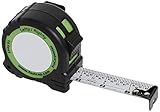
Overview: The FastCap PSSR-16 redefines convenience for carpenters with its innovative Standard Reverse design, allowing measurements to be read from either side of the blade. This 16-foot tape includes easy-read fractions to 1/16", a built-in pencil sharpener, protective rubber boot, and an erasable notepad integrated into the case.
What Makes It Stand Out: The dual-reading blade eliminates the awkward contortions typically required when measuring from left to right or vice versa. The built-in pencil sharpener keeps your marking tool ready without leaving your workspace, while the erasable notepad provides a handy surface for jotting down measurements. The protective rubber boot adds durability against drops and job site abuse.
Value for Money: Priced in the premium range for 16-foot tapes, the PSSR-16 justifies its cost through unique features that save time and frustration. Standard tapes lack the reverse-reading capability and integrated tools, making this a worthwhile investment for professionals who measure dozens of times daily.
Strengths and Weaknesses: Strengths: Ambidextrous reading, integrated pencil sharpener, erasable notepad, protective rubber boot, easy fraction markings Weaknesses: Limited 16-foot length may require frequent repositioning on larger projects; specialized features may not appeal to casual DIYers
Bottom Line: Ideal for cabinet makers, trim carpenters, and serious woodworkers who value efficiency and innovation. The reverse-read feature alone makes it worth considering for left-handed users or those who frequently work in tight spaces.
2. Fastcap PSSR-25 25-Foot ProCarpenter Lefty/Righty Standard Measuring Tape
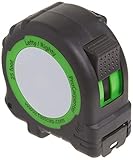
Overview: The FastCap PSSR-25 extends the innovative Lefty/Righty design to a more versatile 25-foot length, making it suitable for larger construction projects while maintaining the brand’s commitment to user-friendly features. Its compact casing reduces pocket bulk without sacrificing durability.
What Makes It Stand Out: The ambidextrous measuring capability allows seamless reading regardless of hand orientation or measurement direction. The compact casing is noticeably smaller than traditional 25-foot tapes, improving portability and reducing fatigue during all-day carry. As part of FastCap’s ProCarpenter line, it reflects the brand’s signature attention to ergonomic detail.
Value for Money: While specifications are limited, FastCap’s reputation for premium tools suggests this tape commands a professional-grade price. The 25-foot length offers better value for general contractors compared to shorter options, and the compact design provides daily comfort that cheaper bulkier tapes cannot match.
Strengths and Weaknesses: Strengths: 25-foot reach, ambidextrous reading, compact casing for enhanced portability, professional-grade construction Weaknesses: Minimal feature details provided; lacks the integrated pencil sharpener and notepad of other FastCap models; premium pricing without full feature disclosure
Bottom Line: A solid choice for professionals seeking a longer tape with FastCap’s innovative left/right reading capability. Best for users who prioritize compact design over integrated accessories. Consider this for general construction where 25-foot reach is essential.
3. STANLEY FATMAX Tape Measure, 25-Foot (33-725)

Overview: The STANLEY FATMAX 33-725 represents the gold standard for contractor-grade tape measures, offering a robust 25-foot blade with exceptional reach and durability. Engineered for solo work, it features a high-impact case with non-slip rubber grip and advanced blade coatings for extended service life.
What Makes It Stand Out: The impressive 14-foot standout allows measuring long spans without assistance, a critical feature for framers and contractors. STANLEY’s exclusive BladeArmor coating reinforces the first six inches of the blade—where most failures occur—dramatically extending tool lifespan. Large, high-contrast numbers ensure readability in dimly lit job sites.
Value for Money: Positioned as a premium professional tool, the FATMAX delivers exceptional value through legendary durability and stand-out capability. It outperforms budget alternatives that kink or break within months, making it cheaper long-term. The STANLEY warranty and widespread availability add further value.
Strengths and Weaknesses: Strengths: Outstanding 14-foot standout, BladeArmor coating prevents hook damage, rugged high-impact case, excellent readability, proven job site durability, trusted STANLEY warranty Weaknesses: Bulkier than compact models; lacks integrated features like pencil sharpeners; rubber grip may attract dust and debris over time
Bottom Line: The go-to choice for contractors, framers, and serious DIYers who demand maximum durability and reach. If you need a tape that survives daily job site abuse and provides reliable standalone measurements, the FATMAX remains unbeatable at this price point.
4. DEWALT Atomic Compact Series 30 ft. Tape Measure (DWHT38130S)

Overview: The DEWALT Atomic Compact Series 30-foot tape measure delivers professional reach in a significantly reduced footprint. The 20% more compact grip improves ergonomics while maintaining DEWALT’s reputation for job site toughness. Fractional blade graphics and an integrated finger brake enhance measuring accuracy and control.
What Makes It Stand Out: The finger brake provides superior blade control during retraction, preventing dangerous snap-backs and allowing precise incremental measurements. The compact grip design reduces hand fatigue during repetitive use while still accommodating work gloves. Fractional graphics eliminate mental math for common measurements, speeding up workflow.
Value for Money: As a premium DEWALT offering, this tape sits at the higher end of the price spectrum. The 30-foot length provides better value than 25-foot competitors for layout work, while the compact design offers daily comfort. The durable blade coating ensures longevity that justifies the investment over budget alternatives.
Strengths and Weaknesses: Strengths: Superior 30-foot reach, compact ergonomic grip, integrated finger brake for safety and control, fractional blade graphics for quick reading, durable blade coating for longevity Weaknesses: Highest price point among reviewed tapes; no integrated accessories like pencil sharpeners; compact size may feel insubstantial to users preferring heftier tools
Bottom Line: Perfect for professionals who prioritize reach and ergonomics above all else. The finger brake alone makes this worthwhile for safety-conscious contractors. Choose this over the FATMAX if you need extra length and prefer a more compact grip for all-day use.
5. FastCap ProCarpenter Metric/Standard Measuring Tape - Ideal for Professionals and Home Improvement - with Lever Action Belt Clip and Dual Locking System - 12’ - 99954

Overview: The FastCap 99954 combines dual measurement systems in a rugged 12-foot package designed for precision work. Featuring seven integrated functions including a lever-action belt clip, dual locking system, pencil sharpener, and erasable notepad, this tape targets professionals who demand versatility in a compact form factor.
What Makes It Stand Out: The metric/standard dual markings eliminate the need for conversion calculations, invaluable for woodworkers using mixed materials. The lever-action belt clip provides secure one-handed operation, while the dual locking system offers both traditional slide lock and automatic blade hold. The heavy-duty 1-inch blade maintains rigidity for accurate vertical measurements.
Value for Money: Despite its shorter length, the premium price is justified by unmatched feature integration. For cabinet makers and furniture builders, the dual scales and built-in accessories replace multiple tools, offering excellent return on investment. Casual users may find the feature set excessive for basic tasks.
Strengths and Weaknesses: Strengths: Dual metric/standard scales, seven integrated features, lever-action belt clip, dual locking system, heavy-duty 1-inch blade, high-contrast markings Weaknesses: Limited 12-foot length restricts versatility; feature-rich design may overwhelm occasional users; premium pricing for short tape
Bottom Line: Essential for fine woodworkers, cabinetmakers, and professionals working with metric and imperial materials. The integrated features streamline workflow significantly. However, general contractors should opt for longer tapes, and DIYers may find simpler models more practical.
6. Perfect Measuring Tape Co. FR-72 Carpenter’s Folding Rule Lightweight Composite Construction Ruler (Folding Yard Stick) with Easy-Read Inch Fractions - 6.5ft / 2m

Overview: The FR-72 resurrects the classic carpenter’s folding rule with modern engineering, offering a 6.5-foot measuring solution that eliminates blade snapback and recoil frustration. Constructed from fiberglass-reinforced composite ABS, this tool provides rigid, standing measurements ideal for vertical surfaces and depth gauging. The dual-scale design accommodates both imperial and metric measurements, while the compact 9.5-inch folded profile slips effortlessly into any tool belt or pocket.
What Makes It Stand Out: The easy-read fractional markings are genuinely revolutionary, displaying 1/8, 1/4, and 1/2 increments in large, high-contrast print that eliminates squinting and measurement errors. Unlike traditional wooden rules, the composite construction withstands moisture and job site abuse without swelling or splintering. The snag-free 90-degree hinges rotate smoothly while maintaining rock-solid stability when extended, and the engraved-plus-printed marking system ensures permanence through years of heavy use.
Value for Money: Priced competitively with mid-range tape measures, this folding rule offers superior durability and precision for specialized tasks. Traditional wood rules cost less but lack the weather resistance and fraction clarity. For carpenters, electricians, and finish workers who frequently measure door frames, cabinetry, and depth cavities, the FR-72’s standing capability justifies every penny by saving time and reducing mistakes.
Strengths and Weaknesses:
Pros: No blade recoil or breakage; excellent for standing measurements; highly visible fractions; weatherproof construction; compact storage; dual-unit capability.
Cons: 6.5-foot length limits reach; slower than tape measures for long spans; not ideal for horizontal runs without assistance.
Bottom Line: This is a specialty tool that excels in specific applications where rigidity and fraction visibility matter most. For trim carpenters, cabinet installers, and traditionalists who value reliability over speed, the FR-72 deserves a permanent spot in your toolkit.
7. CRAFTSMAN 25-Ft Tape Measure with Fraction Markings, Retractable, Self-Locking Blade (CMHT37225)

Overview: CRAFTSMAN delivers a straightforward, reliable 25-foot tape measure designed for everyday use across home improvement and professional job sites. The self-locking blade stays extended until you release it, while fraction markings (1/8, 1/4, 1/2) printed directly on the tape eliminate mental math and reduce measurement errors. A rubber overmold provides secure grip in dusty or damp conditions, and the 25-foot length handles most residential and light commercial tasks with ease.
What Makes It Stand Out: The fraction markings are the star feature, making this exceptionally user-friendly for DIYers and apprentices still mastering measurement reading. The self-locking mechanism engages automatically, freeing both hands for marking and cutting without the blade retracting unexpectedly. CRAFTSMAN’s legacy brand reputation ensures consistent quality control and warranty support, while the blade’s matte finish reduces glare in bright sunlight—a subtle but appreciated detail.
Value for Money: Positioned in the budget-friendly category, this tape offers professional-grade features at a homeowner price point. Comparable fraction-marked tapes from premium brands cost 30-50% more without delivering significantly better performance. For occasional users, the value proposition is outstanding; professionals might desire enhanced standout length or blade durability, but for general purpose use, it’s hard to beat.
Strengths and Weaknesses:
Pros: Clear fraction markings reduce errors; reliable self-lock mechanism; comfortable rubber grip; trusted brand backing; excellent price point; glare-resistant blade.
Cons: Standout length is modest; blade coating lacks premium durability features; hook rivets could be more robust; no stud markings for framing.
Bottom Line: This is the ideal tape measure for homeowners, DIY enthusiasts, and apprentices who want professional features without the premium price. The fraction markings alone make it worth choosing over basic economy models. While pros may want heavier-duty options, this delivers everything most users need with CRAFTSMAN reliability.
8. RoxRulie Tape Measure with Fractions 1/8, Measuring Tape 16 FT, 1 Inch/25mm Wide Blade Measurement Tape, Easy Read, Small, Local Design with Fractional Read, Great for Around The House and Carpenter

Overview: RoxRulie targets the compact tape measure segment with a 16-foot model that prioritizes portability without sacrificing functionality. The 1-inch wide blade achieves an impressive 9-foot standout—exceptional for its size—while prominent 1/8-inch fraction markings simplify readings. Measuring just 2.5 inches square when closed, this tape disappears into a pocket yet handles most household and carpentry tasks competently. The quirky marketing promises “love at first measurement” with a lifetime warranty backing that claim.
What Makes It Stand Out: The standout performance relative to size is remarkable; few compact tapes maintain rigidity at nine feet. The wider blade provides stability for solo measurements and reduces flex when extended. Fraction markings are bold and consistently spaced, while the locally-inspired design (though vaguely described) suggests attention to regional user preferences. The lifetime warranty demonstrates manufacturer confidence rarely seen in this price tier, and the finger brake offers precise blade control uncommon on small-format tapes.
Value for Money: This tape punches above its weight class, offering premium features like a wide blade and lifetime warranty at a mid-range price. While brand recognition lags behind industry giants, the performance-to-cost ratio is compelling. For homeowners seeking better than bargain-bin quality without paying for professional overkill, the RoxRulie occupies a sweet spot that balances capability and affordability.
Strengths and Weaknesses:
Pros: Exceptional standout for size; wide blade enhances stability; bold fraction markings; lifetime warranty; extremely compact; finger brake control.
Cons: Unknown brand reliability; quirky marketing may deter professionals; 16-foot length limits reach; hook end could be more robust; limited retail availability.
Bottom Line: Perfect for homeowners, apartment dwellers, and woodworkers needing a portable secondary tape. The standout performance and warranty make it a smart risk despite the unfamiliar brand name. Don’t let the playful marketing fool you—this is a serious tool that delivers professional features in a pocket-friendly package.
9. Stanley FMHT74038A FatMax 25 Foot Tape Measure 2PK
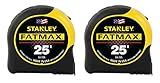
Overview: Stanley’s FatMax series has long set the benchmark for professional-grade tape measures, and this two-pack delivers exceptional job site value. Each 25-foot tape features an 11-foot standout—among the best in class—and 16-inch/19.2-inch stud center markings that streamline framing layouts. The blade armor coating protects the first three inches (most prone to damage), while Mylar polyester film reinforces the entire blade length. A top-forward blade lock and high-impact ABS case with rubber overmold complete the professional package.
What Makes It Stand Out: Getting two professional-grade tapes for the price of one competitor’s single unit creates immediate value. The 11-foot standout enables solo measurements across wide spans without blade collapse. Stud markings eliminate guesswork and speed up wall framing significantly. The blade armor coating addresses the most common failure point, and the Mylar film prevents wear and stretching that compromise accuracy over time. Stanley’s BladeArmor technology demonstrably extends lifespan in abrasive environments.
Value for Money: This two-pack represents arguably the best value in professional measuring tools. Individual FatMax tapes command premium pricing; buying two effectively cuts the per-unit cost by 40%. For contractors, having a backup tape is essential anyway, making this a no-brainer purchase. The durability features translate to longer replacement cycles, further improving long-term value compared to budget tapes that fail annually.
Strengths and Weaknesses:
Pros: Outstanding 11-foot standout; stud center markings; blade armor coating; Mylar reinforcement; two-for-one value; robust case; top-forward lock.
Cons: Bulkier than compact tapes; heavier in a tool belt; overkill for occasional DIY use; rubber overmold can attract dust.
Bottom Line: This is the smart choice for professional contractors, remodelers, and serious DIYers who demand durability and reach. The two-pack ensures you’re never without a tape on site. While casual users may not need this level of performance, the value proposition is so strong that it makes sense for anyone planning extensive projects. Accept no substitutes for heavy-duty work.
10. DEWALT Atomic Compact Series 16 ft. Tape Measure (DWHT38116S)

Overview: DEWALT’s Atomic Compact Series targets professionals seeking maximum performance in minimal space, and this 16-foot tape measure exemplifies that philosophy. The 20% smaller grip improves ergonomics while maintaining secure control, and the integrated finger brake provides precise blade retraction speed—preventing the violent snap that damages hooks and cases. Fractional blade graphics ensure quick, accurate readings, and a durable coating protects against abrasion and moisture. The standout reaches 13 feet, impressive for a compact 16-foot class tool.
What Makes It Stand Out: The finger brake is a game-changer for professionals who make hundreds of measurements daily, reducing wear on the blade hook and preventing painful finger slaps. The 13-foot maximum reach exceeds most 25-foot tapes’ standout capability, proving that engineering trumps raw size. The compact grip fits perfectly in smaller hands and reduces fatigue during all-day use. DEWALT’s signature ToughCoat blade protection resists rust and wear far better than standard lacquer finishes, maintaining readability through concrete dust and rain.
Value for Money: Priced at a premium but justified by pro-focused features, this tape competes with larger models while saving belt space. The durability features translate to fewer replacements, offsetting the higher initial cost. For electricians, HVAC technicians, and finish carpenters who prioritize mobility, the compact design’s efficiency gains alone justify the price premium over bulkier economy tapes.
Strengths and Weaknesses:
Pros: Superior blade control with finger brake; exceptional 13-foot standout; compact ergonomic grip; premium blade coating; clear fraction markings; reduced weight.
Cons: 16-foot length limits overall reach; premium price may deter casual users; smaller case holds slightly less blade material; hook could be larger.
Bottom Line: This is the professional’s choice when maneuverability and blade control matter more than maximum length. Electricians, installers, and trim carpenters will appreciate the compact grip and finger brake during repetitive tasks. While DIYers can find cheaper options, the Atomic Compact’s engineering excellence makes it a worthwhile investment for anyone who uses a tape measure as a daily driver. DEWALT delivers professional-grade innovation in a pocket-sized package.
Why the Right Tape Measure Matters for Carpenters
Your tape measure is the foundation of every cut, every layout, and every critical dimension on site. A tool that loses even 1/32" over 16 feet can translate into costly material waste, structural misalignments, and callbacks that eat into your profit margins. Modern carpentry demands precision across diverse materials—engineered lumber with tight tolerances, composite decking that expands dramatically, and custom metal work that leaves zero room for error. The right tape measure doesn’t just measure; it protects your workmanship, your time, and your bottom line.
Beyond accuracy, consider the daily abuse your tape endures: concrete drops, mud immersion, sawdust infiltration, and the constant stress of rapid retraction. A subpar tape measure will fail within months, while a properly selected professional model becomes a trusted companion for years. In 2026, with supply chain stability still a concern, durability isn’t just a feature—it’s an investment in workflow continuity.
Key Features to Evaluate in 2026
Blade Length and Width Considerations
The classic 25-foot tape measure remains the industry standard for good reason—it handles 90% of residential and commercial tasks without excessive bulk. However, blade width deserves equal attention. A 1-inch wide blade provides adequate standout for basic wall measurements, while 1-1/4" to 1-1/2" blades achieve 10-14 feet of standout, crucial for solo layout work on wide-open floor systems.
For timber framing or commercial steel work, 30-foot and 35-foot models offer extended reach but sacrifice portability. Conversely, trim carpenters often prefer compact 16-foot tapes that fit comfortably in a tool belt without digging into your hip. The key is matching length to your typical working radius while prioritizing standout distance over raw length for most applications.
Standout and Hook Design
Standout—the distance a blade can extend unsupported without collapsing—separates professional tools from consumer models. In 2026, advanced spring mechanisms and tapered blade profiles have pushed standout distances to new extremes. Look for blades that maintain rigidity without excessive curvature, which can distort measurements when the blade twists.
Hook design directly impacts standout performance. A hook that’s too heavy or poorly balanced will cause the blade to curl prematurely. The best designs use lightweight alloys with strategic cutouts to reduce mass while maintaining hook strength. Some manufacturers have introduced micro-serrations on hook edges that bite into lumber without damaging finished surfaces—a game-changer for finish work.
Durability and Weather Resistance
Job sites are brutal on tape measures. Rain, snow, concrete dust, and chemical exposure are daily realities. Modern professional tapes feature IP-rated seals that prevent water and dust ingress into the case. Look for IP54 as a minimum standard—protected against dust and water spray from any direction. For marine or industrial environments, IP65 offers full dust protection and resistance to water jets.
Case material matters tremendously. ABS plastic with rubber overmolding provides excellent impact absorption and grip. In 2026, some manufacturers have introduced reinforced nylon composites that withstand temperatures from -20°F to 180°F without becoming brittle or soft. The spring mechanism should be stainless steel or coated carbon steel to resist corrosion that causes sluggish retraction.
Locking Mechanism Types
The locking button is your most-used interface after the tape itself. Top-lock designs allow thumb operation without shifting grip, ideal for repetitive measurements. Side locks provide more positive engagement for heavy-duty use but require hand repositioning. In 2026, magnetic lock systems have emerged that engage automatically at desired lengths—a controversial feature that some pros love for efficiency and others distrust for reliability.
The lock’s holding power is critical. A weak lock will slip under blade tension, especially on vertical measurements. Test the lock by extending the blade fully and applying pressure. It should hold firm without creeping. The release action should be smooth but require deliberate pressure to prevent accidental unlocking when the tape bumps against materials.
Understanding Tape Measure Accuracy Standards
EC Class I vs. Class II
European accuracy classes provide the most rigorous standards for tape measures. Class I tapes guarantee accuracy within ±0.04" over 33 feet—essential for fine finish work and critical layout. Class II tolerances relax to ±0.08" over the same distance, acceptable for framing but potentially problematic for cabinetry.
In 2026, most premium tape measures marketed to professionals meet Class I standards, even if not explicitly labeled. However, certification matters. Uncertified tapes may start accurate but lose precision as the blade stretches or hook rivets loosen. For carpenters working under contract specifications or building codes that reference measurement tolerances, Class I certification provides legal protection and quality assurance.
The Importance of NIST Certification
The National Institute of Standards and Technology (NIST) offers optional certification for tape measures sold in the United States. While not legally required, NIST-traceable tapes have been tested against master standards and include documentation of their accuracy. This becomes invaluable when disputes arise over dimensional discrepancies on high-stakes projects.
For carpenters working in commercial construction or custom fabrication, NIST certification demonstrates professional diligence. Some jurisdictions now require NIST-traceable measurements for certain inspections, particularly in seismic or hurricane zones where structural dimensions critically affect performance. The certification adds cost but provides peace of mind that your measurements will withstand scrutiny.
Blade Material Innovations in 2026
Steel vs. Fiberglass vs. Composite Blades
Steel remains the gold standard for rigidity and standout, but not all steel is equal. High-carbon spring steel with heat treatment maintains flatness better than basic stainless steel. In 2026, some manufacturers have introduced bimetal blades—steel edges with a flexible polymer core—that achieve exceptional standout with reduced weight and improved impact resistance.
Fiberglass blades excel in electrical work and environments where steel’s conductivity poses hazards. They resist corrosion completely and maintain accuracy in extreme temperatures. However, they lack the standout of steel and can fray at edges over time. Composite blades combining fiberglass with carbon fiber reinforcement offer a middle ground but command premium prices.
Coating Technologies for Longevity
The blade’s coating determines readability after months of abrasion. Traditional nylon coating provides basic protection but wears through quickly on rough lumber. In 2026, ceramic-reinforced polymer coatings have become standard on professional-grade tapes, maintaining clarity after thousands of retractions across concrete and steel.
Anti-glare finishes are crucial for outdoor work. Matte coatings reduce reflections that can obscure markings in bright sunlight. Some advanced coatings incorporate UV inhibitors that prevent yellowing and fading, ensuring graduations remain crisp for the tape’s entire lifespan. For carpenters working with treated lumber or chemicals, look for coatings rated against chemical attack—some will degrade when exposed to copper-based preservatives.
Hook Design: The Make-or-Break Feature
True Zero Hook Movement
The hook’s rivet system must allow precise movement to compensate for inside/outside measurements while eliminating play. Poorly designed hooks have lateral slop that introduces 1/16" or more of error. In 2026, the best designs use three rivets in a triangular pattern with nylon bushings that maintain zero clearance throughout the tool’s life.
Test hook movement by gently pushing and pulling the hook while holding the blade stationary. You should feel slight, smooth movement but no wiggling or clicking. The hook should return to exactly the same position every time. Some manufacturers now include adjustment screws that allow fine-tuning hook travel as the tool wears—a feature that extends useful life significantly.
Magnetic vs. Non-Magnetic Hooks
Magnetic hooks revolutionize steel framing and metalworking, allowing hands-free measurements on ferrous surfaces. However, magnet strength requires careful balancing. Too strong, and the hook becomes difficult to reposition; too weak, and it won’t hold reliably. In 2026, rare-earth magnets with protective coatings prevent rust that degrades magnetic force.
For general carpentry, non-magnetic hooks often prove more versatile. They don’t attract metal shavings that can scratch finished surfaces, and they slide smoothly along wood without catching. Some hybrid designs feature removable magnetic inserts, giving you flexibility for different tasks without owning multiple tapes.
Ergonomics and User Comfort
Case Design and Grip Materials
You’ll grip your tape measure hundreds of times daily, so ergonomics directly impact fatigue. Contoured cases that fit the hand’s natural curve reduce strain during extended layout sessions. In 2026, soft-touch thermoplastic elastomer (TPE) overmolding provides secure grip even when wet or covered in sawdust, without the sticky feeling of older rubber coatings.
Case size should match your hand size and carrying preference. Large cases offer more blade capacity and durability but can be cumbersome in a tool belt. Compact designs sacrifice some features but disappear in your pocket. Some manufacturers offer multiple sizes of the same model, allowing crews to standardize on features while accommodating individual ergonomics.
Weight Distribution Factors
A well-balanced tape measure feels lighter than its actual weight. The spring housing position, blade width, and hook mass all affect balance. Poorly balanced tapes tend to tip forward in your hand, requiring constant grip adjustment. In 2026, some manufacturers have shifted spring orientation and used lightweight composite hooks to create neutral balance points that reduce wrist strain.
Consider how the tape hangs from your tool belt. A top-heavy design will constantly flip upside-down, forcing you to readjust before each use. Belt clips should be positioned to keep the tape vertical and stable during movement. Some clips now feature rotating designs that prevent the tape from digging into your side when bending or kneeling.
Advanced Features for Modern Carpenters
Digital Integration and Bluetooth Connectivity
The biggest shift in 2026 is the mainstream adoption of digital features. Integrated displays show measurements to 1/32" accuracy without squinting at blade markings. Bluetooth connectivity allows measurements to flow directly into layout apps, reducing transcription errors. Some models include angle sensors that calculate pitch and slope automatically—transforming rafter layout from a mathematical exercise into a point-and-click operation.
However, digital features introduce battery dependency and potential failure points. The best designs use solar-assisted charging with backup coin cells, ensuring functionality even if the digital system fails. Physical blade markings remain the primary reference, with digital features as a convenience layer rather than a replacement. For carpenters building smart homes or working with BIM models, this integration eliminates manual data entry and associated errors.
Laser Etching vs. Printed Graduations
Printed markings wear off over time, especially on the first few feet of blade that see constant use. Laser-etched graduations remove material to create permanent, tactile markings that remain readable even if the coating wears through. In 2026, dual-contrast etching creates both visual and physical definition, making measurements easier in low light.
Color-coding has evolved beyond simple red 16-inch stud marks. Progressive color bands now indicate common framing increments—16", 19.2", 24"—and engineering scales for metric conversions. Some blades include QR codes near the hook that, when scanned with a smartphone, display the tape’s calibration certificate and maintenance history.
Specialty Tape Measures for Specific Tasks
FatMax and Extra-Wide Blades
Extra-wide blades (1-1/4" to 1-1/2") achieve remarkable standout distances, but their benefits extend beyond reach. The increased curvature creates a more rigid beam that resists sagging and twisting. For solo plate layout on long walls, this stability means accurate measurements without a second set of hands. In 2026, some models feature variable-width designs—wider at the hook for standout, tapering toward the case for compactness.
The trade-off is weight and case size. Wide blades require larger cases and stronger springs, adding bulk to your tool belt. They also demand more precise manufacturing to prevent binding during retraction. For carpenters who primarily work indoors on finished surfaces, the benefits may not justify the added mass.
Left-Handed and Reverse-Read Tapes
Left-handed tapes read correctly when held in the left hand, with numbers ascending from right to left. This eliminates the awkward wrist twist lefties endure with standard tapes. In 2026, more manufacturers offer true left-handed models rather than simply flipping standard blade graphics.
Reverse-read tapes display numbers upside-down relative to standard orientation, allowing you to read measurements while looking down at the tape case rather than bending to see the blade. This proves invaluable for ceiling work, cabinet installation, and any overhead measuring. Some innovative designs feature dual-sided blades with both standard and reverse-read markings, though these compromise on standout due to reduced blade thickness.
Durability Factors That Matter on Job Sites
Drop Resistance and Impact Protection
A tape measure will be dropped—repeatedly. Impact protection starts with case material but extends to internal components. In 2026, floating spring designs suspend the mechanism within the case on shock-absorbing mounts, preventing the sudden jolt that stretches or deforms springs. Blade anchors should be reinforced with metal plates that distribute stress across the case, preventing cracks at mounting points.
Corner protection is often overlooked but critical. Rounded corners with thick rubber overmolding dissipate impact energy. Some cases feature replaceable corner bumpers that absorb the brunt of falls, extending case life. Test durability by feeling case thickness and flexibility; rigid, thin cases will crack where resilient, thick-walled designs will bounce.
Water and Dust Ingress Protection (IP Ratings)
That IP rating isn’t just marketing fluff. Dust infiltration acts like sandpaper on the spring mechanism, gradually increasing friction and reducing retraction speed. Water exposure causes rust and can wash lubricant from critical components. In 2026, professional tapes achieve IP65 ratings through sealed button assemblies, gasketed case halves, and o-ring protected blade exit points.
The blade exit slot deserves special attention. Look for brushes or wipers that clean the blade as it retracts, preventing debris from entering the case. Some designs use magnetic seals that close when the blade is fully retracted, offering additional protection during storage. For coastal carpenters, saltwater resistance requires stainless steel springs and corrosion-inhibiting coatings on all internal metal components.
Budget Considerations: Getting the Best Value
Professional-Grade vs. Budget-Friendly Options
The $10 tape measure might measure accurately out of the box, but its lifespan is measured in weeks on a professional job site. Professional-grade tapes ($30-$60) use superior materials, precise manufacturing, and replaceable components that justify their cost through longevity. In 2026, the price gap has narrowed as manufacturing improvements trickle down, but critical differences remain.
Budget tapes typically have plastic internal gears that strip under heavy use, non-replaceable hooks that render the tool useless when bent, and basic coatings that fail quickly. Professional models feature metal gears, serviceable hooks, and advanced coatings. The break-even point comes around six months of daily professional use. After that, the professional tape’s replacement cost is zero, while budget tapes require multiple purchases.
Total Cost of Ownership
Calculate cost per use rather than purchase price. A $50 tape used 200 times daily for three years costs less than a penny per use. A $12 tape replaced every two months costs twice as much annually and introduces workflow disruptions. Factor in the cost of measurement errors—a single miscut board can exceed the price difference between budget and professional tapes.
Warranty terms reveal manufacturer confidence. Lifetime warranties on professional tapes cover manufacturing defects and often include free hook replacement. Some manufacturers offer trade-in programs that credit old tape purchases toward new models, encouraging brand loyalty while reducing waste. In 2026, several brands have introduced subscription services that provide new blades or complete tape replacements for a flat annual fee, ensuring you always have a fresh, accurate tool.
Common Mistakes Carpenters Make When Choosing
First, buying based on brand recognition rather than feature fit. Just because a tape dominates job site advertising doesn’t mean its hook design suits your work style. Second, overlooking blade thickness. Thinner blades retract faster and fit tighter spaces but sacrifice standout and durability. Third, ignoring the belt clip design. A clip that’s too tight will destroy pocket seams; too loose and you’ll lose the tape.
Many carpenters also underestimate the importance of graduation clarity. Tiny, cluttered markings slow down reading and increase errors. In 2026, some manufacturers have gone overboard with information density, cramming multiple scales and conversion charts onto the blade. This looks impressive in the store but creates visual noise during real work. Choose tapes with clean, high-contrast markings appropriate for your primary measurement system.
Maintenance and Care Tips for Longevity
Clean your tape measure weekly with a dry cloth to remove abrasive dust. For sticky residues, use a mild solvent on the blade only—never spray cleaners into the case, as they can dissolve internal lubricants. Periodically apply a light machine oil to the blade’s edges to prevent rust, wiping off excess to avoid attracting dirt.
Check hook rivet tightness monthly. Loose rivets introduce measurement error and will eventually fail completely. Some designs allow rivet tightening with a small hex key—check your manual. Store tapes fully retracted to protect the blade and reduce spring tension fatigue. Never leave tapes extended in hot vehicles; heat can permanently stretch springs, reducing retraction power.
In 2026, several manufacturers offer maintenance kits including replacement blades, springs, and gaskets. Learning to service your own tape measure takes minutes and costs a fraction of replacement. YouTube channels from major brands provide step-by-step videos for common repairs.
Safety Considerations Often Overlooked
Rapid blade retraction can cause serious cuts, especially with steel edges. In 2026, speed-controlled retraction systems have become standard on professional models, using centrifugal brakes that engage if the blade exceeds safe speeds. Never disable these mechanisms—they’re not just for liability protection.
The hook’s sharp corners can scratch finished surfaces and cause hand injuries. Look for rounded, burr-free hook edges. Some designs include retractable hook guards that deploy during storage. When working near electrical panels, ensure your tape has a non-conductive case and blade coating rated for the voltages you encounter—fiberglass blades are mandatory for some commercial work.
The Future of Tape Measures Beyond 2026
Emerging technologies hint at even more integration. Prototype models feature augmented reality displays that project measurements onto surfaces, eliminating the need to read the blade directly. Flexible electronic tapes that wrap around curves while maintaining accuracy are in development. Some manufacturers are experimenting with biodegradable cases and recyclable blades to address sustainability concerns.
However, the fundamental physics of measuring won’t change. The best tape measure of 2026—and beyond—will always prioritize accuracy, durability, and ergonomics over gimmicks. Smart features should enhance, not replace, the core functionality that generations of carpenters have relied upon.
Frequently Asked Questions
What length tape measure is best for general carpentry work?
For most carpenters, a 25-foot tape measure offers the optimal balance of reach, portability, and standout performance. It handles standard residential wall heights, floor spans, and framing layouts while fitting comfortably in a tool belt. Consider a 30-foot model for commercial work with longer spans, or a compact 16-foot tape for trim and cabinet work where maneuverability matters more than maximum length.
How often should I replace my tape measure for accuracy?
With proper care, a professional-grade tape measure maintains accuracy for 2-3 years of daily use. Replace it immediately if you notice hook damage, blade kinking, or if drop tests show inconsistent measurements. For critical work like custom cabinetry or structural steel, annual replacement or recalibration ensures you meet tolerance requirements. Many professionals rotate tapes annually, moving the old tape to rough work and using a fresh one for finish tasks.
Are magnetic hooks worth the extra cost?
Magnetic hooks provide tremendous value for steel framing, metal roofing, and any work with ferrous materials. They allow hands-free measurements and prevent the hook from slipping off edges. However, they offer little benefit for traditional wood framing and can attract metal shavings that scratch finished surfaces. If you work with mixed materials, consider a tape with a removable magnetic insert for versatility.
What’s the difference between EC Class I and Class II accuracy?
EC Class I tape measures guarantee accuracy within ±1.1mm over 10 meters (approximately ±0.04" over 33 feet), while Class II tolerances relax to ±2.3mm over the same distance. For finish carpentry, cabinetry, and precision layout, Class I is essential. Class II is acceptable for rough framing where small variations are absorbed by construction tolerances. Always verify certification markings, as uncertified tapes may not meet either standard consistently.
How do I clean a tape measure without damaging it?
Wipe the blade with a clean, dry cloth after each use to remove abrasive dust. For stubborn residue, dampen the cloth with isopropyl alcohol and clean only the blade surface—never spray liquids directly into the case. Avoid harsh solvents that can dissolve protective coatings. Periodically apply a drop of light machine oil to the blade edges to prevent rust, wiping away excess. Clean the case with a brush to keep the lock button and belt clip free of debris.
Can I repair a tape measure myself, or should I replace it?
Many common issues like bent hooks, worn blades, and weak springs are repairable with manufacturer kits costing $5-$15. Replacement takes 10-15 minutes and requires only basic tools. However, cracked cases, damaged recoil springs, and accuracy issues usually warrant replacement. Professional-grade tapes are designed for serviceability, while budget models are typically disposable. Check your warranty—some repairs may be free through the manufacturer.
What causes a tape measure to lose accuracy over time?
Repeated stretching from heavy use, especially when pulling the blade taut for long measurements, can permanently elongate the steel. Hook rivet wear introduces play that affects zero-reference accuracy. Temperature extremes cause thermal expansion and contraction, while chemical exposure can degrade blade markings. Drops and impacts can bend the blade or deform the case, affecting how the blade feeds through the exit slot. Regular calibration checks catch these issues before they cause costly errors.
Are digital tape measures reliable enough for professional use?
In 2026, digital tape measures have matured into reliable professional tools when used correctly. The key is choosing models where digital features supplement, rather than replace, physical blade markings. Look for solar-assisted power, water-resistant ratings, and Bluetooth connectivity with proven apps. Keep a traditional tape as backup for critical measurements. Digital excels for repetitive measurements, data logging, and complex calculations, but the physical blade remains the gold standard for absolute reliability.
How do I prevent my tape measure from rusting?
Store the tape fully retracted in a dry environment. Wipe the blade clean after exposure to moisture, and apply a light oil coating to the edges monthly. Avoid leaving tapes in vehicles where temperature fluctuations cause condensation. For coastal or high-humidity environments, choose tapes with stainless steel springs and corrosion-resistant coatings. If rust appears, clean it immediately with fine steel wool and oil to prevent spreading. Severe rust requires blade replacement.
What safety features should I look for in a tape measure?
Speed-controlled retraction prevents blade snapback injuries—this is non-negotiable for professional use. Rounded hook corners reduce cut and scratch risks. Non-conductive cases and blades are essential for electrical work. Some models include blade guards that deploy during storage. Always choose tapes with clear, high-contrast markings to prevent measurement misreading that leads to dangerous miscuts. For overhead work, consider lanyard attachment points to prevent dropped tools.
See Also
- 10 Affordable Tape Measures That Don’t Sacrifice Accuracy in 2026
- 10 Best Tape Measures After 6 Months of Testing in 2026
- The 10 Best Tape Measures for Accurate DIY Layouts in 2026
- 10 Best Tape Measures for Interior Designers in 2026
- The 10 Best Tape Measures for Landscaping in 2026