Table of Contents
Mounting a 75-inch OLED or a hefty 85-inch QLED isn’t like hanging a picture frame. With televisions now routinely weighing between 80 and 150 pounds—and some premium models tipping past 200—your wall is doing Olympic-level heavy lifting. The difference between a secure, flush-mounted entertainment centerpiece and a catastrophic crash that destroys your investment (and possibly your foot) comes down to one critical tool: the stud finder.
But here’s the thing: not all stud finders are created equal, and the stakes have never been higher. Modern walls hide more than just wooden studs. They’re labyrinths of electrical wires, copper pipes, HVAC ducts, and even fireblocks that can turn a simple TV installation into a nightmare. As we move through 2026, stud finder technology has evolved from simple magnetic bobbers to sophisticated multi-sensor scanners that can map your wall’s entire internal architecture. This guide cuts through the marketing fluff to arm you with the knowledge to choose the right technology for your specific wall type, TV weight, and skill level—ensuring your expensive screen stays exactly where you put it.
Top 10 Stud Finders For Hanging Heavy
Detailed Product Reviews
1. PREXISO 2-in-1 Stud Finder with Laser Level, Rechargeable Multi Surface Cross Line Laser & Wall Stud Scanners Tool for Hanging Frames & Picture, Wood Ac Wire Metal Studs Joist Pipe Detection
 Joist Pipe Detection](https://m.media-amazon.com/images/I/41PyXi5J7sL._SL160_.jpg)
Overview: The PREXISO 2-in-1 merges electronic stud detection with a manual laser level in a single rechargeable unit. Designed for drywall and wood walls, it automatically projects a vertical laser line when locating stud edges, complemented by red LED indicators and audio alerts. The manual-leveling laser provides horizontal, vertical, and cross lines up to 30 feet indoors, while three mounting methods accommodate various surfaces.
What Makes It Stand Out: Automatic edge marking distinguishes this tool—detecting a stud edge triggers simultaneous laser projection, visual LEDs, and audible alerts for foolproof marking. The rechargeable battery eliminates constant replacements, while LED-lit bubble vials enhance visibility in dark areas. Three fixation options (pins, adhesive strips, pin hole) offer versatile hands-free operation, and the 360° rotating mount allows flexible positioning.
Value for Money: This mid-range tool justifies its price by combining two devices in one. While manual leveling demands more effort than self-leveling systems, the integrated functionality saves money versus separate purchases. The rechargeable design reduces long-term battery costs, and included accessories—wall mount, adhesive strips, and storage bag—add practical value for frequent DIYers.
Strengths and Weaknesses: Strengths: Rechargeable battery eliminates ongoing costs; automatic laser projection for precise marking; versatile mounting options for hands-free use; visual and audio guidance; LED-lit vials aid dark-space visibility. Weaknesses: Manual leveling only (not self-leveling); requires calibration before each use; unsuitable for lath/plaster walls; adhesive strips limited to smooth, clean surfaces; 30-foot laser range is modest for large rooms.
Bottom Line: The PREXISO excels for drywall projects requiring both stud detection and leveling. Its auto-marking feature and rechargeable design make it ideal for regular DIYers, though manual operation and surface limitations demand careful consideration.
2. Stud Finder with Picture Hanging Kit - Strong Magnet Stud Finder Wall Scanner 85 PCS Picture Hangers Essentials with Level and Magnetic Markers

Overview: This magnetic stud finder and picture hanging kit offers a battery-free solution for locating studs through metal fastener detection. The powerful magnetic scanner with arrow indicator finds screws and nails behind drywall or plaster, while the 85-piece hardware set includes everything needed for hanging frames, mirrors, and shelves. A built-in level ensures straight installation without repeated adjustments.
What Makes It Stand Out: The strong magnet penetrates deeper than standard magnetic finders, while the arrow indicator systematically guides users toward stud centers. Dual magnetic markers attach to walls for precise nail placement, eliminating guesswork. The comprehensive organizer keeps 85 hardware pieces neatly sorted, and the integrated level ensures balanced hanging on the first attempt.
Value for Money: Exceptional budget value. The permanent-magnet technology requires zero maintenance—no batteries, calibration, or electronic failures. Combined with 85 essential hardware pieces, this costs less than most standalone electronic stud finders. For picture-heavy projects, it eliminates multiple store trips and tool purchases, delivering professional results at entry-level pricing.
Strengths and Weaknesses: Strengths: No batteries or calibration required; strong magnet detects deeper fasteners; complete 85-piece hardware organizer; magnetic markers enable pinpoint placement; built-in level prevents crooked hangings; simple, intuitive operation. Weaknesses: Detects metal fasteners only, not actual studs; no AC wire detection; limited to finding nail/screw locations; requires user interpretation to locate center; lacks digital display for precise readings.
Bottom Line: Perfect for renters and occasional DIYers focused on picture hanging. The magnetic simplicity and comprehensive hardware kit deliver outstanding bang-for-buck, though lack of wire detection limits its scope for major installations.
3. Stud Finder with Picture Hanging Kit - Magnetic Stud Finder Wall Scanner Complete 85 PCS Picture Hangers for Drywall Set with Level & Magnetic Markers

Overview: The Povlen magnetic stud finder package provides a straightforward, battery-free solution for wall mounting tasks. The powerful magnetic scanner with directional arrow locates metal fasteners behind drywall or plaster, while the 85-piece picture hanging kit supplies comprehensive hardware for frames, mirrors, and light shelves. All components are organized in a clear storage case for immediate access.
What Makes It Stand Out: This kit emphasizes user-friendly precision with dual magnetic markers that stick to walls for exact nail placement, eliminating measurement errors. The built-in level ensures balanced hanging in one attempt, while the upgraded magnet penetrates deeper than conventional magnetic finders. The arrow indicator provides systematic guidance toward stud centers, making the scanning process intuitive even for beginners.
Value for Money: Outstanding budget value. The permanent-magnet technology requires zero maintenance—no batteries, no calibration, no electronic failures. Bundled with 85 essential hardware pieces, it costs significantly less than electronic alternatives. For decorating enthusiasts, it replaces multiple tool and hardware purchases, delivering professional-grade organization and results at a fraction of the cost.
Strengths and Weaknesses: Strengths: Zero power or maintenance requirements; robust magnet with enhanced depth; complete hardware organizer with clear case; magnetic markers for spot-on placement; integrated level ensures straight results; intuitive, user-friendly operation. Weaknesses: Detects fasteners only, not studs directly; lacks AC wire detection; no digital interface; requires manual scanning technique; limited to locating nail/screw positions rather than continuous scanning.
Bottom Line: Ideal for decorating enthusiasts and apartment dwellers. The Povlen kit’s magnetic reliability and exhaustive hardware selection make it a cost-effective champion for hanging projects, though it won’t replace electronic detectors for renovation work.
4. Stud Finder Wall Scanner, 6 in 1 Upgraded Wall Stud Finder Scanner Tool for Detecting Drywall Stud Center Wood Metal AC Wires with Magnetic Sensor, Gifts for DIYers Hanging Photo Frame Bracket

Overview: This 6-in-1 electronic stud finder targets safety-conscious DIYers with advanced detection capabilities. Upgraded sensors scan for wood studs, metal pipes, and live AC wires behind drywall, displaying results on an HD LCD screen. Three depth modes accommodate varying wall thicknesses, while the gear-shaped body helps mark drilling centers precisely. Magnetic detection identifies both ferrous and non-ferrous metals.
What Makes It Stand Out: Comprehensive safety features distinguish this tool—continuous AC wire alerts with a mute option prevent electrical hazards, while metal mode distinguishes between copper pipes and iron tubes. Depth prediction helps avoid over-drilling, and the magnetic function detects non-ferrous metals. The gift messaging option adds a personalized touch for presents, making it a unique option for gifting.
Value for Money: Positioned as a premium option, its price reflects sophisticated multi-mode detection that replaces several single-purpose tools. The safety benefits alone justify the cost compared to cheaper models lacking AC wire detection. For anyone drilling into unknown walls, it prevents costly mistakes and dangerous accidents, offering peace of mind that budget finders cannot match.
Strengths and Weaknesses: Strengths: 6 detection modes including critical AC wire safety; HD LCD screen for clear readings; three depth settings for different walls; magnetic pipe detection for copper/iron; audio mute function for quiet work; gear-shaped marking aid; personalized gift messaging available. Weaknesses: Higher price point than basic models; more complex operation requires learning curve; calibration needed for accuracy; may be overkill for simple picture hanging; AC detection requires power-on verification for safety.
Bottom Line: An essential safety tool for serious DIYers and renovators. The multi-mode detection and wire safety features make it worth every penny for drilling projects, though casual users may find it unnecessarily sophisticated for basic tasks.
5. Zircon A100 StudSensor with Bonus Picture Hanging Kit – Accurate Wood & Metal Stud Finder, Detects Live Wires, Includes Hooks, Nails & Hangers for Frames, Mirrors & Home Décor

Overview: Zircon’s A100 StudSensor delivers reliable electronic stud detection in a pocket-sized package. This one-button tool quickly locates wood and metal stud edges up to 1.5 inches deep, while also detecting live unshielded AC wires. The lightweight design fits any toolbox, and the bonus picture hanging kit provides brass hooks, nails, and hangers for immediate project execution without additional purchases.
What Makes It Stand Out: Brand reputation and simplicity define this tool—Zircon’s decades of experience show in fast, consistent readings requiring no complex settings. The Spotlight warning system alerts users to live wires, a critical safety feature often missing in basic models. The compact, ergonomic design fits comfortably in hand, making it ideal for apartments and small homes where storage space is limited.
Value for Money: Moderately priced for an electronic finder from a trusted brand. The A100 costs more than magnetic alternatives but less than professional-grade scanners. The bundled picture hanging kit adds immediate utility, eliminating separate hardware purchases. For renters and homeowners wanting reliable detection without complexity, it strikes an excellent balance between cost, capability, and brand reliability.
Strengths and Weaknesses: Strengths: One-button simplicity enables instant use; trusted brand ensures consistent performance; live wire detection enhances safety; compact pocket-sized portability; fast calibration process; included hardware kit adds convenience; accurately finds stud edges. Weaknesses: 1.5-inch depth limit restricts thicker walls; finds edges only (not centers); basic display lacks advanced features; no laser leveling capability; hardware kit smaller than comprehensive sets; primarily suited for drywall applications.
Bottom Line: The Zircon A100 is a dependable, user-friendly choice for everyday hanging tasks. Its wire detection and brand reliability make it perfect for renters and homeowners who prioritize safety and simplicity over advanced features.
6. Ofircreation Stud Finder & Multifunction Device (Laser Level line, Leveler, Metric Ruler) - Stud Finder Wall Scanner With Laser Level Can Be Used as Pictures Hanging Tool and Ruler

Overview:
The Ofircreation Stud Finder & Multifunction Device positions itself as a versatile 3-in-1 solution for DIY enthusiasts, combining electronic stud detection with a laser level and integrated measuring tape. This tool aims to streamline picture hanging and basic wall-mounting projects by eliminating the need for multiple separate devices cluttering your toolbox.
What Makes It Stand Out:
This device uniquely merges three essential functions: a wall scanner for metal detection, a Class IIIA laser level with three projection modes, and an 8-foot metric ruler. The laser system offers vertical and horizontal bubbles for basic leveling tasks, while the stud detection provides audio and visual alerts when locating metal fasteners. Its picture-hanging focus makes it particularly appealing for decorative projects, allowing users to align frames and shelves with reasonable precision without constantly switching between tools.
Value for Money:
At its price point, this multifunction tool represents decent value for casual users who would otherwise need to purchase a basic stud finder, small laser level, and tape measure separately. While dedicated individual tools might outperform it in their specific functions, the convenience factor justifies the cost for homeowners tackling occasional projects. However, professionals will likely find the accuracy insufficient for demanding work.
Strengths and Weaknesses:
Strengths include impressive versatility, integrated design, and user-friendly operation for simple tasks. The three-mode laser provides flexibility for various alignment needs. Weaknesses center on compromised performance compared to dedicated tools—electronic stud detection lacks the precision of advanced scanners, and the laser’s 3.5mW output is modest for bright conditions. The calibration process requires a metal-free environment, which can be inconvenient.
Bottom Line:
This is an adequate entry-level solution for DIY decorators who prioritize convenience over professional-grade accuracy. It handles basic picture hanging and light shelving projects competently, but trades performance for versatility. Consider it if you’re outfitting a first toolbox or need an all-in-one for occasional use, but serious craftspeople should invest in separate, specialized tools.
7. Franklin Sensors ProSensor Sapphire 9000 Stud Finder with 9-Sensors, Wood & Metal Stud Detector/Wall Scanner, Made in The USA

Overview:
The Franklin Sensors ProSensor Sapphire 9000 represents the pinnacle of electronic stud finder technology, boasting an impressive array of nine sensors that deliver unparalleled accuracy for both DIY enthusiasts and professional contractors. This American-made device eliminates the guesswork and frustration associated with conventional single or dual-sensor models.
What Makes It Stand Out:
The nine-sensor array provides comprehensive wall scanning capability, simultaneously detecting stud edges and centers while displaying the full width on its LED strip. Unlike competitors requiring multiple scanning modes, the Sapphire 9000’s 1.5-inch deep scan automatically adjusts to various wall compositions without calibration. It detects both wood and metal studs through density changes, revealing irregular framing configurations that simpler tools miss entirely. The ability to start scanning anywhere—even directly over a stud—without false readings sets it apart.
Value for Money:
Positioned at the premium end of the market, this stud finder justifies its higher price through superior accuracy and time-saving efficiency. For professionals who rely on precise stud location daily, the investment quickly pays for itself by eliminating costly mistakes and rework. Homeowners undertaking extensive renovations will appreciate the confidence it provides, though casual users might find the cost harder to justify compared to basic magnetic options.
Strengths and Weaknesses:
Strengths include exceptional accuracy, instant operation without calibration, full-width stud visualization, and reliable detection through multiple wall types. The robust build quality inspires confidence. Significant weaknesses include the requirement for two AAA batteries (not included) and the incompatibility with rechargeable batteries, which creates ongoing operating costs and environmental concerns. The premium price may deter budget-conscious buyers.
Bottom Line:
The Sapphire 9000 is the most accurate consumer stud finder available, making it indispensable for professionals and serious DIYers. While the battery requirements and price are drawbacks, its performance justifies the investment for anyone regularly working with wall framing. For occasional picture hanging, cheaper alternatives suffice, but for renovation projects, this is the gold standard.
8. Kreg KMM1000LZ - Kreg Magnetic Stud Finder with Laser-Mark - Stud Finder & Wall Scanner - Magnetic Stud Finder Tool - with Precise Stud Magnet

Overview:
The Kreg KMM1000LZ Magnetic Stud Finder with Laser-Mark brings intelligent simplicity to stud detection, combining powerful rare-earth magnets with a precision laser pointer in a compact package. Kreg’s reputation for woodworking innovation is evident in this hands-free tool designed for efficiency and accuracy.
What Makes It Stand Out:
Two powerful rare-earth magnets allow the device to self-adhere to walls when it locates metal fasteners, freeing both hands for marking and measuring. The integrated Laser-Mark technology projects a bright reference point for precise stud location, while centered marking notches and a high-visibility bubble level ensure accurate alignment. Its pocket-sized design makes it exceptionally portable for contractors moving between job sites. The Class 2 laser operates at a safe 1mW or less, providing clear visibility without safety concerns.
Value for Money:
This magnetic stud finder sits in the mid-range price bracket, offering excellent value from a trusted brand. It eliminates batteries and electronic complexity, providing reliable performance with virtually no maintenance costs. While it doesn’t offer the advanced scanning of electronic models, its durability and Kreg’s quality assurance make it a sound long-term investment for both hobbyists and professionals seeking a dependable backup or primary tool for standard drywall applications.
Strengths and Weaknesses:
Strengths include the innovative hands-free magnetic hold, compact portability, no battery requirements, and Kreg’s build quality. The laser-mark feature adds precision uncommon in magnetic finders. Weaknesses include the fundamental limitation of magnetic detection—it only finds fasteners, not stud edges or centers directly, and struggles with deeper or thicker wall materials. It provides no information about stud width or composition.
Bottom Line:
The Kreg KMM1000LZ excels as a reliable, no-fuss stud finder for standard residential drywall. Its hands-free operation and laser guidance make it more user-friendly than basic magnetic finders, though it can’t match electronic scanners for complex situations. Ideal for woodworkers, DIYers, and professionals needing a compact, dependable tool for routine tasks. Choose it for simplicity and durability, but supplement with an electronic scanner for deep or challenging walls.
9. doty & Stud Finder | Picture Hanging Tool for Simple Picture Hanging | Find Wall Studs and Mark Your Drill Holes Quick & Easy
Overview:
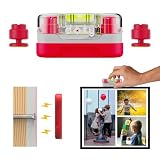
The doty Stud Finder & Picture Hanging Tool addresses a specific frustration: accurately transferring fixing positions from hanging hardware to walls without complex measurements. This innovative device simplifies the process of hanging pictures, shelves, and decorations by combining basic stud detection with a clever marking system.
What Makes It Stand Out:
Unlike traditional stud finders that locate fasteners, doty works by detecting screws and nails through plasterboard, then helps mark precise drilling positions for any size of fixing. Its universal design accommodates hardware of all dimensions, sitting inside or on top of brackets and hooks. The tool requires no additional equipment—no tape measures, levels, or pencils—making it uniquely self-contained. This simplicity makes it accessible to users intimidated by conventional measuring techniques.
Value for Money:
Priced moderately, doty offers fair value for its specialized purpose. It won’t replace a comprehensive stud finder for major renovations, but for its intended picture-hanging niche, it eliminates the need for multiple tools and reduces error-related wall damage. The time and frustration saved during decorative projects justify the cost for homeowners who frequently rearrange wall art. However, its limited scope means it provides poor value for users needing general-purpose stud detection.
Strengths and Weaknesses:
Strengths include remarkable simplicity, universal compatibility with hardware sizes, and elimination of additional tools. It’s intuitive and virtually foolproof for hanging tasks. Major weaknesses include extremely limited stud detection capability—it only finds existing fasteners rather than true stud centers, and provides no depth or width information. It’s useless for new construction or locating studs in unadorned walls. The plastic construction may not withstand heavy professional use.
Bottom Line:
The doty tool is a clever, single-purpose solution for frequent picture hangers who struggle with traditional methods. It excels at marking positions for existing hardware but fails as a comprehensive stud finder. Purchase it specifically for decorative projects, but don’t expect it to handle renovation tasks. For renters or interior decorators constantly adjusting wall art, it’s a worthwhile convenience tool that delivers on its narrow promise.
10. PenX Wall and Ceiling – Stud and Joist – Magnetic Finder - Tool and Scanner - PRO

Overview:
The PenX Wall and Ceiling Stud and Joist Magnetic Finder PRO tackles a common problem: locating studs and joists overhead without constant ladder repositioning. Its patent-pending spherical magnetic probe and telescopic extension bring innovation to magnetic detection for both walls and ceilings.
What Makes It Stand Out:
The unique spherical magnetic probe design detects drywall screws and nails with exceptional accuracy on both smooth and textured surfaces, while a special coating prevents wall damage during scanning. The telescopic extension eliminates ladder work for standard-height ceilings, allowing users to scan overhead safely from the floor. In its extended position, the tool doubles as a vertical level, using gravity and magnetism to align with stud screws. Being purely mechanical, it requires no batteries, wiring, or maintenance.
Value for Money:
This specialized tool commands a premium price justified by its unique ceiling-access capabilities and dual-purpose design. For professionals regularly installing overhead fixtures—like electricians, HVAC technicians, or ceiling installers—the time saved and safety improved provide immediate ROI. Homeowners mounting heavy ceiling fans or storage racks will find the telescopic feature invaluable. However, those focused solely on wall mounting may find simpler magnetic finders more economical.
Strengths and Weaknesses:
Strengths include the innovative telescopic design, spherical probe’s accuracy on textured surfaces, hands-free leveling capability, and zero maintenance requirements. It’s exceptionally versatile for both wall and ceiling applications. Weaknesses include the high price point for a magnetic finder and the inherent limitation of only detecting metal fasteners—not actual stud edges or composition. The telescopic mechanism adds potential failure points compared to simple magnetic tools.
Bottom Line:
The PenX PRO is the ideal solution for anyone regularly working with ceilings or preferring to avoid ladder work. Its telescopic reach and dual functionality make it unique in the magnetic finder category, offering professional-grade convenience. While overkill for basic wall hanging, it’s indispensable for overhead installations. Invest in this tool if ceiling work is a regular part of your projects; otherwise, standard magnetic or electronic finders provide better value for wall-only applications.
Why Your TV’s Fate Literally Hangs on Proper Stud Detection
The physics of a TV mount creates tremendous rotational force—what engineers call “moment load”—that multiplies your television’s weight as it pulls away from the wall. A 100-pound TV on a full-motion articulating arm can exert over 400 pounds of force on the top lag bolts. Drywall alone can’t handle this; it crumbles like crackers. You need solid wood or metal studs, and you need to hit their center with surgical precision.
Off-center mounting means screws bite into the edge of a stud, dramatically reducing holding power and creating a slow-motion failure that might not reveal itself for months. That subtle creaking sound you hear when adjusting the TV? That’s the sound of wood fibers gradually tearing. The best stud finder for heavy TVs doesn’t just locate studs—it confirms their center, maps their width, and alerts you to hidden dangers that could turn a weekend project into a call to an electrician (or a surgeon).
The 2026 Stud Finder Landscape: What’s Changed
The stud finder market has matured dramatically, driven by DIY enthusiasm and increasingly complex wall construction. This year, we’re seeing mainstream adoption of sensor fusion technology that was once reserved for professional-grade tools. Artificial intelligence algorithms now help differentiate between studs, pipes, and wires by analyzing density patterns and material signatures. Bluetooth connectivity has shifted from gimmick to genuine utility, allowing you to map scans on your smartphone and save wall profiles for future reference.
Battery technology improvements mean devices last months rather than weeks, while auto-calibration features have eliminated the frustrating “scan and hope” methodology of older models. Perhaps most importantly, price points have compressed—features that cost $200 in 2023 now appear in sub-$80 devices, democratizing professional accuracy for weekend warriors.
Core Technologies Explained
Understanding what’s happening inside these devices helps you make an informed decision. Each technology has distinct advantages and blind spots that directly impact TV mounting success.
Magnetic Stud Finders: Simple but Limited
These work by detecting the metal fasteners—nails and screws—that secure drywall to studs. They’re passive devices requiring no batteries and offer infinite longevity. For basic detection, they work surprisingly well. However, they locate fasteners, not studs themselves, which means you might find a nail in a cross-brace or fireblock rather than a proper vertical stud. They can’t distinguish wood from metal studs, offer no center-finding capability, and provide zero warning about electrical wires. For heavy TVs, consider them insufficient as a primary tool but useful as a backup verification method.
Electronic Edge Finders: The Budget-Friendly Option
These devices detect changes in wall density by measuring dielectric constant shifts. When you slide them across drywall, they sense the edge where solid wood begins. They’re affordable and reasonably accurate on simple drywall-over-wood-stud walls. The critical limitation? They only find edges. You must mark both edges and manually calculate the center, introducing human error. For heavy TVs, this margin of error is unacceptable. A 1/8-inch miscalculation on a 1.5-inch stud means your lag bolt misses the structural heart of the lumber.
Center-Finding Electronic Models: The Sweet Spot for TVs
These scanners use multiple sensors to detect both edges simultaneously, then calculate and indicate the exact center with a separate signal. This is the minimum technology you should consider for TV mounting. Most quality models also include AC wire detection, which scans for electromagnetic fields created by live electrical lines. The sophistication varies wildly—basic models might have a single bar graph, while advanced units show stud width and even material density. For TVs over 60 pounds, this category represents the best balance of accuracy, safety, and value.
Multi-Scanner Wall Scanners: The Premium Choice
These are the Swiss Army knives of wall detection. Using a combination of radar-like radio frequency, capacitive sensing, and electromagnetic field detection, they create a multi-layered map of everything behind your drywall. They can differentiate between wood studs, metal studs, copper pipes, steel conduit, and rebar. Many display this information on color screens with distinct icons. For heavy TVs, especially in commercial buildings, apartments, or homes with metal studs, these are worth the investment. They eliminate guesswork and provide the confidence to drill without fear.
Non-Negotiable Features for Heavy TV Installation
When your TV costs thousands and weighs as much as a teenager, certain features move from “nice-to-have” to “absolutely essential.” Here’s what separates reliable tools from toys.
Scanning Depth Requirements for Modern Walls
Standard drywall is 1/2-inch or 5/8-inch thick, but modern wall systems often include plaster, double drywall for soundproofing, or even 1-inch of composite material. Your stud finder needs to scan at least 1.5 inches deep for wood studs and 2 inches for metal studs. For plaster walls or walls with tile backer board, look for devices rated for 3-inch depth. Scanning depth isn’t just about reaching the stud—it’s about maintaining signal strength and resolution through multiple material layers. A weak signal returns fuzzy data, which translates to missed centers and false positives.
Center-Finding vs. Edge-Finding: Why It Matters
We’ve touched on this, but it bears emphasis: center-finding capability is non-negotiable for heavy TVs. The difference isn’t just convenience—it’s structural integrity. A lag bolt driven into the center of a stud engages the full thickness of the lumber, typically 1.5 inches of solid wood. Edge mounting might give you only 1/2 inch of purchase, and that wood is compromised by the drywall screws already occupying that space. The result is splitting, reduced holding power, and eventual failure. Premium center-finding models illuminate the entire stud width on screen, letting you visualize exactly where the center lies relative to the edges.
AC Wire Detection: Your Safety Net
Drilling into a live 120V wire doesn’t just ruin your day—it can kill you. Quality stud finders detect the electromagnetic field around energized wires. The best models show wire location relative to studs, indicate wire depth, and distinguish between 120V and low-voltage lines. For TV mounting, this is crucial because electrical codes often run wires vertically from outlets, which may be directly above or below your mounting location. Look for devices with dedicated AC scan modes that work independently of stud scanning, giving you a clean read on electrical hazards.
Metal Detection for Pipes and Conduit
Copper water pipes and steel electrical conduit run through walls, especially in bathrooms and kitchens. A drill bit through a water pipe causes immediate and expensive damage. Through a conduit, it creates a shock hazard. Metal detection helps you map these obstacles. The best scanners differentiate between ferrous (steel) and non-ferrous (copper) metals and display their depth. For TV mounting near bathrooms or in apartment buildings, this feature alone justifies stepping up to a multi-scanner.
Display Technology: From LEDs to Full-Color Screens
The interface determines how easily you interpret what the device detects. A confusing display leads to misinterpretation and mistakes.
From Basic LEDs to LCD Screens
Entry-level models use a series of LEDs that light up as you approach a stud. While functional, they require practice to read accurately. Mid-range models add segmented LCD screens showing bar graphs and directional arrows. The current generation of premium devices features full-color displays that render a cross-sectional view of your wall, using different colors for studs, wires, and pipes. For heavy TV mounting, visual clarity reduces error. A screen that shows a stud’s width, center mark, and any overlapping hazards simultaneously gives you the complete picture before you drill.
Audio Alerts and Vibration Feedback
Visual displays are useless when you’re on a ladder, holding the finder above your head against the wall. Audio alerts that change pitch or frequency as you approach center are invaluable. Vibration feedback provides tactile confirmation without needing to see the screen. The best implementations use distinct vibration patterns—perhaps a double-pulse at edges and a sustained vibration at center. This multimodal feedback ensures you can work confidently in awkward positions.
The Calibration Game-Changer
Calibration is the process where the stud finder learns the “empty” state of your specific wall section. Older models required scanning a known empty section first, which was often guesswork. Modern devices feature auto-calibration that happens in seconds when you place them against the wall. Some premium models recalibrate continuously as you move, compensating for material variations and temperature changes.
For TV mounting, consistent calibration is critical because you’re scanning a relatively small area. A miscalibrated device might miss a stud entirely or hallucinate one where none exists. Look for devices that confirm calibration status on screen and alert you if recalibration is needed. Some advanced units even store calibration profiles for different wall types, letting you switch between scanning drywall, plaster, or tile with optimized settings.
Power Solutions: Batteries, Rechargeables, and Longevity
Nothing kills momentum like a dead stud finder mid-project. Most devices use 9V batteries, which provide excellent life—often 6-12 months of occasional use. However, 9V batteries are expensive and increasingly scarce. AA-powered models offer flexibility and rechargeable options. The newest generation features built-in lithium-ion batteries with USB-C charging, lasting weeks on a single charge.
For heavy TV projects, consider devices with battery level indicators and low-power alerts. Some professional models include a “last gasp” feature that reserves enough power for 10 minutes of scanning after the low battery warning, letting you finish your current scan. If you opt for a rechargeable model, verify that it can operate while charging—some cheaper models become useless when plugged in.
Ergonomics and Build Quality
You’ll be pressing this device against the wall, sliding it smoothly, often on a ladder. Ergonomic design directly impacts accuracy. A comfortable grip reduces hand fatigue and trembling, which translates to smoother scans and more reliable readings. Look for rubberized grips, balanced weight distribution, and slim profiles that fit comfortably against the wall.
Build quality matters because these tools get dropped. A plastic housing that cracks after a 6-foot fall is useless. Premium models use reinforced housings with rubber bumpers at impact points. The scanning surface should be flat and smooth, allowing it to glide without catching on textured walls. Some models include detachable handles or extension pole compatibility, letting you scan high walls without a ladder—a significant safety advantage when planning mounts near ceilings.
Understanding Wall Types and Materials
Your wall composition dictates which stud finder technology will work. Standard drywall over wood studs is the easiest scenario. Plaster walls, common in homes built before 1950, present challenges because the plaster is applied over wood lath, creating a complex signal that confuses basic electronic finders. You need deep-scanning multi-scanners for plaster.
Metal stud walls, prevalent in commercial buildings and modern apartments, require metal detection capability and often deeper scanning. The metal studs themselves can interfere with AC wire detection, so you need a device that can differentiate signals. Double drywall, used for fire-rating or soundproofing, demands deeper scanning depth—at least 2 inches. Some modern walls include OSB sheathing behind drywall for structural reinforcement or insulation backing, which creates a continuous dense layer that masks studs. Understanding your wall type before you shop prevents buying an inadequate tool.
Beyond the Beep: Safety Best Practices
Even the best stud finder is just one part of a safe installation protocol. Always verify your findings manually. Once you’ve marked your stud centers, drill small pilot holes and use a wire coat hanger bent at 90 degrees to probe the cavity. Feel for the stud edges and confirm there’s no obstruction.
Never trust a single scan. Approach your marked location from multiple directions—left, right, above, below. A true stud will register consistently. Use a level to ensure your mount points align; if your stud finder shows studs at inconsistent heights, you’re likely picking up false signals or fireblocks.
Always locate electrical outlets and switch boxes first, then trace their likely vertical wire runs. Most wires run straight up or down from these boxes. Keep your TV mount at least 12 inches horizontally from these vertical paths. Finally, before drilling any final holes, use a non-contact voltage tester to verify the area is electrically safe, even if your stud finder shows no wires.
Professional vs. DIY: Choosing Your Grade
Professional-grade stud finders offer features that matter more to contractors than homeowners: durability for daily drops, all-day battery life, and the ability to scan through extremely thick materials. They often include calibration certificates and repair programs. For a one-time TV mount, these are overkill.
Consumer-grade devices prioritize ease of use, affordability, and features like smartphone integration. However, the line has blurred. Many “prosumer” models offer 90% of professional capability at 50% of the cost. For heavy TV mounting, you want the prosumer sweet spot: center-finding, AC detection, metal detection, and a clear display. Skip the basic edge finders, but don’t pay extra for contractor-specific durability you’ll never need.
Common Mistakes That Cost You Your TV
The most expensive mistake is trusting your stud finder without verification. Even accurate devices can be misused. Moving too fast during scanning blurs the signal. Scanning over textured wallpaper or thick paint without recalibrating leads to false readings. Another critical error is assuming all studs are 16 inches on-center. While standard, this varies—especially around windows, doors, and in older homes. Never mount based on measured spacing alone.
Drilling too large a pilot hole can split the stud, reducing holding power. Using lag bolts that are too short or too thin for your TV’s weight is another common failure point. Perhaps most dangerous is ignoring your stud finder’s warnings. If it shows wires or pipes in your mounting zone, don’t rationalize that “it’s probably just a nail.” Move your mount location. Your TV can be mounted an inch to the left; you can’t un-flood your living room.
Price Points and Value Proposition
Stud finders range from $10 magnetic models to $400 professional scanners. For heavy TV mounting, the minimum viable tool costs around $40-60 and must include center-finding and AC detection. The $80-120 range offers dramatic improvements: better displays, deeper scanning, metal detection, and more reliable calibration. Premium models at $150+ provide color screens, multi-sensor fusion, and the ability to save scans.
Consider this: a $150 stud finder is 1-2% of the cost of a premium TV. It’s also infinitely cheaper than repairing water damage, fixing electrical shorts, or replacing a shattered television. The value isn’t in the tool itself but in the damage it prevents. For renters, buying a quality stud finder is still wise—you can take it with you, and it ensures you get your security deposit back by avoiding wall disasters.
Looking Ahead: AI and Smart Integration in 2026
The most exciting development in 2026 is the integration of machine learning algorithms that improve accuracy over time. These systems analyze thousands of wall scans to better differentiate between material types and reduce false positives. Some devices now feature “learning mode” where you can correct the device’s readings, teaching it your specific wall characteristics.
Smartphone integration has evolved beyond simple display mirroring. Apps now let you photograph your wall, overlay scan data, and create permanent records of stud locations, wire paths, and pipe positions. This is invaluable when you later need to hang soundbars, shelves, or run cables. Voice assistants are beginning to appear in premium models, allowing hands-free operation while you’re on a ladder. While still emerging, these smart features represent a shift from simple detection to comprehensive wall mapping and project management.
Frequently Asked Questions
What’s the minimum scanning depth I need for hanging a heavy TV?
For standard drywall-over-wood-stud walls, 1.5 inches is the absolute minimum. However, if you have plaster walls, double drywall, or any uncertainty about your wall construction, opt for a scanner rated for at least 3 inches. The extra depth ensures the signal penetrates completely and returns clear data, which is critical for accurate center-finding.
Can I use a magnetic stud finder for my 100-pound TV?
Technically yes, but it’s not recommended. Magnetic finders locate fasteners, not studs, and offer no wire or pipe detection. For a TV of that weight, you need precise center location and safety warnings. A magnetic finder might work as a secondary verification tool, but your primary scanner should be an electronic center-finding model with AC detection.
Why does my stud finder give different readings when I scan from different directions?
This usually indicates a calibration issue or that you’re moving too quickly. The device needs to sample the “empty” wall state before detecting density changes. Try recalibrating on a known empty section, then scan slowly (about 1 inch per second) from multiple directions. If inconsistencies persist, your wall may have inconsistent density or hidden layers that require a deeper-scanning multi-sensor model.
How do I know if my wall has metal studs instead of wood?
Multi-scanner stud finders with metal detection modes will differentiate between ferrous and non-ferrous materials and typically display metal studs with a distinct icon or color. If you only have a basic electronic finder, metal studs often register as much wider and more consistently dense than wood studs. When in doubt, drill a small test hole—metal studs are typically 1.25 inches wide with very sharp edges, while wood studs are 1.5 inches with softer, fibrous texture.
What’s the difference between AC detection and voltage detection?
AC detection in stud finders senses the electromagnetic field around live wires, showing you location and approximate depth. It’s a scanning feature. Voltage detection refers to non-contact voltage testers that confirm if a specific point is electrically live. Use both: your stud finder to locate wires during planning, and a voltage tester to verify safety before drilling.
How accurate are stud finder apps on smartphones?
Standalone stud finder apps that claim to use your phone’s magnetometer are generally unreliable for heavy TV mounting. They detect metal but can’t locate stud centers or detect wires. However, apps that pair via Bluetooth with dedicated hardware scanners are excellent—they display data clearly and let you save scans. The hardware does the sensing; the app just improves the interface.
Should I scan for wires even if I’m mounting far from outlets?
Absolutely. Wires run horizontally between outlets, to ceiling fixtures, and to switches on adjacent walls. They also run to smoke detectors, thermostats, and cable jacks. Always run a dedicated AC scan across your entire mounting area. Wires can be anywhere, and the mount’s articulating arm might require drilling multiple holes beyond your primary mounting points.
How often should I replace my stud finder?
Quality electronic stud finders last 5-10 years with occasional use. Replace yours if it no longer holds calibration, gives inconsistent readings, or lacks features like AC detection that are now standard. If you’re upgrading to a heavier TV, consider upgrading your stud finder too—older models may not scan deep enough for modern wall constructions or heavy-duty mounting hardware.
Can stud finders detect studs through tile or textured walls?
Yes, but you need a deep-scanning model rated for at least 2-3 inches. Tile, especially ceramic or porcelain, creates a dense barrier that scatters signals. Textured walls like popcorn or knockdown create surface irregularities that can affect calibration. Scan slowly, recalibrate frequently, and if possible, scan the same area from the opposite side of the wall (if accessible) to confirm findings.
Is it worth buying a professional-grade stud finder for a single TV mount?
For most homeowners, a prosumer model in the $80-120 range offers the best value. Professional-grade durability and battery life matter less for single projects. However, if your wall construction is unknown, complex (plaster, tile, metal studs), or you’re mounting an extremely heavy TV (150+ pounds), stepping up to a professional multi-scanner provides peace of mind that justifies the cost. Consider it insurance against a $5,000 mistake.
See Also
- 10 Expert-Recommended Stud Finders for Hanging Heavy Shelves in 2026
- We Tested 50 Stud Finders - Here Are the 10 Best for Hanging TVs
- 10 Best Stud Finders for Hanging Mirrors Without Mistakes in 2026
- 10 Best Stud Finders After 6 Months of Testing Heavy-Duty Use in 2026
- The 10 Best Stud Finders for Mounting Heavy Mirrors in 2026