Table of Contents
Scanning a wall before hanging heavy drywall, mounting commercial-grade cabinetry, or running electrical shouldn’t feel like a game of chance. Yet, every contractor knows the sting of a missed stud—whether it’s the cost of a callback, the embarrassment of a botched installation, or the sheer frustration of hitting a water pipe you swore wasn’t there. In 2026, stud finder technology has evolved far beyond the basic magnetic bobbers and beeping sensors of yesteryear. The modern job site demands precision that matches your reputation, and choosing the right detection tool can mean the difference between finishing ahead of schedule or losing your profit margin to rework.
But here’s the reality: not all stud finders are built for the rigors of professional use. The model that works for a weekend warrior hanging picture frames will likely fail when you’re scanning through 1-5/8" fire-rated drywall or identifying rebar in a commercial tilt-up. This comprehensive guide breaks down what actually matters when you’re investing in a stud finder that needs to earn its keep, day after brutal day on the job site.
Top 10 Stud Finders For Contractors
Detailed Product Reviews
1. Franklin Sensors Prosensor M210 Stud Finder With 13-Sensors, Wood & Metal Stud Detector/Wall Scanner, Live Wire Detection, Made in the USA
, Made in the USA](https://m.media-amazon.com/images/I/31mVcMwVM3L._SL160_.jpg)
Overview: The Franklin Sensors ProSensor M210 represents the pinnacle of stud finder technology, engineered for professionals and discerning DIYers who demand unwavering accuracy. With its patented 13-sensor array, this American-made tool eliminates guesswork from wall scanning, detecting wood and metal studs while identifying live electrical wires up to 1.7 inches deep.
What Makes It Stand Out: Unlike conventional single-sensor models, the M210’s multi-sensor architecture provides instant visualization of entire stud widths, edges, and center points on its wide LED display. The always-on deep scan automatically calibrates to varying wall textures and materials without manual adjustment. The integrated live wire meter adds crucial safety assurance before drilling, distinguishing it from budget competitors.
Value for Money: Positioned at the premium end, the M210 justifies its higher price through superior accuracy and professional-grade durability. For contractors and serious home improvers who rely on daily precision, the investment pays dividends in time saved and mistakes avoided. Casual users may find more affordable options sufficient, but the M210’s reliability makes it a long-term asset rather than a disposable tool.
Strengths and Weaknesses: Strengths include exceptional accuracy with 13 sensors, robust construction rated #1 by professionals, comprehensive stud visualization, and reliable live wire detection. The deep scan capability handles most residential and commercial walls effectively. Weaknesses are primarily the premium pricing that may deter occasional users, and its advanced features could be unnecessary for simple hanging tasks. The tool’s sensitivity requires a steady hand for optimal results.
Bottom Line: The ProSensor M210 is the gold standard for stud finders, delivering unmatched accuracy and safety features. It’s an essential investment for professionals and serious DIY enthusiasts who prioritize precision and durability over cost.
2. Stud Finder Wall Scanner - 5 in 1 Stud Finder Tool w/Smart Chip and HD LCD Display, Stud Detector Beam Finders for the Center and Edge of Wood AC Wire Metal Studs Joist Pipe (BloodOrange)

Overview: This 5-in-1 stud scanner positions itself as a versatile, budget-conscious solution for homeowners and DIY enthusiasts. Equipped with a smart micro-sensor chip and HD LCD display, it promises rapid detection of studs, pipes, and live AC wires behind various surfaces, making it suitable for basic home improvement projects.
What Makes It Stand Out: The tool’s multi-mode functionality offers dedicated settings for stud scan, deep scan, and metal detection, providing flexibility across different wall compositions. The bright backlit LCD pairs with audio alerts to guide users visually and audibly, which proves particularly helpful in dimly lit work areas. Its striking BloodOrange colorway adds visibility in cluttered toolboxes.
Value for Money: This scanner delivers impressive features at an entry-level price point, making it accessible for occasional users who can’t justify premium brand pricing. While it lacks the proven track record of professional-grade tools, the functionality-to-cost ratio is compelling for hanging pictures, mounting TVs, or installing shelves. Durability concerns may affect long-term value for frequent users.
Strengths and Weaknesses: Strengths include versatile scanning modes, dual visual/audio feedback, user-friendly operation, and affordability. The LCD display provides clear location data and battery status. Weaknesses involve the unestablished brand reputation, potentially inconsistent accuracy compared to premium sensors, and marketing language that prioritizes gift appeal over technical specifications. The plastic construction may not withstand heavy professional use.
Bottom Line: An adequate entry-level stud finder for casual DIY tasks, offering useful features at a fraction of professional tool costs. Best suited for occasional homeowners rather than daily contractors who require bulletproof reliability.
3. Stud Finder Wall Scanner - 5 in 1 Stud Finder Tool w/Smart Chip and HD LCD Display, Stud Detector Beam Finders for the Center and Edge of Wood AC Wire Metal Studs Joist Pipe (Buttercup)
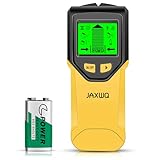
Overview: Identical in functionality to its BloodOrange counterpart, this Buttercup-colored 5-in-1 stud scanner targets budget-minded DIYers seeking versatile wall detection capabilities. The smart micro-sensor chip and HD LCD display combination offers quick location of studs, pipes, and live wires for routine home projects.
What Makes It Stand Out: Beyond the cheerful yellow finish, this model’s triple-scan architecture provides dedicated modes for stud, deep, and metal detection. The backlit LCD display synchronized with audio beeps creates an intuitive user experience, particularly valuable for beginners navigating their first wall-mounting projects. The color variant helps differentiate it in multi-tool households.
Value for Money: Sharing the same affordable pricing strategy as the BloodOrange version, this scanner presents a low-risk entry point into electronic stud detection. The feature set punches above its weight class for occasional use, though long-term durability remains unproven. It’s ideal for renters and new homeowners building their tool collection without substantial investment.
Strengths and Weaknesses: Strengths mirror its sibling: multiple scanning options, clear visual/audio cues, straightforward operation, and attractive pricing. The Buttercup color improves tool visibility. Weaknesses include the generic brand’s uncertain quality control, accuracy that may lag behind established manufacturers, and construction that prioritizes cost savings over ruggedness. Gift-centric marketing overshadows technical merit.
Bottom Line: A functional budget alternative for light-duty wall scanning tasks. While it won’t replace professional equipment, it serves adequately for sporadic home use where absolute precision is secondary to affordability and basic functionality.
4. Franklin Sensors ProSensor M150/X990 Stud Finder with Live Wire Detection and 9-Sensors, Wood & Metal Stud Detector/Wall Scanner, Made in The USA
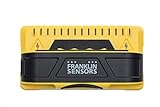
Overview: The ProSensor M150 bridges the gap between Franklin Sensors’ entry-level and flagship models, offering professional-grade accuracy with nine patented sensors. This American-made tool simplifies stud detection with one-mode operation while maintaining the brand’s reputation for reliability and precision in locating wood, metal, and live wires.
What Makes It Stand Out: The M150’s single-button operation eliminates calibration headaches, automatically adjusting for wall variations up to 1.5 inches deep. Its LED array displays complete stud widths and irregular configurations like double studs, providing more information than conventional center-only finders. The tool scans anywhere, even directly over studs, without requiring reset.
Value for Money: Priced below the M210 yet delivering Franklin’s core accuracy benefits, the M150 offers compelling value for serious DIYers and semi-professional users. It sacrifices some detection depth and sensor density for cost savings, but retains the essential features that make Franklin tools trustworthy. The investment makes sense for regular users who need consistency without contractor-grade overhead.
Strengths and Weaknesses: Strengths include Franklin’s proven multi-sensor accuracy, foolproof one-mode operation, comprehensive LED visualization, and reliable live wire detection. The tool’s durability matches professional expectations. Weaknesses include maximum 1.5-inch depth (less than the M210), incompatibility with rechargeable batteries, and fewer sensors than the flagship model. Occasional users might find the price premium unnecessary.
Bottom Line: The M150 hits the sweet spot for dedicated home improvers seeking professional accuracy without flagship pricing. It’s a reliable workhorse that outperforms budget scanners while costing less than top-tier professional models.
5. DEWALT Stud Finder, 3/4”, Locate Framing Studs Efficiently with LED Arrows, Ideal for Wood and Metal, AAA Batteries Included (DW0100)

Overview: DEWALT’s DW0100 offers a streamlined approach to stud finding from one of the most trusted names in construction tools. This compact scanner focuses on core functionality—locating stud centers up to 3/4-inch deep in wood and metal—while incorporating essential safety features like AC wire detection for residential applications.
What Makes It Stand Out: The center-marking channel provides a convenient guide for precise screw placement, eliminating the need for separate measurement steps. Constant auto-calibration ensures readiness without manual tweaking, while included AAA batteries enable immediate use out of the package. The slim profile stores easily in tool belts and pockets, prioritizing portability.
Value for Money: The DW0100 sits in the mid-range price bracket, leveraging DEWALT’s brand equity and reliability. While it lacks the multi-sensor sophistication of premium models, the cost reflects trustworthy performance for basic tasks. However, the shallow detection depth limits versatility, making it less suitable for thicker plaster walls or commercial applications where deeper scanning proves necessary.
Strengths and Weaknesses: Strengths include DEWALT’s reputable build quality, user-friendly LED arrow indicators, convenient center marking channel, and included batteries. The auto-calibration saves time. Weaknesses center on the limited 3/4-inch depth detection, which falls short of competitors offering 1.5+ inches. The single-center detection provides less information than full-width displays, and the tool offers fewer scan modes than similarly priced alternatives.
Bottom Line: A dependable, no-frills stud finder for basic residential projects and DEWALT ecosystem users. It reliably handles standard drywall applications but falls short for users needing deeper detection or advanced visualization capabilities.
6. BOSCH GMS120-27 Professional Wall Scanner, Multi-Function Stud Finder, and Live Wire Detector for Electricians, Plumbers & Contractors

Overview: The BOSCH GMS120-27 is a professional-grade wall scanner engineered for contractors, electricians, and plumbers who demand absolute reliability. This robust tool transcends basic stud finding, delivering precise detection of wood studs, metal framing, copper pipes, and live AC wiring behind drywall, eliminating costly guesswork on job sites.
What Makes It Stand Out: Its color-coded marking ring provides instant visual feedback—green for safe zones and red for live wires—while the graphical LCD display pinpoints stud centers with unmatched clarity. The IP54-rated dustproof and water-resistant construction, wrapped in shock-absorbing rubber, withstands harsh job site conditions where cheaper alternatives fail. Dual power flexibility (AA batteries or Bosch Li-Ion) ensures zero downtime.
Value for Money: Positioned at a premium price point, this scanner justifies its cost through durability and precision that prevent expensive mistakes. For professionals who rely on their tools daily, the investment pays for itself by avoiding one blown pipe or severed wire. DIYers may find it overkill, but tradespeople will appreciate the job site toughness.
Strengths and Weaknesses: Strengths include professional-grade accuracy, rugged build quality, dual power options, and clear visual indicators. Weaknesses are the higher price tag and the separate purchase required for the rechargeable battery system. The learning curve may be steeper than consumer-grade models.
Bottom Line: For electricians, plumbers, and contractors who need bulletproof reliability, the GMS120-27 is worth every penny. It’s a professional investment that delivers safety, accuracy, and durability where it matters most.
7. Stud Finder Wall Scanner 5-in-1 - Detector for Wood, Metal, Joists, Pipes, and AC Wires, Upgraded New version Intelligent Chip, High-Definition LCD Display Screen & Audible Alarm

Overview: This 5-in-1 stud finder positions itself as a versatile middle-ground option for both DIY enthusiasts and professionals seeking advanced features without premium pricing. Equipped with a state-of-the-art micro-sensor chip, it promises rapid and precise location of studs, joists, pipes, and live AC wires within walls, floors, and ceilings.
What Makes It Stand Out: Multiple scanning modes (0.5", 1", 1.5" stud depths, 2" AC scan, and 2.36" metal scan) provide tailored detection for various materials. The bright backlit LCD display combined with audible alerts offers dual-sensory guidance, particularly useful in dimly lit spaces. Automatic calibration simplifies setup and enhances reliability.
Value for Money: This scanner offers impressive functionality at a competitive price point, bridging the gap between basic magnetic finders and professional-grade tools. The feature set exceeds most consumer models while costing significantly less than contractor-tier options, making it an excellent value for serious DIYers and part-time professionals.
Strengths and Weaknesses: Strengths include versatile scanning modes, clear LCD display, audio alerts, automatic calibration, and ergonomic grip. Weaknesses may include less rugged construction than professional models and potentially shorter lifespan under heavy daily use. The plastic build might not withstand severe job site abuse.
Bottom Line: An excellent choice for homeowners tackling major projects or semi-professionals needing reliable multi-material detection. It delivers professional-level features at a DIY-friendly price, though full-time contractors should consider more durable options.
8. PREXISO 2-in-1 Stud Finder with Laser Level, Rechargeable Multi Surface Cross Line Laser & Wall Stud Scanners Tool for Hanging Frames & Picture, Wood Ac Wire Metal Studs Joist Pipe Detection

Overview: The PREXISO 2-in-1 tool uniquely combines a stud finder with a manual laser level, addressing two common tasks in one compact device. Designed primarily for hanging frames, pictures, and fixtures, it streamlines the process of locating studs and marking level lines without switching tools.
What Makes It Stand Out: When a stud edge is detected, the unit automatically projects a vertical laser line while triggering red LED lights and an audio alert—creating a seamless mark-and-level workflow. The rechargeable design and three fixing methods (pins, adhesive strips, pin hole) offer flexibility for various surfaces. Lighted bubble vials aid manual leveling in dark conditions.
Value for Money: Combining two tools into one package presents solid value for DIYers focused on installation tasks. However, the manual-leveling laser requires more user skill than self-leveling models, and limitations on wall types (not for lath/plaster) reduce versatility. For drywall projects, it eliminates buying separate tools.
Strengths and Weaknesses: Strengths include innovative 2-in-1 functionality, auto-projection feature, rechargeable battery, and multiple mounting options. Weaknesses are manual leveling complexity, surface restrictions, adhesive strips’ limited reusability, and potential accuracy dependence on user technique. The laser only works in laser mode, not during scanning.
Bottom Line: Perfect for DIYers who frequently hang items on drywall. The integrated laser level saves time and money, but professionals needing self-leveling precision or lath/plaster capability should look elsewhere.
9. Stud Finder Wall Scanner, 5 in 1 Multifunction Stud Locator with Upgraded Smart Sensor, HD LCD Display and Audio Alarm for The Center & Edge of Metal, Studs, AC Wire, and Pipe Detection (Lemon)

Overview: Marketed under the Jurgen K brand, this 5-in-1 stud locator targets users seeking versatility across unconventional wall surfaces. With upgraded smart sensor technology, it detects wood studs, metal, pipes, and live AC wires, claiming compatibility with slats, wallpapered wood, soundproof ceilings, and painted walls beyond standard drywall.
What Makes It Stand Out: Five detection modes (1/2", 1", 1.5" stud scan, 60mm metal scan, 51mm AC scan) accommodate various depths and materials. The LCD screen displays a distinctive “pecking shape” graphic when objects are found, complemented by continuous audible alerts. Auto-calibration and ergonomic design enhance user experience.
Value for Money: This scanner offers competitive features at a mid-range price, distinguishing itself with broader wall surface compatibility. For homeowners with older or non-standard walls, this versatility provides value that basic finders cannot. However, performance claims on complex surfaces should be verified in real-world use.
Strengths and Weaknesses: Strengths include multi-surface versatility, clear audio/visual alerts, automatic calibration, ergonomic grip, and included battery. Weaknesses may include less brand recognition than established competitors, potentially inconsistent performance on heavily textured surfaces, and durability questions under professional use.
Bottom Line: A solid choice for homeowners with diverse wall types or those renovating older properties. While it promises impressive versatility, professionals should verify performance on specific non-standard surfaces before committing to critical projects.
10. Handstar Stud Finder Wall Scanner - 6-in-1 Upgraded Multifunction Auto Detection with LCD Display & Audio Alarm for Wood, Metal & AC Wires, Ideal for Home DIY & Professional Contractors (Black)
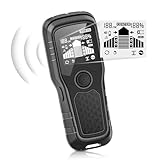
Overview: The Handstar 6-in-1 stud scanner distinguishes itself with automatic material detection and impressive depth capabilities in a lightweight package. Engineered for both home DIYers and professional contractors, it handles diverse wall materials including drywall, plaster, tile, paneling, and camper walls without manual mode switching.
What Makes It Stand Out: The unique auto-detect mode intelligently identifies materials, complemented by dedicated modes for wood, metal, deep metal, AC, and signal scanning. Exceptional depth detection reaches 3.94 inches for magnetic metals and 3.15 inches for non-magnetic metals—surpassing most competitors. The backlit LCD provides detailed feedback including depth and signal strength.
Value for Money: With professional-grade depth detection and intelligent auto-mode at a mid-tier price, this scanner delivers outstanding value. The included 9V battery and ready-to-use design eliminate immediate additional costs. For users needing deep detection or working with varied wall types, it outperforms pricier alternatives.
Strengths and Weaknesses: Strengths include auto-detection capability, superior depth range, versatile wall material compatibility, lightweight ergonomic design, and clear LCD display. Weaknesses may include less rugged construction than premium professional tools and potential overkill for simple drywall projects. The plastic housing might not endure extreme job site conditions.
Bottom Line: An exceptional all-around performer that bridges DIY and professional needs. The auto-detection and deep scanning capabilities make it ideal for complex renovation projects, offering premium features without the premium price tag.
Understanding Stud Finder Technology in 2026
The fundamental principle remains detecting density changes behind wall surfaces, but the execution has become remarkably sophisticated. Today’s professional-grade units employ sensor arrays that would have been considered military-grade technology a decade ago. Understanding these core technologies isn’t just academic—it directly impacts your purchasing decision and daily workflow.
Magnetic vs. Electronic Sensors
Magnetic stud finders still have their place in a contractor’s bag, particularly for quickly locating metal fasteners in standard residential drywall. They require no batteries, never need calibration, and can last decades. However, they only find fasteners, not the stud itself, which means you’re inferring location rather than directly mapping the structural member. For commercial work, this limitation is often a dealbreaker.
Electronic stud finders dominate the professional market for good reason. They use capacitive sensors to measure dielectric constant changes in the wall cavity, directly identifying the stud rather than guessing based on screw placement. The latest generation employs multiple sensor plates—sometimes up to 13 separate scanning elements—that work in concert to create a density map of everything behind the surface. This multi-sensor approach virtually eliminates the false positives that plagued earlier generations and gives you confidence when you’re drilling into a $200-per-sheet architectural panel.
The Rise of Multi-Scanner Technology
The most significant advancement for 2026 is the convergence of detection technologies into single units. Professional models now routinely combine capacitive stud sensing with radar-based pipe detection and electromagnetic field (EMF) scanning for live wires. This isn’t just feature stacking—it’s intelligent fusion. Advanced processors analyze data from all three sensor types simultaneously, creating a composite image that distinguishes between a copper pipe, a metal stud, and a live electrical cable. For contractors working in renovation where wall contents are unknown, this capability isn’t a luxury; it’s risk mitigation.
Why Accuracy Is Non-Negotiable for Professional Contractors
A 1/4-inch error might not matter when you’re hanging a bathroom mirror, but it’s catastrophic when you’re installing a 300-pound commercial HVAC register or structural shelving. Professional-grade accuracy isn’t about perfection in ideal conditions—it’s about reliability in the worst conditions you’ll face.
Depth Detection Capabilities
Scanning depth specifications are often misleading. A manufacturer might claim 3-inch detection, but that depth rating typically applies to ideal conditions: single-layer drywall, no insulation, and perfect sensor contact. In reality, you’re dealing with textured surfaces, double drywall, plywood backing, or dense soundproofing insulation.
Professional units distinguish themselves through dynamic depth adjustment. Rather than a fixed sensitivity, they continuously calibrate based on the initial surface scan, compensating for wall thickness variations. Look for models that explicitly state their performance through multiple materials—specifically mentioning capabilities through 5/8" drywall plus 1/2" plywood sheathing, or through ceramic tile and backer board. These real-world specifications matter more than any marketing number.
Calibration and False Positives
False positives are the enemy of productivity. Every time your tool beeps incorrectly, you’re stopping to verify, second-guessing your readings, and losing confidence in the equipment. Professional-grade stud finders minimize this through automatic calibration routines that run continuously as you scan. The key differentiator is speed—budget models might take 3-5 seconds to calibrate when you power them on, while commercial units recalibrate in milliseconds between each pass.
The best approach is a two-step verification method: a wide scan to locate general stud positions, followed by a narrow, high-resolution pass to pinpoint edges and center. This methodology, built into premium units, reduces false positives by over 90% compared to single-pass scanning. When evaluating tools, pay attention to how the manufacturer describes their calibration process. Vague language like “automatic calibration” means far less than “continuous micro-calibration with manual override.”
Key Features That Separate Professional-Grade from DIY Models
The price gap between consumer and contractor stud finders often seems arbitrary until you understand the hardware differences. These aren’t just marketing tiers—they represent fundamentally different engineering priorities.
Scanning Modes and Versatility
A contractor’s stud finder needs to adapt to more than just 2x4 studs. Professional units offer distinct scanning modes optimized for different materials: wood stud, metal stud, concrete scanning, and deep scanning. Each mode adjusts not just sensitivity but the entire sensor array’s behavior. Wood stud mode might prioritize edge detection for precise center-finding, while metal stud mode focuses on width measurement to distinguish between 20-gauge and 16-gauge steel.
The deep scan mode is particularly crucial for commercial contractors. This isn’t just a more sensitive version of standard mode—it uses different frequency ranges and longer integration times to penetrate dense materials. When you’re working with 7/8" fire-rated drywall or double-layer soundproofing, deep scan mode is the difference between finding structure and drilling blind.
Display Technology and Readability
In bright sunlight or dim utility rooms, display clarity directly impacts your workflow. Professional units have moved beyond simple LED arrows to full graphical displays that show stud width, multiple material types simultaneously, and even depth indicators. The best displays use transflective LCD technology—screens that remain perfectly visible in direct sun without backlighting, yet illuminate evenly in dark spaces.
Color coding has become standard, but implementation varies dramatically. Look for systems that use distinct colors for different materials (wood vs. metal vs. live wire) and intensity variations to indicate signal strength. Some advanced models now offer directional arrows that guide you to the stud center with sub-inch precision, eliminating the guesswork of traditional edge-finding methods.
Durability and Build Quality Considerations
Your stud finder will get dropped, rained on, covered in drywall dust, and possibly run over by a scissor lift. Consumer models might survive a year of this abuse; professional units are built for a decade.
IP Ratings and Job Site Conditions
The Ingress Protection (IP) rating tells you exactly what a tool can withstand. IP54 is the minimum for professional use—protected against dust ingress and water spray from any direction. For exterior work or harsh environments, IP65 (dust-tight and protected against water jets) is worth the premium. Anything below IP54 is a consumer toy that will fail when you need it most.
Beyond the rating, examine the seals. Rubber gaskets around battery compartments, tethered port covers, and recessed screens all indicate design intent. The best units use ultrasonic welding for seams and silicone button covers that won’t crack after 10,000 presses. These details matter when you’re 40 feet up on a lift and your tool gets hit with overspray from a power washer.
Impact Resistance and Warranty Coverage
Drop test specifications are rarely advertised but critically important. Professional-grade housings use polycarbonate-ABS blends with internal shock mounting for the sensor board. Some manufacturers embed the entire electronics assembly in a dampening gel that absorbs impacts while maintaining sensor accuracy. Ask distributors about drop test performance—reputable brands will have data, even if it’s not on the packaging.
Warranty terms reveal manufacturer confidence. A one-year warranty is standard for consumer tools. Professional units should carry at least two years, with some offering three-year coverage with registration. More importantly, look for warranties that explicitly cover “normal job site abuse” rather than limiting coverage to “defects in materials and workmanship.” The former acknowledges how tools are actually used; the latter leaves room for denial of claims.
Power Management and Battery Life
Nothing kills productivity like a dead battery halfway through laying out a room. Professional stud finders approach power very differently than consumer models.
Rechargeable vs. Replaceable Batteries
The industry is split, and both approaches have merit. Rechargeable lithium-ion units offer convenience and consistent voltage output, maintaining sensor accuracy until the battery is nearly dead. They’re ideal for contractors who use the tool daily and can develop a charging routine. The downside is eventual battery degradation—after 500 cycles, you might lose 20% capacity, and replacement often requires factory service.
Replaceable battery models (typically AA or AAA) offer unlimited runtime if you carry spares. They’re also easier to field-service when a battery leaks or fails. The trade-off is voltage sag—as alkaline batteries drain, sensor accuracy can decrease subtly before the low-battery indicator triggers. For this reason, professional replaceable-battery units often include voltage regulation circuits, though this adds cost and complexity.
Power-Saving Features
Professional units implement intelligent sleep modes that maintain calibration while drawing minimal power. After 30 seconds of inactivity, the display might dim but the sensors remain primed, allowing instant-on scanning without recalibration. Some models include motion sensors that wake the unit when picked up, so it’s ready before you even press a button.
Battery level indicators should show percentage remaining, not just a three-bar graphic. The most sophisticated units track your usage patterns and estimate remaining scans rather than just voltage. This predictive approach prevents that sudden death mid-project that plagues simpler tools.
Ergonomics and Ease of Use
You’ll scan hundreds of linear feet per day. A tool that’s awkward to hold or difficult to mark with becomes a literal pain. Professional design considers the entire workflow, not just the scanning moment.
Grip Design and One-Handed Operation
The best professional stud finders fit naturally in your hand with a grip that works in multiple orientations. Look for rubber overmolding with texture patterns that channel away sweat and dust. The tool should balance evenly over your index finger, allowing you to apply consistent pressure without fatigue. Weight matters too—over 8 ounces becomes tiresome during all-day use, but under 5 ounces often signals flimsy construction.
Button placement must allow one-handed operation. You should be able to power on, switch modes, and mark a stud without repositioning your grip or using your other hand. Some premium models include programmable buttons that let you assign your most-used function to a dedicated key, reducing menu navigation.
Marking Systems and Center-Finding Technology
The moment of truth comes when you need to transfer the stud location to the surface. Professional units integrate marking systems—retractable pencils, chalk wheels, or even pinpoint lasers—that activate with a button press while scanning. This eliminates the awkward dance of holding the tool, marking the spot, and hoping you don’t shift position.
Center-finding technology has evolved from simple edge detection to sophisticated algorithms that map both edges and calculate center automatically. The most advanced systems use a sliding indicator that locks onto the stud center and holds the reading for several seconds, giving you time to mark accurately. Some even project a laser crosshair onto the wall, showing both vertical center and horizontal height reference.
Scanning Depth Requirements for Different Applications
Your typical scanning depth needs vary dramatically based on your trade and project type. A residential framer has different requirements than a commercial electrician or a restoration specialist.
Standard Wall Construction
For most residential and light commercial work involving 1/2" to 5/8" drywall over wood studs, a scanning depth of 1-1/2" is sufficient. However, you need to consider cumulative layers. A wall with drywall, plywood shear panel, and 1" foam insulation can exceed 2-1/2" total thickness. Professional units should reliably scan through this assembly without switching to deep mode, which sacrifices resolution for penetration.
The key specification is “effective scanning depth through multiple materials,” not just maximum depth in ideal conditions. Ask manufacturers for performance data through OSB sheathing, double drywall, and common insulation types. The reputable ones will provide scanning profiles showing detection confidence at various depths.
Deep Scanning for Commercial Work
Commercial construction introduces materials that laugh at standard stud finders. Concrete block with furring strips, 1" fire-rated drywall assemblies, and plaster over metal lath require deep scanning capabilities of 3-4 inches or more. More importantly, they require frequency modulation—changing the sensor’s operating frequency to optimize for different material densities.
Deep scan modes should offer selectable depth ranges rather than a single “deep” setting. A mode that scans 1-2", 2-3", and 3-4" separately provides far more useful information than one that simply reports “something detected between 0-4 inches.” This granularity lets you distinguish between a metal stud at 1" depth and structural steel at 3" depth—critical when you’re choosing anchor types.
Multi-Material Detection Capabilities
The modern wall cavity is a highway of utilities. Hitting a live wire or copper pipe can be catastrophic. Professional stud finders must do more than find wood—they need to create a comprehensive map of hidden obstacles.
Live Wire Detection
Electrical detection in professional units operates on a different principle than the simple EMF sensors in consumer models. Professional-grade wire detection uses multiple frequency electromagnetic scanning to distinguish between grounded conductors, ungrounded hot wires, and neutral wires. This matters because a disconnected wire in an old renovation might not emit a strong field, but it’s still dangerous.
The best systems provide depth estimation for wires and indicate voltage range (low voltage vs. line voltage). Some even show wire direction, helping you trace circuits without opening the wall. This capability is invaluable when you’re working near electrical panels or in commercial spaces with extensive conduit runs.
Pipe and Rebar Identification
Metal detection has evolved beyond simple ferrous/non-ferrous discrimination. Advanced units can differentiate between copper pipe, galvanized steel, and structural rebar based on conductivity and magnetic permeability signatures. This prevents you from mistaking a 1/2" copper water line for a 1-5/8" metal stud—an error that could cost thousands in water damage.
For concrete and masonry work, rebar detection becomes paramount. Professional units designed for commercial work can map rebar patterns, estimate cover depth, and even alert you when you’re approaching structural elements that shouldn’t be drilled. Some models integrate with ground-penetrating radar principles, offering a simplified version of the technology used in concrete scanning services.
Price vs. Value: Investing Wisely
The delta between a $40 consumer unit and a $400 professional stud finder seems absurd until you calculate the cost of a single mistake. For contractors, the math is straightforward.
Total Cost of Ownership
Consider the tool’s lifespan. A professional stud finder amortized over five years of daily use costs pennies per day. Factor in the cost of one callback due to a missed stud—maybe $200 in labor and materials, plus the intangible cost to your reputation. Suddenly, the premium price makes sense.
Total cost also includes batteries, replacement parts, and calibration services. Rechargeable units might cost more upfront but save $50-100 annually in batteries. Models with user-replaceable sensor plates (yes, they exist) can be repaired for $30 rather than replaced for $300 when a sensor gets damaged. Always factor in these long-term costs when comparing prices.
When to Repair vs. Replace
Professional-grade tools are worth repairing. Many manufacturers offer flat-rate service programs—send in your unit, and for $75-100, they replace sensors, update firmware, and recalibrate to factory specs. This typically happens at the 3-4 year mark when sensor drift becomes noticeable.
Consumer units aren’t designed for repair. When they fail, you replace them, which means learning a new tool’s quirks and potentially dealing with different accuracy profiles. The consistency of using the same calibrated tool across hundreds of jobs has real value that transcends the purchase price.
Calibration and Maintenance Best Practices
A stud finder is only as good as its calibration. Professional accuracy requires professional maintenance habits.
Daily Calibration Routines
Before each shift, perform a known-surface test. Scan a section of wall where you’ve recently opened up and can verify stud locations. This 30-second check confirms the tool is reading correctly and builds confidence before you start layout work. Many contractors keep a “calibration board” in their trailer—a piece of scrap drywall mounted on known studs that serves as a daily test piece.
For critical layouts, perform in-situ calibration. Hold the unit against the wall surface for 5-10 seconds before scanning. This allows the sensors to compensate for wall composition, moisture content, and temperature. Professional units make this process automatic, but understanding when manual calibration is needed separates expert users from novices.
Storage and Care
Extreme temperatures kill electronics. Don’t leave your stud finder in a truck box in August heat or January cold. The sensor boards expand and contract, causing micro-fractures in solder joints and sensor drift. Store it in your climate-controlled office or tool bag inside the cab.
Clean sensors regularly with isopropyl alcohol and a lint-free cloth. Drywall dust contains gypsum and silica that can build up on sensor plates, gradually reducing sensitivity. A monthly cleaning prevents this insidious performance degradation. Also, check battery contacts quarterly—corrosion from job site humidity can cause voltage drops that affect accuracy.
The Future of Stud Finding Technology
The stud finders of 2026 are already incorporating technologies that will seem standard by 2028. Understanding these trends helps you invest in a tool that won’t be obsolete next season.
AI-Enhanced Scanning
Machine learning algorithms are being trained on thousands of wall scans to recognize patterns that human interpretation might miss. These systems can identify stud spacing irregularities that indicate modifications, detect the signature of plaster and lath construction, and even predict the presence of blocking based on building era and regional practices. The AI doesn’t replace your expertise; it augments it, flagging anomalies for your investigation.
This technology requires firmware updates and cloud connectivity for algorithm improvements. When choosing a unit, consider whether the manufacturer has a track record of supporting devices with updates. A tool that improves its accuracy over time through software updates offers compounding returns on your investment.
Integration with Mobile Apps
Bluetooth connectivity is becoming standard, but implementation varies from gimmicky to genuinely useful. The best integrations automatically log scan data, creating a digital layout map you can reference later or share with clients. Some apps allow you to photograph the wall, overlay scan data, and annotate with notes about wiring or plumbing locations.
This digital documentation becomes valuable during inspections or when handing off to other trades. An electrician can see exactly where you detected wires; a plumber can avoid your stud locations. The key is seamless data transfer—if the app requires 15 steps to sync, you’ll never use it. Look for one-touch sync and offline capability for job sites with poor connectivity.
What to Avoid When Choosing a Stud Finder
The market is flooded with units that look professional but perform like toys. Knowing what to avoid is as important as knowing what to seek.
Red Flags in Budget Models
Be wary of any unit that claims “professional grade” but lacks an IP rating. That’s code for “we didn’t seal it.” Similarly, models that advertise “one-button operation” often sacrifice the fine control needed for complex walls. Professional work requires adjustability; simplicity at the expense of control is a liability.
Avoid units with non-replaceable batteries unless the manufacturer guarantees battery replacement service. A built-in battery that dies after three years renders the entire tool useless. Also, skip any model that doesn’t offer a physical button for power—touch-sensitive controls fail when your fingers are covered in joint compound or when you’re wearing gloves.
Overhyped Features That Underdeliver
Laser leveling is a common upsell feature that sounds useful but rarely works well in practice. The lasers are weak, poorly aligned, and drain battery quickly. Dedicated laser levels cost less and perform better. Similarly, “stud depth indicators” that show a numerical value are often wildly inaccurate—trust the detection, but verify depth with a test hole when it matters.
Voice alerts are another gimmick. On a noisy job site, you’ll either miss the alert or have it shouting at you constantly. Visual indicators are faster and less intrusive. Focus your budget on sensor quality and durability, not bells and whistles that you’ll disable after the first week.
Making the Final Decision
With all the technical considerations laid out, the final choice comes down to matching the tool to your specific work patterns.
Assessing Your Specific Trade Needs
Electricians need the best wire detection and depth precision for drilling near panels. Drywall contractors prioritize speed and center-finding accuracy for fast screw placement. General contractors need versatility to handle unknown conditions in renovation work. There’s no universal “best”—only best for your application.
Make a list of your typical scanning scenarios. Include wall types, materials you encounter regularly, and the consequences of a miss. Use this list to prioritize features. If you never work with concrete, don’t pay for advanced rebar mapping. If you exclusively build new residential, deep scanning might be overkill. Match the tool to your reality, not hypothetical extremes.
Demo and Trial Opportunities
Reputable tool suppliers understand that professional-grade stud finders are significant investments. Many offer demo programs or 30-day satisfaction guarantees. Take advantage of these. Use the tool on a known wall, scan surfaces you typically encounter, and evaluate how it feels after an hour of continuous use.
Pay attention to how quickly you trust the readings. The best tool is the one that becomes an extension of your hand, where you instinctively understand what the display means without conscious thought. That level of trust only comes from hands-on experience. Don’t rush the decision—a week of testing beats years of regretting a hasty purchase.
Frequently Asked Questions
How often should I recalibrate my stud finder on the job site?
For critical layouts, perform a quick calibration check on a known surface at the start of each day and after any significant temperature changes. Most professional units handle continuous micro-calibration automatically, but a manual check takes 30 seconds and builds confidence before you start laying out anchor points for heavy installations.
Can stud finders detect studs through tile and backer board?
Yes, but you need a professional-grade unit with deep scan mode. Standard detection typically fails beyond 1-1/2" total thickness. Look for models that specifically advertise multi-material scanning and have a dedicated deep scan setting. Even then, expect reduced accuracy and always verify critical locations with a test hole.
What’s the difference between center-finding and edge-finding technology?
Edge-finding models locate stud edges, requiring you to mark both sides and calculate center. Center-finding units use multiple sensors to identify the stud’s center directly, which is faster and more accurate. For professional work, center-finding with edge indication is the gold standard—it gives you both speed and precision.
Do I really need live wire detection in a stud finder?
If you’re drilling into walls where electrical work is present—and that’s nearly every commercial and renovation project—wire detection is essential insurance. However, treat it as a secondary alert, not primary protection. Always verify with a non-contact voltage tester before drilling near suspected wires. Think of the stud finder’s wire alert as an early warning system, not a guarantee.
How does temperature affect stud finder accuracy?
Extreme cold reduces battery voltage and can cause LCD displays to lag. Extreme heat can cause sensor drift as components expand. Store your tool in a climate-controlled environment and allow it to acclimate to job site temperature for 10-15 minutes before critical scans. Professional units compensate better than consumer models, but physics still applies.
Can I use my stud finder on exterior walls with insulation?
Standard batt insulation doesn’t significantly affect detection, but foil-faced insulation or dense spray foam can interfere. Use deep scan mode and move slowly. If you’re getting inconsistent readings, the insulation may be creating false density variations. In these cases, scan from the interior side if possible, or use a combination of magnetic location for fasteners and electronic scanning for stud verification.
What’s the realistic lifespan of a professional stud finder?
With proper care, 5-7 years of daily use is reasonable. Sensor drift typically becomes noticeable around year 4, but many manufacturers offer recalibration services that extend life. Physical durability is often the limiting factor—drops, moisture, and dust eventually take their toll. Units with replaceable sensor modules can last indefinitely.
Should I choose a rechargeable or battery-powered model?
If you use the tool daily and have access to charging, rechargeable lithium-ion offers convenience and consistent performance. If you work remotely or forget to charge tools, replaceable batteries provide unlimited runtime. Some professional units now offer hybrid systems—rechargeable with AA backup—which gives you the best of both worlds.
How do I verify a stud finder’s accuracy without opening the wall?
Use the “known surface” method. Scan a wall section where you have recent verification—perhaps near an outlet box where you can see stud location, or on a wall you’ve opened for another trade. Mark the detected studs, then measure spacing. Consistent 16" or 24" OC spacing with clear edges indicates accurate detection. Also, scan both directions; a real stud should be detected consistently from either side.
Are smartphone-connected stud finders worth the extra cost?
The value depends on your documentation needs. If you frequently need to prove layout locations to inspectors, clients, or other trades, the ability to generate scan maps is invaluable. If you just need to find studs quickly for your own work, the connectivity adds complexity without benefit. For large commercial projects or restoration work with unknown conditions, the documentation capability can pay for itself in avoided disputes.
See Also
- Best Stud Finders for Beginners: 10 Expert Picks for 2026
- The Complete Guide to the 10 Best Stud Finders for Contractors
- 10 Top-Rated Precision Stud Finders According to Contractors in 2026
- The 10 Ultimate Best Digital Stud Finders for Contractors in 2026
- 10 Affordable Digital Stud Finders That Don’t Sacrifice Accuracy in 2026