Table of Contents
Tackling intricate corners and tight profiles separates good craftsmanship from exceptional work. Whether you’re restoring antique furniture, installing custom cabinetry, or perfecting millwork joints, the right detail sander transforms frustrating hand-sanding sessions into precise, efficient results. As we move through 2026, the landscape of detail sanding tools has evolved dramatically, with manufacturers integrating smarter electronics, improved ergonomics, and dust extraction systems that actually work in confined spaces.
Understanding what makes a detail corner sander truly effective requires looking beyond marketing claims and focusing on the engineering details that impact real-world performance. This guide cuts through the noise to examine the critical features, emerging technologies, and practical considerations that should drive your purchasing decision—helping you identify tools that will deliver flawless finishes in the most challenging corners of your projects.
Top 10 Sanders For Detail Corners
Detailed Product Reviews
1. SKIL Corded Multi-Function Detail Sander with Micro-Filter Dust Box 3 Additional Attachments & 12pc Sanding Sheet- SR232301
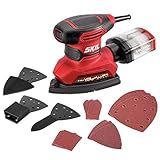
Overview: The SKIL SR232301 is a versatile 4-in-1 detail sander designed for DIY enthusiasts and hobbyists who need flexibility in their finishing work. Equipped with a 1.2-amp motor delivering 13,500 orbits per minute, this tool handles everything from large flat surfaces to intricate contours. The package includes three specialized attachments and a 12-piece sanding sheet starter kit, making it ready to tackle diverse projects straight out of the box.
What Makes It Stand Out: This sander’s interchangeable attachment system is its crown jewel—switch between a triangular pad, finger attachment, and contour sander without tools. The micro-filter dust box captures fine particles effectively, while the vacuum port offers an alternative for shop vac connection. SKIL’s counterweight balance system significantly reduces vibration, and the ergonomic soft-grip handle ensures comfort during extended use.
Value for Money: Priced competitively in the $40-50 range, this multi-function tool effectively replaces several dedicated sanders. The inclusion of three attachments and a starter sandpaper pack eliminates immediate additional purchases. Compared to buying separate detail, finger, and contour sanders, you’re saving at least 50% while gaining workshop space.
Strengths and Weaknesses: Strengths include exceptional versatility, effective dust collection options, and reduced vibration design. The quick-change hook-and-loop system simplifies paper swaps. Weaknesses involve the corded limitation for mobility, potential durability concerns with plastic attachment connections, and possible overkill for users needing only basic sanding.
Bottom Line: For woodworkers seeking one sander that adapts to multiple tasks, the SKIL SR232301 delivers outstanding flexibility and performance. It’s an excellent investment for those who value adaptability over single-purpose simplicity.
2. Coceca Mouse Detail Sander Sandpaper Sanding Paper Assorted Sanding Pads 40 80 120 180 240 Grits (50pcs Mouse Sandpaper)
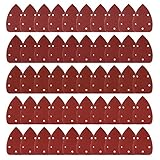
Overview: The Coceca 50-piece sandpaper assortment provides a comprehensive grit selection for mouse detail sanders, covering coarse to fine applications. Each pack contains ten sheets of 40, 80, 120, 180, and 240 grit, ensuring you’re prepared for material removal, smoothing, and finishing tasks. Designed for 140mm sanders, these hook-and-loop backed sheets offer broad compatibility with popular brands.
What Makes It Stand Out: This collection’s strength lies in its strategic grit progression, allowing users to move seamlessly from aggressive stock removal (40-grit) to fine polishing (240-grit). The premium alumina abrasive construction provides durability and anti-static properties, reducing clogging on painted or resinous surfaces. The hook-and-loop backing ensures secure attachment and quick changes.
Value for Money: Typically retailing under $15, this pack costs less than 30 cents per sheet—substantially cheaper than purchasing individual grit packs. For hobbyists completing 2-3 projects monthly, this 50-sheet supply lasts 6-12 months, offering exceptional economy. Bulk packaging eliminates repeated trips to hardware stores mid-project.
Strengths and Weaknesses: Strengths include comprehensive grit range, excellent cost-per-sheet value, and versatile material compatibility. The anti-static coating extends sheet life. Weaknesses involve potential fit issues with non-standard sanders, lack of ultra-fine grits (320+), and absence of organized storage. Heavy-duty users may find sheets wear faster than premium brands.
Bottom Line: An essential stocking stuffer for any mouse detail sander owner. This Coceca assortment delivers practical variety and unbeatable value, making it a no-brainer purchase for DIYers and occasional woodworkers.
3. WEN 6301 Electric Detailing Palm Sander
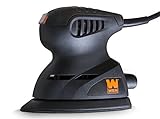
Overview: The WEN 6301 is a compact, lightweight palm sander built for precision work in tight spaces. Its distinctive 3.75 x 5.5-inch pad features an angled tip perfect for reaching into corners and along edges. Powered by a one-amp motor producing 13,500 OPM, this two-pound tool prioritizes maneuverability over raw power, making it ideal for detail-oriented tasks and overhead work.
What Makes It Stand Out: The angled pad design sets this sander apart, allowing users to sand acute angles without awkward hand positions. At just two pounds, it significantly reduces fatigue during extended use. The dust collection port, while basic, helps maintain visibility of your work area. The Velcro base pad ensures standard hook-and-loop sandpaper adheres securely.
Value for Money: Positioned in the sub-$30 category, the WEN 6301 offers remarkable affordability for entry-level woodworkers. It provides essential features without premium pricing, making it an excellent first sander or backup tool. While it lacks advanced dust collection or multiple attachments, its simplicity translates to reliability and ease of maintenance.
Strengths and Weaknesses: Strengths include exceptional lightness, thoughtful angled design, and straightforward operation. It’s quiet enough for indoor use. Weaknesses involve the modest one-amp motor struggling with heavy material removal, basic dust collection without a dedicated box, and lack of variable speed control. The fixed speed may be too aggressive for delicate finishes.
Bottom Line: Perfect for beginners, model makers, and those prioritizing comfort. The WEN 6301 excels at light-duty detail work where accessibility and reduced weight matter more than power.
4. SKIL Corded Detail Sander, Includes 3pcs Sanding Paper and Dust Box - SR250801

Overview: The SKIL SR250801 is a streamlined detail sander that focuses on core functionality without unnecessary complexity. Featuring a one-amp motor and 12,000 OPM, this tool targets users seeking reliable performance for occasional sanding tasks. The included dust box and three starter sanding sheets provide everything needed for immediate use on small projects and touch-ups.
What Makes It Stand Out: This model’s simplicity is its defining characteristic—no attachments to swap, no complicated settings. The micro-filtration dust system captures fine particles effectively, while the vacuum port offers enhanced collection for larger jobs. The dust-sealed on/off switch demonstrates thoughtful engineering, preventing premature failure from debris infiltration. Its ergonomic soft-grip and counterweight balance reduce vibration fatigue.
Value for Money: Typically priced between $25-35, the SR250801 positions itself as SKIL’s budget-conscious alternative to multi-attachment models. It competes directly with entry-level sanders while offering superior dust management. For users who primarily sand flat surfaces and simple corners, this single-purpose tool provides better value than pricier versatile models.
Strengths and Weaknesses: Strengths include reliable dust collection, comfortable ergonomics, durable sealed switch, and straightforward operation. The hook-and-loop system works smoothly. Weaknesses involve lower OPM limiting efficiency on tough materials, absence of specialized attachments, and shorter power cord. The single-speed operation lacks finesse for delicate work.
Bottom Line: A solid choice for DIYers wanting a no-fuss detail sander. The SKIL SR250801 delivers dependable performance for basic tasks without paying for features you’ll never use.
5. BLACK+DECKER Detail Sander, 1.2 Amp, 16,000 OPM, Compact Design, 3-Position Grip for Comfort, Includes Dust Collector, Corded (BDEMS600)

Overview: The BLACK+DECKER BDEMS600 is a high-performance detail sander engineered for aggressive material removal in confined spaces. Its 1.2-amp motor delivers an impressive 16,000 OPM—the highest speed in this category—making quick work of paint stripping and heavy sanding. The compact body and innovative three-position grip provide exceptional control during intricate work, while the detail finger attachment extends reach into the tightest crevices.
What Makes It Stand Out: The three-position grip is a game-changer, allowing users to rotate the handle for optimal comfort and control based on the task. The blistering 16,000 OPM speed significantly outpaces competitors, reducing project time. The compact design navigates cramped quarters effortlessly, and the included detail finger attachment transforms the tool into a precision instrument for complex profiles.
Value for Money: Positioned around $35-45, this BLACK+DECKER model offers professional-grade speed at consumer pricing. The brand’s widespread service network and parts availability add long-term value. While it lacks a vacuum port, the included dust collector performs adequately for most tasks. The higher speed translates to faster completion, saving valuable time.
Strengths and Weaknesses: Strengths include class-leading speed, innovative grip flexibility, compact maneuverability, and trusted brand reliability. The detail finger attachment enhances versatility. Weaknesses involve potential over-sanding on delicate projects, basic dust collection compared to vacuum-ready models, and higher vibration at maximum speed. The fixed-speed design requires careful handling.
Bottom Line: Ideal for experienced users needing speed and adaptability. The BDEMS600 excels at aggressive detail work where power and ergonomic flexibility outweigh the need for variable speed control.
6. HYCHIKA Detail Sander, 14,000 OPM Compact Electric Sander Tool with 12 Pcs Sandpapers,Efficiency Dust Collection System,Suitable for Tight Spaces Sanding,Polishing,Removing Paint in Home Decoration
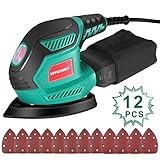
Overview: The HYCHIKA Detail Sander delivers professional-grade performance in a compact package, operating at 14,000 orbits per minute with a robust 1.6-amp motor. Designed specifically for precision work in confined areas, this corded electric tool excels at paint removal, rust stripping, and fine finishing on metal, plastic, and wood surfaces. Its triangular sanding pad accesses corners and edges that standard sanders cannot reach.
What Makes It Stand Out: This sander distinguishes itself through its exceptional speed and comprehensive accessory bundle. The 12-piece sandpaper set includes three grit ranges (P80, P120, P240) for progressive finishing, while the six-hole dust extraction system efficiently captures debris through an included collection bag. The 2-meter power cord provides reasonable mobility, and the soft rubber head design enhances comfort during extended detail work.
Value for Money: Positioned as a mid-range option, the HYCHIKA offers remarkable value by including everything needed to start projects immediately. Competing brands often charge separately for dust bags and multiple grit packs. For DIY enthusiasts and home decorators, this all-in-one package eliminates hidden costs while delivering performance comparable to pricier alternatives.
Strengths and Weaknesses: Strengths include high orbital speed for rapid material removal, effective dust collection, ergonomic grip, and versatile sandpaper selection. The compact design genuinely excels in tight spaces. Weaknesses involve the corded limitation for large projects, a relatively short 2-meter cord requiring extension cords, and manufacturer warnings against drywall use, restricting versatility.
Bottom Line: The HYCHIKA Detail Sander is an excellent investment for homeowners tackling furniture restoration, craft projects, and detailed woodworking. Its power, dust control, and included accessories make it a standout choice for precision sanding tasks.
7. RYOBI 18V Corner Cat Finish Sander

Overview: The RYOBI 18V Corner Cat Finish Sander represents the brand’s entry into cordless detail sanding, leveraging the expansive ONE+ battery ecosystem. This tool features a compact triangular base engineered for precision control in tight spaces and corners. As a bare tool, it targets existing RYOBI users seeking cordless convenience for finishing work without the constraints of power cords.
What Makes It Stand Out: Integration with RYOBI’s 18V ONE+ system is the primary differentiator, offering compatibility with over 260 tools using the same battery platform. The hook-and-loop sandpaper attachment enables rapid paper changes, while the compact design prioritizes maneuverability. RYOBI’s established service network and parts availability provide long-term reliability that lesser-known brands cannot match.
Value for Money: While the tool-only configuration requires battery and charger investment, it delivers exceptional value for current RYOBI owners. Compared to purchasing a separate corded sander, this eliminates additional cord management and provides job site flexibility. The premium pricing is justified by brand reputation, warranty support, and cross-platform battery utility.
Strengths and Weaknesses: Strengths include cordless freedom, reputable brand backing, ergonomic compact design, and seamless battery integration. The triangular base excels at corner work. Weaknesses center on the bare-tool limitation—new users face significant additional costs. Limited specifications provided suggest modest power output potentially inferior to corded alternatives, and runtime depends on battery capacity.
Bottom Line: This sander is ideal for RYOBI 18V ONE+ system owners needing a maneuverable finish sander for cabinetry, furniture, and detailed woodworking. Newcomers should consider total ecosystem investment before purchasing.
8. Detail Sander: DEKOPRO Multi-Function Mouse Sander Electric Sander Tool Corded Palm Sanders with Dust Collector, 3 Additional Attachments &12pc Sandpapers for Sanding,Polishing,Removing Paint in Home

Overview: The DEKOPRO Multi-Function Mouse Sander delivers versatility through its 4-in-1 design, operating at 13,000 orbits per minute with a 1.5-amp motor. This corded tool includes three specialized attachments for accessing ultra-tight spaces, making it suitable for comprehensive home renovation projects. The package provides immediate utility with 12 included sandpapers across multiple grits.
What Makes It Stand Out: Unlike standard detail sanders, this model’s interchangeable attachments transform it into a multi-profile tool capable of tackling varied contour work. The integrated vacuum attachment ensures consistent dust extraction by preventing suction hole blockage, while the hook-and-loop system facilitates tool-free paper changes. The soft rubber grip reduces vibration fatigue during prolonged use.
Value for Money: This sander competes aggressively on price while offering features typically found in premium models. The attachment set alone would cost significantly if purchased separately, making it economical for users needing more than a basic triangular pad. For DIYers requiring adaptability across furniture restoration, craft work, and trim finishing, it eliminates the need for multiple specialized tools.
Strengths and Weaknesses: Strengths include exceptional versatility through attachments, adequate power for most tasks, effective dust collection, and comfortable ergonomics. The comprehensive accessory package adds immediate value. Weaknesses involve potential durability concerns with lesser-known brands, attachment mechanisms that may loosen over time, and corded mobility restrictions compared to battery alternatives.
Bottom Line: The DEKOPRO is an outstanding choice for budget-conscious DIYers seeking maximum versatility. Its attachment system and comprehensive accessory bundle make it a practical, all-in-one solution for varied detail sanding applications.
9. THINKLEARN Detail Sander - 13000 OPM Compact Electric Sander Tool, 1.2A Mouse Sanders with 15Pcs Sandpapers and Dust Box, Handheld Sanding Machine for Woodworking, Furniture and Small Projects

Overview: The THINKLEARN Detail Sander combines functional performance with distinctive aesthetics, featuring a 1.2-amp motor delivering 13,000 orbits per minute. Weighing just two pounds, this corded tool emphasizes maneuverability for furniture refinishing, cabinet work, and craft projects. The package includes an extensive 15-piece sandpaper set and innovative vacuum adapter for enhanced dust control.
What Makes It Stand Out: The eye-catching pink color scheme differentiates it in a market dominated by generic tool aesthetics, making it an excellent gift option. The included vacuum adapter (32mm diameter) connects to standard shop vacuums for superior dust extraction beyond the built-in collection box. Four grit ranges (P60 through P240) across 15 sheets provide exceptional material removal and finishing flexibility.
Value for Money: This sander delivers outstanding accessory value with its generous sandpaper assortment and dual dust collection options. The vacuum adapter alone adds significant utility typically requiring separate purchase. Positioned in the budget-friendly segment, it offers thoughtful features and comprehensive inclusions that rival more expensive competitors.
Strengths and Weaknesses: Strengths include lightweight design, unique colorway, extensive sandpaper selection, vacuum adapter compatibility, and comfortable soft-grip operation. The triangular shape excels in corners. Weaknesses involve lower amperage potentially limiting heavy material removal, the niche appeal of pink coloration, and corded design restricting mobility.
Bottom Line: The THINKLEARN sander is perfect for DIY enthusiasts seeking a capable, giftable detail sander with excellent accessories. Its lightweight build and vacuum adapter make it ideal for indoor furniture projects and craft work.
10. Cordless Detail Sander Compatible with DeWalt 20V Max Battery (Tool Only), 12,000 OPM, 10Pcs Sandpapers, Dust Bag for Woodworking, Tight Spaces Sanding, Polishing, Removing Paint (No Battery)

Overview: This cordless detail sander strategically targets DeWalt 20V Max battery owners, delivering 12,000 orbits per minute in a compact, tool-only configuration. Engineered for tight-space accessibility, it handles sanding, polishing, and paint removal tasks without cord limitations. The package includes 10 sandpapers and a dust bag, providing immediate functionality for users already invested in the DeWalt ecosystem.
What Makes It Stand Out: Battery compatibility with DeWalt’s dominant 20V Max platform is the defining feature, offering access to professional-grade power cells and chargers. This integration provides runtime reliability and performance consistency that third-party batteries cannot guarantee. The compact design maintains maneuverability while leveraging a trusted battery infrastructure, eliminating proprietary battery concerns.
Value for Money: As a tool-only purchase, it represents exceptional value for DeWalt owners, avoiding redundant battery purchases. The price point typically undercuts DeWalt’s branded alternatives while delivering comparable specifications. However, new users must factor in substantial battery and charger costs, potentially exceeding the value of a complete corded kit.
Strengths and Weaknesses: Strengths include seamless DeWalt battery integration, cordless convenience, adequate 12,000 OPM speed, ergonomic soft-grip design, and one-handed operation. The dust bag maintains workspace cleanliness. Weaknesses center on the bare-tool limitation for non-DeWalt users, unknown manufacturer durability compared to OEM tools, and slightly lower OPM than premium corded models.
Bottom Line: This sander is a smart, economical choice for DeWalt 20V Max system owners needing a dedicated detail sander. Its battery compatibility and compact design make it ideal for trim work, furniture restoration, and touch-up projects.
Understanding Detail Corner Sanders
What Makes a Sander “Detail-Oriented”?
Detail sanders distinguish themselves through specialized form factors and control mechanisms designed for precision rather than material removal speed. The defining characteristic is the tool’s ability to maintain consistent contact pressure and abrasive action within angles as tight as 90 degrees. Unlike their bulkier counterparts, these tools feature smaller footprints—typically under 5 inches in any dimension—and engineered weight distribution that prevents tip-heavy behavior. The most effective models incorporate low-profile heads that can slip between balusters, into drawer boxes, and along inside edges without transferring torque to the operator’s wrist.
Why Corner Sanding Presents Unique Challenges
Corners create a physics problem: you need sufficient pressure to abrade effectively, but excessive force causes rounding, burning, or uneven material removal. The intersection of two surfaces generates heat buildup twice as fast as flat sanding, while restricting airflow that would normally carry away dust and cool the workpiece. Additionally, abrasive wear patterns accelerate dramatically in corners—grit that lasts 20 minutes on a flat surface might degrade in 3-5 minutes when worked into a tight angle. This demands tools with superior heat dissipation, consistent power delivery under load, and vibration isolation that won’t numb your hands during extended sessions.
Key Features to Evaluate in 2026
Ergonomic Design and Maneuverability
The latest generation of detail sanders prioritizes neutral wrist positioning through angled motor housings and offset grip designs. Look for tools with multiple grip zones—typically a primary handle and a secondary finger rest near the sanding head—that allow you to switch hand positions without losing control. Weight matters enormously; the sweet spot for extended corner work falls between 2.2 and 3.5 pounds. Anything lighter lacks the mass for smooth operation, while heavier tools cause fatigue during overhead or vertical applications. Rubber overmolding should extend to the nose of the tool, providing a non-marring surface when you inevitably bump adjacent workpieces.
Power Source Options: Corded vs. Cordless vs. Pneumatic
Corded models still deliver the most consistent power for heavy material removal, with 2.5 to 3.5-amp motors providing sustained orbital action without bogging down. However, 2026’s cordless ecosystem has matured significantly—20V and 24V brushless platforms now offer runtime exceeding 45 minutes on a 5.0Ah battery with power curves that rival their corded siblings. The game-changer is battery placement: top-mounted packs create better balance than slide-on designs. Pneumatic options remain relevant for shop environments, requiring just 2-3 CFM at 90 PSI but delivering virtually unlimited runtime and lighter overall weight. Your choice should hinge on your workspace: corded for stationary benches, cordless for on-site trim work, pneumatic for dedicated finishing stations.
Dust Collection Systems for Tight Spaces
Effective dust extraction in corners requires more than a simple port—it demands sealed sanding pads with perimeter vacuum channels that capture particles at the source. The most advanced 2026 models feature micro-perforated pads with suction distributed across the entire abrasive surface, not just a central hole. For corner work, insist on tools with swivel-mounted dust ports that rotate 360 degrees, preventing hoses from kinking when the tool is inverted or worked vertically. Canister collectors are inadequate for detail sanding; you need direct connection to a shop vacuum or dust extractor with a minimum 1-1/4-inch port. Some premium tools now include internal baffles that maintain suction even when half the pad extends beyond the workpiece edge—a critical feature for corner applications.
Vibration Control Technology
Prolonged exposure to vibration causes hand-arm vibration syndrome (HAVS), making this a safety issue, not just a comfort concern. Modern detail sanders employ counterbalance systems with tuned weights that offset the eccentric rotation of the sanding head. The result is vibration levels below 2.5 m/s², measured according to ISO 5349 standards. Look for tools with isolated motor mounts and multi-density grip inserts that dampen high-frequency vibrations before they reach your hand. Some 2026 models incorporate active vibration cancellation—similar to noise-canceling headphones—using accelerometers to adjust motor timing in real-time. This technology adds cost but proves invaluable for professionals sanding daily.
Speed Control and Variable Orbits
Corner sanding demands subtlety. Fixed-speed tools running at 12,000 OPM (orbits per minute) will scorch wood and melt paint edges. You need electronic speed dials offering 4,000-13,000 OPM range, with tactile detents that prevent accidental adjustments. More importantly, seek out tools with constant speed under load—cheaper sanders drop 30-40% of their speed when pressed into a corner, leading to uneven scratch patterns. The orbit diameter matters too: 1.5mm orbits produce fine finishes but cut slowly, while 2.5mm orbits remove material faster with slightly more aggressive scratches. For detail corners, the ideal specification is a 1.8-2.0mm orbit with independent speed control, allowing you to match the tool’s aggression to the task.
Advanced Technologies Shaping 2026 Models
Smart Sensors and Auto-Adjusting Systems
Artificial intelligence has entered the sanding world through pressure-sensitive pads and load-detecting motors. These systems monitor the force you’re applying and automatically adjust orbit speed or amplitude to prevent over-sanding. When the tool detects it’s working into a corner—based on increased resistance and heat buildup—it can reduce aggression by 15-20% to protect the workpiece. While purists argue this removes tactile feedback, the technology excels for beginners and speeds up learning curves significantly. The sensors also track pad wear, alerting you when it’s time to replace abrasives before they start glazing and burning.
Brushless Motor Efficiency
Brushless motors aren’t new, but 2026 implementations have reached new efficiency levels. These motors convert 85-90% of electrical energy into mechanical motion versus 60-70% in brushed alternatives. For corner sanding, this translates to cooler operation and more runtime per battery charge. The real advantage lies in the motor’s ability to maintain torque at low speeds—essential when feathering edges in tight spots. Brushless designs also eliminate carbon brush dust, a contaminant that can ruin finishes in clean environments like piano restoration or automotive prep work.
Battery Innovation for Cordless Models
This year’s lithium-ion cells feature silicon-graphene anodes that increase capacity by 30% without enlarging physical size. More impressively, they maintain voltage under load better, preventing the power sag that causes orbital sanders to stutter when worked aggressively. Fast-charging technology now replenishes a 5.0Ah battery in 25 minutes, while smart battery management systems monitor individual cell health to prevent premature failure. For detail work, look for batteries with built-in fuel gauges that show remaining runtime in minutes rather than just LED bars—a small detail that prevents mid-job surprises.
Precision LED Lighting Integration
Shadows are the enemy of detail sanding. Integrated LED rings around the sanding pad perimeter eliminate shadows cast by your hand and the tool body, revealing scratch patterns and surface imperfections as you work. The best implementations use daylight-balanced LEDs (5000-5500K) with adjustable brightness—critical when working with stains that look different under various color temperatures. Some models feature strobing LEDs that sync with the orbit speed, effectively freezing the abrasive motion to let you inspect your work without stopping the tool.
Sander Types for Corner Work
Detail Sanders (Mouse Sanders)
The classic triangular-head design remains the go-to for acute corners. In 2026, these tools have evolved beyond simple orbital motion—many now incorporate micro-elliptical patterns that prevent the swirl marks traditional models leave behind. The tip should narrow to less than 1/2 inch wide, with replaceable nose pieces that let you sand right into 90-degree angles without scuffing adjacent surfaces. Modern mouse sanders also feature adjustable pad angles, allowing you to tilt the head 15-30 degrees to maintain flat contact on beveled edges.
Multi-Tool Oscillating Sanders
Oscillating multi-tools with sanding attachments offer unmatched versatility. The 3.2-degree oscillation angle removes material aggressively while the small triangular pads reach into corners most dedicated sanders cannot. The key is selecting a model with constant speed electronics and minimal vibration transfer to the main body. Look for quick-change systems that let you swap between sanding, scraping, and cutting without tools—a massive time-saver on complex jobs. The trade-off is slightly less refined finishes compared to dedicated orbital detail sanders, but the flexibility often outweighs this for general contractors.
Compact Random Orbital Sanders
Miniature random orbital sanders with 3-inch or 5-inch pads excel on slightly open corners where you can maintain partial pad contact. Their primary advantage is the random action that eliminates visible scratch patterns. For 2026, the best compact models feature vacuum-formed pads that conform to slight curves and profiles, with foam densities graduated from firm at the center to soft at the edges. This prevents the harsh lines that occur when a rigid pad rocks on a corner edge. These tools particularly shine on millwork where you need to blend corners into flowing profiles.
Belt File Sanders for Deep Corners
When you need to sand into deep, narrow recesses—think louvered shutters or architectural brackets—a belt file sander becomes essential. These tools use 1/2-inch to 1-inch wide abrasive belts running between two pulleys, reaching 8-12 inches into tight spaces. Modern versions feature variable speed control from 400 to 1,500 SFPM (surface feet per minute), allowing you to switch from aggressive stock removal to fine finishing. The critical feature is a belt tracking system that maintains alignment even when the tool is inverted or worked vertically, preventing the belt from walking off the pulleys during critical passes.
Abrasive Considerations
Grit Progression Strategies for Corners
Corner sanding demands more gradual grit stepping than flat surfaces. Jumping from 80-grit to 180-grit in corners leaves deep scratches that are nearly impossible to remove later. The proven sequence for most hardwoods: 80-grit for shaping, 120-grit for scratch removal, 150-grit for surface uniformity, and 180-grit for final finish prep. Each grit should be worked until the scratch pattern from the previous grit completely disappears. In corners, this might mean spending 3-4 minutes per grit on a single cabinet door interior—patience prevents the need for rework.
Specialty Abrasives for Detail Work
Standard aluminum oxide paper loads immediately in corners due to poor dust evacuation. Instead, opt for silicon carbide or ceramic abrasives with stearate coatings that resist clogging. For painted surfaces, consider mesh abrasives that allow dust to pass through completely, preventing buildup that causes “corns” (hardened clumps that gouge the workpiece). Foam-backed abrasives conform to slight radii in corners, preventing the hard edges that create visible lines. In 2026, several manufacturers offer “corner-specific” abrasives with reinforced tips that resist tearing when worked into acute angles—look for these in 40-80 grit ranges for heavy material removal.
Quick-Change Systems Worth Considering
Hook-and-loop (Velcro) systems dominate, but not all are created equal. Premium systems use mushroom-shaped hooks that grip 40% more tenaciously than standard loops, preventing pad separation when you extract the tool from a tight corner. Some 2026 models feature tool-less pad changes using quarter-turn bayonet mounts—twist the old pad off, twist the new one on. This saves minutes per change, adding up significantly over a day’s work. Avoid pressure-sensitive adhesive (PSA) systems for detail corners; they’re slower to change and often leave residue that contaminates finishes.
Safety and Comfort Features
Noise Reduction in Confined Spaces
Detail sanding in corners amplifies noise through reflection, with sound levels often exceeding 95 dB(A). Prolonged exposure damages hearing permanently. Modern sanders incorporate acoustic dampening within the housing, reducing output to 78-82 dB(A). Look for tools with double-wall construction and vibration-isolated motor cradles. For ultimate protection, consider models with optional external mufflers that attach to the exhaust port, dropping levels another 5-7 dB. Always pair tool-based solutions with proper hearing protection—foam earplugs plus over-ear muffs for sessions over 30 minutes.
Anti-Fatigue Design Elements
Beyond vibration control, weight distribution determines fatigue levels. Tools with rear-mounted batteries or motors create a pendulum effect that strains your wrist. The optimal design centers mass directly over the sanding pad, creating a neutral balance point. Soft-start electronics prevent the jolt when you pull the trigger, while electronic brakes stop the pad within one second of release—preventing accidental scuffs when setting the tool down. Some premium models feature heated grips that improve blood circulation during cold-weather work, a subtle but appreciated innovation for professionals in unheated shops.
Price vs. Performance Balance
Professional-Grade Investment Considerations
For daily professional use, investing $150-$250 in a detail sander pays dividends through durability and finish quality. These tools feature metal gear housings, replaceable bearings, and motors rated for 500+ hours of continuous operation. They maintain consistent performance across temperature extremes and resist contamination from fine dust that destroys cheaper models. The cost amortizes quickly: a $200 sander that lasts five years costs $0.11 per day—far less than the labor cost of fighting inferior tools or redoing subpar work.
Budget-Conscious Options That Don’t Compromise
Quality detail sanders exist under $100, but you must prioritize features. Sacrifice smart electronics and LED lighting, but never compromise on dust collection efficiency or vibration control. Look for previous-generation brushless models as manufacturers clear inventory—last year’s $180 tool often sells for $85 when the new version launches. Refurbished professional tools from manufacturer-certified programs offer another value path, typically including the same warranty as new units. Avoid no-name brands promising premium features at impossibly low prices; they cut corners on motor windings and bearings that fail within months.
Maintenance and Longevity
Cleaning Regimens for Detail Sanders
Corner sanding generates fine dust that infiltrates motor housings and bearing seals. After each use, blow out the tool with compressed air (30 PSI maximum to avoid damaging seals), directing airflow into the dust port to clear internal passages. Weekly, remove the sanding pad and clean the counterweight assembly with a dry brush—dust buildup here causes imbalance and vibration. Monthly, apply a single drop of bearing oil to any exposed motor bearings; sealed bearings don’t require this but appreciate it after 200+ hours. Never use solvents on plastic housings; they cause micro-cracking that weakens structural integrity over time.
Storage Solutions for Small-Head Tools
Detail sanders suffer in cluttered tool bags where impacts damage precision-machined counterweights. Store them in their original cases or invest in modular tool foam that cradles the tool securely. Keep abrasives in sealed containers with desiccant packs; humidity causes the adhesive to fail and the abrasive backing to curl. For cordless models, store batteries at 40-60% charge in cool, dry environments—full charge storage degrades lithium cells, while complete discharge can render them unrecoverable. If you won’t use the tool for months, remove the sanding pad to prevent compression set in the hook-and-loop material.
Common Mistakes to Avoid
Over-Sanding in Tight Areas
The most frequent error is focusing on the corner until it’s “perfect” while ignoring the surrounding area. This creates a dish or hollow that’s visible under finish. Instead, work the entire surface evenly, spending only slightly more time in the corner. Use a light source raking across the surface at a low angle to reveal inconsistencies—stop when the corner’s scratch pattern matches the field. Remember: you can always sand more, but you can’t un-sand. In corners, it’s often better to stop at 150-grit and let the finish fill minor scratches than to chase perfection with 220-grit and risk rounding edges.
Using Incorrect Abrasive Types
Never use open-coat abrasives designed for paint removal in fine woodworking corners—they leave deep, irregular scratches. Conversely, closed-coat fine-grit paper loads instantly when sanding old finishes, creating heat that burns the substrate. Match the abrasive to the task: ceramic for hardwoods, silicon carbide for finishes, aluminum oxide for softwoods. Check the abrasive’s recommended speed range—running high-speed-rated paper too slowly causes premature dulling, while low-speed paper at high speeds sheds grit and creates contamination. In corners, always use premium abrasives; the small surface area means you use fewer sheets, so the cost difference is negligible while the quality difference is dramatic.
2026 Market Trends and Innovations
Sustainability in Sander Manufacturing
Environmental consciousness now drives engineering decisions. Several manufacturers have adopted recycled aluminum for housings, bio-based plastics for handles, and cardboard-based packaging that eliminates foam inserts. More significantly, modular design philosophies allow you to replace individual components—switches, bearings, motor brushes—rather than discarding the entire tool. Some brands offer take-back programs where old tools are disassembled for parts reclamation. For the eco-conscious buyer, look for tools with ECOLOGO or similar third-party certifications verifying reduced environmental impact across the product lifecycle.
Connectivity and App Integration
Bluetooth connectivity has migrated from gimmick to genuinely useful feature. Apps now track vibration exposure, alerting you when you’ve reached daily safe limits per ISO standards. They log runtime and abrasive changes, helping you calculate job costs accurately. Some systems sync with your dust extractor, automatically ramping vacuum suction when the sander activates and idling down when you pause. The most advanced platforms offer community-sourced settings databases—select your wood species and desired finish, and the app configures the sander’s speed and orbit characteristics automatically. While not essential, these features streamline workflow for tech-savvy shops.
Frequently Asked Questions
How do I prevent my detail sander from leaving swirl marks in corners?
Swirl marks result from inconsistent motion or pressing too hard. Let the tool’s weight provide the pressure—typically 1-2 pounds of force. Move at 1 inch per second in overlapping passes, never staying in one spot. Use a light source at a low angle to monitor your progress, and work through grits methodically. If swirls persist, reduce speed by 20% and switch to a finer orbit diameter.
What’s the minimum dust port size I need for effective corner sanding?
For detail work, nothing smaller than 1-1/4 inches (32mm) provides adequate airflow. The port should connect securely to your vacuum hose without adapters that create turbulence. Look for ports with internal threads or locking collars that prevent disconnection when you twist the tool in tight spaces. Some 2026 models include tapered ports that accept multiple hose sizes while maintaining seal integrity.
Can I use my detail sander for wet sanding applications?
Most electric detail sanders are not rated for wet sanding due to electrical safety concerns and bearing corrosion. However, some pneumatic models are explicitly designed for wet use, featuring sealed bearings and corrosion-resistant hardware. For occasional wet sanding with electric tools, use a misting bottle rather than soaking the workpiece, and thoroughly dry the tool afterward. Never submerge any part of an electric sander.
How long should a quality detail sander last with daily professional use?
A professional-grade detail sander should deliver 800-1,000 hours of operation before requiring major service. This translates to roughly 3-5 years for a trim carpenter or furniture maker. Signs of impending failure include increased vibration, bearing noise, or speed inconsistency under load. Regular maintenance extends lifespan dramatically—clean tools last 40% longer than neglected ones.
Is variable speed really necessary, or is it just a marketing feature?
Variable speed is essential for corner work. High speeds generate excessive heat and remove material too aggressively, while low speeds prevent burning and allow controlled feathering. You’ll use speeds below 6,000 OPM for finish prep and delicate veneers, and speeds above 10,000 OPM only for rapid stock removal. Fixed-speed tools force you to compromise on every task.
What’s the best way to sand into a perfectly square 90-degree corner without rounding it?
Use a detail sander with a pointed pad and work in two stages. First, sand each face individually, stopping 1/16-inch from the corner. Then, using just the tip of the sander, make light passes directly into the corner with the tool held perfectly perpendicular. Finish by hand-sanding with a hard-backed block using the same grit, blending the machine and hand-sanded areas. The key is never letting the sander’s body rock side-to-side.
How do I know when it’s time to replace the sanding pad on my detail sander?
Replace the pad when hooks become worn and no longer securely grip abrasives, or when the foam backing loses its resilience. Test by pressing your fingernail into the foam—if it doesn’t spring back immediately, the pad is shot. Visible cracks in the pad base or excessive wobble when running also indicate replacement time. Most professionals replace pads annually with heavy use, sooner if they notice abrasive slippage.
Are pneumatic detail sanders worth the investment if I already have an electric compressor?
If your compressor can deliver clean, dry air at 3 CFM @ 90 PSI continuously, pneumatic sanders offer significant advantages: lighter weight, cooler operation, and unlimited runtime. They’re ideal for dedicated finishing stations. The downside is hose management and the need for in-line oilers and filters. For mobile work or occasional use, cordless electrics are more practical. The investment makes sense if you sand more than 2-3 hours daily.
What’s the ideal orbit diameter for detail corner sanding?
For most corner applications, a 1.8-2.0mm (approximately 1/16-inch) orbit diameter provides the best balance. Smaller orbits (1.5mm) are too slow for material removal, while larger orbits (2.5mm+) create visible scratch patterns that are hard to remove in tight spaces. Some advanced 2026 models offer adjustable orbit diameters, letting you switch between fine and aggressive modes electronically.
How can I reduce hand fatigue during extended corner sanding sessions?
Take a 10-minute break every hour to restore circulation. Use tools with vibration levels below 2.5 m/s² and grip diameters between 1.5-2.0 inches that match your hand size. Wear anti-vibration gloves with gel pads in the palms—they reduce transmitted vibration by 30-40%. Alternate between different sander types (oscillating vs. orbital) to vary the vibration frequency your hands experience. Finally, maintain a relaxed grip; white knuckles transfer more vibration to your joints.
See Also
- 10 Affordable Sanders That Don’t Sacrifice Quality in 2026
- 10 Best Budget Sanders Under $70 for Home Use
- 10 Best Sanders for Deck Refinishing This Year
- 10 Best Sanders for Fine Finish Projects in 2026
- 10 Best Sanders for Fine Furniture Finishing This Year