Table of Contents
Walk into any modern kitchen or bathroom, and you’ll witness the silent revolution happening behind those pristine cabinet doors. The unsung heroes? Overlay hinges that have evolved from simple mechanical afterthoughts into precision-engineered components that define the entire cabinet experience. For professional cabinet makers in 2024, hinge selection isn’t just about function—it’s about reputation, efficiency, and delivering that satisfying click that clients subconsciously associate with quality.
The cabinetry landscape has transformed dramatically, with homeowners demanding furniture-grade functionality from their kitchen storage. Your choice of overlay hinge directly impacts installation speed, long-term durability, adjustment capabilities, and ultimately, your bottom line. This comprehensive guide cuts through marketing noise to equip you with the technical knowledge and professional insights needed to build smarter, faster, and more profitably.
Top 10 Overlay Hinges For Cabinet Makers
Detailed Product Reviews
1. Ravinte 60 Pack (30 Pairs) 1/2 Inch Overlay Soft Close Hinges for Kitchen Cabinets - Satin Nickel Hidden Concealed Hinge, Stainless Steel, Self Closing
 - Satin Nickel Hidden Concealed Hinge, Stainless Steel, Self Closing](https://m.media-amazon.com/images/I/41N4iU45xoL._SL160_.jpg)
Overview: The Ravinte 60-pack soft close hinge set is engineered for large-scale kitchen cabinet renovations, delivering a comprehensive solution in one box. Each hinge features a satin nickel finish over stainless steel construction, designed for 1/2" overlay face frame cabinets with a 105-degree opening angle. The package includes 60 hinges, 120 plastic dowels, and 60 mounting screws—everything needed for a 30-cabinet project.
What Makes It Stand Out: This bulk offering stands apart through its sheer completeness and proven durability. Tested through hundreds of thousands of cycles, these hinges feature true 3-way adjustability for precise door alignment. The 35mm cup diameter matches standard European specifications, ensuring compatibility with most modern cabinet doors. The integrated soft-close mechanism activates smoothly, preventing slamming without compromising closing speed.
Value for Money: At this volume, the per-hinge cost drops significantly below retail singles, making it ideal for contractors and ambitious DIYers. Comparable quality hinges typically run $3-4 each when purchased separately; this pack reduces that by 40-50%. For large projects, the included dowels and perfectly matched screws eliminate extra hardware store trips, adding hidden value.
Strengths and Weaknesses: Strengths include exceptional durability testing, complete hardware inclusion, and standardized sizing for broad compatibility. The 3-way adjustment system corrects sagging and misalignment issues effectively. Weaknesses: the large quantity may overwhelm small projects, and the plastic dowels, while functional, aren’t as robust as metal alternatives. Some users may find the 11.6mm cup depth requires precise drilling.
Bottom Line: For full kitchen overhauls or multi-room cabinet upgrades, this Ravinte bulk pack delivers professional-grade hardware with convenience and reliability. The comprehensive package and tested durability justify the investment, making it our top recommendation for large-scale projects where consistency and performance matter.
2. Mirdinner Cabinet Hinges - 24 Pack for 1/2 inch Overlay Cabinet, Face Frame Concealed 105Deg Self Closing Hinges, Stainless Soft Close Cabinet Door Hinges with Mounting Screws and Repair Plate

Overview: The Mirdinner 24-pack targets medium-sized cabinet projects with a thoughtful assortment that goes beyond basic hinges. Designed for 1/2" overlay face frame cabinets, these stainless steel hinges offer a 105-degree opening angle and integrate a smooth soft-close mechanism. The kit includes 24 hinges, 6 stainless repair plates, 24 cabinet bumpers, and 132 screws—addressing installation and long-term maintenance needs.
What Makes It Stand Out: The inclusion of repair plates and bumpers distinguishes this set from competitors. The repair plates reinforce mounting points on damaged cabinets, while bumpers add extra protection against door impacts. Mirdinner’s 10-year lifespan claim reflects confidence in their stainless steel construction and robust damping system. The 48mm screw hole spacing provides slightly different mounting options compared to standard configurations.
Value for Money: This mid-tier pack offers excellent value for updating 10-12 cabinets. The bonus accessories—valued at $10-15 if purchased separately—make this a smart bundle. While the per-hinge cost runs higher than bulk 50+ packs, it’s considerably lower than buying individual hinges at hardware stores, typically saving 30% over à la carte pricing.
Strengths and Weaknesses: Strengths include comprehensive accessories, stainless steel durability, and responsive customer support with 24-hour issue resolution. The non-standard 30mm cup diameter may create compatibility issues with pre-drilled 35mm holes, requiring careful measurement. The softer steel used in repair plates could bend under extreme stress. Limited adjustability compared to premium 3-way systems may frustrate perfectionists.
Bottom Line: Mirdinner’s 24-pack suits homeowners refreshing multiple rooms without committing to contractor quantities. The repair plates and extended lifespan promise add practical value, making it a solid choice for DIYers who appreciate having spare parts on hand for future adjustments.
3. ROTESONNE 10 Pack 1/2’’ Overlay Face Frame Soft Close Hidden Cabinet Hinges, 105 Degree 3D Adjustable Clip On Plate Concealed Kitchen Cupboard Door Hinges with Screws

Overview: The ROTESONNE 10-pack caters to precision-focused DIYers tackling smaller cabinet upgrades. These hinges feature an innovative clip-on mounting plate that simplifies installation by allowing door attachment without continuous holding. Engineered for 1/2" overlay face frame cabinets, the hinges provide 105-degree opening with sophisticated 3D adjustability across six directional planes.
What Makes It Stand Out: The clip-on mechanism revolutionizes solo installation, dramatically reducing frustration and installation time. The true 3D adjustment system offers unparalleled alignment precision—up/down, left/right, and forward/backward—correcting even significant door misalignments without removal. Cold-rolled steel construction with nickel plating ensures durability, while the concealed design maintains clean aesthetics.
Value for Money: While the per-unit cost runs higher than bulk alternatives, the time saved during installation justifies the premium for small projects. For 3-5 cabinet updates, this pack eliminates professional installation costs that could exceed $200. The precise adjustability reduces material waste from misdrilled holes, potentially saving replacement door expenses.
Strengths and Weaknesses: Strengths include revolutionary clip-on design, exceptional adjustability, and child-safe soft-close mechanism. The 35mm cup diameter ensures universal compatibility. Weaknesses: limited quantity makes it unsuitable for large kitchens, and the premium pricing per hinge may deter budget-conscious buyers. The 10.5mm cup depth requires precise drilling depth control to avoid blow-through on thinner doors.
Bottom Line: For quality-over-quantity renovators, ROTESONNE’s 10-pack delivers professional-grade adjustability and installation ease. It’s the ideal choice for upgrading high-traffic cabinets where perfect alignment and safety features justify the higher per-hinge investment.
4. Ravinte 1 Pair 2 Packs Full Overlay Cabinet Door Hinges,105 Degree Adjustable Concealed Kitchen Cabinet Hinges Soft Close for Face Frame Cabinet

Overview: Ravinte’s minimalist 2-pack serves as a low-risk entry point for testing soft-close technology or replacing a single faulty hinge. Designed for full overlay face frame cabinets (not the more common 1/2" overlay), these hinges provide 105-degree opening with basic adjustability features. Each hinge includes mounting screws and detailed installation instructions, making it accessible for novice DIYers.
What Makes It Stand Out: The 100-day evaluation period demonstrates exceptional confidence, allowing extended real-world testing. The inclusion of installation instructions—a rarity in hinge packs—guides users through proper mounting and adjustment. The full overlay design specifically targets cabinets where doors completely cover the face frame, a niche often underserved by standard hinge packs.
Value for Money: As a sampling option, this 2-pack eliminates the risk of bulk purchasing incompatible hardware. While the per-hinge cost appears high, it’s substantially cheaper than buying custom hinges through cabinet suppliers. For single-door repairs, it’s more economical than purchasing a larger pack that would leave 90% unused inventory.
Strengths and Weaknesses: Strengths include zero-risk trial period, clear instructions, and specialized full-overlay design. The 32mm screw hole spacing suits specific cabinet systems. Weaknesses: extremely limited quantity, minimal adjustability (only 2mm gap adjustment), and the full overlay specification may confuse buyers needing 1/2" overlay. The basic damping system lacks the refinement of premium alternatives.
Bottom Line: Purchase this Ravinte 2-pack as a compatibility tester or for targeted single-door repairs. The 100-day guarantee makes it virtually risk-free, but verify your overlay requirements carefully. For anything beyond one or two doors, larger packs offer better value and features.
5. Decobasics 50 Pack Soft Close Cabinet Hinges – 1/2" Overlay for Kitchen Cabinet Doors, Slow Self-Closing Concealed Hidden Hinges for Face Frame –Stainless Steel, 3-Way Adjustable & Quiet Close Damper

Overview: Decobasics positions its 50-pack as the budget-conscious DIYer’s solution for whole-kitchen hinge upgrades. These 1/2" overlay face frame hinges deliver soft-close functionality with 3-way adjustability and a concealed design. Tested for 50,000+ cycles, the stainless steel construction promises longevity while maintaining an accessible price point that undercuts big-box retailers significantly.
What Makes It Stand Out: The aggressive value proposition—“premium performance at a fraction of the price”—defines this offering. The 50,000-cycle testing exceeds residential use requirements, while the 3-way adjustability system competes with premium brands. Pre-drilled hole alignment and clear adjustment mechanisms cater specifically to DIY installers without professional experience.
Value for Money: This pack represents the best cost-per-hinge ratio among reviewed options, often pricing 50-60% below name-brand equivalents. For 20-25 cabinet kitchens, the savings versus purchasing 10-pack bundles can exceed $50. The 100-day satisfaction guarantee mirrors premium brands, removing purchase risk despite the budget positioning.
Strengths and Weaknesses: Strengths include exceptional affordability, adequate cycle testing, and DIY-friendly design. The stainless steel construction resists corrosion in humid kitchen environments. Weaknesses: the budget pricing may reflect thinner steel gauges than premium options, potentially affecting long-term durability. The soft-close mechanism may lack the refined feel of higher-priced competitors, and bulk packaging includes minimal extras beyond screws.
Bottom Line: For cost-driven kitchen renovations where quantity trumps premium feel, Decobasics delivers functional soft-close performance at an unbeatable price. It’s the smart choice for rental properties, budget flips, or homeowners prioritizing function over luxury. Verify a sample before full installation to ensure the soft-close action meets your expectations.
6. KONIGEEHRE 20 Pack Soft Close Cabinet Door Hinges for 1/2" Partial Overlay Cupboard, 100 Degree Opening Angel, Stainless Concealed Kitchen Cabinet Hinges with Mounting Screws and Manual
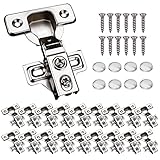
Overview: The KONIGEEHRE 20-pack delivers comprehensive soft-close functionality for both face frame and frameless cabinets. These 1/2" overlay hinges feature integrated dampening systems that ensure quiet, controlled closing every time. With 100-degree opening capability and 6-way adjustability, installation and fine-tuning become straightforward processes. The stainless steel construction with nickel plating promises durability, while the included mounting screws and detailed manual simplify DIY projects.
What Makes It Stand Out: The exceptional 6-way adjustability sets these hinges apart, allowing precise alignment after installation. The manufacturer’s proactive approach to customer support, including detailed sizing videos and direct assistance offers, demonstrates confidence in their product. This commitment extends to a satisfaction guarantee that prioritizes customer experience over simple transactions.
Value for Money: At 20 hinges per pack, this offering provides excellent bulk value for kitchen renovations or multiple-room projects. The stainless steel construction ensures longevity that surpasses cheaper zinc alternatives. When compared to purchasing premium hinges individually, this pack delivers professional-grade hardware at a fraction of the cost per unit.
Strengths and Weaknesses: Strengths include versatile compatibility, robust materials, comprehensive adjustability, and strong customer support. The included hardware eliminates additional purchases. Weaknesses involve the 100-degree opening angle, which is slightly limited compared to 105-135 degree alternatives. The sizing complexity may confuse some buyers despite provided resources.
Bottom Line: These hinges represent an outstanding value for homeowners undertaking substantial cabinet upgrades. The combination of quality materials, adjustability, and customer support makes them a reliable choice for both novice and experienced DIYers.
7. COSYCOVE 2 Pairs 4 Packs Full Overlay Soft Close Cabinet Hinges,3/4 inch Face Frame Soft Close Hinges with Hydraulic Damper,Concealed 3D Adjustable for Frame&Frameless Cabinets

Overview: COSYCOVE’s full overlay hinges target safety-conscious users seeking premium functionality. Designed for 3/4" overlay applications, these four hinges feature innovative small-angle cushioning that prevents finger pinching during operation. The hydraulic damper ensures whisper-quiet closing, while 3D adjustability accommodates both frame and frameless cabinet styles with precision.
What Makes It Stand Out: The two-stage opening mechanism with adjustable stopping points at 45°, 85°, and 105° delivers unprecedented control over door positioning. This feature proves invaluable for hands-free access while cooking or organizing. The early engagement soft-close system activates at minimal angles, providing superior safety for households with children compared to standard hinges.
Value for Money: While only four hinges per pack limits large-scale applications, the advanced engineering justifies the premium pricing. These hinges compete with cabinetmaker-grade hardware costing significantly more per unit. For targeted installations on frequently used cabinets, the investment in safety and convenience yields substantial returns.
Strengths and Weaknesses: Strengths include exceptional safety features, versatile angle control, corrosion-resistant construction, and smooth hydraulic operation. The 3D adjustability simplifies installation challenges. Weaknesses center on the small pack size and higher cost per hinge, making them impractical for whole-kitchen renovations. The 3/4" overlay may not suit all existing cabinet configurations.
Bottom Line: Ideal for premium kitchen upgrades or family homes prioritizing safety, these hinges excel in quality and innovation. Purchase for high-traffic areas where advanced features justify the investment.
8. DecoBasics 20 Pack 1/2" Overlay Black Cabinet Hinges for Cabint Doors (10 Pairs) – Partial Wrap Semi-Concealed Self-Closing Face Frame Hinge for Cupboard & Kitchen Doors w/Screws & Quiet Bumpers

Overview: DecoBasics offers a stylish alternative to standard chrome hinges with their matte black 1/2" overlay semi-concealed design. This 20-pack suits face frame cabinets exclusively, featuring a spring-loaded self-closing mechanism that engages when doors reach 30 degrees. The partial-wrap construction balances aesthetics with functionality for visible hinge applications.
What Makes It Stand Out: The scratch-resistant black finish provides an immediate modern aesthetic upgrade without cabinet replacement. DIY-friendly installation using existing holes reduces renovation time significantly. The inclusion of silicone quiet bumpers demonstrates attention to detail, softening the self-close action beyond typical spring hinges.
Value for Money: This pack delivers exceptional style-to-cost ratio for budget-conscious renovators. Transforming outdated brass or chrome hinges to contemporary black hardware typically costs far more through specialty retailers. The 20-hinge quantity accommodates most standard kitchens while maintaining affordability per unit.
Strengths and Weaknesses: Strengths include striking aesthetics, bulk quantity, straightforward installation, and effective self-closing function. The upgraded matching screws maintain cohesive design. Weaknesses involve the lack of true soft-close dampening, face frame limitation, and semi-concealed design that may not suit all style preferences. The 30-degree activation requires firm door closure.
Bottom Line: Perfect for aesthetic-driven updates on a budget, these hinges modernize kitchens efficiently. Choose them when style priorities exceed the need for advanced soft-close technology.
9. Ravinte 5 Pairs 10 Packs Full Overlay Cabinet Door Hinges,105 Degree Adjustable Concealed Kitchen Cabinet Hinges Soft Close for Face Frame Cabinet
Overview: Ravinte’s 10-pack provides full overlay soft-close hinges optimized for face frame cabinets. These nickel-plated steel hinges feature built-in dampers that activate below 30 degrees, ensuring silent closure. With 105-degree opening capability and 2mm seam adjustment, they offer flexibility for standard kitchen and bathroom applications where quiet operation is paramount.
What Makes It Stand Out: The comprehensive 365-day evaluation period demonstrates extraordinary manufacturer confidence, allowing full-year testing before commitment. The precise 32mm screw hole pattern with 10mm edge distance accommodates European-standard drilling, ensuring compatibility with most modern cabinet doors. Each hinge includes four 15.5mm mounting screws for complete installation.
Value for Money: Ten hinges per pack positions this offering between bulk economy and premium small packs. The extended warranty adds intangible value, effectively reducing risk to zero. Compared to big-box retailer alternatives, these provide superior materials and guarantee at competitive pricing.
Strengths and Weaknesses: Strengths include generous opening angle, solid steel construction, clear adjustment mechanisms, and unmatched warranty terms. The included installation instructions simplify mounting. Weaknesses include face frame exclusivity, limiting versatility. The pack size may leave surplus hinges for smaller projects or require multiple packs for large kitchens.
Bottom Line: A reliable mid-range choice backed by exceptional warranty coverage. These hinges suit homeowners wanting proven performance with long-term peace of mind.
10. Chibery 2 Pack 1 Pairs 135° Lazy Susan Hinge, Full Overlay Concealed for Corner Kitchen Cabinet Replacement Hardware, Cupboard Folded, Folden Door

Overview: Chibery addresses the specialized corner cabinet market with these 135-degree Lazy Susan hinges. Designed for folded doors on corner installations, this two-pack provides replacement hardware for challenging spaces where standard hinges fail. The full overlay concealed design maintains clean sightlines while enabling wide-angle access to deep cabinet interiors.
What Makes It Stand Out: The 135-degree opening angle specifically targets corner cabinet functionality, solving a common renovation pain point. Six-way/3D adjustability accommodates varying door thicknesses and alignment challenges inherent to corner installations. The clip-on plate design simplifies removal for maintenance or adjustment without complete disassembly.
Value for Money: While only two hinges per pack, specialty corner hardware commands premium pricing due to limited alternatives. The cost per hinge reflects engineering specificity rather than bulk economy. For targeted corner cabinet repairs, this pack eliminates the need for expensive custom millwork solutions.
Strengths and Weaknesses: Strengths include perfect application fit, robust cold-rolled steel construction, comprehensive adjustability, and corrosion-resistant finishes. The clip-on feature adds practical maintenance benefits. Weaknesses are the extremely limited quantity and narrow application scope. The specialized nature requires precise measurement verification before ordering.
Bottom Line: Essential for corner cabinet repairs or Lazy Susan upgrades where standard hinges cannot function. Purchase with confidence for this specific application.
Understanding Overlay Hinges: The Foundation of Modern Cabinetry
What Exactly Are Overlay Hinges?
Overlay hinges are specifically designed for cabinet doors that sit on top of the cabinet face frame or frameless box edge, rather than fitting inside an opening. The “overlay” measurement—typically 1/2-inch, 3/4-inch, or full—determines how much the door covers the cabinet opening. These hinges accommodate the door’s position while providing smooth operation and, in premium models, sophisticated adjustment capabilities that let you fine-tune alignment after installation.
The engineering behind these seemingly simple components involves precise tolerances, material science, and ergonomic design. A quality overlay hinge manages lateral forces, distributes weight across mounting points, and withstands decades of repetitive stress without degradation. For cabinet makers, understanding these fundamentals separates rushed installations from master craftsmanship.
Full Overlay vs. Partial Overlay: Knowing the Difference
Full overlay hinges create that seamless, contemporary look where doors nearly touch each other, covering 99% of the cabinet face. They require specific cup depths and arm angles to achieve proper clearance—typically 0-3mm between doors. Partial overlay hinges, conversely, leave a deliberate reveal between doors, showing 1-2 inches of the face frame. This traditional aesthetic demands hinges with shorter crank arms and different mounting plate offsets.
The distinction isn’t merely visual; it affects hinge geometry, required boring distances from the door edge, and stress distribution. Installing a full overlay hinge on a partial overlay door results in binding and premature failure. Smart cabinet makers stock both types and educate clients on how each choice impacts overall kitchen design and functionality.
Why Your Choice of Hinge Matters More Than You Think
The Hidden Engine of Cabinet Functionality
That smooth, effortless door swing? The soft-close that never fails? The door that stays perfectly aligned after five years? These aren’t accidents—they’re direct results of hinge quality. Premium overlay hinges feature integrated damping systems, three-dimensional adjustability, and engineered polymer bushings that eliminate metal-on-metal wear. Cheap hinges use basic springs and unhardened steel that degrades within 18 months.
Consider this: a typical kitchen cabinet door opens 8-12 times daily. That’s over 4,000 cycles annually. Multiply that across a 30-cabinet kitchen, and you’re engineering a system that must withstand 120,000+ annual movements without failure. Your hinge choice determines whether you’re building heirlooms or callbacks.
How Hinges Impact Longevity and Client Satisfaction
Warranty claims and service calls eat profit margins faster than material costs. A failed hinge means a technician’s truck roll, potential door damage, and a client questioning your craftsmanship. Quality overlay hinges with robust closing mechanisms and corrosion-resistant finishes eliminate 90% of these issues. They also provide that intangible “premium feel” that generates referrals and justifies higher pricing.
The psychological impact is real. Clients physically interact with cabinet doors dozens of times daily. That consistent, satisfying operation becomes synonymous with your brand. Conversely, a squeaky, sagging, or misaligned door creates daily low-grade frustration that clients associate with poor workmanship, regardless of how beautiful the finish is.
Key Types of Overlay Hinges for Professional Cabinet Makers
European Cup Hinges: The Industry Standard
The 35mm cup hinge dominates modern cabinetry for good reason. Its concealed design, tool-free adjustment, and massive variety of configurations make it the Swiss Army knife of hinges. The cup depth—typically 11-13mm—provides substantial material engagement while the mounting plate system allows infinite customization for overlay distances, door thicknesses, and frame types.
Professional-grade European hinges offer integrated soft-close dampers that don’t protrude, maintaining that clean aesthetic. Look for models with clip-on mounting plates for rapid installation and detachment during finishing. The best versions feature stainless steel springs and zinc alloy arms that resist fatigue cracking after 200,000+ cycles.
Barrel Hinges: Traditional Meets Functional
For furniture-style cabinets or restoration work, barrel hinges provide authentic aesthetics with modern engineering. These surface-mounted options work beautifully on inset-overlay hybrid applications where you need visible hardware that complements period designs. Contemporary barrel hinges feature concealed adjustment screws and ball-bearing pivots that deliver smooth operation without sacrificing traditional appearance.
The key specification is the barrel diameter relative to door thickness—too large and you’ll split stiles; too small and you’ll experience premature wear. Quality barrel hinges use oil-impregnated bronze bushings that self-lubricate and eliminate the need for periodic maintenance.
Pivot Hinges: For Specialty Applications
When you’re building tall pantry doors or heavy appliance garages, standard hinges can’t handle the load. Pivot hinges distribute weight vertically through the floor and ceiling plates, allowing doors up to 96 inches tall to swing effortlessly. Modern pivot systems include adjustable tension and integrated soft-close mechanisms that weren’t available five years ago.
The critical measurement is the pivot point offset from the door edge. Too close and you get insufficient clearance; too far and the door swings into adjacent cabinetry. Premium pivot hinges offer micro-adjustment of this offset after installation—a lifesaver for correcting unforeseen site conditions.
Concealed Hinges: The Invisible Workhorse
Beyond European cup hinges, true concealed overlay hinges mount entirely within the cabinet structure, leaving zero visible hardware. These excel in ultra-modern designs where even a hinge cup is unacceptable. They require precise mortising and typically offer less adjustment range, but deliver unparalleled clean lines.
The trade-off is installation complexity. You’ll need a dedicated mortising jig and patience for test fitting. However, for high-end minimalist projects, they’re non-negotiable. Look for versions with breakaway features that prevent door damage if a client exceeds weight ratings.
Critical Features to Evaluate Before Buying
Adjustability: The Three-Dimensional Advantage
Professional-grade overlay hinges provide three-way adjustment: depth (in/out), height (up/down), and lateral (left/right). This triaxial capability lets you compensate for imperfect cabinet boxes, seasonal wood movement, and installation variances. The mechanism quality varies dramatically—cheap hinges use threaded screws that strip after two adjustments; premium versions feature cam-action systems with positive stops and tactile feedback.
Depth adjustment typically ranges ±2mm, height ±3mm, and lateral ±2mm. For frameless cabinetry, prioritize hinges with generous depth adjustment to accommodate varying door thicknesses. Face frame applications demand more lateral range to align reveals perfectly across multiple doors.
Soft-Close Mechanisms: Client Expectations in 2024
Soft-close isn’t a luxury anymore—it’s baseline expectation. The technology has bifurcated into hydraulic dampers and spring-loaded systems. Hydraulic dampers provide smoother, quieter operation but can be temperature-sensitive. Spring systems offer more consistent performance across climate zones but may feel slightly less refined.
Integrated dampers built into the hinge arm outperform add-on units every time. They’re protected from dust, provide consistent damping throughout the door’s travel, and don’t interfere with narrow stile applications. Check the damper’s cycle rating—quality units are tested to 50,000+ cycles without performance degradation.
Opening Angle: Maximizing Accessibility
Standard overlay hinges offer 110-degree opening, adequate for most applications. But corner cabinets, pull-out shelves, and appliance garages demand 165-degree or even 270-degree hinges. These wide-angle versions use complex linkage systems that require more mounting space but provide crucial clearance.
The hidden spec is the “dead angle”—the initial 10-15 degrees where damping isn’t engaged. Premium hinges minimize this zone, preventing doors from slamming during light touches. For aging-in-place designs, consider 90-degree restrictor hinges that prevent doors from opening into walkways.
Material Composition: Beyond Basic Steel
Not all steel is created equal. Cold-rolled steel with nickel plating offers decent performance for budget-conscious projects. For premium work, look for 304 stainless steel construction that resists corrosion from salt air, humidity, and cleaning chemicals. The best hinges use zinc alloy bodies for the arm mechanism—lighter than steel but with superior dimensional stability.
Internal components matter more than external appearance. Nylon bushings should be glass-filled for durability. Spring steel should be heat-treated and pre-stressed to prevent relaxation. Even the mounting screws deserve scrutiny—hardened steel with deep threads prevents stripping in hardwoods and MDF alike.
Materials and Finishes That Define Quality
Stainless Steel vs. Nickel: Making the Right Call
Stainless steel overlay hinges offer unmatched corrosion resistance for coastal installations, outdoor kitchens, and high-humidity bathrooms. The 304 grade provides the best balance of cost and performance, while 316 grade justifies its premium price for saltwater environments. The brushed finish hides fingerprints and matches modern appliance aesthetics.
Nickel-plated steel delivers a warmer tone that complements traditional designs. The key is plating thickness—quality hinges use 8-10 microns of nickel over copper flash for adhesion. Thin plating (under 5 microns) will wear through in 2-3 years, exposing base metal to rust. For painted cabinets, consider primed hinges that accept finish coats seamlessly.
Finish Durability: What Holds Up in Real Kitchens
Kitchens are chemical warfare zones. Lemon juice, vinegar, ammonia-based cleaners, and steam all attack hinge finishes. The best overlay hinges undergo salt spray testing (ASTM B117) for 48+ hours and pass 500+ hours of humidity chamber testing. Look for these ratings in technical specifications—reputable manufacturers publish them.
Physical abrasion matters too. Doors bump against other surfaces, cleaning cloths rub across hinges, and occasional impacts happen. Powder-coated finishes outperform liquid paints in scratch resistance but can chip if bent. PVD (Physical Vapor Deposition) finishes offer ultimate durability, bonding titanium nitride to the base metal at a molecular level. They’re worth the 30% premium for high-traffic commercial projects.
Installation Mastery: What Pros Need to Know
Boring Patterns and Standards
The 35mm cup bore is universal, but the drilling distance from the door edge varies by overlay type. Full overlay typically uses 3-5mm edge distance, while partial overlay needs 6-8mm. The mounting plate boring pattern is equally critical—32mm system holes are standard for frameless, but face frame plates require custom positioning.
Invest in a quality hinge boring machine with adjustable stops and depth control. Handheld drills with jigs work for occasional use but can’t match the speed and consistency of a dedicated machine. The best setups include vacuum hold-down and LED depth indicators that prevent blow-through on veneered doors.
Face Frame vs. Frameless: The Critical Distinction
Frameless cabinetry demands full-overlay hinges with mounting plates that attach directly to the cabinet side. The hinge arm geometry must accommodate the door overlaying the entire 3/4-inch or 1-inch panel edge. Face frame construction requires hinges that mount to the frame stile, often with built-in offset plates that position the door correctly relative to the frame reveal.
This isn’t just a mounting difference—it affects hinge selection entirely. Face frame hinges typically offer less adjustment range and require careful measurement of frame width. Many pros keep separate inventory for each system, using color-coded bins to prevent costly mix-ups on job sites.
Common Installation Pitfalls to Avoid
The number one mistake? Insufficient edge distance on the door bore. Too close to the edge and you’ll blow out the stile, especially on MDF or plywood. Always leave at least 3mm of solid material for full overlay, 5mm for partial. Use a backing block when boring to prevent blow-out on the backside.
Second mistake: mismatched hinge and mounting plate combinations. A hinge designed for 1/2-inch overlay won’t work with a plate for 3/4-inch overlay, even if the cup fits. Keep a reference chart in your shop showing compatible part numbers. Third issue: overtightening mounting screws, which strips the threads and eliminates adjustment capability. Use a torque-limiting screwdriver set to 8-10 Nm for consistent results.
Weight Capacity and Door Size Considerations
Calculating Load Requirements
Hinge weight ratings aren’t suggestions—they’re engineering limits based on cycle testing. A standard European cup hinge typically supports 15-20 pounds per pair, but that’s for doors under 40 inches tall. Taller doors create leverage that multiplies effective weight. The formula: actual weight × (door height ÷ 40) = effective load per hinge.
For solid wood doors, always calculate using the highest anticipated weight after finishing. A 24×48-inch oak door weighs 28 pounds unfinished but can approach 32 pounds after paint and hardware. That requires three hinges minimum, not two. Don’t forget to factor in handle weight—large pulls can add 2-4 pounds of offset load.
When to Use Multiple Hinges
Any door over 36 inches tall needs three hinges, not for weight but for warp prevention. The middle hinge maintains door flatness against seasonal humidity changes. For doors over 60 inches, consider four hinges with the middle two spaced closer together to create a “stiff zone” that resists racking.
Corner cabinet doors with pie-cut shapes require special consideration. The narrow stile can’t support standard hinge spacing, so you must use reinforced hinges with wider mounting plates. Some manufacturers offer “corner cabinet” specific hinges with 45-degree arm angles that distribute stress more effectively.
The Soft-Close Revolution: What to Look For
Hydraulic vs. Spring Systems
Hydraulic dampers use silicone fluid forced through precision orifices to control door speed. They’re whisper-quiet and provide consistent damping regardless of door weight (within rating). The downside? Fluid can thicken in cold environments and thin in extreme heat, affecting performance. Quality units use temperature-compensated fluid that maintains viscosity from -10°C to 60°C.
Spring-based systems rely on controlled coil compression. They’re more temperature-stable and generally less expensive. However, they can feel slightly “mechanical” and may not engage until the door is 15-20 degrees from closed. The best systems combine both: a spring for the main action and a small hydraulic damper for final closure.
Integrated vs. Add-On Dampers
Integrated dampers live inside the hinge arm, protected from dust and damage. They provide damping throughout the entire closing arc and don’t interfere with narrow stiles. Add-on dampers clip onto the hinge or cabinet side and work adequately but protrude slightly and can be knocked loose during aggressive cleaning.
For frameless cabinets with minimal reveal, integrated is the only viable option. Face frame applications can use add-ons if budget is constrained, but factor in the extra installation time. Some premium integrated systems allow you to toggle damping on/off—a valuable feature during installation when you need doors to swing freely.
Budgeting for Quality: Cost vs. Value Analysis
Entry-Level vs. Premium Hinges
Budget hinges ($2-4 each) use thin gauge steel, minimal plating, and basic springs. They’re fine for rental properties or utility rooms where aesthetics and longevity aren’t priorities. Mid-range hinges ($5-8) offer decent adjustability and integrated soft-close, suitable for most residential projects where you want reliability without premium pricing.
Premium hinges ($9-15+) justify their cost through faster installation (tool-free adjustments save 2-3 minutes per hinge), lower failure rates (under 0.5% vs. 5-8% for budget options), and brand recognition that reassures clients. For a typical kitchen with 30 doors, the $150-200 premium for top-tier hinges eliminates one service call, making it instantly profitable.
Bulk Purchasing Strategies for Cabinet Shops
Establish relationships with hinge distributors, not just retail suppliers. Distributor pricing typically saves 20-30% on case quantities of 100+ units. Standardize on two or three hinge models maximum to leverage volume discounts and simplify inventory. Track usage data to identify your true high-volume movers—it’s often fewer SKUs than you think.
Consider joining a buying cooperative with other local cabinet makers. Collective purchasing power unlocks tier pricing you can’t achieve alone. Store hinges properly: climate-controlled environment, original packaging, and first-in-first-out rotation. Improper storage causes plating degradation and spring fatigue even before installation.
2024 Trends Shaping Overlay Hinge Innovation
Tool-Free Adjustment Features
The latest generation of overlay hinges eliminates Allen keys entirely. Cam-based adjustments use integrated levers that click into detented positions, allowing one-handed tuning while supporting the door. Some models even include micro-adjustment wheels that provide 0.5mm increments for perfect alignment.
This innovation slashes installation time by 40% and eliminates the “drop and scratch” risk of fumbling with tools. For cabinet makers charging $75-100/hour, saving 30 minutes on hinge adjustment across a kitchen adds $50+ to project profit. The mechanisms are surprisingly robust—most use glass-filled nylon cams that maintain tolerance after thousands of adjustments.
Sustainable Manufacturing Practices
Eco-conscious clients increasingly ask about material sourcing. Leading hinge manufacturers now use recycled steel content (up to 70% in some lines) and PVD finishes that eliminate VOC emissions. Packaging has shifted to molded pulp instead of plastic blister packs. These details resonate with LEED and green building certifications.
Some European brands offer take-back programs for old hinges, recycling the steel and zinc components. While not yet mainstream in North America, it’s a differentiator for cabinet makers targeting environmentally aware markets. The performance of sustainable hinges matches or exceeds traditional manufacturing—this isn’t a compromise.
Smart Hinge Technology
Bluetooth-enabled hinges with integrated sensors sound gimmicky but serve real purposes. They can log door cycles to predict maintenance needs, send alerts if a door is left open (preventing energy waste in refrigeration units), and even integrate with home automation for “all doors closed” scenes. The technology adds $15-25 per hinge but appeals to tech-forward clients building smart homes.
More practical is the rise of “position memory” hinges that remember your adjustment settings. Remove the door for finishing, rehang it, and the hinge automatically returns to previous alignment. This uses simple mechanical indexing rather than electronics, adding minimal cost while solving a real workflow pain point.
Professional Tips for Hinge Selection
Matching Hinges to Cabinet Style
Shaker-style doors with narrow 2-1/4" stiles require compact hinges with minimal cup depth projection. Traditional raised-panel doors can accommodate standard hinges but benefit from decorative cover caps that match hardware finishes. Slab doors in high-gloss acrylic demand hinges with soft-close that engages early to prevent door slamming that could crack the finish.
For inset-overlay hybrid doors (popular in transitional designs), use hinges specifically designed for this application. Standard overlay hinges won’t provide proper clearance, and inset hinges lack the overlay geometry. The hybrid versions feature adjustable overlay plates that let you fine-tune the reveal where the door meets the frame.
Building a Hinge Inventory Strategy
Carry three tiers: budget white hinges for paint-grade utility cabinets, mid-range nickel for standard kitchens, and premium stainless for high-end projects. Stock the 50 most common configurations but maintain a relationship with a distributor who can overnight specialty items. Use a digital inventory system that alerts when stock drops below 20 units—running out mid-project is unprofessional and costly.
Create hinge kits pre-bagged for common door sizes: a labeled bag containing two hinges, mounting plates, and screws for 24-inch doors, another for 36-inch doors, etc. This eliminates job-site counting errors and speeds up installation. Store mounting plates separately from hinges—mixing them up is a common time-waster.
Maintenance and Longevity: Keeping Hinges Performing
Cleaning Protocols
Instruct clients to clean hinges quarterly with a damp cloth only—no chemicals. The factory lubrication is precisely applied; household cleaners strip it away, causing premature wear. For stubborn grease, recommend a drop of mineral oil on a cloth, never sprayed directly. Provide clients with a care card that specifies this—it’s a simple touch that prevents warranty calls.
For your own shop maintenance, periodically cycle through inventory, opening and closing stored hinges to redistribute lubricant and prevent spring set. This takes seconds per hinge but maintains performance. Store hinges away from finishing areas—overspray creates a sticky film that attracts dust and impairs function.
When to Replace vs. Repair
A squeaking hinge needs lubrication, not replacement. Use a dry PTFE spray that won’t attract dust. However, a hinge that won’t hold adjustment has worn cams and must be replaced—no amount of tightening will fix it. Sagging doors with stripped screw holes require new hinges with larger diameter screws or relocated mounting positions.
Teach clients the 5-year rule: in coastal or high-humidity environments, proactively replace hinges after five years even if functioning. The internal corrosion isn’t visible but leads to sudden failure. This preventive maintenance conversation positions you as a long-term partner, not just an installer.
Troubleshooting Common Hinge Problems
Sagging Doors
Sagging almost always stems from undersized hinges for the door weight, not installation error. First verify you’re within weight ratings. If so, the issue is likely compressed particleboard from overtightened screws. The fix: remove the hinge, inject wood hardener into the screw holes, and reinstall with longer screws (1-3/4" instead of 1-1/4") that anchor into solid material.
For face frame cabinets, check that the frame hasn’t pulled away from the cabinet side. This hidden failure creates sag that no hinge adjustment can correct. Reinforce with corner brackets before adjusting hinges.
Misalignment Issues
Doors that rub or have uneven reveals usually suffer from cumulative errors in cabinet box squareness. Use the hinge adjustments to compensate, but understand the limits. If a cabinet is 1/4-inch out of square, no hinge can fully correct it. The professional approach: fix the cabinet first, then fine-tune with hinges.
For persistent lateral misalignment, verify mounting plate positioning. A plate just 1mm off-center translates to 3mm at the door edge. Use a mounting template for every installation—eyeballing leads to callbacks.
Noisy Operation
Clicking during opening often indicates insufficient cup depth. The hinge arm is bottoming out in the cup bore. Add a 1mm shim under the mounting plate. Popping sounds usually mean the spring is catching on a burr in the stamped steel arm. A drop of oil may help, but replacement is the permanent solution.
Rattling when closed points to worn damping mechanisms. The fluid has leaked or the spring has lost tension. Replace both hinges on that door—mixing new and worn dampers creates uneven closing and stresses the new hinge prematurely.
Building Your Go-To Hinge Arsenal
Essential Hinges Every Shop Should Stock
Every cabinet shop needs these five hinge types in inventory: (1) Full-overlay 110-degree soft-close for standard frameless, (2) Partial-overlay 110-degree for face frame traditional, (3) 165-degree wide-angle for corners, (4) Compact 26mm cup for narrow stiles, and (5) Heavy-duty 40mm cup for doors over 25 pounds. Stock each in two finishes: nickel and stainless.
Mounting plates are equally critical. Keep standard 0mm plates for full overlay, 3mm plates for half-overlay, and 6mm plates for inset applications. Also stock angled plates for corner cabinets and thick-door plates for doors over 7/8-inch. Running out of plates mid-installation is like having tires without rims.
Specialty Hinges for Custom Projects
For truly custom work, invest in a small inventory of glass door hinges (clip-on versions for 1/4-inch glass), aluminum frame hinges for modern slab doors, and thick-door hinges for reclaimed timber projects. These aren’t everyday items, but having them available lets you say “yes” to lucrative custom work without a two-week ordering delay.
Consider a dedicated “problem-solver” kit containing hinges for unusual situations: 1-inch overlay hinges for retrofits, negative overlay hinges for beaded inset, and 270-degree hinges for appliance garages. This kit turns job-site surprises from crises into minor delays.
Frequently Asked Questions
What’s the difference between overlay and inset hinges?
Overlay hinges mount on the cabinet exterior with the door covering the opening, while inset hinges fit inside the cabinet with the door flush to the frame. They have completely different arm geometries and aren’t interchangeable. Overlay hinges provide adjustment for coverage distance; inset hinges focus on precise flush alignment.
How do I determine the correct overlay measurement for my cabinets?
Measure from the cabinet side edge to the door edge when closed. Full overlay is typically 3/4-inch to 1-1/4-inch, partial overlay is 1/2-inch to 3/4-inch, and inset is 0-inch. Always measure at multiple points—cabinets often aren’t perfectly square. Use the smallest measurement to select hinges.
Can I mix soft-close and standard hinges in the same kitchen?
Technically yes, but it’s not recommended. Doors will close at different speeds, creating an inconsistent feel. Mixing also voids some manufacturer warranties. If budget constraints require it, install soft-close on upper cabinets where slamming is more noticeable and standard on lower cabinets.
Why do my hinges squeak after six months?
Most likely, the factory lubricant has dried or dust has contaminated the mechanism. Apply a single drop of dry PTFE lubricant to each pivot point. Avoid WD-40—it attracts dust. If squeaking persists, the hinge may have a manufacturing defect in the bushing. Replace it; squeaking indicates wear that will lead to failure.
What’s the maximum door weight per hinge pair?
Standard European cup hinges support 15-20 pounds per pair for doors under 40 inches tall. Heavy-duty versions handle 25-30 pounds. Always use three hinges for doors over 20 pounds or 36 inches tall. For doors over 30 pounds, use four hinges or pivot hinge systems. Check manufacturer specs—weight ratings assume proper installation into solid material.
How much adjustability should I expect from premium hinges?
Quality overlay hinges provide ±2mm depth, ±3mm height, and ±2mm lateral adjustment. Some premium models offer ±4mm height for easier installation. The adjustment should feel precise, not sloppy, with detents that hold position. If you can move the adjustment screw more than 1/4 turn without resistance, the cam mechanism is worn.
Are stainless steel hinges worth the extra cost?
For coastal areas, outdoor kitchens, or high-humidity bathrooms, absolutely. Stainless steel prevents corrosion that leads to binding and failure. For dry climates and interior applications, quality nickel-plated steel performs equally well at 30% less cost. The finish durability is comparable; it’s the substrate corrosion resistance you’re paying for.
Can I replace just one hinge, or should I replace pairs?
Always replace hinges in pairs. A new hinge has different closing force and damping than a two-year-old hinge, creating uneven stress that warps the door and accelerates wear on the old hinge. The exception is if you have a spare from the original batch installed at the same time. Keep extra hinges from each project for this reason.
What’s the shelf life of unused hinges?
Stored properly in climate-controlled conditions, hinges last indefinitely. However, springs can take a “set” if left compressed for years. Cycle stored inventory annually. In humid environments, plating can oxidize after 3-4 years even in packaging. Date your inventory and use oldest stock first. Discard any hinge with visible corrosion or stiffness out of the package.
How do I handle warranty claims on failed hinges?
Document everything: purchase date, installation photos, door weight and dimensions, and failure mode. Reputable manufacturers require this information. Most offer 5-10 year warranties on premium lines. Keep a log of hinge failures by brand—patterns indicate systemic issues, not random defects. This data informs future purchasing decisions and strengthens warranty claims.
See Also
- The Complete Guide to the 10 Best Overlay Hinges for Cabinet Refacing
- How to Solve Cabinet Misalignment with the 10 Best Overlay Hinges in 2026
- 10 Best Budget Cabinet Hinges Under $20 for DIY Kitchens
- 10 Best Budget Cabinet Hinges Under $30 for DIY Kitchens
- 10 Best Cabinet Hinges for Soft-Close Drawers This Year