Table of Contents
Gone are the days when a simple knock on the wall sufficed for finding studs. As we navigate through 2026, the modern homeowner faces increasingly complex wall structures—layered drywall, metal framing, dense insulation, and intricate electrical systems that demand precision. Whether you’re mounting a 75-inch OLED TV, installing floating shelves that actually hold weight, or simply trying to avoid turning a simple picture-hanging project into an expensive electrical disaster, a multi-function wall scanner has evolved from a nice-to-have gadget into an essential DIY safety tool.
The technology packed into today’s scanners would have seemed like science fiction just five years ago. We’re talking about devices that can differentiate between copper pipes and electrical conduit, map entire wall sections in 3D, and sync with your smartphone to create permanent digital records of your home’s hidden infrastructure. But with this technological leap comes complexity—not all scanners are created equal, and the wrong choice can be worse than no scanner at all. Let’s dive deep into what separates the professional-grade tools from the toys, and how you can make an informed decision that matches your specific needs and skill level.
Top 10 Multi-Function Wall Scanners For Homeowners
Detailed Product Reviews
1. BOSCH GMS120-27 Professional Wall Scanner, Multi-Function Stud Finder, and Live Wire Detector for Electricians, Plumbers & Contractors
, Multi-Function Stud Finder, and Live Wire Detector for Electricians, Plumbers & Contractors](https://m.media-amazon.com/images/I/31Z3wqfJRyL._SL160_.jpg)
Overview: The BOSCH GMS120-27 represents the gold standard for professional wall scanning, engineered specifically for tradespeople who cannot afford mistakes behind drywall. This multi-function detector goes far beyond basic stud finding, delivering precise location data for wood studs, metal framing, copper pipes, and critically, live AC wiring.
What Makes It Stand Out: Professional-grade durability sets this apart. The IP54-rated dustproof and water-resistant construction with shock-absorbing rubber casing survives daily jobsite abuse. The color-coded marking ring provides instant visual feedback—green for safe, red for live wire—eliminating guesswork. Dual power flexibility (AA batteries or Bosch Li-Ion) ensures zero downtime.
Value for Money: While commanding a premium price, this tool justifies its cost for professionals through accident prevention alone. A single avoided disaster (drilling into live wiring or plumbing) pays for the unit. Compared to replacing cheaper alternatives that fail mid-project, the investment in Bosch reliability delivers measurable ROI.
Strengths and Weaknesses: Strengths include exceptional accuracy, robust build quality, clear graphical display, and versatile power options. The IP54 rating ensures longevity in harsh environments. Weaknesses include the premium price point that may deter casual DIYers, and the Li-Ion battery is sold separately. It’s arguably over-engineered for occasional home use.
Bottom Line: For electricians, plumbers, and contractors who prioritize safety and precision, this is non-negotiable professional equipment. DIY enthusiasts should consider whether their usage frequency warrants the investment.
2. Stud Finder Wall Scanner, 5 in 1 Multifunction Stud Locator with Upgraded Smart Sensor, HD LCD Display and Audio Alarm for The Center & Edge of Metal, Studs, AC Wire, and Pipe Detection (Lemon)

Overview: The Jurgen K 5-in-1 stud finder positions itself as a versatile mid-range solution for homeowners and DIY enthusiasts tackling projects from picture hanging to full renovations. This multi-mode scanner promises reliable detection across various materials and depths without the premium price tag of professional brands.
What Makes It Stand Out: The five distinct scanning modes (1/2", 1", 1.5" stud depths, metal scan at 60mm, and AC scan at 51mm) provide tailored precision for different wall compositions. Its multi-sensing technology simultaneously checks for edges and centers, while the HD LCD display with pecking-shape visualization and continuous audio alarm makes interpretation intuitive even for novices.
Value for Money: This unit strikes an appealing balance between capability and affordability. It includes a 9V battery and offers performance that exceeds basic magnetic finders while costing significantly less than professional units. For occasional to moderate use, it delivers dependable results without over-investing in contractor-grade equipment.
Strengths and Weaknesses: Strengths include the ergonomic non-slip grip, clear backlit display, auto-calibration function, and multiple depth modes for versatility. The audio and visual alerts enhance user confidence. Weaknesses involve potential durability concerns under heavy daily use and less established brand reputation compared to legacy manufacturers. Accuracy may vary on particularly dense or irregular surfaces.
Bottom Line: An excellent choice for DIYers and homeowners seeking reliable detection capabilities without professional-grade costs. It handles most residential projects competently, though tradespeople should opt for more robust alternatives.
3. Handstar Stud Finder Wall Scanner - 6-in-1 Upgraded Multifunction Auto Detection with LCD Display & Audio Alarm for Wood, Metal & AC Wires, Ideal for Home DIY & Professional Contractors (Orange)
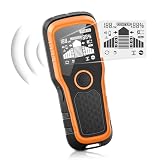
Overview: Handstar’s 6-in-1 stud finder distinguishes itself through intelligent automation, targeting users who want professional capabilities without complexity. This upgraded scanner automatically detects material types and depths, making it accessible to beginners while offering the precision contractors demand across diverse wall surfaces.
What Makes It Stand Out: The standout auto-detect mode eliminates manual switching, seamlessly identifying wood studs (1.5"), magnetic metals (3.94"), non-magnetic metals (3.15"), and live AC wires (2"). The backlit LCD displays depth, signal strength, and magnetic indication simultaneously. At just 0.35lb, its lightweight ergonomic design reduces fatigue during extended scanning sessions.
Value for Money: This scanner punches above its weight class, offering six modes including auto-detection at a competitive price point. Including a 9V battery adds immediate value. For DIYers and semi-pros, it bridges the gap between basic finders and premium professional tools without the steep learning curve or investment.
Strengths and Weaknesses: Strengths include the innovative auto-detection capability, deeper metal sensing than many competitors, stable upgraded processor, and user-friendly auto-calibration. The lightweight build enhances portability. Weaknesses center on the lesser-known brand reputation and potential long-term durability questions under rigorous professional use. The plastic construction may not match Bosch-level ruggedness.
Bottom Line: A smart purchase for home DIYers and light contractors prioritizing ease-of-use and versatility. The auto-detection feature alone justifies the cost, though heavy-duty professionals should verify durability for daily jobsite demands.
4. Handstar Stud Finder Wall Scanner - 6-in-1 Upgraded Multifunction Auto Detection with LCD Display & Audio Alarm for Wood, Metal & AC Wires, Ideal for Home DIY & Professional Contractors (Black)
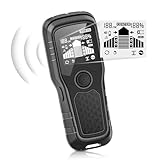
Overview: Functionally identical to its orange counterpart, the black Handstar 6-in-1 stud finder delivers the same intelligent auto-detection technology in a more understated aesthetic. This scanner targets the same dual audience of DIY enthusiasts and professional contractors seeking automated material identification without manual mode switching.
What Makes It Stand Out: The auto-detect mode remains the defining feature, automatically recognizing wood studs, magnetic/non-magnetic metals, and live AC wires across varying depths. The backlit LCD provides comprehensive feedback including depth measurements, signal strength ratios, and magnetic field indication. Its featherlight 0.35lb construction ensures comfortable one-handed operation.
Value for Money: Offering identical specifications and included 9V battery as the orange version, this black variant provides the same excellent value proposition. The six-mode functionality, particularly the auto-detection, competes with pricier alternatives while maintaining accessibility for users at all skill levels.
Strengths and Weaknesses: Strengths mirror the orange model: effortless auto-calibration, deeper detection ranges, clear visual and audio alerts, and ergonomic lightweight design. The color choice is purely aesthetic. Weaknesses include the same brand recognition limitations and uncertainty about heavy-duty jobsite longevity compared to established pro brands. The ABS plastic housing prioritizes weight savings over maximum impact resistance.
Bottom Line: Choose between black and orange based purely on personal preference or tool color-coding systems. Either way, you’re getting a capable, user-friendly scanner that excels in home DIY and light professional applications, with auto-detection as its killer feature.
5. Stud Finder Wall Scanner, 5 in 1 Multifunction Stud Locator with Smart Sensor, HD LCD Display and Audio Alarm for The Center & Edge of Metal, Studs, AC Wire, and Pipe Detection (Tropical Orange)
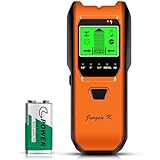
Overview: This Jurgen K 5-in-1 scanner, branded with tropical orange flair, delivers reliable multi-material detection for residential projects. Built for homeowners and DIYers, it promises consistent performance locating studs, pipes, and live wires across various wall surfaces without requiring professional-grade investment.
What Makes It Stand Out: The five-mode system offers precise depth selection (1/2", 1", 1.5" stud scans, 60mm metal, 51mm AC detection), allowing users to optimize sensitivity based on wall construction. Multi-sensing technology identifies both edges and centers simultaneously, while the HD LCD’s backlit display and pecking-shape indicator provide clear visual confirmation complemented by continuous audio alarms.
Value for Money: Positioned as an affordable yet capable option, this scanner includes a 9V battery and provides performance that surpasses basic electronic finders. For homeowners undertaking periodic projects, it offers essential safety features and accuracy without the cost of contractor-tier equipment, representing solid middle-ground value.
Strengths and Weaknesses: Strengths include straightforward auto-calibration, comfortable ergonomic grip, versatile surface compatibility (slats, wallpaper, soundproofing), and intuitive dual-alert system. The multi-depth modes add flexibility. Weaknesses involve potential consistency issues on complex wall structures and durability under frequent use. Brand recognition remains modest, and it may lack the precision demanded by full-time tradespeople.
Bottom Line: A dependable, budget-friendly scanner perfect for occasional home use and light renovation work. It provides peace of mind for DIY installations, though professionals should consider more rugged, precise alternatives for daily reliance.
6. Handstar Stud Finder Wall Scanner - 6-in-1 Upgraded Multifunction Auto Detection with LCD Display & Audio Alarm for Wood, Metal & AC Wires, Ideal for Home DIY & Professional Contractors (Light Silver)

Overview: The Handstar 6-in-1 Stud Finder represents a significant upgrade in wall scanning technology for both DIY enthusiasts and professional contractors. This versatile device automatically detects wooden studs, magnetic and non-magnetic metals, and live AC wires behind various wall materials including drywall, plaster, tile, and paneling. Weighing just 0.35lb with an ergonomic ABS shell, it promises comfortable extended operation for projects from simple picture hanging to complex renovations.
What Makes It Stand Out: The automatic detection mode distinguishes this scanner from competitors by seamlessly switching between materials without manual intervention. Its exceptional detection depths—wood studs up to 1.5 inches, magnetic metals up to 3.94 inches, non-magnetic metals up to 3.15 inches, and AC wires up to 2 inches—surpass typical consumer models. The backlit LCD clearly displays depth measurements, signal strength ratios, and magnetic indications, while audio alerts enhance accuracy in challenging lighting conditions.
Value for Money: This 6-mode unit offers professional-grade capabilities at a mid-range price point. The included 9V battery and ready-to-use design eliminate hidden expenses. Compared to basic 5-mode finders, the auto-detection feature and superior depth range justify any premium, preventing costly drilling errors and making it a worthwhile investment for serious users.
Strengths and Weaknesses: Strengths include automatic material detection, industry-leading depth range, stable readings across wall types, intuitive auto-calibration, lightweight ergonomic design, and dual feedback system. Weaknesses may include a slight learning curve for interpreting signal ratios and potential oversensitivity on heavily textured surfaces requiring slower scanning technique.
Bottom Line: This stud finder excels for users demanding reliable, deep detection across multiple materials. The auto-mode and professional-grade capabilities make it ideal for serious DIYers and contractors prioritizing safety and precision. While beginners need practice, the intuitive design and comprehensive features make it a top-tier choice worth the investment.
7. Stud Finder Wall Scanner, 5 in 1 Multifunction Stud Locator with Upgraded Smart Sensor, HD LCD Display and Audio Alarm for The Center & Edge of Metal, Studs, AC Wire, and Pipe Detection (Dull Black)

Overview: The Jurgen K 5-in-1 Stud Finder in dull black delivers reliable wall scanning capabilities for homeowners, DIY enthusiasts, and professionals. This multifunctional tool accurately locates studs, metal objects, and live AC wires behind various surfaces including painted walls, wood floors, and soundproof ceilings. Its upgraded smart sensor technology identifies both edges and centers, helping users avoid drilling hazards during installations and renovations.
What Makes It Stand Out: This scanner employs multi-sensing technology across five dedicated modes: 1/2 inch, 1 inch, and 1.5 inch stud scans, plus metal detection up to 60mm and AC wire detection up to 51mm. The HD LCD display provides clear visual feedback with a distinctive pecking shape indicator when targets are detected, complemented by continuous audio beeps. The ergonomic non-slip grip ensures comfortable extended operation.
Value for Money: This mid-range unit balances affordability with solid performance. The included 9V battery and auto-calibration feature add convenience. While it lacks automatic material detection of premium models, its dedicated scanning depths cover most residential and light commercial needs effectively, making it a cost-effective alternative to professional-grade equipment without sacrificing essential functionality.
Strengths and Weaknesses: Strengths include reliable multi-sensing technology, clear dual feedback displays, comfortable ergonomic design, straightforward calibration, and broad surface compatibility. Weaknesses include manual mode switching requiring user intervention, shallower metal detection than some competitors, and potential confusion for absolute beginners during initial setup.
Bottom Line: This stud finder serves as a dependable workhorse for typical home improvement tasks. The five scanning modes handle most situations adequately, though professionals might miss auto-detection. For DIYers seeking reliable performance without premium pricing, the Jurgen K delivers solid value and accuracy for everyday mounting and renovation projects.
8. Stud Finder Wall Scanner, 5 in 1 Multifunction Stud Locator with Upgraded Smart Sensor, HD LCD Display and Audio Alarm for The Center & Edge of Metal, Studs, AC Wire, and Pipe Detection (Tangerine)

Overview: The Jurgen K 5-in-1 Stud Finder in vibrant tangerine provides essential wall scanning for detecting studs, metal, and AC wires. Designed for DIYers and professionals, this tool operates on diverse surfaces from wallpapered walls to acoustic ceilings. Its upgraded smart sensor and clear feedback systems simplify locating safe drilling zones for home installations and renovation work, combining functionality with distinctive styling.
What Makes It Stand Out: Beyond its eye-catching color, this scanner uses multi-sensing technology to identify edges and centers of hidden objects. Five modes offer precise scanning at 1/2 inch, 1 inch, and 1.5 inch depths for studs, plus dedicated metal and AC detection. The HD backlit LCD features a unique pecking-shape visual cue alongside continuous audio alerts, ensuring target detection even in noisy environments or poor lighting.
Value for Money: This competitively priced 5-in-1 unit includes a 9V battery and delivers professional features at a consumer price point. While manual mode selection requires more user input than auto-detect models, the dedicated depth settings provide targeted accuracy that prevents false positives. For budget-conscious buyers needing reliable performance beyond basic finders, this represents excellent functionality per dollar.
Strengths and Weaknesses: Strengths encompass accurate multi-depth scanning, dual feedback displays, ergonomic non-slip grip, low-battery indicator, and broad surface compatibility. Weaknesses involve the manual calibration sequence that may frustrate first-time users, absence of automatic material detection, and slightly slower scanning process requiring mode changes between materials.
Bottom Line: This tangerine stud finder is a practical choice for users comfortable with manual operation. The five distinct modes deliver precise results for standard home projects, making it ideal for DIY enthusiasts who value accuracy over automation. Professionals might prefer auto-detect models, but this unit’s reliability and price make it a smart addition to any homeowner’s toolkit.
9. Universal Scanner Holder,Barcode Scanner Holder,Barcode Reader Bracket Wall Mount Fit for Zebra Symbol LS2208 DS2278 LI4278 Most Barcode Scanners, with Screws & Wall Stickers (Holder-A1)

Overview: The Holder-A1 Universal Scanner Bracket provides a practical mounting solution for Zebra Symbol barcode scanners including LS2208, DS2278, and LI4278 models. Constructed from industrial-grade plastic, this durable holder supports both wall and desktop installation. Designed for retail, warehouse, and logistics environments, it keeps scanners accessible while reducing workspace clutter and preventing device damage.
What Makes It Stand Out: The upgraded hole design accommodates front and side fixing, offering unusual flexibility for various operational layouts. Unlike proprietary mounts, this universal bracket fits most Zebra Symbol scanners, making it ideal for businesses with mixed device inventories. The inclusion of both screws and adhesive wall stickers enables quick installation without specialized tools or permanent drilling.
Value for Money: This affordable accessory delivers significant ROI by extending scanner lifespan and improving workflow efficiency. The rugged construction ensures long-term durability, while universal compatibility eliminates need for multiple proprietary mounts. For businesses deploying several scanner models, this single SKU solution reduces procurement costs and simplifies inventory management compared to manufacturer-specific alternatives.
Strengths and Weaknesses: Strengths include broad Zebra Symbol compatibility, dual mounting options, durable industrial plastic construction, included hardware, and space-saving design. Weaknesses are limited to Zebra/Symbol scanners (not truly universal), adhesive mounting may fail on textured surfaces, and the utilitarian design prioritizes function over aesthetics for customer-facing areas.
Bottom Line: This scanner holder is an essential accessory for any Zebra Symbol scanner deployment. The flexible mounting and broad compatibility make it perfect for warehouses, retail backrooms, and logistics operations where quick scanner access improves productivity. While not suited for non-Zebra scanners, its durability and thoughtful design offer excellent value for targeted applications.
10. Universal Barcode Scanner Holder | Wall Mount Bracket for Zebra LS2208, DS2278, LI4278 & Most Symbol Barcode Readers | Includes Screws & Adhesive Wall Stickers

Overview: This Universal Barcode Scanner Holder offers a robust mounting solution specifically engineered for Zebra LS2208, DS2278, LI4278, and most Symbol barcode readers. Built from industrial-grade plastic, the bracket supports both wall and desktop configurations. It targets commercial environments like retail stores, supermarkets, and logistics centers where scanner accessibility directly impacts operational efficiency and employee productivity.
What Makes It Stand Out: The dual-position design uniquely supports front and side installation, adapting to space constraints and user preferences. Its precise compatibility with numerous Zebra models—from the popular LS2208 to industrial DS3608—provides rare versatility. The package includes both permanent screws and strong adhesive stickers, enabling secure mounting on various surfaces without drilling, offering true installation flexibility.
Value for Money: This holder delivers exceptional ROI by protecting expensive scanners from drops and damage while optimizing workspace organization. The universal fit across multiple Zebra generations prevents obsolescence during hardware upgrades. For multi-location businesses, standardizing on this mount reduces costs versus purchasing OEM brackets, making it a financially sound infrastructure investment.
Strengths and Weaknesses: Strengths feature extensive Zebra Symbol compatibility, flexible mounting orientations, heavy-duty construction, complete installation kit, and professional appearance. Weaknesses include scanner-specific design excluding other brands, adhesive option unsuitable for high-vibration environments, and plastic material that may crack under extreme impact compared to metal alternatives.
Bottom Line: This bracket is a must-have for businesses standardized on Zebra Symbol scanners. The adaptable mounting and comprehensive compatibility streamline deployments across warehouses, checkout counters, and distribution centers. While limited to Zebra ecosystem devices, its quality construction and installation flexibility provide outstanding value for commercial scanner management needs.
Why Every Homeowner Needs a Multi-Function Wall Scanner in 2026
The walls in modern homes have become multilayered puzzles. Between 2020 and 2026, building codes evolved to require more extensive fire-blocking, soundproofing, and smart-home wiring chases. A standard stud finder that simply detects density changes won’t cut it anymore. Multi-function scanners now serve as your X-ray vision, revealing not just where you can drill, but more importantly, where you absolutely shouldn’t.
Beyond the obvious safety implications—avoiding 240V electrical lines and pressurized water pipes—these tools save money. One misplaced hole can cost hundreds in plumbing repairs or create a fire hazard that endangers your entire family. For the investment-minded homeowner, a quality scanner pays for itself with a single prevented disaster.
Understanding Wall Scanner Technology: The Science Behind Detection
How Multi-Function Scanners Differ from Basic Stud Finders
Basic stud finders operate on simple capacitance detection—they sense density changes behind drywall. Multi-function scanners, however, employ a sophisticated array of technologies: radar-based radio frequency (RF) waves, electromagnetic field (EMF) sensors, and advanced signal processing algorithms. This combination allows them to not only detect objects but identify their material composition. A pipe reads differently than a stud, which reads differently than live wiring. The best scanners in 2026 use phased-array scanning, similar to medical ultrasound technology, creating a detailed cross-sectional view of your wall cavity.
The Evolution of Scanning Technology: What’s New in 2026
This year’s breakthrough is adaptive frequency modulation. Unlike fixed-frequency scanners that struggle with varying wall densities, 2026 models continuously adjust their signal frequency in real-time. They also feature machine learning algorithms that improve accuracy over time, recognizing patterns specific to your home’s construction. Some premium models now include thermal imaging overlays, detecting temperature differentials that indicate heating pipes or electrical hotspots. The integration of edge-computing means processing happens instantly on the device, eliminating the lag that plagued earlier Bluetooth-connected tools.
Key Features to Look for in Modern Wall Scanners
Detection Depth and Accuracy
Depth ratings matter, but not how you think. A scanner claiming 6-inch depth is useless if it can’t accurately identify what it found at 3 inches. Look for devices that specify discrimination depth—the ability to differentiate between multiple objects at different depths simultaneously. The sweet spot for residential work is 4-5 inches of effective discrimination depth, which handles standard ½-inch drywall, 3½-inch studs, and leaves margin for insulation and wiring. Accuracy should be within 1/16 inch horizontally for stud edges, with depth accuracy of ±1/8 inch.
Scan Modes: Stud, Metal, AC Wiring, and Beyond
Modern scanners offer dedicated modes, but the real value lies in simultaneous multi-mode operation. The best devices run all sensors concurrently, then use software to parse the data into distinct categories. Look for scanners with at least four distinct detection algorithms: wood stud detection (density-based), ferrous metal detection (magnetic), non-ferrous metal detection (eddy current), and live AC detection (electromagnetic field). Advanced models add dedicated modes for rebar detection in concrete and PVC pipe identification using dielectric constant measurement.
Display Technology: From LEDs to Full-Color LCDs
LED arrays are outdated. In 2026, minimum viable is a backlit monochrome LCD showing depth indicators and material icons. Premium scanners feature full-color TFT displays with depth-graded color coding—reds for shallow hazards, yellows for mid-depth objects, greens for deep structural members. The display should show a real-time signal strength graph, not just icons. This waveform display lets you interpret ambiguous signals manually, a crucial feature when scanning walls with unusual construction.
Calibration and Auto-Correction Capabilities
Manual calibration is a deal-breaker. Your scanner should auto-calibrate within 2-3 seconds of powering on, then continuously self-correct for temperature, humidity, and wall composition changes. Look for devices with gyroscopic stabilization that compensates for hand tilt—scanning at even a 5-degree angle can shift readings by half an inch. The best scanners include a calibration verification mode that scans a known reference point (often the included calibration card) to confirm accuracy before each project.
Battery Life and Power Management
Lithium polymer batteries dominate in 2026, but capacity varies wildly. A scanner should deliver minimum 8 hours of continuous scanning on a single charge. More importantly, examine the standby power consumption—some devices drain 15% overnight. Premium models feature motion-activated sleep modes and haptic feedback that reduces display power consumption. USB-C fast charging is now standard; avoid any device still using micro-USB or proprietary chargers.
Advanced Features That Set Premium Scanners Apart
Bluetooth Connectivity and Smart App Integration
Bluetooth 5.3 connectivity with low-energy protocol is the baseline. The accompanying app should do more than display readings—it should allow you to photograph the wall, overlay scan data as augmented reality markers, and store projects in the cloud. Look for apps with CAD export capabilities, letting you email a wall map to contractors. The best integrations include voice-to-text annotation, so you can verbally note “load-bearing stud” or “HVAC duct” while scanning.
3D Mapping and Visualization
True 3D mapping requires multiple scan passes in a grid pattern. The scanner captures depth data every 1/4 inch, then reconstructs a volumetric model of the wall cavity. This isn’t just a gimmick—it reveals diagonal bracing, double-stud configurations, and intersecting utilities that single-line scans miss. The visualization should be rotatable and sliceable, letting you view cross-sections at any point. Some scanners now include “time-lapse” scanning that shows how readings change with pressure, useful for detecting flexible pipes versus rigid conduit.
Multi-Depth Simultaneous Scanning
This feature separates $200 scanners from $50 ones. Instead of switching between shallow and deep modes, advanced units scan all depths simultaneously, displaying a layered view. You might see a copper pipe at 1 inch, electrical cable at 2 inches, and stud at 3½ inches, all on screen at once. This requires massive processing power but eliminates the common mistake of thinking a shallow scan reveals everything. The display uses transparency effects to show deeper objects behind shallower ones.
Voice Alerts and Audio Feedback Systems
Visual displays require you to watch the scanner, not the wall. Quality voice alerts announce “stud detected” or “live wire warning” through a small speaker, with volume adjustable for noisy job sites. More sophisticated systems use tonal feedback—pitch changes indicate depth, while timbre changes signal material type. This lets you keep your eyes on the scanning path, ensuring straight, consistent passes. The best systems offer customizable alerts, letting you disable non-critical notifications during simple stud-finding tasks.
Material-Specific Scanning Considerations
Detecting Wood Studs in Different Wall Types
Standard 2x4 studs are easy, but modern construction uses engineered lumber, metal studs, and staggered configurations. In 2026, scanners must handle LVL (laminated veneer lumber) beams that are denser than traditional wood, and finger-jointed studs that create false gaps in readings. For lath and plaster walls, look for scanners with “legacy mode” that increases signal power and uses averaging algorithms to penetrate the dense plaster while filtering out the metal lath mesh.
Locating Metal Pipes and Conduits
Differentiating between ferrous (steel) and non-ferrous (copper, aluminum) metals is crucial. Copper water pipes require careful drilling around; steel conduit might be okay to anchor into. Premium scanners display metal type icons and estimate diameter. For cast iron drain pipes (common in renovations), you need a scanner with low-frequency radar that can penetrate the pipe’s thickness and detect the void inside, preventing you from mistaking it for a solid structural member.
Identifying Live AC Wiring Safely
AC detection should work without direct contact and identify voltage range. The best scanners differentiate between 120V and 240V circuits, showing approximate wire gauge based on field strength. Look for devices with “safe mode” that automatically alerts when within 2 inches of live wiring, regardless of selected scan mode. Some scanners now include GFCI trip testing, sending a small signal that can trigger a GFCI outlet, confirming the circuit’s presence without risk.
Scanning Through Dense Materials: Concrete and Plaster
Standard scanners fail on concrete walls thicker than 2 inches. For basement renovations or urban loft projects, you need a scanner with ground-penetrating radar (GPR) capabilities, typically found in professional-grade tools. These operate at lower frequencies (1-2 GHz versus 5-7 GHz for drywall) and require slower scan speeds. For plaster walls, the key is dynamic gain control—the scanner automatically adjusts signal amplification as it moves over inconsistent plaster thickness.
Ergonomics and User Experience Factors
Grip Design and Weight Distribution
You’ll scan for hours on big projects. A scanner weighing over 12 ounces causes fatigue. The ideal balance point should be directly under your index finger, with a rubberized overmold that prevents slipping even with dusty hands. Contoured grips that accommodate both left and right-handed users show attention to detail. Test the grip by simulating scanning motion—any pressure points will become painful after 20 minutes.
Button Placement and One-Handed Operation
Every function should be accessible without changing grip. Power, mode select, and marker buttons must fall naturally under thumb or finger. Avoid scanners with touchscreen-only interfaces; physical buttons provide tactile feedback when wearing gloves. The best designs include a “dead man’s switch”—the scanner only scans while a trigger is held, preventing accidental operation and saving battery.
Durability and Drop Resistance Ratings
Job sites are unforgiving. Look for IP54 minimum rating (dust-protected, splash-resistant) and drop-test certification from 6 feet onto concrete. The battery compartment should have a screw-lock or reinforced latch—impacts often pop open battery doors, causing data loss. Premium scanners use magnesium alloy chassis with polycarbonate overlays, while budget models rely on all-plastic construction that cracks in cold weather.
Safety Features and Certifications
Electrical Safety Ratings
Your scanner touches walls that may contain live wiring. Ensure UL 61010-1 certification for electrical measurement equipment. This guarantees the device can withstand accidental contact with up to 600V without passing voltage to the user. Avoid uncertified knockoffs that use cheap isolation transformers—these can fail catastrophically. The certification label should be molded into the housing, not a sticker that peels off.
Non-Destructive Testing Standards
For historical homes or critical structural walls, look for scanners meeting ASTM D6432 standards for non-destructive examination. This ensures the RF emissions won’t damage delicate materials like vintage plaster or interfere with pacemakers. The standard also requires specific documentation of accuracy tolerances, giving you legal recourse if the scanner’s failure leads to damage.
Warranty and Manufacturer Support
A 2-year warranty is industry standard, but read the fine print. Many exclude “commercial use,” which can be interpreted loosely. Premium brands offer 3-year warranties with accidental damage protection and loaner programs. Check for firmware support—some manufacturers abandon older models, leaving bugs unfixed. The best companies provide free annual calibration services at authorized centers.
Common Mistakes Homeowners Make When Using Wall Scanners
Improper Calibration Techniques
Even auto-calibrating scanners need proper initialization. The biggest error is calibrating against a wall with unknown contents. Always calibrate in a known safe zone—an exterior corner with confirmed empty bay works well. Never calibrate over a stud or near electrical outlets. Some users scan before the scanner completes its power-on self-test, resulting in baseline drift that throws off all readings.
Rushing the Scanning Process
Speed kills accuracy. The optimal scan speed is 2-3 inches per second—about the pace of a slow walk. Faster passes miss narrow objects like PEX tubing or individual wires. The scanner’s processor needs time to sample, analyze, and display. Watch for visual indicators on the display that confirm data acquisition; some show a scanning progress bar or confidence meter. Patience reveals diagonal bracing and double studs that rushed scans gloss over.
Ignoring Material Density Variations
Scanning from a drywall section into a tile backsplash without adjusting settings creates false positives. The scanner’s algorithms expect consistent dielectric properties. When transitioning between materials, pause, recalibrate if possible, or at minimum reduce scan speed by 50%. Similarly, scanning over wall repairs with joint compound creates density spikes that can mimic studs. Learn to recognize the “signature” of these anomalies—usually a sudden, sharp peak that doesn’t extend vertically.
Professional Tips for Accurate Wall Scanning
Creating a Scanning Grid Pattern
Professional contractors don’t scan random lines. They mark a level line at the desired mounting height, then scan horizontally every 4 inches vertically, creating a grid. This reveals vertical studs, horizontal blocking, and diagonal braces. Use painter’s tape to mark the grid, then scan each line systematically. For critical installations, scan the same line three times: once left-to-right, once right-to-left, and once at a 45-degree angle. Consistent readings across all three passes confirm accuracy.
Marking and Mapping Your Findings
Don’t rely on mental notes. Use colored painter’s tape: blue for stud centers, red for electrical, yellow for pipes. Mark both edges of each stud, not just the center—this prevents drilling into the edge where nails are concentrated. Photograph each marked section with your phone, then transfer to graph paper or a scanning app. For whole-room projects, create a master wall map showing all utilities, studs, and anomalies.
When to Scan Multiple Times
Scan once for location, then scan again perpendicular to your first pass to verify depth and material. If mounting heavy objects (over 50 lbs), scan again 24 hours later. Why? Temperature and humidity changes affect wall cavity conditions, potentially revealing objects that were at the edge of detection thresholds. Also scan after any drilling nearby—vibrations can shift loose insulation or wires, creating new hazards.
Price Ranges and Value Propositions
Budget-Friendly Options Under $50
These scanners typically offer single-mode operation (stud-only) with LED displays. They’re adequate for basic picture hanging in modern drywall construction but lack AC detection and depth discrimination. Expect 2-3 inch detection depth and no warranty support. The trade-off is risk—you’ll need to supplement with a separate voltage detector and manual probing. For renters or occasional DIYers, this might suffice, but homeowners planning renovations should view these as temporary solutions.
Mid-Range Scanners: $50-$150
This is the sweet spot for most homeowners. You’ll get multi-mode detection, LCD displays, and basic Bluetooth connectivity. Detection depth reaches 4-5 inches with reasonable accuracy. These scanners include auto-calibration and at least two years of firmware support. Look for models from established brands in this range—they often use the same sensors as premium lines but with simpler software. The key differentiator is processing speed; mid-range scanners may lag 0.5-1 second behind real-time scanning.
Professional-Grade Tools: $150+
Professional scanners justify their price through speed, accuracy, and durability. They scan at 10+ frames per second with zero perceptible lag, use sapphire-coated scanning plates that won’t scratch, and include calibration certificates traceable to NIST standards. The software suites offer project management features, team sharing, and integration with BIM (Building Information Modeling) systems. For homeowners undertaking whole-house renovations or buying older properties, this investment provides peace of mind that cheaper tools can’t match.
Maintaining Your Wall Scanner for Longevity
Proper Storage and Battery Care
Never store your scanner in an unheated garage. Lithium batteries degrade below freezing, and condensation forms on circuit boards when bringing cold tools into warm houses. Store in a climate-controlled space at 40-70% humidity. For long-term storage (over 3 months), discharge the battery to 50%—full charge storage stresses cells. Use the included case; even minor impacts can knock sensors out of alignment, requiring professional recalibration.
Software Updates and Firmware
Check for firmware updates monthly. Manufacturers release patches that improve detection algorithms and add features. Connect your scanner to its app and enable automatic updates, but never update immediately before a critical project. Wait a week after release to ensure the update is stable. Some updates require recalibration afterward, so factor in that time. Keep a log of firmware versions—if accuracy suddenly changes, you can correlate it to update timing.
Calibration Checks and Recalibration
Even without drops, scanners drift. Perform a monthly check using a known reference: a piece of ¾-inch plywood with a nail at a marked depth. If readings vary more than 1/16 inch, send the unit for recalibration. Most manufacturers charge $25-40 for this service, which includes sensor alignment, software verification, and battery health check. Annual recalibration is cheap insurance against a $500 mistake.
Troubleshooting Common Wall Scanner Issues
Inconsistent Readings and False Positives
If your scanner shows studs every 6 inches, you’re likely picking up drywall seams or insulation channels. Switch to “deep scan” mode to filter shallow anomalies. Inconsistent depth readings often indicate low battery voltage—even a 10% drop affects RF signal strength. If problems persist, perform a factory reset (usually holding power and mode buttons for 10 seconds) to clear corrupted calibration data.
Signal Interference from Nearby Electronics
Wi-Fi routers, smart home hubs, and even LED dimmers emit RF noise that confuses scanners. Turn off dimmers and move routers 10 feet away during scanning. Some scanners include a “noise floor” indicator showing ambient interference. If it reads above 20%, relocate or wait until electronic devices are idle. Microwave ovens are particularly problematic—never scan while someone’s cooking.
Battery Drain Problems
Rapid battery drain usually indicates a stuck button or constantly running backlight. Check for debris under buttons and reduce display brightness. If drain persists, the battery may have developed high internal resistance—a common issue after 300+ charge cycles. Replace the battery; most scanners use standard 18650 cells available online. Avoid cheap replacements; mismatched cells can overheat and damage the charging circuit.
Integrating Wall Scanners into Your DIY Workflow
Pre-Project Planning and Wall Assessment
Before purchasing a single bracket, scan every wall you’ll work on. Create a master map showing all structural and utility elements. This reveals load-bearing studs, unexpected blocking, and potential conflicts. For kitchen renovations, scan behind appliance locations to confirm electrical and plumbing routing before demolition. This 30-minute investment prevents mid-project surprises that derail timelines and budgets.
Combining Scanners with Other Measurement Tools
Your wall scanner should integrate with laser levels and digital tape measures. Some premium scanners include a built-in laser line that projects scan results directly onto the wall. For complex layouts, use a laser level to establish reference lines, scan along those lines, then transfer measurements to a digital plan. The synergy between tools eliminates the “measure twice, cut once” frustration—scan once, measure accurately, execute confidently.
Documenting Your Findings for Future Reference
Create a digital twin of your home’s walls. After scanning, export data to a PDF or CAD file and store in cloud storage. Include photos of marked walls for visual reference. When selling your home, this documentation is invaluable—it shows professional-grade care and helps future owners avoid hazards. For rental properties, laminated wall maps in utility rooms reduce tenant damage and liability.
The Future of Wall Scanning Technology
AI-Powered Material Recognition
Emerging scanners use convolutional neural networks trained on thousands of wall cross-sections. They don’t just detect objects; they identify them with 95%+ accuracy—distinguishing PEX from copper, Romex from BX cable, and even identifying rodent nests or water damage by density variations. These models learn your home’s specific construction quirks, improving accuracy with each use. Expect this to become standard by late 2026.
Augmented Reality Overlays
Next-generation scanners will project scan data directly onto walls using integrated pico-projectors. You’ll see colored outlines of studs, pipes, and wires painted on the surface in real-time as you scan. This eliminates the cognitive load of translating screen data to physical location. Some prototypes already integrate with AR glasses, allowing hands-free scanning with voice commands.
Cloud-Based Project Sharing
Collaborative scanning is coming. Multiple scanners in a home will share data in real-time, building a comprehensive map faster. Contractors and homeowners will scan simultaneously, with data merging in the cloud. This enables remote expert consultation—email a wall scan to a structural engineer who can annotate hazards from their office. Privacy concerns are being addressed with encrypted, homeowner-controlled data vaults.
Frequently Asked Questions
What’s the difference between a stud finder and a multi-function wall scanner?
A stud finder simply detects density changes to locate wood framing. A multi-function wall scanner identifies multiple materials (wood, metal, plastic), detects live electrical wiring, measures depth, and often includes mapping capabilities. Think of it as the difference between a metal detector and a ground-penetrating radar system.
Can wall scanners detect PVC pipes and PEX tubing?
Yes, but only advanced models with dielectric detection modes. Standard metal-detecting modes won’t find plastic pipes. Look for scanners specifically advertising “non-metallic pipe detection” that measure changes in material density and moisture content. Even then, detection depth is limited to 2-3 inches behind drywall.
How accurate are wall scanners compared to cutting exploratory holes?
Professional-grade scanners achieve 95-98% accuracy in ideal conditions (standard drywall, no interference). However, they should be considered a risk reduction tool, not a replacement for careful probing. Always verify critical locations with a small pilot hole and inspection camera. Scanners excel at telling you where not to cut.
Do I need to worry about RF emissions from wall scanners?
No. Wall scanners operate at milliwatt power levels, thousands of times weaker than a cell phone. They use pulsed signals, not continuous transmission, further reducing exposure. All certified scanners meet FCC Part 15 regulations for unintentional radiators. The risk is negligible compared to drilling blind into a live wire.
Why does my scanner give different readings on the same spot?
This usually indicates calibration drift, low battery, or environmental changes. Ensure the scanner is fully charged and recalibrate. Check for temperature changes—scanning a cold exterior wall then a warm interior wall affects readings. If inconsistency persists, the sensor array may be damaged from a drop, requiring professional service.
Can I use a wall scanner on exterior walls with insulation?
Yes, but with limitations. Batt insulation reduces effective detection depth by 30-40%. Blown-in insulation creates inconsistent density that can mask studs. For exterior walls, use deep scan mode, move slower (1-2 inches per second), and scan multiple passes. Consider the insulation type in your interpretation—spray foam creates a uniform density that makes detection easier than fiberglass batts.
How do I know if my scanner is detecting a stud or a pipe?
Material differentiation is key. Quality scanners display different icons or colors for wood versus metal. Studs typically show as vertical lines extending floor-to-ceiling, while pipes appear as isolated circles or short horizontal runs. Depth also helps—pipes are usually shallower (1-2 inches) than studs (3+ inches). When in doubt, scan vertically: studs run continuously, pipes intersect.
Should I scan before or after painting?
Always scan before painting. Fresh paint, especially metallic or high-sheen formulations, can temporarily affect scanner accuracy. More importantly, scanning before painting allows you to mark locations directly on the wall, then paint over the marks with a color-coded system that remains visible for future reference. Scan after painting only if you forgot a critical location.
What’s the learning curve for using a professional-grade scanner?
Expect 2-3 hours of practice to achieve basic proficiency. Professional scanners have more features but also better user interfaces. Spend time scanning known walls where you’ve opened up the cavity to verify readings. Most manufacturers offer tutorial videos and practice wall panels. The real learning is in interpreting ambiguous signals—experience teaches you the difference between a wire staple and a nail plate.
Can wall scanners detect asbestos or mold?
No, and any marketing suggesting otherwise is misleading. Asbestos detection requires polarized light microscopy of physical samples. Mold detection needs moisture meters and air quality tests. Some advanced scanners can detect moisture behind walls, which might indicate mold-conducive conditions, but they cannot identify mold species or asbestos fibers. Never rely on a scanner for environmental hazard assessment.
See Also
- 10 Best Multi-Function Wall Scanners for Detecting Pipes in 2026
- 10 Most Durable Multi-Function Wall Scanners Based on Real User Reviews in
- 10 Premium Multi-Function Wall Scanners for Home Inspectors (Worth the Investment)
- How to Solve Misaligned Mounting with the 10 Best Multi-Function Wall Scanners
- Stop Wall Damage with the 10 Best Multi-Function Wall Scanners This Year