Table of Contents
There’s nothing quite like the satisfaction of hanging a heavy mirror perfectly level on the first try, or mounting that new floating shelf without turning your drywall into Swiss cheese. But behind every successful wall-mounted project lies one critical question: where exactly is that stud? While electronic stud finders have flooded the market with beeps, lights, and digital promises, the humble magnetic stud finder remains the secret weapon of seasoned DIYers and professional contractors alike. No batteries to die mid-project, no calibration headaches, and no mysterious false positives—just simple, reliable physics working in your favor.
This year, as more homeowners tackle renovations themselves, understanding what makes a magnetic stud finder truly effective has never been more valuable. Whether you’re a weekend warrior building a garage organization system or a renter trying to secure furniture safely, choosing the right magnetic tool can mean the difference between a rock-solid installation and a costly mistake. Let’s dive deep into what separates exceptional magnetic stud finders from the gimmicks, and how you can leverage these deceptively simple tools for your quickest, most confident DIY projects yet.
Top 10 Magnetic Stud Finders For Diy
Detailed Product Reviews
1. CH Hanson 3040 - Magnetic Stud Finder
 Finder](https://m.media-amazon.com/images/I/41fJhlwSavL._SL160_.jpg)
Overview: The CH Hanson 3040 represents the gold standard of traditional magnetic stud finders, embodying decades of proven reliability in a compact, no-frills package. This veteran tool uses powerful rare-earth magnets to locate metal fasteners securing studs behind drywall, operating without batteries or electronic components that could fail. Its straightforward design appeals to professionals and homeowners who value simplicity over gadgetry, offering a tactile experience where the tool physically pulls toward hidden screws and nails. The integrated rotating level vial adds utility for basic alignment tasks, making it a versatile addition to any toolbox.
What Makes It Stand Out: What distinguishes this model is its dual-magnet configuration and rotating bubble level, features rarely found in budget magnetic finders. The compact 1.5-inch square body fits comfortably in any pocket, while the durable construction withstands years of job site abuse. Unlike electronic alternatives, it requires zero calibration or battery changes, ready for immediate use. The strong magnetic grip allows hands-free marking once a fastener is detected, and the built-in level eliminates the need for a separate tool during mounting tasks.
Value for Money: Priced between $8-12, this stud finder delivers exceptional ROI for drywall projects. It outperforms cheaper imitators with superior magnet strength and build quality, while costing a fraction of electronic models ($30-60) that often frustrate users with false readings. For occasional DIYers, it’s a one-time investment that never becomes obsolete.
Strengths and Weaknesses: Pros: Reliable, no batteries, durable, integrated level, pocket-sized, works through paint and texture. Cons: Limited to drywall, requires physical feel, no visual indicator, struggles with deep fasteners in plaster.
Bottom Line: The CH Hanson 3040 is the ideal entry-level tool for drywall work, perfect for renters and homeowners who need dependable stud detection without complexity. Skip it only if you regularly tackle plaster or require electronic precision.
2. (4-Pack) Calvana Magnetic Stud Finder Wall Scanner, Stud Finder Magnet, Wall Detector Scanner, Compatible with All Drywall Construction, No Batteries Required, Wall-Friendly Construction,Easy to Use
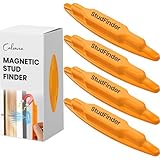
Overview: This four-pack set from Calvana targets contractors and avid DIYers who need multiple reliable stud finders for simultaneous use across job sites or different toolbox locations. Each unit employs powerful neodymium magnets to detect metal fasteners in drywall without batteries or calibration. The ergonomic grip design reduces hand fatigue during extended scanning sessions, while the durable plastic housing prevents wall marring. This bulk offering ensures you’re never without a stud finder when needed, making it practical for multi-room projects or team environments.
What Makes It Stand Out: The value proposition of four identical, capable tools at a competitive price point is unmatched. Each finder features an intentionally wall-friendly design with smooth edges and a comfortable grip uncommon in basic magnetic models. The consistent performance across all four units provides reliability for professionals who can’t afford downtime. The no-battery operation means these tools remain ready indefinitely, ideal for sporadic use in different locations.
Value for Money: At roughly $15-20 for the four-pack, the per-unit cost drops below $5, representing tremendous bulk savings compared to individual purchases. While premium magnetic finders cost $15-25 each, this set provides functional tools for multiple applications. The trade-off is modest—slightly less magnet strength than top-tier brands—but the quantity advantage outweighs this for most users.
Strengths and Weaknesses: Pros: Excellent bulk pricing, ergonomic design, wall-safe construction, no batteries, great for contractors. Cons: Individual units lack premium features, magnet strength adequate but not exceptional, no visual indicators.
Bottom Line: Perfect for property managers, contractors, or homeowners wanting backups in garage, kitchen, and toolbox. Accepts minor performance compromises for unbeatable quantity and value.
3. StudPoP® Original Smart Magnetic Stud Finder – No Batteries, No Calibration, 3X More Reliable, Perfect for Lath & Plaster, Metal Studs – Visual & Audible Indicator, Simple & Fun to Use – 1" Magnet

Overview: The StudPoP Original revolutionizes magnetic stud finding with its patented visual and audible detection system, addressing the primary limitation of traditional magnetic finders—reliance on tactile feedback. Its 1-inch diameter moving magnet produces a satisfying click and visible pop when locating fasteners, making it uniquely effective on challenging surfaces like lath and plaster where magnetic pull is subtle. This innovative approach eliminates guesswork, particularly valuable for owners of older homes with thick, irregular wall constructions that defeat conventional magnetic and electronic finders alike.
What Makes It Stand Out: The pop-up indicator mechanism sets this tool apart, providing unmistakable confirmation of fastener location without requiring users to feel faint magnetic attraction. This visual cue proves invaluable on plaster walls up to 1-inch thick, tile installations, and textured surfaces. The audible click offers dual-sensory confirmation, while the compact design maintains portability. Unlike electronic models, it never needs batteries or calibration, and unlike basic magnets, it communicates detection clearly.
Value for Money: At $18-22, it commands a premium over basic magnetic finders but costs far less than high-end electronic models. For plaster wall applications, it’s essentially priceless—saving countless hours of frustration and wall damage. The durability and timeless functionality ensure decades of reliable service, justifying the investment for anyone with non-standard walls.
Strengths and Weaknesses: Pros: Visual/audible indicators, excels on lath/plaster/tile, no batteries, intuitive operation, highly sensitive. Cons: Moving parts could wear, higher price point, slight learning curve, not ideal for standard drywall-only users.
Bottom Line: An essential tool for vintage home renovators. If you battle plaster walls, this is your solution. For basic drywall needs, simpler options suffice, but the StudPoP’s unique capabilities make it irreplaceable for specific challenges.
4. Powerful Magnetic Stud Finder PRO (Upgraded Version) Reinforced with 3 Neodymium Magnets - No-Battery Stud Detector - Deep Detection of Wood & Metal Studs in Drywall (Not for Plaster Walls) | 1 Pack

Overview: This upgraded PRO model targets serious DIY enthusiasts with its triple-neodymium magnet configuration and transparent, arrow-marked design. Measuring 4.72 inches long, it covers more surface area per pass than conventional finders, while the see-through body allows precise visual alignment over detected fasteners. The three-magnet array provides deeper detection capability, effectively locating screws through multiple paint layers, popcorn texture, and thin plaster applications. Built-in marking arrows enable direct drilling without separate wall marking, streamlining the hanging process.
What Makes It Stand Out: The transparent housing with integrated alignment arrows is genuinely innovative, offering hands-free operation once the tool magnetically adheres to a fastener. Users can drill directly through the tool’s guide holes, eliminating measurement errors. The triple-magnet design significantly increases detection depth and reliability compared to single-magnet competitors. Its larger scanning surface reduces search time, making it efficient for big projects like installing kitchen cabinets or mounting multiple shelving units.
Value for Money: Priced at $14-18, it occupies a sweet spot between basic magnets and electronic finders. The enhanced features—transparent design, triple magnets, and drilling guides—justify the modest premium over entry-level options. For users regularly mounting heavy items, the time saved and accuracy gained deliver strong ROI.
Strengths and Weaknesses: Pros: Triple magnets for deeper detection, transparent design with drill guides, large scanning area, hands-free marking, no batteries. Cons: Too large for tight spaces, not suitable for thick lath/plaster, may be overkill for occasional users.
Bottom Line: Ideal for active DIYers who prioritize speed and precision. The PRO version’s thoughtful upgrades make it worth the small premium, though plaster wall owners should look elsewhere.
5. 2 PCS Stud Finder, Magnetic Stud Finder Easy to Use, No Batteries Required, Rapid to Locate Screws, Nails, Metal Studs Through Drywall and Wood - Powerful Magnet Stud Finder

Overview: This two-pack offering delivers straightforward magnetic stud detection at an entry-level price point, targeting budget-conscious homeowners and occasional users. Each unit utilizes strong neodymium magnets to locate metal fasteners behind drywall without requiring batteries, calibration, or complex operation. The minimalist design focuses on core functionality—detecting screws and nails—while providing the redundancy of a backup tool. Compact and lightweight, these finders store easily in kitchen drawers, toolboxes, or junk drawers, ensuring accessibility for quick hanging tasks.
What Makes It Stand Out: The dual-pack value proposition stands out for renters and new homeowners building their tool collection. The no-frills approach eliminates potential failure points—no moving parts, no electronics, no batteries to corrode. The powerful magnets provide reliable detection through standard drywall and paint, while the simple operation requires zero learning curve. For those who misplace tools frequently, having two units proves practical.
Value for Money: Typically priced under $10 for the pair, this represents the lowest cost-per-unit option reviewed. While lacking advanced features, the functional magnets deliver accurate results on appropriate walls. The value is undeniable for users with basic needs, though professionals will require more robust single units.
Strengths and Weaknesses: Pros: Extremely affordable, two units included, no batteries, simple operation, adequate magnet strength. Cons: Basic design, no ergonomic features, limited to drywall, no visual/audio indicators, potential quality variance.
Bottom Line: A smart purchase for apartment dwellers and occasional DIYers. Keep one in your toolbox and one in your junk drawer. Don’t expect premium performance, but for hanging pictures and light-duty tasks, these deliver surprising reliability at rock-bottom pricing.
6. Klein Tools MSF100 Magnetic Stud Finder and Level, Compact, Wood and Metal Detector with Bubble Vial for Accurate Markings, Felt Pad Backing

Overview: The Klein Tools MSF100 elevates the magnetic stud finder category with professional-grade features. This compact tool combines reliable stud detection with integrated leveling capabilities, making it a dual-purpose asset for contractors and serious DIY enthusiasts. Its rare-earth magnet efficiently locates metal fasteners behind drywall, while the protective felt backing ensures your walls remain pristine during use.
What Makes It Stand Out: Unlike basic magnetic finders, the MSF100 includes a bubble vial for precise alignment and marking. The center top notch and bottom opening allow for accurate pencil placement, while the innovative design lets you deploy multiple units as reference points across large walls. The felt pad backing is a standout feature that prevents scratches on delicate drywall and plaster surfaces—a detail that reflects Klein’s professional focus.
Value for Money: Positioned at a premium price point, the MSF100 justifies its cost through durability and multifunctionality. You’re essentially getting two tools in one: a stud finder and a compact level. For professionals who use these tools daily, the robust construction and brand reliability offer excellent long-term value compared to cheaper alternatives that may need frequent replacement.
Strengths and Weaknesses: Strengths include the protective felt backing, integrated bubble vial, strong rare-earth magnet, and ability to use multiple units simultaneously. The main weakness is the higher price point, which may be excessive for occasional home use. Additionally, the magnetic detection is limited to metal fasteners rather than the studs themselves.
Bottom Line: The Klein Tools MSF100 is ideal for professionals and dedicated DIYers who prioritize precision and wall protection. Its dual functionality and durable build make it worth the premium investment for frequent use.
7. Dreyoo 2 Pcs Stud Finder Wall Scanner, Studball Magnetic Stud Finder with 27 Pounds of Pull Magnetic Power, Studball for Detected and Located Stud Through 5/8" Drywall Plywood Paneling Ceramic (Black)

Overview: The Dreyoo Studball reimagines stud detection with a powerful spherical magnetic design that delivers up to 27 pounds of pull force. This two-pack system detects metal fasteners through 5/8-inch drywall, plywood, ceramic tile, and other thick materials without requiring batteries. Its compact, ball-shaped form factor makes it exceptionally portable for contractors and homeowners alike.
What Makes It Stand Out: The extraordinary magnetic strength sets this apart from conventional stud finders, enabling detection through thicker building materials that defeat weaker magnets. Beyond wall scanning, the Studball doubles as a retrieval tool for picking up dropped screws, nails, keys, or sewing needles from tight spaces. This versatility transforms a single-purpose tool into a multi-functional workshop companion.
Value for Money: Offering two units in one package, the Dreyoo set provides solid value for those tackling renovation projects. The elimination of batteries reduces long-term costs, while the dual functionality as both stud finder and metal retrieval tool increases its utility-to-price ratio. It’s particularly cost-effective for users working with non-standard wall materials.
Strengths and Weaknesses: Strengths include the massive 27-pound magnetic force, versatility for retrieving metal objects, compact portability, and battery-free operation. However, the spherical shape can make precise marking more challenging than flat-profile finders. The extreme magnetism may occasionally stick too aggressively to surfaces, and the design lacks any protective padding for delicate walls.
Bottom Line: The Dreyoo Studball excels for users dealing with thick walls or wanting multi-purpose functionality. Its raw magnetic power and versatility make it a smart addition to any tool kit, though those needing precision marking may want a complementary flat finder.
8. 2 PCS Magnetic Stud Finder Easy to Use, Locate Screws, Nails, Metal Studs Compatible with All Drywall Construction

Overview: The DANGBYANG magnetic stud finder prioritizes simplicity and user comfort for drywall installations. This two-pack features strong neodymium magnets that precisely locate screw and nail heads behind standard drywall constructions. Designed with ergonomics in mind, the plastic body ensures a comfortable grip while protecting wall surfaces from scratches during scanning.
What Makes It Stand Out: The ergonomic design distinguishes this from basic block magnets, offering superior handling during extended use. Its explicit compatibility with all drywall types—from modern constructions to older homes—provides versatility, while the neodymium magnets deliver reliable detection without calibration or batteries. The tool’s straightforward operation appeals to users frustrated with electronic false positives.
Value for Money: This budget-friendly two-pack offers excellent value for homeowners and occasional DIYers. The affordable price point makes it accessible for those who need reliable stud detection without investing in premium features they’ll rarely use. The durable plastic construction ensures longevity at this price tier.
Strengths and Weaknesses: Strengths include the comfortable ergonomic grip, strong neodymium magnets, wall-safe plastic construction, and universal drywall compatibility. The primary limitation is its unsuitability for lath and plaster walls, which the manufacturer explicitly states. It also lacks advanced features like leveling vials or protective felt padding found on pricier models.
Bottom Line: For straightforward drywall projects, this ergonomic magnetic stud finder delivers reliable performance at an attractive price. It’s perfect for homeowners and casual DIYers who value simplicity and comfort over advanced features, provided you’re not working with plaster walls.
9. CH Hanson 03040 Magnetic Stud Finder Pack of 2
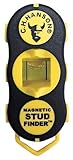
Overview: The CH Hanson 03040 represents the classic approach to magnetic stud finding—simple, reliable, and free of unnecessary complications. This two-pack provides straightforward metal detection for locating screws and nails embedded in wall studs. With no moving parts, batteries, or calibration required, it embodies the “it just works” philosophy that has made CH Hanson a trusted name in construction tools.
What Makes It Stand Out: In an era of over-engineered gadgets, this stud finder’s purity of purpose stands out. Its flat, compact design slides smoothly across walls, while the powerful magnet provides positive detection you can feel and hear when it connects with a fastener. The two-pack configuration ensures you always have a backup or can work with reference points across larger surfaces.
Value for Money: This is among the most affordable options from a reputable brand, delivering exceptional bang for your buck. The zero-maintenance design means no battery replacements or electronic failures, making it essentially a lifetime tool. For budget-conscious buyers or those needing multiple units, the two-pack pricing is particularly attractive.
Strengths and Weaknesses: Strengths include proven reliability, brand trustworthiness, simplicity of use, low cost, and the convenience of a two-pack. However, the basic design lacks protective padding, offers no bubble level, and provides no hands-free operation. The minimal packaging also means limited product information.
Bottom Line: The CH Hanson 03040 is perfect for anyone wanting dependable stud detection without frills or fuss. Its unbeatable simplicity and reliability make it ideal for both professionals needing a backup tool and homeowners tackling occasional projects.
10. Calculated Industries 7310 StudMark Magnetic Stud Finder with 2 Removable Magnet Markers | Finds & Marks up to 3 Stud Locations | Updated 2020 More Powerful Rare Earth Magnets, No Batteries Needed
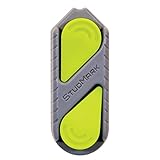
Overview: The Calculated Industries 7310 StudMark introduces genuine innovation to magnetic stud finders with its removable marker system. This updated 2020 model features more powerful rare-earth magnets that enable hands-free operation when locating metal fasteners. The compact design fits comfortably in a pocket while offering a unique solution for marking multiple stud positions without leaving pencil marks on walls.
What Makes It Stand Out: The StudMark’s defining feature is its two magnetic markers that attach to detected stud locations, allowing you to mark up to three positions simultaneously. This eliminates the need for constant pencil marking and keeps your hands free for drilling or mounting. The updated stronger magnets ensure the main unit and markers stay firmly attached to drywall during work.
Value for Money: Priced in the mid-range, the StudMark justifies its cost through genuine innovation and time-saving convenience. For professionals or active DIYers who frequently mount multiple items, the efficiency gains from hands-free operation and clean walls add significant value. The included two-year warranty provides additional peace of mind.
Strengths and Weaknesses: Strengths include the unique marker system, hands-free operation, compact portability, stronger updated magnets, and battery-free reliability. The main drawbacks are the potential for losing small markers and the manufacturer’s warning against use on plaster walls. Some users may prefer traditional pencil marking for permanent reference.
Bottom Line: The StudMark is an excellent choice for frequent users who value efficiency and clean walls. Its innovative marker system streamlines multi-stud projects, making it particularly valuable for those regularly hanging cabinets, shelves, or heavy fixtures on drywall.
Why Magnetic Stud Finders Still Matter in the Digital Age
In an era where every tool seems to need an app and a firmware update, magnetic stud finders stand as a testament to elegant engineering simplicity. While their electronic counterparts rely on density sensors, batteries, and sometimes even Bluetooth connectivity, magnetic finders operate on a principle that hasn’t changed since the discovery of magnetism itself. This isn’t outdated technology—it’s proven physics that works flawlessly across plaster, drywall, tile, and even some types of wood paneling without ever needing a recharge.
The real magic lies in their ability to detect the steel fasteners—nails, screws, or staples—that secure drywall to studs, rather than trying to “see” the wood itself. This fundamental difference means you’re locating the exact point of structural connection, which is precisely where you want to drive your own hardware. Modern construction methods haven’t eliminated metal fasteners; if anything, they’ve standardized them, making magnetic detection more reliable than ever.
The Simple Science Behind Magnetic Detection
Understanding how these tools work helps you use them more effectively. Powerful rare-earth magnets, typically neodymium, are housed in a plastic or metal body that allows them to move freely when near ferrous metal. As you slide the finder across your wall, this magnet is drawn toward the steel drywall screw or nail hidden beneath the surface. The stronger the magnet and the closer the fastener, the more decisive the “pull” you’ll feel and see.
This detection method works through multiple layers of building materials because magnetic fields aren’t blocked by drywall, plaster, or thin tile. However, thicker materials like double-layer drywall, fire-rated boards, or dense plaster can reduce the effective range. The key is magnet strength combined with your ability to feel or see the indicator movement—whether it’s a physical tug, a visual cue like a popping button, or a bubble level that shifts.
Key Advantages That Make Them DIY Essentials
When you’re halfway through hanging kitchen cabinets and your electronic stud finder starts beeping randomly because its batteries are dying, you’ll understand the primary appeal of magnetic models. But the benefits extend far beyond just power independence. These tools represent a philosophy of reliability that resonates with anyone who’s ever been burned by overcomplicated gadgets.
Unmatched Reliability: No Batteries, No Calibration
The most significant advantage is absolute reliability. A quality magnetic stud finder works the same way every single time, whether it’s your first use or your thousandth. There’s no power button to forget, no sensitivity dial to adjust incorrectly, and no firmware glitches to troubleshoot. This consistency builds confidence, especially for DIYers who might only tackle wall-mounting projects a few times a year. You can toss it in your toolbox, forget about it for months, and it’ll be ready to perform flawlessly when inspiration strikes.
Cost-Effectiveness for Budget-Conscious DIYers
Let’s talk value. While high-end electronic stud finders can cost significantly more, magnetic versions deliver exceptional performance at a fraction of the price. This affordability doesn’t mean compromising on quality—it means you’re not paying for features you don’t need. For most residential projects, the precision difference between magnetic and electronic detection is negligible, while the price difference is substantial. That saved money can go toward higher-quality mounting hardware or that premium paint finish you’ve been eyeing.
Understanding What You’re Actually Detecting
One of the most common misconceptions about stud finders is what they’re actually locating. Many beginners assume they’re detecting the wood stud itself, but magnetic models work differently—and arguably more usefully. By finding the metal fasteners, you’re pinpointing the exact structural connection points that make your wall strong enough to bear weight.
The Anatomy of a Wall: Drywall, Fasteners, and Studs
Modern walls are essentially sandwiches: framing lumber (studs) spaced 16 or 24 inches apart, covered by 1/2-inch to 5/8-inch drywall sheets secured with screws or nails. These fasteners are driven every 12 to 16 inches along each stud. When your magnetic finder locates one, you’ve found not just the stud’s location but its centerline—because fasteners are driven into the heart of the lumber. This gives you a more precise target than many electronic edge-finding methods that require you to mark both sides and find the middle.
Why You’re Finding Nails and Screws, Not Wood
This distinction matters because the fastener pattern tells a story. Professional installers typically work from the center of the stud outward, meaning fasteners are remarkably consistent in placement. Once you locate one screw, you can often find others above and below it by moving vertically in 12-inch increments. This creates a “stud line” that gives you multiple mounting options. Understanding this pattern helps you distinguish between random metal artifacts (like protective plates over pipes) and actual stud fasteners.
Critical Features to Evaluate Before Purchasing
Not all magnetic stud finders are created equal, and the differences aren’t always obvious from packaging. The market ranges from dollar-store novelties to professional-grade tools that contractors swear by. Knowing which features genuinely impact performance helps you invest wisely rather than falling for marketing hype.
Magnet Strength: Neodymium vs. Ferrite
The heart of any magnetic stud finder is its magnet. Neodymium magnets, rare-earth magnets known for their incredible strength-to-size ratio, are the gold standard. A tool housing a strong neodymium magnet can detect fasteners through thicker materials and from greater distances than those using cheaper ferrite magnets. When evaluating options, look for mentions of “rare-earth” or “neodymium” in the product description. The magnet’s pull force, measured in pounds, indicates its strength—a higher number means better detection depth.
Ergonomic Design: Comfort During Extended Use
You’ll be sliding this tool across your wall repeatedly, often while standing on a ladder or reaching overhead. An ergonomic grip isn’t just a luxury; it’s a safety feature. Look for contoured shapes that fit naturally in your hand, non-slip materials that maintain grip when dusty, and a size that balances portability with usability. Some premium models feature rubberized coatings or finger grooves that reduce fatigue during whole-room scanning projects like installing crown molding or wainscoting.
Build Quality: From Plastic to Professional Grade
The housing material affects both durability and performance. Thin, brittle plastic can crack if dropped and may flex during use, reducing sensitivity. Professional-grade tools often use reinforced nylon, aluminum, or steel bodies that withstand job site abuse. Pay attention to how the magnet is mounted—if it’s loose or poorly secured, it won’t respond consistently. The best models encase the magnet in a smooth-sliding mechanism protected from dust and debris that could impede movement.
Multi-Functionality: Levels, Rulers, and More
Many modern magnetic stud finders incorporate additional tools to increase their utility. Built-in bubble levels help ensure your mounting hardware goes in straight. Ruler edges allow you to measure fastener spacing without switching tools. Some even include pencil holders or marking notches for one-handed operation. While these features shouldn’t compromise the primary detection function, they can streamline your workflow significantly, especially for repetitive tasks like hanging multiple shelves or installing a gallery wall.
Advanced Techniques for Accurate Detection
Owning a quality magnetic stud finder is only half the battle; technique determines your success rate. Professional installers develop systematic approaches that eliminate guesswork and ensure consistent results. These methods work with any magnetic finder but become exponentially more effective as you learn to “read” what the tool is telling you.
The Grid Pattern Method
Rather than randomly scanning your wall, approach it methodically. Start by marking a rough search area with painter’s tape. Move your finder in slow, overlapping vertical passes about 6 inches apart. When you feel a pull, mark that spot, then search horizontally from that point to find adjacent fasteners. This creates a grid that reveals the stud’s vertical line. For maximum accuracy, scan the same area from multiple directions—approaching from left and right can help confirm the fastener’s exact location and differentiate between a single screw and a metal plate.
Double-Checking Your Work
Never trust a single reading. Once you’ve marked a suspected fastener location, verify it by scanning 16 inches to either side to locate the next stud in the sequence. If the spacing is consistent, you’ve likely found real studs. Then, check vertically: move your finder up and down from your mark to find additional fasteners on the same stud. A vertical line of consistent detections confirms you’ve located a stud, not random debris or a protective plate. This redundancy takes minutes but prevents costly errors.
Common DIY Applications and Best Practices
Magnetic stud finders excel in specific scenarios where their strengths shine brightest. Understanding which projects benefit most from magnetic detection helps you choose the right tool and technique combination. These tools aren’t just for hanging picture frames—they’re essential for any project where structural integrity matters.
Hanging Heavy Objects Safely
When mounting a 70-pound mirror or a loaded bookshelf, you need absolute confidence in your anchor points. Magnetic finders locate the exact fastener positions, allowing you to drive your own screws into the same secure wood. For maximum holding power, aim to place your hardware within 2 inches of the located fastener, ensuring you’re in the stud’s solid center. Always verify with a finishing nail or small drill bit before committing to large holes—this “test poke” confirms wood behind the drywall.
Installing Wall-Mounted Storage
Garage storage systems, kitchen pot racks, and closet organizers require multiple secure points aligned perfectly. Magnetic finders help you map entire stud lines quickly, allowing you to mark all mounting holes before drilling. This is where models with built-in levels and rulers become invaluable—you can transfer stud locations to your shelving brackets, ensuring every screw hits solid wood. For systems spanning multiple studs, the ability to quickly locate each one without recalibrating saves significant time.
Maintenance and Care for Lifetime Performance
A quality magnetic stud finder can last decades with minimal care, but neglect can compromise its effectiveness. These tools don’t require much attention, but a few simple habits ensure they remain reliable project after project. Think of it as protecting a precision instrument rather than just another piece of plastic.
Keep your finder clean by wiping it down after each use, especially if you’ve been working near drywall dust or sawdust that can infiltrate the magnet housing. Store it away from strong electromagnetic fields—don’t toss it in a toolbox directly next to your cordless drill’s motor, as prolonged exposure can potentially weaken the magnet over time. If your model has moving parts, a drop of light machine oil annually keeps the mechanism smooth. Most importantly, avoid dropping it on hard surfaces; while the magnet itself is durable, the housing can crack or misalign, reducing sensitivity.
Frequently Asked Questions
How accurate are magnetic stud finders compared to electronic models?
Magnetic stud finders are highly accurate for locating metal fasteners, which directly correlates to stud positions. They typically match or exceed the precision of electronic edge-finding models because they pinpoint the fastener’s center rather than estimating stud edges. The key difference is that magnetic tools won’t detect non-metal studs or find wood itself, but since most construction uses steel fasteners, this limitation rarely impacts real-world accuracy.
Will a magnetic stud finder work through tile or thick plaster?
Yes, but effectiveness depends on magnet strength and material thickness. Quality neodymium magnet models can detect fasteners through standard ceramic tile and up to 1-inch of plaster. However, double-layer drywall, fire-rated boards, or tile with thick mortar beds may require scanning very slowly and potentially using stronger magnet models designed for commercial applications.
What’s the typical detection depth range?
Most residential-grade magnetic stud finders detect steel fasteners through 1/2-inch to 5/8-inch drywall reliably, with stronger models reaching up to 1-inch depth. This covers standard residential construction. For deeper detection, look for tools specifically rated for commercial or industrial use with larger, stronger magnets.
Can I use a magnetic stud finder on ceilings?
Absolutely, and they’re often more reliable on ceilings than electronic models because you’re fighting gravity, not density variations. The technique is the same, though you may want to work in smaller sections to avoid neck strain. Mark located fasteners with painter’s tape since pencil marks on ceilings are difficult to see.
Do stronger magnets damage electronics or affect pacemakers?
Standard magnetic stud finders are safe around most household electronics when used normally. However, keep them away from credit cards, mechanical watches, and older CRT screens. Individuals with pacemakers should consult their doctor, but the brief, distant exposure during normal wall scanning is generally considered safe—maintain at least 6 inches from the device.
Why does my stud finder sometimes stick to the wall in random spots?
You’re likely encountering metal corner bead (used on drywall corners), protective steel plates over pipes or wires, or occasional stray fasteners. These are valuable discoveries—they show your tool is sensitive. To differentiate, check spacing: true studs follow 16-inch or 24-inch patterns vertically, while random metal won’t align with this grid.
How do I know if I’m finding a stud or a protective plate over wiring?
Protective plates are typically 5 to 6 inches long and run horizontally across studs, usually near outlets or switches. If your detection is a short, horizontal line rather than a vertical series of points, it’s likely a plate. Always investigate these areas carefully before drilling, as they indicate electrical or plumbing lines behind the drywall.
Can magnetic stud finders locate studs in lath and plaster walls?
Yes, but with caveats. Lath and plaster walls often contain metal lath (wire mesh) that can create confusing readings. The key is to move slowly and look for the strongest, most consistent pulls. Historical homes may have inconsistent fastener spacing, so verify findings by probing with a thin nail before committing to larger holes.
What’s the price range for quality magnetic stud finders?
Effective magnetic stud finders range from budget-friendly options under $10 to professional-grade tools around $30-$40. The sweet spot for most DIYers is $15-$25, where you’ll find strong neodymium magnets, durable construction, and useful features like built-in levels. Premium prices usually reflect multi-functionality or extreme durability rather than basic detection improvement.
Are there any situations where I should avoid magnetic stud finders?
Skip magnetic finders when working with non-metal stud systems like some metal framing that uses clips instead of screws, or specialized drywall attachment methods. Also, if you need to map entire wall structures for major renovations, electronic scanners that show stud width and wiring locations provide more comprehensive data. For everyday hanging and mounting, though, magnetic remains the superior choice.
See Also
- The 10 Best Magnetic Stud Finders for Quick DIY Projects in 2026
- 10 Best Value Magnetic Stud Finders for Weekend Projects in 2026
- 10 Best Budget Magnetic Stud Finders Under $20 for Students in 2026
- 10 Best Electronic Stud Finders for DIY Home Renovations This Year
- The 10 Best Magnetic Stud Finders Every Beginner Needs This Year