Table of Contents
When it comes to precision woodworking, few tools offer the blend of agility and accuracy that a jigsaw does—especially when tackling intricate curves, compound angles, and freehand shapes. Whether you’re a seasoned carpenter shaping custom cabinetry or a DIY enthusiast cutting decorative trim, mastering curved cuts hinges on having the right tool for the job. In 2026, jigsaw technology has evolved significantly, with features like orbital action, brushless motors, variable-speed triggers, and advanced blade guides making it easier than ever to achieve smooth, accurate curves with minimal effort.
But not all jigsaws are created equal when it comes to contouring and maneuverability. A model that performs admirably on straight cuts might falter when navigating tight curves, leaving behind rough edges and splintered wood. The ideal jigsaw for curved cuts balances power with finesse, offering stability without sacrificing agility. Understanding the core features that influence performance will help you make an informed decision, regardless of brand or budget.
Top 10 Jigsaws For Curved Cuts
Detailed Product Reviews
1. BLACK+DECKER Jig Saw, 5-Amp, 3,000 Blade Speed, 45 Degree Beveled Cuts, ¾-Inch Orbital Blade, 4 Curve Settings, Corded (BDEJS600C)
, 45 Degree Beveled Cuts, ¾-Inch Orbital Blade, 4 Curve Settings, Corded (BDEJS600C)](https://m.media-amazon.com/images/I/416AuYE5YtL._SL160_.jpg)
Overview:
The BLACK+DECKER BDEJS600C is a reliable corded jigsaw designed for DIYers and light professional use. Powered by a 5-amp motor, it delivers up to 3,000 strokes per minute (SPM), making it efficient for cutting wood, plastic, and thin metal. Its orbital action and adjustable shoe enhance control and precision.
What Makes It Stand Out:
This jigsaw features Curve Control Technology with four selectable settings, allowing users to fine-tune the cut for intricate curves. The 45-degree bevel capacity and orbital blade action improve versatility, while the adjustable shoe with wire guard ensures stability and clear visibility during cuts.
Value for Money:
Priced affordably, the BDEJS600C offers solid performance for occasional users. While it lacks brushless efficiency, its consistent power and durability justify the cost compared to higher-end models.
Strengths and Weaknesses:
Strengths: Powerful motor, precise curve control, bevel adjustment, orbital action, and excellent line of sight. Weaknesses: Corded design limits mobility; no LED light or dust blower.
Bottom Line:
An excellent entry-level jigsaw for homeowners and hobbyists needing dependable performance for wood and light material cutting—great value without frills.
2. Cerycose Jigsaw Compatible With Dewalt 20v Battery, Cordless jig saw Brushless Motor, 0°- 45° Bevel Cuts, LED Light with 3 Position Orbital Setting (With 5Ah Battery & Charger Station Kit)

Overview:
The Cerycose Cordless Jigsaw is a modern, battery-powered tool built for portability and precision. Compatible with Dewalt 18V/20V batteries, it features a brushless motor and comes with a 5Ah battery and dual-function charger, making it ideal for on-the-go projects.
What Makes It Stand Out:
Its brushless motor delivers up to 2900 RPM with improved efficiency and longevity. The 3-position orbital action, tool-free blade change, LED work light, and dust shroud enhance usability in low-light or tight spaces.
Value for Money:
Including a high-capacity battery and fast charger, this kit offers exceptional value. It outperforms many corded models in convenience and matches prosumer expectations at a competitive price.
Strengths and Weaknesses:
Strengths: Cordless freedom, brushless motor, bright LED, dust protection, safety lock, and broad material compatibility. Weaknesses: Slightly heavier with battery; blade guide could be sturdier.
Bottom Line:
A top-tier cordless jigsaw for both DIYers and professionals needing mobility, durability, and precision—excellent investment for versatile cutting tasks.
3. MUOZLOP 20pcsT119BO Jigsaw Blades,12 TPIJig Saw Blades with Storage Case,T-Shank jig Saw Blades for Wood, Cutting (20pcsT119BO)

Overview:
The MUOZLOP 20-pack T119BO jigsaw blades are designed for efficient wood cutting. Featuring a T-shank design and 12 TPI (teeth per inch), they deliver smooth, controlled cuts in various wood types, from softwood to plywood.
What Makes It Stand Out:
With high-carbon steel construction and precise sharpening, these blades offer durability and resistance to dulling. The included storage case keeps blades organized and easily accessible—ideal for frequent users.
Value for Money:
At a budget-friendly price, this 20-piece set delivers reliable performance and long life. It’s a cost-effective alternative to buying blades individually from premium brands.
Strengths and Weaknesses:
Strengths: High-quality steel, consistent sharpness, sturdy build, excellent value, and universal T-shank fit. Weaknesses: Limited to wood; not ideal for metal or aggressive cutting.
Bottom Line:
A dependable, well-organized blade set perfect for woodworkers seeking affordability and performance—highly recommended for routine woodworking tasks.
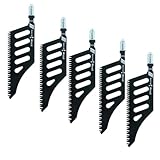
4. Special Wood T142HB Jigsaw Blades, Black, Steel Construction, Special-Shaped Design for Wood Cutting, 5 Pack
Overview:
The T142HB jigsaw blades are specialized tools engineered for precision wood cutting. Their unique profile with multiple cutting slots allows for clean, splinter-free results in both straight and curved cuts.
What Makes It Stand Out:
The special-shaped design enhances cutting efficiency and control, especially in intricate woodworking projects. Made from high-quality steel, these blades maintain sharpness and resist breakage.
Value for Money:
While sold in a smaller 5-pack, the specialized performance justifies the price. Ideal for users who need precision over volume, particularly in cabinetry or furniture making.
Strengths and Weaknesses:
Strengths: Exceptional precision, clean cuts, durable steel, and universal T-shank fit. Weaknesses: Limited quantity; not suited for metal or aggressive demolition.
Bottom Line:
A niche but excellent blade choice for detailed woodwork—worth the investment for artisans prioritizing accuracy and finish quality.
5. 25Pack T101AO T-Shank Jigsaw Blades - 3.2 Inch 20 TPI Contractor Jig Saw Blades Set Made with High Speed Carbon Steel Curved Fine Finish Cutting Wood Boards PVC Plastic(25Pcs-T101AO for Wood&Plastic)

Overview:
The 25-pack T101AO jigsaw blades are engineered for fine, curved cuts in wood and plastic. With a 20 TPI count and high-carbon steel construction, they deliver smooth, splinter-free results on softwoods, hardwoods, and PVC.
What Makes It Stand Out:
These blades excel in detail work thanks to their fine teeth and curved cutting ability. The T-shank design ensures secure fitment on 90% of jigsaws, including major brands like DeWalt and Bosch.
Value for Money:
Offering 25 blades at a low cost, this set is ideal for contractors and hobbyists alike. The durability and versatility across materials enhance its cost-effectiveness.
Strengths and Weaknesses:
Strengths: High tooth count for fine cuts, durable HCS steel, universal compatibility, and ample quantity. Weaknesses: Not for thick or abrasive materials; may dull faster on hardwoods.
Bottom Line:
A must-have blade set for precision woodworking and plastic projects—affordable, reliable, and widely compatible.
6. 2025 Cordless Jig Saw with LED Light, 0-45° Bevel Cut, 6 Blades, 3 Orbital Settings, Lock-Off Button, 20V Battery,Action for Straight/Curved/Circular Cutting Cordless Jig Saw

Overview:
The 2025 Cordless Jig Saw is a lightweight, 5 lbs compact power tool designed for precision cutting in wood, plastic, and light metals. Equipped with a variable speed trigger (800–3000 SPM), 3 orbital settings, and a bevel capacity of up to 45° in both directions, it caters to DIYers and professionals alike. Though the battery is not included, its compatibility with DeWalt 20V systems enhances usability for existing tool owners.
What Makes It Stand Out:
This jig saw stands out with its 4-position speed adjustment, tool-free blade change, and built-in LED light for improved visibility. The brushless motor ensures heat and overload protection, while the aluminum base plate allows precise angled cuts. Its portability and wire-free design make it ideal for tight spaces and on-the-go projects.
Value for Money:
Priced competitively, it offers premium features typically found in higher-end models. While the absence of a battery may deter some, users with DeWalt 20V batteries will find it a cost-effective upgrade.
Strengths and Weaknesses:
Strengths: Lightweight, high-speed range, precise bevel cuts, LED illumination, and quick blade changes. Weaknesses: Battery sold separately, limited depth on metal (10mm), and potential compatibility confusion despite DeWalt branding.
Bottom Line:
A capable, well-designed cordless jig saw ideal for versatile cutting tasks—best suited for users already invested in the DeWalt 20V ecosystem.
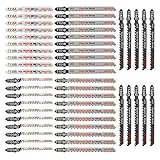
7. 50 Piece Contractor Jigsaw Blades Set with Storage Case, Assorted T-Shank Jig Saw Blades for Wood, Plastic and Metal Cutting(T118A,T118B,T101AO,T101B,T101BR,T144D)
Overview:
This 50-piece jigsaw blade set is a comprehensive solution for professionals and hobbyists needing a wide range of cutting capabilities. Designed with T-shank compatibility, the assortment includes blades tailored for wood, plastic, and metal, making it a versatile addition to any workshop. The included storage case keeps blades organized and portable.
What Makes It Stand Out:
The sheer variety and quantity of blades—featuring popular models like T118A, T101B, and T144D—make this set stand out. Each blade is engineered for specific materials, ensuring optimal performance across applications. The durable case enhances usability and longevity by preventing tangles and damage.
Value for Money:
Exceptional value for the volume and diversity offered. At this price point, it outperforms many smaller sets, reducing the need for frequent replacements and separate purchases across material types.
Strengths and Weaknesses:
Strengths: High blade count, organized storage, broad material compatibility, and reliable T-shank fit. Weaknesses: No detailed performance specs provided, and blade durability may vary depending on brand of manufacture.
Bottom Line:
A must-have, cost-effective blade set for anyone using a T-shank jigsaw—ideal for contractors and DIYers seeking a one-time bulk solution.
8. Brushless Jig Saw Compatible with Dewalt 20V Battery(No Battery), Cordless Jigsaw with Tool Bag,Variable Speed, 45°Bevel Cutting, 4 Orbital Actions, Jigsaw Blades for Straight, Curved, Circular Cuts

Overview:
This brushless cordless jig saw delivers professional-grade performance with compatibility for DeWalt 20V Max batteries. Weighing little and featuring a variable speed trigger, 4 orbital settings, and a 45° bevel capacity, it’s built for precision and versatility in wood, plastic, and mild steel cutting applications.
What Makes It Stand Out:
The brushless motor boosts efficiency, runtime, and tool lifespan while reducing heat and power loss. The 3-stage orbital action, LED work light, and tool-free blade change enhance usability. It also includes overload and low-voltage protection—ideal for demanding environments.
Value for Money:
Offers advanced motor technology and premium features at a mid-range price. The included tool bag and jigsaw blades add tangible value, though the lack of a battery may be a drawback for some.
Strengths and Weaknesses:
Strengths: Brushless motor, excellent control, bright LED, solid depth capacity (135mm wood), and safety lock. Weaknesses: Battery not included, and compatibility limited to DeWalt 20V systems.
Bottom Line:
A high-performance, durable cordless jig saw that delivers reliability and precision—perfect for pros and serious DIYers with DeWalt batteries.
9. T Shank Jigsaw Blades Tool, 20 Pcs T-Shank Jig Saw Blades for Wood, Plastic and Metal, Jig Saw Blade Set for Cutting, T-Shank Multi-Purpose Jigsaw Blades for Most Jig Saw Models

Overview:
This 20-piece T-shank jigsaw blade set is designed for universal compatibility and diverse cutting needs. Made from high-carbon and high-speed steel, the blades are heat-treated for durability and efficient cutting across wood, plastic, and metal. Ideal for both beginners and experienced users seeking a reliable blade refill.
What Makes It Stand Out:
The inclusion of 14 different blade models—like T118A, T101BR, and T144D—ensures suitability for a wide range of materials and applications. The T-shank design allows tool-free installation, while the hardened steel construction enhances longevity and clean cuts.
Value for Money:
Highly economical for the quantity and variety. The set reduces downtime with ample replacements and covers most common cutting tasks, outperforming single-blade purchases.
Strengths and Weaknesses:
Strengths: Broad compatibility, durable materials, easy installation, and excellent variety. Weaknesses: No case included, and performance consistency may vary between blade types.
Bottom Line:
A practical, versatile blade set offering strong performance and value—perfect for maintaining continuous workflow across multiple projects.
10. Diablo High Carbon Steel Jig Saw Blade Set for Wood - High Carbon Steel Tooth Design - T-Shank, 3-1/4" Length, 20 TPI - DJT101AO5

Overview:
The Diablo DJT101AO5 is a specialized 5-pack of high carbon steel jigsaw blades engineered for precision wood cutting. With a 20 TPI (teeth per inch) design and T-shank compatibility, these blades excel in softwood, laminates, and detailed scrollwork, delivering clean, smooth cuts with minimal tear-out.
What Makes It Stand Out:
Diablo’s optimized tooth and body geometry ensures superior control and finish quality in intricate cuts. The high carbon steel edge offers durability and sharpness, while the T-shank fits most cordless and corded jigsaws—including combo and many U-shank models.
Value for Money:
Priced slightly higher than generic sets, but justified by Diablo’s reputation for performance and consistency. Ideal for woodworkers prioritizing finish quality over aggressive material removal.
Strengths and Weaknesses:
Strengths: Exceptional finish on wood, reliable T-shank fit, durable construction, and ideal for curved/scroll cuts. Weaknesses: Limited to wood and soft materials; not suitable for metal or aggressive cutting.
Bottom Line:
A top-tier choice for woodworkers needing precision and clean results—highly recommended for fine woodworking and detailed joinery tasks.
Why Jig Saws Excel at Curved Cuts
Jigsaws are uniquely designed for versatility. Unlike circular saws or table saws that dominate straight-line cutting, jigsaws move with the grain, allowing users to guide the blade along organic paths. This flexibility makes them indispensable for tasks like cutting sink holes in countertops, shaping templates, or creating artistic wooden inlays. Their narrow blade and up-and-down motion enable tight turning radii, making them ideal for curves that would be impossible with bulkier tools.
Key Features to Look for in a Jigsaw for Curved Cuts
Not every jigsaw handles curves with equal grace. Choosing the right model requires a deep dive into specific performance characteristics that directly impact cutting precision and user control.
Blade Type and Compatibility
The blade is the heart of any jigsaw’s performance. For curved cuts, blade width and tooth geometry are critical. Narrower blades—typically labeled as “scroll” or “fine-tooth”—allow for tighter turns and reduced kerf, minimizing material waste and chipping. Look for models that support universal T-shank blades, which offer a broader selection of specialty blades optimized for curves in wood, metal, or laminates.
Variable Speed Control
Control over cutting speed is non-negotiable when working on curves. High-speed cutting can cause blade deflection and burning on softer materials, while too slow a pace may bind the blade in hardwoods. A jigsaw with variable-speed triggers or dial-based speed settings allows you to adapt the tool’s performance to the material and the radius of the curve, ensuring clean, splinter-free results.
Orbital Action Settings
Orbital action refers to the blade’s forward-and-backward motion during its up-and-down stroke. This feature increases cutting speed but can compromise precision. For curved cuts, lower or zero orbital settings are ideal—they reduce blade wander and yield smoother finishes. The best models offer adjustable orbital action, allowing you to dial in the perfect balance between speed and control.
Pivot Point and Base Plate Design
The base plate—also known as the shoe—plays a vital role in maneuverability. A compact, lightweight base plate with a reduced front profile improves visibility and reduces resistance when turning corners. Look for models with a front-loading shoe or adjustable base that can be tilted for beveled curved cuts. A die-cast aluminum base adds rigidity without excessive weight, helping maintain stability during intricate work.
Motor Type: Brushed vs. Brushless
The motor is the engine behind the jigsaw’s performance. Traditionally, brushed motors have been standard, but 2026 sees a growing shift toward brushless technology.
Power and Efficiency
Brushless motors deliver more power per watt, extend runtime in cordless models, and generate less heat. This efficiency translates to consistent performance during long cutting sessions, which is crucial when following complex curves that demand uninterrupted focus. While more expensive, brushless motors offer superior torque control, which helps maintain blade stability in dense materials.
Heat and Maintenance
Brushed motors tend to wear out faster due to friction between the brushes and the commutator. This wear can lead to inconsistent power delivery—especially during prolonged use—which may affect cut quality on delicate curves. Brushless motors eliminate this issue, requiring less maintenance and offering longer service life.
Ergonomics and User Comfort
Even the most advanced jigsaw will underperform if it’s uncomfortable to use. Curved cutting often involves extended periods of guiding the tool with both hands, so ergonomics directly influence precision.
Handle Design
Modern jigsaws come in two main handle types: barrel grip and D-handle. Barrel grips offer a more natural hand position and are favored for overhead or tight-space work. D-handles, on the other hand, provide better leverage and control, especially when applying downward pressure during aggressive curves. The ideal choice depends on your working style, but for precision curved cuts, many professionals prefer the D-handle for its stability.
Weight and Balance
A well-balanced jigsaw reduces user fatigue and improves control. Lightweight models are easier to maneuver but may lack the heft needed for stability in thick materials. Aim for a tool that feels balanced in your hand, with the motor positioned to minimize vibration and enhance responsiveness to directional changes.
Vibration Reduction Technology
Vibration is the enemy of precision. Excessive vibration not only makes the tool uncomfortable to use but also causes blade deflection, leading to inaccurate curves and rough edges. Top-tier jigsaws now feature active vibration control systems—counterweights, dual-bearing blade guides, or electronic dampening—that isolate the motor’s movement from the user’s hand. This results in smoother tracking and cleaner cuts, especially during slow, controlled curves.
Dust Blowing and Visibility Features
Maintaining a clear line of sight is essential when following a curved template. Sawdust can quickly obscure your cutting line, leading to drift and inaccuracies. Many modern jigsaws include a built-in air blower that directs debris away from the cut path. While not a substitute for proper dust collection, this feature significantly improves visibility during intricate work. Some high-end models even offer LED work lights that illuminate the blade tip, enhancing precision in low-light environments.
Bevel Capacity and Adjustability
Curved cuts are rarely confined to flat planes. Often, you’ll need to incorporate beveled edges for aesthetic or functional purposes. Look for a jigsaw with a base plate that tilts up to 45 degrees, preferably with positive stops at common angles. A tool-less bevel adjustment system allows for quick changes, saving time and maintaining focus on the curve you’re cutting.
Blade Changing Mechanisms
Frequent blade changes are common when switching between materials or curve types. A tool-less blade clamp system—especially one that allows blade changes from the front—can save valuable time and improve workflow. Top-loading mechanisms are generally faster, but side or front-access designs often provide better access when working in confined areas.
Cutting Depth and Stroke Length
While maximum cutting depth is less critical for curved cuts in sheet materials, stroke length—the distance the blade travels up and down—directly affects cutting efficiency. A longer stroke removes more material per cycle, which can be beneficial in thick stock. However, for fine curves in thinner materials, a shorter, faster stroke often delivers better control and reduced chipping.
Compatibility with Guide Systems and Accessories
For repeatable curved cuts, consider a jigsaw that supports auxiliary accessories. Some models accept edge guides, circle-cutting attachments, or magnetic base systems that improve precision. Additionally, compatibility with dust extraction hoses ensures a cleaner workspace, which is vital when following detailed patterns.
Material Considerations: What Are You Cutting?
The best jigsaw for curves depends heavily on your primary material.
Wood and Plywood
For natural wood and engineered panels, prioritize models with fine blade control and low-vibration operation. Use blades with 10–12 TPI (teeth per inch) for hardwoods and higher TPI for laminates to prevent chipping.
Metal and Plastic
Cutting curves in metal or plastic requires slower speeds and specialized blades. Look for jigsaws with electronic feedback that adjusts speed under load to prevent stalling. A no-load speed range that dips below 1,500 SPM (strokes per minute) is ideal for metal.
Laminates and Melamine
These materials are prone to chipping. Use reverse-cut blades (teeth pointing upward) to minimize surface damage. A jigsaw with excellent base plate stability and minimal blade wobble will help preserve the finish.
Corded vs. Cordless: Which Is Better for Curves?
The choice between corded and cordless often comes down to power consistency and mobility.
Corded Jigsaws
Corded models deliver constant power, making them ideal for long, continuous curves in thick materials. They don’t suffer from battery fade and are generally more affordable. However, the cord can restrict movement, especially when working on large sheets or overhead.
Cordless Jigsaws
Modern cordless jigsaws, especially those powered by 18V or 20V MAX platforms, now rival corded models in performance. Brushless motors and high-capacity batteries enable extended runtime and consistent power. The freedom of movement is a major advantage when following complex curves across large workpieces.
Safety Features to Never Overlook
Safety should never be compromised for performance. Look for jigsaws with electronic braking, which stops the blade within seconds of releasing the trigger—critical when working near your hands. A blade guard protects against debris, and some models feature automatic shut-off if the base plate is lifted during operation. Always use clamps and guides to secure your material, reducing the risk of kickback or binding.
How to Maximize Curved Cut Quality
Even the best jigsaw requires proper technique. Start with a sharp, appropriate blade and secure your workpiece firmly. Use a fine-tip marker or pencil to draw a precise cutting line. Begin the cut slowly, letting the blade reach full speed before engaging the material. Follow the line inside the curve to allow for sanding later. For extremely tight curves, drill a starter hole and reinsert the blade to begin from the interior.
Maintenance Tips for Longevity
Regular maintenance ensures your jigsaw continues to deliver clean, accurate curves. After each use, clean the base plate and blade clamp to remove sawdust and resin. Inspect the blade for wear and replace it at the first sign of dullness. Lubricate the blade guide bearings occasionally, and store the tool in a dry place. For cordless models, remove the battery during extended storage.
Frequently Asked Questions
Can any jigsaw cut tight curves?
While most jigsaws can handle basic curves, models with narrow blade compatibility, variable speed, and precise base plate control are far better suited for tight, intricate curves.
How do I prevent my jigsaw from splintering wood on curves?
Use a sharp, fine-tooth blade, apply masking tape along the cut line, and cut slightly inside the line to allow for sanding. Reverse-cut blades also help reduce splintering on the top surface.
What blade should I use for curved cuts in plywood?
Opt for a narrow T-shank blade with 10–12 TPI for smooth, clean curves. For thin plywood, consider a 20+ TPI blade to minimize tear-out.
Why does my jigsaw blade wander on curves?
Blade wander is often caused by dullness, incorrect speed, or excessive orbital action. Reduce orbital setting, slow down your feed rate, and ensure the blade is sharp and properly tensioned.
Is a D-handle or barrel grip better for curved cuts?
D-handles offer better control and leverage, making them ideal for precise curved work. However, barrel grips can be more comfortable for overhead or extended use.
Can I use a jigsaw to cut circles?
Yes, but with limitations. For small circles, drill a starter hole and cut inward. For larger, accurate circles, use a circle-cutting jig attachment.
How important is stroke length for curved cuts?
Stroke length affects cutting speed, but for fine curves, control matters more than speed. A moderate stroke length (around 1 inch) with smooth operation is often sufficient.
Do I need a laser guide for curved cuts?
Lasers can help, but they’re not essential. Good visibility, proper lighting, and a steady hand are more critical for following curved lines.
Can I cut metal curves with a standard jigsaw?
Yes, with the right blade and speed settings. Use a bi-metal or carbide-grit blade and reduce the speed to prevent overheating.
How often should I change my jigsaw blade?
Change the blade at the first sign of dullness or chipping. For detailed curved work, blades may need replacing after just a few cuts to maintain precision.
See Also
- 10 Expert-Recommended Jigsaws for Curved Cuts in 2026
- 10 Must-Have Jigsaws for Intricate Cuts in 2026
- 10 Tips for Finding the Perfect Jigsaw for Curved Cuts in 2026
- 10 Best Compact Circular Saws for Tight Workspace Cuts in 2026
- 10 Best Jigsaws After 6 Months of Testing in 2026