Table of Contents
Accessing your roof safely isn’t just about having a steady hand and good balance—it’s about having the right equipment that you can trust with your life. Whether you’re cleaning gutters, inspecting shingles, or installing holiday lights, the extension ladder you choose becomes your primary lifeline between solid ground and elevated workspace. With roofing accidents accounting for nearly one-third of all fall-related fatalities in construction, selecting the proper ladder isn’t a purchase to take lightly.
The market has evolved dramatically in recent years, introducing innovative safety features, lightweight materials, and smart designs that make roof access safer than ever before. But with these advancements comes complexity—how do you navigate duty ratings, weight capacities, material choices, and safety certifications without feeling overwhelmed? This comprehensive guide cuts through the noise to equip you with everything you need to know about choosing the perfect extension ladder for roof access, ensuring you make an informed decision that prioritizes safety, durability, and performance.
Top 10 Extension Ladders For Roof Access


Detailed Product Reviews
6. VONLX 2 Pack Ladder Roof Hooks, Heavy Duty Steel Extension Ladder Roof Stabilizer with Wheels for Roof Extension with Rubber Grip T-Bar, 500 lb Load Capacity, Easy to Access Steep Roofs
 Steel Extension Ladder Roof Stabilizer with Wheels for Roof Extension with Rubber Grip T-Bar, 500 lb Load Capacity, Easy to Access Steep Roofs](https://m.media-amazon.com/images/I/41ECl9RBe1L._SL160_.jpg)
Overview: The VONLX 2 Pack Ladder Roof Hooks deliver heavy-duty security for steep roof access. Forged from powder-coated steel with a 500-pound capacity, these hooks transform extension ladders into stable roof-access systems. Integrated wheels enable smooth positioning, while rubber-grip T-bars provide secure handholds during transitions. The design prioritizes both user safety and roof protection, making it suitable for contractors and ambitious DIYers tackling roofing, painting, or maintenance tasks.
What Makes It Stand Out: Four adjustable mounting holes accommodate virtually any extension ladder’s rung spacing, eliminating compatibility guesswork. The gimbal design automatically pivots to match roof pitch, a feature typically found in premium models. This adaptability, combined with robust steel construction, creates a professional-grade solution that handles diverse job site challenges without constant readjustment.
Value for Money: This two-pack offers exceptional capacity and durability at a mid-range price point. The 500-pound rating exceeds many costlier competitors, while the rust-resistant finish extends service life. For homeowners facing annual gutter cleaning or contractors with frequent roof work, the time saved and safety gained justify the investment within the first season of use.
Strengths and Weaknesses: Strengths include superior weight capacity, versatile adjustability, smooth-rolling wheels, and protective rubber grips. The powder-coated steel withstands harsh weather. Weaknesses involve wing-nut hardware that requires periodic retightening and minimal installation instructions that may challenge novices. The steel construction adds noticeable weight to the ladder, potentially affecting portability.
Bottom Line: VONLX hooks provide reliable, heavy-duty roof access with impressive adaptability. Despite minor hardware limitations, their robust build and smart engineering make them an excellent choice for regular roof work.
7. Bighorn Ladder Stabilizer for Roof Safety Easy Access Handle Support

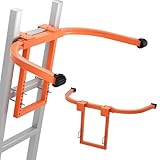
Overview: The Bighorn Ladder Stabilizer redefines roof access safety with its patented walk-through design. Constructed from lightweight aluminum and stainless steel, this stabilizer creates a secure bridge between ladder and roof without requiring permanent ladder modifications. The foldable design allows it to remain attached during transport, while spring-loaded latches enable tool-free installation. It’s engineered for professionals who prioritize safety and efficiency on job sites.
What Makes It Stand Out: The walk-through architecture eliminates dangerous side-stepping during roof transitions, addressing a primary cause of ladder falls. Pivoting steel feet with rubber bases automatically conform to roof pitches, while reinforced rails provide exceptional stability. This innovative approach combines gutter protection with confident access, making it superior to traditional hook systems.
Value for Money: Positioned in the premium tier, the Bighorn justifies its price through patented safety features and aircraft-grade materials. The aluminum construction reduces overall weight while maintaining strength, decreasing user fatigue. For roofing contractors and insurance adjusters accessing roofs daily, the enhanced safety and time savings deliver immediate return on investment.
Strengths and Weaknesses: Strengths include revolutionary walk-through safety, lightweight durable construction, tool-free installation, and excellent gutter protection. The folding mechanism simplifies transport. Weaknesses include higher cost that may deter occasional users and limited compatibility with extra-wide ladder rails. The spring-loaded latch occasionally requires tension adjustment after extended use.
Bottom Line: For professionals and serious DIYers, the Bighorn’s innovative design significantly reduces fall risk. Its premium build and safety features make it a worthwhile investment for frequent roof access.
8. 2 Pack Heavy Duty Roof Ladder Hook with Wheel,Extension Ladder Stabilizer for Roof with Rubber Grip T-Bar for Damage Prevention, Fast and Easy Setup to Access Steep Roofs
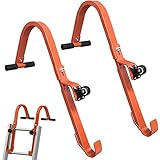
Overview: This 2-Pack Heavy Duty Roof Ladder Hook system provides a cost-effective solution for securing extension ladders to rooftops. Built from rectangular steel tubing with a weather-resistant finish, the hooks support 500 pounds and feature integrated wheels for easy positioning. Four mounting holes ensure compatibility with most ladder styles, while rubber-grip T-bars protect roofing materials and provide stable handholds during transitions.
What Makes It Stand Out: The patented design emphasizes universal adaptability, accommodating round or D-rung ladder styles through its multiple mounting configurations. The wheel system excels on steep pitches, allowing single-person setup without ladder drag. This practical engineering focuses on core functionality rather than complex features, delivering reliable performance for straightforward roof access needs.
Value for Money: As one of the most affordable two-pack options available, this set delivers impressive weight capacity that rivals premium brands. The included mounting hardware and simple installation eliminate professional setup costs. For homeowners performing seasonal maintenance or occasional repairs, this represents exceptional value without sacrificing safety ratings.
Strengths and Weaknesses: Strengths include high load capacity, versatile mounting options, effective wheels, and solid roof protection. The steel construction ensures durability. Weaknesses include basic wing-nut fasteners that need periodic checking, no pivoting mechanism for roof pitch, and sparse instructions. The utilitarian design lacks premium finish details.
Bottom Line: These hooks offer reliable, no-frills roof access at an unbeatable price. While lacking advanced features, their solid construction and high capacity make them perfect for budget-conscious buyers needing dependable performance.
9. VEVOR Ladder Stabilizer, 2 in 1 Extension Wall Ladder Standoff Hook, Roof Ridge Ladder Accessories Both Horizontally and Vertically, Heavy-Duty Steel Rubber Grip T-Bar, Quick Access to Steep Roofs

Overview: The VEVOR 2-in-1 Ladder Stabilizer provides versatile functionality for both wall standoff and roof hook applications. Constructed from heavy-duty steel, it supports 330 pounds and features a unique column support system that minimizes ladder wobble. The design accommodates installation depths from 0.8 to 3 inches, making it compatible with wood, fiberglass, and aluminum ladders for diverse elevated tasks.
What Makes It Stand Out: Dual-mode capability allows horizontal wall standoff or vertical roof hook configurations, effectively replacing two separate tools. The U-shaped locking clip provides secure attachment, while the T-shaped sponge rod enhances grip and surface protection. Anti-slip feet and a robust support column address stability concerns that plague single-function alternatives, making it uniquely versatile.
Value for Money: The 2-in-1 design delivers exceptional versatility at a moderate price point, essentially providing two tools for the cost of one. While the 330-pound capacity is lower than heavy-duty alternatives, it’s adequate for most residential and light commercial work. The steel construction ensures durability, making this a smart investment for users needing flexible access solutions.
Strengths and Weaknesses: Strengths include versatile dual-function design, stable column support, secure locking mechanism, and good surface protection. Adjustable mounting holes accommodate various ladders. Weaknesses include lower weight capacity than premium options, heavier steel construction that adds ladder weight, and a more complex assembly requiring careful adjustment. Finish quality may vary between units.
Bottom Line: For users needing both wall and roof access capabilities, VEVOR’s stabilizer provides solid, versatile performance. The 2-in-1 functionality makes it practical despite moderate capacity limitations.
10. Ladder-Max Ladder Stabilizer, American Made Heavy Duty Standoff Fits Most Ladders, Secure Roof and Wall Extension Accessory, Gutter Protection Tool, 25 Years Proven Safety, 5 Year Limited Warranty

Overview: The Ladder-Max Stabilizer represents the American-made gold standard for ladder safety accessories. Constructed from rugged, rust-resistant steel, it creates a generous 19-inch standoff zone that protects gutters, siding, and roofing while providing exceptional stability. Certified for direct roof placement and backed by a 5-year warranty, this tool has delivered 25 years of proven safety for contractors and homeowners tackling diverse elevated projects.
What Makes It Stand Out: Certification for direct roof placement without protective mats demonstrates exceptional confidence in its non-marring tips. The 19-inch standoff distance exceeds most competitors, providing ample workspace and unmatched stability. Made in the USA quality control ensures consistent performance across all units, while universal compatibility spans virtually all extension ladder types, making it a true one-size-fits-all solution.
Value for Money: While commanding a premium price, the Ladder-Max justifies its cost through unmatched durability, safety certification, and comprehensive warranty coverage. The long-term reliability eliminates replacement expenses, and the enhanced safety features reduce liability for professionals. For frequent users, the investment pays dividends in confidence and performance.
Strengths and Weaknesses: Strengths include superior stability, certified roof safety, excellent gutter protection, universal compatibility, and outstanding warranty. The steel construction is exceptionally durable. Weaknesses include premium pricing that may deter occasional users, heavier weight than aluminum alternatives, and bulkier storage requirements. Installation requires strength due to robust components.
Bottom Line: The Ladder-Max is the definitive choice for serious professionals and safety-conscious homeowners. Its proven performance and premium build quality make it worth every penny for those who prioritize reliability and safety above all else.
Why Your Choice of Extension Ladder Matters for Roof Work
Roof access presents unique challenges that differentiate it from other elevated tasks. Unlike painting a second-story wall or reaching a high shelf, roof work requires precise positioning at potentially dangerous angles while carrying tools and materials. The wrong ladder can flex, shift, or slip in ways that become catastrophic when you’re stepping onto or off a roofline. Your ladder must serve as a stable transition point, not just a means of vertical ascent. This is why understanding the specific demands of roof work—like the need for extended reach beyond the roof edge and stable support on uneven ground—should drive every aspect of your selection process.
Understanding Extension Ladder Basics for Roof Access
Extension ladders consist of two or more sections that travel in guides or brackets, allowing adjustable length through a rope and pulley system. For roof work, you’ll typically need a ladder that extends at least three feet beyond the roofline to provide a secure handhold during transitions. This “three-foot rule” isn’t a suggestion—it’s a fundamental safety principle recognized by safety organizations worldwide. The overlap between sections must be sufficient to maintain structural integrity, typically requiring at least three feet of overlap for every 10 feet of extended length. Understanding these mechanics helps you evaluate whether a ladder’s design supports safe roof access or merely general-purpose climbing.
Key Safety Features That Should Be Non-Negotiable
When evaluating extension ladders for roof work, certain safety features aren’t optional—they’re essential. Look for slip-resistant rungs with textured surfaces that maintain grip even when wet or dusty. Swivel safety shoes with aggressive tread patterns adapt to various ground conditions, preventing the base from kicking out. Perhaps most critically for roof access, integrated standoff stabilizers or “ladder mitts” create crucial space between the ladder top and the roof edge, preventing gutter damage and providing stable contact points. Some advanced models feature leveler legs that adjust for uneven terrain, eliminating the dangerous practice of propping ladder feet on unstable objects.
Material Matters: Aluminum vs Fiberglass Showdown
The aluminum versus fiberglass debate centers on weight, conductivity, and durability. Aluminum ladders are significantly lighter—often 30-50% less than comparable fiberglass models—making them easier to transport and maneuver. However, they conduct electricity, making them dangerous near power lines, a common hazard when working on roofs. Fiberglass ladders provide electrical insulation and generally offer superior durability in harsh weather conditions, resisting corrosion and UV degradation. For roof access, consider that fiberglass won’t transfer heat as readily, providing more comfortable handling in direct sunlight, though the weight penalty becomes noticeable when moving a 28-foot or 32-foot ladder around your property.
Decoding Duty Ratings and Weight Capacity
Duty ratings, established by the American National Standards Institute (ANSI), classify ladders by their maximum safe load capacity. These ratings include Type III (200 lbs), Type II (225 lbs), Type I (250 lbs), Type IA (300 lbs), and Type IAA (375 lbs). For roof work, you must calculate total weight: your body weight plus all tools, materials, and equipment you’ll carry. A roofer weighing 180 pounds with a 50-pound bundle of shingles and a 15-pound tool belt exceeds Type III capacity before even considering dynamic forces created by climbing. Most safety professionals recommend Type IA (300 lbs) as the minimum for any roofing application, with Type IAA providing additional safety margin for professional use.
Height Requirements: Getting the Math Right
Calculating the correct ladder length involves more than measuring from ground to roof edge. You need to account for the 4:1 placement ratio (one foot out for every four feet up), the required three-foot extension beyond the roofline, and the overlap between sections. For a typical two-story home with eaves at 18 feet, you’ll need a 24-foot extension ladder minimum, though a 28-foot model provides better working angles and safety margins. Single-story homes with roofs at 10-12 feet require 16-foot ladders. Remember that the advertised length is the total length of both sections, not the usable height when extended. Always err on the side of slightly longer rather than too short—attempting to stretch a short ladder creates dangerous angles and instability.
The Importance of Proper Duty Rating for Roofing Tasks
Roofing tasks impose dynamic loads that exceed static weight calculations. When you’re climbing with a bundle of shingles, your movements create momentary force spikes that can approach double your static weight. The ladder’s duty rating must accommodate these dynamic loads plus a safety factor. Professional roofers consistently choose Type IAA ladders not because they weigh 375 pounds, but because the robust construction handles job site abuse, tool loads, and the psychological confidence that comes from knowing your equipment exceeds requirements. For homeowners, investing in a Type IA ladder provides similar peace of mind and ensures the ladder serves adequately for heavier projects you might tackle in the future.
Advanced Features Worth Considering
Modern extension ladders incorporate features that significantly enhance safety and usability. Quick-release latches allow smooth, controlled extension without pinching fingers. Rung locks with visual indicators confirm proper engagement, preventing catastrophic collapse. Some designs include integrated cable hooks that keep extension cords secured and out of your climbing path. For roof access specifically, look for top caps with wide, non-marring surfaces that distribute pressure across roof edges. Advanced models may offer built-in level indicators that help achieve the optimal 75-degree climbing angle. While these features add cost, they contribute measurably to accident prevention and user confidence.
Stability Enhancements and Anti-Slip Technology
Beyond basic rubber feet, premium ladders employ multi-directional slip-resistant technology. Swivel shoes with dual-position settings adapt to both hard surfaces and soft ground, with spike options that dig into soil for outdoor work. Some systems feature independently adjustable legs that accommodate significant grade differences—crucial when working on sloped yards where achieving level placement seems impossible. Anti-slip rung coatings have evolved beyond simple texture to include embedded grit or rubberized surfaces that maintain traction even when coated with morning dew or fine roof grit. For roof transitions, standoff arms with non-slip pads create a stable four-point contact system that prevents lateral movement during the critical moment when weight transfers from ladder to roof.
Portability and Storage Considerations
A ladder that stays in your garage because it’s too heavy to move provides zero value. Consider the “carry distance” from storage to usage point. A 28-foot fiberglass ladder can weigh 60-70 pounds, requiring significant strength to maneuver safely. Look for models with integrated carry handles balanced at the center of gravity. Some designs feature wheels on the base section, allowing you to roll the ladder like a dolly rather than carrying it. For storage, measure your available space and understand that longer ladders require horizontal wall mounts or ceiling hoists. Telescoping extension ladders offer compact storage but typically sacrifice stability and weight capacity—trade-offs that rarely justify the convenience for serious roof work.
Weather Resistance and Durability Factors
Your ladder faces constant environmental assault—UV radiation, moisture, temperature extremes, and chemical exposure. Aluminum ladders resist corrosion but can develop oxidation that weakens joints over time. Premium models use aircraft-grade aluminum alloys with protective coatings. Fiberglass ladders must use high-quality resin systems that prevent fiber bloom—the white, fuzzy appearance indicating UV degradation that dramatically reduces strength. Look for weather-resistant hardware, particularly in the pulley and latch systems where rust can cause binding or failure. Storage matters: even the best ladder deteriorates quickly if left exposed to elements year-round. A weather-resistant ladder cover or indoor storage extends lifespan by decades.
Compliance with OSHA and ANSI Standards
The Occupational Safety and Health Administration (OSHA) and ANSI establish mandatory and recommended standards for ladder design and use. OSHA regulations (29 CFR 1926.1053) specify maximum spacing between rungs, required load testing, and labeling requirements. ANSI A14.2 standards govern aluminum ladder manufacturing, while A14.5 covers fiberglass models. Ladders meeting these standards bear certification labels—look for the ANSI rating and load capacity permanently marked on the side rail. Be wary of bargain imports lacking certification; they may appear identical but use thinner materials, inferior hardware, and skip critical safety testing. For professional use, OSHA compliance isn’t optional, and using uncertified ladders can result in significant fines and liability.
Common Mistakes That Compromise Safety
Even the best ladder becomes dangerous when used improperly. The most frequent error is incorrect placement angle—too steep and the ladder can fall backward, too shallow and it slides out. Use the “stand and reach” test: place your toes against the ladder base, extend your arms straight out; your palms should comfortably touch the rungs. Never use a ladder on unstable surfaces without proper leveling equipment. Another critical mistake involves overreaching; your belt buckle should never extend beyond the ladder rails. For roof access, failing to secure the ladder at the top creates a pivot point that can shift during transition. Always use ladder stabilizers that hook over the roof edge and consider having a ground spotter for longer ladders.
Maintenance Tips to Extend Your Ladder’s Lifespan
Proper maintenance transforms a ladder from a disposable tool into a lifetime investment. Inspect your ladder before each use, checking for bent rails, cracked rungs, loose hardware, and frayed ropes. Clean rungs regularly with a wire brush to remove embedded grit that reduces traction. Lubricate pulleys and latch mechanisms quarterly with dry silicone spray—avoid oil-based lubricants that attract dirt. For fiberglass ladders, apply UV-protective wax annually to prevent fiber degradation. Store ladders horizontally on wall brackets to prevent warping, and never hang them by the rope. Replace worn safety shoes immediately; they’re inexpensive but critical. Document inspections and keep maintenance records, especially for professional use where liability concerns exist.
Professional vs. DIY: Different Needs, Different Ladders
Professional roofers and DIY homeowners should approach ladder selection differently. Professionals need maximum durability, highest duty ratings, and features that improve efficiency across hundreds of uses. They benefit from modular systems with replaceable parts and robust warranties. Homeowners should prioritize versatility—one ladder that handles multiple tasks around the property. A homeowner might accept slightly heavier weight for better stability, while a professional crew values lightweight designs they move multiple times daily. Budget considerations differ too: professionals view ladders as depreciable business equipment, while homeowners seek maximum value over occasional use. However, safety standards remain identical regardless of user category—never compromise on duty rating or certification to save money.
Budget Considerations: Investing Wisely
Quality extension ladders range from $200 for basic 16-foot aluminum models to over $800 for professional-grade 32-foot fiberglass ladders with advanced features. The price reflects material quality, manufacturing precision, safety features, and warranty coverage. While budget constraints are real, consider this: the cost difference between a Type II and Type IA ladder is typically less than $100, but the safety margin increases by 75 pounds. For roof access, this isn’t the place to economize. A ladder that fails can cause injuries costing thousands in medical bills, lost work, and potential legal liability. Look for manufacturers offering lifetime warranties—they’re backing their product’s durability. Consider buying last year’s model or shopping end-of-season sales, but never compromise on duty rating or ANSI certification for price.
Seasonal Factors Affecting Ladder Performance
Ladder performance varies significantly with seasons. In winter, aluminum becomes dangerously cold to touch and can accumulate ice on rungs, requiring extra traction measures. Fiberglass maintains better temperature neutrality but can become brittle in extreme cold. Summer heat causes aluminum to expand and can make fiberglass surfaces uncomfortably hot. Spring and fall bring wet conditions; ensure your ladder’s feet can penetrate soft ground after rain. Wind is a year-round hazard—never extend long ladders in winds exceeding 25 mph. Morning dew creates surprisingly slippery conditions, making anti-slip rung technology essential. Seasonal maintenance should include checking for freeze-thaw damage to hardware and ensuring ropes remain pliable in cold weather.
Frequently Asked Questions
What’s the minimum ladder height I need for a two-story house?
For most two-story homes with roof edges at 18-20 feet, you’ll need at least a 24-foot extension ladder, though a 28-foot model provides better safety margins and working angles. Remember the three-foot extension rule: your ladder must extend three feet beyond the roofline for safe handholds during transitions.
How do I calculate the total weight my ladder needs to support?
Add your body weight, the weight of all tools and materials you’ll carry, then add a 15% safety margin for dynamic forces created during climbing. Most safety professionals recommend Type IA (300 lbs) minimum for roof work, even if your static weight is much lower.
Can I use a telescoping extension ladder for roof access?
While convenient for storage, telescoping ladders typically lack the stability and duty ratings required for safe roof work. Their segmented design creates multiple potential failure points, and most don’t extend far enough to meet the three-foot rule for two-story homes. They’re better suited for indoor tasks.
How often should I replace my extension ladder?
With proper maintenance, a quality extension ladder can last 20+ years. However, inspect it before each use and retire it immediately if you find bent rails, cracked rungs, or significant corrosion. Professional users often replace ladders every 5-7 years due to daily wear and liability concerns.
What’s the safest angle for placing my extension ladder?
Use the 4:1 ratio—one foot out from the wall for every four feet of height. At this 75-degree angle, the ladder is stable without being too steep. A simple test: stand at the base, extend your arms straight out; your palms should comfortably touch the rungs.
Are fiberglass ladders really worth the extra weight and cost?
For roof work near power lines or in harsh weather conditions, absolutely. The electrical insulation and UV resistance provide critical safety margins. For general use away from electrical hazards, high-quality aluminum offers better portability at lower cost.
How do I safely transition from ladder to roof?
Always maintain three points of contact. Extend the ladder three feet beyond the roof edge, use a stabilizer bar for secure top contact, and step sideways onto the roof while gripping the ladder rails. Never step over the top rung or reach backward during transition.
Can I repair a damaged ladder myself?
Never attempt structural repairs. While you can replace safety shoes or ropes, bent rails, cracked rungs, or damaged locks require professional evaluation or ladder replacement. A “repaired” ladder may have hidden weaknesses that fail under load.
What’s the difference between OSHA and ANSI standards?
OSHA sets legally enforceable workplace safety regulations, while ANSI creates voluntary industry standards for manufacturing quality. Look for ladders meeting both: OSHA compliance ensures safe design, ANSI certification guarantees manufacturing quality and testing.
Should I rent or buy an extension ladder for roof access?
If you need a ladder more than twice a year, buying is more economical. Rental ladders have unknown histories and potential hidden damage. Ownership allows you to become familiar with your specific ladder’s feel and condition, improving safety through familiarity.
See Also
- 10 Best Extension Ladders for Roof Cleaning This Year
- 10 Best Extension Ladders for Roof Maintenance This Year
- 10 Best Extension Ladders for Roof Repair in 2026
- 10 A-Frame Ladders That Solve Loft Access Problems in 2026
- 10 Best Attic Ladders for Easy Access in Small Homes in 2026