Table of Contents
Nothing tests your patience quite like hunting for studs behind century-old plaster walls. You’ve probably experienced it—that sinking feeling when your basic stud finder lights up like a Christmas tree, giving you nothing but false positives from lath strips, metal mesh, or decades of previous repairs. Plaster walls, with their charming character and rock-solid durability, are notorious for making conventional stud finders practically useless. But here’s the good news: modern electronic stud finders have evolved dramatically, employing sophisticated sensor arrays and deep-scanning technology specifically engineered to cut through the confusion.
If you’re planning to mount a heavy mirror, install floating shelves, or hang a vintage cabinet on plaster, choosing the right electronic stud finder isn’t just helpful—it’s the difference between a successful project and a wall riddled with unnecessary holes. This comprehensive guide walks you through the essential features, technical considerations, and professional techniques that will transform you from a frustrated homeowner into a confident plaster-wall navigator.
Top 10 Electronic Stud Finders For Plaster
Detailed Product Reviews
1. Franklin Sensors Prosensor M210 Stud Finder With 13-Sensors, Wood & Metal Stud Detector/Wall Scanner, Live Wire Detection, Made in the USA
, Made in the USA](https://m.media-amazon.com/images/I/31mVcMwVM3L._SL160_.jpg)
Overview: The Franklin Sensors ProSensor M210 represents a significant leap forward in stud detection technology, employing a patented 13-sensor array that eliminates the frustrating guesswork common with conventional single-sensor models. This American-made tool automatically adjusts for wall material, texture, and depth up to 1.7 inches, displaying both stud centers and edges simultaneously on its wide LED strip. Designed for both professional contractors and discerning DIYers, the M210 prioritizes safety with integrated live wire detection, making it a comprehensive wall-scanning solution.
What Makes It Stand Out: The M210’s 13-sensor configuration is its defining feature, providing instant, reliable readings without the calibration dance required by lesser units. Unlike traditional stud finders that force you to hunt for a starting point away from studs, this device works accurately from any position—even directly over a stud. The full-width LED display shows the entire stud profile, revealing double studs and irregular framing that single-point detectors miss entirely. The always-on deep scan automatically optimizes for different wall compositions, while the live wire meter adds a critical safety layer for worry-free drilling.
Value for Money: Priced in the premium tier, the M210 justifies its cost through superior accuracy and time savings. While basic stud finders cost less, their false readings often lead to costly mistakes and repair work. For professionals, the durability and reliability translate to increased productivity. Homeowners benefit from the safety features and ease of use, making it a worthwhile investment that outperforms and outlasts cheaper alternatives, ultimately saving money on potential electrical mishaps or botched installations.
Strengths and Weaknesses: Strengths include exceptional accuracy with no calibration needed, comprehensive live wire detection, durable construction, and the intuitive full-width display that shows stud edges and centers simultaneously. The deep scanning capability handles most residential walls effectively. Weaknesses are its premium price point, the 1.7-inch depth limitation (less than some competitors), and reliance on batteries. The tool may be overkill for users who only occasionally hang lightweight items on standard drywall.
Bottom Line: The Franklin Sensors ProSensor M210 is an outstanding investment for serious DIY enthusiasts and professionals who demand precision and safety. Its innovative sensor array eliminates the frustration of false positives, while the live wire detection provides peace of mind. Though priced higher than entry-level options, its accuracy, durability, and ease of use make it worth every penny for those who regularly work with walls.
2. Franklin Sensors ProSensor MAX Stud Finder with 13-Sensors, Wood & Metal Stud Detector/Wall Scanner, Scans Through Plaster, OSB & More, Made in the USA

Overview: The ProSensor MAX is Franklin Sensors’ flagship stud finder, building upon the M210’s acclaimed 13-sensor platform with enhanced capabilities for challenging wall constructions. This professional-grade tool detects studs through multiple drywall layers, plaster, OSB, plywood, and even tile up to 2.5 inches deep. Made in the USA, it maintains the brand’s signature no-calibration operation while adding a specialized Mode 2 for thick, multi-layer surfaces. The MAX is engineered for contractors working in older homes, commercial buildings, or specialized construction where standard finders fail.
What Makes It Stand Out: The MAX’s dual-mode operation sets it apart—Mode 1 handles standard walls while Mode 2 powers through historically difficult surfaces like lath-and-plaster and earthquake-resistant OSB-reinforced walls. The 2.5-inch detection depth exceeds most competitors, and the 13-sensor array still displays full stud width with center and edge identification. No calibration means you can scan anywhere without false readings, even starting directly over a stud. This capability makes it uniquely suited for restoration work and commercial projects where wall composition varies unpredictably.
Value for Money: As Franklin’s premium offering, the MAX commands top dollar but delivers unmatched performance in its class. For professionals regularly encountering plaster, double drywall, or engineered walls, it pays for itself by eliminating callbacks and damage. Homeowners renovating pre-1960 houses will find it invaluable where cheaper electronic finders are essentially useless. While overkill for basic drywall projects, its versatility justifies the investment for those needing reliable detection across diverse materials.
Strengths and Weaknesses: Strengths include the deepest scan depth (2.5"), dual-mode versatility for complex walls, foolproof no-calibration operation, and the comprehensive LED display. It excels where other finders fail, particularly on plaster and multi-layer surfaces. Weaknesses include the highest price in the category, potential overkill for simple jobs, and it’s slightly bulkier than basic models. The tool also requires batteries and lacks dedicated wire detection (though metal detection reveals most wires).
Bottom Line: The Franklin ProSensor MAX is the ultimate stud finder for demanding applications and challenging wall types. Its ability to scan through plaster, OSB, and multiple layers makes it indispensable for renovation professionals and owners of older homes. While the price reflects its premium capabilities, its reliability and versatility make it the best choice when standard stud finders simply won’t cut it.
3. StudPoP® Original Smart Magnetic Stud Finder – No Batteries, No Calibration, 3X More Reliable, Perfect for Lath & Plaster, Metal Studs – Visual & Audible Indicator, Simple & Fun to Use – 1" Magnet

Overview: The StudPoP Original takes a refreshingly simple approach to stud finding, using a powerful 1-inch magnet with a unique pop-up indicator that provides both visual and audible confirmation when it locates metal fasteners. This battery-free, calibration-free tool thrives where electronic stud finders notoriously fail—particularly on lath-and-plaster walls, tile, and extremely thick surfaces. The StudPoP’s clever design amplifies magnetic sensitivity, making it detect screws and nails through materials that would defeat conventional magnetic finders. It’s a specialized tool that prioritizes reliability and simplicity over high-tech features.
What Makes It Stand Out: The StudPoP’s pop-up mechanism is its genius—when the magnet detects a fastener, a small plunger visibly lifts and clicks, providing unmistakable feedback even when magnetic attraction is too subtle to feel. This visual cue is a game-changer for thick plaster walls where you can’t trust tactile feedback alone. Unlike electronic finders that require batteries and finicky calibration, the StudPoP works instantly, lasts forever, and handles challenging surfaces like tile and double drywall that confuse electronic sensors. It’s also genuinely satisfying to use.
Value for Money: Extremely affordable with zero operating costs, the StudPoP offers exceptional value for owners of older homes. Electronic finders in this price range perform poorly on plaster, while premium electronic models cost significantly more. The tool’s durability and lack of battery dependency mean it pays for itself after a few uses. However, it only locates fasteners, not true stud centers, so users must infer stud location—less efficient than electronic center-finding for standard drywall work.
Strengths and Weaknesses: Strengths include no batteries or calibration, unmatched performance on lath-and-plaster and tile, visual/audible confirmation, extreme durability, and low cost. It’s foolproof and works through materials that defeat electronics. Weaknesses include slower scanning process (must sweep manually), only finds fasteners (not center), limited effectiveness on non-metallic studs, and requires user interpretation. It’s not ideal for quick drywall projects where electronic finders excel.
Bottom Line: The StudPoP is an essential tool for anyone working with plaster, tile, or thick walls where electronic finders fail. Its simple, reliable design and visual confirmation make it perfect for historic home renovations. While not a replacement for electronic finders on standard drywall, it’s an invaluable complementary tool that delivers where it matters most—on challenging surfaces that would otherwise require destructive testing.
4. Stud Finder Wall Scanner Detector - 5 in 1 Electronic Wall Wood Metal Stud Locator Edge Center Sensor Beam for Live AC Wire Pipe Metal Lumber Joist Drywall Framing Detection

Overview: This versatile 5-in-1 electronic wall scanner positions itself as a budget-friendly multi-tool for comprehensive wall detection. It offers five distinct scanning modes: three stud depths up to 1.5 inches, metal detection up to 2.36 inches, and AC wire detection up to 2 inches. The device features a backlit LCD display showing stud edges and centers, audio alerts for easy operation, and a shock-resistant design. Aimed at both DIY enthusiasts and professionals, it promises to locate wood studs, metal, joists, pipes, and live wires while preventing costly drilling accidents.
What Makes It Stand Out: The multi-mode versatility at this price point is compelling—most competitors offer fewer scanning options or charge significantly more. The continuous wire alert system operates across all modes, providing an extra safety layer that many budget models lack. The deep metal scan capability (2.36 inches) exceeds its stud scan depth, making it useful for finding plumbing and conduit. The combination of visual LCD feedback and audio cues ensures you won’t miss targets, while the durable housing suggests it can withstand job site conditions better than typical entry-level finders.
Value for Money: This scanner delivers remarkable features for its budget-tier price, essentially offering capabilities found in mid-range models. For occasional DIYers, it provides professional-grade functionality without the premium cost. The multiple scanning modes eliminate the need for separate tools, and the wire detection feature could prevent expensive electrical disasters. However, the lower price may reflect compromises in sensor accuracy and build quality compared to established brands, potentially leading to more false positives over time.
Strengths and Weaknesses: Strengths include comprehensive 5-mode functionality, deep metal and AC detection, backlit display, audio alerts, continuous wire warnings, and an aggressive price point. It’s feature-rich for the cost. Weaknesses involve potential reliability issues common to generic brands, calibration requirements that may frustrate users, less accurate edge detection than premium models, and questionable long-term durability. The 1.5-inch stud depth is adequate but not exceptional.
Bottom Line: This 5-in-1 scanner is an excellent entry point for homeowners needing versatile detection capabilities on a budget. While it may not match the precision and reliability of premium brands like Franklin or Zircon, its feature set and safety functions make it a smart choice for occasional use. Consider this if you need multiple scanning modes but can’t justify professional-grade prices—just verify its accuracy on known targets before critical projects.
5. Zircon MultiScanner A200 – Electronic Wall Scanner Stud Finder & Metal Detector with Live AC Wire Detection, SpotLite Pointer, ACT Auto-Correcting Technology

Overview: The Zircon MultiScanner A200 bridges the gap between budget and premium electronic stud finders, offering advanced features like Auto-Correcting Technology (ACT) and a bright SpotLite pointer at a mid-range price point. This versatile tool detects wood and metal studs, rebar, and live AC wires through drywall and plaster surfaces. The ACT system automatically compensates for user scanning errors, reducing false positives that plague conventional stud finders. With multiple scan modes and clear visual feedback, the A200 targets serious DIYers who want professional reliability without premium cost.
What Makes It Stand Out: Zircon’s exclusive ACT technology is the A200’s key differentiator—it intelligently corrects common scanning mistakes like angled movement or inconsistent pressure, dramatically improving accuracy for novice users. The SpotLite pointer physically illuminates the exact stud center, eliminating guesswork better than LCD arrows alone. The combination of StudScan, DeepScan, Metal, and AC modes covers most residential needs, while the clear LCD icons and audio cues provide confident feedback. This technology package typically appears in more expensive models, making the A200 a value-packed option.
Value for Money: The A200 hits a sweet spot in price-to-performance ratio, offering premium features like ACT and SpotLite at a cost accessible to regular DIYers. It’s significantly less expensive than Franklin’s 13-sensor models while providing better reliability than generic alternatives. The brand’s established reputation adds confidence. For homeowners who tackle frequent projects, the time saved through accurate detection and error prevention justifies the investment over basic models that require more patience and verification.
Strengths and Weaknesses: Strengths include innovative ACT error correction, helpful SpotLite pointer, multiple scan modes, reliable brand reputation, good detection depths, and clear user interface. It balances features and affordability well. Weaknesses include requiring a 9V battery (not included), less depth than Franklin MAX, potential learning curve for mode selection, and occasional false positives on textured walls. The tool also lacks the full-width display of Franklin models.
Bottom Line: The Zircon A200 is an excellent all-around stud finder for most homeowners and DIY enthusiasts. Its Auto-Correcting Technology and SpotLite pointer make it more reliable and easier to use than budget alternatives, while its price remains reasonable. While professionals with specialized needs might prefer Franklin’s sensor array, the A200 delivers consistent, safe results for the majority of residential projects, making it a smart, dependable choice for your toolbox.
6. Franklin Sensors ProSensor M210 Stud Finder with 13-Sensors, Wood & Metal Stud Detector/Wall Scanner, Live Wire Detection (Green), Made in The USA

Overview: The Franklin Sensors ProSensor M210 represents a significant leap in stud detection technology, proudly manufactured in the USA. With an unprecedented 13-sensor array, this tool eliminates the guesswork and frustration common with conventional stud finders, delivering professional-grade accuracy for contractors and serious DIY enthusiasts.
What Makes It Stand Out: The M210’s 13-sensor configuration is its crowning achievement, simultaneously displaying both stud centers and edges across a wide scanning area—something single or dual-sensor models simply cannot match. Its one-mode operation automatically adjusts for different depths and materials up to 1.5 inches without requiring calibration, allowing you to scan anywhere, even directly over studs, without false positives. The precision LED array provides instant, intuitive visual feedback that tracks studs in real-time.
Value for Money: Positioned at the premium end of the market, the M210 justifies its higher price point through superior accuracy and durability. While budget alternatives may cost less, they often produce inconsistent results that waste time and risk costly mistakes. The commercial-grade construction ensures longevity, making it a worthwhile investment for anyone regularly mounting heavy fixtures or performing renovations.
Strengths and Weaknesses: Strengths include unmatched accuracy from its multi-sensor design, true no-calibration operation, simultaneous edge/center visualization, robust build quality, and reliable live wire detection. Weaknesses are its maximum 1.5-inch depth limitation (shallow for some applications), lack of an LCD screen, absence of included batteries, and premium pricing that may deter casual users.
Bottom Line: For professionals and dedicated DIYers who demand absolute reliability and precision, the ProSensor M210 is the gold standard. Its innovative sensor array and foolproof operation make it worth every penny, though occasional users might find more value in feature-rich alternatives.
7. Mecurate Stud Finder Wall Scanner Sensor - 5 in 1 Electronic Stud with LCD Display & Audio Alarm for Wood AC Live Wire Metal Studs Detection Joist Pipe

Overview: The Mecurate 5-in-1 Stud Finder positions itself as a versatile, user-friendly solution for homeowners tackling various wall-scanning projects. Combining multiple detection modes with a clear LCD interface and audio alerts, this scanner aims to deliver professional capabilities at an accessible price point for DIY enthusiasts.
What Makes It Stand Out: This scanner’s five distinct modes (Standard 3/4", Deep 1-1/2", Metal 2-3/8", and AC 2") provide comprehensive coverage for different materials and depths. The bright LCD screen displays intuitive graphics that demystify detection for beginners, while audio alarms ensure you won’t miss targets even in noisy environments. The inclusion of a battery, carrying pouch, and detailed manual creates a ready-to-use package that adds immediate value.
Value for Money: The Mecurate offers exceptional mid-range value, packing features typically found in pricier models. While it requires calibration before each scan—a minor inconvenience—the trade-off is reliable performance across multiple applications. Compared to basic single-mode finders, the versatility and included accessories justify the modest price premium.
Strengths and Weaknesses: Strengths include versatile 5-in-1 functionality, clear LCD display, helpful audio alerts, comprehensive accessory package, and built-in safety warnings for live wires. Weaknesses center on the mandatory calibration process that interrupts workflow, potentially slower scanning speed than premium brands, and less established brand reputation which may raise durability questions for heavy users.
Bottom Line: Ideal for DIYers and homeowners seeking versatility without breaking the bank, the Mecurate delivers solid performance across multiple detection scenarios. The calibration requirement is a small price to pay for its feature set, though professionals may prefer faster, calibration-free alternatives.
8. Stud Finder Wall Scanner - 6 in 1 Electronic Stud Finder with HD LCD Display and Smart Chip, Stud Detector Beam Finders for the Center and Edge of Wood AC Wire Metal Joists Pipes (Orange)

Overview: This 6-in-1 stud scanner from an emerging brand targets the sweet spot between functionality and affordability, offering an expanded feature set that includes magnetic detection alongside traditional scanning modes. Its bright orange housing and HD LCD display make it an approachable tool for homeowners and DIY enthusiasts.
What Makes It Stand Out: The magnetic detection mode sets this apart, easily locating hidden drywall nails and screws that other scanners might miss—particularly useful for finding stud positions in older homes. The automatic calibration eliminates the manual setup hassle of competitors, while the high-visibility LCD screen combined with loud audible alerts ensures precise location even in challenging conditions. Its six scanning modes cover wood, metal, AC wires, and more.
Value for Money: This scanner delivers impressive value by bundling premium features—auto-calibration, magnetic detection, HD display—at a competitive price point. While lacking the brand recognition of established players, the feature-to-price ratio is compelling for budget-conscious buyers who don’t want to sacrifice capability.
Strengths and Weaknesses: Strengths include unique magnetic detection, automatic calibration, clear HD LCD display, loud audio alerts, comprehensive 6-in-1 functionality, and strong gift appeal. Weaknesses involve unknown long-term durability from a lesser-known brand, potential quality control inconsistencies, and the vibrant orange color that may not suit professional job site aesthetics.
Bottom Line: An excellent all-around choice for homeowners and DIYers seeking maximum features at a reasonable price. The magnetic detection is genuinely useful, and auto-calibration streamlines workflow. While professionals might stick with proven brands, this offers compelling functionality for occasional to moderate use.
9. NOTANY Stud Finder Wall Scanner - 7-in-1 Electronic Wall Stud Detector, Detects Wood, Metal, AC Power, Joists, Pipes with LCD Display, Laser & Bubble Level Ruler
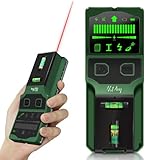
Overview: The NOTANY 7-in-1 Stud Finder distinguishes itself through integrated laser positioning and a bubble level ruler, transforming a simple detection tool into a multi-function installation assistant. Designed for both DIY enthusiasts and professionals, it aims to streamline the entire hanging process from detection to final placement.
What Makes It Stand Out: The combination laser and bubble level is genuinely unique, allowing users to mark perfect level lines immediately after detection without reaching for separate tools. Four high-precision sensors deliver reliable edge and center detection up to 1.5 inches for wood and an impressive 4.72 inches for metal. The device offers three specialized modes: foreign object scanning, deep metal detection, and AC power detection, making it versatile for complex wall structures.
Value for Money: This feature-packed tool represents strong value, essentially bundling three tools (stud finder, laser level, bubble level) into one device. While priced slightly above basic models, the convenience of integrated leveling and exceptional metal detection depth justify the cost for users regularly mounting heavy items or working with varied wall constructions.
Strengths and Weaknesses: Strengths include innovative laser/bubble level integration, remarkable 4.72-inch metal detection depth, four-sensor accuracy, safety-focused AC detection, and excellent gift packaging. Weaknesses comprise a newer brand with unproven long-term reliability, potentially confusing multi-function operation, and the laser/battery combination that may drain power faster than simpler models.
Bottom Line: Perfect for users who value convenience and integrated functionality. The laser level combination saves time and reduces tool clutter, while deep metal detection handles challenging applications. Though brand longevity is uncertain, the innovative design makes it a smart choice for tech-savvy DIYers and professionals seeking workflow efficiency.
10. Zircon MultiScanner A200 with Bonus Mini Pocket Level – Electronic Wall Scanner Stud Finder & Metal Detector with Live AC Wire Detection, SpotLite Pointer, ACT Auto-Correcting Technology

Overview: The Zircon MultiScanner A200 leverages decades of industry leadership with patented Auto-Correcting Technology (ACT), delivering professional-grade accuracy in a user-friendly package. This premium scanner targets serious DIYers and professionals who demand reliable performance across diverse materials and conditions.
What Makes It Stand Out: Zircon’s exclusive ACT technology automatically compensates for scanning speed variations and user technique, eliminating one of the most common sources of false readings. The SpotLite Pointer physically illuminates the stud center with a bright arrow, providing unmistakable visual confirmation that complements the LCD display. The included mini magnetic aluminum level adds practical value for immediate installation tasks.
Value for Money: As a premium offering, the A200 commands a higher price but delivers proven reliability backed by Zircon’s established reputation. The patented ACT system and SpotLite feature justify the investment for users who cannot afford mistakes, while the bonus level sweetens the deal. Compared to budget scanners, the consistency and durability offer better long-term value for regular users.
Strengths and Weaknesses: Strengths include revolutionary ACT error correction, SpotLite visual pointer, trusted brand reputation, versatile four-mode scanning, bright LCD screen, and the useful included level. Weaknesses involve premium pricing that may exceed casual users’ budgets, steeper learning curve to maximize ACT benefits, and potential over-engineering for those needing only basic detection.
Bottom Line: The Zircon A200 stands as the professional’s choice, offering unmatched reliability through its ACT technology. While priced for serious users, the accuracy and consistency prevent costly errors, making it worth every dollar for contractors and avid DIYers. Occasional users may find better value in simpler, less expensive options.
Why Plaster Walls Demand Specialized Stud Finding Technology
Plaster walls present a unique electromagnetic environment that overwhelms basic stud sensors. Unlike modern drywall, which consists of a single sheet of compressed gypsum, traditional plaster walls feature a multi-layered composition: a wooden or metal lath base, a brown coat of rough plaster, and a finish coat that can be up to an inch thick. This dense, inconsistent matrix creates multiple density variations that confuse single-sensor devices. Electronic stud finders designed for plaster employ multi-sensor arrays that can differentiate between the consistent density of a wooden stud and the scattered signals from lath strips, old nail heads, and repair patches. Without this advanced differentiation capability, you’re essentially trying to hear a whisper in a room full of background noise.
Understanding How Electronic Stud Finders Work
Electronic stud finders operate by detecting changes in dielectric constant or density behind the wall surface. When you slide the tool across plaster, it continuously emits electromagnetic fields or ultrasonic pulses, measuring how these signals reflect back. A wooden stud interrupts the uniform signal pattern because wood has a different dielectric property than the surrounding plaster and lath. However, the key lies in the sensor’s ability to filter out “noise” from the lath itself. High-quality devices use multiple sensors working in concert, creating a comparative analysis that isolates the stud’s signature from the wall’s structural components. This sensor fusion technology is what separates reliable tools from the ones that leave you questioning every reading.
The Science Behind Magnetic vs. Electronic Sensors
While this guide focuses on electronic models, understanding the distinction helps clarify why electronics dominate the plaster-wall category. Magnetic stud finders locate metal fasteners, which works brilliantly for drywall but fails spectacularly on plaster where nails are sporadic and often corroded. Electronic sensors, conversely, detect the actual wood mass. Advanced models use capacitive sensors that measure how the wall’s electrical properties change over a stud. For plaster applications, look for devices that combine both capacitive and inductive sensing—capacitive for wood detection and inductive for identifying metal lath or protective plates, giving you a complete picture of what’s hidden behind that vintage wall.
Key Features That Define Top-Tier Plaster Wall Stud Finders
When evaluating stud finders for plaster work, certain features move from “nice-to-have” to “absolutely essential.” The density and thickness of plaster walls mean standard detection depths of ¾ inch won’t cut it. You need tools engineered with specific capabilities that acknowledge the unique challenges of older wall systems. Understanding these features empowers you to make an informed decision rather than relying on marketing claims that often gloss over plaster-specific limitations.
Multi-Sensor Array Technology
The single most important feature for plaster walls is a multi-sensor array. Instead of relying on one central sensor, premium devices deploy three to seven sensors across the scanning plate. This arrangement creates a “sensor sweep” that builds a more detailed map of the subsurface. When scanning plaster, the device compares readings from adjacent sensors, allowing it to distinguish between a continuous stud and intermittent lath strips. Think of it as the difference between a photograph and a 3D scan—one gives you a flat image, while the other provides depth and context. For plaster walls, insist on models that explicitly advertise multi-sensor technology with at least three active scanning points.
Depth Penetration Capabilities
Standard stud finders typically scan to a depth of ¾ inch, which might reach through drywall but barely penetrates the surface of a plaster wall. Quality plaster-capable tools offer deep-scanning modes that penetrate 1.5 to 2 inches reliably. This extra depth is crucial because plaster applications can be deceptively thick, especially in corners or where multiple repair coats have accumulated over decades. However, depth alone isn’t enough—the tool must maintain accuracy at these extended ranges without becoming oversensitive to minor density fluctuations. Look for specifications that mention “maintained accuracy at maximum depth” rather than just maximum depth claims.
Calibration and Auto-Correction Systems
Plaster walls are rarely uniform, which means your stud finder must continuously recalibrate as you move across different sections. Manual calibration models require you to reset the device on a “known empty” section, which is nearly impossible to guarantee on plaster. Auto-calibrating models continuously adjust their baseline, compensating for the wall’s inconsistencies in real-time. This feature is non-negotiable for plaster work. The best tools recalibrate every few milliseconds, creating a dynamic baseline that adapts to changes in plaster thickness, lath type, and even humidity levels within the wall cavity.
The Critical Difference: Deep Scanning vs. Standard Modes
Deep scanning mode isn’t just a marketing term—it fundamentally changes how the sensor interprets data. In standard mode, the device looks for sharp density transitions, which works for drywall but triggers constant false positives on plaster’s layered construction. Deep scan mode employs a slower, more methodical sampling rate that averages readings over a slightly larger area. This averaging smooths out the lath’s interference, allowing the broader, more consistent signature of a stud to emerge. When working on plaster, you should almost always use deep scan mode, even though it requires moving the tool more slowly. The patience pays off in accuracy that standard mode simply cannot deliver.
What Makes Plaster Walls Particularly Problematic
Understanding your enemy is half the battle. Plaster walls don’t just challenge stud finders—they actively deceive them. The construction methods used in different eras created varying levels of complexity. Pre-1920s homes often feature wood lath with irregular plaster keys, while post-1920s construction might use rock lath or even early drywall with a plaster veneer. Each variation requires slightly different detection approaches. The mineral composition of historic plaster can include sand, horsehair, or lime, creating inconsistent density that mimics the signature of a stud. Without a sophisticated filtering algorithm, your device is essentially guessing.
The Lath and Plaster Construction Challenge
Wood lath consists of narrow strips nailed horizontally across studs, leaving gaps between them. Plaster is forced through these gaps, creating “keys” that hold it in place. This creates a pattern of alternating dense and hollow sections across the wall. A single-sensor stud finder reads each plaster key as a potential stud, giving you a false reading every few inches. Multi-sensor arrays solve this by recognizing that these density spikes are too narrow and inconsistent to be a stud. The device’s algorithm looks for patterns that span at least 14 to 16 inches vertically—the typical distance between lath nails on a stud—filtering out the horizontal lath interference.
Dealing with Metal Mesh and Wire Lath
In bathrooms, kitchens, and curved walls, contractors often used expanded metal mesh or chicken wire as lath. This creates a nightmare scenario for basic electronic sensors, as the metal creates a continuous interference pattern. Advanced stud finders address this with metal detection modes that first map the metal lath, then switch to wood-sensing algorithms that can “see through” the mesh. Some devices display both metal and wood detection simultaneously, using different indicator lights or sounds. If you’re working on a home with metal lath, this dual-detection capability isn’t optional—it’s the only way to locate studs without destructive testing.
Advanced Features Worth Investing In
Beyond core detection capabilities, several advanced features significantly improve the plaster-wall experience. These additions transform a simple detection tool into a comprehensive wall-mapping system, saving you time and preventing costly mistakes. While they might increase the price, the return on investment becomes apparent the first time you avoid drilling into a hidden electrical cable or plumbing pipe.
Live Wire Detection and Electrical Safety
Many plaster-wall projects involve older electrical systems that may not follow modern codes. High-end stud finders include non-contact voltage detection that alerts you to live AC wires before you drill. This feature typically works independently of the stud-scanning sensor, using a separate antenna tuned to 50-60 Hz frequencies. For plaster walls, ensure the voltage detection works through the full scanning depth—some budget models only detect wires within an inch, which isn’t sufficient for thick plaster. The best tools differentiate between stud signals and electrical interference, preventing the voltage sensor from overwhelming the wood-detection algorithm.
Visual and Audio Cue Systems
On plaster walls, you need unambiguous feedback. Premium models offer progressive LED bar graphs that show signal strength in real-time, plus center-point indicators that mark the exact stud edge. Audio cues should include distinct tones for edge detection, center confirmation, and metal warning. Some advanced tools even offer haptic feedback—vibration patterns that let you feel the stud location without constantly watching the display. This multisensory approach is invaluable when you’re working in tight spaces or at awkward angles where you can’t easily see the screen.
Ergonomic Design Considerations
Scanning plaster requires patience and steady movement. A poorly designed tool with awkward button placement or an uncomfortable grip leads to uneven pressure, which directly impacts accuracy. Look for models with rubberized grips, intuitive thumb-button controls, and a wide scanning surface that distributes pressure evenly. The tool’s weight matters too—heavier models can fatigue your wrist during extended scanning sessions, while too-light tools may not maintain consistent contact with the wall’s uneven surface. The sweet spot is typically between 8 and 12 ounces, with a balanced center of gravity.
Price Tiers and What You Get at Each Level
Stud finder pricing spans from under $20 to over $100, and the differences are stark, especially for plaster applications. Understanding what each tier offers helps you avoid both underbuying and overspending. The key is matching the tool’s capabilities to your specific plaster situation rather than assuming price directly correlates with performance on your particular walls.
Budget-Friendly Options: What to Expect
In the $20-$40 range, you’ll find basic electronic models with single sensors and manual calibration. These work adequately on modern drywall but struggle significantly with plaster. They typically lack deep-scan modes and have limited depth penetration. However, some newer budget models now include basic multi-sensor arrays, making them potentially viable for thin plaster over drywall. If your home has true lath and plaster, budget tools will likely frustrate you more than they help. The false positive rate on these models can exceed 50% on plaster, turning a simple task into an all-day guessing game.
Mid-Range Excellence: The Sweet Spot
The $50-$75 range represents the optimal value for most homeowners dealing with plaster. These tools feature true multi-sensor arrays, auto-calibration, deep-scan modes, and reliable depth penetration of 1.5 inches or more. They include center-finding capabilities and distinct edge detection. Many also add basic wire detection. The build quality improves significantly, with better ergonomics and more durable construction. For plaster walls, this tier provides the essential features without paying for professional-grade extras you likely won’t need. The accuracy improvement over budget models is dramatic—expect 85-90% reliability on typical plaster walls when used correctly.
Professional-Grade Tools: Are They Worth It?
Priced at $80-$150, professional models offer features like continuous scanning maps that display multiple studs simultaneously, advanced metal detection that differentiates between ferrous and non-ferrous metals, and Bluetooth connectivity for documenting findings. They provide superior depth (up to 2.5 inches) and can often detect studs through double-thick plaster or even ceramic tile. For homeowners doing occasional projects, this tier may be overkill. However, if you live in a historic home with complex wall systems or plan multiple renovation projects, the time saved and accuracy gained can justify the investment. These tools also tend to have better warranty support and calibration services.
Common User Errors That Lead to Inaccurate Readings
Even the best stud finder produces poor results in the hands of someone using improper technique. Plaster walls amplify every user error, making technique as important as technology. The most frequent mistake is moving the tool too quickly. Deep-scan mode requires a deliberate pace of about one inch per second—any faster and the sensors don’t have time to sample adequately. Another critical error is applying inconsistent pressure. Plaster’s uneven surface tempts you to press harder in low spots and lighter over high spots, but this pressure variation directly affects sensor readings. Maintain firm, even pressure across the entire scanning plate.
Pro Tips for Achieving Perfect Results on Plaster
Success with plaster walls comes from combining the right tool with proven techniques. Always scan the same area at least three times—once from left to right, once from right to left, and once from the center outward. This cross-verification reveals false positives that appear inconsistently. Mark your suspected stud edges with painter’s tape, then scan vertically to confirm the stud runs continuously from floor to ceiling. Real studs align with outlets and switches, so use electrical boxes as starting points—scan upward from the box to locate the stud it’s mounted to. Finally, trust but verify: once you’ve marked your stud, drill a tiny pilot hole with a 1/16-inch bit to confirm solid wood before committing to larger holes.
Maintenance and Care for Longevity
Electronic stud finders are precision instruments that require basic maintenance to maintain accuracy. The scanning plate must stay clean—plaster dust buildup interferes with sensor contact. Wipe it with a slightly damp cloth after each use, avoiding harsh chemicals that could damage the sensors. Store the tool in its case to protect the sensors from impacts, which can knock them out of calibration. For models with rechargeable batteries, avoid letting them fully discharge, as voltage drops can affect sensor performance. Periodically test your tool on a known drywall surface to verify it’s still detecting accurately—if it struggles on drywall, it will fail completely on plaster.
Safety Protocols When Drilling into Plaster Walls
Plaster walls conceal more than studs—they hide decades of electrical updates, plumbing retrofits, and structural surprises. Always shut off power to outlets in the work area at the breaker, not just the switch. Use your stud finder’s live wire detection, but verify with a separate non-contact voltage tester for critical safety redundancy. Drill slowly with sharp bits to avoid cracking the plaster, and never drill deeper than necessary—plaster walls often have shallow electrical boxes and gas lines run closer to the surface than in modern construction. Wear safety goggles and a dust mask, as historic plaster can contain silica and other irritants. If your home has knob-and-tube wiring, consider hiring a professional regardless of stud finder capabilities, as these systems can be unpredictable.
Frequently Asked Questions
Can I use a regular stud finder on plaster walls? Standard stud finders designed for drywall typically fail on plaster due to the wall’s thickness, density variations, and lath construction. While they might occasionally detect a stud, false positive rates often exceed 50%. For reliable results, you need a model with deep-scan capability, multi-sensor arrays, and auto-calibration specifically engineered to filter out lath interference.
How deep can electronic stud finders detect through plaster? Quality plaster-capable stud finders penetrate 1.5 to 2 inches reliably, which covers most traditional three-coat plaster systems. Professional models can reach 2.5 inches, useful for double-thick plaster or walls with added veneer coats. Depth specifications assume standard lime or gypsum plaster; exceptionally dense cement-based plasters may reduce effective depth by 20-30%.
Why does my stud finder give false positives every few inches on plaster? This classic symptom indicates your tool is detecting the lath strips rather than studs. Wood lath creates a pattern of dense plaster keys between gaps, which single-sensor devices interpret as studs. Upgrade to a multi-sensor model that can differentiate between the narrow, intermittent lath pattern and the continuous density of a vertical stud.
What’s the difference between metal lath and wood lath detection? Metal lath creates a continuous metallic interference that overwhelms wood-detection sensors. Advanced stud finders first map the metal lath using inductive sensing, then apply filtering algorithms to “see through” it for wood detection. This requires dual-mode operation that basic models lack. If you suspect metal lath, verify with a magnetic stud finder first—if it sticks everywhere, you need electronic tools with specific metal-lath capabilities.
Do I need a professional-grade stud finder for DIY plaster projects? For most homeowners doing occasional projects, a mid-range model ($50-$75) provides the essential features without unnecessary professional extras. The key is ensuring it has multi-sensor arrays, deep-scan mode, and auto-calibration. Professional models become worthwhile only if you’re working on historic homes with complex wall systems or planning multiple major renovations.
How do I calibrate my stud finder for plaster walls? Avoid manual calibration—opt for auto-calibrating models that continuously adjust as you scan. With manual models, you’ll never find a truly “empty” reference point on plaster. If you must use manual calibration, scan several areas and choose the most consistent low-reading spot, understanding this is still a compromise. Auto-calibration models eliminate this guesswork by recalibrating every few milliseconds.
Can stud finders detect electrical wires and plumbing in plaster walls? Most mid-range and premium models include non-contact voltage detection for AC wires, which works through plaster. However, voltage detection depth may be less than stud detection depth. For plumbing, stud finders cannot reliably detect plastic pipes. Cast iron or copper pipes might register as metal, but you should never rely on a stud finder for pipe detection—use a separate inspection camera or hire a professional for critical locations.
What scanning pattern works best for plaster walls? Use a slow, steady horizontal pass at about one inch per second, maintaining even pressure. Mark potential edges, then scan vertically to confirm the stud runs continuously. Always scan in both directions and from multiple starting points. For questionable readings, scan diagonally—true studs will show consistent detection at various angles, while false positives from lath will disappear.
Why are older plaster walls harder to scan than newer ones? Pre-1920s plaster often contains more sand aggregate, animal hair binders, and irregular application techniques, creating inconsistent density. Additionally, these walls may have undergone multiple repairs with different plaster formulations, adding layers of complexity. Wood lath in older homes was often hand-split, creating more irregular gaps. The cumulative effect is a wall that behaves more like a random density field than a consistent surface.
How can I verify a stud location without drilling a large hole? After marking your suspected stud, drill a tiny pilot hole with a 1/16-inch bit at a 45-degree angle. You’ll feel the bit bite into wood if you’ve hit the stud. Alternatively, use a finish nail driven in lightly—it will stop abruptly at a stud but push through easily in empty space. For non-destructive verification, scan vertically from floor to ceiling—real studs create a continuous line, while false positives appear as isolated spots. You can also measure from a known feature like a corner or outlet, as studs are typically placed on 16-inch or 24-inch centers.
See Also
- How to Use a Stud Finder on Plaster and Lath Walls
- 10 Best Budget Electronic Stud Finders Under $40 for Students
- 10 Best Electronic Stud Finders for DIY Home Renovations This Year
- 10 Best Electronic Stud Finders for Home Renovations This Year
- 10 Expert-Recommended Deep Scan Stud Finders for Thick Concrete Walls in 2026
- 10 Game-Changing Deep Scan Stud Finders for Thick Walls in 2026