Table of Contents
There’s nothing quite like the sinking feeling of drilling into what you thought was a hollow wall, only to hit something solid—or worse, something that cracks, leaks, or sparks. Home renovations live and die by precision, and behind every beautifully hung cabinet, flat-screen TV, or heavy mirror is one critical decision: finding the actual wooden framework hidden beneath drywall. While the old “knock and guess” method might work for hanging a small picture frame, modern renovations demand reliability. That’s where electronic stud finders have revolutionized the DIY landscape, transforming what was once an art of intuition into a science of sensors.
But here’s the challenge: not all electronic stud finders are created equal, and the market is flooded with options promising miracle-level accuracy. Whether you’re mounting kitchen cabinets, building a built-in bookshelf, or simply securing a heavy coat rack, choosing the right tool can mean the difference between a flawless installation and a costly repair bill. This comprehensive guide cuts through the marketing noise, focusing on the features, technologies, and practical considerations that truly matter when selecting an electronic stud finder for your home renovation projects this year.
Top 10 Electronic Stud Finders For Home
Detailed Product Reviews
1. Franklin Sensors Prosensor M210 Stud Finder With 13-Sensors, Wood & Metal Stud Detector/Wall Scanner, Live Wire Detection, Made in the USA
, Made in the USA](https://m.media-amazon.com/images/I/31mVcMwVM3L._SL160_.jpg)
Overview: The Franklin Sensors ProSensor M210 represents professional-grade stud detection with its patented 13-sensor array. This American-made tool instantly maps stud locations across a 7-inch wide area, displaying both center and edge positions simultaneously on its bright LED strip. Designed for contractors and serious DIYers, it eliminates the tedious sliding required by conventional finders and automatically adjusts for wall composition up to 1.7 inches deep.
What Makes It Stand Out: Unlike single-sensor models that require scanning and interpretation, the M210’s multi-sensor technology provides real-time, full-width visualization. The deep-scan capability automatically adjusts for wall texture and material without mode switching. The integrated live wire meter offers continuous electrical hazard detection across the entire scanning width, providing unparalleled safety awareness during drilling operations.
Value for Money: Positioned at the premium end, the M210 justifies its higher price through superior accuracy and durability. The elimination of calibration steps and instant results save significant time on job sites. For professionals who rely on precision drilling daily, the cost is offset by prevented mistakes and enhanced efficiency. DIYers undertaking major renovations will find the investment worthwhile compared to cheaper, less reliable alternatives that require more user skill.
Strengths and Weaknesses: Strengths include exceptional accuracy, no calibration required, durable construction, and intuitive LED display. The wide scan area reduces scanning time dramatically. Weaknesses include a higher price point that may deter casual users, no digital depth readout, and it’s slightly bulkier than basic models. Battery life could be better with continuous deep scanning, and the lack of an LCD screen may disappoint some users.
Bottom Line: The ProSensor M210 is the top choice for professionals and serious DIYers prioritizing accuracy and durability. While pricier than competitors, its 13-sensor technology and reliable performance make it a worthwhile investment for frequent use. Casual users may find it overkill for occasional picture hanging, but for renovation projects, it’s unmatched.
2. Mecurate Stud Finder Wall Scanner Sensor - 5 in 1 Electronic Stud with LCD Display & Audio Alarm for Wood AC Live Wire Metal Studs Detection Joist Pipe

Overview: The Mecurate 5-in-1 Stud Finder offers versatile wall scanning capabilities for homeowners and DIY enthusiasts. This multi-mode detector features Standard (3/4"), Deep (1-1/2"), Metal (2-3/8"), and AC (2") scanning modes with audio alerts, packaged with practical accessories including a carrying pouch and battery. The LCD display provides clear visual feedback for confident wall penetration across various residential applications.
What Makes It Stand Out: The comprehensive 5-in-1 functionality covers most residential needs in a single device. Its upgraded sensor array and smart chip deliver respectable accuracy when properly calibrated. The bright LCD screen uses intuitive graphics that beginners can easily interpret, while audio alarms provide redundant confirmation. The inclusion of a storage pouch and detailed manual enhances the out-of-box experience and makes it gift-ready for DIYers.
Value for Money: This model hits the sweet spot for budget-conscious buyers needing reliable performance. Priced competitively against single-function finders, it eliminates the need for separate tools. The accessory bundle adds value, though calibration requirements may slow novice users. For occasional to moderate use, it offers better capabilities than entry-level models without reaching professional-tier pricing, making it cost-effective for typical home improvement tasks.
Strengths and Weaknesses: Strengths include multiple detection modes, clear LCD display, audio alerts, and included accessories. The calibration process, while ensuring accuracy, can be finicky and must be repeated before each scan. The plastic construction feels less robust than premium brands. Deep scanning depth is limited compared to high-end models, and the narrow scan area requires more wall passes. Some users report inconsistent results on plaster walls.
Bottom Line: The Mecurate 5-in-1 is an excellent mid-range option for DIYers tackling varied projects. It requires patience with calibration but rewards users with reliable multi-function detection. Perfect for homeowners who need occasional stud, metal, and wire detection without professional-grade expense. Read the manual carefully to maximize accuracy.
3. Stud Finder Wall Scanner Detector - 5 in 1 Electronic Wall Wood Metal Stud Locator Edge Center Sensor Beam for Live AC Wire Pipe Metal Lumber Joist Drywall Framing Detection

Overview: This 5-in-1 Stud Finder Wall Scanner delivers comprehensive detection capabilities for residential construction and renovation projects. Designed to locate studs, joists, pipes, and live AC wires across walls, floors, and ceilings, it emphasizes safety through continuous hazard alerts. The shock-resistant and dust-resistant housing ensures durability on active job sites, while the backlit LCD displays both center and edge positions with audio alerts for efficient operation.
What Makes It Stand Out: Continuous live wire detection across all scanning modes provides unparalleled safety awareness, alerting users to electrical hazards regardless of material setting. The three stud scan depths (up to 1.5 inches) accommodate various wall thicknesses, while metal mode penetrates 2.36 inches for plumbing detection. The bright backlit LCD remains visible in dim conditions, and persistent audio warnings prevent accidental drilling into dangerous zones, making it ideal for safety-conscious users.
Value for Money: This scanner offers strong value for safety-conscious users. Its competitive pricing includes features often reserved for pricier models, particularly the always-on wire detection. While not professional-grade, it surpasses basic finders in capability. The durable build quality suggests longevity, making it cost-effective for regular DIY use. Some competitors charge more for similar depth ratings, though brand recognition is lower than established names like Franklin or Zircon.
Strengths and Weaknesses: Strengths include robust safety features, multiple scan depths, durable construction, and clear visual/audio feedback. The continuous wire alert system is a standout safety advantage. Weaknesses include a slightly slower scanning process, less precise edge detection than premium models, and a learning curve for mode selection. The brand lacks the recognition of established competitors, potentially affecting support. The interface, while functional, feels less refined than premium options.
Bottom Line: An ideal choice for safety-focused DIYers and homeowners undertaking significant projects. The continuous live wire detection provides peace of mind unmatched in its price class. While scanning speed lags behind premium options, its reliability and safety features make it a smart, practical investment for regular use. Professionals may want more robust build quality, but for home use, it’s excellent.
4. Stud Finder Wall Scanner 5-in-1 - Detector for Wood, Metal, Joists, Pipes, and AC Wires, Upgraded New version Intelligent Chip, High-Definition LCD Display Screen & Audible Alarm

Overview: This upgraded 5-in-1 Stud Finder Wall Scanner integrates intelligent micro-sensor technology for rapid, precise detection of hidden structures. Featuring multiple depth modes (0.5", 1", 1.5") and automatic calibration, it targets professionals and serious DIYers seeking efficiency. The high-definition LCD and ergonomic non-slip grip enhance user experience across extended projects, while metal scan reaches 2.36 inches and AC scan detects up to 2 inches.
What Makes It Stand Out: The state-of-the-art micro-sensor chip delivers exceptional sensitivity with swift edge and center detection. Automatic calibration eliminates manual setup errors—simply place, power on, and scan until the beep sounds. The bright backlit LCD provides comprehensive data including stud position, edges, and battery status. Audio beeps complement visual data, ensuring accuracy even in poorly lit environments. The ergonomic, non-slip grip reduces fatigue during prolonged use, distinguishing it from boxy competitors.
Value for Money: Positioned in the upper-mid range, this scanner offers professional features without premium pricing. Automatic calibration saves time and reduces user error, justifying the cost over manual-calibration models. The intelligent chip’s accuracy rivals more expensive brands, while the ergonomic design adds comfort value. For frequent users, the efficiency gains offset the moderate price premium over basic scanners. It competes well against Zircon and Bosch mid-tier models while offering similar capabilities.
Strengths and Weaknesses: Strengths include fast automatic calibration, intelligent chip sensitivity, ergonomic design, clear LCD display, and comprehensive audio-visual feedback. The multi-depth stud modes offer versatility. Weaknesses include occasional false positives on heavily textured walls, a plastic build that feels less substantial than professional tools, and battery drain when using backlight continuously. The brand’s limited recognition may concern some buyers, and the narrow scan area requires multiple passes.
Bottom Line: A strong performer for regular users wanting professional efficiency without top-tier cost. The automatic calibration and intelligent detection streamline workflows significantly. Recommended for DIYers and handymen who value speed and accuracy. Casual users may not fully utilize its advanced capabilities, but for frequent projects, it’s an excellent mid-range investment.
5. Stud Finder Wall Scanner - 6 in 1 Electronic Stud Finder with HD LCD Display and Smart Chip, Stud Detector Beam Finders for the Center and Edge of Wood AC Wire Metal Joists Pipes (Orange)

Overview: This 6-in-1 Stud Finder expands detection capabilities by adding magnetic nail/screw locating to standard wood, metal, AC wire, and pipe scanning. The vibrant orange unit features a smart chip and HD LCD display, targeting DIY enthusiasts and gift-givers. Its multi-functional design addresses comprehensive wall assessment needs in a single tool, automatically calibrating when placed flat against the wall for user-friendly operation.
What Makes It Stand Out: The unique magnetic mode locates hidden drywall fasteners by detecting ferrous screws and nails, revealing stud positions without density scanning. This complements the electronic modes for redundant verification. Six detection modes provide unmatched versatility. The bright orange housing ensures visibility in cluttered toolboxes. Automatic calibration simplifies operation, while real-time wire warnings with visual indicators enhance safety during home decoration projects, making it an excellent gift choice for safety-conscious recipients.
Value for Money: This scanner offers exceptional versatility per dollar. The magnetic function effectively provides a sixth detection method typically requiring a separate tool. Competitively priced against 5-in-1 models, it delivers added functionality without cost increase. The gift-oriented packaging and marketing make it attractive for holiday purchases. For comprehensive wall scanning on a budget, it’s difficult to match this feature set, outperforming many generic brands while maintaining affordability.
Strengths and Weaknesses: Strengths include the innovative magnetic mode, automatic calibration, clear LCD display, loud audio alerts, and excellent value. The six-mode versatility covers nearly any residential scenario. Weaknesses include a bulkier design, slightly slower magnetic scanning, and less precise center-finding than dedicated professional units. The plastic construction prioritizes affordability over ruggedness. Instructions could be clearer for magnetic mode usage, and the brand name lacks recognition.
Bottom Line: An outstanding value for DIYers wanting maximum detection capabilities. The magnetic mode provides a unique verification method that enhances confidence. Highly recommended as a practical gift or for homeowners tackling diverse projects. Professionals may prefer more robust single-purpose tools, but for versatility and price, it’s a winner. The orange color ensures you’ll never lose it in your workshop.
6. Zircon StudSensor A100 Stud Finder and Wall Scanner – Edge Locating Stud Detector with WireWarning AC Detection – Easy-to-Read Display and Ergonomic Grip for Home and Professional Use
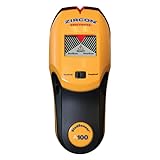
Overview: The Zircon StudSensor A100 is an entry-level electronic stud finder that reliably locates the edges of wood and metal studs up to ¾ inch deep. It features WireWarning detection for live AC wires up to 2 inches deep, making it a safe choice for basic household projects. The ergonomic design and intuitive display make it accessible for DIYers while providing professional-grade safety features.
What Makes It Stand Out: The WireWarning technology continuously scans for live electrical wires, a critical safety feature often missing in budget stud finders. Its edge-locating capability, while basic, is precise and consistent. The easy-to-read display provides clear visual feedback complemented by audio alerts, ensuring confident readings even in dimly lit spaces. The contoured grip reduces hand fatigue during extended scanning sessions.
Value for Money: Positioned as an affordable option, the A100 delivers essential functionality without premium cost. It requires a 9V battery (not included), adding minimal operating expense. While it lacks center-finding and deep-scan modes, its reliable edge detection and wire safety features provide solid value compared to cheaper, less accurate alternatives. It’s ideal for occasional users who prioritize safety and simplicity.
Strengths and Weaknesses: Strengths: Reliable edge detection, effective WireWarning AC detection, comfortable ergonomic grip, clear visual and audio indicators, lightweight and compact design.
Weaknesses: Only locates edges (not centers), limited ¾-inch depth, no deep scan capability, 9V battery not included, less suitable for professional contractors.
Bottom Line: The Zircon A100 is perfect for homeowners tackling light to medium projects like hanging pictures or shelves. It prioritizes safety and ease of use over advanced features, making it an excellent entry-level choice for those who need dependable performance without complexity.
7. Zircon MultiScanner A200 – Electronic Wall Scanner Stud Finder & Metal Detector with Live AC Wire Detection, SpotLite Pointer, ACT Auto-Correcting Technology

Overview: The Zircon MultiScanner A200 is a versatile wall scanner designed for serious DIYers and professionals who need multi-mode functionality. It accurately detects wood and metal studs, rebar, and live AC wires behind drywall and plaster. The SpotLite Pointer projects a bright beam to mark stud centers, while the LCD display provides real-time feedback, making it a comprehensive scanning solution.
What Makes It Stand Out: Zircon’s exclusive Auto-Correcting Technology (ACT) automatically adjusts for user scanning errors, dramatically reducing false positives. The four scan modes—StudScan, DeepScan, Metal Scan, and AC Scan—adapt to any project. The SpotLite Pointer physically illuminates the exact stud center, eliminating guesswork and marking errors that plague conventional finders.
Value for Money: As a mid-range scanner, the A200 justifies its price through versatility and accuracy-enhancing technology. It runs on one 9V battery (not included) and prevents costly drilling mistakes. While pricier than basic models, the professional-grade features and error-correction technology deliver strong value for frequent users who need reliable multi-surface scanning.
Strengths and Weaknesses: Strengths: Auto-Correcting Technology minimizes errors, four versatile scan modes, SpotLite Pointer for precise marking, DeepScan mode reaches 1.5 inches, reliable AC wire detection, clear LCD display.
Weaknesses: 9V battery not included, steeper learning curve for mode selection, occasional recalibration needed on textured walls, bulkier than basic edge finders.
Bottom Line: The Zircon A200 is an excellent investment for dedicated DIYers and professionals needing versatile, accurate scanning. Its advanced features and safety technology make it worth the premium for regular use, though casual users may find it more capable than necessary.
8. FNIRSI Stud Finder Wall Scanner - 6 in 1 Electronic Wall Wood Stud Finder, Wall Detector with Updated Positioning Hole for Center and Edge of Wood AC Wire Metal Studs Joist Pipe

Overview: The FNIRSI 6-in-1 Stud Finder is a feature-rich budget scanner that offers exceptional versatility. It provides six detection modes for wood and metal studs, ferrous/non-ferrous metals, AC wires, and copper pipes. The innovative positioning hole allows instant marking of centers and edges, while the rechargeable battery eliminates ongoing power costs, making it a compelling value proposition.
What Makes It Stand Out: The positioning hole is a unique, practical feature that lets users mark locations without removing the tool from the wall. Six distinct detection modes provide comprehensive scanning capability rarely seen at this price. The rechargeable design is economical and environmentally friendly, while automatic calibration simplifies operation for beginners.
Value for Money: This scanner delivers remarkable value, matching premium features at a budget price. The rechargeable battery saves money long-term, and the detection depth (up to 4.7 inches for iron) exceeds many competitors. While build quality may not match professional brands, the feature set and accuracy make it an exceptional value for homeowners and DIY enthusiasts.
Strengths and Weaknesses: Strengths: Six detection modes for comprehensive scanning, innovative positioning hole for marking, rechargeable battery, deep detection capability, auto-calibration, detects both center and edges.
Weaknesses: Lesser-known brand raises durability questions, display less intuitive than major brands, requires patience for accurate scans, accuracy varies on heavily textured walls.
Bottom Line: The FNIRSI 6-in-1 is ideal for cost-conscious buyers wanting maximum features. Its innovative marking system and rechargeable power suit DIYers tackling diverse projects, though professionals may prefer established brands for daily job site reliability.
9. DEWALT Stud Finder, 3/4”, Locate Framing Studs Efficiently with LED Arrows, Ideal for Wood and Metal, AAA Batteries Included (DW0100)

Overview: The DEWALT DW0100 is a streamlined stud finder built for efficiency and durability. It features center-finding technology with LED arrows that guide users directly to stud centers. With ¾-inch detection depth for wood and metal plus AC wire detection, it covers essential needs. The slim profile fits easily in tool belts, and AAA batteries are included for immediate use.
What Makes It Stand Out: DEWALT’s constant auto-calibration saves time by eliminating manual setup between scans. The center marking channel allows for immediate pencil marking without repositioning. The slim, durable design reflects DEWALT’s jobsite-ready construction. Including batteries demonstrates practical value, ensuring it’s ready to work out of the box.
Value for Money: This mid-priced tool offers strong value through professional reliability and included accessories. While it lacks deep-scanning modes, it excels at core functionality. The DEWALT brand assures quality construction and warranty support. For users wanting dependable performance without complexity, it balances cost with trusted durability.
Strengths and Weaknesses: Strengths: Center-finding with clear LED arrows, constant auto-calibration, slim profile for storage, includes AAA batteries, trusted DEWALT durability, convenient center marking channel.
Weaknesses: Limited to ¾-inch depth, no deep scan mode, basic display feedback, fewer features than similarly priced competitors, wire detection less comprehensive than dedicated scanners.
Bottom Line: The DEWALT DW0100 is a solid, reliable choice for users wanting a durable, easy-to-use stud finder from a trusted brand. It’s perfect for quick, efficient stud location on standard drywall, though those needing deeper scanning should consider alternatives.
10. Franklin Sensors ProSensor M210 Stud Finder with 13-Sensors, Wood & Metal Stud Detector/Wall Scanner, Live Wire Detection (Green), Made in The USA

Overview: The Franklin Sensors ProSensor M210 revolutionizes stud finding with its 13-sensor array that scans a wide area simultaneously. Unlike conventional single-sensor tools, it displays full stud width, center, and edges in real-time without sliding or calibration. Made in the USA, it detects studs up to 1.5 inches deep and includes live wire detection, making it the most accurate scanner available.
What Makes It Stand Out: The multi-sensor technology reveals complete stud layouts instantly, showing double studs, irregular configurations, and blocking that single-point scanners miss. One-mode operation automatically adjusts for depth and material, removing user error. The precision LEDs track studs while displaying centers and edges simultaneously, providing unmatched confidence and speed.
Value for Money: Premium-priced but worth the investment, the M210 saves time and prevents costly mistakes. Contractors benefit from instant, reliable readings that speed up projects. The durable construction ensures years of service. For professionals, it’s a business investment; for serious DIYers, it’s a purchase-for-life tool that eliminates frustration.
Strengths and Weaknesses: Strengths: 13-sensor array for superior accuracy, displays full stud width simultaneously, no calibration required, detects double studs and irregularities, made in USA, 1.5-inch depth, durable construction.
Weaknesses: Highest price point in category, requires two AA batteries (not included), larger size less convenient for tight spaces, overkill for occasional users, no scan beyond 1.5 inches.
Bottom Line: The Franklin M210 is the professional’s choice for maximum accuracy and efficiency. Its multi-sensor technology and no-calibration design make it ideal for contractors and serious DIYers who value precision and time savings above all else, despite the premium price.
Understanding Electronic Stud Finders
How Electronic Stud Finders Work
Electronic stud finders operate on a deceptively simple principle: they detect changes in density behind your wall surface. When you slide one across drywall, its internal sensors measure the dielectric constant of the material—essentially how that material responds to an electrical field. Wood studs have a different density and moisture content than the hollow cavity or insulation beside them, creating a detectable shift. The device translates this shift into visual or auditory signals, alerting you to the stud’s location. Understanding this fundamental mechanism helps you appreciate why technique matters as much as technology.
The Technology Behind the Magic
Most modern electronic stud finders use either capacitive or inductive sensing technology. Capacitive sensors are the most common in consumer models, detecting density changes by emitting a small electrical field and measuring how it’s affected by nearby materials. Inductive sensors, often found in higher-end models, can differentiate between ferrous and non-ferrous metals, making them particularly useful for locating both studs and protective metal plates. Some advanced units combine both technologies with additional radar-like features, creating a multi-dimensional view of what’s lurking behind your walls.
Types of Electronic Stud Finders
Edge Finders vs. Center Finders
Edge finders represent the most basic electronic design, alerting you when you’ve reached the stud’s edge. You’ll need to find both edges and mark the center yourself—a process that introduces human error. Center finders, by contrast, use multiple sensor plates to calculate the exact midpoint automatically, typically providing a clear visual indicator when you’re dead-center. For renovation work where precision drilling is critical, center-finding technology saves time and eliminates the guesswork that leads to splintered studs or weak anchor points.
Multi-Scanner Models
Multi-scanner electronic stud finders have become the Swiss Army knives of wall detection. These devices don’t just locate wood studs; they identify live electrical wires, metal pipes, and sometimes even detect moisture. For comprehensive renovations—especially in bathrooms, kitchens, or older homes where electrical standards may be questionable—a multi-scanner isn’t a luxury; it’s essential insurance against catastrophic mistakes. The key is understanding how to interpret their different scanning modes and alerts.
Instant Scanning Devices
The latest evolution in electronic stud finding is instant-scan technology, which provides real-time feedback without requiring you to drag the unit slowly across the wall. These devices use broader sensor arrays and faster processing chips to give immediate results. While incredibly convenient for quick checks, they sometimes sacrifice a degree of precision for speed, making them better suited for experienced users who can interpret subtle signal variations.
Key Features That Matter Most
Detection Depth Capabilities
Standard electronic stud finders typically detect wood studs up to ¾-inch deep, which covers most residential drywall applications. However, renovation projects often involve thicker materials like plaster, tile backer board, or layered walls. Look for models offering deep-scan modes that penetrate 1½ to 3 inches. Be skeptical of claims beyond 3 inches—physics imposes real limits on consumer-grade sensors, and exaggerated depth ratings often signal marketing over engineering.
Sensor Density and Accuracy
The number and arrangement of sensors directly impact accuracy. Single-sensor models are prone to false positives from pipes or wiring. Dual-sensor designs improve edge detection, while multi-sensor arrays with three or more plates can triangulate position with remarkable precision. The spacing between sensors matters too—wider arrays provide better differentiation in thick walls but may struggle with narrow studs in older homes built with true 2x3 lumber.
Display Technology and Readability
A bright, clear display makes all the difference when you’re working in poorly lit corners or against textured walls. LED arrays remain popular for their simplicity and battery efficiency, but LCD screens with backlighting offer more detailed information. The best displays show not just location but signal strength, helping you distinguish between solid studs and incidental metal or dense insulation. Consider how the display performs at various viewing angles—you’ll often be using the tool overhead or at awkward positions.
Calibration: The Make-or-Break Factor
Automatic vs. Manual Calibration
Calibration is where most users—and many budget tools—fail. Manual calibration requires you to place the unit on a known empty section of wall and press a button to establish a baseline. While reliable when done correctly, it’s easily botched if that “empty” section actually contains hidden blocking or dense insulation. Automatic calibration continuously adjusts as you scan, eliminating the human error factor but requiring you to maintain consistent speed and pressure for accurate readings.
Calibration Best Practices
Always calibrate on a section of wall at least 12 inches away from corners, outlets, or known obstacles. For manual models, take multiple baseline readings across different wall sections to ensure consistency. If your tool allows, recalibrate every few minutes during extended use, as temperature and humidity changes can affect sensor sensitivity. Never calibrate over a stud—that seems obvious, but it’s the most common mistake that leads to wildly inaccurate results.
Power and Battery Considerations
Battery Types and Longevity
Most electronic stud finders run on standard AA or 9-volt batteries, but some newer models use rechargeable lithium-ion cells. Alkaline batteries typically last 6-12 months with occasional DIY use, while heavy renovation work might drain them in weeks. Lithium-ion offers convenience but introduces charging downtime. Regardless of type, always remove batteries during long-term storage to prevent corrosion that can permanently damage the internal circuitry.
Low-Battery Indicators and Auto-Shutoff
A stud finder with a weak battery is worse than useless—it gives false confidence. Reliable low-battery indicators are non-negotiable for serious renovation work. Auto-shutoff features preserve battery life but can be frustrating if they trigger while you’re climbing a ladder to reach a high wall. Look for models with adjustable timers or at least 5-minute shutoff windows to balance conservation with workflow efficiency.
Ergonomics and Build Quality
Grip Design and Comfort
You’ll be holding this tool at awkward angles, often above shoulder height, for extended periods. A contoured grip with rubberized coating prevents fatigue and slippage from dusty hands. The button placement should allow one-handed operation—your other hand will be busy holding a pencil, level, or drill. Weight distribution matters too; top-heavy designs become cumbersome during ceiling work.
Durability for Job Site Conditions
Home renovations are brutal on tools. Your stud finder will be dropped, covered in drywall dust, and tossed into tool bags with sharp objects. Look for models with reinforced corners and sealed battery compartments. While no electronic tool is truly waterproof, water-resistant designs survive the occasional splash from paint or cleaning. The scanning surface should be smooth and scratch-resistant—gouges and debris on the sensor plate create inconsistent readings.
Advanced Detection Capabilities
Live Wire Detection
Wire detection isn’t just a safety feature—it’s a renovation necessity. Quality electronic stud finders detect energized AC wires up to 2 inches deep, typically alerting you with a distinct warning light or alarm. However, they won’t find de-energized wires, which is why you should always verify with a non-contact voltage tester before drilling. The best models differentiate between wire and stud signals, preventing confusion when electrical runs parallel to framing.
Metal and Pipe Differentiation
Beyond simply detecting metal, sophisticated electronic finders can distinguish between ferrous (iron, steel) and non-ferrous (copper, aluminum) materials. This matters because copper pipes and electrical conduit require different drilling strategies than protective steel plates. Some units even estimate depth for metal objects, helping you gauge whether that pipe is safely embedded deep in the wall or dangerously close to the surface.
Moisture Sensing Features
While not standard on all models, moisture detection has become increasingly valuable for renovation work, especially in basements, bathrooms, or after water damage repairs. These sensors identify dampness behind walls that could indicate leaks or condensation issues before they become mold problems. The technology is less precise than dedicated moisture meters but provides a useful preliminary scan when planning tile work or insulation upgrades.
Display and Alert Systems
Visual Indicators and Bars
The most intuitive electronic stud finders use progressive LED bars that build as you approach a stud’s center. Multiple colors—typically red, yellow, and green—provide at-a-glance status. However, don’t be seduced by flashy displays that obscure the actual signal strength. The best designs show both the immediate reading and a trailing indicator of the strongest signal detected, helping you pinpoint the exact center even after you’ve passed it.
Audio Alerts and Volume Control
Audio feedback lets you keep your eyes on the wall and pencil ready, rather than constantly glancing at a display. Variable pitch tones that increase in frequency as you approach the center are most effective. Volume control is crucial—loud beeps that echo through empty rooms become annoying during all-day projects, while too-quiet alerts get lost in noisy job sites. Some models offer headphone jacks for quiet early-morning or late-evening work.
Center-Pinpointing Technology
Center-pinpointing goes beyond simple edge detection by using algorithms to calculate the exact middle of the stud. The best implementations provide a distinct “center” alert—a solid tone, specific LED pattern, or on-screen icon—that triggers only when you’re within millimeters of the true midpoint. This feature eliminates the need to mark both edges and measure, reducing error and speeding up your workflow significantly.
Accuracy Factors and Limitations
Wall Material Considerations
Electronic stud finders are calibrated for standard ½-inch or ⅝-inch drywall. Textured walls, plaster, wood paneling, and tile backer boards all challenge their accuracy. Thick plaster can reduce effective depth by 30-50%, while metallic paint or wallpaper backing creates false readings. When working with non-standard walls, always verify findings with a small pilot hole or by scanning multiple adjacent areas to establish pattern consistency.
User Technique and Common Errors
The most accurate electronic stud finder fails with poor technique. Maintain consistent speed—roughly 1 inch per second—without stopping or reversing direction. Apply firm, even pressure; tilting the unit or lifting slightly mid-scan creates signal dropouts. Always scan in both directions across the same area; a true stud will register consistently regardless of scan direction. Single-direction hits often indicate pipes or wiring running diagonally.
Environmental Interference
Electromagnetic interference from fluorescent lights, active power lines in the wall, or even nearby Wi-Fi routers can confuse sensors. Always scan with lights off when possible, and be aware that older homes with knob-and-tube wiring create unpredictable readings. Temperature extremes affect battery performance and sensor sensitivity; allow your tool to acclimate for 15 minutes when moving between hot and cold environments.
Price Ranges and Value Proposition
Budget-Friendly Options
Entry-level electronic stud finders ($20-40) typically offer basic edge detection with limited depth and no wire detection. They’re adequate for occasional picture hanging but frustrating for serious renovation work. The false-positive rate is higher, and build quality often means replacement within a year or two. Consider these only if your projects are truly minimal and you understand their limitations.
Mid-Range Workhorses
The $50-100 range represents the sweet spot for most DIY renovators. These models offer center-finding technology, reliable wire detection, decent depth capabilities, and durable construction. They balance accuracy with user-friendly features like auto-calibration and clear displays. For hanging cabinets, mounting TVs, or framing out new walls, this tier provides professional-grade results without the professional-grade price tag.
Professional-Grade Investment
High-end electronic stud finders ($150+) justify their cost through multi-scanning capabilities, superior sensor arrays, and robust construction that withstands daily job site abuse. They offer features like mapping modes that remember stud positions, Bluetooth connectivity for documenting findings, and calibration fine-tuning. For whole-house renovations or contractors, the time saved and mistakes avoided quickly offset the initial investment.
Using Your Stud Finder Effectively
Marking and Mapping Strategies
Develop a systematic marking approach. Use light pencil marks for initial scans, then confirm with a second pass before making permanent dark marks. For large projects, create a wall map on paper noting stud locations, wire paths, and any anomalies. Some renovators use low-tack painter’s tape to mark entire stud lines before drilling, allowing easy adjustment as patterns emerge.
Scanning Patterns for Best Results
Never rely on a single scan line. Start with horizontal sweeps at multiple heights—stud centers should align vertically. Then scan vertically along your marked lines to confirm consistency. For heavy objects requiring multiple anchors, scan a 2-foot-wide area to ensure you’re not mounting into a stud that’s twisted, bowed, or improperly spaced. This pattern approach reveals irregular framing and hidden blocking.
Dealing with Irregular Framing
Older homes often feature non-standard stud spacing, twisted lumber, or unexpected blocking. Modern electronic finders can miss these if you’re scanning too quickly. When you encounter inconsistent readings, slow your scan speed and increase overlap between passes. Irregularities often indicate important structural elements or previous repairs, so investigate thoroughly before drilling rather than forcing a standard spacing assumption.
Safety Considerations
Electrical Hazard Awareness
Even with wire detection, treat every wall as potentially live. Wire detection only works on energized circuits; a breaker-off wire is invisible to most electronic stud finders. Before drilling, always use a non-contact voltage tester on the exact spot. Never assume a stud location is safe because your finder didn’t alert—electrical codes allow wires to run through bored holes in studs, making them undetectable by edge-finding alone.
Avoiding Plumbing Disasters
Water pipes, especially copper, register as metal but may be indistinguishable from conduit. In bathrooms and kitchens, assume any metal detection near fixtures is plumbing until proven otherwise. The cost of a plumber far exceeds the time spent cutting a small inspection hole to verify. For exterior walls, remember that pipes may be heavily insulated, reducing their electronic signature while still being dangerously close to the surface.
Maintenance and Care
Cleaning and Storage
Dust is the enemy of electronic sensors. After each use, wipe the scanning surface with a clean, dry cloth. Never use solvents or water, which can seep into the housing. Store your stud finder in its original case or a dedicated pouch to protect the sensor plate from scratches. Avoid leaving it in hot vehicles or damp basements; extreme conditions degrade battery contacts and internal components over time.
Calibration Checks Over Time
Sensors drift with age and use. Test your electronic stud finder’s accuracy monthly by scanning a known wall section and verifying results with a small finish nail. If you notice increased false positives or inconsistent center detection, the unit may need professional recalibration or replacement. Keep a log of any performance changes—patterns help diagnose whether the issue is tool degradation or changes in your scanning environment.
When to Use Alternative Methods
Magnetic Finders as Backup
Despite their limitations, magnetic stud finders excel at locating drywall screws, which reliably indicate stud centers. Use them to verify electronic readings, especially in problematic walls. The combination of electronic scanning for initial location and magnetic confirmation for screw position provides a one-two punch that’s hard to beat. Keep a strong magnetic finder in your toolkit as a low-tech backup that never needs batteries.
The Knock Test Myth
The traditional knock test—listening for hollow versus solid sounds—has been rendered obsolete by modern electronics. What sounds “solid” could be a fire block, horizontal blocking, or even a dense insulation patch. Reserve knock tests for entertainment value only. Your electronic stud finder, used properly, provides objective data that your ears simply cannot, especially through multiple wall layers or sound-dampening drywall.
Frequently Asked Questions
What’s the difference between edge finding and center finding, and why does it matter for renovations?
Edge finders locate stud boundaries, requiring you to mark both edges and calculate the center manually. This introduces measurement error and assumes the stud is perfectly straight. Center finders use multiple sensors to pinpoint the exact midpoint automatically, which is crucial when drilling pilot holes for lag bolts or cabinet screws where being off-center by even ¼-inch can compromise holding strength.
How deep can electronic stud finders actually detect through different wall materials?
Through standard ½-inch drywall, quality electronic finders detect wood studs up to 1½ inches deep. With ⅝-inch fire-rated drywall, expect 10-15% reduction in effective depth. Plaster can cut depth by 30-50% depending on thickness and lath type. Deep-scan modes may reach 3 inches but with reduced accuracy. Always verify the manufacturer’s specs for your specific wall material rather than relying on maximum depth claims.
Can electronic stud finders detect both live and dead electrical wires?
Most consumer electronic stud finders only detect live, energized AC wires. De-energized wires, or circuits with the breaker off, are typically invisible to standard capacitive sensors. Some high-end models claim rudimentary wire detection regardless of power state, but these are unreliable. Always use a dedicated non-contact voltage tester before drilling near any suspected electrical runs, regardless of your stud finder’s wire alert features.
Why does my electronic stud finder give false positives, and how can I tell the difference?
False positives typically stem from metal pipes, wiring, dense insulation, or even metallic wallpaper backing. True studs register consistently when scanned from both directions and at multiple heights. False signals often appear and disappear or shift position. Scan slowly in both directions; a legitimate stud produces identical center points regardless of approach direction. If readings vary, investigate with alternative methods before committing to a drill hole.
Do I really need a professional-grade electronic stud finder for DIY home projects?
For occasional picture hanging and light shelving, a mid-range center-finding model suffices. However, if you’re renovating kitchens, installing heavy wall-mounted TVs, building storage systems, or working with plaster walls, professional-grade features like multi-scanning, superior depth, and mapping capabilities pay for themselves by preventing costly mistakes. Consider your project’s scope and the cost of potential errors rather than just the tool’s price tag.
How often should I recalibrate my electronic stud finder during a project?
Recalibrate manual models every time you change wall sections or after 10-15 minutes of continuous use. Automatic calibration units adjust continuously but should be restarted if you notice inconsistent readings. Environmental changes—moving from air-conditioned rooms to humid garages, for instance—warrant recalibration. When in doubt, recalibrate; it’s a 5-second step that prevents 5-hour repair jobs.
Can I use electronic stud finders on plaster and lath walls effectively?
Yes, but with caveats. Plaster and lath create a challenging environment because the lath (wood strips) and plaster keys (the material squeezed between lath) both register as density changes. Use deep-scan mode, move at half your normal speed, and expect to practice interpretation. Scan multiple adjacent areas to distinguish true studs (vertical patterns) from lath (horizontal patterns). Many renovators use electronic finders for initial sweeps, then verify with a small drill bit to find the solid stud behind the lath.
What’s the best scanning pattern for locating studs for a heavy wall-mounted object?
Start with horizontal sweeps at the object’s mounting height, marking all potential centers. Then scan vertically from floor to ceiling along those marks—true studs create continuous vertical lines. Finally, scan horizontally 16 inches on either side of your main line to identify the full stud bay pattern. This three-axis approach reveals irregular framing, fire blocking, and ensures you’re not mounting into a short cripple stud or blocking rather than a full-height framing member.
How long do batteries typically last in electronic stud finders, and what are the signs of low power?
With intermittent DIY use, alkaline batteries last 6-12 months. Daily professional use may require monthly changes. The first sign of low power is reduced detection depth and increased false negatives. Many units have low-battery indicators, but these often trigger too late. If you notice you need to scan slower to get readings, or if center detection becomes inconsistent, replace batteries immediately. Always carry spares; a dead battery mid-project kills momentum.
Are more expensive electronic stud finders actually more accurate, or just packed with unnecessary features?
Price correlates with sensor quality, build durability, and advanced features—not necessarily raw accuracy on perfect drywall. A $150 finder won’t locate a stud better than a $60 model in ideal conditions. The difference emerges in challenging situations: thick plaster, lath walls, heavily insulated exteriors, or when you need to differentiate between wood, metal, and wiring. For standard drywall projects, mid-range accuracy is sufficient. For whole-house renovations or older homes, premium models’ ability to handle edge cases justifies their cost through fewer mistakes and faster workflow.
See Also
- The 10 Ultimate Best Electronic Stud Finders for Home Renovations in 2026
- 10 Best Budget Electronic Stud Finders Under $40 for Students
- 10 Best Electronic Stud Finders for DIY Home Renovations This Year
- 10 Best Electronic Stud Finders for Plaster Walls This Year
- 10 Best Value Stud Finders for Home Improvement Enthusiasts in 2026