Table of Contents
When you’re running a production shop or tackling months-long job site work, your tools aren’t just equipment—they’re revenue generators. Every minute of downtime translates directly to lost productivity, and in 2026’s competitive construction landscape, there’s simply no room for compromise. Corded circular saws remain the undisputed champions of continuous heavy-duty operation, offering relentless power delivery that battery technology still can’t match for all-day cutting sessions. But not all corded saws are built to survive the punishment of repetitive, high-volume cutting through dense hardwoods, engineered lumber, and abrasive sheet goods.
The modern professional landscape demands more than raw power. Today’s heavy-duty circular saws blend sophisticated electronics, aerospace-grade materials, and ergonomic engineering to deliver precision and comfort during eight-hour cutting marathons. Understanding what separates a true professional-grade workhorse from a consumer tool masquerading as heavy-duty can save you thousands in replacement costs and countless hours of frustration. Let’s dive deep into the critical factors that define the best corded circular saws for continuous heavy-duty use in 2026.
Top 10 Corded Circular Saws For Heavy-Duty
Detailed Product Reviews
1. Bosch CS10 7-1/4 In. Circular Saw
](https://m.media-amazon.com/images/I/31oFyJq5eCL._SL160_.jpg)
Overview: The Bosch CS10 positions itself as a robust workhorse built for demanding job sites. Its 15-amp motor delivers consistent power for cutting up to 2-7/16 inches at 90 degrees, while the relatively light 10.2-pound frame reduces fatigue during extended use. This saw balances professional performance with thoughtful ergonomics.
What Makes It Stand Out: The die-cast magnesium footplate provides exceptional durability and true flatness that stamped steel plates can’t match. The integrated saw hook offers convenient rafter storage, a simple feature that proves invaluable on active work sites. Bosch’s exclusive bevel louvers direct the blower output precisely where needed, keeping cut lines visible without requiring external dust management.
Value for Money: Positioned in the mid-to-upper price range, the CS10 justifies its cost through superior build quality and longevity. While cheaper alternatives exist, the magnesium components and refined dust control system save money long-term by reducing wear and improving accuracy. It’s an investment that pays dividends for daily users.
Strengths and Weaknesses: Strengths include the durable footplate, effective dust management, convenient saw hook, and optimized sight lines. The 15-amp motor handles most materials confidently. Weaknesses include slightly heavier weight than premium competitors and a bevel capacity that, while adequate, lags behind some rivals at only 45 degrees maximum.
Bottom Line: The Bosch CS10 excels for professionals prioritizing durability and dust control over absolute lightness. It’s a reliable, well-engineered tool that withstands job site abuse while delivering consistent, accurate cuts day after day.
2. SKIL 15 Amp 7-1/4 Inch Circular Saw with Single Beam Laser Guide - 5280-01

Overview: The SKIL 5280-01 delivers impressive value for DIY enthusiasts and occasional users seeking professional features without the premium price tag. Its 15-amp motor spins at 5,300 RPM, providing ample power for most home improvement projects. The inclusion of a laser guide system elevates this budget-friendly option above its competitors.
What Makes It Stand Out: The single-beam laser guide is the star feature, offering visual cutting assistance typically found on more expensive saws. This dramatically improves cut accuracy for less experienced users. The 51-degree bevel capacity with positive stops at 45 degrees provides versatility for common angled cuts. Safety features including a lock-off trigger and power-on indicator add peace of mind.
Value for Money: This saw represents exceptional value, often priced 30-40% below professional brands. While it lacks the refined feel of premium models, it doesn’t compromise on core performance. The included carbide-tipped blade and robust feature set make it ideal for homeowners who need reliability without over-investing in occasional-use tools.
Strengths and Weaknesses: Strengths include the laser guide, powerful motor, excellent bevel range, safety features, and aggressive pricing. The dust blower maintains visibility effectively. Weaknesses involve a heavier, less ergonomic design, no electric brake, and lower overall build quality that may not withstand daily professional use. The footplate is functional but less durable than magnesium alternatives.
Bottom Line: Perfect for DIYers and homeowners, the SKIL 5280-01 offers surprising capability at an unbeatable price. The laser guide alone makes it worth considering for those still developing their cutting confidence.
3. DEWALT 7-1/4-Inch Circular Saw, Lightweight, Corded (DWE575)

Overview: The DEWALT DWE575 redefines what a professional circular saw can be, weighing just 8.8 pounds while packing a 15-amp motor that tackles the toughest applications. This lightweight champion doesn’t compromise on cutting capacity, offering an impressive 2-9/16-inch depth of cut that exceeds many heavier competitors.
What Makes It Stand Out: The anti-snag ball bearing lower guard sets this saw apart, providing buttery-smooth operation even when making bevel or compound cuts. This feature alone prevents the frustrating hang-ups that plague lesser saws. The optimized 53-degree bevel capacity with positive stops at 45 and 22.5 degrees covers virtually all common framing and finish applications without adding bulk.
Value for Money: Though priced at the premium end, the DWE575 earns its keep through superior ergonomics and reduced user fatigue. Contractors who use a circular saw daily will recoup the investment through increased productivity and reduced strain. The build quality ensures years of reliable service, making the total cost of ownership competitive.
Strengths and Weaknesses: Strengths include exceptional lightness, powerful motor, smooth guard operation, generous depth of cut, and thoughtful bevel stops. The corded design provides unlimited runtime. The primary weakness is the lack of an electric brake, which requires careful handling. The price point may deter casual users who don’t need professional-grade durability.
Bottom Line: For professionals seeking the lightest reliable circular saw available, the DEWALT DWE575 is nearly unbeatable. It combines power, precision, and ergonomics in a package that reduces fatigue without sacrificing performance.
4. DEWALT Circular Saw, 7-1/4 inch, Pivoting with up to 57 Degree Bevel, Corded (DWE575SB)

Overview: Building on the acclaimed DWE575 platform, the DWE575SB adds crucial safety and versatility enhancements that justify its position as DEWALT’s flagship 7-1/4-inch circular saw. Weighing the same featherlight 8.8 pounds, it incorporates an electric brake while expanding bevel capacity to an industry-leading 57 degrees.
What Makes It Stand Out: The electric brake stops the blade within seconds of releasing the trigger, dramatically reducing the risk of accidental contact and allowing faster transitions between cuts. This safety feature is invaluable on fast-paced job sites. The expanded 57-degree bevel capacity with positive stops at 45 and 22.5 degrees enables complex rafter cuts and advanced framing techniques that other saws simply cannot accommodate.
Value for Money: As the most expensive option in this lineup, the DWE575SB targets serious professionals who prioritize safety and capability. The electric brake alone justifies the price premium for many users, potentially preventing costly injuries. When combined with the enhanced bevel range and the base model’s excellent ergonomics, it represents a comprehensive premium solution.
Strengths and Weaknesses: Strengths include the electric brake, exceptional bevel range, lightweight design, powerful motor, and smooth guard operation. The depth of cut remains best-in-class at 2-9/16 inches. The only significant weakness is the premium price, which may exceed budget constraints for some buyers. Casual users may not fully utilize its advanced capabilities.
Bottom Line: The DEWALT DWE575SB is the ultimate professional circular saw, combining safety, versatility, and ergonomics. For contractors who demand the best and value their wellbeing, this saw justifies every penny of its premium price.
5. Skil 5080-01 13-Amp 7-1/4" Circular Saw, Red
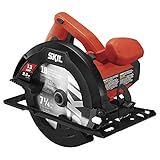
Overview: The Skil 5080-01 represents the entry-level circular saw market, offering essential functionality at an extremely accessible price point. With a 13-amp motor and modest weight reduction compared to its predecessor, this saw targets budget-conscious buyers who need basic cutting capability for occasional projects.
What Makes It Stand Out: Its primary distinguishing feature is affordability—this is often the least expensive circular saw from a recognizable brand. The 15% weight reduction versus the previous model makes it more comfortable for extended use, though it remains heavier than premium options. The 51-degree bevel capacity with positive stops provides surprising versatility for such a basic tool.
Value for Money: Exceptional value defines the 5080-01. It delivers reliable performance for light-duty tasks at a fraction of professional saw prices. Homeowners tackling occasional repairs or small woodworking projects will find all necessary features without paying for professional-grade durability they don’t require. It’s a sensible choice for tool collections that see monthly rather than daily use.
Strengths and Weaknesses: Strengths include unbeatable pricing, adequate power for softwoods and sheet goods, spindle lock for easy blade changes, and improved dust blower visibility. The bevel capacity exceeds expectations. Weaknesses include the lower 13-amp motor struggling with dense materials, heavier overall weight than premium models, no electric brake, and build quality that reflects its budget positioning. The footplate may flex under pressure.
Bottom Line: For occasional DIY tasks and budget-minded buyers, the Skil 5080-01 delivers acceptable performance at an irresistible price. It’s a practical choice for those who need a circular saw a few times yearly rather than daily.
6. SKILSAW SPT77WML-01 15-Amp 7-1/4-Inch Lightweight Worm Drive Circular Saw , Silver

Overview: The SKILSAW SPT77WML-01 represents the gold standard for professional framers seeking maximum performance with minimal fatigue. This worm drive circular saw features magnesium construction that delivers exceptional durability while shaving pounds off traditional steel models. The 15-amp motor provides relentless power for demanding applications, from ripping LVL beams to cutting multiple sheets of plywood.
What Makes It Stand Out: Magnesium components make this the lightest worm drive in its class, dramatically reducing arm strain during all-day use. The Cut-Ready depth system enables lightning-fast, tool-free adjustments with clearly marked measurements. A 53-degree bevel capacity exceeds standard 45-degree limits, allowing for complex roof cuts and intricate angles without flipping the workpiece. The anti-snag lower guard glides smoothly over cut-off pieces, preventing frustrating hang-ups that plague lesser saws.
Value for Money: Priced at the premium end of the market, this saw justifies every dollar for professionals who rely on their tools daily. The magnesium build offers better longevity than aluminum alternatives, while the worm drive gearing provides superior torque transfer. For weekend warriors, the investment may be excessive, but tradespeople will recoup the cost through increased productivity and reduced downtime.
Strengths and Weaknesses: Strengths include exceptional power-to-weight ratio, precise depth adjustments, superior bevel range, and rugged durability. The worm drive configuration delivers unmatched cutting torque. Weaknesses are primarily the high price point and the learning curve for users transitioning from sidewinder saws. The silver color shows jobsite grime more readily than darker finishes.
Bottom Line: This is the professional’s choice for heavy-duty framing and remodeling. If you’re on the tools five days a week, the SPT77WML-01 will pay dividends in comfort and performance. Hobbyists should look elsewhere.
7. SKILSAW SPT77W-01 15-Amp 7-1/4-Inch Aluminum Worm Drive Circular Saw

Overview: The SKILSAW SPT77W-01 delivers professional-grade worm drive performance with aluminum construction that balances durability and cost-effectiveness. Built for framers and contractors who demand reliability, this 15-amp saw handles everything from framing lumber to dense engineered wood products. The Dual-Field motor design sets it apart from conventional circular saws, optimizing performance for continuous cutting applications.
What Makes It Stand Out: The proprietary Dual-Field motor runs cooler than standard designs, extending tool life significantly during demanding production work. Weighing 14.2 pounds, it’s lighter than traditional worm drives while maintaining the torque advantage. The Cut-Ready depth system allows for rapid, accurate adjustments without fumbling with levers. An integrated saw hook enables safe, convenient storage on rafters and joists, keeping the saw within reach but off the ground. The 51-degree bevel capacity handles most common angled cuts.
Value for Money: This model offers excellent value for professionals seeking worm drive performance without the premium price of magnesium models. The aluminum construction sacrifices minimal durability while saving substantial cost. The motor cooling technology extends service intervals and prevents burnout, saving money long-term. It’s priced competitively against other professional worm drives while offering unique features.
Strengths and Weaknesses: Strengths include the innovative cooling motor, lightweight aluminum build, practical saw hook, and worm drive power delivery. The tool feels balanced and solid during operation. Weaknesses include slightly less bevel capacity than the magnesium version and aluminum’s tendency to show wear more visibly. The weight, while light for a worm drive, still exceeds most sidewinder saws.
Bottom Line: A workhorse saw that delivers professional performance with smart engineering. Perfect for contractors who prioritize longevity and features over absolute minimum weight. The cooling motor alone makes it worth considering.
8. CRAFTSMAN Circular Saw, 7-1/4 inch, 13 Amp, Corded (CMES500)

Overview: The CRAFTSMAN CMES500 positions itself as an accessible, user-friendly circular saw for DIY enthusiasts and occasional users. This sidewinder design emphasizes comfort and simplicity over raw professional power. With a 13-amp motor spinning at 5,300 RPM, it handles typical homeowner projects like deck repairs, plywood cutting, and dimensional lumber sizing with confidence and ease.
What Makes It Stand Out: This saw prioritizes user comfort with a contoured over-molded handle that reduces vibration and hand fatigue during extended use. The spindle lock mechanism makes blade changes remarkably simple, eliminating the need for multiple wrenches or frustrating blade retention systems. The included 18-tooth carbide-tipped blade provides decent performance out of the box for general-purpose cutting. Its straightforward design makes it approachable for beginners.
Value for Money: Exceptional value for the sub-$100 price point, this saw delivers reliable performance for intermittent use. While lacking the power and durability of professional models, it costs a fraction of premium worm drives. For homeowners tackling a few projects yearly, it offers better ROI than renting. The three-year limited warranty provides peace of mind uncommon in this price tier.
Strengths and Weaknesses: Strengths include affordable pricing, comfortable ergonomics, easy blade changes, and adequate power for light-to-medium tasks. The 45-degree bevel covers most common angles. Weaknesses are the lower power output, limited bevel capacity compared to pro models, and less robust construction. The 18-tooth blade is coarse for fine finish work. Not suitable for daily professional use.
Bottom Line: An ideal starter saw for homeowners and DIYers. Don’t expect jobsite durability, but for weekend projects and occasional repairs, it delivers impressive bang for your buck. Professionals should invest in heavier-duty options.
9. SKIL 7-1/4" Worm Drive Corded Circular Saw-SPT77W-22

Overview: The SKIL SPT77W-22 worm drive circular saw blends professional-grade power with thoughtful inclusions that enhance out-of-box readiness. Built on the same platform as other SKIL worm drives, this model distinguishes itself by bundling a premium Diablo blade, saving users an immediate upgrade expense. The 15-amp motor and worm drive gearing deliver the torque necessary for demanding framing and ripping applications.
What Makes It Stand Out: The factory-installed 24-tooth Diablo carbide blade represents significant value, offering professional cutting quality without additional investment. The Dual-Field motor technology from SKILSAW’s heritage provides enhanced cooling for extended cutting sessions. The Cut-Ready depth system enables quick, tool-free adjustments. At 14.2 pounds, it maintains manageable weight while delivering worm drive performance. The 51-degree bevel capacity handles standard and advanced angled cuts.
Value for Money: Strong value proposition with the included Diablo blade worth $30-40 alone. The saw offers professional features at a competitive price point, bridging the gap between budget sidewinders and premium magnesium worm drives. For contractors and serious DIYers, the bundled blade eliminates an immediate upgrade cost. The motor design promises longer service life, improving long-term ROI.
Strengths and Weaknesses: Strengths include the premium included blade, proven worm drive power, cooling motor design, and accurate depth adjustment system. The saw feels balanced and cuts aggressively. Weaknesses include potential confusion with similar SKILSAW model numbers and aluminum construction that lacks the premium feel of magnesium. Some users may prefer higher bevel capacity.
Bottom Line: A smart buy for those wanting professional worm drive performance with minimal additional investment. The Diablo blade inclusion makes this particularly attractive for framers starting fresh or upgrading their primary saw.
10. Metabo HPT 7-1/4-Inch Circular Saw Kit | 6,000 Rpm, 15-Amp Motor | Integrated Dust Blower | 24T Premium Framing/Ripping Blade | Single Handed Bevel Adjustment | C7SB3

Overview: The Metabo HPT C7SB3 redefines expectations for a budget-friendly professional circular saw, earning recognition as Pro Tool Reviews’ Best Corded Budget Circular Saw for Pros in 2020. This sidewinder combines a blistering 6,000 RPM motor speed with an ultra-lightweight 9.5-pound design, creating a nimble yet powerful cutting tool for framing and remodeling applications.
What Makes It Stand Out: The 6,000 RPM no-load speed exceeds most competitors, delivering cleaner, faster cuts with reduced burning. An integrated dust blower keeps cut lines visible, improving accuracy and safety. Single-handed bevel adjustment enables rapid angle changes without releasing your grip. The included 24-tooth premium blade and carrying bag add immediate value. At just 9.5 pounds, it significantly reduces fatigue compared to worm drives.
Value for Money: Outstanding value for a saw that performs like a premium tool at a mid-range price. The award-winning performance validates its professional credibility while remaining accessible to serious DIYers. The kit inclusion of blade and bag eliminates extra purchases. For pros seeking a lightweight secondary saw or primary tool for lighter framing, it’s hard to beat.
Strengths and Weaknesses: Strengths include exceptional power-to-weight ratio, high RPM speed, innovative dust blower, easy bevel adjustment, and professional-grade blade. The lightweight design excels during overhead cuts. Weaknesses include sidewinder configuration that lacks worm drive torque for the heaviest ripping tasks. The build quality, while good, may not match premium brands for decades-long durability.
Bottom Line: The best choice for most users seeking professional performance without the weight and cost of worm drives. Ideal for remodelers, carpenters, and dedicated DIYers who value speed and maneuverability over maximum torque.
Understanding Heavy-Duty Corded Circular Saws
What Defines a Heavy-Duty Circular Saw?
A genuine heavy-duty circular saw transcends marketing labels through its fundamental architecture. These tools feature all-metal gear housings, sealed bearings, and commutator motors rated for continuous duty cycles. You’ll find reinforced magnesium or aluminum baseplates that resist flexing under load, maintaining cut accuracy even when you’re ripping 2-3/4" pressure-treated beams. The internal wiring uses higher-temperature insulation, and brush assemblies are designed for extended life—often 200+ hours of actual trigger time before replacement.
The arbor lock mechanism employs steel rather than plastic components, and the depth adjustment scales are etched or stamped metal, not adhesive labels that peel away after a month. These saws typically weigh 11-14 pounds—a heft that signals substantive internal components rather than flimsy construction. When evaluating a potential purchase, check if the manufacturer specifies “continuous duty” in the technical specifications; this indicates the motor meets NEMA standards for sustained operation without performance degradation.
Why Corded Power Matters for Continuous Use
Battery technology has made impressive strides, but physics still favors corded saws for non-stop operation. A 15-amp corded circular saw delivers approximately 1,800 watts of sustained power, while even the most advanced 60V battery platforms max out around 1,200 watts—and that output diminishes as the battery depletes. For continuous cutting, corded tools maintain consistent blade speed regardless of load or runtime duration.
Heat generation presents another critical factor. Prolonged high-load cutting cycles generate substantial motor heat. Corded saws dissipate this through larger windings and more robust cooling fans, while battery tools must balance motor cooling with protecting sensitive lithium cells. On a 90-degree job site, this thermal advantage becomes decisive. Additionally, corded saws eliminate battery swap downtime and the significant capital expense of maintaining multiple battery packs that degrade over 2-3 years of heavy use.
Essential Features for Continuous Heavy-Duty Operation
Motor Power and Performance Benchmarks
For continuous heavy-duty applications, 15 amps represents the minimum acceptable standard in 2026. However, amperage alone doesn’t tell the complete story. Look for motors with copper windings rated for Class H insulation (180°C), which prevents thermal breakdown during all-day ripping sessions. The best performers achieve no-load speeds between 5,200-5,800 RPM while maintaining 85%+ speed under full load.
Torque delivery matters more than raw RPM for demanding cuts. Saws with constant speed electronics monitor blade velocity 1,000+ times per second, automatically increasing amperage when sensors detect bogging. This technology prevents stalling in dense materials and eliminates the need to manually ease into cuts. For production environments, consider models with soft-start technology that reduces inrush current—this prevents circuit breaker trips when multiple tools activate simultaneously on shared temporary power.
Blade Capacity and Cutting Depth
Standard heavy-duty saws accommodate 7-1/4" blades, delivering 2-1/2" depth at 90 degrees and 1-3/4" at 45 degrees. However, specialized heavy-duty models may feature 8-1/4" or even 10" blade capacity for timber framing applications. The critical specification isn’t maximum depth but the incremental adjustment precision. Look for depth scales with 1/16" markings and positive stops at common depths like 1-1/2" and 1-9/16" for consistent 2x material cutting.
The arbor size typically measures 5/8" diameter, but premium saws include diamond knockout arbors that accommodate both 5/8" and diamond knockout blades. For continuous use, evaluate how easily the blade guard retracts during plunge cuts—the best designs use ball-bearing guards that glide smoothly rather than binding with sawdust buildup. The lower guard should extend at least 1-1/2" beyond the blade at full depth for maximum protection.
Build Quality and Durability Standards
Professional-grade saws employ magnesium alloy for the main housing and baseplate, offering steel-like rigidity at 75% less weight. Check the baseplate thickness—premium models use 3/16" minimum plate stock that won’t deflect when you apply lateral pressure during guide rail cuts. All external fasteners should be hex-head cap screws rather than Phillips or Torx, allowing proper torque application during maintenance.
Internal components reveal true durability. The armature shaft should ride in sealed ball bearings, not sleeve bearings that wear quickly under radial loads. Gear sets must be heat-treated steel with a minimum 50 Rockwell hardness rating. Examine the cord strain relief—a proper molded rubber boot with internal cord grip prevents conductor breakage where the cord enters the housing. For job site resilience, the power cord should measure 8-10 feet minimum and use 14-gauge conductors with oil-resistant jacketing.
Ergonomics and Vibration Control
Eight hours of continuous saw operation amplifies ergonomic shortcomings into serious repetitive strain injuries. Top-tier heavy-duty saws position the main handle at a 15-20 degree angle relative to the blade plane, aligning your wrist naturally during push cuts. The auxiliary front handle should offer multiple grip positions and rotate 360 degrees for optimal control during bevel cuts.
Vibration damping separates premium from pedestrian tools. Look for saws with tuned mass dampers in the handle assemblies—these counteract the 120 Hz vibration frequency generated by 60 Hz AC motors. Rubber overmolding should cover 70%+ of handle surfaces with a durometer rating around 60 Shore A for firm yet comfortable grip. Some advanced models integrate active vibration cancellation using piezoelectric elements, reducing hand-arm vibration exposure by up to 40% compared to conventional designs.
Safety Systems for Professional Environments
Modern heavy-duty saws incorporate electronic blade brakes that stop rotation within 3 seconds of trigger release—a critical feature when you’re making 200+ cuts daily. The best implementations use dynamic braking rather than mechanical friction, eliminating wear components. Anti-kickback mechanisms have evolved beyond simple pawls; 2026 models feature accelerometer-based systems that detect sudden upward motion and instantaneously cut power.
For dust-intensive applications, integrated dust ports that accept 1-1/2" or 35mm vacuum hoses significantly improve visibility and reduce respiratory hazards. Look for saws with sealed switches rated IP54 or higher, preventing conductive dust ingress that causes intermittent operation. The trigger mechanism should include a two-stage safety that prevents accidental activation while allowing quick response when needed.
2026 Technology Advancements to Watch
Smart Electronics and Constant Speed Technology
The integration of microprocessor control has revolutionized heavy-duty saw performance. Advanced models now feature load-sensing algorithms that learn your cutting patterns and preemptively adjust power delivery. Bluetooth connectivity enables fleet managers to monitor runtime hours, brush wear, and thermal cycles through mobile apps—data that informs predictive maintenance scheduling.
Constant speed technology has evolved to maintain blade velocity within 2% of set speed regardless of material density. This precision prevents burning in hardwoods and ensures consistent cut quality across entire production runs. Some systems now offer programmable ramp-up profiles, allowing you to control acceleration speed for delicate materials while maintaining full aggression for construction lumber.
Advanced Dust Management Solutions
OSHA’s updated silica regulations have made dust collection non-negotiable on professional sites. Leading 2026 saws feature integrated dust channels that capture 90%+ of particulates at the source. The most effective designs position the port directly above the blade, using centrifugal force to eject debris into the vacuum stream before it becomes airborne.
For continuous operation, look for automatic filter purge cycles in self-contained dust bags. These systems use a brief reverse airflow pulse every 10-15 minutes to clear filter clogging, maintaining suction without manual intervention. Some premium models now integrate dust level sensors that alert you when collection bags reach capacity—preventing the performance drop that occurs when filters become overloaded.
Precision Adjustment Mechanisms
Micrometer-style depth adjustments with 1/64" increments have become standard on professional saws. The best implementations use rack-and-pinion mechanisms with zero backlash, ensuring the blade stays exactly where you set it. Bevel adjustments now feature worm-drive fine-tuning screws that allow 0.1-degree precision, essential for high-end finish work and compound angle cuts.
Positive detents at common angles (0°, 15°, 22.5°, 30°, 45°) should engage with solid clicks and minimal play. Premium saws include adjustable detent stops that you can calibrate if they drift after months of use. The bevel scale should be laser-etched into metal with high-contrast fill—never printed on adhesive labels that fade or peel.
Baseplate Engineering and Stability
The baseplate represents the foundation of cut accuracy. In 2026, premium saws feature machined-flat baseplates with a surface finish of 32 microinches or better—comparable to precision machine tool ways. Some manufacturers now offer ceramic-coated baseplates that reduce friction by 30% while providing extreme wear resistance against abrasive materials like fiber cement.
Look for baseplates with integrated guide rail adapters that eliminate the need for aftermarket accessories. The front edge should include a clear sight line with a notched reference point aligned with the blade’s left side for perfect freehand cuts. For panel processing, oversized baseplates (8" x 12" or larger) provide superior stability when breaking down sheet goods.
Thermal Management Systems
Continuous operation demands sophisticated heat dissipation. Modern heavy-duty saws use computational fluid dynamics to optimize internal airflow, directing cooling air across both the motor windings and gearbox simultaneously. Thermal cutoffs have evolved from simple bimetallic switches to predictive algorithms that reduce power slightly before critical temperatures are reached—preventing nuisance shutdowns while protecting components.
Some advanced models now feature user-replaceable cooling fans with blade designs specifically optimized for either high-altitude or sea-level operation. The motor housing incorporates heat pipe technology borrowed from computer processors, conducting thermal energy away from critical windings to external cooling fins. This extends brush life by up to 50% in high-duty-cycle applications.
Electrical Requirements and Power Management
Amperage, Wattage, and Circuit Considerations
Heavy-duty saws draw 15 amps continuously, with startup inrush currents reaching 60-80 amps for milliseconds. On job sites with 20-amp circuits, this rarely causes issues. However, when operating multiple tools simultaneously or using long extension cords, voltage drop becomes critical. A 10% voltage reduction (108V instead of 120V) increases motor current draw by approximately 11%, accelerating heating and reducing power output.
For continuous operation, dedicate a 20-amp circuit to each saw when possible. If sharing circuits, ensure the combined running amperage doesn’t exceed 80% of the breaker rating (16 amps on a 20-amp circuit). Consider using portable power distribution boxes with built-in voltage displays to monitor supply quality throughout the workday.
Extension Cord Best Practices
Voltage drop across extension cords represents the most common cause of subpar saw performance. For 15-amp tools, use minimum 12-gauge cords for runs up to 50 feet, and 10-gauge for 50-100 foot lengths. The total circuit length matters—add your extension cord length to the distance from the panel to the receptacle. At 100 feet total length, even 12-gauge cords cause noticeable power loss.
Always uncoil extension cords fully during use; coiled cords act as inductors that generate heat and reduce voltage delivery. Inspect cords daily for damage, particularly at the connectors where conductor breakage occurs first. For permanent semi-mobile setups, consider installing retractable cord reels with 10-gauge conductors and built-in circuit breakers.
Generator Compatibility for Remote Sites
When operating from generators, ensure the unit provides clean sine wave output with less than 5% total harmonic distortion (THD). Dirty power causes excessive motor heating and can damage electronic controls. Inverter generators typically outperform conventional contractor generators for sensitive tool electronics.
Size the generator for 1.5 times the saw’s running wattage—minimum 2,700 watts for a 15-amp saw. This accounts for starting current and prevents voltage sag. Always connect the saw directly to the generator; avoid additional extension cords that compound voltage drop. For multiple saws, a 10,000-watt generator with dedicated 20-amp receptacles provides optimal performance and tool protection.
Blade Technology and Selection Guide
Blade Types for Heavy-Duty Applications
Continuous operation demands carbide-tipped blades with C3 or C4 grade tungsten carbide teeth. These grades offer the best balance of hardness and impact resistance for nail-embedded lumber. For general framing, 24-tooth blades provide aggressive material removal, while 40-tooth configurations deliver cleaner cuts in finish applications. The plate should be laser-cut from high-carbon steel and tensioned to run true at maximum RPM.
Specialty applications require specific designs: fiber cement blades feature polycrystalline diamond (PCD) teeth that last 100x longer than carbide in abrasive materials. Metal-cutting blades use cermet tips and operate at reduced speeds—ensure your saw has variable speed control if you plan to cut ferrous metals. For glued engineered lumber, look for anti-stick coatings that reduce pitch buildup and prevent binding.
Arbor Specifications and Compatibility
The 5/8" arbor with 1" diamond knockout remains the professional standard. However, some high-torque saws now feature 1" straight arbors for increased stiffness with large-diameter blades. Always verify your blade inventory matches the saw’s arbor configuration before purchasing. Adapters exist but introduce runout that reduces cut quality and increases vibration.
The arbor flange should be precision-machined and at least 1-1/4" diameter to provide adequate blade support. For continuous use, check the arbor threads weekly—vibration can loosen the nut, especially on direct-drive saws. Some premium models include self-locking arbors with left-hand threads on the blade side to prevent loosening during operation.
Quick-Change Systems for Efficiency
Production environments demand blade changes in under 60 seconds. The best systems combine spindle locks that engage positively without slipping, and tool-free blade guard removal. Look for blade wrenches that store on-board with magnetic retention—losing the wrench costs valuable time.
Some 2026 models feature retractable arbor flanges that allow blade changes without fully removing the nut. This design uses a spring-loaded collar; you loosen the nut two turns, retract the flange, and slide the old blade off. For shops running multiple blade types, consider saws with color-coded arbor washers that identify blade diameter at a glance.
Maintenance Strategies for Maximum Lifespan
Daily and Weekly Maintenance Protocols
After each shift, blow out the motor housing with compressed air (90 PSI maximum) to remove conductive dust from windings. Check the blade guard return spring function—apply a single drop of dry-film lubricant to pivot points weekly. Inspect the power cord for damage and verify the strain relief remains tight.
Every 20 hours of operation, remove the brush caps and check carbon brush length. Replace brushes when they wear to 1/4" length; shorter brushes cause arcing that damages the commutator. Clean the commutator with a fiberglass brush if you notice burning or pitting. For saws with sealed bearings, listen for changes in tone that indicate lubrication breakdown—bearing failure often begins as a subtle whine before becoming a grinding noise.
Recognizing Wear Patterns
Baseplate wear manifests first at the front edge and around blade opening. Use a straightedge monthly to check for flatness; deviations over 0.010" affect cut accuracy. Replace baseplates that show significant wear or impact damage—attempting to true them often creates more problems.
Motor brush wear accelerates dramatically if you frequently operate at low voltage. If brushes need replacement before 100 hours, investigate your power supply quality. Gear wear appears as increasing noise during startup and under load; magnetic chip detectors in premium saws capture ferrous particles, providing early warning of impending failure. Always address unusual vibrations immediately—they indicate bearing failure, bent arbors, or damaged blades that create cascading damage.
Professional Servicing vs. DIY Maintenance
While daily maintenance belongs to the operator, internal repairs require professional attention unless you have electrical training. Authorize service center inspection annually for saws exceeding 500 hours of use. Professionals can measure armature resistance, check for shorted windings, and replace sealed bearings using proper pullers that prevent shaft damage.
Service centers also recalibrate electronic feedback systems and update firmware on smart saws—tasks impossible without manufacturer software. The cost of professional service typically runs $75-150 annually, representing less than 2% of the tool’s value while extending lifespan by 3-5 years. Keep detailed maintenance logs; they validate warranty claims and help diagnose recurring issues.
Value Assessment and Investment Planning
Total Cost of Ownership Analysis
A $200 consumer saw might survive occasional weekend use, but for continuous operation, expect to replace it within 6 months. Professional-grade saws priced at $400-600 deliver 3,000+ hours of service with proper maintenance—a cost of 13-20 cents per hour. Factor in consumables: quality blades ($50-150 each, replaced every 50-200 hours), brushes ($15 per set, every 100-150 hours), and bearings ($40-80, every 500 hours).
Calculate your annual operating hours realistically. A production shop running two shifts needs saws engineered for 2,000+ hours annually. The initial price premium for professional tools pays for itself within the first year through reduced downtime and replacement costs. Don’t forget to value your time—a saw that fails mid-day costs 2-3 hours of productivity minimum.
Warranty and Service Network Importance
Professional-grade tools carry 3-5 year warranties covering defects and often include wear items like brushes. More importantly, established brands maintain regional service centers with 48-hour turnaround times and loaner programs. Read warranty terms carefully: “commercial use” clauses may void coverage on otherwise robust tools.
Evaluate parts availability before committing to a brand. Can you purchase armatures, field coils, and gears five years after purchase? Manufacturers with robust professional lines stock parts for a decade. Some even offer remanufacturing programs where they rebuild your saw to factory specifications for 40% of new cost, providing like-new performance with updated components.
Professional-Grade vs. Consumer-Grade Distinctions
The divide between professional and consumer tools extends beyond price. Consumer saws use universal motors with sleeve bearings and plastic gears rated for intermittent duty. Professional tools employ capacitor-start induction motors (in worm-drive models) or high-efficiency universal motors with ball bearings throughout. The duty cycle rating—often buried in specifications—tells the real story: consumer tools typically carry 15-20% duty cycle ratings, meaning they can run 9-12 minutes per hour at full load before requiring cooldown.
Professional saws feature 100% duty cycle ratings, allowing continuous operation. The price difference reflects not just component quality but engineering validation: professional tools undergo accelerated life testing equivalent to 5,000+ hours before release. For continuous heavy-duty use, this validation provides confidence that the tool won’t just perform, but survive.
Frequently Asked Questions
What makes a circular saw suitable for continuous heavy-duty use versus regular professional use?
Continuous heavy-duty saws feature 100% duty cycle motors, all-metal construction, and thermal management systems designed for 8+ hour operation without cooldown periods. Regular professional saws may handle daily use but require intermittent rest to prevent overheating, typically using lighter-duty components that prioritize weight over absolute durability.
How do I calculate the true amperage draw of a 15-amp circular saw on my job site power setup?
Continuous amperage draw often runs 12-13 amps under typical cutting loads, but startup inrush can hit 60-80 amps for milliseconds. For generator sizing, multiply running amps by 1.5 (22.5 amps minimum). On shared circuits, ensure your saw receives at least 115V under load—voltage below 110V causes damaging current increases. Use a clamp meter to measure actual draw during your heaviest cuts.
Should I invest in a worm-drive or direct-drive circular saw for continuous operation?
Worm-drive saws excel at high-torque applications like timber framing and dense engineered lumber, offering better power transfer and durability. Direct-drive sidewinders provide higher blade speeds and lighter weight, ideal for sheet goods and overhead work. For continuous all-around use, many professionals now prefer direct-drive saws with electronic feedback, as they combine adequate torque with superior ergonomics for day-long operation.
What blade speed should I maintain for different materials during continuous cutting?
For construction lumber, maintain 5,000-5,800 RPM for optimal chip evacuation. Dense hardwoods like ipe or mahogany perform better at 4,500-5,000 RPM to prevent burning. Fiber cement requires 3,500-4,000 RPM maximum to avoid premature diamond blade wear. Metal cutting demands 2,500-3,500 RPM depending on material thickness. Variable speed saws with electronic feedback maintain these speeds automatically under load.
How often should I replace brushes in a saw used 40 hours per week?
Under heavy continuous use, expect brush replacement every 100-150 hours. Signs of imminent failure include sparking visible through motor vents, intermittent power loss, and a burning odor. Keep a spare set on-site and inspect brushes weekly. Premature wear (under 80 hours) indicates low voltage operation, excessive loading, or a misaligned brush holder requiring professional service.
Can I use a heavy-duty circular saw with a generator that has non-inverter technology?
Yes, but ensure the generator provides clean power with less than 5% THD. Conventional generators often produce 15-20% THD, which damages electronic controls and reduces motor life. If using a standard generator, install a line conditioner between the generator and tool. Monitor motor temperature carefully; dirty power causes excessive heating even when voltage appears correct.
What maintenance tasks must be performed daily versus weekly for continuous operation?
Daily: blow out dust, check blade guard function, inspect power cord, and verify baseplate tightness. Weekly: lubricate guard pivot, check brush length, clean air vents, and inspect blade arbor for runout. Every 20 hours: deep clean motor housing, check gear oil level (on worm drives), and examine bearings for noise. Every 100 hours: replace brushes, check armature commutator, and inspect all fasteners for proper torque.
How do I identify when a saw’s bearings are beginning to fail before catastrophic damage occurs?
Early bearing failure produces a subtle high-pitched whine that changes pitch with motor speed. You may also notice increased vibration and a slight wobble in the blade at startup. Use a mechanic’s stethoscope on the motor housing to isolate bearing noise. Magnetic chip detectors in premium saws capture ferrous particles from bearing races, providing visual early warning. Address any unusual noise immediately; bearing failure can destroy armature shafts and gear housings.
What safety features are most important for continuous heavy-duty use in 2026?
Electronic blade brakes are non-negotiable, stopping blades within 3 seconds. Anti-kickback systems using accelerometers prevent sudden upward motion. IP54-rated sealed switches prevent dust-induced failures. Integrated dust collection ports improve visibility and reduce respiratory hazards. Two-stage triggers prevent accidental activation. For production shops, look for lock-on buttons with release triggers that allow continuous operation without finger fatigue.
Is it cost-effective to rebuild a professional circular saw versus replacing it after 3,000 hours of use?
Professional rebuilds typically cost 35-45% of new tool price and restore the saw to factory specifications with updated components. For premium saws ($500+ new), rebuilding makes economic sense if the armature and field coil test within specifications. Factor in 2-3 weeks downtime for rebuild versus immediate replacement. Many contractors maintain a “rebuild cycle,” rotating saws through service annually to spread costs and maintain a fresh fleet. For saws under $300, replacement usually proves more economical.
See Also
- 10 Best Corded Circular Saws for Continuous Use in 2026
- 10 Best Heavy Duty Circular Saws After 6 Months of Testing in 2026
- 10 Best Heavy Duty Circular Saws for Demolition Work in 2026
- 10 Best Value Heavy Duty Circular Saws for Rugged Job Site Use in 2026
- The 10 Best Worm Drive Circular Saws for Heavy-Duty Framing in 2026