Table of Contents
When it comes to woodworking, whether you’re building fine furniture, tackling home renovations, or crafting intricate cabinetry, precision is non-negotiable. At the heart of nearly every woodshop lies a tool that combines raw power with surgical accuracy—the circular saw. Unlike its bulkier table saw cousin, the circular saw offers unmatched portability and versatility, making it a go-to for both professionals and DIYers who demand clean, straight cuts on the fly.
But not all circular saws are built the same. With advancements in motor technology, blade design, and ergonomic engineering, today’s market offers a wide spectrum of models tailored to specific tasks and skill levels. Choosing the right circular saw isn’t just about price or brand reputation—it’s about understanding the subtle interplay of features that influence cut quality, user comfort, and long-term durability. In this guide, we’ll break down everything you need to know to select the best circular saw for precision wood cutting in the current market.
Top 10 Circular Saws For Wood Cutting
Detailed Product Reviews
1. Skil 5080-01 13-Amp 7-1/4" Circular Saw, Red
, Red](https://m.media-amazon.com/images/I/51zT9DcQquL._SL160_.jpg)
Overview:
The Skil 5080-01 is a robust, full-size circular saw designed for serious DIYers and professionals. Powered by a 13-amp motor, it delivers strong performance for demanding cutting tasks. With a 7-1/4" blade and 51-degree bevel capacity, it offers excellent versatility for framing, decking, and general construction.
What Makes It Stand Out:
This saw stands out with its 15% weight reduction over older models, significantly reducing user fatigue during extended use. The spindle lock feature simplifies blade changes, while the improved dust blower ensures a clear cutting line for greater accuracy. Its durable build and smooth bevel adjustments enhance usability on job sites.
Value for Money:
Priced competitively, the Skil 5080-01 offers a strong balance of power, ergonomics, and durability. It outperforms many entry-level models while remaining more affordable than premium brands.
Strengths and Weaknesses:
Strengths: Powerful motor, lightweight design, precise bevel adjustments, efficient dust management.
Weaknesses: No built-in laser guide, lacks rip fence storage.
Bottom Line:
A reliable, well-built circular saw that delivers consistent performance—ideal for contractors and serious DIYers seeking durability and ease of use.
2. Seesii Mini Circular Saw with Laser Guide,4.8A 4000 RPM Compact Corded Circular Saw with Rip Guide,3 Blades (4-1/2") for Wood,Soft Metal,Tile,Plastic Cutting,Max Cut Depth 1-11/16"(90°),1-1/8" (45°)

Overview:
The Seesii Mini Circular Saw is a lightweight, corded tool tailored for DIY enthusiasts. With a 4.8A motor and 4000 RPM speed, it handles a variety of materials efficiently. Its compact size makes it perfect for indoor projects, renovations, and crafting.
What Makes It Stand Out:
Its standout feature is multi-material versatility—equipped with three specialized blades (TCT, HSS, diamond) for wood, soft metal, tile, and plastic. The laser guide and rip fence ensure precision, while the dust hose adapter maintains a clean workspace.
Value for Money:
Excellent value for hobbyists. The inclusion of three blades and accessories eliminates the need for additional purchases, making it a cost-effective starter saw.
Strengths and Weaknesses:
Strengths: Lightweight, multi-material capability, laser guide, dual-switch safety.
Weaknesses: Limited depth for thick lumber, not ideal for heavy-duty jobs.
Bottom Line:
A smart, safe, and versatile mini saw perfect for light-duty, precision tasks around the home.
3. SKIL 15 Amp 7-1/4 Inch Circular Saw with Single Beam Laser Guide - 5280-01

Overview:
The SKIL 5280-01 is a high-performance circular saw built for professionals who demand speed and accuracy. Its 15-amp motor generates 5,300 RPM, enabling fast, clean cuts through thick materials. It comes with a 7-1/4" carbide-tipped blade, ready for immediate use.
What Makes It Stand Out:
The integrated single-beam laser guide is a major advantage, enhancing cutting accuracy. Combined with a dust blower and spindle lock, it ensures visibility and easy maintenance. The 51° bevel with a 45° positive stop streamlines common angled cuts.
Value for Money:
Slightly pricier than basic models, but the laser guide and powerful motor justify the cost for users prioritizing precision and efficiency.
Strengths and Weaknesses:
Strengths: Powerful motor, laser guidance, excellent dust management, quick blade changes.
Weaknesses: Heavier than some competitors, laser may require calibration.
Bottom Line:
A top-tier circular saw offering professional-grade performance and accuracy—ideal for carpenters and contractors.
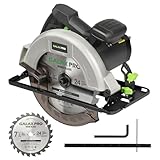
4. GALAX PRO 11 Amp Power Circular Saw, 6000RPM Corded Circular Saw with Adjustable Cutting Depth 2-1/2" (90°) to 1-7/8" (45°), 7-1/4 Inch Carpentry Saw Blade, Ideal for Wood, Plastic Cuts
Overview:
The GALAX PRO 11 Amp Circular Saw boasts an impressive 6000 RPM no-load speed, making it one of the fastest in its class. Designed for wood and plastic, it features a large 7-1/4" blade and a deep cutting capacity, suitable for both rough and fine carpentry.
What Makes It Stand Out:
Its standout feature is the 6000 RPM speed, enabling swift cuts through dense materials. The dual safety switch and protective guard enhance user safety, while the scale ruler and rip guide ensure straight, accurate cuts.
Value for Money:
Offers strong performance at a mid-range price. Comes with essential accessories, making it a practical choice for budget-conscious users.
Strengths and Weaknesses:
Strengths: High speed, deep cut capacity, precise scale guide, good safety features.
Weaknesses: No laser, motor may overheat during prolonged use.
Bottom Line:
A high-speed, reliable saw ideal for woodworkers needing fast, accurate cuts without breaking the bank.
5. DOVAMAN Circular Saw, 5.8A 4-1/2" Circular Saw w/Laser, Metal Auxiliary Handle, 6 Blades (4½", 4¾"), Cutting Depth 1-11/16" (90°), 1-3/8" (45°), Ideal for Wood, Soft Metal, Plastic, Tile - MCS01A

Overview:
The DOVAMAN MCS01A is a compact, multi-functional circular saw designed for versatility and control. With a 5.8A motor and laser guide, it delivers precise cuts across wood, plastic, soft metal, and tile.
What Makes It Stand Out:
It includes six blades—two each for wood, metal/plastic, and tile—offering unmatched flexibility. The metal auxiliary handle and large base enhance stability, while the laser and edge guide improve accuracy.
Value for Money:
Exceptional value due to the extensive blade set and added stability features. Great for DIYers tackling diverse materials.
Strengths and Weaknesses:
Strengths: Six included blades, laser guide, auxiliary handle, stable base.
Weaknesses: Moderate power for thick materials, cord length could be longer.
Bottom Line:
A highly versatile and stable mini circular saw—perfect for DIYers needing a single tool for multiple cutting tasks.
6. Extbtfor Circular Saw,4-1/2" Mini Circular Saw Cordless with 2.0A Battery, Power Saw with Laser Guide, 3400RPM, Maximum Cutting 1-11/16" at 90° and 1-1/8"at 45° for Wood, Soft Metal, Plastic

Overview:
The Extbtfor 4-1/2" Mini Circular Saw is a cordless, compact power tool designed for lightweight cutting tasks. Powered by a 20V 2.0A battery, it offers portability and freedom from cords, making it ideal for DIYers and professionals needing mobility. With a no-load speed of 3400 RPM, it handles wood, soft metal, and plastic with ease.
What Makes It Stand Out:
Its standout features include a built-in laser guide for precise cuts, a lightweight 3.9-pound design for one-handed use, and a versatile blade kit including HSS and TCT blades. The inclusion of a guide ruler and dust pipe improves control and cleanliness. Two button batteries for the laser ensure uninterrupted use.
Value for Money:
Priced affordably, it delivers solid value with multiple accessories and battery convenience. While not for heavy-duty jobs, it outperforms many budget saws in versatility and portability.
Strengths and Weaknesses:
Strengths: Lightweight, cordless convenience, laser guide, multi-material blades, includes guide ruler and extra batteries. Weaknesses: Limited battery runtime, lower RPM than corded models, not suitable for thick or dense materials.
Bottom Line:
A practical, budget-friendly cordless mini saw perfect for light-duty DIY tasks, offering good portability and precision for occasional users.
7. Extbtfor Power Circular Saw,4.8A Mini Circular Saw with Laser Guide,4000RPM Corded Saw Equipped with 3 Pcs 4-1/2" Blades,Maximum Cutting 1-11/16" at 90° and 1-1/8"at 45° for Wood, Soft Metal, Plastic

Overview:
The Extbtfor 4.8A Mini Circular Saw is a corded compact tool delivering 4000 RPM and 580W of power. Designed for precision and efficiency, it’s suitable for woodworking, home improvement, and light metal cutting, with a maximum depth of 1-11/16" at 90°.
What Makes It Stand Out:
It offers a robust motor, three specialized blades (HSS, TCT, and diamond dry blade), and a laser guide for accuracy. The guide ruler ensures straight cuts, while the 4.7-pound weight maintains portability. No battery charging means continuous operation.
Value for Money:
Excellent value for DIYers and hobbyists. The inclusion of three high-quality blades and laser guidance at this price is rare, making it a versatile, ready-to-use tool.
Strengths and Weaknesses:
Strengths: High RPM, continuous power, three multi-material blades, laser and guide ruler, no downtime. Weaknesses: Cord limits mobility, slightly heavier than cordless models, laser requires button batteries.
Bottom Line:
A powerful, well-equipped corded mini saw that delivers precision and versatility, ideal for users prioritizing consistent performance over portability.
8. G LAXIA Mini Circular Saw, 4Amp 3500RPM Corded Circular Saw with Laser Guide, Rip Guide, Compact Saw with 2Pcs 24T TCT Blades for Wood Cuts

Overview:
The G LAXIA Mini Circular Saw features a 4-amp copper motor with 3500 RPM, designed for accurate wood cutting. Weighing 5.5 lbs, it balances power and portability, ideal for carpentry and home projects requiring straight, clean cuts.
What Makes It Stand Out:
It includes a laser guide and rip guide for precision, two 24T TCT blades, and a vacuum adapter for dust control. The ergonomic soft-grip handle reduces fatigue during extended use, enhancing user comfort.
Value for Money:
Offers solid performance at a competitive price. The inclusion of two durable blades, rip guide, and dust management makes it a complete package for woodworkers on a budget.
Strengths and Weaknesses:
Strengths: Precise laser and rip guides, good dust control, comfortable grip, includes two quality blades. Weaknesses: Heavier than competitors, lower RPM, corded design limits range.
Bottom Line:
A reliable, accurate mini circular saw best suited for woodworkers needing consistent, clean cuts with minimal setup.
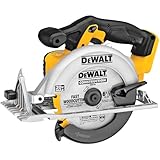
9. DEWALT 20V MAX Circular Saw, Cordless Sidewinder Style Portable, 6-1/2-Inch Blade, 5150 RPM, 0-50 Degree Bevel Capability, Battery Not Included (DCS391B)
Overview:
The DEWALT DCS391B is a high-performance cordless circular saw with a 6-1/2-inch blade and 5150 RPM motor. Designed for professional use, it delivers aggressive cutting power and precision with a magnesium shoe and optimized grip.
What Makes It Stand Out:
Its 0-50° bevel capacity, lightweight magnesium construction, and 18-tooth carbide blade enable deep, accurate cuts. With a max depth of 2-1/8” at 90°, it outcuts mini saws and handles framing, decking, and flooring.
Value for Money:
Priced higher but justifiable for pros. Though the battery is sold separately, DEWALT’s 20V MAX compatibility ensures long-term tool ecosystem value.
Strengths and Weaknesses:
Strengths: High RPM, deep cutting capacity, durable magnesium shoe, excellent balance, bevel range. Weaknesses: Battery not included, pricier than entry models, heavier than mini saws.
Bottom Line:
A professional-grade cordless saw offering power, precision, and durability—ideal for contractors needing reliable performance on the job site.
10. Yunirvana 11 Amp Corded Circular Saw with Circular Saw Blade, 6000RPM, Adjustable Cutting Depth, 7-1/4 Inch Blade, Ideal for Wood and Plastic Cuts, Professional Carpentry Tool for Precision Cutting

Overview:
The Yunirvana 11 Amp Circular Saw is a powerhouse with a pure copper motor reaching 6000 RPM. Featuring a 7-1/4" blade, it handles wood, plastic, metal panels, and flooring with precision and speed.
What Makes It Stand Out:
Its 6000 RPM speed, dual-insurance safety switch, dust blower, and 0-45° bevel tilt offer unmatched performance in its class. The rip guide and parallel fence ensure straight, repeatable cuts.
Value for Money:
Exceptional value for a full-size saw. High power, safety features, and included accessories make it a top pick for professionals and serious DIYers.
Strengths and Weaknesses:
Strengths: Extremely high speed, strong motor, dust blower, safety features, rip guide. Weaknesses: Heavy, cord limits mobility, loud operation.
Bottom Line:
A high-performance, reliable circular saw that dominates in power and precision—perfect for demanding carpentry and construction tasks.
Understanding the Role of a Circular Saw in Precision Woodworking
Circular saws are often mistaken for rough-cutting tools, but modern iterations have evolved far beyond basic demolition work. When used with the right blade and technique, a high-quality circular saw can deliver cuts that rival those of stationary equipment. Precision woodworking demands consistency—straight edges, minimal tear-out, and repeatable angles—and the right circular saw can deliver all three.
The key lies in how the tool translates power into control. Unlike jigsaws or reciprocating saws, circular saws use a spinning blade to make fast, clean crosscuts, rip cuts, and bevel cuts. Their ability to handle thick hardwoods, engineered lumber, and sheet goods makes them indispensable in any serious workshop.
Key Features That Define a Precision Circular Saw
Not every circular saw is engineered for fine woodworking. To achieve true precision, certain features become critical. These aren’t just marketing buzzwords—they directly impact how the saw performs under real-world conditions.
Motor Power and Torque Control
A high-amperage motor (typically 12–15 amps in corded models) ensures consistent RPMs under load, especially when cutting dense hardwoods or laminated materials. But power alone isn’t enough. Torque control mechanisms help maintain blade speed during demanding cuts, reducing bogging and blade deflection—two enemies of clean, precise results.
Blade Quality and Arbor Size
The blade is where the magic happens. Many entry-level saws come with generic blades optimized for speed, not finish. For precision, you’ll want compatibility with high-tooth-count blades (40+ teeth) and a standard 5/8-inch arbor for easy blade swaps. Some premium saws even come with laser-guided or anti-vibration blade systems to enhance cut clarity.
Depth and Bevel Adjustment Mechanisms
Precision isn’t just about straight lines—it’s about angles. A well-calibrated bevel adjustment system allows for accurate angled cuts, often from 0° to 45° or beyond. Look for models with positive stops at common angles and a lever-operated depth gauge that locks securely to prevent shifting mid-cut.
Corded vs. Cordless: Which is Better for Precision?
This debate is more nuanced than ever, thanks to advances in battery technology. Let’s unpack the trade-offs.
Advantages of Corded Circular Saws
Corded models deliver consistent power without voltage drop, making them ideal for long sessions and thick material. They typically offer higher amperage, which translates to better performance on hardwoods and continuous use. For woodworkers prioritizing uninterrupted precision, corded saws remain a top choice.
Advantages of Cordless (Battery-Powered) Models
Modern brushless motors and lithium-ion batteries have dramatically improved runtime and power delivery. High-end cordless saws now rival corded models in torque and cut quality. Their portability makes them perfect for job sites or workshops with limited outlet access. However, battery life and voltage (18V, 36V, or dual-battery systems) can impact sustained performance.
Ergonomics and User Comfort
Even the most powerful saw is useless if it’s uncomfortable to use. Precision cutting often requires extended focus and control, so ergonomics play a major role.
Handle Design and Grip
A well-placed, rubberized handle reduces vibration and improves control. Top-handle designs offer better maneuverability for one-handed use, while rear-handle models provide superior balance and visibility—especially for plunge cuts and guide rail use.
Vibration Dampening and Noise Reduction
Excessive vibration leads to user fatigue and less accurate cuts. Higher-end models incorporate internal dampeners and balanced motors to reduce hand strain. Noise levels also matter in confined spaces—look for models with acoustic shielding or quieter motor designs.
Cutting Capacity and Rail Compatibility
How much material can the saw actually cut? That’s determined by cutting depth at 90° and 45° angles. For most woodworking, a depth of 2.5 inches at 90° is sufficient, but deeper cuts require more robust models.
Importance of Guide Rail Systems
For ultra-precision, especially with sheet goods, guide rails are a game-changer. Many modern saws feature edge guides or are compatible with track systems that ensure perfectly straight cuts with zero tear-out. Compatibility with third-party rails increases versatility.
Dust Collection and Visibility
A clean line of sight and a tidy workspace are essential for accurate cuts.
Integrated Dust Extraction
Saws with effective dust ports that connect to shop vacuums keep the cut line visible and improve finish quality by reducing debris interference. Look for sealed blade guards and optimized airflow designs.
Blade Guard and Line-of-Sight Design
The blade guard should retract smoothly without obstructing view. Some saws feature transparent guards or shadow-line technology that projects a cutting path, helping align the blade with marked lines.
Safety Features Every Precision Saw Should Have
Safety and precision go hand in hand. A startled reaction from an unexpected kickback can ruin both the workpiece and the operator’s confidence.
Electric Brakes and Blade Guards
An electric brake stops the blade within seconds of releasing the trigger—a must for fast-paced work. Blade guards should close automatically and resist jamming.
Kickback Prevention and Riving Knives
Kickback occurs when the blade binds and throws the saw backward. Saws with riving knives (a thin metal plate behind the blade) help prevent this by keeping the kerf open. Some models also include anti-kickback pawls for added protection.
Blade Selection for Precision Cuts
The saw is only as good as the blade it spins. Choosing the right blade dramatically affects cut quality.
Tooth Count and Hook Angle
High tooth count (60–80 teeth) blades produce smoother finishes on crosscuts, while lower tooth counts (24–40) are better for ripping. The hook angle—how aggressively the teeth pull into the wood—should be moderate (5°–10°) to reduce tear-out.
Carbide vs. Diamond-Tipped Blades
Carbide-tipped blades are standard for wood, offering durability and sharpness. Diamond-tipped blades are overkill for wood but useful if cutting abrasive materials like MDF or composites.
Maintenance Tips for Long-Term Precision
Even the best saw will degrade without proper care. Keeping your tool in top condition ensures consistent results.
Blade Sharpening and Alignment
A dull blade causes burning, wandering, and tear-out. Regular sharpening or replacement is essential. Also, check blade alignment—misaligned blades create inaccurate cuts even with perfect technique.
Cleaning and Lubrication
Dust and resin buildup can interfere with depth adjustments and blade guards. Clean the saw after heavy use and lubricate moving parts like the bevel mechanism to maintain smooth operation.
How to Use a Circular Saw for Maximum Accuracy
Having the right tool is only half the battle. Technique matters just as much.
Using Straight Edge Guides
Clamp a straight board or aluminum guide to your workpiece to guide the saw’s base plate. This eliminates human error and delivers cuts as straight as a table saw.
Scoring the Cut Line
For tear-sensitive materials like plywood, score the cut line with a utility knife before sawing. Alternatively, use a zero-clearance insert or tape over the cut line to reduce splintering.
Common Mistakes to Avoid with Circular Saws
Even experienced woodworkers can fall into bad habits that compromise precision.
Cutting Freehand Without a Guide
Freehand cutting might be fast, but it’s rarely accurate. Always use a guide for critical cuts.
Forcing the Saw Through the Cut
Let the blade do the work. Pushing too hard increases friction, causes burning, and can deflect the blade off course.
The Role of Brand Innovation in Precision Tools
Leading manufacturers continuously invest in R&D to refine motor efficiency, ergonomics, and safety. Look for brands with a proven track record in professional-grade tools—they often incorporate feedback from real-world users to improve performance and reliability.
Accessories That Enhance Precision
Beyond the saw itself, certain accessories can elevate your results.
Laser Guides and LED Lights
Laser guides project a line onto the workpiece, improving alignment. LED work lights illuminate the cut zone in low-light environments—especially useful for cordless models used on job sites.
Custom Base Plates and Zero-Clearance Inserts
Aftermarket base plates made of aluminum or magnesium offer reduced friction and improved glide. Zero-clearance inserts minimize tear-out on the underside of thin materials.
Investing in Long-Term Value
A precision circular saw is a long-term investment. While budget models may suffice for occasional use, professionals and serious hobbyists benefit from spending more on features that enhance accuracy, durability, and user experience. Consider warranty length, service network, and part availability when making your decision.
Frequently Asked Questions
What makes a circular saw suitable for precision cutting?
A precision circular saw combines a stable base plate, accurate depth and bevel adjustments, a high-quality motor with consistent torque, and compatibility with fine-tooth blades. Features like laser guides, dust extraction, and rail compatibility further enhance accuracy.
Can a circular saw replace a table saw for fine woodworking?
While not a complete replacement, a high-end circular saw used with a guide rail can achieve similar precision for many tasks, especially with sheet goods. It’s more portable and safer for certain applications.
How important is blade speed (RPM) for clean cuts?
RPM affects cut smoothness—too low, and the blade tears the wood; too high, and it can burn. Most precision saws operate between 5,000–6,000 RPM, balancing speed and control.
Should I choose a worm drive or inline circular saw?
Worm drive saws offer more torque and are preferred for heavy-duty cutting, but they’re heavier and less balanced. Inline (sidewinder) models are lighter, faster, and better suited for precision work and overhead use.
How do I reduce tear-out when cutting plywood?
Use a sharp, high-tooth-count blade, score the cut line with a knife, apply masking tape over the cut, and consider using a zero-clearance base plate or guide rail system.
What is the benefit of a brushless motor in a circular saw?
Brushless motors adjust power based on load, improving efficiency, runtime (in cordless models), and longevity. They generate less heat and require less maintenance than brushed motors.
How often should I replace or sharpen the blade?
Replace or sharpen the blade when you notice burning, chipping, or increased effort during cuts. For frequent users, sharpening every 10–20 hours of use is recommended.
Can I use a circular saw for bevel and miter cuts?
Yes—most circular saws offer bevel cuts up to 45° or 50°. While they can’t make true miter cuts like a miter saw, angled crosscuts are possible with careful setup and a guide.
Is a laser guide necessary for accurate cuts?
Not necessary, but highly helpful—especially for quick alignment. However, a physical guide rail or straight edge remains the gold standard for precision.
What safety gear should I wear when using a circular saw?
Always wear safety glasses, hearing protection, and a dust mask. Avoid loose clothing, and use clamps to secure your workpiece—never hold it with your hand near the cut line.
See Also
- Why Your Circular Saw Blade Burns Wood (and How to Fix It)
- 10 Best Circular Saws for Precision Cutting This Year
- 10 Affordable Bevel Gear Circular Saws That Don’t Sacrifice Precision in 2026
- 10 Best Circular Saws for Concrete Cutting in 2026
- 10 Best Circular Saws for Cutting Plywood in 2026
- 10 Best Circular Saws for Cutting Plywood Without Splintering in 2026