Table of Contents
Whether you’re finally building that backyard deck, cutting sheets of plywood for a basement workshop, or trimming down a swollen door that won’t close in summer humidity, a circular saw is the one power tool that transforms intimidating projects into manageable weekend victories. For homeowners, this isn’t just another gadget to clutter your garage—it’s the backbone of DIY empowerment, capable of making perfectly straight rip cuts, clean crosscuts, and even intricate bevels that would otherwise require a fully equipped woodshop.
But walk into any home improvement store or browse online marketplaces today, and you’ll encounter a dizzying array of circular saws boasting features that sound more like car commercials: “worm drive gearing,” “brushless motors,” “electric brakes,” and “magnesium shoe construction.” The paradox of choice is real, and making the wrong decision can leave you with a tool that’s either underpowered for your ambitions or dangerously overpowered for your skill level. This comprehensive guide cuts through the marketing noise to equip you with the knowledge to select the perfect circular saw based on your actual needs, not just flashy specifications.
Top 10 Circular Saws For Homeowners
Detailed Product Reviews
1. Skil 5080-01 13-Amp 7-1/4" Circular Saw, Red

Overview:
The Skil 5080-01 is a reliable entry-level corded circular saw that delivers solid performance for homeowners and DIY enthusiasts. Its 13-amp motor provides ample power for most cutting tasks, while the 7-1/4-inch blade handles standard lumber dimensions. This model represents a thoughtful evolution from its predecessor with meaningful improvements that address user fatigue and visibility.
What Makes It Stand Out:
The 15% weight reduction compared to the SKIL 5380 is immediately noticeable, reducing user fatigue during extended projects. The improved dust blower is a game-changer for cut-line visibility, and the 51-degree bevel capacity with positive stops offers versatility for angled cuts. The spindle lock system simplifies blade changes significantly, requiring minimal tools and time.
Value for Money:
Positioned as a budget-friendly option, this saw punches above its weight class. It offers essential features without premium pricing, making it ideal for occasional users who don’t want to compromise on functionality. Comparable saws from other brands often cost 20-30% more for similar specifications, making this an intelligent purchase for cost-conscious buyers.
Strengths and Weaknesses:
Strengths include its lightweight design, adequate power for most tasks, easy blade changes, and excellent dust management. The 13-amp motor handles hardwoods and plywood with confidence. Weaknesses are the lack of a laser guide, corded limitations for mobility, and slightly less power than 15-amp competitors. The power cord could be longer for workshop flexibility.
Bottom Line:
The Skil 5080-01 is an excellent choice for DIYers seeking reliable performance without breaking the bank. It balances power, weight, and features admirably, making it perfect for home improvement projects, woodworking hobbies, and general maintenance tasks.
2. SKIL 15 Amp 7-1/4 Inch Circular Saw with Single Beam Laser Guide - 5280-01

Overview:
The SKIL 5280-01 elevates the brand’s circular saw lineup with a robust 15-amp motor and integrated laser guide. Delivering 5,300 RPM, this tool targets serious DIYers who demand precision and professional-grade performance. The 7-1/4-inch carbide-tipped blade tackles demanding cuts while the enhanced safety features provide peace of mind during operation.
What Makes It Stand Out:
The single-beam laser guide dramatically improves cutting accuracy, especially for long rip cuts. Safety innovations like the lock-trigger combination and power-on indicator prevent accidental starts. The 51-degree bevel capacity with a positive stop at 45 degrees accommodates complex angles, while the dust blower maintains clear sightlines throughout cuts, enhancing both safety and precision.
Value for Money:
This model sits in the sweet spot between budget and premium saws. It offers contractor-inspired features at a fraction of professional prices. While slightly more expensive than the 5080-01, the added power, laser guidance, and safety enhancements justify the upgrade for frequent users who value accuracy and protection.
Strengths and Weaknesses:
Strengths include the powerful motor, precision laser guide, comprehensive safety system, and excellent dust management. The spindle lock enables quick blade changes. Weaknesses involve the corded design limiting portability, potential laser calibration issues over time, and a slightly heavier build than its 13-amp sibling. The laser battery requires occasional replacement.
Bottom Line:
For DIY enthusiasts ready to step up their game, the SKIL 5280-01 delivers exceptional value. The laser guide and enhanced safety make it worth the premium over entry-level models, particularly for those undertaking precision woodworking or frequent renovation projects where accuracy matters.
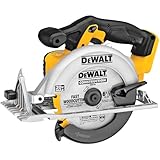
3. DEWALT 20V MAX Circular Saw, Cordless Sidewinder Style Portable, 6-1/2-Inch Blade, 5150 RPM, 0-50 Degree Bevel Capability, Battery Not Included (DCS391B)
Overview:
The DEWALT DCS391B represents professional-grade cordless convenience in a sidewinder circular saw. Operating on the 20V MAX platform, this tool delivers 5,150 RPM of cutting power without the tether of a power cord. The 6-1/2-inch blade and magnesium construction prioritize portability without sacrificing durability or performance for jobsite applications.
What Makes It Stand Out:
The lightweight magnesium shoe ensures long-term cut accuracy while reducing overall weight. The optimized rubber over-molded grip provides exceptional control and comfort during extended use. Cordless freedom allows unrestricted movement around jobsites, and the 0-50 degree bevel capacity exceeds most corded competitors for maximum versatility in complex framing and finish work.
Value for Money:
As a bare tool, the initial investment is moderate, but the total cost includes purchasing batteries and charger. DEWALT’s reputation for durability and the 20V MAX ecosystem compatibility make it a smart long-term investment for professionals. DIYers with existing DEWALT batteries gain exceptional value, while newcomers must factor in the complete system cost.
Strengths and Weaknesses:
Strengths include cordless portability, robust magnesium construction, ergonomic design, powerful performance, and excellent bevel range. The tool-free depth adjustment is convenient. Weaknesses are the battery cost, smaller blade limiting depth capacity (2-1/8" at 90°), and potential power fade as battery depletes. It’s heavier than some corded models with battery attached.
Bottom Line:
Ideal for contractors and serious woodworkers already invested in the DEWALT ecosystem, the DCS391B offers unmatched portability and professional performance. The freedom from cords justifies the premium pricing for those who prioritize mobility and jobsite efficiency over maximum cut depth.
4. Extbtfor Power Circular Saw,4.8A Mini Circular Saw with Laser Guide,4000RPM Corded Saw Equipped with 3 Pcs 4-1/2" Blades,Maximum Cutting 1-11/16" at 90° and 1-1/8"at 45° for Wood, Soft Metal, Plastic

Overview:
The Extbtfor mini circular saw targets light-duty users seeking versatility in a compact package. This 4.8-amp corded tool delivers 4,000 RPM through a 4-1/2-inch blade, making it ideal for one-handed operation. The inclusion of three specialized blades enables cutting wood, soft metal, and plastic without additional purchases, appealing to multi-material hobbyists.
What Makes It Stand Out:
Three blade types (HSS, TCT, diamond) provide exceptional material versatility rarely found in this price range. The laser guide with replaceable batteries enhances precision for detailed work. Weighing just 4.7 pounds, this saw excels at overhead cuts and tight spaces where full-size saws prove cumbersome and impractical for extended use.
Value for Money:
Extremely budget-friendly, this saw offers remarkable versatility for its price point. The comprehensive accessory package eliminates immediate additional costs. While not suitable for heavy construction, it delivers excellent value for hobbyists, crafters, and light home repair tasks where portability and material flexibility matter more than raw power.
Strengths and Weaknesses:
Strengths include lightweight portability, multi-material capability, laser guidance, and comprehensive accessory bundle. The one-handed operation benefits users with limited strength. Weaknesses are limited cut depth (1-11/16" at 90°), lower power for demanding cuts, unknown long-term reliability, and potential accuracy issues with the laser guide. The brand lacks established service networks.
Bottom Line:
Perfect for DIYers focused on craft projects, light renovations, or material experimentation, this mini saw punches above its weight. The versatility and accessories make it an excellent secondary saw or primary tool for those with modest cutting needs who prioritize maneuverability over maximum capacity.
5. Seesii Mini Circular Saw with Laser Guide,4.8A 4000 RPM Compact Corded Circular Saw with Rip Guide,3 Blades (4-1/2") for Wood,Soft Metal,Tile,Plastic Cutting,Max Cut Depth 1-11/16"(90°),1-1/8" (45°)

Overview:
The Seesii mini circular saw combines safety and versatility in a compact corded design. Its 4.8-amp motor generates 4,000 RPM, offering 20% greater efficiency than comparable mini saws. The 4-1/2-inch blade handles multiple materials, while dual safety switches prevent accidental activation, making it ideal for family workshops and educational settings.
What Makes It Stand Out:
The double-switch safety system requires simultaneous activation, significantly reducing accident risk. The vacuum adapter fits most shop vacuums for superior dust control. Three included blades (TCT, HSS, diamond) handle wood, tile, soft metal, and plastic, while the rip guide ensures straight cuts without additional accessories, enhancing out-of-box usability.
Value for Money:
Competitively priced against other mini saws, the Seesii offers superior safety features and dust collection capabilities. The multi-blade package and guide accessories provide immediate value. While not a replacement for full-size saws, it’s priced appropriately for its capabilities and safety enhancements, particularly for households with children.
Strengths and Weaknesses:
Strengths include exceptional safety controls, comprehensive dust management, multi-material versatility, lightweight design, and included accessories. The laser guide improves accuracy. Weaknesses involve limited cutting depth, reduced power for thick hardwoods, brand recognition concerns, and corded mobility restrictions. The smaller blade diameter limits rip capacity for standard lumber.
Bottom Line:
An excellent choice for safety-conscious DIYers, families with young helpers, or users needing a lightweight secondary saw. The safety features and versatility make it particularly suitable for educational workshops and multi-material craft projects where accident prevention and dust control are priorities.
6. Ryobi 18V 5-1/2" Circular Saw

Overview: The Ryobi 18V 5-1/2" Circular Saw delivers cordless convenience in a compact package designed for light-duty cutting tasks. This saw is ideal for DIY enthusiasts and homeowners who need portability for quick rip cuts, crosscuts, and trim work. With a maximum cut depth of 1-11/16 inches, it’s best suited for 2x lumber, plywood, and paneling rather than heavy framing applications.
What Makes It Stand Out: Its primary advantage lies in the 18V ONE+ battery platform compatibility, allowing users who already own Ryobi tools to power this saw without additional battery investment. The smaller 5-1/2-inch blade reduces overall weight and bulk, making it exceptionally maneuverable in tight spaces and overhead applications where larger saws become unwieldy.
Value for Money: For existing Ryobi ecosystem users, this represents solid value as a bare tool addition. However, buyers new to the platform must factor in battery and charger costs, which can double the initial investment. Compared to entry-level corded saws, it’s priced competitively but offers less raw power and cutting capacity.
Strengths and Weaknesses: Strengths include cordless freedom, lightweight design, excellent maneuverability, and battery interchangeability. Weaknesses are the limited cut depth, reduced power versus corded alternatives, and runtime constraints for extended projects. The smaller blade also means fewer tooth options and potentially rougher cuts in dense materials.
Bottom Line: This Ryobi saw excels for quick, portable cuts and serves as an excellent secondary saw for Ryobi loyalists. It’s perfect for trim work, crafts, and light remodeling but falls short for heavy-duty framing. Consider your existing tool ecosystem and project scope before purchasing.
7. DEWALT Circular Saw, 7-1/4 inch, Pivoting with up to 57 Degree Bevel, Corded (DWE575SB)

Overview: The DEWALT DWE575SB stands as a professional-grade circular saw built for demanding job site conditions. This 7-1/4-inch corded tool combines robust power with thoughtful engineering, featuring a 15-amp motor that tackles everything from framing lumber to hardwood plywood with authority. At just 8.8 pounds, it ranks among the lightest in its class, reducing fatigue during all-day use.
What Makes It Stand Out: The electric brake sets this model apart, stopping the blade within seconds of trigger release—a critical safety feature that prevents accidents and allows faster transitions between cuts. Its impressive 57-degree bevel capacity with positive stops at 45 and 22.5 degrees offers unmatched versatility for complex angles and rafter cuts. The 2-9/16-inch depth capacity handles stacked materials and thick timbers with ease.
Value for Money: Positioned at the premium end, the DWE575SB justifies its price through superior build quality, safety features, and performance consistency. For professionals, the time saved and durability offered translate to excellent long-term value. DIYers may find less expensive options adequate for occasional use.
Strengths and Weaknesses: Strengths include the electric brake, powerful motor, exceptional bevel range, lightweight design, and durable construction. The corded design ensures unlimited runtime but limits mobility. Weaknesses include the premium price point and potential overkill for light-duty users.
Bottom Line: This is a top-tier choice for contractors and serious woodworkers who prioritize safety, precision, and reliability. The electric brake alone makes it worth the investment for professionals. Occasional users should weigh features against their actual needs.
8. CRAFTSMAN Circular Saw, 7-1/4 inch, 13 Amp, Corded (CMES500)

Overview: The CRAFTSMAN CMES500 delivers solid performance for homeowners and DIY enthusiasts seeking a reliable corded circular saw without breaking the bank. This 7-1/4-inch tool features a 13-amp motor spinning at 5,300 RPM, providing ample power for common projects like deck building, shelving, and basic framing. The contoured over-molded handle enhances comfort during extended use.
What Makes It Stand Out: This saw hits the sweet spot between affordability and functionality. The spindle lock mechanism enables tool-free blade changes, saving time and frustration. While many budget saws sacrifice ergonomics, CRAFTSMAN maintains focus on user comfort with its thoughtfully designed handle. The included 18-tooth carbide-tipped blade offers decent cutting performance right out of the box.
Value for Money: Exceptional value for occasional users. It provides essential features and respectable power at a fraction of professional-grade prices. The three-year warranty adds peace of mind rarely found in this price bracket. For weekend warriors, it outperforms generic store brands while remaining budget-friendly.
Strengths and Weaknesses: Strengths include affordability, comfortable grip, easy blade changes, adequate power for light-to-medium tasks, and good warranty coverage. Weaknesses are the limited 45-degree bevel capacity (no 22.5-degree stop), lower power output compared to 15-amp models, and less durable components for heavy daily use.
Bottom Line: Perfect for homeowners tackling periodic projects. It handles most DIY tasks competently while leaving money in your wallet for other tools. Professionals should look elsewhere, but for hobbyists and occasional users, this represents smart buying.
9. DEWALT 7-1/4-Inch Circular Saw, Lightweight, Corded (DWE575)

Overview: The DEWALT DWE575 strips away some premium features to deliver core professional performance at a more accessible price point. This 7-1/4-inch corded saw maintains the same lightweight 8.8-pound design and powerful 15-amp motor as its SB sibling, making it ideal for framing, decking, and remodeling projects. The 2-9/16-inch depth capacity handles thick materials with confidence.
What Makes It Stand Out: You get DEWALT’s renowned build quality and ergonomics without paying for the electric brake feature many users rarely need. The 53-degree bevel capacity with stops at 45 and 22.5 degrees covers virtually all common angles. The anti-snag ball bearing lower guard ensures smooth operation even when making narrow cutoffs, preventing the common frustration of binding guards.
Value for Money: This model offers better value than the DWE575SB for users who prioritize performance over the brake feature. It retains the professional-grade motor and lightweight design while costing significantly less. For contractors who rely on multiple saws, the savings add up without compromising job site durability.
Strengths and Weaknesses: Strengths include the powerful motor, lightweight design, excellent bevel range, smooth guard operation, and professional construction. The absence of an electric brake is the primary weakness compared to the SB model. Like all corded saws, mobility depends on extension cord availability.
Bottom Line: An excellent compromise between premium features and practical value. This saw serves professionals and serious DIYers who want DEWALT reliability without the top-tier price tag. If you can live without the electric brake, this delivers everything else that matters.
10. Enventor 7-1/4-Inch Circular Saw, 10A Pure Copper Motor Electric Circular Saws with Laser Guide, 2 Blade Saws (40T/24T), Adjust Cutting Angle from 0° to 90°, Single Handed Bevel, 5800RPM, Blue

Overview: The Enventor circular saw packs impressive features into an affordable package, targeting budget-conscious DIYers who want modern conveniences. This 7-1/4-inch corded saw boasts a 10-amp pure copper motor delivering 5,800 RPM, paired with a Class II laser guide for enhanced cutting accuracy. The inclusion of two blades (24-tooth for framing, 40-tooth for finish work) adds immediate versatility.
What Makes It Stand Out: The laser guide is the headline feature, helping novice users achieve straighter cuts with confidence. The double protection switch prevents accidental starts, addressing safety concerns for less experienced operators. Its ability to adjust from 0 to 45 degrees provides standard bevel capabilities, while the maximum 2.4-inch depth at 90 degrees handles most DIY applications.
Value for Money: Outstanding value proposition with accessories that competitors charge extra for. The two blades, rip guide, and laser guide batteries included eliminate immediate additional purchases. However, the lesser-known brand raises questions about long-term parts availability and durability compared to established manufacturers.
Strengths and Weaknesses: Strengths include the laser guide, included accessories, high RPM, safety switches, and attractive price. Weaknesses are the lower-power 10-amp motor versus standard 15-amp models, unproven brand reliability, and potentially less robust construction for heavy use.
Bottom Line: Ideal for beginners and occasional users who value guidance features and included accessories. The laser guide and safety switches make it forgiving for novices. Professionals should stick with proven brands, but DIYers on a tight budget will appreciate the comprehensive package.
Why Every Homeowner Needs a Circular Saw
The circular saw earns its place as the most versatile cutting tool in your arsenal because it brings the saw to the work, not the other way around. Unlike table saws or miter saws that require feeding material into a stationary blade, a circular saw travels with you—to job sites, across 4x8 sheets of plywood in your driveway, or up ladders for roofing work. For homeowners tackling everything from basic home repairs to ambitious furniture projects, this portability is non-negotiable. You’ll use it to break down lumber at the store parking lot, trim cabinet fillers on-site, and slice through composite decking boards like butter. The learning curve is surprisingly gentle compared to other power saws, yet the capabilities expand dramatically as your skills grow.
Decoding Circular Saw Types
Before diving into specifications, you need to understand the fundamental categories that separate circular saws into distinct user profiles. The internal mechanics and design philosophy behind each type dramatically affect performance, weight, and suitable applications.
Sidewinder vs. Worm Drive: What’s the Difference?
Sidewinder saws, also called direct-drive saws, position the motor alongside the blade, creating a compact, lightweight tool that spins the blade at higher RPMs—typically around 6,000. This design excels at quick crosscuts and works beautifully for most homeowner tasks. The weight distribution feels intuitive, and the narrower profile reaches into tighter spaces. Worm drive saws mount the motor behind the blade, using a gear system to transfer power. This gearing reduces RPM to about 4,500 but multiplies torque dramatically, letting the blade muscle through dense hardwoods and thick engineered lumber without bogging down. The longer, heavier design provides superior sightlines to your cut line but demands more arm strength and experience to control safely.
Track Saws: When Precision is Paramount
Track saws represent the precision instrument category, riding along an aluminum guide rail to deliver table-saw quality cuts with virtually zero splintering. While they command premium prices, homeowners investing in high-end cabinetry or working extensively with expensive hardwoods will find the investment pays for itself in material savings and professional results. The plunge-cutting mechanism also allows you to start cuts in the middle of panels—a feature standard circular saws can’t safely replicate.
Power Source Showdown: Corded vs. Cordless
The corded versus cordless debate isn’t about which is objectively better—it’s about which aligns with your work style and project scope. Corded models deliver unlimited runtime and consistently higher sustained power, making them ideal for marathon cutting sessions like building an entire fence or deck. You’ll never face battery depletion mid-cut, and they’re typically lighter since they don’t carry battery weight. However, that tether to an outlet creates trip hazards, limits mobility, and forces you to manage extension cords across your workspace.
Battery Technology Breakthroughs
Modern cordless circular saws have evolved from underpowered toys into legitimate job-site contenders thanks to lithium-ion battery advances. Voltage platforms now range from 18V to 60V, with higher voltages translating to more cutting power. The key metric isn’t just voltage—it’s amp-hours (Ah), which determines runtime. A 5.0Ah battery can deliver roughly 50% more cuts than a 3.0Ah pack before requiring a recharge. For homeowners, the sweet spot often lies in 18V or 20V max systems that share batteries with other tools in your collection, creating an ecosystem that multiplies value.
Amp Ratings on Corded Models
Corded circular saw power is measured in amperage, with most homeowner models ranging from 10 to 15 amps. A 15-amp motor represents the maximum draw from a standard 120V outlet and provides maximum power for demanding cuts. However, 13-amp models often deliver 90% of the performance at a lower price point and weight, making them perfectly adequate for all but the most extreme DIY applications. Don’t be swayed by horsepower claims—amps tell the real story of sustained cutting power.
Blade Size and Cutting Depth Explained
The ubiquitous 7-1/4 inch blade has become the standard for good reason: it cuts through 2x lumber at 90 degrees and handles 45-degree bevels in a single pass. This versatility covers 95% of homeowner needs. However, compact 6-1/2 inch saws have surged in popularity, particularly in cordless versions, because they reduce overall tool weight by up to two pounds while still cutting through 2x material at 90 degrees. The trade-off? Reduced bevel capacity and the need to flip material for deeper cuts. For occasional users prioritizing maneuverability over maximum depth, smaller blades make sense. For those tackling remodeling projects involving thicker stock, stick with the 7-1/4 inch standard.
Motor Power: Beyond the Horsepower Hype
Manufacturers love to tout peak horsepower, but this figure represents momentary output under ideal conditions, not real-world performance. For cordless saws, focus on voltage and brushless motor technology. Brushless motors eliminate friction from carbon brushes, delivering 50% longer runtime, cooler operation, and virtually maintenance-free service life. For corded models, sustained wattage and torque under load matter more than peak horsepower. A 15-amp corded saw running at 120V theoretically produces 1,800 watts—plenty for ripping through pressure-treated lumber. The real test is how the motor handles resistance; quality saws maintain blade speed without bogging down or overheating.
Safety Features You Can’t Compromise On
Every circular saw is inherently dangerous—a spinning carbide-tipped blade moving at 120 mph deserves profound respect. Modern safety features don’t replace proper technique, but they create crucial margins for error that protect homeowners still developing their skills.
Electric Brakes: Your First Line of Defense
Electric brakes reverse current to stop the blade within 2-3 seconds of releasing the trigger, compared to 10-15 seconds without them. This feature prevents accidents when setting the saw down or when a cut finishes sooner than expected. For homeowners working in cluttered garages or with helpers nearby, this rapid stopping power is non-negotiable. Always verify the brake function before purchase—it’s one of the most valuable safety investments you can make.
Blade Guards and Riving Knives
The retractable blade guard should move smoothly without binding, snapping back with spring tension the moment the saw lifts from a cut. Look for guards with anti-snag features that prevent hang-ups on the material edge. While riving knives are standard on table saws, some premium circular saws now include mini riving knives behind the blade to prevent kerf pinching and dangerous kickback—a feature worth prioritizing if you’ll be cutting wet or tension-filled lumber.
Ergonomic Design: Comfort Equals Control
A saw that feels awkward in your hands becomes a safety hazard, as fatigue leads to loss of control and sloppy cuts. Evaluate the trigger design—can you lock it on for extended cuts without cramping your finger? Check the handle angle and grip texture. Soft rubber overmolds absorb vibration and provide secure grip even with sweaty hands. The balance point should rest naturally over the blade, not tip forward or backward. For homeowners with smaller hands, compact models with slimmer motor housings make a dramatic difference in comfort and confidence. Never buy a saw without handling it first, even if you ultimately purchase online.
Construction Quality: Plastic Fantastic or Metal Marvel?
The base plate, or shoe, material directly impacts cut accuracy and tool longevity. Stamped steel shoes are economical but can bend if dropped, creating wobbly cuts forever after. Cast aluminum or magnesium shoes resist bending and provide a flatter, more stable platform. Magnesium offers the best strength-to-weight ratio but commands premium pricing. For homeowner use, a quality cast aluminum shoe provides the sweet spot of durability and value. Examine the depth and bevel adjustment mechanisms—they should move smoothly without slop, locking down with positive detents at common angles. Plastic components aren’t inherently bad if they’re used in non-stress areas, but any load-bearing part should be metal.
Dust Collection: Keeping Your Workspace Clean
Circular saws generate impressive amounts of sawdust, and without management, you’ll be breathing it and tracking it throughout your home. Effective dust ports that connect to shop vacuums have become standard on better saws, capturing up to 90% of dust when properly connected. Look for ports with standard 1-1/4 inch or 1-1/2 inch diameters that accept common vacuum hoses without adapters. Some models include blowers that clear the cut line of dust—a feature that improves visibility but conflicts with vacuum collection. For indoor projects like cutting trim or flooring, prioritize vacuum compatibility. For outdoor framing work, the blower feature is more practical.
Bevel Capacity and Cutting Versatility
Most saws offer 0-45 degree bevel adjustments, but the quality of adjustment mechanisms varies wildly. Positive stops at common angles (15°, 22.5°, 45°) speed setup and ensure repeatability. Some advanced models bevel up to 56 degrees, useful for cutting octagons or matching unusual roof pitches. The scale should be easy to read with crisp markings, and the adjustment lever should lock securely without requiring Herculean strength. Consider whether you’ll frequently cut bevels—if so, front-mounted bevel adjustments let you tweak angles without reaching around the motor housing, a convenience that saves time and frustration.
Budget Considerations: Finding Your Sweet Spot
Circular saw prices span from $40 bargain bin specials to $400 professional track saws. For homeowners, the value zone lies between $80 and $180, where you find quality components without paying for job-site durability you don’t need. Spending less often means plastic gears, weak motors, and inaccurate shoes that produce frustrating results. Spending more typically buys features like LED cut-line illuminators, magnesium construction, and advanced dust collection—nice-to-haves that won’t necessarily improve your results if you’re a casual user. Allocate your budget based on projected use: occasional picture frame projects demand less investment than building a two-story deck.
Must-Have Accessories for Maximum Utility
The saw itself is just the starting point. The right accessories transform it from a basic cutter into a precision instrument. A quality straight-edge guide is arguably more important than the saw’s internal features for making perfectly straight cuts in sheet goods. Look for guides at least 50 inches long with non-slip backing and adjustable clamps.
Guide Rails and Straight Edges
While proprietary track systems offer incredible precision, universal straight-edge guides work with any saw and cost a fraction of the price. The best guides feature a saw sled that rides along the edge, eliminating side-to-side play. For repetitive cuts, consider building a simple DIY guide from MDF—an afternoon project that yields professional results for under $20.
Blade Selection for Different Materials
The included blade is almost always a rough construction blade meant for framing lumber, not finish work. Budget for a quality 40-tooth carbide blade for general purpose cutting, an 80-tooth blade for plywood and laminate, and a specialized blade for metal or masonry if your projects demand it. The blade’s kerf width also matters—thin-kerf blades require less power and produce less waste, making them ideal for cordless saws and underpowered motors.
Maintenance Routines That Extend Lifespan
A well-maintained circular saw can serve for decades. After each use, blow out dust from the motor housing with compressed air—sawdust buildup acts as insulation that causes overheating. Monthly, check the blade for wobble and the brushes (if applicable) for wear. Annually, lubricate depth and bevel adjustment threads, and inspect the power cord for nicks or fraying. For cordless models, store batteries at 50% charge in cool, dry conditions to maximize cell life. Never force a struggling blade—this stresses the motor and creates dangerous kickback. Instead, replace dull blades promptly; they’re cheaper than new saws or emergency room visits.
Pitfalls to Avoid When Choosing Your First Saw
First-time buyers consistently make three critical errors. First, they overestimate their need for power, buying heavy worm drives when sidewinders would serve better. Second, they underestimate the importance of weight—every pound matters when you’re making dozens of cuts overhead or crawling around a floor. Third, they buy based on brand loyalty rather than feature set, missing out on innovative designs from less-hyped manufacturers. Another subtle mistake is choosing a saw with the blade on the wrong side for your dominant hand—right-blade saws favor right-handed users because the motor doesn’t block your sightline to the cut line. Left-blade saws exist but are less common and often require awkward head positioning to see your mark.
Key Takeaways for the Savvy Shopper
Your ideal circular saw balances power you can control, weight you can manage, and features you’ll actually use. Prioritize electric brakes, a flat sturdy shoe, and comfortable ergonomics above all else. For most homeowners, a 15-amp corded sidewinder or 18V brushless cordless model with a 7-1/4 inch blade hits the performance sweet spot. Remember that the blade quality and your guiding technique influence results more than motor specifications. Test the saw in person if possible, feeling the balance and checking how naturally your hand falls on the trigger. The best saw isn’t the most expensive or powerful—it’s the one that feels like an extension of your arm and disappears in your hand when you’re focused on the cut, not the tool.
Frequently Asked Questions
What’s the most important feature for a beginner to prioritize?
Electric brakes top the list for new users. That 2-3 second blade stop prevents countless accidents when you’re still developing muscle memory for safe handling. After that, focus on a saw with excellent sightlines to the blade and a comfortable, secure grip that builds confidence rather than fatigue.
Can I use the same blade for cutting wood, metal, and plastic?
Absolutely not. Wood blades have aggressive hook angles and carbide teeth designed to shear through cellulose fibers. Metal-cutting blades feature more teeth with negative hook angles and specialized coatings to manage heat. Using a wood blade on aluminum can cause dangerous grabbing and kickback, while using a metal blade on wood results in painfully slow cuts and burnt material. Always match the blade to the material.
How do I know if I need a corded or cordless model for my projects?
If you primarily work within 50 feet of an outlet and tackle projects requiring continuous cutting for hours, go corded. If you value portability, work outdoors away from power, or make mostly intermittent cuts with breaks in between, modern cordless performance will surprise you. Many homeowners eventually own both—a corded workhorse for big projects and a cordless convenience tool for quick repairs.
What causes circular saw kickback, and how can I prevent it?
Kickback occurs when the blade binds in the kerf, often from cutting warped lumber that pinches behind the blade, or from feeding the saw too aggressively. Prevent it by supporting material properly so cut sections don’t sag and pinch the blade, keeping the blade sharp, and maintaining firm two-handed control without forcing the cut. Some premium saws include anti-kickback clutches that disengage the drivetrain when binding is detected.
Is a laser guide worth paying extra for?
Laser guides look impressive but often misalign with the actual kerf and become useless in bright sunlight. They’re helpful for rough framing where extreme precision isn’t critical. For accurate work, you’re better off mastering the art of watching the blade kiss the cut line or investing in a quality straight-edge guide system. Many pros disable lasers entirely.
How frequently should I replace my circular saw blade?
Replace the blade when you notice the saw straining, producing burn marks, or creating splintered edges despite proper technique. For a homeowner using the saw occasionally, a quality carbide blade can last several years. Heavy users might replace blades monthly. Keep a dedicated blade for clean plywood work and another for rough framing to extend lifespan.
What’s the difference between a $50 saw and a $150 saw?
The $100 gap typically buys a flatter, more durable shoe (magnesium vs. stamped steel), smoother adjustment mechanisms, better motor cooling, electric brakes, improved dust collection, and tighter manufacturing tolerances. Budget saws can produce good results but require more user skill and patience. Mid-range saws make accurate cuts easier and last longer under regular use.
Should I buy a saw with the blade on the left or right?
Right-handed users overwhelmingly prefer right-blade saws because the motor sits to the left, providing unobstructed view of the cut line. Left-blade saws force right-handers to lean over the motor to see the line, compromising balance. Left-handed users may prefer left-blade models for the same reason, though many adapt to right-blade saws without issue. Handle both configurations before deciding.
Can I cut concrete or tile with a standard circular saw?
Only with proper safety equipment and a specialized diamond blade designed for wet cutting. Standard circular saws lack the water feed systems and sealed motors needed for masonry work, exposing you to silica dust and risking motor damage. For occasional tile work, rent a proper wet saw. For extensive concrete cutting, invest in a dedicated concrete saw with appropriate dust suppression.
Why do some circular saws have a “disappearing” feature on store shelves?
Popular homeowner models sometimes vanish from retailers not due to poor quality, but because manufacturers strategically rotate stock to push newer SKUs with minor feature updates. This doesn’t necessarily mean the discontinued model was inferior—often it was a victim of planned obsolescence. If you find a highly-rated model disappearing, it might be an excellent time to snag one at clearance pricing before inventory dries up completely.
See Also
- 10 Best Budget Circular Saws Under $150 for Homeowners in 2026
- The 10 Best DIY Circular Saws Every Homeowner Needs This Year
- 10 Essential Circular Saws Every First-Time Homeowner Needs in 2026
- 10 Essential DIY Circular Saws Every Homeowner Needs in 2026
- 10 Affordable Bevel Gear Circular Saws That Don’t Sacrifice Precision in 2026