Table of Contents
When it comes to building a house from the ground up, precision, power, and reliability are non-negotiable. Among the many tools in a professional framer’s arsenal, the circular saw stands out as a workhorse—capable of slicing through dimensional lumber with speed and accuracy. Whether you’re cutting 2x4s for wall studs, trimming headers, or breaking down plywood sheets, the right circular saw can make the difference between a smooth workflow and frustrating delays on the job site.
Today’s framing professionals face an abundance of options in circular saws, each touting higher RPMs, better ergonomics, and longer battery life. But with so many variations in motor type, blade size, and design philosophy, choosing the best tool for framing demands more than just a quick glance at the specs. This guide dives deep into the features, technologies, and performance characteristics that matter most when selecting a circular saw for framing houses.
Top 10 Circular Saws For Framing
Detailed Product Reviews
1. Metabo HPT 7-1/4-Inch Circular Saw Kit | 6,000 Rpm, 15-Amp Motor | Integrated Dust Blower | 24T Premium Framing/Ripping Blade | Single Handed Bevel Adjustment | C7SB3

Overview:
The Metabo HPT C7SB3 is a high-performance corded circular saw designed for professional framers and serious DIYers. Powered by a robust 15-amp motor spinning at 6,000 RPM, it delivers fast, clean cuts through lumber, plywood, and OSB. It includes a 24T framing blade, carry bag, and wrench, making it a complete starter kit.
What Makes It Stand Out:
This saw earned accolades as the “Best Corded Budget Circular Saw for Pros” in 2020, and for good reason. Its integrated dust blower keeps the cut line visible, while the single-handed bevel adjustment enhances efficiency. The lightweight 9.5-pound design reduces user fatigue during extended use.
Value for Money:
Priced competitively, the C7SB3 offers pro-grade performance without the premium cost. It’s more affordable than many comparable models while delivering reliable power and included accessories.
Strengths and Weaknesses:
Strengths: Powerful motor, lightweight, excellent dust management, award-winning performance.
Weaknesses: Blade quality is adequate but not top-tier; no LED light for low-light conditions.
Bottom Line:
The Metabo HPT C7SB3 is an outstanding value for professionals and homeowners seeking a dependable, high-powered corded circular saw for framing and general construction.
2. DEWALT FLEXVOLT 60V MAX* Circular Saw for Framing, 7-1/4-Inch, Tool Only (DCS577B)

Overview:
The DEWALT DCS577B is a cordless circular saw built for demanding framing tasks. Running on DEWALT’s 60V FLEXVOLT system, it combines portability with power, eliminating the need for extension cords without sacrificing performance.
What Makes It Stand Out:
Featuring a brushless motor, this saw delivers efficient power and extended runtime. The left-side blade design improves visibility, while the 53° bevel capacity with detents at 45° and 22.5° enhances precision. The electronic brake increases safety by stopping the blade quickly.
Value for Money:
Sold tool-only, it’s ideal for users already invested in the FLEXVOLT ecosystem. While the upfront cost is high, the long-term savings on cords, generators, and maintenance justify the price for mobile professionals.
Strengths and Weaknesses:
Strengths: Excellent visibility, brushless motor, fast electronic brake, durable magnesium shoe.
Weaknesses: Battery sold separately; heavier than corded models when equipped.
Bottom Line:
The DCS577B is a top-tier cordless circular saw that offers freedom of movement and pro-level performance, best suited for contractors embracing cordless job sites.
3. SKIL 15 Amp 7-1/4 Inch Circular Saw with Single Beam Laser Guide - 5280-01

Overview:
The SKIL 5280-01 is a budget-friendly corded circular saw tailored for DIYers and light professional use. Equipped with a 15-amp motor and a single-beam laser guide, it emphasizes accuracy and ease of use.
What Makes It Stand Out:
The integrated laser guide is its standout feature, helping users maintain straight cuts with improved precision. The dust blower enhances visibility, while the 51° bevel capacity with a 45° positive stop supports angled cuts.
Value for Money:
Priced affordably, it delivers essential features for homeowners and weekend warriors. The included carbide-tipped blade and spindle lock add convenience and value.
Strengths and Weaknesses:
Strengths: Laser guide for accuracy, dust blower, safety lock trigger, easy blade changes.
Weaknesses: Laser alignment can be finicky; motor noise is higher than competitors.
Bottom Line:
The SKIL 5280-01 is an excellent entry-level circular saw that offers helpful guidance technology for users prioritizing precision on a budget.
4. DEWALT FLEXVOLT 60V MAX* Circular Saw Kit, 7-1/4-Inch, Worm Style, 9.0Ah Battery (DCS577X1)

Overview:
The DEWALT DCS577X1 is a premium cordless circular saw kit that includes a 9.0Ah FLEXVOLT battery and charger. Designed for heavy-duty framing, it combines the power of corded tools with the freedom of cordless operation.
What Makes It Stand Out:
This kit stands out by offering everything needed to start working immediately. The brushless motor and worm-drive design deliver high torque for cutting through dense materials. Left-blade orientation ensures clear line-of-sight.
Value for Money:
Although expensive, the inclusion of a high-capacity battery and charger provides long-term value. The 53° bevel capacity and electronic brake enhance functionality and safety.
Strengths and Weaknesses:
Strengths: Complete kit, exceptional runtime, powerful motor, excellent visibility.
Weaknesses: High initial cost; battery adds significant weight.
Bottom Line:
The DCS577X1 is a top investment for professionals seeking a reliable, all-in-one cordless solution for demanding framing applications.
5. Makita 5007F 7-1/4" Circular Saw

Overview:
The Makita 5007F is a trusted corded circular saw known for durability and precision. With a 15-amp motor and 5,800 RPM, it’s built for consistent performance on the jobsite, especially in framing and decking.
What Makes It Stand Out:
Dual LED lights illuminate the cutting line, a rare feature in this class. The lower guard design improves control during bevel and narrow cuts, while the well-balanced body enhances handling.
Value for Money:
Priced mid-range, it offers premium features like LED lighting and smooth operation at a competitive cost. Ideal for pros wanting reliability without overspending.
Strengths and Weaknesses:
Strengths: LED lights, balanced design, durable build, smooth cutting action.
Weaknesses: No dust blower; no laser guide; slightly heavier than some rivals.
Bottom Line:
The Makita 5007F is a dependable, well-designed circular saw that excels in visibility and control, making it a solid choice for detail-oriented craftsmen.
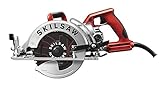
6. SKILSAW SPT77WML-01 15-Amp 7-1/4-Inch Lightweight Worm Drive Circular Saw , Silver
Overview:
The SKILSAW SPT77WML-01 is a high-performance, lightweight worm drive circular saw designed for contractors and serious DIYers who demand power and precision. Weighing in as one of the lightest magnesium-constructed worm drive saws, it’s engineered to reduce fatigue during extended use without sacrificing durability.
What Makes It Stand Out:
Its standout features include a 15-amp motor delivering serious cutting power for ripping through lumber efficiently, a quick-adjust depth system for accurate cuts, and a 53° bevel capacity for versatile angled cuts. The anti-snag lower guard ensures smooth operation, especially when cutting small or narrow stock—a common pain point with other models.
Value for Money:
Priced competitively within the professional-grade segment, it offers excellent long-term value thanks to its durable magnesium housing and reliable Skilsaw build quality. It outperforms many heavier, bulkier alternatives.
Strengths and Weaknesses:
Strengths: Lightweight yet powerful; accurate depth and bevel adjustments; robust motor; reduced user fatigue. Weaknesses: No battery-powered option; lacks onboard wrench storage.
Bottom Line:
The SKILSAW SPT77WML-01 is a top-tier corded circular saw that balances power, precision, and portability—ideal for framers and carpenters who need dependable performance on job sites.
7. M18 Cordless Lithium-Ion 6-1/2" Circular Saw - 2630-20 - ( MILWAUKEE ) - BARE TOOL

Overview:
The Milwaukee M18 2630-20 is a cordless circular saw built for professionals seeking mobility and power without being tethered to an outlet. Running on Milwaukee’s M18 battery system, this bare tool delivers impressive performance in framing, carpentry, and renovation tasks.
What Makes It Stand Out:
With 3,500 RPM, it powers through tough materials like LVL headers effortlessly. Its aircraft-grade aluminum shoe ensures precision, while magnesium guards enhance durability. The soft-grip handle improves comfort and control during prolonged use.
Value for Money:
As a bare tool, it’s a smart investment if you already own Milwaukee M18 batteries. It offers exceptional runtime and cutting efficiency, outperforming many corded models in real-world applications.
Strengths and Weaknesses:
Strengths: Cordless convenience; durable magnesium and aluminum construction; excellent ergonomics; high RPM for clean cuts. Weaknesses: Battery and charger sold separately; slightly shorter depth of cut than 7-1/4" models.
Bottom Line:
The Milwaukee M18 circular saw is a powerful, well-built cordless option that delivers professional-grade results—perfect for job sites where mobility and reliability matter most.
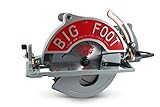
8. Big Foot Tools 10 1/4 Circular Saw Magnesium Worm Drive Saw Beam Saw with Skil Motor - Professional Power Saw for One Pass Precision Cutting and Durability - BF-UG - SC-1025SU
Overview:
The Big Foot Tools SC-1025SU is a heavy-duty, 10-1/4-inch worm drive circular saw engineered for professional framers and timber workers who need deep, precise cuts in a single pass. Built with a Skil motor and magnesium body, it combines power with surprising portability.
What Makes It Stand Out:
Its massive cutting capacity allows it to slice through two 2x headers or a single 4x in one go—dramatically improving efficiency on framing jobs. The thin-kerf, zero-flex blade ensures straight, accurate cuts every time, while the worm drive design offers superior torque.
Value for Money:
Though pricier than standard circular saws, its one-pass capability saves time and labor, offering a strong ROI for contractors. The durable magnesium frame ensures long-term reliability.
Strengths and Weaknesses:
Strengths: Exceptional cutting depth; precise, straight cuts; durable magnesium build; powerful Skil motor. Weaknesses: Heavier than smaller saws; higher price point; limited portability for overhead work.
Bottom Line:
The Big Foot 10-1/4" Beam Saw is a powerhouse tool for heavy framing—ideal for pros who need unmatched cutting depth and precision without compromise.
9. Up-Grade Stair Gauge Set for Speed Square and Circular Saw Guide, Hard to Misplace with Holder & Carabiner, Anti-Scratch, Extend Slot Framing Square Jig, Cool Gift for Men

Overview:
The Up-Grade Stair Gauge Set is a precision layout tool designed to enhance accuracy and efficiency when using speed squares for stair stringers, rafters, and repetitive cuts. It’s a must-have for carpenters seeking faster, more consistent results.
What Makes It Stand Out:
This upgraded set features a taller 1.65-inch profile with ruler-view cutouts for perfect alignment, extended clamping slots (up to 0.473"), and anti-slip hexagonal edges. The included carabiner and hook prevent loss on job sites.
Value for Money:
At a modest price, it delivers professional-grade functionality with CNC-machined anodized aluminum construction. It’s a small investment that significantly boosts productivity.
Strengths and Weaknesses:
Strengths: Durable, rust-resistant build; prevents scratches; improves layout speed; includes anti-loss accessories. Weaknesses: Not compatible with DeWalt/Ryobi compact squares; limited use for non-framing tasks.
Bottom Line:
This stair gauge set is a smart, durable upgrade for framers and carpenters—offering precision, convenience, and excellent value in one compact package.
10. Diablo Framing Saw Blade for Wood - 7-1/4" x 24-Tooth, Thin Kerf, Anti-Vibration, Long Life for Framing & Pressure-Treated Wood, Tracking Point Tooth Design - Pack of 10 - D0724A

Overview:
The Diablo D0724A is a 10-pack of high-performance 7-1/4-inch framing blades engineered for durability and precision in tough materials like pressure-treated lumber and plywood.
What Makes It Stand Out:
Featuring a Tracking Point tooth design, these blades deliver straight, controlled cuts with up to 5X longer life. Laser-cut stabilizer vents reduce vibration, while a non-stick coating prevents gumming and heat buildup.
Value for Money:
Buying in bulk saves significantly over single blades. Their thin kerf (.059") improves efficiency, especially on cordless saws, yielding up to 30% more cuts per charge.
Strengths and Weaknesses:
Strengths: Long lifespan; smooth, accurate cuts; reduced vibration; ideal for cordless tools; excellent heat resistance. Weaknesses: Not suited for fine finish work; 24-tooth design leaves a slightly rougher edge.
Bottom Line:
The Diablo D0724A blade pack is a top-tier choice for framers—offering durability, efficiency, and consistent performance across demanding job site conditions.
Understanding the Role of Circular Saws in Framing
Framing is a high-volume, high-intensity phase of construction that requires tools built to endure long hours and tough conditions. Circular saws are central to this process because they offer unmatched versatility in making straight, beveled, and plunge cuts in dimensional lumber and sheet goods.
Unlike miter saws or table saws, which are ideal for stationary precision work, circular saws are designed for mobility and on-site adaptability. A framer might make hundreds of cuts in a single day—each requiring consistent depth, angle, and cutting speed. That’s why a saw optimized for framing must balance power, durability, and user comfort.
Key Features to Consider When Choosing a Framing Saw
Selecting the right circular saw isn’t about chasing the most powerful motor or the flashiest design. It’s about aligning the tool’s capabilities with the real-world demands of framing. Below are the most critical features to evaluate.
Motor Power and Type
The motor is the heart of any circular saw. For framing, you need a motor strong enough to handle dense, knotty lumber without bogging down. Corded models typically offer consistent power delivery, while cordless saws rely on high-voltage battery platforms (often 18V, 36V, or dual battery systems) to deliver comparable performance.
Brushless motors have become the gold standard in high-end models. They’re more efficient, generate less heat, and extend tool life by adjusting power output based on load. This translates to longer runtime on battery-powered models and reduced maintenance over time.
Blade Size and Cutting Capacity
Blade diameter directly influences cutting depth. Most framing saws use 7¼-inch blades, which can cut up to 2½ inches deep at 90 degrees—perfect for a single pass through a 2x6. Some heavy-duty models offer 8¼-inch or even 10-inch blades for deeper cuts, but these often come with trade-offs in weight and portability.
Also, consider the bevel capacity. A saw that bevels to at least 50–57 degrees allows for complex angle cuts needed in roof rafters or stair stringers. Dual-bevel capability is rare in framing saws but can be a game-changer for advanced carpentry tasks.
Durability and Build Quality
Framing isn’t a clean job. Sawdust, moisture, and frequent drops are part of the daily grind. That’s why a rugged magnesium or aluminum housing is preferable over plastic components. These materials offer high strength-to-weight ratios and better heat dissipation.
Look for sealed switches, dust-resistant motor vents, and overmolded grips that protect internal components and improve user safety. A saw built with industrial-grade materials will last years longer, even under punishing conditions.
Ergonomics and User Comfort
A framing saw can weigh anywhere from 8 to 15 pounds, and you might carry it all day. Poor ergonomics lead to fatigue, reduced accuracy, and even long-term injury. Balance is key—the saw should feel stable when lifted and comfortable during prolonged use.
Features like rubberized grips, low-vibration designs, and intuitive controls (such as top-mounted depth and bevel levers) improve handling. Some models also include auxiliary handles or side grips for two-handed control during aggressive cuts.
Depth and Bevel Adjustment Mechanisms
Quick, tool-free adjustments save time on the job site. A good framing saw should allow you to change cutting depth and bevel angle with one hand while keeping your eyes on the workpiece.
Look for mechanisms that lock securely in place. Wobbly bevel adjustments or depth settings that shift mid-cut can compromise safety and accuracy. Some saws use rack-and-pinion systems for smoother bevel control, while others rely on cam-lever designs for speed.
Corded vs. Cordless: The Great Framing Debate
One of the most pressing decisions is whether to go corded or cordless. Each has distinct advantages depending on your work environment and preferences.
Advantages of Corded Circular Saws
Corded saws deliver uninterrupted power. As long as there’s electricity, they’ll run at full capacity without performance drop-off. They’re generally lighter than cordless models since they don’t carry a battery, and they tend to have simpler maintenance needs.
For stationary job sites with reliable power access, corded saws remain a trusted choice. They excel in high-volume cutting scenarios where runtime isn’t a concern.
Advantages of Cordless Circular Saws
Cordless technology has advanced dramatically. Modern lithium-ion batteries can power a saw through an entire day’s work, especially when paired with brushless motors. The freedom from cords enhances mobility, reduces tripping hazards, and allows work in remote or unfinished areas.
However, battery weight adds to the overall heft, and cold weather can reduce runtime. Having spare batteries or access to fast charging systems is essential for uninterrupted workflow.
Safety Features That Matter
Safety should never be an afterthought. A framing saw operates at high speeds and generates significant kickback potential, especially when cutting warped or knotted lumber.
Electric Brake Systems
An electric brake stops the blade within seconds after releasing the trigger. This reduces the risk of accidental contact and improves control, particularly in tight spaces.
Riving Knives and Blade Guards
A riving knife helps prevent kickback by keeping the kerf open behind the blade. Unlike older spreader designs, modern riving knives move with the blade during depth and bevel adjustments, maintaining consistent protection.
The blade guard should retract smoothly and return automatically. A sticky or jammed guard is a hazard—regular cleaning and lubrication are essential.
Kickback Resistance and Anti-Vibration Design
Some saws feature engineered blade housings or anti-kickback pawls that reduce the chance of the blade catching and violently jerking back toward the user. Vibration damping systems also help maintain control during long sessions, reducing hand fatigue and improving cut quality.
Performance Metrics Beyond Horsepower
While raw power gets attention, real-world performance depends on several nuanced factors.
Cut Quality and Smoothness
A clean, splinter-free cut reduces the need for sanding or rework. Blade quality, arbor stability, and anti-chip features (like zero-clearance inserts) contribute to finish quality. Some saws include built-in LED lights that illuminate the cut line, improving accuracy in low-light conditions.
Dust Management and Visibility
Sawdust clouds can obscure your line of sight and create respiratory hazards. Look for models with effective dust ports that connect to shop vacuums or dust extractors. A clear line of sight to the blade and cut mark is crucial—some saws use transparent guards or shadow-line indicators to enhance visibility.
Maintenance and Serviceability
A saw that’s easy to maintain will stay in service longer. Features like tool-free blade changes, accessible brushes (in brushed motors), and cleanable air vents make routine upkeep simple. Sealed ball bearings and corrosion-resistant components also extend the tool’s lifespan.
Compatibility with Accessories and Ecosystems
If you’re invested in a particular power tool brand, ecosystem compatibility can be a major factor. Batteries, chargers, and even blades that work across multiple tools (like drills, saws, and sanders) reduce cost and complexity.
Many manufacturers offer proprietary guide rails, stand mounts, or laser guides that integrate seamlessly with their saws. Consider whether these accessories are available and affordable for your needs.
Real-World Use Cases and Application Scenarios
Different framing tasks call for different saw characteristics.
Rough Framing vs. Precision Cuts
During rough framing, speed and durability take priority. You’re making repetitive, straight cuts through 2x lumber—so a saw with fast depth adjustment and a durable shoe plate is ideal.
For precision tasks like cutting rafters or complex angles, a saw with fine-tuned bevel controls, a stable base, and a high-visibility cutting line becomes more important.
Indoor vs. Outdoor Job Sites
Outdoor sites may lack power sources, making cordless models more practical. Indoors, especially in unfinished spaces, dust extraction and noise levels become greater concerns.
How to Test a Circular Saw Before Buying
Whenever possible, test the saw in person. Hold it, activate the trigger, and simulate cutting motions. Pay attention to:
- Balance and weight distribution
- Trigger responsiveness and comfort
- Smoothness of depth and bevel adjustments
- Noise and vibration levels
- Ease of blade changes
If buying online, read verified user reviews, especially from contractors who use the saw daily.
Industry Trends Shaping Modern Framing Saws
Technology continues to evolve. Recent advancements include:
- Smart batteries that display remaining runtime
- Bluetooth connectivity for tracking tool usage and maintenance
- Improved motor efficiency that extends battery life by 20–30%
- Eco-modes that reduce power consumption during light tasks
These features may seem minor, but they add up over weeks and months of use.
Environmental and Job Site Considerations
Dust, moisture, and temperature extremes affect saw performance. Choose models with:
- IP-rated protection against dust and water ingress
- Cold-weather battery options for winter framing
- Low-emission motors that comply with environmental regulations
Also, consider noise output—some job sites have sound restrictions, especially in residential areas.
Final Thoughts: Matching the Saw to the Job
The best circular saw for framing isn’t necessarily the most expensive or the most powerful. It’s the one that aligns with your workflow, environment, and long-term needs. Whether you prioritize cordless freedom, rugged durability, or precision adjustability, understanding the core features will help you make a confident, informed decision.
Investing in a high-quality framing saw pays dividends in speed, safety, and job satisfaction. With the right tool in hand, you’re not just cutting wood—you’re building the framework of something lasting.
Frequently Asked Questions
What is the ideal blade size for framing houses?
A 7¼-inch blade is the standard for framing saws, offering the perfect balance between cutting depth and portability. It can cut through a 2x6 in a single pass and fits most saw designs without adding excessive weight.
Can I use a regular circular saw for framing?
Yes, but a saw designed specifically for framing will have enhanced durability, deeper cut capacity, and better ergonomics for extended use. General-purpose saws may lack the power and ruggedness needed for daily framing tasks.
How often should I change the blade on a framing saw?
Blade lifespan depends on usage and material. For heavy framing, expect to change blades every 50–100 hours of use. Dull blades increase strain on the motor and reduce cut quality.
Are brushless motors worth the extra cost?
Yes. Brushless motors are more efficient, generate less heat, and require less maintenance. Over time, they offer longer runtime and extended tool life, making them a smart investment for professionals.
What’s the difference between a worm drive and a sidewinder saw?
Sidewinder (or inline) saws have the motor positioned beside the blade, making them lighter and more balanced. Worm drive saws have a motor at the rear, offering more torque and deeper cuts but with added weight and size.
Do I need a laser guide on my framing saw?
Lasers can improve accuracy, especially in low light, but they’re not essential. Many framers rely on clear sight lines, shadow markers, or guide rails for precision. Lasers may require calibration and add cost.
How important is bevel capacity for framing?
Very. Most framing requires angled cuts for roofs, stairs, and corners. A saw that bevels to at least 50 degrees allows for common roof pitches and eliminates the need for secondary tools.
Can circular saws cut concrete or metal?
No. Circular saws designed for wood should never be used on concrete or metal. Doing so risks blade shattering and serious injury. Use specialized saws with appropriate blades for masonry or metal cutting.
What safety gear should I wear when using a circular saw?
Always wear safety glasses, hearing protection, gloves, and a dust mask. Consider using cut-resistant chaps if working in tight spaces. Ensure loose clothing and long hair are secured.
How do I maintain my circular saw for long-term use?
Clean the blade and housing regularly, check for loose screws, lubricate moving parts, and store the saw in a dry place. Replace worn brushes (if applicable) and inspect the cord or battery connections for damage.
See Also
- 10 Best Value Worm Drive Circular Saws for Framing Contractors in 2026
- The 10 Best Worm Drive Circular Saws for Heavy-Duty Framing in 2026
- The 10 Best Worm Drive Circular Saws for Heavy Timber Framing in 2026
- 10 Game-Changing Sidewinder Circular Saws for Framing Crews in 2026
- 10 Must-Have Worm Drive Circular Saws for Framing Contractors in 2026