Table of Contents
Stepping into your first woodworking project feels like unlocking a superpower. That raw plank of lumber? It’s about to become something you built with your own hands. But before you can make those first confident cuts, you need the right tool in your hands—and for most beginners, that tool is a circular saw. Unlike intimidating stationary tools, a circular saw brings the workshop to your project, offering unmatched versatility for everything from building a simple bookshelf to crafting outdoor planter boxes.
As we look toward 2026, the circular saw market continues evolving with smarter features, improved battery technology, and designs specifically engineered for new woodworkers. But with all these advancements comes complexity. This guide cuts through the noise, focusing on what actually matters when selecting your first circular saw. We’ll explore the features that separate frustrating tools from confidence-building partners, ensuring your inaugural woodworking journey starts with clean cuts and safe practices, not buyer’s remorse.
Top 10 Circular Saws For Beginners
Detailed Product Reviews
1. Skil 5080-01 13-Amp 7-1/4" Circular Saw, Red

Overview: The Skil 5080-01 is an entry-level corded circular saw designed for DIY enthusiasts and homeowners tackling occasional projects. Featuring a 13-amp motor and 7-1/4-inch blade, it offers a solid balance of power and usability for basic cutting tasks. The saw builds upon its predecessor with thoughtful improvements aimed at reducing user fatigue and enhancing everyday functionality without overwhelming beginners.
What Makes It Stand Out: This model’s primary differentiator is its 15% weight reduction compared to the SKIL 5380, making it noticeably easier to maneuver during extended use. The 51-degree bevel capacity with positive stops provides versatility for common angled cuts, while the spindle lock system enables quick, tool-free blade changes. An improved dust blower keeps your cut line visible, enhancing accuracy and safety during operation.
Value for Money: Priced in the budget-friendly range, the 5080-01 delivers exceptional value for hobbyists and occasional users. While professional contractors may crave more power, this saw offers reliable performance for its price point, competing well against other entry-level brands without sacrificing essential features that matter for home projects.
Strengths and Weaknesses: Strengths include its lightweight design, user-friendly spindle lock, adequate power for most home projects, and improved dust management. Weaknesses involve the 13-amp motor being less potent than 15-amp alternatives, limited advanced features like a laser guide, and a build quality that reflects its budget positioning for heavy-duty use.
Bottom Line: The Skil 5080-01 is an excellent choice for DIYers seeking a reliable, lightweight circular saw without breaking the bank. It handles most home improvement tasks competently, though professionals should look elsewhere for sustained heavy-duty performance.
2. SKIL 15 Amp 7-1/4 Inch Circular Saw with Single Beam Laser Guide - 5280-01

Overview: The SKIL 5280-01 represents a significant step up from entry-level models, packing a robust 15-amp motor that spins at 5,300 RPM for faster, cleaner cuts. This corded circular saw targets serious DIYers who demand more power and precision. The integrated laser guide system elevates it above basic models, making it ideal for projects requiring straight, accurate cuts across various materials.
What Makes It Stand Out: The single-beam laser guide is the star feature, projecting a clear cutting path that dramatically improves accuracy, especially for longer cuts. Safety enhancements include a guarded trigger with safety lock and a power-on indicator, minimizing accidental starts. The 51-degree bevel capacity with a positive stop at 45° handles diverse cutting angles, while the dust blower maintains visibility throughout the cut.
Value for Money: Positioned in the mid-range price bracket, this saw offers professional-like features without the premium cost. The laser guide alone justifies the upgrade from budget models, and the 15-amp motor delivers performance rivaling more expensive brands, making it a smart investment for regular users who value precision.
Strengths and Weaknesses: Strengths include the laser guidance system, powerful motor, excellent safety features, and reliable dust blower. Weaknesses may involve the laser requiring occasional recalibration, a slightly heavier build than the 5080-01, and plastic components that may not withstand heavy professional use over many years.
Bottom Line: For DIYers ready to upgrade their accuracy and power, the SKIL 5280-01 is a compelling choice. The laser guide and safety features make it worth the modest price increase over basic models for anyone cutting regularly.
3. Seesii Mini Circular Saw with Laser Guide,4.8A 4000 RPM Compact Corded Circular Saw with Rip Guide,3 Blades (4-1/2") for Wood,Soft Metal,Tile,Plastic Cutting,Max Cut Depth 1-11/16"(90°),1-1/8" (45°)

Overview: The Seesii Mini Circular Saw breaks from traditional designs with its compact 4.8-amp, 4000 RPM motor and 4-1/2-inch blade, targeting DIYers who prioritize versatility and portability. This corded saw excels in tight spaces and multi-material projects that larger saws cannot navigate. Its lightweight build makes one-handed operation feasible for most users, expanding its utility for detailed work.
What Makes It Stand Out: Versatility defines this tool. Three included blades (TCT, HSS, and diamond) enable cutting wood, soft metal, tile, and plastic without additional purchases. The laser guide and rip guide ensure precision despite the smaller size. Dual safety switches prevent accidental activation, while the vacuum adapter maintains a clean workspace. At half the weight of standard saws, it reduces fatigue significantly during prolonged use.
Value for Money: Exceptional value for multi-material hobbyists. The blade variety alone saves $30-50 compared to buying separately. While less powerful than full-size saws, it handles most DIY tasks competently at a fraction of the cost of buying multiple specialized tools, making it perfect for creative projects.
Strengths and Weaknesses: Strengths include multi-material capability, lightweight design, safety features, laser precision, and included accessories. Weaknesses are the limited 4.8-amp power for heavy-duty tasks, shallow 1-11/16" maximum cut depth, and smaller blade size restricting its use on thicker lumber or framing work.
Bottom Line: Perfect for DIYers tackling diverse materials in tight spaces. The Seesii Mini offers unmatched versatility and value, though it’s not a replacement for a full-size saw on major construction projects requiring deep cuts.
4. DEWALT Circular Saw, 7-1/4 inch, Pivoting with up to 57 Degree Bevel, Corded (DWE575SB)

Overview: The DEWALT DWE575SB is a professional-grade corded circular saw built for contractors and serious woodworkers. Its 15-amp motor delivers relentless power for demanding applications, while the 7-1/4-inch blade handles standard framing and finishing tasks. Weighing just 8.8 pounds, it’s among the lightest in its class without sacrificing durability or cut capacity.
What Makes It Stand Out: The electric brake stands out as a critical safety and productivity feature, stopping the blade within seconds of trigger release. A class-leading 57-degree bevel capacity with stops at 45° and 22.5° accommodates complex angles and advanced joinery. The 2-9/16-inch depth capacity cuts through 2x lumber in a single pass. Integrated dust blower and toughcord protection system enhance jobsite functionality and longevity.
Value for Money: While priced at a premium, this saw justifies its cost through professional features, robust construction, and long-term reliability. The electric brake alone adds significant value for professionals prioritizing safety and efficiency. It competes directly with saws costing 20-30% more while delivering superior performance.
Strengths and Weaknesses: Strengths include the electric brake, superior bevel range, lightweight magnesium components, deep cut capacity, and legendary DEWALT durability. Weaknesses involve the higher price point for casual users, lack of a laser guide, and the premium may be unnecessary for occasional DIY projects that don’t require professional features.
Bottom Line: The DWE575SB is the professional’s choice, offering unmatched safety features and build quality. DIYers with frequent projects will appreciate its performance, but occasional users may find it overkill for their limited needs.
5. DEWALT 20V MAX Circular Saw, Cordless Sidewinder Style Portable, 6-1/2-Inch Blade, 5150 RPM, 0-50 Degree Bevel Capability, Battery Not Included (DCS391B)
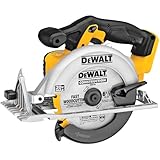
Overview: The DEWALT DCS391B brings cordless freedom to the circular saw market, operating on the popular 20V MAX battery platform. This 6-1/2-inch sidewinder delivers an impressive 5,150 RPM, rivaling corded models in speed. Designed for portability, it eliminates cord management hassles on jobsites and remote locations. Note: Battery and charger sold separately, impacting initial investment.
What Makes It Stand Out: Cordless convenience combined with professional-grade performance sets this apart. The magnesium shoe ensures durability without adding weight, while the optimized rubber grip provides superior control. The 0-50° bevel capacity handles most cutting angles, and the included 18-tooth carbide blade delivers efficient cuts. At 5150 RPM, it matches or exceeds many corded competitors in cutting speed.
Value for Money: The tool-only price is attractive for existing DEWALT 20V owners, but new users must factor in $100-150 for battery and charger. When fully equipped, it’s competitively priced against premium corded models, offering freedom worth the investment for mobile professionals who prioritize portability over maximum depth.
Strengths and Weaknesses: Strengths include cordless portability, high RPM, lightweight magnesium construction, excellent ergonomics, and DEWALT reliability. Weaknesses are the battery not included, smaller 6-1/2" blade limiting depth (2-1/8" at 90°), and runtime limitations on continuous heavy use compared to unlimited corded power.
Bottom Line: Ideal for DEWALT 20V users needing portability without sacrificing performance. It’s a jobsite workhorse that cuts the cord effectively, though budget-conscious buyers should consider total investment costs before purchasing.
6. Extbtfor Power Circular Saw,4.8A Mini Circular Saw with Laser Guide,4000RPM Corded Saw Equipped with 3 Pcs 4-1/2" Blades,Maximum Cutting 1-11/16" at 90° and 1-1/8"at 45° for Wood, Soft Metal, Plastic

Overview: This compact corded circular saw from Extbtfor delivers 580W of power through a 4.8A motor spinning at 4000RPM, making it suitable for light to medium-duty cutting tasks. The tool ships with three 4-1/2" blades designed for wood, soft metal, and plastic applications, targeting home improvement enthusiasts and DIYers who need versatility without the bulk of a full-size saw.
What Makes It Stand Out: The integrated laser guide with two replacement batteries sets this saw apart in the budget category, significantly improving cut accuracy for inexperienced users. Weighing just 4.7 pounds, it’s designed for true one-handed operation, while the included guide ruler and dust pipe add professional touches rarely seen at this price point. The three-blade assortment covers most common materials right out of the box.
Value for Money: For corded mini saws, this represents solid entry-level value. The comprehensive accessory package eliminates immediate additional purchases, and the corded design avoids ongoing battery investments. While professional-grade tools cost 3-4 times more, this saw competes favorably with other budget brands, offering slightly better features than basic Harbor Freight alternatives.
Strengths and Weaknesses: Strengths include exceptional lightness, versatile blade selection, helpful laser guide, and ergonomic single-hand design. The corded power ensures consistent performance. Weaknesses involve the unknown brand’s long-term reliability, limited 1-11/16" depth capacity, and potential durability concerns under heavy workshop use. The cord may restrict mobility compared to cordless options.
Bottom Line: Ideal for occasional DIY projects and home crafts, this Extbtfor saw punches above its weight class in features if not build quality. Hobbyists will appreciate the laser guide and blade variety, but professionals should invest in established brands for daily job site demands.
7. DEWALT 20V MAX* 6-1/2 in. Brushless Cordless Circular Saw, Tool Only (DCS565B)

Overview: The DEWALT DCS565B brings brushless motor technology to a compact 6-1/2" circular saw platform, operating on the ubiquitous 20V MAX battery system. This tool-only offering delivers cordless convenience with professional-grade features, including a bright LED worklight and an electric brake for enhanced safety. The saw’s lightweight design prioritizes maneuverability without sacrificing cut capacity.
What Makes It Stand Out: DEWALT’s brushless motor extends runtime and durability significantly compared to brushed alternatives. The tool-free bevel adjustment lever allows rapid angle changes from 0-50°, while the integrated LED illuminates cut lines in dim job site conditions. Compatibility with DEWALT’s airlock dust extraction system demonstrates professional foresight, and the electric brake stops the blade within seconds of trigger release.
Value for Money: As a bare tool, this represents a strategic purchase for existing DEWALT 20V MAX users. The premium price tag reflects professional build quality and ecosystem integration rather than raw power. While costing more than budget brands, it avoids the repetitive replacement cycle cheaper tools face. For contractors already invested in yellow batteries, the cost-per-use becomes highly competitive over time.
Strengths and Weaknesses: Strengths include legendary DEWALT durability, excellent battery ecosystem compatibility, superior safety features, and job site-ready ergonomics. The brushless motor ensures efficiency and longevity. Weaknesses center on the battery-not-included approach requiring additional investment, smaller 6-1/2" blade limiting depth capacity, and premium pricing that may deter casual users.
Bottom Line: A top-tier choice for professionals and serious DIYers embedded in the DEWALT ecosystem. The DCS565B justifies its price through reliability, safety innovations, and seamless battery integration, making it a wise long-term investment despite higher upfront costs.
8. CRAFTSMAN V20 RP Cordless Circular Saw, 7-1/4 inch, Bare Tool Only (CMCS551B)

Overview: CRAFTSMAN’s V20 RP circular saw delivers full-size 7-1/4" cutting capacity in a cordless package powered by a brushless motor. As a bare tool, it targets V20 battery system users seeking professional features without premium brand pricing. The saw incorporates an LED cutline light and boasts an impressive 56-degree bevel capacity with positive stops at common angles.
What Makes It Stand Out: The brushless motor claims up to 75% more power than brushed alternatives, while the full-size blade matches corded saw capacity. A robust metal upper guard provides superior durability compared to plastic guards common in this price tier. The 56-degree bevel range exceeds most competitors, and positive stops at 22.5 and 45 degrees streamline common trim and framing tasks.
Value for Money: Positioned between budget and premium brands, this saw offers compelling value for DIY enthusiasts and semi-professionals. The brushless motor and metal guard deliver durability typically found in more expensive tools. While requiring separate battery purchase, the V20 ecosystem is generally more affordable than DEWALT or Milwaukee, making total ownership cost attractive for non-contractors.
Strengths and Weaknesses: Strengths include full-size blade capacity, powerful brushless motor, exceptional bevel range, enhanced durability from metal construction, and integrated LED lighting. The CRAFTSMAN brand offers decent reliability. Weaknesses involve the bare-tool-only limitation, a battery ecosystem less extensive than market leaders, and potentially heavier weight than compact models. Performance may lag behind premium brands under sustained heavy load.
Bottom Line: An excellent middle-ground option for serious DIYers and occasional contractors wanting full-size cordless convenience without breaking the bank. The CMCS551B delivers where it counts—power, capacity, and durability—making it a smart purchase for V20 system users.
9. Ryobi 18V 5-1/2" Circular Saw

Overview: Ryobi’s 18V 5-1/2" Circular Saw delivers compact cordless cutting power for the expansive One+ battery platform. With a maximum cutting depth of 1-11/16" and a focus on fast cuts, this tool targets homeowners and light-duty DIY applications. The minimal feature set suggests a straightforward, no-frills approach to common cutting tasks.
What Makes It Stand Out: Integration with the Ryobi One+ system provides access to over 100 compatible tools using the same battery, delivering exceptional ecosystem value. The compact 5-1/2" blade design reduces weight and improves maneuverability in tight spaces. Ryobi’s aggressive pricing strategy makes this an accessible entry point for casual users needing occasional circular saw functionality.
Value for Money: This saw likely represents strong budget value for existing One+ battery owners, though the lack of detailed specifications makes precise assessment difficult. Ryobi consistently undercuts premium brands while delivering adequate performance for homeowner tasks. The tool-only configuration keeps initial cost low, but prospective buyers should verify whether batteries are included based on retailer listings.
Strengths and Weaknesses: Strengths include massive battery ecosystem compatibility, compact lightweight design, and Ryobi’s affordable pricing structure. The 1-11/16" cut depth is respectable for the blade size. Weaknesses stem from sparse product details—motor type, bevel capacity, and safety features remain unspecified. The smaller blade limits versatility, and performance likely trails brushless competitors. Build quality may reflect the budget price point.
Bottom Line: A practical choice for Ryobi One+ devotees tackling light-duty projects. While specifications are frustratingly limited, the saw presumably handles basic tasks adequately. Serious woodworkers should seek more detailed specifications before purchasing, but casual DIYers already invested in the ecosystem will find it serviceable.
10. Enventor Mini Circular Saw, 4.8A Electric Circular Saws Corded with Laser Guide, 4000RPM, 3 Saw Blades 3-3/8" Max Cutting Depth 1-1/16", Compact, Power for Wood, Soft Metal, Tile, Plastic

Overview: The Enventor Mini Circular Saw packs 580W of corded power into an ultra-compact design, spinning 3-3/8" blades at 4000RPM for precise cutting across multiple materials. This tool targets safety-conscious DIYers with features like a double-protection switch and thumb-activated trigger release. The package includes three specialized blades for wood, soft metal, and tile applications.
What Makes It Stand Out: Comprehensive safety engineering distinguishes this saw from budget competitors. The dual-switch activation system prevents accidental starts, while the integrated dust collection port with vacuum adapter maintains a clean workspace. A legible laser guide assists accuracy, and the left-sided blade design improves cutline visibility. The 6.56-foot power cord provides decent mobility for a corded tool.
Value for Money: This saw competes directly with other entry-level corded mini saws, offering enhanced safety features that justify its modest premium. The three-blade assortment and dust collection accessories add tangible value, eliminating immediate aftermarket purchases. Corded reliability ensures consistent power delivery without battery replacement costs, making it economical for intermittent use.
Strengths and Weaknesses: Strengths include exceptional safety features, effective dust management, laser guidance, lightweight portability, and versatile blade selection. The ergonomic slim grip reduces fatigue during extended use. Weaknesses involve the smaller 3-3/8" blade diameter limiting cut depth to 1-1/16", corded mobility restrictions, and the unproven brand’s long-term durability. Performance may lag in dense materials despite the 4000RPM rating.
Bottom Line: Perfect for meticulous DIYers prioritizing safety and workspace cleanliness over raw power. The Enventor excels at light-duty tasks where precision and protection matter. While unsuitable for heavy construction, it serves as an excellent secondary saw for detail work or a primary tool for safety-conscious beginners.
Why a Circular Saw is Your First Woodworking Power Tool
The circular saw remains the undisputed champion for woodworking newcomers, and for compelling reasons. Unlike table saws that demand dedicated workshop space and extensive safety knowledge, or miter saws limited to crosscuts, a circular saw offers portability and versatility that matches a beginner’s evolving project list. You can break down sheet goods in your driveway, trim lumber on sawhorses in your garage, and even tackle angled cuts with the right technique.
For first-time woodworkers, this single tool eliminates the need for multiple specialized saws initially. It teaches fundamental skills—following cut lines, managing blade depth, controlling feed rate—that transfer to every other saw you’ll eventually own. The learning curve feels steep for about twenty minutes, then suddenly clicks into place. By the time you’ve completed your first project, you’ll have developed muscle memory and confidence that serves you for decades.
Understanding Circular Saw Types: Sidewinder vs. Worm Drive
Before diving into features, you must understand the two primary circular saw designs. This distinction affects everything from weight and balance to torque delivery and cutting feel. Choosing the wrong type for your needs can turn woodworking into an exhausting chore rather than an enjoyable craft.
The Case for Sidewinder Saws in Beginner Workshops
Sidewinder saws, where the motor sits alongside the blade, dominate the beginner market for excellent reasons. Their inline design creates a compact, lightweight tool—typically 7-10 pounds—that’s easier to maneuver during long cutting sessions. The direct-drive mechanism translates motor power efficiently, spinning blades at 5,000+ RPM for smooth, fast cuts through softwoods and plywood.
For newcomers, the real advantage lies in visibility. The motor’s position leaves the blade area relatively open, letting you clearly see your cut line without craning your neck. This visual feedback proves crucial when you’re still developing tracking skills. The reduced weight also means less fatigue, which directly correlates to safer, more controlled cuts. When your arm isn’t trembling from holding a 15-pound tool overhead, you maintain better command of the cut.
When Worm Drive Saws Make Sense for Newbies
Worm drive saws position the motor behind the blade, connected through a gear system that dramatically increases torque while reducing RPMs to around 4,000. This design excels at powering through dense hardwoods, thick pressure-treated lumber, and multiple stacked sheets. The longer, narrower profile provides excellent sightlines for rip cuts along sheet goods.
However, the trade-offs matter for beginners. These saws typically weigh 13-16 pounds, making them fatiguing during extended use. The higher torque can surprise new users, creating a stronger kickback potential if the blade binds. That said, if your first projects involve heavy timber framing, thick hardwood furniture, or you’re a larger-framed individual who can handle the weight, a worm drive’s relentless power might suit your needs. Most beginners, though, find sidewinders more forgiving during the critical learning phase.
Corded vs. Cordless: Powering Your First Projects
The corded versus cordless debate intensifies each year as battery technology advances. For 2026, lithium-ion batteries deliver performance that rivals corded tools, but the choice still impacts your workflow and project types.
Corded saws offer unlimited runtime and consistent power delivery—crucial when ripping long sheets of plywood where a battery might fade mid-cut. They’re typically lighter without battery weight, and you’ll never face a dead battery when inspiration strikes. The downside? That tethered cord creates tripping hazards, limits mobility, and forces you to manage extension cords across your workspace.
Cordless saws provide freedom that transforms how you work. You can cut lumber directly on your truck bed at the lumberyard, work in spaces without outlets, and eliminate cord management from your safety checklist. Modern brushless motors and 20V+ battery platforms deliver impressive runtime, often completing dozens of cuts per charge. The catch involves cost—quality batteries add $100+ to your investment—and the psychological pressure of monitoring battery life during projects.
For most beginners tackling indoor projects near power sources, a corded saw offers better value and reliability. If your workspace lacks convenient outlets or you envision outdoor projects, cordless justifies its premium price.
Essential Features That Define Beginner-Friendly Saws
Certain features separate saws that accelerate your learning from those that create frustration. When evaluating options, prioritize these elements that directly impact user experience and safety.
Blade Size and Cutting Capacity Explained
Most beginner saws sport 7-1/4 inch blades—the sweet spot for versatility. This size handles 2x lumber at 90 degrees and can cut 1-1/2 inch material at 45-degree bevels, covering 95% of beginner projects. Larger blades add weight and cost without proportional benefits for new woodworkers. Smaller 6-1/2 inch blades appear on compact cordless models, sacrificing depth capacity for reduced weight.
Pay attention to maximum cut depth specifications. A true 7-1/4 inch saw should cut at least 2-1/2 inches at 90 degrees. This capacity matters when you’re trimming door bottoms or working with thicker material. Check the depth scale accuracy too—poorly calibrated scales force you to measure manually, adding steps and potential errors to every cut.
Bevel Capacity: Angled Cuts for Creative Projects
Your first bookshelf might need straight cuts, but your third project will likely involve angled legs or decorative bevels. Look for saws offering at least 0-50 degree bevel capacity with positive stops at common angles (22.5 and 45 degrees). These detents let you quickly lock in accurate angles without fussing with protractors.
The bevel adjustment mechanism itself deserves scrutiny. Large, easy-to-grip levers or knobs that operate smoothly under load prove invaluable when you’re adjusting settings mid-project. Some saws hide these controls in awkward positions, forcing you to contort your hand to make changes. In 2026, many models feature tool-free bevel adjustments—a small luxury that feels revolutionary when you’re switching between cuts frequently.
Safety Features Non-Negotiable for New Users
Manufacturers pack modern saws with safety tech, but three features matter most for beginners. First, an electric brake stops the blade within seconds of releasing the trigger, reducing the chance of accidental contact with a coasting blade. This feature alone prevents countless injuries.
Second, a riving knife or splitter behind the blade prevents kickback by keeping the kerf open. Unlike old-school fixed splitters, modern riving knives move with the blade, maintaining protection even during bevel cuts. This mechanism proves especially valuable when cutting wet or tensioned lumber that wants to pinch the blade.
Third, an effective lower blade guard that retracts smoothly prevents binding during cuts. Test this in-store if possible—some guards stick or hang up on material edges, requiring you to manually retract them, which defeats their purpose and distracts you during critical moments.
Ergonomics and Weight: Comfort During Learning
A saw that feels balanced in your hand for five minutes in the store might reveal its flaws during an hour-long cutting session. Weight distribution matters more than total weight. A 9-pound saw with poor balance feels heavier than an 11-pound model with thoughtful ergonomics.
Examine the handle design and grip material. Soft, overmolded rubber grips reduce vibration and provide secure hold even with sweaty hands. The trigger should fall naturally under your index finger without requiring wrist adjustment. Some 2026 models feature ambidextrous safety switches, accommodating left-handed users—a detail that shows thoughtful design.
Consider the sight lines from your typical cutting stance. Can you see both the front and rear of the blade without shifting your head dramatically? Some saws position handles so high that shorter users struggle with visibility. If possible, simulate a cut motion in-store, watching how the blade aligns with your natural line of sight.
The Blade Matters More Than You Think
The included blade with most saws prioritizes speed over finish quality, typically featuring 24 aggressive teeth that rip quickly but leave splintered, rough edges. For beginners, this creates frustration when projects require smooth cuts that need minimal sanding.
Tooth Count and Material Compatibility
For general-purpose use, upgrade immediately to a 40-tooth carbide-tipped blade. This configuration balances ripping speed with crosscut cleanliness, producing acceptable results in both directions. The higher tooth count reduces tear-out on plywood veneers and leaves smoother edges on pine and poplar—common beginner woods.
Specialized blades exist for every material: 60+ tooth blades for finish carpentry, carbide-tipped blades for hardwoods, and TCG (triple-chip grind) blades for composite materials. As a beginner, start with a quality 40-tooth blade, then expand your collection as project requirements dictate. The blade represents a small investment that dramatically improves your results and confidence.
Changing Blades Safely as a Beginner
Modern saws include spindle locks that immobilize the blade for wrench-free changes—look for this feature. The arbor nut should loosen in the opposite direction of blade rotation (typically counterclockwise), preventing accidental loosening during use. Always unplug corded saws or remove batteries from cordless models before changing blades, even with safety locks.
Practice blade changes in a well-lit area before your first project. Understand how the blade direction arrow aligns with rotation, and how the flange washers seat against the blade. This familiarity prevents fumbling when you need to swap blades mid-project, keeping your focus on safety rather than mechanical confusion.
Budget Considerations Without Compromising Quality
The circular saw market spans from $40 bargain bin specials to $400 professional models. For beginners, the sweet spot lands between $80 and $150. Below this range, you sacrifice critical safety features, accurate adjustments, and durable components that affect cut quality. Above it, you’re paying for contractor-grade durability and features unnecessary for occasional hobbyist use.
Allocate your budget strategically. A $100 saw with a $30 quality blade outperforms a $130 saw using the stock blade. Similarly, investing in proper safety gear—quality safety glasses, hearing protection, and cut-resistant gloves—matters more than buying a premium saw brand.
Consider the ecosystem if choosing cordless. A bare tool might cost $120, but adding batteries and charger pushes the investment toward $200+. However, if you plan to expand your cordless tool collection, that battery platform becomes an asset rather than an expense. Many beginners start corded, then transition to cordless as their tool collection grows.
Must-Have Accessories for Your First Circular Saw
Your saw purchase represents just the beginning. Five accessories transform your cutting experience from frustrating to fluid. First, invest in a quality straightedge guide or track system. Freehand cuts require years of practice; a guide instantly produces straight, accurate cuts that build confidence.
Second, grab a pair of sturdy sawhorses with sacrificial tops. These elevate your work to comfortable cutting height and protect your blades from concrete and dirt. Third, a dust collection adapter connects your saw to a shop vacuum, dramatically improving visibility and respiratory safety.
Fourth, a dedicated circular saw blade storage case protects your investment and keeps blades organized. Fifth, consider a small LED work light that attaches to your saw. Many 2026 models integrate lights, but aftermarket options illuminate cut lines brilliantly, especially in dim garage workshops.
Common First Projects and Their Saw Requirements
Your project list directly influences which saw features matter most. Building a basic workbench requires primarily crosscuts in 2x4 lumber—any saw handles this competently. However, constructing a plywood storage cabinet demands accurate rip cuts, making blade visibility and a straightedge guide essential.
Picture frames and small boxes need precise 45-degree miters, prioritizing accurate bevel adjustments. Outdoor projects using pressure-treated lumber benefit from higher torque and carbide-tipped blades designed for wet, abrasive material. Understanding your likely first three projects helps you evaluate whether that fancy feature you’re considering will actually see use or just add cost.
Start simple. A basic cutting board project teaches you to make clean crosscuts and manage blade depth. A small bookshelf introduces ripping plywood and simple joinery. These foundational projects build skills while revealing which saw features you’ll value as you advance.
Maintenance Basics to Protect Your Investment
A well-maintained circular saw lasts decades, but neglect kills performance quickly. After each use, blow out dust from the motor housing and blade guard using compressed air. This prevents buildup that can bind moving parts and cause overheating. Check the blade guard’s retraction spring monthly, ensuring it snaps back briskly.
Inspect the power cord regularly for nicks or fraying—replace immediately if damage appears. For cordless models, store batteries at room temperature and avoid fully depleting them; lithium-ion batteries prefer partial discharge cycles.
Annually, check the base plate for flatness using a straightedge. Dropping your saw can bend the plate, affecting cut accuracy. Most plates are adjustable, but severe damage requires replacement. Also, verify that all adjustment scales (depth and bevel) remain accurate using a square and ruler. Calibration drift happens gradually, and catching it early prevents cumulative errors across projects.
2026 Trends: Smart Features and Connectivity
The next generation of circular saws includes Bluetooth connectivity and companion apps that track usage, monitor blade life, and provide maintenance reminders. While these features might seem gimmicky, they actually benefit beginners by gamifying skill development. Apps can log your cuts, offering feedback on technique and alerting you when blade replacement becomes necessary based on actual usage rather than guesswork.
Brushless motors continue dominating cordless models, delivering more power and runtime while reducing maintenance. Some saws now include electronic torque control that automatically adjusts power delivery when binding begins, preventing kickback before it starts. While premium-priced, these intelligent systems provide training wheels that flatten the learning curve significantly.
Laser guides have evolved beyond simple line projections. New models cast wide-angle LEDs that illuminate the entire cut path, eliminating shadows and making line-following effortless. This visibility boost proves invaluable for beginners still developing hand-eye coordination.
Frequently Asked Questions
What size circular saw is best for a beginner?
A 7-1/4 inch saw offers the ideal balance of cutting capacity, weight, and versatility for new woodworkers. It handles 2x lumber and plywood sheets while remaining light enough for extended use without fatigue.
Should I buy a corded or cordless circular saw as my first tool?
Start corded unless you specifically need portability for outdoor projects or lack workshop power access. Corded saws cost less, offer unlimited runtime, and eliminate battery management concerns while you’re learning fundamentals.
How much should I spend on my first circular saw?
Budget $80-$150 for the saw itself, then add $30-40 for a quality blade. This range provides essential safety features, accurate adjustments, and durability without paying for professional-grade extras you won’t use initially.
What safety gear do I absolutely need?
Minimum requirements include impact-rated safety glasses, hearing protection, and cut-resistant gloves. Avoid loose clothing and jewelry. As you progress, add a dust mask and steel-toed boots for comprehensive protection.
Can I use a circular saw for all my beginner projects?
Yes, with proper technique and accessories. A circular saw with a straightedge guide handles crosscuts, rip cuts, and bevels. While specialized saws offer convenience later, your circular saw remains capable of building everything from bookshelves to workbenches.
How do I prevent splintering on plywood cuts?
Use a sharp 40-tooth or higher blade designed for finish cuts. Score the cut line lightly first, then make your full-depth cut. Place painter’s tape along the cut line on the show side, cutting through the tape for clean edges.
What causes kickback and how do I avoid it?
Kickback occurs when the blade binds in the kerf, often from forcing the saw or cutting wet wood that pinches. Prevent it by using sharp blades, maintaining steady feed rates without forcing, and ensuring your workpiece is fully supported on both sides of the cut.
How often should I change my circular saw blade?
Replace blades when you notice burning, excessive force required, or rough cuts. For hobbyist use, a quality blade lasts 40-60 hours of cutting time. The stock blade should be upgraded immediately, then replaced annually with regular weekend use.
Is a laser guide worth the extra cost?
For beginners, yes. Laser guides or LED cut-line illuminators dramatically improve cut accuracy and confidence. They help develop proper sight picture and hand positioning. Once skilled, you may rely less on them, but they’re invaluable during the learning phase.
Can I cut metal or plastic with a woodworking circular saw?
Yes, with the correct blade. Use carbide-tipped blades with TCG grinds for aluminum and plastic. Never use wood-cutting blades on metal. Always cut metal with appropriate lubricant and slower feed rates to prevent overheating and blade damage.
See Also
- 10 Best Budget Circular Saws Under $100 for Beginners in 2026
- 10 Best Circular Saws for Beginners in 2026
- Top 10 Best Corded Circular Saws for Winter Workshop Projects in 2026
- Top 10 Best Cordless Circular Saws for DIY Home Projects in 2026
- Top 10 Best Cordless Circular Saws for DIY Projects in 2026