Table of Contents
A cluttered kitchen table covered in sawdust. Tools scattered across the garage floor. That sinking feeling when you realize your “temporary” workspace has become a permanent safety hazard. If this sounds familiar, you’re not alone—most hobbyists start here. But here’s the truth: you don’t need to spend a fortune to get a solid, reliable workbench that transforms your creative chaos into an organized, productive sanctuary. For under $300, you can find workbenches that punch far above their weight class, offering stability, storage, and features that’ll make your projects more enjoyable and your results more professional.
The key is knowing what actually matters for your specific craft and what corners can be safely cut without sacrificing functionality. Whether you’re building model airplanes, restoring vintage furniture, or tinkering with electronics, the right budget workbench becomes the foundation of your creative space—literally and figuratively. Let’s dive into what separates the gems from the junk in the sub-$300 category, so you can invest wisely and get back to what you love: making stuff.
Top 10 Workbenches For Hobbyists
Detailed Product Reviews
1. WEN WB4723T 48-Inch Workbench with Power Outlets and Light, Black
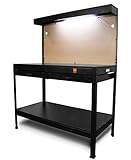
Overview: The WEN WB4723T delivers a complete workstation solution for woodworkers and mechanics seeking integrated organization. This 48-inch bench combines a 220-pound capacity enamel-coated surface with two drawers, dual storage shelves, and a pegboard backing. At 62 inches tall with a 25x48-inch footprint, it provides substantial workspace while incorporating three 13-amp power outlets and an overhead fluorescent light for enhanced functionality.
What Makes It Stand Out: The built-in electrical integration sets this bench apart—three power outlets eliminate extension cord clutter, while the overhead light illuminates projects without occupying workspace. The pegboard backing offers immediate tool access, and the enamel coating protects both your workpiece and the surface itself. This all-in-one approach minimizes setup time and maximizes efficiency.
Value for Money: Priced competitively against basic workbenches, the WEN adds $100+ worth of electrical components and lighting. Comparable DIY integration would require separate purchase of power strips, lighting fixtures, and installation time. For hobbyists and semi-professionals, this represents solid mid-range value without premium pricing.
Strengths and Weaknesses: Strengths include integrated power and lighting, generous storage options, durable non-marring surface, and tool organization system. Weaknesses are the modest 220-pound capacity limiting heavy-duty use, fixed height restricting ergonomic customization, and fluorescent lighting being less energy-efficient than modern LED alternatives.
Bottom Line: Ideal for garage workshops and hobbyists wanting plug-and-play convenience. While not suited for industrial loads, it perfectly balances features, price, and functionality for most home users. The integrated power alone justifies choosing this over basic competitors.
2. Workbenches Revised Edition: From Design & Theory to Construction & Use

Overview: This comprehensive guidebook serves as the ultimate reference for woodworkers and DIY enthusiasts planning to build custom workbenches. Covering design principles, theoretical considerations, and practical construction methods, it transforms bench building from intimidating to achievable. Rather than offering a single plan, it provides the knowledge to create a personalized workstation tailored to specific needs, tools, and available space.
What Makes It Stand Out: Unlike plan books offering one-size-fits-all solutions, this volume teaches fundamental design theory enabling readers to engineer benches for their unique requirements. It explores workholding systems, material selection, ergonomics, and specialized configurations that generic plans ignore. The revised edition incorporates modern techniques and tool innovations, making it a timeless resource.
Value for Money: At the price of a single hardware store workbench, this book potentially saves hundreds in mistakes and redesigns. The knowledge gained applies to multiple projects beyond benches, offering exceptional long-term value. Compared to scattered online tutorials, this organized, expert-curated information accelerates learning and ensures structural integrity.
Strengths and Weaknesses: Strengths include comprehensive theoretical foundation, design flexibility, cost-saving insights, and professional expertise. Weaknesses require significant time investment, tool access, and woodworking skills. Physical product seekers will be disappointed, and information may become dated despite revision.
Bottom Line: Essential for serious woodworkers committed to building their ideal bench. Not for those wanting instant gratification, but invaluable for craftsmen valuing customization and skill development. Buy this before buying lumber.
3. CAMMOO 60" Adjustable Heavy Duty Workbench, 2000 LBS Load Capacity Rubber Wood Work Table with Pegboard, Power Outlets, Work Bench for Garage, Workshop, Office, Home, Commercial

Overview: CAMMOO’s 60-inch workbench targets serious makers needing maximum versatility and strength. With a 2,000-pound load capacity, rubber wood top, and six-height adjustment ranging from 28.5 to 39 inches, it adapts to demanding tasks. Dual pegboards with six hooks, ETL-certified power strip with four AC outlets and two USB ports, plus a 6.5-foot cord create an all-in-one workstation for garage, workshop, or commercial use.
What Makes It Stand Out: The dual-sided pegboard design doubles tool storage flexibility, while the 360° tool-free knobs enable instant height adjustment without wrenches. The ETL-certified power strip includes USB ports for modern device charging—rare in workbenches. The 2,000-pound capacity rivals industrial benches at a fraction of the cost.
Value for Money: Positioned in the premium tier, this bench justifies its price through professional-grade capacity, ergonomic adjustability, and comprehensive power solutions. Comparable industrial benches cost significantly more, while cheaper alternatives lack height adjustment and dual pegboards. The rubber wood top offers durability surpassing basic particle board.
Strengths and Weaknesses: Strengths include exceptional load capacity, ergonomic adjustability, dual pegboards, USB-equipped power, and versatile placement. Weaknesses involve complex assembly despite claims, rubber wood requiring periodic maintenance, and 60-inch length potentially overwhelming small spaces.
Bottom Line: Perfect for serious DIYers, craftsmen, and small commercial operations prioritizing adaptability and strength. The height adjustment and dual pegboards make it worth the premium over fixed benches. Ensure you have space to accommodate its capabilities.
4. CAMMOO 48" Heavy Duty Work Bench Adjustable Height Max Load 2000 LBS with Storage Shelf for Garage Workbench, Rubberwood Tabletop with Pegboard, LED Light, Built-in Power Strip for Woodworking Shop

Overview: CAMMOO’s 48-inch workbench streamlines workshop setup with innovative pre-installed components that eliminate drilling. Supporting 2,000 pounds on its rubber wood top, it offers ten-level height adjustment from 28.5 to 38.7 inches via tool-free knobs. The no-drill pegboard mounts directly to the bench, moving as a single unit, while an adjustable metal storage shelf provides customizable under-table organization. An LED light and ETL-certified power strip with four AC outlets and two USB-A ports complete the package.
What Makes It Stand Out: The pre-installed, no-drill design saves hours of assembly while enabling mobility—perfect for renters or evolving workshops. The LED lighting surpasses traditional fluorescent options, and the movable pegboard maintains tool organization when repositioning. Ten height settings offer finer ergonomic adjustment than competitors.
Value for Money: Though priced higher than basic benches, the time saved during assembly and the mobility factor justify the cost. The integrated LED and pre-configured components add $150+ in value compared to aftermarket additions. For those valuing flexibility, this premium delivers tangible benefits.
Strengths and Weaknesses: Strengths include innovative no-drill assembly, mobile pegboard design, LED lighting, fine-tuned height adjustment, and robust 2,000-pound capacity. Weaknesses include premium pricing, potential wobble if height adjustment locks aren’t tightened properly, and limited 48-inch length for larger projects.
Bottom Line: Ideal for renters, evolving spaces, or anyone prioritizing setup speed and mobility. The no-drill design and movable pegboard solve common workshop pain points. While expensive, the time savings and flexibility make it a smart investment for non-permanent installations.
5. POWERTEC Portable Small Workbench with Vise, Imprinted Ruler and Protractor Scale, Folding Sawhorse/Worktable and 4 Bench Dogs for Woodworking Projects (MT4006V)
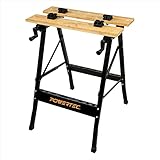
Overview: The POWERTEC MT4006V redefines portability in workbenches, weighing just 11 pounds while supporting 220 pounds. This folding workstation transforms from compact storage to functional bench in seconds, featuring a bamboo top with integrated vise, metric and imperial ruler markings, protractor scale, and four bench dogs. The heavy-duty steel frame ensures stability despite its lightweight design, making it ideal for small spaces, mobile contractors, or hobbyists with limited room.
What Makes It Stand Out: True portability combined with surprising functionality distinguishes this bench. The integrated vise and bench dogs provide workholding typically absent from portable solutions. Imprinted measurement scales eliminate need for separate rulers, while the 11-pound weight enables one-person transport. It functions as both sawhorse and worktable, doubling its utility.
Value for Money: As one of the most affordable options, it delivers exceptional value for space-constrained users. Competing portable benches lack the vise and measurement features, while stationary benches at this price point offer no portability. For apartment dwellers or mobile workers, it’s a budget-friendly game-changer.
Strengths and Weaknesses: Strengths include extreme portability, integrated vise, measurement scales, bench dogs, rapid setup, and affordable pricing. Weaknesses involve limited 220-pound capacity, smaller work surface restricting project size, reduced stability compared to full-size benches, and bamboo requiring care to prevent cracking.
Bottom Line: Perfect for small apartments, job sites, or as a secondary bench. Don’t expect heavy-duty performance, but for light-to-medium tasks requiring mobility, it’s unmatched. The integrated vise alone makes it worth the modest investment for hobbyists and DIYers with space constraints.
6. Worx Pegasus 2-in-1 Folding Work Table & Sawhorse, Easy Setup Portable Workbench, 31" W x 25" D x 32" H Lightweight Worktable with Heavy-Duty Load Capacity, WX051 - Includes 2 Clamps & 4 Clamp Dogs
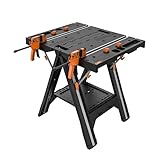
Overview: The Worx Pegasus WX051 redefines portable workstations with its clever 2-in-1 design that transforms from a compact workbench to a robust sawhorse in seconds. Weighing under 30 pounds yet supporting up to 300 pounds as a bench and 1,000 pounds as a sawhorse, this 31" x 25" platform delivers surprising capability for DIYers and professionals who need job-site flexibility. The integrated clamping system with two included clamps and four clamp dogs provides immediate work-holding solutions without additional purchases.
What Makes It Stand Out: True versatility separates the Pegasus from single-function tables. Its ability to link with other Worx products like the Sidekick creates expandable workstations, while the rapid fold-flat design enables true portability. The proprietary clamp dog system integrates seamlessly into the tabletop, offering unlimited positioning options that traditional bench dogs cannot match. At 32 inches working height, it matches standard sawhorse elevations while providing a genuine work surface uncommon in portable units.
Value for Money: Positioned in the mid-range for portable workbenches, the Pegasus justifies its price through dual functionality and included accessories. Purchasing separate sawhorses and a workbench would cost significantly more and require double the storage space. For mobile professionals and space-conscious homeowners, the investment eliminates the need for multiple dedicated tools.
Strengths and Weaknesses: Strengths include exceptional portability, impressive weight capacity for its class, integrated clamping system, and expandability with Worx ecosystem. The compact folded profile stores easily. Weaknesses are the smaller work surface limiting large projects, plastic construction feeling less robust than steel alternatives, and clamp quality that may not satisfy professional woodworkers. The 300-pound bench capacity, while adequate, falls short of stationary workbenches.
Bottom Line: The Worx Pegasus excels for users prioritizing portability and versatility over maximum capacity. It’s ideal for contractors, apartment dwellers, or occasional DIYers needing a job-site companion that stores in a closet. While not replacing a permanent workbench, it delivers unmatched flexibility for mobile applications.
7. Keter Folding Work Table, Portable Workbench w/ 12" Clamps for Garage/Wood Shop - Heavy-Duty and All-Weather for DIY Home Improvements and Worksites

Overview: Keter’s Folding Work Table delivers instant gratification for DIY enthusiasts, deploying into a fully functional 1,000-pound capacity workstation in just 30 seconds without tools or assembly. Constructed from weather-resistant polypropylene and aluminum, this all-weather bench refuses to rust, peel, or dent, making it equally suitable for garage precision work or outdoor construction sites. The generous work surface accommodates miter saws and large projects while maintaining remarkable portability.
What Makes It Stand Out: The rapid deployment mechanism sets a new standard for convenience—unfold, lock, and work. The versatile 12-inch clamps install horizontally or vertically, adapting to various work-holding scenarios that many competitors cannot. Keter’s 75-year heritage in lifestyle solutions shows in the thoughtful material selection: the resin construction withstands moisture and UV exposure where wooden benches fail, while aluminum legs provide strength without weight penalty.
Value for Money: As one of the most affordable heavy-duty portable workbenches, Keter offers exceptional value. The 1,000-pound capacity rivals permanent fixtures at a fraction of the cost and space commitment. For homeowners seeking a “first workbench” or contractors needing a reliable backup, the price point delivers professional capability without professional investment. The weather resistance extends lifespan, improving long-term value.
Strengths and Weaknesses: Strengths include lightning-fast setup, impressive load capacity, weatherproof construction, lightweight portability, and included clamps. The generous work surface handles substantial projects. Weaknesses involve plastic tabletop lacking the solidity of wood or steel, potential flex under maximum loads, and clamp quality suitable for DIY but not fine woodworking. Non-adjustable height may not suit all users.
Bottom Line: Keter’s folding table is a no-brainer for DIYers and homeowners wanting maximum capability with minimum hassle. Its weather resistance and rapid deployment make it perfect for occasional use, outdoor projects, and tight storage situations. While professionals may crave more precision, it delivers unbeatable convenience and value for the target audience.
8. Workbench Adjustable Height Heavy Duty Work Bench with Storage, 2200 LBS Load Capacity Work Table, Pegboard, Built-in Power Outlet, Lockable Wheels for Garage, Workshop, Warehouse & Home

Overview: This heavy-duty workbench transforms any garage into a professional-grade workshop with its 2,200-pound capacity and comprehensive storage integration. The 48-inch adjustable-height steel frame accommodates both seated and standing work from 27.9 to 43.4 inches, while the built-in ETL-certified power strip with four AC outlets, USB-A, and USB-C ports eliminates cord clutter. An extensive organizational system includes countertop slots, pegboard sides with hooks, and dedicated power tool storage, creating an all-in-one command center.
What Makes It Stand Out: The integrated power solution represents a game-changer, allowing direct charging of batteries and devices without hazardous extension cords. Height adjustability caters to ergonomic preferences and multiple users, uncommon in static workbenches. The storage density is exceptional—every inch serves a purpose, from the slotted countertop to the dual-side pegboards, maximizing productivity in minimal floor space. Leveling feet ensure stability on uneven garage floors.
Value for Money: While priced higher than basic benches, this unit eliminates separate purchases of power strips, storage solutions, and anti-fatigue mats for different heights. The 2,200-pound capacity and steel construction ensure decades of service, amortizing the initial investment. For serious DIYers or professional shops, the integrated features justify the premium over building a comparable setup piecemeal.
Strengths and Weaknesses: Strengths include massive weight capacity, ergonomic height adjustment, built-in power with circuit protection, extensive storage options, and rock-solid steel construction. Lockable wheels add mobility. Weaknesses involve complex assembly requiring time and patience, significant weight reducing true portability, and premium pricing that may exceed casual user budgets. The powder coating could chip under heavy use.
Bottom Line: This workbench suits serious makers, mechanics, and professionals demanding maximum capability and organization. The integrated power and adjustability make it a long-term workshop centerpiece. While overkill for occasional DIYers, it delivers exceptional value for users who will leverage every feature daily. Assembly effort pays dividends in productivity.
9. Workbench with Pegboard, Adjustable Shelving Work Table, Mobile Workstation with Lockable Wheels for Garage Warehouse Workshop Office, 47.2" H x 33.5" W x 18" D, Black

Overview: Boasting an extraordinary 3,000-pound load capacity, this steel workbench with pegboard targets users who demand uncompromising strength and mobility. The 33.5-inch width and 18-inch depth provide substantial workspace while four swivel casters (two locking) enable instant repositioning throughout the garage or workshop. A detachable metal hook board and fully adjustable shelving system adapt to tools of any size, creating a customizable storage fortress that remains stable under maximum loads.
What Makes It Stand Out: The 3,000-pound capacity exceeds most competitors by 50%, supporting engine blocks, machinery, or extensive tool collections without flex. The snap-fit assembly requires no additional tools, a refreshing departure from frustrating bolt-together designs. Detachable hook boards offer layout flexibility rarely seen in fixed pegboard systems. The mobile design combines heavy-duty stability with genuine portability, allowing workspace reconfiguration without unloading.
Value for Money: This bench delivers professional-grade capacity at a mid-range price point. Competing industrial benches with similar load ratings cost significantly more and lack mobility. The tool-free assembly saves hours and frustration, adding hidden value. For users needing maximum strength without permanent installation, it represents a cost-effective alternative to built-in cabinetry or multiple weaker units.
Strengths and Weaknesses: Strengths include industry-leading weight capacity, effortless mobility, tool-free assembly, adjustable shelving, and detachable hook board for cleaning. The compact 18-inch depth fits tight spaces. Weaknesses are the shallower work surface limiting spread-out projects, non-adjustable height restricting ergonomic customization, and caster stability concerns at maximum loads. Powder coating may scratch, and the narrower width suits storage more than assembly work.
Bottom Line: Ideal for mechanics, serious hobbyists, and workshops prioritizing storage density and mobility over expansive work surfaces. The 3,000-pound capacity and mobile design make it perfect for heavy tool organization and equipment maintenance. While not replacing a primary assembly bench, it excels as a secondary mobile station or primary storage workbench in space-constrained shops.
10. ENJOYWOOD Work Bench for Garage Adjustable Workbenches with Storage 60 Inch Garage Workbench with Under Table Shelf, Pegboard, Power Outlets for Woodworking, Home, Office, Workshop

Overview: ENJOYWOOD’s 60-inch workbench combines traditional craftsmanship with modern convenience, featuring a 1.2-inch premium rubberwood top coated for durability and an H-shaped steel frame supporting 2,000 pounds. The expansive surface accommodates large projects while dual-side pegboards and a 500-pound under-table shelf maximize storage. Height adjusts from 31 to 38.8 inches, and swivel casters with foot brakes provide mobility. ETL-certified power outlets with cord management complete the professional package.
What Makes It Stand Out: The substantial rubberwood top offers superior feel and workability compared to steel or plastic surfaces, ideal for woodworking and precision tasks. The 60-inch length provides exceptional project space uncommon in portable benches. Dual pegboards create ambidextrous tool access, while the lower storage shelf handles heavy equipment up to 500 pounds. The transparent protective coating extends wood life without sacrificing aesthetics. Anti-slip rubber pads and adjustable metal feet ensure stability on any terrain.
Value for Money: This bench bridges the gap between budget portables and premium stationary units. The solid wood top and steel frame deliver durability rivaling commercial benches at a fraction of the cost. Included power outlets, casters, and extensive storage eliminate separate purchases. For woodworkers and serious DIYers, the 60-inch length and quality materials justify the investment over smaller, flimsier alternatives.
Strengths and Weaknesses: Strengths include generous work surface, premium wood top, high weight capacity, excellent mobility, dual pegboards, integrated power, and robust storage. The H-frame design ensures stability. Weaknesses involve wood top requiring more maintenance than steel, weight making frequent relocation difficult, and height adjustment range narrower than some competitors. Assembly requires two people due to size.
Bottom Line: Perfect for woodworkers, serious DIYers, and shops needing a large, versatile primary bench. The wood top provides an ideal work surface while integrated features maintain organization. While less portable than folding options, it delivers stationary bench quality with mobile flexibility. The 60-inch length makes it a workshop centerpiece for large projects.
Why a Quality Workbench Matters for Hobbyists
Your workbench isn’t just a table—it’s the command center of your creative universe. A wobbly, undersized surface doesn’t just slow you down; it introduces frustration, compromises safety, and can actually ruin delicate projects. For hobbyists, where precision and passion intersect, the right bench provides psychological benefits too: it signals to your brain that “this is where creation happens,” helping you slip into a productive flow state faster.
Budget constraints don’t negate these needs; they simply force smarter decisions. A well-chosen sub-$300 workbench offers surprising durability, often matching the performance of pricier options for typical hobbyist tasks like light woodworking, electronics repair, or crafting. The trick is understanding which features deliver real value and which are marketing fluff designed to justify higher price tags.
Understanding Workbench Types Within Budget
Portable vs. Stationary Workbenches
Portable workbenches prioritize mobility, featuring lighter frames and often folding designs. They’re ideal if you share garage space with a car, work in multi-purpose rooms, or need to take projects on the road. However, “portable” doesn’t mean “flimsy”—many budget options use clever engineering to maintain rigidity while keeping weight manageable.
Stationary benches trade mobility for mass and stability. They typically weigh more and offer higher load capacities, making them better for heavy-handed tasks like pounding chisels or using mallets. Under $300, you’ll find hybrid designs that lean toward stationary stability but include casters for occasional repositioning, giving you the best of both worlds if you’re willing to compromise on ultimate portability.
Folding Workbenches for Small Spaces
If your workshop doubles as a parking spot or laundry room, folding workbenches are your secret weapon. These space-savers collapse flat against walls or fold into compact footprints when not in use. Look for models with robust hinge mechanisms—this is where cheap benches fail first. Quality folding benches use steel brackets with positive locking pins rather than simple wooden hinges.
The trade-off? Maximum weight capacity often drops compared to fixed-frame designs, and you might sacrifice some storage integration. But for apartment dwellers or those with truly limited space, a folding bench under $300 beats working on the floor every single time.
Modular Systems for Growing Needs
Modular workbenches start basic but accept add-ons like upper shelves, drawer units, or pegboard backs. This “grow as you go” approach makes perfect sense for hobbyists whose interests evolve. Maybe today you’re building birdhouses, but next year you might dive into 3D printing or miniature painting.
Budget modular systems typically feature standardized hole patterns and mounting points. Before buying, verify that accessories are actually available and reasonably priced—some brands advertise modularity but offer few compatible add-ons. The initial bench might cost $250, but factor in future accessory purchases when evaluating the overall investment.
Key Features to Evaluate Before Buying
Weight Capacity and Load Distribution
Manufacturers love to boast about weight capacity, but the real story lies in how that weight is distributed. A bench rated for 500 pounds might handle a heavy tool chest in the center but bow dangerously if that same load sits near the edge. For hobbyists, realistic capacity needs rarely exceed 300 pounds—your projects, tools, and occasional leaning weight combined.
Check for cross-bracing underneath the top. Diagonal or X-bracing dramatically improves load distribution and prevents racking (that wobbly parallelogram effect when you push on a corner). Budget benches often skimp here, so visually inspect product photos for these critical support elements.
Work Surface Materials and Durability
The top takes the most abuse, so material choice directly impacts longevity. At under $300, you’ll encounter three main options: laminated particle board, solid wood (usually softwood), and thin steel plates over wood cores.
Laminated tops resist glue and stains but can chip at edges and sag if not properly supported. Solid wood tops are repairable—sand out scratches, refinish when worn—but may require sealing to prevent moisture damage. Steel tops offer excellent durability but can be noisy and cold to work on. Consider your primary hobby: woodworkers might prefer wood’s forgiving nature, while electronics hobbyists benefit from laminated surfaces’ easy cleanup.
Frame Construction and Stability
The frame is the skeleton that determines everything. Steel frames dominate the budget category, but not all steel is equal. Look for welded joints rather than bolted-only connections—welds provide superior rigidity. If bolted, check for corner gussets (triangular reinforcement plates) that prevent joint flexing.
Leg design matters too. Straight legs look clean but offer less stability than slightly angled (splayed) legs. Some benches feature adjustable feet to compensate for uneven garage floors—a small detail that makes a huge difference in real-world use. Rocking benches are dangerous benches, so stability features should be non-negotiable.
Size and Space Considerations
Measuring Your Workspace Correctly
Grab your tape measure and plot your space before browsing. Measure not just the floor footprint, but also account for your own movement around the bench. You’ll need at least 36 inches of clearance on the working side, plus space to open drawers or doors. Don’t forget vertical space—overhead cabinets or shelving can interfere with tall projects or clamping systems.
Consider your project sizes too. A 4-foot bench fits most hobbyist tasks, but if you regularly work on 6-foot boards, you’ll constantly fight the length constraint. It’s better to have slightly more bench than you need than to outgrow it in six months. Under $300, 5-foot benches are the sweet spot for most hobbyists, offering substantial workspace without dominating a typical garage bay.
Height Adjustability for Ergonomic Comfort
Standard bench height is 34-36 inches, designed for average-height users performing carpentry. But if you’re 6'4" or primarily do detail work while seated, that standard height becomes a backache factory. Some budget benches offer adjustable legs in 1-2 inch increments—look for this feature if multiple family members share the space or if you alternate between standing and stool work.
Even if the bench itself isn’t adjustable, you can often modify the height with casters (adds 3-4 inches) or by trimming legs (voids warranty but solves ergonomic issues). Just remember: changing bench height affects vise and storage ergonomics too, so think system-wide.
Storage Integration Options
A flat top is just the beginning—smart storage transforms a bench from a table into a workstation. Budget options typically include either a lower shelf, a single drawer, or pegboard backing. Evaluate your tool collection: do you need quick hand tool access (pegboard), hidden storage for supplies (drawers), or bulk material staging (lower shelf)?
The best budget benches combine multiple storage types. A lower shelf for power tool cases, a shallow drawer for fasteners, and pegboard for frequently used hand tools covers most hobbyist needs. Avoid benches with deep drawers that become black holes for small items—shallow, divided drawers are more practical.
Material Choices in Budget Workbenches
Steel Frames: Pros and Cons
Steel frames deliver excellent strength-to-weight ratios and resist moisture better than wood. Powder-coated finishes prevent rust, but scratches expose bare metal that will corrode in humid garages. The downside? Steel can flex under extreme loads if the gauge is too thin, and it transmits vibrations from power tools more than wood frames.
Look for 14-16 gauge steel in the main frame members—this provides sturdy support without excessive weight. Thinner 18-20 gauge steel might work for light-duty benches but will feel flimsy when you lean into a project. Check product specs for “steel gauge” or “tube thickness” to make informed comparisons.
Hardwood vs. Softwood Tops
Budget benches rarely feature hardwood tops, but occasionally you’ll find maple or birch in this price range during sales. More common are softwood tops—pine or fir—that offer decent durability at lower cost. Softwoods dent and scratch easier but are also easier to repair with sanding and refinishing.
The real consideration is thickness. A 1.5-inch thick softwood top outperforms a 0.75-inch hardwood top for most tasks. Thicker tops resist sagging better and provide more material for future flattening if they cup or warp. Don’t get hung up on wood species—focus on thickness and proper sealing instead.
Particle Board and MDF Considerations
Particle board and MDF (Medium-Density Fiberboard) dominate ultra-budget workbenches, and they’re not inherently bad choices. These engineered woods provide perfectly flat, stable surfaces that won’t warp. The problem is moisture resistance and edge durability—unsealed edges swell like sponges in humid environments, and impacts can cause chipping.
If you choose a bench with these tops, immediately seal all edges with polyurethane or edge banding. Some hobbyists laminate their own hardboard surface on top for a replaceable, smooth work surface. This proactive maintenance extends the life of budget-friendly engineered wood tops dramatically.
Workbench Weight and Portability Factors
When to Choose Lightweight Options
Lightweight benches (under 50 pounds) make sense if you truly need to move them frequently—think balcony workshops, shared spaces, or taking projects to a friend’s house. They’re also easier to assemble and position initially. Modern aluminum frames paired with composite tops can deliver surprising rigidity at minimal weight.
However, lightweight often translates to “less stable” when you’re really bearing down on a project. If you do heavy sanding, chiseling, or any task requiring downward pressure, that light bench will dance across the floor. For most stationary hobbyist setups, prioritize stability over portability—you can always add casters later if you change your mind.
Understanding Portability Trade-offs
Every design decision involves compromise. A portable bench sacrifices mass, which means reduced stability and typically lower weight capacity. It might also use lighter-duty hardware that wears faster under daily use. But that portability might be the difference between having a dedicated workspace versus no workspace at all.
Consider your reality, not your ideal. If you can commit to a permanent spot, a heavier stationary bench under $300 will serve you better long-term. If space is genuinely at a premium, a well-built portable bench beats a makeshift solution every time. The sweet spot for many hobbyists is a medium-weight bench (60-80 pounds) that’s stable enough for serious work but can be moved with a hand truck when necessary.
Assembly Complexity and Tools Required
Pre-Drilled vs. Non-Drilled Components
Most budget workbenches arrive flat-packed, requiring assembly. Pre-drilled holes ensure proper alignment and dramatically reduce assembly time—look for this feature in product descriptions. Non-drilled components offer more customization flexibility but demand precise measuring and drilling skills. For hobbyists without extensive tool collections, pre-drilled is the safer, faster choice.
Check reviewer photos of the assembly process. If you see people complaining about misaligned holes or having to “force” pieces together, that’s a red flag. Quality budget benches have precise manufacturing tolerances that make assembly straightforward, even if the instruction manual is poorly written (which is common).
Time Investment Expectations
Realistically, plan for 1-3 hours of assembly time for a typical budget workbench. Complex models with drawers and pegboard might push to 4 hours. This isn’t time wasted—it’s your first opportunity to understand the bench’s construction intimately. You’ll spot potential weak points and know exactly how to tighten or adjust things later.
Pro tip: Lay out all hardware and identify each piece before starting. Many hobbyists rush into assembly and end up with leftover bolts or, worse, discover missing pieces halfway through. That initial organization investment pays dividends in reduced frustration. Also, have a helper available for attaching the top—it’s awkward and heavy for one person.
Vise and Clamp Compatibility
Integrated Vise Features to Look For
Some budget workbenches include an integrated vise, which seems like great value. However, these are often light-duty cast iron or even plastic vises that won’t withstand serious use. Check the vise’s jaw width and opening capacity—a 4-inch jaw width is marginal for most tasks; 6 inches is far more versatile.
If the included vise feels flimsy, consider it a placeholder. You can always remove it and install a quality aftermarket vise later, using the existing mounting holes as a template. Bench vises are standardized, so upgrading is straightforward. Don’t reject a bench solely because of a weak included vise—focus on the bench’s core construction instead.
Dog Hole Patterns and Clamp Systems
Dog holes (the round or square holes in bench tops) paired with bench dogs and holdfasts provide incredibly flexible workholding without the vise’s limitations. Budget benches sometimes include a basic dog hole pattern, usually 3/4-inch holes on 3-inch centers. This is a premium feature at this price point, so prioritize it if you see it.
If your chosen bench lacks dog holes, adding them is a weekend DIY project requiring only a drill and Forstner bit. The key is ensuring the top is thick enough (minimum 1.5 inches) to provide adequate grip for holdfasts. Some hobbyists create a replaceable “sacrificial” top with dog holes, preserving the original bench surface while gaining advanced clamping options.
Storage Solutions and Organization
Built-in Drawers vs. Open Shelving
Drawers protect contents from dust and create a cleaner appearance, but they add cost and complexity. Single, shallow drawers (2-3 inches deep) are most practical in budget benches—deep drawers without slides tend to bind and sag. Look for drawer bottoms that are at least 1/4-inch thick; thinner bottoms will belly out under modest weight.
Open shelving offers unlimited height flexibility and costs less. The downside is dust accumulation and less secure storage. Many hobbyists compromise by adding plastic bins to open shelves, creating modular drawer-like organization at minimal cost. This hybrid approach leverages the bench’s basic structure while customizing storage to specific needs.
Pegboard and Accessory Mounting
Pegboard backs keep hand tools visible and accessible, but not all pegboard is created equal. Thin, flimsy pegboard hooks pull out under weight, dumping tools behind the bench. Look for 1/4-inch thick pegboard with metal reinforcement strips or hook retainers. Better yet, plan to upgrade to a steel pegboard system later—the mounting holes are usually compatible.
Check the weight rating of any overhead storage or light mounts integrated into the bench. Budget benches sometimes include flimsy overhead racks rated for only a few pounds, which become liability hazards if overloaded. It’s safer to add your own heavy-duty garage storage system above the bench rather than trusting lightweight integrated solutions.
Surface Protection and Maintenance
Sealing and Finishing Options
That brand-new workbench top won’t stay pristine long, but proactive sealing extends its life dramatically. For wood tops, apply three coats of boiled linseed oil or polyurethane, paying special attention to end grain and edges. This prevents moisture infiltration and makes cleanup easier. For laminated tops, seal the edges with iron-on edge banding or silicone caulk to prevent swelling.
Consider creating a sacrificial hardboard surface for messy tasks like gluing, painting, or soldering. Hardboard (Masonite) costs under $20 for a 4x8 sheet and can be screwed down, creating a replaceable layer that protects the main bench top. When it gets too chewed up, flip it over or replace it—your underlying bench stays perfect.
Easy-Clean Surfaces for Messy Projects
Different hobbies create different messes. Woodworkers deal with sawdust and glue; electronics hobbyists face flux and solder; painters battle drips and spills. A smooth, non-porous surface cleans fastest, which is why laminated and steel tops appeal to many. But texture matters too—a slightly rough surface prevents small parts from rolling away.
For ultimate flexibility, keep a silicone craft mat rolled up nearby. Unroll it for messy projects, then roll it away for clean tasks. These mats provide heat resistance, easy cleanup, and a non-slip surface, effectively giving you two workbench personalities in one budget package.
Safety Features in Budget Workbenches
Anti-Tip Mechanisms
Tall, narrow workbenches with overhead storage can become tipping hazards, especially when drawers are opened and loaded. Quality budget benches include anti-tip hardware—either wall-mounting brackets or weighted bases. If your bench doesn’t include these, add them. A simple L-bracket securing the bench to a wall stud prevents catastrophic accidents.
Even without wall mounting, load your heaviest items in the lowest drawers or shelves to lower the center of gravity. This simple organization strategy dramatically improves stability, especially on lighter-weight benches that might otherwise feel tippy when you’re working aggressively.
Corner and Edge Protection
Sharp corners and metal edges are accidents waiting to happen in active workshops. Some budget benches include plastic corner guards or rounded wooden edges—features worth seeking out. If absent, add your own. Adhesive-backed foam corner protectors cost pennies but prevent painful hip impacts. For metal edges, use edge trim or even split foam pipe insulation as a temporary cushion.
Consider the bench’s finish from a safety perspective too. Powder-coated steel resists rust, but chipped coating creates sharp edges. Keep touch-up paint handy to seal any scratches before they become hazards. This maintenance takes minutes but prevents cuts and extends the bench’s life significantly.
Warranty and Customer Support Considerations
What to Expect at This Price Point
Budget workbenches typically carry 1-5 year limited warranties covering manufacturing defects. Understand that “limited” usually excludes normal wear, damage from overloading, and issues from improper assembly. Read the warranty fine print before purchase—some brands require registration within 30 days, while others are automatic.
Don’t expect white-glove service at this price point. Customer support might be email-only and response times can stretch to several days. However, many budget bench manufacturers surprise with robust online resources: video assembly guides, parts diagrams, and active user forums. These community-driven support systems often outshine official channels.
Return Policies and Defect Coverage
Purchase from retailers with generous return policies, especially when buying online. A 90-day return window gives you time to assemble, use, and evaluate the bench thoroughly. Some defects only appear after assembly and initial use—warped tops that seemed minor might become major annoyances once you start squaring projects on them.
Keep all packaging until you’re certain the bench meets your needs. Returning a partially assembled bench is challenging enough without the original box. Take photos during assembly; these serve as evidence if you need to dispute a defect claim and help you reassemble if you must partially disassemble for return shipping.
DIY Modifications and Upgrades
Simple Enhancements to Improve Functionality
The hobbyist’s mantra: modify everything. Your budget workbench is a canvas for improvement. Add a power strip with USB ports to the bench’s side or back for convenient tool charging. Install rare-earth magnets in wooden legs to hold metal rulers or small tools. Attach a roll of kraft paper to one end for easy project layout and protection.
One of the best upgrades is adding a tool well—a shallow tray along the back edge that catches small parts and tools. You can create this with simple 1x4 boards screwed to the top’s underside, preventing dropped screws from rolling off the bench forever. This $10 modification improves workflow dramatically.
Adding Casters for Mobility
If your bench didn’t come with wheels but you later decide mobility matters, retrofitting casters is straightforward. Choose locking casters rated for at least 150 pounds each (600 pounds total for a 4-caster bench). Mount them to steel plates that distribute the load across the leg’s width, not just at the bolt points.
The trade-off? Height increases by 3-5 inches, and you’ll lose some stability. To compensate, add retractable leveling feet to two legs—these screw down to lift the casters off the ground when the bench is positioned, giving you wheel-free stability during work and mobility when needed. This hybrid approach costs about $30 in hardware but delivers ultimate flexibility.
Where to Shop for Budget Workbenches
Big Box Retailers vs. Online Marketplaces
Big box stores let you see benches in person, checking stability and finish quality before buying. They also offer easier returns—just load it back in the truck. However, selection is limited, and prices are often higher than online. You’ll typically see 3-5 models in stock, usually from the store’s preferred brands.
Online marketplaces explode your options, with dozens of designs available. Customer reviews become your best friend, revealing long-term durability issues that floor models can’t show. The downside? Shipping damage is real, and returns require repackaging and freight services. Pro tip: check if the online retailer ships to store for pickup—this combines the selection benefits of online shopping with the inspection advantages of brick-and-mortar.
Timing Your Purchase for Best Deals
Workbench prices fluctuate seasonally. Major sales events like Black Friday, Memorial Day, and Father’s Day typically feature 15-25% discounts on workshop equipment. But the real secret? January. Post-holiday clearance sales and New Year’s organization promotions often slash prices on storage and workspace furniture.
Set price alerts on comparison shopping sites for benches you’re considering. Many budget models see periodic deep discounts that last only days. Also, check manufacturer websites directly—they sometimes offer first-time buyer discounts or free shipping that third-party retailers don’t match. Signing up for email lists can score you 10% off coupons that make a real difference at this price point.
Frequently Asked Questions
What weight capacity do I really need for hobbyist projects?
Most hobbyists never exceed 200 pounds on their bench surface. Your heaviest projects might be small furniture pieces or tool collections. Focus on distributed load capacity rather than total weight rating—a bench that handles 300 pounds evenly distributed is more practical than one rated for 500 pounds concentrated in the center. For reference, a loaded toolbox, a project, and your body weight combined rarely top 250 pounds.
Can I assemble a budget workbench by myself?
Yes, but it’s challenging. The tops are heavy and awkward to position alone. If you must solo-assemble, use sawhorses or boxes to support the top while attaching legs. Many hobbyists recruit a friend for the final top installation, which takes only 10 minutes with two people versus an hour of frustration alone. Some manufacturers now design benches for single-person assembly using clever slot-and-wedge systems—check reviews specifically mentioning “easy solo assembly.”
How do I know if a workbench will be stable enough?
Check for these stability indicators: cross-bracing between legs, adjustable feet for uneven floors, and a weight over 60 pounds. In reviews, look for phrases like “rock solid” or “no wobble” rather than “good for the price.” If possible, test the floor model with a firm push on the top’s corner—any rocking or flexing will be magnified when you’re working. Also, benches with wider leg stance (legs angled outward) are inherently more stable than straight-leg designs.
Should I prioritize storage space or work surface area?
Work surface area wins almost every time. You can add storage later with rolling carts, wall-mounted systems, or under-bench bins. But you can’t easily expand the top. Aim for minimum 4 feet of width and 20 inches of depth—anything smaller feels cramped for most projects. A clean, clear bench top with separate storage is more versatile than a cluttered bench with integrated storage you outgrow.
What’s the difference between a workbench and a work table?
Workbenches are designed for active manipulation—hammering, clamping, sawing—with features like dog holes, vise mounts, and robust tops. Work tables are passive surfaces for assembly, sorting, or light tasks. In the sub-$300 range, many “workbenches” are actually just sturdy tables. For hobbyists, this distinction matters less than you might think; a solid table with added accessories often serves better than a poorly built “true” workbench.
How long should a budget workbench last?
With proper care, expect 5-10 years of regular hobbyist use. The frame often outlasts the top—steel frames can last decades, while wood or laminated tops show wear after 3-5 years of heavy use. The key is maintenance: keep it dry, don’t exceed weight limits, and address damage immediately. Many hobbyists find their needs evolve before the bench wears out, making budget options ideal since you’re not over-invested in a single design.
Can I use a kitchen countertop as a workbench?
Absolutely—many hobbyists repurpose old countertops on custom frames. However, standard kitchen height (36 inches) may be wrong for your tasks, and laminate countertops can chip under heavy use. They’re also not designed for clamping pressure. If going this route, reinforce underneath with plywood and add a replaceable hardboard top for protection. While creative, this approach often costs as much as a purpose-built budget bench once you factor in the frame materials.
Is particle board ever acceptable in a workbench?
Yes, if properly supported and sealed. High-density particle board with laminate can be extremely flat and stable—ideal for precision tasks. The problem is edge durability and moisture resistance, not the core material itself. Seal all edges immediately, avoid getting it wet, and never overtighten mounting hardware. For light-duty electronics, crafting, or model building, a sealed particle board bench can outperform “better” materials that aren’t as perfectly flat.
What assembly tools will I need?
Most budget benches require only basic tools: Phillips screwdriver, adjustable wrench, and possibly a hex key set (often included). However, having a socket set and power drill with screwdriver bit speeds assembly dramatically. A rubber mallet helps seat pieces without damage. Rarely will you need power tools beyond a drill, but a level is essential for ensuring the assembled bench sits flat. Check the assembly manual online before purchasing to confirm you own the necessary tools.
How do I maintain my workbench to maximize its lifespan?
Clean the surface after each project session—sawdust and moisture are the enemies. Monthly, check and tighten all bolts and screws; vibration from tools loosens hardware over time. Annually, reseal wood tops with oil or polyurethane, and touch up any paint chips on steel frames to prevent rust. Keep a small container of wood filler nearby to repair dents and dings immediately before they become bigger problems. This 15-minute monthly maintenance routine can double your bench’s effective lifespan.
See Also
- 10 Best Budget Workbenches Under $300 for Beginners in 2026
- 10 Best Budget Ceiling Mounted Storage Lifts Under $300 for 2026
- 10 Best Budget Foldable Workbenches Under $150 for Home Use
- 10 Best Budget Workbenches Under $200 for Beginners in 2026
- 10 Affordable Garage Workbenches That Don’t Sacrifice Quality in 2026