Table of Contents
Embarking on your first home improvement project feels exciting until you realize your bubble level can’t span an entire room. That’s where budget laser levels become the beginner’s secret weapon—delivering professional-grade alignment without draining your wallet. For under $100, you can access technology that transforms frustrating guesswork into precise, confidence-building results. Whether you’re hanging gallery walls or installing your first tile backsplash, the right entry-level laser level bridges the gap between ambition and accuracy.
But not all budget-friendly options are created equal. The sub-$100 market overflows with specs that sound impressive but may not serve your actual needs. Understanding what features genuinely matter separates tools you’ll outgrow from ones that grow with your skills. Let’s decode the essentials so you invest wisely in a laser level that makes your DIY journey smoother, not more complicated.
Top 10 Laser Levels For Beginners
Detailed Product Reviews
1. Laser Level Line Tool, Multipurpose Laser Level Kit Standard Cross Line Laser leveler Beam Tool with Metric Rulers 8ft/2.5M for Picture Hanging cabinets Tile Walls by AikTryee.
 Laser leveler Beam Tool with Metric Rulers 8ft/2.5M for Picture Hanging cabinets Tile Walls by AikTryee.](https://m.media-amazon.com/images/I/51TA+8eP4zL._SL160_.jpg)
Overview: The AikTryee Laser Level is an entry-level tool designed for budget-conscious DIY enthusiasts and homeowners tackling light projects. This multipurpose kit combines a basic cross-line laser with an integrated 8-foot measuring tape and three bubble levels, positioning itself as an all-in-one solution for simple alignment tasks like hanging pictures or installing shelves.
What Makes It Stand Out: Its three-pronged approach sets it apart from bare-bones competitors: the unit includes standard level (0°), plumb (90°), and 45° bubble vials, providing traditional backup verification. The front slider button offers intuitive mode switching between vertical, horizontal, and cross lines, while the built-in tape measure eliminates the need for a separate measuring tool for short spans.
Value for Money: This is among the most affordable laser levels available, making it accessible for occasional users who can’t justify professional-grade prices. For basic home tasks, it delivers acceptable functionality without the premium cost of green lasers or long-range projection. The inclusion of both metric and imperial rulers adds convenience value.
Strengths and Weaknesses: Strengths include extreme affordability, simplicity of operation, versatile bubble levels, and the integrated tape measure. Weaknesses are its likely limited laser range (implied by the 8ft tape focus), red laser visibility issues in bright conditions, and basic accuracy unsuitable for precision work. The plastic construction may lack durability for heavy job site use.
Bottom Line: Ideal for homeowners needing an occasional-use leveling tool for simple indoor projects. While not suited for professional demands, its low price and multifunction design make it a sensible choice for light DIY tasks where absolute precision isn’t critical.
2. Huepar Laser Level, 100Ft Self Leveling Green Cross Line Laser for Picture Hanging, Tile, Decoration & DIY Construction – 360° Magnetic Base & AA Battery, Indoor Use

Overview: The Huepar M-9011G is a mid-tier green cross-line laser designed for serious DIYers and professionals who prioritize visibility and reliability. With a 100-foot range and self-leveling capability, this tool addresses the common frustration of dim red lasers while offering features typically found in more expensive models. Its indoor-focused design makes it perfect for residential and commercial interior work.
What Makes It Stand Out: The green laser beam delivers up to twice the brightness of conventional red lasers, making it exceptionally visible even in well-lit indoor environments. Its innovative dual power-on system allows both manual mode activation and automatic self-leveling mode via pendulum lock, providing clear visual feedback through flashing alerts when the surface exceeds ±4° tolerance. This intelligent warning system prevents costly measurement errors.
Value for Money: Positioned in the sweet spot between budget and premium, this Huepar offers professional-grade visibility without the professional-grade price tag. The 360° magnetic base adds versatility for mounting on metal surfaces, eliminating immediate tripod expenses. AA battery power ensures easy replacement in the field without waiting for recharges, keeping projects on schedule.
Strengths and Weaknesses: Strengths include superior green laser visibility, reliable self-leveling with out-of-range warnings, quick 3-second leveling time, and wide 110° coverage. The magnetic base is genuinely useful for steel stud work. Weaknesses include indoor-only design (no pulse mode for outdoor use), reliance on disposable batteries rather than rechargeables, and potential tripod purchase needs for optimal positioning on non-metallic surfaces.
Bottom Line: An excellent choice for contractors and dedicated DIYers working primarily indoors. The enhanced visibility justifies the modest price premium over red laser alternatives, making it a smart investment for anyone frustrated with hard-to-see beams.
3. Motovera Laser Level with Tripod, 100 feet Green Cross Line Self Rotary Leveling Laser Level, 4 Brightness Adjustment, Manual Self leveling and Pulse Mode,IP54 Waterproof Battery Carrying Bag Included
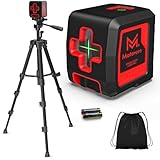
Overview: The Motovera LL-T2 represents a comprehensive laser leveling solution for professionals and ambitious DIYers who demand versatility across indoor and outdoor environments. This premium kit bundles a 100-foot green laser level with a dedicated tripod and extensive accessories, creating an out-of-the-box ready system that eliminates compatibility guesswork.
What Makes It Stand Out: Four adjustable brightness levels and pulse mode functionality extend usability to bright outdoor conditions where standard lasers fail. The included 25.6-inch tripod features a one-touch quick-release plate and 360° swivel capability, while the IP54 rating ensures durability against dust and water. The package completeness is exceptional, including a magnetic bracket, lifting base, and target plate.
Value for Money: Though priced higher than basic models, the value proposition is strong when accounting for the included tripod, magnetic bracket, lifting base, target plate, and carrying bag. For users requiring outdoor capability and professional features, purchasing these components separately would cost significantly more. The four brightness settings also conserve battery when maximum power isn’t needed.
Strengths and Weaknesses: Strengths include versatile brightness control, outdoor pulse mode, robust IP54 construction, comprehensive accessory package, and drop-resistant design. The green laser offers 4x red laser visibility. Weaknesses are the tripod’s modest 2kg load capacity and 25.6-inch maximum height, which may limit some applications. Initial calibration requirement adds a setup step, and the price may exceed casual user budgets.
Bottom Line: The ultimate choice for users needing a complete, field-ready leveling system for both interior and exterior projects. Professionals will appreciate the brightness control and durability, while serious DIYers get everything needed in one purchase.
4. Laser Level, RockSeed Cross Line Laser with Self-Leveling, Vertical and Horizontal Line, Rotatable 360 Degree, Carrying Pouch, Battery Included(Red)
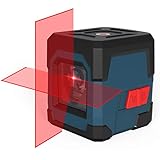
Overview: The RockSeed Red Laser Level is a compact, rugged cross-line laser built for durability-first users who need reliable basic functionality. This no-frills tool focuses on core leveling tasks while offering exceptional protection against job site hazards, making it suitable for contractors who prioritize tool longevity over advanced features.
What Makes It Stand Out: Its IP54 protection rating combines with 4-foot drop protection and shockproof housing, creating a tool that survives where others break. The 360° rotatable design allows flexible positioning without repositioning the entire unit, while the two-year warranty demonstrates manufacturer confidence. The manual mode enables angled projections for custom layouts like staircases.
Value for Money: Very competitively priced for a self-leveling laser, especially one with such robust protection. However, the magnetic bracket requires separate purchase, and no tripod is included, potentially increasing total cost. For users who already own mounting hardware, this represents excellent core value. The long-term warranty reduces replacement risks.
Strengths and Weaknesses: Strengths include outstanding durability, IP54 weather resistance, good ±1/8-inch accuracy at 30 feet, compact portability, and generous warranty coverage. The tool remains stable during operation. Weaknesses center on the red laser’s limited visibility compared to green alternatives, lack of included mounting accessories, and absence of brightness adjustment or outdoor pulse mode. Battery life is adequate but not exceptional.
Bottom Line: Perfect for construction professionals and tradespeople needing a tough, dependable laser that withstands daily abuse. If you prioritize durability over visibility and already have mounting equipment, this offers exceptional value. Casual users may prefer bundled kits.
5. Laser Level, RockSeed Cross Line Laser with Self-Leveling, Vertical and Horizontal Line, Rotatable 360 Degree, Carrying Pouch, Battery Included (Green with27 inch Tripod)

Overview: The RockSeed Green Laser Level builds upon its red sibling’s durable foundation by upgrading to a high-visibility green beam and including a 27-inch aluminum tripod. This iteration targets users who appreciated the original’s ruggedness but demanded better visibility and out-of-the-box mounting capability for immediate project starts.
What Makes It Stand Out: The green laser projection offers dramatically improved visibility over the red version while maintaining the same IP54-rated shockproof and waterproof construction. The included tripod provides immediate setup capability, featuring adjustable height and 360° rotation. The dual-mode operation preserves both self-leveling accuracy and manual flexibility for angled applications.
Value for Money: Priced moderately higher than the red-only version, the addition of a green laser and tripod justifies the premium. For users needing both enhanced visibility and mounting hardware, this bundled approach saves money compared to separate purchases. The two-year warranty adds long-term value and purchase confidence.
Strengths and Weaknesses: Strengths include superior green laser clarity, robust job site durability, included tripod for immediate use, reliable self-leveling with out-of-range alerts, and comprehensive warranty. The 110° beam coverage is adequate. Weaknesses involve the tripod’s limited 27-inch height, which may prove short for ceiling work, and lack of brightness adjustment or outdoor pulse mode found in premium competitors.
Bottom Line: An excellent mid-range choice for DIYers and professionals seeking durability plus visibility. If you need a tough laser level that works reliably indoors and includes essential mounting hardware, this green laser version delivers strong value without breaking the budget.
6. PREXISO Multi Surface Laser Level LED Light Vial, 30Ft Horizontal & Vertical Line Laser with Wall Mount Base, 2 Pins, 10 Sticker, 2 AA Batteries for Hanging Frames & Picture, Construction Wall Writing
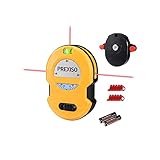
Overview: The PREXISO Multi Surface Laser Level is an entry-level tool designed for homeowners tackling basic DIY projects. It projects three laser lines—horizontal, vertical, and a 90° cross—onto surfaces up to 30 feet away. Powered by two AA batteries, this Class II laser device prioritizes simplicity with its one-switch operation and built-in bubble vials for manual leveling verification.
What Makes It Stand Out: The integrated angle dial (15°-75°) with LED illumination sets this apart from basic models, allowing for angled layouts in dark spaces. Its versatile wall mount base offers three fixing methods: pins for rough surfaces, adhesive strips for smooth walls, and pin holes for universal mounting. This hands-free flexibility is invaluable when marking surfaces solo.
Value for Money: Priced for budget-conscious consumers, this kit includes substantial accessories: wall mount base, pins, stickers, and batteries. While it lacks advanced features like self-leveling or rechargeable power, it delivers core functionality at a fraction of professional tool costs. The 30-foot range limits its use to smaller rooms, making it ideal for apartments and single-room projects rather than whole-house renovations.
Strengths and Weaknesses: Strengths include simple operation, versatile mounting options, LED-lit angle reference, and included accessories. Weaknesses are the manual leveling requirement, limited 30-foot range, AA battery dependency, and lack of outdoor visibility. The bubble vial system demands careful user calibration.
Bottom Line: Perfect for occasional picture hanging, shelf installation, and small-scale home projects. The PREXISO offers reliable basic performance with clever mounting solutions, though serious DIYers will quickly outgrow its limitations. For under $30, it’s a practical starter tool that eliminates guesswork without overwhelming beginners.
7. Fanttik D2 Pocket Green Laser Level, 100 ft Self-Leveling Cross Line Laser, Type-C Rechargeable, Rotatable 360 Degree, Pulse Mode, Magnetic Bracket, Carrying Pouch, for Picture Hanging and Home DIY

Overview: The Fanttik D2 packs professional-grade features into a pocket-sized form factor. This green laser level delivers a highly visible cross line visible up to 100 feet indoors, with self-leveling capability within 4°. Weighing just 0.56 pounds and protected by durable TPE rubber, it’s engineered for portability without sacrificing performance.
What Makes It Stand Out: The rechargeable 2200 mAh battery provides an impressive 10-hour runtime and 500+ charge cycles, eliminating disposable battery costs. Green laser technology offers four times the visibility of red lasers, while pulse mode extends range to 164 feet with a receiver (not included). The 360° rotatable magnetic bracket enables precise positioning on metal surfaces.
Value for Money: Positioned in the mid-range segment, the D2 justifies its price through rechargeable convenience, superior visibility, and robust construction. The included carrying pouch and magnetic bracket add value, though the lack of a tripod may require separate purchase for some applications.
Strengths and Weaknesses: Strengths include exceptional portability, bright green beam, long battery life, Type-C charging, and outdoor pulse mode. Weaknesses are limited to cross-line projection only (no 360° planes), potential visibility issues in direct sunlight without a receiver, and the absence of fine adjustment controls.
Bottom Line: An outstanding choice for DIY enthusiasts and professionals who prioritize mobility. The Fanttik D2 bridges the gap between toy-like budget lasers and bulky professional units, delivering reliable accuracy and convenience for picture hanging, tile work, and renovation projects where moving between locations is frequent.
8. VortecSys Laser Level Line Tool, Standard Cross Line Laser Leveler Beam Tool with Metric Rulers 8ft/2.5M, Multipurpose Laser Level Kit for Flooring & Tile Installation

Overview: The VortecSys Laser Level combines basic cross-line projection with an integrated 8-foot tape measure, creating a dual-function tool for streamlined workflows. This Class 3R laser projects horizontal, vertical, or cross lines while the triple calibration system (0°, 45°, 90° bubble vials) helps ensure accuracy before activation.
What Makes It Stand Out: The built-in measuring tape eliminates the need to carry separate tools, particularly useful for tile installation and cabinetry work where measuring and leveling occur simultaneously. The one-touch sliding selector enables instant mode switching, and dual-scale markings (imperial and metric) accommodate various project requirements.
Value for Money: Among the most affordable options, this tool delivers two-in-one functionality that budget-conscious DIYers will appreciate. However, the unspecified laser range (implied short distance) and Class 3R rating (higher power than Class II) suggest it’s designed for basic indoor tasks rather than professional applications.
Strengths and Weaknesses: Strengths include integrated tape measure, simple operation, triple bubble calibration, and extremely low price point. Weaknesses are limited range, manual leveling requirement, lack of self-leveling, basic accessories, and minimal outdoor capability. The 30-day warranty reflects its entry-level positioning.
Bottom Line: Ideal for homeowners tackling single-room projects like backsplash tiling, picture walls, or shelf installation. The VortecSys won’t replace professional equipment, but its clever integration of measuring and leveling functions makes it a practical, space-saving addition to any basic tool kit. Consider this if you value convenience over advanced features.
9. Laser Level with Tripod, Alloyman 4x360° Self Leveling Laser Level, Green Line Laser 4D Laser Leveler Tool with 2Pcs Lithium Batteries for Picture Hanging, Tile, Home Renovation, Indoor
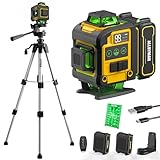
Overview: The Alloyman 4x360° Laser Level is a professional-grade tool that projects four full-plane green laser lines, providing complete room coverage from a single setup. With self-leveling within 3° and manual override capability, this Class II laser delivers ±1mm accuracy at 5 meters, suitable for demanding renovation and construction tasks.
What Makes It Stand Out: Four 360° planes (horizontal and three vertical) eliminate repositioning during large projects like complete room tiling or cabinet installation. The included 37.5-inch tripod and magnetic mount provide versatile positioning, while pulse mode extends range to 150 feet with an optional receiver. Two lithium batteries ensure continuous operation with quick swapping.
Value for Money: Though priced at the higher end of consumer lasers, it offers professional capabilities comparable to tools costing twice as much. The comprehensive kit—including tripod, two batteries, and magnetic mount—delivers immediate out-of-box functionality for serious DIYers and tradespeople.
Strengths and Weaknesses: Strengths include complete 360° coverage, high accuracy, self-leveling, outdoor pulse mode, dual batteries, and robust accessory package. Weaknesses are higher price point, potential complexity for beginners, and the need for a separate receiver to maximize outdoor range. The beeping alert may annoy some users.
Bottom Line: An exceptional investment for serious home renovators and professionals. The Alloyman’s four-plane projection dramatically improves efficiency for whole-room projects, making it worth every penny for those who regularly tackle tiling, framing, or built-in installations. Casual users may find it over-specified for occasional picture hanging.
10. Motovera Laser Level, 100 feet Self Leveling Laser Level, Green Cross Line Rotary Lasers, 4 Brightness Adjustment, Manual Self leveling and Pulse Mode, IP54 Waterproof Battery Carrying Bag Included

Overview: The Motovera Laser Level delivers a bright green cross line with unique brightness adjustability and weather-resistant construction. Projecting a 110° rotary laser pattern up to 100 feet, this IP54-rated tool handles both indoor precision work and challenging outdoor conditions with four selectable brightness levels.
What Makes It Stand Out: Four brightness modes optimize visibility while conserving battery power—critical for extended outdoor use. The IP54 dust and water resistance rating provides durability that most competitors lack. A 360° magnetic bracket with fine-tuning knobs enables precise micro-adjustments, while the 1/4"-20 thread ensures tripod compatibility.
Value for Money: Mid-to-high range pricing is justified by professional features like brightness control, weather sealing, and comprehensive accessories including two batteries and a carrying bag. The adjustable brightness extends practical battery life beyond standard green lasers, reducing long-term operating costs.
Strengths and Weaknesses: Strengths include adjustable brightness, IP54 rating, fine-tuning bracket, dual batteries, and pulse mode for outdoor use. Weaknesses are the limited 110° projection (not full 360°), lack of complete plane coverage, and absence of a tripod in the base package. The “rotary” designation may confuse buyers expecting a true rotary laser.
Bottom Line: A versatile workhorse for users working in variable lighting conditions or partially exposed environments. The Motovera excels for contractors moving between indoor and outdoor tasks, offering durability and adaptability that cheaper lasers can’t match. While not providing full-room coverage, its precision and robustness make it ideal for trim work, decking, and installation projects where weather resistance matters.
Why Every Beginner Should Start with a Budget Laser Level
The Learning Curve Advantage
Spending hundreds on a professional-grade tool before understanding its nuances is like buying a race car for your driver’s test. Budget laser levels under $100 offer the perfect training ground—they’re forgiving enough for mistakes yet accurate enough to teach proper technique. You’ll learn to trust the laser line, understand mounting dynamics, and recognize when you need advanced features, all without the anxiety of damaging a $400 instrument. This practical experience builds intuition that expensive tools can’t shortcut.
Cost-Effective Skill Building
Every dollar saved on your first laser level can fund other essential tools in your starter kit. More importantly, entry-level models force you to master fundamentals: stabilizing the tool, interpreting beam drift, and compensating for environmental factors. When you eventually upgrade, these hard-won skills transfer seamlessly, making you more proficient with premium equipment than someone who started at the top. The budget tier isn’t a compromise—it’s a calculated step in your development as a DIYer.
Understanding Laser Level Types: Dot, Line, and Rotary
Dot Laser Levels: Point-to-Point Precision
Dot lasers project single or multiple reference points onto surfaces, functioning like a high-tech plumb bob. They’re ideal for basic tasks like transferring layout points from floor to ceiling or aligning electrical boxes. For beginners tackling simple vertical alignment, a 3-point or 5-point model offers incredible value, often retailing under $50. However, their limitation becomes obvious when you need continuous lines for longer runs—the dots simply don’t connect.
Line Laser Levels: The Beginner’s Best Friend
Line lasers cast horizontal, vertical, or crosshair beams across entire walls, making them the Swiss Army knife of budget tools. A quality sub-$100 line laser handles 90% of typical DIY projects: hanging pictures, installing chair rails, or leveling kitchen cabinets. Look for models offering at least 15-foot visible range and both horizontal and vertical capabilities. The crosshair function proves particularly valuable for beginners, providing instant square reference without complex calculations.
Rotary Laser Levels: Beyond Budget Constraints
True rotary lasers—spinning 360-degree beams for full-room coverage—rarely dip below the $100 threshold while maintaining acceptable accuracy. The “rotary” models you’ll find in this price range are typically line lasers with a rotating head feature, not true rotary levels. For beginners, this distinction matters: don’t expect outdoor-grade, full-circle coverage. Instead, focus on line lasers with wide fan angles that simulate rotary functionality indoors where you need it most.
Decoding Laser Colors: Red vs. Green Visibility
When Red Lasers Make Perfect Sense
Red laser diodes cost significantly less to produce, which is why most sub-$100 tools use them. For indoor work in controlled lighting, red beams remain perfectly visible up to 20-30 feet—the sweet spot for beginner projects. They also consume less battery power, extending runtime during long sessions. Unless you have specific vision challenges or consistently work in bright conditions, red lasers deliver the best value proposition in the budget category.
The Green Laser Premium Explained
Green lasers appear 400% brighter to the human eye, but this visibility comes at a price—literally. Budget green laser levels under $100 exist, but they often compromise on other features like range, durability, or self-leveling quality to maintain the price point. They also drain batteries 2-3 times faster. For beginners, the green laser advantage only materializes in well-lit rooms or outdoor shade conditions. In most DIY scenarios, a bright red laser with pulse mode offers better overall value than a stripped-down green alternative.
Self-Leveling vs. Manual Leveling: What Beginners Need to Know
How Pendulum Systems Work
Most budget self-leveling lasers use a pendulum mechanism that gravity-suspends the diode array. When you power on the tool, the pendulum settles into true level within seconds, typically correcting up to 4 degrees of tilt. This automatic compensation saves beginners from tedious bubble-checking and reduces errors caused by uneven surfaces. However, pendulum systems add moving parts that can be damaged if dropped—handle them with more care than manual models.
The Bubble Vial Backup
Even self-leveling models include bubble vials for rough leveling before the pendulum takes over. Learning to read these vials quickly becomes second nature and serves as a crucial sanity check. If your laser indicates level but the bubble vial shows obvious tilt, you know something’s wrong—perhaps the pendulum is stuck or the tool is beyond its compensation range. This redundancy prevents costly mistakes and teaches you to verify, not just trust, your tools.
Accuracy Specs That Actually Matter for DIY Projects
Understanding IPM and Millimeter Ratings
Manufacturers love touting specs like “±1/4 inch at 100 feet,” but beginners rarely work at those distances. For sub-$100 tools, focus on the millimeter-per-meter rating instead—±2mm at 10m translates to about ±1/16 inch at 30 feet, more than adequate for hanging shelves or installing tile. Anything tighter than ±1.5mm/m enters professional territory and usually exceeds the $100 price point. Don’t overpay for accuracy you’ll never utilize in typical home projects.
Real-World Accuracy vs. Laboratory Conditions
Lab-tested accuracy assumes perfect temperature, no air movement, and pristine surfaces. Your garage in February looks nothing like that. Budget lasers may drift slightly as they warm up or when batteries deplete. The practical solution? Let your tool run for 2-3 minutes before marking critical points, and always use fresh batteries for precision work. This simple habit compensates for most sub-$100 tool limitations without requiring expensive upgrades.
Range Considerations: Matching Tool to Task
Indoor Project Boundaries
Most beginners overestimate how much range they need. A 30-foot visible indoor range covers entire rooms in typical homes, while 50 feet handles open-concept spaces. Budget lasers achieve this through beam intensity, not power, so expect shorter battery life at maximum range. For tasks like kitchen cabinet installation where you’re constantly within 10 feet of the tool, even a modest 20-foot range performs flawlessly. Prioritize beam clarity over raw distance claims.
Outdoor Limitations Under $100
Budget laser levels struggle outdoors—not from lack of power, but because sunlight overwhelms the beam. Even green lasers become nearly invisible beyond 10-15 feet in direct sun. Some sub-$100 models include pulse mode, which makes the beam detectable with a laser receiver, but receivers rarely come included and add $30-50 to your cost. For occasional outdoor use, work during golden hour or create shade. If outdoor projects dominate your plans, save for a contractor-grade kit instead of forcing a budget tool into unsuitable conditions.
Mounting Systems: The Unsung Hero of Usability
Tripod Thread Standards
Nearly every laser level under $100 includes a 1/4"-20 tripod thread—the same standard as cameras. This universality opens up affordable mounting options from photography suppliers, often cheaper than “specialized” laser tripods. A basic $15 camera tripod provides more positioning flexibility than many DIY-grade laser stands. Before buying, verify the thread is metal, not plastic; stripped threads render the entire tool useless for precision work.
Magnetic Brackets and L-Brackets
Strong rare-earth magnets let you slap the laser onto metal studs, ductwork, or custom steel brackets, freeing your hands for adjustments. Look for models with detachable magnetic bases that also include screw slots for wood mounting. The best budget setups combine both: magnet for quick positioning, screw mount for permanent reference. Avoid lasers with integrated, non-removable bases—they limit your flexibility in tight spaces.
Power Sources: Batteries, Rechargeables, and Longevity
AA vs. Lithium-Ion Trade-offs
AA-powered lasers offer instant battery swaps and universal availability, crucial when you’re mid-project and power dies. However, they chew through alkalines quickly—expect 6-10 hours of runtime. Lithium-ion models provide 15+ hours and include USB charging, but when they’re dead, you’re waiting for a recharge. For beginners, AA power offers reliability and lower long-term costs, especially if you invest in rechargeable AAs. The “best” choice depends on your patience for charging versus replacing batteries.
Auto-Shutoff Features That Save Money
Quality budget lasers include 20-30 minute auto-shutoff timers that prevent battery drain when you forget to power down. This feature alone can save $20+ in batteries annually. Some models add low-battery indicators that flash the beam rather than dimming it—this subtle alert prevents accuracy drift from voltage sag. When comparing options, prioritize these power-management features over marginal range improvements; they impact daily usability more significantly.
Durability Factors in Sub-$100 Tools
IP Ratings Explained for Workshop Conditions
Ingress Protection ratings reveal how well your laser withstands dust and water. Most budget models offer IP54—protected against dust ingress and water splashes. This suffices for indoor DIY but fails in heavy rain or dusty outdoor sites. Don’t pay extra for IP65+ ratings unless you’re working on construction sites; the added sealing often comes at the cost of features like manual mode or battery life. For garage and basement projects, IP54 provides the best feature-to-protection balance.
Shock Resistance Without the Premium Price
Budget lasers compensate for thinner housings with internal rubber dampening around the pendulum. The weak point is usually the laser window—polycarbonate protects better than glass but scratches more easily. Always store your laser in its included pouch; that thin fabric layer prevents 90% of common drops and impacts from causing damage. If a model doesn’t include a case, factor in $10-15 for a padded pouch—it’s cheap insurance that extends tool life beyond its price point.
Visibility Enhancements on a Budget
Pulse Mode and Receiver Compatibility
Pulse mode rapidly flashes the laser beam, making it detectable by a receiver even in bright conditions. While receivers add cost, some budget lasers include basic receivers in the box—read specs carefully. If purchasing separately, ensure the laser’s pulse frequency matches the receiver (most use 10-55 kHz). This combo effectively doubles your tool’s versatility without doubling the price, making it one of the smartest upgrades for ambitious beginners.
Tinted Glasses and Target Cards
Red or green tinted laser enhancement glasses filter ambient light, making the beam pop dramatically for under $10. Similarly, fluorescent target cards provide high-contrast surfaces that glow when hit by the laser. These low-tech accessories solve visibility problems more affordably than upgrading to a green laser. For beginners, this $15 investment in accessories often yields better results than stretching to a $90 green laser with fewer features.
Essential Features That Maximize Value
Lock-Off Mode for Angled Projects
Lock-off (or manual mode) disables the pendulum, letting you project angled lines for stairs, roof pitches, or decorative layouts. This feature transforms a basic level into a layout tool, expanding project possibilities exponentially. Verify the lock engages positively—some budget models use flimsy switches that slip during use. A solid lock-off mechanism indicates thoughtful design elsewhere in the tool.
Multiple Line Configurations
Cross-line lasers project both horizontal and vertical beams simultaneously, creating a perfect 90-degree reference. Advanced budget models add a second vertical line, allowing you to square rooms by projecting two perpendicular walls at once. For beginners, start with a single cross-line; the dual-vertical feature shines when you progress to full-room remodeling but adds complexity that can confuse early projects.
Common Beginner Applications and Tool Selection
Basic Home Decorating Tasks
Hanging picture frames, curtain rods, and gallery walls require only a simple cross-line laser with 15-foot range. The horizontal beam ensures level placement while the vertical line centers your layout. For these tasks, prioritize compact size and easy mounting over extended range. A $40-60 cross-line laser with magnetic base handles these jobs perfectly, leaving budget for a stud finder—another beginner essential.
Shelving and Cabinet Installation
Cabinet work demands accuracy within 1/8 inch across 8-10 foot runs. Here, a self-leveling line laser with at least 30-foot range becomes non-negotiable. The laser must maintain brightness across the entire wall to avoid squinting at dim beam ends. Look for models with adjustable brightness settings—you’ll want maximum intensity for long runs but can dial it back for close work to conserve battery.
Tile and Backsplash Projects
Tiling requires both horizontal and vertical references that remain stable while you work. A cross-line laser with lock-off mode lets you establish your main horizontal line, then lock the tool to project vertical grout lines without re-leveling. For subway tile patterns, this feature cuts layout time by 75%. Ensure the laser’s housing is narrow enough to sit close to the wall—bulky bodies force the beam too far out, creating parallax errors on uneven surfaces.
Mistakes Beginners Make When Choosing Budget Laser Levels
Overpaying for Unnecessary Range
Manufacturers tout 100-foot ranges that require receivers to see. Beginners working indoors never utilize this capability yet pay a $20-30 premium for it. Instead, invest that money in better mounting accessories or a tool with superior self-leveling speed. Match the laser’s effective visible range to your largest room’s diagonal measurement—anything beyond that is wasted money for indoor DIY.
Ignoring Mounting Compatibility
That $35 laser seems like a steal until you realize its non-standard base requires a proprietary $25 bracket. Suddenly, you’re $60 invested with limited flexibility. Always verify tripod thread size and magnetic base removability before purchasing. The best budget lasers embrace universal standards, letting you expand your system with affordable third-party accessories rather than locking you into an ecosystem.
Getting Professional Results from Entry-Level Equipment
Calibration Checks at Home
Even brand-new budget lasers can ship slightly out of spec. Test accuracy by setting up the laser 10 feet from a wall, marking the line, then rotating the tool 180 degrees and marking again. The lines should match within 1/16 inch. If not, most manufacturers allow DIY calibration via internal adjustment screws—accessible through the battery compartment on many models. This 5-minute check ensures your $80 tool performs like a $200 one.
Environmental Factor Management
Temperature swings affect pendulum stability. Let your laser acclimate to workspace temperature for 10 minutes before critical work. Air movement from heaters or AC vents can make beams appear to waver; block drafts with cardboard or position the laser upwind. These free, simple practices extract maximum accuracy from budget hardware, often outperforming expensive tools used carelessly.
Maintenance and Care for Longevity
Storage Best Practices
Always remove batteries during long-term storage to prevent corrosion. Store the laser in its case, but add a silica gel packet to absorb moisture—budget seals aren’t as robust as professional ones. Keep the tool in a climate-controlled space; garages that freeze overnight then bake to 90°F stress internal components and accelerate calibration drift. This attention to storage easily doubles a sub-$100 tool’s usable lifespan.
Cleaning Laser Diodes Safely
Dust on the diode window scatters the beam, reducing brightness. Use a camera lens brush or compressed air to remove particles—never wipe dry. For stubborn grime, dampen a microfiber cloth with isopropyl alcohol and gently swab the window. Avoid touching the diode directly; oils from your finger permanently degrade output. This delicate cleaning, done quarterly, maintains peak performance from budget optics.
Safety Considerations for First-Time Users
Eye Protection Protocols
Never look directly into the laser aperture, even though Class 2 lasers under $100 are considered “eye-safe” by blink reflex standards. Reflective surfaces like chrome or glass can bounce the beam unpredictably. When working at eye level, position the laser behind you or use a target card to intercept the beam. These habits become critical if you upgrade to higher-powered lasers later.
Reflective Surface Awareness
Mirrors, stainless steel appliances, and glossy tile can create secondary laser lines that confuse measurements. Identify reflective surfaces before starting and either cover them or adjust your setup angle. Some budget lasers include a “pulse” indicator light that flashes when the beam hits a receiver—this same indicator can alert you to unexpected reflections, serving as a built-in safety check.
Warranty and Support: What Budget Brands Offer
Standard Coverage Periods
Most sub-$100 lasers carry 1-2 year warranties, shorter than the 3-year coverage on premium tools. However, some manufacturers offer lifetime warranties on the laser diode itself—the most expensive component to replace. Read warranty terms carefully; “limited lifetime” often excludes calibration issues. For beginners, a solid 2-year warranty with clear calibration coverage terms beats a vague lifetime promise.
Manufacturer vs. Retailer Support
Big-box store brands often provide easier returns but limited technical support. Direct-to-consumer brands may offer phone support and calibration services but require shipping for repairs. Consider your comfort level: if you might need hand-holding, pay $10-15 more for a brand with known responsive support. The cheapest option isn’t the best value if you’re left stranded with a malfunctioning tool mid-project.
Frequently Asked Questions
What’s the realistic lifespan of a sub-$100 laser level with regular DIY use? With proper care—removing batteries, storing in a case, and avoiding drops—a quality budget laser level typically lasts 3-5 years of weekend-warrior use. The laser diode itself often lasts decades; it’s the pendulum mechanism and battery contacts that wear first. Many users find the tool outlasts their need for it as they upgrade to pro-grade equipment.
Can I use a budget laser level outdoors in bright sunlight? Not effectively. Even green lasers under $100 become nearly invisible beyond 10-15 feet in direct sun. For occasional outdoor use, work during overcast conditions or early morning/evening. Better yet, invest in a laser receiver compatible with your tool’s pulse mode—this combination extends usable range to 50+ feet regardless of lighting, though it adds $30-50 to your total cost.
How do I know if my laser level needs recalibration? Perform the 180-degree test: mark a line, rotate the tool, and mark again. If the lines differ by more than 1/16 inch at 10 feet, recalibration is needed. Also, trust your eyes—if cabinets you’ve installed using the laser look visibly off, the tool is likely the culprit, not your workmanship. Most budget lasers hold calibration for 1-2 years with normal use.
Are magnetic mounts reliable, or will my laser fall? Rare-earth magnets in quality budget lasers support 2-3 times the tool’s weight when attached to clean steel. The failure point is usually dirty or painted surfaces, not magnet strength. Always test the mount by gently tugging before releasing the tool. For critical overhead work, use a secondary safety strap. The magnet’s convenience far outweighs minimal risk when used responsibly.
What’s the difference between a $30 and $90 laser level in this category? The $60 difference typically buys you brighter beams (better diode quality), longer range, pulse mode, and more robust mounting options. A $30 laser works fine for picture hanging and small projects; a $90 tool handles cabinet installation and room-scale remodeling. Most beginners land in the $50-70 sweet spot, where self-leveling reliability and visibility meet without unnecessary pro features.
Should I prioritize green laser over self-leveling capability? Never. A self-leveling red laser delivers far more value than a manual green one. The time saved and errors prevented by automatic leveling outweigh visibility advantages in 95% of beginner projects. You can always enhance red laser visibility with tinted glasses or target cards, but you can’t manually level as accurately or quickly as a pendulum system.
Can I damage my laser level by using it in cold or hot conditions? Extreme temperatures won’t permanently damage the diode but will affect accuracy. Below 40°F, the pendulum moves sluggishly; above 90°F, plastic components expand, altering calibration. Always let the tool acclimate to room temperature for 10-15 minutes before use. For garage workshops, store the laser indoors and bring it out only when needed rather than leaving it in temperature extremes.
How important is IP rating for indoor-only use? For pure indoor use, IP54 is sufficient and saves you money over IP65+ models. The “5” dust protection prevents drywall dust from gumming up the pendulum, while the “4” splash resistance handles occasional water contact. Unless you’re working in a genuinely wet environment like a bathroom under construction, don’t pay extra for higher ratings—put that money toward better mounting accessories instead.
Will my smartphone’s camera accurately capture the laser line for photos? Smartphone cameras see laser beams more vividly than human eyes, often exaggerating brightness. This can be useful for documentation but misleading for checking alignment. Always verify visually or with a target card. Some apps filter laser wavelengths, further distorting appearance. Use phone photos to share project progress, not as a substitute for proper beam visibility assessment.
Is it worth buying a laser level combo kit with a tripod and glasses? Combo kits can save 20-30% versus buying accessories separately, but only if the included items match your needs. Many kits bundle flimsy tripods and low-quality glasses. Evaluate the accessories individually: a stable tripod with metal head is worth $20-25, decent enhancement glasses $10-15. If the kit costs $30 more than the laser alone and includes both, it’s good value. If it adds $50+, you’re better off selecting accessories à la carte.
See Also
- 10 Best Budget Laser Levels Under $100 for Homeowners in 2026
- 10 Best Budget Laser Levels Under $100 for DIYers in 2026
- 10 Best Budget Laser Levels Under $100 for Home Use in 2026
- 10 Best Budget Cross Line Laser Levels Under $80 for Home Use in 2026
- 10 Best Budget Dot Laser Levels Under $75 for Home Use in 2026