Table of Contents
Tackling weekend projects around the house shouldn’t require dropping hundreds of dollars on professional-grade tools. Whether you’re assembling flat-pack furniture, hanging curtain rods, or building a birdhouse, a reliable 12V cordless drill offers the perfect blend of portability, power, and price. The sweet spot for casual DIYers lies in the sub-$80 category, where manufacturers have packed surprising capability into compact packages that won’t strain your wallet or your forearm.
But navigating the budget drill landscape requires more than just scanning for the lowest price tag. Hidden within spec sheets and marketing claims are crucial differences that separate frustration from satisfaction. Understanding what features genuinely matter for light-duty tasks—and which ones are just flashy distractions—empowers you to make a smart investment that will serve you for years. This comprehensive guide cuts through the noise, giving you the expert framework to evaluate any budget 12V drill with confidence.
Top 10 12V Cordless Drills Under 80
Detailed Product Reviews
1. AVID POWER 12V Cordless Drill, 3/8-Inch Keyless Chuck, High-Speed 1400 RPM & 25+1 Torque Control, Electric Power Drill Kit with 21pcs Bits, Battery and Charger
, 3/8-Inch Keyless Chuck, High-Speed 1400 RPM & 25+1 Torque Control, Electric Power Drill Kit with 21pcs Bits, Battery and Charger](https://m.media-amazon.com/images/I/41N1lbM-51L._SL160_.jpg)
Overview:
The AVID POWER 12V Cordless Drill positions itself as a versatile workhorse for household tasks. With a 3/8-inch keyless chuck and 21 included bits, it targets DIY enthusiasts tackling furniture assembly, light drilling into wood up to 13/16-inch, and steel up to 3/8-inch.
What Makes It Stand Out:
The drill’s 25+1 torque settings paired with a 1,400 RPM high-speed motor deliver precise control across various materials. Its self-tightening chuck is a notable feature, providing exceptional bit grip without damaging shanks. The built-in LED light activates on demand, illuminating dark workspaces effectively.
Value for Money:
The kit includes a 2000mAh battery and 21 accessories, offering solid value for casual users. While the 3-5 hour charge time is lengthy, the runtime is respectable for light to medium tasks. The requirement to use only AVID POWER batteries limits flexibility but ensures compatibility.
Strengths and Weaknesses:
Strengths include excellent torque control, reliable battery life, user-friendly keyless chuck, and integrated LED lighting. Weaknesses are the proprietary battery system, absence of a carrying case, and extended charging period. The 22N·m torque is adequate for home use but may struggle with tougher materials.
Bottom Line:
This is a dependable choice for homeowners seeking a straightforward, capable drill for routine maintenance and DIY projects. Its precise controls and solid build make it ideal for beginners and intermediate users who prioritize ease of use over heavy-duty performance.
2. 12V Cordless Power Drill Driver With 2 Pack 1500mAh Lithium Battery – Torque 35Nm, 0-1450RPM Variable Speed, 3/8 Inch Keyless Chuck (Included Chuck), 25+1 Clutch, Fasten Function (Yellow)

Overview:
This 12V Cordless Drill Driver from Nidonde targets serious DIYers with professional-grade specifications. Delivering 35N.m of torque and featuring dual-bearing construction, it’s engineered for precision tasks from concrete drilling to fine woodworking and PCB assembly.
What Makes It Stand Out:
The dual-bearing mechanical architecture achieves exceptional accuracy with less than 0.05mm radial runout. Its intelligent dual-speed modulation (0-400/0-1450 RPM) with electronic clutch protection adapts to any material. The 6D quenched steel chuck system provides 4.0kN clamping force, while quad-protected lithium batteries with BMS ensure safety and longevity.
Value for Money:
With two 1.5Ah batteries and fast 90-minute charging, this kit offers premium features at a competitive mid-range price. The Grade-A copper core motor with triple heat dissipation channels promises durability that justifies the investment for frequent users who need reliable performance.
Strengths and Weaknesses:
Strengths include best-in-class torque, precision engineering, rapid charging, and robust battery protection. The micro-adjustable torque settings (0.2-5.5 N.m increments) offer unmatched control. Weaknesses include potentially overwhelming technical complexity for casual users and specifications that exceed typical home needs.
Bottom Line:
An outstanding choice for dedicated hobbyists and semi-professionals who demand precision and power. While overkill for occasional picture hanging, it excels in demanding applications where accuracy and reliability are paramount.
3. FADAKWALT Cordless Drill Set,12V Power Drill Set with Battery and Charger, Electric Driver/Drill Bits, 3/8’’ Keyless Chuck,21+1 Torque Setting, 180 inch-lbs, with LED Electric Drill Set (Green)

Overview:
The FADAKWALT Cordless Drill Set offers a compact 12V solution for everyday home tasks. With 180 inch-lbs (19 N.m) of torque and a 21+1 position clutch, it handles drilling in wood, metal, and plastics while preventing screw stripping through precise control settings.
What Makes It Stand Out:
Its ergonomic design emphasizes user comfort with a lightweight build and rubber grip for one-handed operation. The electric brake provides immediate stopping control, while the included magnetic flexible shaft reaches confined spaces. The LED light and brake combination ensures precise work in dark areas, setting it apart from basic models.
Value for Money:
The package includes 3 wood bits, 3 masonry bits, 10 screwdriver bits, a flexible shaft, and extension bar, offering comprehensive value. While the torque is modest, it’s sufficient for most household applications at an attractive price point for budget-conscious buyers seeking a complete kit.
Strengths and Weaknesses:
Strengths include excellent ergonomics, thoughtful accessory selection, LED illumination, and electric brake safety feature. The compact design minimizes fatigue during extended use. Weaknesses are the limited 650 RPM maximum speed, which slows drilling progress, and torque that may struggle with dense materials or large fasteners.
Bottom Line:
Ideal for apartment dwellers and homeowners needing a light-duty drill for occasional repairs and assembly. Its comfort-focused design and decent accessory bundle make it perfect for entry-level users prioritizing ease of use over raw power.
4. Cordless Drill: DEKO PRO 12V Power Battery Drill Set with Small Electric Drills and 3/8-inch Keyless Chuck with Portable Tool Set Gift Box

Overview:
The DEKO PRO 12V Drill distinguishes itself through extreme portability and simplicity. Weighing just 1.65 pounds, this drill targets casual users, particularly women and beginners, seeking a lightweight tool for basic DIY and home maintenance tasks without intimidating complexity.
What Makes It Stand Out:
The Type-C charging cable represents modern convenience, allowing charging via any USB output. Its stepless speed control and 800 RPM maximum prioritize safety and control over raw power. The compact gift box packaging makes it an excellent present, while the built-in LED improves visibility in dark spaces, addressing common user pain points.
Value for Money:
With 13 accessories including drill bits and screwdriver bits, this ultra-affordable kit delivers essential functionality. The 12V power is modest but adequate for drilling wood/plastic and driving screws. The universal charging capability eliminates proprietary charger hassles, adding practical value for cost-conscious consumers.
Strengths and Weaknesses:
Strengths include exceptional lightness, one-handed operation, modern Type-C charging, and beginner-friendly design. The forward/reverse switch simplifies bit changes. Weaknesses are limited torque and speed, restricting it to light-duty tasks only. The 1.5A charging cable may charge slowly, and the accessory quality is basic compared to professional sets.
Bottom Line:
Perfect for those who need an occasional-use drill without the heft and complexity of professional tools. It’s an ideal starter drill for apartment living, craft projects, and simple furniture assembly where convenience trumps power.
5. BIHOO Cordless Drill Driver Set 12V,3/8"Keyless Chuck Battery Drill Kit,2 Variable Speed and 43pcs Drills Bits for Home DIY

Overview:
The BIHOO Cordless Drill Driver Set positions itself as a complete home solution with 43 included pieces. This 12V kit targets DIY beginners needing everything in one package for household repairs, improvement projects, and basic maintenance tasks around the home or office.
What Makes It Stand Out:
The extensive accessory bundle includes not just bits but also screws, wall anchors, a flexible shaft, and even a cleaning brush head. The 25+1 torque settings with two-speed ranges (0-400/0-1600 RPM) provide versatility across materials and applications. The safety lock and one-touch operation enhance user confidence, particularly for novices.
Value for Money:
With 43 accessories at a competitive price point, this kit eliminates the need for separate purchases. The 1500mAh battery and fast charger provide reasonable runtime, though a second battery would improve continuous workflow. Everything arrives ready for immediate home use, representing strong bundled value for first-time buyers.
Strengths and Weaknesses:
Strengths include comprehensive accessory selection, dual-speed control, LED work light, safety features, and excellent packaging for gifting. The flexible shaft adds utility for tight spaces. Weaknesses are reliance on a single battery and variable accessory quality typical of all-in-one kits. The drill’s power is adequate for most tasks but may struggle with heavy-duty applications.
Bottom Line:
An outstanding starter kit for new homeowners or gift recipients. While serious DIYers may outgrow it, the convenience of having every necessary component in one box makes it perfect for tackling the most common household tasks without additional shopping.
6. Tegatok Cordless Drill Set,12V Power Drill Set with Battery and Charger, Electric Driver Drills Bits, 3/8’’ Keyless Chuck,18+1 Torque Setting with LED Electric Drills Set

Overview: The Tegatok 12V Cordless Drill Set targets budget-conscious DIYers seeking an all-in-one solution. Featuring an 18+1 torque setting system, 3/8-inch keyless chuck, and LED illumination, it covers basic drilling and driving needs. The kit bundles a battery, charger, and assorted bits for out-of-the-box functionality, positioning itself as a convenient entry point for novice users tackling occasional home projects.
What Makes It Stand Out: The brand heavily markets “precision engineering” and ergonomic design, claiming superior handling for tight spaces. However, these assertions lack quantifiable backing. The confusing mention of dual functionality as both “drill gun and traditional unit” seems like marketing fluff rather than a tangible feature. The tool appears compact and lightweight, which may benefit users with smaller hands.
Value for Money: Positioned at the entry-level price point, it offers reasonable value for occasional users. Competitors like Black+Decker provide more transparent specifications at similar prices. The absence of concrete torque and RPM data makes direct comparison difficult, potentially masking performance limitations that become apparent under medium loads.
Strengths and Weaknesses: Strengths include the comfortable grip, instant bit changes via keyless chuck, and adequate accessory inclusion. Weaknesses are vague technical specifications, potentially misleading product descriptions, and questionable long-term durability. The 18+1 clutch settings are modest compared to rivals offering 20+ or 25+ positions.
Bottom Line: A decent starter tool for light household tasks, but the opaque marketing and specifications should give discerning buyers pause. Consider only if price is the primary factor and demands are minimal.
7. AVID POWER Brushless Power Drill Set, 2-Speed Control, 3/8-Inch Keyless Chuck & 25+1 Position, 12V Electric Drill Cordless Driver Kit with 2000mAh Battery, Charger and 22pcs Accessories

Overview: The AVID POWER Brushless 12V Drill Set delivers serious performance in a compact package. With a brushless motor producing 28N·m torque, 25+1 clutch settings, and dual-speed ranges (0-400 & 0-1400 RPM), it handles diverse materials from wood to metal with authority. The 2000mAh battery and 22-piece accessory kit provide comprehensive capability for DIY enthusiasts and light professional use straight from the box.
What Makes It Stand Out: The brushless motor eliminates sparking, runs cooler, and prevents overheating shutdowns—critical advantages over brushed competitors. The extensive 25+1 clutch offers superior precision control. The flexible shaft accessory enables drilling in confined spaces, while the 2-speed transmission optimizes torque and speed for different applications. The safety benefits make it ideal for enclosed or sensitive environments.
Value for Money: Mid-range pricing reflects genuine technological advantages. The brushless motor alone justifies the premium, offering longer lifespan and better efficiency. With 22 accessories included, it represents strong value against brands like DeWalt or Makita that charge separately for such kits. The performance rivals drills costing significantly more.
Strengths and Weaknesses: Strengths include brushless safety and performance, excellent torque output, comprehensive accessory package, and LED work light. The proprietary battery system ensures quality control but limits cross-compatibility with other tools. The 3-5 hour charge time is slower than some fast-charging rivals. The absence of a tool case is a notable omission at this price point.
Bottom Line: An excellent choice for serious DIYers and professionals seeking brushless benefits without premium brand pricing. The performance-to-price ratio is outstanding, though battery exclusivity requires commitment to the AVID POWER ecosystem.
8. Brushless Cordless Drill Set,12V Power Drill Set with Battery and Charger, Electric Driver/Drill Bits, 3/8’’ Keyless Chuck,20+1 Torque Setting, 300 inch-lbs, with LED Electric Drill Set

Overview: This Brushless 12V Cordless Drill Set emphasizes raw power and durability, delivering 300 inch-lbs (35 N·m) of torque through its efficient brushless motor. With 20+1 clutch settings and variable speed (410-1360 RPM), it capably handles wood, metal, and plastic applications. The ergonomic rubber grip and LED light enhance user experience, while the magnetic base offers hands-free convenience for metalworking tasks. The kit positions itself as a complete home repair solution.
What Makes It Stand Out: The magnetic base is a genuinely innovative feature rarely seen in this class, allowing secure attachment to metal surfaces and freeing both hands for material handling. The electric brake provides immediate stopping power for enhanced safety and precision. The high torque output exceeds many competitors, positioning it as a heavy-duty 12V option rather than a lightweight hobby tool, suitable for more demanding DIY projects.
Value for Money: Offers compelling value for users prioritizing power and unique features. The brushless motor and magnetic base justify the moderate price premium over entry-level brushed models. However, the accessory count seems limited despite “starter set” claims, potentially requiring separate bit purchases that diminish initial savings.
Strengths and Weaknesses: Strengths include exceptional torque, brushless efficiency, innovative magnetic base, electric brake, and comfortable ergonomics. Weaknesses are ambiguous accessory details, potentially limited included bits, and a narrower speed range than some rivals. The 20+1 clutch, while adequate, trails the 25+1 offered by competitors like AVID POWER.
Bottom Line: Ideal for DIYers needing maximum 12V power and innovative features. The magnetic base alone may sway workshop users. Ensure the accessory kit meets your needs before purchasing, as the marketing promises more than the specs deliver.
9. Cordless Drill:DEKOPRO 12V Power Drill Set with Pink 800RPM Electric Drills with Tool Set Gift Box, Pink Drill Set for Women

Overview: The DEKOPRO 12V Pink Drill Set explicitly targets female DIYers with its distinctive colorway and lightweight 1.65-pound design. Delivering 800 RPM max speed with step-less variable control, it handles basic drilling in wood and plastic plus screwdriving tasks. The Type-C charging and 13-piece accessory kit offer modern convenience for entry-level projects and craft applications around the home.
What Makes It Stand Out: The one-handed operation design and ergonomic focus genuinely benefit users with smaller hands or less grip strength. Type-C charging eliminates proprietary adapters, using common phone chargers—a rare and practical feature. The gift box packaging makes it presentation-ready. However, the gendered marketing may alienate some users while attracting others seeking a less industrial aesthetic.
Value for Money: Budget pricing makes it accessible for occasional use. The included bits cover common sizes, and USB charging reduces additional accessory costs. Performance limitations restrict value for demanding tasks, but it’s fairly priced for light-duty applications. Comparable generic drills offer similar specs without the pink premium, though the charging convenience adds value.
Strengths and Weaknesses: Strengths include ultra-lightweight design, universal Type-C charging, LED light, and comfortable ergonomics. Major weaknesses are unspecified torque rating, low 800 RPM maximum speed limiting material versatility, and minimal 12V power for anything beyond basic tasks. The gendered marketing is polarizing and the single battery may frustrate during longer projects.
Bottom Line: Perfect for light home tasks, crafts, and users prioritizing lightweight design over power. The Type-C charging is genuinely convenient. Don’t expect heavy-duty performance, but it’s a capable, comfortable tool for its intended light-DIY niche.
10. BLACK+DECKER 12V MAX Cordless Drill/Driver, Battery and Charger Included (BDCDD12C)
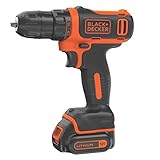
Overview: The BLACK+DECKER BDCDD12C represents the entry point into a trusted brand’s 12V lineup. This no-frills drill/driver features a keyless chuck, 11-position clutch, and LED work light in a compact, lightweight form factor. It includes battery and charger, providing the essential features needed for basic household drilling and fastening tasks without complexity or learning curve.
What Makes It Stand Out: The BLACK+DECKER name carries decades of reliability and service support that generic brands cannot match. Its simplicity is its strength—no confusing modes or overwhelming features for beginners. The 11-position clutch, while limited, provides adequate control for common screws. The ultra-compact design excels in tight spaces like cabinets or drawers where bulkier drills fail.
Value for Money: Extremely competitive pricing from a major brand makes this exceptional value for trust and support. You’re paying for proven engineering rather than specs alone. While lacking brushless motors or extensive accessories, it outlasts many cheap competitors. For occasional users, the brand warranty alone justifies the minimal investment over no-name alternatives.
Strengths and Weaknesses: Strengths include trusted brand reputation, simplicity, excellent ergonomics, and reliable after-sales support. Weaknesses are the basic brushed motor, minimal 11-position clutch limiting precision, unspecified torque/power ratings, and lack of included accessories beyond basics. Performance is modest but dependable for light-duty cycles.
Bottom Line: The ideal first drill or backup tool for any household. It won’t impress pros, but it reliably handles hanging pictures, assembling furniture, and light repairs. Buy it for the brand assurance and straightforward operation, not for power or features. Perfect for those who want a tool that just works without fuss.
Why a 12V Cordless Drill is the Sweet Spot for Light DIY Tasks
The 12V class occupies a unique position in the power tool hierarchy. Unlike bulky 18V or 20V models designed for contractors driving lag bolts all day, 12V drills prioritize maneuverability and reduced weight. For tasks under two hours that involve driving screws into softwoods, drilling pilot holes, or assembling furniture, this voltage provides ample power without the wrist fatigue that heavier tools cause. The real advantage lies in the power-to-weight ratio—most 12V drills weigh between 2-3 pounds with the battery, making them ideal for overhead work or tight spaces where a larger drill becomes unwieldy. In the under-$80 segment, you’re tapping into mature technology that manufacturers have refined over decades, meaning you get reliable performance without paying for pro-level durability you don’t need.
Decoding “Light Use”: What This Actually Means for Your Tool Choice
“Light use” is more than a vague marketing term—it’s a specific category of workload that directly impacts which features deserve your attention. Light use typically encompasses intermittent operation with adequate cool-down time, working with soft to medium-hardness materials, and projects that span minutes rather than hours of continuous runtime. Think of it as the difference between building a deck (heavy use) and hanging a picture frame (light use). Budget drills under $80 are engineered with this usage pattern in mind, often using lighter-duty components that perform excellently in bursts but would overheat under sustained professional loads. Recognizing your actual usage patterns prevents both underbuying and overpaying.
Typical Projects That Fall Under Light Use
Your weekend warrior drill will shine brightest on projects like installing cabinet hardware, assembling IKEA furniture, drilling into drywall for anchors, light woodworking with pine or cedar, and basic automotive tasks like removing interior panels. These applications demand precision and control more than raw power. The drill’s clutch becomes more critical than its maximum torque rating, and battery runtime matters less than quick recharge capability. Most homeowners complete these tasks in 15-30 minute sessions, giving the tool plenty of time to cool between uses.
When to Step Up to a More Powerful Drill
If your project list includes drilling through steel thicker than 1/8 inch, driving 3-inch deck screws repeatedly, or mixing thinset mortar with a paddle attachment, you’re crossing into heavy-use territory. Budget 12V drills lack the thermal mass and motor cooling to handle these tasks without premature failure. The $80 ceiling also means sacrificing metal gear housings and advanced overload protection found in pro models. Be honest about your project pipeline—spending $120 on an 18V kit might be cheaper than replacing a burnt-out budget drill after one ambitious project.
Key Features That Matter Most in Sub-$80 Drills
At this price point, manufacturers make calculated compromises. Your job is identifying which corners were cut intelligently versus which ones will haunt you later. Focus on non-negotiables like lithium-ion battery chemistry, a minimum 3/8-inch chuck capacity, and at least 15 clutch settings. Brushless motors are rare under $80, so expect brushed motors and plan accordingly—they’ll run hotter and wear faster but deliver adequate performance for light tasks. Pay special attention to the warranty terms; a one-year limited warranty is standard, but some brands offer two years, indicating greater confidence in their components.
Battery Voltage vs. Real-World Performance
Don’t confuse nominal voltage with actual power delivery. A 12V drill’s battery typically consists of three 3.6V lithium-ion cells in series, but under load, this drops to around 10.8V. Marketing departments round up, engineers round down. More telling is the battery’s amp-hour (Ah) rating, which determines runtime. In the sub-$80 category, expect 1.3Ah to 2.0Ah batteries. The higher number adds weight but lets you drive more screws per charge. For light use, 1.5Ah strikes the best balance—enough capacity for an afternoon of projects without making the drill feel unbalanced.
Amp-Hour (Ah) Ratings: The True Measure of Runtime
That 2.0Ah battery might sound impressive, but consider the charging time. Budget chargers often take 3-5 hours to replenish a dead battery, so a smaller 1.3Ah cell that charges in 60-90 minutes might keep you working more continuously if you buy a spare. Runtime also depends heavily on your task—driving 1-inch screws into pine consumes far less energy than drilling 1/2-inch holes in oak. A practical rule: each Ah provides roughly 30-40 minutes of intermittent light use. For most homeowners, a single 1.5Ah battery plus a spare covers any weekend project.
Chuck Capacity and Compatibility
The chuck determines what bits you can use, and capacity directly affects versatility. A 3/8-inch chuck is the minimum standard for 12V drills, accepting bits up to that diameter. Some budget models skimp with 1/4-inch hex chucks that only accept hex-shank bits—avoid these unless you exclusively drive screws. Keyless chucks dominate this price range, enabling tool-free bit changes, but check the gripping force. Cheaper chucks can loosen under vibration, causing bits to slip. Test this in-store if possible: insert a bit and try pulling it out by hand. If it moves easily, look elsewhere.
Torque Talk: Understanding Power Without Overpaying
Torque specs are the most abused numbers in drill marketing. Manufacturers love quoting maximum stall torque—the instant before the motor stops—which has little bearing on practical driving power. For light use, continuous torque matters more, but this spec is rarely published. Instead, look for drills offering 200-250 inch-pounds of maximum torque. Anything under 180 inch-pounds will struggle with 2-inch screws in hardwood, while claims above 300 inch-pounds in a sub-$80 12V drill are likely inflated or achieved at the expense of motor longevity.
Inch-Pounds vs. Newton-Meters: Making Sense of Specs
Most US brands use inch-pounds (in-lbs), while some imports list Newton-meters (Nm). The conversion is simple: 1 Nm ≈ 8.85 in-lbs. A drill rated at 28 Nm delivers about 248 in-lbs—solid power for the price. Don’t get dazzled by metric numbers that sound impressive. Focus on the clutch range instead: a good budget drill offers 15-20 clutch settings, with the lowest setting engaging at just 20-30 in-lbs for delicate work like installing hinge screws in particle board.
How Much Torque Do You Really Need?
For light use, 90% of tasks require less than 150 in-lbs. Driving a #8 screw into a wall stud needs about 80 in-lbs. The clutch’s job is to disengage drive before you strip the screw head or overdrive into the material. More torque becomes relevant only when drilling large holes (over 1/2 inch) or using spade bits. A drill that delivers smooth, consistent power at mid-range settings proves more valuable than one with a sky-high maximum torque number that you’ll never engage.
Speed Settings and Why Two is Better Than One
Variable speed triggers are standard, but true two-speed transmissions separate decent drills from frustrating ones. The mechanical speed selector changes the gear ratio, giving you high-speed drilling (0-1,500 RPM) and low-speed driving (0-400 RPM) ranges. This isn’t just about top speed—low gear multiplies torque, preventing motor strain. Single-speed drills force you to feather the trigger for control, which is imprecise and overheats the motor. Always verify the speed selector is mechanical, not just a marketing term for the variable trigger.
High-Speed Drilling Mode Explained
In high gear, the drill sacrifices torque for RPM, ideal for small diameter bits in wood and plastic. For light use, you’ll spend most time here drilling pilot holes and clearance holes. The sweet spot is 1,300-1,500 RPM—fast enough for efficiency but not so fast that it burns wood bits. Cheaper drills may hit 1,800 RPM but lack the torque to maintain that speed under load, causing stalling. Listen to the motor sound: a smooth whine that doesn’t drop significantly when you apply pressure indicates good power delivery.
Low-Speed, High-Torque Driving Mode
Low gear is where budget drills earn their keep. At 0-400 RPM, you get the control needed for driving screws without cam-out. The mechanical advantage also reduces motor heat buildup during tough tasks. Test this mode by driving a 2-inch screw into a 2x4. If the drill complains audibly or the battery indicator drops rapidly, the motor is undersized for even light-duty work. A well-engineered 12V drill should handle this test smoothly, though slowly.
The Battery Question: NiCad vs. Lithium-Ion in 2024
The NiCad vs. Li-ion debate should be settled by now, yet some retailers still clearance outdated NiCad models at tempting prices. Avoid them completely. Nickel-cadmium batteries suffer from memory effect, self-discharge, and are heavier than their lithium counterparts. Modern Li-ion cells in budget drills deliver consistent power until depleted, hold a charge for months on the shelf, and recharge quickly. The price difference is negligible now—manufacturers have fully transitioned. If you spot a “deal” on a NiCad drill, it’s not a drill worth owning.
Why Lithium-Ion Dominates Modern Budget Drills
Li-ion technology has matured to where even budget cells offer 300-500 charge cycles. For light use (charging once a week), that’s a 6-10 year lifespan. These batteries maintain voltage better under load, so your drill doesn’t get sluggish as the battery drains. The key spec is the discharge rate—look for batteries rated at 10C or higher, meaning they can deliver ten times their amp-hour rating in current. A 1.5Ah battery at 10C supplies 15 amps briefly, enough to prevent voltage sag during tough starts.
Understanding Battery Lifespan and Charge Cycles
Battery longevity depends on usage patterns. Deep discharges (running until dead) stress cells more than partial discharges. For light use, recharge when performance drops noticeably, not when the drill stops completely. Heat is the enemy—don’t charge a hot battery immediately after use; let it cool for 15 minutes. Store batteries at 40-60% charge in cool, dry conditions. Budget drills often lack sophisticated battery management systems, so these manual practices become critical for maximizing your investment.
Ergonomics and Weight: The Hidden Deal-Breakers
A drill that feels fine for 30 seconds in the store can become torturous during a 30-minute assembly session. Budget manufacturers often save money by using cheaper plastics and less refined grip molds. The ideal 12V drill balances just forward of the trigger, creating a neutral feel that reduces wrist strain. Weight distribution matters more than total weight—a 2.5-pound drill with a rear-heavy battery feels heavier than a 3-pound model with balanced weight.
Grip Design and Hand Fatigue
Look for rubber overmolding on the grip, not just textured plastic. The rubber should extend to the back of the handle where your palm rests. Finger grooves can help or hinder depending on hand size; smooth, contoured grips accommodate more users. Trigger reach is crucial—your index finger should comfortably access the full trigger travel without stretching. Some budget drills position the trigger too far forward, forcing a grip adjustment that reduces control.
Balance Point and Maneuverability
The balance point should sit directly under your index finger when holding the drill naturally. Test this by balancing the drill on one finger at the trigger’s midpoint. If it tips forward or backward significantly, you’ll fight it during use. Compact head length improves maneuverability in tight corners—look for drills under 7 inches from chuck to motor housing. For light use, you’ll often work inside cabinets or between studs where every inch matters.
Chuck Types: Keyless vs. Keyed for Home Use
Keyless chucks have become standard even on budget drills, and for light use, they’re superior. The ability to hand-tighten and release bits without hunting for a chuck key streamlines workflow. However, not all keyless chucks are equal. Single-sleeve designs (where one hand holds the drill while the other rotates the chuck sleeve) are faster than double-sleeve designs requiring two hands. Check the chuck’s minimum grip size—some cheap chucks won’t hold bits smaller than 1/16 inch, limiting your ability to drill tiny pilot holes.
Advantages of Keyless Chucks on Budget Models
The primary benefit is convenience, but there’s a mechanical advantage too: keyless chucks self-tighten under load in the correct rotation direction. When drilling, the chuck actually grips tighter as torque increases. Look for chucks with at least 12 internal jaws—the more jaws, the better the concentricity and grip. Budget drills often use 10-jaw chucks that are adequate but may show slight runout (wobble) with larger bits.
When a Keyed Chuck Still Makes Sense
Keyed chucks deliver higher clamping force, useful for heavy drilling with large bits that might slip in a keyless chuck. For light use, this is rarely necessary. The exception is if you plan to use hole saws or spade bits regularly—the flat shanks can loosen in keyless chucks. However, at under $80, any drill with a keyed chuck is likely an outdated model lacking other modern features. The slight grip advantage doesn’t outweigh the convenience factor for typical homeowner tasks.
The LED Light Feature: More Than Just a Gimmick
That tiny LED at the drill’s base transforms working in dim corners from guesswork to precision. In budget drills, light placement varies significantly. The best position is just above the battery, casting a shadow-free beam directly on the bit tip. Some models place the light below the chuck, creating a shadow from the bit itself. Test the light in a dark corner—does it illuminate the work area without glare? Also check if it stays on for 10-15 seconds after releasing the trigger, giving you time to inspect your work without fumbling for a flashlight.
Clutch Settings Demystified: Precision Driving on a Budget
The adjustable clutch is your insurance policy against stripped screws and damaged materials. It disengages the drive when torque reaches a set threshold, clicking audibly. For light use, clutch precision matters more than raw power. A good budget drill offers 15-20 clutch positions, with the lowest settings engaging at very low torque for delicate tasks. The clutch should click smoothly without grinding, and settings should be distinct enough that you can feel the difference between adjacent numbers.
How Many Clutch Positions Do You Actually Need?
More isn’t always better. Twenty clutch settings sound impressive, but if the first ten are too weak to drive even a small screw, they’re wasted. The useful range for light use spans approximately 20-150 in-lbs. A drill with 15 well-calibrated settings covering this range proves more valuable than one with 25 settings that cluster at the high end. The “drill” position (which locks the clutch) should engage positively and not slip under moderate load.
Preventing Stripped Screws and Overdriving
The clutch only works if you set it correctly. Start low and increase until the screw seats properly. For drywall, use the lowest setting that sinks the screw without breaking the paper face. In hardwood, increase gradually to avoid cam-out. Budget drills often have less refined clutches that engage less smoothly—listen for a clean click versus a gradual slip. The clean click indicates better mechanism quality and more predictable results.
Brand Landscape: What to Expect Under $80
The sub-$80 category includes legacy tool brands, house brands, and direct-to-consumer upstarts. Established names offer proven designs and better parts availability but may use older technology. Newer brands might pack more features but lack long-term reliability data. The key is understanding what each brand prioritizes at this price. Some focus on battery ecosystem compatibility, others on ergonomic design, and some simply on hitting the lowest possible price point. Research the company’s history in this segment—brands that have offered budget drills for decades have refined their cost-saving measures to maintain quality.
Established Manufacturers vs. Emerging Brands
Big names can leverage economies of scale, producing reliable motors and gearboxes at lower cost. Their budget lines often share DNA with pricier models, just with scaled-down components. Emerging brands might source premium cells from the same factories as the big players but save on marketing and distribution. The trade-off is support infrastructure—a lesser-known brand’s two-year warranty is worthless if they’re out of business in 18 months. Check online forums for repair stories; brands with active user communities often have better parts availability.
Warranty Realities in the Budget Segment
Read warranty terms carefully. “Limited lifetime” often covers only the tool body, not the battery or charger—components most likely to fail. A one-year full warranty on everything is actually more valuable for light use. Also investigate the return process: do you send it to a service center or return to the retailer? Some big-box stores offer 90-day satisfaction guarantees that trump manufacturer warranties for casual users. Keep your receipt and register the tool online immediately; many warranties require registration within 30 days.
The Accessory Ecosystem: Bits, Batteries, and Beyond
Your drill is only as capable as the bits you pair it with. Budget drills often come with starter bit sets that are universally mediocre. Plan to invest $15-20 in a quality bit set from a reputable brand. Look for sets with titanium-nitride coating for extended life and organized cases that keep bits accessible. The drill’s chuck determines what shank types you can use—most 3/8-inch chucks accept both round and hex shanks, but hex bits are more common and less prone to slipping.
Standardizing on Bit Types and Sizes
For light use, a set including #6, #8, and #10 driver bits plus 1/16-inch to 1/4-inch drill bits covers 95% of tasks. Phillips #2 is the universal screw head, but Torx (T15, T20) is gaining popularity for its resistance to cam-out. Square-drive (Robertson) bits are common in construction but less so in furniture assembly. Avoid cheap 100-piece sets with exotic sizes you’ll never use—quality over quantity serves you better. Magnetic bit holders are essential; they extend bit life by absorbing side loads that would otherwise stress the bit shank.
Interchangeable Battery Platforms: A Double-Edged Sword
Some brands design their 12V batteries to work across dozens of tools, from inflators to lights. This ecosystem approach seems attractive—buy one battery, power many tools. However, in the sub-$80 category, these platforms often use proprietary designs that lock you into that brand. If the brand discontinues the line or fails, your investment evaporates. For light use, a standalone drill with standard accessories offers more flexibility. You’re not buying into a system; you’re buying a tool that does one job well.
Safety Features That Shouldn’t Be Overlooked
Budget doesn’t have to mean barebones on safety. An electric brake stops the chuck within a half-second of trigger release, preventing overruns that can damage workpieces or injure fingers. This feature is now common even under $80 but verify it’s actually present—some models omit it to save pennies. Thermal overload protection prevents permanent motor damage by cutting power if internal temperatures exceed safe limits. While you shouldn’t intentionally push the drill to this point, it’s cheap insurance against accidental overloading.
Electric Brake Functionality
The brake works by shorting the motor windings when you release the trigger, creating resistance that stops rotation. Test it by running the drill at medium speed and releasing the trigger—the chuck should stop almost instantly. A slow coast-down indicates a weak or absent brake. This feature becomes crucial when removing screws; without it, the bit can cam out of the head as the drill spins down, damaging the fastener. It’s also a safety feature, preventing the drill from flopping around if you set it down while still spinning.
Overload Protection and Thermal Cutoffs
Budget drills use simple bimetallic strips that break the circuit when hot, then reset when cooled. More sophisticated models have electronic sensors. The practical difference is recovery time—thermal strips might take 15-20 minutes to reset, while electronic systems reset instantly. Check reviews for mentions of the drill “cutting out” during normal use; this indicates overly sensitive protection. A good system only activates under genuine strain, like drilling a 1/2-inch hole in hardwood with a dull bit.
Common Pitfalls When Shopping Budget Drills
The biggest mistake is fixating on a single spec while ignoring overall balance. A drill with 300 in-lbs of torque but a terrible clutch and uncomfortable grip will disappoint more than a well-balanced 220 in-lbs model. Another trap is assuming higher RPM equals better performance. Speed without torque just means faster stalling. Also beware of “kit creep”—that $69 drill becomes $89 after adding a spare battery you didn’t realize wasn’t included.
The “Too Good to Be True” Spec Sheet
When a $75 drill claims specs matching a $150 model, skepticism is warranted. Manufacturers achieve this by using peak ratings measured in ideal conditions—cold battery, minimal load, single burst. Continuous ratings tell the real story but aren’t advertised. Look for reviews that test sustained performance, like driving 100 screws consecutively. Also investigate the battery cells—reputable brands specify Samsung or LG cells, while no-name brands use generic cells with inconsistent quality. The spec sheet might look identical, but cell quality determines real-world longevity.
Ignoring the Weight of the Battery
Online listings often show tool-only weight, not weight with battery. A 2.0Ah battery adds nearly half a pound compared to a 1.3Ah cell. That weight sits at the back of the drill, shifting balance rearward. For overhead work, this matters enormously. Check the “shipping weight” if the tool weight seems suspiciously low—it usually includes the battery and charger, giving you a realistic number. Also consider how the battery inserts: slide-on designs are more compact but can wiggle, while stem-style batteries add length but lock securely.
Maintenance Tips to Maximize Your Investment
A $79 drill deserves the same care as a $179 model. Keep the vent slots clear of dust using compressed air monthly. Lubricate the chuck occasionally with a drop of machine oil on the jaws to prevent rust and ensure smooth operation. Clean battery contacts with a pencil eraser to maintain good electrical connection—corrosion here causes performance drops that mimic a failing battery. Store the drill in its case or on a shelf, not loose in a damp garage where moisture attacks the motor windings.
Proper Charging Habits
Lithium-ion batteries prefer partial discharges. Don’t run them completely dead every time; recharge at 20-30% remaining capacity. Avoid leaving batteries on the charger after they’re full—budget chargers often lack smart shutoff and will trickle charge, reducing cell lifespan. Charge at room temperature; charging a cold battery (below 40°F) can cause lithium plating, permanently damaging cells. If you use the drill infrequently, store batteries at 50% charge and top them up every three months.
Storage Best Practices
Remove the battery from the drill for long-term storage to prevent slow discharge and potential corrosion. Keep the drill in its original case, which protects it from dust and impacts. If you lose the case, a canvas tool roll prevents the chuck from banging into other tools. Hang the drill by its belt clip (if equipped) rather than tossing it in a drawer—this prevents damage to the chuck jaws and keeps it ready for quick use. In humid climates, toss a silica gel packet in the storage case to absorb moisture.
Making the Final Decision: A Value Framework
Price is what you pay; value is what you get. Calculate value by dividing the drill’s price by the number of projects you expect to complete in its lifespan. A $79 drill that handles 50 projects costs $1.58 per use—cheaper than renting. But a $59 drill that fails after 10 projects costs $5.90 per use and wastes your time. Factor in frustration costs: a drill that consistently cam-outs screws or dies mid-project has negative value. The sweet spot is finding a tool that disappears into your workflow, letting you focus on the project, not the tool.
The Total Cost of Ownership Calculation
Beyond purchase price, consider: spare battery ($25-35), decent bit set ($20), potential warranty shipping costs ($10-15), and your time value if it fails. A $79 drill needing a spare battery immediately becomes a $104 investment. Some kits include two batteries and a basic bit set—factor those inclusions when comparing prices. Also research battery replacement availability; a $50 drill becomes worthless if you can’t find a $30 replacement battery when the original dies. Brands with consistent battery platforms across years offer better long-term value.
When to Stretch Your Budget Slightly
If you find yourself thinking “I might need to do more than light work,” that’s your signal to consider the $89-99 tier. This jump often nets you a brushless motor (30% more runtime, cooler operation), metal gear housing (better durability), and a better charger. For light use, these upgrades are luxuries, but they transform the tool’s capability ceiling. It’s cheaper to spend $20 more now than $80 later when you outgrow your budget choice. The exception: if you’re certain your projects will never exceed hanging shelves and assembling furniture, stay firm at $79 and invest the savings in quality bits.
Frequently Asked Questions
Can a budget 12V drill handle drilling into brick or concrete? Only with a special masonry bit and realistic expectations. Use a carbide-tipped masonry bit at low speed, pulsing the trigger to let the bit cool. You’ll only manage shallow holes (up to 1/4-inch diameter, 1-inch deep) for plastic anchors. For anything more, rent a hammer drill. The 12V drill’s hammer function (if equipped) is too weak for real masonry work and will overheat the motor quickly.
How long should the battery last on a single charge for typical light use? A 1.5Ah battery drives approximately 150-200 1.5-inch screws into pine on a charge. For mixed drilling and driving, expect 30-45 minutes of continuous runtime, which translates to 2-3 hours of actual project time with normal start-stop use. If you’re only using the drill for 10-15 minutes weekly, the battery should last a month between charges.
Is it worth buying a second battery for a drill under $80? Yes, if you plan to use the drill for more than 30 minutes at a stretch or hate waiting for recharges. Budget chargers are slow (3-5 hours), so a spare battery keeps you working. However, if your projects are truly intermittent—15 minutes here, 20 minutes there—one battery is sufficient. Buy the spare battery later if you find yourself waiting for charges.
What’s the difference between a drill and a driver, and which do I need? A drill has a chuck that accepts various bits and typically offers higher speeds for drilling holes. An impact driver uses hex-shank bits and delivers rotational impacts for driving long screws but can’t drill precise holes. For light use, a drill is more versatile—you can both drill pilot holes and drive screws. Impact drivers excel at deck building but are overkill for furniture assembly and lack the finesse for delicate tasks.
Will my drill bits from a 20-year-old corded drill work in a new 12V model? If they have round shanks and are 3/8-inch or smaller, yes. Modern chucks grip standard round shank bits perfectly. However, older bits may be dull, and dull bits require more torque, stressing the smaller motor. Invest in a new set of titanium-nitride coated bits—they cut cleaner with less effort, making your budget drill feel more powerful than it is.
How do I know if a drill’s torque clutch is set correctly? Start with the clutch at a low number (5-7 out of 20). Drive a test screw into scrap material. If the clutch clicks before the screw is flush, increase the number by 2-3 and try again. Repeat until the screw seats properly without stripping. For drywall, you want the screw head just below the paper surface without tearing. For hardwood, stop when the head is snug but not crushing the wood fibers.
Are brushless motors worth the extra cost in budget drills? For pure light use, no. Brushless motors add $30-50 to the price but only provide 20-30% more runtime and slightly more power. Since you’re not using the drill continuously, the benefits are marginal. The money is better spent on quality bits and a spare battery. Brushless becomes valuable only if you’re pushing the drill near its limits regularly or value the cooler operation for comfort.
What’s the best way to store a cordless drill long-term? Remove the battery, clean dust from vents with compressed air, and store in the original case in a climate-controlled area. Apply a drop of oil to the chuck jaws. Store batteries at 50% charge, not full, and check them every three months, recharging if they’ve dropped significantly. Avoid attics and sheds where temperature extremes degrade lithium cells. A basement shelf or closet is ideal.
Can I use my drill as a screwdriver for small electronics or precision work? Only with extreme caution and the right accessories. The drill’s minimum speed (even in low gear) is too fast for small screws. Use a magnetic bit holder with a long shaft to add flex and reduce torque transmission. Set the clutch to its lowest setting and practice on scrap first. For electronics, consider a dedicated precision screwdriver set—drills are simply too powerful and lack the finesse for #0 and #00 screws.
Why does my drill smell hot after use? Is this normal? A slight warm, electrical smell is normal for brushed motors—the carbon brushes create dust and heat during operation. However, a sharp, acrid smell or visible smoke indicates overheating. Let it cool completely before using again. If the smell persists on light tasks, the motor is undersized or failing. Budget drills run hotter than premium models, but they shouldn’t be uncomfortable to hold or smell like burning plastic after driving a dozen screws.
See Also
- 10 Best Budget Cordless Drill Drivers Under $80 for Light Use
- 10 Best Budget Cordless Drills Under $100 for Light Projects
- 10 Best Budget Cordless Hammer Drills Under $150 for Weekend Warriors
- 10 Best Value 12V Cordless Drills for Apartment Maintenance in 2026
- 10 Best Value 12V Cordless Drills for Everyday Home Use in 2026