Table of Contents
When you’re tackling hardened steel stock, titanium alloys, or advanced composite materials in 2026, the difference between a frustrating slip and a precision operation often comes down to one critical workshop component: your bench vise. This isn’t the cast-iron dinosaur your grandfather bolted to his workbench decades ago. Today’s engineering demands have transformed this fundamental tool into a sophisticated workholding system that directly impacts your project quality, safety, and efficiency.
The modern landscape of bench vises reflects the materials revolution happening in manufacturing, automotive, and aerospace industries. As workpieces become tougher and tolerances tighten, understanding the nuanced mechanics, material science, and design innovations behind these tools isn’t just helpful—it’s essential. Whether you’re equipping a professional fabrication shop or upgrading a serious home garage, this comprehensive guide will arm you with the technical knowledge to select a vise that genuinely secures the toughest materials without compromise.
Top 10 Bench Vises For Tough Materials
Detailed Product Reviews
1. VEVOR Bench Vise, 5" Jaw Width, 5" Max Jaw Opening Multipurpose Vise with 360° Swivel Locking Base, 2.8" Throat Depth, Heavy Duty Ductile Iron Workbench Vise with Anvil, for Clamping Round Pipes
 Round Pipes](https://m.media-amazon.com/images/I/41CA57NJbKL._SL160_.jpg)
Overview: The VEVOR 5-inch bench vise positions itself as a mid-sized workhorse for both professional shops and serious home workshops. Constructed from ductile iron and delivering nearly 4,500 lbs of clamping force, this tool promises durability and serious holding power for metalworking, woodworking, and general fabrication tasks.
What Makes It Stand Out: This vise’s 360-degree rotating base sets it apart from fixed competitors, allowing effortless workpiece repositioning without unclamping. The integrated pipe jaws (0.59-2.36" range) transform it from a simple clamp into a dual-purpose tool, while the generous anvil surface provides a stable platform for light forging and shaping operations. The four-bolt mounting system ensures rock-solid stability under maximum load.
Value for Money: Priced competitively against premium brands like Yost or Wilton, this VEVOR model delivers comparable specifications at a fraction of the cost. You’re getting professional-grade clamping force, swivel functionality, and pipe-clamping capability typically found in vises costing twice as much. The included anvil adds further utility that would otherwise require separate tools.
Strengths and Weaknesses: Strengths: Exceptional clamping force for its size; versatile pipe-jaw integration; smooth 360° rotation with secure locking; durable ductile iron construction; large anvil work surface.
Weaknesses: 5-inch maximum opening limits capacity for larger projects; substantial weight requires robust bench support; base rotation mechanism may develop play over time with heavy use.
Bottom Line: This vise represents outstanding value for metalworkers, mechanics, and dedicated DIYers who need reliable, versatile clamping power without premium-brand pricing. While not quite industrial-grade, it exceeds expectations for its price point and will serve most workshops admirably for years.
2. VEVOR Bench Vise, 6-inch Jaw Width 5.9-inch Jaw Opening, 360-Degree Swivel Locking Base Multipurpose Vise w/Anvil, Heavy Duty Ductile Iron Workbench Vise w/Bolts & Nuts, for Drilling, Pipe Cutting

Overview: The VEVOR 6-inch bench vise builds upon its smaller sibling with enhanced jaw width and thoughtful accessory inclusion. Forging 60,000 PSI ductile iron into a robust package, this vise generates the same 4,496 lbs clamping force while offering improved ergonomics and out-of-the-box readiness for demanding workshop applications.
What Makes It Stand Out: The comprehensive kit distinguishes this model—magnetic jaw pads protect delicate workpieces, while included mounting hardware eliminates frustrating mid-installation hardware store runs. The enlarged 2.9" x 3" anvil provides more working surface for shaping tasks. The powder-coated finish adds rust resistance, extending service life in humid environments. Pipe capacity expands to 2.9 inches, accommodating larger stock.
Value for Money: This model commands a modest premium over the 5-inch version but justifies it through included accessories and enhanced specifications. The magnetic jaw pads alone represent a $15-20 value, while the upgraded anvil and corrosion resistance add long-term durability. Compared to name-brand alternatives, you’re still saving 40-50% while sacrificing little in performance.
Strengths and Weaknesses: Strengths: Complete ready-to-install kit; superior rust protection; larger anvil surface; expanded pipe capacity; magnetic pads protect finished surfaces; smooth swivel operation.
Weaknesses: Jaw opening (5.9") doesn’t match the 6" width, limiting some applications; base lock could be more robust; serrated jaws may mar soft materials without pads.
Bottom Line: For users seeking maximum convenience and expanded capacity, this 6-inch VEVOR vise delivers exceptional completeness. The included accessories and thoughtful design touches make it ideal for professionals who value time savings and DIYers wanting a complete solution in one purchase.
3. VEVOR Bench Vise 6 Inch, Double Swivel Rotating Heavy Duty Vise Head/Body Rotates 360°,Pipe Vise Bench Vices 30Kn Clamping Force,for Clamping Fixing Equipment Home or Industrial Use

Overview: This VEVOR 6-inch vise introduces a unique double-swivel mechanism that sets it apart from conventional bench vises. With both the head and base offering 360-degree rotation, it provides unprecedented positioning flexibility for complex workpieces. The 30 kN clamping force (approximately 6,744 lbs) represents a significant upgrade in holding power over standard models.
What Makes It Stand Out: The dual-rotation capability allows users to adjust the vise head independently from the base, enabling optimal workpiece orientation without compromising mounting stability. This proves invaluable for welding, fabrication, and intricate assembly work. Precision-ground lead screws ensure smooth operation under maximum load, while grooved jaws excel at gripping both flat stock and round materials securely.
Value for Money: While priced higher than single-swivel models, the added versatility justifies the premium for specialized applications. You’re essentially getting positioning flexibility that would normally require a separate swivel base or complex fixtures. For metal fabricators and welders, this dual-action design can dramatically improve workflow efficiency and reduce setup time.
Strengths and Weaknesses: Strengths: Unmatched positioning flexibility; highest clamping force in category; precision-machined components; excellent for pipe and round stock; independent head rotation.
Weaknesses: Complex mechanism adds weight and cost; 5-inch opening smaller than jaw width suggests; more moving parts increase maintenance needs; overkill for simple clamping tasks.
Bottom Line: This vise targets serious metalworkers, welders, and fabricators who prioritize positioning versatility above all else. While excessive for basic woodworking or light-duty tasks, its dual-swivel design and formidable clamping force make it an invaluable asset for professional shops tackling complex, multi-angle projects.
4. AV Steel 4-1/2" Bench Vise with 240° Flexible Swivel Locking Base and Anvil, High-Strength Multi-Purpose Workbench Vise Heavy-Duty, Cast Iron Workbench for Woodworking, Drilling, Pipe Cutting

Overview: The AV Steel 4-1/2-inch bench vise takes a different approach, prioritizing compact design and lifetime warranty assurance over raw clamping power. Weighing just 10.56 pounds, this vise suits mobile workstations and smaller benches where space and weight constraints matter. Despite its modest 2,250 lbs clamping force, it punches above its weight class in build quality.
What Makes It Stand Out: The lifetime warranty demonstrates exceptional manufacturer confidence, particularly notable for a budget-friendly vise. The 240-degree swivel base provides adequate positioning flexibility while maintaining simplicity. Its integrated pipe jaws and anvil offer genuine multi-functionality in a compact footprint. The high-strength cast iron construction ensures durability despite the lighter weight.
Value for Money: This represents one of the best entry-level values available. While clamping force trails heavier competitors, the warranty protection eliminates long-term risk. For hobbyists, occasional users, or those with space limitations, it provides essential vise functions without over-investment. Professional users might find capacity limiting, but DIYers gain peace of mind.
Strengths and Weaknesses: Strengths: Lifetime warranty coverage; lightweight and portable; affordable price point; adequate for light-to-medium tasks; simple, reliable mechanism.
Weaknesses: Significantly lower clamping force; limited 3.75-inch jaw opening; 240° rotation less versatile than 360°; smaller anvil surface; not suitable for heavy-duty metalworking.
Bottom Line: Perfect for homeowners, hobbyists, and occasional DIYers seeking reliable clamping without workshop-grade demands. The lifetime warranty makes it a risk-free investment for light-duty applications. However, professionals and serious metalworkers should opt for higher clamping force and capacity.
5. Mophorn Screw Bench Chain Vise 1/8 to 5-Inch Pipe Capacity, Heavy Duty Bench Chain Pipe Vise with Crank Handle, Neoprene-Coated Jaw, Cast Iron Material Ideal for a Variety of Pipes

Overview: The Mophorn Screw Bench Chain Vise serves a specialized niche, excelling at securing pipes and cylindrical stock from 1/8-inch to 5-inch diameter. Unlike traditional jaw vises, this chain-driven design wraps securely around irregular shapes, making it indispensable for plumbing, automotive exhaust work, and metal fabrication involving tubing. The cast iron base and neoprene-coated jaws ensure durability and surface protection.
What Makes It Stand Out: The expansive 5-inch pipe capacity dwarfs conventional bench vise pipe jaws, handling large-diameter tubing that standard vises cannot grip effectively. The chain mechanism distributes clamping pressure evenly, preventing deformation of thin-walled pipe. Neoprene jaw coating protects finished surfaces from marring. The crank handle provides mechanical advantage, reducing operator fatigue during repetitive clamping operations.
Value for Money: For pipe-specific tasks, this tool offers unmatched capability at a reasonable price point. Traditional vises with similar pipe capacity cost significantly more and grip less effectively. While limited to cylindrical work, it eliminates the need for multiple pipe clamps and fixtures. The heavy-duty chain and cast construction ensure longevity, delivering excellent ROI for plumbers and metalworkers.
Strengths and Weaknesses: Strengths: Massive pipe capacity; even pressure distribution; surface-protecting neoprene jaws; efficient crank operation; compact mounting footprint; excellent for round stock exclusively.
Weaknesses: Useless for flat stock or general clamping; chain mechanism requires periodic adjustment; limited to pipe/tube work; not a substitute for a traditional bench vise.
Bottom Line: This is a specialized tool, not a general-purpose vise. For plumbers, automotive technicians, and metalworkers primarily handling pipe and tubing, it’s an essential, high-value addition. However, it should complement—not replace—a standard bench vise in any well-equipped workshop. Purchase only if pipe work dominates your projects.
6. Bench Vise, 6" Jaw Width, Table Vise For Workbench,2-in-1 Multi-Purpose Heavy Duty Bench Vice With Two Multifunctional Jaws, 270° Swivel Base Home Vise for Woodworking, Welding and DIY
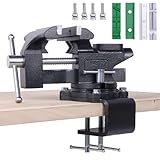
Overview: This 6-inch bench vise targets DIY enthusiasts and home workshop users seeking versatility without permanent installation. Weighing 17.92 pounds with a 3.6-inch maximum jaw opening, it handles medium-sized projects across woodworking, welding, and general repair tasks. The high-strength cast iron body and heat-treated steel jaws provide adequate durability for non-professional use.
What Makes It Stand Out: The dual-jaw system sets this vise apart—aluminum jaws with V-grooves grip round and irregular shapes, while rubber jaws protect delicate materials like plastic and glass. The clampable base eliminates drilling, securing via dual screws to surfaces up to 2.3 inches thick. A 270° swivel base offers reasonable positioning flexibility.
Value for Money: Positioned in the mid-range category, this vise delivers excellent versatility for its price. The 2-year unconditional replacement warranty adds significant peace of mind. While professional-grade vises offer higher clamping forces, this model’s interchangeable jaws and portable mounting make it more versatile than similarly priced fixed-base alternatives.
Strengths and Weaknesses: Pros include the innovative no-drill clamping system, versatile jaw options, good warranty coverage, and respectable swivel range. Cons are the modest 3.6-inch opening limiting workpiece size, relatively light weight reducing stability under heavy hammering, and unspecified clamping force suggesting moderate pressure capacity.
Bottom Line: Ideal for home workshops and DIYers needing flexibility without bench modification. The dual-jaw system and clampable base make it exceptionally versatile for light-to-medium tasks, though professionals will want heavier-duty options.
7. Forward CR80A 8 Inch Bench Vise Heavy Duty Vice with Anvil and 190 Degrees Swivel Base (8")

Overview: The Forward CR80A is a professional-grade 8-inch bench vise built for serious metalworking and heavy-duty applications. With 12,000 pounds of clamping force and a 9-inch jaw opening, it handles substantial workpieces with authority. Constructed from 60,000 PSI ductile iron, this 8-inch vise is engineered for durability in demanding workshop environments.
What Makes It Stand Out: The extraordinary clamping force and premium materials distinguish this vise from consumer-grade options. Integrated pipe jaws accommodate diameters from 1/2" to 3-1/2", while the large reinforced anvil provides a sturdy surface for hammering and shaping. The replaceable serrated jaws ensure long-term grip performance.
Value for Money: While commanding a premium price, the CR80A delivers professional-tier capabilities that justify the investment for serious users. Comparable industrial vises often cost significantly more. The robust construction and 12,000-lb rating mean this tool will outlast and outperform cheaper alternatives, making it economical over time for daily use.
Strengths and Weaknesses: Strengths include massive clamping power, superior ductile iron construction, versatile pipe-jaw integration, and a substantial anvil work surface. The 190° swivel base, while functional, falls short of the 360° rotation offered by some competitors. Weight and mounting requirements demand a sturdy workbench.
Bottom Line: A top-tier choice for professional tradespeople and dedicated hobbyists tackling heavy-duty metalwork. The exceptional clamping force and durable build make it worth every penny for users who need unwavering reliability.
8. PONY 4 Inch Heavy Duty Bench Vise 4400LBS Clamping Force, Pro Workshop Workbench Vise with 360-Degree Rotatable Base and Anvil, 4-Inch Jaw Opening and Width for Woodworking, Drilling, Pipe Cutting
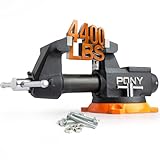
Overview: The PONY 4-inch vise packs professional features into a compact footprint suitable for workshops where space is premium. Delivering 4,400 pounds of clamping force from its 6,000 PSI ductile iron construction, this vise handles serious tasks despite its smaller size. The 360° rotatable base and integrated anvil maximize functionality in tight workspaces.
What Makes It Stand Out: Full 360-degree rotation provides unmatched positioning flexibility compared to limited-swivel competitors. The dustproof enclosed rear design extends lifespan by preventing debris infiltration, while the round guide bar ensures smooth operation. Replaceable pipe jaws and U-shaped steel components add versatility and longevity.
Value for Money: This vise commands a slightly higher price than basic 4-inch models but delivers professional-grade features that justify the cost. The complete rotation capability and dustproof design are typically found on more expensive units. Included mounting hardware adds convenience and value.
Strengths and Weaknesses: Pros include the full 360° swivel, robust clamping force for its size, durable ductile iron build, dustproof protection, and multi-functional jaws. The primary limitation is the 4-inch jaw opening, which restricts workpiece size. The compact design may lack the mass needed for heavy hammering tasks.
Bottom Line: An excellent compact vise for users prioritizing maneuverability and professional build quality. Perfect for small workshops, garage setups, and tasks requiring frequent repositioning. The 360° base makes it worth the premium over fixed-position alternatives.
9. WORKPRO Bench Vise, 4-1/2" Vice for Workbench, Utility Combination Pipe Home Vise, Swivel Base Bench for Woodworking

Overview: The WORKPRO 4.5-inch bench vise positions itself as a versatile, entry-level option for home users and small workshops. With 2,204 pounds of clamping force and gray iron construction, it handles light-to-medium duty tasks including woodworking, pipe cutting, and basic metalworking. The 240° swivel base provides reasonable positioning flexibility for general use.
What Makes It Stand Out: This vise emphasizes accessibility and ease of installation, making it ideal for beginners. The multi-jaw design securely grips both flat stock and pipes without surface damage. The generous anvil area relative to its size adds utility for shaping and light hammering tasks.
Value for Money: Among the most affordable options in its class, this vise delivers solid performance for casual users. While gray iron isn’t as durable as ductile iron, the construction is adequate for intermittent home use. The price point makes it accessible to DIYers who need functionality without professional-grade investment.
Strengths and Weaknesses: Strengths include budget-friendly pricing, easy installation, versatile jaw design, and stable operation. Weaknesses are the modest clamping force, gray iron construction (less durable than ductile), limited 3.75-inch opening, and 240° swivel (less than full rotation). Not suitable for heavy-duty professional work.
Bottom Line: A practical choice for homeowners and hobbyists tackling occasional projects. Delivers reliable performance for light-duty tasks at an attractive price. Serious users should invest in heavier-duty models, but for general home use, it represents excellent value.
10. Work IQ Tools 360° Rotating Bench Vise with 5" Jaw Pads - Versatile Woodworking & Pipe Vise for Home Improvement Projects - Compatible with Work Table Workbenches & IQ Connect Accessories

Overview: The Work IQ Tools vise introduces revolutionary articulating ball-and-socket technology to traditional bench vises. Featuring 5-inch jaw pads and hybrid hardened steel/cast aluminum construction, this vise prioritizes positioning flexibility and accessory integration for modern makers. The system handles up to 130 ft-lbs of torque while maintaining precision.
What Makes It Stand Out: Infinite 360° positioning via the ball joint surpasses conventional swivel bases. The IQ Connect ecosystem allows integration of work lights, magnifying glasses, and phone holders, creating a customizable workstation. Double-sided jaws with textured rubber grip both flat stock and pipes securely without marring surfaces.
Value for Money: This innovative vise commands a premium price but delivers unique capabilities unavailable elsewhere. For users who value ergonomic positioning and accessory integration, the cost is justified. Traditionalists focused purely on clamping force may find better value in conventional heavy-duty vises.
Strengths and Weaknesses: Pros include unparalleled positioning freedom, smart accessory compatibility, lightweight portability, and non-marring jaws. Cons are the unproven long-term durability of the ball joint mechanism, potentially less stability than cast iron vises for heavy hammering, and higher cost. The torque rating doesn’t directly translate to traditional clamping force specs.
Bottom Line: Perfect for tech-savvy DIYers and woodworkers who prioritize flexibility and workspace customization over raw clamping power. The articulating design and accessory ecosystem make it a game-changer for intricate projects, though heavy-duty metalworkers should look elsewhere.
Understanding Bench Vise Anatomy and Mechanics
Before diving into specifications, you need to understand how each component contributes to holding power. A bench vise is essentially a force multiplication system, and weak links in this chain determine overall performance when stressing modern materials.
Jaw Design and Material Composition
The jaw assembly is your primary contact point, and its design reveals much about a vise’s intended application. Serrated jaws with 3-5 teeth per inch provide aggressive grip on raw stock but will marr precision surfaces. For 2026’s demanding applications, look for jaws with reversible or replaceable faces—smooth, diamond-pattern, or custom-machined options. The backing material behind the jaw face matters equally; ductile iron offers 60,000 PSI tensile strength versus cast iron’s 30,000 PSI, directly translating to how much clamping force you can apply before deflection occurs.
Spindle Mechanisms: TPI and Force Multiplication
The spindle’s threads per inch (TPI) determine both speed and mechanical advantage. Coarse 4-TPI spindles close quickly but require more handle torque to generate pressure. Fine 8-TPI threads offer superior force multiplication—critical when working with ultra-hard materials that need consistent, massive pressure without operator fatigue. In 2026’s professional vises, you’ll find dual-lead spindles that provide both rapid approach and high-pressure fine adjustment in one mechanism.
Base Types and Workbench Integration
The base isn’t just a mounting plate; it’s the foundation of your workholding system. Heavy-duty models feature integrated ribbing that distributes stress across your workbench. For tough materials, avoid vises with simple four-bolt patterns. Instead, seek out models with six-bolt mounting systems or those that integrate with T-slot table systems common in modern fabrication environments.
Material-Specific Considerations for 2026
Different materials react to clamping pressure in unique ways, and what works for mild steel will fail spectacularly with Inconel or carbon fiber composites.
Hardened Steel and Ferrous Metals
These materials require immense clamping force—often exceeding 3,000 PSI—to prevent movement during aggressive machining. The vise must have minimal jaw deflection, typically less than 0.001" under full load. Look for models with full-length guide bars and boxed construction. The jaw material should be hardened to at least HRC 45 to prevent the workpiece from embedding into the vise itself.
Aluminum and Non-Ferrous Alloys
While softer than steel, these materials present their own challenges. High clamping pressure can deform precision-machined surfaces. Modern vises address this with aluminum-specific jaw inserts featuring softer brass or copper faces that conform slightly without marring. The key is consistent pressure distribution—avoid vises with single-center spindles that create pressure points.
Composite Materials and Plastics
Carbon fiber, G10, and reinforced polymers crush under traditional vise pressure. 2026’s advanced vises incorporate pressure-limiting mechanisms or pneumatic assist systems that cap maximum PSI. Look for models with extremely wide jaw faces—6 inches or more—to spread clamping force over larger surface areas. Some professional units now include integrated vacuum hold-down ports for hybrid clamping approaches.
Force Distribution and Clamping Pressure Science
Understanding the physics behind clamping prevents costly mistakes and material waste. It’s not just about how tight you can crank the handle.
PSI Ratings and Real-World Applications
Manufacturers often advertise clamping force in pounds, but PSI (pounds per square inch) tells the real story. A vise generating 5,000 pounds of force across 4 square inches of jaw contact creates 1,250 PSI—sufficient for most steel work. However, that same force concentrated on a 1-inch square workpiece becomes 5,000 PSI, potentially deforming the material. For 2026’s tough alloys, target vises that can deliver 2,000-4,000 PSI consistently across the entire jaw face.
Preventing Workpiece Distortion
The “three-point contact” principle is outdated for modern materials. Instead, seek vises with “progressive clamping” where pressure builds from the center outward. This prevents the “hourglass” distortion common when clamping thin, flat stock. Some premium models feature independently adjustable jaw segments that conform to irregular shapes while maintaining parallel clamping force.
Jaw Width and Opening Capacity: Right-Sizing Your Vise
Oversizing your vise wastes money and bench space; undersizing guarantees failure. For securing tough materials, the rule of thumb is: jaw width should be at least 1.5 times the thickness of your typical workpiece. A 6-inch jaw width handles most heavy-duty applications, but consider that opening capacity often matters more. Modern fabrication frequently involves long, thick bars where you need 8-10 inches of opening. However, excessive opening capacity without corresponding jaw depth creates leverage problems—the workpiece can pivot and pry the jaws apart.
Stationary vs. Swivel Bases: Mobility vs. Stability Tradeoffs
Swivel bases offer 360-degree rotation and 90-degree pivoting, invaluable for complex weldments or multi-angle machining. However, each moving joint introduces potential flex. For absolute rigidity with tough materials, stationary bases outperform every time. The compromise? Look for swivel bases with zero-play locking mechanisms that use tapered pins or wedge locks rather than simple set screws. In 2026, premium vises feature hydraulically-locked swivel bases that become monolithic once secured.
The Role of Replaceable Jaw Systems and Customization
The days of permanently mounted jaws are over. Modern vises treat jaws as consumable components. Key systems to evaluate: quick-change dovetail mounts, magnetic jaw holders, and integrated T-slots for custom fixtures. For exotic materials, you’ll want the ability to machine your own jaw faces from Delrin, aluminum, or even hardened steel. Some advanced models include built-in coolant channels through the jaw assembly for thermal management when machining heat-sensitive superalloys.
Anvil Features and Secondary Work Surfaces
A robust anvil surface transforms your vise into a multi-function workstation. For tough materials, the anvil should be hardened and replaceable, not just a cast projection. Look for integrated upsetting blocks, hardy holes for tooling, and surface flatness within 0.005". The best 2026 designs feature anvil surfaces that are dead-flat with the vise jaws when fully open, allowing you to use the entire assembly as a reference surface for layout work.
Durability Metrics: What “Professional Grade” Actually Means
Marketing terms like “professional grade” are meaningless without technical substantiation. Here’s what separates industrial tools from consumer pretenders.
Ductile Iron vs. Cast Iron Construction
Ductile iron contains nodular graphite structures, giving it nearly double the tensile strength and triple the impact resistance of gray cast iron. When securing tough materials, cast iron vises can crack under sudden shock loads—like when a heavy workpiece drops into the jaws. Ductile iron bends rather than shatters. Check specifications: ductile iron is ASTM A536 graded, while cast iron is ASTM A48. The price difference is substantial but justified when failure isn’t an option.
Heat Treatment and Surface Hardening Processes
Quality vises undergo induction hardening on jaw faces and spindle nuts, typically to HRC 50-55. This prevents the jaws from “mushrooming” under pressure. However, excessive hardening can make cast iron brittle. The sweet spot involves selective hardening only on wear surfaces while leaving the body tough. In 2026, laser hardening allows precise control, creating hardness depth profiles that optimize both wear resistance and core toughness.
Mounting Solutions for Heavy-Duty Applications
Bolting a heavy vise to a flimsy bench defeats its purpose. For tough materials, your mounting system must be considered part of the vise. Professional installations use 3/4" grade 8 bolts with backup plates underneath the bench. Some modern vises feature integrated leveling systems with adjustable feet that compensate for uneven benches. For mobile applications, consider vises designed for 8020 extrusion systems or those with integrated forklift pockets for repositioning 200+ pound units.
Ergonomic Considerations for Extended Use Sessions
Applying 100+ foot-pounds of torque repeatedly destroys wrists and shoulders. Modern vises address this through longer handles with composite grips, gear reduction systems, and even pneumatic assist. The handle length should allow you to generate full clamping force without straining—typically 12-16 inches for heavy-duty models. Some 2026 designs incorporate torque-limiting clutches that prevent over-tightening while ensuring adequate pressure, protecting both operator and workpiece.
Safety Features and Best Practices
Tough materials store enormous energy when deflected under clamping pressure. A catastrophic vise failure can launch shrapnel. Look for integrated spindle guards that contain the nut if it fractures. Safety stop mechanisms prevent the movable jaw from separating completely from the guide rails. Always verify the vise has a 4:1 or higher safety factor on its rated load. Never use cheater bars on handles—this is a sign your vise is undersized for the application.
Maintenance Protocols for Maximum Longevity
A $1,000 vise becomes a $100 vise without proper care. Daily: clean chips from the ways and apply light oil. Weekly: check mounting bolt torque—vibration loosens them. Monthly: inspect spindle threads for wear or contamination; these should be protected with way oil, not grease that traps grit. Annually: disassemble and inspect the nut for wear; most quality vises have replaceable nuts. For vises used in composite work, check for plastic residue buildup that can affect parallelism.
Budget vs. Performance: Making Smart Tradeoffs in 2026
The price spread is dramatic: $150 hobby vises to $3,000+ industrial units. For occasional tough material work, a $400-600 mid-range ductile iron vise with replaceable jaws offers 80% of premium performance. Where you cannot compromise: jaw deflection specifications, spindle diameter (minimum 1.25" for heavy work), and base rigidity. Save money on features you won’t use—like swivel bases if you always work square to the bench. Invest in quality over capacity; a smaller, precision vise outperforms a large, sloppy one every time.
Emerging Technologies Reshaping Bench Vise Design
The bench vise is experiencing a quiet revolution. Staying current with these innovations ensures your shop remains competitive.
Smart Clamping Systems and Pressure Feedback
Integrated load cells now provide real-time PSI readouts on digital displays. Some systems connect to shop tablets, logging clamping force for quality control documentation. Pressure feedback prevents both under-clamping (which causes chatter) and over-clamping (which distorts parts). While still premium features, these systems will become standard by 2027 and are worth the investment for production environments.
Advanced Composite Jaw Materials
Metal jaws aren’t always optimal. New ceramic-matrix composite jaws provide incredible wear resistance while being non-marring. For delicate but tough materials like titanium honeycomb structures, these jaws distribute pressure perfectly. Some are even embedded with strain gauges for real-time deflection monitoring. While expensive, they pay for themselves by eliminating workpiece damage on high-value parts.
Frequently Asked Questions
What’s the minimum clamping force needed for machining hardened steel?
For hardened steel above 45 HRC, you need at least 2,500 PSI of consistent clamping pressure to prevent micro-movement during cutting. This typically requires a vise rated for 6,000+ pounds of clamping force with jaws minimum 4 inches wide. Insufficient pressure causes tool chatter, poor surface finish, and premature tool wear.
Can I use a standard bench vise for titanium alloys?
Standard vises often lack the pressure control needed for titanium. The material’s low modulus of elasticity means it deforms easily under high point loads. You need a vise with wide, flat jaws (6+ inches) and preferably pressure-limiting features. Without these, you’ll create indentations that compromise the workpiece and waste expensive material.
How often should I replace vise jaws?
Replace jaws when serrations become rounded or when you measure more than 0.001" wear across the face. For shops running daily production, this is typically every 12-18 months. Keep a spare set on hand; jaw failure during a critical job is costly. With replaceable jaw systems, the swap takes under 5 minutes.
Are swivel bases accurate enough for precision work?
Only if they feature zero-play locking mechanisms. Most swivel bases have 0.002-0.005" of movement even when locked, unacceptable for precision milling. For tight tolerances, use a stationary base or invest in a vise with wedge-lock or hydraulic-lock swivel systems that achieve less than 0.0005" deflection.
What’s the difference between static and dynamic clamping force?
Static force is the pressure when stationary; dynamic force accounts for vibration and impact during machining. A vise might hold 5,000 PSI static, but drop to 3,000 PSI under hammering or heavy milling cuts. For tough materials, you need high dynamic force retention—look for vises with preloaded spindle nuts and minimal backlash.
Should I choose a larger vise than I think I need?
Oversizing creates more problems than it solves. A vise too large for your workbench introduces flex, and the weight makes it impractical to operate. Match the vise to your typical workpiece size plus 20% capacity buffer. A 5-inch jaw width handles 95% of heavy-duty applications perfectly.
How do I prevent galvanic corrosion between vise jaws and aluminum workpieces?
Use non-conductive jaw inserts made from Delrin or UHMW polyethylene. Alternatively, apply a light coat of anti-seize compound to the workpiece contact areas. Some 2026 vises offer anodized aluminum jaw faces specifically for this purpose, eliminating the dissimilar metal reaction entirely.
Is ductile iron worth the price premium over cast iron?
For tough materials, absolutely. Cast iron vises can fracture when clamping heavy, hard stock due to impact loading. Ductile iron’s superior tensile strength (60,000 vs 30,000 PSI) and impact resistance means it won’t crack under shock loads. The cost difference pays for itself the first time you avoid catastrophic failure.
What’s the best way to mount a vise to a mobile workbench?
Use a mounting plate system with 6-8 grade 8 bolts and a 1/2" steel backup plate. The plate should be welded to the bench frame, not just bolted. For true mobility, consider vises with integrated mounting feet designed for 8020 extrusion, allowing quick repositioning while maintaining rigidity.
How do temperature fluctuations affect vise accuracy?
Cast and ductile iron expand at approximately 6.5 micro-inches per inch per degree Fahrenheit. In an unheated shop with 50°F temperature swings, a 6-inch vise can vary 0.002" in jaw parallelism. For precision work in variable environments, allow the vise to normalize to shop temperature before critical setups, or invest in temperature-compensated models with laminated construction that minimizes thermal growth.
See Also
- 10 Best Bench Vises After 6 Months of Testing in 2026
- Best Bench Vises for Metalworkers: 10 Expert Picks for 2026
- Top 10 Best Bench Vises for Precision Projects in 2026
- 10 Best Bench Vises for Precision Metal Fabrication in 2026
- 10 Best Bench Vises for Woodworking Benches This Year