Table of Contents
Finding the perfect band saw for your small workshop is like discovering a secret weapon that transforms how you work with wood, metal, or plastic. Unlike their massive industrial cousins that dominate factory floors, today’s compact band saws pack serious cutting power into footprints that respect your limited square footage. As we look toward 2026, the evolution of these machines has reached an exciting intersection where space-saving design meets professional-grade performance, making it the ideal time to upgrade your workshop’s capabilities.
Whether you’re crafting intricate curves in fine furniture, resawing lumber into book-matched panels, or slicing through non-ferrous metals for custom hardware, the right band saw becomes your most versatile cutting companion. But with manufacturers constantly innovating and specifications that can read like engineering textbooks, making an informed decision requires more than comparing horsepower numbers. This guide cuts through the marketing noise to examine what truly matters when selecting a band saw that will serve your creative ambitions without overwhelming your workspace.
Top 10 Band Saws For Small Workshops
Detailed Product Reviews
1. WEN 9-Inch Band Saw, 2.8-Amp Benchtop (BA3959)
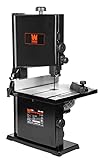
Overview: The WEN BA3959 is an entry-level benchtop band saw designed for light-duty woodworking and DIY projects. This compact machine offers a 2.8-amp motor capable of 2,500 FPM blade speed, making it suitable for cutting stock up to 3-1/2 inches deep and 9 inches wide. The saw accommodates standard 59-1/2-inch blades ranging from 1/8 to 3/8 inches, providing versatility for both curved and straight cuts. Its work table measures 12-1/4 x 11-7/8 inches and tilts up to 45 degrees for bevel cuts.
What Makes It Stand Out: This model distinguishes itself through its comprehensive accessory package at a budget price point. Unlike many competitors that sell essentials separately, WEN includes a rip fence, miter gauge, dust port, and even a 1/4-inch blade right out of the box. The adjustable blade guard with ball-bearing supports ensures smooth operation, while the 2-year warranty provides peace of mind rarely seen in this price category. Its compact footprint makes it ideal for small workshops or garage setups where space is premium.
Value for Money: Positioned firmly in the budget tier, the BA3959 delivers exceptional value for hobbyists and occasional users. While professional woodworkers will find its 2.8-amp motor underpowered for heavy resawing, the sub-$200 price point makes it an accessible entry to band saw functionality. Comparable machines from brands like Ryobi or Craftsman typically cost 20-30% more while offering similar performance. The included accessories alone represent nearly $50 in savings versus purchasing them separately.
Strengths and Weaknesses: Strengths include its affordable pricing, complete accessory bundle, compact design, and generous warranty. The blade guard system is surprisingly robust for the price. Weaknesses center on the modest motor power that struggles with hardwoods over 2 inches thick, limited resaw capacity, and plastic components that may wear faster than metal alternatives. The table size, while adequate, can feel cramped for larger workpieces.
Bottom Line: The WEN BA3959 is an excellent starter band saw for DIY enthusiasts and light-duty woodworkers. It provides all essential features without breaking the bank, though serious woodworkers will quickly outgrow its limitations. For its intended audience, it’s a smart purchase that delivers reliable performance.
2. WEN Band Saw with Stand, 10-Inch, 3.5-Amp, Two-Speed (BA3962),Black
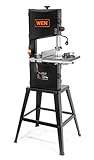
Overview: The WEN BA3962 represents a significant step up from its 9-inch sibling, offering a floor-standing design with enhanced capabilities for serious hobbyists. Its 3.5-amp motor powers a 10-inch throat capacity, enabling cuts up to six inches deep and 9-3/4 inches wide. The two-speed operation (1,520 or 2,620 FPM) allows users to optimize cutting performance for different materials, while the spacious 14-1/8 x 12-1/2-inch cast aluminum work table provides stable support for larger projects.
What Makes It Stand Out: The dual-speed functionality is the headline feature, allowing slower speeds for metal and plastic cutting while enabling faster speeds for efficient wood ripping. The included heavy-duty stand eliminates the need for a separate workbench, positioning the saw at ergonomic height. WEN’s 3-in-1 dust port accommodates various hose sizes, and the integrated work light improves visibility in dim workshops. The ability to accept blades up to 1/2-inch wide significantly improves resaw capability versus the 9-inch model.
Value for Money: At roughly double the price of the BA3959, this model offers substantially more capability per dollar. The stand alone would cost $75-100 separately, making the package price compelling. While not competing with professional-grade saws costing $800+, it occupies a sweet spot between disposable benchtop units and serious floor machines. The two-year warranty and cast aluminum table add long-term value that cheaper stamped-steel tables cannot match.
Strengths and Weaknesses: Strengths include the versatile two-speed system, deeper cutting capacity, stable stand, cast aluminum table, and integrated lighting. The 3.5-amp motor handles 4-inch hardwood resawing adequately. Weaknesses include a table that could be larger for its class, a stock blade that requires immediate upgrading for fine work, and some plastic knobs that feel cheap. The lower speed setting, while useful, still runs faster than ideal for ferrous metals.
Bottom Line: The BA3962 is an ideal choice for dedicated DIYers ready to move beyond entry-level tools. It offers genuine versatility with its two-speed design and respectable capacity, making it a workshop workhorse that won’t require immediate upgrading as skills advance.
3. DEWALT 20V MAX Band Saw, 5" Cutting Capacity, Integrated Hang Hooks, Portable, For Deep Cuts, Bare Tool Only (DCS374B)
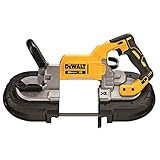
Overview: DEWALT’s DCS374B is a professional-grade portable band saw built for job site versatility and deep cutting applications. This cordless powerhouse runs on the 20V MAX battery platform (sold separately) and delivers an impressive 5-inch cutting capacity that rivals many corded portables. The tool-less blade change lever and variable speed trigger provide on-the-fly adjustments, while the integrated LED work light with 20-second delay ensures precision in dark corners and enclosed spaces where this tool excels.
What Makes It Stand Out: The 5-inch capacity is class-leading for a cordless portable, enabling electricians and plumbers to cut 4-inch pipe in a single pass. The integrated hang hook is a simple but brilliant feature, allowing the saw to be safely suspended from scaffolding or joists without handle damage. DEWALT’s legendary build quality shines through the reinforced housing and protected switches designed for harsh environments. The variable speed control offers unmatched versatility, from slow, controlled cuts in stainless steel to aggressive ripping through EMT conduit.
Value for Money: As a bare tool typically priced around $300, the DCS374B requires significant battery investment, pushing total cost near $400-450. However, for professionals already invested in the 20V MAX ecosystem, it’s exceptional value compared to corded alternatives like Milwaukee’s Deep Cut. The productivity gains from cordless operation justify the premium, though hobbyists will find better value in benchtop models. The three-year limited warranty and one-year free service contract protect the investment.
Strengths and Weaknesses: Strengths include outstanding cutting capacity, cordless convenience, rugged construction, tool-less blade changes, and superior LED lighting. The ergonomic design reduces fatigue during overhead cuts. Weaknesses include the high bare-tool price, substantial weight (15 lbs with battery), and the fact that batteries and charger add significant cost. The variable speed trigger can be twitchy at low speeds until broken in.
Bottom Line: This is the portable band saw for professionals who demand cordless freedom without sacrificing capacity. While overkill for occasional DIY use, it’s a game-changer for tradespeople making daily cuts in challenging locations. The investment pays for itself in productivity.
4. 8 in Band Saw, ExploreHorizon 0-45 Tilting Range, 3A & 1800RPM Pure Copper Motor Bandsaw, Benchtop Band Saw with Fence and Miter Gauge, for Woodworking Aluminum Plastic

Overview: The ExploreHorizon 8-inch benchtop band saw targets budget-conscious makers seeking multi-material versatility. Powered by a 3A pure copper motor spinning at 1,800 RPM, this saw handles wood, aluminum, plastic, and even copper with its 55-5/16-inch blade. The cutting capacity reaches 3-1/2 inches at 90 degrees and 2 inches at 45 degrees, while the Q235 steel work table measures 11.81 x 11.81 inches. A double safety switch system and integrated dust collection brush aim to enhance user experience.
What Makes It Stand Out: The pure copper motor construction is unusual at this price point, potentially offering better heat dissipation and longevity than cheaper aluminum-wound alternatives. The double safety switch provides an extra layer of protection, particularly valuable for beginners. The dust brush on the wheels is a thoughtful touch that extends blade life and reduces workspace cleanup. Its ability to handle non-ferrous metals straight out of the box broadens its appeal beyond typical woodworking applications.
Value for Money: Typically priced under $150, this saw competes directly with the lowest-tier benchtop models while offering some premium features. The multi-material capability eliminates the need for separate saws for light metal work, representing solid value for makers working across mediums. However, the unknown brand reputation and limited warranty support create risk. Compared to established brands like WEN, you’re trading proven reliability for marginal cost savings and some unique features.
Strengths and Weaknesses: Strengths include the copper motor, safety features, multi-material capability, low price, and effective dust management. The compact size suits small workshops. Weaknesses include questionable long-term durability, vague warranty terms, limited cutting height, and a table that’s smaller than competitors. The 1800 RPM speed is slower than ideal for efficient wood cutting. Customer support and parts availability remain uncertain.
Bottom Line: This ExploreHorizon saw is a gamble that might pay off for hobbyists on tight budgets who work with various materials. While its features are compelling, the brand’s unproven track record makes it hard to recommend over similarly priced options from established manufacturers. Buy only if the copper motor and safety features are priorities.
5. VEVOR Portable Band Saw, 110V Removable Alloy Steel Base 5 Inch Cutting Capacity Hand held Variable Speed Portable Bandsaw, 10Amp Motor Deep Cut Band saw for Metal Wood
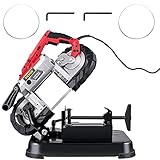
Overview: VEVOR’s portable band saw delivers corded power and versatility through its removable alloy steel base, transforming from a handheld tool to a quasi-benchtop unit. The robust 1100W (10A) pure copper motor drives variable speeds from 137.8 to 472.4 ft/min, enabling cutting of metal, steel, aluminum, PVC, and angle iron. With the base attached, it handles 3.9" x 3.2" rectangular stock; handheld mode expands capacity to 4.7" x 4.7" for rectangular and 5" for round materials.
What Makes It Stand Out: The swiveling base that adjusts from 0-45 degrees is a unique feature at this price point, offering controlled angle cuts typically reserved for stationary saws. The removable design provides genuine two-in-one functionality, allowing both job site portability and workshop stability. The 10A motor is significantly more powerful than most competitors in the sub-$200 range. The adjustable blade guard prevents jamming while protecting hands, addressing common portable saw frustrations.
Value for Money: Priced competitively around $180-220, this VEVOR offers remarkable versatility per dollar. The base functionality alone would cost $100+ as an aftermarket accessory for brands like Milwaukee or DEWALT. While VEVOR’s quality control can be inconsistent, the feature set and power output rival saws costing twice as much. For users needing both portable and stationary capabilities on a budget, it’s difficult to beat. However, expect to invest time in setup and potential adjustments.
Strengths and Weaknesses: Strengths include the powerful motor, dual-mode operation, swiveling base, variable speed control, and exceptional versatility. The ergonomic handle reduces fatigue during extended use. Weaknesses include VEVOR’s spotty quality control, potentially flimsy base stability, and customer service challenges. The blade tracking may require frequent adjustment, and the included blade is only suitable for rough cuts. Documentation is often minimal.
Bottom Line: The VEVOR portable band saw is a feature-packed value proposition for users comfortable with potential tinkering. It’s ideal for budget-minded makers needing both portability and base stability, but professionals should invest in premium brands for daily job site reliability. For occasional use and experimentation, it’s a smart buy.
6. KFMK 10A Variable Speed Metal Band Saw with Large Workbench, 5" Cutting Capacity, Adjustable Speed 137-472 FPM, BandSaw Perfect for Metalworking, Knife Cutting

Overview: The KFMK 10A Variable Speed Metal Band Saw positions itself as a versatile solution for both professional workshops and serious DIY enthusiasts tackling metal fabrication projects. With its substantial 5-inch cutting capacity and robust 10-amp motor, this machine handles everything from steel stock to aluminum profiles with authority. The dual workbench design—featuring a large primary table and a smaller precision platform—demonstrates thoughtful engineering for varied project scales.
What Makes It Stand Out: Variable speed control spanning 137-472 FPM sets this apart from single-speed competitors, allowing optimal blade speeds for different metals and thicknesses. The dual workbench configuration is genuinely innovative, eliminating the common trade-off between large material support and fine detail work. Integrated safety features like the eyeshield show the manufacturer prioritized user protection without compromising functionality.
Value for Money: Positioned in the mid-range price bracket, this band saw delivers industrial-adjacent capabilities at a fraction of professional-grade costs. Comparable machines with variable speed and dual tables often retail for 30-40% more, making this an attractive proposition for small fabrication shops and dedicated hobbyists who need versatility without premium pricing.
Strengths and Weaknesses: Strengths include impressive cutting capacity, versatile speed adjustment, stable dual-table design, and comprehensive safety features. The 10A motor provides consistent power for demanding cuts. Weaknesses may include its substantial footprint requiring dedicated workshop space, considerable weight limiting portability, and potential noise levels typical of metalworking equipment. The learning curve for speed selection might challenge absolute beginners.
Bottom Line: This band saw earns strong recommendation for anyone regularly working with metal who needs flexibility between heavy stock and precision parts. While overkill for occasional users, it’s a workhorse that justifies its price through performance and versatility.
7. QD-KYOHO Band Saw, Portable 9-Inch Bandsaw for Woodworking, 770 FPM Benchtop, 1/3 HP, 120 V 2.5-Amp Motor, Band Saws with Cast-Aluminum Worktable with Scale, Steel Bandsaws with Miter Gaug

Overview: The QD-KYOHO 9-Inch Portable Band Saw targets woodworking enthusiasts seeking benchtop performance with unprecedented mobility. This compact machine cuts wood up to 3-1/2 inches thick with a 9-inch throat depth, powered by a 1/3 HP motor. The integrated carry handle and lightweight design make it ideal for contractors, small shops, or hobbyists with limited space who refuse to compromise on capability.
What Makes It Stand Out: Exceptional portability combined with professional features distinguishes this model. The worktable tilts 45° right and 5° left—uncommon flexibility for a portable unit. Dynamically balanced blade assembly maintains vibration under 6 mm/s, rivaling stationary saws. Tool-free blade guide adjustment and quick-release tensioning significantly reduce setup time, while the self-cleaning brush system keeps the blade clear of debris automatically.
Value for Money: This saw occupies a sweet spot between cheap hobbyist models and expensive contractor-grade equipment. Its feature set—particularly the vibration control and multi-angle table—typically appears in machines costing twice as much. For woodworkers needing occasional site work or shop flexibility, it eliminates the need for two separate saws.
Strengths and Weaknesses: Strengths include true portability, remarkably low vibration, versatile cutting angles, and user-friendly adjustments. The 2.5-amp motor starts smoothly and operates quietly. Weaknesses involve limited power for dense hardwoods, modest cutting height compared to 14" models, and the small table size challenging large panel work. The 770 FPM fixed speed lacks the versatility of variable-speed competitors.
Bottom Line: An excellent choice for woodworkers prioritizing portability and precision over raw power. Perfect for trim work, crafts, and light furniture making where moving the saw to the material makes more sense than vice versa.
8. SHOPMAX 2.2 Amp 8-inch Benchtop Band Saw

Overview: The SHOPMAX 2.2 Amp 8-inch Benchtop Band Saw offers a no-frills approach to light-duty woodworking. This compact machine handles cuts up to 3.2 inches deep and 8 inches wide, making it suitable for small stock, curved cuts, and craft projects. Its induction motor delivers consistent power for its class, while the heavy-duty steel construction promises durability beyond its price point.
What Makes It Stand Out: Simplicity and focused design are this saw’s primary virtues. The quick worktable angle adjustment mechanism operates smoothly up to 45 degrees without complex locking systems. Its blade width compatibility (0.14" to 0.47") accommodates both fine detail work and modest resawing tasks. The dedicated dust extraction port, designed specifically for SHOPMAX extractors, creates an integrated system approach rarely seen in entry-level tools.
Value for Money: As one of the most affordable benchtop band saws available, it delivers essential functionality without premium cost. While lacking advanced features, it provides reliable cutting capability for hobbyists and beginners. The cost savings versus mid-range models can be allocated to blades and accessories, making it a practical entry point into band saw ownership.
Strengths and Weaknesses: Strengths include straightforward operation, solid steel construction, good blade compatibility range, and clean dust collection integration. The 2.2-amp motor performs adequately for intended light-duty applications. Weaknesses include limited power for thick or dense materials, absence of variable speed, basic fence system, and proprietary dust port limiting third-party vacuum compatibility. The small table size restricts workpiece support.
Bottom Line: Ideal for beginners or as a secondary saw for specialized tasks. It won’t replace a full-size band saw but excels at its intended role: affordable, reliable light woodworking. Manage expectations regarding capacity and you’ll find excellent value.
9. WangJiaTai Magnetic Work Light, 2000 Lumens Led Machine Light with Strong Magnetic Base, 20 inch Flexible Magnetic Lamp for Garage, Workshop, Bandsaw, Lathe and Drill Press, 120V, Black

Overview: The WangJiaTai Magnetic Work Light addresses a fundamental workshop challenge: targeted illumination exactly where needed. Delivering 2000 lumens of flicker-free 6500K white light through 60 LED beads, this 20-watt lamp mounts securely to any ferrous metal surface via its innovative magnetic base. The 20-inch flexible metal pipe enables precise positioning for detailed tasks on bandsaws, lathes, drill presses, and other machinery.
What Makes It Stand Out: The dual-sided magnetic base with integrated ON/OFF switch represents genuine innovation—allowing instant attachment and release without wrestling with stubborn magnets. Supporting up to 10 pounds, the base remains stable even when adjusting the neck. The 360° rotation capability and 20-inch reach eliminate shadows in critical work areas. Unlike cheap flexible lights, the metal pipe maintains position under vibration.
Value for Money: Priced competitively with standard work lights, the magnetic mounting system adds tremendous value by eliminating clamping hardware and setup time. Comparable output LED shop lights cost similar amounts but lack the versatile positioning and magnetic convenience. For machinists and woodworkers, the time saved and safety improved justify every penny.
Strengths and Weaknesses: Strengths include exceptional brightness, rock-solid magnetic base with switch, durable metal flex neck, generous 4.9-foot cord, and flicker-free operation. The 6500K color temperature provides excellent detail visibility. Weaknesses include corded-only operation limiting placement, potential magnet interference with sensitive electronics, and the 20-inch length occasionally proving short for larger machines. The black finish shows dust prominently.
Bottom Line: An indispensable accessory for any metal or wood shop with iron surfaces. The magnetic switch feature alone makes it superior to traditional work lights. Highly recommended for improving safety and accuracy in poorly lit machining operations.
10. Peachtree Woodworking Supply Safety, Push Block and Push Stick Package, In Safety Orange Color, Router Tables, Jointers and Band Saws and other Work Shop Machinery (5 Piece Set)

Overview: The Peachtree Woodworking Supply 5-Piece Safety Kit provides comprehensive hand protection for multiple shop machines. Designed for router tables, jointers, band saws, and table saws, this set includes two small push blocks, one large push block, one standard push stick, and one V-style push stick. Each component features high-visibility safety orange coloration for constant awareness of hand positioning during cuts.
What Makes It Stand Out: This kit’s completeness eliminates the need to purchase safety devices individually, ensuring you have the right tool for every operation. The rubber foam pads on push block bases provide superior grip compared to bare wood or plastic alternatives, maintaining control while preventing workpiece marring. The intentional size variations—from the 16-inch large block to the narrow V-stick—address specific applications most kits overlook.
Value for Money: Purchasing these five devices separately would cost 40-60% more, making this package economically smart. More importantly, having a complete set encourages proper safety practices across all tools rather than making do with inadequate substitutes. For hobbyists and professionals alike, the injury prevention value far exceeds the modest purchase price.
Strengths and Weaknesses: Strengths include comprehensive selection, high-visibility color, excellent grip from washable rubber soles, ergonomic handle designs, and durable construction. The variety handles most ripping, jointing, and curved cutting scenarios. Weaknesses include foam pads requiring 24-hour drying after washing, occasional slippage on extremely smooth surfaces, and the V-stick’s narrow profile feeling flimsy on thick stock. The lack of a storage solution means pieces can scatter around the shop.
Bottom Line: Every woodworker should own this kit before operating power tools. While not flawless, it provides essential protection at an unbeatable price. Don’t compromise on safety—this set belongs in every workshop from garage to professional shop.
Understanding Band Saws for Small Workshop Environments
Band saws excel in small workshops precisely because they do what no other machine can: deliver both curved and straight cuts with minimal waste and maximum efficiency. Unlike scroll saws that vibrate aggressively or table saws that demand clearance for full sheets, a well-chosen band saw tucks neatly against a wall yet springs to life when you need to resaw a 10-inch board or cut a tight 1/4-inch radius.
The physics of band saw design inherently favors compact spaces. The continuous blade loop runs quietly compared to reciprocating saws, and the cutting action pulls material downward onto the table, providing stability without requiring massive cast iron surfaces. For 2026 models, manufacturers have refined this formula further, introducing smart tensioning systems and improved blade tracking that reduce the machine’s overall depth requirements while maintaining cutting accuracy.
Key Features That Define Quality
When evaluating band saws for confined workshops, certain features separate merely adequate machines from those that inspire confidence. Blade guide systems have evolved from simple block guides to precision-bearing assemblies that maintain alignment even during aggressive cuts. Look for machines offering tool-less guide adjustments—this seemingly small convenience matters enormously when you’re switching between resawing and detail work multiple times in a session.
Table trunnion design directly impacts how smoothly the table tilts and how accurately it returns to square. Premium small-shop saws now feature rack-and-pinion tilting mechanisms with positive stops at common angles, eliminating the frustration of tapping a cast iron table into position while crouching to read a tiny bevel gauge. Dust collection integration has also matured, with 2026 models featuring fully enclosed lower cabinets and multiple collection points rather than the single-port designs that left corners of your shop coated in fine dust.
Throat Capacity vs Resaw Height: What Matters Most
Throat capacity—the distance from the blade to the column—determines the maximum width of material you can cut, while resaw height controls how tall a board you can slice into thinner pieces. For small workshops, this balance becomes critical real estate math. A 14-inch throat with 6-inch resaw capacity often proves more practical than a 17-inch throat with 12-inch resaw height, because the larger machine demands 30% more floor space and typically weighs 150 pounds more.
Consider your actual project portfolio. If you primarily build boxes, small furniture, and musical instruments, a 12-inch throat handles 95% of your needs. However, if you mill your own lumber from local trees or build architectural millwork, prioritize resaw height even if it means accepting a slightly smaller throat. Modern small-shop band saws now achieve 8-10 inch resaw capacities in 14-inch frames through clever riser block designs and reinforced columns, giving you the best of both worlds without the footprint penalty.
Motor Power: Finding the Sweet Spot
The relationship between motor power and workshop practicality follows a surprising curve. While industrial 3-horsepower motors muscle through thick hardwood effortlessly, they also require 220-volt circuits, generate substantial heat, and produce enough vibration to walk a light machine across the floor. For small workshops operating on standard 110-volt circuits, the optimal range has settled around 1 to 1.5 horsepower for 2026 models.
This power band delivers enough torque to resaw 6-inch hardwood at a reasonable feed rate without bogging down, yet remains efficient enough that continuous operation won’t trip breakers or overheat motors in enclosed spaces. Variable speed control, once a premium feature, has become standard on quality small-shop saws, allowing you to dial back power for delicate work or non-ferrous metals. Pay attention to motor duty cycle ratings—a continuous-duty motor runs cooler and lasts longer than an intermittent-duty motor with the same horsepower rating.
Blade Guide Systems Demystified
Your blade guides determine cut quality more than any other component. Traditional block guides, whether steel or phenolic, require constant adjustment and create friction that heats blades prematurely. European-style bearing guides have dominated recent designs, using sealed bearings that roll against the blade’s back and sides, reducing heat and extending blade life dramatically.
For small workshops, look for guide post systems that adjust with a single lever rather than multiple locking knobs. This simplifies the frequent adjustments needed when switching between blade widths. The distance between upper and lower guides matters too—closer guide spacing increases stability but limits maximum cutting height. Premium compact saws now feature telescoping guide posts that maintain optimal spacing across the full resaw range, a significant improvement over fixed-post designs that force you to compromise guide position for tall workpieces.
Table Design and Precision
A band saw table sees more abuse than almost any other surface in your workshop. It must remain perfectly flat while supporting heavy boards, resist rust in humid spaces, and tilt smoothly for bevel cuts. Cast iron remains the gold standard for its vibration-damping mass and stability, but 2026 has brought advances in ribbed aluminum tables that save weight without sacrificing rigidity—crucial if you need to move the saw occasionally.
Table size presents another trade-off. A 15x15 inch table provides ample support for most small-shop tasks while keeping the machine compact. Larger tables offer more support but extend the machine’s overall depth, often interfering with workflow in tight shops. Focus on table edge treatment—machines with miter slots that extend to the table’s edge allow for better jigs and fixtures. T-slots instead of simple miter slots expand your clamping and stop-block options exponentially.
Fence Systems for Accuracy
A band saw fence does more than guide straight cuts; it enables repeatable resawing, tenon cutting, and veneer slicing. The best small-shop fences combine micro-adjustability with easy removal. Quick-release mechanisms let you swing the fence out of the way for freehand work, then return it to the exact same setting—a feature worth its weight in exotic lumber.
For 2026, look for fences with independent positioning on both sides of the blade. This seemingly minor detail allows you to reference cuts from the left for typical ripping and from the right when resawing wide boards against the column. Some advanced systems integrate measuring scales that compensate for blade drift, eliminating the trial-and-error process that frustrates new users. The fence rail system should lock firmly without flexing; even 1/32-inch deflection at the end of a tall resaw cut creates noticeable thickness variation.
Dust Collection Strategies
Band saws create dust differently than other machines. The continuous blade carries fine particles into the lower cabinet where they settle in hard-to-reach corners, while larger chips eject from the top of the cut. Effective small-shop dust collection requires a two-pronged approach: a 4-inch port on the lower cabinet connected to your dust collector, plus a 2-1/2 inch port near the blade for shop vacuum connection.
Modern compact band saws address this with fully enclosed lower wheels and sealed bearing covers that prevent dust from infiltrating mechanical components. Some designs incorporate a brush that cleans the blade as it enters the lower cabinet, preventing dust from being carried back up to the table. For workshops where dust collection piping snakes through tight spaces, look for machines with multiple port size options or adapters included—nothing’s more frustrating than discovering your new saw’s port doesn’t match your existing hose collection.
Safety Features Worth Prioritizing
Small workshop environments amplify safety concerns. You’re working closer to walls, with less room to maneuver, often alone. Modern band saws incorporate blade guards that adjust tool-lessly and lock securely at any height—essential when you’re rushing to make one last cut before dinner. The guard should cover the blade down to within 1/4 inch of your workpiece, never exposing more blade than necessary.
Blade tension indicators with visual or digital readouts prevent the common mistake of over-tensioning, which stresses blades and wheel bearings. Some 2026 models include tension memory settings that return to your preferred tension for different blade widths automatically. Emergency stops have also evolved from simple paddle switches to magnetic contactors that prevent accidental restart after power interruptions—a critical feature in shops sharing circuits with high-draw equipment like dust collectors or air compressors.
Construction Materials and Durability
The material choices in a band saw directly impact its longevity in a small workshop’s demanding environment. Cast iron frames provide unmatched vibration damping but make moving the machine nearly impossible. Steel frames with strategic cast iron reinforcements offer a practical compromise, reducing weight by 40% while maintaining stability where it matters most—around the wheel axles and table trunnions.
Powder-coated finishes have improved dramatically, now resisting rust far better than traditional paint in unheated or humid workshops. Internal components tell the real story: aluminum wheels save weight but require perfect tire condition to track properly; cast iron wheels add mass that improves momentum and cut consistency. For small shops where the saw might sit idle for weeks, sealed bearings throughout the machine prevent rust seizure that plagues older designs with open bearing races.
Vibration Control and Stability
Nothing compromises cut quality faster than vibration, and small workshops often have lightweight floors or benches that amplify rather than dampen it. Modern band saws combat this through several engineering approaches. Poly-V belt drives have largely replaced V-belts, transmitting power more smoothly with less vibration. Wheel balancing has become more precise, with some manufacturers dynamically balancing every wheel before installation.
The machine’s footprint relative to its height matters enormously. A low, wide stance resists tipping and walking better than a tall, narrow profile. Adjustable foot pads that actually conform to uneven workshop floors prevent the rocking that plagues rigid-foot designs. If you must place your saw on a mobile base, choose one with individual wheel locks that allow you to level the machine after moving it—vibration increases dramatically when a machine rocks even slightly on a mobile base’s flexible frame.
Portability Solutions for Tight Spaces
The reality of small workshops often means your band saw shares space with other large tools. Mobility transforms a band saw from a space monopolist into a team player. Integrated mobile bases with retractable casters allow you to roll the saw against a wall when not in use, then lock it down firmly for operation. These systems add minimal height—critical if you store material under low shelves.
For second-floor workshops or spaces with narrow doorways, consider saws designed for partial disassembly. Some models feature quick-release table and motor mounts that reduce weight for moving, then reassemble within 1/32-inch of original alignment. If you choose a lighter machine for portability, compensate by bolting it to a heavily braced stand filled with sand or concrete—this adds mass where it matters without making the saw itself impossible to move through tight spaces.
Budget Tiers and Value Propositions
Band saws for small workshops cluster into three distinct price bands, each with specific expectations. Entry-level machines around $500-800 provide basic functionality but require immediate upgrades—often the included blade, fence, and sometimes even the guide system. Mid-tier saws from $800-1,500 represent the sweet spot for serious hobbyists, including quality fences, bearing guides, and robust tables that need no immediate modification.
Premium compact saws exceeding $1,500 introduce features that matter in tight spaces: integrated mobility, advanced dust collection, and digital tension readouts. These machines often cost less than retrofitting a mid-tier saw with equivalent upgrades. Consider total cost of ownership: a $1,200 saw that includes a $150 blade and $200 fence delivers better value than an $800 saw requiring $400 in immediate upgrades. By 2026, the price gap between tiers has narrowed as mid-tier machines adopt features previously reserved for premium models.
Maintenance Requirements
Small workshop band saws face unique maintenance challenges. Infrequent use can cause rust on tables and blades, while dust settles in mechanisms during long idle periods. Choose machines with accessible blade tension release mechanisms that let you completely relax the blade between sessions—this extends blade life and prevents tire flat-spotting. Quick-release blade covers that require no tools encourage regular cleaning of accumulated dust from wheel interiors.
Bearing life has improved dramatically with sealed-for-life designs, but guide bearings still require occasional replacement. Look for machines where guide bearings press onto standard shafts rather than proprietary carriers—this lets you source replacements from industrial suppliers at a fraction of OEM prices. Tire condition affects tracking; urethane tires last longer than rubber and install without adhesive, making replacement a 15-minute job rather than an afternoon project involving solvents and clamps.
Future-Proofing Your Investment
Your workshop will evolve, and your band saw should accommodate that growth. Modular fence systems that accept aftermarket rails and accessories expand capabilities without replacing the entire machine. Motor upgrade paths—where manufacturers offer bolt-on 1.5-horsepower replacements for original 1-horsepower units—let you increase capacity as your skills and projects grow more ambitious.
Electrical flexibility matters too. Machines pre-wired for both 110-volt and 220-volt operation, with simple terminal block changes, adapt if you eventually install a 220-volt circuit. Table extension wings that store flat but install quickly for large projects maximize utility without permanent space commitment. By 2026, some manufacturers offer retrofit kits that add digital readouts for blade speed and tension to older machines, breathing new life into your initial investment.
Common Pitfalls to Sidestep
Even experienced woodworkers make predictable mistakes when selecting band saws for small spaces. Overbuying capacity ranks first—purchasing a 17-inch saw for a 12x12 foot shop creates workflow problems that outweigh the occasional need to cut wider material. Underestimating dust collection needs follows closely; a saw with a single 2-1/2 inch port will leave your shop filthy regardless of its cutting prowess.
Ignoring blade availability represents another frequent error. Some machines use proprietary blade lengths or widths that limit your options to expensive OEM blades. Before committing, verify that your chosen saw accepts standard 93-inch or 105-inch blades available from multiple manufacturers. Finally, don’t be seduced by features you’ll never use—if you don’t work with metal, a variable speed range down to 100 RPM offers no value over a machine optimized for woodcutting speeds.
Decision Framework for Your Needs
Start your selection process by measuring your actual available space, including ceiling height for blade changes and rear clearance for dust collection hoses. List the three most common operations you’ll perform—if resawing tops the list, prioritize horsepower and fence quality. If curved work dominates, emphasize blade guide precision and table size for maneuvering workpieces.
Set a realistic budget that includes essential accessories: at least three quality blades (skip-tooth for general work, hook-tooth for resawing, and a narrow blade for curves), a mobile base if needed, and dust collection fittings. Allocate 20% of your machine budget for these items. Test the saw’s controls if possible—knobs and levers should operate smoothly with minimal force, indicating quality internal components. Finally, research the manufacturer’s parts availability; a ten-year-old saw from a company still supporting legacy models represents a better long-term value than a brand-new machine from a fly-by-night importer.
Frequently Asked Questions
What size band saw is ideal for a one-car garage workshop?
A 14-inch band saw with 6-8 inch resaw capacity typically provides the best balance for garage workshops. This size handles most furniture and cabinetry tasks while fitting against a wall without dominating the space. Look for models under 200 pounds if you need occasional mobility, and ensure you have 36 inches of clearance in front for feeding long boards.
Can I resaw hardwood on a 1-horsepower band saw in a small shop?
Yes, but with realistic expectations. A quality 1-horsepower motor resaws 6-inch hardwood effectively using a sharp 3-tpi hook-tooth blade and slow, steady feed rate. For frequent resawing of 8-inch or thicker stock, upgrade to 1.5 horsepower. The key is maintaining sharp blades and proper tension—dull blades force the motor to work harder than insufficient horsepower.
How much space do I really need behind a band saw for dust collection?
Plan for 12-18 inches of rear clearance to accommodate a 4-inch dust collection hose with gentle bends. Sharp 90-degree bends reduce airflow by 40%. Some compact models position the dust port on the side rather than rear, reducing depth requirements to just 6 inches. Consider quick-disconnect fittings that let you remove hoses when the saw is idle, reclaiming valuable space.
Are portable band saws accurate enough for fine furniture work?
Modern portable band saws have improved dramatically but still can’t match stationary machines for precision. The lightweight frames flex during aggressive cuts, and smaller tables offer less support for controlling workpieces. For fine furniture requiring tight tolerances, choose a stationary saw under 200 pounds with a mobile base rather than a true portable machine.
What’s the quietest band saw option for a basement workshop?
Look for machines with poly-V belt drives and cast iron wheels—these features reduce vibration and noise more than motor enclosures. Belt-driven machines run 5-7 decibels quieter than direct-drive models. Adding a sound-dampening mat under the machine cuts another 3-5 dB. Expect quality 14-inch saws to operate around 75-80 dB, comparable to a vacuum cleaner.
How often should I change band saw blades in a hobbyist shop?
Blade life depends on usage and material, not calendar time. Rotate three blades: use a skip-tooth for general cutting until it dulls, then relegate it to rough work and install a fresh blade. With weekend use, a quality blade lasts 6-12 months before needing replacement. Clean blades with resin remover monthly to extend life. Always release tension after each session to prevent metal fatigue.
Can I cut metal on a wood band saw in my small shop?
Yes, with critical modifications. Reduce blade speed to under 300 feet per minute using a variable speed model or step pulleys. Install a metal-cutting blade with fine teeth (14-18 tpi) and flood the cut with cutting fluid to prevent chip welding. Cover your table with a sacrificial board to protect the cast iron from metal chips. Clean the machine thoroughly afterward to prevent rust.
What blade width should I keep on hand for general small-shop use?
Maintain three widths: 1/4-inch for curves down to 3/4-inch radius, 1/2-inch for general ripping and joinery, and 3/4-inch for resawing. This trio covers 95% of small workshop tasks. Choose skip-tooth patterns for clean cuts in wood, and keep a bimetal blade for occasional metal work. Premium blades with variable tooth spacing reduce vibration and cut quieter than constant-pitch blades.
How do I prevent my band saw from walking across the floor during use?
First, ensure all four feet make solid contact—use adjustable foot pads to level the machine on uneven floors. Second, bolt the saw to a weighted stand or mobile base with individual wheel locks. Third, check blade tracking; a blade running against the wheel flange creates side thrust that pushes the machine. Finally, avoid over-tensioning blades, which increases bearing load and vibration transmission to the floor.
Is it worth buying a used band saw for a small workshop?
Quality used band saws offer excellent value if you can verify key conditions. Check wheel bearings for play, inspect tires for cracks, and ensure the table returns to square after tilting. Avoid saws with cast iron damage or bent wheel axles. Factor in immediate upgrades: new tires ($50), quality blade ($30), and potentially a new fence system ($150). A $400 used saw often needs $200 in parts to match a $700 new machine’s performance.
See Also
- 10 Affordable Band Saws That Don’t Sacrifice Blade Speed in 2026
- 10 Best Band Saws for Resawing Lumber in 2026
- Top 10 Best Corded Circular Saws for Winter Workshop Projects in 2026
- 10 Best Table Saws for Small Workshops in 2026
- 10 Best Value Corded Circular Saws for Workshop Use in 2026