Table of Contents
Resawing lumber is one of the most demanding tasks a woodworker can ask of a band saw. Whether you’re crafting veneers, book-matching panels, or simply converting thick slabs into manageable stock, resawing requires precision, power, and stability—qualities not all band saws are built to deliver. In 2026, the market for band saws continues to evolve with advancements in motor efficiency, blade tracking systems, and frame rigidity, making it easier than ever to find a machine that can handle the rigors of heavy-duty resawing.
But with so many options—ranging from compact 14-inch benchtop models to industrial 20-inch floor-standing beasts—how do you choose the right one for your shop? The answer lies not just in size or price, but in a deep understanding of what features truly matter when pushing a blade through dense hardwoods over and over again. This guide dives into the essential elements that separate a good resawing band saw from a great one, helping you make a smart, future-proof investment.
Top 10 Band Saws For Resawing Lumber
Detailed Product Reviews
1. RIKON Power Tools 10-326 14" Deluxe Bandsaw
 10-326 14" Deluxe Bandsaw](https://m.media-amazon.com/images/I/31V8upCsPqL._SL160_.jpg)
Overview:
The RIKON 10-326 14" Deluxe Bandsaw is a high-performance woodworking tool designed for precision and ease of use. Redesigned with the modern woodworker in mind, it integrates several innovative features that streamline setup and improve cutting accuracy, especially for demanding tasks like re-sawing and rip cuts.
What Makes It Stand Out:
This bandsaw features three patent-pending innovations: spring-loaded, tool-less blade guides for quick adjustments; a quick-adjust rip fence that corrects for blade drift without tools; and a quick-lock table trunnion system that enables fast, precise angle changes. The extra-tall 6” rip fence and re-saw bar enhance material support, reducing vibration and improving cut quality on thicker stock.
Value for Money:
Priced competitively for its class, the RIKON 10-326 offers professional-grade features typically found in more expensive models. The time saved through tool-less adjustments and superior stability makes it a smart investment for serious hobbyists and small shop professionals.
Strengths and Weaknesses:
Strengths: Innovative tool-less adjustments, excellent fence system, robust build, enhanced blade support. Weaknesses: Heavier design limits portability; assembly may require careful calibration.
Bottom Line:
The RIKON 10-326 is a top-tier 14" bandsaw that excels in precision and usability. Its innovative features make it a standout choice for woodworkers seeking efficiency and accuracy.
2. ProGrip Universal Bandsaw Fence – Adjustable, Precision Re-Sawing, Dual-Function 2-in-1 Band Saw/Drill Press Fence Combo, Triple Cam Locking, Straight Edge Clamp, Stop Block for Repetitive Drilling
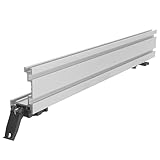
Overview:
The ProGrip Universal Bandsaw Fence is a versatile, high-precision accessory designed to enhance accuracy and safety on both band saws and drill presses. With a focus on adaptability and stability, it’s ideal for woodworkers seeking consistent results across multiple tools.
What Makes It Stand Out:
Its dual-function design allows seamless transition between band saw and drill press use. The triple cam locking system ensures zero wobble, even under heavy load. The included stop block enables repeatable drilling, while the fully adjustable aluminum fence provides precise alignment for re-sawing and ripping.
Value for Money:
Offering two tools in one, the ProGrip fence delivers exceptional value. Its durable aluminum construction and universal fit (up to 18” tables) make it a cost-effective upgrade over brand-specific fences.
Strengths and Weaknesses:
Strengths: Universal compatibility, triple-point locking, dual functionality, corrosion-resistant build. Weaknesses: May require minor adjustments on non-standard tables; stop block placement can be limiting on smaller setups.
Bottom Line:
The ProGrip Universal Fence is a smart, durable upgrade that boosts precision and efficiency. Highly recommended for woodworkers using multiple tools and seeking repeatable, professional results.
3. WEN 9-Inch Band Saw, 2.8-Amp Benchtop (BA3959)
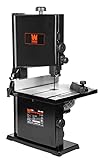
Overview:
The WEN BA3959 is a compact, entry-level benchtop bandsaw designed for hobbyists and DIYers with limited space. Despite its small footprint, it offers solid performance for light-duty cutting tasks in wood, plastic, and soft metals.
What Makes It Stand Out:
Powered by a 2.8-amp motor, it delivers up to 2,500 feet per minute blade speed, enabling clean cuts up to 3.5 inches deep. The 12.25” x 11.875” worktable tilts to 45° for bevel cuts, and it includes essential accessories like a rip fence, miter gauge, dust port, and blade—making it ready to use out of the box.
Value for Money:
Exceptional value for beginners. It’s one of the most affordable bandsaws on the market with a comprehensive accessory kit and a reassuring 2-year warranty.
Strengths and Weaknesses:
Strengths: Affordable, compact, includes dust collection and useful accessories, easy assembly. Weaknesses: Limited cutting capacity; not suitable for hardwood re-sawing or continuous use; blade guard adjustment can be finicky.
Bottom Line:
The WEN BA3959 is an excellent starter bandsaw for light projects. It’s reliable, well-equipped, and perfect for hobbyists seeking an affordable, space-saving option.
4. JET Black 14-Inch Woodworking Band Saw, 1.75 HP, 115/230V 1Ph (JWBS-14SFX-BLK)

Overview:
The JET JWBS-14SFX-BLK is a professional-grade 14-inch bandsaw built for durability and precision in demanding workshop environments. Featuring a powerful 1.75 HP motor and a cast iron construction, it’s engineered for consistent, high-quality cuts.
What Makes It Stand Out:
Its corrosion-resistant black-coated cast iron table reduces friction and eliminates maintenance. The top-mounted blade tensioning wheel improves clearance, while the 360 sq. in. table provides excellent workpiece support. The single-point trunnion adjustment allows quick, accurate table tilting.
Value for Money:
Priced for serious woodworkers, it justifies its cost with industrial build quality, dual voltage capability, and long-term reliability. A solid investment for professionals and advanced hobbyists.
Strengths and Weaknesses:
Strengths: Powerful motor, robust cast iron table, excellent stability, dual voltage, large work surface. Weaknesses: Heavy and not portable; assembly requires time and precision.
Bottom Line:
The JET 14SFX-BLK is a top-tier bandsaw that delivers professional performance and durability. Highly recommended for workshops demanding precision and reliability.
5. BOW Products GuidePRO GP5 - Featherboard for Band Saws - Vertical Resaw and Band Saw Guide with Silicone Feather - Provides Greater Feed Control - Woodworking Tools and Safety Accessories

Overview:
The BOW GuidePRO GP5 is a specialized vertical featherboard designed to improve safety and precision on band saws. It applies consistent pressure to workpieces during cutting, reducing kickback and enhancing cut quality, especially in re-sawing and thin-strip cutting.
What Makes It Stand Out:
Its 6” flexible silicone feather provides continuous, non-marring pressure on the workpiece’s leading edge. The miter cam system allows quick, secure attachment to any standard miter slot (15mm, 5/8”, or 3/4”), and the sliding base fits tables 2” to 8” from the blade. The base doubles as a square for fence alignment.
Value for Money:
An affordable safety upgrade that significantly improves control and repeatability. Its replaceable feathers and universal fit ensure long-term use across different saws.
Strengths and Weaknesses:
Strengths: Excellent feed control, easy setup, non-marring silicone, versatile fit, dual-purpose base. Weaknesses: Silicone feather may wear faster with abrasive materials; limited pressure adjustment range.
Bottom Line:
The GuidePRO GP5 is a must-have accessory for safer, more accurate band saw operation. It’s a smart upgrade for any woodworker focused on precision and workshop safety.
6. Grizzly Industrial H7587 - Resaw Fence Complete for 14" Bandsaws
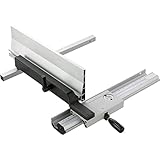
Overview:
The Grizzly Industrial H7587 Resaw Fence is a premium accessory designed specifically for 14" bandsaws, engineered to enhance precision during resawing operations. As a user-focused upgrade from standard fences, it offers dual-height functionality, allowing woodworkers to switch between tall and short configurations depending on the task.
What Makes It Stand Out:
This fence’s standout feature is its removable extruded design, which enables blade guides to be lowered closer to the workpiece during regular cutting, improving accuracy and safety. Its modular construction allows use as a retrofit on existing Grizzly models or integration with various other brands, offering exceptional versatility.
Value for Money:
Priced competitively for its build quality and functionality, the H7587 delivers excellent value—especially for serious hobbyists and professionals seeking consistent resaw results without investing in a new saw.
Strengths and Weaknesses:
Strengths: Durable construction, flexible height adjustment, broad compatibility. Weaknesses: Installation may require minor adjustments on non-Grizzly saws; not ideal for sub-14" models.
Bottom Line:
The Grizzly H7587 is a top-tier resaw fence that significantly improves bandsaw performance—ideal for woodworkers focused on accuracy and adaptability in resawing tasks.
7. SKIL 2.8 Amp 9 In. 2-Speed Benchtop Band Saw for Woodworking - BW9501-00
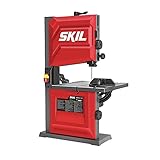
Overview:
The SKIL BW9501-00 is a compact benchtop band saw tailored for DIYers and light-duty woodworking. Powered by a 2.8-amp induction motor, this 9-inch model balances performance and convenience for small to medium projects.
What Makes It Stand Out:
Its 2-speed drive system allows users to optimize blade speed for different materials without tools, while the quick blade tension setting ensures precise, repeatable cuts. Precision ball bearing blade guides maintain tracking accuracy, and the rack-and-pinion table adjustment enables smooth, exact angle changes.
Value for Money:
Affordable and feature-rich, this band saw offers solid performance for its price, outclassing many entry-level models with its tool-free adjustments and reliable motor.
Strengths and Weaknesses:
Strengths: User-friendly design, accurate cuts, easy blade changes. Weaknesses: Limited cutting capacity for larger resawing; not suitable for heavy industrial use.
Bottom Line:
The SKIL BW9501-00 is an excellent choice for hobbyists seeking a dependable, easy-to-use band saw with professional-grade features at a budget-friendly price.
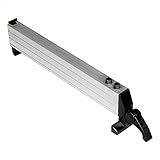
8. POWERTEC BS900RF Rip Fence for POWERTEC BS900 Wood Band Saw and Similar Band Saws with a Work Table Size of 11-1/8” to 11-13/16”
Overview:
The POWERTEC BS900RF Rip Fence is a precision-engineered accessory designed to upgrade the cutting accuracy of 9" band saws, especially the POWERTEC BS900 model. It enhances safety and consistency in rip cuts.
What Makes It Stand Out:
With wide compatibility across brands like WEN, Delta, and Ryobi, this fence stands out for its no-rail design that clamps directly to the table. The adjustable clamping range (11-3/8” to 12”) and cam-lever locking mechanism allow rapid, secure setup without tools.
Value for Money:
Offering high-end features at a modest price, this rip fence delivers exceptional value by transforming basic band saws into more accurate, professional-grade tools.
Strengths and Weaknesses:
Strengths: Easy installation, stable performance, broad compatibility. Weaknesses: Limited extension range; may not fit tables outside specified dimensions.
Bottom Line:
The POWERTEC BS900RF is a must-have upgrade for 9" band saw owners seeking improved accuracy, ease of use, and reliable rip-cut performance.
9. PeakPursuit 8 Inch Band Saw, 0-45 Tilting Range, 3A & 1800RPM Pure Copper Motor Bandsaw, Benchtop Band Saw with Fence and Miter Gauge, for Woodworking Aluminum

Overview:
The PeakPursuit 8-Inch Band Saw is a versatile benchtop model built for both woodworking and light metal cutting. Equipped with a 3A pure copper motor and a 1800RPM output, it handles diverse materials including wood, aluminum, and plastic.
What Makes It Stand Out:
Its 0–45° tilting capacity and 8-inch width support multi-angle precision cuts, while the Q235 steel frame ensures durability. The 2" dust port and dust brush enhance cleanliness, and the included miter gauge improves cutting accuracy.
Value for Money:
Given its dual-material capability, spacious work surface, and included accessories, this band saw offers strong value for hobbyists and small workshop users.
Strengths and Weaknesses:
Strengths: Multi-material use, dust management, sturdy build. Weaknesses: Motor may overheat during prolonged metal cutting; blade width limits fine detailing.
Bottom Line:
The PeakPursuit 8-Inch Band Saw is a capable, well-rounded tool ideal for makers needing a compact, efficient saw for mixed-material projects.
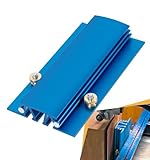
10. KMS7214 Resaw Guide for 14" Bandsaw, 7" (178mm) Band Saw Thin Cutting Accessory for Precision Resawing
Overview:
The KMS7214 Resaw Guide is a precision attachment designed for 14" bandsaws, enhancing accuracy during resawing by providing 7 inches of vertical contact with the workpiece. It’s compatible with Jet, Grizzly, and other major 14" models.
What Makes It Stand Out:
Its unique curved face guide allows subtle left-right adjustments, helping correct blade drift and maintain consistent thickness. Made from anodized aluminum and steel, it’s both lightweight and durable.
Value for Money:
As a specialized accessory, it’s affordably priced for the precision it delivers, especially for woodworkers focused on thin-slice resawing.
Strengths and Weaknesses:
Strengths: Improves cut consistency, easy bolt-on installation, excellent build. Weaknesses: Requires the KMS7200 fence for full function; limited utility for non-resaw tasks.
Bottom Line:
The KMS7214 is a highly effective resaw guide that boosts accuracy and control—perfect for woodturners and craftsmen producing veneers or thick blanks.
Why Resawing Demands a Specialized Band Saw
Resawing isn’t just cutting wood—it’s cutting deep. Unlike ripping or crosscutting, resawing involves slicing a board along its width to produce thinner planks or veneers. This places unique stress on the saw, especially when dealing with thick or dense hardwoods like walnut, maple, or oak. A standard band saw might struggle with blade deflection, wander, or overheating under these conditions.
A band saw built for resawing must prioritize blade stability, consistent tension, and a powerful motor to maintain feed rates without bogging down. It’s not enough to just have a tall throat capacity—everything from the wheel alignment to the table flatness plays a role in achieving clean, straight cuts over long durations.
Key Features to Look for in a Resawing Band Saw
When evaluating band saws for resawing, certain features rise to the top. These aren’t just nice-to-haves—they’re critical for performance, safety, and long-term satisfaction. Let’s break down the components that define a high-performance resawing machine.
Throat capacity refers to the distance between the blade and the frame of the saw. For resawing, a minimum of 18 inches is recommended, with 20 inches or more being ideal for larger projects. However, don’t confuse throat capacity with resaw capacity, which is the maximum height of material the saw can cut through. Resaw capacity depends on throat depth, wheel diameter, and table design.
Some saws offer riser blocks or extension columns that increase cutting height after installation. These are invaluable for shops that occasionally handle thick slabs but don’t want to invest in a massive industrial unit.
Resawing demands sustained power. A motor rated at 1 horsepower might suffice for light-duty tasks, but for consistent resawing of thick or dense stock, a 1.5 to 3 HP motor is strongly advised. More important than raw horsepower is torque—especially at lower RPMs. A motor with high torque maintains blade speed under load, reducing the risk of burning or stalling.
Variable speed motors are becoming more common in 2026, allowing users to adjust blade speed based on material type. Slower speeds (around 600–1000 FPM) are ideal for hardwoods, while faster speeds work better for softwoods.
The width of the blade directly affects resawing performance. For clean, stable cuts, 1/2-inch to 3/4-inch wide blades are preferred. These wider blades resist deflection and produce straighter cuts, especially when using a resaw fence.
A high-quality tensioning system is equally important. Look for calibrated tension gauges or digital readouts that allow precise blade tensioning. Over-tensioning risks blade breakage; under-tensioning leads to poor tracking and wandering cuts. A dual-column or post-tension system often provides more even and reliable tension than older lever-style designs.
Band saw wheels are the foundation of smooth operation. Larger wheels (14 inches and up) reduce blade flex and stress, especially with wide blades used in resawing. Cast aluminum or steel wheels with precision-ground surfaces offer superior balance and tracking.
Many modern saws feature crowned wheels with urethane or rubber tires. These tires must be perfectly round and evenly applied to prevent vibration. Some high-end models now use segmented or replaceable tire systems, making maintenance easier and more cost-effective over time.
A wobbly frame means a wandering blade. Resawing requires extreme stability, so the saw’s frame must be rigid and well-braced. Look for cast iron or heavy-gauge steel construction, especially in the base and column. Welded frames typically outperform bolted ones in terms of long-term durability.
Vibration damping is another critical factor. Excessive vibration leads to poor cut quality, accelerated wear, and user fatigue. Features like internal bracing, mass-loaded bases, and isolation mounts help minimize vibration and keep the blade tracking true.
The table supports the workpiece during cutting, so it must be flat, stable, and square to the blade. A cast iron table is ideal for maintaining flatness and resisting warping over time. Aluminum tables are lighter but may flex under heavy loads.
A large table surface improves control, especially when handling wide slabs. Integrated mitre slots, T-tracks, or accessory mounting options enhance versatility. Most importantly, the table should be easily adjustable for tilt and perfectly aligned with the blade to ensure accurate resawing.
Blade guides keep the blade from wandering during deep cuts. For resawing, you need robust upper and lower guides that can handle wide blades and extended use. Roller guides were once standard, but modern block-style or cartridge-style ceramic guides offer less friction and better support.
Look for tool-less adjustment systems that allow quick repositioning of guides when changing blades or adjusting for resawing height. Fully adjustable guide arms that move vertically and horizontally provide maximum flexibility.
A high-quality resaw fence is essential for consistent thickness and straight cuts. The best fences are rigid, adjustable, and extend vertically to support the full height of the workpiece. They should lock securely and remain parallel to the blade throughout the cut.
Some fences include anti-tip features or secondary support rods to prevent the workpiece from tipping into the blade. Fence material matters too—aluminum or steel is preferable over plastic for durability and rigidity.
Resawing generates massive amounts of sawdust. Without effective dust collection, your shop becomes a health hazard and visibility suffers. Look for band saws with fully enclosed bases, sealed blade covers, and dust ports that connect directly to a shop vacuum or dust collector.
A 4-inch dust port is standard for high-volume extraction, though some newer models offer dual ports or optimized internal ducting to improve airflow and capture efficiency.
Even the best blade will perform poorly if it’s not properly tracked. Precision blade tracking allows the blade to run centered on the wheels without riding the flanges. Most quality saws offer micro-adjustable tracking controls, often accessible from the front for convenience.
Laser alignment systems and digital indicators are emerging in 2026 as premium features, helping users achieve perfect alignment with minimal effort. However, even a well-designed manual system can deliver excellent results with proper tuning.
The Role of Blade Selection in Resawing Success
You can have the most advanced band saw on the market, but if you’re using the wrong blade, your resawing results will suffer. Blade tooth geometry, set, and material all influence cut quality and feed rate.
For resawing, triple-chip grind (TCG) or positive hook angle blades are preferred. These designs aggressively remove material while minimizing friction. Hook angles between 10° and 14° provide the ideal balance of aggressiveness and control.
Blade pitch (teeth per inch) should be matched to material thickness. Coarser blades (2–3 TPI) work best for thick hardwoods, while finer pitches (4–6 TPI) are better for thinner stock or veneers. Bi-metal or carbide-tipped blades offer extended life, especially when cutting abrasive materials.
Maintenance Tips for Long-Term Resawing Performance
A band saw is only as good as its maintenance. Regular upkeep ensures reliable performance and extends the life of both the machine and the blade.
Clean the wheels and tires frequently to remove pitch and debris. Check blade tension daily and adjust as needed. Lubricate moving parts like guide blocks and elevation mechanisms according to the manufacturer’s schedule. Inspect tires for wear and replace them before they become uneven.
Alignment should be checked periodically, especially after moving the saw or changing blades. A misaligned blade will wear prematurely and produce poor cuts.
Shop Environment and Setup Considerations
Even the best band saw can underperform in a poorly set-up shop. Ensure your saw is placed on a level, stable surface. Vibration from an uneven floor can throw off alignment and reduce accuracy.
Electrical supply is another factor. Larger motors may require 240V power and dedicated circuits. Make sure your shop wiring can support the saw’s demands without voltage drops.
Position the saw with ample clearance on all sides, especially behind for handling long stock. Lighting around the blade area improves visibility and safety during long resawing sessions.
Safety Best Practices for Resawing
Resawing involves pushing large, heavy stock through a fast-moving blade—making safety paramount. Always use both hands when possible and maintain a firm grip. Keep your body out of the line of the blade.
Push blocks, featherboards, and auxiliary handles can improve control and reduce the risk of kickback. Never remove offcuts with your hands while the blade is moving.
Wear eye and hearing protection, and consider using a dust mask or respirator when working with fine sawdust. Many modern saws include blade brakes and emergency stop buttons—features worth prioritizing.
Future Trends in Band Saw Technology for 2026 and Beyond
The band saw market is embracing smart technology and user-centric design. In 2026, expect to see more integration of digital readouts, Bluetooth-enabled diagnostics, and even AI-assisted alignment systems.
Eco-friendly motors with improved energy efficiency are gaining traction, as are modular designs that allow users to upgrade components like motors or guide systems over time. Sustainability in manufacturing and packaging is also becoming a key differentiator among leading brands.
How to Evaluate Long-Term Value vs. Initial Cost
It’s tempting to choose a band saw based on price alone, but resawing demands a long-term perspective. A cheaper saw may save money upfront but cost more in downtime, repairs, and poor results.
Consider total cost of ownership: blade life, power consumption, maintenance frequency, and expected lifespan. A well-built saw may cost more initially but deliver years of reliable service with minimal upkeep.
Warranty and customer support also factor into value. Brands offering extended warranties, readily available parts, and responsive service networks provide peace of mind.
Finding the Right Fit for Your Workshop
Your ideal band saw depends on your shop size, budget, and typical projects. A hobbyist resawing occasional 8/4 stock may thrive with a 16-inch saw and riser block. A professional cabinetmaker processing large slabs daily will need a 20-inch industrial model with a 3 HP motor.
Think about workflow integration. Can the saw fit through your shop door? Will it require special electrical setup? Can it be moved easily if needed? These practical concerns matter just as much as performance specs.
Frequently Asked Questions
What is the minimum horsepower needed for resawing hardwoods?
For consistent resawing of dense hardwoods like oak or maple, a minimum of 1.5 HP is recommended. However, 2 HP or higher provides better performance, especially when cutting thick stock or using wide blades.
Can a 14-inch band saw handle resawing?
A 14-inch band saw can resaw thin to medium stock, especially with a riser block. However, it may struggle with thick or dense lumber due to limited power, throat capacity, and blade stability.
How important is blade width for resawing?
Blade width is critical. Wider blades (1/2-inch or more) resist deflection and produce straighter cuts. Narrow blades tend to wander, especially in deep cuts.
What type of blade is best for resawing?
A 3/4-inch wide blade with a positive hook angle and 2–3 TPI is ideal for resawing hardwoods. Resaw-specific blades with hook or raker tooth patterns offer optimal material removal and surface finish.
How often should I replace band saw tires?
Tires should be replaced when they become hardened, cracked, or uneven. Depending on use, this could be every 2–5 years. Regular cleaning and conditioning can extend tire life.
Do I need a dedicated resaw fence?
Yes. A standard mitre fence lacks the height and rigidity needed for resawing. A dedicated resaw fence provides vertical support and ensures consistent thickness and alignment.
Can I use a bandsaw for resawing veneers?
Yes, but it requires a very fine blade (6–10 TPI) and precise feed control. Slower blade speeds and a steady hand are essential to avoid tear-out and achieve uniform thickness.
How do I reduce blade drift when resawing?
Blade drift is often caused by improper tension, dull blades, or misalignment. Ensure the blade is sharp, properly tensioned, and aligned with the wheels and table. Using a resaw fence helps counteract drift.
Is variable speed necessary for resawing?
While not mandatory, variable speed allows you to optimize blade speed for different materials. Slower speeds reduce heat and improve cut quality in dense hardwoods.
What’s the biggest mistake people make when resawing?
The most common mistake is forcing the wood through the blade too quickly. Let the blade do the work—feed slowly and steadily to avoid burning, blade deflection, and poor surface finish.
See Also
- 10 Game-Changing Band Saws for Resawing Lumber in 2026
- 2026’s Top 10 Band Saws for Resawing Lumber
- 10 Affordable Band Saws That Don’t Sacrifice Blade Speed in 2026
- 10 Best Band Saws for Small Workshop Use in 2026
- 10 Best Circular Saws for Cutting Pressure-Treated Lumber in 2026