Table of Contents
Finding a circular saw that balances affordability with professional-grade performance used to mean settling for subpar components or sacrificing essential safety features. But the landscape in 2026 tells a different story. Advancements in manufacturing efficiency, battery technology, and smart design have democratized quality, putting genuinely capable tools within reach of DIY enthusiasts and budget-conscious professionals alike. The key is knowing which features actually matter and where you can strategically save without compromising the core functionality that defines a reliable workhorse.
Today’s market is flooded with options that look identical on paper but deliver vastly different real-world experiences. Understanding the nuanced differences between motor types, safety mechanisms, and ergonomic designs can mean the difference between a saw that serves you faithfully for a decade and one that ends up as an expensive paperweight after a few projects. This comprehensive guide cuts through the marketing noise to equip you with the knowledge to identify true value and make an informed investment that respects both your wallet and your workshop standards.
Top 10 Circular Saws For Quality Cuts
Detailed Product Reviews
1. SKIL 15 Amp 7-1/4 Inch Circular Saw with Single Beam Laser Guide - 5280-01
 with Single Beam Laser Guide - 5280-01](https://m.media-amazon.com/images/I/5107WNhmhpS._SL160_.jpg)
Overview: The SKIL 5280-01 is a robust 15-amp circular saw designed for both serious DIY enthusiasts and professionals seeking reliable performance. This corded powerhouse spins at 5,300 RPM, delivering the speed necessary for clean cuts through lumber, plywood, and composite materials. The 7-1/4-inch carbide-tipped blade provides a 51-degree bevel capacity with a convenient positive stop at 45 degrees, offering versatility for common angled cuts.
What Makes It Stand Out: The integrated single-beam laser guide sets this model apart from entry-level competitors, projecting a clear cutting line that improves accuracy significantly. The dust blower maintains visibility throughout cuts, while the safety lock and power-on indicator provide essential protection against accidental starts—features rarely found together in this price bracket.
Value for Money: Positioned in the mid-range segment, the 5280-01 delivers professional-grade power and safety features at a DIY-friendly price point. Comparable saws from premium brands often cost 30-50% more while offering similar performance, making this an intelligent choice for budget-conscious buyers who refuse to compromise on capability.
Strengths and Weaknesses: Strengths include the powerful motor, laser guidance system, excellent bevel range, and comprehensive safety features. The dust blower works effectively, and the spindle lock enables quick blade changes. Weaknesses involve the laser occasionally requiring recalibration and the overall build quality not matching industrial-grade tools. The power cord could be longer for better jobsite mobility.
Bottom Line: The SKIL 5280-01 represents exceptional value for woodworkers and DIYers needing a dependable, feature-rich circular saw without breaking the bank. The laser guide and safety features make it particularly appealing for those prioritizing precision and user protection.
2. Skil 5080-01 13-Amp 7-1/4" Circular Saw, Red
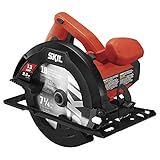
Overview: The Skil 5080-01 is a streamlined circular saw that prioritizes user comfort and affordability without sacrificing essential functionality. This 13-amp model delivers solid cutting performance for routine woodworking tasks while reducing operator fatigue through its lightweight design—15% lighter than its predecessor, the SKIL 5380. The 7-1/4-inch blade handles standard materials with ease.
What Makes It Stand Out: The significant weight reduction makes this saw exceptionally maneuverable for overhead cuts and extended use. The improved dust blower system outperforms many competitors in its class, maintaining a clear sightline during operation. Positive bevel stops at common angles streamline workflow for repetitive cuts.
Value for Money: As one of the most budget-friendly circular saws from a reputable brand, the 5080-01 offers remarkable accessibility for beginners and occasional users. While it lacks advanced features like laser guidance, it provides reliable performance that outpaces no-name alternatives at similar price points, making it a smart entry-level investment.
Strengths and Weaknesses: Strengths include its lightweight ergonomic design, easy blade changes via spindle lock, adequate power for light-to-medium tasks, and excellent price point. The improved dust management is genuinely effective. Weaknesses center on the lower power output compared to 15-amp models, absence of a laser guide, shorter power cord, and plastic components that may not withstand heavy daily abuse. The motor can bog down in thick hardwoods.
Bottom Line: The Skil 5080-01 is an ideal starter saw for homeowners and DIY novices who need a reliable tool for periodic projects. Professionals should look elsewhere, but for light-duty work and learning the basics, it delivers impressive value and comfort.
3. Evolution S185CCSL | 7.25” Metal Cutting Circular Saw | Cuts Steel & More | 7-1/4” TCT Blade Included | 45° Bevel Cuts | Dry-Cut | 15A Corded Power | Accurate, Powerful, Reliable

Overview: The Evolution S185CCSL revolutionizes metal cutting by bringing circular saw convenience to steel fabrication work. This specialized 15-amp tool slices through mild steel with remarkable cleanliness, producing spark-free, burr-free edges that are immediately ready for welding. Unlike abrasive chop saws, it operates at lower RPMs with a 40-tooth TCT blade, creating cool-to-touch cuts without heat distortion.
What Makes It Stand Out: Its ability to make dry, precise metal cuts without sparks or secondary processing is transformative for metalworkers. Weighing only 11.4 pounds, it’s exceptionally portable for a metal-cutting tool. The integrated blade viewing window and channeled airflow system provide unmatched cutline visibility in a category where accuracy is critical.
Value for Money: While priced higher than standard wood-cutting saws, it eliminates the need for separate band saws, plasma cutters, or angle grinders for many tasks. For professionals regularly cutting metal roofing, framing, or fabrication materials, the time savings and cut quality justify the premium investment. It’s a niche tool that pays for itself through efficiency.
Strengths and Weaknesses: Strengths include clean, accurate metal cuts, lightweight design, excellent visibility features, and robust 15-amp power. The adjustable bevel adds versatility. Weaknesses include limited utility for woodworkers, blade replacement costs, and the narrow focus making it a poor choice as a primary saw. It also generates significant noise during operation.
Bottom Line: The Evolution S185CCSL is an indispensable tool for metal fabricators, roofers, and steelworkers. For dedicated metal cutting applications, it’s unmatched. However, woodworkers should invest in a traditional circular saw instead of this specialized equipment.
4. GALAX PRO Saw Blade Set, Pack of 4 Assorted 60T HSS Metal/24T TCT Wood/Diamond 4-1/2-Inch Circular Saw Blade with 3/8" Arbor for Fast Cutting…

Overview: The GALAX PRO Saw Blade Set is a comprehensive accessory kit that dramatically expands the capabilities of compatible mini circular saws. This four-pack includes a 60-tooth HSS blade for non-ferrous metals, two 24-tooth carbide-tipped blades for wood and composites, and a diamond blade for masonry and tile work. The 4-1/2-inch diameter with 3/8-inch arbor fits most compact saws.
What Makes It Stand Out: The sheer versatility across multiple materials in one affordable package is impressive. Few manufacturers offer a diamond blade included in a combo set at this price point. The high-grade steel construction ensures durability, while the thin kerf design promotes fast, efficient cuts with minimal material waste.
Value for Money: This set represents exceptional value, costing less than two individual premium blades while covering wood, metal, and masonry applications. For owners of mini circular saws, it’s essentially a complete material-cutting solution in one box. The quality rivals more expensive brand-name alternatives, making it a budget-conscious choice without sacrificing performance.
Strengths and Weaknesses: Strengths include outstanding material versatility, excellent price-to-performance ratio, sharp cutting edges, and compatibility with popular mini saw models. The inclusion of two wood blades extends lifespan. Weaknesses involve the 4-1/2-inch size limiting use to smaller saws, the 3/8-inch arbor not fitting standard 5/8-inch saws, and the HSS blade being limited to thin non-ferrous metals. Heavy-duty professionals may need thicker blades.
Bottom Line: For mini circular saw owners, this GALAX PRO set is a must-have accessory collection that delivers professional versatility at an unbeatable price. The ability to tackle wood, metal, and tile with one purchase makes it an essential upgrade for DIYers and hobbyists.
5. Kreg KMA2400 Rip-Cut Circular Saw Guide - Cutting Tool - Guide is Best for Regular (Side-Blade) Circular Saw - Ensure Compatibility Before Use - Woodworking Tools for Home Improvement

Overview: The Kreg KMA2400 Rip-Cut Circular Saw Guide transforms an ordinary circular saw into a precision cutting system rivaling track saws at a fraction of the cost. This ingenious accessory clamps onto your saw’s base plate, allowing straight, accurate rips and crosscuts up to 24 inches wide without measuring and marking each cut. The universal sled accommodates most side-blade circular saws.
What Makes It Stand Out: The guide’s ability to deliver track-saw accuracy using existing tools makes it revolutionary for budget-conscious woodworkers. Its ambidextrous design works for left- and right-bladed saws and users. The large handle on the edge guide ensures consistent material contact, while the portable sled system eliminates the need for bulky table saws in small workshops.
Value for Money: At roughly one-tenth the cost of a quality track saw, this guide offers remarkable precision for the investment. It saves countless hours of measuring and reduces material waste from crooked cuts. For woodworkers working in garage shops or on job sites, it’s an affordable path to professional results.
Strengths and Weaknesses: Strengths include excellent accuracy, universal compatibility with most saws, portability, and significant cost savings versus track saws. The large handle provides stability. Weaknesses include compatibility issues with certain guard designs, particularly plastic upper guards or bulky housings. The plastic components may wear over time, and setup requires careful calibration. Some users report sled slippage with heavy saws.
Bottom Line: The Kreg Rip-Cut Guide is an outstanding accessory for woodworkers seeking track-saw precision without the premium price. Verify compatibility with your specific saw model first, but if it fits, it’s a game-changing addition to any workshop.
6. WORKPRO 5.8Amp 3500RPM Circular Saw with Parallel Guide, Maximum Cutting Depth 1-11/16?(90°),1-1/8?(45°), Compact Circular Saw with Three 4-1/2" Blades for Wood, PVC, Tile, Cement Block

Overview: The WORKPRO mini circular saw targets DIY enthusiasts seeking versatility without the bulk of full-size saws. This 5.18-pound tool packs a 5.8-amp motor spinning at 3,500 RPM, handling wood, PVC, tile, and cement block with interchangeable 4-1/2" blades. Its compact design prioritizes maneuverability for home repairs and workshop tasks where precision matters more than raw power.
What Makes It Stand Out: Three specialized blades (TCT for wood, 60T for wood/plastic, and diamond for tile) come standard, eliminating immediate accessory purchases. The parallel guide ensures straight cuts while the dust extraction port maintains workspace cleanliness—features rarely included in budget saws. The 0-45° bevel adjustment with tool-free depth changes adds legitimate woodworking capability, not just nominal functionality.
Value for Money: This kit delivers exceptional value, essentially bundling three saws in one package. Comparable mini saws often lack the comprehensive blade set and dust collection system. For under $100, you’re getting a complete cutting solution that would cost significantly more purchasing components separately, making it ideal for budget-conscious homeowners.
Strengths and Weaknesses:
- Strengths: Lightweight and ergonomic for one-handed operation; comprehensive accessory package; safety lock prevents accidental starts; surprisingly capable for light masonry work.
- Weaknesses: Limited 1-11/16" depth restricts thicker material cuts; 5.8-amp motor struggles with hardwoods; build quality reflects price point; not suitable for professional daily use.
Bottom Line: Perfect for DIYers and occasional users, this WORKPRO saw offers remarkable versatility and value. While it won’t replace a full-size circular saw for heavy-duty tasks, its portability and included accessories make it an excellent secondary tool or starter saw for home improvement projects.
7. Extbtfor Circular Saw,4-1/2" Mini Circular Saw Cordless with 2.0A Battery, Power Saw with Laser Guide, 3400RPM, Maximum Cutting 1-11/16" at 90° and 1-1/8"at 45° for Wood, Soft Metal, Plastic

Overview: This cordless mini circular saw from Extbtfor emphasizes portability and precision for light-duty cutting tasks. Weighing just 3.9 pounds, it runs on a 20V 2.0Ah battery delivering 3,400 RPM through 4-1/2" blades. The integrated laser guide system promises enhanced accuracy for wood, soft metal, and plastic applications where corded tools prove cumbersome.
What Makes It Stand Out: The laser guide with replaceable batteries provides visual cutting assistance typically found on pricier models. Its featherlight design enables true one-handed operation, while the cordless freedom suits remote work sites. The package includes two blade types (HSS and TCT) plus a guide ruler, creating a mobile cutting station without tethering you to outlets.
Value for Money: Cordless convenience at this price point represents solid value for hobbyists. While the 2.0Ah battery limits runtime, it’s sufficient for intermittent use. Compared to premium brands’ cordless mini saws costing twice as much, this offers accessible battery-powered cutting for those prioritizing mobility over marathon sessions.
Strengths and Weaknesses:
- Strengths: Exceptionally lightweight; cordless flexibility; laser guide improves accuracy; quick blade changes; affordable entry to cordless cutting.
- Weaknesses: Small battery capacity restricts continuous use; motor bogs down in dense materials; questionable long-term durability; laser requires separate battery maintenance.
Bottom Line: A practical choice for light-duty, mobile cutting tasks. The Extbtfor saw excels in convenience but trades power and endurance for portability. Best suited for hobbyists and homeowners needing occasional cordless capability rather than professionals demanding sustained performance.
8. Makita 5007F 7-1/4" Circular Saw

Overview: The Makita 5007F represents professional-grade circular saw performance with its robust 15-amp motor delivering 5,800 RPM. Built for jobsite durability, this 7-1/4" saw cuts 2-3/8" at 90° and 1-3/4" at 45°, handling full-dimensional lumber with ease. Its well-balanced design and large capacity make it a jobsite staple for contractors and serious woodworkers.
What Makes It Stand Out: The powerful motor maintains speed under load better than competitors, while the lower guard design prevents binding during bevel and narrow cuts—an often-overlooked engineering detail. Two integrated LED lights illuminate the cut line without casting blade shadows, a feature that genuinely improves accuracy in dim conditions. Makita’s legendary build quality ensures years of reliable service.
Value for Money: Priced in the $150-200 range, this saw commands a premium but delivers professional ROI through longevity and performance. Cheaper saws may match specs on paper but can’t match the 5007F’s sustained power, durability, and resale value. For tradespeople, it’s an investment that pays dividends through reduced downtime.
Strengths and Weaknesses:
- Strengths: Exceptional power-to-weight ratio; superior cutting capacity; durable construction; LED lights enhance visibility; smooth depth and bevel adjustments.
- Weaknesses: Higher price point; heavier than DIY models; lacks electric brake; no included rip guide or case.
Bottom Line: A top-tier circular saw for professionals and serious enthusiasts who demand reliability and performance. While overkill for occasional DIY use, the Makita 5007F’s build quality and power justify every penny for those who make their living with their tools.
9. Kreg KMA2685 Rip-Cut Circular Saw Guide - Cutting Tool - Guide is Best for Regular (Side-Blade) Circular Saw - Ensure Compatibility Before Use - Woodworking Tools for Home Improvement
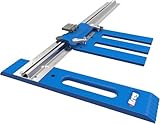
Overview: The Kreg KMA2685 transforms ordinary circular saws into precision edge-guided cutting tools. This universal sled system clamps to your saw’s base, allowing straight, accurate rips and crosscuts without a table saw. Designed for side-blade circular saws (corded or cordless), it offers an accessible path to improved accuracy for woodworkers lacking dedicated ripping equipment.
What Makes It Stand Out: Kreg’s clever sled design accommodates both left- and right-bladed saws, making it uniquely versatile. The large edge guide handle maintains consistent material contact, reducing wander. Unlike fixed guides, this system travels with your saw, enabling breakdown of sheet goods on-site. The tool-free clamping simplifies setup, letting you switch between saws quickly.
Value for Money: At roughly $40-50, this guide delivers table saw-like accuracy for a fraction of the cost and space. It’s an economical force multiplier for your existing circular saw, paying for itself by reducing material waste from miscuts. For small shops or job sites, it eliminates the need for a dedicated $300+ ripping solution.
Strengths and Weaknesses:
- Strengths: Universal compatibility with most side-blade saws; ambidextrous design; portable and lightweight; easy setup; significantly improves cut accuracy.
- Weaknesses: Incompatible with worm drive saws; plastic blade guards may interfere; requires careful alignment; not suitable for heavy production work.
Bottom Line: An essential accessory for DIYers and woodworkers wanting professional rip-cut accuracy without investing in a table saw. Verify your saw’s compatibility first, but if it fits, the Kreg Rip-Cut delivers remarkable precision and value.
10. Adjustable Cutting Machine Base Guide,Circular Saw Guide,New Electric Circular Saw Milling Positioning Clamp Precision Wood Cutting Guide For Professionals And Diy Enthusiasts

Overview: This adjustable base guide elevates circular saw precision to milling-level accuracy. Engineered for 4" to 8" saws, it features a two-way anti-shift buckle system that locks the saw securely while allowing fine lateral adjustments. The industrial-grade construction targets both professionals needing repeatable precision and dedicated DIYers pursuing flawless results.
What Makes It Stand Out: The advanced locking mechanism surpasses traditional guide rail systems by preventing both forward and lateral movement simultaneously. Ergonomic grip positioning provides superior control during critical cuts. High-strength plastic and metal components create a rigid yet lightweight platform that doesn’t compromise portability. The micro-adjustable side distance enables setup precision typically reserved for stationary tools.
Value for Money: Positioned in the $60-80 range, this guide offers near-router-table precision at a fraction of the cost. It transforms a standard circular saw into a capable milling tool for dadoes, grooves, and joinery. For professionals, it reduces setup time significantly; for enthusiasts, it unlocks advanced techniques without dedicated machinery.
Strengths and Weaknesses:
- Strengths: Exceptional stability and anti-shift design; wide saw compatibility; precise adjustments; durable construction; enables advanced joinery.
- Weaknesses: Steeper learning curve than simple guides; requires careful calibration; bulkier than basic edge guides; price may deter casual users.
Bottom Line: A high-performance guide for users demanding precision beyond basic straight cuts. While overkill for simple rip cuts, its stability and adjustability make it invaluable for advanced woodworking and professional applications where accuracy is non-negotiable.
Understanding the “Affordable Quality” Paradigm in 2026
The definition of “affordable” has shifted dramatically as manufacturing processes have evolved. We’re no longer talking about simply cheap tools that barely get the job done. Instead, the focus is on strategic value engineering—where manufacturers identify which components can be produced cost-effectively without diminishing critical performance metrics. This approach has created a sweet spot in the $80-$180 range where hobbyists and semi-pros can access features that were exclusive to $300+ models just five years ago.
Defining Your Budget Sweet Spot
Your ideal budget depends entirely on your usage pattern. Occasional DIYers tackling weekend projects can find exceptional reliability in the $75-$120 bracket, while serious woodworkers who push their tools daily should target the $130-$180 range for enhanced durability. The critical insight is that spending below $60 in 2026 often means compromising on motor windings, bearing quality, or safety certifications—areas where cutting corners leads to premature failure or hazardous operation. Conversely, exceeding $200 typically yields diminishing returns unless you need specialized features for commercial production.
The Evolution of Circular Saw Manufacturing
Global supply chain optimization and automated assembly have revolutionized how circular saws are built. Manufacturers now use precision robotics for critical alignments while maintaining human oversight for quality control checkpoints. This hybrid approach has reduced defect rates by nearly 40% since 2022 while keeping prices stable. Additionally, the standardization of lithium-ion battery platforms across brands has forced corded models to become more competitive, resulting in better components at lower price points as companies fight to maintain market share.
Key Performance Indicators That Matter Most
When evaluating circular saws, focusing on raw specifications alone can be misleading. The interplay between power, speed, and mechanical stability determines real-world cutting quality far more than any single number on a spec sheet. Understanding these relationships helps you identify which affordable models punch above their weight class.
Power-to-Weight Ratio Excellence
A 15-amp motor sounds impressive, but if it’s housed in a 12-pound chassis with poor balance, you’ll fatigue quickly and sacrifice control. The golden ratio in 2026 is approximately 1.2-1.5 amps per pound for corded models, delivering enough torque for 2x4 ripping without the wrist strain. For cordless saws, look for 18V-20V systems that keep the tool under 7.5 pounds with battery installed. Anything heavier becomes unwieldy for overhead or vertical cuts, while lighter models often lack the mass needed to dampen vibration during deep cuts.
RPM Consistency Under Load
Manufacturers love to advertise no-load speeds of 5,000+ RPM, but these numbers are meaningless if the motor bogs down when cutting pressure-treated lumber. Quality affordable saws maintain at least 85% of their no-load RPM when subjected to standard cutting loads. This consistency prevents blade burning and ensures clean edges. Check user reviews specifically mentioning performance during rip cuts versus crosscuts—this is where weaker motors reveal themselves through audible strain and reduced cutting speed.
Cutting Depth and Bevel Capacity
Don’t settle for less than 2-3/8" depth at 90 degrees, which handles standard dimensional lumber with margin to spare. For bevel capacity, 0-50 or 0-55 degrees has become the benchmark, with positive stops at 22.5 and 45 degrees being essential for efficient workflow. Some budget models achieve these specs but use flimsy adjustment mechanisms that slip under vibration. The telltale sign of quality is a depth adjustment lever that requires firm, deliberate force to move and locks with a satisfying click rather than gradual tightening.
Essential Features That Define True Value
Beyond raw performance, certain features separate genuinely useful tools from frustrating toys. In 2026’s competitive market, several premium features have trickled down to affordable tiers, but their implementation quality varies significantly.
Brake Systems: Electric vs. Manual
Electric brakes stop the blade within 2-3 seconds, a safety feature that prevents accidental contact and speeds up workflow between cuts. Manual brakes, essentially friction pads, take 8-12 seconds and wear out over time. While both meet minimum safety standards, electric brakes are now standard on quality affordable saws and indicate a manufacturer’s commitment to user safety. Test this feature before purchasing—some budget models advertise “electric brake” but use underpowered capacitors that fail after a few months.
Dust Management Solutions
Effective dust collection extends blade life, improves cut visibility, and protects your lungs. Look for saws with sealed dust ports that fit standard 1-1/4" or 1-1/2" shop vacuum hoses without adapters. The port should be positioned to capture debris without interfering with your line of sight. Some innovative 2026 models feature dual-port systems that work with both vacuum attachments and included bag collectors, providing flexibility for job sites without power access.
LED Lighting and Laser Guides
LED cutline illumination has become nearly ubiquitous, but quality varies dramatically. Premium affordable models use shadow-line technology that casts a crisp shadow of the blade onto your workpiece, showing the exact kerf width. Cheaper versions use generic LEDs that create glare and wash out your sight line. Laser guides, while helpful, should never be the primary selling point—they drift out of alignment with vibration and require frequent recalibration. A bright, well-positioned LED is more reliable for consistent accuracy.
Motor Technology: Brushed vs. Brushless in 2026
The brushed versus brushless debate has matured significantly. While brushless motors remain superior for efficiency and longevity, brushed motors in 2026 have benefited from improved commutator materials and better heat dissipation, making them viable for budget-conscious buyers who understand their limitations.
Battery Innovations for Cordless Models
Battery technology has leapfrogged in the past two years. Modern 18V packs now deliver 4.0Ah as standard, with some affordable kits including 5.0Ah batteries. The critical metric isn’t just amp-hours, but sustained amperage delivery—look for batteries rated for 30A continuous discharge to prevent voltage sag during heavy cuts. Smart batteries with individual cell monitoring have dropped in price, protecting your investment from over-discharge damage. Pro tip: some brands use the same battery platform across dozens of tools, making the initial saw purchase a gateway to an affordable ecosystem.
Corded Power: When Amperage Still Matters
For corded saws, don’t assume higher amps equal better performance. A well-engineered 13-amp motor with optimized gearing can outperform a sloppy 15-amp design. The key is thermal management—quality affordable saws use aluminum housings and strategic venting to keep motors cool during continuous use. Feel the motor housing after a test cut; excessive heat indicates poor efficiency and predicts shortened lifespan. Also, check the power cord quality: 8-foot minimum length and 14-gauge wire should be non-negotiable for job site flexibility.
Blade Quality: The Unsung Hero of Performance
A circular saw is only as good as its blade, yet this is where many affordable packages cut corners. Understanding blade specifications helps you budget for immediate upgrades and recognize which saws include surprisingly decent stock blades.
Stock Blade Reality Check
In 2026, even budget saws sometimes include carbide-tipped blades, but examine the tooth geometry closely. A good stock blade features alternating top bevel (ATB) teeth for clean crosscuts and may have expansion slots to reduce noise and vibration. If the included blade has painted teeth (a cheap way to simulate carbide) or lacks anti-vibration features, budget $30-$50 for an immediate replacement. This hidden cost can make a seemingly cheaper saw more expensive than a slightly pricier model with a usable blade.
Arbor Size and Compatibility
The standard 5/8" arbor dominates the market, but some compact models use 1/2" arbors to reduce weight. While not a dealbreaker, 1/2" arbors limit your blade selection and can be less stable during heavy cuts. Check that the arbor flange is machined flat and the lock button is accessible and robust—flimsy arbor locks make blade changes frustrating and can lead to improper tightening, creating dangerous wobble.
Understanding Tooth Count and Geometry
For general-purpose use, 24-40 teeth offer the best compromise between speed and finish quality. More teeth produce smoother cuts but cut slower and generate more heat. In 2026, thin-kerf blades (1.6mm-1.8mm) have become standard even in affordable saws, reducing motor strain and material waste. Look for blades with triple-chip grind (TCG) teeth if you plan to cut laminate or melamine—these stay sharp longer and resist chipping better than standard ATB designs.
Ergonomics and User Experience Design
A saw that feels awkward or fatiguing will gather dust in your garage regardless of its specifications. Modern ergonomic design goes beyond rubber grips to consider biomechanics and workflow efficiency.
Handle Configurations and Vibration Dampening
The best affordable saws offer multiple grip positions: a primary rear handle with overmolded rubber and a front pommel handle for two-handed control during deep cuts. Test the grip with work gloves on—some designs become slippery or uncomfortable with padded gloves. Vibration dampening has improved significantly through the use of internal counterweights and isolated motor mounts. A simple test: run the saw at full speed without cutting; excessive vibration in your hands indicates poor dampening that will lead to fatigue and reduced precision.
Sight Lines and Cutting Visibility
You can’t cut accurately if you can’t see your line. Quality budget saws position the blade on the right side for right-handed users (left side for left-handed models) with minimal guard obstruction. The blade guard retraction lever should be large enough to operate with a gloved thumb without shifting your grip. Some 2026 models feature transparent or cutaway guards that maintain safety while dramatically improving visibility—a feature worth prioritizing even if it means spending an extra $15-$20.
Weight Distribution for Extended Use
Pick up the saw and hold it in cutting position for 30 seconds. Does the weight pull your wrist forward or backward? Ideal balance centers the mass directly over the blade, creating a neutral feel. Front-heavy saws require constant upward pressure, while rear-heavy designs push into the cut unpredictably. For cordless models, check balance with the battery installed—a poorly designed tool becomes handle-heavy and awkward with the power source attached.
Safety Features That Should Never Be Compromised
No amount of savings justifies unsafe operation. Fortunately, safety technology has become so standardized that even budget saws must include certain features to remain competitive. The key is verifying their implementation quality.
Blade Guards and Riving Knives
The blade guard should retract smoothly without binding, even when cutting at 45-degree bevels. Test this by slowly pushing the saw against a scrap piece and observing the guard’s movement—jerky retraction indicates poor spring tension or misalignment. Riving knives, which prevent kickback by keeping the kerf open, should align perfectly with the blade and be easily removable for dado cuts. Some affordable models include riving knives that are too thin or poorly mounted, rendering them ineffective.
Anti-Kickback Technology
Advanced affordable saws now incorporate anti-kickback pawls that grab the workpiece if the saw reverses direction suddenly. While not foolproof, they provide an extra layer of protection. More importantly, look for electronic anti-kickback systems in cordless models that detect sudden current spikes and cut power instantly. This feature, borrowed from premium table saws, has appeared in sub-$150 cordless saws and represents a significant safety advancement.
Trigger Locks and Safety Switches
Convenient trigger locks reduce fatigue during long cuts, but they must be designed to prevent accidental activation. The best designs require a separate button press while pulling the trigger, not just a toggle switch. Safety switches that lock the trigger when not in use are essential if children might access your tools. In 2026, look for saws with “dead man” triggers that require continuous pressure—a feature that adds negligible cost but prevents runaway tools if you lose your grip.
The Corded vs. Cordless Debate in 2026
The gap between corded and cordless performance has narrowed to the point that your choice should be dictated by workflow rather than power concerns. Both categories offer compelling affordable options with distinct advantages.
Runtime Reality for Cordless Models
Modern battery chemistry has extended runtime significantly. A 5.0Ah battery on an efficient brushless saw can deliver 200+ linear feet of 3/4" plywood cutting on a single charge. For most DIY projects, this is more than sufficient. However, consider charge time—affordable kits often include standard chargers that take 60-90 minutes, while fast chargers cost extra. If you’re tackling large projects, having two batteries and a fast charger becomes essential, adding $50-$80 to your total investment.
Corded Saws: The Workhorse Advantage
Corded saws offer infinite runtime and consistent power delivery, making them ideal for production work. The trade-off is mobility and hose management. In 2026, affordable corded models have improved cord strain relief and integrated cord wraps that actually work. Look for saws with detachable cords—this seemingly minor feature allows easy replacement of damaged cords without disassembling the tool, a common failure point that can brick an otherwise functional saw.
Hybrid Solutions Emerging in the Market
A fascinating 2026 development is the emergence of “hybrid-ready” saws—cordless models with optional AC adapters that plug into wall power. While currently limited to a few brands, this technology is expected to become standard in the affordable tier within a year. For now, it represents a premium feature, but understanding this trend helps you choose a battery platform that might support hybrid operation in future tool purchases.
Smart Features and Connectivity
Bluetooth connectivity and companion apps have migrated from premium to affordable tiers, but their utility varies. Understanding which smart features add genuine value versus gimmicks helps you allocate your budget effectively.
Bluetooth Tracking and Tool Management
If you work on job sites with shared tools, Bluetooth tracking can prevent loss and theft. Affordable saws with this feature allow you to check battery level, lock the tool remotely, and track usage hours. However, this requires a smartphone and adds $10-$20 to the tool cost. For home users who keep tools in a dedicated shop, this feature offers minimal benefit and can be safely skipped to maximize cutting performance per dollar.
Performance Monitoring Apps
Some 2026 models connect to apps that provide cutting speed feedback, blade condition alerts, and maintenance reminders. While interesting, these features rely on accelerometers and current sensors that add complexity without improving core cutting ability. For budget buyers, prioritize mechanical excellence over digital frills—a well-built saw without Bluetooth will outperform a poorly built “smart” saw every time.
Are Smart Features Worth the Premium?
The consensus among veteran woodworkers is that smart features should be the tiebreaker between two equally capable saws, not the primary decision factor. If you can find a smart-enabled saw at the same price point as a non-connected model with similar specs, the added functionality is worthwhile. But don’t sacrifice blade visibility, motor quality, or safety features for the ability to check your phone for battery percentage.
Warranty and Brand Support Considerations
A robust warranty can transform a risky purchase into a smart investment. In 2026, warranty terms have become more competitive as brands fight for market share, but the fine print reveals important differences.
What a Solid Warranty Actually Covers
Look for 3-year limited warranties that cover manufacturing defects and motor failure. The best affordable brands offer 90-day money-back guarantees, allowing you to test the tool extensively. Be wary of “lifetime” warranties that only cover the housing or non-wear parts—read the exclusions carefully. Blade arbors, brushes, and bearings are often excluded despite being critical to operation. A warranty that covers the motor for 3 years but only the switches for 1 year indicates where the manufacturer expects failures to occur.
Availability of Replacement Parts
Before purchasing, check the brand’s website for parts availability. Can you easily order a new blade guard, motor brush set, or power cord? Brands invested in the affordable market maintain extensive parts inventories for at least 7 years after model discontinuation. Chinese import brands often lack parts support, making a $90 saw disposable after a minor component failure. Established brands with US distribution centers can ship common parts in 2-3 days, extending your tool’s life indefinitely.
Customer Service Responsiveness
Test customer service before you need it. Call the support line with a pre-purchase question about blade compatibility. Were you on hold for more than 10 minutes? Did the representative provide a clear, knowledgeable answer? Brands that skimp on support often skimp on tool quality. Online chat support and comprehensive FAQ databases indicate a company that stands behind its products and values your time.
Common Pitfalls When Shopping Budget-Friendly
Even informed buyers make mistakes when balancing cost and quality. Recognizing these common traps helps you navigate clearance sales and flashy marketing with confidence.
The False Economy of Ultra-Cheap Options
That $49 circular saw might seem like a steal, but it likely uses a stamped steel shoe that flexes during cuts, a pressed-fiber blade guard that binds, and motor brushes that wear out in 20 hours of use. The “buy cheap, buy twice” adage applies perfectly to circular saws. Spending an extra $40-$60 typically triples the tool’s lifespan and provides measurably better results from day one. Calculate cost per year of expected use rather than upfront price—a $120 saw lasting 8 years costs $15 annually versus a $50 saw lasting 2 years at $25 annually.
Ignoring Total Cost of Ownership
Factor in blade replacements, battery costs for cordless models, and potential repairs. A $100 saw that requires a $40 blade upgrade and $60 battery replacement within a year is actually a $200 investment. Compare this to a $150 saw with a decent stock blade and 3-year battery warranty. The initial savings evaporate quickly when you account for necessary add-ons. Also consider accessory compatibility—does the saw work with standard guide rails and aftermarket fences, or does it require proprietary (and expensive) accessories?
Overlooking Blade Replacement Costs
Some affordable saws use odd-sized arbors or proprietary blade flanges that limit you to the manufacturer’s expensive replacement blades. Before buying, verify that the saw accepts standard 5/8" arbor blades from any brand. This single check can save you hundreds of dollars over the tool’s life, as quality aftermarket blades cost half as much as OEM replacements while delivering superior performance.
Where to Find the Best Deals in 2026
Timing and sourcing strategies can save 20-40% off retail without resorting to questionable sellers. Understanding market rhythms helps you pounce when prices drop.
Retailer vs. Online Marketplaces
Big box retailers offer hands-on testing and immediate returns, but their prices are typically 10-15% higher than online. However, they run aggressive promotions during Father’s Day, Black Friday, and spring building season. Online marketplaces provide better baseline pricing and user reviews, but verify the seller is an authorized dealer to ensure warranty coverage. Gray market imports sold through third-party sellers often lack warranty support despite being genuine products. For the best of both worlds, use retailers for hands-on evaluation, then purchase online during promotional periods.
Seasonal Buying Patterns
Circular saw prices historically drop 15-25% in late winter (February-March) as retailers clear inventory before new model releases in spring. Another sweet spot is post-Black Friday in early December, when unsold promotional stock gets discounted further. Avoid buying in April-May when demand peaks and prices are highest. If you can wait, set price alerts for your target models and pounce when they hit historical lows, which typically occurs 2-3 times per year.
Refurbished and Factory-Reconditioned Options
Manufacturer-refurbished saws offer exceptional value, often including the same warranty as new tools at 30-50% off. These are typically returns with cosmetic defects or units that failed initial quality control and were repaired. The key is buying directly from the manufacturer or authorized refurbishers who provide detailed condition reports and warranty terms. Avoid third-party “refurbished” tools without clear documentation—they may be simple cleanups of heavily used equipment with no functional testing.
Maintenance Tips to Protect Your Investment
Proper maintenance can double your saw’s lifespan and maintain cutting performance. These practices cost little but deliver enormous returns in tool longevity.
Blade Care and Sharpening
Clean your blade after every project using a nylon brush and simple green degreaser to remove pitch buildup. A clean blade cuts cooler and stays sharp longer. Invest in a diamond sharpening file and touch up carbide teeth every 10-15 hours of cutting time—this 5-minute task restores cutting speed and reduces motor strain. Never store blades loose in a drawer where they can chip; use a blade case or hang them on a pegboard. A $30 blade maintained properly will outperform a neglected $60 blade every time.
Motor and Bearing Maintenance
For brushed motors, blow out dust weekly using compressed air, directing airflow through ventilation slots to clear commutator debris. Check brush length every 50 hours of use—replace when worn to 1/4" length to prevent commutator damage. Brushless motors require less maintenance but still benefit from annual bearing lubrication using a single drop of machine oil on each bearing. Listen for bearing squeal or grinding; addressing it early with a $5 bearing replacement prevents motor shaft damage that totals the tool.
Storage Best Practices
Store your saw in a location with stable humidity to prevent rust on the shoe and arbor. Hang it by the handle rather than setting it on the shoe to avoid flat-spotting the base. For cordless models, store batteries at 40-60% charge in cool conditions—full charge storage degrades lithium cells rapidly. A simple storage hook and battery maintenance routine can extend battery life by 3-5 years, saving you $60-$100 in premature replacements.
Making the Final Decision: A Buyer’s Checklist
With all this information, synthesizing it into a final decision requires a systematic approach. This checklist ensures you evaluate each candidate thoroughly.
Prioritizing Your Must-Have Features
Create a ranked list of your top 5 non-negotiable features based on your primary projects. If you cut mostly sheet goods, prioritize shoe flatness and blade visibility. For framing work, power and depth capacity matter most. For trim work, bevel accuracy and smooth guard retraction are critical. Use this list to eliminate options that excel in areas you don’t need while missing your core requirements. This prevents being swayed by impressive but irrelevant features.
Test Before You Buy: What to Look For
If possible, test the saw on a scrap of the material you cut most often. Listen to the motor—it should sound smooth, not whiny or strained. Check how easily the blade guard retracts when starting a cut; it should move with light thumb pressure. Feel the shoe with a straightedge; any rocking indicates a warped base that will plague every cut. Finally, check the bevel adjustment at 45 degrees—does it lock securely without creeping during a test cut? These hands-on checks reveal quality issues that specifications hide.
Reading Between the Lines of User Reviews
Focus on reviews from verified purchasers with 3-4 star ratings—they’re more honest than 5-star raves or 1-star complaints. Look for patterns: multiple mentions of “arbor wobble” or “guards sticking” indicate real design flaws. Ignore reviews complaining about the stock blade or lack of a case—these are expected trade-offs at affordable price points. Instead, prioritize feedback about durability after 6-12 months of use and warranty claim experiences. A saw with 500 reviews averaging 4.2 stars and consistent praise for customer service is a safer bet than a 4.8-star saw with only 50 reviews.
Frequently Asked Questions
What is the realistic lifespan of an affordable circular saw with regular maintenance?
With proper care, a quality affordable circular saw should last 8-12 years for DIY use and 3-5 years for daily professional use. The motor typically outlasts other components; blade guards, power cords, and trigger switches are common failure points that can be replaced to extend life indefinitely.
Can I use premium blades on an entry-level saw, and will it improve performance?
Absolutely. A $50 premium blade on a $100 saw will cut cleaner and faster than a stock blade on a $200 saw. The blade does the actual cutting, so investing in quality blades yields immediate performance gains regardless of saw price tier.
How important is the included carrying case, and should I pay extra for one?
For home shop use, a case is convenient but not essential. For job site use, it’s critical for protection and portability. Many affordable saws skip the case to hit price points; consider spending $20-$30 on an aftermarket tool bag if the manufacturer doesn’t include one, as it prevents damage and loss of accessories.
Is it safe to buy a circular saw from an online-only brand I’ve never heard of?
Exercise caution. Verify UL or ETL certification marks, read detailed reviews focusing on safety features, and check warranty terms. Some online-only brands offer genuine value, but others cut critical corners on electrical safety and blade guarding. Stick to brands with established US distribution for your first purchase.
What’s the minimum amperage I should accept for a corded circular saw in 2026?
For general use, 13 amps is the practical minimum. While 15-amp models offer more power, modern 13-amp motors with efficient gearing handle 90% of tasks competently. Below 13 amps, you’ll struggle with thick hardwoods and pressure-treated lumber.
How do I know if a cordless circular saw has enough power for my needs?
Check the battery’s continuous discharge rating (should be 30A or higher) and the motor’s wattage (look for 800W+). Test it on a 2x4—if it cuts smoothly without bogging down and the battery doesn’t overheat, it’s sufficient for most tasks. For regular ripping of 2x material, consider a 36V or dual-battery system.
Are laser guides on budget saws accurate enough to trust?
Most budget laser guides are approximate at best. They’re useful for rough alignment but shouldn’t replace marking your cut line. Prioritize LED cutline illumination over lasers for precision work, as lights don’t drift and show the actual blade path.
What safety gear is absolutely essential when using any circular saw?
Eye protection and hearing protection are non-negotiable. Add a dust mask for indoor or enclosed cutting. Avoid loose clothing and jewelry, and always use sharp blades—dull blades cause more accidents by requiring excessive force. A push stick for narrow cuts costs pennies but prevents severe hand injuries.
Can I cut metal or masonry with an affordable wood-cutting circular saw?
Only with the correct blade and only if the saw is labeled as multi-material capable. Never use abrasive blades on saws not designed for them—they generate excessive heat and can damage the motor and void warranties. Dedicated metal-cutting saws have lower RPMs and enhanced guards for spark containment.
How often should I replace the blade on my circular saw for optimal performance?
Replace or sharpen when you notice burning, increased cutting resistance, or tear-out on crosscuts. For occasional DIY use, a quality blade lasts 1-2 years. For weekly use, expect 6-12 months. A $30 blade change is cheap insurance against motor damage from overworking a dull blade.
See Also
- 10 Affordable Mini Circular Saws That Don’t Sacrifice Quality in 2026
- 10 Affordable Circular Saws That Don’t Sacrifice Accuracy in 2026
- 10 Affordable Cordless Circular Saws That Don’t Sacrifice Power in 2026
- 10 Affordable Worm Drive Circular Saws That Don’t Sacrifice Power in 2026
- 10 Affordable Compact Circular Saws That Don’t Sacrifice Quality in 2026