Table of Contents
Finding a circular saw that delivers laser-straight cuts without draining your wallet shouldn’t feel like searching for a unicorn. Yet many woodworkers and DIY enthusiasts still believe that precision is a luxury reserved for high-end tools with premium price tags. The reality in 2026? Manufacturing innovations, refined engineering, and smarter material choices have shattered that myth, bringing professional-grade accuracy to the budget-friendly segment like never before.
Whether you’re building built-in bookshelves, trimming deck boards, or crafting fine furniture, the difference between a frustrating, wavy cut and a crisp, glue-ready edge often comes down to understanding what actually matters in a saw’s design—not the brand prestige or flashy marketing. This guide dives deep into the anatomy of accurate yet affordable circular saws, revealing the features, maintenance practices, and techniques that ensure your cuts stay true without demanding a second mortgage.
Top 10 Circular Saws For Accuracy
Detailed Product Reviews
1. SKIL 15 Amp 7-1/4 Inch Circular Saw with Single Beam Laser Guide - 5280-01
 with Single Beam Laser Guide - 5280-01](https://m.media-amazon.com/images/I/5107WNhmhpS._SL160_.jpg)
Overview: The SKIL 5280-01 circular saw delivers robust cutting performance for both DIY enthusiasts and professional contractors. This corded powerhouse features a 15-amp motor spinning at 5,300 RPM, making quick work of dimensional lumber, plywood, and hardwoods. The 7-1/4-inch carbide-tipped blade handles most residential and light commercial tasks with ease, while the 51-degree bevel capacity with a positive stop at 45° offers versatile cutting angles for common applications.
What Makes It Stand Out: The integrated single-beam laser guide sets this saw apart from competitors in its price class, projecting a clear cutting line that significantly improves accuracy, especially for longer rip cuts. The thoughtful safety package includes a guarded trigger with lock-off button and power-on indicator light, reducing accidental starts—a crucial feature for busy job sites. The dust blower maintains visibility without requiring a vacuum hookup, keeping your cut line clear in real-time.
Value for Money: Positioned as a mid-range option, the 5280-01 punches above its weight class. It offers premium features like laser guidance typically found on saws costing $50-100 more. For homeowners building decks or framing walls, this tool provides professional-grade power without the professional-grade price tag of Makita or DeWalt alternatives.
Strengths and Weaknesses: Strengths include the powerful motor, laser guide, excellent safety features, and generous bevel capacity. The spindle lock enables fast blade changes. Weaknesses are the basic dust collection system (no port for vacuum attachment), single laser line that may be less visible in bright conditions, and plastic components that may wear under heavy professional use.
Bottom Line: The SKIL 5280-01 is an exceptional value for serious DIYers and entry-level contractors. While it may not match the durability of premium brands for daily job site abuse, its performance-to-price ratio is outstanding, making it a smart investment for most woodworking and construction projects.
2. Skil 5080-01 13-Amp 7-1/4" Circular Saw, Red

Overview: The Skil 5080-01 represents the brand’s entry-level circular saw, offering a lighter, more maneuverable option for occasional users and budget-conscious buyers. With its 13-amp motor and 7-1/4-inch blade capacity, this red workhorse handles basic crosscuts and rip cuts through standard lumber and sheet goods. The saw builds upon its predecessor with a 15% weight reduction, making it less fatiguing during extended use.
What Makes It Stand Out: This model’s primary distinction is its lightweight design without sacrificing core functionality. At a reduced weight compared to the SKIL 5380, it excels in overhead cuts and scenarios requiring prolonged operation. The improved dust blower system outperforms older budget saws, maintaining cut line visibility without complex vacuum attachments. Positive bevel stops at common angles streamline workflow for quick adjustments.
Value for Money: As one of the most affordable circular saws from a reputable brand, the 5080-01 delivers exceptional bang for your buck. It’s perfect for homeowners who need a reliable saw for annual projects rather than daily use. While it lacks advanced features like laser guides, its sub-$60 price point makes it accessible for beginners who want quality without premium cost.
Strengths and Weaknesses: Strengths include the lightweight construction, budget-friendly price, adequate power for light-to-medium tasks, and spindle lock for easy blade changes. The improved dust blower is genuinely effective. Weaknesses include the less powerful 13-amp motor that may struggle with dense hardwoods, absence of a laser guide or LED lighting, and basic construction that trades durability for weight savings.
Bottom Line: The Skil 5080-01 is ideal for DIY novices and homeowners tackling occasional projects. It won’t replace a contractor’s primary saw but serves as a capable, affordable tool for cutting 2x4s, plywood, and similar materials. For frequent use, consider upgrading to a more powerful model.
3. Extbtfor Circular Saw,4-1/2" Mini Circular Saw Cordless with 2.0A Battery, Power Saw with Laser Guide, 3400RPM, Maximum Cutting 1-11/16" at 90° and 1-1/8"at 45° for Wood, Soft Metal, Plastic

Overview: The Extbtfor 4-1/2" Mini Circular Saw offers a cordless solution for light-duty cutting tasks where portability and maneuverability are paramount. Weighing just 3.9 pounds, this compact tool features a 20V 2.0Ah battery powering a 3,400 RPM motor through wood, soft metal, and plastic materials. Its small footprint excels in tight spaces, one-handed operation, and quick jobs that don’t warrant hauling out a full-size saw.
What Makes It Stand Out: The true versatility lies in its comprehensive accessory package. Three specialized blades (HSS, TCT, and wood-specific) handle diverse materials without additional purchases. The integrated laser guide, powered by user-replaceable button batteries, provides surprising accuracy for a tool this size. The included guide ruler transforms this mini saw into a precision instrument for straight cuts, while the dust pipe attachment offers cleaner operation.
Value for Money: This kit delivers remarkable value as an all-in-one solution. Comparable mini saws often cost more while including fewer accessories. The ability to cut multiple materials straight out of the box eliminates immediate additional expenses, making it cost-effective for hobbyists, model makers, and DIYers who need occasional precision cuts without investing in multiple specialized tools.
Strengths and Weaknesses: Strengths include exceptional portability, one-handed usability, versatile blade selection, laser guidance, and complete accessory package. The cordless freedom is invaluable for quick cuts. Weaknesses include limited 1-11/16" cutting depth at 90°, unknown brand reliability, potentially short battery life for extended projects, and insufficient power for demanding hardwood or thick materials.
Bottom Line: The Extbtfor Mini Saw is a niche tool that excels in its intended role. Perfect for flooring work, panel trimming, and craft projects, it’s not a replacement for a full-size circular saw but an excellent complementary tool. The complete kit and cordless convenience make it worthwhile for users needing mobility and precision in tight quarters.
4. Makita 5007F 7-1/4" Circular Saw

Overview: The Makita 5007F is a professional-grade 7-1/4" circular saw built for demanding job site conditions and precision woodworking. Its potent 15-amp motor delivers an impressive 5,800 RPM, powering through dense lumber, engineered beams, and stacked sheet goods with authority. The saw’s robust construction and thoughtful engineering reflect Makita’s reputation for durability, making it a staple among contractors and serious woodworkers who prioritize performance and longevity.
What Makes It Stand Out: Dual integrated LED lights illuminate the cut line with exceptional clarity, a feature that proves invaluable in dimly lit workspaces or when cutting dark materials. The engineered lower guard design prevents binding during bevel and narrow cuts—a common frustration with lesser saws. With a substantial 2-3/8" cutting capacity at 90°, this tool handles tasks that many standard circular saws cannot, including cutting through 2x material in a single pass at angles.
Value for Money: While priced at a premium compared to consumer brands, the 5007F justifies its cost through superior build quality, higher RPM performance, and exceptional durability. For professionals who rely on their tools daily, the reduced downtime and consistent cutting performance translate to tangible productivity gains. It competes directly with DeWalt and Milwaukee pro models while offering unique LED advantages.
Strengths and Weaknesses: Strengths include outstanding power and speed, excellent cut capacity, durable all-metal construction, superior LED lighting system, and well-balanced ergonomic design. The lower guard engineering prevents common hang-ups. Weaknesses include premium pricing, absence of a laser guide, heavier weight than compact models, and limited appeal for casual users who won’t utilize its full capabilities.
Bottom Line: The Makita 5007F is a top-tier circular saw for professionals and serious enthusiasts. Its combination of raw power, intelligent features, and bulletproof reliability makes it worth every penny for those who demand consistent, high-performance cutting. Occasional DIYers may find it overkill, but tradespeople will appreciate its job site prowess.
5. Kreg KMA2400 Rip-Cut Circular Saw Guide - Cutting Tool - Guide is Best for Regular (Side-Blade) Circular Saw - Ensure Compatibility Before Use - Woodworking Tools for Home Improvement

Overview: The Kreg KMA2400 Rip-Cut Circular Saw Guide transforms an ordinary circular saw into a precision cutting system, offering track-saw accuracy without the substantial investment. This clever accessory clamps onto most standard corded or cordless circular saws, guiding them along a straight edge for perfectly parallel rip cuts and crosscuts. Designed for woodworkers and DIYers who demand accuracy but already own a compatible saw, it eliminates the need for measuring and marking every cut.
What Makes It Stand Out: Universal compatibility with both left- and right-bladed saws makes this guide exceptionally versatile, accommodating nearly any user’s existing tool. The sled design securely holds the saw while the large-handle edge guide maintains constant material contact, preventing drift. Unlike fixed-track systems, this portable solution stores easily and works with lumber of any length, making it ideal for breaking down sheet goods and ripping boards on job sites or in small workshops.
Value for Money: At a fraction of a track saw’s cost, the KMA2400 delivers impressive precision. For woodworkers who own a quality circular saw, this accessory provides 80% of a track saw’s functionality for less than 20% of the price. It pays for itself quickly by reducing material waste from miscuts and eliminating the need to purchase a separate dedicated track system.
Strengths and Weaknesses: Strengths include broad compatibility, easy setup, excellent accuracy for rip cuts, portability, and cost-effectiveness. It works with worm drive and jig saws too. Weaknesses include incompatibility with some plastic guards or unusually shaped bases, potential sled alignment issues if not carefully installed, and a learning curve for optimal results. It cannot replicate a track saw’s anti-splintering features.
Bottom Line: The Kreg Rip-Cut Guide is an essential accessory for any woodworker seeking straight, accurate cuts without upgrading to a track saw. While not universal for every circular saw design, it works flawlessly with most standard models and delivers exceptional value. Check your saw’s compatibility before purchasing.
6. Enventor Mini Circular Saw, 4.8A Electric Circular Saws Corded with Laser Guide, 4000RPM, 3 Saw Blades 3-3/8" Max Cutting Depth 1-1/16", Compact, Power for Wood, Soft Metal, Tile, Plastic

Overview: The Enventor Mini Circular Saw is a versatile corded cutting tool designed for DIY enthusiasts and homeowners tackling multi-material projects. Its 4.8-amp motor delivers 4,000 RPM, handling wood, soft metal, tile, and plastic with the included three specialized 3-3/8-inch blades. The compact design prioritizes maneuverability over raw power.
What Makes It Stand Out: This saw’s all-in-one versatility is its hallmark. The package includes three purpose-built blades (24T TCT for wood, 44T HSS for metal, and a diamond blade for tile), eliminating immediate additional purchases. The integrated laser guide and left-sided blade design provide exceptional cut line visibility. Dual safety switches and a thumb-activated trigger release offer crucial protection for less experienced users, while the dust collection port maintains a clean workspace.
Value for Money: For occasional users, this represents excellent value compared to investing in multiple tools or expensive cordless systems. The corded design ensures consistent power without battery replacement costs, making it ideal for budget-conscious DIYers who prioritize versatility over maximum cutting capacity.
Strengths and Weaknesses: Strengths include comprehensive blade selection, robust safety features, laser precision, and effective dust collection. The 1-1/16-inch maximum depth limits thicker material cutting, and the cord restricts mobility. Brand recognition falls short of industry giants, potentially raising long-term durability questions for heavy use.
Bottom Line: Perfect for homeowners seeking an affordable, safe, and versatile cutting solution for light to medium-duty projects. While professionals should consider premium brands, this saw delivers remarkable capability at an accessible price point for DIY applications.
7. DEWALT 20V MAX Circular Saw, Cordless Sidewinder Style Portable, 6-1/2-Inch Blade, 5150 RPM, 0-50 Degree Bevel Capability, Battery Not Included (DCS391B)
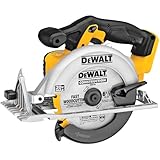
Overview: The DEWALT DCS391B is a professional-grade cordless circular saw built for demanding jobsite applications. This tool-only sidewinder features a high-torque motor spinning at 5,150 RPM, paired with a 6-1/2-inch carbide-tipped blade. The magnesium shoe ensures durability while maintaining lightweight portability for all-day use.
What Makes It Stand Out: DEWALT’s engineering excellence shines through the magnesium shoe construction, providing superior durability and cut accuracy compared to stamped steel alternatives. The impressive 0-50° bevel capacity exceeds standard ranges, enabling complex angled cuts. The 18-tooth blade efficiently cuts double the material per charge, while the optimized rubber grip delivers exceptional control and reduced vibration during operation.
Value for Money: As a tool-only purchase, this represents a solid investment for existing DEWALT 20V MAX platform users. The initial cost is justified by professional-grade performance and longevity, though first-time buyers must factor in battery and charger expenses. It competes favorably with premium corded models while offering unmatched cordless convenience.
Strengths and Weaknesses: Strengths include robust power output, durable magnesium construction, excellent bevel range, and ergonomic design. The battery and charger are sold separately, significantly increasing total investment. At 7.5 pounds, it’s heavier than compact alternatives, and runtime depends on battery capacity, potentially limiting continuous heavy-duty use.
Bottom Line: An outstanding choice for professionals and serious DIYers already invested in the DEWALT ecosystem. The DCS391B delivers corded-like performance with cordless freedom, making it worth every penny for those who prioritize reliability and power on the jobsite.
8. Ryobi 18V 5-1/2" Circular Saw

Overview: Ryobi’s 18V 5-1/2-inch circular saw offers a streamlined cutting solution for homeowners and casual DIYers. This bare-bones cordless tool focuses on essential functionality without complex features. Designed for the Ryobi One+ battery system, it provides convenient, cord-free operation for light-duty cutting tasks around the home and workshop.
What Makes It Stand Out: Simplicity is this saw’s primary virtue. Its compatibility with Ryobi’s extensive One+ battery platform (supporting over 175 tools) creates exceptional value for existing users. The compact 5-1/2-inch blade reduces weight and improves maneuverability in tight spaces, while the tool’s straightforward design ensures minimal learning curve for beginners tackling basic projects.
Value for Money: This saw typically ranks among the most affordable cordless circular saws available, making it accessible to entry-level users. For those already owning Ryobi batteries, it’s an extremely cost-effective addition. However, the lack of included accessories and basic specifications mean serious woodworkers will quickly outgrow its capabilities.
Strengths and Weaknesses: Strengths include lightweight design, One+ system compatibility, low price point, and ease of use. Major weaknesses involve limited 1-11/16-inch cutting depth, unspecified motor power suggesting modest performance, absence of laser guides or dust collection, and lack of bevel capacity details. The short feature list indicates a bare-minimum approach.
Bottom Line: Ideal for Ryobi One+ system owners needing an occasional-use circular saw for light projects. It won’t impress professionals, but delivers adequate performance for basic tasks at a price that’s hard to beat for budget-conscious homeowners.
9. DEWALT ATOMIC 20V MAX* Circular Saw, 4-1/2-Inch, Tool Only (DCS571B)

Overview: The DEWALT ATOMIC DCS571B represents the compact evolution of cordless circular saws, featuring a 4-1/2-inch blade and brushless motor in an ultra-portable package. This tool-only model prioritizes maneuverability without sacrificing cutting efficiency, capable of slicing 369 linear feet of 3/4-inch OSB on a single charge when paired with a 5Ah battery.
What Makes It Stand Out: The ATOMIC series’ compact design excels in confined spaces where full-size saws cannot operate. The brushless motor maximizes runtime and durability, while thoughtful features like the removable auxiliary handle, hang hook, and on-board blade key storage demonstrate DEWALT’s user-centric engineering. The 1-1/2-inch finger trigger allows safe, controlled choke-up grip for precision work.
Value for Money: Positioned as a premium compact option, this saw commands a higher price than entry-level models but delivers professional-grade performance in a smaller footprint. For users needing portability over maximum depth, it offers excellent return on investment, though the battery and charger must be purchased separately, increasing total cost.
Strengths and Weaknesses: Strengths include exceptional portability, efficient brushless motor, intelligent feature set, and DEWALT reliability. The 4-1/2-inch blade limits maximum cut depth, making it unsuitable for framing or thick material. The premium price and separate battery purchase may deter casual users, and the smaller blade selection is less versatile for multi-material cutting.
Bottom Line: Perfect for professionals and advanced DIYers who value compact power for finish work, remodeling, and tight-space applications. The DCS571B proves that bigger isn’t always better when precision and portability matter most.
10. Adjustable Cutting Machine Base Guide,Saw Guide For Circular Saw,Guia Para Sierra Circular,Circular Saw Guide Rail,Electric Circular Saw Milling Positioning Clamp For Wood Tile Precision Cutting Tasks

Overview: This adjustable cutting machine base guide transforms standard circular saws into precision cutting systems. Acting as a portable guide rail, this accessory clamps to your workpiece and provides a stable track for accurate rip cuts and crosscuts. Designed for wood, tile, and plastic applications, it eliminates freehand cutting errors without requiring permanent fixture installation.
What Makes It Stand Out: The innovative two-way anti-slip buckle design creates a secure, non-dislocating grip that traditional straight edges cannot match. Its tool-free, punch-free installation preserves workbench surfaces while enabling rapid setup. The telescopic adjustment range from 5.3 to 7.8 inches accommodates various cutting distances, making it ideal for repetitive cuts and customized positioning tasks.
Value for Money: For users owning functional circular saws, this guide delivers table-saw-like accuracy at a fraction of the cost of dedicated equipment. It extends your existing tool’s capabilities rather than requiring new saw purchases, offering exceptional ROI for precision-focused woodworkers and tile installers on a budget.
Strengths and Weaknesses: Strengths include impressive stability, portability, universal compatibility, and easy installation. The limited 5.3-7.8 inch adjustment range restricts wider cuts, and effectiveness depends on your saw’s base plate compatibility. The generic brand raises durability concerns for daily professional use, and it cannot compensate for underpowered saws on demanding materials.
Bottom Line: An excellent accessory for DIYers and professionals seeking to improve cut accuracy without major equipment investments. While not a complete replacement for a table saw, this guide rail significantly enhances precision and repeatability for most circular saw applications.
Understanding Circular Saw Accuracy
What Makes a Circular Saw Accurate?
Accuracy in circular saws isn’t about a single magic component—it’s the harmonious interaction of several precision-engineered parts working together. At its core, accuracy means the blade cuts exactly where you intend, with minimal deviation, binding, or deflection throughout the entire cut. This requires a rigid, flat base plate that maintains perfect 90-degree and bevel relationships to the blade, a motor that maintains constant RPMs under load, and a blade arbor that spins with virtually zero runout.
The real-world result? When you mark a cut line and align your saw, the kerf follows that line within a tolerance of less than 1/32 inch over a standard 8-foot rip cut. That’s the benchmark separating accurate saws from their sloppy counterparts.
The Relationship Between Price and Precision
The old adage “you get what you pay for” isn’t entirely wrong, but it’s incomplete. Pricey saws often feature magnesium components, sophisticated dust collection, and premium bearings. However, the gap has narrowed dramatically because affordable saws now borrow engineering principles from their expensive siblings. Manufacturers have learned that precision doesn’t require exotic materials—just thoughtful design and strict quality control during assembly.
In 2026, computer-aided manufacturing allows brands to produce base plates and motor housings with tighter tolerances at lower costs. The savings come from simpler features (fewer convenience gadgets) rather than compromised core accuracy. Your money now buys fundamental precision instead of flashy add-ons.
Key Features That Define Accuracy in Budget Saws
Blade Quality and Tooth Count
The blade does the actual cutting, making it the most critical accuracy component. Even the most precisely built saw will wander with a cheap, warped blade. Look for stock blades with 24 to 40 carbide-tipped teeth for general purpose work—these offer a sweet spot between cut quality and speed. The plate should feel rigid, not flimsy, and feature expansion slots to prevent warping during heavy cuts.
Tooth geometry matters more than most realize. Alternate top bevel (ATB) grinds slice cleaner through wood fibers, reducing splintering that can make cuts appear inaccurate. Never judge a saw’s potential by the blade it ships with; upgrading to a thin-kerf finish blade often transforms a budget saw’s performance.
Motor Power and Consistent RPMs
A saw that bogs down mid-cut is a saw that burns and wanders. For corded models, 13 to 15 amps provides enough torque to maintain blade speed through dense materials. Cordless saws should showcase brushless motors and advanced electronics that sense load and adjust power delivery in real-time.
The secret sauce is electronic feedback control—circuitry that monitors RPMs and instantly compensates when resistance increases. This feature, once exclusive to premium tools, now appears in well-engineered budget saws. It prevents the blade from slowing and deflecting, which is the primary cause of curved cuts.
Base Plate Stability and Material
The base plate is your cutting foundation. Steel plates are common in affordable saws, but thickness and stamping quality vary enormously. Look for plates at least 1/8 inch thick with reinforced edges that resist flexing when you apply pressure. The best budget options use ribbed or stamped patterns that increase rigidity without adding cost.
Check the flatness by placing the saw on a known-flat surface like a table saw top. Rock it gently—any wobble indicates a warped plate that will transfer to your cuts. The mounting holes for the blade guard should be precisely drilled, not sloppy, ensuring the guard retracts smoothly without pulling the saw off-line.
Bevel Capacity and Detent Stops
Precise bevel cuts rely on positive stops at common angles (0°, 22.5°, 45°) that lock solidly without play. Test these in-store by setting the bevel and attempting to wiggle the motor housing—any movement multiplies across the cut length. The adjustment mechanism should move smoothly with clear, engraved markings.
In 2026, even budget saws feature micro-adjustment knobs for fine-tuning bevel angles beyond the detents. This allows you to dial in perfect 45-degree joints for cabinetry without fighting the tool. The scale should be etched or molded into the metal, not a sticker that peels and shifts.
Laser Guides and LED Lighting Systems
While lasers seem helpful, they can sometimes mislead more than they assist. A laser that’s even slightly out of alignment creates a false sense of confidence. LED lights, however, simply illuminate the cut line without projecting potentially inaccurate guides. The best setups position LEDs to cast minimal shadow directly along the blade’s path.
If you opt for a laser-equipped model, ensure it has independent adjustment screws so you can calibrate it perfectly to the blade’s kerf. Better yet, treat lasers as rough guides only—always trust your physical alignment marks over electronic projections.
The Importance of Build Quality in Affordable Saws
Materials That Matter
Budget doesn’t have to mean plastic fantastic. High-quality affordable saws strategically place metal where it counts: the base plate, blade guard, and critical pivot points. Glass-filled nylon motor housings provide excellent strength-to-weight ratios while keeping costs down—just ensure the material feels dense, not hollow.
The arbor nut and washer should be machined steel, not stamped metal. These small components play huge roles in maintaining blade parallelism. A stamped washer can deform under torque, allowing the blade to tilt microscopically and ruin cut accuracy.
Bearing Quality and Long-Term Precision
Bearings are the unsung heroes of saw accuracy. Sealed ball bearings in the motor and arbor maintain spindle stability as the tool ages. While you can’t see them, you can feel their quality—spin the arbor by hand (with the saw unplugged). It should rotate smoothly without gritty sensations or wobble.
Budget saws that skimp on bearings might feel accurate initially, but develop play after 50 hours of use. Look for saws advertising “sealed bearings” or “maintenance-free motor construction.” These terms indicate the manufacturer invested in longevity, not just initial impressions.
Handle Design and User Control
An ergonomic handle isn’t just about comfort—it directly impacts accuracy. A handle positioned too high or angled awkwardly forces you to fight the saw’s natural balance, leading to fatigue and wandering cuts. The best designs align your grip directly over the blade’s centerline, giving you intuitive control.
Secondary handles on the motor housing should be positioned for two-handed operation during demanding cuts. Rubber overmolding should feel tacky, not slippery, and provide vibration damping that lets you feel the cut without numbness.
Corded vs. Cordless: Accuracy Considerations
Power Consistency Comparison
Corded saws deliver unwavering power, making them inherently predictable. For maximum accuracy on long rips or thick stock, a 13-amp corded model remains the gold standard. You never worry about voltage sag or battery depletion affecting blade speed.
Cordless saws have closed the gap significantly. Modern 20V/60V FlexVolt-style systems maintain near-corded performance through advanced battery management. However, accuracy can suffer as the battery drains below 25% capacity. For critical cuts, always use a fresh battery, even if the saw claims consistent power throughout the charge.
Weight Distribution and Balance
Cordless saws often feel rear-heavy due to battery placement, which can torque the saw during cuts if you’re not vigilant. The most accurate cordless models position the battery inline with the motor or offset it with forward-weighted base plates. This balance keeps the saw stable without requiring constant correction.
Corded saws typically achieve better balance naturally, with the motor centered over the base plate. This symmetry reduces the learning curve and helps beginners achieve straight cuts faster. For overhead or vertical cuts, the lighter weight of a corded saw also reduces fatigue-induced errors.
Battery Technology Advancements in 2026
This year’s lithium-ion packs feature improved cell chemistry that maintains voltage under load better than ever. Look for batteries with “power level indicators” that show remaining charge in 25% increments—this helps you avoid pushing a fading battery through an important cut. Some brands now include “accuracy mode” settings that prioritize consistent RPM over maximum power, trading speed for precision.
Fast charging has also improved, with some systems reaching 80% in 15 minutes. This means less downtime and fewer temptations to squeeze out one more cut on a dying battery—a common cause of inaccurate, burned edges.
Blade Types and Their Impact on Cutting Precision
Framing Blades vs. Finish Blades
Framing blades with 18-24 teeth cut aggressively but leave rough edges prone to splintering. For accurate, clean cuts, especially in plywood or hardwood, switch to a 40-tooth finish blade. The extra teeth reduce tear-out and require less sanding, which preserves your carefully marked dimensions.
The trade-off is speed—finish blades cut slower. However, that slower pace actually improves accuracy by giving you more control and reducing the motor strain that causes deflection. Many professionals keep both blades handy, swapping them based on the cut’s visibility and importance.
Thin Kerf vs. Full Kerf
Thin kerf blades remove less material, requiring less power and reducing strain on budget saw motors. This translates to easier control and less wandering in curved cuts. The downside? Thin kerf blades can flex more easily during aggressive cuts, especially in thick stock.
For most users of affordable saws, thin kerf is the way to go. Modern thin kerf plates are stabilized with expansion slots and sound-dampening cutouts that minimize vibration. Just avoid forcing the cut—let the blade do the work and you’ll achieve remarkable precision.
Specialty Blades for Specific Materials
Cutting laminate flooring, metal, or cement board demands blades designed for those materials. Using a wood blade on aluminum will result in dangerous grabbing and wildly inaccurate cuts. Specialty blades feature tooth geometries and coatings that prevent material buildup and maintain a true path.
Invest in a quality plywood blade with 60-80 teeth for cabinet work. These blades virtually eliminate chip-out on both sides of the cut, meaning your measurements stay exact. The clean edge also makes it easier to see your cut line, reducing visual parallax errors.
Calibration and Setup for Optimal Accuracy
Squaring the Blade to the Base
Even brand-new saws can arrive slightly out of square from the factory. Check this immediately with a reliable combination square. Unplug the saw, raise the blade to maximum height, and place the square against the plate and blade body. Any gap indicates misalignment.
Most saws have adjustment bolts near the bevel pivot. Loosen them, tap the motor housing gently until perfect, then retighten in a star pattern to avoid shifting. Check at multiple blade heights—some saws drift out of square as the blade raises. This five-minute process can transform a mediocre saw into a precision instrument.
Adjusting Bevel Stops
Factory 45-degree stops are often close but not perfect. Cut a test board at the bevel setting, then check it with a digital angle gauge. If it’s off by even half a degree, your miter joints will show gaps. Adjust the stop screw until the gauge reads exactly 45.00°.
For saws without micro-adjustment, you may need to file the stop slightly or add thin shims. This sounds extreme, but cabinetmakers have done it for decades. The result is joints that fit without filler, proving your saw’s accuracy matches your ambition.
Calibrating Rip Fences and Edge Guides
The rip fence that comes with most saws is, frankly, mediocre. It attaches to the base plate with a single screw, allowing play that ruins parallel cuts. Upgrade to an aftermarket fence that clamps at both front and rear of the base plate. These systems reference off the plate’s edge, not the notoriously inconsistent front rail.
If you’re stuck with the stock fence, add a wood auxiliary face that you can trim in place. Clamp the saw to your workbench, run the blade through the auxiliary fence, and you’ll create a zero-clearance edge perfectly parallel to the blade. This trick costs pennies but delivers professional results.
Essential Accessories for Maintaining Accuracy
Aftermarket Rip Fences
A precision rip fence is the single best investment for improving a budget saw’s accuracy. Models like the Kreg Rip-Cut or similar systems transform your circular saw into a track-guided precision tool. They eliminate the human error of freehand following and provide repeatability for multiple identical cuts.
These fences ride against the workpiece edge, ensuring the blade follows a parallel path regardless of base plate imperfections. For sheet goods, they prevent the common problem of the saw drifting away from your guide line as you fatigue during long cuts.
Zero-Clearance Inserts
Most budget saws have wide throat plates that allow tear-out on the top surface of your work. A zero-clearance insert—either store-bought or shop-made—supports the wood fibers right up to the blade, producing crisp edges. This is crucial for accurate crosscuts where splintering can make a precisely measured cut appear off.
Make your own from hardboard or phenolic sheet. Trace the stock insert, cut it slightly oversized, then slowly raise the spinning blade through it while clamped securely. The custom fit eliminates gaps and dramatically improves cut quality on plywood and melamine.
Custom Sub-Base Options
The stock base plate often has raised edges and branding that catch on workpieces. A custom sub-base made from 1/4-inch hardboard or acrylic creates a perfectly smooth, zero-friction surface. Attach it with countersunk screws and cut a blade slot just like with a zero-clearance insert.
This modification also allows you to create specialized bases—wider for stability on narrow stock, or with built-in guides for dado-like cuts. The minimal cost and time investment pay dividends in both accuracy and the saw’s versatility.
Common Accuracy Pitfalls to Avoid
Blade Wobble and Runout
Spin the blade slowly by hand and watch the tooth line—it should appear completely still. Any visible wobble indicates either a bent blade or, more concerning, arbor runout. Runout as small as 0.005 inches creates a wandering kerf and dangerous vibration.
Test for runout with a dial indicator if you’re serious about precision, or simply make a test cut in MDF. A wobbling blade leaves a rippled surface that’s unmistakable. Address this immediately—it’s not a flaw you can compensate for with technique.
Inadequate Workpiece Support
A board that sags or shifts during cutting will bind the blade, causing it to deflect and follow the grain instead of your line. Support your work fully, with sawhorses or foam insulation boards underneath, ensuring the cut line never dips. This is especially critical with sheet goods that can bow under their own weight.
The saw’s base plate should never rock or tilt because the workpiece is uneven. Even a slight tilt changes the blade’s relationship to the surface, resulting in beveled cuts when you wanted square. Think of support as the invisible foundation of accuracy.
Rushing the Cut
The most common user error is pushing too hard. A forced cut makes the blade slow, heat up, and wander. Let the saw’s weight and sharp blade do the work. You should feel a steady, smooth progression with minimal resistance. If you’re straining, you’re sacrificing accuracy.
Listen to the motor—when it maintains a consistent pitch, you’re feeding at the right rate. A dropping pitch means you’re pushing too fast. This auditory feedback is more reliable than feel, especially for beginners learning proper technique.
Maintenance Tips for Sustained Precision
Cleaning and Lubrication Schedules
Sawdust packed into bevel mechanisms and height adjustments causes binding that forces the saw out of alignment. Blow out these areas with compressed air after each use, and apply dry lubricant to pivot points monthly. Avoid oil-based lubes that attract dust and create abrasive paste.
The base plate deserves special attention. Clean off pitch and resin buildup with a solvent, then polish it with automotive wax. This reduces friction that can pull the saw off course, especially when cutting treated lumber or wet wood.
Blade Changing Best Practices
Always use the blade wrench that came with your saw—its length is calibrated to provide proper torque without overtightening. Overtightened arbors can damage the flange, creating runout. Tighten firmly, then give a quarter-turn more. That’s it.
When installing, spin the blade by hand before powering up to ensure it clears all guards and inserts. A blade that rubs slightly will cut slightly off-square. Check that the arbor washer sits flat against the blade—any debris underneath tilts the blade and ruins accuracy.
Storage Solutions That Prevent Damage
Never drop a circular saw into a toolbox where the base plate can bend. Hang it by the handle or store it on a shelf with the base plate fully supported. Even a tiny bend in the plate translates to miles of inaccuracy over many cuts.
Remove the battery from cordless models during storage to prevent slow discharge that can damage cells. Store blades separately in protective sleeves—stacked blades chip each other’s carbide teeth, creating microscopic imperfections that show up as rough, inaccurate cuts.
Safety Features That Enhance Accuracy
Electronic Blade Brakes
A blade that stops within 2-3 seconds of trigger release improves accuracy by allowing quicker repositioning between cuts. More importantly, it reduces the temptation to pull the saw backward while the blade still spins—a common mistake that damages workpiece edges and creates dangerous kickback.
The best electronic brakes also include overload protection that prevents motor bogging. By cutting power before stalling occurs, they maintain blade speed and prevent the deflection that ruins accuracy. It’s a safety feature that directly preserves cut quality.
Riving Knives and Anti-Kickback Pawls
A riving knife that rises and falls with blade height prevents pinching that can twist the saw mid-cut. This is crucial for accurate rip cuts in wet or tensioned lumber. Ensure the knife is properly aligned—dead parallel to the blade and positioned about 1/8 inch behind the teeth.
Anti-kickback pawls, while sometimes annoying, grip the work if the saw tries to launch backward. This prevents the sudden movement that not only endangers you but also ruins the cut by jerking the blade across the wood. Modern designs allow easy lowering for plunge cuts, giving you safety without sacrificing capability.
Dust Collection and Visibility
You can’t cut accurately if you can’t see the line. Effective dust collection—either through a port or integrated blower—keeps the cut line visible from start to finish. Some budget saws now include directed air nozzles that clear dust without requiring a vacuum hookup.
Even without dust collection, position yourself so your body doesn’t cast a shadow on the cut line. Good visibility allows you to make micro-corctions before deviations become permanent errors. It’s the simplest accuracy aid, yet often overlooked.
How to Test a Circular Saw’s Accuracy Before Buying
In-Store Inspection Checklist
Bring a small combination square to the store. Check blade-to-base squareness on the display model—if it’s off, that’s a red flag about the brand’s quality control. Wiggle the motor housing at full bevel; any play indicates sloppy pivots that will worsen with use.
Examine the base plate edge for straightness by sighting down its length. Run your finger along it—sharp burrs suggest poor finishing that will scratch workpieces. Ask to plug in the saw and listen to it run; you should hear smooth whirring, not grinding or rattling.
Performance Tests You Can Request
Some retailers have demonstration areas. If so, make a test cut in a piece of scrap plywood. The saw should track straight along a marked line without requiring constant correction. Check the cut edge for square with your square—it should be perfect, not slightly beveled.
Test the bevel stop at 45 degrees by making a compound cut. The resulting angle should mate perfectly with another 45-degree piece without gaps. Don’t be shy about testing—the store wants you to buy a tool you’ll keep, not return.
Reading Between the Lines of Product Specifications
Manufacturers love to tout “heavy-duty” and “professional grade,” but focus on concrete numbers. Look for arbor runout specifications—anything under 0.003 inches is excellent. Check the base plate flatness tolerance; some brands now list this in their specs.
Weight can be telling: too light (under 8 pounds) often means flimsy components, while unnecessarily heavy (over 12 pounds) suggests outdated designs. The sweet spot for accurate budget saws is 9-11 pounds—enough mass for stability without causing fatigue.
The Role of User Technique in Achieving Perfect Cuts
Stance and Grip Fundamentals
Stand with your feet shoulder-width apart, positioned so you can see the cut line clearly without leaning. Your dominant hand should grip the main handle with a firm but relaxed hold—imagine holding a hammer, not squeezing a stress ball. The other hand belongs on the auxiliary handle or front knob, guiding without forcing.
Your body should move with the saw, not against it. Practice the cut motion without powering the tool to develop a smooth, straight path. Jerky movements or leaning to one side will pull the blade off course every time.
Marking and Measuring Strategies
Mark your cut line with a sharp pencil or marking knife—a dull line creates visual ambiguity. For critical cuts, strike a fine line with a utility knife; the groove guides the blade and prevents tear-out. Always mark the waste side of the line, so there’s no confusion about where the blade should travel.
Use story sticks for repetitive cuts rather than measuring each time. A story stick eliminates tape measure errors and ensures every piece is identical. Clamp it in place and run the saw’s edge against it for perfect repeatability.
Controlling Cut Speed and Feed Rate
Develop a cadence: squeeze the trigger fully, let the blade reach max RPM, then ease into the cut. The initial plunge should be smooth and deliberate. Once engaged, maintain steady forward pressure that keeps the motor humming at its original pitch.
For long cuts, mark a “pace line” at 12-inch intervals. This gives you visual checkpoints to ensure you’re not unconsciously speeding up. Remember, the blade cuts best at its designed speed—your job is to feed material at the rate that maintains that speed.
Warranty and Support Considerations
What a Good Warranty Tells You About Accuracy
A 3-year warranty suggests confidence in the motor and gearing. But pay attention to the fine print—some warranties exclude “normal wear” that includes bearing failure. A warranty covering “manufacturing defects” for five years indicates the company expects their tolerances to hold.
Brands offering free service calibration during the warranty period are essentially guaranteeing long-term accuracy. This is a huge value-add for budget saws that might need professional adjustment after a year of heavy use.
Manufacturer Support for Calibration Issues
Call the manufacturer’s support line before buying and ask: “How do I adjust blade parallelism?” If they can walk you through it clearly, they understand their tool’s precision features. If they seem confused or suggest sending it to a service center for minor adjustments, that’s a red flag.
Companies that provide detailed calibration videos and sell replacement adjustment parts empower you to maintain accuracy indefinitely. This commitment to user-serviceable precision separates serious tool brands from marketing operations.
Frequently Asked Questions
Can a $100 circular saw really be as accurate as a $300 model?
Yes, for fundamental straight and bevel cuts. The $300 saw may offer better dust collection, durability, and features, but the core accuracy—blade stability and base flatness—can be virtually identical. The difference often lies in longevity and convenience, not initial cut quality.
How often should I calibrate my circular saw?
Check squareness and bevel stops every 20 hours of use, or immediately after any drop or impact. A quick monthly check takes two minutes and prevents small errors from becoming bad habits. Heavy users should fully calibrate quarterly.
What’s the single most important feature for accuracy?
A flat, rigid base plate. All other features are compromised if the foundation flexes or rocks. Prioritize this over lasers, fancy handles, or high amp ratings when evaluating budget saws.
Do I need a tracking light or laser for accurate cuts?
No. In fact, many experienced woodworkers disable lasers because they can be misaligned. Proper technique—clear visibility and following a physical line—produces better results. LEDs for illumination are more useful than projection guides.
Can I improve my existing saw’s accuracy without buying a new one?
Absolutely. Upgrade the blade, add an aftermarket rip fence, and ensure perfect calibration. These three steps can transform even a basic saw. Many users achieve professional results with sub-$100 saws after proper setup.
Why does my saw drift to the right during long cuts?
This usually indicates a misaligned base plate or worn bearings on the arbor side. The blade is deflecting away from resistance. Check blade parallelism first; if that’s correct, inspect the base plate for damage and ensure the blade is sharp.
Is a heavier circular saw more accurate?
Not necessarily. Heavier saws can be more stable, but excess weight causes fatigue that leads to sloppy technique. The ideal weight is 9-11 pounds with good balance. A lighter, well-designed saw often outperforms a heavy, poorly balanced one.
Should I buy corded or cordless for the best accuracy?
For consistent power and unlimited runtime, corded wins. However, modern cordless saws with brushless motors and fresh batteries achieve equal accuracy. Choose based on your work style: corded for shop work, cordless for job site mobility.
How do I know if my blade is causing inaccuracy?
Make a test cut in MDF and examine the edge. Ripples, burn marks, or a wandering kerf indicate blade problems. Also, spin the blade by hand—any visible wobble means it’s time for replacement. Even quality blades wear out after 40-60 hours of heavy use.
What’s the best way to store my circular saw to maintain accuracy?
Hang it by the handle or store it flat on a shelf with the base plate fully supported. Never store it with the blade installed—remove it to protect the arbor and blade. Keep it in a climate-controlled space to prevent rust on the base plate that could create uneven surfaces.
See Also
- 10 Affordable Circular Saws That Don’t Sacrifice Quality in 2026
- 10 Affordable Cordless Circular Saws That Don’t Sacrifice Power in 2026
- 10 Affordable Mini Circular Saws That Don’t Sacrifice Quality in 2026
- 10 Affordable Worm Drive Circular Saws That Don’t Sacrifice Power in 2026
- 10 Affordable Compact Circular Saws That Don’t Sacrifice Quality in 2026